
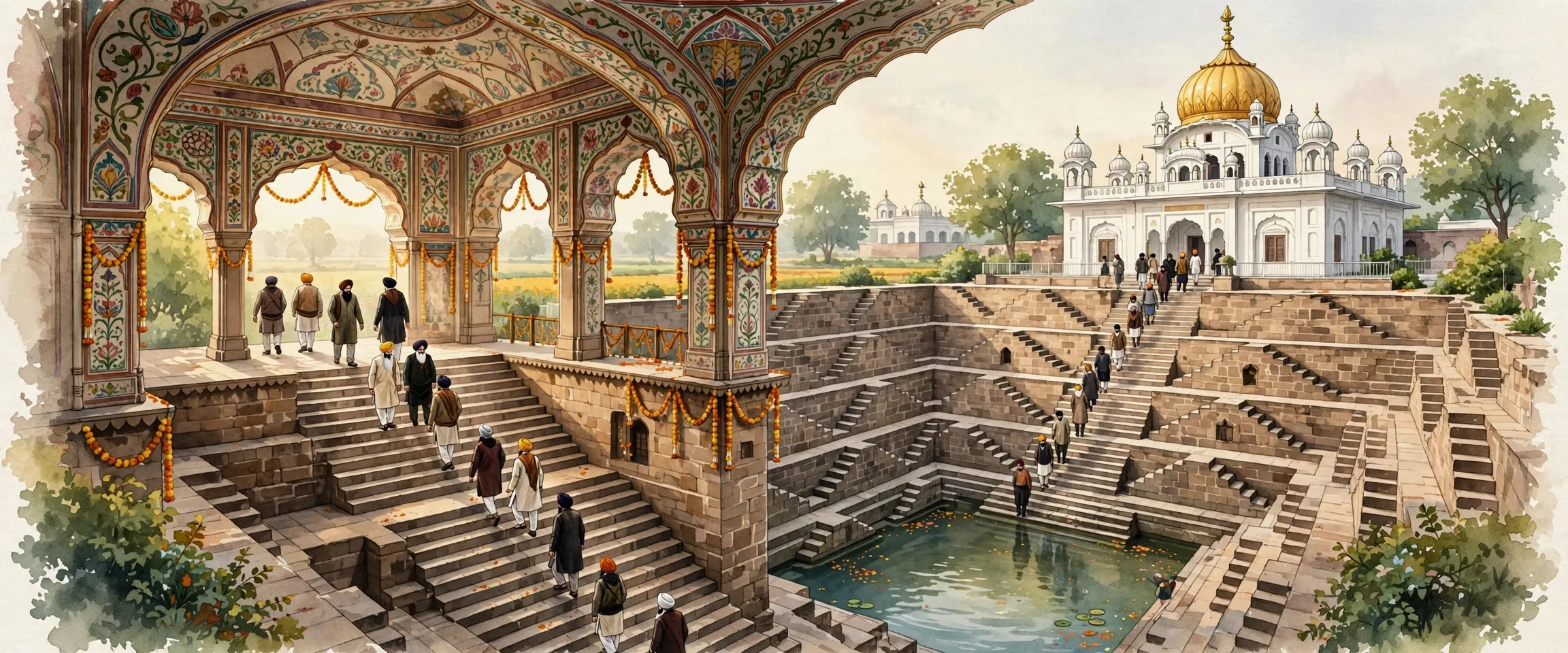
Goindval (ਗੋਇੰਦਵਾਲ), also called Goindwal Sahib, is a historic town in Punjab’s Tarn Taran district where Guru Amar Das Ji — the third Sikh Guru — lived for 33 years and established Sikhism’s first centre. Its Baoli Sahib, a stepwell of 84 steps, draws pilgrims who bathe and recite Japji Sahib seeking liberation from the cycle of rebirth.
- Facts
- Type
- Town
- District
- Tarn Taran
- Region
- Majha
- Location
- Punjab, India
- Founded
- 1551, by Guru Amar Das Ji
- Known for
- Baoli Sahib — the 84-step well; first centre of Sikhism
- Population
- 7,772 (2010)
The first centre of Sikhism
Goindval (ਗੋਇੰਦਵਾਲ, "City of Govind"), also called Goindwal Sahib, is a town in the Tarn Taran district of Punjab’s Majha region, about 23 kilometres from Tarn Taran Sahib on the banks of the Beas river. In the 16th century it became the first centre of Sikhism — its "axis" — when Guru Amar Das Ji, the third Sikh Guru, made it his seat and lived here for 33 years.
According to historian Gurinder Singh Mann, Guru Amar Das founded the town in 1551. Its site lay on an ancient east–west highway crossing the Beas between Delhi and Lahore, and a trader named Goinda, a Marvaha Khatri, planned a settlement at the western end of the ferry crossing. When his efforts were thwarted by calamities he blamed on evil spirits, he sought Guru Angad Dev Ji’s blessing at Khadur — and the Guru sent his devoted disciple Bhai Amar Das, who knew the tract well from carrying river water daily to Khadur for his Master’s ablutions, to lay the village’s foundation. The new habitation was named Goindwal after Goinda.
After his anointment as Guru in 1552 at the age of 73, Guru Amar Das shifted the Sikh headquarters from Khadur to Goindval with his family and followers. From here he started the annual Vaisakhi fair, made the langar an inseparable part of Sikh practice — insisting that anyone who wished to see him must first sit in the pangat ('Pehlay pangat, tay picchhay sangat') — created the Manji system for spreading the faith to distant places, ended the practice of sati, and composed the Anand Sahib bani.
Baoli Sahib: the well of 84 steps
In 1552 the Guru commenced the digging of a baoli — a well with steps descending to the water level — which, when completed, drew pilgrims from far and near. The stepwell spans about 8 metres (25 feet); a divided underground staircase of 84 covered steps descends to the sacred waters, with resting places between flights where Sikhs gather for spiritual discussion. The entrance is a wide pointed archway leading to a domed chamber decorated with frescoes depicting the life of Guru Amar Das.
Sikhs believe that bathing in the Baoli and reciting the Japji Sahib — the divine Word revealed to Guru Nanak — on each of the 84 steps grants mukhti: liberation from the 84 lakh cycles of birth and death and union with God. The stairs were covered with marble in 1906, and the gurdwara’s dome is gold-plated. Today the Baoli remains one of the most visited pilgrimage spots in Punjab, its massive daily langar feeding pilgrims in large numbers.
Goindval and the Gurus
Goindval is where Guru Amar Das Ji met his successor. Bhai Jetha — the future Guru Ram Das Ji — arrived in Goindval to stay near the Guru, earning his bread by selling cooked beans while spending most of his time in seva for the Baoli’s construction and the community kitchen. Recognising his upright character, Guru Amar Das and Mata Mansa Devi married their daughter Bibi Bhani to him on 1 February 1554. Their third son, Arjan Dev, was born in Goindval on 15 April 1563 and would become the fifth Sikh Guru. Bhai Gurdas, the great Sikh poet, was also born here in 1551.
Emperor Akbar visited Goindval in 1569 while travelling from Delhi to Lahore and took lunch in the langar. So impressed was he by the institution that he granted land in the name of Bibi Bhani — land on which Guru Ram Das would found Amritsar.
Later Gurus kept returning. Guru Hargobind bathed in the Baoli with his family on his way from Jhabal; Guru Tegh Bahadur visited in 1664; and Guru Har Rai met the Mughal prince Dara Shikoh here, having once cured him of a serious illness with herbal medicine.
Shrines of Goindval
The town’s main shrines cluster around the Guru’s legacy. Baoli Sahib stands over the 84-step well. Chaubara Sahib was the residence of Guru Amar Das and Guru Ram Das, where the third Guru held his court. Guriai Asthan marks where Guru Ram Das was crowned the fourth Guru, and Janam Asthan commemorates Guru Arjan Dev Ji’s birthplace. Joti Jot Asthan (Patshahi Tiji) stands where Guru Amar Das breathed his last, while Khuh Guru Ram Das Sahib — a well built by the fourth Guru — is where Bhai Gurdas breathed his last. Thara Sahib is where Guru Amar Das sat supervising the Baoli’s digging. About three kilometres away, Gurdwara Damdama Sahib preserves the memory of the tree under which Guru Amar Das rested while carrying water from the Beas to Khadur — the tree is still preserved.
The main gurdwara beside the Baoli is a fine example of Sikh architecture: white against the chequered courtyard, its large dome tipped with a gold pinnacle, four cupolas echoing the main dome, turrets, elliptical cornices and projected windows. The entrance is decorated with murals depicting significant scenes from Sikh history.
Goindval today
Goindval remains a prime pilgrimage destination, drawing devotees daily to the Baoli and the gurdwara. The town — population 7,772 in the 2010 count — sits on the Beas in Tarn Taran district, about 25 kilometres from Tarn Taran and 50 from Amritsar, and is also one of the district’s focal points for small-scale industry.
ਸਿੱਖੀ ਦਾ ਪਹਿਲਾ ਕੇਂਦਰ
ਗੋਇੰਦਵਾਲ (ਗੋਇੰਦਵਾਲ ਸਾਹਿਬ) ਪੰਜਾਬ ਦੇ ਮਾਝਾ ਖੇਤਰ ਦੇ ਤਰਨ ਤਾਰਨ ਜ਼ਿਲ੍ਹੇ ਦਾ ਇੱਕ ਇਤਿਹਾਸਕ ਕਸਬਾ ਹੈ, ਜੋ ਤਰਨ ਤਾਰਨ ਸਾਹਿਬ ਤੋਂ ਲਗਭਗ 23 ਕਿਲੋਮੀਟਰ ਦੂਰ ਬਿਆਸ ਦਰਿਆ ਦੇ ਕੰਢੇ ਵਸਿਆ ਹੈ। ਸੋਲ੍ਹਵੀਂ ਸਦੀ ਵਿੱਚ ਇਹ ਸਿੱਖੀ ਦਾ ਪਹਿਲਾ ਕੇਂਦਰ ਬਣਿਆ, ਜਦੋਂ ਤੀਜੇ ਸਿੱਖ ਗੁਰੂ, ਗੁਰੂ ਅਮਰ ਦਾਸ ਜੀ ਨੇ ਇਸਨੂੰ ਆਪਣਾ ਟਿਕਾਣਾ ਬਣਾਇਆ ਅਤੇ 33 ਸਾਲ ਇੱਥੇ ਨਿਵਾਸ ਕੀਤਾ।
ਇਤਿਹਾਸਕਾਰ ਗੁਰਿੰਦਰ ਸਿੰਘ ਮਾਨ ਅਨੁਸਾਰ ਗੁਰੂ ਅਮਰ ਦਾਸ ਜੀ ਨੇ 1551 ਵਿੱਚ ਇਸ ਕਸਬੇ ਦੀ ਨੀਂਹ ਰੱਖੀ। ਇਹ ਥਾਂ ਦਿੱਲੀ ਤੋਂ ਲਾਹੌਰ ਜਾਂਦੇ ਪ੍ਰਾਚੀਨ ਰਸਤੇ ਉੱਤੇ ਬਿਆਸ ਦਰਿਆ ਦੇ ਪਾਰਲੇ ਘਾਟ ਕੋਲ ਸੀ। ਗੋਇੰਦਾ ਨਾਂ ਦੇ ਇੱਕ ਮਰਵਾਹਾ ਖੱਤਰੀ ਵਪਾਰੀ ਨੇ ਇੱਥੇ ਵਸੋਂ ਵਸਾਉਣ ਦੀ ਯੋਜਨਾ ਬਣਾਈ, ਪਰ ਕੁਦਰਤੀ ਆਫ਼ਤਾਂ ਤੋਂ ਘਬਰਾ ਕੇ ਉਹ ਖਡੂਰ ਸਾਹਿਬ ਗੁਰੂ ਅੰਗਦ ਦੇਵ ਜੀ ਦਾ ਆਸ਼ੀਰਵਾਦ ਲੈਣ ਗਿਆ। ਗੁਰੂ ਜੀ ਨੇ ਆਪਣੇ ਸੇਵਕ ਭਾਈ ਅਮਰ ਦਾਸ ਨੂੰ — ਜੋ ਖਡੂਰ ਲਈ ਰੋਜ਼ ਬਿਆਸੋਂ ਪਾਣੀ ਢੋਂਦੇ ਸਨ ਅਤੇ ਇਸ ਇਲਾਕੇ ਨੂੰ ਚੰਗੀ ਤਰ੍ਹਾਂ ਜਾਣਦੇ ਸਨ — ਪਿੰਡ ਦੀ ਨੀਂਹ ਰੱਖਣ ਲਈ ਭੇਜਿਆ। ਗੋਇੰਦੇ ਦੇ ਨਾਂ ਉੱਤੇ ਇਸ ਦਾ ਨਾਂ ਗੋਇੰਦਵਾਲ ਪਿਆ।
1552 ਵਿੱਚ 73 ਸਾਲ ਦੀ ਉਮਰ ਵਿੱਚ ਗੁਰਗੱਦੀ ਮਿਲਣ ਤੋਂ ਬਾਅਦ ਗੁਰੂ ਅਮਰ ਦਾਸ ਜੀ ਨੇ ਸਿੱਖੀ ਦਾ ਕੇਂਦਰ ਖਡੂਰ ਤੋਂ ਗੋਇੰਦਵਾਲ ਤਬਦੀਲ ਕਰ ਦਿੱਤਾ। ਇੱਥੋਂ ਉਨ੍ਹਾਂ ਨੇ ਵਿਸਾਖੀ ਦਾ ਸਲਾਨਾ ਮੇਲਾ ਸ਼ੁਰੂ ਕੀਤਾ, ਲੰਗਰ ਨੂੰ ਸਿੱਖੀ ਦਾ ਅਟੁੱਟ ਅੰਗ ਬਣਾਇਆ — ਜੋ ਵੀ ਉਨ੍ਹਾਂ ਦੇ ਦਰਸ਼ਨ ਕਰਨ ਆਉਂਦਾ, ਪਹਿਲਾਂ ਪੰਗਤ ਵਿੱਚ ਬੈਠਦਾ (“ਪਹਿਲਾਂ ਪੰਗਤ, ਤਾਂ ਪਿੱਛੋਂ ਸੰਗਤ”) — ਦੂਰ-ਦੁਰਾਡੇ ਧਰਮ ਪ੍ਰਚਾਰ ਲਈ ਮੰਝੀ ਪ੍ਰਥਾ ਚਲਾਈ, ਸਤੀ ਪ੍ਰਥਾ ਬੰਦ ਕੀਤੀ ਅਤੇ ਆਨੰਦ ਸਾਹਿਬ ਬਾਣੀ ਇੱਥੇ ਹੀ ਉਚਾਰੀ।
ਬਾਉਲੀ ਸਾਹਿਬ: 84 ਪੌੜੀਆਂ ਵਾਲਾ ਖੂਹ
1552 ਵਿੱਚ ਗੁਰੂ ਜੀ ਨੇ ਇੱਕ ਬਾਉਲੀ — ਪੌੜੀਆਂ ਵਾਲਾ ਖੂਹ — ਖੁਦਵਾਉਣੀ ਸ਼ੁਰੂ ਕੀਤੀ, ਜੋ ਮੁਕੰਮਲ ਹੋਣ ਉੱਤੇ ਦੂਰ-ਦੂਰ ਤੋਂ ਸੰਗਤਾਂ ਨੂੰ ਖਿੱਚਣ ਲੱਗੀ। ਲਗਭਗ 8 ਮੀਟਰ ਡੂੰਘੀ ਇਸ ਬਾਉਲੀ ਵਿੱਚ 84 ਢੱਕੀਆਂ ਪੌੜੀਆਂ ਪਾਣੀ ਤੱਕ ਉਤਰਦੀਆਂ ਹਨ, ਵਿਚਕਾਰ ਆਰਾਮ ਦੀਆਂ ਥਾਵਾਂ ਹਨ ਜਿੱਥੇ ਸਿੱਖ ਆਤਮਿਕ ਵਿਚਾਰ ਕਰਦੇ ਹਨ। ਚੌੜੇ ਨੁਕੀਲੇ ਦਰਵਾਜ਼ੇ ਰਾਹੀਂ ਗੁੰਬਦ ਵਾਲੇ ਕਮਰੇ ਵਿੱਚ ਪਹੁੰਚਦੇ ਹਾਂ, ਜਿਸ ਦੀਆਂ ਕੰਧਾਂ ਉੱਤੇ ਗੁਰੂ ਅਮਰ ਦਾਸ ਜੀ ਦੇ ਜੀਵਨ ਦੀਆਂ ਤਸਵੀਰਾਂ ਬਣੀਆਂ ਹਨ।
ਸਿੱਖ ਵਿਸ਼ਵਾਸ ਕਰਦੇ ਹਨ ਕਿ ਬਾਉਲੀ ਵਿੱਚ ਇਸ਼ਨਾਨ ਕਰਕੇ ਹਰ ਪੌੜੀ ਉੱਤੇ ਜਪੁਜੀ ਸਾਹਿਬ ਦਾ ਪਾਠ ਕਰਨ ਨਾਲ ਮੁਕਤੀ ਮਿਲਦੀ ਹੈ — 84 ਲੱਖ ਜੂਨਾਂ ਦੇ ਗੇੜ ਤੋਂ ਛੁਟਕਾਰਾ ਅਤੇ ਪ੍ਰਭੂ ਨਾਲ ਮਿਲਾਪ। 1906 ਵਿੱਚ ਇਨ੍ਹਾਂ ਪੌੜੀਆਂ ਉੱਤੇ ਸੰਗਮਰਮਰ ਲਗਾਇਆ ਗਿਆ ਅਤੇ ਗੁਰਦੁਆਰੇ ਦਾ ਗੁੰਬਦ ਸੋਨੇ ਨਾਲ ਮੜ੍ਹਿਆ ਹੈ। ਅੱਜ ਵੀ ਬਾਉਲੀ ਪੰਜਾਬ ਦੇ ਸਭ ਤੋਂ ਵੱਧ ਦਰਸ਼ਨੀ ਧਾਰਮਿਕ ਅਸਥਾਨਾਂ ਵਿੱਚੋਂ ਇੱਕ ਹੈ, ਜਿੱਥੇ ਰੋਜ਼ ਵੱਡੀ ਗਿਣਤੀ ਵਿੱਚ ਸੰਗਤ ਲਈ ਲੰਗਰ ਚਲਦਾ ਹੈ।
ਗੋਇੰਦਵਾਲ ਅਤੇ ਗੁਰੂ ਸਾਹਿਬਾਨ
ਗੋਇੰਦਵਾਲ ਉਹ ਥਾਂ ਹੈ ਜਿੱਥੇ ਗੁਰੂ ਅਮਰ ਦਾਸ ਜੀ ਨੂੰ ਆਪਣਾ ਉੱਤਰਾਧਿਕਾਰੀ ਮਿਲਿਆ। ਭਾਈ ਜੇਠਾ — ਭਵਿੱਖ ਦੇ ਗੁਰੂ ਰਾਮ ਦਾਸ ਜੀ — ਗੁਰੂ ਜੀ ਦੇ ਨੇੜੇ ਰਹਿਣ ਲਈ ਗੋਇੰਦਵਾਲ ਆਏ, ਉਬਲੇ ਮਾਂਹ ਵੇਚ ਕੇ ਗੁਜ਼ਾਰਾ ਕਰਦੇ ਅਤੇ ਬਾਉਲੀ ਦੀ ਉਸਾਰੀ ਤੇ ਲੰਗਰ ਦੀ ਸੇਵਾ ਵਿੱਚ ਜੁਟੇ ਰਹਿੰਦੇ। ਉਨ੍ਹਾਂ ਦੇ ਸੁਚੱਜੇ ਚਰਿੱਤਰ ਨੂੰ ਵੇਖ ਕੇ ਗੁਰੂ ਅਮਰ ਦਾਸ ਜੀ ਅਤੇ ਮਾਤਾ ਮਨਸਾ ਦੇਵੀ ਜੀ ਨੇ 1 ਫਰਵਰੀ 1554 ਨੂੰ ਆਪਣੀ ਧੀ ਬੀਬੀ ਭਾਨੀ ਦਾ ਵਿਆਹ ਉਨ੍ਹਾਂ ਨਾਲ ਕਰ ਦਿੱਤਾ। ਉਨ੍ਹਾਂ ਦਾ ਤੀਜਾ ਪੁੱਤਰ ਅਰਜਨ ਦੇਵ 15 ਅਪ੍ਰੈਲ 1563 ਨੂੰ ਗੋਇੰਦਵਾਲ ਵਿੱਚ ਜਨਮਿਆ — ਜੋ ਪੰਜਵੇਂ ਸਿੱਖ ਗੁਰੂ ਬਣੇ। ਮਹਾਨ ਸਿੱਖ ਕਵੀ ਭਾਈ ਗੁਰਦਾਸ ਦਾ ਜਨਮ ਵੀ 1551 ਵਿੱਚ ਇੱਥੇ ਹੀ ਹੋਇਆ।
1569 ਵਿੱਚ ਮੁਗਲ ਬਾਦਸ਼ਾਹ ਅਕਬਰ ਦਿੱਲੀ ਤੋਂ ਲਾਹੌਰ ਜਾਂਦਿਆਂ ਗੋਇੰਦਵਾਲ ਆਇਆ ਅਤੇ ਲੰਗਰ ਵਿੱਚ ਪ੍ਰਸ਼ਾਦਾ ਛਕਿਆ। ਲੰਗਰ ਦੀ ਪਰੰਪਰਾ ਤੋਂ ਇੰਨਾ ਪ੍ਰਭਾਵਿਤ ਹੋਇਆ ਕਿ ਉਸ ਨੇ ਬੀਬੀ ਭਾਨੀ ਦੇ ਨਾਂ ਜ਼ਮੀਨ ਬਖ਼ਸ਼ ਦਿੱਤੀ — ਜਿਸ ਜ਼ਮੀਨ ਉੱਤੇ ਗੁਰੂ ਰਾਮ ਦਾਸ ਜੀ ਨੇ ਅੰਮ੍ਰਿਤਸਰ ਵਸਾਇਆ।
ਬਾਅਦ ਦੇ ਗੁਰੂ ਸਾਹਿਬਾਨ ਵੀ ਆਉਂਦੇ ਰਹੇ। ਗੁਰੂ ਹਰਗੋਬਿੰਦ ਸਾਹਿਬ ਨੇ ਪਰਿਵਾਰ ਸਮੇਤ ਬਾਉਲੀ ਵਿੱਚ ਇਸ਼ਨਾਨ ਕੀਤਾ; ਗੁਰੂ ਤੇਗ ਬਹਾਦਰ ਸਾਹਿਬ 1664 ਵਿੱਚ ਆਏ; ਅਤੇ ਗੁਰੂ ਹਰਿਰਾਇ ਸਾਹਿਬ ਨੇ ਇੱਥੇ ਮੁਗਲ ਸ਼ਾਹਜ਼ਾਦੇ ਦਾਰਾ ਸ਼ਿਕੋਹ ਨਾਲ ਮੁਲਾਕਾਤ ਕੀਤੀ, ਜਿਸ ਨੂੰ ਉਨ੍ਹਾਂ ਨੇ ਇੱਕ ਵਾਰ ਜੜ੍ਹੀ-ਬੂਟੀਆਂ ਨਾਲ ਗੰਭੀਰ ਬਿਮਾਰੀ ਤੋਂ ਠੀਕ ਕੀਤਾ ਸੀ।
ਗੋਇੰਦਵਾਲ ਦੇ ਗੁਰਦੁਆਰੇ
ਕਸਬੇ ਦੇ ਮੁੱਖ ਅਸਥਾਨ ਗੁਰੂ ਸਾਹਿਬਾਨ ਦੀ ਵਿਰਾਸਤ ਦੁਆਲੇ ਹਨ। ਬਾਉਲੀ ਸਾਹਿਬ 84 ਪੌੜੀਆਂ ਵਾਲੇ ਖੂਹ ਉੱਤੇ ਹੈ। ਚੌਬਾਰਾ ਸਾਹਿਬ ਗੁਰੂ ਅਮਰ ਦਾਸ ਅਤੇ ਗੁਰੂ ਰਾਮ ਦਾਸ ਜੀ ਦਾ ਨਿਵਾਸ ਸੀ, ਜਿੱਥੇ ਤੀਜੇ ਪਾਤਸ਼ਾਹ ਦੀਵਾਨ ਲਾਉਂਦੇ ਸਨ। ਗੁਰਿਆਈ ਅਸਥਾਨ ਉਹ ਥਾਂ ਹੈ ਜਿੱਥੇ ਗੁਰੂ ਰਾਮ ਦਾਸ ਜੀ ਨੂੰ ਚੌਥੀ ਪਾਤਸ਼ਾਹੀ ਦੀ ਗੁਰਗੱਦੀ ਮਿਲੀ, ਅਤੇ ਜਨਮ ਅਸਥਾਨ ਗੁਰੂ ਅਰਜਨ ਦੇਵ ਜੀ ਦੇ ਜਨਮ ਦੀ ਯਾਦ ਦਿਵਾਉਂਦਾ ਹੈ। ਜੋਤੀ ਜੋਤ ਅਸਥਾਨ (ਪਾਤਸ਼ਾਹੀ ਤੀਜੀ) ਉੱਥੇ ਹੈ ਜਿੱਥੇ ਗੁਰੂ ਅਮਰ ਦਾਸ ਜੀ ਜੋਤੀ ਜੋਤ ਸਮਾਏ, ਅਤੇ ਖੂਹ ਗੁਰੂ ਰਾਮ ਦਾਸ ਸਾਹਿਬ — ਚੌਥੇ ਗੁਰੂ ਦਾ ਬਣਵਾਇਆ ਖੂਹ — ਉੱਥੇ ਹੈ ਜਿੱਥੇ ਭਾਈ ਗੁਰਦਾਸ ਜੀ ਨੇ ਆਖ਼ਰੀ ਸਾਹ ਲਏ। ਥੜ੍ਹਾ ਸਾਹਿਬ ਉਹ ਥਾਂ ਹੈ ਜਿੱਥੇ ਬੈਠ ਕੇ ਗੁਰੂ ਅਮਰ ਦਾਸ ਜੀ ਬਾਉਲੀ ਦੀ ਖੁਦਾਈ ਦੀ ਨਿਗਰਾਨੀ ਕਰਦੇ ਸਨ। ਕਸਬੇ ਤੋਂ ਲਗਭਗ ਤਿੰਨ ਕਿਲੋਮੀਟਰ ਦੂਰ ਗੁਰਦੁਆਰਾ ਦਮਦਮਾ ਸਾਹਿਬ ਉਸ ਰੁੱਖ ਦੀ ਯਾਦ ਵਿੱਚ ਹੈ ਜਿਸ ਹੇਠ ਗੁਰੂ ਅਮਰ ਦਾਸ ਜੀ ਖਡੂਰ ਲਈ ਬਿਆਸੋਂ ਪਾਣੀ ਢੋਂਦਿਆਂ ਆਰਾਮ ਕਰਦੇ ਸਨ — ਉਹ ਰੁੱਖ ਅੱਜ ਵੀ ਸਾਂਭਿਆ ਹੋਇਆ ਹੈ।
ਬਾਉਲੀ ਦੇ ਨਾਲ ਵਾਲਾ ਮੁੱਖ ਗੁਰਦੁਆਰਾ ਸਿੱਖ ਭਵਨ-ਕਲਾ ਦਾ ਸੁੰਦਰ ਨਮੂਨਾ ਹੈ: ਚਿੱਟਾ, ਚੌਕ ਦੇ ਚਿੱਟੇ-ਕਾਲੇ ਫਰਸ਼ ਦੇ ਵਿਚਕਾਰ, ਵੱਡਾ ਗੁੰਬਦ ਸੋਨੇ ਦੀ ਕਲਗੀ ਨਾਲ, ਚਾਰ ਛੋਟੇ ਗੁੰਬਦ, ਬੁਰਜੀਆਂ ਅਤੇ ਖਿੜਕੀਆਂ। ਪ੍ਰਵੇਸ਼ ਦੁਆਰ ਸਿੱਖ ਇਤਿਹਾਸ ਦੀਆਂ ਮਹੱਤਵਪੂਰਨ ਘਟਨਾਵਾਂ ਦੀਆਂ ਤਸਵੀਰਾਂ ਨਾਲ ਸਜਿਆ ਹੈ।
ਅੱਜ ਦਾ ਗੋਇੰਦਵਾਲ
ਗੋਇੰਦਵਾਲ ਅੱਜ ਵੀ ਪ੍ਰਮੁੱਖ ਧਾਰਮਿਕ ਅਸਥਾਨ ਹੈ, ਜਿੱਥੇ ਰੋਜ਼ ਸੰਗਤਾਂ ਬਾਉਲੀ ਅਤੇ ਗੁਰਦੁਆਰੇ ਦੇ ਦਰਸ਼ਨਾਂ ਲਈ ਆਉਂਦੀਆਂ ਹਨ। 2010 ਦੀ ਗਿਣਤੀ ਵਿੱਚ ਕਸਬੇ ਦੀ ਅਬਾਦੀ 7,772 ਸੀ। ਤਰਨ ਤਾਰਨ ਤੋਂ ਲਗਭਗ 25 ਅਤੇ ਅੰਮ੍ਰਿਤਸਰ ਤੋਂ 50 ਕਿਲੋਮੀਟਰ ਦੂਰ ਬਿਆਸ ਦੇ ਕੰਢੇ ਵਸਿਆ ਇਹ ਕਸਬਾ ਜ਼ਿਲ੍ਹੇ ਦੇ ਛੋਟੇ ਉਦਯੋਗਾਂ ਦਾ ਵੀ ਇੱਕ ਕੇਂਦਰ ਹੈ।
Timeline
- 1551Guru Amar Das Ji founds Goindwal; Bhai Gurdas is born here.
- 1552Guru Amar Das shifts the Sikh headquarters from Khadur to Goindval; digging of the Baoli begins.
- 1554Bhai Jetha (Guru Ram Das) marries Bibi Bhani on 1 February.
- 1563Guru Arjan Dev Ji is born in Goindval on 15 April.
- 1569Emperor Akbar visits, eats at the langar and grants land for Amritsar.
- 1664Guru Tegh Bahadur Ji visits Goindval.
- 1906The Baoli’s 84 steps are covered with marble.