
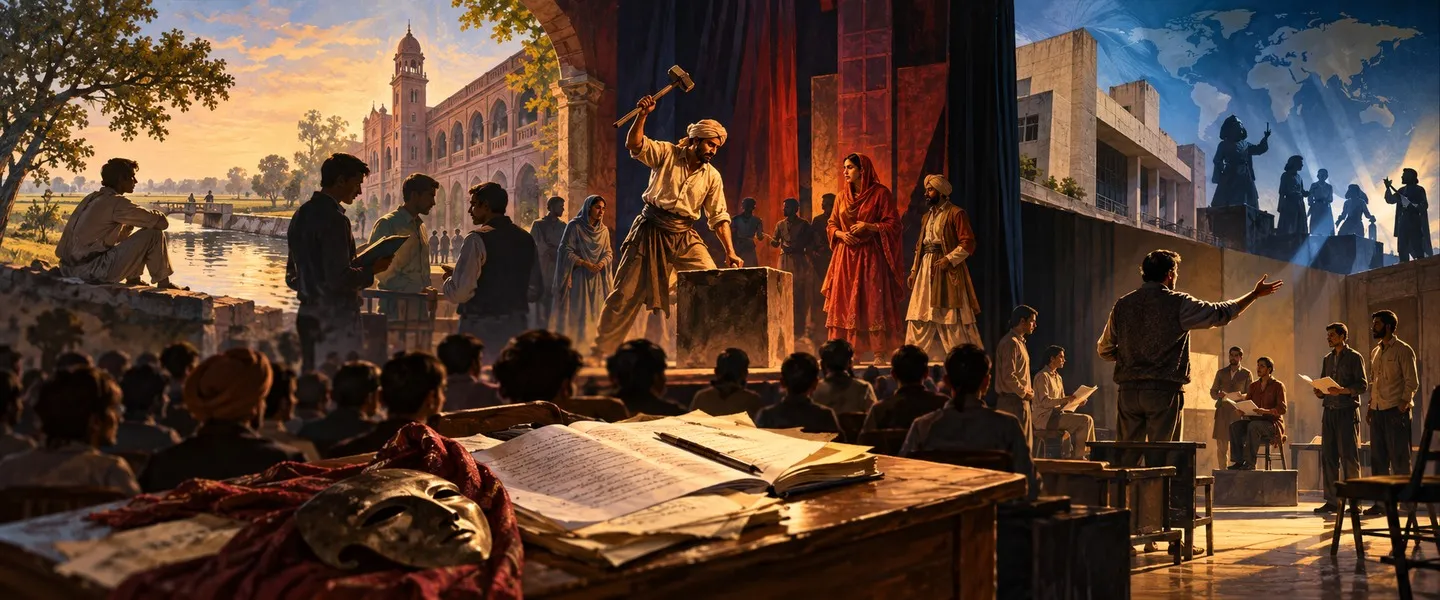
Balwant Gargi was a pioneering Punjabi playwright and theatre director who founded the Indian Theatre Department at Panjab University. His plays, including Loha Kutt, were translated into twelve languages and performed around the world.
- Facts
- Born
- 4 December 1916, Sehna, Barnala (Punjab)
- Died
- 21 April 2003, Mumbai
- Wrote in
- Punjabi, English
- Known for
- Loha Kutt, Rang Manch, The Naked Triangle
- Honours
- Sahitya Akademi Award (1962), Padma Shri (1972), Sangeet Natak Akademi Award (1998)
Early life
Balwant Gargi was born on 4 December 1916 in Sehna, a village in what is now Barnala district of Punjab, the second son of Shiv Chand Garg, a head clerk in the Irrigation Department. The Canal House of his birth, near the Sirhind Canal, stood close to the spot where Razia Sultana was once imprisoned. He studied at Government College, Lahore, and took his M.A. degrees in English and Political Science from Forman Christian College, Lahore. Drawn to the stage, he went on to study theatre under Norah Richards, the Irish-born doyenne of Punjabi theatre, at her school in the Kangra Valley.
Plays and theatre
Gargi wrote prolifically for the stage. His plays include Loha Kutt, Kesro, Kanak di Balli, Sohni Mahiwal, Sultan Razia, Soukan, Mirza Sahiba and Dhooni di Agg, alongside short stories such as Mircha Wala Sadh, Pattan di Berhi and Kuari Disi. He founded and directed the Indian Theatre Department at Panjab University, Chandigarh, institutionalising theatre studies in India, and his productions — including the Doordarshan serial Sanjha Chulha — won him national acclaim. His plays were translated into twelve languages and performed in cities from Moscow and London to New Delhi and the United States.
Books and autobiography
His book Rang Manch won the Sahitya Akademi Award in 1962. He also wrote the semi-autobiographical The Naked Triangle (1980), drawn from the two years (1966-67) he taught at the University of Washington, where he met Jeanne Henry, who became his wife; its Punjabi counterpart, Nangi Dhup, is among his best-known prose works. His English-language writings included Folk Theatre of India, published in New York.
Awards and legacy
Gargi received the Sahitya Akademi Award in 1962, the Padma Shri in 1972 and the Sangeet Natak Akademi Award for Punjabi playwriting in 1998 — one of the few Indian artists to win both the Sahitya Akademi and Sangeet Natak Akademi honours. As a teacher he mentored a generation of Bollywood actors, among them Anupam Kher, Kiron Kher, Satish Kaushik and Poonam Dhillon, and lectured as a distinguished visiting professor at Harvard, Yale, Vassar, Mount Holyoke and Trinity College. He died in Mumbai on 21 April 2003. The open-air theatre at Panjab University's theatre department is named after him.
ਮੁੱਢਲਾ ਜੀਵਨ
ਬਲਵੰਤ ਗਾਰਗੀ ਦਾ ਜਨਮ 4 ਦਸੰਬਰ 1916 ਨੂੰ ਬਰਨਾਲਾ ਇਲਾਕੇ ਦੇ ਪਿੰਡ ਸਹਿਣਾ ਵਿੱਚ ਹੋਇਆ। ਪਿਤਾ ਸ਼ਿਵ ਚੰਦ ਗਰਗ ਸਿੰਚਾਈ ਵਿਭਾਗ ਵਿੱਚ ਹੈੱਡ ਕਲਰਕ ਸਨ। ਉਨ੍ਹਾਂ ਨੇ ਲਾਹੌਰ ਦੇ ਸਰਕਾਰੀ ਕਾਲਜ ਵਿੱਚ ਪੜ੍ਹਾਈ ਕੀਤੀ ਅਤੇ ਫਾਰਮਨ ਕ੍ਰਿਸ਼ਚਨ ਕਾਲਜ, ਲਾਹੌਰ ਤੋਂ ਅੰਗਰੇਜ਼ੀ ਅਤੇ ਰਾਜਨੀਤੀ ਸ਼ਾਸਤਰ ਵਿੱਚ ਐਮ.ਏ. ਕੀਤੀ। ਰੰਗਮੰਚ ਵੱਲ ਖਿੱਚ ਨੇ ਉਨ੍ਹਾਂ ਨੂੰ ਕਾਂਗੜਾ ਘਾਟੀ ਵਿੱਚ ਨੋਰਾ ਰਿਚਰਡਜ਼ ਕੋਲ ਥੀਏਟਰ ਦੀ ਸਿਖਲਾਈ ਲੈਣ ਲਈ ਪਹੁੰਚਾਇਆ।
ਨਾਟਕ ਅਤੇ ਰੰਗਮੰਚ
ਗਾਰਗੀ ਨੇ 'ਲੋਹਾ ਕੁੱਟ', 'ਕੇਸਰੋ', 'ਕਣਕ ਦੀ ਬੱਲੀ', 'ਸੋਹਣੀ ਮਹੀਂਵਾਲ', 'ਸੁਲਤਾਨ ਰਜ਼ੀਆ', 'ਸੌਕਣ', 'ਮਿਰਜ਼ਾ ਸਾਹਿਬਾਂ' ਅਤੇ 'ਧੂਣੀ ਦੀ ਅੱਗ' ਵਰਗੇ ਨਾਟਕ ਲਿਖੇ। ਉਨ੍ਹਾਂ ਨੇ ਪੰਜਾਬ ਯੂਨੀਵਰਸਿਟੀ, ਚੰਡੀਗੜ੍ਹ ਵਿੱਚ ਭਾਰਤੀ ਰੰਗਮੰਚ ਵਿਭਾਗ ਦੀ ਸਥਾਪਨਾ ਕੀਤੀ ਅਤੇ ਇਸ ਦੇ ਪਹਿਲੇ ਨਿਰਦੇਸ਼ਕ ਬਣੇ। ਉਨ੍ਹਾਂ ਦੇ ਨਾਟਕ ਬਾਰਾਂ ਭਾਸ਼ਾਵਾਂ ਵਿੱਚ ਅਨੁਵਾਦ ਹੋਏ ਅਤੇ ਮਾਸਕੋ, ਲੰਡਨ, ਨਵੀਂ ਦਿੱਲੀ ਤੇ ਅਮਰੀਕਾ ਵਿੱਚ ਖੇਡੇ ਗਏ।
ਪੁਸਤਕਾਂ
ਉਨ੍ਹਾਂ ਦੀ ਪੁਸਤਕ 'ਰੰਗ ਮੰਚ' ਨੂੰ 1962 ਵਿੱਚ ਸਾਹਿਤ ਅਕਾਦਮੀ ਪੁਰਸਕਾਰ ਮਿਲਿਆ। ਅੰਗਰੇਜ਼ੀ ਵਿੱਚ ਲਿਖੀ ਆਤਮਕਥਾ 'ਦ ਨੈਕਿਡ ਟਰਾਇਐਂਗਲ' (1980) ਅਤੇ ਪੰਜਾਬੀ ਵਿੱਚ 'ਨੰਗੀ ਧੁੱਪ' ਉਨ੍ਹਾਂ ਦੀਆਂ ਪ੍ਰਸਿੱਧ ਰਚਨਾਵਾਂ ਹਨ।
ਸਨਮਾਨ
1962 ਵਿੱਚ ਸਾਹਿਤ ਅਕਾਦਮੀ ਪੁਰਸਕਾਰ, 1972 ਵਿੱਚ ਪਦਮ ਸ਼੍ਰੀ ਅਤੇ 1998 ਵਿੱਚ ਸੰਗੀਤ ਨਾਟਕ ਅਕਾਦਮੀ ਪੁਰਸਕਾਰ ਮਿਲਿਆ। ਉਨ੍ਹਾਂ ਦੇ ਸ਼ਾਗਿਰਦਾਂ ਵਿੱਚ ਅਨੁਪਮ ਖੇਰ, ਕਿਰਨ ਖੇਰ, ਸਤੀਸ਼ ਕੌਸ਼ਿਕ ਅਤੇ ਪੂਨਮ ਢਿੱਲੋਂ ਵਰਗੇ ਕਲਾਕਾਰ ਸ਼ਾਮਲ ਹਨ। 21 ਅਪ੍ਰੈਲ 2003 ਨੂੰ ਮੁੰਬਈ ਵਿੱਚ ਉਨ੍ਹਾਂ ਦਾ ਦੇਹਾਂਤ ਹੋ ਗਿਆ।