
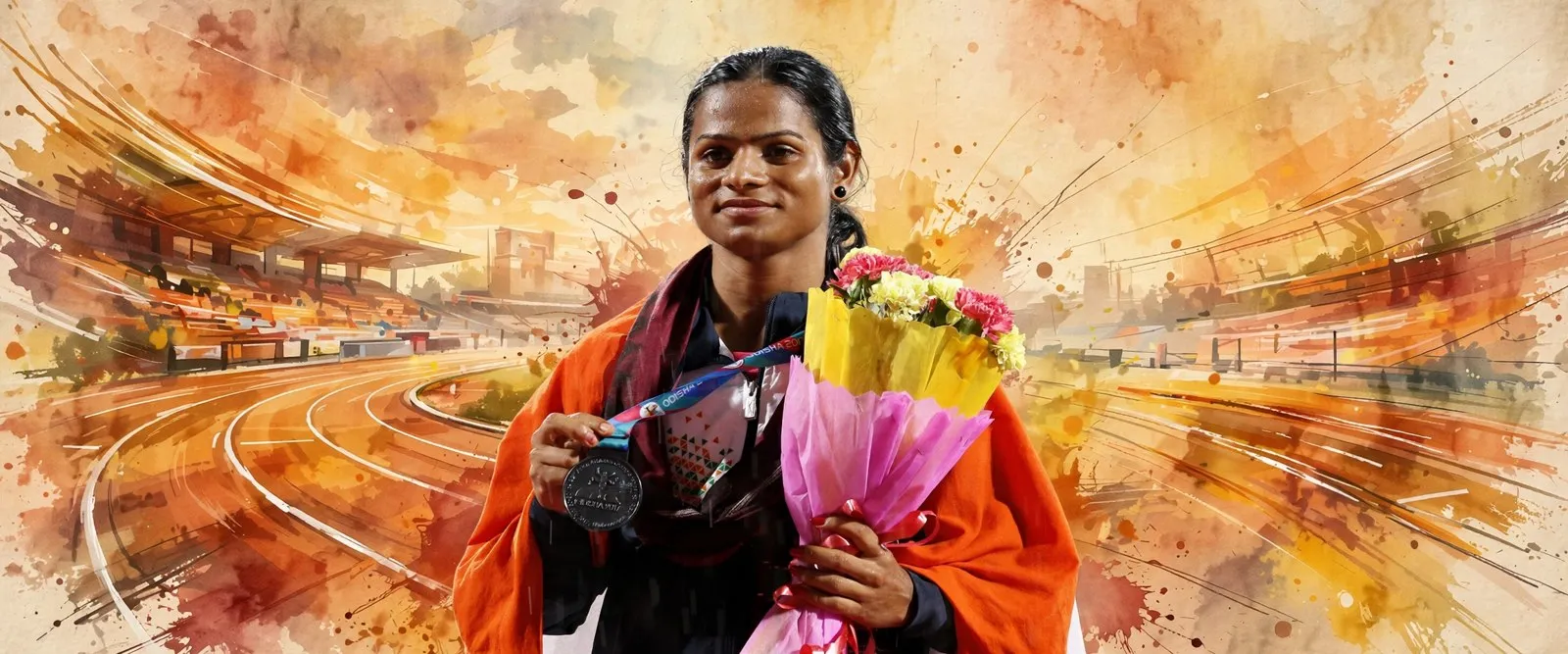
Dutee Chand is an Indian sprinter from Chaka Gopalpur village in Jajpur district, Odisha, and the fastest woman in India, holding the national 100 metres record of 11.17 seconds. She won two silver medals at the 2018 Asian Games and became the first Indian woman to win the 100 metres gold at the World University Games in Naples in 2019. She also ran at the Rio 2016 and Tokyo 2020 Olympics, won a landmark 2015 court case against world athletics over its testosterone rules, and in 2019 became India's first openly gay athlete.
- Punjabi name
- ਦੂਤੀ ਚੰਦ
- Born
- 3 February 1996
- Birthplace
- Chaka Gopalpur village, Jajpur district, Odisha
- Events
- 100 metres, 200 metres
- 100m personal best
- 11.17 seconds, Patiala, June 2021 (Indian national record)
- 200m personal best
- 23.00 seconds, Jakarta, 2018
All 11 facts
- 60m personal best
- 7.28 seconds, Doha, 2016 (Indian national record)
- World University Games
- Gold, 100m, Naples, 2019
- Asian Games
- Silver, 100m and 200m, Jakarta, 2018
- Olympics
- Rio 2016 and Tokyo 2020
- Arjuna Award
- 2020
Dutee Chand is an Indian sprinter from a small village in Odisha who became the fastest woman in India and the first Indian woman to win the 100 metres gold at the World University Games. Her career runs from a weaver's home in a small Odisha village to two Olympic Games, two Asian Games silver medals, a landmark court case that changed the rules of women's sport, and a public coming out that made her India's first openly gay athlete.
Early life
Dutee Chand was born on 3 February 1996 at Chaka Gopalpur, a small village in Jajpur district, Odisha. She was the third of seven children of Chakradhar Chand and Akhuji Chand, who worked as weavers. The family lived below the poverty line, and running began for her not on a track but on the rough ground of her village.
Her elder sister Saraswati was a state level runner, and Dutee followed her everywhere. She began training with Saraswati when she was four years old. In 2006, when she was ten, the two sisters were taken into a government sports hostel. The hostel gave Dutee coaching and a small stipend, and the money she sent home helped her family move out of their two-room house. In 2013 she joined KIIT University in Bhubaneswar to study law, while her running career moved to the national stage.
Breakthrough and the road to Rio
Chand became under-18 national champion in 2012, clocking 11.85 seconds in the 100 metres. In 2013 she won bronze in the 200 metres at the Asian Championships in Pune, reached the final of the 100 metres at the World Youth Championships in Donetsk, the first Indian to reach a global 100 metres final, and won national senior titles in both the 100 metres and the 200 metres at Ranchi.
In June 2014 she won two gold medals at the Asian Junior Championships in Taipei, in the 200 metres and the 4x400 metres relay. A place at the Commonwealth Games in Glasgow looked certain. Instead, her career stopped for a year, in circumstances described in the next section.
ਦੂਤੀ ਚੰਦ ਭਾਰਤ ਦੀ ਇੱਕ ਦੌੜਾਕ ਹੈ ਜੋ ਓਡੀਸ਼ਾ ਦੇ ਇੱਕ ਛੋਟੇ ਜਿਹੇ ਪਿੰਡ ਤੋਂ ਆਈ ਅਤੇ ਭਾਰਤ ਦੀ ਸਭ ਤੋਂ ਤੇਜ਼ ਮਹਿਲਾ ਬਣੀ ਅਤੇ ਵਿਸ਼ਵ ਯੂਨੀਵਰਸਿਟੀ ਖੇਡਾਂ ਵਿੱਚ 100 ਮੀਟਰ ਸੋਨ ਤਮਗਾ ਜਿੱਤਣ ਵਾਲੀ ਪਹਿਲੀ ਭਾਰਤੀ ਮਹਿਲਾ ਬਣੀ। ਉਸ ਦਾ ਸਫ਼ਰ ਓਡੀਸ਼ਾ ਦੇ ਇੱਕ ਛੋਟੇ ਜਿਹੇ ਪਿੰਡ ਵਿੱਚ ਇੱਕ ਜੁਲਾਹੇ ਦੇ ਘਰ ਤੋਂ ਸ਼ੁਰੂ ਹੋ ਕੇ ਦੋ ਓਲੰਪਿਕ ਖੇਡਾਂ, ਏਸ਼ੀਆਈ ਖੇਡਾਂ ਦੇ ਦੋ ਚਾਂਦੀ ਤਮਗੇ, ਮਹਿਲਾ ਖੇਡਾਂ ਦੇ ਨਿਯਮਾਂ ਨੂੰ ਬਦਲਣ ਵਾਲੇ ਇੱਕ ਇਤਿਹਾਸਕ ਅਦਾਲਤੀ ਕੇਸ ਅਤੇ ਇੱਕ ਅਜਿਹੇ ਖੁਲਾਸੇ ਤੱਕ ਪਹੁੰਚਿਆ ਜਿਸ ਨੇ ਉਸ ਨੂੰ ਭਾਰਤ ਦੀ ਪਹਿਲੀ ਖੁੱਲ੍ਹ ਕੇ ਸਮਲਿੰਗੀ ਖਿਡਾਰਨ ਬਣਾ ਦਿੱਤਾ।
ਮੁੱਢਲਾ ਜੀਵਨ
ਦੂਤੀ ਚੰਦ ਦਾ ਜਨਮ 3 ਫਰਵਰੀ 1996 ਨੂੰ ਓਡੀਸ਼ਾ ਦੇ ਜਾਜਪੁਰ ਜ਼ਿਲ੍ਹੇ ਦੇ ਇੱਕ ਛੋਟੇ ਜਿਹੇ ਪਿੰਡ ਚਾਕਾ ਗੋਪਾਲਪੁਰ ਵਿੱਚ ਹੋਇਆ। ਉਹ ਚੱਕਰਧਰ ਚੰਦ ਅਤੇ ਆਖੂਜੀ ਚੰਦ ਦੇ ਸੱਤ ਬੱਚਿਆਂ ਵਿੱਚੋਂ ਤੀਜੀ ਸੀ, ਜੋ ਜੁਲਾਹੇ ਦਾ ਕੰਮ ਕਰਦੇ ਸਨ। ਪਰਿਵਾਰ ਗ਼ਰੀਬੀ ਰੇਖਾ ਤੋਂ ਹੇਠਾਂ ਰਹਿੰਦਾ ਸੀ, ਅਤੇ ਉਸ ਦੀ ਦੌੜ ਕਿਸੇ ਟਰੈਕ ਉੱਤੇ ਨਹੀਂ, ਸਗੋਂ ਪਿੰਡ ਦੀ ਕੱਚੀ ਜ਼ਮੀਨ ਉੱਤੇ ਸ਼ੁਰੂ ਹੋਈ।
ਉਸ ਦੀ ਵੱਡੀ ਭੈਣ ਸਰਸਵਤੀ ਰਾਜ ਪੱਧਰ ਦੀ ਦੌੜਾਕ ਸੀ, ਅਤੇ ਦੂਤੀ ਹਰ ਥਾਂ ਉਸ ਦੇ ਪਿੱਛੇ ਪਿੱਛੇ ਜਾਂਦੀ ਸੀ। ਉਸ ਨੇ ਚਾਰ ਸਾਲ ਦੀ ਉਮਰ ਵਿੱਚ ਸਰਸਵਤੀ ਨਾਲ ਦੌੜਨਾ ਸ਼ੁਰੂ ਕੀਤਾ। 2006 ਵਿੱਚ, ਜਦੋਂ ਉਹ ਦਸ ਸਾਲ ਦੀ ਸੀ, ਦੋਵੇਂ ਭੈਣਾਂ ਨੂੰ ਇੱਕ ਸਰਕਾਰੀ ਖੇਡ ਹੋਸਟਲ ਵਿੱਚ ਲੈ ਲਿਆ ਗਿਆ। ਹੋਸਟਲ ਨੇ ਦੂਤੀ ਨੂੰ ਕੋਚਿੰਗ ਅਤੇ ਥੋੜ੍ਹਾ ਜਿਹਾ ਵਜ਼ੀਫ਼ਾ ਦਿੱਤਾ, ਅਤੇ ਘਰ ਭੇਜੇ ਪੈਸਿਆਂ ਨਾਲ ਉਸ ਦੇ ਪਰਿਵਾਰ ਨੂੰ ਆਪਣੇ ਦੋ ਕਮਰਿਆਂ ਵਾਲੇ ਘਰ ਤੋਂ ਬਾਹਰ ਨਿਕਲਣ ਵਿੱਚ ਮਦਦ ਮਿਲੀ। 2013 ਵਿੱਚ ਉਸ ਨੇ ਭੁਵਨੇਸ਼ਵਰ ਦੀ ਕੇਆਈਆਈਟੀ ਯੂਨੀਵਰਸਿਟੀ ਵਿੱਚ ਕਾਨੂੰਨ ਦੀ ਪੜ੍ਹਾਈ ਸ਼ੁਰੂ ਕੀਤੀ, ਜਦੋਂ ਉਸ ਦਾ ਦੌੜ ਦਾ ਸਫ਼ਰ ਰਾਸ਼ਟਰੀ ਪੱਧਰ ਉੱਤੇ ਪਹੁੰਚ ਰਿਹਾ ਸੀ।
ਉਭਾਰ ਅਤੇ ਰੀਓ ਤੱਕ ਦਾ ਸਫ਼ਰ
2012 ਵਿੱਚ ਚੰਦ 100 ਮੀਟਰ ਵਿੱਚ 11.85 ਸੈਕਿੰਡ ਨਾਲ ਅੰਡਰ-18 ਰਾਸ਼ਟਰੀ ਚੈਂਪੀਅਨ ਬਣੀ। 2013 ਵਿੱਚ ਉਸ ਨੇ ਪੁਣੇ ਵਿੱਚ ਏਸ਼ੀਆਈ ਚੈਂਪੀਅਨਸ਼ਿਪ ਵਿੱਚ 200 ਮੀਟਰ ਵਿੱਚ ਕਾਂਸੀ ਦਾ ਤਮਗਾ ਜਿੱਤਿਆ, ਡੋਨੈਟਸਕ ਵਿੱਚ ਵਿਸ਼ਵ ਯੁਵਾ ਚੈਂਪੀਅਨਸ਼ਿਪ ਵਿੱਚ 100 ਮੀਟਰ ਦੇ ਫਾਈਨਲ ਤੱਕ ਪਹੁੰਚੀ, ਜੋ ਕਿਸੇ ਵਿਸ਼ਵ 100 ਮੀਟਰ ਫਾਈਨਲ ਤੱਕ ਪਹੁੰਚਣ ਵਾਲੀ ਪਹਿਲੀ ਭਾਰਤੀ ਸੀ, ਅਤੇ ਰਾਂਚੀ ਵਿੱਚ 100 ਮੀਟਰ ਅਤੇ 200 ਮੀਟਰ ਦੋਵਾਂ ਵਿੱਚ ਰਾਸ਼ਟਰੀ ਸੀਨੀਅਰ ਖ਼ਿਤਾਬ ਜਿੱਤੇ।
ਜੂਨ 2014 ਵਿੱਚ ਉਸ ਨੇ ਤਾਈਪੇ ਵਿੱਚ ਏਸ਼ੀਆਈ ਜੂਨੀਅਰ ਚੈਂਪੀਅਨਸ਼ਿਪ ਵਿੱਚ 200 ਮੀਟਰ ਅਤੇ 4x400 ਮੀਟਰ ਰਿਲੇਅ ਵਿੱਚ ਦੋ ਸੋਨ ਤਮਗੇ ਜਿੱਤੇ। ਗਲਾਸਗੋ ਵਿੱਚ ਰਾਸ਼ਟਰਮੰਡਲ ਖੇਡਾਂ ਵਿੱਚ ਜਗ੍ਹਾ ਲਗਭਗ ਪੱਕੀ ਲੱਗਦੀ ਸੀ। ਪਰ ਇਸ ਦੀ ਥਾਂ ਉਸ ਦਾ ਸਫ਼ਰ ਇੱਕ ਸਾਲ ਲਈ ਰੁਕ ਗਿਆ, ਜਿਸ ਦੇ ਹਾਲਾਤ ਅਗਲੇ ਭਾਗ ਵਿੱਚ ਦੱਸੇ ਗਏ ਹਨ।
She returned in 2016 with a run of records. At the Asian Indoor Championships in Doha she won bronze in the 60 metres and set an Indian record of 7.28 seconds in the heats. At the Federation Cup in New Delhi she clocked 11.33 seconds to win the 100 metres and break Rachita Mistry's 16 year old national record of 11.38 seconds, missing the Olympic qualifying mark of 11.32 seconds by one hundredth of a second. On 25 June 2016 she broke the record twice in one day at Almaty in Kazakhstan, running 11.30 seconds in the heats and 11.24 seconds in the final to qualify for the Rio Olympics. At Rio she clocked 11.69 seconds in her heat. She did not reach the semi-finals, but she became the third Indian woman ever to run the Olympic 100 metres, and the first to qualify for the event in 36 years. In the same year the Odisha government appointed her assistant manager of the Odisha Mining Corporation.
Why did Dutee Chand have to fight for the right to run?
In June 2014, days after her Asian Junior gold medals, the Athletics Federation of India dropped Chand from the Commonwealth Games squad. Officials said tests had found that her body produced more testosterone than the usual range for women, a condition called hyperandrogenism, and that the world governing body's rules made her ineligible to compete as a female athlete. She was then left out of the Indian squad for the Asian Games as well. There was no suggestion that she had cheated or taken banned drugs, and the decision drew wide criticism.
Chand refused to accept the ruling. She appealed to the Court of Arbitration for Sport in Switzerland, represented without charge by the Canadian law firm Davies, Ward, Phillips and Vineberg. In July 2015 the court suspended the IAAF policy on hyperandrogenism, finding that there was no clear evidence that naturally high testosterone improved a woman's athletic performance. The court gave the IAAF two years to produce such evidence. The ruling cleared Chand to race again, and it was the first time an athlete had challenged the policy and won.
Chand has spoken since about how hard the episode was, including the medical examinations she was put through, which she found humiliating, and the years of doubt about whether her career would survive. Her case is still cited in the debate over who should be allowed to compete in women's sport, and it was one of the cases profiled in the 2022 documentary Category: Woman.
Asian Games silver and Universiade gold
At the Asian Championships in Bhubaneswar in 2017, Chand won bronze in the 100 metres and bronze in the 4x100 metres relay, in front of a home crowd. A year later, at the Asian Games in Jakarta, she won silver in the 100 metres final on 26 August, clocking 11.32 seconds. It was India's first medal in the event in 32 years, since P. T. Usha's silver in 1986. On 29 August she won a second silver in the 200 metres, and she had already run a personal best of 23.00 seconds in the semi-final. The Odisha government awarded her three crore rupees for the two medals.
Her finest hour came on 10 July 2019 at the Summer Universiade in Naples, Italy. Chand won the 100 metres gold in 11.32 seconds, becoming the first Indian woman to win the 100 metres gold at the Universiade. She had carried the Indian flag at the opening ceremony of the same games. A month later the sportswear brand Puma signed her to a two year deal. She also won bronze in the 200 metres at the 2019 Asian Championships in Doha.
Speaking openly
In May 2019 Chand spoke publicly about being in a same-sex relationship, becoming the first openly gay athlete in India. She said the Supreme Court's decision of September 2018, which decriminalised gay sex in India, had given her the courage to speak. The news drew support from around the world, including a public message from the American television host Ellen DeGeneres, and it also drew a hostile reaction in her home village, where some residents and members of her own family spoke against her. Chand has said she will keep supporting her family whatever they say about her, and that love should not be a cause for fear.
Tokyo, a ban and retirement
Chand received the Arjuna Award, one of India's highest sporting honours, in 2020. In June 2021 she set a new Indian 100 metres record of 11.17 seconds at the Indian Grand Prix in Patiala. At the Tokyo Olympics, held in 2021, she ran in both the 100 metres and the 200 metres, clocking 11.54 seconds and 23.85 seconds in her heats, and did not reach the semi-finals.
In January 2023 she was provisionally suspended after an out-of-competition test in December 2022 returned a positive result for selective androgen receptor modulators, known as SARMs. In August 2023 the National Anti Doping Agency imposed a four year ban, running from 3 January 2023, and disqualified her results from 5 December 2022, the date the sample was collected. The disciplinary panel found that she had shown where the substance came from but had not established that the violation was unintentional.
In 2024 Chand said she planned to retire from competitive sprinting, saying she was no longer as fast as she used to be.
Legacy
Dutee Chand's place in Indian sport rests on more than her medals. She holds the Indian 100 metres record of 11.17 seconds and the indoor 60 metres record of 7.28 seconds, and she remains the only Indian woman to have won the 100 metres at the Universiade. Her court case forced world athletics to produce evidence for its rules about women's bodies, and it opened the way for other athletes to challenge them.
She also changed the conversation in Indian sport about who an athlete is allowed to be. A girl from a weaver's family in a village in Odisha, who began running on her village track at the age of four, reached two Olympic Games, stood on the Asian Games podium twice, and spoke openly about her life when silence would have been easier. For young sprinters in India, that is the part of her story that lasts.
ਉਹ 2016 ਵਿੱਚ ਰਿਕਾਰਡਾਂ ਦੀ ਲੜੀ ਨਾਲ ਵਾਪਸ ਆਈ। ਦੋਹਾ ਵਿੱਚ ਏਸ਼ੀਆਈ ਇਨਡੋਰ ਚੈਂਪੀਅਨਸ਼ਿਪ ਵਿੱਚ ਉਸ ਨੇ 60 ਮੀਟਰ ਵਿੱਚ ਕਾਂਸੀ ਦਾ ਤਮਗਾ ਜਿੱਤਿਆ ਅਤੇ ਹੀਟ ਵਿੱਚ 7.28 ਸੈਕਿੰਡ ਨਾਲ ਭਾਰਤੀ ਰਿਕਾਰਡ ਬਣਾਇਆ। ਨਵੀਂ ਦਿੱਲੀ ਵਿੱਚ ਫੈਡਰੇਸ਼ਨ ਕੱਪ ਵਿੱਚ ਉਸ ਨੇ 100 ਮੀਟਰ ਵਿੱਚ 11.33 ਸੈਕਿੰਡ ਨਾਲ ਜਿੱਤ ਹਾਸਲ ਕੀਤੀ ਅਤੇ ਰਚਿਤਾ ਮਿਸਤਰੀ ਦਾ 16 ਸਾਲ ਪੁਰਾਣਾ 11.38 ਸੈਕਿੰਡ ਦਾ ਰਾਸ਼ਟਰੀ ਰਿਕਾਰਡ ਤੋੜਿਆ, ਪਰ ਓਲੰਪਿਕ ਯੋਗਤਾ ਦੇ 11.32 ਸੈਕਿੰਡ ਦੇ ਅੰਕੜੇ ਤੋਂ ਇੱਕ ਸੌਵੇਂ ਹਿੱਸੇ ਨਾਲ ਪਿੱਛੇ ਰਹਿ ਗਈ। 25 ਜੂਨ 2016 ਨੂੰ ਉਸ ਨੇ ਕਜ਼ਾਖਸਤਾਨ ਦੇ ਅਲਮਾਟੀ ਵਿੱਚ ਇੱਕ ਹੀ ਦਿਨ ਵਿੱਚ ਦੋ ਵਾਰ ਰਿਕਾਰਡ ਤੋੜਿਆ, ਹੀਟ ਵਿੱਚ 11.30 ਸੈਕਿੰਡ ਅਤੇ ਫਾਈਨਲ ਵਿੱਚ 11.24 ਸੈਕਿੰਡ ਦੌੜ ਕੇ ਰੀਓ ਓਲੰਪਿਕ ਲਈ ਯੋਗਤਾ ਹਾਸਲ ਕੀਤੀ। ਰੀਓ ਵਿੱਚ ਉਸ ਨੇ ਆਪਣੀ ਹੀਟ ਵਿੱਚ 11.69 ਸੈਕਿੰਡ ਦਾ ਸਮਾਂ ਕੱਢਿਆ। ਉਹ ਸੈਮੀਫਾਈਨਲ ਤੱਕ ਨਹੀਂ ਪਹੁੰਚੀ, ਪਰ ਉਹ ਓਲੰਪਿਕ 100 ਮੀਟਰ ਦੌੜਨ ਵਾਲੀ ਤੀਜੀ ਭਾਰਤੀ ਮਹਿਲਾ ਬਣੀ, ਅਤੇ 36 ਸਾਲਾਂ ਵਿੱਚ ਇਸ ਮੁਕਾਬਲੇ ਲਈ ਯੋਗਤਾ ਹਾਸਲ ਕਰਨ ਵਾਲੀ ਪਹਿਲੀ ਭਾਰਤੀ ਮਹਿਲਾ ਬਣੀ। ਉਸੇ ਸਾਲ ਓਡੀਸ਼ਾ ਸਰਕਾਰ ਨੇ ਉਸ ਨੂੰ ਓਡੀਸ਼ਾ ਮਾਈਨਿੰਗ ਕਾਰਪੋਰੇਸ਼ਨ ਵਿੱਚ ਸਹਾਇਕ ਪ੍ਰਬੰਧਕ ਨਿਯੁਕਤ ਕੀਤਾ।
ਦੂਤੀ ਚੰਦ ਨੂੰ ਦੌੜਨ ਦੇ ਹੱਕ ਲਈ ਲੜਨਾ ਕਿਉਂ ਪਿਆ?
ਜੂਨ 2014 ਵਿੱਚ, ਏਸ਼ੀਆਈ ਜੂਨੀਅਰ ਸੋਨ ਤਮਗਿਆਂ ਤੋਂ ਕੁਝ ਦਿਨ ਬਾਅਦ, ਭਾਰਤੀ ਐਥਲੈਟਿਕਸ ਮਹਾਸੰਘ ਨੇ ਚੰਦ ਨੂੰ ਰਾਸ਼ਟਰਮੰਡਲ ਖੇਡਾਂ ਦੀ ਟੀਮ ਤੋਂ ਬਾਹਰ ਕਰ ਦਿੱਤਾ। ਅਧਿਕਾਰੀਆਂ ਨੇ ਕਿਹਾ ਕਿ ਜਾਂਚਾਂ ਵਿੱਚ ਪਾਇਆ ਗਿਆ ਕਿ ਉਸ ਦੇ ਸਰੀਰ ਵਿੱਚ ਔਰਤਾਂ ਲਈ ਆਮ ਮਾਤਰਾ ਨਾਲੋਂ ਵੱਧ ਟੈਸਟੋਸਟੀਰੋਨ ਬਣਦਾ ਹੈ, ਜਿਸ ਨੂੰ ਹਾਈਪਰਐਂਡਰੋਜਨਿਜ਼ਮ ਕਿਹਾ ਜਾਂਦਾ ਹੈ, ਅਤੇ ਵਿਸ਼ਵ ਸੰਸਥਾ ਦੇ ਨਿਯਮਾਂ ਮੁਤਾਬਕ ਉਹ ਮਹਿਲਾ ਖਿਡਾਰਨ ਵਜੋਂ ਖੇਡਣ ਦੇ ਯੋਗ ਨਹੀਂ ਸੀ। ਫਿਰ ਉਸ ਨੂੰ ਏਸ਼ੀਆਈ ਖੇਡਾਂ ਦੀ ਭਾਰਤੀ ਟੀਮ ਤੋਂ ਵੀ ਬਾਹਰ ਰੱਖਿਆ ਗਿਆ। ਇਸ ਗੱਲ ਦਾ ਕੋਈ ਸੰਕੇਤ ਨਹੀਂ ਸੀ ਕਿ ਉਸ ਨੇ ਧੋਖਾ ਦਿੱਤਾ ਹੋਵੇ ਜਾਂ ਪਾਬੰਦੀਸ਼ੁਦਾ ਦਵਾਈ ਲਈ ਹੋਵੇ, ਅਤੇ ਇਸ ਫ਼ੈਸਲੇ ਦੀ ਵਿਆਪਕ ਆਲੋਚਨਾ ਹੋਈ।
ਚੰਦ ਨੇ ਇਹ ਫ਼ੈਸਲਾ ਮੰਨਣ ਤੋਂ ਇਨਕਾਰ ਕਰ ਦਿੱਤਾ। ਉਸ ਨੇ ਸਵਿਟਜ਼ਰਲੈਂਡ ਵਿੱਚ ਖੇਡਾਂ ਲਈ ਮਧਿਅਤਾ ਦੀ ਅਦਾਲਤ ਵਿੱਚ ਅਪੀਲ ਕੀਤੀ, ਜਿੱਥੇ ਕੈਨੇਡਾ ਦੀ ਕਾਨੂੰਨੀ ਫਰਮ ਡੇਵੀਜ਼, ਵਾਰਡ, ਫਿਲਿਪਸ ਅਤੇ ਵਾਈਨਬਰਗ ਨੇ ਬਿਨਾਂ ਫੀਸ ਉਸ ਦਾ ਕੇਸ ਲੜਿਆ। ਜੁਲਾਈ 2015 ਵਿੱਚ ਅਦਾਲਤ ਨੇ ਹਾਈਪਰਐਂਡਰੋਜਨਿਜ਼ਮ ਬਾਰੇ ਆਈਏਏਐਫ ਦੀ ਨੀਤੀ ਨੂੰ ਮੁਅੱਤਲ ਕਰ ਦਿੱਤਾ, ਇਹ ਪਾਇਆ ਕਿ ਇਸ ਗੱਲ ਦਾ ਕੋਈ ਸਪੱਸ਼ਟ ਸਬੂਤ ਨਹੀਂ ਸੀ ਕਿ ਕੁਦਰਤੀ ਤੌਰ ਉੱਤੇ ਵੱਧ ਟੈਸਟੋਸਟੀਰੋਨ ਨਾਲ ਮਹਿਲਾ ਦੀ ਖੇਡ ਪ੍ਰਦਰਸ਼ਨ ਵਿੱਚ ਸੁਧਾਰ ਹੁੰਦਾ ਹੈ। ਅਦਾਲਤ ਨੇ ਆਈਏਏਐਫ ਨੂੰ ਅਜਿਹਾ ਸਬੂਤ ਪੇਸ਼ ਕਰਨ ਲਈ ਦੋ ਸਾਲ ਦਿੱਤੇ। ਇਸ ਫ਼ੈਸਲੇ ਨਾਲ ਚੰਦ ਨੂੰ ਫਿਰ ਦੌੜਨ ਦੀ ਇਜਾਜ਼ਤ ਮਿਲ ਗਈ, ਅਤੇ ਇਹ ਪਹਿਲੀ ਵਾਰ ਸੀ ਜਦੋਂ ਕਿਸੇ ਖਿਡਾਰਨ ਨੇ ਇਸ ਨੀਤੀ ਨੂੰ ਚੁਣੌਤੀ ਦੇ ਕੇ ਜਿੱਤ ਹਾਸਲ ਕੀਤੀ।
ਚੰਦ ਨੇ ਬਾਅਦ ਵਿੱਚ ਦੱਸਿਆ ਕਿ ਇਹ ਸਮਾਂ ਉਸ ਲਈ ਕਿੰਨਾ ਔਖਾ ਸੀ, ਜਿਸ ਵਿੱਚ ਉਹ ਡਾਕਟਰੀ ਜਾਂਚਾਂ ਵੀ ਸ਼ਾਮਲ ਸਨ ਜਿਨ੍ਹਾਂ ਨੂੰ ਉਸ ਨੇ ਅਪਮਾਨਜਨਕ ਮਹਿਸੂਸ ਕੀਤਾ, ਅਤੇ ਸਾਲਾਂ ਤੱਕ ਇਹ ਸ਼ੰਕਾ ਬਣੀ ਰਹੀ ਕਿ ਉਸ ਦਾ ਸਫ਼ਰ ਬਚੇਗਾ ਜਾਂ ਨਹੀਂ। ਉਸ ਦਾ ਕੇਸ ਅੱਜ ਵੀ ਮਹਿਲਾ ਖੇਡਾਂ ਵਿੱਚ ਕੌਣ ਖੇਡ ਸਕਦਾ ਹੈ, ਇਸ ਬਹਿਸ ਵਿੱਚ ਦਿੱਤਾ ਜਾਂਦਾ ਹੈ, ਅਤੇ ਇਹ ਉਨ੍ਹਾਂ ਕੇਸਾਂ ਵਿੱਚੋਂ ਇੱਕ ਸੀ ਜਿਨ੍ਹਾਂ ਨੂੰ 2022 ਦੀ ਦਸਤਾਵੇਜ਼ੀ ਫ਼ਿਲਮ ਕੈਟੇਗਰੀ: ਵੂਮੈਨ ਵਿੱਚ ਦਿਖਾਇਆ ਗਿਆ।
ਏਸ਼ੀਆਈ ਖੇਡਾਂ ਦਾ ਚਾਂਦੀ ਤਮਗਾ ਅਤੇ ਯੂਨੀਵਰਸਿਆਡ ਸੋਨਾ
2017 ਵਿੱਚ ਭੁਵਨੇਸ਼ਵਰ ਵਿੱਚ ਏਸ਼ੀਆਈ ਚੈਂਪੀਅਨਸ਼ਿਪ ਵਿੱਚ ਚੰਦ ਨੇ ਘਰੇਲੂ ਦਰਸ਼ਕਾਂ ਸਾਹਮਣੇ 100 ਮੀਟਰ ਵਿੱਚ ਕਾਂਸੀ ਦਾ ਤਮਗਾ ਅਤੇ 4x100 ਮੀਟਰ ਰਿਲੇਅ ਵਿੱਚ ਕਾਂਸੀ ਦਾ ਤਮਗਾ ਜਿੱਤਿਆ। ਇੱਕ ਸਾਲ ਬਾਅਦ ਜਕਾਰਤਾ ਵਿੱਚ ਏਸ਼ੀਆਈ ਖੇਡਾਂ ਵਿੱਚ ਉਸ ਨੇ 26 ਅਗਸਤ ਨੂੰ 100 ਮੀਟਰ ਫਾਈਨਲ ਵਿੱਚ 11.32 ਸੈਕਿੰਡ ਨਾਲ ਚਾਂਦੀ ਦਾ ਤਮਗਾ ਜਿੱਤਿਆ। ਇਹ 32 ਸਾਲਾਂ ਵਿੱਚ ਇਸ ਮੁਕਾਬਲੇ ਵਿੱਚ ਭਾਰਤ ਦਾ ਪਹਿਲਾ ਤਮਗਾ ਸੀ, ਜੋ 1986 ਵਿੱਚ ਪੀ. ਟੀ. ਊਸ਼ਾ ਦੇ ਚਾਂਦੀ ਤਮਗੇ ਤੋਂ ਬਾਅਦ ਆਇਆ। 29 ਅਗਸਤ ਨੂੰ ਉਸ ਨੇ 200 ਮੀਟਰ ਵਿੱਚ ਦੂਜਾ ਚਾਂਦੀ ਦਾ ਤਮਗਾ ਜਿੱਤਿਆ, ਅਤੇ ਸੈਮੀਫਾਈਨਲ ਵਿੱਚ ਉਹ ਪਹਿਲਾਂ ਹੀ 23.00 ਸੈਕਿੰਡ ਦਾ ਆਪਣਾ ਸਭ ਤੋਂ ਵਧੀਆ ਸਮਾਂ ਕੱਢ ਚੁੱਕੀ ਸੀ। ਓਡੀਸ਼ਾ ਸਰਕਾਰ ਨੇ ਦੋਵਾਂ ਤਮਗਿਆਂ ਲਈ ਉਸ ਨੂੰ ਤਿੰਨ ਕਰੋੜ ਰੁਪਏ ਦਿੱਤੇ।
ਉਸ ਦਾ ਸਭ ਤੋਂ ਵੱਡਾ ਪਲ 10 ਜੁਲਾਈ 2019 ਨੂੰ ਇਟਲੀ ਦੇ ਨੇਪਲਜ਼ ਵਿੱਚ ਗਰਮੀਆਂ ਦੀ ਯੂਨੀਵਰਸਿਆਡ ਵਿੱਚ ਆਇਆ। ਚੰਦ ਨੇ 100 ਮੀਟਰ ਵਿੱਚ 11.32 ਸੈਕਿੰਡ ਨਾਲ ਸੋਨ ਤਮਗਾ ਜਿੱਤਿਆ ਅਤੇ ਯੂਨੀਵਰਸਿਆਡ ਵਿੱਚ 100 ਮੀਟਰ ਸੋਨ ਤਮਗਾ ਜਿੱਤਣ ਵਾਲੀ ਪਹਿਲੀ ਭਾਰਤੀ ਮਹਿਲਾ ਬਣੀ। ਉਸੇ ਖੇਡਾਂ ਦੇ ਉਦਘਾਟਨੀ ਸਮਾਰੋਹ ਵਿੱਚ ਉਸ ਨੇ ਭਾਰਤੀ ਝੰਡਾ ਚੁੱਕਿਆ ਸੀ। ਇੱਕ ਮਹੀਨੇ ਬਾਅਦ ਖੇਡਾਂ ਦੇ ਬਰਾਂਡ ਪੂਮਾ ਨੇ ਉਸ ਨਾਲ ਦੋ ਸਾਲ ਦਾ ਸਮਝੌਤਾ ਕੀਤਾ। ਉਸ ਨੇ ਦੋਹਾ ਵਿੱਚ 2019 ਦੀ ਏਸ਼ੀਆਈ ਚੈਂਪੀਅਨਸ਼ਿਪ ਵਿੱਚ 200 ਮੀਟਰ ਵਿੱਚ ਕਾਂਸੀ ਦਾ ਤਮਗਾ ਵੀ ਜਿੱਤਿਆ।
ਖੁੱਲ੍ਹ ਕੇ ਬੋਲਣਾ
ਮਈ 2019 ਵਿੱਚ ਚੰਦ ਨੇ ਖੁੱਲ੍ਹ ਕੇ ਦੱਸਿਆ ਕਿ ਉਹ ਇੱਕ ਸਮਲਿੰਗੀ ਸਬੰਧ ਵਿੱਚ ਹੈ, ਅਤੇ ਉਹ ਭਾਰਤ ਦੀ ਪਹਿਲੀ ਖੁੱਲ੍ਹ ਕੇ ਸਮਲਿੰਗੀ ਖਿਡਾਰਨ ਬਣੀ। ਉਸ ਨੇ ਕਿਹਾ ਕਿ ਸਤੰਬਰ 2018 ਵਿੱਚ ਸੁਪਰੀਮ ਕੋਰਟ ਦੇ ਫ਼ੈਸਲੇ, ਜਿਸ ਨੇ ਭਾਰਤ ਵਿੱਚ ਸਮਲਿੰਗੀ ਸਬੰਧਾਂ ਨੂੰ ਅਪਰਾਧ ਦੀ ਸ਼੍ਰੇਣੀ ਤੋਂ ਬਾਹਰ ਕਰ ਦਿੱਤਾ, ਨੇ ਉਸ ਨੂੰ ਬੋਲਣ ਦੀ ਹਿੰਮਤ ਦਿੱਤੀ। ਇਸ ਖ਼ਬਰ ਨੂੰ ਦੁਨੀਆ ਭਰ ਤੋਂ ਸਮਰਥਨ ਮਿਲਿਆ, ਜਿਸ ਵਿੱਚ ਅਮਰੀਕੀ ਟੈਲੀਵਿਜ਼ਨ ਮੇਜ਼ਬਾਨ ਐਲਨ ਡਿਜੈਨਰਸ ਦਾ ਜਨਤਕ ਸੰਦੇਸ਼ ਵੀ ਸ਼ਾਮਲ ਸੀ, ਪਰ ਉਸ ਦੇ ਆਪਣੇ ਪਿੰਡ ਵਿੱਚ ਵੀ ਇਸ ਦਾ ਵਿਰੋਧ ਹੋਇਆ, ਜਿੱਥੇ ਕੁਝ ਵਸਨੀਕਾਂ ਅਤੇ ਉਸ ਦੇ ਆਪਣੇ ਪਰਿਵਾਰ ਦੇ ਮੈਂਬਰਾਂ ਨੇ ਉਸ ਦੇ ਖ਼ਿਲਾਫ਼ ਬੋਲਿਆ। ਚੰਦ ਨੇ ਕਿਹਾ ਹੈ ਕਿ ਉਹ ਆਪਣੇ ਪਰਿਵਾਰ ਦੀ ਮਦਦ ਕਰਦੀ ਰਹੇਗੀ, ਭਾਵੇਂ ਉਹ ਉਸ ਬਾਰੇ ਜੋ ਵੀ ਕਹਿਣ, ਅਤੇ ਪਿਆਰ ਡਰ ਦਾ ਕਾਰਨ ਨਹੀਂ ਹੋਣਾ ਚਾਹੀਦਾ।
ਟੋਕੀਓ, ਪਾਬੰਦੀ ਅਤੇ ਸੰਨਿਆਸ
ਚੰਦ ਨੂੰ 2020 ਵਿੱਚ ਅਰਜੁਨ ਪੁਰਸਕਾਰ ਮਿਲਿਆ, ਜੋ ਭਾਰਤ ਦੇ ਸਭ ਤੋਂ ਵੱਡੇ ਖੇਡ ਸਨਮਾਨਾਂ ਵਿੱਚੋਂ ਇੱਕ ਹੈ। ਜੂਨ 2021 ਵਿੱਚ ਉਸ ਨੇ ਪਟਿਆਲਾ ਵਿੱਚ ਇੰਡੀਅਨ ਗਰਾਂ ਪ੍ਰੀ ਵਿੱਚ 11.17 ਸੈਕਿੰਡ ਨਾਲ 100 ਮੀਟਰ ਦਾ ਨਵਾਂ ਭਾਰਤੀ ਰਿਕਾਰਡ ਬਣਾਇਆ। 2021 ਵਿੱਚ ਹੋਏ ਟੋਕੀਓ ਓਲੰਪਿਕ ਵਿੱਚ ਉਸ ਨੇ 100 ਮੀਟਰ ਅਤੇ 200 ਮੀਟਰ ਦੋਵਾਂ ਵਿੱਚ ਹਿੱਸਾ ਲਿਆ, ਆਪਣੀਆਂ ਹੀਟਾਂ ਵਿੱਚ 11.54 ਸੈਕਿੰਡ ਅਤੇ 23.85 ਸੈਕਿੰਡ ਦਾ ਸਮਾਂ ਕੱਢਿਆ, ਅਤੇ ਸੈਮੀਫਾਈਨਲ ਤੱਕ ਨਹੀਂ ਪਹੁੰਚੀ।
ਜਨਵਰੀ 2023 ਵਿੱਚ ਦਸੰਬਰ 2022 ਵਿੱਚ ਹੋਏ ਇੱਕ ਅਚਾਨਕ ਟੈਸਟ ਵਿੱਚ ਸਿਲੈਕਟਿਵ ਐਂਡਰੋਜਨ ਰਿਸੈਪਟਰ ਮੋਡੂਲੇਟਰ, ਜਿਨ੍ਹਾਂ ਨੂੰ ਸਾਰਮਜ਼ ਕਿਹਾ ਜਾਂਦਾ ਹੈ, ਮਿਲਣ ਤੋਂ ਬਾਅਦ ਉਸ ਨੂੰ ਅਸਥਾਈ ਤੌਰ ਉੱਤੇ ਮੁਅੱਤਲ ਕਰ ਦਿੱਤਾ ਗਿਆ। ਅਗਸਤ 2023 ਵਿੱਚ ਰਾਸ਼ਟਰੀ ਡੋਪਿੰਗ ਰੋਕੂ ਏਜੰਸੀ ਨੇ 3 ਜਨਵਰੀ 2023 ਤੋਂ ਚਾਰ ਸਾਲ ਦੀ ਪਾਬੰਦੀ ਲਗਾਈ, ਅਤੇ 5 ਦਸੰਬਰ 2022, ਜਿਸ ਦਿਨ ਨਮੂਨਾ ਲਿਆ ਗਿਆ ਸੀ, ਤੋਂ ਉਸ ਦੇ ਨਤੀਜੇ ਰੱਦ ਕਰ ਦਿੱਤੇ। ਅਨੁਸ਼ਾਸਨੀ ਪੈਨਲ ਨੇ ਪਾਇਆ ਕਿ ਉਸ ਨੇ ਇਹ ਦੱਸਿਆ ਸੀ ਕਿ ਪਦਾਰਥ ਕਿੱਥੋਂ ਆਇਆ, ਪਰ ਉਹ ਇਹ ਸਾਬਤ ਨਹੀਂ ਕਰ ਸਕੀ ਕਿ ਨਿਯਮ ਦੀ ਉਲੰਘਣਾ ਅਣਜਾਣੇ ਵਿੱਚ ਹੋਈ ਸੀ।
2024 ਵਿੱਚ ਚੰਦ ਨੇ ਕਿਹਾ ਕਿ ਉਹ ਮੁਕਾਬਲੇ ਵਾਲੀ ਦੌੜ ਤੋਂ ਸੰਨਿਆਸ ਲੈਣ ਦੀ ਯੋਜਨਾ ਬਣਾ ਰਹੀ ਹੈ, ਇਹ ਕਹਿੰਦਿਆਂ ਕਿ ਉਹ ਹੁਣ ਪਹਿਲਾਂ ਜਿੰਨੀ ਤੇਜ਼ ਨਹੀਂ ਰਹੀ।
ਵਿਰਾਸਤ
ਭਾਰਤੀ ਖੇਡਾਂ ਵਿੱਚ ਦੂਤੀ ਚੰਦ ਦੀ ਥਾਂ ਸਿਰਫ਼ ਉਸ ਦੇ ਤਮਗਿਆਂ ਕਰਕੇ ਨਹੀਂ ਹੈ। ਉਸ ਕੋਲ 100 ਮੀਟਰ ਦਾ 11.17 ਸੈਕਿੰਡ ਦਾ ਭਾਰਤੀ ਰਿਕਾਰਡ ਅਤੇ 60 ਮੀਟਰ ਇਨਡੋਰ ਦਾ 7.28 ਸੈਕਿੰਡ ਦਾ ਰਿਕਾਰਡ ਹੈ, ਅਤੇ ਉਹ ਯੂਨੀਵਰਸਿਆਡ ਵਿੱਚ 100 ਮੀਟਰ ਜਿੱਤਣ ਵਾਲੀ ਇਕਲੌਤੀ ਭਾਰਤੀ ਮਹਿਲਾ ਹੈ। ਉਸ ਦੇ ਅਦਾਲਤੀ ਕੇਸ ਨੇ ਵਿਸ਼ਵ ਐਥਲੈਟਿਕਸ ਨੂੰ ਔਰਤਾਂ ਦੇ ਸਰੀਰ ਬਾਰੇ ਆਪਣੇ ਨਿਯਮਾਂ ਲਈ ਸਬੂਤ ਪੇਸ਼ ਕਰਨ ਲਈ ਮਜਬੂਰ ਕੀਤਾ, ਅਤੇ ਹੋਰ ਖਿਡਾਰਨਾਂ ਲਈ ਉਨ੍ਹਾਂ ਨੂੰ ਚੁਣੌਤੀ ਦੇਣ ਦਾ ਰਾਹ ਖੋਲ੍ਹਿਆ।
ਉਸ ਨੇ ਭਾਰਤੀ ਖੇਡਾਂ ਵਿੱਚ ਇਹ ਗੱਲਬਾਤ ਵੀ ਬਦਲੀ ਕਿ ਇੱਕ ਖਿਡਾਰਨ ਨੂੰ ਕਿਹੋ ਜਿਹਾ ਹੋਣ ਦੀ ਇਜਾਜ਼ਤ ਹੈ। ਓਡੀਸ਼ਾ ਦੇ ਇੱਕ ਪਿੰਡ ਵਿੱਚ ਇੱਕ ਜੁਲਾਹੇ ਦੇ ਪਰਿਵਾਰ ਦੀ ਇੱਕ ਕੁੜੀ, ਜਿਸ ਨੇ ਚਾਰ ਸਾਲ ਦੀ ਉਮਰ ਵਿੱਚ ਆਪਣੇ ਪਿੰਡ ਦੇ ਟਰੈਕ ਉੱਤੇ ਦੌੜਨਾ ਸ਼ੁਰੂ ਕੀਤਾ ਸੀ, ਦੋ ਓਲੰਪਿਕ ਖੇਡਾਂ ਤੱਕ ਪਹੁੰਚੀ, ਏਸ਼ੀਆਈ ਖੇਡਾਂ ਵਿੱਚ ਦੋ ਵਾਰ ਮੰਚ ਉੱਤੇ ਖੜ੍ਹੀ ਹੋਈ, ਅਤੇ ਆਪਣੀ ਜ਼ਿੰਦਗੀ ਬਾਰੇ ਖੁੱਲ੍ਹ ਕੇ ਬੋਲੀ ਜਦੋਂ ਚੁੱਪ ਰਹਿਣਾ ਸੌਖਾ ਹੁੰਦਾ। ਭਾਰਤ ਦੀਆਂ ਨੌਜਵਾਨ ਦੌੜਾਕਾਂ ਲਈ ਉਸ ਦੀ ਕਹਾਣੀ ਦਾ ਇਹ ਹਿੱਸਾ ਸਭ ਤੋਂ ਲੰਮਾ ਚੱਲੇਗਾ।
People





More sports
See all



Sources (3)
Jugti is free and independent. Reader support keeps the Kosh growing.
Support