
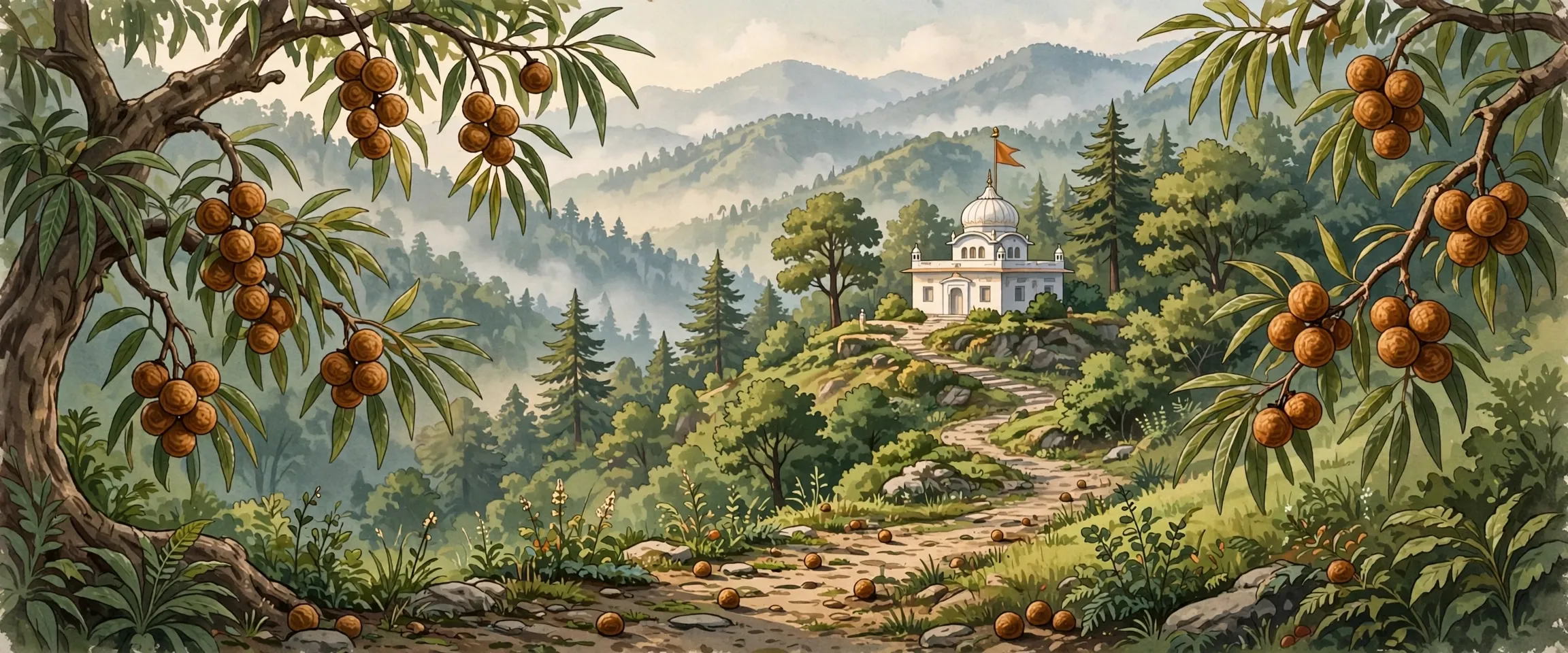
Gurdwara Ritha Sahib, called Meetha Reetha Sahib by devotees, stands near Deyuri village in Champawat district, Uttarakhand. It commemorates Guru Nanak Dev Ji's halt here with Bhai Mardana Ji on the third udasi, when the bitter fruit of a reetha (soapnut) tree is remembered to have turned sweet for the hungry Mardana. Sweet reethas are still given as prasad, and a fair gathers on Baisakhi Purnima.
- Punjabi name
- ਗੁਰਦੁਆਰਾ ਰੀਠਾ ਸਾਹਿਬ
- Type
- Historic gurdwara
- Country
- India
- City
- Deyuri village, near Reetha Sahib
- District
- Champawat
- State
- Uttarakhand
All 15 facts
- Location
- Reetha Sahib, Champawat, Uttarakhand 262523
- Also called
- Meetha Reetha Sahib
- Associated with
- Guru Nanak Dev Ji; Bhai Mardana Ji
- Marks
- The bitter reetha made sweet on the third udasi
- Present building
- Dates from around 1960; first caretaker remembered as Lala Baisakhi Ram of Haldwani
- Also at the site
- Temple of Devnath, beside the gurdwara
- Main fair
- Baisakhi Purnima (Jod Mela)
- Prasad
- Sweet reethas (soapnuts)
- Distance
- 209 km by road from Nanakmatta; 166 km from Tanakpur; about 45 km from Lohaghat
Gurdwara Ritha Sahib, also called Meetha Reetha Sahib, is a Sikh shrine near Deyuri village in Champawat district, Uttarakhand, where Guru Nanak Dev Ji is remembered for making the bitter fruit of a reetha (soapnut) tree sweet for a hungry Bhai Mardana Ji. Sweet reethas are still given to pilgrims as prasad, and the shrine is paired with Nanakmatta Sahib on the Guru's third udasi route through Kumaon.
What is Ritha Sahib?
Ritha Sahib is a small hill gurdwara in the forested Kumaon valley country of Champawat district, far from any city. Its whole identity rests on one tree and one act of kindness: a traveller was hungry, the only food at hand was a bitter soapnut, and in the Sikh telling the Guru made it sweet. The name itself carries the story, since devotees usually call the place Meetha Reetha, the sweet soapnut.
The shrine is one of the Guru Nanak sites of Uttarakhand, linked in every pilgrim itinerary with Nanakmatta Sahib in the Terai below and with Hemkund Sahib high in the Himalayas. A temple of Devnath stands beside the gurdwara, a reminder that this valley was shared religious ground long before any boundary was drawn.
History: a halt on the third udasi
Sikh tradition places the visit on Guru Nanak Dev Ji's third udasi, the same journey that took him to Nanakmatta. The historian Harbans Singh, summarising the tradition, puts this spot about forty miles east of Nanakmata and notes that the story is told in accounts later than the earliest Janamsakhis. The Guru and Bhai Mardana Ji are said to have rested here among Gorakhpanthi jogis who sat under the reetha trees, and to have discussed the spiritual life with them, as he had with the Siddhs at Nanakmatta.
For centuries the site was a memory kept by local people and passing pilgrims rather than a built shrine. Accounts of the present gurdwara date its construction to around 1960, and its first caretaker is remembered as Lala Baisakhi Ram of Haldwani, whose name ties the shrine's upkeep to the Sikh trading families of the Terai towns.
Why is the reetha here sweet?
Reetha, the soapnut, is normally bitter and is used as a natural soap, not as food. In the sakhi, Bhai Mardana Ji complained of hunger in this jungle halt, and the Guru told him to shake the branch of the tree overhead and eat what fell. The fruit that dropped was sweet. The jogis watching were astonished, and in the fuller telling the reethas on the side of the tree where the Guru sat had turned sweet, while the rest stayed bitter.
Pilgrims are still shown reetha trees at the shrine and are given sweet reethas as prasad to carry home to family and friends, so that people who may never make the hill journey still taste a little of this distant halt of the Guru. Whether a visitor reads the story as miracle or as teaching, its point is the one Guru Nanak Dev Ji made everywhere: no one travelling with God should go hungry when there is food, however humble, to share.
The shrine today
The gurdwara is a modest modern building in a green valley, listed at Reetha Sahib, Champawat 262523, and open through the day and night to travellers on the hill road. Visitors describe a quiet complex, helpful sewadars and the sound of kirtan in the hills, with langar for pilgrims who arrive after the long drive. The narrow, winding approach roads are the one caution every traveller repeats: come in daylight if you can, and take the bends slowly.
When is the fair at Ritha Sahib?
The shrine's great gathering is its fair on Baisakhi Purnima, the full moon of the Vaisakhi season, when Sikh pilgrims climb to the valley in large numbers and the event is widely known as the Jod Mela. Langars spring up along the approach roads during the mela, in keeping with the shrine's own story of feeding the hungry traveller.
How do you reach Ritha Sahib?
Ritha Sahib stands near Deyuri village in Champawat district, Uttarakhand. The Gurdwara Prabandhak Committee of Nanakmatta Sahib puts it 60 km north of Nanakmatta as the crow flies but 209 km by the motorable hill road, and 166 km from Tanakpur, the railhead on the Bareilly to Tanakpur line. Travellers also approach from Lohaghat, about 45 km away. Most pilgrims visit it as the hill leg of a Kumaon circuit that begins at Nanakmatta, and our Gurdwaras in India guide lists both shrines together.
ਗੁਰਦੁਆਰਾ ਰੀਠਾ ਸਾਹਿਬ, ਜਿਸ ਨੂੰ ਮਿੱਠਾ ਰੀਠਾ ਸਾਹਿਬ ਵੀ ਕਿਹਾ ਜਾਂਦਾ ਹੈ, ਉਤਰਾਖੰਡ ਦੇ ਚੰਪਾਵਤ ਜ਼ਿਲ੍ਹੇ ਵਿੱਚ ਦਿਊਰੀ ਪਿੰਡ ਦੇ ਨੇੜੇ ਇੱਕ ਸਿੱਖ ਅਸਥਾਨ ਹੈ ਇੱਥੇ ਗੁਰੂ ਨਾਨਕ ਦੇਵ ਜੀ ਨੂੰ ਇਸ ਲਈ ਯਾਦ ਕੀਤਾ ਜਾਂਦਾ ਹੈ ਕਿ ਉਹਨਾਂ ਨੇ ਭੁੱਖੇ ਭਾਈ ਮਰਦਾਨਾ ਜੀ ਲਈ ਰੀਠੇ ਦੇ ਰੁੱਖ ਦਾ ਕੌੜਾ ਫਲ ਮਿੱਠਾ ਕਰ ਦਿੱਤਾ ਸੀ ਅੱਜ ਵੀ ਸ਼ਰਧਾਲੂਆਂ ਨੂੰ ਮਿੱਠੇ ਰੀਠੇ ਪ੍ਰਸਾਦ ਵਜੋਂ ਦਿੱਤੇ ਜਾਂਦੇ ਹਨ, ਅਤੇ ਕੁਮਾਉਂ ਵਿੱਚ ਗੁਰੂ ਜੀ ਦੀ ਤੀਜੀ ਉਦਾਸੀ ਦੇ ਰਾਹ ਉੱਤੇ ਇਹ ਅਸਥਾਨ ਨਾਨਕਮੱਤਾ ਸਾਹਿਬ ਨਾਲ ਜੋੜ ਕੇ ਦੇਖਿਆ ਜਾਂਦਾ ਹੈ
ਰੀਠਾ ਸਾਹਿਬ ਕੀ ਹੈ?
ਰੀਠਾ ਸਾਹਿਬ ਚੰਪਾਵਤ ਜ਼ਿਲ੍ਹੇ ਦੇ ਜੰਗਲਾਂ ਵਾਲੇ ਕੁਮਾਉਂ ਘਾਟੀ ਇਲਾਕੇ ਵਿੱਚ ਇੱਕ ਛੋਟਾ ਪਹਾੜੀ ਗੁਰਦੁਆਰਾ ਹੈ, ਕਿਸੇ ਸ਼ਹਿਰ ਤੋਂ ਬਹੁਤ ਦੂਰ ਇਸ ਦੀ ਸਾਰੀ ਪਛਾਣ ਇੱਕ ਰੁੱਖ ਅਤੇ ਇੱਕ ਦਿਆਲਤਾ ਦੇ ਕੰਮ ਉੱਤੇ ਟਿਕੀ ਹੈ: ਇੱਕ ਯਾਤਰੀ ਭੁੱਖਾ ਸੀ, ਕੋਲ ਖਾਣ ਨੂੰ ਸਿਰਫ਼ ਕੌੜਾ ਰੀਠਾ ਸੀ, ਅਤੇ ਸਿੱਖ ਸਾਖੀ ਅਨੁਸਾਰ ਗੁਰੂ ਜੀ ਨੇ ਉਸ ਨੂੰ ਮਿੱਠਾ ਕਰ ਦਿੱਤਾ ਇਸ ਦਾ ਨਾਂ ਵੀ ਇਹੀ ਕਹਾਣੀ ਦੱਸਦਾ ਹੈ, ਕਿਉਂਕਿ ਸ਼ਰਧਾਲੂ ਇਸ ਥਾਂ ਨੂੰ ਆਮ ਤੌਰ ਉੱਤੇ ਮਿੱਠਾ ਰੀਠਾ ਹੀ ਕਹਿੰਦੇ ਹਨ
ਇਹ ਅਸਥਾਨ ਉਤਰਾਖੰਡ ਦੇ ਗੁਰੂ ਨਾਨਕ ਅਸਥਾਨਾਂ ਵਿੱਚੋਂ ਇੱਕ ਹੈ, ਅਤੇ ਹਰ ਯਾਤਰੀ ਦੀ ਸੂਚੀ ਵਿੱਚ ਇਹ ਹੇਠਾਂ ਤਰਾਈ ਦੇ ਨਾਨਕਮੱਤਾ ਸਾਹਿਬ ਅਤੇ ਹਿਮਾਲਿਆ ਦੀਆਂ ਉਚਾਈਆਂ ਵਿੱਚ ਹੇਮਕੁੰਟ ਸਾਹਿਬ ਨਾਲ ਜੁੜਿਆ ਹੈ ਗੁਰਦੁਆਰੇ ਦੇ ਨਾਲ ਦੇਵਨਾਥ ਦਾ ਮੰਦਰ ਹੈ, ਜੋ ਯਾਦ ਦਿਵਾਉਂਦਾ ਹੈ ਕਿ ਇਹ ਘਾਟੀ ਕਿਸੇ ਸਰਹੱਦ ਬਣਨ ਤੋਂ ਬਹੁਤ ਪਹਿਲਾਂ ਤੋਂ ਸਾਂਝੀ ਧਾਰਮਿਕ ਧਰਤੀ ਸੀ
ਇਤਿਹਾਸ: ਤੀਜੀ ਉਦਾਸੀ ਦਾ ਇੱਕ ਪੜਾਅ
ਸਿੱਖ ਪਰੰਪਰਾ ਇਸ ਫੇਰੀ ਨੂੰ ਗੁਰੂ ਨਾਨਕ ਦੇਵ ਜੀ ਦੀ ਤੀਜੀ ਉਦਾਸੀ ਵਿੱਚ ਰੱਖਦੀ ਹੈ, ਉਹੀ ਯਾਤਰਾ ਜੋ ਉਹਨਾਂ ਨੂੰ ਨਾਨਕਮੱਤਾ ਲੈ ਗਈ ਸੀ ਇਤਿਹਾਸਕਾਰ ਹਰਬੰਸ ਸਿੰਘ, ਪਰੰਪਰਾ ਦਾ ਸਾਰ ਦਿੰਦੇ ਹੋਏ, ਇਸ ਥਾਂ ਨੂੰ ਨਾਨਕਮੱਤੇ ਤੋਂ ਲਗਭਗ ਚਾਲੀ ਮੀਲ ਪੂਰਬ ਵੱਲ ਦੱਸਦੇ ਹਨ ਅਤੇ ਨੋਟ ਕਰਦੇ ਹਨ ਕਿ ਇਹ ਕਹਾਣੀ ਮੁੱਢਲੀਆਂ ਜਨਮਸਾਖੀਆਂ ਤੋਂ ਬਾਅਦ ਦੇ ਵਰਨਣਾਂ ਵਿੱਚ ਆਉਂਦੀ ਹੈ ਕਿਹਾ ਜਾਂਦਾ ਹੈ ਕਿ ਗੁਰੂ ਜੀ ਅਤੇ ਭਾਈ ਮਰਦਾਨਾ ਜੀ ਇੱਥੇ ਰੀਠੇ ਦੇ ਰੁੱਖਾਂ ਥੱਲੇ ਬੈਠੇ ਗੋਰਖਪੰਥੀ ਜੋਗੀਆਂ ਵਿੱਚ ਠਹਿਰੇ ਅਤੇ ਉਹਨਾਂ ਨਾਲ ਰੂਹਾਨੀ ਜੀਵਨ ਬਾਰੇ ਵਿਚਾਰ ਕੀਤੀ, ਜਿਵੇਂ ਨਾਨਕਮੱਤੇ ਵਿੱਚ ਸਿੱਧਾਂ ਨਾਲ ਹੋਈ ਸੀ
ਸਦੀਆਂ ਤੱਕ ਇਹ ਥਾਂ ਬਣੇ ਹੋਏ ਅਸਥਾਨ ਦੀ ਥਾਂ ਸਥਾਨਕ ਲੋਕਾਂ ਅਤੇ ਲੰਘਦੇ ਸ਼ਰਧਾਲੂਆਂ ਦੀ ਯਾਦ ਵਿੱਚ ਰਹੀ ਮੌਜੂਦਾ ਗੁਰਦੁਆਰੇ ਬਾਰੇ ਵਰਨਣ ਇਸ ਦੀ ਉਸਾਰੀ ਲਗਭਗ 1960 ਵਿੱਚ ਦੱਸਦੇ ਹਨ, ਅਤੇ ਇਸ ਦੇ ਪਹਿਲੇ ਸੇਵਾਦਾਰ ਵਜੋਂ ਹਲਦਵਾਨੀ ਦੇ ਲਾਲਾ ਵਿਸਾਖੀ ਰਾਮ ਨੂੰ ਯਾਦ ਕੀਤਾ ਜਾਂਦਾ ਹੈ, ਜਿਸ ਦਾ ਨਾਂ ਇਸ ਅਸਥਾਨ ਦੀ ਸੰਭਾਲ ਨੂੰ ਤਰਾਈ ਦੇ ਕਸਬਿਆਂ ਦੇ ਸਿੱਖ ਵਪਾਰੀ ਪਰਿਵਾਰਾਂ ਨਾਲ ਜੋੜਦਾ ਹੈ
ਇੱਥੋਂ ਦਾ ਰੀਠਾ ਮਿੱਠਾ ਕਿਉਂ ਹੈ?
ਰੀਠਾ ਆਮ ਤੌਰ ਉੱਤੇ ਕੌੜਾ ਹੁੰਦਾ ਹੈ ਅਤੇ ਖਾਣ ਦੀ ਥਾਂ ਕੁਦਰਤੀ ਸਾਬਣ ਵਜੋਂ ਵਰਤਿਆ ਜਾਂਦਾ ਹੈ ਸਾਖੀ ਅਨੁਸਾਰ ਇਸ ਜੰਗਲੀ ਪੜਾਅ ਵਿੱਚ ਭਾਈ ਮਰਦਾਨਾ ਜੀ ਨੇ ਭੁੱਖ ਦੀ ਸ਼ਿਕਾਇਤ ਕੀਤੀ, ਤਾਂ ਗੁਰੂ ਜੀ ਨੇ ਉਹਨਾਂ ਨੂੰ ਸਿਰ ਉੱਤੇ ਵਾਲੇ ਰੁੱਖ ਦੀ ਟਾਹਣੀ ਹਿਲਾ ਕੇ ਡਿੱਗਿਆ ਫਲ ਖਾਣ ਲਈ ਕਿਹਾ ਜੋ ਫਲ ਡਿੱਗਿਆ, ਉਹ ਮਿੱਠਾ ਸੀ ਦੇਖ ਰਹੇ ਜੋਗੀ ਹੈਰਾਨ ਰਹਿ ਗਏ, ਅਤੇ ਪੂਰੀ ਸਾਖੀ ਅਨੁਸਾਰ ਰੁੱਖ ਦੇ ਉਸ ਪਾਸੇ ਦੇ ਰੀਠੇ ਮਿੱਠੇ ਹੋ ਗਏ ਜਿੱਧਰ ਗੁਰੂ ਜੀ ਬੈਠੇ ਸਨ, ਜਦੋਂ ਕਿ ਬਾਕੀ ਕੌੜੇ ਰਹੇ
ਸ਼ਰਧਾਲੂਆਂ ਨੂੰ ਅੱਜ ਵੀ ਅਸਥਾਨ ਵਿੱਚ ਰੀਠੇ ਦੇ ਰੁੱਖ ਦਿਖਾਏ ਜਾਂਦੇ ਹਨ ਅਤੇ ਘਰ ਪਰਿਵਾਰ ਅਤੇ ਸਾਕ ਸਬੰਧੀਆਂ ਲਈ ਲੈ ਜਾਣ ਵਾਸਤੇ ਮਿੱਠੇ ਰੀਠੇ ਪ੍ਰਸਾਦ ਵਜੋਂ ਦਿੱਤੇ ਜਾਂਦੇ ਹਨ, ਤਾਂ ਜੋ ਜਿਹੜੇ ਲੋਕ ਇਹ ਪਹਾੜੀ ਯਾਤਰਾ ਕਦੇ ਨਾ ਕਰ ਸਕਣ, ਉਹ ਵੀ ਗੁਰੂ ਜੀ ਦੇ ਇਸ ਦੂਰ ਪੜਾਅ ਦਾ ਥੋੜ੍ਹਾ ਸਵਾਦ ਚੱਖ ਸਕਣ ਆਉਣ ਵਾਲਾ ਇਸ ਕਹਾਣੀ ਨੂੰ ਕਰਾਮਾਤ ਸਮਝੇ ਜਾਂ ਸਿੱਖਿਆ, ਇਸ ਦਾ ਭਾਵ ਉਹੀ ਹੈ ਜੋ ਗੁਰੂ ਨਾਨਕ ਦੇਵ ਜੀ ਨੇ ਹਰ ਥਾਂ ਦਿੱਤਾ: ਜਦੋਂ ਕੋਲ ਸਾਂਝਾ ਕਰਨ ਲਈ ਖਾਣਾ ਹੋਵੇ, ਭਾਵੇਂ ਕਿੰਨਾ ਵੀ ਸਾਧਾਰਨ, ਤਾਂ ਰੱਬ ਨਾਲ ਤੁਰਨ ਵਾਲਾ ਕੋਈ ਵੀ ਭੁੱਖਾ ਨਾ ਰਹੇ
ਅੱਜ ਦਾ ਅਸਥਾਨ
ਗੁਰਦੁਆਰਾ ਹਰੀ ਘਾਟੀ ਵਿੱਚ ਇੱਕ ਸਾਦੀ ਆਧੁਨਿਕ ਇਮਾਰਤ ਹੈ, ਜੋ ਰੀਠਾ ਸਾਹਿਬ, ਚੰਪਾਵਤ 262523 ਉੱਤੇ ਦਰਜ ਹੈ ਅਤੇ ਪਹਾੜੀ ਸੜਕ ਉੱਤੇ ਜਾਂਦੇ ਯਾਤਰੀਆਂ ਲਈ ਦਿਨ ਰਾਤ ਖੁੱਲ੍ਹਾ ਰਹਿੰਦਾ ਹੈ ਆਉਣ ਵਾਲੇ ਇੱਥੋਂ ਦੇ ਸ਼ਾਂਤ ਪਰਿਸਰ, ਮਦਦਗਾਰ ਸੇਵਾਦਾਰਾਂ ਅਤੇ ਪਹਾੜਾਂ ਵਿੱਚ ਗੂੰਜਦੇ ਕੀਰਤਨ ਦਾ ਜ਼ਿਕਰ ਕਰਦੇ ਹਨ, ਅਤੇ ਲੰਮੀ ਯਾਤਰਾ ਤੋਂ ਬਾਅਦ ਪਹੁੰਚਣ ਵਾਲਿਆਂ ਲਈ ਲੰਗਰ ਮਿਲਦਾ ਹੈ ਤੰਗ ਅਤੇ ਮੋੜਾਂ ਵਾਲੀਆਂ ਪਹੁੰਚ ਸੜਕਾਂ ਹੀ ਇੱਕ ਚੇਤਾਵਨੀ ਹੈ ਜੋ ਹਰ ਯਾਤਰੀ ਦੁਹਰਾਉਂਦਾ ਹੈ: ਹੋ ਸਕੇ ਤਾਂ ਦਿਨ ਦੇ ਚਾਨਣ ਵਿੱਚ ਆਓ ਅਤੇ ਮੋੜ ਹੌਲੀ ਕੱਟੋ
ਰੀਠਾ ਸਾਹਿਬ ਦਾ ਮੇਲਾ ਕਦੋਂ ਲੱਗਦਾ ਹੈ?
ਇਸ ਅਸਥਾਨ ਦੀ ਸਭ ਤੋਂ ਵੱਡੀ ਇਕੱਤਰਤਾ ਵਿਸਾਖੀ ਪੂਰਨਮਾਸ਼ੀ, ਵਿਸਾਖੀ ਰੁੱਤ ਦੀ ਪੂਰਨਮਾਸ਼ੀ ਉੱਤੇ ਲੱਗਦਾ ਮੇਲਾ ਹੈ, ਜਦੋਂ ਸਿੱਖ ਸ਼ਰਧਾਲੂ ਵੱਡੀ ਗਿਣਤੀ ਵਿੱਚ ਇਸ ਘਾਟੀ ਵਿੱਚ ਚੜ੍ਹਦੇ ਹਨ ਅਤੇ ਇਹ ਸਮਾਗਮ ਜੋੜ ਮੇਲੇ ਵਜੋਂ ਪ੍ਰਸਿੱਧ ਹੈ ਮੇਲੇ ਦੌਰਾਨ ਪਹੁੰਚ ਸੜਕਾਂ ਉੱਤੇ ਥਾਂ ਥਾਂ ਲੰਗਰ ਲੱਗ ਜਾਂਦੇ ਹਨ, ਜੋ ਇਸ ਅਸਥਾਨ ਦੀ ਆਪਣੀ ਭੁੱਖੇ ਯਾਤਰੀ ਨੂੰ ਖਾਣਾ ਖੁਆਉਣ ਵਾਲੀ ਕਹਾਣੀ ਨਾਲ ਮੇਲ ਖਾਂਦਾ ਹੈ
ਰੀਠਾ ਸਾਹਿਬ ਕਿਵੇਂ ਪਹੁੰਚੀਏ?
ਰੀਠਾ ਸਾਹਿਬ ਉਤਰਾਖੰਡ ਦੇ ਚੰਪਾਵਤ ਜ਼ਿਲ੍ਹੇ ਵਿੱਚ ਦਿਊਰੀ ਪਿੰਡ ਦੇ ਨੇੜੇ ਹੈ ਨਾਨਕਮੱਤਾ ਸਾਹਿਬ ਦੀ ਗੁਰਦੁਆਰਾ ਪ੍ਰਬੰਧਕ ਕਮੇਟੀ ਅਨੁਸਾਰ ਇਹ ਨਾਨਕਮੱਤੇ ਤੋਂ ਸਿੱਧੀ ਦੂਰੀ ਵਿੱਚ 60 ਕਿਲੋਮੀਟਰ ਉੱਤਰ ਵੱਲ ਹੈ, ਪਰ ਚੱਲਣਯੋਗ ਪਹਾੜੀ ਸੜਕ ਰਾਹੀਂ 209 ਕਿਲੋਮੀਟਰ ਹੈ, ਅਤੇ ਬਰੇਲੀ ਤੋਂ ਤਨਕਪੁਰ ਲਾਈਨ ਦੇ ਰੇਲ ਅੱਡੇ ਤਨਕਪੁਰ ਤੋਂ 166 ਕਿਲੋਮੀਟਰ ਹੈ ਯਾਤਰੀ ਲਗਭਗ 45 ਕਿਲੋਮੀਟਰ ਦੂਰ ਲੋਹਾਘਾਟ ਤੋਂ ਵੀ ਆਉਂਦੇ ਹਨ ਬਹੁਤੇ ਸ਼ਰਧਾਲੂ ਇਸ ਨੂੰ ਨਾਨਕਮੱਤੇ ਤੋਂ ਸ਼ੁਰੂ ਹੋਣ ਵਾਲੇ ਕੁਮਾਉਂ ਚੱਕਰ ਦੇ ਪਹਾੜੀ ਪੜਾਅ ਵਜੋਂ ਦੇਖਦੇ ਹਨ, ਅਤੇ ਸਾਡੀ ਭਾਰਤ ਦੇ ਗੁਰਦੁਆਰਿਆਂ ਵਾਲੀ ਗਾਈਡ ਵਿੱਚ ਦੋਵੇਂ ਅਸਥਾਨ ਇਕੱਠੇ ਦਰਜ ਹਨ