
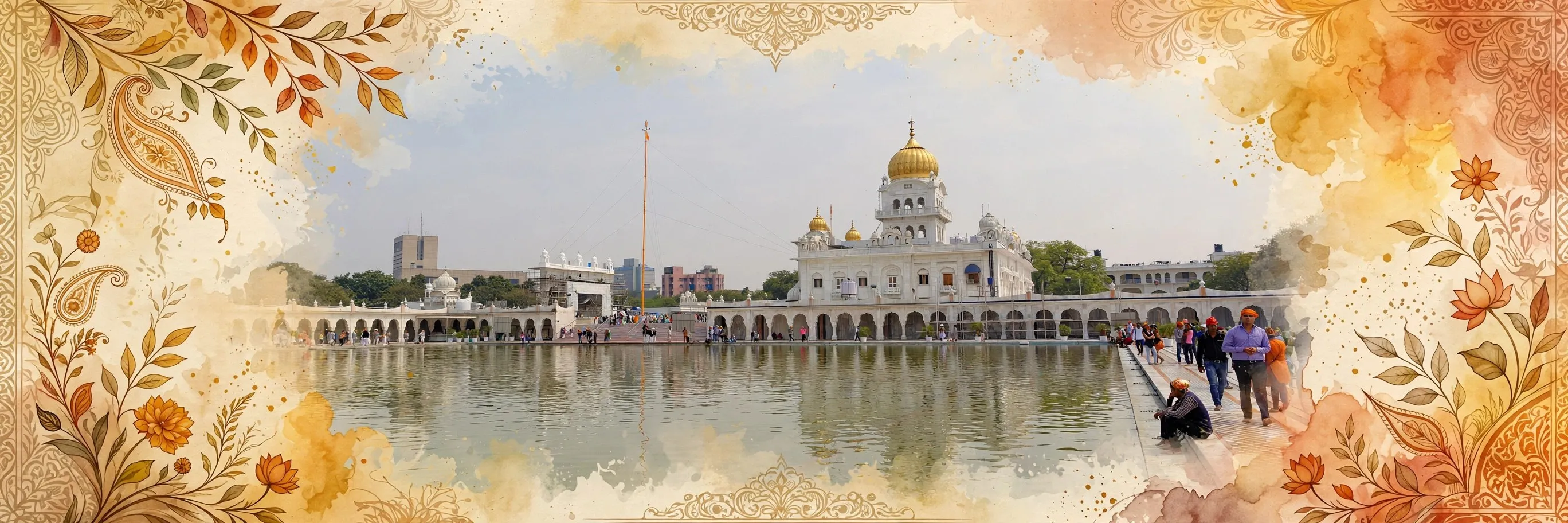
India is home to the great majority of the world’s gurdwaras — from the Harmandir Sahib, the Golden Temple of Amritsar, to the five Takhts, the thrones of Sikh authority. This guide covers every major gurdwara in India, with history and pilgrim information.
- Facts
- Country
- India
- Sikhs in India
- ~20.8 million (2011 census)
- Holiest shrine
- Harmandir Sahib, Amritsar
- Five Takhts
- Akal Takht · Kesgarh Sahib · Damdama Sahib · Patna Sahib · Hazur Sahib
- Managed by
- SGPC (Punjab) · DSGMC (Delhi)
- Key pilgrimage
- Hemkund Sahib — seasonal, opens May
India is home to the great majority of the world’s gurdwaras — from the Harmandir Sahib, the Golden Temple of Amritsar, to the five Takhts, the thrones of Sikh authority. This guide covers every major gurdwara in India: the historic shrines of Punjab, the great gurdwaras of Delhi, and the far-flung Takhts of Patna, Nanded and Hemkund Sahib, with pilgrim information.
History of Sikhism in India
Some 20.8 million Sikhs live in India — 1.72% of the country’s population and roughly 83% of the world’s Sikhs, by the 2011 census. Punjab remains the only Sikh-majority administrative division on earth, with Sikhs forming 57.7% of its people. The community’s modern shape was forged by Partition: Sikh leaders strongly opposed the division of Punjab, and 1947’s violence drove millions eastward, rebuilding lives in Indian Punjab, Delhi, Haryana, Uttar Pradesh and Rajasthan. Sikhism in India is far from only Punjabi — Bengali, Assamese, Dakhni, Kashmiri and Sindhi Sikh communities, some centuries old, keep the faith across the subcontinent.
The great gurdwaras of Punjab
Eight of the faith’s greatest shrines stand in Punjab, and each has its own full entry in this Kosh:
The Harmandir Sahib at Amritsar — the Golden Temple — the holiest shrine in Sikhism, with the Akal Takht facing it across the causeway.
Takht Sri Kesgarh Sahib at Anandpur Sahib, birthplace of the Khalsa on Vaisakhi 1699.
Takht Sri Damdama Sahib at Talwandi Sabo, where Guru Gobind Singh compiled the complete Guru Granth Sahib.
Fatehgarh Sahib, marking the martyrdom of Guru Gobind Singh’s younger sons.
Chamkaur Sahib, site of the 1704 battle where the Guru’s elder sons fell.
Kiratpur Sahib, the town founded by Guru Hargobind on the Sutlej.
Dera Baba Nanak, the Ravi-side town facing Kartarpur across the border.
Sultanpur Lodhi, where Guru Nanak spent fourteen formative years.
Gurdwaras beyond Punjab
Five more shrines of the first rank stand outside Punjab, and full Kosh entries on each are coming next:
Gurdwara Bangla Sahib, Delhi
In Connaught Place, New Delhi, Bangla Sahib — once Raja Jai Singh of Amber’s bungalow, where Guru Har Krishan stayed in 1664 serving the city’s sick. Rebuilt as a shrine by Baghel Singh in 1783, it is known for its golden dome and great sarovar (225 × 235 ft), whose water pilgrims carry home as amrit.
Gurdwara Sis Ganj Sahib, Delhi
In Chandni Chowk, Sis Ganj marks the martyrdom of Guru Tegh Bahadur, beheaded in November 1675 on Aurangzeb’s orders. His head was taken to Anandpur Sahib; Lakhi Shah Vanjara secretly cremated his body where Gurdwara Rakab Ganj now stands. Baghel Singh raised the shrine in 1783.
Hemkund Sahib, Uttarakhand
At some 15,000 feet in the Garhwal Himalaya, Hemkund Sahib stands by a glacial lake ringed by seven peaks. The Dasam Granth records Guru Gobind Singh’s meditation here in a previous life; the present gurdwara rose from the mid-1960s. Snow closes it October–April; pilgrims trek 13 km from Govindghat to Ghangaria, then climb 6 km.
Takht Sri Patna Sahib, Bihar
Patna’s Takht marks the birthplace of Guru Gobind Singh (22 December 1666), raised here before the family moved to Anandpur. Rebuilt by Maharaja Ranjit Singh in the early 19th century; Guru Nanak and Guru Tegh Bahadur also visited Patna.
Takht Sri Hazur Sahib, Nanded
At Nanded, Maharashtra, on the Godavari, Hazur Sahib marks Guru Gobind Singh’s final court in 1708 — where he passed on and declared the Guru Granth Sahib his eternal successor. Built 1832–37 by Maharaja Ranjit Singh, its Sachkhand holds the Guru’s weapons and belongings.
The five Takhts
A takht — literally a throne — is a seat of Sikh authority. Five gurdwaras hold the rank: the Akal Takht at Amritsar, established by Guru Hargobind as the Khalsa’s highest earthly seat; Kesgarh Sahib at Anandpur; Damdama Sahib at Talwandi Sabo (fifth takht since 1966); Patna Sahib; and Hazur Sahib at Nanded. Three stand in Punjab; Patna and Nanded carry the authority far beyond it.
Visiting as a pilgrim
India’s gurdwaras need no corridor or permission — all are open to everyone, with langar daily. Punjab’s shrines are managed by the SGPC, Delhi’s by the DSGMC. Only Hemkund Sahib needs planning: it opens in May, the trek is strenuous, and no one may stay the night at the lake.
All Gurdwaras in India
- Harmandir Sahib, Amritsar — the Golden Temple
- Anandpur Sahib — birthplace of the Khalsa
- Talwandi Sabo (Damdama Sahib) — seat of the Damdami Bir
- Fatehgarh Sahib — memorial to the younger Sahibzade
- Chamkaur Sahib — the 1704 battle
- Kiratpur Sahib — founded by Guru Hargobind Ji
- Dera Baba Nanak — facing Kartarpur across the Ravi
- Sultanpur Lodhi — where Guru Nanak lived fourteen years
Which is the most important gurdwara in India?
The Harmandir Sahib — the Golden Temple — at Amritsar is the holiest shrine in Sikhism. Facing it stands the Akal Takht, the highest seat of the Khalsa’s temporal authority.
What are the five Takhts?
The five thrones of Sikh authority are the Akal Takht (Amritsar), Takht Sri Kesgarh Sahib (Anandpur Sahib), Takht Sri Damdama Sahib (Talwandi Sabo), Takht Sri Patna Sahib (Patna, Bihar) and Takht Sri Hazur Sahib (Nanded, Maharashtra).
When is Hemkund Sahib open?
Hemkund Sahib opens in May, once the snow clears, and closes from October to April. Pilgrims must leave the lake by 2 pm and cannot stay overnight.
Who manages the gurdwaras in Delhi?
Delhi’s historic gurdwaras — including Bangla Sahib and Sis Ganj Sahib — are managed by the Delhi Sikh Gurdwara Management Committee (DSGMC).
How many Sikhs live in India?
About 20.8 million, 1.72% of India’s population by the 2011 census — roughly 83% of the world’s Sikhs.
ਭਾਰਤ ਦੁਨੀਆ ਦੇ ਬਹੁਗਿਣਤੀ ਗੁਰਦੁਆਰਿਆਂ ਦਾ ਘਰ ਹੈ — ਅੰਮ੍ਰਿਤਸਰ ਦੇ ਹਰਿਮੰਦਰ ਸਾਹਿਬ ਤੋਂ ਲੈ ਕੇ ਪੰਜ ਤਖ਼ਤਾਂ ਤੱਕ, ਜੋ ਸਿੱਖੀ ਦੇ ਸੱਤਾ-ਕੇਂਦਰ ਹਨ ਇਹ ਲੇਖ ਭਾਰਤ ਦੇ ਹਰ ਪ੍ਰਮੁੱਖ ਗੁਰਦੁਆਰੇ ਬਾਰੇ ਜਾਣਕਾਰੀ ਦਿੰਦਾ ਹੈ: ਪੰਜਾਬ ਦੇ ਇਤਿਹਾਸਕ ਗੁਰਦੁਆਰੇ, ਦਿੱਲੀ ਦੇ ਮਹਾਨ ਗੁਰਦੁਆਰੇ ਅਤੇ ਪਟਨਾ, ਨਾਂਦੇੜ ਤੇ ਹੇਮਕੁੰਟ ਸਾਹਿਬ ਦੇ ਦੂਰ-ਦੁਰਾਡੇ ਤਖ਼ਤ — ਯਾਤਰਾ ਦੀ ਜਾਣਕਾਰੀ ਸਮੇਤ
ਭਾਰਤ ਵਿੱਚ ਸਿੱਖੀ: ਇਤਿਹਾਸ ਦੀ ਝਲਕ
ਭਾਰਤ ਵਿੱਚ ਲਗਭਗ 2.08 ਕਰੋੜ ਸਿੱਖ ਰਹਿੰਦੇ ਹਨ — ਦੇਸ਼ ਦੀ ਆਬਾਦੀ ਦਾ 1.72% ਅਤੇ ਦੁਨੀਆ ਦੇ ਸਿੱਖਾਂ ਦਾ ਲਗਭਗ 83%, 2011 ਦੀ ਮਰਦਮਸ਼ੁਮਾਰੀ ਅਨੁਸਾਰ ਪੰਜਾਬ ਧਰਤੀ ਦਾ ਇੱਕੋ-ਇੱਕ ਸਿੱਖ-ਬਹੁਗਿਣਤੀ ਸੂਬਾ ਹੈ, ਜਿੱਥੇ ਸਿੱਖ 57.7% ਹਨ ਕੌਮ ਦੀ ਅਜੋਕੀ ਸ਼ਕਲ ਵੰਡ ਨੇ ਘੜੀ: ਸਿੱਖ ਆਗੂਆਂ ਨੇ ਪੰਜਾਬ ਦੀ ਵੰਡ ਦਾ ਸਖ਼ਤ ਵਿਰੋਧ ਕੀਤਾ ਸੀ, ਅਤੇ 1947 ਦੀ ਹਿੰਸਾ ਨੇ ਲੱਖਾਂ ਲੋਕਾਂ ਨੂੰ ਪੂਰਬ ਵੱਲ ਧੱਕ ਦਿੱਤਾ — ਉਨ੍ਹਾਂ ਨੇ ਭਾਰਤੀ ਪੰਜਾਬ, ਦਿੱਲੀ, ਹਰਿਆਣਾ, ਉੱਤਰ ਪ੍ਰਦੇਸ਼ ਅਤੇ ਰਾਜਸਥਾਨ ਵਿੱਚ ਨਵੀਂ ਜ਼ਿੰਦਗੀ ਬਣਾਈ ਭਾਰਤ ਦੀ ਸਿੱਖੀ ਸਿਰਫ਼ ਪੰਜਾਬੀ ਨਹੀਂ — ਬੰਗਾਲੀ, ਅਸਾਮੀ, ਦੱਖਣੀ, ਕਸ਼ਮੀਰੀ ਅਤੇ ਸਿੰਧੀ ਸਿੱਖ ਭਾਈਚਾਰੇ, ਕਈ ਸਦੀਆਂ ਪੁਰਾਣੇ, ਪੂਰੇ ਉਪ-ਮਹਾਂਦੀਪ ਵਿੱਚ ਧਰਮ ਨੂੰ ਜਿਉਂਦੇ ਰੱਖਦੇ ਹਨ
ਪੰਜਾਬ ਦੇ ਮਹਾਨ ਗੁਰਦੁਆਰੇ
ਧਰਮ ਦੇ ਅੱਠ ਮਹਾਨ ਅਸਥਾਨ ਪੰਜਾਬ ਵਿੱਚ ਹਨ, ਅਤੇ ਹਰ ਇੱਕ 'ਤੇ ਇਸ ਕੋਸ਼ ਵਿੱਚ ਵੱਖਰਾ ਲੇਖ ਹੈ:
ਅੰਮ੍ਰਿਤਸਰ ਦਾ ਹਰਿਮੰਦਰ ਸਾਹਿਬ — ਸਿੱਖ ਧਰਮ ਦਾ ਸਭ ਤੋਂ ਪਵਿੱਤਰ ਅਸਥਾਨ; ਸਾਹਮਣੇ ਅਕਾਲ ਤਖ਼ਤ ਹੈ
ਅਨੰਦਪੁਰ ਸਾਹਿਬ ਦਾ ਤਖ਼ਤ ਸ੍ਰੀ ਕੇਸਗੜ੍ਹ ਸਾਹਿਬ — ਵਿਸਾਖੀ 1699 ਨੂੰ ਖ਼ਾਲਸੇ ਦੀ ਜਨਮ-ਭੂਮੀ
ਤਲਵੰਡੀ ਸਾਬੋ ਦਾ ਤਖ਼ਤ ਸ੍ਰੀ ਦਮਦਮਾ ਸਾਹਿਬ — ਜਿੱਥੇ ਗੁਰੂ ਗੋਬਿੰਦ ਸਿੰਘ ਜੀ ਨੇ ਸੰਪੂਰਨ ਗੁਰੂ ਗ੍ਰੰਥ ਸਾਹਿਬ ਸੰਪਾਦਿਤ ਕੀਤਾ
ਫ਼ਤਹਿਗੜ੍ਹ ਸਾਹਿਬ — ਗੁਰੂ ਗੋਬਿੰਦ ਸਿੰਘ ਜੀ ਦੇ ਛੋਟੇ ਸਾਹਿਬਜ਼ਾਦਿਆਂ ਦੀ ਸ਼ਹਾਦਤ ਦੀ ਯਾਦਗਾਰ
ਚਮਕੌਰ ਸਾਹਿਬ — 1704 ਦੀ ਜੰਗ ਦਾ ਮੈਦਾਨ, ਜਿੱਥੇ ਵੱਡੇ ਸਾਹਿਬਜ਼ਾਦੇ ਸ਼ਹੀਦ ਹੋਏ
ਕੀਰਤਪੁਰ ਸਾਹਿਬ — ਸਤਲੁਜ ਕੰਢੇ ਗੁਰੂ ਹਰਗੋਬਿੰਦ ਜੀ ਵੱਲੋਂ ਵਸਾਇਆ ਸ਼ਹਿਰ
ਡੇਰਾ ਬਾਬਾ ਨਾਨਕ — ਰਾਵੀ ਕੰਢੇ ਦਾ ਕਸਬਾ, ਸਰਹੱਦ ਪਾਰ ਕਰਤਾਰਪੁਰ ਦੇ ਸਾਹਮਣੇ
ਸੁਲਤਾਨਪੁਰ ਲੋਧੀ — ਜਿੱਥੇ ਗੁਰੂ ਨਾਨਕ ਦੇਵ ਜੀ ਨੇ ਚੌਦਾਂ ਸਾਲ ਬਿਤਾਏ
ਪੰਜਾਬ ਤੋਂ ਬਾਹਰ ਦੇ ਗੁਰਦੁਆਰੇ
ਪੰਜਾਬ ਤੋਂ ਬਾਹਰ ਪਹਿਲੇ ਦਰਜੇ ਦੇ ਪੰਜ ਹੋਰ ਅਸਥਾਨ ਹਨ, ਜਿਨ੍ਹਾਂ 'ਤੇ ਵੱਖਰੇ ਲੇਖ ਜਲਦੀ ਆ ਰਹੇ ਹਨ:
ਗੁਰਦੁਆਰਾ ਬੰਗਲਾ ਸਾਹਿਬ, ਦਿੱਲੀ
ਨਵੀਂ ਦਿੱਲੀ ਦੇ ਕਨਾਟ ਪਲੇਸ ਵਿੱਚ ਬੰਗਲਾ ਸਾਹਿਬ ਹੈ — ਕਦੇ ਅੰਬਰ ਦੇ ਰਾਜਾ ਜੈ ਸਿੰਘ ਦੀ ਬੰਗਲਾ, ਜਿੱਥੇ ਅੱਠਵੇਂ ਗੁਰੂ, ਗੁਰੂ ਹਰਕ੍ਰਿਸ਼ਨ ਜੀ 1664 ਵਿੱਚ ਠਹਿਰੇ ਅਤੇ ਸ਼ਹਿਰ ਦੇ ਬਿਮਾਰਾਂ ਦੀ ਸੇਵਾ ਕਰਦੇ ਰਹੇ 1783 ਵਿੱਚ ਸਿੱਖ ਜਰਨੈਲ ਬਘੇਲ ਸਿੰਘ ਨੇ ਇਸ ਨੂੰ ਗੁਰਦੁਆਰੇ ਦਾ ਰੂਪ ਦਿੱਤਾ; ਇਸ ਦੀ ਪਛਾਣ ਸੁਨਹਿਰੀ ਗੁੰਬਦ ਅਤੇ ਵਿਸ਼ਾਲ ਸਰੋਵਰ — 225 ਫੁੱਟ ਲੰਬਾ, 235 ਫੁੱਟ ਚੌੜਾ — ਹੈ, ਜਿਸ ਦਾ ਜਲ ਸ਼ਰਧਾਲੂ ਅੰਮ੍ਰਿਤ ਵਜੋਂ ਘਰ ਲੈ ਜਾਂਦੇ ਹਨ
ਗੁਰਦੁਆਰਾ ਸੀਸ ਗੰਜ ਸਾਹਿਬ, ਦਿੱਲੀ
ਪੁਰਾਣੀ ਦਿੱਲੀ ਦੇ ਚਾਂਦਨੀ ਚੌਕ ਵਿੱਚ ਸੀਸ ਗੰਜ ਨੌਵੇਂ ਗੁਰੂ, ਗੁਰੂ ਤੇਗ਼ ਬਹਾਦਰ ਜੀ ਦੀ ਸ਼ਹਾਦਤ ਦੀ ਥਾਂ ਹੈ — ਨਵੰਬਰ 1675 ਵਿੱਚ ਔਰੰਗਜ਼ੇਬ ਦੇ ਹੁਕਮ 'ਤੇ ਉਨ੍ਹਾਂ ਦਾ ਸੀਸ ਕਲਮ ਕੀਤਾ ਗਿਆ ਉਨ੍ਹਾਂ ਦਾ ਸੀਸ ਭਾਈ ਜੈਤਾ ਅਨੰਦਪੁਰ ਸਾਹਿਬ ਲੈ ਗਏ; ਸਰੀਰ ਦਾ ਸਸਕਾਰ ਲੱਖੀ ਸ਼ਾਹ ਵਣਜਾਰੇ ਨੇ ਗੁਪਤ ਰੂਪ ਵਿੱਚ ਕੀਤਾ — ਉਹ ਥਾਂ ਅੱਜ ਗੁਰਦੁਆਰਾ ਰਕਾਬ ਗੰਜ ਹੈ 1783 ਵਿੱਚ ਬਘੇਲ ਸਿੰਘ ਨੇ ਗੁਰਦੁਆਰਾ ਬਣਾਇਆ; ਗੁਰੂ ਜੀ ਦੀ ਕੈਦ ਵਾਲਾ ਖੂਹ ਅਤੇ ਰੁੱਖ ਅੱਜ ਵੀ ਮੌਜੂਦ ਹਨ
ਹੇਮਕੁੰਟ ਸਾਹਿਬ, ਉੱਤਰਾਖੰਡ
ਗੜ੍ਹਵਾਲ ਹਿਮਾਲਿਆ ਵਿੱਚ, ਸਮੁੰਦਰ ਤਲ ਤੋਂ ਲਗਭਗ 15,000 ਫੁੱਟ ਉੱਚਾ, ਹੇਮਕੁੰਟ ਸਾਹਿਬ ਸੱਤ ਚੋਟੀਆਂ ਨਾਲ ਘਿਰੀ ਹਿਮ-ਝੀਲ ਕੰਢੇ ਹੈ ਦਸਮ ਗ੍ਰੰਥ ਵਿੱਚ ਦਰਜ ਹੈ ਕਿ ਗੁਰੂ ਗੋਬਿੰਦ ਸਿੰਘ ਜੀ ਨੇ ਪਿਛਲੇ ਜਨਮ ਵਿੱਚ ਇੱਥੇ ਤਪ ਕੀਤਾ ਸੀ; 1930ਵਿਆਂ ਵਿੱਚ ਆਧੁਨਿਕ ਯਾਤਰਾ ਸ਼ੁਰੂ ਹੋਈ ਅਤੇ 1960ਵਿਆਂ ਤੋਂ ਮੌਜੂਦਾ ਗੁਰਦੁਆਰਾ ਉਸਰਿਆ — ਇਸ ਉਚਾਈ 'ਤੇ ਇੰਜੀਨੀਅਰਿੰਗ ਦਾ ਕਮਾਲ ਅਕਤੂਬਰ ਤੋਂ ਅਪ੍ਰੈਲ ਤੱਕ ਬਰਫ਼ਬਾਰੀ ਰਾਹ ਬੰਦ ਰੱਖਦੀ ਹੈ; ਸ਼ਰਧਾਲੂ ਗੋਵਿੰਦਘਾਟ ਤੋਂ 13 ਕਿਲੋਮੀਟਰ ਪੈਦਲ ਘਾਂਘਰੀਆ ਅਤੇ ਫਿਰ 6 ਕਿਲੋਮੀਟਰ ਚੜ੍ਹਾਈ ਕਰਦੇ ਹਨ, ਅਤੇ ਦੁਪਹਿਰ 2 ਵਜੇ ਤੱਕ ਝੀਲ ਛੱਡਣੀ ਪੈਂਦੀ ਹੈ
ਤਖ਼ਤ ਸ੍ਰੀ ਪਟਨਾ ਸਾਹਿਬ, ਬਿਹਾਰ
ਪਟਨਾ ਵਿੱਚ ਗੁਰੂ ਗੋਬਿੰਦ ਸਿੰਘ ਜੀ ਦਾ ਜਨਮ-ਅਸਥਾਨ ਹੈ — 22 ਦਸੰਬਰ 1666 ਨੂੰ ਇੱਥੇ ਜਨਮੇ ਅਤੇ ਬਚਪਨ ਇੱਥੇ ਬਿਤਾ ਕੇ ਪਰਿਵਾਰ ਅਨੰਦਪੁਰ ਚਲਾ ਗਿਆ ਪੰਜ ਤਖ਼ਤਾਂ ਵਿੱਚੋਂ ਇੱਕ ਇਸ ਅਸਥਾਨ ਨੂੰ ਮਹਾਰਾਜਾ ਰਣਜੀਤ ਸਿੰਘ ਨੇ 1839 ਵਿੱਚ ਅੱਗ ਤੋਂ ਬਾਅਦ ਦੁਬਾਰਾ ਬਣਵਾਇਆ; 1934 ਦੇ ਭੂਚਾਲ ਤੋਂ ਬਾਅਦ ਮੌਜੂਦਾ ਇਮਾਰਤ 1948–57 ਵਿੱਚ ਬਣੀ; ਗੁਰੂ ਨਾਨਕ ਦੇਵ ਜੀ ਅਤੇ ਗੁਰੂ ਤੇਗ਼ ਬਹਾਦਰ ਜੀ ਵੀ ਪਟਨਾ ਆਏ ਸਨ
ਤਖ਼ਤ ਸ੍ਰੀ ਹਜ਼ੂਰ ਸਾਹਿਬ, ਨਾਂਦੇੜ
ਮਹਾਰਾਸ਼ਟਰ ਦੇ ਨਾਂਦੇੜ ਵਿੱਚ ਗੋਦਾਵਰੀ ਕੰਢੇ ਹਜ਼ੂਰ ਸਾਹਿਬ ਹੈ — ਜਿੱਥੇ 1708 ਵਿੱਚ ਗੁਰੂ ਗੋਬਿੰਦ ਸਿੰਘ ਜੀ ਨੇ ਆਖ਼ਰੀ ਦਰਬਾਰ ਸਜਾਇਆ, ਜੋਤੀ-ਜੋਤ ਸਮਾਏ ਅਤੇ ਗੁਰੂ ਗ੍ਰੰਥ ਸਾਹਿਬ ਨੂੰ ਸਦੀਵੀ ਗੁਰੂ ਐਲਾਨਿਆ 1832–37 ਵਿੱਚ ਮਹਾਰਾਜਾ ਰਣਜੀਤ ਸਿੰਘ ਵੱਲੋਂ ਚਿੱਟੇ ਸੰਗਮਰਮਰ ਵਿੱਚ ਬਣਾਇਆ ਇਹ ਅਸਥਾਨ ਆਪਣੇ ਸੱਚਖੰਡ ਵਿੱਚ ਗੁਰੂ ਜੀ ਦੇ ਸ਼ਸਤਰ ਅਤੇ ਨਿੱਜੀ ਵਸਤਾਂ ਸੰਭਾਲਦਾ ਹੈ ਅਤੇ ਇਸ ਦਾ ਪ੍ਰਬੰਧ 1956 ਦੇ ਨਾਂਦੇੜ ਗੁਰਦੁਆਰਾ ਐਕਟ ਅਧੀਨ 17 ਮੈਂਬਰੀ ਬੋਰਡ ਕਰਦਾ ਹੈ
ਪੰਜ ਤਖ਼ਤ
ਤਖ਼ਤ — ਸ਼ਾਬਦਿਕ ਅਰਥ ਸਿੰਘਾਸਨ — ਸਿੱਖੀ ਦੇ ਰਾਜਸੀ ਅਤੇ ਰੂਹਾਨੀ ਸੱਤਾ-ਕੇਂਦਰ ਹਨ ਪੰਜ ਗੁਰਦੁਆਰਿਆਂ ਨੂੰ ਇਹ ਦਰਜਾ ਹੈ: ਅੰਮ੍ਰਿਤਸਰ ਦਾ ਅਕਾਲ ਤਖ਼ਤ, ਜਿਸ ਨੂੰ ਗੁਰੂ ਹਰਗੋਬਿੰਦ ਜੀ ਨੇ ਸਥਾਪਿਤ ਕੀਤਾ ਅਤੇ ਜੋ ਖ਼ਾਲਸੇ ਦੀ ਸੰਸਾਰਕ ਸੱਤਾ ਦਾ ਸਰਵਉੱਚ ਕੇਂਦਰ ਹੈ; ਅਨੰਦਪੁਰ ਸਾਹਿਬ ਦਾ ਤਖ਼ਤ ਸ੍ਰੀ ਕੇਸਗੜ੍ਹ ਸਾਹਿਬ; ਤਲਵੰਡੀ ਸਾਬੋ ਦਾ ਤਖ਼ਤ ਸ੍ਰੀ ਦਮਦਮਾ ਸਾਹਿਬ, ਜਿਸ ਨੂੰ 1966 ਵਿੱਚ ਪੰਜਵਾਂ ਤਖ਼ਤ ਐਲਾਨਿਆ ਗਿਆ; ਬਿਹਾਰ ਦਾ ਤਖ਼ਤ ਸ੍ਰੀ ਪਟਨਾ ਸਾਹਿਬ; ਅਤੇ ਮਹਾਰਾਸ਼ਟਰ ਦਾ ਤਖ਼ਤ ਸ੍ਰੀ ਹਜ਼ੂਰ ਸਾਹਿਬ ਤਿੰਨ ਪੰਜਾਬ ਵਿੱਚ ਹਨ; ਦੋ — ਪਟਨਾ ਅਤੇ ਨਾਂਦੇੜ — ਖ਼ਾਲਸੇ ਦੀ ਸੱਤਾ ਨੂੰ ਪੰਜਾਬ ਤੋਂ ਦੂਰ ਲੈ ਜਾਂਦੇ ਹਨ
ਸ਼ਰਧਾਲੂ ਵਜੋਂ ਯਾਤਰਾ
ਪਾਕਿਸਤਾਨ ਦੇ ਗੁਰਦੁਆਰਿਆਂ ਵਾਂਗ ਨਹੀਂ, ਭਾਰਤ ਦੇ ਗੁਰਦੁਆਰਿਆਂ ਲਈ ਕੋਈ ਲਾਂਘਾ ਜਾਂ ਵਿਸ਼ੇਸ਼ ਇਜਾਜ਼ਤ ਨਹੀਂ ਚਾਹੀਦੀ — ਸਾਰੇ ਹਰ ਕਿਸੇ ਲਈ ਖੁੱਲ੍ਹੇ ਹਨ ਅਤੇ ਰੋਜ਼ ਲੰਗਰ ਛਕਾਇਆ ਜਾਂਦਾ ਹੈ ਪੰਜਾਬ ਦੇ ਇਤਿਹਾਸਕ ਗੁਰਦੁਆਰੇ ਸ਼੍ਰੋਮਣੀ ਗੁਰਦੁਆਰਾ ਪ੍ਰਬੰਧਕ ਕਮੇਟੀ ਅਤੇ ਦਿੱਲੀ ਦੇ ਦਿੱਲੀ ਸਿੱਖ ਗੁਰਦੁਆਰਾ ਪ੍ਰਬੰਧਕ ਕਮੇਟੀ ਦੀ ਦੇਖ-ਰੇਖ ਹੇਠ ਹਨ ਸਿਰਫ਼ ਹੇਮਕੁੰਟ ਸਾਹਿਬ ਯੋਜਨਾ ਮੰਗਦਾ ਹੈ: ਮਈ ਵਿੱਚ ਬਰਫ਼ ਹਟਣ 'ਤੇ ਖੁੱਲ੍ਹਦਾ ਹੈ, ਚੜ੍ਹਾਈ ਔਖੀ ਹੈ ਅਤੇ ਝੀਲ ਕੰਢੇ ਰਾਤ ਨਹੀਂ ਠਹਿਰੀ ਜਾ ਸਕਦੀ
ਭਾਰਤ ਦਾ ਸਭ ਤੋਂ ਮਹੱਤਵਪੂਰਨ ਗੁਰਦੁਆਰਾ ਕਿਹੜਾ ਹੈ?
ਅੰਮ੍ਰਿਤਸਰ ਦਾ ਹਰਿਮੰਦਰ ਸਾਹਿਬ — ਸਿੱਖ ਧਰਮ ਦਾ ਸਭ ਤੋਂ ਪਵਿੱਤਰ ਅਸਥਾਨ ਇਸ ਦੇ ਸਾਹਮਣੇ ਅਕਾਲ ਤਖ਼ਤ ਹੈ, ਜੋ ਖ਼ਾਲਸੇ ਦੀ ਰਾਜਸੀ ਸੱਤਾ ਦਾ ਸਰਵਉੱਚ ਕੇਂਦਰ ਹੈ
ਪੰਜ ਤਖ਼ਤ ਕਿਹੜੇ ਹਨ?
ਸਿੱਖੀ ਦੇ ਸੱਤਾ-ਕੇਂਦਰ ਹਨ: ਅਕਾਲ ਤਖ਼ਤ (ਅੰਮ੍ਰਿਤਸਰ), ਤਖ਼ਤ ਸ੍ਰੀ ਕੇਸਗੜ੍ਹ ਸਾਹਿਬ (ਅਨੰਦਪੁਰ ਸਾਹਿਬ), ਤਖ਼ਤ ਸ੍ਰੀ ਦਮਦਮਾ ਸਾਹਿਬ (ਤਲਵੰਡੀ ਸਾਬੋ), ਤਖ਼ਤ ਸ੍ਰੀ ਪਟਨਾ ਸਾਹਿਬ (ਪਟਨਾ, ਬਿਹਾਰ) ਅਤੇ ਤਖ਼ਤ ਸ੍ਰੀ ਹਜ਼ੂਰ ਸਾਹਿਬ (ਨਾਂਦੇੜ, ਮਹਾਰਾਸ਼ਟਰ)
ਹੇਮਕੁੰਟ ਸਾਹਿਬ ਕਦੋਂ ਖੁੱਲ੍ਹਦਾ ਹੈ?
ਹੇਮਕੁੰਟ ਸਾਹਿਬ ਮਈ ਵਿੱਚ, ਬਰਫ਼ ਹਟਣ 'ਤੇ ਖੁੱਲ੍ਹਦਾ ਹੈ ਅਤੇ ਅਕਤੂਬਰ ਤੋਂ ਅਪ੍ਰੈਲ ਤੱਕ ਬੰਦ ਰਹਿੰਦਾ ਹੈ ਸ਼ਰਧਾਲੂਆਂ ਨੂੰ ਦੁਪਹਿਰ 2 ਵਜੇ ਤੱਕ ਝੀਲ ਛੱਡਣੀ ਪੈਂਦੀ ਹੈ ਅਤੇ ਰਾਤ ਠਹਿਰਨ ਦੀ ਇਜਾਜ਼ਤ ਨਹੀਂ
ਦਿੱਲੀ ਦੇ ਗੁਰਦੁਆਰਿਆਂ ਦੀ ਦੇਖ-ਰੇਖ ਕੌਣ ਕਰਦਾ ਹੈ?
ਦਿੱਲੀ ਦੇ ਇਤਿਹਾਸਕ ਗੁਰਦੁਆਰਿਆਂ — ਬੰਗਲਾ ਸਾਹਿਬ ਅਤੇ ਸੀਸ ਗੰਜ ਸਾਹਿਬ ਸਮੇਤ — ਦੀ ਦੇਖ-ਰੇਖ ਦਿੱਲੀ ਸਿੱਖ ਗੁਰਦੁਆਰਾ ਪ੍ਰਬੰਧਕ ਕਮੇਟੀ (ਡੀ.ਐੱਸ.ਜੀ.ਐੱਮ.ਸੀ.) ਕਰਦੀ ਹੈ
ਭਾਰਤ ਵਿੱਚ ਕਿੰਨੇ ਸਿੱਖ ਰਹਿੰਦੇ ਹਨ?
ਲਗਭਗ 2.08 ਕਰੋੜ — 2011 ਦੀ ਮਰਦਮਸ਼ੁਮਾਰੀ ਅਨੁਸਾਰ ਭਾਰਤ ਦੀ ਆਬਾਦੀ ਦਾ 1.72% — ਜੋ ਦੁਨੀਆ ਦੇ ਸਿੱਖਾਂ ਦਾ ਲਗਭਗ 83% ਹੈ