
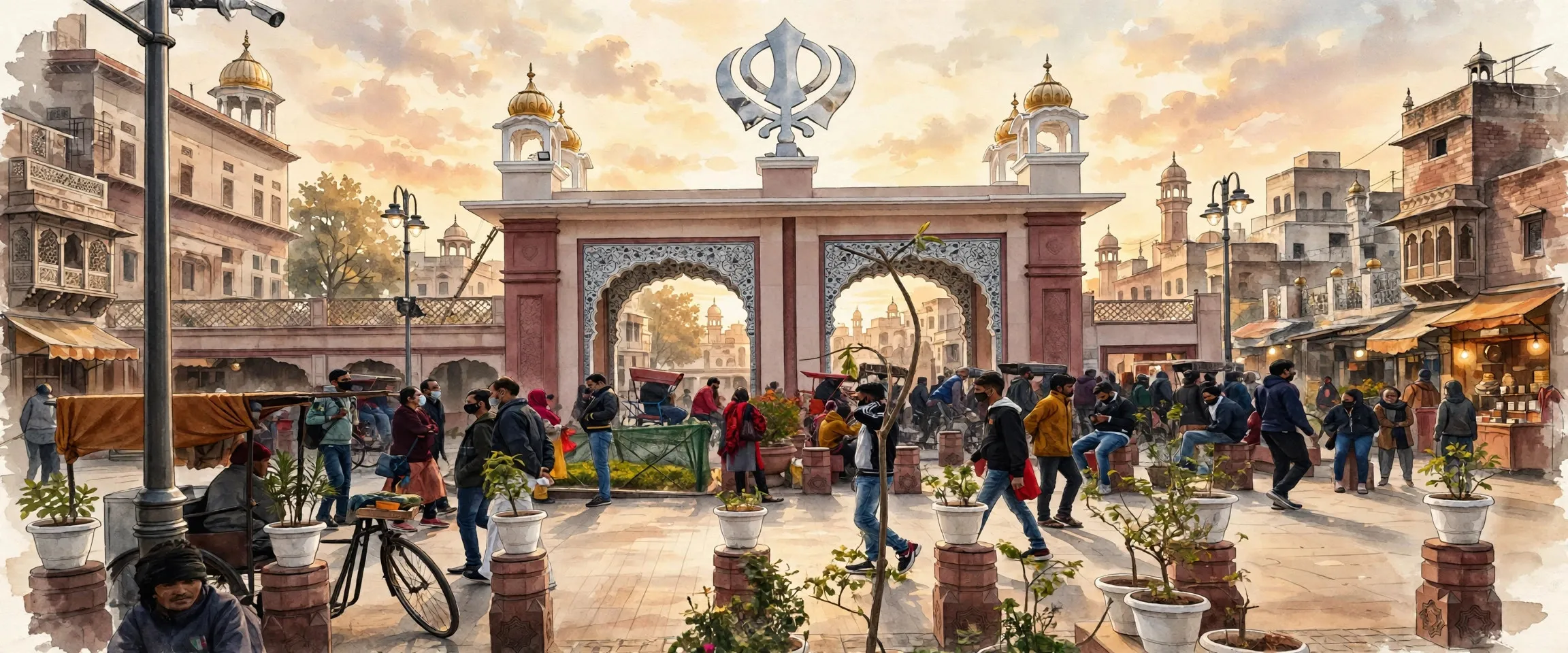
Gurdwara Sis Ganj Sahib in Chandni Chowk, Old Delhi, stands on the exact spot where Guru Tegh Bahadur Ji, the ninth Sikh Guru, was beheaded on 11 November 1675 for refusing to convert to Islam. Built in 1783 by Sardar Baghel Singh, it preserves the trunk of the tree beneath which the Guru was martyred and the well he used while imprisoned.
- Facts
- Country
- India
- City
- Delhi
- Location
- Chandni Chowk, Old Delhi
- Associated Guru
- Guru Tegh Bahadur Ji (ninth Sikh Guru)
- Martyrdom
- 11 November 1675, on the orders of Aurangzeb
- Shrine built
- Sardar Baghel Singh, 1783; present structure mainly from 1930
- Relics
- Trunk of the tree beneath which the Guru was martyred; the well he used during imprisonment
- One of
- The nine historic gurdwaras of Delhi
- Managed by
- Delhi Sikh Gurdwara Management Committee (DSGMC)
- Festivals
- Shaheedi Divas of Guru Tegh Bahadur Ji (24 November)
In the middle of Chandni Chowk, Old Delhi, Gurdwara Sis Ganj Sahib marks the exact spot where Guru Tegh Bahadur Ji, the ninth Sikh Guru, was beheaded on 11 November 1675 on the orders of the Mughal emperor Aurangzeb. "Sis" means head in Punjabi, and the shrine remains one of the nine historic gurdwaras of Delhi.
Why the ninth Guru was executed
Guru Tegh Bahadur Ji was born Tyag Mal in Amritsar on 1 April 1621, the youngest son of Guru Hargobind Ji, and became the ninth Sikh Guru in 1664. In 1675 a large delegation of Kashmiri Pandits, led by Pandit Kirpa Ram, came to him at Anandpur Sahib pleading for protection against the religious oppression they faced under Aurangzeb’s rule.
Arrested at Ropar and imprisoned at Sirhind, the Guru was taken to Delhi months later and asked to perform a miracle or convert to Islam. He refused both. Three of his companions were tortured to death before his eyes — Bhai Mati Das was sawn in two, Bhai Dayal Das was thrown into a cauldron of boiling liquid, and Bhai Sati Das was cut into pieces. Then, on 11 November 1675, the Guru was publicly beheaded in Chandni Chowk, close to the Red Fort.
The head and the body
Mughal orders were that the Guru’s body be quartered and displayed as a warning. Before that could happen, two acts of extraordinary devotion saved both parts. Bhai Jaita, a devoted Sikh, secretly carried the severed head from Delhi all the way to Anandpur Sahib, where it was cremated. In honour of his courage he was renamed Bhai Jivan Singh, and a second Gurdwara Sis Ganj Sahib at Anandpur Sahib marks the cremation site.
At the same time, Lakhi Shah Vanjara recovered the Guru’s body under the cover of darkness. To cremate it in secret, he set fire to his own house with the body inside. Gurdwara Rakab Ganj Sahib in Delhi stands on that spot today.
Baghel Singh’s shrine, 1783
For over a century the martyrdom site had no shrine. On 11 March 1783 the Sikh military leader Baghel Singh of the Karora Misl marched into Delhi and occupied the Diwan-i-Am. Emperor Shah Alam II settled with him, granting Baghel Singh permission to raise gurdwaras at Sikh historical sites and six annas in a rupee — 37.5% — of all octroi duties to fund the work. Within eight months, from April to November 1783, he built Sis Ganj among a group of shrines in the city.
Baghel Singh did not know the exact spot of the execution, only that it lay near a mosque in Chandni Chowk. An elderly Muslim woman of the water-carrier caste came forward: her father, she said, had been the eyewitness who cleaned the site after the execution. The Guru, she explained, had been seated on a wooden chauki facing east near the mosque’s compound wall. A part of that wall was removed, and the shrine was built within the compound.
The shrine today
Inside the complex survive the trunk of the tree beneath which the Guru’s head was severed, and the well he drew water from during his imprisonment. Beside the gurdwara stands the old Mughal-era Kotwali — the jail where the Guru was held and his disciples tortured — handed to the Delhi Sikh Gurdwara Management Committee in the early 1970s.
After the 1857 uprising the British demolished the Kotwali and the land passed to the Sikhs; the site then alternated between mosque and gurdwara through a long legal dispute, until the Privy Council ruled in favour of the Sikh litigants. The present structure dates mainly to 1930 — built by Rai Bahadur Narain Singh — with the domes gilded in the years that followed.
Every Republic Day since 1979, the Sikh regiment of the Indian Army has saluted Sis Ganj Sahib before saluting the President of India — the only double salute by a regiment in the parade.
Festivals and how to reach
The Guru’s martyrdom day, Shaheedi Divas, is observed every year on 24 November, when thousands gather at the shrine in remembrance. Daily kirtan and langar continue through the year.
The gurdwara stands in the Chandni Chowk market area of Old Delhi, served by the Chandni Chowk station of the Delhi Metro, and is a short walk from the Red Fort.
Why is it called Sis Ganj?
"Sis" means head in Punjabi and Hindi. The gurdwara stands where Guru Tegh Bahadur Ji’s head was severed — the shrine takes its name from that sacrifice.
What happened to Guru Tegh Bahadur Ji’s head and body?
Bhai Jaita carried the Guru’s head to Anandpur Sahib, where it was cremated; honoured with the name Bhai Jivan Singh, a second Gurdwara Sis Ganj Sahib marks that site. Lakhi Shah Vanjara recovered the body and cremated it in secret inside his own burning house, where Gurdwara Rakab Ganj Sahib now stands.
ਪੁਰਾਣੀ ਦਿੱਲੀ ਦੇ ਚਾਂਦਨੀ ਚੌਕ ਦੇ ਵਿਚਕਾਰ, ਗੁਰਦੁਆਰਾ ਸੀਸ ਗੰਜ ਸਾਹਿਬ ਉਸ ਪਵਿੱਤਰ ਥਾਂ ’ਤੇ ਸਥਿਤ ਹੈ ਜਿੱਥੇ ਨੌਵੇਂ ਸਿੱਖ ਗੁਰੂ, ਸ੍ਰੀ ਗੁਰੂ ਤੇਗ਼ ਬਹਾਦਰ ਜੀ ਨੂੰ ਮੁਗ਼ਲ ਬਾਦਸ਼ਾਹ ਔਰੰਗਜ਼ੇਬ ਦੇ ਹੁਕਮ ’ਤੇ 11 ਨਵੰਬਰ 1675 ਨੂੰ ਸੀਸ ਕਲਮ ਕਰ ਦਿੱਤਾ ਗਿਆ ਸੀ ਪੰਜਾਬੀ ਵਿੱਚ “ਸੀਸ” ਦਾ ਅਰਥ ਹੈ ਸਿਰ, ਅਤੇ ਇਹ ਗੁਰਦੁਆਰਾ ਦਿੱਲੀ ਦੇ ਨੌਂ ਇਤਿਹਾਸਕ ਗੁਰਦੁਆਰਿਆਂ ਵਿੱਚੋਂ ਇੱਕ ਹੈ
ਨੌਵੇਂ ਗੁਰੂ ਨੂੰ ਸ਼ਹੀਦ ਕਿਉਂ ਕੀਤਾ ਗਿਆ
ਸ੍ਰੀ ਗੁਰੂ ਤੇਗ਼ ਬਹਾਦਰ ਜੀ ਦਾ ਜਨਮ 1 ਅਪ੍ਰੈਲ 1621 ਨੂੰ ਅੰਮ੍ਰਿਤਸਰ ਵਿੱਚ ਤਿਆਗ ਮੱਲ ਦੇ ਰੂਪ ਵਿੱਚ ਹੋਇਆ ਸੀ; ਉਹ ਸ੍ਰੀ ਗੁਰੂ ਹਰਿਗੋਬਿੰਦ ਜੀ ਦੇ ਸਭ ਤੋਂ ਛੋਟੇ ਪੁੱਤਰ ਸਨ ਅਤੇ 1664 ਵਿੱਚ ਨੌਵੇਂ ਸਿੱਖ ਗੁਰੂ ਬਣੇ 1675 ਵਿੱਚ ਕਸ਼ਮੀਰੀ ਪੰਡਤਾਂ ਦਾ ਇੱਕ ਵੱਡਾ ਜਥਾ, ਜਿਸ ਦੀ ਅਗਵਾਈ ਪੰਡਤ ਕਿਰਪਾ ਰਾਮ ਕਰ ਰਹੇ ਸਨ, ਅਨੰਦਪੁਰ ਸਾਹਿਬ ਵਿਖੇ ਉਨ੍ਹਾਂ ਕੋਲ ਆਇਆ ਅਤੇ ਔਰੰਗਜ਼ੇਬ ਦੇ ਰਾਜ ਵਿੱਚ ਧਾਰਮਿਕ ਜ਼ੁਲਮ ਤੋਂ ਰੱਖਿਆ ਦੀ ਅਰਦਾਸ ਕੀਤੀ
ਰੋਪੜ ਵਿਖੇ ਗ੍ਰਿਫ਼ਤਾਰ ਕਰਕੇ ਗੁਰੂ ਜੀ ਨੂੰ ਸਰਹਿੰਦ ਵਿੱਚ ਕੈਦ ਕਰ ਦਿੱਤਾ ਗਿਆ, ਅਤੇ ਕੁਝ ਮਹੀਨਿਆਂ ਬਾਅਦ ਦਿੱਲੀ ਲਿਜਾ ਕੇ ਉਨ੍ਹਾਂ ਨੂੰ ਕਰਾਮਾਤ ਦਿਖਾਉਣ ਜਾਂ ਇਸਲਾਮ ਕਬੂਲ ਕਰਨ ਲਈ ਕਿਹਾ ਗਿਆ ਉਨ੍ਹਾਂ ਨੇ ਦੋਹਾਂ ਤੋਂ ਇਨਕਾਰ ਕਰ ਦਿੱਤਾ ਉਨ੍ਹਾਂ ਦੇ ਸਾਹਮਣੇ ਉਨ੍ਹਾਂ ਦੇ ਤਿੰਨ ਸਾਥੀਆਂ ਨੂੰ ਤਸੀਹੇ ਦੇ ਕੇ ਸ਼ਹੀਦ ਕਰ ਦਿੱਤਾ ਗਿਆ — ਭਾਈ ਮਤੀ ਦਾਸ ਨੂੰ ਆਰੇ ਨਾਲ ਚੀਰ ਦਿੱਤਾ ਗਿਆ, ਭਾਈ ਦਿਆਲ ਦਾਸ ਨੂੰ ਖੌਲਦੇ ਤਰਲ ਦੀ ਕੜਾਹੀ ਵਿੱਚ ਸੁੱਟ ਦਿੱਤਾ ਗਿਆ, ਅਤੇ ਭਾਈ ਸਤੀ ਦਾਸ ਦੇ ਟੁਕੜੇ-ਟੁਕੜੇ ਕਰ ਦਿੱਤੇ ਗਏ ਫਿਰ 11 ਨਵੰਬਰ 1675 ਨੂੰ ਲਾਲ ਕਿਲ੍ਹੇ ਨੇੜੇ ਚਾਂਦਨੀ ਚੌਕ ਵਿੱਚ ਗੁਰੂ ਜੀ ਦਾ ਸੀਸ ਖੁੱਲ੍ਹੇਆਮ ਕਲਮ ਕਰ ਦਿੱਤਾ ਗਿਆ
ਸੀਸ ਅਤੇ ਸਰੀਰ
ਮੁਗ਼ਲ ਹੁਕਮ ਸੀ ਕਿ ਗੁਰੂ ਜੀ ਦੇ ਸਰੀਰ ਦੇ ਟੁਕੜੇ ਕਰਕੇ ਚਿਤਾਵਨੀ ਵਜੋਂ ਪ੍ਰਦਰਸ਼ਿਤ ਕੀਤਾ ਜਾਵੇ ਇਸ ਤੋਂ ਪਹਿਲਾਂ ਹੀ ਸ਼ਰਧਾ ਦੇ ਦੋ ਅਦੁੱਤੀ ਕਾਰਨਾਮਿਆਂ ਨੇ ਦੋਹਾਂ ਹਿੱਸਿਆਂ ਨੂੰ ਬਚਾ ਲਿਆ ਇੱਕ ਸ਼ਰਧਾਲੂ ਸਿੱਖ ਭਾਈ ਜੈਤਾ ਚੁੱਪ-ਚੁਪੀਤੇ ਕਲਮ ਕੀਤਾ ਹੋਇਆ ਸੀਸ ਦਿੱਲੀ ਤੋਂ ਅਨੰਦਪੁਰ ਸਾਹਿਬ ਲੈ ਗਿਆ, ਜਿੱਥੇ ਉਸ ਦਾ ਸਸਕਾਰ ਕੀਤਾ ਗਿਆ ਉਸ ਦੀ ਬਹਾਦਰੀ ਦੇ ਸਨਮਾਨ ਵਿੱਚ ਉਸ ਦਾ ਨਾਂ ਭਾਈ ਜੀਵਨ ਸਿੰਘ ਰੱਖਿਆ ਗਿਆ, ਅਤੇ ਅਨੰਦਪੁਰ ਸਾਹਿਬ ਦਾ ਦੂਜਾ ਗੁਰਦੁਆਰਾ ਸੀਸ ਗੰਜ ਸਾਹਿਬ ਉਸ ਸਸਕਾਰ ਦੀ ਥਾਂ ’ਤੇ ਸਥਿਤ ਹੈ
ਉਸੇ ਸਮੇਂ ਲਖੀ ਸ਼ਾਹ ਵਣਜਾਰਾ ਹਨੇਰੇ ਦੀ ਓਟ ਵਿੱਚ ਗੁਰੂ ਜੀ ਦਾ ਸਰੀਰ ਲੈ ਆਇਆ ਗੁਪਤ ਰੂਪ ਵਿੱਚ ਸਸਕਾਰ ਕਰਨ ਲਈ ਉਸ ਨੇ ਸਰੀਰ ਸਮੇਤ ਆਪਣੇ ਹੀ ਘਰ ਨੂੰ ਅੱਗ ਲਾ ਦਿੱਤੀ ਦਿੱਲੀ ਦਾ ਗੁਰਦੁਆਰਾ ਰਕਾਬ ਗੰਜ ਸਾਹਿਬ ਅੱਜ ਉਸੇ ਥਾਂ ’ਤੇ ਸਥਿਤ ਹੈ
ਬਘੇਲ ਸਿੰਘ ਦਾ ਗੁਰਦੁਆਰਾ, 1783
ਇੱਕ ਸਦੀ ਤੋਂ ਵੱਧ ਸਮੇਂ ਤੱਕ ਸ਼ਹੀਦੀ ਦੀ ਥਾਂ ’ਤੇ ਕੋਈ ਗੁਰਦੁਆਰਾ ਨਹੀਂ ਸੀ 11 ਮਾਰਚ 1783 ਨੂੰ ਕਰੋੜਾ ਮਿਸਲ ਦੇ ਸਿੱਖ ਫੌਜੀ ਆਗੂ ਬਘੇਲ ਸਿੰਘ ਦਿੱਲੀ ਵਿੱਚ ਦਾਖ਼ਲ ਹੋਏ ਅਤੇ ਦੀਵਾਨ-ਏ-ਆਮ ’ਤੇ ਕਬਜ਼ਾ ਕਰ ਲਿਆ ਬਾਦਸ਼ਾਹ ਸ਼ਾਹ ਆਲਮ ਦੂਜੇ ਨੇ ਸਮਝੌਤਾ ਕੀਤਾ: ਬਘੇਲ ਸਿੰਘ ਨੂੰ ਸਿੱਖ ਇਤਿਹਾਸਕ ਥਾਵਾਂ ’ਤੇ ਗੁਰਦੁਆਰੇ ਬਣਾਉਣ ਦੀ ਆਗਿਆ ਮਿਲੀ ਅਤੇ ਇਸ ਕੰਮ ਲਈ ਚੁੰਗੀ ਮਹਿਸੂਲ ਵਿੱਚੋਂ ਛੇ ਆਨੇ ਫ਼ੀ ਰੁਪਏ — 37.5% — ਦੇਣ ਦਾ ਵਾਅਦਾ ਹੋਇਆ ਅੱਠ ਮਹੀਨਿਆਂ ਵਿੱਚ, ਅਪ੍ਰੈਲ ਤੋਂ ਨਵੰਬਰ 1783 ਤੱਕ, ਉਸ ਨੇ ਸ਼ਹਿਰ ਵਿੱਚ ਕਈ ਗੁਰਦੁਆਰਿਆਂ ਦੇ ਨਾਲ ਸੀਸ ਗੰਜ ਵੀ ਬਣਵਾਇਆ
ਬਘੇਲ ਸਿੰਘ ਨੂੰ ਸ਼ਹੀਦੀ ਦੀ ਸਹੀ ਥਾਂ ਦਾ ਪਤਾ ਨਹੀਂ ਸੀ, ਸਿਰਫ਼ ਇੰਨਾ ਪਤਾ ਸੀ ਕਿ ਉਹ ਚਾਂਦਨੀ ਚੌਕ ਦੀ ਇੱਕ ਮਸਜਿਦ ਨੇੜੇ ਹੈ ਪਾਣੀ ਢੋਣ ਵਾਲੀ ਜਾਤ ਦੀ ਇੱਕ ਬਜ਼ੁਰਗ ਮੁਸਲਮਾਨ ਔਰਤ ਅੱਗੇ ਆਈ: ਉਸ ਨੇ ਦੱਸਿਆ ਕਿ ਉਸ ਦੇ ਪਿਤਾ ਉਸ ਘਟਨਾ ਦੇ ਚਸ਼ਮਦੀਦ ਗਵਾਹ ਸਨ ਜਿਨ੍ਹਾਂ ਨੇ ਸ਼ਹੀਦੀ ਤੋਂ ਬਾਅਦ ਉਹ ਥਾਂ ਸਾਫ਼ ਕੀਤੀ ਸੀ ਉਸ ਨੇ ਦੱਸਿਆ ਕਿ ਗੁਰੂ ਜੀ ਸ਼ਹੀਦੀ ਸਮੇਂ ਮਸਜਿਦ ਦੀ ਚਾਰਦੀਵਾਰੀ ਨੇੜੇ ਪੂਰਬ ਵੱਲ ਮੂੰਹ ਕਰਕੇ ਲੱਕੜ ਦੀ ਚੌਂਕੀ ’ਤੇ ਬੈਠੇ ਸਨ ਉਸ ਕੰਧ ਦਾ ਇੱਕ ਹਿੱਸਾ ਹਟਾ ਕੇ ਚਾਰਦੀਵਾਰੀ ਦੇ ਅੰਦਰ ਗੁਰਦੁਆਰਾ ਬਣਾਇਆ ਗਿਆ
ਅੱਜ ਦਾ ਗੁਰਦੁਆਰਾ
ਗੁਰਦੁਆਰਾ ਕੰਪਲੈਕਸ ਵਿੱਚ ਉਸ ਰੁੱਖ ਦਾ ਤਣਾ ਸੁਰੱਖਿਅਤ ਹੈ ਜਿਸ ਹੇਠਾਂ ਗੁਰੂ ਜੀ ਦਾ ਸੀਸ ਕਲਮ ਕੀਤਾ ਗਿਆ ਸੀ, ਅਤੇ ਉਹ ਖੂਹ ਵੀ ਜਿਸ ਤੋਂ ਉਹ ਕੈਦ ਦੌਰਾਨ ਪਾਣੀ ਭਰਦੇ ਸਨ ਗੁਰਦੁਆਰੇ ਦੇ ਨਾਲ ਹੀ ਪੁਰਾਣੀ ਮੁਗ਼ਲ ਕੋਤਵਾਲੀ ਖੜ੍ਹੀ ਹੈ — ਉਹ ਕੈਦਖ਼ਾਨਾ ਜਿੱਥੇ ਗੁਰੂ ਜੀ ਨੂੰ ਕੈਦ ਰੱਖਿਆ ਗਿਆ ਅਤੇ ਉਨ੍ਹਾਂ ਦੇ ਸਿੱਖਾਂ ਨੂੰ ਤਸੀਹੇ ਦਿੱਤੇ ਗਏ ਸਨ — ਜੋ 1970 ਦੇ ਦਹਾਕੇ ਦੇ ਸ਼ੁਰੂ ਵਿੱਚ ਦਿੱਲੀ ਸਿੱਖ ਗੁਰਦੁਆਰਾ ਪ੍ਰਬੰਧਕ ਕਮੇਟੀ ਨੂੰ ਸੌਂਪ ਦਿੱਤੀ ਗਈ
1857 ਦੇ ਵਿਦਰੋਹ ਤੋਂ ਬਾਅਦ ਅੰਗਰੇਜ਼ਾਂ ਨੇ ਕੋਤਵਾਲੀ ਢਾਹ ਦਿੱਤੀ ਅਤੇ ਜ਼ਮੀਨ ਸਿੱਖਾਂ ਨੂੰ ਮਿਲ ਗਈ; ਫਿਰ ਲੰਬੇ ਕਾਨੂੰਨੀ ਝਗੜੇ ਦੌਰਾਨ ਇਹ ਥਾਂ ਕਦੇ ਮਸਜਿਦ ਅਤੇ ਕਦੇ ਗੁਰਦੁਆਰਾ ਬਣਦੀ ਰਹੀ, ਜਦੋਂ ਤੱਕ ਪ੍ਰਿਵੀ ਕੌਂਸਲ ਨੇ ਸਿੱਖ ਮੁਕੱਦਮੇਬਾਜ਼ਾਂ ਦੇ ਹੱਕ ਵਿੱਚ ਫ਼ੈਸਲਾ ਨਹੀਂ ਸੁਣਾ ਦਿੱਤਾ ਮੌਜੂਦਾ ਇਮਾਰਤ ਮੁੱਖ ਤੌਰ ’ਤੇ 1930 ਦੀ ਹੈ — ਜਿਸ ਨੂੰ ਰਾਏ ਬਹਾਦਰ ਨਰੈਣ ਸਿੰਘ ਨੇ ਬਣਵਾਇਆ — ਅਤੇ ਉਸ ਤੋਂ ਬਾਅਦ ਦੇ ਸਾਲਾਂ ਵਿੱਚ ਗੁੰਬਦਾਂ ’ਤੇ ਸੋਨੇ ਦਾ ਕੰਮ ਚੜ੍ਹਾਇਆ ਗਿਆ
1979 ਤੋਂ ਹਰ ਗਣਤੰਤਰ ਦਿਵਸ ’ਤੇ ਭਾਰਤੀ ਫੌਜ ਦੀ ਸਿੱਖ ਰੈਜੀਮੈਂਟ ਰਾਸ਼ਟਰਪਤੀ ਨੂੰ ਸਲਾਮੀ ਦੇਣ ਤੋਂ ਪਹਿਲਾਂ ਸੀਸ ਗੰਜ ਸਾਹਿਬ ਨੂੰ ਸਲਾਮੀ ਦਿੰਦੀ ਹੈ — ਪਰੇਡ ਵਿੱਚ ਕਿਸੇ ਰੈਜੀਮੈਂਟ ਵੱਲੋਂ ਇਹ ਇਕਲੌਤੀ ਦੋਹਰੀ ਸਲਾਮੀ ਹੈ
ਤਿਉਹਾਰ ਅਤੇ ਪਹੁੰਚ
ਗੁਰੂ ਜੀ ਦਾ ਸ਼ਹੀਦੀ ਦਿਵਸ ਹਰ ਸਾਲ 24 ਨਵੰਬਰ ਨੂੰ ਮਨਾਇਆ ਜਾਂਦਾ ਹੈ, ਜਦੋਂ ਹਜ਼ਾਰਾਂ ਸ਼ਰਧਾਲੂ ਯਾਦ ਵਿੱਚ ਗੁਰਦੁਆਰੇ ਵਿੱਚ ਇਕੱਠੇ ਹੁੰਦੇ ਹਨ ਸਾਰਾ ਸਾਲ ਰੋਜ਼ਾਨਾ ਕੀਰਤਨ ਅਤੇ ਲੰਗਰ ਚਲਦਾ ਹੈ
ਗੁਰਦੁਆਰਾ ਪੁਰਾਣੀ ਦਿੱਲੀ ਦੇ ਚਾਂਦਨੀ ਚੌਕ ਬਾਜ਼ਾਰ ਖੇਤਰ ਵਿੱਚ ਸਥਿਤ ਹੈ, ਜਿੱਥੇ ਦਿੱਲੀ ਮੈਟਰੋ ਦਾ ਚਾਂਦਨੀ ਚੌਕ ਸਟੇਸ਼ਨ ਪਹੁੰਚਦਾ ਹੈ, ਅਤੇ ਇਹ ਲਾਲ ਕਿਲ੍ਹੇ ਤੋਂ ਥੋੜ੍ਹੀ ਦੂਰੀ ’ਤੇ ਹੈ
ਇਸ ਦਾ ਨਾਂ ਸੀਸ ਗੰਜ ਕਿਉਂ ਹੈ?
ਪੰਜਾਬੀ ਅਤੇ ਹਿੰਦੀ ਵਿੱਚ “ਸੀਸ” ਦਾ ਅਰਥ ਹੈ ਸਿਰ ਗੁਰਦੁਆਰਾ ਉਸ ਥਾਂ ’ਤੇ ਖੜ੍ਹਾ ਹੈ ਜਿੱਥੇ ਸ੍ਰੀ ਗੁਰੂ ਤੇਗ਼ ਬਹਾਦਰ ਜੀ ਦਾ ਸੀਸ ਕਲਮ ਕੀਤਾ ਗਿਆ ਸੀ — ਇਸ ਦਾ ਨਾਂ ਉਸ ਕੁਰਬਾਨੀ ’ਤੇ ਰੱਖਿਆ ਗਿਆ ਹੈ
ਸ੍ਰੀ ਗੁਰੂ ਤੇਗ਼ ਬਹਾਦਰ ਜੀ ਦੇ ਸੀਸ ਅਤੇ ਸਰੀਰ ਦਾ ਕੀ ਬਣਿਆ?
ਭਾਈ ਜੈਤਾ ਗੁਰੂ ਜੀ ਦਾ ਸੀਸ ਅਨੰਦਪੁਰ ਸਾਹਿਬ ਲੈ ਗਿਆ, ਜਿੱਥੇ ਉਸ ਦਾ ਸਸਕਾਰ ਕੀਤਾ ਗਿਆ; ਉਸ ਨੂੰ ਭਾਈ ਜੀਵਨ ਸਿੰਘ ਨਾਂ ਨਾਲ ਸਨਮਾਨਿਆ ਗਿਆ, ਅਤੇ ਉਸ ਥਾਂ ’ਤੇ ਦੂਜਾ ਗੁਰਦੁਆਰਾ ਸੀਸ ਗੰਜ ਸਾਹਿਬ ਸਥਿਤ ਹੈ ਲਖੀ ਸ਼ਾਹ ਵਣਜਾਰਾ ਸਰੀਰ ਲੈ ਆਇਆ ਅਤੇ ਗੁਪਤ ਰੂਪ ਵਿੱਚ ਆਪਣੇ ਹੀ ਸੜਦੇ ਘਰ ਵਿੱਚ ਉਸ ਦਾ ਸਸਕਾਰ ਕਰ ਦਿੱਤਾ, ਜਿੱਥੇ ਅੱਜ ਗੁਰਦੁਆਰਾ ਰਕਾਬ ਗੰਜ ਸਾਹਿਬ ਖੜ੍ਹਾ ਹੈ