
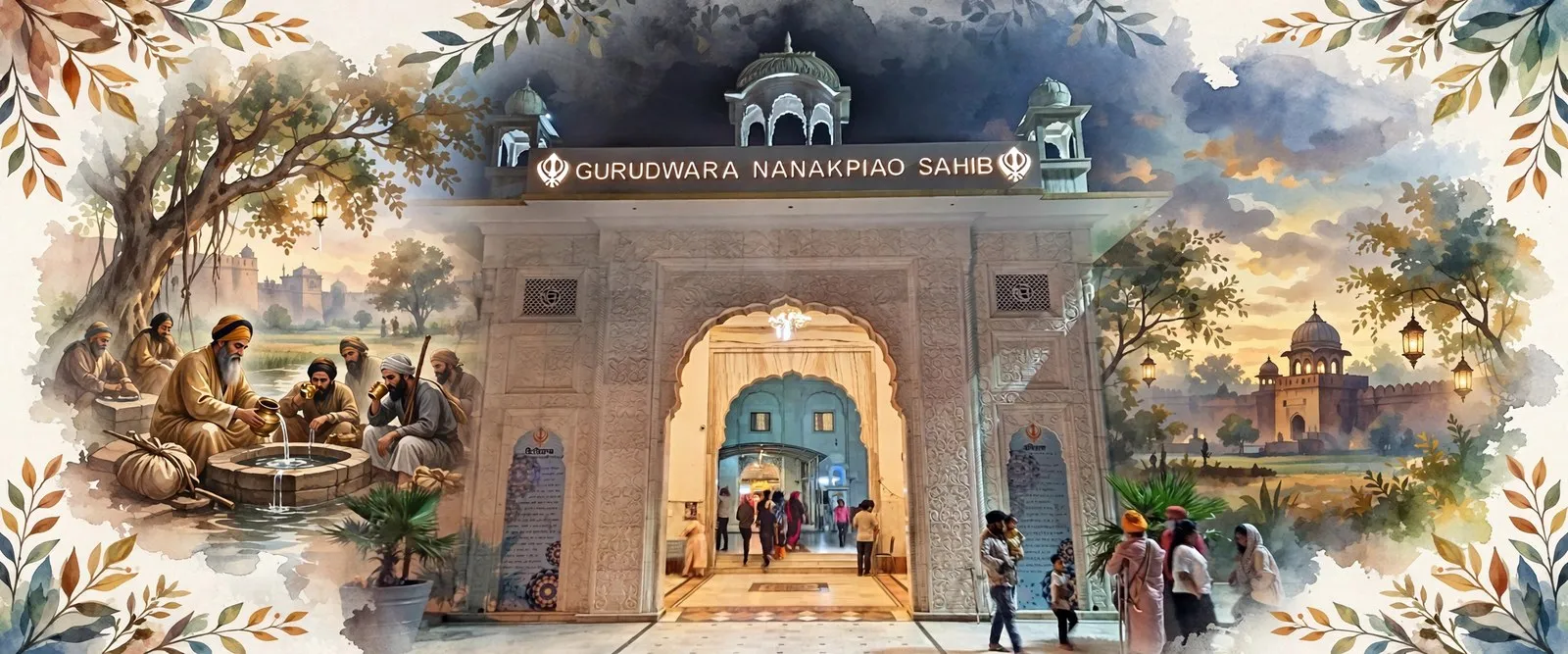
Gurdwara Nanak Piao Sahib stands on the Grand Trunk Road in North Delhi, near Sabzi Mandi, where Guru Nanak Dev Ji camped in a garden in 1505 during the reign of Sikandar Lodi. He served water from the garden well and food to travellers, and gave his offerings to the poor. The well is still preserved, and piao means offering a drink to the thirsty.
- Punjabi name
- ਗੁਰਦੁਆਰਾ ਨਾਨਕ ਪਿਆਓ ਸਾਹਿਬ
- Type
- Historic gurdwara
- Country
- India
- City
- Delhi
- District
- North Delhi
- State
- Delhi
All 13 facts
- Location
- 5-A, Bhama Shah Marg, Rana Pratap Road (Grand Trunk Road), near Sabzi Mandi; PIN 110009
- Associated with
- Guru Nanak Dev Ji; Bhai Mardana Ji
- Marks
- Guru Nanak Dev Ji's camp and water service, 1505
- Earlier name
- Pau Sahib
- Key feature
- The historic well, still preserved and still served
- Architecture
- Mughal style gateway; hall on a raised platform; part Sheesh Mahal style ceiling; sarovar behind
- Main observances
- Guru Nanak Dev Ji Parkash Purab and Joti Jot
Gurdwara Nanak Piao Sahib is a historic gurdwara in North Delhi, on the old Grand Trunk Road near Sabzi Mandi, built where Guru Nanak Dev Ji camped in a garden during his visit to Delhi in 1505, in the reign of Sultan Sikandar Lodi. Travellers on the highway rested in that garden, and the Guru turned its well into a piao, a free water serving place, feeding and giving water to everyone who passed. The well he used is still preserved in the complex, and the shrine's name keeps the act alive: piao means offering a drink to the thirsty.
What is Gurdwara Nanak Piao Sahib?
Gurdwara Nanak Piao Sahib is the Delhi shrine that marks Guru Nanak Dev Ji's 1505 stay in a garden on the Grand Trunk Road, where he served water and food to travellers and gave away to the poor whatever offerings visitors brought him. It is dedicated to the first Guru, it still serves the road's travellers, and its preserved well is the oldest physical link between Delhi and Guru Nanak's first udasi, his first great journey. The Delhi Sikh Gurdwara Management Committee describes it simply: the Guru stopped in a garden, transformed a well in its midst into a piao, and tired travellers got water and a free kitchen there.
A garden camp on the Grand Trunk Road, 1505
Guru Nanak reached Delhi during his first udasi, travelling with Bhai Mardana Ji, and camped in a garden on the outskirts of the city, in the area now known as Sabzi Mandi. The spot was well chosen for service: the Grand Trunk Road carried royal parties and ordinary wayfarers alike, and travellers worn down by heat and distance already rested in the garden's shade. There the Guru sang his bani in kirtan and spoke to whoever gathered. Word spread through the city, visitors began arriving in a steady stream, and the garden camp became a small mission centre, a place where Delhi first heard the message of one God, honest work and sharing. The owner of the garden, moved by what he saw, later donated the land, and the camp became a public shrine in Guru Nanak's name. In its earliest days it was called Pau Sahib; the name that endured is Nanak Piao.
The well, and what piao means
At the centre of the story is water. To give passing strangers fresh, cool water in a Delhi summer is no small kindness, and tradition says the Guru had a deep well dug here and set up a permanent piao, taking pleasure in serving travellers with his own hands. Visitors brought the Guru and Bhai Mardana gifts and offerings, some of them precious, and he distributed everything among the poor and needy, keeping nothing. Food was served regularly to those who stayed, in the pattern Sikhs now call langar. The teaching on display is vand chhako, share what you have with others: the traveller who arrived thirsty left fed, watered and, if he needed it, helped from the Guru's own offerings. The historic well is still there, covered today by a white dome on pillars, still working, and sewadars still serve its water to visitors, so the piao of 1505 has never really closed.
The elephant, the prison and the earthquake of 1505
Tradition adds a harder chapter to the Delhi stay, and it is told here as tradition, not as court record. A sakhi says that when a family's elephant died near the camp, the Guru told the weeping owners the animal was only sleeping, and it rose. When the story reached Sikandar Lodi, whose own favourite elephant had died, the Sultan summoned the Guru and asked him to do the same. Guru Nanak declined, answering that life and death rest with God alone and no human being should interfere with His will. The refusal angered the Sultan, and the Guru was imprisoned. In prison his compassion is said to have changed the officials who guarded him. Then, on 3 July 1505, a great earthquake shook Delhi. Many in the frightened city connected the disaster with the imprisonment of the holy man, and Chishti Sufi saints are also said to have interceded. The Sultan ordered the Guru released, and at Guru Nanak's request many fellow prisoners were freed with him. Whatever weight a reader gives each detail, the shape of the story is pure Guru Nanak: no miracles on command, and freedom asked not for himself alone but for others too.
The building and the complex today
The shrine that stands today grew over five centuries of devotion. An impressive Mughal style gateway leads into the complex, and the gurdwara itself stands on a platform about four to five feet high, ringed by a wide parikrama, the circumambulatory path. Inside, the main hall is richly finished, with part of its ceiling done in Sheesh Mahal style, mirror work in the Mughal manner. Behind the main building lies a sarovar with an arched veranda around it, and a small garden survives in continuation of the garden of 1505, a living thread back to the camp. Separate rooms are kept for individual Akhand Paths, the continuous readings of the Guru Granth Sahib. What strikes most visitors, though, is the balance the place keeps: a working neighbourhood gurdwara on one of Delhi's busiest old roads, wrapped around a five hundred year old well.
What is celebrated at Nanak Piao?
The gurdwara's calendar turns on Guru Nanak Dev Ji himself. His Parkash Purab, the anniversary of his birth, fills the main hall, which is decorated for the occasion, and the death anniversary of the Guru, his Joti Jot, is also observed here, drawing devotees who come to pay homage at the place of his Delhi camp. Through the year the daily pattern holds: kirtan, prayer, the serving of water at the well and the feeding of travellers, the same three acts the garden camp was built on in 1505. Sadhus and yogis came to debate with the Guru in his day, and the shrine still presents itself as a place where questions are welcome.
Visiting Nanak Piao Sahib: how to reach
The gurdwara stands at 5-A, Bhama Shah Marg, by Rana Pratap Road, the Grand Trunk Road, in the Rana Pratap Bagh and Model Town side of North Delhi, near Sabzi Mandi, with the postcode 110009. It is an easy stop on the old GT Karnal Road corridor. As at every gurdwara, visitors cover their heads and remove their shoes, and everyone is welcome at the langar. Seek out the old well under its white dome: it is the heart of the shrine, and the sewadars serving water there are carrying on the exact service that gave Nanak Piao its name.
ਗੁਰਦੁਆਰਾ ਨਾਨਕ ਪਿਆਓ ਸਾਹਿਬ ਉੱਤਰੀ ਦਿੱਲੀ ਵਿੱਚ ਪੁਰਾਣੀ ਗ੍ਰੈਂਡ ਟਰੰਕ ਰੋਡ ਉੱਤੇ ਸਬਜ਼ੀ ਮੰਡੀ ਕੋਲ ਇੱਕ ਇਤਿਹਾਸਕ ਗੁਰਦੁਆਰਾ ਹੈ, ਜੋ ਉਸ ਬਾਗ ਵਾਲੀ ਥਾਂ ਬਣਿਆ ਹੈ ਜਿੱਥੇ ਗੁਰੂ ਨਾਨਕ ਦੇਵ ਜੀ ਨੇ ਸੁਲਤਾਨ ਸਿਕੰਦਰ ਲੋਦੀ ਦੇ ਰਾਜ ਵਿੱਚ 1505 ਵਿੱਚ ਦਿੱਲੀ ਫੇਰੀ ਦੌਰਾਨ ਡੇਰਾ ਲਾਇਆ ਸੀ ਰਾਜਮਾਰਗ ਦੇ ਮੁਸਾਫਰ ਉਸ ਬਾਗ ਵਿੱਚ ਆਰਾਮ ਕਰਦੇ ਸਨ, ਅਤੇ ਗੁਰੂ ਜੀ ਨੇ ਇਸ ਦੇ ਖੂਹ ਨੂੰ ਪਿਆਓ ਵਿੱਚ ਬਦਲ ਦਿੱਤਾ, ਇੱਕ ਮੁਫਤ ਪਾਣੀ ਪਿਲਾਉਣ ਵਾਲੀ ਥਾਂ, ਜਿੱਥੇ ਹਰ ਲੰਘਣ ਵਾਲੇ ਨੂੰ ਖਾਣਾ ਅਤੇ ਪਾਣੀ ਮਿਲਦਾ ਸੀ ਉਨ੍ਹਾਂ ਵੱਲੋਂ ਵਰਤਿਆ ਖੂਹ ਅੱਜ ਵੀ ਪਰਿਸਰ ਵਿੱਚ ਸਾਂਭਿਆ ਹੋਇਆ ਹੈ, ਅਤੇ ਅਸਥਾਨ ਦਾ ਨਾਂ ਉਸੇ ਸੇਵਾ ਨੂੰ ਜਿਉਂਦਾ ਰੱਖਦਾ ਹੈ: ਪਿਆਓ ਦਾ ਅਰਥ ਹੈ ਪਿਆਸੇ ਨੂੰ ਪਾਣੀ ਪਿਲਾਉਣਾ
ਗੁਰਦੁਆਰਾ ਨਾਨਕ ਪਿਆਓ ਸਾਹਿਬ ਕੀ ਹੈ?
ਗੁਰਦੁਆਰਾ ਨਾਨਕ ਪਿਆਓ ਸਾਹਿਬ ਦਿੱਲੀ ਦਾ ਉਹ ਅਸਥਾਨ ਹੈ ਜੋ ਗੁਰੂ ਨਾਨਕ ਦੇਵ ਜੀ ਦੇ 1505 ਵਿੱਚ ਗ੍ਰੈਂਡ ਟਰੰਕ ਰੋਡ ਉੱਤੇ ਇੱਕ ਬਾਗ ਵਿੱਚ ਠਹਿਰਾਅ ਨੂੰ ਦਰਸਾਉਂਦਾ ਹੈ, ਜਿੱਥੇ ਉਨ੍ਹਾਂ ਨੇ ਮੁਸਾਫਰਾਂ ਨੂੰ ਪਾਣੀ ਅਤੇ ਖਾਣਾ ਵਰਤਾਇਆ ਅਤੇ ਸ਼ਰਧਾਲੂਆਂ ਵੱਲੋਂ ਲਿਆਂਦੀਆਂ ਭੇਟਾਵਾਂ ਗਰੀਬਾਂ ਅਤੇ ਲੋੜਵੰਦਾਂ ਵਿੱਚ ਵੰਡ ਦਿੱਤੀਆਂ ਇਹ ਪਹਿਲੇ ਗੁਰੂ ਜੀ ਨੂੰ ਸਮਰਪਿਤ ਹੈ, ਅੱਜ ਵੀ ਸੜਕ ਦੇ ਮੁਸਾਫਰਾਂ ਦੀ ਸੇਵਾ ਕਰਦਾ ਹੈ, ਅਤੇ ਇਸ ਦਾ ਸਾਂਭਿਆ ਖੂਹ ਦਿੱਲੀ ਅਤੇ ਗੁਰੂ ਨਾਨਕ ਦੀ ਪਹਿਲੀ ਉਦਾਸੀ ਵਿਚਕਾਰ ਸਭ ਤੋਂ ਪੁਰਾਣੀ ਭੌਤਿਕ ਕੜੀ ਹੈ ਦਿੱਲੀ ਸਿੱਖ ਗੁਰਦੁਆਰਾ ਪ੍ਰਬੰਧਕ ਕਮੇਟੀ ਇਸ ਨੂੰ ਸਾਦੇ ਸ਼ਬਦਾਂ ਵਿੱਚ ਦੱਸਦੀ ਹੈ: ਗੁਰੂ ਜੀ ਇੱਕ ਬਾਗ ਵਿੱਚ ਠਹਿਰੇ, ਇਸ ਦੇ ਵਿਚਕਾਰ ਇੱਕ ਖੂਹ ਨੂੰ ਪਿਆਓ ਵਿੱਚ ਬਦਲਿਆ, ਅਤੇ ਥੱਕੇ ਮੁਸਾਫਰਾਂ ਨੂੰ ਉੱਥੇ ਪਾਣੀ ਅਤੇ ਮੁਫਤ ਲੰਗਰ ਮਿਲਿਆ
ਗ੍ਰੈਂਡ ਟਰੰਕ ਰੋਡ ਉੱਤੇ ਬਾਗ ਵਾਲਾ ਡੇਰਾ, 1505
ਗੁਰੂ ਨਾਨਕ ਆਪਣੀ ਪਹਿਲੀ ਉਦਾਸੀ ਦੌਰਾਨ ਭਾਈ ਮਰਦਾਨਾ ਜੀ ਨਾਲ ਯਾਤਰਾ ਕਰਦੇ ਹੋਏ ਦਿੱਲੀ ਪਹੁੰਚੇ ਅਤੇ ਸ਼ਹਿਰ ਦੇ ਬਾਹਰਵਾਰ ਇੱਕ ਬਾਗ ਵਿੱਚ ਡੇਰਾ ਲਾਇਆ, ਜੋ ਇਲਾਕਾ ਅੱਜ ਸਬਜ਼ੀ ਮੰਡੀ ਵਜੋਂ ਜਾਣਿਆ ਜਾਂਦਾ ਹੈ ਸੇਵਾ ਲਈ ਇਹ ਥਾਂ ਢੁੱਕਵੀਂ ਸੀ: ਗ੍ਰੈਂਡ ਟਰੰਕ ਰੋਡ ਉੱਤੇ ਸ਼ਾਹੀ ਸਵਾਰੀਆਂ ਅਤੇ ਆਮ ਮੁਸਾਫਰ ਦੋਵੇਂ ਲੰਘਦੇ ਸਨ, ਅਤੇ ਗਰਮੀ ਅਤੇ ਦੂਰੀ ਤੋਂ ਥੱਕੇ ਮੁਸਾਫਰ ਪਹਿਲਾਂ ਹੀ ਬਾਗ ਦੀ ਛਾਂ ਵਿੱਚ ਆਰਾਮ ਕਰਦੇ ਸਨ ਉੱਥੇ ਗੁਰੂ ਜੀ ਨੇ ਕੀਰਤਨ ਵਿੱਚ ਆਪਣੀ ਬਾਣੀ ਗਾਈ ਅਤੇ ਜੋ ਵੀ ਇਕੱਠਾ ਹੋਇਆ ਉਸ ਨਾਲ ਗੱਲ ਕੀਤੀ ਸ਼ਹਿਰ ਵਿੱਚ ਖਬਰ ਫੈਲ ਗਈ, ਸ਼ਰਧਾਲੂ ਲਗਾਤਾਰ ਆਉਣ ਲੱਗੇ, ਅਤੇ ਬਾਗ ਵਾਲਾ ਡੇਰਾ ਇੱਕ ਛੋਟਾ ਪ੍ਰਚਾਰ ਕੇਂਦਰ ਬਣ ਗਿਆ, ਜਿੱਥੇ ਦਿੱਲੀ ਨੇ ਪਹਿਲੀ ਵਾਰ ਇੱਕ ਰੱਬ, ਕਿਰਤ ਅਤੇ ਵੰਡ ਛਕਣ ਦਾ ਸੁਨੇਹਾ ਸੁਣਿਆ ਬਾਗ ਦੇ ਮਾਲਕ ਨੇ, ਜੋ ਕੁਝ ਵੇਖਿਆ ਉਸ ਤੋਂ ਪ੍ਰਭਾਵਿਤ ਹੋ ਕੇ, ਬਾਅਦ ਵਿੱਚ ਜ਼ਮੀਨ ਦਾਨ ਕਰ ਦਿੱਤੀ, ਅਤੇ ਡੇਰਾ ਗੁਰੂ ਨਾਨਕ ਦੇ ਨਾਂ ਉੱਤੇ ਜਨਤਕ ਅਸਥਾਨ ਬਣ ਗਿਆ ਸ਼ੁਰੂਆਤੀ ਦਿਨਾਂ ਵਿੱਚ ਇਸ ਨੂੰ ਪਾਓ ਸਾਹਿਬ ਕਿਹਾ ਜਾਂਦਾ ਸੀ; ਜੋ ਨਾਂ ਟਿਕਿਆ ਉਹ ਹੈ ਨਾਨਕ ਪਿਆਓ
ਖੂਹ, ਅਤੇ ਪਿਆਓ ਦਾ ਅਰਥ
ਇਸ ਕਥਾ ਦੇ ਕੇਂਦਰ ਵਿੱਚ ਪਾਣੀ ਹੈ ਦਿੱਲੀ ਦੀ ਗਰਮੀ ਵਿੱਚ ਅਜਨਬੀ ਮੁਸਾਫਰਾਂ ਨੂੰ ਤਾਜ਼ਾ, ਠੰਡਾ ਪਾਣੀ ਦੇਣਾ ਕੋਈ ਛੋਟੀ ਮਿਹਰਬਾਨੀ ਨਹੀਂ, ਅਤੇ ਪਰੰਪਰਾ ਦੱਸਦੀ ਹੈ ਕਿ ਗੁਰੂ ਜੀ ਨੇ ਇੱਥੇ ਡੂੰਘਾ ਖੂਹ ਪੁਟਵਾਇਆ ਅਤੇ ਸਥਾਈ ਪਿਆਓ ਲਾਇਆ, ਆਪਣੇ ਹੱਥੀਂ ਮੁਸਾਫਰਾਂ ਦੀ ਸੇਵਾ ਕਰ ਕੇ ਖੁਸ਼ ਹੁੰਦੇ ਹੋਏ ਸ਼ਰਧਾਲੂ ਗੁਰੂ ਜੀ ਅਤੇ ਭਾਈ ਮਰਦਾਨਾ ਲਈ ਭੇਟਾਵਾਂ ਲਿਆਉਂਦੇ, ਕੁਝ ਬਹੁਤ ਕੀਮਤੀ ਵੀ, ਅਤੇ ਉਹ ਸਭ ਕੁਝ ਗਰੀਬਾਂ ਅਤੇ ਲੋੜਵੰਦਾਂ ਵਿੱਚ ਵੰਡ ਦਿੰਦੇ, ਆਪਣੇ ਕੋਲ ਕੁਝ ਨਾ ਰੱਖਦੇ ਠਹਿਰਨ ਵਾਲਿਆਂ ਨੂੰ ਨਿਯਮਿਤ ਖਾਣਾ ਦਿੱਤਾ ਜਾਂਦਾ, ਉਸੇ ਤਰਜ਼ ਵਿੱਚ ਜਿਸ ਨੂੰ ਸਿੱਖ ਹੁਣ ਲੰਗਰ ਕਹਿੰਦੇ ਹਨ ਇੱਥੇ ਵਿਖਾਈ ਦਿੰਦੀ ਸਿੱਖਿਆ ਵੰਡ ਛਕੋ ਹੈ, ਜੋ ਹੈ ਉਹ ਦੂਜਿਆਂ ਨਾਲ ਵੰਡੋ: ਜੋ ਮੁਸਾਫਰ ਪਿਆਸਾ ਆਇਆ ਉਹ ਰੱਜ ਕੇ, ਪਾਣੀ ਪੀ ਕੇ ਅਤੇ, ਜੇ ਲੋੜ ਪਈ, ਤਾਂ ਗੁਰੂ ਜੀ ਦੀਆਂ ਆਪਣੀਆਂ ਭੇਟਾਵਾਂ ਵਿੱਚੋਂ ਮਦਦ ਲੈ ਕੇ ਗਿਆ ਇਤਿਹਾਸਕ ਖੂਹ ਅੱਜ ਵੀ ਉੱਥੇ ਹੈ, ਥੰਮ੍ਹਾਂ ਉੱਤੇ ਚਿੱਟੇ ਗੁੰਬਦ ਨਾਲ ਢੱਕਿਆ, ਅੱਜ ਵੀ ਚੱਲਦਾ ਹੈ, ਅਤੇ ਸੇਵਾਦਾਰ ਅੱਜ ਵੀ ਆਉਣ ਵਾਲਿਆਂ ਨੂੰ ਇਸ ਦਾ ਪਾਣੀ ਪਿਲਾਉਂਦੇ ਹਨ, ਇਸ ਲਈ 1505 ਦਾ ਪਿਆਓ ਸੱਚਮੁੱਚ ਕਦੇ ਬੰਦ ਨਹੀਂ ਹੋਇਆ
ਹਾਥੀ, ਕੈਦ ਅਤੇ 1505 ਦਾ ਭੂਚਾਲ
ਪਰੰਪਰਾ ਦਿੱਲੀ ਦੇ ਠਹਿਰਾਅ ਵਿੱਚ ਇੱਕ ਔਖਾ ਅਧਿਆਏ ਵੀ ਜੋੜਦੀ ਹੈ, ਅਤੇ ਇਹ ਇੱਥੇ ਪਰੰਪਰਾ ਵਜੋਂ ਦੱਸਿਆ ਗਿਆ ਹੈ, ਦਰਬਾਰੀ ਰਿਕਾਰਡ ਵਜੋਂ ਨਹੀਂ ਇੱਕ ਸਾਖੀ ਦੱਸਦੀ ਹੈ ਕਿ ਜਦੋਂ ਡੇਰੇ ਕੋਲ ਇੱਕ ਪਰਿਵਾਰ ਦਾ ਹਾਥੀ ਮਰ ਗਿਆ, ਤਾਂ ਗੁਰੂ ਜੀ ਨੇ ਰੋਂਦੇ ਮਾਲਕਾਂ ਨੂੰ ਕਿਹਾ ਕਿ ਜਾਨਵਰ ਸਿਰਫ ਸੁੱਤਾ ਹੈ, ਅਤੇ ਉਹ ਉੱਠ ਖੜ੍ਹਾ ਹੋਇਆ ਜਦੋਂ ਇਹ ਗੱਲ ਸਿਕੰਦਰ ਲੋਦੀ ਕੋਲ ਪਹੁੰਚੀ, ਜਿਸ ਦਾ ਆਪਣਾ ਪਸੰਦੀਦਾ ਹਾਥੀ ਮਰ ਗਿਆ ਸੀ, ਤਾਂ ਸੁਲਤਾਨ ਨੇ ਗੁਰੂ ਜੀ ਨੂੰ ਬੁਲਾਇਆ ਅਤੇ ਉਹੀ ਕਰਨ ਨੂੰ ਕਿਹਾ ਗੁਰੂ ਨਾਨਕ ਨੇ ਇਨਕਾਰ ਕਰ ਦਿੱਤਾ, ਜਵਾਬ ਦਿੱਤਾ ਕਿ ਜੀਵਨ ਅਤੇ ਮੌਤ ਸਿਰਫ ਰੱਬ ਦੇ ਹੱਥ ਹੈ ਅਤੇ ਕਿਸੇ ਮਨੁੱਖ ਨੂੰ ਉਸ ਦੀ ਰਜ਼ਾ ਵਿੱਚ ਦਖਲ ਨਹੀਂ ਦੇਣਾ ਚਾਹੀਦਾ ਇਨਕਾਰ ਨਾਲ ਸੁਲਤਾਨ ਨਾਰਾਜ਼ ਹੋ ਗਿਆ, ਅਤੇ ਗੁਰੂ ਜੀ ਨੂੰ ਕੈਦ ਕਰ ਦਿੱਤਾ ਗਿਆ ਕੈਦ ਵਿੱਚ ਉਨ੍ਹਾਂ ਦੀ ਦਿਆ ਨੇ ਕਿਹਾ ਜਾਂਦਾ ਹੈ ਕਿ ਪਹਿਰੇਦਾਰ ਅਧਿਕਾਰੀਆਂ ਨੂੰ ਬਦਲ ਦਿੱਤਾ ਫਿਰ, 3 ਜੁਲਾਈ 1505 ਨੂੰ, ਦਿੱਲੀ ਵਿੱਚ ਵੱਡਾ ਭੂਚਾਲ ਆਇਆ ਡਰੇ ਹੋਏ ਸ਼ਹਿਰ ਵਿੱਚ ਬਹੁਤਿਆਂ ਨੇ ਇਸ ਆਫਤ ਨੂੰ ਸੰਤ ਦੀ ਕੈਦ ਨਾਲ ਜੋੜਿਆ, ਅਤੇ ਕਿਹਾ ਜਾਂਦਾ ਹੈ ਕਿ ਚਿਸ਼ਤੀ ਸੂਫੀ ਸੰਤਾਂ ਨੇ ਵੀ ਸਿਫਾਰਸ਼ ਕੀਤੀ ਸੁਲਤਾਨ ਨੇ ਗੁਰੂ ਜੀ ਨੂੰ ਰਿਹਾ ਕਰਨ ਦਾ ਹੁਕਮ ਦਿੱਤਾ, ਅਤੇ ਗੁਰੂ ਨਾਨਕ ਦੀ ਬੇਨਤੀ ਉੱਤੇ ਬਹੁਤ ਸਾਰੇ ਸਾਥੀ ਕੈਦੀ ਵੀ ਉਨ੍ਹਾਂ ਨਾਲ ਰਿਹਾ ਹੋ ਗਏ ਪਾਠਕ ਹਰ ਵੇਰਵੇ ਨੂੰ ਜਿੰਨਾ ਵੀ ਭਾਰ ਦੇਵੇ, ਕਥਾ ਦੀ ਸ਼ਕਲ ਸ਼ੁੱਧ ਗੁਰੂ ਨਾਨਕ ਹੈ: ਹੁਕਮ ਉੱਤੇ ਕੋਈ ਕਰਾਮਾਤ ਨਹੀਂ, ਅਤੇ ਆਜ਼ਾਦੀ ਸਿਰਫ ਆਪਣੇ ਲਈ ਨਹੀਂ, ਦੂਜਿਆਂ ਲਈ ਵੀ ਮੰਗੀ ਗਈ
ਅੱਜ ਦਾ ਭਵਨ ਅਤੇ ਪਰਿਸਰ
ਅੱਜ ਖੜ੍ਹਾ ਅਸਥਾਨ ਪੰਜ ਸਦੀਆਂ ਦੀ ਸ਼ਰਧਾ ਵਿੱਚ ਵਧਿਆ ਹੈ ਇੱਕ ਸ਼ਾਨਦਾਰ ਮੁਗਲ ਸ਼ੈਲੀ ਦਾ ਦਰਵਾਜ਼ਾ ਪਰਿਸਰ ਵਿੱਚ ਲੈ ਜਾਂਦਾ ਹੈ, ਅਤੇ ਗੁਰਦੁਆਰਾ ਆਪ ਚਾਰ ਤੋਂ ਪੰਜ ਫੁੱਟ ਉੱਚੇ ਥੜ੍ਹੇ ਉੱਤੇ ਖੜ੍ਹਾ ਹੈ, ਜਿਸ ਦੇ ਆਲੇ-ਦੁਆਲੇ ਚੌੜੀ ਪਰਕਰਮਾ ਹੈ ਅੰਦਰ ਮੁੱਖ ਹਾਲ ਸੋਹਣੀ ਤਰ੍ਹਾਂ ਸਜਾਇਆ ਗਿਆ ਹੈ, ਜਿਸ ਦੀ ਛੱਤ ਦਾ ਇੱਕ ਹਿੱਸਾ ਸ਼ੀਸ਼ ਮਹਿਲ ਸ਼ੈਲੀ ਵਿੱਚ, ਮੁਗਲ ਤਰਜ਼ ਦੇ ਸ਼ੀਸ਼ੇ ਦੇ ਕੰਮ ਨਾਲ ਬਣਿਆ ਹੈ ਮੁੱਖ ਭਵਨ ਦੇ ਪਿੱਛੇ ਅਰਕਦਾਰ ਵਰਾਂਡੇ ਵਾਲਾ ਸਰੋਵਰ ਹੈ, ਅਤੇ ਇੱਕ ਛੋਟਾ ਬਾਗ 1505 ਦੇ ਬਾਗ ਦੀ ਨਿਰੰਤਰਤਾ ਵਿੱਚ ਬਚਿਆ ਹੋਇਆ ਹੈ, ਡੇਰੇ ਤੱਕ ਇੱਕ ਜਿਉਂਦੀ ਕੜੀ ਵਿਅਕਤੀਗਤ ਅਖੰਡ ਪਾਠਾਂ ਲਈ ਵੱਖਰੇ ਕਮਰੇ ਰੱਖੇ ਗਏ ਹਨ ਪਰ ਆਉਣ ਵਾਲਿਆਂ ਨੂੰ ਸਭ ਤੋਂ ਵੱਧ ਜੋ ਛੂੰਹਦਾ ਹੈ ਉਹ ਇਸ ਥਾਂ ਦਾ ਸੰਤੁਲਨ ਹੈ: ਦਿੱਲੀ ਦੀਆਂ ਸਭ ਤੋਂ ਵਿਅਸਤ ਪੁਰਾਣੀਆਂ ਸੜਕਾਂ ਵਿੱਚੋਂ ਇੱਕ ਉੱਤੇ ਇੱਕ ਕੰਮ ਕਰਦਾ ਇਲਾਕਾ ਗੁਰਦੁਆਰਾ, ਪੰਜ ਸੌ ਸਾਲ ਪੁਰਾਣੇ ਖੂਹ ਦੇ ਆਲੇ-ਦੁਆਲੇ ਲਪੇਟਿਆ ਹੋਇਆ
ਨਾਨਕ ਪਿਆਓ ਵਿਖੇ ਕੀ ਮਨਾਇਆ ਜਾਂਦਾ ਹੈ?
ਗੁਰਦੁਆਰੇ ਦਾ ਕੈਲੰਡਰ ਖੁਦ ਗੁਰੂ ਨਾਨਕ ਦੇਵ ਜੀ ਦੁਆਲੇ ਘੁੰਮਦਾ ਹੈ ਉਨ੍ਹਾਂ ਦਾ ਪ੍ਰਕਾਸ਼ ਪੁਰਬ, ਜਨਮ ਦੀ ਵਰ੍ਹੇਗੰਢ, ਮੁੱਖ ਹਾਲ ਨੂੰ ਭਰ ਦਿੰਦਾ ਹੈ, ਜੋ ਇਸ ਮੌਕੇ ਲਈ ਸਜਾਇਆ ਜਾਂਦਾ ਹੈ, ਅਤੇ ਗੁਰੂ ਜੀ ਦੀ ਜੋਤੀ ਜੋਤ, ਉਨ੍ਹਾਂ ਦੀ ਵਰ੍ਹੇਗੰਢ ਵੀ ਇੱਥੇ ਮਨਾਈ ਜਾਂਦੀ ਹੈ, ਸ਼ਰਧਾਲੂ ਖਿੱਚ ਕੇ ਜੋ ਉਨ੍ਹਾਂ ਦੇ ਦਿੱਲੀ ਡੇਰੇ ਵਾਲੀ ਥਾਂ ਸ਼ਰਧਾ ਭੇਟ ਕਰਨ ਆਉਂਦੇ ਹਨ ਸਾਲ ਭਰ ਰੋਜ਼ਾਨਾ ਤਰਤੀਬ ਬਣੀ ਰਹਿੰਦੀ ਹੈ: ਕੀਰਤਨ, ਅਰਦਾਸ, ਖੂਹ ਉੱਤੇ ਪਾਣੀ ਦੀ ਸੇਵਾ ਅਤੇ ਮੁਸਾਫਰਾਂ ਨੂੰ ਲੰਗਰ, ਉਹੀ ਤਿੰਨ ਕੰਮ ਜਿਨ੍ਹਾਂ ਉੱਤੇ 1505 ਵਿੱਚ ਬਾਗ ਵਾਲਾ ਡੇਰਾ ਬਣਿਆ ਸੀ ਸਾਧੂ ਅਤੇ ਯੋਗੀ ਆਪਣੇ ਸਮੇਂ ਵਿੱਚ ਗੁਰੂ ਜੀ ਨਾਲ ਵਿਚਾਰ ਕਰਨ ਆਉਂਦੇ ਸਨ, ਅਤੇ ਅਸਥਾਨ ਅੱਜ ਵੀ ਆਪਣੇ ਆਪ ਨੂੰ ਅਜਿਹੀ ਥਾਂ ਵਜੋਂ ਪੇਸ਼ ਕਰਦਾ ਹੈ ਜਿੱਥੇ ਸਵਾਲਾਂ ਦਾ ਸਵਾਗਤ ਹੈ
ਨਾਨਕ ਪਿਆਓ ਸਾਹਿਬ ਦੇ ਦਰਸ਼ਨ: ਕਿਵੇਂ ਪਹੁੰਚੀਏ
ਗੁਰਦੁਆਰਾ 5-ਏ, ਭਾਮਾ ਸ਼ਾਹ ਮਾਰਗ, ਰਾਣਾ ਪ੍ਰਤਾਪ ਰੋਡ, ਗ੍ਰੈਂਡ ਟਰੰਕ ਰੋਡ ਕੋਲ, ਉੱਤਰੀ ਦਿੱਲੀ ਦੇ ਰਾਣਾ ਪ੍ਰਤਾਪ ਬਾਗ ਅਤੇ ਮਾਡਲ ਟਾਊਨ ਵਾਲੇ ਪਾਸੇ, ਸਬਜ਼ੀ ਮੰਡੀ ਨੇੜੇ ਹੈ, ਜਿਸ ਦਾ ਡਾਕ ਕੋਡ 110009 ਹੈ ਇਹ ਪੁਰਾਣੇ ਜੀ ਟੀ ਕਰਨਾਲ ਰੋਡ ਵਾਲੇ ਰਾਹ ਉੱਤੇ ਆਸਾਨ ਠਹਿਰਾਅ ਹੈ ਹਰ ਗੁਰਦੁਆਰੇ ਵਾਂਗ, ਆਉਣ ਵਾਲੇ ਸਿਰ ਢੱਕਦੇ ਹਨ ਅਤੇ ਜੋੜੇ ਲਾਹੁੰਦੇ ਹਨ, ਅਤੇ ਲੰਗਰ ਵਿੱਚ ਹਰ ਕਿਸੇ ਦਾ ਸਵਾਗਤ ਹੈ ਚਿੱਟੇ ਗੁੰਬਦ ਹੇਠ ਪੁਰਾਣਾ ਖੂਹ ਜ਼ਰੂਰ ਵੇਖੋ: ਇਹ ਅਸਥਾਨ ਦਾ ਦਿਲ ਹੈ, ਅਤੇ ਉੱਥੇ ਪਾਣੀ ਪਿਲਾਉਂਦੇ ਸੇਵਾਦਾਰ ਬਿਲਕੁਲ ਉਹੀ ਸੇਵਾ ਨਿਭਾ ਰਹੇ ਹਨ ਜਿਸ ਨੇ ਨਾਨਕ ਪਿਆਓ ਨੂੰ ਇਹ ਨਾਂ ਦਿੱਤਾ