
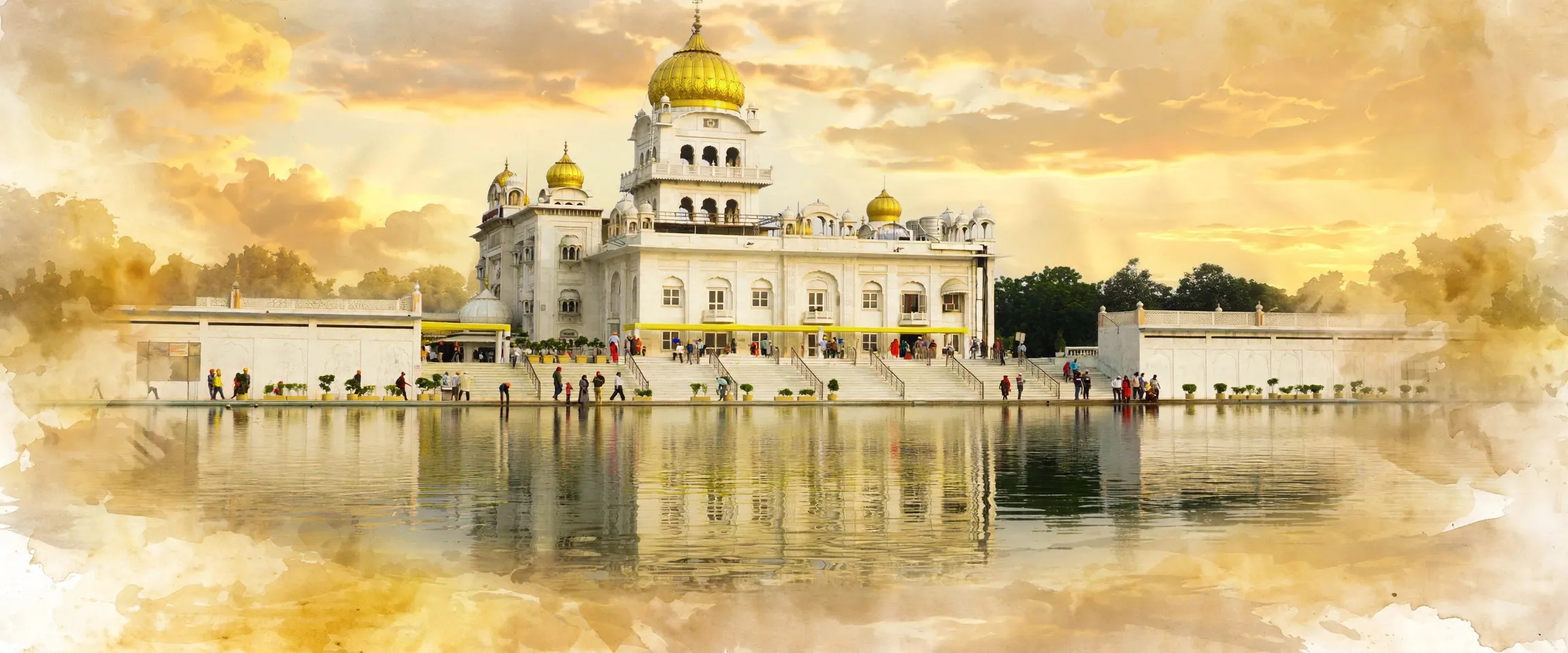
Gurdwara Bangla Sahib in New Delhi stands where Guru Har Krishan Ji, the eighth Sikh Guru, stayed in 1664 and tended the sick during a Delhi epidemic. What was Raja Jai Singh of Amber's bungalow became a shrine; its sarovar water is revered for healing, and its golden dome is a Delhi landmark.
- Facts
- Country
- India
- City
- New Delhi
- Location
- Baba Kharak Singh Marg, near Connaught Place
- Associated Guru
- Guru Har Krishan Ji (eighth Sikh Guru)
- The Guru's stay
- 1664; he died here on 30 March 1664
- Rebuilt
- Sardar Baghel Singh, 1783; present structure mostly after 1947
- Sarovar
- about 225 × 235 ft, ringed by an 18-ft parkarma and a 12-ft veranda
- Architecture
- Sikh and Mughal styles; golden dome, tall Nishan Sahib
- Managed by
- Delhi Sikh Gurdwara Management Committee (DSGMC)
- Festivals
- Birth anniversary of Guru Har Krishan Ji (special congregation)
- Former use
- Raja Jai Singh of Amber's bungalow (bangla)
In the heart of New Delhi, a short walk from Connaught Place, stands Gurdwara Bangla Sahib — one of Sikhism's most beloved shrines. Guru Har Krishan Ji, the eighth Sikh Guru, stayed here in 1664 and served Delhi's sick during an epidemic, before he died here still a child. The shrine's healing sarovar and golden dome draw millions of devotees every year.
The bungalow of Raja Jai Singh
In the seventeenth century the site was a bungalow — pronounced bangla in the local tongue — belonging to Raja Jai Singh of Amber, a Rajput ruler and general in the Mughal court. The bungalow gave the future gurdwara its name.
Guru Har Krishan Ji had been summoned to Delhi by Emperor Aurangzeb after his succession as Guru was challenged by Ram Rai. Raja Jai Singh and his son Raja Ram Singh, both respected at the Mughal court, invited the Guru to stay at the bungalow and stood surety for him until the dispute was settled.
The child Guru's healing seva
Delhi was in the grip of a smallpox and cholera epidemic in 1664. From the bungalow, the Guru tended the suffering of the city — providing charity to the sick and instructing his diwan, Dargah Mal, to spend all the daily offerings made to the Guru on the downtrodden.
The Guru himself contracted the illness and died in the bungalow on 30 March 1664, still a child.
The healing sarovar
After the Guru's death, Raja Jai Singh had a small tank built over the well from which the Guru had drawn water. That tank grew into the sarovar — the holy pool at the heart of the complex: some 225 feet by 235 feet, ringed by an 18-foot-wide parkarma and a 12-foot veranda along three sides.
Sikhs revere the sarovar's water for its healing properties and carry it home as amrit. On the birth anniversary of Guru Har Krishan Ji, the gurdwara fills for a special congregation.
A shrine rises, and is rebuilt
The bungalow was dedicated as a gurdwara in the Guru's memory. In 1783, the Sikh general Sardar Baghel Singh — who that year raised and rebuilt the nine historic shrines of Delhi — built a small shrine here; the present buildings, with the white-marble façade and the gilded dome, are mostly the work of the twentieth century after 1947.
The gurdwara today
Bangla Sahib is instantly recognisable by its golden dome and tall Nishan Sahib, on Baba Kharak Singh Marg, with the Sacred Heart Cathedral as its near neighbour. The Delhi Sikh Gurdwara Management Committee (DSGMC) runs the shrine, and the complex houses the Baba Baghel Singh Sikh Heritage Multimedia Museum, a Khalsa girls' school, and a charitable hospital whose diagnostic centre offers some of Delhi's cheapest scans.
Continuous Gurbani kirtan fills the darbar hall through the day, and Guru-ka-langar feeds tens of thousands daily — about 30,000 on ordinary days, many more at festivals.
Why is it called Bangla Sahib?
Because the shrine grew out of Raja Jai Singh's bangla — a bungalow. “Bangla Sahib” simply means the revered bungalow, and the name memorialises the spot where Guru Har Krishan Ji stayed.
How do I reach Gurdwara Bangla Sahib?
The gurdwara sits on Baba Kharak Singh Marg near Connaught Place and is open round the clock. The nearest metro is Shivaji Stadium on the Airport Express Line, a few hundred metres away, with Patel Chowk on the Yellow Line and Rajiv Chowk also nearby. Cover your head (scarves are provided), leave shoes at the jora ghar, and respect photography rules inside the prayer hall. October to March brings Delhi's best weather.
ਨਵੀਂ ਦਿੱਲੀ ਦੇ ਕੇਂਦਰ ਵਿੱਚ, ਕਨਾਟ ਪਲੇਸ ਤੋਂ ਕੁਝ ਹੀ ਦੂਰੀ 'ਤੇ, ਗੁਰਦੁਆਰਾ ਬੰਗਲਾ ਸਾਹਿਬ ਸਥਿਤ ਹੈ — ਸਿੱਖ ਧਰਮ ਦੇ ਸਭ ਤੋਂ ਪਿਆਰੇ ਗੁਰਦੁਆਰਿਆਂ ਵਿੱਚੋਂ ਇੱਕ ਅੱਠਵੇਂ ਸਿੱਖ ਗੁਰੂ, ਸ੍ਰੀ ਗੁਰੂ ਹਰਿਕ੍ਰਿਸ਼ਨ ਜੀ ਨੇ 1664 ਵਿੱਚ ਇੱਥੇ ਨਿਵਾਸ ਕੀਤਾ ਅਤੇ ਦਿੱਲੀ ਵਿੱਚ ਫੈਲੀ ਮਹਾਮਾਰੀ ਦੌਰਾਨ ਬਿਮਾਰਾਂ ਦੀ ਸੇਵਾ ਕੀਤੀ, ਇਸ ਤੋਂ ਪਹਿਲਾਂ ਕਿ ਉਹ ਬਚਪਨ ਵਿੱਚ ਹੀ ਇੱਥੇ ਜੋਤੀ ਜੋਤ ਸਮਾ ਗਏ ਇਸ ਅਸਥਾਨ ਦਾ ਰੋਗਨਾਸ਼ਕ ਸਰੋਵਰ ਅਤੇ ਸੁਨਹਿਰੀ ਗੁੰਬਦ ਹਰ ਸਾਲ ਲੱਖਾਂ ਸ਼ਰਧਾਲੂਆਂ ਨੂੰ ਖਿੱਚਦੇ ਹਨ
ਰਾਜਾ ਜੈ ਸਿੰਘ ਦਾ ਬੰਗਲਾ
ਸਤਾਰ੍ਹਵੀਂ ਸਦੀ ਵਿੱਚ ਇਹ ਅਸਥਾਨ ਆਂਬੇਰ ਦੇ ਰਾਜਾ ਜੈ ਸਿੰਘ ਦਾ ਬੰਗਲਾ ਸੀ — ਸਥਾਨਕ ਬੋਲੀ ਵਿੱਚ 'ਬੰਗਲਾ' ਕਹੇ ਜਾਂਦੇ ਸਨਮਾਨਯੋਗ ਘਰ — ਜੋ ਮੁਗ਼ਲ ਦਰਬਾਰ ਵਿੱਚ ਇੱਕ ਰਾਜਪੂਤ ਹਾਕਮ ਅਤੇ ਸੈਨਾਪਤੀ ਸਨ ਇਸੇ ਬੰਗਲੇ ਤੋਂ ਆਉਣ ਵਾਲੇ ਗੁਰਦੁਆਰੇ ਨੂੰ ਉਸ ਦਾ ਨਾਮ ਮਿਲਿਆ
ਸ੍ਰੀ ਗੁਰੂ ਹਰਿਕ੍ਰਿਸ਼ਨ ਜੀ ਨੂੰ ਬਾਦਸ਼ਾਹ ਔਰੰਗਜ਼ੇਬ ਨੇ ਦਿੱਲੀ ਬੁਲਾਇਆ ਸੀ, ਕਿਉਂਕਿ ਗੁਰਗੱਦੀ 'ਤੇ ਉਨ੍ਹਾਂ ਦੇ ਅਧਿਕਾਰ ਨੂੰ ਰਾਮ ਰਾਇ ਨੇ ਚੁਣੌਤੀ ਦਿੱਤੀ ਸੀ ਮੁਗ਼ਲ ਦਰਬਾਰ ਵਿੱਚ ਸਨਮਾਨਿਤ ਰਾਜਾ ਜੈ ਸਿੰਘ ਅਤੇ ਉਨ੍ਹਾਂ ਦੇ ਪੁੱਤਰ ਰਾਜਾ ਰਾਮ ਸਿੰਘ ਨੇ ਗੁਰੂ ਜੀ ਨੂੰ ਬੰਗਲੇ ਵਿੱਚ ਠਹਿਰਾਇਆ ਅਤੇ ਜਦ ਤੱਕ ਵਿਵਾਦ ਨਾ ਨਿਪਟੇ, ਉਨ੍ਹਾਂ ਦੀ ਜ਼ਮਾਨਤ ਲਈ
ਬਾਲ ਗੁਰੂ ਦੀ ਰੋਗੀਆਂ ਦੀ ਸੇਵਾ
1664 ਵਿੱਚ ਦਿੱਲੀ ਵਿੱਚ ਚੇਚਕ ਅਤੇ ਹੈਜ਼ੇ ਦੀ ਮਹਾਮਾਰੀ ਫੈਲੀ ਹੋਈ ਸੀ ਬੰਗਲੇ ਤੋਂ ਗੁਰੂ ਜੀ ਨੇ ਸ਼ਹਿਰ ਦੇ ਦੁਖੀਆਂ ਦੀ ਸੇਵਾ ਕੀਤੀ — ਬਿਮਾਰਾਂ ਦੀ ਖ਼ੈਰ-ਖ਼ਬਰ ਲਈ, ਅਤੇ ਆਪਣੇ ਦੀਵਾਨ ਦਰਗਾਹ ਮੱਲ ਨੂੰ ਹੁਕਮ ਦਿੱਤਾ ਕਿ ਗੁਰੂ ਜੀ ਨੂੰ ਅਰਪਿਤ ਹੋਣ ਵਾਲੀਆਂ ਰੋਜ਼ਾਨਾ ਭੇਟਾਂ ਸਾਰੀਆਂ ਗ਼ਰੀਬਾਂ 'ਤੇ ਖਰਚ ਕੀਤੀਆਂ ਜਾਣ
ਗੁਰੂ ਜੀ ਖ਼ੁਦ ਇਸੇ ਬਿਮਾਰੀ ਦਾ ਸ਼ਿਕਾਰ ਹੋ ਗਏ ਅਤੇ 30 ਮਾਰਚ 1664 ਨੂੰ ਇਸੇ ਬੰਗਲੇ ਵਿੱਚ ਜੋਤੀ ਜੋਤ ਸਮਾ ਗਏ — ਅਜੇ ਬਚਪਨ ਵਿੱਚ ਹੀ
ਰੋਗਨਾਸ਼ਕ ਸਰੋਵਰ
ਗੁਰੂ ਜੀ ਦੇ ਜੋਤੀ ਜੋਤ ਸਮਾਉਣ ਤੋਂ ਬਾਅਦ, ਰਾਜਾ ਜੈ ਸਿੰਘ ਨੇ ਉਸ ਖੂਹ 'ਤੇ ਇੱਕ ਛੋਟਾ ਜਿਹਾ ਤਾਲਾਬ ਬਣਵਾਇਆ ਜਿਸ ਤੋਂ ਗੁਰੂ ਜੀ ਪਾਣੀ ਲੈਂਦੇ ਸਨ ਉਹੀ ਤਾਲਾਬ ਵਧ ਕੇ ਸਰੋਵਰ ਬਣ ਗਿਆ — ਅਹਾਤੇ ਦੇ ਕੇਂਦਰ ਵਿੱਚ ਪਵਿੱਤਰ ਤਾਲਾਬ: ਲਗਭਗ 225 ਫੁੱਟ ਲੰਬਾ ਅਤੇ 235 ਫੁੱਟ ਚੌੜਾ, ਜਿਸ ਦੇ ਦੁਆਲੇ 18 ਫੁੱਟ ਚੌੜੀ ਪਰਕਰਮਾ ਅਤੇ ਤਿੰਨ ਪਾਸਿਆਂ 'ਤੇ 12 ਫੁੱਟ ਚੌੜਾ ਵਰਾਂਡਾ ਹੈ
ਸਿੱਖ ਸਰੋਵਰ ਦੇ ਜਲ ਨੂੰ ਰੋਗਨਾਸ਼ਕ ਮੰਨਦੇ ਹਨ ਅਤੇ ਇਸ ਨੂੰ ਅੰਮ੍ਰਿਤ ਵਾਂਗ ਆਪਣੇ ਘਰਾਂ ਨੂੰ ਲੈ ਜਾਂਦੇ ਹਨ ਸ੍ਰੀ ਗੁਰੂ ਹਰਿਕ੍ਰਿਸ਼ਨ ਜੀ ਦੇ ਪ੍ਰਕਾਸ਼ ਪੁਰਬ 'ਤੇ ਗੁਰਦੁਆਰਾ ਵਿਸ਼ੇਸ਼ ਸਮਾਗਮ ਲਈ ਭਰ ਜਾਂਦਾ ਹੈ
ਗੁਰਦੁਆਰਾ ਬਣਦਾ ਹੈ, ਅਤੇ ਮੁੜ ਬਣਦਾ ਹੈ
ਬੰਗਲਾ ਗੁਰੂ ਜੀ ਦੀ ਯਾਦ ਵਿੱਚ ਗੁਰਦੁਆਰੇ ਵਜੋਂ ਸਮਰਪਿਤ ਕੀਤਾ ਗਿਆ 1783 ਵਿੱਚ ਸਿੱਖ ਸਰਦਾਰ ਬਘੇਲ ਸਿੰਘ — ਜਿਨ੍ਹਾਂ ਨੇ ਉਸੇ ਸਾਲ ਦਿੱਲੀ ਦੇ ਨੌਂ ਇਤਿਹਾਸਕ ਗੁਰਦੁਆਰੇ ਉਸਾਰੇ ਅਤੇ ਮੁੜ ਬਣਾਏ — ਨੇ ਇੱਥੇ ਇੱਕ ਛੋਟਾ ਜਿਹਾ ਗੁਰਦੁਆਰਾ ਬਣਵਾਇਆ; ਚਿੱਟੇ ਸੰਗਮਰਮਰ ਦੀ ਇਮਾਰਤ ਅਤੇ ਸੁਨਹਿਰੀ ਗੁੰਬਦ ਵਾਲੀ ਮੌਜੂਦਾ ਇਮਾਰਤ ਵੱਡੇ ਪੱਧਰ 'ਤੇ 1947 ਤੋਂ ਬਾਅਦ ਦੀ ਹੈ
ਅੱਜ ਦਾ ਗੁਰਦੁਆਰਾ
ਬੰਗਲਾ ਸਾਹਿਬ ਆਪਣੇ ਸੁਨਹਿਰੀ ਗੁੰਬਦ ਅਤੇ ਉੱਚੇ ਨਿਸ਼ਾਨ ਸਾਹਿਬ ਨਾਲ ਤੁਰੰਤ ਪਛਾਣਿਆ ਜਾਂਦਾ ਹੈ, ਬਾਬਾ ਖੜਕ ਸਿੰਘ ਮਾਰਗ 'ਤੇ — ਨੇੜੇ ਹੀ ਸੇਕਰਡ ਹਾਰਟ ਕੈਥੇਡਰਲ ਹੈ ਦਿੱਲੀ ਸਿੱਖ ਗੁਰਦੁਆਰਾ ਪ੍ਰਬੰਧਕ ਕਮੇਟੀ (ਡੀ.ਐਸ.ਜੀ.ਐਮ.ਸੀ.) ਇਸ ਅਸਥਾਨ ਦਾ ਪ੍ਰਬੰਧ ਕਰਦੀ ਹੈ, ਅਤੇ ਅਹਾਤੇ ਵਿੱਚ ਬਾਬਾ ਬਘੇਲ ਸਿੰਘ ਸਿੱਖ ਵਿਰਾਸਤ ਮਲਟੀਮੀਡੀਆ ਅਜਾਇਬਘਰ, ਇੱਕ ਖਾਲਸਾ ਲੜਕੀਆਂ ਦਾ ਸਕੂਲ ਅਤੇ ਇੱਕ ਧਰਮਾਰਥ ਹਸਪਤਾਲ ਹੈ, ਜਿਸ ਦਾ ਨਿਦਾਨ ਕੇਂਦਰ ਦਿੱਲੀ ਦੇ ਸਭ ਤੋਂ ਸਸਤੇ ਸਕੈਨਾਂ ਵਿੱਚੋਂ ਇੱਕ ਮੁਹੱਈਆ ਕਰਦਾ ਹੈ
ਦਰਬਾਰ ਹਾਲ ਵਿੱਚ ਦਿਨ ਭਰ ਨਿਰੰਤਰ ਗੁਰਬਾਣੀ ਕੀਰਤਨ ਹੁੰਦਾ ਹੈ, ਅਤੇ ਗੁਰੂ-ਕਾ-ਲੰਗਰ ਰੋਜ਼ਾਨਾ ਹਜ਼ਾਰਾਂ ਨੂੰ ਛਕਾਉਂਦਾ ਹੈ — ਆਮ ਦਿਨਾਂ ਵਿੱਚ ਲਗਭਗ 30,000, ਅਤੇ ਤਿਉਹਾਰਾਂ 'ਤੇ ਕਿਤੇ ਵੱਧ
ਇਸ ਦਾ ਨਾਮ ਬੰਗਲਾ ਸਾਹਿਬ ਕਿਉਂ ਪਿਆ?
ਕਿਉਂਕਿ ਇਹ ਗੁਰਦੁਆਰਾ ਰਾਜਾ ਜੈ ਸਿੰਘ ਦੇ ਬੰਗਲੇ ਤੋਂ ਹੀ ਬਣਿਆ ਹੈ 'ਬੰਗਲਾ ਸਾਹਿਬ' ਦਾ ਸਿੱਧਾ ਅਰਥ ਹੈ ਸਨਮਾਨਯੋਗ ਬੰਗਲਾ, ਅਤੇ ਇਹ ਨਾਮ ਉਸ ਅਸਥਾਨ ਦੀ ਯਾਦ ਦਿਵਾਉਂਦਾ ਹੈ ਜਿੱਥੇ ਸ੍ਰੀ ਗੁਰੂ ਹਰਿਕ੍ਰਿਸ਼ਨ ਜੀ ਨੇ ਨਿਵਾਸ ਕੀਤਾ ਸੀ
ਗੁਰਦੁਆਰਾ ਬੰਗਲਾ ਸਾਹਿਬ ਕਿਵੇਂ ਪਹੁੰਚੀਏ?
ਗੁਰਦੁਆਰਾ ਕਨਾਟ ਪਲੇਸ ਨੇੜੇ ਬਾਬਾ ਖੜਕ ਸਿੰਘ ਮਾਰਗ 'ਤੇ ਹੈ ਅਤੇ ਦਿਨ-ਰਾਤ ਖੁੱਲ੍ਹਾ ਰਹਿੰਦਾ ਹੈ ਸਭ ਤੋਂ ਨੇੜਲਾ ਮੈਟਰੋ ਸਟੇਸ਼ਨ ਏਅਰਪੋਰਟ ਐਕਸਪ੍ਰੈਸ ਲਾਈਨ ਦਾ ਸ਼ਿਵਾਜੀ ਸਟੇਡੀਅਮ ਹੈ, ਕੁਝ ਸੌ ਮੀਟਰ ਦੀ ਦੂਰੀ 'ਤੇ, ਅਤੇ ਪਟੇਲ ਚੌਕ (ਯੈਲੋ ਲਾਈਨ) ਤੇ ਰਾਜੀਵ ਚੌਕ ਵੀ ਨੇੜੇ ਹਨ ਸਿਰ ਢਕੋ (ਰੁਮਾਲ ਉੱਥੇ ਮਿਲ ਜਾਂਦੇ ਹਨ), ਜੋੜਾ ਘਰ ਵਿੱਚ ਜੁੱਤੇ ਉਤਾਰੋ, ਅਤੇ ਪ੍ਰਾਰਥਨਾ ਹਾਲ ਅੰਦਰ ਫੋਟੋਗ੍ਰਾਫੀ ਦੇ ਨਿਯਮਾਂ ਦਾ ਸਨਮਾਨ ਕਰੋ ਅਕਤੂਬਰ ਤੋਂ ਮਾਰਚ ਤੱਕ ਦਿੱਲੀ ਦਾ ਮੌਸਮ ਸਭ ਤੋਂ ਸੁਹਾਵਣਾ ਹੁੰਦਾ ਹੈ