
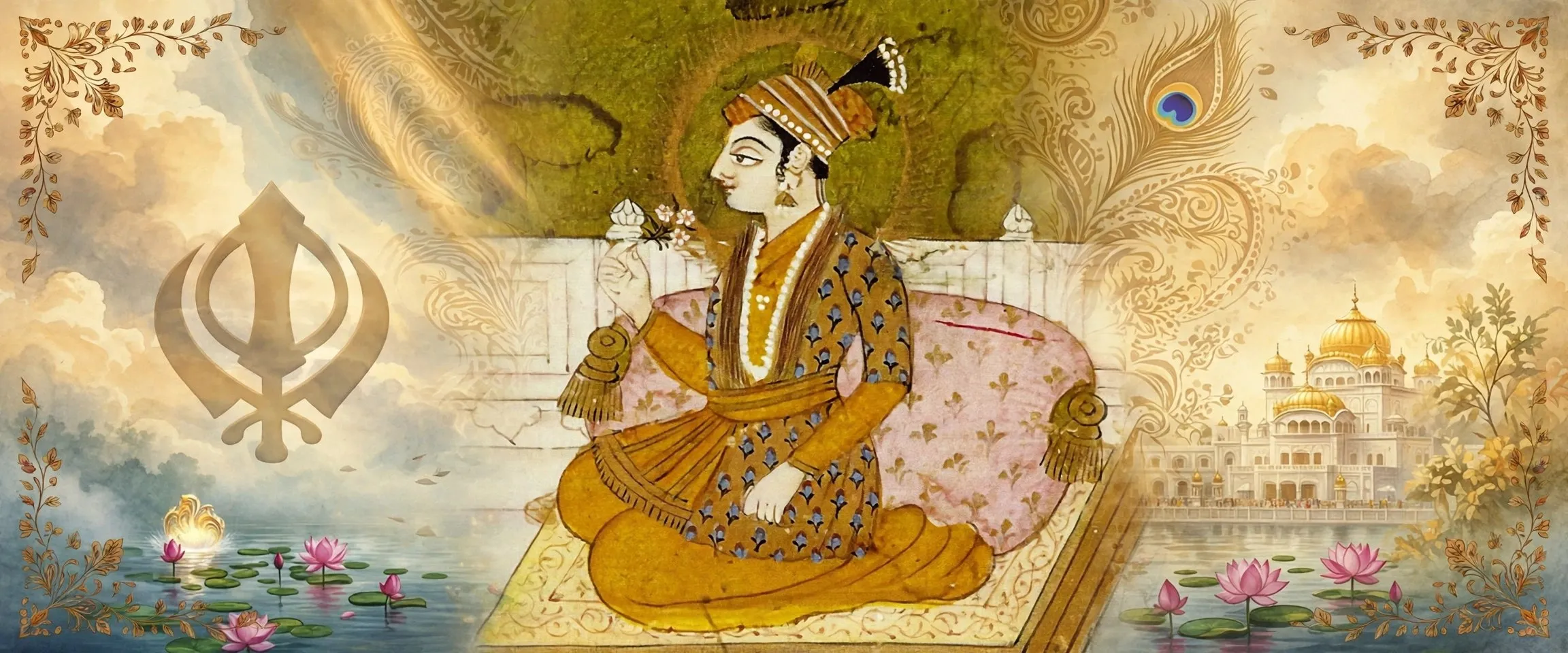
Guru Har Krishan Ji (1656 to 1664) was the eighth Guru of Sikhism and the youngest Guru in Sikh history, taking the gaddi at the age of five after his father, Guru Har Rai Ji, passed over his elder brother Ram Rai. He led the Sikhs for less than three years, and in 1664 he died in Delhi at the age of seven, having caught smallpox while serving victims of an epidemic in the city. Before he died he named his successor with the words 'Baba Bakale', pointing the Sikhs to Guru Tegh Bahadur Ji at Bakala.
- Punjabi name
- ਗੁਰੂ ਹਰਿ ਕ੍ਰਿਸ਼ਨ ਜੀ
- Born
- 7 July 1656, Kiratpur Sahib (some accounts give 23 July)
- Father
- Guru Har Rai Ji, seventh Guru
- Mother
- Mata Krishen Kaur Ji (Sulakhni)
- Became Guru
- 7 October 1661, aged five
- Reign
- 2 years, 5 months, 24 days, the shortest of any Guru
All 11 facts
- Died
- 30 March 1664, Delhi, aged seven
- Cause of death
- Smallpox, caught while serving the sick
- Successor
- Guru Tegh Bahadur Ji
- Known as
- Bal Guru, the Child Guru; Bala Pritam; Bala Pir
- Memorial
- Gurdwara Bangla Sahib, New Delhi
Guru Har Krishan Ji (1656 to 1664) was the eighth Guru of Sikhism, and the youngest person ever to hold that office. He became Guru at the age of five, led the Sikhs for less than three years, and died at seven while caring for victims of a smallpox epidemic in Delhi. Sikhs remember him as Bal Guru, the Child Guru, and as Bala Pritam, the beloved child.
Who was Guru Har Krishan Ji?
Har Krishan was born on 7 July 1656 at Kiratpur Sahib, in the Shivalik foothills of Punjab, the second son of Guru Har Rai Ji, the seventh Guru, and Mata Krishen Kaur Ji, also known as Mata Sulakhni. His elder brother was Ram Rai. The family belonged to the Sodhi clan, and Kiratpur had been the seat of the Gurus since the time of Guru Hargobind Ji. Har Krishan grew up in the Guru's household, listening to Gurbani and meeting the Sikhs who came to Kiratpur from across Punjab.
Even as a small child, visitors noticed his calm manner and his grasp of the scripture. Sikh accounts say he delighted the hearts of his disciples with his explanations of passages from the holy Granth, reminding people to cherish the One God alone and to give up pride, anger and greed in favour of patience, charity and love. The poet Bhai Santokh Singh later compared him to the early morning sun, small in size, but with light everywhere.
Why did a five-year-old become Guru?
The choice of a child as Guru came out of a painful dispute. Guru Har Rai Ji had been summoned by the Mughal emperor Aurangzeb to explain his support for Prince Dara Shikoh, and had sent his elder son Ram Rai to the emperor's court in his place. At court, Ram Rai changed a verse of the Adi Granth to please the emperor. When Guru Har Rai Ji learned of this, he excommunicated Ram Rai and declared that his younger son Har Krishan would succeed him.
Guru Har Rai Ji died on 6 October 1661. The next day, 7 October 1661, five-year-old Har Krishan was seated on the gaddi as the eighth Guru. His reign lasted two years, five months and 24 days, the shortest of any of the ten Gurus. Ram Rai, who had expected the succession, complained to Aurangzeb, and the emperor began to take an interest in the child Guru.
The journey to Delhi
Aurangzeb summoned the young Guru to Delhi through Raja Jai Singh, with an apparent plan to replace him with his elder brother Ram Rai. Guru Har Krishan Ji travelled by way of Ropar, Banur and Ambala, stopping to meet crowds of disciples along the road, and halted at Panjokhra, near Ambala. Sikh tradition remembers that a proud pandit, Lal Chand, challenged the child Guru's learning there. Guru Har Krishan Ji asked for the most unlettered man in the village, a deaf man named Chhajju Ram, and with a touch of his stick the man began to explain verses of the Bhagavad Gita so well that the pandit bowed at the Guru's feet. Both men became his disciples.
At Delhi, Raja Jai Singh lodged the Guru in his bungalow, the house that stands today as Gurdwara Bangla Sahib. The emperor had planned to test the boy, and Sikh accounts say two trays were laid before him, one of ornaments, clothes and toys, the other of a holy man's cloak. The child chose the cloak. He is also remembered for picking out the real queen from among Raja Jai Singh's ladies, when she had dressed as a maidservant. The meeting with Aurangzeb himself never took place. Some accounts say the Guru refused it because the emperor would demand miracles, which Sikh teaching forbids.
Serving the sick in the epidemic
In 1664 a severe epidemic of smallpox swept through Delhi, with cholera also reported in the city. The seven-year-old Guru went out through the narrow lanes to tend the sufferers, whatever their caste or creed, giving them water, comfort and prayer. The local Muslim population was so moved by this service that they called him Bala Pir, the child prophet. In the course of this service he caught the disease himself. He fell ill with a high fever, and the smallpox confined him to bed for several days. He died on 30 March 1664, before his eighth birthday. He had asked the Sikhs not to mourn him, but to sing the hymns of Gurbani.
Baba Bakale: naming the next Guru
Before he died, the Sikhs asked him who would lead them next. Guru Har Krishan Ji asked for a coconut and five paise, placed them before the congregation, and said only, 'Baba Bakale.' The Sikhs understood: the next Guru would be found in the village of Bakala, near the river Beas. There they found his great-uncle, Guru Tegh Bahadur Ji, who became the ninth Guru. The words frustrated Aurangzeb, who had wanted Ram Rai in the seat so he could control the community.
Where is Guru Har Krishan Ji remembered?
Guru Har Krishan Ji's short life is remembered wherever Sikhs gather. Gurdwara Bangla Sahib in New Delhi stands on the site of Raja Jai Singh's bungalow, and Sikh tradition holds that its sarovar brought healing to the sick of Delhi. Gurdwara Panjokhra Sahib near Ambala marks his halt on the road to Delhi, and Gurdwara Sri Sheesh Mahal Sahib at Kiratpur Sahib marks his birthplace. Every day, the Ardas carries Guru Gobind Singh Ji's tribute to him: 'Sri Har Krishan dhiyaiye, jis dithe sab dukh jaye.' Think of holy Har Krishan, whose very sight dispels all sorrow. His birth anniversary is observed each year as a gurpurab, and his story is told to Sikh children as the example of seva, selfless service given without counting the cost.
ਗੁਰੂ ਹਰਿ ਕ੍ਰਿਸ਼ਨ ਜੀ (1656 ਤੋਂ 1664) ਸਿੱਖਾਂ ਦੇ ਅੱਠਵੇਂ ਗੁਰੂ ਸਨ ਅਤੇ ਗੁਰੂ ਦੀ ਗੱਦੀ ਉੱਤੇ ਬੈਠਣ ਵਾਲੇ ਸਭ ਤੋਂ ਛੋਟੀ ਉਮਰ ਦੇ ਵਿਅਕਤੀ ਸਨ। ਉਹ ਪੰਜ ਸਾਲ ਦੀ ਉਮਰ ਵਿੱਚ ਗੁਰੂ ਬਣੇ, ਤਿੰਨ ਸਾਲਾਂ ਤੋਂ ਘੱਟ ਸਮੇਂ ਤੱਕ ਸਿੱਖਾਂ ਦੀ ਅਗਵਾਈ ਕੀਤੀ ਅਤੇ ਸੱਤ ਸਾਲ ਦੀ ਉਮਰ ਵਿੱਚ ਦਿੱਲੀ ਵਿੱਚ ਚੇਚਕ ਦੀ ਮਹਾਂਮਾਰੀ ਦੇ ਰੋਗੀਆਂ ਦੀ ਸੇਵਾ ਕਰਦੇ ਹੋਏ ਅਕਾਲ ਚਲਾਣਾ ਕਰ ਗਏ। ਸਿੱਖ ਉਨ੍ਹਾਂ ਨੂੰ ਬਾਲ ਗੁਰੂ ਅਤੇ ਬਾਲਾ ਪ੍ਰੀਤਮ ਕਹਿ ਕੇ ਯਾਦ ਕਰਦੇ ਹਨ।
ਗੁਰੂ ਹਰਿ ਕ੍ਰਿਸ਼ਨ ਜੀ ਕੌਣ ਸਨ?
ਹਰਿ ਕ੍ਰਿਸ਼ਨ ਜੀ ਦਾ ਜਨਮ 7 ਜੁਲਾਈ 1656 ਨੂੰ ਕੀਰਤਪੁਰ ਸਾਹਿਬ ਵਿਖੇ ਹੋਇਆ, ਜੋ ਪੰਜਾਬ ਦੀਆਂ ਸ਼ਿਵਾਲਿਕ ਪਹਾੜੀਆਂ ਵਿੱਚ ਹੈ। ਉਹ ਸੱਤਵੇਂ ਗੁਰੂ, ਗੁਰੂ ਹਰਿ ਰਾਇ ਜੀ, ਅਤੇ ਮਾਤਾ ਕ੍ਰਿਸ਼ਨ ਕੌਰ ਜੀ (ਸੁਲੱਖਣੀ ਜੀ) ਦੇ ਦੂਜੇ ਪੁੱਤਰ ਸਨ। ਉਨ੍ਹਾਂ ਦੇ ਵੱਡੇ ਭਰਾ ਰਾਮ ਰਾਇ ਸਨ। ਪਰਿਵਾਰ ਸੋਢੀ ਖ਼ਾਨਦਾਨ ਨਾਲ ਸਬੰਧ ਰੱਖਦਾ ਸੀ ਅਤੇ ਗੁਰੂ ਹਰਿਗੋਬਿੰਦ ਜੀ ਦੇ ਸਮੇਂ ਤੋਂ ਕੀਰਤਪੁਰ ਹੀ ਗੁਰੂਆਂ ਦਾ ਟਿਕਾਣਾ ਸੀ। ਹਰਿ ਕ੍ਰਿਸ਼ਨ ਜੀ ਗੁਰੂ ਦੇ ਘਰ ਵਿੱਚ ਵੱਡੇ ਹੋਏ, ਗੁਰਬਾਣੀ ਸੁਣਦੇ ਅਤੇ ਪੰਜਾਬ ਭਰ ਤੋਂ ਆਉਣ ਵਾਲੇ ਸਿੱਖਾਂ ਨੂੰ ਮਿਲਦੇ।
ਛੋਟੀ ਉਮਰ ਵਿੱਚ ਹੀ ਆਉਣ ਵਾਲਿਆਂ ਨੇ ਉਨ੍ਹਾਂ ਦਾ ਸ਼ਾਂਤ ਸੁਭਾਅ ਅਤੇ ਗ੍ਰੰਥ ਦੀ ਸਮਝ ਵੇਖੀ। ਸਿੱਖ ਇਤਿਹਾਸ ਦੱਸਦਾ ਹੈ ਕਿ ਉਹ ਪਵਿੱਤਰ ਗ੍ਰੰਥ ਦੀਆਂ ਪੰਕਤੀਆਂ ਦੀ ਵਿਆਖਿਆ ਕਰਕੇ ਸੰਗਤਾਂ ਦੇ ਮਨ ਖੁਸ਼ ਕਰ ਦਿੰਦੇ ਸਨ ਅਤੇ ਲੋਕਾਂ ਨੂੰ ਇੱਕੋ ਅਕਾਲ ਪੁਰਖ ਨੂੰ ਮੰਨਣ, ਹੰਕਾਰ, ਕ੍ਰੋਧ ਅਤੇ ਲੋਭ ਛੱਡ ਕੇ ਸਬਰ, ਦਾਨ ਅਤੇ ਪਿਆਰ ਸਿੱਖਣ ਲਈ ਕਹਿੰਦੇ ਸਨ। ਕਵੀ ਭਾਈ ਸੰਤੋਖ ਸਿੰਘ ਨੇ ਬਾਅਦ ਵਿੱਚ ਉਨ੍ਹਾਂ ਦੀ ਤੁਲਨਾ ਸਵੇਰ ਦੇ ਸੂਰਜ ਨਾਲ ਕੀਤੀ, ਜੋ ਆਕਾਰ ਵਿੱਚ ਛੋਟਾ ਲੱਗਦਾ ਹੈ ਪਰ ਉਸ ਦਾ ਚਾਨਣ ਹਰ ਥਾਂ ਪਹੁੰਚਦਾ ਹੈ।
ਪੰਜ ਸਾਲ ਦੀ ਉਮਰ ਵਿੱਚ ਗੁਰੂ ਕਿਵੇਂ ਬਣੇ?
ਇੱਕ ਬੱਚੇ ਨੂੰ ਗੁਰੂ ਚੁਣਨਾ ਇੱਕ ਦੁਖਦਾਈ ਝਗੜੇ ਦਾ ਨਤੀਜਾ ਸੀ। ਗੁਰੂ ਹਰਿ ਰਾਇ ਜੀ ਨੂੰ ਮੁਗ਼ਲ ਬਾਦਸ਼ਾਹ ਔਰੰਗਜ਼ੇਬ ਨੇ ਸ਼ਹਿਜ਼ਾਦਾ ਦਾਰਾ ਸ਼ਿਕੋਹ ਦੀ ਹਮਾਇਤ ਬਾਰੇ ਸਪਸ਼ਟੀਕਰਨ ਲਈ ਬੁਲਾਇਆ ਸੀ ਅਤੇ ਉਨ੍ਹਾਂ ਨੇ ਆਪਣੀ ਥਾਂ ਵੱਡੇ ਪੁੱਤਰ ਰਾਮ ਰਾਇ ਨੂੰ ਬਾਦਸ਼ਾਹ ਦੇ ਦਰਬਾਰ ਵਿੱਚ ਭੇਜਿਆ ਸੀ। ਦਰਬਾਰ ਵਿੱਚ ਰਾਮ ਰਾਇ ਨੇ ਬਾਦਸ਼ਾਹ ਨੂੰ ਖੁਸ਼ ਕਰਨ ਲਈ ਆਦਿ ਗ੍ਰੰਥ ਦੀ ਇੱਕ ਪੰਕਤੀ ਬਦਲ ਦਿੱਤੀ। ਜਦੋਂ ਗੁਰੂ ਹਰਿ ਰਾਇ ਜੀ ਨੂੰ ਇਹ ਪਤਾ ਲੱਗਾ ਤਾਂ ਉਨ੍ਹਾਂ ਨੇ ਰਾਮ ਰਾਇ ਨੂੰ ਪੰਥ ਵਿੱਚੋਂ ਕੱਢ ਦਿੱਤਾ ਅਤੇ ਐਲਾਨ ਕੀਤਾ ਕਿ ਉਨ੍ਹਾਂ ਦਾ ਛੋਟਾ ਪੁੱਤਰ ਹਰਿ ਕ੍ਰਿਸ਼ਨ ਉਨ੍ਹਾਂ ਦਾ ਵਾਰਸ ਹੋਵੇਗਾ।
ਗੁਰੂ ਹਰਿ ਰਾਇ ਜੀ 6 ਅਕਤੂਬਰ 1661 ਨੂੰ ਅਕਾਲ ਚਲਾਣਾ ਕਰ ਗਏ। ਅਗਲੇ ਦਿਨ, 7 ਅਕਤੂਬਰ 1661 ਨੂੰ, ਪੰਜ ਸਾਲ ਦੇ ਹਰਿ ਕ੍ਰਿਸ਼ਨ ਜੀ ਅੱਠਵੇਂ ਗੁਰੂ ਵਜੋਂ ਗੱਦੀ ਉੱਤੇ ਬਿਰਾਜਮਾਨ ਹੋਏ। ਉਨ੍ਹਾਂ ਦੀ ਗੁਰਗੱਦੀ ਦੋ ਸਾਲ, ਪੰਜ ਮਹੀਨੇ ਅਤੇ 24 ਦਿਨ ਚੱਲੀ, ਜੋ ਦਸਾਂ ਗੁਰੂਆਂ ਵਿੱਚ ਸਭ ਤੋਂ ਛੋਟੀ ਹੈ। ਰਾਮ ਰਾਇ, ਜਿਸ ਨੂੰ ਵਾਰਸੀ ਦੀ ਆਸ ਸੀ, ਨੇ ਔਰੰਗਜ਼ੇਬ ਕੋਲ ਸ਼ਿਕਾਇਤ ਕੀਤੀ ਅਤੇ ਬਾਦਸ਼ਾਹ ਬਾਲ ਗੁਰੂ ਵੱਲ ਧਿਆਨ ਦੇਣ ਲੱਗਾ।
ਦਿੱਲੀ ਦੀ ਯਾਤਰਾ
ਔਰੰਗਜ਼ੇਬ ਨੇ ਰਾਜਾ ਜੈ ਸਿੰਘ ਰਾਹੀਂ ਨੌਜਵਾਨ ਗੁਰੂ ਨੂੰ ਦਿੱਲੀ ਬੁਲਾਇਆ। ਗੁਰੂ ਜੀ ਰੋਪੜ, ਬਨੂੜ ਅਤੇ ਅੰਬਾਲਾ ਹੁੰਦੇ ਹੋਏ ਦਿੱਲੀ ਵੱਲ ਤੁਰੇ ਅਤੇ ਪੰਜੋਖਰਾ ਵਿਖੇ ਠਹਿਰੇ। ਸਿੱਖ ਪਰੰਪਰਾ ਦੱਸਦੀ ਹੈ ਕਿ ਉੱਥੇ ਇੱਕ ਹੰਕਾਰੀ ਪੰਡਿਤ ਲਾਲ ਚੰਦ ਨੇ ਬਾਲ ਗੁਰੂ ਦੀ ਵਿਦਿਆ ਨੂੰ ਚੁਣੌਤੀ ਦਿੱਤੀ। ਗੁਰੂ ਹਰਿ ਕ੍ਰਿਸ਼ਨ ਜੀ ਨੇ ਪਿੰਡ ਦੇ ਸਭ ਤੋਂ ਅਣਪੜ੍ਹ ਆਦਮੀ, ਬੋਲ਼ੇ ਛੱਜੂ ਰਾਮ ਨੂੰ ਬੁਲਾਇਆ ਅਤੇ ਆਪਣੀ ਛੜੀ ਦੇ ਸਪਰਸ਼ ਨਾਲ ਉਹ ਭਗਵਦ ਗੀਤਾ ਦੀਆਂ ਪੰਕਤੀਆਂ ਦੀ ਵਿਆਖਿਆ ਕਰਨ ਲੱਗਾ। ਪੰਡਿਤ ਹੈਰਾਨ ਹੋ ਕੇ ਗੁਰੂ ਦੇ ਚਰਨਾਂ ਵਿੱਚ ਢਹਿ ਪਿਆ ਅਤੇ ਦੋਵੇਂ ਆਦਮੀ ਉਨ੍ਹਾਂ ਦੇ ਸਿੱਖ ਬਣ ਗਏ।
ਦਿੱਲੀ ਵਿੱਚ ਰਾਜਾ ਜੈ ਸਿੰਘ ਨੇ ਗੁਰੂ ਜੀ ਨੂੰ ਆਪਣੀ ਹਵੇਲੀ ਵਿੱਚ ਠਹਿਰਾਇਆ, ਜੋ ਅੱਜ ਗੁਰਦੁਆਰਾ ਬੰਗਲਾ ਸਾਹਿਬ ਹੈ। ਕਿਹਾ ਜਾਂਦਾ ਹੈ ਕਿ ਬਾਦਸ਼ਾਹ ਨੇ ਬੱਚੇ ਦੀ ਪਰਖ ਲਈ ਦੋ ਥਾਲੀਆਂ ਸਜਾਈਆਂ, ਇੱਕ ਵਿੱਚ ਗਹਿਣੇ, ਕੱਪੜੇ ਅਤੇ ਖਿਡੌਣੇ ਸਨ ਅਤੇ ਦੂਜੀ ਵਿੱਚ ਇੱਕ ਸਾਧੂ ਦਾ ਚੋਲਾ ਸੀ। ਬੱਚੇ ਨੇ ਚੋਲਾ ਚੁਣਿਆ। ਉਨ੍ਹਾਂ ਨੂੰ ਰਾਜਾ ਜੈ ਸਿੰਘ ਦੀਆਂ ਔਰਤਾਂ ਵਿੱਚੋਂ ਅਸਲੀ ਰਾਣੀ ਪਛਾਣਨ ਲਈ ਵੀ ਯਾਦ ਕੀਤਾ ਜਾਂਦਾ ਹੈ, ਜਿਸ ਨੇ ਦਾਸੀ ਦਾ ਭੇਸ ਧਾਰਿਆ ਹੋਇਆ ਸੀ। ਔਰੰਗਜ਼ੇਬ ਨਾਲ ਮੁਲਾਕਾਤ ਨਹੀਂ ਹੋਈ। ਕੁਝ ਬਿਰਤਾਂਤ ਕਹਿੰਦੇ ਹਨ ਕਿ ਗੁਰੂ ਜੀ ਨੇ ਮਿਲਣ ਤੋਂ ਇਨਕਾਰ ਕਰ ਦਿੱਤਾ ਕਿਉਂਕਿ ਬਾਦਸ਼ਾਹ ਉਨ੍ਹਾਂ ਤੋਂ ਕਰਾਮਾਤ ਦਿਖਾਉਣ ਦੀ ਮੰਗ ਕਰਦਾ, ਜਿਸ ਦੀ ਸਿੱਖ ਸਿੱਖਿਆ ਮਨਾਹੀ ਕਰਦੀ ਹੈ।
ਬਿਮਾਰਾਂ ਦੀ ਸੇਵਾ
1664 ਵਿੱਚ ਦਿੱਲੀ ਵਿੱਚ ਚੇਚਕ ਦੀ ਭਿਆਨਕ ਮਹਾਂਮਾਰੀ ਫੈਲ ਗਈ ਅਤੇ ਹੈਜ਼ਾ ਵੀ ਫੈਲਿਆ ਹੋਇਆ ਸੀ। ਸੱਤ ਸਾਲ ਦੇ ਗੁਰੂ ਜੀ ਤੰਗ ਗਲੀਆਂ ਵਿੱਚ ਜਾ ਕੇ ਰੋਗੀਆਂ ਦੀ ਸੇਵਾ ਕਰਨ ਲੱਗੇ, ਬਿਨਾਂ ਜਾਤ ਜਾਂ ਧਰਮ ਦਾ ਭੇਦ ਕੀਤੇ, ਉਨ੍ਹਾਂ ਨੂੰ ਪਾਣੀ, ਹੌਸਲਾ ਅਤੇ ਅਰਦਾਸ ਦੇ ਕੇ। ਦਿੱਲੀ ਦੇ ਮੁਸਲਮਾਨ ਇੰਨੇ ਪ੍ਰਭਾਵਿਤ ਹੋਏ ਕਿ ਉਨ੍ਹਾਂ ਨੇ ਗੁਰੂ ਜੀ ਨੂੰ ਬਾਲਾ ਪੀਰ, ਬਾਲ ਪੈਗ਼ੰਬਰ, ਕਹਿਣਾ ਸ਼ੁਰੂ ਕਰ ਦਿੱਤਾ। ਇਸ ਸੇਵਾ ਦੌਰਾਨ ਗੁਰੂ ਜੀ ਨੂੰ ਖੁਦ ਇਹ ਰੋਗ ਲੱਗ ਗਿਆ। ਉਨ੍ਹਾਂ ਨੂੰ ਤੇਜ਼ ਬੁਖ਼ਾਰ ਹੋਇਆ ਅਤੇ ਚੇਚਕ ਨੇ ਉਨ੍ਹਾਂ ਨੂੰ ਕਈ ਦਿਨ ਬਿਸਤਰੇ ਉੱਤੇ ਲਾ ਦਿੱਤਾ। ਉਹ 30 ਮਾਰਚ 1664 ਨੂੰ ਅਕਾਲ ਚਲਾਣਾ ਕਰ ਗਏ, ਆਪਣੇ ਅੱਠਵੇਂ ਜਨਮ ਦਿਨ ਤੋਂ ਪਹਿਲਾਂ। ਉਨ੍ਹਾਂ ਨੇ ਸਿੱਖਾਂ ਨੂੰ ਕਿਹਾ ਸੀ ਕਿ ਉਨ੍ਹਾਂ ਦੇ ਵਿਛੋੜੇ ਉੱਤੇ ਰੋਣ ਦੀ ਥਾਂ ਗੁਰਬਾਣੀ ਦੇ ਸ਼ਬਦ ਗਾਏ ਜਾਣ।
ਬਾਬਾ ਬਕਾਲੇ: ਅਗਲੇ ਗੁਰੂ ਦਾ ਨਾਂ
ਅਕਾਲ ਚਲਾਣੇ ਤੋਂ ਪਹਿਲਾਂ ਸਿੱਖਾਂ ਨੇ ਗੁਰੂ ਜੀ ਨੂੰ ਪੁੱਛਿਆ ਕਿ ਉਨ੍ਹਾਂ ਤੋਂ ਬਾਅਦ ਕੌਣ ਅਗਵਾਈ ਕਰੇਗਾ। ਗੁਰੂ ਹਰਿ ਕ੍ਰਿਸ਼ਨ ਜੀ ਨੇ ਇੱਕ ਨਾਰੀਅਲ ਅਤੇ ਪੰਜ ਪੈਸੇ ਮੰਗਵਾਏ, ਉਨ੍ਹਾਂ ਨੂੰ ਸੰਗਤ ਸਾਹਮਣੇ ਰੱਖਿਆ ਅਤੇ ਸਿਰਫ਼ ਇਹ ਕਿਹਾ, 'ਬਾਬਾ ਬਕਾਲੇ।' ਸਿੱਖ ਸਮਝ ਗਏ ਕਿ ਅਗਲਾ ਗੁਰੂ ਬਿਆਸ ਨਦੀ ਕੋਲ ਬਕਾਲਾ ਪਿੰਡ ਵਿੱਚ ਮਿਲੇਗਾ। ਉੱਥੇ ਉਨ੍ਹਾਂ ਨੂੰ ਗੁਰੂ ਜੀ ਦੇ ਵੱਡੇ ਚਾਚਾ, ਗੁਰੂ ਤੇਗ਼ ਬਹਾਦਰ ਜੀ ਮਿਲੇ, ਜੋ ਨੌਵੇਂ ਗੁਰੂ ਬਣੇ। ਇਨ੍ਹਾਂ ਸ਼ਬਦਾਂ ਨੇ ਔਰੰਗਜ਼ੇਬ ਦੀ ਯੋਜਨਾ ਅਸਫਲ ਕਰ ਦਿੱਤੀ, ਜੋ ਰਾਮ ਰਾਇ ਨੂੰ ਗੱਦੀ ਉੱਤੇ ਬਿਠਾ ਕੇ ਸਿੱਖ ਪੰਥ ਨੂੰ ਆਪਣੇ ਕਾਬੂ ਵਿੱਚ ਰੱਖਣਾ ਚਾਹੁੰਦਾ ਸੀ।
ਗੁਰੂ ਹਰਿ ਕ੍ਰਿਸ਼ਨ ਜੀ ਨੂੰ ਕਿੱਥੇ ਯਾਦ ਕੀਤਾ ਜਾਂਦਾ ਹੈ?
ਗੁਰੂ ਹਰਿ ਕ੍ਰਿਸ਼ਨ ਜੀ ਦਾ ਛੋਟਾ ਜਿਹਾ ਜੀਵਨ ਸਿੱਖ ਸੰਗਤਾਂ ਵਿੱਚ ਹਰ ਥਾਂ ਯਾਦ ਕੀਤਾ ਜਾਂਦਾ ਹੈ। ਨਵੀਂ ਦਿੱਲੀ ਵਿੱਚ ਗੁਰਦੁਆਰਾ ਬੰਗਲਾ ਸਾਹਿਬ ਰਾਜਾ ਜੈ ਸਿੰਘ ਦੀ ਹਵੇਲੀ ਵਾਲੀ ਥਾਂ ਉੱਤੇ ਖੜ੍ਹਾ ਹੈ ਅਤੇ ਸਿੱਖ ਪਰੰਪਰਾ ਮੰਨਦੀ ਹੈ ਕਿ ਉਸ ਦੇ ਸਰੋਵਰ ਨੇ ਦਿੱਲੀ ਦੇ ਰੋਗੀਆਂ ਨੂੰ ਸ਼ਿਫ਼ਾ ਦਿੱਤੀ ਸੀ। ਅੰਬਾਲਾ ਕੋਲ ਗੁਰਦੁਆਰਾ ਪੰਜੋਖਰਾ ਸਾਹਿਬ ਦਿੱਲੀ ਜਾਂਦੇ ਰਸਤੇ ਵਿੱਚ ਉਨ੍ਹਾਂ ਦੇ ਠਹਿਰਾਅ ਦੀ ਯਾਦ ਦਿਵਾਉਂਦਾ ਹੈ ਅਤੇ ਕੀਰਤਪੁਰ ਸਾਹਿਬ ਵਿੱਚ ਗੁਰਦੁਆਰਾ ਸ੍ਰੀ ਸ਼ੀਸ਼ ਮਹਿਲ ਸਾਹਿਬ ਉਨ੍ਹਾਂ ਦੇ ਜਨਮ ਅਸਥਾਨ ਦੀ ਨਿਸ਼ਾਨੀ ਹੈ। ਹਰ ਰੋਜ਼ ਅਰਦਾਸ ਵਿੱਚ ਗੁਰੂ ਗੋਬਿੰਦ ਸਿੰਘ ਜੀ ਦੀ ਉਨ੍ਹਾਂ ਬਾਰੇ ਸਤੁਤੀ ਗਾਈ ਜਾਂਦੀ ਹੈ: 'ਸ੍ਰੀ ਹਰਿ ਕ੍ਰਿਸ਼ਨ ਧਿਆਈਐ ਜਿਸ ਡਿਠੈ ਸਭਿ ਦੁਖ ਜਾਇ।' ਉਨ੍ਹਾਂ ਦਾ ਜਨਮ ਦਿਹਾੜਾ ਹਰ ਸਾਲ ਗੁਰਪੁਰਬ ਵਜੋਂ ਮਨਾਇਆ ਜਾਂਦਾ ਹੈ ਅਤੇ ਉਨ੍ਹਾਂ ਦੀ ਕਹਾਣੀ ਸਿੱਖ ਬੱਚਿਆਂ ਨੂੰ ਸੇਵਾ ਦੀ ਮਿਸਾਲ ਵਜੋਂ ਸੁਣਾਈ ਜਾਂਦੀ ਹੈ, ਬਿਨਾਂ ਕੀਮਤ ਗਿਣੇ ਦਿੱਤੀ ਗਈ ਨਿਰਸਵਾਰਥ ਸੇਵਾ।
More religion entries to explore
Jugti is free and independent. Reader support keeps the Kosh growing.
Support