
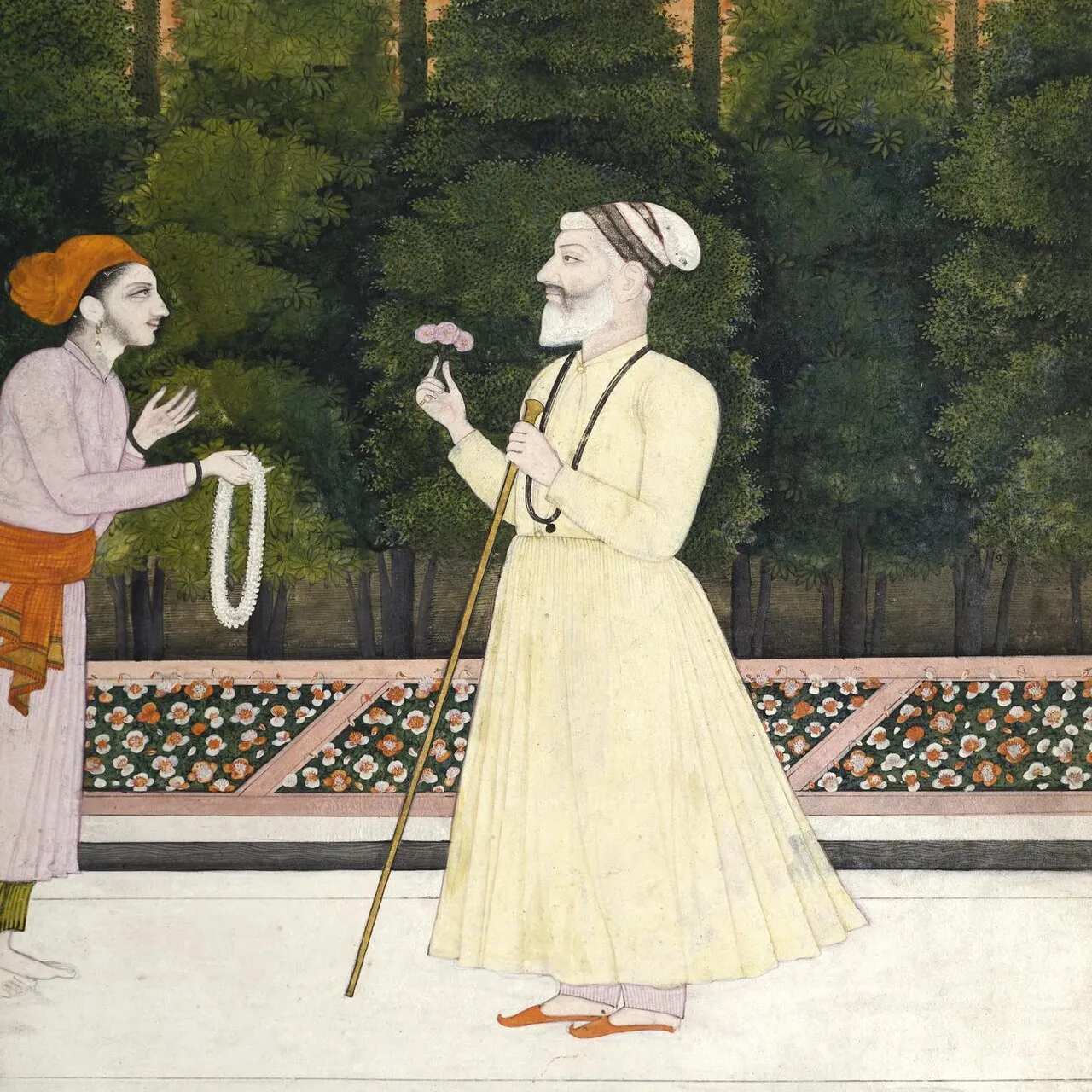
Guru Har Rai Ji (1630 to 1661) was the seventh Sikh Guru, who became Guru at fourteen and led for 17 years from Kiratpur Sahib. He kept his grandfather's army but fought no battles, becoming instead the healer Guru: keeper of a famous garden of medicinal herbs, remembered today as the Green Guru.
- Punjabi name
- ਗੁਰੂ ਹਰਿ ਰਾਇ ਜੀ
- Years
- 1630 to 1661
- Known for
- Compassion, healing, care for creation
- Region
- Doaba (Kiratpur, Shivalik foothills)
- Born
- 16 January 1630, Kiratpur Sahib
- Father
- Baba Gurditta, eldest son of Guru Hargobind Ji
All 11 facts
- Became Guru
- 3 March 1644, aged 14, succeeding his grandfather Guru Hargobind Ji
- Seat
- Kiratpur Sahib
- Known as
- The Green Guru; Sikh Environment Day is marked on 14 March in his honour
- Died
- 6 October 1661, Kiratpur Sahib, aged 31
- Successor
- Guru Har Krishan Ji, his younger son, aged five
Guru Har Rai Ji (1630 to 1661) was the seventh Guru of the Sikhs, and the gentlest figure in a line of warrior saints. He became Guru at fourteen, inheriting his grandfather Guru Hargobind Ji's throne, army and court at Kiratpur Sahib, yet in 17 years of leadership he fought no battle. His weapons were medicines, gardens and mercy: he treated the sick of every faith, protected animals and trees, and taught that a Sikh who cannot feel the pain of a crushed flower has understood nothing. Modern Sikhs know him as the Green Guru, the patron of their environmental movement.
A grandson becomes Guru
Har Rai was born on 16 January 1630 at Kiratpur Sahib, the town his grandfather had founded in the Shivalik foothills. His father, Baba Gurditta, was Guru Hargobind Ji's eldest son, but Baba Gurditta died in 1638, and when the sixth Guru's own life ended in 1644 it was the grandson, aged fourteen, whom he chose. The choice was contested: Har Rai's elder brother Dhir Mal, based at Kartarpur, set up a rival claim with the backing of the Mughal court, and kept possession of the original volume of the Sikh scripture. Har Rai refused to fight his own brother for the Guruship. From Kiratpur he simply out-served the claim, and the community settled the question by following the Guru who behaved like one.
The Guru who would not crush a flower
The best-known story of Guru Har Rai Ji tells how, as a young man walking in a garden in his flowing robes, his garment brushed a rose plant and knocked petals from a flower. The sight of the fallen petals moved him to tears, and he took a lesson from it that he taught for the rest of his life: walk through the world so gently that your passing breaks nothing. Sikh tradition preserves the story not as sentiment but as doctrine. Har Rai taught that creation is God's own garden, that animals, trees and rivers are held in trust, and that strength which cannot control itself is not strength at all. His court kept a zoo of rescued animals, and hunting parties from his court were ordered to bring back injured animals alive for treatment rather than trophies.
The healer of Kiratpur
At Kiratpur Sahib the Guru developed the Naulakha Bagh, a great garden of medicinal plants, and a dispensary whose remedies became famous across northern India. Travellers, soldiers and peasants of every religion came to Kiratpur for treatment, and the Guru treated all without charge and without asking their faith. Tradition tells that when Dara Shikoh, the eldest son of Emperor Shah Jahan, fell gravely ill, suspected poisoned, it was a remedy from Guru Har Rai Ji's stores that cured him, and the prince remained grateful to the Guru's house. In an age when medicine was hoarded by courts and castes, the Guru's garden made healing a form of langar: a shared good, served to whoever came.
An army kept, and never used
For all his gentleness, Guru Har Rai Ji did not disband what his grandfather built. He maintained the Akal Sena's successor force at Kiratpur, some 2,200 horsemen by most accounts, kept the court of Miri and Piri, and trained his Sikhs in arms. But where Guru Hargobind Ji had fought four battles, Har Rai fought none. His Punjab was tense, caught between a weakening Mughal order and ambitious hill chiefs, yet he answered provocation with patience and kept his force as a shield that never needed to strike. He also strengthened the community's teaching, appointing new heads to the manjis, the teaching seats, and encouraging katha, the exposition of scripture, and unbroken kirtan in the congregations.
Dara Shikoh, Aurangzeb and Ram Rai
In 1658 the sons of Shah Jahan fought for the Mughal throne, and Guru Har Rai Ji gave his support and blessings to Dara Shikoh, the liberal elder prince who had reason to be grateful to him. Dara lost, and his brother Aurangzeb took the throne. The new emperor summoned the Guru to Delhi to answer for aiding his rival. Unwilling to attend in person, the Guru sent his elder son Ram Rai, then thirteen, with strict instructions to stand by the Guru's word. At court, pressed by the emperor, Ram Rai altered a verse of scripture, reading a line differently to avoid offending Aurangzeb. When word reached Kiratpur, Guru Har Rai Ji was unmoved by the court's favour his son had won. A Guru's son who would change the word for power, he ruled, could not be trusted with the Guruship, and he disowned Ram Rai. The decision cost him his elder son, and it is remembered as proof that the seventh Guru's gentleness had a spine of iron.
Final journeys and succession
In 1660 the Guru travelled through the regions of Kashmir, Sialkot and Jammu, meeting congregations in the hills. In October 1661, ill and knowing his end was near, he made the choice his own grandfather would have recognised: he passed over the disowned Ram Rai entirely and named his younger son, five-year-old Har Krishan, as the eighth Guru. Guru Har Rai Ji died at Kiratpur Sahib on 6 October 1661, aged only 31. His Guruship is generally held to have added no hymns of his own to the scripture; the single salok attributed to the seventh Guru is disputed by scholars, and Sikhs remember him instead by his life, which they treat as his composition.
Why is Guru Har Rai Ji called the Green Guru?
The title is modern, and it honours what Sikh tradition always said about him: his love of gardens, his garden of healing herbs at Kiratpur, his protection of animals and his teaching that creation must not be harmed needlessly. Since 2010, Sikhs around the world have marked 14 March, the day of his becoming Guru, as Sikh Environment Day, planting trees and cleaning rivers in his name. EcoSikh and other organisations built the worldwide movement on his example, making the seventh Guru the patron of Sikh environmental action.
Why did Guru Har Rai Ji disown his son Ram Rai?
Sent to represent his father before Emperor Aurangzeb in Delhi, the thirteen-year-old Ram Rai changed a word of a hymn to please the emperor, rather than explain and defend the verse as written. Guru Har Rai Ji held that the Guru's word is not negotiable for favour or safety, and that a young man who would alter it under pressure could not lead the community. He excommunicated Ram Rai, and the Guruship passed instead to his younger son, Guru Har Krishan Ji.
ਗੁਰੂ ਹਰਿ ਰਾਇ ਜੀ (1630 ਤੋਂ 1661) ਸਿੱਖਾਂ ਦੇ ਸੱਤਵੇਂ ਗੁਰੂ ਸਨ, ਅਤੇ ਯੋਧਾ ਸੰਤਾਂ ਦੀ ਕਤਾਰ ਵਿੱਚ ਸਭ ਤੋਂ ਕੋਮਲ ਸ਼ਖ਼ਸੀਅਤ ਉਹ ਚੌਦਾਂ ਸਾਲ ਦੀ ਉਮਰ ਵਿੱਚ ਗੁਰੂ ਬਣੇ, ਆਪਣੇ ਦਾਦਾ ਗੁਰੂ ਹਰਿਗੋਬਿੰਦ ਜੀ ਦਾ ਤਖ਼ਤ, ਫ਼ੌਜ ਅਤੇ ਕੀਰਤਪੁਰ ਸਾਹਿਬ ਦਾ ਦਰਬਾਰ ਵਿਰਸੇ ਵਿੱਚ ਲੈ ਕੇ, ਪਰ 17 ਸਾਲ ਦੀ ਅਗਵਾਈ ਵਿੱਚ ਉਨ੍ਹਾਂ ਨੇ ਕੋਈ ਜੰਗ ਨਹੀਂ ਲੜੀ ਉਨ੍ਹਾਂ ਦੇ ਹਥਿਆਰ ਦਵਾਈਆਂ, ਬਾਗ਼ ਅਤੇ ਦਇਆ ਸਨ: ਉਨ੍ਹਾਂ ਨੇ ਹਰ ਧਰਮ ਦੇ ਬੀਮਾਰਾਂ ਦਾ ਇਲਾਜ ਕੀਤਾ, ਜਾਨਵਰਾਂ ਅਤੇ ਰੁੱਖਾਂ ਦੀ ਰੱਖਿਆ ਕੀਤੀ, ਅਤੇ ਸਿਖਾਇਆ ਕਿ ਜੋ ਸਿੱਖ ਕੁਚਲੇ ਫੁੱਲ ਦਾ ਦਰਦ ਮਹਿਸੂਸ ਨਹੀਂ ਕਰ ਸਕਦਾ, ਉਸ ਨੇ ਕੁਝ ਸਮਝਿਆ ਹੀ ਨਹੀਂ ਅੱਜ ਦੇ ਸਿੱਖ ਉਨ੍ਹਾਂ ਨੂੰ ਹਰੇ ਗੁਰੂ ਵਜੋਂ ਜਾਣਦੇ ਹਨ, ਆਪਣੀ ਵਾਤਾਵਰਣ ਲਹਿਰ ਦੇ ਸਰਪ੍ਰਸਤ
ਪੋਤਰਾ ਗੁਰੂ ਬਣਿਆ
ਹਰਿ ਰਾਇ ਜੀ ਦਾ ਜਨਮ 16 ਜਨਵਰੀ 1630 ਨੂੰ ਕੀਰਤਪੁਰ ਸਾਹਿਬ ਵਿੱਚ ਹੋਇਆ, ਉਹ ਸ਼ਹਿਰ ਜੋ ਉਨ੍ਹਾਂ ਦੇ ਦਾਦਾ ਜੀ ਨੇ ਸ਼ਿਵਾਲਿਕ ਦੀਆਂ ਪਹਾੜੀਆਂ ਵਿੱਚ ਵਸਾਇਆ ਸੀ ਉਨ੍ਹਾਂ ਦੇ ਪਿਤਾ, ਬਾਬਾ ਗੁਰਦਿੱਤਾ, ਗੁਰੂ ਹਰਿਗੋਬਿੰਦ ਜੀ ਦੇ ਸਭ ਤੋਂ ਵੱਡੇ ਪੁੱਤਰ ਸਨ, ਪਰ ਬਾਬਾ ਗੁਰਦਿੱਤਾ 1638 ਵਿੱਚ ਚੱਲ ਵਸੇ, ਅਤੇ ਜਦੋਂ 1644 ਵਿੱਚ ਛੇਵੇਂ ਗੁਰੂ ਦਾ ਜੀਵਨ ਸਮਾਪਤ ਹੋਇਆ, ਤਾਂ ਉਨ੍ਹਾਂ ਨੇ ਚੌਦਾਂ ਸਾਲ ਦੇ ਪੋਤਰੇ ਨੂੰ ਹੀ ਚੁਣਿਆ ਇਹ ਚੋਣ ਵਿਵਾਦ ਵਿੱਚ ਰਹੀ: ਹਰਿ ਰਾਇ ਜੀ ਦੇ ਵੱਡੇ ਭਰਾ ਧੀਰ ਮੱਲ ਨੇ, ਕਰਤਾਰਪੁਰ ਵਿੱਚ ਬੈਠ ਕੇ, ਮੁਗਲ ਦਰਬਾਰ ਦੇ ਸਹਾਰੇ ਵਿਰੋਧੀ ਦਾਅਵਾ ਖੜ੍ਹਾ ਕੀਤਾ, ਅਤੇ ਸਿੱਖ ਗ੍ਰੰਥ ਦੀ ਮੂਲ ਬੀੜ ਆਪਣੇ ਕੋਲ ਰੱਖੀ ਹਰਿ ਰਾਇ ਜੀ ਨੇ ਗੁਰਗੱਦੀ ਲਈ ਆਪਣੇ ਭਰਾ ਨਾਲ ਲੜਨ ਤੋਂ ਇਨਕਾਰ ਕਰ ਦਿੱਤਾ ਕੀਰਤਪੁਰ ਤੋਂ ਉਨ੍ਹਾਂ ਨੇ ਸਿਰਫ਼ ਸੇਵਾ ਵਿੱਚ ਉਸ ਨੂੰ ਪਿੱਛੇ ਛੱਡ ਦਿੱਤਾ, ਅਤੇ ਕੌਮ ਨੇ ਉਸ ਗੁਰੂ ਦੇ ਪਿੱਛੇ ਚੱਲ ਕੇ ਸਵਾਲ ਦਾ ਫ਼ੈਸਲਾ ਕਰ ਦਿੱਤਾ ਜੋ ਗੁਰੂ ਵਾਂਗ ਵਿਵਹਾਰ ਕਰਦਾ ਸੀ
ਉਹ ਗੁਰੂ ਜੋ ਫੁੱਲ ਨਾ ਕੁਚਲੇ
ਗੁਰੂ ਹਰਿ ਰਾਇ ਜੀ ਦੀ ਸਭ ਤੋਂ ਜਾਣੀ-ਪਛਾਣੀ ਸਾਖੀ ਦੱਸਦੀ ਹੈ ਕਿ ਕਿਵੇਂ ਇੱਕ ਨੌਜਵਾਨ ਵਜੋਂ ਬਾਗ਼ ਵਿੱਚ ਤੁਰਦਿਆਂ, ਲਹਿਰਾਉਂਦੇ ਚੋਗੇ ਨਾਲ, ਉਨ੍ਹਾਂ ਦੇ ਕੱਪੜੇ ਨੇ ਗੁਲਾਬ ਦੀ ਇੱਕ ਟਹਿਣੀ ਨੂੰ ਛੂਹ ਲਿਆ ਅਤੇ ਇੱਕ ਫੁੱਲ ਦੀਆਂ ਪੱਤੀਆਂ ਡਿੱਗ ਪਈਆਂ ਡਿੱਗੀਆਂ ਪੱਤੀਆਂ ਦੇਖ ਕੇ ਉਨ੍ਹਾਂ ਦੀਆਂ ਅੱਖਾਂ ਭਰ ਆਈਆਂ, ਅਤੇ ਇਸ ਤੋਂ ਉਨ੍ਹਾਂ ਨੇ ਉਹ ਸਬਕ ਲਿਆ ਜੋ ਉਹ ਸਾਰੀ ਉਮਰ ਸਿਖਾਉਂਦੇ ਰਹੇ: ਸੰਸਾਰ ਵਿੱਚ ਇੰਨੇ ਹੌਲੇ ਤੁਰੋ ਕਿ ਤੁਹਾਡੇ ਲੰਘਣ ਨਾਲ ਕੁਝ ਟੁੱਟੇ ਨਾ ਸਿੱਖ ਪਰੰਪਰਾ ਇਸ ਸਾਖੀ ਨੂੰ ਭਾਵਨਾ ਵਜੋਂ ਨਹੀਂ, ਸਿਧਾਂਤ ਵਜੋਂ ਸਾਂਭਦੀ ਹੈ ਹਰਿ ਰਾਇ ਜੀ ਨੇ ਸਿਖਾਇਆ ਕਿ ਕਾਇਨਾਤ ਪਰਮਾਤਮਾ ਦਾ ਆਪਣਾ ਬਾਗ਼ ਹੈ, ਜਾਨਵਰ, ਰੁੱਖ ਅਤੇ ਦਰਿਆ ਅਮਾਨਤ ਵਜੋਂ ਰੱਖੇ ਗਏ ਹਨ, ਅਤੇ ਜੋ ਤਾਕਤ ਆਪਣੇ ਆਪ ਨੂੰ ਕਾਬੂ ਨਹੀਂ ਕਰ ਸਕਦੀ, ਉਹ ਤਾਕਤ ਹੀ ਨਹੀਂ ਉਨ੍ਹਾਂ ਦੇ ਦਰਬਾਰ ਵਿੱਚ ਬਚਾਏ ਗਏ ਜਾਨਵਰਾਂ ਦਾ ਚਿੜੀਆਘਰ ਸੀ, ਅਤੇ ਉਨ੍ਹਾਂ ਦੇ ਦਰਬਾਰ ਦੀਆਂ ਸ਼ਿਕਾਰ ਟੋਲੀਆਂ ਨੂੰ ਹੁਕਮ ਸੀ ਕਿ ਜ਼ਖ਼ਮੀ ਜਾਨਵਰਾਂ ਨੂੰ ਟਰਾਫ਼ੀਆਂ ਦੀ ਬਜਾਏ ਇਲਾਜ ਲਈ ਜਿਉਂਦੇ ਵਾਪਸ ਲਿਆਉਣ
ਕੀਰਤਪੁਰ ਦੇ ਵੈਦ
ਕੀਰਤਪੁਰ ਸਾਹਿਬ ਵਿਖੇ ਗੁਰੂ ਜੀ ਨੇ ਨੌਲੱਖਾ ਬਾਗ਼ ਵਿਕਸਿਤ ਕੀਤਾ, ਦਵਾਈਆਂ ਵਾਲੇ ਪੌਦਿਆਂ ਦਾ ਇੱਕ ਵੱਡਾ ਬਾਗ਼, ਅਤੇ ਇੱਕ ਦਵਾਖਾਨਾ ਜਿਸ ਦੇ ਇਲਾਜ ਉੱਤਰੀ ਭਾਰਤ ਭਰ ਵਿੱਚ ਮਸ਼ਹੂਰ ਹੋ ਗਏ ਹਰ ਧਰਮ ਦੇ ਯਾਤਰੀ, ਸਿਪਾਹੀ ਅਤੇ ਕਿਸਾਨ ਇਲਾਜ ਲਈ ਕੀਰਤਪੁਰ ਆਉਂਦੇ, ਅਤੇ ਗੁਰੂ ਜੀ ਸਭ ਦਾ ਬਿਨਾਂ ਕੋਈ ਫੀਸ ਲਏ ਅਤੇ ਬਿਨਾਂ ਉਨ੍ਹਾਂ ਦਾ ਧਰਮ ਪੁੱਛੇ ਇਲਾਜ ਕਰਦੇ ਪਰੰਪਰਾ ਦੱਸਦੀ ਹੈ ਕਿ ਜਦੋਂ ਬਾਦਸ਼ਾਹ ਸ਼ਾਹ ਜਹਾਨ ਦਾ ਵੱਡਾ ਪੁੱਤਰ ਦਾਰਾ ਸ਼ਿਕੋਹ ਗੰਭੀਰ ਬੀਮਾਰ ਪਿਆ, ਜ਼ਹਿਰ ਦੇ ਸ਼ੱਕ ਵਿੱਚ, ਤਾਂ ਗੁਰੂ ਹਰਿ ਰਾਇ ਜੀ ਦੇ ਭੰਡਾਰ ਦੀ ਦਵਾਈ ਨੇ ਉਸ ਨੂੰ ਠੀਕ ਕੀਤਾ, ਅਤੇ ਰਾਜਕੁਮਾਰ ਗੁਰੂ ਦੇ ਘਰ ਦਾ ਸ਼ੁਕਰਗੁਜ਼ਾਰ ਰਿਹਾ ਉਸ ਯੁੱਗ ਵਿੱਚ ਜਦੋਂ ਦਵਾਈ ਦਰਬਾਰਾਂ ਅਤੇ ਜਾਤਾਂ ਕੋਲ ਕੈਦ ਸੀ, ਗੁਰੂ ਦੇ ਬਾਗ਼ ਨੇ ਇਲਾਜ ਨੂੰ ਲੰਗਰ ਦਾ ਰੂਪ ਦਿੱਤਾ: ਇੱਕ ਸਾਂਝੀ ਚੰਗਿਆਈ, ਜੋ ਆਵੇ ਉਸ ਨੂੰ ਵਰਤਾਈ ਜਾਵੇ
ਫ਼ੌਜ ਰੱਖੀ, ਅਤੇ ਕਦੇ ਵਰਤੀ ਨਹੀਂ
ਆਪਣੀ ਸਾਰੀ ਕੋਮਲਤਾ ਦੇ ਬਾਵਜੂਦ, ਗੁਰੂ ਹਰਿ ਰਾਇ ਜੀ ਨੇ ਉਹ ਭੰਗ ਨਹੀਂ ਕੀਤਾ ਜੋ ਉਨ੍ਹਾਂ ਦੇ ਦਾਦਾ ਜੀ ਨੇ ਬਣਾਇਆ ਸੀ ਉਨ੍ਹਾਂ ਨੇ ਕੀਰਤਪੁਰ ਵਿਖੇ ਅਕਾਲ ਸੈਨਾ ਦੀ ਵਾਰਿਸ ਫ਼ੌਜ ਕਾਇਮ ਰੱਖੀ, ਜ਼ਿਆਦਾਤਰ ਵਰਣਨਾਂ ਅਨੁਸਾਰ ਲਗਭਗ 2,200 ਘੁੜਸਵਾਰ, ਮੀਰੀ ਅਤੇ ਪੀਰੀ ਦਾ ਦਰਬਾਰ ਰੱਖਿਆ, ਅਤੇ ਆਪਣੇ ਸਿੱਖਾਂ ਨੂੰ ਹਥਿਆਰਾਂ ਦੀ ਸਿਖਲਾਈ ਦਿੱਤੀ ਪਰ ਜਿੱਥੇ ਗੁਰੂ ਹਰਿਗੋਬਿੰਦ ਜੀ ਨੇ ਚਾਰ ਜੰਗਾਂ ਲੜੀਆਂ ਸਨ, ਹਰਿ ਰਾਇ ਜੀ ਨੇ ਇੱਕ ਵੀ ਨਹੀਂ ਲੜੀ ਉਨ੍ਹਾਂ ਦਾ ਪੰਜਾਬ ਤਣਾਅ ਭਰਿਆ ਸੀ, ਕਮਜ਼ੋਰ ਹੁੰਦੇ ਮੁਗਲ ਰਾਜ ਅਤੇ ਲਾਲਚੀ ਪਹਾੜੀ ਸਰਦਾਰਾਂ ਵਿਚਕਾਰ ਫਸਿਆ, ਪਰ ਉਨ੍ਹਾਂ ਨੇ ਭੜਕਾਹਟ ਦਾ ਜਵਾਬ ਸਬਰ ਨਾਲ ਦਿੱਤਾ ਅਤੇ ਆਪਣੀ ਫ਼ੌਜ ਨੂੰ ਇੱਕ ਅਜਿਹੀ ਢਾਲ ਵਜੋਂ ਰੱਖਿਆ ਜਿਸ ਨੂੰ ਕਦੇ ਵਾਰ ਕਰਨ ਦੀ ਲੋੜ ਨਾ ਪਈ ਉਨ੍ਹਾਂ ਨੇ ਕੌਮ ਦੀ ਸਿੱਖਿਆ ਨੂੰ ਵੀ ਮਜ਼ਬੂਤ ਕੀਤਾ, ਮੰਜੀਆਂ, ਸਿੱਖਿਆ ਦੇ ਕੇਂਦਰਾਂ, ਲਈ ਨਵੇਂ ਮੁਖੀ ਥਾਪੇ, ਅਤੇ ਸੰਗਤਾਂ ਵਿੱਚ ਕਥਾ, ਗ੍ਰੰਥ ਦੀ ਵਿਆਖਿਆ, ਅਤੇ ਅਖੰਡ ਕੀਰਤਨ ਨੂੰ ਉਤਸ਼ਾਹਿਤ ਕੀਤਾ
ਦਾਰਾ ਸ਼ਿਕੋਹ, ਔਰੰਗਜ਼ੇਬ ਅਤੇ ਰਾਮ ਰਾਇ
1658 ਵਿੱਚ ਸ਼ਾਹ ਜਹਾਨ ਦੇ ਪੁੱਤਰ ਮੁਗਲ ਤਖ਼ਤ ਲਈ ਲੜੇ, ਅਤੇ ਗੁਰੂ ਹਰਿ ਰਾਇ ਜੀ ਨੇ ਆਪਣਾ ਸਹਿਯੋਗ ਅਤੇ ਅਸੀਸ ਦਾਰਾ ਸ਼ਿਕੋਹ ਨੂੰ ਦਿੱਤੀ, ਉਹ ਉਦਾਰਵਾਦੀ ਵੱਡਾ ਰਾਜਕੁਮਾਰ ਜਿਸ ਕੋਲ ਉਨ੍ਹਾਂ ਦਾ ਸ਼ੁਕਰਗੁਜ਼ਾਰ ਹੋਣ ਦਾ ਕਾਰਨ ਸੀ ਦਾਰਾ ਹਾਰ ਗਿਆ, ਅਤੇ ਉਸ ਦੇ ਭਰਾ ਔਰੰਗਜ਼ੇਬ ਨੇ ਤਖ਼ਤ ਸੰਭਾਲ ਲਿਆ ਨਵੇਂ ਬਾਦਸ਼ਾਹ ਨੇ ਗੁਰੂ ਜੀ ਨੂੰ ਆਪਣੇ ਵਿਰੋਧੀ ਦੀ ਮਦਦ ਦਾ ਜਵਾਬ ਦੇਣ ਲਈ ਦਿੱਲੀ ਬੁਲਾਇਆ ਖੁਦ ਜਾਣ ਦੀ ਬਜਾਏ, ਗੁਰੂ ਜੀ ਨੇ ਆਪਣੇ ਵੱਡੇ ਪੁੱਤਰ ਰਾਮ ਰਾਇ ਨੂੰ, ਜੋ ਉਸ ਸਮੇਂ ਤੇਰਾਂ ਸਾਲ ਦਾ ਸੀ, ਸਖ਼ਤ ਹਦਾਇਤਾਂ ਨਾਲ ਭੇਜਿਆ ਕਿ ਗੁਰੂ ਦੇ ਬਚਨ 'ਤੇ ਡੱਟਿਆ ਰਹੇ ਦਰਬਾਰ ਵਿੱਚ, ਬਾਦਸ਼ਾਹ ਦੇ ਦਬਾਅ ਹੇਠ, ਰਾਮ ਰਾਇ ਨੇ ਬਾਣੀ ਦੀ ਇੱਕ ਪੰਕਤੀ ਬਦਲ ਦਿੱਤੀ, ਔਰੰਗਜ਼ੇਬ ਨੂੰ ਨਾਰਾਜ਼ ਹੋਣ ਤੋਂ ਬਚਾਉਣ ਲਈ ਉਸ ਨੂੰ ਵੱਖਰੇ ਢੰਗ ਨਾਲ ਪੜ੍ਹਿਆ ਜਦੋਂ ਖ਼ਬਰ ਕੀਰਤਪੁਰ ਪਹੁੰਚੀ, ਤਾਂ ਗੁਰੂ ਹਰਿ ਰਾਇ ਜੀ ਆਪਣੇ ਪੁੱਤਰ ਦੀ ਜਿੱਤੀ ਦਰਬਾਰੀ ਮਿਹਰ ਤੋਂ ਪ੍ਰਭਾਵਿਤ ਨਹੀਂ ਹੋਏ ਗੁਰੂ ਦਾ ਪੁੱਤਰ ਜੋ ਤਾਕਤ ਲਈ ਸ਼ਬਦ ਬਦਲ ਦੇਵੇ, ਉਸ 'ਤੇ ਗੁਰਗੱਦੀ ਦਾ ਭਰੋਸਾ ਨਹੀਂ ਕੀਤਾ ਜਾ ਸਕਦਾ, ਉਨ੍ਹਾਂ ਨੇ ਫ਼ੈਸਲਾ ਕੀਤਾ, ਅਤੇ ਰਾਮ ਰਾਇ ਨਾਲੋਂ ਨਾਤਾ ਤੋੜ ਲਿਆ ਇਸ ਫ਼ੈਸਲੇ ਨੇ ਉਨ੍ਹਾਂ ਨੂੰ ਆਪਣਾ ਵੱਡਾ ਪੁੱਤਰ ਗੁਆਉਣਾ ਪਿਆ, ਅਤੇ ਇਸ ਨੂੰ ਇਸ ਸਬੂਤ ਵਜੋਂ ਯਾਦ ਕੀਤਾ ਜਾਂਦਾ ਹੈ ਕਿ ਸੱਤਵੇਂ ਗੁਰੂ ਦੀ ਕੋਮਲਤਾ ਵਿੱਚ ਲੋਹੇ ਦੀ ਰੀੜ੍ਹ ਸੀ
ਆਖ਼ਰੀ ਯਾਤਰਾਵਾਂ ਅਤੇ ਵਾਰਿਸ
1660 ਵਿੱਚ ਗੁਰੂ ਜੀ ਨੇ ਕਸ਼ਮੀਰ, ਸਿਆਲਕੋਟ ਅਤੇ ਜੰਮੂ ਦੇ ਇਲਾਕਿਆਂ ਦੀ ਯਾਤਰਾ ਕੀਤੀ, ਪਹਾੜਾਂ ਵਿੱਚ ਸੰਗਤਾਂ ਨੂੰ ਮਿਲੇ ਅਕਤੂਬਰ 1661 ਵਿੱਚ, ਬੀਮਾਰ ਹਾਲਤ ਵਿੱਚ ਅਤੇ ਆਪਣਾ ਅੰਤ ਨੇੜੇ ਜਾਣਦੇ ਹੋਏ, ਉਨ੍ਹਾਂ ਨੇ ਉਹ ਚੋਣ ਕੀਤੀ ਜੋ ਉਨ੍ਹਾਂ ਦੇ ਆਪਣੇ ਦਾਦਾ ਜੀ ਪਛਾਣਦੇ: ਉਨ੍ਹਾਂ ਨੇ ਨਾਤਾ ਤੋੜੇ ਰਾਮ ਰਾਇ ਨੂੰ ਪੂਰੀ ਤਰ੍ਹਾਂ ਪਿੱਛੇ ਛੱਡ ਕੇ ਆਪਣੇ ਛੋਟੇ ਪੁੱਤਰ, ਪੰਜ ਸਾਲ ਦੇ ਹਰਿ ਕ੍ਰਿਸ਼ਨ, ਨੂੰ ਅੱਠਵਾਂ ਗੁਰੂ ਥਾਪਿਆ ਗੁਰੂ ਹਰਿ ਰਾਇ ਜੀ 6 ਅਕਤੂਬਰ 1661 ਨੂੰ ਕੀਰਤਪੁਰ ਸਾਹਿਬ ਵਿੱਚ ਸਿਰਫ਼ 31 ਸਾਲ ਦੀ ਉਮਰ ਵਿੱਚ ਅਕਾਲ ਚਲਾਣਾ ਕਰ ਗਏ ਆਮ ਤੌਰ 'ਤੇ ਮੰਨਿਆ ਜਾਂਦਾ ਹੈ ਕਿ ਉਨ੍ਹਾਂ ਨੇ ਗ੍ਰੰਥ ਵਿੱਚ ਆਪਣੇ ਕੋਈ ਸ਼ਬਦ ਨਹੀਂ ਪਾਏ; ਸੱਤਵੇਂ ਗੁਰੂ ਨਾਲ ਜੋੜਿਆ ਜਾਣ ਵਾਲਾ ਇੱਕੋ-ਇੱਕ ਸਲੋਕ ਵਿਦਵਾਨਾਂ ਵਿੱਚ ਵਿਵਾਦਿਤ ਹੈ, ਅਤੇ ਸਿੱਖ ਉਨ੍ਹਾਂ ਨੂੰ ਇਸ ਦੀ ਬਜਾਏ ਉਨ੍ਹਾਂ ਦੇ ਜੀਵਨ ਰਾਹੀਂ ਯਾਦ ਕਰਦੇ ਹਨ, ਜਿਸ ਨੂੰ ਉਹ ਉਨ੍ਹਾਂ ਦੀ ਰਚਨਾ ਮੰਨਦੇ ਹਨ
ਗੁਰੂ ਹਰਿ ਰਾਇ ਜੀ ਨੂੰ ਹਰੇ ਗੁਰੂ ਕਿਉਂ ਕਿਹਾ ਜਾਂਦਾ ਹੈ?
ਇਹ ਉਪਾਧੀ ਆਧੁਨਿਕ ਹੈ, ਅਤੇ ਇਹ ਉਸ ਦਾ ਸਨਮਾਨ ਕਰਦੀ ਹੈ ਜੋ ਸਿੱਖ ਪਰੰਪਰਾ ਹਮੇਸ਼ਾ ਉਨ੍ਹਾਂ ਬਾਰੇ ਕਹਿੰਦੀ ਆਈ ਹੈ: ਬਾਗ਼ਾਂ ਨਾਲ ਉਨ੍ਹਾਂ ਦਾ ਪ੍ਰੇਮ, ਕੀਰਤਪੁਰ ਵਿਖੇ ਉਨ੍ਹਾਂ ਦਾ ਦਵਾਈਆਂ ਵਾਲਾ ਬਾਗ਼, ਜਾਨਵਰਾਂ ਦੀ ਉਨ੍ਹਾਂ ਦੀ ਰੱਖਿਆ ਅਤੇ ਉਨ੍ਹਾਂ ਦੀ ਸਿੱਖਿਆ ਕਿ ਕਾਇਨਾਤ ਨੂੰ ਬੇਲੋੜਾ ਨੁਕਸਾਨ ਨਹੀਂ ਪਹੁੰਚਾਉਣਾ ਚਾਹੀਦਾ 2010 ਤੋਂ, ਦੁਨੀਆ ਭਰ ਦੇ ਸਿੱਖ 14 ਮਾਰਚ, ਉਨ੍ਹਾਂ ਦੇ ਗੁਰੂ ਬਣਨ ਵਾਲੇ ਦਿਨ, ਨੂੰ ਸਿੱਖ ਵਾਤਾਵਰਣ ਦਿਵਸ ਵਜੋਂ ਮਨਾਉਂਦੇ ਹਨ, ਉਨ੍ਹਾਂ ਦੇ ਨਾਂ 'ਤੇ ਰੁੱਖ ਲਾਉਂਦੇ ਅਤੇ ਦਰਿਆ ਸਾਫ਼ ਕਰਦੇ ਹਨ ਈਕੋਸਿੱਖ ਅਤੇ ਹੋਰ ਸੰਸਥਾਵਾਂ ਨੇ ਉਨ੍ਹਾਂ ਦੀ ਮਿਸਾਲ 'ਤੇ ਦੁਨੀਆ ਭਰ ਦੀ ਲਹਿਰ ਖੜ੍ਹੀ ਕੀਤੀ, ਸੱਤਵੇਂ ਗੁਰੂ ਨੂੰ ਸਿੱਖ ਵਾਤਾਵਰਣ ਕਾਰਜ ਦਾ ਸਰਪ੍ਰਸਤ ਬਣਾਇਆ
ਗੁਰੂ ਹਰਿ ਰਾਇ ਜੀ ਨੇ ਆਪਣੇ ਪੁੱਤਰ ਰਾਮ ਰਾਇ ਨਾਲ ਨਾਤਾ ਕਿਉਂ ਤੋੜਿਆ?
ਦਿੱਲੀ ਵਿੱਚ ਔਰੰਗਜ਼ੇਬ ਦੇ ਸਾਹਮਣੇ ਆਪਣੇ ਪਿਤਾ ਦੀ ਨੁਮਾਇੰਦਗੀ ਕਰਨ ਗਏ ਤੇਰਾਂ ਸਾਲ ਦੇ ਰਾਮ ਰਾਇ ਨੇ ਬਾਦਸ਼ਾਹ ਨੂੰ ਖੁਸ਼ ਕਰਨ ਲਈ ਇੱਕ ਸ਼ਬਦ ਦੀ ਇੱਕ ਪੰਕਤੀ ਬਦਲ ਦਿੱਤੀ, ਇਸ ਦੀ ਬਜਾਏ ਕਿ ਉਹ ਪੰਕਤੀ ਦੀ ਵਿਆਖਿਆ ਕਰਕੇ ਉਸ ਦਾ ਬਚਾਅ ਕਰਦਾ ਜਿਵੇਂ ਉਹ ਲਿਖੀ ਗਈ ਸੀ ਗੁਰੂ ਹਰਿ ਰਾਇ ਜੀ ਦਾ ਮੰਨਣਾ ਸੀ ਕਿ ਗੁਰੂ ਦਾ ਸ਼ਬਦ ਮਿਹਰ ਜਾਂ ਸੁਰੱਖਿਆ ਲਈ ਸੌਦੇਬਾਜ਼ੀ ਦੀ ਚੀਜ਼ ਨਹੀਂ, ਅਤੇ ਜੋ ਨੌਜਵਾਨ ਦਬਾਅ ਹੇਠ ਇਸ ਨੂੰ ਬਦਲ ਦੇਵੇ, ਉਹ ਕੌਮ ਦੀ ਅਗਵਾਈ ਨਹੀਂ ਕਰ ਸਕਦਾ ਉਨ੍ਹਾਂ ਨੇ ਰਾਮ ਰਾਇ ਨੂੰ ਛੇਕ ਦਿੱਤਾ, ਅਤੇ ਗੁਰਗੱਦੀ ਇਸ ਦੀ ਬਜਾਏ ਉਨ੍ਹਾਂ ਦੇ ਛੋਟੇ ਪੁੱਤਰ, ਗੁਰੂ ਹਰਿ ਕ੍ਰਿਸ਼ਨ ਜੀ ਨੂੰ ਮਿਲੀ