
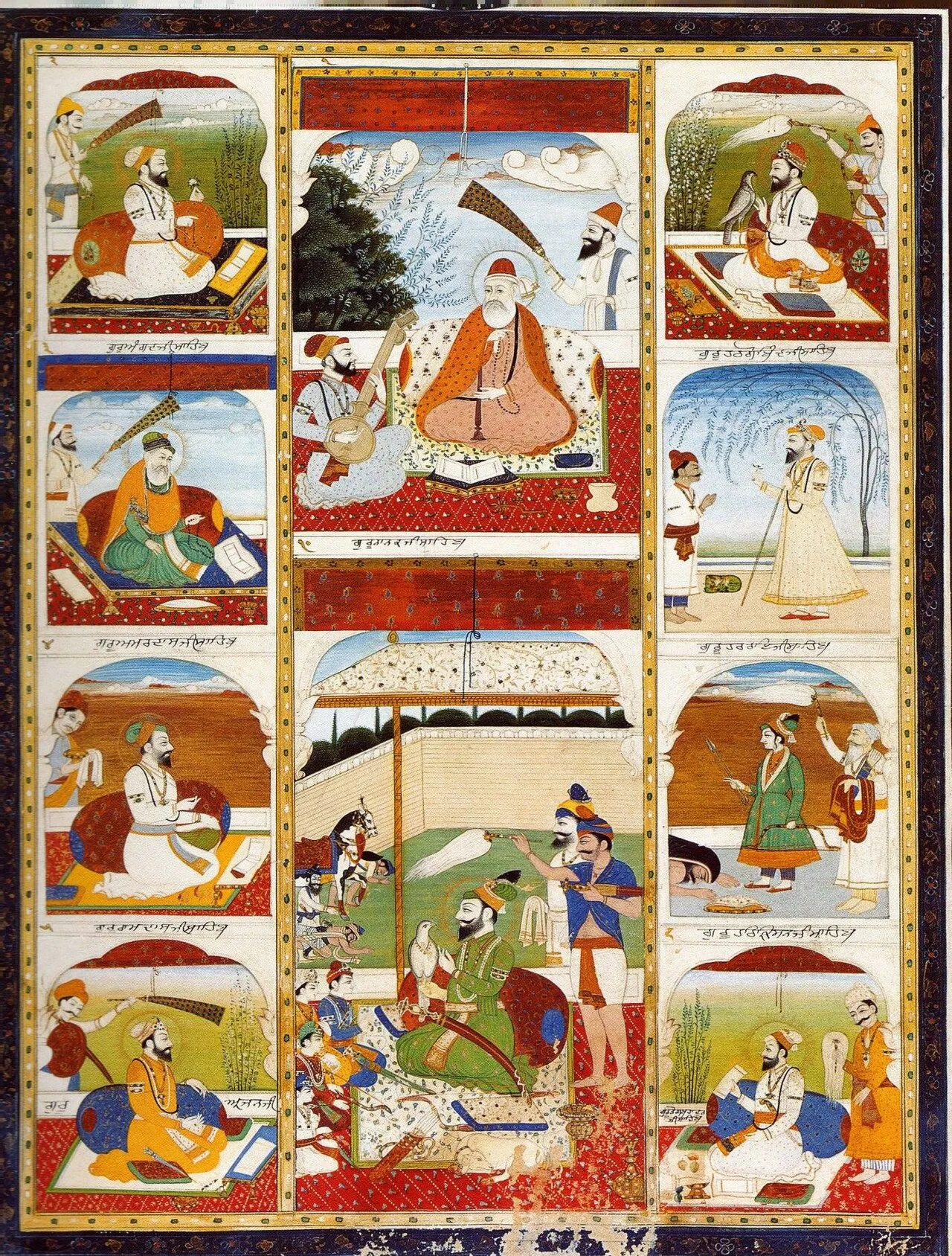
The ten Sikh Gurus are the ten human teachers who led the Sikh faith from its founding by Guru Nanak Dev Ji at the end of the 1400s until 1708, when Guru Gobind Singh Ji ended the line of human Gurus and installed the Guru Granth Sahib, the Sikh scripture, as the eternal Guru of the Sikhs.
- Punjabi name
- ਦਸ ਸਿੱਖ ਗੁਰੂ
- Number
- Ten human Gurus
- Span
- 1469 to 1708, from the birth of Guru Nanak Dev Ji to the passing of the Guruship
- First Guru
- Guru Nanak Dev Ji (1469 to 1539), founder of Sikhism
- Last human Guru
- Guru Gobind Singh Ji (1666 to 1708)
- Eternal Guru
- Guru Granth Sahib, the Sikh scripture, since 1708
All 9 facts
- Homeland
- Punjab
- Youngest Guru
- Guru Har Krishan Ji, Guru at five
- Longest Guruship
- Guru Hargobind Ji, 38 years (1606 to 1644)
The ten Sikh Gurus are the ten human teachers who led the Sikh faith from its founding by Guru Nanak Dev Ji at the end of the 1400s until 1708, when Guru Gobind Singh Ji ended the line of human Gurus and installed the Guru Granth Sahib, the Sikh scripture, as the eternal Guru of the Sikhs. Across 239 years, a hymn-singing founder, a child of five, two martyrs and a king who gave away his throne to a book each carried the same light, and between them they built a faith, a scripture, a city of God and a nation of saint-soldiers.
The Ten Gurus in order
1. Guru Nanak Dev Ji (1469 to 1539) - the founder of Sikhism, who travelled across Asia teaching one God, honest work, sharing with others and the equality of all people, high and low, and settled at Kartarpur to farm and sing his hymns with the first Sikh community.
2. Guru Angad Dev Ji (1504 to 1552) - the devoted disciple Lehna, renamed Angad, a part of the Guru's own body, who consolidated the young community at Khadur Sahib, standardised the Gurmukhi script in which the hymns are written, and built schools, wrestling grounds and the langar his wife Mata Khivi made famous.
3. Guru Amar Das Ji (1479 to 1574) - the third Guru, who became Guru at 73, founded Goindwal Sahib and its Baoli of 84 steps, organised the faith through 22 manjis, made langar compulsory before an audience, and composed the Anand Sahib, the Song of Bliss.
4. Guru Ram Das Ji (1534 to 1581) - the fourth Guru, founder of Ramdaspur, the city that became Amritsar, who began the great sarovar around which the holiest shrine of the Sikhs would rise, and whose humility became the community's model of service.
5. Guru Arjan Dev Ji (1563 to 1606) - the fifth Guru, who completed the Harmandir Sahib, compiled the Adi Granth in 1604 with 2,218 hymns of his own, and in 1606 became the first Sikh martyr, executed at Lahore on the orders of Emperor Jahangir.
6. Guru Hargobind Ji (1595 to 1644) - the sixth Guru, who answered his father's martyrdom by wearing the two swords of Miri and Piri, raising the Akal Takht, keeping the first Sikh standing army, and winning freedom for 52 princes alongside his own release from Gwalior Fort.
7. Guru Har Rai Ji (1630 to 1661) - the seventh Guru, the gentle healer of Kiratpur Sahib, who kept his grandfather's army but fought no battles, healed the sick of every faith from his garden of medicinal herbs, and is remembered today as the Green Guru.
8. Guru Har Krishan Ji (1656 to 1664) - the eighth Guru, the Bal Guru, a child of five when he became Guru, who served Delhi through its smallpox epidemic from the bungalow that became Gurdwara Bangla Sahib, caught the disease himself, and died at seven pointing to his successor with the words Baba Bakale.
9. Guru Tegh Bahadur Ji (1621 to 1675) - the ninth Guru, Hind di Chadar, the Shield of India, who founded Anandpur Sahib, composed 116 hymns, and gave his head in Delhi in 1675 defending the right of Kashmiri Hindus to practise a faith that was not his own.
10. Guru Gobind Singh Ji (1666 to 1708) - the tenth and last human Guru, who in 1699 created the Khalsa, the order of saint-soldiers, gave Sikhs their visible identity, and in 1708, before his death at Nanded, ended the line of human Gurus by installing the Guru Granth Sahib as Guru for all time.
One light, ten Gurus
Sikhs do not think of the ten as ten separate religions or ten rival teachers. In Sikh belief, a single jot, a single divine light, passed from Guru to Guru, as one lamp lights another without itself diminishing. That is why the Gurus signed their hymns with the one name Nanak, adding only a number, Mahalla 2, Mahalla 3, Mahalla 4, to show which body the light was speaking through. When the tenth Guru closed the line in 1708, the light did not go out: it passed into the scripture the Gurus themselves had written and compiled, and the Guru Granth Sahib has been the eternal Guru of the Sikhs ever since.
Who are the ten Sikh Gurus?
In order, the ten Sikh Gurus are: Guru Nanak Dev Ji, Guru Angad Dev Ji, Guru Amar Das Ji, Guru Ram Das Ji, Guru Arjan Dev Ji, Guru Hargobind Ji, Guru Har Rai Ji, Guru Har Krishan Ji, Guru Tegh Bahadur Ji and Guru Gobind Singh Ji. Together they led the Sikh community from 1539, when Guru Nanak passed the Guruship to Guru Angad, until 1708, when Guru Gobind Singh Ji made the Guru Granth Sahib the eternal Guru.
Who was the first human Guru of Sikhism?
Guru Nanak Dev Ji (1469 to 1539) was the first Guru and the founder of Sikhism. Born at Talwandi, now Nankana Sahib in Pakistan, he travelled for over two decades across India and beyond, to Tibet, Arabia and Persia in tradition's telling, before settling at Kartarpur on the River Ravi, where he farmed, sang his hymns and gathered the first Sikh community.
Who was the last human Guru of Sikhism?
Guru Gobind Singh Ji (1666 to 1708) was the tenth and last human Guru. The son of the martyred Guru Tegh Bahadur Ji, he created the Khalsa in 1699, fought to defend the community against Mughal and hill-chief persecution, and lost all four of his sons in that struggle. In 1708, at Nanded, he declared that after him the Guru would be no person but the Guru Granth Sahib, and Sikhs have had no human Guru since.
ਦਸ ਸਿੱਖ ਗੁਰੂ ਉਹ ਦਸ ਮਨੁੱਖੀ ਸਿੱਖਿਆਦਾਤਾ ਹਨ ਜਿਨ੍ਹਾਂ ਨੇ 1400ਵਿਆਂ ਦੇ ਅੰਤ ਵਿੱਚ ਗੁਰੂ ਨਾਨਕ ਦੇਵ ਜੀ ਵੱਲੋਂ ਸਥਾਪਨਾ ਤੋਂ ਲੈ ਕੇ 1708 ਤੱਕ ਸਿੱਖ ਧਰਮ ਦੀ ਅਗਵਾਈ ਕੀਤੀ, ਜਦੋਂ ਗੁਰੂ ਗੋਬਿੰਦ ਸਿੰਘ ਜੀ ਨੇ ਮਨੁੱਖੀ ਗੁਰੂਆਂ ਦੀ ਕਤਾਰ ਸਮਾਪਤ ਕਰਕੇ ਸ੍ਰੀ ਗੁਰੂ ਗ੍ਰੰਥ ਸਾਹਿਬ ਨੂੰ, ਸਿੱਖ ਗ੍ਰੰਥ ਨੂੰ, ਸਿੱਖਾਂ ਦਾ ਸਦੀਵੀ ਗੁਰੂ ਥਾਪਿਆ 239 ਸਾਲਾਂ ਵਿੱਚ, ਇੱਕ ਸ਼ਬਦ ਗਾਉਣ ਵਾਲੇ ਸੰਸਥਾਪਕ, ਇੱਕ ਪੰਜ ਸਾਲ ਦੇ ਬਾਲਕ, ਦੋ ਸ਼ਹੀਦਾਂ ਅਤੇ ਇੱਕ ਅਜਿਹੇ ਰਾਜੇ ਨੇ ਜਿਸ ਨੇ ਆਪਣਾ ਤਖ਼ਤ ਇੱਕ ਗ੍ਰੰਥ ਨੂੰ ਦੇ ਦਿੱਤਾ, ਉਸੇ ਇੱਕ ਜੋਤ ਨੂੰ ਅੱਗੇ ਤੋਰਿਆ, ਅਤੇ ਉਨ੍ਹਾਂ ਸਭ ਨੇ ਮਿਲ ਕੇ ਇੱਕ ਧਰਮ, ਇੱਕ ਗ੍ਰੰਥ, ਪਰਮਾਤਮਾ ਦਾ ਇੱਕ ਸ਼ਹਿਰ ਅਤੇ ਸੰਤ-ਸਿਪਾਹੀਆਂ ਦੀ ਇੱਕ ਕੌਮ ਬਣਾਈ
ਦਸ ਗੁਰੂ ਕ੍ਰਮ ਅਨੁਸਾਰ
1. ਗੁਰੂ ਨਾਨਕ ਦੇਵ ਜੀ (1469 ਤੋਂ 1539) - ਸਿੱਖ ਧਰਮ ਦੇ ਸੰਸਥਾਪਕ, ਜਿਨ੍ਹਾਂ ਨੇ ਏਸ਼ੀਆ ਭਰ ਦੀ ਯਾਤਰਾ ਕਰਕੇ ਇੱਕ ਪਰਮਾਤਮਾ, ਕਿਰਤ ਕਰਨ, ਵੰਡ ਛਕਣ ਅਤੇ ਸਾਰੇ ਮਨੁੱਖਾਂ, ਉੱਚ-ਨੀਚ ਦੀ ਬਰਾਬਰੀ ਦੀ ਸਿੱਖਿਆ ਦਿੱਤੀ, ਅਤੇ ਕਰਤਾਰਪੁਰ ਵਸ ਕੇ ਪਹਿਲੀ ਸਿੱਖ ਸੰਗਤ ਨਾਲ ਖੇਤੀ ਕੀਤੀ ਅਤੇ ਆਪਣੇ ਸ਼ਬਦ ਗਾਏ
2. ਗੁਰੂ ਅੰਗਦ ਦੇਵ ਜੀ (1504 ਤੋਂ 1552) - ਸ਼ਰਧਾਲੂ ਸਿੱਖ ਲਹਿਣਾ, ਜਿਨ੍ਹਾਂ ਦਾ ਨਾਂ ਅੰਗਦ ਪਿਆ, ਗੁਰੂ ਦੇ ਆਪਣੇ ਅੰਗ ਦਾ ਹਿੱਸਾ, ਜਿਨ੍ਹਾਂ ਨੇ ਖਡੂਰ ਸਾਹਿਬ ਵਿਖੇ ਨੌਜਵਾਨ ਕੌਮ ਨੂੰ ਸੰਗਠਿਤ ਕੀਤਾ, ਗੁਰਮੁੱਖੀ ਲਿੱਪੀ ਨੂੰ ਮਾਨਕ ਰੂਪ ਦਿੱਤਾ ਜਿਸ ਵਿੱਚ ਸ਼ਬਦ ਲਿਖੇ ਜਾਂਦੇ ਹਨ, ਅਤੇ ਸਕੂਲ, ਅਖਾੜੇ ਅਤੇ ਉਹ ਲੰਗਰ ਬਣਾਇਆ ਜੋ ਉਨ੍ਹਾਂ ਦੀ ਪਤਨੀ ਮਾਤਾ ਖੀਵੀ ਨੇ ਮਸ਼ਹੂਰ ਕੀਤਾ
3. ਗੁਰੂ ਅਮਰ ਦਾਸ ਜੀ (1479 ਤੋਂ 1574) - ਤੀਜੇ ਗੁਰੂ, ਜੋ 73 ਸਾਲ ਦੀ ਉਮਰ ਵਿੱਚ ਗੁਰੂ ਬਣੇ, ਗੋਇੰਦਵਾਲ ਸਾਹਿਬ ਅਤੇ ਇਸ ਦੀ 84 ਪੌੜੀਆਂ ਵਾਲੀ ਬਾਉਲੀ ਬਣਵਾਈ, 22 ਮੰਜੀਆਂ ਰਾਹੀਂ ਧਰਮ ਨੂੰ ਸੰਗਠਿਤ ਕੀਤਾ, ਦਰਸ਼ਨਾਂ ਤੋਂ ਪਹਿਲਾਂ ਲੰਗਰ ਲਾਜ਼ਮੀ ਕੀਤਾ, ਅਤੇ ਅਨੰਦ ਸਾਹਿਬ ਦੀ ਰਚਨਾ ਕੀਤੀ
4. ਗੁਰੂ ਰਾਮ ਦਾਸ ਜੀ (1534 ਤੋਂ 1581) - ਚੌਥੇ ਗੁਰੂ, ਰਾਮਦਾਸਪੁਰ, ਉਹ ਸ਼ਹਿਰ ਜੋ ਅੰਮ੍ਰਿਤਸਰ ਬਣਿਆ, ਦੇ ਸੰਸਥਾਪਕ, ਜਿਨ੍ਹਾਂ ਨੇ ਉਹ ਵੱਡਾ ਸਰੋਵਰ ਸ਼ੁਰੂ ਕੀਤਾ ਜਿਸ ਦੇ ਆਲੇ-ਦੁਆਲੇ ਸਿੱਖਾਂ ਦਾ ਸਭ ਤੋਂ ਪਵਿੱਤਰ ਅਸਥਾਨ ਉੱਠਣਾ ਸੀ, ਅਤੇ ਜਿਨ੍ਹਾਂ ਦੀ ਨਿਮਰਤਾ ਕੌਮ ਲਈ ਸੇਵਾ ਦਾ ਮਾਡਲ ਬਣੀ
5. ਗੁਰੂ ਅਰਜਨ ਦੇਵ ਜੀ (1563 ਤੋਂ 1606) - ਪੰਜਵੇਂ ਗੁਰੂ, ਜਿਨ੍ਹਾਂ ਨੇ ਹਰਿਮੰਦਰ ਸਾਹਿਬ ਪੂਰਾ ਕੀਤਾ, 1604 ਵਿੱਚ ਆਪਣੇ 2,218 ਸ਼ਬਦਾਂ ਸਮੇਤ ਆਦਿ ਗ੍ਰੰਥ ਸੰਪਾਦਿਤ ਕੀਤਾ, ਅਤੇ 1606 ਵਿੱਚ ਪਹਿਲੇ ਸਿੱਖ ਸ਼ਹੀਦ ਬਣੇ, ਬਾਦਸ਼ਾਹ ਜਹਾਂਗੀਰ ਦੇ ਹੁਕਮ 'ਤੇ ਲਾਹੌਰ ਵਿੱਚ ਸ਼ਹੀਦ ਕੀਤੇ ਗਏ
6. ਗੁਰੂ ਹਰਿਗੋਬਿੰਦ ਜੀ (1595 ਤੋਂ 1644) - ਛੇਵੇਂ ਗੁਰੂ, ਜਿਨ੍ਹਾਂ ਨੇ ਆਪਣੇ ਪਿਤਾ ਦੀ ਸ਼ਹਾਦਤ ਦਾ ਜਵਾਬ ਮੀਰੀ ਅਤੇ ਪੀਰੀ ਦੀਆਂ ਦੋ ਤਲਵਾਰਾਂ ਧਾਰਨ ਕਰਕੇ, ਅਕਾਲ ਤਖ਼ਤ ਉਸਾਰ ਕੇ, ਪਹਿਲੀ ਸਿੱਖ ਸਥਾਈ ਫ਼ੌਜ ਰੱਖ ਕੇ ਦਿੱਤਾ, ਅਤੇ ਗਵਾਲੀਅਰ ਕਿਲ੍ਹੇ ਤੋਂ ਆਪਣੀ ਰਿਹਾਈ ਦੇ ਨਾਲ 52 ਰਾਜਕੁਮਾਰਾਂ ਦੀ ਆਜ਼ਾਦੀ ਜਿੱਤੀ
7. ਗੁਰੂ ਹਰਿ ਰਾਇ ਜੀ (1630 ਤੋਂ 1661) - ਸੱਤਵੇਂ ਗੁਰੂ, ਕੀਰਤਪੁਰ ਸਾਹਿਬ ਦੇ ਕੋਮਲ ਵੈਦ, ਜਿਨ੍ਹਾਂ ਨੇ ਆਪਣੇ ਦਾਦਾ ਜੀ ਦੀ ਫ਼ੌਜ ਰੱਖੀ ਪਰ ਕੋਈ ਜੰਗ ਨਹੀਂ ਲੜੀ, ਆਪਣੇ ਦਵਾਈਆਂ ਵਾਲੇ ਬਾਗ਼ ਤੋਂ ਹਰ ਧਰਮ ਦੇ ਬੀਮਾਰਾਂ ਦਾ ਇਲਾਜ ਕੀਤਾ, ਅਤੇ ਅੱਜ ਹਰੇ ਗੁਰੂ ਵਜੋਂ ਯਾਦ ਕੀਤੇ ਜਾਂਦੇ ਹਨ
8. ਗੁਰੂ ਹਰਿ ਕ੍ਰਿਸ਼ਨ ਜੀ (1656 ਤੋਂ 1664) - ਅੱਠਵੇਂ ਗੁਰੂ, ਬਾਲ ਗੁਰੂ, ਪੰਜ ਸਾਲ ਦੇ ਬਾਲਕ ਜਦੋਂ ਗੁਰੂ ਬਣੇ, ਜਿਨ੍ਹਾਂ ਨੇ ਉਸ ਬੰਗਲੇ ਤੋਂ ਦਿੱਲੀ ਦੀ ਚੇਚਕ ਦੀ ਮਹਾਂਮਾਰੀ ਵਿੱਚ ਸੇਵਾ ਕੀਤੀ ਜੋ ਗੁਰਦੁਆਰਾ ਬੰਗਲਾ ਸਾਹਿਬ ਬਣਿਆ, ਖੁਦ ਉਹ ਬੀਮਾਰੀ ਲੱਗ ਗਈ, ਅਤੇ ਸੱਤ ਸਾਲ ਦੀ ਉਮਰ ਵਿੱਚ ਬਾਬਾ ਬਕਾਲਾ ਸ਼ਬਦ ਕਹਿ ਕੇ ਆਪਣੇ ਵਾਰਿਸ ਵੱਲ ਇਸਾਰਾ ਕਰਕੇ ਅਕਾਲ ਚਲਾਣਾ ਕਰ ਗਏ
9. ਗੁਰੂ ਤੇਗ਼ ਬਹਾਦਰ ਜੀ (1621 ਤੋਂ 1675) - ਨੌਵੇਂ ਗੁਰੂ, ਹਿੰਦ ਦੀ ਚਾਦਰ, ਭਾਰਤ ਦੀ ਢਾਲ, ਜਿਨ੍ਹਾਂ ਨੇ ਅਨੰਦਪੁਰ ਸਾਹਿਬ ਵਸਾਇਆ, 116 ਸ਼ਬਦਾਂ ਦੀ ਰਚਨਾ ਕੀਤੀ, ਅਤੇ 1675 ਵਿੱਚ ਦਿੱਲੀ ਵਿੱਚ ਕਸ਼ਮੀਰੀ ਹਿੰਦੂਆਂ ਦੇ ਉਸ ਧਰਮ ਨੂੰ ਮੰਨਣ ਦੇ ਅਧਿਕਾਰ ਦੀ ਰੱਖਿਆ ਲਈ ਸੀਸ ਦਿੱਤਾ ਜੋ ਉਨ੍ਹਾਂ ਦਾ ਆਪਣਾ ਨਹੀਂ ਸੀ
10. ਗੁਰੂ ਗੋਬਿੰਦ ਸਿੰਘ ਜੀ (1666 ਤੋਂ 1708) - ਦਸਵੇਂ ਅਤੇ ਆਖ਼ਰੀ ਮਨੁੱਖੀ ਗੁਰੂ, ਜਿਨ੍ਹਾਂ ਨੇ 1699 ਵਿੱਚ ਖ਼ਾਲਸਾ ਸਾਜਿਆ, ਸੰਤ-ਸਿਪਾਹੀਆਂ ਦਾ ਪੰਥ, ਸਿੱਖਾਂ ਨੂੰ ਉਨ੍ਹਾਂ ਦੀ ਦਿੱਖ ਵਾਲੀ ਪਛਾਣ ਦਿੱਤੀ, ਅਤੇ 1708 ਵਿੱਚ, ਨਾਂਦੇੜ ਵਿਖੇ ਆਪਣੇ ਅਕਾਲ ਚਲਾਣੇ ਤੋਂ ਪਹਿਲਾਂ, ਸ੍ਰੀ ਗੁਰੂ ਗ੍ਰੰਥ ਸਾਹਿਬ ਨੂੰ ਸਦਾ ਲਈ ਗੁਰੂ ਥਾਪ ਕੇ ਮਨੁੱਖੀ ਗੁਰੂਆਂ ਦੀ ਕਤਾਰ ਬੰਦ ਕਰ ਦਿੱਤੀ
ਇੱਕ ਜੋਤ, ਦਸ ਗੁਰੂ
ਸਿੱਖ ਦਸਾਂ ਨੂੰ ਦਸ ਵੱਖਰੇ ਧਰਮ ਜਾਂ ਦਸ ਵਿਰੋਧੀ ਸਿੱਖਿਆਦਾਤਾ ਨਹੀਂ ਮੰਨਦੇ ਸਿੱਖ ਮਾਨਤਾ ਵਿੱਚ, ਇੱਕੋ ਜੋਤ, ਇੱਕੋ ਪ੍ਰਮਾਤਮਾ ਦੀ ਰੋਸ਼ਨੀ, ਗੁਰੂ ਤੋਂ ਗੁਰੂ ਤੱਕ ਅੱਗੇ ਵਧੀ, ਜਿਵੇਂ ਇੱਕ ਦੀਵਾ ਦੂਜੇ ਨੂੰ ਜਗਾਉਂਦਾ ਹੈ, ਆਪ ਘੱਟੇ ਬਿਨਾਂ ਇਸੇ ਲਈ ਗੁਰੂਆਂ ਨੇ ਆਪਣੇ ਸ਼ਬਦਾਂ 'ਤੇ ਇੱਕੋ ਨਾਂ ਨਾਨਕ ਵਰਤਿਆ, ਸਿਰਫ਼ ਇੱਕ ਨੰਬਰ ਜੋੜ ਕੇ, ਮਹੱਲਾ 2, ਮਹੱਲਾ 3, ਮਹੱਲਾ 4, ਇਹ ਦਿਖਾਉਣ ਲਈ ਕਿ ਜੋਤ ਕਿਸ ਸਰੀਰ ਰਾਹੀਂ ਬੋਲ ਰਹੀ ਹੈ ਜਦੋਂ ਦਸਵੇਂ ਗੁਰੂ ਨੇ 1708 ਵਿੱਚ ਕਤਾਰ ਬੰਦ ਕੀਤੀ, ਤਾਂ ਜੋਤ ਬੁਝੀ ਨਹੀਂ: ਇਹ ਉਸ ਗ੍ਰੰਥ ਵਿੱਚ ਚਲੀ ਗਈ ਜੋ ਗੁਰੂਆਂ ਨੇ ਖੁਦ ਲਿਖਿਆ ਅਤੇ ਸੰਪਾਦਿਤ ਕੀਤਾ ਸੀ, ਅਤੇ ਸ੍ਰੀ ਗੁਰੂ ਗ੍ਰੰਥ ਸਾਹਿਬ ਉਦੋਂ ਤੋਂ ਸਿੱਖਾਂ ਦਾ ਸਦੀਵੀ ਗੁਰੂ ਹੈ
ਦਸ ਸਿੱਖ ਗੁਰੂ ਕੌਣ ਹਨ?
ਕ੍ਰਮ ਅਨੁਸਾਰ, ਦਸ ਸਿੱਖ ਗੁਰੂ ਹਨ: ਗੁਰੂ ਨਾਨਕ ਦੇਵ ਜੀ, ਗੁਰੂ ਅੰਗਦ ਦੇਵ ਜੀ, ਗੁਰੂ ਅਮਰ ਦਾਸ ਜੀ, ਗੁਰੂ ਰਾਮ ਦਾਸ ਜੀ, ਗੁਰੂ ਅਰਜਨ ਦੇਵ ਜੀ, ਗੁਰੂ ਹਰਿਗੋਬਿੰਦ ਜੀ, ਗੁਰੂ ਹਰਿ ਰਾਇ ਜੀ, ਗੁਰੂ ਹਰਿ ਕ੍ਰਿਸ਼ਨ ਜੀ, ਗੁਰੂ ਤੇਗ਼ ਬਹਾਦਰ ਜੀ ਅਤੇ ਗੁਰੂ ਗੋਬਿੰਦ ਸਿੰਘ ਜੀ ਉਨ੍ਹਾਂ ਨੇ ਮਿਲ ਕੇ 1539 ਤੋਂ, ਜਦੋਂ ਗੁਰੂ ਨਾਨਕ ਨੇ ਗੁਰਗੱਦੀ ਗੁਰੂ ਅੰਗਦ ਨੂੰ ਸੌਂਪੀ, 1708 ਤੱਕ ਸਿੱਖ ਕੌਮ ਦੀ ਅਗਵਾਈ ਕੀਤੀ, ਜਦੋਂ ਗੁਰੂ ਗੋਬਿੰਦ ਸਿੰਘ ਜੀ ਨੇ ਸ੍ਰੀ ਗੁਰੂ ਗ੍ਰੰਥ ਸਾਹਿਬ ਨੂੰ ਸਦੀਵੀ ਗੁਰੂ ਬਣਾਇਆ
ਸਿੱਖ ਧਰਮ ਦਾ ਪਹਿਲਾ ਮਨੁੱਖੀ ਗੁਰੂ ਕੌਣ ਸੀ?
ਗੁਰੂ ਨਾਨਕ ਦੇਵ ਜੀ (1469 ਤੋਂ 1539) ਪਹਿਲੇ ਗੁਰੂ ਅਤੇ ਸਿੱਖ ਧਰਮ ਦੇ ਸੰਸਥਾਪਕ ਸਨ ਤਲਵੰਡੀ, ਜੋ ਹੁਣ ਪਾਕਿਸਤਾਨ ਵਿੱਚ ਨਨਕਾਣਾ ਸਾਹਿਬ ਹੈ, ਵਿੱਚ ਜਨਮੇ, ਉਨ੍ਹਾਂ ਨੇ ਭਾਰਤ ਅਤੇ ਇਸ ਤੋਂ ਪਰੇ, ਪਰੰਪਰਾ ਅਨੁਸਾਰ ਤਿੱਬਤ, ਅਰਬ ਅਤੇ ਫ਼ਾਰਸ ਤੱਕ, ਦੋ ਦਹਾਕਿਆਂ ਤੋਂ ਵੱਧ ਯਾਤਰਾ ਕੀਤੀ, ਫਿਰ ਰਾਵੀ ਦਰਿਆ 'ਤੇ ਕਰਤਾਰਪੁਰ ਵਸੇ, ਜਿੱਥੇ ਉਨ੍ਹਾਂ ਨੇ ਖੇਤੀ ਕੀਤੀ, ਆਪਣੇ ਸ਼ਬਦ ਗਾਏ ਅਤੇ ਪਹਿਲੀ ਸਿੱਖ ਸੰਗਤ ਇਕੱਠੀ ਕੀਤੀ
ਸਿੱਖ ਧਰਮ ਦਾ ਆਖ਼ਰੀ ਮਨੁੱਖੀ ਗੁਰੂ ਕੌਣ ਸੀ?
ਗੁਰੂ ਗੋਬਿੰਦ ਸਿੰਘ ਜੀ (1666 ਤੋਂ 1708) ਦਸਵੇਂ ਅਤੇ ਆਖ਼ਰੀ ਮਨੁੱਖੀ ਗੁਰੂ ਸਨ ਸ਼ਹੀਦ ਗੁਰੂ ਤੇਗ਼ ਬਹਾਦਰ ਜੀ ਦੇ ਪੁੱਤਰ, ਉਨ੍ਹਾਂ ਨੇ 1699 ਵਿੱਚ ਖ਼ਾਲਸਾ ਸਾਜਿਆ, ਮੁਗਲਾਂ ਅਤੇ ਪਹਾੜੀ ਸਰਦਾਰਾਂ ਦੇ ਜ਼ੁਲਮ ਖ਼ਿਲਾਫ਼ ਕੌਮ ਦੀ ਰੱਖਿਆ ਲਈ ਜੰਗਾਂ ਲੜੀਆਂ, ਅਤੇ ਉਸ ਸੰਘਰਸ਼ ਵਿੱਚ ਆਪਣੇ ਚਾਰੇ ਪੁੱਤਰ ਗੁਆਏ 1708 ਵਿੱਚ, ਨਾਂਦੇੜ ਵਿਖੇ, ਉਨ੍ਹਾਂ ਨੇ ਐਲਾਨ ਕੀਤਾ ਕਿ ਉਨ੍ਹਾਂ ਤੋਂ ਬਾਅਦ ਗੁਰੂ ਕੋਈ ਵਿਅਕਤੀ ਨਹੀਂ, ਸ੍ਰੀ ਗੁਰੂ ਗ੍ਰੰਥ ਸਾਹਿਬ ਹੋਵੇਗਾ, ਅਤੇ ਉਦੋਂ ਤੋਂ ਸਿੱਖਾਂ ਦਾ ਕੋਈ ਮਨੁੱਖੀ ਗੁਰੂ ਨਹੀਂ ਹੈ