
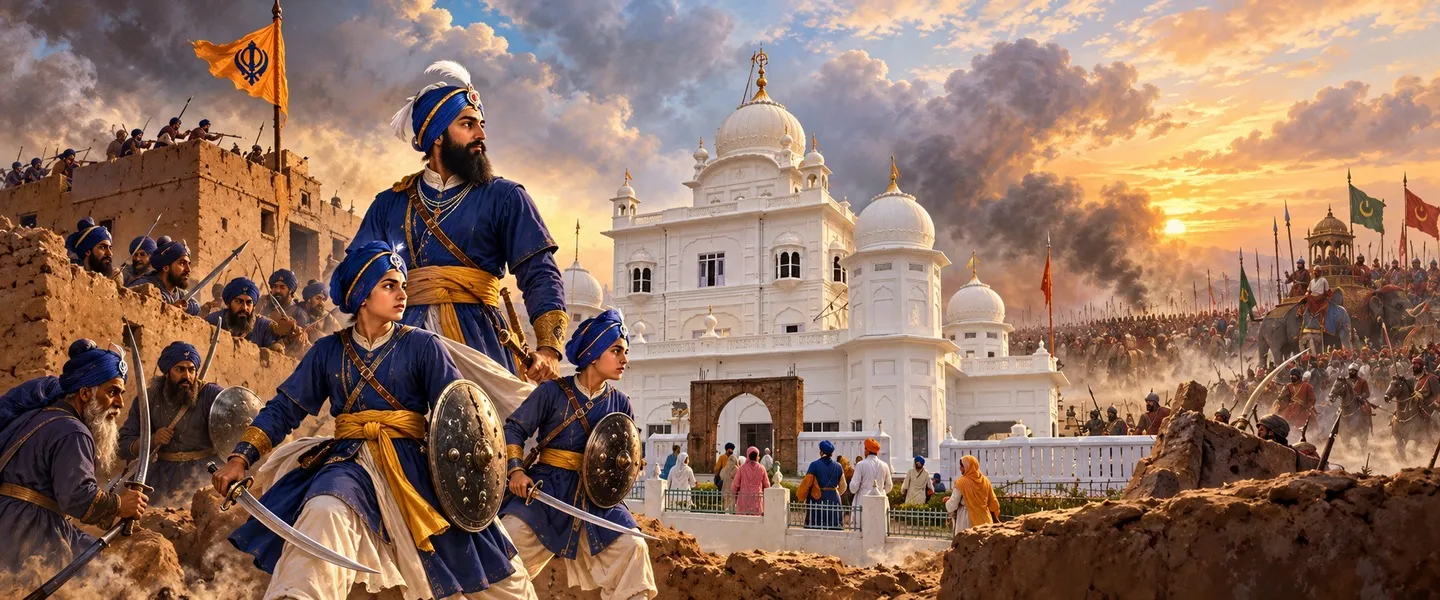
Chamkaur Sahib is the Rupnagar-district town immortalised by the Battle of Chamkaur in December 1704, when Guru Gobind Singh Ji with his two elder sons and forty followers held a mud fort against a large Mughal force. Its gurdwaras, Katalgarh, Damdama, Garhi, Tari and Ranjitgarh, mark the battle. The town had about 13,900 residents in 2011.
- Punjabi name
- ਚਮਕੌਰ ਸਾਹਿਬ
- Type
- Town
- District
- Rupnagar
- Region
- Malwa, Punjab (India)
- Battle
- December 1704
- Population
- 13,920 (2011 census)
All 8 facts
- PIN
- 140112
- Known for
- Battle of Chamkaur; Gurdwara Katalgarh Sahib
Chamkaur Sahib is a town in Rupnagar district, Punjab, immortalised by the Battle of Chamkaur in December 1704, when Guru Gobind Singh Ji with his two elder sons and forty Sikhs held a mud-brick haveli against a vastly larger Mughal force. Its five gurdwaras mark the battlefield where the two elder Sahibzadas were martyred, making it one of the most visited pilgrimage towns in Sikhism.
Why is Chamkaur Sahib important?
The Second Battle of Chamkaur is one of the most celebrated last stands in Sikh history. Forty Sikhs, led by Guru Gobind Singh Ji and his two elder sons, fought in waves against overwhelming numbers and refused to surrender. The battle is remembered alongside the martyrdoms at Fatehgarh Sahib as the defining sacrifice of the Sahibzadas, and the town's shrines form one of Sikhism's great pilgrimage circuits.
What happened at the Battle of Chamkaur?
After leaving Anandpur Sahib in early December 1704, following the Mughals' broken promise of safe conduct, Guru Gobind Singh Ji crossed the rain-swollen Sarsa river under attack and reached Chamkaur with his two elder sons, the Panj Piare and forty Sikhs. They took shelter in a local zamindar's fortified haveli, the garhi, though traditions differ on the owner's name. There a Mughal force surrounded them.
What followed is remembered as the Second Battle of Chamkaur. The forty Sikhs fought in waves against overwhelming numbers. In his Zafarnama, the Guru wrote of his forty men facing a host a hundred thousand strong. The Guru's elder sons, Sahibzada Ajit Singh, aged 18, and Sahibzada Jujhar Singh, aged 14, fell fighting at the garhi's gate; accounts vary slightly on their exact ages. Three of the original Panj Piare, Bhai Mohkam Singh, Bhai Himmat Singh and Bhai Sahib Singh, also fell at Chamkaur.
When defeat became certain, a council of the Panj Piare ordered the Guru to leave so his life would be preserved. Sangat Singh, who resembled the Guru, donned his clothes and stayed behind while the Guru slipped away that night. Tradition holds that he left with a defiant clap, a tari, and the cry that the Pir of Hind was passing by. Only a handful of Sikhs survived; the Guru made his way to the forests of Machhiwara. Sikh tradition dates the battle to December 1704, most accounts saying the 6th or 7th, though conversions of the Bikrami date, 7 Poh of Samvat 1761, vary.
The earlier battle of 1702
Chamkaur had seen fighting before. In 1702, Guru Gobind Singh Ji halted here while making his way to Anandpur Sahib. Two Mughal generals, Sayyad Beg and Alif Khan, marching from Lahore to Delhi, were persuaded by Raja Ajmer Chand of Bilaspur, who promised them 2,000 rupees a day, to attack the Guru. In the middle of the battle Sayyad Beg defected to the Sikhs with some of his troops, and Alif Khan withdrew toward Delhi. It was a Sikh victory, and the Guru returned to Anandpur with Sayyad Beg.
The five gurdwaras of the battlefield
Gurdwara Katalgarh Sahib is the main shrine. It marks where the thickest hand-to-hand fighting took place and where both Sahibzadas and the three Panj Piare fell. Katal echoes the word qatal, meaning slaughter. The Government of India's heritage record says the original gurdwara was built by Sardar Hardial Singh of Bela in 1831 and replaced in the 1960s, about 50 metres west of Garhi Sahib; local accounts instead credit Raja Bhup Singh of Ropar with a structure from the 1830s.
Gurdwara Garhi Sahib is the fortified walled house itself, the haveli where the Sikhs took their defence. It is also called Tilak Asthan, because tradition holds that Guru Gobind Singh Ji granted the Guruship to the Panth Khalsa here. The original shrine was built in the early 19th century by Maharaja Karam Singh of Patiala in the Phulkian style; it was later demolished by kar-seva groups under SGPC patronage and replaced with a larger marble complex, a move Sikh historians criticised.
Gurdwara Damdama Sahib marks the garden where the Guru, his two sons and the forty Sikhs first alighted and camped on the evening before shifting to the defensible walled house. Gurdwara Tari Sahib stands on a low mound west of Katalgarh Sahib. Tari means a clap, and the shrine commemorates the Guru's defiant clap as he slipped away that night. It was raised by Nihang Singhs, and the heritage record dates the present structure to around 1925. Gurdwara Ranjitgarh Sahib is counted among the five, though no verified account of exactly what it commemorates could be found.
When is the Shaheedi Jor Mela?
Every year on 20 to 22 December, the 6th to 8th of Poh, Chamkaur holds its annual ceremony for the elder Sahibzadas, Ajit Singh and Jujhar Singh, the three Panj Piare who fell here, and the forty Sikh soldiers. Hundreds of thousands of pilgrims converge on the gurdwaras in those three days, making it one of the largest December gatherings in Punjab after the Shaheedi Jor Mela at Fatehgarh Sahib.
Geography & people
Chamkaur Sahib is a sub-divisional headquarters in Rupnagar district, set on the banks of the Sirhind Canal in the plains between Rupnagar and Morinda, 16 kilometres from the former and 15 from the latter. The 2011 census recorded 13,920 residents, and its PIN is 140112. Punjabi is the main language, with the local Puadhi dialect widely spoken. The Dastaan-e-Shahadat theme park, commemorating the elder Sahibzadas, was completed here in 2021.
How do I get to Chamkaur Sahib?
By road, Chamkaur lies between Rupnagar and Morinda, about 16 kilometres from Rupnagar and 15 from Morinda. Its five gurdwaras sit close together around the old battlefield, so pilgrims usually walk between them. December, when the Shaheedi Jor Mela is held, is the busiest time to visit.
ਚਮਕੌਰ ਸਾਹਿਬ ਰੂਪਨਗਰ ਜ਼ਿਲ੍ਹੇ ਦਾ ਸ਼ਹਿਰ ਹੈ, ਜੋ ਦਸੰਬਰ 1704 ਦੀ ਚਮਕੌਰ ਦੀ ਜੰਗ ਕਰਕੇ ਅਮਰ ਹੈ, ਜਦੋਂ ਗੁਰੂ ਗੋਬਿੰਦ ਸਿੰਘ ਜੀ ਆਪਣੇ ਦੋ ਵੱਡੇ ਸਾਹਿਬਜ਼ਾਦਿਆਂ ਅਤੇ ਚਾਲੀ ਸਿੰਘਾਂ ਸਮੇਤ ਇੱਕ ਕੱਚੀ ਹਵੇਲੀ ਵਿੱਚ ਬਹੁਤ ਵੱਡੀ ਮੁਗਲ ਫ਼ੌਜ ਦਾ ਸਾਹਮਣਾ ਕਰਦੇ ਰਹੇ। ਇਸ ਦੇ ਪੰਜ ਗੁਰਦੁਆਰੇ ਉਸ ਜੰਗ ਦੇ ਮੈਦਾਨ ਦੀ ਨਿਸ਼ਾਨਦੇਹੀ ਕਰਦੇ ਹਨ, ਜਿੱਥੇ ਦੋ ਵੱਡੇ ਸਾਹਿਬਜ਼ਾਦੇ ਸ਼ਹੀਦ ਹੋਏ, ਅਤੇ ਇਹ ਸਿੱਖ ਧਰਮ ਦੇ ਸਭ ਤੋਂ ਵੱਧ ਵੇਖੇ ਜਾਣ ਵਾਲੇ ਤੀਰਥ ਸ਼ਹਿਰਾਂ ਵਿੱਚੋਂ ਇੱਕ ਹੈ।
ਚਮਕੌਰ ਸਾਹਿਬ ਕਿਉਂ ਮਹੱਤਵਪੂਰਨ ਹੈ?
ਚਮਕੌਰ ਦੀ ਦੂਜੀ ਜੰਗ ਸਿੱਖ ਇਤਿਹਾਸ ਦੀਆਂ ਸਭ ਤੋਂ ਮਸ਼ਹੂਰ ਆਖ਼ਰੀ ਲੜਾਈਆਂ ਵਿੱਚੋਂ ਇੱਕ ਹੈ। ਗੁਰੂ ਗੋਬਿੰਦ ਸਿੰਘ ਜੀ ਅਤੇ ਉਨ੍ਹਾਂ ਦੇ ਦੋ ਵੱਡੇ ਸਾਹਿਬਜ਼ਾਦਿਆਂ ਦੀ ਅਗਵਾਈ ਵਿੱਚ ਚਾਲੀ ਸਿੰਘਾਂ ਨੇ ਵੱਡੀ ਗਿਣਤੀ ਵਾਲੀ ਫ਼ੌਜ ਦਾ ਲਹਿਰਾਂ ਵਿੱਚ ਸਾਹਮਣਾ ਕੀਤਾ ਅਤੇ ਹਥਿਆਰ ਨਹੀਂ ਸੁੱਟੇ। ਇਹ ਜੰਗ ਫ਼ਤਹਿਗੜ੍ਹ ਸਾਹਿਬ ਦੀਆਂ ਸ਼ਹਾਦਤਾਂ ਨਾਲ ਸਾਹਿਬਜ਼ਾਦਿਆਂ ਦੀ ਕੁਰਬਾਨੀ ਦੀ ਨਿਸ਼ਾਨੀ ਵਜੋਂ ਯਾਦ ਕੀਤੀ ਜਾਂਦੀ ਹੈ, ਅਤੇ ਸ਼ਹਿਰ ਦੇ ਗੁਰਦੁਆਰੇ ਸਿੱਖ ਧਰਮ ਦੇ ਮਹਾਨ ਤੀਰਥ ਸਰਕਟਾਂ ਵਿੱਚੋਂ ਇੱਕ ਹਨ।
ਚਮਕੌਰ ਦੀ ਜੰਗ ਵਿੱਚ ਕੀ ਵਾਪਰਿਆ?
ਦਸੰਬਰ 1704 ਦੇ ਸ਼ੁਰੂ ਵਿੱਚ ਸ੍ਰੀ ਅਨੰਦਪੁਰ ਸਾਹਿਬ ਛੱਡਣ ਤੋਂ ਬਾਅਦ, ਜਦੋਂ ਮੁਗਲਾਂ ਨੇ ਸੁਰੱਖਿਅਤ ਰਸਤੇ ਦਾ ਵਾਅਦਾ ਤੋੜ ਦਿੱਤਾ ਸੀ, ਗੁਰੂ ਗੋਬਿੰਦ ਸਿੰਘ ਜੀ ਮੀਂਹ ਨਾਲ ਭਰੀ ਸਰਸਾ ਨਦੀ ਪਾਰ ਕਰਦੇ ਹੋਏ ਹਮਲੇ ਹੇਠ ਚਮਕੌਰ ਪਹੁੰਚੇ। ਉਨ੍ਹਾਂ ਨਾਲ ਦੋ ਵੱਡੇ ਸਾਹਿਬਜ਼ਾਦੇ, ਪੰਜ ਪਿਆਰੇ ਅਤੇ ਚਾਲੀ ਸਿੰਘ ਸਨ। ਉਹ ਇੱਕ ਸਥਾਨਕ ਜ਼ਿਮੀਂਦਾਰ ਦੀ ਮਜ਼ਬੂਤ ਹਵੇਲੀ, ਗੜ੍ਹੀ ਵਿੱਚ ਠਹਿਰੇ, ਹਾਲਾਂਕਿ ਮਾਲਕ ਦੇ ਨਾਂ ਬਾਰੇ ਪਰੰਪਰਾਵਾਂ ਵਿੱਚ ਫ਼ਰਕ ਹੈ। ਉੱਥੇ ਮੁਗਲ ਫ਼ੌਜ ਨੇ ਉਨ੍ਹਾਂ ਨੂੰ ਘੇਰ ਲਿਆ।
ਜੋ ਹੋਇਆ, ਉਹ ਚਮਕੌਰ ਦੀ ਦੂਜੀ ਜੰਗ ਵਜੋਂ ਯਾਦ ਕੀਤਾ ਜਾਂਦਾ ਹੈ। ਚਾਲੀ ਸਿੰਘਾਂ ਨੇ ਵੱਡੀ ਗਿਣਤੀ ਵਾਲੀ ਫ਼ੌਜ ਦਾ ਲਹਿਰਾਂ ਵਿੱਚ ਸਾਹਮਣਾ ਕੀਤਾ। ਆਪਣੇ ਜ਼ਫ਼ਰਨਾਮੇ ਵਿੱਚ ਗੁਰੂ ਸਾਹਿਬ ਨੇ ਆਪਣੇ ਚਾਲੀ ਸਿੰਘਾਂ ਦਾ ਜ਼ਿਕਰ ਕੀਤਾ, ਜੋ ਇੱਕ ਲੱਖ ਦੀ ਫ਼ੌਜ ਦਾ ਸਾਹਮਣਾ ਕਰ ਰਹੇ ਸਨ। ਗੁਰੂ ਸਾਹਿਬ ਦੇ ਵੱਡੇ ਸਾਹਿਬਜ਼ਾਦੇ, ਸਾਹਿਬਜ਼ਾਦਾ ਅਜੀਤ ਸਿੰਘ, ਉਮਰ 18 ਸਾਲ, ਅਤੇ ਸਾਹਿਬਜ਼ਾਦਾ ਜੁਝਾਰ ਸਿੰਘ, ਉਮਰ 14 ਸਾਲ, ਗੜ੍ਹੀ ਦੇ ਦਰਵਾਜ਼ੇ 'ਤੇ ਲੜਦੇ ਹੋਏ ਸ਼ਹੀਦ ਹੋਏ। ਇਤਿਹਾਸਾਂ ਵਿੱਚ ਉਨ੍ਹਾਂ ਦੀ ਠੀਕ ਉਮਰ ਬਾਰੇ ਥੋੜ੍ਹਾ ਫ਼ਰਕ ਹੈ। ਮੂਲ ਪੰਜ ਪਿਆਰਿਆਂ ਵਿੱਚੋਂ ਤਿੰਨ, ਭਾਈ ਮੋਹਕਮ ਸਿੰਘ, ਭਾਈ ਹਿੰਮਤ ਸਿੰਘ ਅਤੇ ਭਾਈ ਸਾਹਿਬ ਸਿੰਘ ਵੀ ਚਮਕੌਰ ਵਿੱਚ ਸ਼ਹੀਦ ਹੋਏ।
ਜਦੋਂ ਹਾਰ ਪੱਕੀ ਹੋ ਗਈ, ਤਾਂ ਪੰਜ ਪਿਆਰਿਆਂ ਦੀ ਸਭਾ ਨੇ ਗੁਰੂ ਸਾਹਿਬ ਨੂੰ ਜਾਣ ਦਾ ਹੁਕਮ ਦਿੱਤਾ ਤਾਂ ਜੋ ਉਨ੍ਹਾਂ ਦੀ ਜਾਨ ਬਚ ਸਕੇ। ਸੰਗਤ ਸਿੰਘ, ਜੋ ਗੁਰੂ ਸਾਹਿਬ ਵਰਗੇ ਦਿਸਦੇ ਸਨ, ਉਨ੍ਹਾਂ ਦੇ ਕੱਪੜੇ ਪਾ ਕੇ ਪਿੱਛੇ ਰਹਿ ਗਏ, ਅਤੇ ਗੁਰੂ ਸਾਹਿਬ ਉਸੇ ਰਾਤ ਨਿਕਲ ਗਏ। ਪਰੰਪਰਾ ਅਨੁਸਾਰ ਉਹ ਇੱਕ ਜ਼ੋਰਦਾਰ ਤਾੜੀ, ਤਾੜੀ ਮਾਰ ਕੇ ਅਤੇ ਇਹ ਆਖ ਕੇ ਨਿਕਲੇ ਕਿ ਹਿੰਦ ਦਾ ਪੀਰ ਜਾ ਰਿਹਾ ਹੈ। ਮੁੱਠੀ ਭਰ ਸਿੱਖ ਹੀ ਬਚੇ। ਗੁਰੂ ਸਾਹਿਬ ਮਾਛੀਵਾੜੇ ਦੇ ਜੰਗਲਾਂ ਵੱਲ ਚਲੇ ਗਏ। ਸਿੱਖ ਪਰੰਪਰਾ ਜੰਗ ਨੂੰ ਦਸੰਬਰ 1704 ਵਿੱਚ ਮੰਨਦੀ ਹੈ, ਜ਼ਿਆਦਾਤਰ ਇਤਿਹਾਸ 6 ਜਾਂ 7 ਤਾਰੀਖ ਦੱਸਦੇ ਹਨ, ਹਾਲਾਂਕਿ ਬਿਕ੍ਰਮੀ ਤਾਰੀਖ, ਸੰਮਤ 1761 ਦੀ 7 ਪੋਹ ਦੇ ਰੂਪਾਂਤਰ ਵਿੱਚ ਫ਼ਰਕ ਹੈ।
1702 ਦੀ ਪਹਿਲੀ ਜੰਗ
ਚਮਕੌਰ ਵਿੱਚ ਪਹਿਲਾਂ ਵੀ ਲੜਾਈ ਹੋ ਚੁੱਕੀ ਸੀ। 1702 ਵਿੱਚ ਗੁਰੂ ਗੋਬਿੰਦ ਸਿੰਘ ਜੀ ਸ੍ਰੀ ਅਨੰਦਪੁਰ ਸਾਹਿਬ ਜਾਂਦੇ ਹੋਏ ਇੱਥੇ ਠਹਿਰੇ। ਲਾਹੌਰ ਤੋਂ ਦਿੱਲੀ ਜਾਂਦੇ ਦੋ ਮੁਗਲ ਜਰਨੈਲਾਂ, ਸੱਯਦ ਬੇਗ ਅਤੇ ਅਲਿਫ਼ ਖ਼ਾਨ ਨੂੰ ਬਿਲਾਸਪੁਰ ਦੇ ਰਾਜਾ ਅਜਮੇਰ ਚੰਦ ਨੇ, ਜਿਸ ਨੇ ਰੋਜ਼ਾਨਾ 2,000 ਰੁਪਏ ਦੇਣ ਦਾ ਵਾਅਦਾ ਕੀਤਾ ਸੀ, ਗੁਰੂ ਸਾਹਿਬ 'ਤੇ ਹਮਲਾ ਕਰਨ ਲਈ ਮਨਾ ਲਿਆ। ਜੰਗ ਦੇ ਵਿਚਕਾਰ ਸੱਯਦ ਬੇਗ ਆਪਣੇ ਕੁਝ ਸੈਨਿਕਾਂ ਸਮੇਤ ਸਿੱਖਾਂ ਨਾਲ ਮਿਲ ਗਿਆ, ਅਤੇ ਅਲਿਫ਼ ਖ਼ਾਨ ਦਿੱਲੀ ਵੱਲ ਪਿੱਛੇ ਹਟ ਗਿਆ। ਇਹ ਸਿੱਖਾਂ ਦੀ ਜਿੱਤ ਸੀ, ਅਤੇ ਗੁਰੂ ਸਾਹਿਬ ਸੱਯਦ ਬੇਗ ਸਮੇਤ ਸ੍ਰੀ ਅਨੰਦਪੁਰ ਵਾਪਸ ਪਰਤੇ।
ਜੰਗ ਦੇ ਮੈਦਾਨ ਦੇ ਪੰਜ ਗੁਰਦੁਆਰੇ
ਗੁਰਦੁਆਰਾ ਕਤਲਗੜ੍ਹ ਸਾਹਿਬ ਮੁੱਖ ਅਸਥਾਨ ਹੈ। ਇਹ ਉਸ ਥਾਂ ਦੀ ਨਿਸ਼ਾਨਦੇਹੀ ਕਰਦਾ ਹੈ ਜਿੱਥੇ ਸਭ ਤੋਂ ਘਮਸਾਣ ਹੱਥੋ-ਹੱਥੀ ਲੜਾਈ ਹੋਈ ਅਤੇ ਜਿੱਥੇ ਦੋਵੇਂ ਸਾਹਿਬਜ਼ਾਦੇ ਅਤੇ ਤਿੰਨ ਪੰਜ ਪਿਆਰੇ ਸ਼ਹੀਦ ਹੋਏ। ਕਤਲ ਸ਼ਬਦ ਕਤਲ, ਭਾਵ ਵੱਢ-ਟੁੱਕ ਨਾਲ ਮਿਲਦਾ ਹੈ। ਭਾਰਤ ਸਰਕਾਰ ਦੇ ਵਿਰਾਸਤੀ ਰਿਕਾਰਡ ਅਨੁਸਾਰ ਮੂਲ ਗੁਰਦੁਆਰਾ 1831 ਵਿੱਚ ਬੇਲੇ ਦੇ ਸਰਦਾਰ ਹਰਦਿਆਲ ਸਿੰਘ ਨੇ ਬਣਵਾਇਆ ਸੀ ਅਤੇ 1960 ਦੇ ਦਹਾਕੇ ਵਿੱਚ ਬਦਲਿਆ ਗਿਆ, ਜੋ ਗੜ੍ਹੀ ਸਾਹਿਬ ਤੋਂ ਲਗਭਗ 50 ਮੀਟਰ ਪੱਛਮ ਵਿੱਚ ਹੈ। ਸਥਾਨਕ ਇਤਿਹਾਸ ਇਸ ਦੀ ਥਾਂ 1830 ਦੇ ਦਹਾਕੇ ਵਿੱਚ ਰੋਪੜ ਦੇ ਰਾਜਾ ਭੁਪ ਸਿੰਘ ਨੂੰ ਸਿਹਰਾ ਦਿੰਦੇ ਹਨ।
ਗੁਰਦੁਆਰਾ ਗੜ੍ਹੀ ਸਾਹਿਬ ਉਹੀ ਮਜ਼ਬੂਤ ਹਵੇਲੀ ਹੈ, ਜਿੱਥੇ ਸਿੰਘਾਂ ਨੇ ਮੋਰਚਾ ਲਾਇਆ ਸੀ। ਇਸ ਨੂੰ ਤਿਲਕ ਅਸਥਾਨ ਵੀ ਕਿਹਾ ਜਾਂਦਾ ਹੈ, ਕਿਉਂਕਿ ਪਰੰਪਰਾ ਅਨੁਸਾਰ ਗੁਰੂ ਗੋਬਿੰਦ ਸਿੰਘ ਜੀ ਨੇ ਇੱਥੇ ਪੰਥ ਖ਼ਾਲਸਾ ਨੂੰ ਗੁਰਗੱਦੀ ਬਖ਼ਸ਼ੀ ਸੀ। ਮੂਲ ਅਸਥਾਨ 19ਵੀਂ ਸਦੀ ਦੇ ਸ਼ੁਰੂ ਵਿੱਚ ਪਟਿਆਲੇ ਦੇ ਮਹਾਰਾਜਾ ਕਰਮ ਸਿੰਘ ਨੇ ਫੁਲਕੀਆਂ ਸ਼ੈਲੀ ਵਿੱਚ ਬਣਵਾਇਆ ਸੀ। ਬਾਅਦ ਵਿੱਚ ਸ਼੍ਰੋਮਣੀ ਕਮੇਟੀ ਦੀ ਸਰਪ੍ਰਸਤੀ ਹੇਠ ਕਾਰ-ਸੇਵਾ ਜਥਿਆਂ ਨੇ ਇਸ ਨੂੰ ਢਾਹ ਕੇ ਵੱਡਾ ਸੰਗਮਰਮਰੀ ਕੰਪਲੈਕਸ ਬਣਾ ਦਿੱਤਾ, ਜਿਸ ਦੀ ਸਿੱਖ ਇਤਿਹਾਸਕਾਰਾਂ ਨੇ ਆਲੋਚਨਾ ਕੀਤੀ।
ਗੁਰਦੁਆਰਾ ਦਮਦਮਾ ਸਾਹਿਬ ਉਸ ਬਾਗ਼ ਦੀ ਨਿਸ਼ਾਨਦੇਹੀ ਕਰਦਾ ਹੈ ਜਿੱਥੇ ਗੁਰੂ ਸਾਹਿਬ, ਉਨ੍ਹਾਂ ਦੇ ਦੋ ਪੁੱਤਰ ਅਤੇ ਚਾਲੀ ਸਿੰਘ ਪਹਿਲਾਂ ਉਤਰੇ ਅਤੇ ਠਹਿਰੇ ਸਨ, ਮਜ਼ਬੂਤ ਹਵੇਲੀ ਵਿੱਚ ਜਾਣ ਤੋਂ ਪਹਿਲਾਂ। ਗੁਰਦੁਆਰਾ ਤਾੜੀ ਸਾਹਿਬ ਕਤਲਗੜ੍ਹ ਸਾਹਿਬ ਦੇ ਪੱਛਮ ਵਿੱਚ ਇੱਕ ਨੀਵੇਂ ਟਿੱਬੇ 'ਤੇ ਹੈ। ਤਾੜੀ ਦਾ ਅਰਥ ਤਾੜੀ ਮਾਰਨਾ ਹੈ, ਅਤੇ ਇਹ ਅਸਥਾਨ ਗੁਰੂ ਸਾਹਿਬ ਦੀ ਉਸ ਰਾਤ ਦੀ ਜ਼ੋਰਦਾਰ ਤਾੜੀ ਦੀ ਯਾਦ ਦਿਵਾਉਂਦਾ ਹੈ, ਜਦੋਂ ਉਹ ਨਿਕਲ ਗਏ ਸਨ। ਇਸ ਨੂੰ ਨਿਹੰਗ ਸਿੰਘਾਂ ਨੇ ਬਣਵਾਇਆ ਸੀ, ਅਤੇ ਵਿਰਾਸਤੀ ਰਿਕਾਰਡ ਮੌਜੂਦਾ ਇਮਾਰਤ ਨੂੰ ਲਗਭਗ 1925 ਦਾ ਦੱਸਦਾ ਹੈ। ਗੁਰਦੁਆਰਾ ਰਣਜੀਤਗੜ੍ਹ ਸਾਹਿਬ ਪੰਜਾਂ ਵਿੱਚ ਗਿਣਿਆ ਜਾਂਦਾ ਹੈ, ਹਾਲਾਂਕਿ ਇਹ ਠੀਕ-ਠੀਕ ਕਿਸ ਦੀ ਯਾਦ ਵਿੱਚ ਹੈ, ਇਸ ਦਾ ਕੋਈ ਪ੍ਰਮਾਣਿਤ ਵੇਰਵਾ ਨਹੀਂ ਮਿਲਿਆ।
ਸ਼ਹੀਦੀ ਜੋੜ ਮੇਲਾ ਕਦੋਂ ਹੁੰਦਾ ਹੈ?
ਹਰ ਸਾਲ 20 ਤੋਂ 22 ਦਸੰਬਰ, 6 ਤੋਂ 8 ਪੋਹ ਨੂੰ ਚਮਕੌਰ ਵਿੱਚ ਵੱਡੇ ਸਾਹਿਬਜ਼ਾਦਿਆਂ, ਅਜੀਤ ਸਿੰਘ ਅਤੇ ਜੁਝਾਰ ਸਿੰਘ, ਇੱਥੇ ਸ਼ਹੀਦ ਹੋਏ ਤਿੰਨ ਪੰਜ ਪਿਆਰਿਆਂ ਅਤੇ ਚਾਲੀ ਸਿੱਖ ਸੈਨਿਕਾਂ ਦੀ ਯਾਦ ਵਿੱਚ ਸਾਲਾਨਾ ਸਮਾਗਮ ਹੁੰਦਾ ਹੈ। ਇਨ੍ਹਾਂ ਤਿੰਨ ਦਿਨਾਂ ਵਿੱਚ ਲੱਖਾਂ ਸ਼ਰਧਾਲੂ ਗੁਰਦੁਆਰਿਆਂ ਵਿੱਚ ਇਕੱਠੇ ਹੁੰਦੇ ਹਨ, ਅਤੇ ਫ਼ਤਹਿਗੜ੍ਹ ਸਾਹਿਬ ਦੇ ਸ਼ਹੀਦੀ ਜੋੜ ਮੇਲੇ ਤੋਂ ਬਾਅਦ ਇਹ ਪੰਜਾਬ ਦਾ ਦਸੰਬਰ ਦਾ ਸਭ ਤੋਂ ਵੱਡਾ ਇਕੱਠ ਹੈ।
ਭੂਗੋਲ ਤੇ ਲੋਕ
ਚਮਕੌਰ ਸਾਹਿਬ ਰੂਪਨਗਰ ਜ਼ਿਲ੍ਹੇ ਦਾ ਸਬ-ਡਵੀਜ਼ਨਲ ਮੁੱਖ ਦਫ਼ਤਰ ਹੈ, ਜੋ ਰੂਪਨਗਰ ਅਤੇ ਮੋਰਿੰਡਾ ਵਿਚਕਾਰ ਮੈਦਾਨਾਂ ਵਿੱਚ ਸਰਹਿੰਦ ਨਹਿਰ ਦੇ ਕੰਢੇ ਵਸਿਆ ਹੈ, ਰੂਪਨਗਰ ਤੋਂ 16 ਕਿਲੋਮੀਟਰ ਅਤੇ ਮੋਰਿੰਡਾ ਤੋਂ 15 ਕਿਲੋਮੀਟਰ ਦੂਰ। 2011 ਦੀ ਮਰਦਮਸ਼ੁਮਾਰੀ ਵਿੱਚ 13,920 ਵਸਨੀਕ ਗਿਣੇ ਗਏ, ਅਤੇ ਇਸ ਦਾ ਪਿੰਨ ਕੋਡ 140112 ਹੈ। ਪੰਜਾਬੀ ਮੁੱਖ ਭਾਸ਼ਾ ਹੈ, ਅਤੇ ਸਥਾਨਕ ਪੁਆਧੀ ਬੋਲੀ ਵਿਆਪਕ ਬੋਲੀ ਜਾਂਦੀ ਹੈ। ਵੱਡੇ ਸਾਹਿਬਜ਼ਾਦਿਆਂ ਦੀ ਯਾਦ ਵਿੱਚ ਦਾਸਤਾਨ-ਏ-ਸ਼ਹਾਦਤ ਥੀਮ ਪਾਰਕ 2021 ਵਿੱਚ ਇੱਥੇ ਮੁਕੰਮਲ ਹੋਇਆ ਸੀ।
ਚਮਕੌਰ ਸਾਹਿਬ ਕਿਵੇਂ ਪਹੁੰਚੀਏ?
ਸੜਕ ਰਾਹੀਂ ਚਮਕੌਰ ਰੂਪਨਗਰ ਅਤੇ ਮੋਰਿੰਡਾ ਵਿਚਕਾਰ ਹੈ, ਰੂਪਨਗਰ ਤੋਂ ਲਗਭਗ 16 ਕਿਲੋਮੀਟਰ ਅਤੇ ਮੋਰਿੰਡਾ ਤੋਂ 15 ਕਿਲੋਮੀਟਰ ਦੂਰ। ਇਸ ਦੇ ਪੰਜੇ ਗੁਰਦੁਆਰੇ ਪੁਰਾਣੇ ਜੰਗ ਦੇ ਮੈਦਾਨ ਦੁਆਲੇ ਨੇੜੇ-ਨੇੜੇ ਹਨ, ਇਸ ਲਈ ਸ਼ਰਧਾਲੂ ਆਮ ਤੌਰ 'ਤੇ ਪੈਦਲ ਹੀ ਇੱਕ ਤੋਂ ਦੂਜੇ ਜਾਂਦੇ ਹਨ। ਦਸੰਬਰ, ਜਦੋਂ ਸ਼ਹੀਦੀ ਜੋੜ ਮੇਲਾ ਹੁੰਦਾ ਹੈ, ਵੇਖਣ ਦਾ ਸਭ ਤੋਂ ਭੀੜ-ਭੜੱਕੇ ਵਾਲਾ ਸਮਾਂ ਹੈ।