
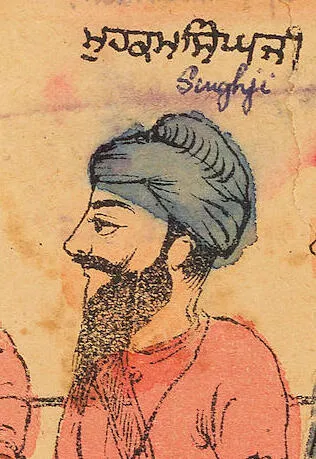
Bhai Mohkam Singh Ji (1663 to 1705), born Mohkam Chand into a Chhimba calico-printer family of Dwarka in Gujarat, was one of the Panj Pyare, the five beloved ones first baptised into the Khalsa at Anandpur Sahib in 1699. A practised martial artist who had fought in the Guru's battles for twenty years, he died at Chamkaur in December 1705.
- Punjabi name
- ਭਾਈ ਮੋਹਕਮ ਸਿੰਘ ਜੀ
- Years
- 1663 to 1705
- Known for
- One of the Panj Pyare; martyred at Chamkaur
- Born
- 6 June 1663, Dwarka (Bet Dwarka), Gujarat, as Mohkam Chand
- Father
- Tirath Chand
- Mother
- Devi Bai
All 9 facts
- Community
- A Chhimba family, calico printers and tailors
- Earlier name
- Mohkam Chand, also written Muhkam or Mukham Chand
- Died
- 7 December 1705 (1704 in some accounts), fighting at Chamkaur
Bhai Mohkam Singh Ji (1663 to 1705) was one of the Panj Pyare, the five beloved ones who were the first to receive Khande di Pahul from Guru Gobind Singh Ji at Anandpur Sahib on Vaisakhi 1699. Born Mohkam Chand at Dwarka in Gujarat, into a family of Chhimba calico-printers, he had already served the Guru for some fourteen years when he stepped forward to offer his head, and he brought to the founding of the Khalsa the skills of a trained fighting man.
The printer's son from Dwarka
Mohkam Chand was born on 6 June 1663 at Dwarka, the Krishna pilgrimage town on the western tip of Gujarat (his birthplace is also given as Bet Dwarka, the island shrine just off the coast). His father was Tirath Chand and his mother Devi Bai, and the family belonged to the Chhimba community, the printers and dyers of cloth whose patterned calico was Gujarat's famous export. His name is written several ways in the records, Mohkam, Muhkam and Mukham among them, a reminder of how many tongues carried these men's fame home.
He made his way to Punjab as a young man and reached Anandpur Sahib around 1685, entering the Guru's service while the court was still young. Alongside his devotion he practised the martial arts in earnest, and in the years that followed he fought in the Guru's defence against the hill chiefs and the imperial troops who pressed Anandpur again and again. By 1699 he was no new arrival but a veteran of the Guru's household. His long training in arms mattered in what followed: when the five were chosen, the Guru was not gathering symbols but soldiers, men already proved in his service, and Mohkam Singh's years of practice stood behind the sword he was about to receive.
Offering his head in 1699
On 30 March 1699 the Guru called the Vaisakhi assembly at Keshgarh fort and asked for a head. Mohkam Chand was one of the five who rose and followed him, and with the rest he received the new baptism and the name Mohkam Singh. In the order still used today he is named fourth of the five, after Daya Singh, Dharam Singh and Himmat Singh. Curiously, the older sources place him second in the order of volunteering, immediately after Daya Singh, while later accounts give the second place to Dharam Singh; the discrepancy is a small sign of how the story was retold across many regions, each of which treasured its own son's place in it.
His trade mattered to the story the Guru was telling. The five were a shopkeeper, a farmer, a printer, a water-carrier and a barber, ordinary working men from the far corners of India, and among them the printer of Dwarka stood for Gujarat and for the artisan castes. Early Sikh literature deepened the compliment, describing Mohkam Singh as a rebirth of Bhagat Namdev, the tailor-saint of Maharashtra whose hymns stand in the Guru Granth Sahib; the tradition loved to see the old bhagats reborn in the Guru's new order.
Martyrdom at Chamkaur
Mohkam Singh fought through the last Anandpur sieges and was among the small band who held the fortress of Chamkaur with the Guru in December 1705, after Anandpur was evacuated. There, on 7 December 1705 (some accounts date the battle to 1704), he fell fighting beside two of his fellow beloved ones, Bhai Himmat Singh Ji and Bhai Sahib Singh Ji. Of the five men who had founded the Khalsa together six years earlier, three died in that one small fortress in a single day, buying with their lives the hours in which the Guru, by the council's command, escaped into the night.
No tomb or portrait marks Mohkam Singh's individual story beyond what the tradition kept, and that is perhaps fitting for a man of the founding five: his memorial is the institution itself. Every amrit ceremony since 1699 has been conducted by five Sikhs standing where he stood, and every list of the Panj Pyare recited in a gurdwara carries the name of the calico-printer from Dwarka who gave up his loom and his life for the Guru's new order.
What was Bhai Mohkam Singh Ji's trade before 1699?
He was born into a Chhimba family of Dwarka in Gujarat, the community of calico printers, dyers and tailors. The craft stayed part of how the tradition pictures him: a working artisan whose hands, trained to print cloth, took up the sword in the Guru's service, and whom early Sikh literature honoured by calling him a rebirth of the tailor-saint Bhagat Namdev.
Why do sources disagree about Bhai Mohkam Singh Ji's place among the five?
The five are usually named in the order Daya, Dharam, Himmat, Mohkam and Sahib Singh. But older accounts place Mohkam Singh second of the volunteers, straight after Daya Singh, and only later retellings settled Dharam Singh into the second place. The difference does not change the story itself: all five offered themselves, all five were baptised together, and the Guru honoured them as one body.
ਭਾਈ ਮੋਹਕਮ ਸਿੰਘ ਜੀ (1663 ਤੋਂ 1705) ਪੰਜ ਪਿਆਰਿਆਂ ਵਿੱਚੋਂ ਇੱਕ ਸਨ, ਉਹ ਪੰਜ ਪਿਆਰੇ ਜੋ ਵਿਸਾਖੀ 1699 ਨੂੰ ਅਨੰਦਪੁਰ ਸਾਹਿਬ ਵਿਖੇ ਗੁਰੂ ਗੋਬਿੰਦ ਸਿੰਘ ਜੀ ਤੋਂ ਪਹਿਲੇ ਖੰਡੇ ਦੀ ਪਾਹੁਲ ਛਕਣ ਵਾਲੇ ਬਣੇ ਦਵਾਰਕਾ, ਗੁਜਰਾਤ ਵਿੱਚ ਛੀਂਬਾ ਪਰਿਵਾਰ ਵਿੱਚ ਮੋਹਕਮ ਚੰਦ ਨਾਂ ਨਾਲ ਜਨਮੇ, ਉਹ ਸੀਸ ਦੇਣ ਲਈ ਅੱਗੇ ਵਧਣ ਤੋਂ ਪਹਿਲਾਂ ਲਗਭਗ ਚੌਦਾਂ ਸਾਲ ਗੁਰੂ ਜੀ ਦੀ ਸੇਵਾ ਕਰ ਚੁੱਕੇ ਸਨ, ਅਤੇ ਖ਼ਾਲਸੇ ਦੀ ਸਥਾਪਨਾ ਵਿੱਚ ਉਹ ਇੱਕ ਸਿਖਲਾਈ ਪ੍ਰਾਪਤ ਯੋਧੇ ਦੇ ਹੁਨਰ ਲੈ ਕੇ ਆਏ ਸਨ
ਦਵਾਰਕਾ ਦਾ ਛੀਂਬੇ ਦਾ ਪੁੱਤਰ
ਮੋਹਕਮ ਚੰਦ ਦਾ ਜਨਮ 6 ਜੂਨ 1663 ਨੂੰ ਦਵਾਰਕਾ ਵਿੱਚ ਹੋਇਆ, ਗੁਜਰਾਤ ਦੇ ਪੱਛਮੀ ਸਿਰੇ ਉੱਤੇ ਵਸਿਆ ਕ੍ਰਿਸ਼ਨ ਤੀਰਥ ਸ਼ਹਿਰ (ਉਨ੍ਹਾਂ ਦਾ ਜਨਮ ਸਥਾਨ ਬੇਟ ਦਵਾਰਕਾ ਵੀ ਦੱਸਿਆ ਜਾਂਦਾ ਹੈ, ਤੱਟ ਤੋਂ ਥੋੜ੍ਹਾ ਹਟ ਕੇ ਟਾਪੂ ਉੱਤੇ ਵਸਿਆ ਅਸਥਾਨ) ਉਨ੍ਹਾਂ ਦੇ ਪਿਤਾ ਤੀਰਥ ਚੰਦ ਅਤੇ ਮਾਤਾ ਦੇਵੀ ਬਾਈ ਸਨ, ਅਤੇ ਪਰਿਵਾਰ ਛੀਂਬਾ ਭਾਈਚਾਰੇ ਨਾਲ ਸਬੰਧ ਰੱਖਦਾ ਸੀ, ਕੱਪੜਾ ਛਾਪਣ ਅਤੇ ਰੰਗਣ ਵਾਲੇ ਜਿਨ੍ਹਾਂ ਦੀ ਨਮੂਨੇਦਾਰ ਛੀਂਟ ਗੁਜਰਾਤ ਦੀ ਮਸ਼ਹੂਰ ਬਰਾਮਦ ਸੀ ਬਿਰਤਾਂਤਾਂ ਵਿੱਚ ਉਨ੍ਹਾਂ ਦਾ ਨਾਂ ਕਈ ਤਰ੍ਹਾਂ ਲਿਖਿਆ ਮਿਲਦਾ ਹੈ, ਮੋਹਕਮ, ਮੁਹਕਮ ਅਤੇ ਮੁਖਮ, ਜੋ ਯਾਦ ਦਿਵਾਉਂਦਾ ਹੈ ਕਿ ਕਿੰਨੀਆਂ ਬੋਲੀਆਂ ਨੇ ਇਨ੍ਹਾਂ ਬੰਦਿਆਂ ਦੀ ਸ਼ੋਭਾ ਨੂੰ ਆਪੋ ਆਪਣੇ ਘਰਾਂ ਤੱਕ ਪਹੁੰਚਾਇਆ
ਉਹ ਨੌਜਵਾਨੀ ਵਿੱਚ ਪੰਜਾਬ ਆਏ ਅਤੇ ਲਗਭਗ 1685 ਵਿੱਚ ਅਨੰਦਪੁਰ ਸਾਹਿਬ ਪਹੁੰਚੇ, ਗੁਰੂ ਜੀ ਦੀ ਸੇਵਾ ਵਿੱਚ ਦਾਖਲ ਹੋਏ ਜਦੋਂ ਦਰਬਾਰ ਅਜੇ ਨੌਜਵਾਨ ਸੀ ਆਪਣੀ ਸ਼ਰਧਾ ਦੇ ਨਾਲ ਨਾਲ ਉਨ੍ਹਾਂ ਨੇ ਸ਼ਸਤਰ ਵਿੱਦਿਆ ਦਾ ਗੰਭੀਰ ਅਭਿਆਸ ਕੀਤਾ, ਅਤੇ ਅਗਲੇ ਸਾਲਾਂ ਵਿੱਚ ਉਹ ਪਹਾੜੀ ਰਾਜਿਆਂ ਅਤੇ ਸ਼ਾਹੀ ਫ਼ੌਜਾਂ ਦੇ ਵਿਰੁੱਧ ਗੁਰੂ ਜੀ ਦੀ ਰੱਖਿਆ ਵਿੱਚ ਲੜੇ ਜੋ ਅਨੰਦਪੁਰ ਨੂੰ ਵਾਰ ਵਾਰ ਦਬਾਉਂਦੇ ਰਹੇ 1699 ਤੱਕ ਉਹ ਕੋਈ ਨਵੇਂ ਆਏ ਨਹੀਂ ਸਨ, ਸਗੋਂ ਗੁਰੂ ਜੀ ਦੇ ਘਰ ਦੇ ਪੁਰਾਣੇ ਯੋਧੇ ਸਨ ਹਥਿਆਰਾਂ ਵਿੱਚ ਉਨ੍ਹਾਂ ਦੀ ਲੰਬੀ ਸਿਖਲਾਈ ਅੱਗੇ ਆਉਣ ਵਾਲੇ ਸਮੇਂ ਵਿੱਚ ਕੰਮ ਆਈ: ਜਦੋਂ ਪੰਜ ਚੁਣੇ ਗਏ, ਗੁਰੂ ਜੀ ਪ੍ਰਤੀਕ ਨਹੀਂ ਇਕੱਠੇ ਕਰ ਰਹੇ ਸਨ, ਸਗੋਂ ਸਿਪਾਹੀ, ਆਪਣੀ ਸੇਵਾ ਵਿੱਚ ਪਹਿਲਾਂ ਹੀ ਪਰਖੇ ਗਏ ਬੰਦੇ, ਅਤੇ ਮੋਹਕਮ ਸਿੰਘ ਦੇ ਸਾਲਾਂ ਦਾ ਅਭਿਆਸ ਉਸ ਤਲਵਾਰ ਦੇ ਪਿੱਛੇ ਖੜ੍ਹਾ ਸੀ ਜੋ ਉਨ੍ਹਾਂ ਨੂੰ ਮਿਲਣ ਵਾਲੀ ਸੀ
1699 ਵਿੱਚ ਸੀਸ ਭੇਟ ਕਰਨਾ
30 ਮਾਰਚ 1699 ਨੂੰ ਗੁਰੂ ਜੀ ਨੇ ਕੇਸਗੜ੍ਹ ਕਿਲ੍ਹੇ ਵਿੱਚ ਵਿਸਾਖੀ ਦਾ ਇਕੱਠ ਬੁਲਾਇਆ ਅਤੇ ਸੀਸ ਮੰਗਿਆ ਮੋਹਕਮ ਚੰਦ ਉਨ੍ਹਾਂ ਪੰਜਾਂ ਵਿੱਚੋਂ ਸਨ ਜੋ ਉੱਠੇ ਅਤੇ ਉਨ੍ਹਾਂ ਦੇ ਪਿੱਛੇ ਗਏ, ਅਤੇ ਬਾਕੀਆਂ ਨਾਲ ਉਨ੍ਹਾਂ ਨੇ ਨਵੀਂ ਪਾਹੁਲ ਛਕੀ ਅਤੇ ਮੋਹਕਮ ਸਿੰਘ ਨਾਂ ਪ੍ਰਾਪਤ ਕੀਤਾ ਅੱਜ ਵੀ ਵਰਤੇ ਜਾਂਦੇ ਕ੍ਰਮ ਵਿੱਚ ਉਨ੍ਹਾਂ ਦਾ ਨਾਂ ਪੰਜਾਂ ਵਿੱਚੋਂ ਚੌਥਾ ਹੈ, ਦਇਆ ਸਿੰਘ, ਧਰਮ ਸਿੰਘ ਅਤੇ ਹਿੰਮਤ ਸਿੰਘ ਤੋਂ ਬਾਅਦ ਦਿਲਚਸਪ ਗੱਲ ਇਹ ਹੈ ਕਿ ਪੁਰਾਣੇ ਬਿਰਤਾਂਤ ਉਨ੍ਹਾਂ ਨੂੰ ਸਵੈਛਾ ਨਾਲ ਅੱਗੇ ਆਉਣ ਵਾਲਿਆਂ ਵਿੱਚ ਦੂਜੇ ਸਥਾਨ ਉੱਤੇ ਰੱਖਦੇ ਹਨ, ਦਇਆ ਸਿੰਘ ਤੋਂ ਤੁਰੰਤ ਬਾਅਦ, ਜਦੋਂ ਕਿ ਬਾਅਦ ਦੇ ਬਿਰਤਾਂਤ ਦੂਜਾ ਸਥਾਨ ਧਰਮ ਸਿੰਘ ਨੂੰ ਦਿੰਦੇ ਹਨ; ਇਹ ਫ਼ਰਕ ਇਸ ਗੱਲ ਦੀ ਛੋਟੀ ਜਿਹੀ ਨਿਸ਼ਾਨੀ ਹੈ ਕਿ ਕਹਾਣੀ ਕਿੰਨੇ ਇਲਾਕਿਆਂ ਵਿੱਚ ਦੁਹਰਾਈ ਗਈ, ਜਿਨ੍ਹਾਂ ਵਿੱਚੋਂ ਹਰ ਇੱਕ ਆਪਣੇ ਪੁੱਤਰ ਦੀ ਥਾਂ ਨੂੰ ਸੰਭਾਲ ਕੇ ਰੱਖਦਾ ਸੀ
ਉਨ੍ਹਾਂ ਦਾ ਕਿੱਤਾ ਉਸ ਕਹਾਣੀ ਲਈ ਮਾਇਨੇ ਰੱਖਦਾ ਸੀ ਜੋ ਗੁਰੂ ਜੀ ਕਹਿ ਰਹੇ ਸਨ ਪੰਜ ਇੱਕ ਦੁਕਾਨਦਾਰ, ਇੱਕ ਕਿਸਾਨ, ਇੱਕ ਛੀਂਬਾ, ਇੱਕ ਝੀਵਰ ਅਤੇ ਇੱਕ ਨਾਈ ਸਨ, ਭਾਰਤ ਦੇ ਦੂਰ ਦੁਰਾਡੇ ਕੋਨਿਆਂ ਤੋਂ ਆਮ ਕੰਮਕਾਜੀ ਬੰਦੇ, ਅਤੇ ਉਨ੍ਹਾਂ ਵਿੱਚ ਦਵਾਰਕਾ ਦਾ ਛੀਂਬਾ ਗੁਜਰਾਤ ਅਤੇ ਕਾਰੀਗਰ ਜਾਤਾਂ ਲਈ ਖੜ੍ਹਾ ਸੀ ਮੁੱਢਲੇ ਸਿੱਖ ਸਾਹਿਤ ਨੇ ਇਸ ਸਨਮਾਨ ਨੂੰ ਹੋਰ ਡੂੰਘਾ ਕੀਤਾ, ਮੋਹਕਮ ਸਿੰਘ ਨੂੰ ਭਗਤ ਨਾਮਦੇਵ ਦਾ ਪੁਨਰਜਨਮ ਦੱਸ ਕੇ, ਮਹਾਰਾਸ਼ਟਰ ਦੇ ਦਰਜ਼ੀ ਸੰਤ ਜਿਨ੍ਹਾਂ ਦੀ ਬਾਣੀ ਗੁਰੂ ਗ੍ਰੰਥ ਸਾਹਿਬ ਵਿੱਚ ਦਰਜ ਹੈ; ਪਰੰਪਰਾ ਪੁਰਾਣੇ ਭਗਤਾਂ ਨੂੰ ਗੁਰੂ ਜੀ ਦੇ ਨਵੇਂ ਪੰਥ ਵਿੱਚ ਮੁੜ ਜਨਮੇ ਵੇਖਣਾ ਪਸੰਦ ਕਰਦੀ ਸੀ
ਚਮਕੌਰ ਵਿੱਚ ਸ਼ਹੀਦੀ
ਮੋਹਕਮ ਸਿੰਘ ਅਨੰਦਪੁਰ ਦੇ ਆਖਰੀ ਘੇਰਿਆਂ ਵਿੱਚ ਲੜੇ ਅਤੇ ਉਨ੍ਹਾਂ ਥੋੜ੍ਹੇ ਬੰਦਿਆਂ ਵਿੱਚੋਂ ਸਨ ਜਿਨ੍ਹਾਂ ਨੇ ਅਨੰਦਪੁਰ ਖਾਲੀ ਹੋਣ ਤੋਂ ਬਾਅਦ ਦਸੰਬਰ 1705 ਵਿੱਚ ਗੁਰੂ ਜੀ ਨਾਲ ਚਮਕੌਰ ਦੇ ਕਿਲ੍ਹੇ ਨੂੰ ਸੰਭਾਲਿਆ ਉੱਥੇ, 7 ਦਸੰਬਰ 1705 ਨੂੰ (ਕੁਝ ਬਿਰਤਾਂਤ ਲੜਾਈ ਨੂੰ 1704 ਵਿੱਚ ਰੱਖਦੇ ਹਨ), ਉਹ ਆਪਣੇ ਦੋ ਸਾਥੀ ਪਿਆਰਿਆਂ, ਭਾਈ ਹਿੰਮਤ ਸਿੰਘ ਜੀ ਅਤੇ ਭਾਈ ਸਾਹਿਬ ਸਿੰਘ ਜੀ, ਨਾਲ ਲੜਦਿਆਂ ਸ਼ਹੀਦ ਹੋਏ ਛੇ ਸਾਲ ਪਹਿਲਾਂ ਇਕੱਠੇ ਖ਼ਾਲਸੇ ਦੀ ਸਥਾਪਨਾ ਕਰਨ ਵਾਲੇ ਪੰਜ ਬੰਦਿਆਂ ਵਿੱਚੋਂ ਤਿੰਨ ਉਸ ਇੱਕ ਛੋਟੇ ਜਿਹੇ ਕਿਲ੍ਹੇ ਵਿੱਚ ਇੱਕੋ ਦਿਨ ਸ਼ਹੀਦ ਹੋਏ, ਆਪਣੀਆਂ ਜਾਨਾਂ ਨਾਲ ਉਹ ਘੰਟੇ ਖਰੀਦਦਿਆਂ ਜਿਨ੍ਹਾਂ ਵਿੱਚ ਗੁਰੂ ਜੀ, ਸਭਾ ਦੇ ਹੁਕਮ ਨਾਲ, ਰਾਤ ਵਿੱਚ ਨਿਕਲ ਗਏ
ਕੋਈ ਸਮਾਧ ਜਾਂ ਤਸਵੀਰ ਮੋਹਕਮ ਸਿੰਘ ਦੀ ਨਿੱਜੀ ਕਹਾਣੀ ਨੂੰ ਉਸ ਤੋਂ ਵੱਧ ਨਹੀਂ ਦਰਸਾਉਂਦੀ ਜੋ ਪਰੰਪਰਾ ਨੇ ਰੱਖਿਆ, ਅਤੇ ਸ਼ਾਇਦ ਸਥਾਪਨਾ ਵਾਲੇ ਪੰਜਾਂ ਦੇ ਬੰਦੇ ਲਈ ਇਹੀ ਠੀਕ ਹੈ: ਉਨ੍ਹਾਂ ਦੀ ਯਾਦਗਾਰ ਸੰਸਥਾ ਆਪ ਹੈ 1699 ਤੋਂ ਬਾਅਦ ਹਰ ਅੰਮ੍ਰਿਤ ਸੰਚਾਰ ਪੰਜ ਸਿੱਖਾਂ ਵੱਲੋਂ ਕੀਤਾ ਗਿਆ ਹੈ ਜੋ ਉੱਥੇ ਖੜ੍ਹਦੇ ਹਨ ਜਿੱਥੇ ਉਹ ਖੜ੍ਹੇ ਸਨ, ਅਤੇ ਗੁਰਦੁਆਰੇ ਵਿੱਚ ਪੜ੍ਹੀ ਜਾਣ ਵਾਲੀ ਪੰਜ ਪਿਆਰਿਆਂ ਦੀ ਹਰ ਸੂਚੀ ਦਵਾਰਕਾ ਦੇ ਉਸ ਛੀਂਬੇ ਦਾ ਨਾਂ ਲੈਂਦੀ ਹੈ ਜਿਸ ਨੇ ਗੁਰੂ ਜੀ ਦੇ ਨਵੇਂ ਪੰਥ ਲਈ ਆਪਣੀ ਖੱਡੀ ਅਤੇ ਆਪਣਾ ਜੀਵਨ ਛੱਡ ਦਿੱਤਾ
1699 ਤੋਂ ਪਹਿਲਾਂ ਭਾਈ ਮੋਹਕਮ ਸਿੰਘ ਜੀ ਦਾ ਕਿੱਤਾ ਕੀ ਸੀ?
ਉਨ੍ਹਾਂ ਦਾ ਜਨਮ ਗੁਜਰਾਤ ਦੇ ਦਵਾਰਕਾ ਵਿੱਚ ਇੱਕ ਛੀਂਬਾ ਪਰਿਵਾਰ ਵਿੱਚ ਹੋਇਆ ਸੀ, ਕੱਪੜਾ ਛਾਪਣ, ਰੰਗਣ ਅਤੇ ਸਿਉਣ ਵਾਲੇ ਭਾਈਚਾਰੇ ਵਿੱਚ ਇਹ ਕਿੱਤਾ ਇਸ ਗੱਲ ਦਾ ਹਿੱਸਾ ਰਿਹਾ ਕਿ ਪਰੰਪਰਾ ਉਨ੍ਹਾਂ ਨੂੰ ਕਿਵੇਂ ਵੇਖਦੀ ਹੈ: ਇੱਕ ਕੰਮਕਾਜੀ ਕਾਰੀਗਰ ਜਿਸ ਦੇ ਕੱਪੜਾ ਛਾਪਣ ਸਿਖਾਏ ਹੱਥਾਂ ਨੇ ਗੁਰੂ ਜੀ ਦੀ ਸੇਵਾ ਵਿੱਚ ਤਲਵਾਰ ਫੜੀ, ਅਤੇ ਜਿਸ ਨੂੰ ਮੁੱਢਲੇ ਸਿੱਖ ਸਾਹਿਤ ਨੇ ਦਰਜ਼ੀ ਸੰਤ ਭਗਤ ਨਾਮਦੇਵ ਦਾ ਪੁਨਰਜਨਮ ਆਖ ਕੇ ਸਨਮਾਨ ਦਿੱਤਾ
ਬਿਰਤਾਂਤ ਪੰਜਾਂ ਵਿੱਚ ਭਾਈ ਮੋਹਕਮ ਸਿੰਘ ਜੀ ਦੀ ਥਾਂ ਬਾਰੇ ਵੱਖ ਵੱਖ ਕਿਉਂ ਹਨ?
ਪੰਜਾਂ ਦੇ ਨਾਂ ਆਮ ਤੌਰ ਉੱਤੇ ਇਸ ਕ੍ਰਮ ਵਿੱਚ ਲਏ ਜਾਂਦੇ ਹਨ: ਦਇਆ, ਧਰਮ, ਹਿੰਮਤ, ਮੋਹਕਮ ਅਤੇ ਸਾਹਿਬ ਸਿੰਘ ਪਰ ਪੁਰਾਣੇ ਬਿਰਤਾਂਤ ਮੋਹਕਮ ਸਿੰਘ ਨੂੰ ਅੱਗੇ ਆਉਣ ਵਾਲਿਆਂ ਵਿੱਚ ਦੂਜੇ ਸਥਾਨ ਉੱਤੇ ਰੱਖਦੇ ਹਨ, ਦਇਆ ਸਿੰਘ ਤੋਂ ਤੁਰੰਤ ਬਾਅਦ, ਅਤੇ ਬਾਅਦ ਦੀਆਂ ਪੁਨਰ ਕਥਾਵਾਂ ਨੇ ਹੀ ਧਰਮ ਸਿੰਘ ਨੂੰ ਦੂਜੀ ਥਾਂ ਉੱਤੇ ਬਿਠਾਇਆ ਇਹ ਫ਼ਰਕ ਕਹਾਣੀ ਨੂੰ ਆਪ ਨਹੀਂ ਬਦਲਦਾ: ਪੰਜਾਂ ਨੇ ਆਪਣੇ ਆਪ ਨੂੰ ਪੇਸ਼ ਕੀਤਾ, ਪੰਜਾਂ ਨੂੰ ਇਕੱਠੇ ਛਕਾਇਆ ਗਿਆ, ਅਤੇ ਗੁਰੂ ਜੀ ਨੇ ਉਨ੍ਹਾਂ ਨੂੰ ਇੱਕ ਸਰੀਰ ਵਜੋਂ ਸਨਮਾਨ ਦਿੱਤਾ