
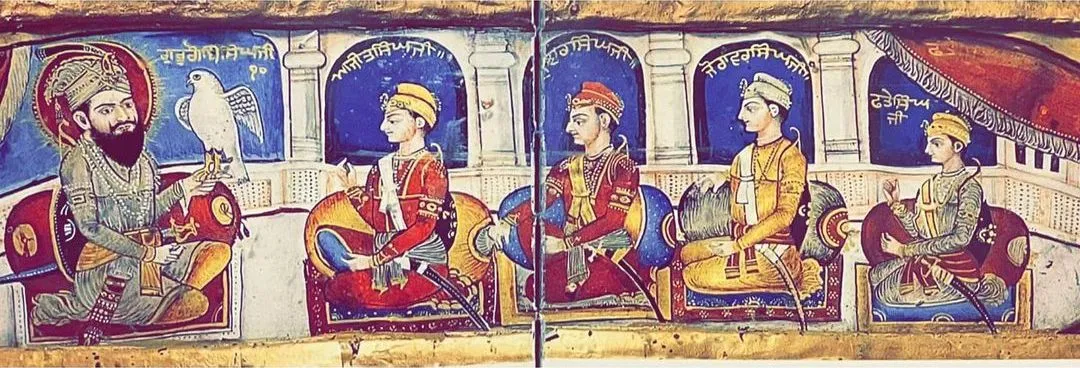
The Char Sahibzade are the four sons of Guru Gobind Singh Ji: the elder pair, Ajit Singh and Jujhar Singh, and the younger pair, Zorawar Singh and Fateh Singh. In a single week of December 1704 all four were martyred: the elder two died fighting at Chamkaur, and the younger two, aged about eight and six, were executed at Sirhind after refusing to give up their faith.
- Punjabi name
- ਚਾਰ ਸਾਹਿਬਜ਼ਾਦੇ
- The four
- Ajit Singh, Jujhar Singh, Zorawar Singh and Fateh Singh
- Father
- Guru Gobind Singh Ji, the tenth Guru
- Elder two (Vadde Sahibzade)
- Martyred at Chamkaur, December 1704
- Younger two (Chhote Sahibzade)
- Martyred at Sirhind, 26 December 1704
- Remembered at
- Shaheedi Jor Mela, Fatehgarh Sahib, every December
- National day
- Veer Bal Diwas, 26 December
The Char Sahibzade, the four princes, are the four sons of Guru Gobind Singh Ji, the tenth Guru of the Sikhs. The elder two, Sahibzada Ajit Singh Ji and Sahibzada Jujhar Singh Ji, are called the Vadde Sahibzade, the elder princes. The younger two, Sahibzada Zorawar Singh Ji and Sahibzada Fateh Singh Ji, are the Chhote Sahibzade, the younger princes. All four were martyred within a few days of each other in December 1704, and together they stand at the heart of the Sikh memory of sacrifice.
Who were the Char Sahibzade?
Ajit Singh, the eldest, was born at Paonta Sahib in 1687 to Mata Sundari Ji. Jujhar Singh, Zorawar Singh and Fateh Singh were born at Anandpur Sahib to Mata Jito Ji in 1691, 1696 and 1699. The boys were raised in their father's court at Anandpur, taught the scriptures and trained in riding, archery and the sword, and the elder two received the amrit of the Khalsa at its founding on Vaisakhi 1699. Their grandmother, Mata Gujri Ji, mother of the Guru, looked after the younger children, and it was with her that the youngest pair spent their last days.
They were children of a court that knew it was heading for war. Guru Gobind Singh Ji had founded the Khalsa in 1699 to make a people who would not bend, and his own household lived by the standard first: the Sahibzade took amrit, kept the discipline, and, in the elder boys' case, held ranks in their father's army while still in their teens. That is why the Sikh tradition does not treat their deaths as accidents of a siege. It treats them as the founding family's own payment of the price the Guru asked of everyone else.
The December of 1704
Through 1704 the Mughal forces and the hill chiefs besieged Anandpur Sahib, and by December the town was starved out. The Guru accepted an offer of safe passage, sworn on oath by the enemy, and the Sikhs left Anandpur on the night of 20 to 21 December. The oath was broken at once: the column was attacked, and in the chaos at the flooded Sarsa river the Guru's family was scattered. The Guru reached Chamkaur with about forty Sikhs, among them Ajit Singh and Jujhar Singh. Mata Gujri Ji and the two youngest boys, separated from the column, were sheltered by Gangu, a former servant of the household, and then betrayed by him to the officials of Sirhind.
Sahibzada Ajit Singh Ji
The eldest Sahibzada was already a commander: at twelve he had led a hundred Sikhs to recover a looted congregation, and at thirteen he held Taragarh fort against the hill chiefs. At Chamkaur, when the besieged Sikhs began going out in sallies of five, Sahibzada Ajit Singh Ji led one of them and was killed fighting, aged seventeen.
Sahibzada Jujhar Singh Ji
Sahibzada Jujhar Singh Ji, the second son, was about fourteen at Chamkaur. He watched his elder brother fall, then led the next sally out of the little fortress and died the same day. The Sikh historian Ratan Singh Bhangu compared his stand to that of Abhimanyu in the Mahabharata: a boy fighting grown warriors in defence of his father.
Sahibzada Zorawar Singh Ji
Sahibzada Zorawar Singh Ji, the third son, was eight years old. Betrayed by Gangu and held with his grandmother and little brother in the freezing Thanda Burj tower at Sirhind, he was brought twice before the court of Wazir Khan and refused every offer of wealth and life in exchange for his faith.
Sahibzada Fateh Singh Ji
The youngest of the four, Sahibzada Fateh Singh Ji, was about six. He stood through the same court beside his brother, unmoved, and shared his fate. He is often described as the youngest martyr in recorded history: a child who understood the choice before him and made it knowingly.
What happened at Sirhind in December 1704?
At Sirhind, the governor Wazir Khan, furious at having failed to capture the Guru, turned on his youngest sons. Over two days of public court the boys were threatened and tempted by turns. Tradition remembers that they answered that their grandfather, Guru Tegh Bahadur Ji, had given his life rather than abandon his faith, and they would do the same. The Nawab Sher Muhammad Khan of Malerkotla, himself an enemy of the Guru in battle, protested against harming children. Wazir Khan ordered the sentence all the same: in the popular account the boys were bricked alive into a wall; the earliest accounts say they were executed when the wall fell. Their martyrdom is commemorated on 26 December. Mata Gujri Ji died in the Thanda Burj on hearing the news, and a wealthy banker, Diwan Todar Mal, bought the ground for their cremation with gold coins, at a place now marked by Gurdwara Jyoti Sarup at Fatehgarh Sahib.
How are the Char Sahibzade remembered?
Every December, lakhs of Sikhs gather at Fatehgarh Sahib for the three day Shaheedi Jor Mela, walking between the shrines of the martyrdom: the Thanda Burj, Gurdwara Fatehgarh Sahib and Gurdwara Jyoti Sarup. A parallel gathering is held at Chamkaur Sahib for the elder pair. Since 2022 the Government of India has marked 26 December as Veer Bal Diwas, the day of brave children, in their honour. The city and district of Sahibzada Ajit Singh Nagar, still widely called Mohali, carry the eldest Sahibzada's name, and the story of the four brothers is retold each year in kirtan, dhadi ballads, schoolbooks and film.
A note on dates and ages
The events are certain; some of their dates are not. Most modern references place the evacuation of Anandpur, the battle of Chamkaur and the Sirhind martyrdom in December 1704, while many traditional Sikh accounts give December 1705, and the exact days and the youngest boys' ages (eight or nine; five, six or seven) also vary between accounts. Jugti follows the modern dating and gives the traditional one alongside, so readers meeting either form elsewhere will recognise the same events.
ਚਾਰ ਸਾਹਿਬਜ਼ਾਦੇ ਦਸਵੇਂ ਪਾਤਸ਼ਾਹ ਗੁਰੂ ਗੋਬਿੰਦ ਸਿੰਘ ਜੀ ਦੇ ਚਾਰ ਪੁੱਤਰ ਹਨ ਵੱਡੇ ਦੋ, ਸਾਹਿਬਜ਼ਾਦਾ ਅਜੀਤ ਸਿੰਘ ਜੀ ਅਤੇ ਸਾਹਿਬਜ਼ਾਦਾ ਜੁਝਾਰ ਸਿੰਘ ਜੀ, ਵੱਡੇ ਸਾਹਿਬਜ਼ਾਦੇ ਕਹਾਉਂਦੇ ਹਨ ਛੋਟੇ ਦੋ, ਸਾਹਿਬਜ਼ਾਦਾ ਜ਼ੋਰਾਵਰ ਸਿੰਘ ਜੀ ਅਤੇ ਸਾਹਿਬਜ਼ਾਦਾ ਫ਼ਤਿਹ ਸਿੰਘ ਜੀ, ਛੋਟੇ ਸਾਹਿਬਜ਼ਾਦੇ ਹਨ ਚਾਰੇ ਦਸੰਬਰ 1704 ਵਿੱਚ ਕੁਝ ਹੀ ਦਿਨਾਂ ਦੇ ਅੰਦਰ ਸ਼ਹੀਦ ਹੋਏ, ਅਤੇ ਇਕੱਠੇ ਉਹ ਕੁਰਬਾਨੀ ਦੀ ਸਿੱਖ ਯਾਦ ਦੇ ਦਿਲ ਵਿੱਚ ਵੱਸਦੇ ਹਨ
ਚਾਰ ਸਾਹਿਬਜ਼ਾਦੇ ਕੌਣ ਸਨ?
ਸਭ ਤੋਂ ਵੱਡੇ ਅਜੀਤ ਸਿੰਘ 1687 ਵਿੱਚ ਮਾਤਾ ਸੁੰਦਰੀ ਜੀ ਦੀ ਕੁੱਖੋਂ ਪਾਉਂਟਾ ਸਾਹਿਬ ਵਿਖੇ ਪੈਦਾ ਹੋਏ ਜੁਝਾਰ ਸਿੰਘ, ਜ਼ੋਰਾਵਰ ਸਿੰਘ ਅਤੇ ਫ਼ਤਿਹ ਸਿੰਘ ਮਾਤਾ ਜੀਤੋ ਜੀ ਦੀ ਕੁੱਖੋਂ ਅਨੰਦਪੁਰ ਸਾਹਿਬ ਵਿਖੇ 1691, 1696 ਅਤੇ 1699 ਵਿੱਚ ਪੈਦਾ ਹੋਏ ਸਾਹਿਬਜ਼ਾਦੇ ਆਪਣੇ ਪਿਤਾ ਦੇ ਦਰਬਾਰ ਵਿੱਚ ਪਲੇ, ਗੁਰਬਾਣੀ ਦੀ ਸਿੱਖਿਆ ਅਤੇ ਘੋੜਸਵਾਰੀ, ਤੀਰਅੰਦਾਜ਼ੀ ਤੇ ਤਲਵਾਰ ਦੀ ਸਿਖਲਾਈ ਪ੍ਰਾਪਤ ਕੀਤੀ, ਅਤੇ ਵੱਡੇ ਦੋਹਾਂ ਨੇ ਵੈਸਾਖੀ 1699 ਨੂੰ ਖ਼ਾਲਸੇ ਦੀ ਸਾਜਨਾ ਵੇਲੇ ਅੰਮ੍ਰਿਤ ਛਕਿਆ ਉਨ੍ਹਾਂ ਦੀ ਦਾਦੀ, ਗੁਰੂ ਜੀ ਦੀ ਮਾਤਾ, ਮਾਤਾ ਗੁਜਰੀ ਜੀ ਛੋਟੇ ਬੱਚਿਆਂ ਦੀ ਦੇਖਭਾਲ ਕਰਦੇ ਸਨ, ਅਤੇ ਆਖ਼ਰੀ ਦਿਨ ਛੋਟੇ ਦੋਵੇਂ ਉਨ੍ਹਾਂ ਦੇ ਨਾਲ ਹੀ ਰਹੇ
ਉਹ ਇੱਕ ਅਜਿਹੇ ਦਰਬਾਰ ਦੇ ਬੱਚੇ ਸਨ, ਜੋ ਜਾਣਦਾ ਸੀ ਕਿ ਉਹ ਜੰਗ ਵੱਲ ਵਧ ਰਿਹਾ ਹੈ ਗੁਰੂ ਗੋਬਿੰਦ ਸਿੰਘ ਜੀ ਨੇ 1699 ਵਿੱਚ ਖ਼ਾਲਸੇ ਦੀ ਸਾਜਨਾ ਇੱਕ ਅਜਿਹਾ ਪੰਥ ਬਣਾਉਣ ਲਈ ਕੀਤੀ ਸੀ ਜੋ ਨਾ ਝੁਕੇ, ਅਤੇ ਉਨ੍ਹਾਂ ਦਾ ਆਪਣਾ ਪਰਿਵਾਰ ਉਸ ਮਾਪਦੰਡ ਉੱਤੇ ਸਭ ਤੋਂ ਪਹਿਲਾਂ ਜੀਵਿਆ: ਸਾਹਿਬਜ਼ਾਦਿਆਂ ਨੇ ਅੰਮ੍ਰਿਤ ਛਕਿਆ, ਰਹਿਤ ਰੱਖੀ, ਅਤੇ ਵੱਡੇ ਸਾਹਿਬਜ਼ਾਦਿਆਂ ਨੇ ਤਾਂ ਕਿਸ਼ੋਰ ਉਮਰ ਵਿੱਚ ਹੀ ਆਪਣੇ ਪਿਤਾ ਦੀ ਫ਼ੌਜ ਵਿੱਚ ਅਹੁਦੇ ਸੰਭਾਲੇ ਇਸੇ ਲਈ ਸਿੱਖ ਪਰੰਪਰਾ ਉਨ੍ਹਾਂ ਦੀਆਂ ਸ਼ਹਾਦਤਾਂ ਨੂੰ ਕਿਸੇ ਘੇਰਾਬੰਦੀ ਦੇ ਹਾਦਸੇ ਨਹੀਂ ਮੰਨਦੀ ਇਹ ਉਨ੍ਹਾਂ ਨੂੰ ਸਾਜਨਹਾਰ ਪਰਿਵਾਰ ਵੱਲੋਂ ਉਸ ਕੀਮਤ ਦੀ ਆਪਣੀ ਅਦਾਇਗੀ ਮੰਨਦੀ ਹੈ, ਜੋ ਗੁਰੂ ਜੀ ਨੇ ਹਰ ਕਿਸੇ ਹੋਰ ਤੋਂ ਮੰਗੀ ਸੀ
ਦਸੰਬਰ 1704
1704 ਭਰ ਮੁਗ਼ਲ ਫ਼ੌਜਾਂ ਅਤੇ ਪਹਾੜੀ ਰਾਜਿਆਂ ਨੇ ਅਨੰਦਪੁਰ ਸਾਹਿਬ ਨੂੰ ਘੇਰਾ ਪਾਇਆ ਰੱਖਿਆ, ਅਤੇ ਦਸੰਬਰ ਤੱਕ ਸ਼ਹਿਰ ਭੁੱਖਾ ਮਰਨ ਲੱਗਾ ਗੁਰੂ ਜੀ ਨੇ ਦੁਸ਼ਮਣ ਦੀ ਸਹੁੰ ਨਾਲ ਬੰਨ੍ਹੀ ਸੁਰੱਖਿਅਤ ਰਾਹ ਦੀ ਪੇਸ਼ਕਸ਼ ਮੰਨ ਲਈ, ਅਤੇ 20 ਤੋਂ 21 ਦਸੰਬਰ ਦੀ ਰਾਤ ਸਿੱਖ ਅਨੰਦਪੁਰੋਂ ਨਿਕਲੇ ਸਹੁੰ ਉਸੇ ਵੇਲੇ ਟੁੱਟ ਗਈ: ਕਾਫ਼ਲੇ ਉੱਤੇ ਹਮਲਾ ਹੋਇਆ, ਅਤੇ ਹੜ੍ਹ ਆਈ ਸਰਸਾ ਨਦੀ ਕੰਢੇ ਹੋਈ ਹਫੜਾ-ਦਫੜੀ ਵਿੱਚ ਗੁਰੂ ਜੀ ਦਾ ਪਰਿਵਾਰ ਵਿਛੜ ਗਿਆ ਗੁਰੂ ਜੀ ਲਗਭਗ ਚਾਲੀ ਸਿੱਖਾਂ ਸਮੇਤ ਚਮਕੌਰ ਪਹੁੰਚੇ, ਜਿਨ੍ਹਾਂ ਵਿੱਚ ਅਜੀਤ ਸਿੰਘ ਅਤੇ ਜੁਝਾਰ ਸਿੰਘ ਵੀ ਸਨ ਮਾਤਾ ਗੁਜਰੀ ਜੀ ਅਤੇ ਦੋਵੇਂ ਛੋਟੇ ਸਾਹਿਬਜ਼ਾਦੇ, ਜੋ ਕਾਫ਼ਲੇ ਤੋਂ ਵਿਛੜ ਗਏ ਸਨ, ਨੂੰ ਘਰ ਦੇ ਪੁਰਾਣੇ ਨੌਕਰ ਗੰਗੂ ਨੇ ਠਾਹਰ ਦਿੱਤੀ ਅਤੇ ਫਿਰ ਉਸੇ ਨੇ ਉਨ੍ਹਾਂ ਨੂੰ ਸਰਹਿੰਦ ਦੇ ਹਾਕਮਾਂ ਕੋਲ ਫੜਵਾ ਦਿੱਤਾ
ਸਾਹਿਬਜ਼ਾਦਾ ਅਜੀਤ ਸਿੰਘ ਜੀ
ਸਭ ਤੋਂ ਵੱਡੇ ਸਾਹਿਬਜ਼ਾਦੇ ਉਸ ਵੇਲੇ ਤੱਕ ਸੈਨਾਪਤੀ ਬਣ ਚੁੱਕੇ ਸਨ: ਬਾਰਾਂ ਸਾਲ ਦੀ ਉਮਰ ਵਿੱਚ ਉਹ ਸੌ ਸਿੱਖਾਂ ਦੀ ਅਗਵਾਈ ਕਰ ਕੇ ਲੁੱਟੀ ਹੋਈ ਸੰਗਤ ਨੂੰ ਛੁਡਾ ਲਿਆਏ ਸਨ, ਅਤੇ ਤੇਰਾਂ ਸਾਲ ਦੀ ਉਮਰ ਵਿੱਚ ਉਨ੍ਹਾਂ ਨੇ ਪਹਾੜੀ ਰਾਜਿਆਂ ਦੇ ਵਿਰੁੱਧ ਤਾਰਾਗੜ੍ਹ ਕਿਲ੍ਹੇ ਦੀ ਰਾਖੀ ਕੀਤੀ ਸੀ ਚਮਕੌਰ ਵਿਖੇ, ਜਦੋਂ ਘਿਰੇ ਹੋਏ ਸਿੱਖ ਪੰਜ-ਪੰਜ ਦੇ ਜਥਿਆਂ ਵਿੱਚ ਬਾਹਰ ਨਿਕਲਣ ਲੱਗੇ, ਸਾਹਿਬਜ਼ਾਦਾ ਅਜੀਤ ਸਿੰਘ ਜੀ ਨੇ ਇੱਕ ਜਥੇ ਦੀ ਅਗਵਾਈ ਕੀਤੀ ਅਤੇ ਸਤਾਰਾਂ ਸਾਲ ਦੀ ਉਮਰ ਵਿੱਚ ਲੜਦੇ ਹੋਏ ਸ਼ਹੀਦ ਹੋਏ
ਸਾਹਿਬਜ਼ਾਦਾ ਜੁਝਾਰ ਸਿੰਘ ਜੀ
ਸਾਹਿਬਜ਼ਾਦਾ ਜੁਝਾਰ ਸਿੰਘ ਜੀ, ਦੂਜੇ ਪੁੱਤਰ, ਚਮਕੌਰ ਵੇਲੇ ਲਗਭਗ ਚੌਦਾਂ ਸਾਲ ਦੇ ਸਨ ਉਨ੍ਹਾਂ ਨੇ ਆਪਣੇ ਵੱਡੇ ਭਰਾ ਨੂੰ ਸ਼ਹੀਦ ਹੁੰਦੇ ਦੇਖਿਆ, ਫਿਰ ਅਗਲੇ ਜਥੇ ਦੀ ਅਗਵਾਈ ਕਰ ਕੇ ਉਸੇ ਦਿਨ ਮੈਦਾਨ ਵਿੱਚ ਜਾਨ ਦਿੱਤੀ ਸਿੱਖ ਇਤਿਹਾਸਕਾਰ ਰਤਨ ਸਿੰਘ ਭੰਗੂ ਨੇ ਉਨ੍ਹਾਂ ਦੀ ਸ਼ਹਾਦਤ ਦੀ ਤੁਲਨਾ ਮਹਾਂਭਾਰਤ ਦੇ ਅਭਿਮਨਿਊ ਨਾਲ ਕੀਤੀ: ਇੱਕ ਬਾਲਕ, ਆਪਣੇ ਪਿਤਾ ਦੀ ਰਾਖੀ ਲਈ ਵੱਡੇ ਯੋਧਿਆਂ ਨਾਲ ਲੜਦਾ ਹੋਇਆ
ਸਾਹਿਬਜ਼ਾਦਾ ਜ਼ੋਰਾਵਰ ਸਿੰਘ ਜੀ
ਸਾਹਿਬਜ਼ਾਦਾ ਜ਼ੋਰਾਵਰ ਸਿੰਘ ਜੀ, ਤੀਜੇ ਪੁੱਤਰ, ਅੱਠ ਸਾਲ ਦੇ ਸਨ ਗੰਗੂ ਦੇ ਧੋਖੇ ਤੋਂ ਬਾਅਦ ਉਹ ਆਪਣੀ ਦਾਦੀ ਅਤੇ ਛੋਟੇ ਭਰਾ ਨਾਲ ਸਰਹਿੰਦ ਦੇ ਠੰਢੇ ਬੁਰਜ ਵਿੱਚ ਕੈਦ ਰਹੇ, ਦੋ ਵਾਰ ਵਜ਼ੀਰ ਖ਼ਾਨ ਦੀ ਕਚਹਿਰੀ ਵਿੱਚ ਪੇਸ਼ ਹੋਏ ਅਤੇ ਧਨ ਤੇ ਜਾਨ ਦੀਆਂ ਸਾਰੀਆਂ ਪੇਸ਼ਕਸ਼ਾਂ ਦੇ ਬਦਲੇ ਆਪਣਾ ਧਰਮ ਛੱਡਣ ਤੋਂ ਇਨਕਾਰ ਕਰ ਦਿੱਤਾ
ਸਾਹਿਬਜ਼ਾਦਾ ਫ਼ਤਿਹ ਸਿੰਘ ਜੀ
ਚਾਰਾਂ ਵਿੱਚੋਂ ਸਭ ਤੋਂ ਛੋਟੇ, ਸਾਹਿਬਜ਼ਾਦਾ ਫ਼ਤਿਹ ਸਿੰਘ ਜੀ, ਲਗਭਗ ਛੇ ਸਾਲ ਦੇ ਸਨ ਉਹ ਆਪਣੇ ਭਰਾ ਦੇ ਨਾਲ ਉਸੇ ਕਚਹਿਰੀ ਵਿੱਚ ਡਟੇ ਰਹੇ ਅਤੇ ਉਹੀ ਰਸਤਾ ਚੁਣਿਆ ਉਨ੍ਹਾਂ ਨੂੰ ਅਕਸਰ ਇਤਿਹਾਸ ਦਾ ਸਭ ਤੋਂ ਛੋਟੀ ਉਮਰ ਦਾ ਸ਼ਹੀਦ ਕਿਹਾ ਜਾਂਦਾ ਹੈ: ਇੱਕ ਬੱਚਾ, ਜਿਸ ਨੇ ਆਪਣੇ ਸਾਹਮਣੇ ਖੜ੍ਹੀ ਚੋਣ ਨੂੰ ਸਮਝ ਕੇ, ਜਾਣ ਬੁੱਝ ਕੇ ਚੁਣਿਆ
ਦਸੰਬਰ 1704 ਵਿੱਚ ਸਰਹਿੰਦ ਵਿਖੇ ਕੀ ਹੋਇਆ?
ਸਰਹਿੰਦ ਦਾ ਸੂਬੇਦਾਰ ਵਜ਼ੀਰ ਖ਼ਾਨ, ਜੋ ਗੁਰੂ ਜੀ ਨੂੰ ਫੜਨ ਵਿੱਚ ਅਸਫਲ ਰਿਹਾ ਸੀ, ਗੁੱਸੇ ਵਿੱਚ ਉਨ੍ਹਾਂ ਦੇ ਛੋਟੇ ਪੁੱਤਰਾਂ ਵੱਲ ਮੁੜਿਆ ਦੋ ਦਿਨ ਭਰੀ ਕਚਹਿਰੀ ਵਿੱਚ ਬੱਚਿਆਂ ਨੂੰ ਕਦੇ ਡਰਾਇਆ ਗਿਆ, ਕਦੇ ਲਾਲਚ ਦਿੱਤਾ ਗਿਆ ਸਾਖੀ ਪਰੰਪਰਾ ਯਾਦ ਕਰਦੀ ਹੈ ਕਿ ਉਨ੍ਹਾਂ ਨੇ ਜਵਾਬ ਦਿੱਤਾ ਕਿ ਉਨ੍ਹਾਂ ਦੇ ਦਾਦਾ, ਗੁਰੂ ਤੇਗ਼ ਬਹਾਦਰ ਜੀ, ਨੇ ਧਰਮ ਛੱਡਣ ਦੀ ਬਜਾਏ ਜਾਨ ਦਿੱਤੀ ਸੀ, ਅਤੇ ਉਹ ਵੀ ਉਹੀ ਕਰਨਗੇ ਮਲੇਰਕੋਟਲੇ ਦਾ ਨਵਾਬ ਸ਼ੇਰ ਮੁਹੰਮਦ ਖ਼ਾਨ, ਜੋ ਲੜਾਈ ਵਿੱਚ ਗੁਰੂ ਜੀ ਦਾ ਵੈਰੀ ਸੀ, ਬੱਚਿਆਂ ਨੂੰ ਨੁਕਸਾਨ ਪਹੁੰਚਾਉਣ ਦੇ ਵਿਰੁੱਧ ਖੜ੍ਹਾ ਹੋਇਆ ਫਿਰ ਵੀ ਵਜ਼ੀਰ ਖ਼ਾਨ ਨੇ ਹੁਕਮ ਸੁਣਾ ਦਿੱਤਾ: ਲੋਕ-ਪ੍ਰਚੱਲਿਤ ਕਥਾ ਮੁਤਾਬਕ ਸਾਹਿਬਜ਼ਾਦਿਆਂ ਨੂੰ ਜਿਊਂਦੇ ਹੀ ਕੰਧ ਵਿੱਚ ਚਿਣ ਦਿੱਤਾ ਗਿਆ; ਸਭ ਤੋਂ ਪੁਰਾਣੇ ਬਿਰਤਾਂਤ ਕਹਿੰਦੇ ਹਨ ਕਿ ਕੰਧ ਢਿੱਗਣ ਤੋਂ ਬਾਅਦ ਉਨ੍ਹਾਂ ਨੂੰ ਸ਼ਹੀਦ ਕੀਤਾ ਗਿਆ ਉਨ੍ਹਾਂ ਦੀ ਸ਼ਹਾਦਤ 26 ਦਸੰਬਰ ਨੂੰ ਮਨਾਈ ਜਾਂਦੀ ਹੈ ਖ਼ਬਰ ਸੁਣ ਕੇ ਮਾਤਾ ਗੁਜਰੀ ਜੀ ਠੰਢੇ ਬੁਰਜ ਵਿੱਚ ਚਲਾਣਾ ਕਰ ਗਏ, ਅਤੇ ਦੀਵਾਨ ਟੋਡਰ ਮੱਲ ਨੇ ਸੋਨੇ ਦੇ ਸਿੱਕਿਆਂ ਨਾਲ ਜ਼ਮੀਨ ਖ਼ਰੀਦ ਕੇ ਉਨ੍ਹਾਂ ਦਾ ਸਸਕਾਰ ਕੀਤਾ, ਜਿਸ ਥਾਂ ਉੱਤੇ ਅੱਜ ਫ਼ਤਿਹਗੜ੍ਹ ਸਾਹਿਬ ਵਿਖੇ ਗੁਰਦੁਆਰਾ ਜੋਤੀ ਸਰੂਪ ਹੈ
ਚਾਰ ਸਾਹਿਬਜ਼ਾਦਿਆਂ ਨੂੰ ਕਿਵੇਂ ਯਾਦ ਕੀਤਾ ਜਾਂਦਾ ਹੈ?
ਹਰ ਦਸੰਬਰ, ਲੱਖਾਂ ਸਿੱਖ ਫ਼ਤਿਹਗੜ੍ਹ ਸਾਹਿਬ ਵਿਖੇ ਤਿੰਨ ਦਿਨਾਂ ਦੇ ਸ਼ਹੀਦੀ ਜੋੜ ਮੇਲੇ ਲਈ ਇਕੱਠੇ ਹੁੰਦੇ ਹਨ ਅਤੇ ਸ਼ਹਾਦਤ ਦੇ ਅਸਥਾਨਾਂ: ਠੰਢਾ ਬੁਰਜ, ਗੁਰਦੁਆਰਾ ਫ਼ਤਿਹਗੜ੍ਹ ਸਾਹਿਬ ਅਤੇ ਗੁਰਦੁਆਰਾ ਜੋਤੀ ਸਰੂਪ ਦੇ ਦਰਸ਼ਨ ਕਰਦੇ ਹਨ ਵੱਡੇ ਸਾਹਿਬਜ਼ਾਦਿਆਂ ਲਈ ਚਮਕੌਰ ਸਾਹਿਬ ਵਿਖੇ ਵੀ ਜੋੜ ਮੇਲਾ ਹੁੰਦਾ ਹੈ 2022 ਤੋਂ ਭਾਰਤ ਸਰਕਾਰ 26 ਦਸੰਬਰ ਨੂੰ ਉਨ੍ਹਾਂ ਦੀ ਯਾਦ ਵਿੱਚ ਵੀਰ ਬਾਲ ਦਿਵਸ ਵਜੋਂ ਮਨਾਉਂਦੀ ਹੈ ਸਾਹਿਬਜ਼ਾਦਾ ਅਜੀਤ ਸਿੰਘ ਨਗਰ ਦਾ ਸ਼ਹਿਰ ਅਤੇ ਜ਼ਿਲ੍ਹਾ, ਜਿਸ ਨੂੰ ਅਜੇ ਵੀ ਮੋਹਾਲੀ ਕਿਹਾ ਜਾਂਦਾ ਹੈ, ਸਭ ਤੋਂ ਵੱਡੇ ਸਾਹਿਬਜ਼ਾਦੇ ਦਾ ਨਾਮ ਚੁੱਕੀ ਬੈਠਾ ਹੈ, ਅਤੇ ਚਾਰਾਂ ਭਰਾਵਾਂ ਦੀ ਕਥਾ ਹਰ ਸਾਲ ਕੀਰਤਨ, ਢਾਡੀ ਵਾਰਾਂ, ਸਕੂਲੀ ਕਿਤਾਬਾਂ ਅਤੇ ਫ਼ਿਲਮ ਰਾਹੀਂ ਫਿਰ ਸੁਣਾਈ ਜਾਂਦੀ ਹੈ
ਤਾਰੀਖ਼ਾਂ ਬਾਰੇ ਇੱਕ ਨੋਟ
ਘਟਨਾਵਾਂ ਪੱਕੀਆਂ ਹਨ; ਉਨ੍ਹਾਂ ਦੀਆਂ ਕੁਝ ਤਾਰੀਖ਼ਾਂ ਨਹੀਂ ਜ਼ਿਆਦਾਤਰ ਆਧੁਨਿਕ ਹਵਾਲੇ ਅਨੰਦਪੁਰ ਦੀ ਨਿਕਾਸੀ, ਚਮਕੌਰ ਦੀ ਲੜਾਈ ਅਤੇ ਸਰਹਿੰਦ ਦੀ ਸ਼ਹਾਦਤ ਨੂੰ ਦਸੰਬਰ 1704 ਵਿੱਚ ਰੱਖਦੇ ਹਨ, ਜਦਕਿ ਕਈ ਪਰੰਪਰਾਗਤ ਸਿੱਖ ਬਿਰਤਾਂਤ ਦਸੰਬਰ 1705 ਦਿੰਦੇ ਹਨ, ਅਤੇ ਸਹੀ ਦਿਨਾਂ ਅਤੇ ਛੋਟੇ ਸਾਹਿਬਜ਼ਾਦਿਆਂ ਦੀਆਂ ਉਮਰਾਂ (ਅੱਠ ਜਾਂ ਨੌ; ਪੰਜ, ਛੇ ਜਾਂ ਸੱਤ) ਵਿੱਚ ਵੀ ਬਿਰਤਾਂਤਾਂ ਵਿੱਚ ਫ਼ਰਕ ਹੈ ਜੁਗਤੀ ਆਧੁਨਿਕ ਤਾਰੀਖ਼ ਅਪਣਾਉਂਦੀ ਹੈ ਅਤੇ ਨਾਲ ਪਰੰਪਰਾਗਤ ਤਾਰੀਖ਼ ਵੀ ਦਿੰਦੀ ਹੈ, ਤਾਂ ਜੋ ਪਾਠਕ ਜਿੱਥੇ ਵੀ ਦੋਹਾਂ ਵਿੱਚੋਂ ਕੋਈ ਰੂਪ ਦੇਖੇ, ਉਹੀ ਘਟਨਾ ਪਛਾਣ ਸਕੇ