
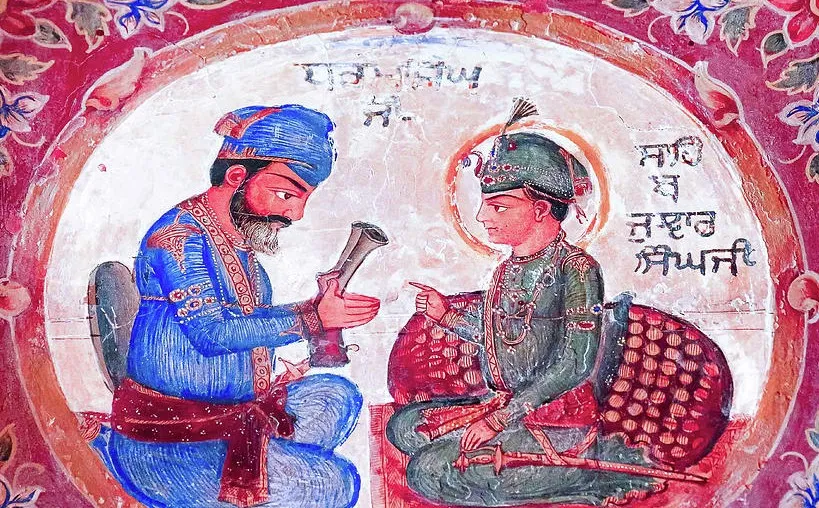
Sahibzada Jujhar Singh Ji (1691 to 1704) was the second son of Guru Gobind Singh Ji and Mata Jito Ji. Trained in arms at Anandpur Sahib, he marched out with his father in December 1704 and, at about fourteen years of age, led the sally that followed his elder brother's at the Battle of Chamkaur, dying on the field the same day.
- Punjabi name
- ਸਾਹਿਬਜ਼ਾਦਾ ਜੁਝਾਰ ਸਿੰਘ ਜੀ
- Born
- 1691, Anandpur Sahib (14 March in most accounts; celebrated 9 April in the Nanakshahi calendar)
- Parents
- Guru Gobind Singh Ji and Mata Jito Ji
- His name
- Jujhar means a warrior, one who struggles in battle
- Martyrdom
- December 1704, at Chamkaur, aged about 14
- Remembered at
- Gurdwara Katalgarh Sahib, Chamkaur Sahib
Sahibzada Jujhar Singh Ji was the second of the four sons of Guru Gobind Singh Ji, and the second of the Char Sahibzade to be martyred. His name, Jujhar, means a warrior, one who struggles, and his short life ran true to it: at about fourteen he refused the shelter of the little fortress at Chamkaur and went out to fight grown soldiers of the Mughal army, following his elder brother into the last battle of December 1704.
Birth and upbringing at Anandpur
Jujhar Singh was born at Anandpur Sahib in 1691 to Mata Jito Ji; most accounts give 14 March, while his birth is celebrated on 9 April in the Nanakshahi calendar. He grew up in the Guru's court in the Shivalik foothills, in a town that was half seminary and half garrison, and like his elder brother he was trained in warfare by Bhai Jiwan Singh. He was eight years old when his father founded the Khalsa on Vaisakhi 1699 and received the amrit with the family. The Anandpur of his childhood was a place under growing pressure: the hill chiefs around it and, behind them, the Mughal empire, moved from skirmishes to open siege as the boy grew. It was also, in its better years, a court of learning: the Guru kept fifty two poets at Anandpur, and the princes were educated among scholars and soldiers at once, in the Gurmukhi and Persian letters of the court and in the horsemanship and steel of the camp. Jujhar Singh's short life was spent entirely inside that double world, and his end came in its defence.
The evacuation and the march to Chamkaur
When Anandpur was given up in December 1704, Jujhar Singh marched in the Guru's own party. He crossed the flooded Sarsa river in the night attack that scattered the column, losing his grandmother and younger brothers in the confusion, and reached Chamkaur Sahib with a remnant of about forty Sikhs. The party fortified a mud walled haveli, and by morning the Mughal and hill forces had surrounded it. The Guru's own letter, the Zafarnama, would later tell the emperor that his small band fought against an army beyond counting, and a Mughal court record of the day confirms that the Guru's two sons were killed in that house.
What happened in the battle?
The Sikhs fought from the walls and roof while their arrows and ammunition lasted, and then, as the day wore on, began to go out in sallies of five, the Guru's prescribed way of meeting a hopeless fight. Sahibzada Ajit Singh Ji led one of these sallies and was killed. Jujhar Singh, who had watched his brother fall, asked to go next. Tradition dwells on the moment: a boy of fourteen, slight beside the veteran soldiers around him, unwilling to be left alive in the fortress while his father and brother fought outside. He led his five out, fought, in the words of the accounts, with the fierceness of a crocodile seizing its prey, and was killed. In the same day's sallies fell three of the first five beloved ones of 1699, Bhai Mohkam Singh, Bhai Himmat Singh and Bhai Sahib Singh of the Panj Pyare, so that Chamkaur binds the two sets of martyrs together: the first initiates of the Khalsa and the sons of its founder, going out through the same gate in the same order of fives. By nightfall almost every Sikh in the haveli was dead, and the surviving five, acting as the Guru Panth, ordered the Guru himself to slip away in the dark so that the Khalsa would live.
The battlefield today
The haveli where the brothers made their stand is marked at Chamkaur Sahib by Gurdwara Garhi Sahib, and the open field where the sallies fell by Gurdwara Katalgarh Sahib, the principal shrine of the town; a group of five gurdwaras together keeps the geography of the battle. Pilgrims walk the short distance between them and read the day in the ground itself: how small the fortress was, how open the field, how young the two princes who came out of the gate. The town keeps the elder Sahibzade's Shaheedi Jor Mela in December, in the same weeks that Fatehgarh Sahib keeps their younger brothers'.
How is Sahibzada Jujhar Singh Ji remembered?
He is remembered together with his brother wherever Chamkaur is honoured: at Gurdwara Katalgarh Sahib, which marks the field, and in the Shaheedi Jor Mela held at Chamkaur Sahib each December. The eighteenth century Sikh historian Ratan Singh Bhangu, whose grandfather had fought in these wars, compared Jujhar Singh's death to the fall of Abhimanyu in the Mahabharata, the young warrior who died defending his father, and gave him the thought that has followed him since: how can a son live while his father confronts death in battle? With all four brothers he is honoured on Veer Bal Diwas, 26 December.
ਸਾਹਿਬਜ਼ਾਦਾ ਜੁਝਾਰ ਸਿੰਘ ਜੀ, ਗੁਰੂ ਗੋਬਿੰਦ ਸਿੰਘ ਜੀ ਦੇ ਚਾਰ ਪੁੱਤਰਾਂ ਵਿੱਚੋਂ ਦੂਜੇ ਸਨ, ਅਤੇ ਚਾਰ ਸਾਹਿਬਜ਼ਾਦਿਆਂ ਵਿੱਚੋਂ ਸ਼ਹੀਦ ਹੋਣ ਵਾਲੇ ਦੂਜੇ ਉਨ੍ਹਾਂ ਦੇ ਨਾਮ, ਜੁਝਾਰ, ਦਾ ਅਰਥ ਹੈ ਯੋਧਾ, ਜੂਝਣ ਵਾਲਾ, ਅਤੇ ਉਨ੍ਹਾਂ ਦੀ ਛੋਟੀ ਜਿਹੀ ਜ਼ਿੰਦਗੀ ਇਸੇ ਨਾਮ ਵਰਗੀ ਰਹੀ: ਲਗਭਗ ਚੌਦਾਂ ਸਾਲ ਦੀ ਉਮਰ ਵਿੱਚ ਉਨ੍ਹਾਂ ਨੇ ਚਮਕੌਰ ਦੀ ਨਿੱਕੀ ਗੜ੍ਹੀ ਦੀ ਠਾਹਰ ਲੈਣ ਤੋਂ ਇਨਕਾਰ ਕਰ ਦਿੱਤਾ ਅਤੇ ਮੁਗ਼ਲ ਫ਼ੌਜ ਦੇ ਵੱਡੇ ਸਿਪਾਹੀਆਂ ਨਾਲ ਲੜਨ ਲਈ ਬਾਹਰ ਨਿਕਲੇ, ਦਸੰਬਰ 1704 ਦੀ ਆਖ਼ਰੀ ਲੜਾਈ ਵਿੱਚ ਆਪਣੇ ਵੱਡੇ ਭਰਾ ਦੇ ਪਿੱਛੇ-ਪਿੱਛੇ
ਅਨੰਦਪੁਰ ਵਿੱਚ ਜਨਮ ਅਤੇ ਪਾਲਣ-ਪੋਸ਼ਣ
ਜੁਝਾਰ ਸਿੰਘ 1691 ਵਿੱਚ ਮਾਤਾ ਜੀਤੋ ਜੀ ਦੀ ਕੁੱਖੋਂ ਅਨੰਦਪੁਰ ਸਾਹਿਬ ਵਿਖੇ ਪੈਦਾ ਹੋਏ; ਜ਼ਿਆਦਾਤਰ ਬਿਰਤਾਂਤ 14 ਮਾਰਚ ਦਿੰਦੇ ਹਨ, ਜਦਕਿ ਨਾਨਕਸ਼ਾਹੀ ਕੈਲੰਡਰ ਵਿੱਚ ਉਨ੍ਹਾਂ ਦਾ ਜਨਮ ਦਿਹਾੜਾ 9 ਅਪ੍ਰੈਲ ਨੂੰ ਮਨਾਇਆ ਜਾਂਦਾ ਹੈ ਉਹ ਸ਼ਿਵਾਲਿਕ ਦੀਆਂ ਘਾਟੀਆਂ ਵਿੱਚ ਗੁਰੂ ਜੀ ਦੇ ਦਰਬਾਰ ਵਿੱਚ ਵੱਡੇ ਹੋਏ, ਇੱਕ ਅਜਿਹੇ ਸ਼ਹਿਰ ਵਿੱਚ ਜੋ ਅੱਧਾ ਪਾਠਸ਼ਾਲਾ ਅਤੇ ਅੱਧਾ ਛਾਉਣੀ ਸੀ, ਅਤੇ ਆਪਣੇ ਵੱਡੇ ਭਰਾ ਵਾਂਗ ਉਨ੍ਹਾਂ ਨੂੰ ਭਾਈ ਜੀਵਨ ਸਿੰਘ ਨੇ ਯੁੱਧ ਕਲਾ ਦੀ ਸਿਖਲਾਈ ਦਿੱਤੀ ਵੈਸਾਖੀ 1699 ਨੂੰ ਜਦੋਂ ਉਨ੍ਹਾਂ ਦੇ ਪਿਤਾ ਜੀ ਨੇ ਖ਼ਾਲਸੇ ਦੀ ਸਾਜਨਾ ਕੀਤੀ, ਤਾਂ ਉਹ ਅੱਠ ਸਾਲ ਦੇ ਸਨ ਅਤੇ ਉਨ੍ਹਾਂ ਨੇ ਪਰਿਵਾਰ ਸਮੇਤ ਅੰਮ੍ਰਿਤ ਛਕਿਆ ਉਨ੍ਹਾਂ ਦੇ ਬਚਪਨ ਦਾ ਅਨੰਦਪੁਰ ਵਧਦੇ ਦਬਾਅ ਹੇਠਾਂ ਸੀ: ਆਸ-ਪਾਸ ਦੇ ਪਹਾੜੀ ਰਾਜੇ ਅਤੇ ਉਨ੍ਹਾਂ ਦੇ ਪਿੱਛੇ ਖੜ੍ਹਾ ਮੁਗ਼ਲ ਰਾਜ, ਜਿਵੇਂ-ਜਿਵੇਂ ਮੁੰਡਾ ਵੱਡਾ ਹੁੰਦਾ ਗਿਆ, ਝੜਪਾਂ ਤੋਂ ਖੁੱਲ੍ਹੀ ਘੇਰਾਬੰਦੀ ਵੱਲ ਵਧਦੇ ਗਏ ਆਪਣੇ ਚੰਗੇ ਸਾਲਾਂ ਵਿੱਚ ਇਹ ਸਿੱਖਿਆ ਦਾ ਦਰਬਾਰ ਵੀ ਸੀ: ਗੁਰੂ ਜੀ ਨੇ ਅਨੰਦਪੁਰ ਵਿਖੇ ਬਵੰਜਾ ਕਵੀ ਰੱਖੇ ਹੋਏ ਸਨ, ਅਤੇ ਸਾਹਿਬਜ਼ਾਦੇ ਵਿਦਵਾਨਾਂ ਅਤੇ ਸਿਪਾਹੀਆਂ ਦੇ ਵਿਚਕਾਰ ਇਕੱਠੇ ਪੜ੍ਹੇ, ਦਰਬਾਰ ਦੇ ਗੁਰਮੁਖੀ ਅਤੇ ਫ਼ਾਰਸੀ ਅੱਖਰਾਂ ਵਿੱਚ ਅਤੇ ਛਾਉਣੀ ਦੀ ਘੋੜਸਵਾਰੀ ਅਤੇ ਲੋਹੇ ਵਿੱਚ ਜੁਝਾਰ ਸਿੰਘ ਦੀ ਛੋਟੀ ਜਿਹੀ ਜ਼ਿੰਦਗੀ ਪੂਰੀ ਉਸੇ ਦੋਹਰੀ ਦੁਨੀਆ ਦੇ ਅੰਦਰ ਬੀਤੀ, ਅਤੇ ਉਸ ਦਾ ਅੰਤ ਉਸੇ ਦੀ ਰਾਖੀ ਵਿੱਚ ਹੋਇਆ
ਨਿਕਾਸੀ ਅਤੇ ਚਮਕੌਰ ਵੱਲ ਕੂਚ
ਦਸੰਬਰ 1704 ਵਿੱਚ ਜਦੋਂ ਅਨੰਦਪੁਰ ਛੱਡਿਆ ਗਿਆ, ਤਾਂ ਜੁਝਾਰ ਸਿੰਘ ਗੁਰੂ ਜੀ ਦੇ ਆਪਣੇ ਦਸਤੇ ਵਿੱਚ ਸਨ ਉਹ ਰਾਤ ਦੇ ਹਮਲੇ ਵਿੱਚ ਹੜ੍ਹ ਆਈ ਸਰਸਾ ਨਦੀ ਪਾਰ ਕਰ ਗਏ, ਜਿਸ ਨੇ ਕਾਫ਼ਲੇ ਨੂੰ ਖਿਲਾਰ ਦਿੱਤਾ, ਅਤੇ ਉਸ ਹਫੜਾ-ਦਫੜੀ ਵਿੱਚ ਆਪਣੀ ਦਾਦੀ ਅਤੇ ਛੋਟੇ ਭਰਾਵਾਂ ਤੋਂ ਵਿਛੜ ਗਏ, ਅਤੇ ਲਗਭਗ ਚਾਲੀ ਸਿੱਖਾਂ ਦੇ ਬਚੇ ਹੋਏ ਸਮੂਹ ਨਾਲ ਚਮਕੌਰ ਸਾਹਿਬ ਪਹੁੰਚੇ ਦਸਤੇ ਨੇ ਮਿੱਟੀ ਦੀਆਂ ਕੰਧਾਂ ਵਾਲੀ ਇੱਕ ਹਵੇਲੀ ਵਿੱਚ ਮੋਰਚਾ ਬੰਨ੍ਹਿਆ, ਅਤੇ ਸਵੇਰ ਤੱਕ ਮੁਗ਼ਲ ਅਤੇ ਪਹਾੜੀ ਫ਼ੌਜਾਂ ਨੇ ਉਸ ਨੂੰ ਘੇਰ ਲਿਆ ਗੁਰੂ ਜੀ ਦਾ ਆਪਣਾ ਪੱਤਰ, ਜ਼ਫ਼ਰਨਾਮਾ, ਬਾਅਦ ਵਿੱਚ ਬਾਦਸ਼ਾਹ ਨੂੰ ਦੱਸੇਗਾ ਕਿ ਉਨ੍ਹਾਂ ਦਾ ਨਿੱਕਾ ਜਿਹਾ ਜਥਾ ਗਿਣਤੀ ਤੋਂ ਬਾਹਰ ਫ਼ੌਜ ਨਾਲ ਲੜਿਆ, ਅਤੇ ਉਸ ਦਿਨ ਦਾ ਇੱਕ ਮੁਗ਼ਲ ਦਰਬਾਰੀ ਰਿਕਾਰਡ ਪੁਸ਼ਟੀ ਕਰਦਾ ਹੈ ਕਿ ਗੁਰੂ ਜੀ ਦੇ ਦੋਵੇਂ ਪੁੱਤਰ ਉਸ ਘਰ ਵਿੱਚ ਮਾਰੇ ਗਏ ਸਨ
ਲੜਾਈ ਵਿੱਚ ਕੀ ਹੋਇਆ?
ਸਿੱਖ ਕੰਧਾਂ ਅਤੇ ਛੱਤ ਤੋਂ ਉਦੋਂ ਤੱਕ ਲੜਦੇ ਰਹੇ, ਜਦੋਂ ਤੱਕ ਉਨ੍ਹਾਂ ਦੇ ਤੀਰ ਅਤੇ ਗੋਲਾ-ਬਾਰੂਦ ਬਚੇ ਸਨ, ਅਤੇ ਫਿਰ, ਜਿਵੇਂ-ਜਿਵੇਂ ਦਿਨ ਢਲਦਾ ਗਿਆ, ਪੰਜ-ਪੰਜ ਦੇ ਜਥਿਆਂ ਵਿੱਚ ਬਾਹਰ ਨਿਕਲਣ ਲੱਗੇ, ਗੁਰੂ ਜੀ ਦੀ ਤੈਅ ਕੀਤੀ ਹੋਈ ਰੀਤ ਅਨੁਸਾਰ ਨਿਰਾਸ਼ਾਜਨਕ ਲੜਾਈ ਲੜਨ ਦਾ ਇਹੀ ਤਰੀਕਾ ਸੀ ਸਾਹਿਬਜ਼ਾਦਾ ਅਜੀਤ ਸਿੰਘ ਜੀ ਨੇ ਇਨ੍ਹਾਂ ਵਿੱਚੋਂ ਇੱਕ ਜਥੇ ਦੀ ਅਗਵਾਈ ਕੀਤੀ ਅਤੇ ਸ਼ਹੀਦ ਹੋਏ ਜੁਝਾਰ ਸਿੰਘ, ਜਿਨ੍ਹਾਂ ਨੇ ਆਪਣੇ ਭਰਾ ਨੂੰ ਡਿੱਗਦੇ ਦੇਖਿਆ ਸੀ, ਅਗਲੇ ਜਾਣ ਦੀ ਆਗਿਆ ਮੰਗੀ ਸਾਖੀ ਪਰੰਪਰਾ ਉਸ ਪਲ ਨੂੰ ਯਾਦ ਕਰਦੀ ਹੈ: ਚੌਦਾਂ ਸਾਲ ਦਾ ਮੁੰਡਾ, ਆਲੇ-ਦੁਆਲੇ ਦੇ ਤਜਰਬੇਕਾਰ ਸਿਪਾਹੀਆਂ ਸਾਹਮਣੇ ਨਿੱਕਾ ਜਿਹਾ, ਪਰ ਕਿਲ੍ਹੇ ਵਿੱਚ ਜਿਊਂਦਾ ਰਹਿਣ ਲਈ ਤਿਆਰ ਨਹੀਂ ਸੀ, ਜਦੋਂ ਕਿ ਉਸ ਦੇ ਪਿਤਾ ਅਤੇ ਭਰਾ ਬਾਹਰ ਲੜ ਰਹੇ ਸਨ ਉਹ ਆਪਣੇ ਪੰਜਾਂ ਨੂੰ ਲੈ ਕੇ ਬਾਹਰ ਨਿਕਲੇ, ਬਿਰਤਾਂਤਾਂ ਦੇ ਸ਼ਬਦਾਂ ਵਿੱਚ, ਮਗਰਮੱਛ ਵਾਂਗ ਜ਼ੋਰ ਨਾਲ ਲੜੇ, ਅਤੇ ਸ਼ਹੀਦ ਹੋ ਗਏ ਉਸੇ ਦਿਨ ਦੇ ਜਥਿਆਂ ਵਿੱਚ 1699 ਦੇ ਪਹਿਲੇ ਪੰਜ ਪਿਆਰਿਆਂ ਵਿੱਚੋਂ ਤਿੰਨ, ਭਾਈ ਮੋਹਕਮ ਸਿੰਘ, ਭਾਈ ਹਿੰਮਤ ਸਿੰਘ ਅਤੇ ਭਾਈ ਸਾਹਿਬ ਸਿੰਘ, ਵੀ ਡਿੱਗੇ, ਜਿਸ ਨਾਲ ਚਮਕੌਰ ਸ਼ਹੀਦਾਂ ਦੇ ਦੋ ਸਮੂਹਾਂ ਨੂੰ ਆਪਸ ਵਿੱਚ ਜੋੜਦਾ ਹੈ: ਖ਼ਾਲਸੇ ਦੇ ਪਹਿਲੇ ਅੰਮ੍ਰਿਤਧਾਰੀ ਅਤੇ ਉਸ ਦੇ ਸਾਜਨਹਾਰ ਦੇ ਪੁੱਤਰ, ਉਸੇ ਦਰਵਾਜ਼ੇ ਤੋਂ ਪੰਜ-ਪੰਜ ਦੇ ਉਸੇ ਕ੍ਰਮ ਵਿੱਚ ਬਾਹਰ ਨਿਕਲਦੇ ਹੋਏ ਰਾਤ ਪੈਣ ਤੱਕ ਹਵੇਲੀ ਦਾ ਲਗਭਗ ਹਰ ਸਿੱਖ ਮਾਰਿਆ ਜਾ ਚੁੱਕਾ ਸੀ, ਅਤੇ ਬਚੇ ਹੋਏ ਪੰਜਾਂ ਨੇ, ਗੁਰੂ ਪੰਥ ਵਜੋਂ ਕੰਮ ਕਰਦੇ ਹੋਏ, ਗੁਰੂ ਜੀ ਨੂੰ ਹੁਕਮ ਦਿੱਤਾ ਕਿ ਉਹ ਹਨੇਰੇ ਵਿੱਚ ਨਿਕਲ ਜਾਣ, ਤਾਂ ਜੋ ਖ਼ਾਲਸਾ ਜਿਊਂਦਾ ਰਹੇ
ਮੈਦਾਨ ਅੱਜ
ਜਿਸ ਹਵੇਲੀ ਵਿੱਚ ਭਰਾਵਾਂ ਨੇ ਮੋਰਚਾ ਬੰਨ੍ਹਿਆ ਸੀ, ਉਸ ਨੂੰ ਚਮਕੌਰ ਸਾਹਿਬ ਵਿਖੇ ਗੁਰਦੁਆਰਾ ਗੜ੍ਹੀ ਸਾਹਿਬ ਦਰਸਾਉਂਦਾ ਹੈ, ਅਤੇ ਜਿਸ ਖੁੱਲ੍ਹੇ ਮੈਦਾਨ ਵਿੱਚ ਜਥੇ ਡਿੱਗੇ, ਉਸ ਨੂੰ ਗੁਰਦੁਆਰਾ ਕਤਲਗੜ੍ਹ ਸਾਹਿਬ, ਸ਼ਹਿਰ ਦਾ ਮੁੱਖ ਅਸਥਾਨ; ਪੰਜ ਗੁਰਦੁਆਰਿਆਂ ਦਾ ਇੱਕ ਸਮੂਹ ਇਕੱਠਾ ਲੜਾਈ ਦਾ ਭੂਗੋਲ ਸੰਭਾਲਦਾ ਹੈ ਸ਼ਰਧਾਲੂ ਉਨ੍ਹਾਂ ਦੇ ਵਿਚਕਾਰ ਛੋਟੀ ਜਿਹੀ ਦੂਰੀ ਪੈਦਲ ਤੈਅ ਕਰਦੇ ਹਨ ਅਤੇ ਉਸ ਦਿਨ ਨੂੰ ਖ਼ੁਦ ਜ਼ਮੀਨ ਵਿੱਚ ਪੜ੍ਹਦੇ ਹਨ: ਕਿਲ੍ਹਾ ਕਿੰਨਾ ਛੋਟਾ ਸੀ, ਮੈਦਾਨ ਕਿੰਨਾ ਖੁੱਲ੍ਹਾ, ਅਤੇ ਦਰਵਾਜ਼ੇ ਤੋਂ ਬਾਹਰ ਆਏ ਦੋਵੇਂ ਸਾਹਿਬਜ਼ਾਦੇ ਕਿੰਨੇ ਛੋਟੇ ਸਨ ਸ਼ਹਿਰ ਦਸੰਬਰ ਵਿੱਚ ਵੱਡੇ ਸਾਹਿਬਜ਼ਾਦਿਆਂ ਦਾ ਸ਼ਹੀਦੀ ਜੋੜ ਮੇਲਾ ਰੱਖਦਾ ਹੈ, ਉਨ੍ਹਾਂ ਹੀ ਹਫ਼ਤਿਆਂ ਵਿੱਚ ਜਦੋਂ ਫ਼ਤਿਹਗੜ੍ਹ ਸਾਹਿਬ ਉਨ੍ਹਾਂ ਦੇ ਛੋਟੇ ਭਰਾਵਾਂ ਦਾ ਮੇਲਾ ਰੱਖਦਾ ਹੈ
ਸਾਹਿਬਜ਼ਾਦਾ ਜੁਝਾਰ ਸਿੰਘ ਜੀ ਨੂੰ ਕਿਵੇਂ ਯਾਦ ਕੀਤਾ ਜਾਂਦਾ ਹੈ?
ਜਿੱਥੇ ਵੀ ਚਮਕੌਰ ਨੂੰ ਸਨਮਾਨਿਆ ਜਾਂਦਾ ਹੈ, ਉਨ੍ਹਾਂ ਨੂੰ ਉਨ੍ਹਾਂ ਦੇ ਭਰਾ ਨਾਲ ਯਾਦ ਕੀਤਾ ਜਾਂਦਾ ਹੈ: ਗੁਰਦੁਆਰਾ ਕਤਲਗੜ੍ਹ ਸਾਹਿਬ ਵਿਖੇ, ਜੋ ਉਸ ਮੈਦਾਨ ਨੂੰ ਦਰਸਾਉਂਦਾ ਹੈ, ਅਤੇ ਹਰ ਦਸੰਬਰ ਚਮਕੌਰ ਸਾਹਿਬ ਵਿਖੇ ਭਰਨ ਵਾਲੇ ਸ਼ਹੀਦੀ ਜੋੜ ਮੇਲੇ ਵਿੱਚ ਅਠਾਰਵੀਂ ਸਦੀ ਦੇ ਸਿੱਖ ਇਤਿਹਾਸਕਾਰ ਰਤਨ ਸਿੰਘ ਭੰਗੂ, ਜਿਨ੍ਹਾਂ ਦੇ ਦਾਦਾ ਇਨ੍ਹਾਂ ਜੰਗਾਂ ਵਿੱਚ ਲੜੇ ਸਨ, ਨੇ ਜੁਝਾਰ ਸਿੰਘ ਦੀ ਸ਼ਹਾਦਤ ਦੀ ਤੁਲਨਾ ਮਹਾਂਭਾਰਤ ਵਿੱਚ ਅਭਿਮਨਿਊ ਦੇ ਡਿੱਗਣ ਨਾਲ ਕੀਤੀ, ਉਹ ਨੌਜਵਾਨ ਯੋਧਾ ਜੋ ਆਪਣੇ ਪਿਤਾ ਦੀ ਰਾਖੀ ਕਰਦਾ ਮਰਿਆ, ਅਤੇ ਉਨ੍ਹਾਂ ਦੇ ਮਨ ਵਿੱਚ ਉਹ ਵਿਚਾਰ ਪਾਇਆ ਜੋ ਉਦੋਂ ਤੋਂ ਉਨ੍ਹਾਂ ਨਾਲ ਜੁੜਿਆ ਆਉਂਦਾ ਹੈ: ਪਿਤਾ ਮੌਤ ਨਾਲ ਲੜ ਰਿਹਾ ਹੋਵੇ, ਤਾਂ ਪੁੱਤਰ ਕਿਵੇਂ ਜਿਊਂ ਸਕਦਾ ਹੈ? ਚਾਰਾਂ ਭਰਾਵਾਂ ਸਮੇਤ ਉਨ੍ਹਾਂ ਨੂੰ 26 ਦਸੰਬਰ, ਵੀਰ ਬਾਲ ਦਿਵਸ ਉੱਤੇ ਸਨਮਾਨਿਆ ਜਾਂਦਾ ਹੈ