
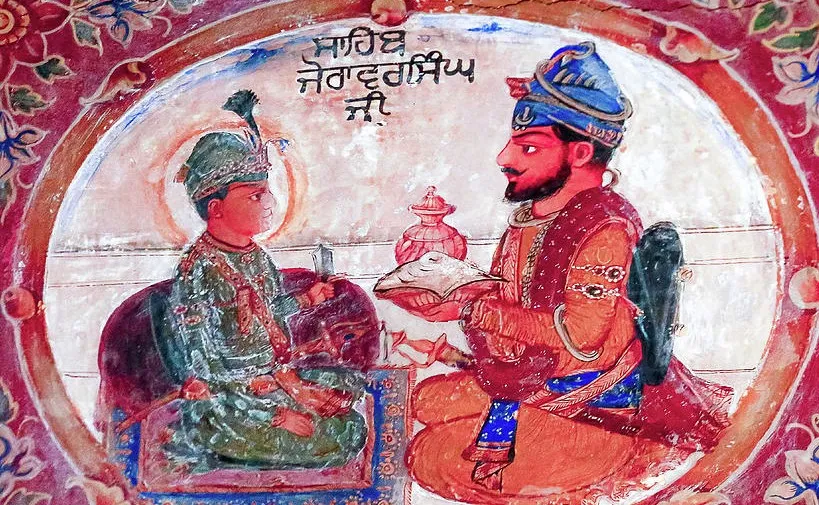
Sahibzada Zorawar Singh Ji (1696 to 1704) was the third son of Guru Gobind Singh Ji and Mata Jito Ji. Separated from the main column at the flooded Sarsa river in December 1704, he was sheltered and then betrayed by the household servant Gangu, and at Sirhind, aged eight, he refused every offer to abandon his faith and was executed with his younger brother Fateh Singh.
- Punjabi name
- ਸਾਹਿਬਜ਼ਾਦਾ ਜ਼ੋਰਾਵਰ ਸਿੰਘ ਜੀ
- Born
- 17 November 1696, Anandpur Sahib (some accounts give 28 November)
- Parents
- Guru Gobind Singh Ji and Mata Jito Ji
- Captured
- Betrayed by Gangu at Saheri; held in the Thanda Burj, Sirhind
- Martyrdom
- 26 December 1704, Sirhind, aged 8 (many traditional accounts give 1705)
- Cremated
- At the site of Gurdwara Jyoti Sarup, Fatehgarh Sahib
Sahibzada Zorawar Singh Ji was the third son of Guru Gobind Singh Ji, and the elder of the two younger princes, the Chhote Sahibzade. He was eight years old in the December of 1704, and his martyrdom at Sirhind, standing beside his little brother in the court of a Mughal governor and refusing to trade his faith for his life, is among the most retold stories in Sikh history. Of the Char Sahibzade, he is the one whose name the annual gathering at Fatehgarh Sahib speaks first.
Childhood at Anandpur
Zorawar Singh was born at Anandpur Sahib on 17 November 1696; some accounts give 28 November. His name means brave, or powerful. His mother, Mata Jito Ji, died in December 1700, when he was four, and from then on he and his baby brother Fateh Singh were raised largely by their grandmother, Mata Gujri Ji, the mother of the Guru. He grew up in the Anandpur of the Khalsa's first years: the new order founded in 1699, the forts rising on the hills, and, from 1704, the long siege that slowly starved the town.
The night the family was scattered
When Anandpur was evacuated in December 1704, Mata Gujri Ji took charge of the two young boys. In the attack at the Sarsa river, where the Sikhs were set upon in the rain and dark despite the sworn safe passage, the grandmother and the children were separated from the Guru's party and could travel no further. Gangu, a servant who had once worked in the Guru's household, took them in at his village of Saheri, near Morinda. There, fearing for himself or tempted by reward, he informed the officials at Morinda of who his guests were. The three were arrested and carried to Sirhind, the seat of the governor Wazir Khan, and shut for the winter nights in the Thanda Burj, the cold tower, a summer pavilion on the fort wall that was bitterly cold in December for an old woman and two small boys.
What happened in Wazir Khan's court?
On two successive days the boys were carried in procession to the governor's public court at Sirhind, through ranks of armed soldiers. They were told, falsely, that their father and brothers were dead. They were offered safety, comfort and riches if they would accept Islam, and threatened with death if they would not. Tradition remembers the children answering with a steadiness that silenced the court, and pointing to their grandfather Guru Tegh Bahadur Ji, who had accepted execution at Delhi rather than abandon his faith. A courtier, Suchanand, urged severity against them. Sher Muhammad Khan, the Nawab of Malerkotla, who had fought against the Guru and lost kinsmen doing it, spoke against harming innocent children and refused his part in it. Wazir Khan overruled him and pronounced the sentence.
The execution and Mata Gujri Ji
In the account every Sikh child learns, the brothers were built alive into a wall, and stood in the rising bricks reciting their prayers until the wall fell and the execution was completed by the sword. The earliest written accounts are plainer and say the boys were beheaded; the difference is noted here because both forms are part of the record. The martyrdom is commemorated on 26 December, at Fatehgarh Sahib, where Gurdwara Fatehgarh Sahib marks the place and Gurdwara Bhora Sahib preserves the wall. Mata Gujri Ji, waiting in the Thanda Burj, died on hearing that the children were gone. A servant of the court, Moti Ram Mehta, who had taken milk to the prisoners, was later executed with his family for the kindness. The bodies of the children and their grandmother were cremated by Diwan Todar Mal, a banker of Sirhind, who bought a small plot for the purpose at a price the tradition measures in gold coins laid upon the ground: Gurdwara Jyoti Sarup stands there now.
The wall and the tower today
A visitor to Fatehgarh Sahib can still walk the whole geography of his last week in a few hundred metres. Gurdwara Burj Mata Gujri stands at the Thanda Burj where he waited with his grandmother. Inside the main Fatehgarh Sahib complex, Gurdwara Bhora Sahib preserves, below the sanctum, the fragment of the wall in which the brothers are remembered to have been built. Gurdwara Jyoti Sarup, a short distance away on the Sirhind road, marks the cremation. Few martyrdoms in the world are mapped so completely onto the ground where they happened, and few are visited by so many children, brought to stand where a boy of eight stood.
How is Sahibzada Zorawar Singh Ji remembered?
Each December the Shaheedi Jor Mela gathers lakhs at Fatehgarh Sahib for three days around his martyrdom, and the Thanda Burj, the court shrines and Jyoti Sarup are walked in procession. Since 2022 his day, 26 December, is Veer Bal Diwas across India. He is remembered not as a soldier, for he never fought a battle, but for a refusal: an eight year old who was offered the world for his faith, understood the bargain, and would not take it.
ਸਾਹਿਬਜ਼ਾਦਾ ਜ਼ੋਰਾਵਰ ਸਿੰਘ ਜੀ, ਗੁਰੂ ਗੋਬਿੰਦ ਸਿੰਘ ਜੀ ਦੇ ਤੀਜੇ ਪੁੱਤਰ ਸਨ, ਅਤੇ ਦੋਹਾਂ ਛੋਟੇ ਸਾਹਿਬਜ਼ਾਦਿਆਂ ਵਿੱਚੋਂ ਵੱਡੇ ਦਸੰਬਰ 1704 ਵਿੱਚ ਉਹ ਅੱਠ ਸਾਲ ਦੇ ਸਨ, ਅਤੇ ਸਰਹਿੰਦ ਵਿਖੇ ਉਨ੍ਹਾਂ ਦੀ ਸ਼ਹਾਦਤ, ਜਿੱਥੇ ਉਹ ਆਪਣੇ ਛੋਟੇ ਭਰਾ ਦੇ ਨਾਲ ਮੁਗ਼ਲ ਸੂਬੇਦਾਰ ਦੀ ਕਚਹਿਰੀ ਵਿੱਚ ਖੜ੍ਹੇ ਹੋ ਕੇ ਆਪਣੀ ਜਾਨ ਦੇ ਬਦਲੇ ਆਪਣਾ ਧਰਮ ਦੇਣ ਤੋਂ ਇਨਕਾਰ ਕਰ ਗਏ, ਸਿੱਖ ਇਤਿਹਾਸ ਦੀਆਂ ਸਭ ਤੋਂ ਵੱਧ ਸੁਣਾਈਆਂ ਜਾਣ ਵਾਲੀਆਂ ਕਥਾਵਾਂ ਵਿੱਚੋਂ ਇੱਕ ਹੈ ਚਾਰ ਸਾਹਿਬਜ਼ਾਦਿਆਂ ਵਿੱਚੋਂ ਉਹੀ ਹਨ, ਜਿਨ੍ਹਾਂ ਦਾ ਨਾਮ ਫ਼ਤਿਹਗੜ੍ਹ ਸਾਹਿਬ ਦਾ ਸਾਲਾਨਾ ਜੋੜ ਮੇਲਾ ਸਭ ਤੋਂ ਪਹਿਲਾਂ ਲੈਂਦਾ ਹੈ
ਅਨੰਦਪੁਰ ਵਿੱਚ ਬਚਪਨ
ਜ਼ੋਰਾਵਰ ਸਿੰਘ 17 ਨਵੰਬਰ 1696 ਨੂੰ ਅਨੰਦਪੁਰ ਸਾਹਿਬ ਵਿਖੇ ਪੈਦਾ ਹੋਏ; ਕੁਝ ਬਿਰਤਾਂਤ 28 ਨਵੰਬਰ ਦਿੰਦੇ ਹਨ ਉਨ੍ਹਾਂ ਦੇ ਨਾਮ ਦਾ ਅਰਥ ਹੈ ਬਹਾਦਰ, ਜਾਂ ਬਲਵਾਨ ਉਨ੍ਹਾਂ ਦੀ ਮਾਤਾ, ਮਾਤਾ ਜੀਤੋ ਜੀ, ਦਸੰਬਰ 1700 ਵਿੱਚ ਚਲਾਣਾ ਕਰ ਗਏ, ਜਦੋਂ ਉਹ ਚਾਰ ਸਾਲ ਦੇ ਸਨ, ਅਤੇ ਉਸ ਤੋਂ ਬਾਅਦ ਉਹ ਅਤੇ ਉਨ੍ਹਾਂ ਦੇ ਨਿੱਕੇ ਭਰਾ ਫ਼ਤਿਹ ਸਿੰਘ ਜ਼ਿਆਦਾਤਰ ਆਪਣੀ ਦਾਦੀ, ਮਾਤਾ ਗੁਜਰੀ ਜੀ, ਦੀ ਦੇਖਭਾਲ ਵਿੱਚ ਪਲੇ ਉਹ ਖ਼ਾਲਸੇ ਦੇ ਪਹਿਲੇ ਸਾਲਾਂ ਦੇ ਅਨੰਦਪੁਰ ਵਿੱਚ ਵੱਡੇ ਹੋਏ: 1699 ਵਿੱਚ ਸਾਜਿਆ ਨਵਾਂ ਪੰਥ, ਪਹਾੜੀਆਂ ਉੱਤੇ ਉੱਠਦੇ ਕਿਲ੍ਹੇ, ਅਤੇ 1704 ਤੋਂ ਉਹ ਲੰਮੀ ਘੇਰਾਬੰਦੀ ਜਿਸ ਨੇ ਹੌਲੀ-ਹੌਲੀ ਸ਼ਹਿਰ ਨੂੰ ਭੁੱਖਾ ਮਾਰਿਆ
ਉਹ ਰਾਤ ਜਦੋਂ ਪਰਿਵਾਰ ਵਿਛੜ ਗਿਆ
ਦਸੰਬਰ 1704 ਵਿੱਚ ਜਦੋਂ ਅਨੰਦਪੁਰ ਖ਼ਾਲੀ ਕੀਤਾ ਗਿਆ, ਤਾਂ ਮਾਤਾ ਗੁਜਰੀ ਜੀ ਨੇ ਦੋਹਾਂ ਛੋਟੇ ਸਾਹਿਬਜ਼ਾਦਿਆਂ ਦੀ ਜ਼ਿੰਮੇਵਾਰੀ ਲਈ ਸਰਸਾ ਨਦੀ ਕੰਢੇ ਹੋਏ ਹਮਲੇ ਵਿੱਚ, ਜਿੱਥੇ ਸਹੁੰ ਖਾਧੇ ਸੁਰੱਖਿਅਤ ਰਾਹ ਦੇ ਬਾਵਜੂਦ ਮੀਂਹ ਅਤੇ ਹਨੇਰੇ ਵਿੱਚ ਸਿੱਖਾਂ ਉੱਤੇ ਹਮਲਾ ਹੋਇਆ, ਦਾਦੀ ਅਤੇ ਬੱਚੇ ਗੁਰੂ ਜੀ ਦੇ ਦਸਤੇ ਤੋਂ ਵਿਛੜ ਗਏ ਅਤੇ ਅੱਗੇ ਨਾ ਜਾ ਸਕੇ ਗੰਗੂ, ਇੱਕ ਨੌਕਰ ਜੋ ਕਦੇ ਗੁਰੂ ਜੀ ਦੇ ਘਰ ਵਿੱਚ ਕੰਮ ਕਰ ਚੁੱਕਾ ਸੀ, ਨੇ ਉਨ੍ਹਾਂ ਨੂੰ ਮੋਰਿੰਡੇ ਨੇੜੇ ਆਪਣੇ ਪਿੰਡ ਸਹੇੜੀ ਵਿੱਚ ਠਾਹਰ ਦਿੱਤੀ ਉੱਥੇ, ਆਪਣੇ ਡਰੋਂ ਜਾਂ ਇਨਾਮ ਦੇ ਲਾਲਚ ਵਿੱਚ, ਉਸ ਨੇ ਮੋਰਿੰਡੇ ਦੇ ਹਾਕਮਾਂ ਨੂੰ ਦੱਸ ਦਿੱਤਾ ਕਿ ਉਸ ਦੇ ਮਹਿਮਾਨ ਕੌਣ ਹਨ ਤਿੰਨਾਂ ਨੂੰ ਗ੍ਰਿਫ਼ਤਾਰ ਕਰ ਕੇ ਸੂਬੇਦਾਰ ਵਜ਼ੀਰ ਖ਼ਾਨ ਦੇ ਟਿਕਾਣੇ ਸਰਹਿੰਦ ਲਿਜਾਇਆ ਗਿਆ, ਅਤੇ ਸਰਦੀਆਂ ਦੀਆਂ ਰਾਤਾਂ ਲਈ ਠੰਢੇ ਬੁਰਜ ਵਿੱਚ ਬੰਦ ਕਰ ਦਿੱਤਾ ਗਿਆ, ਕਿਲ੍ਹੇ ਦੀ ਕੰਧ ਉੱਤੇ ਬਣਿਆ ਉਹ ਗਰਮੀਆਂ ਦਾ ਮਹਿਲ ਜੋ ਦਸੰਬਰ ਵਿੱਚ ਇੱਕ ਬਜ਼ੁਰਗ ਔਰਤ ਅਤੇ ਦੋ ਨਿੱਕੇ ਬੱਚਿਆਂ ਲਈ ਬਹੁਤ ਠੰਢਾ ਸੀ
ਵਜ਼ੀਰ ਖ਼ਾਨ ਦੀ ਕਚਹਿਰੀ ਵਿੱਚ ਕੀ ਹੋਇਆ?
ਲਗਾਤਾਰ ਦੋ ਦਿਨ ਸਾਹਿਬਜ਼ਾਦਿਆਂ ਨੂੰ ਜਲੂਸ ਦੀ ਸ਼ਕਲ ਵਿੱਚ ਸਰਹਿੰਦ ਵਿਖੇ ਸੂਬੇਦਾਰ ਦੀ ਭਰੀ ਕਚਹਿਰੀ ਵਿੱਚ ਲਿਜਾਇਆ ਗਿਆ, ਹਥਿਆਰਬੰਦ ਸਿਪਾਹੀਆਂ ਦੀਆਂ ਕਤਾਰਾਂ ਵਿੱਚੋਂ ਲੰਘਾ ਕੇ ਉਨ੍ਹਾਂ ਨੂੰ ਝੂਠ ਦੱਸਿਆ ਗਿਆ ਕਿ ਉਨ੍ਹਾਂ ਦੇ ਪਿਤਾ ਅਤੇ ਭਰਾ ਮਾਰੇ ਜਾ ਚੁੱਕੇ ਹਨ ਉਨ੍ਹਾਂ ਨੂੰ ਸੁਰੱਖਿਆ, ਆਰਾਮ ਅਤੇ ਦੌਲਤ ਦੀ ਪੇਸ਼ਕਸ਼ ਕੀਤੀ ਗਈ, ਜੇ ਉਹ ਇਸਲਾਮ ਕਬੂਲ ਕਰ ਲੈਣ, ਅਤੇ ਜੇ ਨਾ ਕਰਨ, ਤਾਂ ਮੌਤ ਦੀ ਧਮਕੀ ਦਿੱਤੀ ਗਈ ਸਾਖੀ ਪਰੰਪਰਾ ਯਾਦ ਕਰਦੀ ਹੈ ਕਿ ਬੱਚਿਆਂ ਨੇ ਅਜਿਹੀ ਸਥਿਰਤਾ ਨਾਲ ਜਵਾਬ ਦਿੱਤਾ ਕਿ ਕਚਹਿਰੀ ਚੁੱਪ ਹੋ ਗਈ, ਅਤੇ ਆਪਣੇ ਦਾਦਾ ਗੁਰੂ ਤੇਗ਼ ਬਹਾਦਰ ਜੀ ਵੱਲ ਇਸ਼ਾਰਾ ਕੀਤਾ, ਜਿਨ੍ਹਾਂ ਨੇ ਧਰਮ ਛੱਡਣ ਦੀ ਬਜਾਏ ਦਿੱਲੀ ਵਿਖੇ ਸ਼ਹਾਦਤ ਕਬੂਲ ਕੀਤੀ ਸੀ ਇੱਕ ਦਰਬਾਰੀ, ਸੁੱਚਾਨੰਦ, ਨੇ ਉਨ੍ਹਾਂ ਦੇ ਵਿਰੁੱਧ ਸਖ਼ਤੀ ਦੀ ਰਾਏ ਦਿੱਤੀ ਮਲੇਰਕੋਟਲੇ ਦਾ ਨਵਾਬ ਸ਼ੇਰ ਮੁਹੰਮਦ ਖ਼ਾਨ, ਜੋ ਗੁਰੂ ਜੀ ਨਾਲ ਲੜ ਚੁੱਕਾ ਸੀ ਅਤੇ ਲੜਾਈ ਵਿੱਚ ਆਪਣੇ ਰਿਸ਼ਤੇਦਾਰ ਗੁਆ ਚੁੱਕਾ ਸੀ, ਮਾਸੂਮ ਬੱਚਿਆਂ ਨੂੰ ਨੁਕਸਾਨ ਪਹੁੰਚਾਉਣ ਦੇ ਵਿਰੁੱਧ ਬੋਲਿਆ ਅਤੇ ਆਪਣਾ ਹਿੱਸਾ ਲੈਣ ਤੋਂ ਇਨਕਾਰ ਕਰ ਦਿੱਤਾ ਵਜ਼ੀਰ ਖ਼ਾਨ ਨੇ ਉਸ ਦੀ ਗੱਲ ਰੱਦ ਕਰ ਕੇ ਸਜ਼ਾ ਸੁਣਾ ਦਿੱਤੀ
ਸ਼ਹਾਦਤ ਅਤੇ ਮਾਤਾ ਗੁਜਰੀ ਜੀ
ਜਿਸ ਕਥਾ ਨੂੰ ਹਰ ਸਿੱਖ ਬੱਚਾ ਸਿੱਖਦਾ ਹੈ, ਉਸ ਵਿੱਚ ਭਰਾਵਾਂ ਨੂੰ ਜਿਊਂਦੇ ਹੀ ਕੰਧ ਵਿੱਚ ਚਿਣ ਦਿੱਤਾ ਗਿਆ, ਅਤੇ ਉਹ ਉੱਠਦੀਆਂ ਇੱਟਾਂ ਵਿੱਚ ਪਾਠ ਕਰਦੇ ਖੜ੍ਹੇ ਰਹੇ, ਜਦੋਂ ਤੱਕ ਕੰਧ ਢਿੱਗ ਨਾ ਗਈ ਅਤੇ ਤਲਵਾਰ ਨਾਲ ਸਜ਼ਾ ਪੂਰੀ ਨਾ ਕੀਤੀ ਗਈ ਸਭ ਤੋਂ ਪੁਰਾਣੇ ਲਿਖਤੀ ਬਿਰਤਾਂਤ ਸਾਦੇ ਹਨ ਅਤੇ ਕਹਿੰਦੇ ਹਨ ਕਿ ਸਾਹਿਬਜ਼ਾਦਿਆਂ ਨੂੰ ਸ਼ਹੀਦ ਕੀਤਾ ਗਿਆ; ਇਹ ਫ਼ਰਕ ਇੱਥੇ ਇਸ ਲਈ ਦਰਜ ਹੈ, ਕਿਉਂਕਿ ਦੋਵੇਂ ਰੂਪ ਰਿਕਾਰਡ ਦਾ ਹਿੱਸਾ ਹਨ ਸ਼ਹਾਦਤ 26 ਦਸੰਬਰ ਨੂੰ ਫ਼ਤਿਹਗੜ੍ਹ ਸਾਹਿਬ ਵਿਖੇ ਮਨਾਈ ਜਾਂਦੀ ਹੈ, ਜਿੱਥੇ ਗੁਰਦੁਆਰਾ ਫ਼ਤਿਹਗੜ੍ਹ ਸਾਹਿਬ ਉਸ ਥਾਂ ਨੂੰ ਅਤੇ ਗੁਰਦੁਆਰਾ ਭੋਰਾ ਸਾਹਿਬ ਉਸ ਕੰਧ ਨੂੰ ਸੰਭਾਲਦਾ ਹੈ ਠੰਢੇ ਬੁਰਜ ਵਿੱਚ ਉਡੀਕਦੀ ਮਾਤਾ ਗੁਜਰੀ ਜੀ, ਬੱਚਿਆਂ ਦੇ ਚਲੇ ਜਾਣ ਦੀ ਖ਼ਬਰ ਸੁਣ ਕੇ ਚਲਾਣਾ ਕਰ ਗਏ ਦਰਬਾਰ ਦਾ ਇੱਕ ਸੇਵਕ, ਮੋਤੀ ਰਾਮ ਮਹਿਤਾ, ਜੋ ਕੈਦੀਆਂ ਨੂੰ ਦੁੱਧ ਪਹੁੰਚਾਉਂਦਾ ਰਿਹਾ ਸੀ, ਬਾਅਦ ਵਿੱਚ ਇਸੇ ਦਇਆ ਲਈ ਆਪਣੇ ਪਰਿਵਾਰ ਸਮੇਤ ਸ਼ਹੀਦ ਕੀਤਾ ਗਿਆ ਬੱਚਿਆਂ ਅਤੇ ਉਨ੍ਹਾਂ ਦੀ ਦਾਦੀ ਦਾ ਸਸਕਾਰ ਸਰਹਿੰਦ ਦੇ ਸ਼ਾਹੂਕਾਰ ਦੀਵਾਨ ਟੋਡਰ ਮੱਲ ਨੇ ਕੀਤਾ, ਜਿਸ ਨੇ ਇਸ ਮਕਸਦ ਲਈ ਛੋਟੀ ਜਿਹੀ ਜ਼ਮੀਨ ਉਸ ਕੀਮਤ ਉੱਤੇ ਖ਼ਰੀਦੀ ਜਿਸ ਨੂੰ ਪਰੰਪਰਾ ਜ਼ਮੀਨ ਉੱਤੇ ਵਿਛਾਏ ਸੋਨੇ ਦੇ ਸਿੱਕਿਆਂ ਨਾਲ ਮਾਪਦੀ ਹੈ: ਉੱਥੇ ਅੱਜ ਗੁਰਦੁਆਰਾ ਜੋਤੀ ਸਰੂਪ ਖੜ੍ਹਾ ਹੈ
ਕੰਧ ਅਤੇ ਬੁਰਜ ਅੱਜ
ਫ਼ਤਿਹਗੜ੍ਹ ਸਾਹਿਬ ਆਉਣ ਵਾਲਾ ਅਜੇ ਵੀ ਉਨ੍ਹਾਂ ਦੇ ਆਖ਼ਰੀ ਹਫ਼ਤੇ ਦਾ ਸਾਰਾ ਭੂਗੋਲ ਕੁਝ ਸੌ ਮੀਟਰਾਂ ਵਿੱਚ ਤੈਅ ਕਰ ਸਕਦਾ ਹੈ ਗੁਰਦੁਆਰਾ ਬੁਰਜ ਮਾਤਾ ਗੁਜਰੀ ਉਸ ਠੰਢੇ ਬੁਰਜ ਵਿਖੇ ਖੜ੍ਹਾ ਹੈ, ਜਿੱਥੇ ਉਹ ਆਪਣੀ ਦਾਦੀ ਨਾਲ ਉਡੀਕਦੇ ਰਹੇ ਮੁੱਖ ਫ਼ਤਿਹਗੜ੍ਹ ਸਾਹਿਬ ਪਰਿਸਰ ਦੇ ਅੰਦਰ, ਗੁਰਦੁਆਰਾ ਭੋਰਾ ਸਾਹਿਬ ਗਰਭ-ਗ੍ਰਹਿ ਦੇ ਹੇਠਾਂ ਉਸ ਕੰਧ ਦਾ ਟੁਕੜਾ ਸੰਭਾਲਦਾ ਹੈ, ਜਿਸ ਵਿੱਚ ਭਰਾਵਾਂ ਨੂੰ ਚਿਣੇ ਜਾਣ ਵਜੋਂ ਯਾਦ ਕੀਤਾ ਜਾਂਦਾ ਹੈ ਥੋੜ੍ਹੀ ਦੂਰ ਸਰਹਿੰਦ ਸੜਕ ਉੱਤੇ ਗੁਰਦੁਆਰਾ ਜੋਤੀ ਸਰੂਪ ਸਸਕਾਰ ਦੀ ਥਾਂ ਨੂੰ ਦਰਸਾਉਂਦਾ ਹੈ ਸੰਸਾਰ ਦੀਆਂ ਬਹੁਤ ਘੱਟ ਸ਼ਹਾਦਤਾਂ ਉਸ ਜ਼ਮੀਨ ਉੱਤੇ ਇੰਨੀ ਪੂਰੀ ਤਰ੍ਹਾਂ ਦਰਜ ਹਨ ਜਿੱਥੇ ਉਹ ਹੋਈਆਂ, ਅਤੇ ਬਹੁਤ ਘੱਟ ਥਾਵਾਂ ਉੱਤੇ ਇੰਨੇ ਬੱਚੇ ਆਉਂਦੇ ਹਨ, ਉੱਥੇ ਖੜ੍ਹਨ ਲਈ ਲਿਆਂਦੇ ਗਏ ਜਿੱਥੇ ਅੱਠ ਸਾਲ ਦਾ ਬਾਲਕ ਖੜ੍ਹਾ ਸੀ
ਸਾਹਿਬਜ਼ਾਦਾ ਜ਼ੋਰਾਵਰ ਸਿੰਘ ਜੀ ਨੂੰ ਕਿਵੇਂ ਯਾਦ ਕੀਤਾ ਜਾਂਦਾ ਹੈ?
ਹਰ ਦਸੰਬਰ ਸ਼ਹੀਦੀ ਜੋੜ ਮੇਲਾ ਲੱਖਾਂ ਦੀ ਗਿਣਤੀ ਵਿੱਚ ਫ਼ਤਿਹਗੜ੍ਹ ਸਾਹਿਬ ਵਿਖੇ ਉਨ੍ਹਾਂ ਦੀ ਸ਼ਹਾਦਤ ਦੇ ਆਸ-ਪਾਸ ਤਿੰਨ ਦਿਨ ਇਕੱਠਾ ਹੁੰਦਾ ਹੈ, ਅਤੇ ਠੰਢਾ ਬੁਰਜ, ਕਚਹਿਰੀ ਦੇ ਅਸਥਾਨ ਅਤੇ ਜੋਤੀ ਸਰੂਪ ਦੀ ਯਾਤਰਾ ਕੀਤੀ ਜਾਂਦੀ ਹੈ 2022 ਤੋਂ ਉਨ੍ਹਾਂ ਦਾ ਦਿਨ, 26 ਦਸੰਬਰ, ਸਾਰੇ ਭਾਰਤ ਵਿੱਚ ਵੀਰ ਬਾਲ ਦਿਵਸ ਹੈ ਉਨ੍ਹਾਂ ਨੂੰ ਇੱਕ ਸਿਪਾਹੀ ਵਜੋਂ ਨਹੀਂ ਯਾਦ ਕੀਤਾ ਜਾਂਦਾ, ਕਿਉਂਕਿ ਉਨ੍ਹਾਂ ਨੇ ਕੋਈ ਲੜਾਈ ਨਹੀਂ ਲੜੀ, ਸਗੋਂ ਇੱਕ ਇਨਕਾਰ ਲਈ ਯਾਦ ਕੀਤਾ ਜਾਂਦਾ ਹੈ: ਇੱਕ ਅੱਠ ਸਾਲ ਦਾ ਬੱਚਾ, ਜਿਸ ਨੂੰ ਆਪਣੇ ਧਰਮ ਦੇ ਬਦਲੇ ਸੰਸਾਰ ਦੀ ਪੇਸ਼ਕਸ਼ ਹੋਈ, ਜਿਸ ਨੇ ਸੌਦੇ ਨੂੰ ਸਮਝਿਆ, ਅਤੇ ਜੋ ਉਸ ਨੂੰ ਲੈਣ ਲਈ ਤਿਆਰ ਨਾ ਹੋਇਆ