
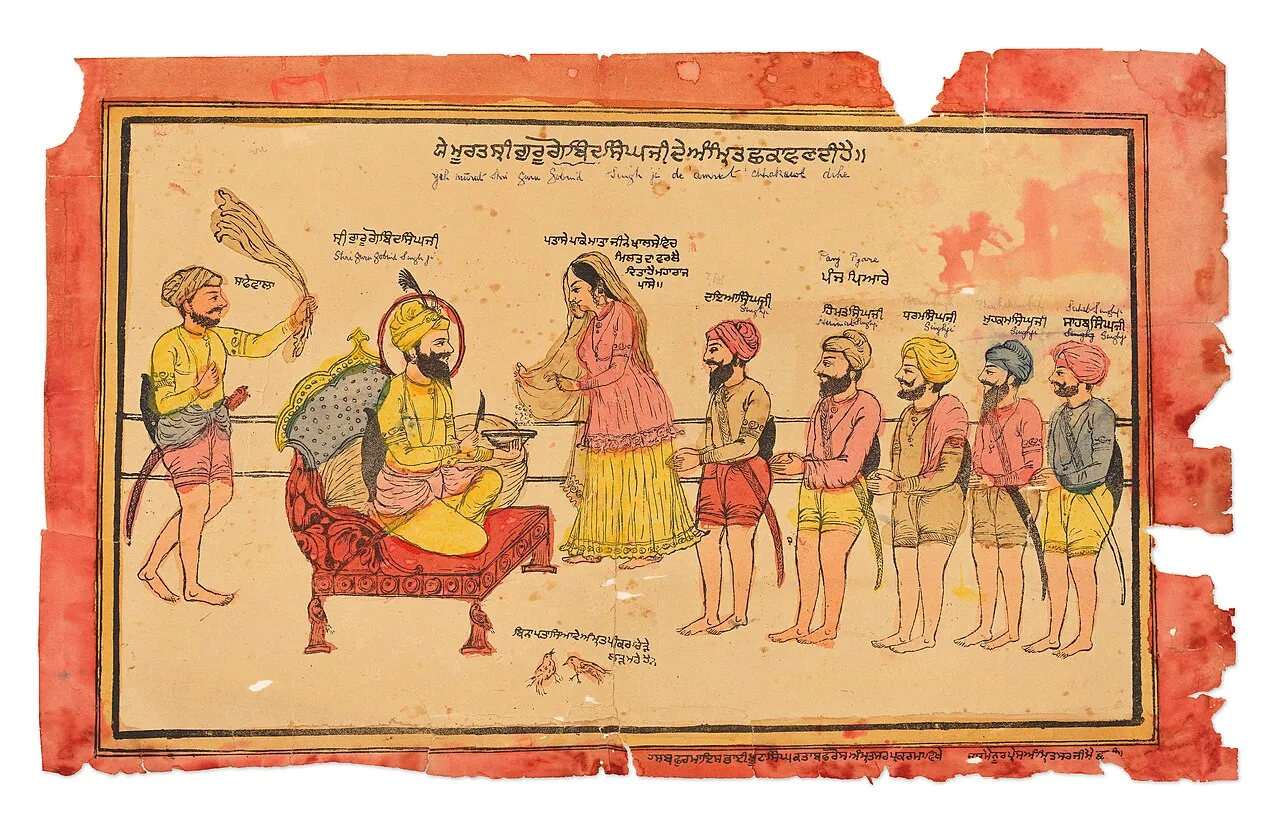
The Panj Pyare, the Five Beloved Ones, are the five Sikhs who offered their heads to Guru Gobind Singh Ji at Anandpur Sahib on Vaisakhi 1699 and were baptised as the first members of the Khalsa: Bhai Daya Singh Ji, Bhai Dharam Singh Ji, Bhai Himmat Singh Ji, Bhai Mohkam Singh Ji and Bhai Sahib Singh Ji. Ever since, any five initiated Sikhs of standing can sit as Panj Pyare and act with the Guru's authority.
- Punjabi name
- ਪੰਜ ਪਿਆਰੇ
- Meaning
- The Five Beloved Ones
- Formed
- 30 March 1699, Vaisakhi, at Keshgarh Fort, Anandpur Sahib
- Founded by
- Guru Gobind Singh Ji, the tenth Guru
- The first five
- Daya Singh (Lahore), Dharam Singh (Hastinapur), Himmat Singh (Puri), Mohkam Singh (Dwarka), Sahib Singh (Bidar)
- The rite
- Khande di Pahul, the first amrit prepared with a double-edged sword
- Role today
- Any five amritdhari Sikhs of standing conduct amrit ceremonies, lead processions and decide for the sangat
The Panj Pyare, the Five Beloved Ones, are the five Sikhs who answered Guru Gobind Singh Ji's call for a head at Anandpur Sahib on Vaisakhi 1699 and were baptised as the first members of the Khalsa. Their names are recited wherever Sikhs gather: Bhai Daya Singh Ji, Bhai Dharam Singh Ji, Bhai Himmat Singh Ji, Bhai Mohkam Singh Ji and Bhai Sahib Singh Ji. But the Panj Pyare are more than five historical men: they are a living institution, the council of five through which the Khalsa has governed itself from that day to this.
Vaisakhi 1699: the call for a head
In the winter of 1698 to 1699 the Guru sent out letters asking his Sikhs to gather at Anandpur for Vaisakhi, and to come unshorn, with their hair and beards grown. On the day itself, 30 March 1699, an enormous crowd filled the ground by Keshgarh fort. After the morning kirtan, Guru Gobind Singh Ji rose before the assembly, drew his sword, and asked whether any devoted Sikh present would lay down his head for the Guru's cause.
The demand stunned the crowd. Then one man rose: Daya Ram of Lahore. The Guru led him to a tent nearby and returned alone, sword wet with blood, and asked again. A second volunteer rose, Dharam Das of Hastinapur, then a third, Mohkam Chand of Dwarka, then Himmat of Puri, and finally Sahib Chand of Bidar. Each was led away, and the assembly feared the worst. Then the Guru brought all five out alive and dressed in saffron robes with blue sashes and turbans, and the crowd understood that a founding, not an execution, had taken place. Accounts differ on small details of dress and order, but the core of the story has never varied.
The first amrit
The Guru then prepared amrit, the baptismal nectar, in an iron bowl, stirring pure water with a khanda, a double-edged sword, while the five banis were recited. By tradition, Mata Jito Ji, and in later retellings Mata Sahib Kaur Ji, added sugar crystals to the water, tempering the steel with sweetness. Each of the five drank five palmfuls, was sprinkled five times on the eyes and the hair, and received a new name with the common surname Singh, lion. The old rite of charan pahul, water touched by the Guru's foot, was replaced forever by Khande di Pahul, the baptism of the sword, given by the Guru to the community.
Then came the act that defines the institution. The Guru stood before the five with folded hands and asked them to baptise him in the same way. The disciple had become the master, and the master a disciple: Ape Gur Chela, himself both Guru and follower. He declared the five to be his own form, and laid down that where five Sikhs gathered in the Khalsa's discipline, there the Guru would be present. Authority in the Panth no longer flowed from one man alone; it flowed through the beloved five.
Five men, five regions, five callings
Look at the five as a map and the Guru's intention becomes plain. Daya Singh was a Khatri shopkeeper's son of Lahore, in Punjab itself. Dharam Singh was a Jat farmer of Hastinapur on the Ganges. Mohkam Singh was a Chhimba calico-printer of Dwarka in Gujarat. Himmat Singh was a Jheevar water-carrier of Jagannath Puri in Odisha. Sahib Singh was a Nai barber of Bidar in Karnataka. Five regions spanning the whole of India, five communities from the honoured to the humble, one baptism, one name. In a society graded by birth, the founding council of the Khalsa was deliberately drawn so that no caste could claim it and no region could own it.
Why five? The council tradition
Five was not an arbitrary number. In Punjabi and Indian life the panch, the council of five, had decided village disputes for centuries, and the panchayat's word carried a moral weight beyond the men who spoke it. In Sikh thought the number runs deeper still: Guru Nanak's Japji speaks of five khands, five stages of the soul's journey, and the tradition before 1699 already knew beloved fives, for each Guru had gathered his own chosen panj. What Guru Gobind Singh Ji did was to turn that reverence into a constitution. The five baptised together, deliberating together, would be the Guru's council and the Panth's conscience, and their collective decision would bind even the Guru.
History supplied the proof within six years. At Chamkaur in December 1705, surrounded and reduced to a handful of men, the Guru wished to fight on and die with his Sikhs. The five Sikhs who remained constituted themselves as the Panj Pyare and, speaking as the Guru Khalsa, commanded him to leave the fortress and preserve himself for the Panth. The Guru obeyed his own institution, bowed to the five, and escaped in the night. It remains the supreme example in Sikh history of authority held not by a person but by a council acting in the Guru's name.
The five beloved ones, one by one
Bhai Daya Singh Ji (1661 to 1708) of Lahore, the first to rise and the mukhi, foremost of the five. A scholar of Persian and Punjabi, he escaped Chamkaur at the Guru's side, carried the Zafarnama to Aurangzeb in the Deccan, and died at Nanded in 1708, days after the Guru himself.
Bhai Dharam Singh Ji (1666 to 1708) of Hastinapur, a Jat farmer's son who left home at thirty to find the Guru. He shared the Zafarnama mission, led a Sikh band at the battle of Jajau in 1707, and died at Nanded in 1708, where a joint memorial honours him with Daya Singh.
Bhai Himmat Singh Ji (1661 to 1705) of Jagannath Puri, a water-carrier's son whose name means courage. He came to Anandpur at seventeen and died fighting at Chamkaur on 7 December 1705, with two of his fellow Pyare beside him.
Bhai Mohkam Singh Ji (1663 to 1705) of Dwarka, a calico-printer and trained martial artist who had served the Guru since about 1685. He fell at Chamkaur in December 1705, one of the three of the five martyred that day.
Bhai Sahib Singh Ji (1662 to 1705) of Bidar, a barber's son from the town Guru Nanak had visited, and a marksman famed in the Anandpur battles. He too died at Chamkaur on 7 December 1705, the southernmost of the five completing the map they drew together.
The Panj Pyare today
The institution did not retire with its founders. From 1699 onward, any five amritdhari Sikhs of recognised standing can be chosen to sit as Panj Pyare, and through them the Khalsa still acts. The five conduct the Amrit Sanchar, preparing and giving amrit exactly as at Anandpur. They lay the foundation stones of new gurdwaras, lead religious processions on foot at their head, and sit in judgement on questions of discipline and community concern that are brought before the sangat. When a decision of the five is announced, it is received not as the opinion of five individuals but as the word of the Guru Panth, the same authority the first five exercised over their own Guru at Chamkaur.
That is why the names of Daya, Dharam, Himmat, Mohkam and Sahib Singh are never merely recited as history. They are the charter of a way of governing the faith: no single leader above correction, no decision without the council, and no Sikh, however humble his birth, shut out from the highest seat the Panth can offer.
Who were the first Panj Pyare?
The first Panj Pyare were Bhai Daya Singh Ji of Lahore, Bhai Dharam Singh Ji of Hastinapur, Bhai Himmat Singh Ji of Jagannath Puri, Bhai Mohkam Singh Ji of Dwarka and Bhai Sahib Singh Ji of Bidar. They were the first five to offer their heads to Guru Gobind Singh Ji at Anandpur Sahib on 30 March 1699, and the first to receive Khande di Pahul, the baptism of the double-edged sword.
Why do the Panj Pyare matter in Sikh life today?
Because the institution they founded still works. Guru Gobind Singh Ji declared the five, gathered in discipline, to be his own form, and took amrit from their hands. Ever since, five initiated Sikhs of standing act as Panj Pyare to conduct amrit ceremonies, lay gurdwara foundation stones, lead processions and decide questions for the sangat, most famously shown at Chamkaur in 1705, when the five commanded the Guru himself to leave the fortress, and he obeyed.
ਪੰਜ ਪਿਆਰੇ ਉਹ ਪੰਜ ਸਿੱਖ ਹਨ ਜਿਨ੍ਹਾਂ ਨੇ ਵਿਸਾਖੀ 1699 ਨੂੰ ਅਨੰਦਪੁਰ ਸਾਹਿਬ ਵਿਖੇ ਗੁਰੂ ਗੋਬਿੰਦ ਸਿੰਘ ਜੀ ਦੇ ਸੀਸ ਦੇ ਸੱਦੇ ਦਾ ਜਵਾਬ ਦਿੱਤਾ ਅਤੇ ਖ਼ਾਲਸੇ ਦੇ ਪਹਿਲੇ ਮੈਂਬਰਾਂ ਵਜੋਂ ਛਕਾਏ ਗਏ ਉਨ੍ਹਾਂ ਦੇ ਨਾਂ ਜਿੱਥੇ ਵੀ ਸਿੱਖ ਇਕੱਠੇ ਹੁੰਦੇ ਹਨ ਉੱਥੇ ਲਏ ਜਾਂਦੇ ਹਨ: ਭਾਈ ਦਇਆ ਸਿੰਘ ਜੀ, ਭਾਈ ਧਰਮ ਸਿੰਘ ਜੀ, ਭਾਈ ਹਿੰਮਤ ਸਿੰਘ ਜੀ, ਭਾਈ ਮੋਹਕਮ ਸਿੰਘ ਜੀ ਅਤੇ ਭਾਈ ਸਾਹਿਬ ਸਿੰਘ ਜੀ ਪਰ ਪੰਜ ਪਿਆਰੇ ਪੰਜ ਇਤਿਹਾਸਕ ਬੰਦਿਆਂ ਤੋਂ ਵੱਧ ਹਨ: ਉਹ ਇੱਕ ਜਿਉਂਦੀ ਸੰਸਥਾ ਹਨ, ਪੰਜਾਂ ਦੀ ਸਭਾ ਜਿਸ ਰਾਹੀਂ ਖ਼ਾਲਸੇ ਨੇ ਉਸ ਦਿਨ ਤੋਂ ਅੱਜ ਤੱਕ ਆਪਣਾ ਪ੍ਰਬੰਧ ਆਪ ਕੀਤਾ ਹੈ
ਵਿਸਾਖੀ 1699: ਸੀਸ ਦਾ ਸੱਦਾ
1698 ਤੋਂ 1699 ਦੀ ਸਰਦੀ ਵਿੱਚ ਗੁਰੂ ਜੀ ਨੇ ਚਿੱਠੀਆਂ ਭੇਜ ਕੇ ਆਪਣੇ ਸਿੱਖਾਂ ਨੂੰ ਵਿਸਾਖੀ ਲਈ ਅਨੰਦਪੁਰ ਬੁਲਾਇਆ, ਅਤੇ ਕਿਹਾ ਕਿ ਉਹ ਕੇਸ ਨਾ ਕੱਟੇ, ਵਾਲ ਅਤੇ ਦਾੜ੍ਹੀ ਵਧਾ ਕੇ ਆਉਣ ਉਸ ਦਿਨ, 30 ਮਾਰਚ 1699 ਨੂੰ, ਕੇਸਗੜ੍ਹ ਕਿਲ੍ਹੇ ਕੋਲ ਮੈਦਾਨ ਵਿੱਚ ਭਾਰੀ ਭੀੜ ਇਕੱਠੀ ਹੋਈ ਸਵੇਰ ਦੇ ਕੀਰਤਨ ਤੋਂ ਬਾਅਦ ਗੁਰੂ ਗੋਬਿੰਦ ਸਿੰਘ ਜੀ ਸੰਗਤ ਸਾਹਮਣੇ ਉੱਠੇ, ਤਲਵਾਰ ਖਿੱਚੀ, ਅਤੇ ਪੁੱਛਿਆ ਕਿ ਕੀ ਕੋਈ ਸ਼ਰਧਾਲੂ ਸਿੱਖ ਹਾਜ਼ਰ ਹੈ ਜੋ ਗੁਰੂ ਦੇ ਕਾਰਜ ਲਈ ਆਪਣਾ ਸੀਸ ਦੇਵੇ
ਇਸ ਮੰਗ ਨੇ ਭੀੜ ਨੂੰ ਸੁੰਨ ਕਰ ਦਿੱਤਾ ਫਿਰ ਇੱਕ ਬੰਦਾ ਉੱਠਿਆ: ਲਾਹੌਰ ਦਾ ਦਇਆ ਰਾਮ ਗੁਰੂ ਜੀ ਉਸ ਨੂੰ ਨੇੜੇ ਦੇ ਤੰਬੂ ਵਿੱਚ ਲੈ ਗਏ ਅਤੇ ਲਹੂ ਨਾਲ ਭਰੀ ਤਲਵਾਰ ਲੈ ਕੇ ਇਕੱਲੇ ਵਾਪਸ ਆਏ, ਅਤੇ ਫਿਰ ਮੰਗ ਕੀਤੀ ਦੂਜਾ ਸਵੈਸੇਵਕ ਉੱਠਿਆ, ਹਸਤਨਾਪੁਰ ਦਾ ਧਰਮ ਦਾਸ, ਫਿਰ ਤੀਜਾ, ਦਵਾਰਕਾ ਦਾ ਮੋਹਕਮ ਚੰਦ, ਫਿਰ ਪੁਰੀ ਦਾ ਹਿੰਮਤ, ਅਤੇ ਅਖ਼ੀਰ ਬਿਦਰ ਦਾ ਸਾਹਿਬ ਚੰਦ ਹਰ ਇੱਕ ਨੂੰ ਲਿਜਾਇਆ ਗਿਆ, ਅਤੇ ਸੰਗਤ ਨੂੰ ਸਭ ਤੋਂ ਭੈੜੇ ਦਾ ਡਰ ਸੀ ਫਿਰ ਗੁਰੂ ਜੀ ਪੰਜਾਂ ਨੂੰ ਜਿਉਂਦੇ ਬਾਹਰ ਲਿਆਏ, ਕੇਸਰੀ ਬਾਣੇ ਅਤੇ ਨੀਲੇ ਕਮਰਕੱਸਿਆਂ ਤੇ ਦਸਤਾਰਾਂ ਵਿੱਚ ਸਜਾਏ, ਅਤੇ ਭੀੜ ਸਮਝ ਗਈ ਕਿ ਇਹ ਸਥਾਪਨਾ ਹੋਈ ਸੀ, ਕਤਲ ਨਹੀਂ ਬਿਰਤਾਂਤ ਪਹਿਰਾਵੇ ਅਤੇ ਕ੍ਰਮ ਦੇ ਛੋਟੇ ਵੇਰਵਿਆਂ ਵਿੱਚ ਵੱਖ ਵੱਖ ਹਨ, ਪਰ ਕਹਾਣੀ ਦਾ ਕੇਂਦਰ ਕਦੇ ਨਹੀਂ ਬਦਲਿਆ
ਪਹਿਲਾ ਅੰਮ੍ਰਿਤ
ਫਿਰ ਗੁਰੂ ਜੀ ਨੇ ਲੋਹੇ ਦੇ ਬਾਟੇ ਵਿੱਚ ਅੰਮ੍ਰਿਤ ਤਿਆਰ ਕੀਤਾ, ਪਵਿੱਤਰ ਪਾਣੀ ਨੂੰ ਖੰਡੇ, ਦੋਧਾਰੀ ਤਲਵਾਰ, ਨਾਲ ਘੁਮਾਉਂਦਿਆਂ ਜਦੋਂ ਕਿ ਪੰਜ ਬਾਣੀਆਂ ਪੜ੍ਹੀਆਂ ਗਈਆਂ ਪਰੰਪਰਾ ਅਨੁਸਾਰ ਮਾਤਾ ਜੀਤੋ ਜੀ ਨੇ, ਅਤੇ ਬਾਅਦ ਦੀਆਂ ਕਥਾਵਾਂ ਵਿੱਚ ਮਾਤਾ ਸਾਹਿਬ ਕੌਰ ਜੀ ਨੇ, ਪਾਣੀ ਵਿੱਚ ਪਤਾਸੇ ਪਾਏ, ਫ਼ੌਲਾਦ ਨੂੰ ਮਿਠਾਸ ਨਾਲ ਸੰਤੁਲਿਤ ਕੀਤਾ ਪੰਜਾਂ ਵਿੱਚੋਂ ਹਰ ਇੱਕ ਨੇ ਪੰਜ ਪੰਜ ਚੁੱਲੇ ਪੀਤੇ, ਅੱਖਾਂ ਅਤੇ ਕੇਸਾਂ ਉੱਤੇ ਪੰਜ ਪੰਜ ਵਾਰ ਛਿੜਕਾਅ ਹੋਇਆ, ਅਤੇ ਸਾਂਝੇ ਉਪਨਾਮ ਸਿੰਘ ਨਾਲ ਨਵਾਂ ਨਾਂ ਪ੍ਰਾਪਤ ਕੀਤਾ ਚਰਨ ਪਾਹੁਲ ਦੀ ਪੁਰਾਣੀ ਰੀਤ, ਗੁਰੂ ਜੀ ਦੇ ਚਰਨ ਛੂਹਿਆ ਪਾਣੀ, ਹਮੇਸ਼ਾ ਲਈ ਖੰਡੇ ਦੀ ਪਾਹੁਲ ਨਾਲ ਬਦਲ ਗਈ, ਜੋ ਗੁਰੂ ਵੱਲੋਂ ਸੰਗਤ ਨੂੰ ਦਿੱਤੀ ਗਈ
ਫਿਰ ਉਹ ਕਾਰਜ ਹੋਇਆ ਜੋ ਸੰਸਥਾ ਨੂੰ ਪਰਿਭਾਸ਼ਤ ਕਰਦਾ ਹੈ ਗੁਰੂ ਜੀ ਪੰਜਾਂ ਸਾਹਮਣੇ ਹੱਥ ਜੋੜ ਕੇ ਖੜ੍ਹੇ ਹੋਏ ਅਤੇ ਉਨ੍ਹਾਂ ਨੂੰ ਕਿਹਾ ਕਿ ਉਸੇ ਤਰ੍ਹਾਂ ਉਨ੍ਹਾਂ ਨੂੰ ਛਕਾਉਣ ਚੇਲਾ ਗੁਰੂ ਬਣ ਗਿਆ ਸੀ, ਅਤੇ ਗੁਰੂ ਚੇਲਾ: ਆਪੇ ਗੁਰ ਚੇਲਾ ਉਨ੍ਹਾਂ ਨੇ ਐਲਾਨ ਕੀਤਾ ਕਿ ਪੰਜ ਉਨ੍ਹਾਂ ਦਾ ਆਪਣਾ ਰੂਪ ਹਨ, ਅਤੇ ਕਿਹਾ ਕਿ ਜਿੱਥੇ ਪੰਜ ਸਿੱਖ ਖ਼ਾਲਸੇ ਦੇ ਰਹਿਤ ਵਿੱਚ ਇਕੱਠੇ ਹੋਣਗੇ, ਉੱਥੇ ਗੁਰੂ ਹਾਜ਼ਰ ਹੋਵੇਗਾ ਪੰਥ ਵਿੱਚ ਅਧਿਕਾਰ ਹੁਣ ਕੇਵਲ ਇੱਕ ਬੰਦੇ ਤੋਂ ਨਹੀਂ ਵਗਦਾ ਸੀ; ਉਹ ਪੰਜ ਪਿਆਰਿਆਂ ਰਾਹੀਂ ਵਗਦਾ ਸੀ
ਪੰਜ ਬੰਦੇ, ਪੰਜ ਇਲਾਕੇ, ਪੰਜ ਕਿੱਤੇ
ਪੰਜਾਂ ਨੂੰ ਨਕਸ਼ੇ ਵਜੋਂ ਵੇਖੋ ਅਤੇ ਗੁਰੂ ਜੀ ਦਾ ਮਕਸਦ ਸਾਫ਼ ਹੋ ਜਾਂਦਾ ਹੈ ਦਇਆ ਸਿੰਘ ਲਾਹੌਰ ਦੇ ਇੱਕ ਖੱਤਰੀ ਦੁਕਾਨਦਾਰ ਦੇ ਪੁੱਤਰ ਸਨ, ਖੁਦ ਪੰਜਾਬ ਵਿੱਚੋਂ ਧਰਮ ਸਿੰਘ ਗੰਗਾ ਕਿਨਾਰੇ ਹਸਤਨਾਪੁਰ ਦੇ ਇੱਕ ਜੱਟ ਕਿਸਾਨ ਸਨ ਮੋਹਕਮ ਸਿੰਘ ਗੁਜਰਾਤ ਦੇ ਦਵਾਰਕਾ ਦੇ ਇੱਕ ਛੀਂਬੇ ਸਨ ਹਿੰਮਤ ਸਿੰਘ ਓਡੀਸ਼ਾ ਦੇ ਜਗਨਨਾਥ ਪੁਰੀ ਦੇ ਇੱਕ ਝੀਵਰ ਸਨ ਸਾਹਿਬ ਸਿੰਘ ਕਰਨਾਟਕ ਦੇ ਬਿਦਰ ਦੇ ਇੱਕ ਨਾਈ ਸਨ ਪੰਜ ਇਲਾਕੇ ਸਾਰੇ ਭਾਰਤ ਵਿੱਚ ਫੈਲੇ, ਪੰਜ ਭਾਈਚਾਰੇ ਸਤਕਾਰੇ ਤੋਂ ਨਿਮਰ ਤੱਕ, ਇੱਕ ਪਾਹੁਲ, ਇੱਕ ਨਾਂ ਜਨਮ ਨਾਲ ਦਰਜਾ ਤੈਅ ਹੋਣ ਵਾਲੇ ਸਮਾਜ ਵਿੱਚ, ਖ਼ਾਲਸੇ ਦੀ ਸਥਾਪਨਾ ਸਭਾ ਜਾਣ ਬੁੱਝ ਕੇ ਅਜਿਹੀ ਬਣਾਈ ਗਈ ਸੀ ਕਿ ਕੋਈ ਜਾਤ ਉਸ ਉੱਤੇ ਦਾਅਵਾ ਨਾ ਕਰ ਸਕੇ ਅਤੇ ਕੋਈ ਇਲਾਕਾ ਉਸ ਦਾ ਮਾਲਕ ਨਾ ਬਣ ਸਕੇ
ਪੰਜ ਹੀ ਕਿਉਂ? ਸਭਾ ਦੀ ਪਰੰਪਰਾ
ਪੰਜ ਕੋਈ ਮਨਮਰਜ਼ੀ ਦਾ ਅੰਕ ਨਹੀਂ ਸੀ ਪੰਜਾਬੀ ਅਤੇ ਭਾਰਤੀ ਜੀਵਨ ਵਿੱਚ ਪੰਚ, ਪੰਜਾਂ ਦੀ ਸਭਾ, ਸਦੀਆਂ ਤੋਂ ਪਿੰਡਾਂ ਦੇ ਝਗੜੇ ਨਿਬੇੜਦੀ ਆਈ ਸੀ, ਅਤੇ ਪੰਚਾਇਤ ਦੀ ਗੱਲ ਬੋਲਣ ਵਾਲੇ ਬੰਦਿਆਂ ਤੋਂ ਪਰੇ ਨੈਤਿਕ ਭਾਰ ਰੱਖਦੀ ਸੀ ਸਿੱਖ ਵਿਚਾਰ ਵਿੱਚ ਇਹ ਅੰਕ ਹੋਰ ਡੂੰਘਾ ਜਾਂਦਾ ਹੈ: ਗੁਰੂ ਨਾਨਕ ਜੀ ਦੀ ਜਪੁਜੀ ਪੰਜ ਖੰਡਾਂ ਦੀ ਗੱਲ ਕਰਦੀ ਹੈ, ਆਤਮਾ ਦੀ ਯਾਤਰਾ ਦੇ ਪੰਜ ਪੜਾਅ, ਅਤੇ 1699 ਤੋਂ ਪਹਿਲਾਂ ਦੀ ਪਰੰਪਰਾ ਪਿਆਰੇ ਪੰਜਾਂ ਨੂੰ ਪਹਿਲਾਂ ਤੋਂ ਜਾਣਦੀ ਸੀ, ਕਿਉਂਕਿ ਹਰ ਗੁਰੂ ਨੇ ਆਪਣੇ ਚੁਣੇ ਪੰਜ ਇਕੱਠੇ ਕੀਤੇ ਸਨ ਗੁਰੂ ਗੋਬਿੰਦ ਸਿੰਘ ਜੀ ਨੇ ਜੋ ਕੀਤਾ ਉਹ ਇਹ ਸੀ ਕਿ ਉਨ੍ਹਾਂ ਨੇ ਉਸ ਸਤਕਾਰ ਨੂੰ ਇੱਕ ਵਿਧਾਨ ਵਿੱਚ ਬਦਲ ਦਿੱਤਾ ਇਕੱਠੇ ਛਕਾਏ, ਇਕੱਠੇ ਵਿਚਾਰ ਕਰਨ ਵਾਲੇ ਪੰਜ ਗੁਰੂ ਜੀ ਦੀ ਸਭਾ ਅਤੇ ਪੰਥ ਦੀ ਜ਼ਮੀਰ ਹੋਣਗੇ, ਅਤੇ ਉਨ੍ਹਾਂ ਦਾ ਸਾਂਝਾ ਫ਼ੈਸਲਾ ਗੁਰੂ ਜੀ ਉੱਤੇ ਵੀ ਲਾਗੂ ਹੋਵੇਗਾ
ਇਤਿਹਾਸ ਨੇ ਛੇ ਸਾਲਾਂ ਵਿੱਚ ਸਬੂਤ ਦੇ ਦਿੱਤਾ ਦਸੰਬਰ 1705 ਵਿੱਚ ਚਮਕੌਰ ਵਿਖੇ, ਘੇਰੇ ਵਿੱਚ ਅਤੇ ਮੁੱਠੀ ਭਰ ਬੰਦੇ ਬਾਕੀ ਰਹਿ ਜਾਣ ਉੱਤੇ, ਗੁਰੂ ਜੀ ਆਪਣੇ ਸਿੱਖਾਂ ਨਾਲ ਲੜ ਕੇ ਸ਼ਹੀਦ ਹੋਣਾ ਚਾਹੁੰਦੇ ਸਨ ਬਾਕੀ ਬਚੇ ਪੰਜ ਸਿੱਖਾਂ ਨੇ ਆਪਣੇ ਆਪ ਨੂੰ ਪੰਜ ਪਿਆਰੇ ਵਜੋਂ ਗਠਿਤ ਕੀਤਾ ਅਤੇ, ਗੁਰੂ ਖ਼ਾਲਸਾ ਵਜੋਂ ਬੋਲਦਿਆਂ, ਉਨ੍ਹਾਂ ਨੂੰ ਹੁਕਮ ਦਿੱਤਾ ਕਿ ਕਿਲ੍ਹਾ ਛੱਡ ਕੇ ਪੰਥ ਲਈ ਆਪਣੇ ਆਪ ਨੂੰ ਬਚਾਉਣ ਗੁਰੂ ਜੀ ਨੇ ਆਪਣੀ ਹੀ ਸੰਸਥਾ ਦੀ ਗੱਲ ਮੰਨੀ, ਪੰਜਾਂ ਅੱਗੇ ਸਿਰ ਝੁਕਾਇਆ, ਅਤੇ ਰਾਤ ਵਿੱਚ ਨਿਕਲ ਗਏ ਇਹ ਸਿੱਖ ਇਤਿਹਾਸ ਵਿੱਚ ਸਭ ਤੋਂ ਵੱਡੀ ਮਿਸਾਲ ਹੈ ਕਿ ਅਧਿਕਾਰ ਕਿਸੇ ਵਿਅਕਤੀ ਕੋਲ ਨਹੀਂ, ਸਗੋਂ ਗੁਰੂ ਦੇ ਨਾਂ ਉੱਤੇ ਕੰਮ ਕਰਦੀ ਸਭਾ ਕੋਲ ਹੁੰਦਾ ਹੈ
ਪੰਜ ਪਿਆਰੇ, ਇੱਕ ਇੱਕ ਕਰਕੇ
ਭਾਈ ਦਇਆ ਸਿੰਘ ਜੀ (1661 ਤੋਂ 1708) ਲਾਹੌਰ ਤੋਂ, ਸਭ ਤੋਂ ਪਹਿਲਾਂ ਉੱਠਣ ਵਾਲੇ ਅਤੇ ਪੰਜਾਂ ਦੇ ਮੁਖੀ ਫ਼ਾਰਸੀ ਅਤੇ ਪੰਜਾਬੀ ਦੇ ਵਿਦਵਾਨ, ਉਹ ਗੁਰੂ ਜੀ ਦੇ ਨਾਲ ਚਮਕੌਰ ਤੋਂ ਨਿਕਲੇ, ਜ਼ਫ਼ਰਨਾਮਾ ਦੱਖਣ ਵਿੱਚ ਔਰੰਗਜ਼ੇਬ ਕੋਲ ਲੈ ਕੇ ਗਏ, ਅਤੇ 1708 ਵਿੱਚ ਨਾਂਦੇੜ ਵਿੱਚ, ਗੁਰੂ ਜੀ ਤੋਂ ਕੁਝ ਦਿਨ ਬਾਅਦ, ਚਲਾਣਾ ਕਰ ਗਏ
ਭਾਈ ਧਰਮ ਸਿੰਘ ਜੀ (1666 ਤੋਂ 1708) ਹਸਤਨਾਪੁਰ ਤੋਂ, ਇੱਕ ਜੱਟ ਕਿਸਾਨ ਦੇ ਪੁੱਤਰ ਜੋ ਤੀਹ ਸਾਲ ਦੀ ਉਮਰ ਵਿੱਚ ਗੁਰੂ ਦੀ ਭਾਲ ਵਿੱਚ ਘਰੋਂ ਨਿਕਲੇ ਉਨ੍ਹਾਂ ਨੇ ਜ਼ਫ਼ਰਨਾਮੇ ਦੀ ਮੁਹਿੰਮ ਸਾਂਝੀ ਕੀਤੀ, 1707 ਵਿੱਚ ਜਾਜਊ ਦੀ ਲੜਾਈ ਵਿੱਚ ਇੱਕ ਸਿੱਖ ਟੁਕੜੀ ਦੀ ਅਗਵਾਈ ਕੀਤੀ, ਅਤੇ 1708 ਵਿੱਚ ਨਾਂਦੇੜ ਵਿੱਚ ਚਲਾਣਾ ਕੀਤਾ, ਜਿੱਥੇ ਇੱਕ ਸਾਂਝੀ ਯਾਦਗਾਰ ਉਨ੍ਹਾਂ ਨੂੰ ਦਇਆ ਸਿੰਘ ਨਾਲ ਸਨਮਾਨ ਦਿੰਦੀ ਹੈ
ਭਾਈ ਹਿੰਮਤ ਸਿੰਘ ਜੀ (1661 ਤੋਂ 1705) ਜਗਨਨਾਥ ਪੁਰੀ ਤੋਂ, ਇੱਕ ਝੀਵਰ ਪਰਿਵਾਰ ਦੇ ਪੁੱਤਰ ਜਿਨ੍ਹਾਂ ਦੇ ਨਾਂ ਦਾ ਅਰਥ ਹੈ ਹੌਸਲਾ ਉਹ ਸਤਾਰਾਂ ਸਾਲ ਦੀ ਉਮਰ ਵਿੱਚ ਅਨੰਦਪੁਰ ਆਏ ਅਤੇ 7 ਦਸੰਬਰ 1705 ਨੂੰ ਚਮਕੌਰ ਵਿੱਚ ਲੜਦਿਆਂ ਸ਼ਹੀਦ ਹੋਏ, ਆਪਣੇ ਦੋ ਸਾਥੀ ਪਿਆਰਿਆਂ ਨਾਲ
ਭਾਈ ਮੋਹਕਮ ਸਿੰਘ ਜੀ (1663 ਤੋਂ 1705) ਦਵਾਰਕਾ ਤੋਂ, ਇੱਕ ਛੀਂਬਾ ਅਤੇ ਸਿਖਲਾਈ ਪ੍ਰਾਪਤ ਸ਼ਸਤਰ ਵਿੱਦਿਆਕ ਜੋ ਲਗਭਗ 1685 ਤੋਂ ਗੁਰੂ ਜੀ ਦੀ ਸੇਵਾ ਵਿੱਚ ਸਨ ਉਹ ਦਸੰਬਰ 1705 ਵਿੱਚ ਚਮਕੌਰ ਵਿਖੇ ਸ਼ਹੀਦ ਹੋਏ, ਉਸ ਦਿਨ ਸ਼ਹੀਦ ਹੋਣ ਵਾਲੇ ਪੰਜਾਂ ਵਿੱਚੋਂ ਤਿੰਨਾਂ ਵਿੱਚੋਂ ਇੱਕ
ਭਾਈ ਸਾਹਿਬ ਸਿੰਘ ਜੀ (1662 ਤੋਂ 1705) ਬਿਦਰ ਤੋਂ, ਉਸ ਸ਼ਹਿਰ ਦੇ ਇੱਕ ਨਾਈ ਦੇ ਪੁੱਤਰ ਜਿੱਥੇ ਗੁਰੂ ਨਾਨਕ ਜੀ ਆਏ ਸਨ, ਅਤੇ ਅਨੰਦਪੁਰ ਦੀਆਂ ਲੜਾਈਆਂ ਵਿੱਚ ਮਸ਼ਹੂਰ ਨਿਸ਼ਾਨਚੀ ਉਹ ਵੀ 7 ਦਸੰਬਰ 1705 ਨੂੰ ਚਮਕੌਰ ਵਿਖੇ ਸ਼ਹੀਦ ਹੋਏ, ਪੰਜਾਂ ਵਿੱਚੋਂ ਸਭ ਤੋਂ ਦੱਖਣ ਵਾਲੇ, ਉਸ ਨਕਸ਼ੇ ਨੂੰ ਪੂਰਾ ਕਰਦੇ ਹੋਏ ਜੋ ਉਨ੍ਹਾਂ ਨੇ ਇਕੱਠਿਆਂ ਬਣਾਇਆ ਸੀ
ਪੰਜ ਪਿਆਰੇ ਅੱਜ
ਸੰਸਥਾ ਆਪਣੇ ਸੰਸਥਾਪਕਾਂ ਨਾਲ ਸਮਾਪਤ ਨਹੀਂ ਹੋਈ 1699 ਤੋਂ, ਮਾਨਤਾ ਪ੍ਰਾਪਤ ਸਥਾਨ ਵਾਲੇ ਕੋਈ ਵੀ ਪੰਜ ਅੰਮ੍ਰਿਤਧਾਰੀ ਸਿੱਖ ਪੰਜ ਪਿਆਰਿਆਂ ਵਜੋਂ ਬੈਠਣ ਲਈ ਚੁਣੇ ਜਾ ਸਕਦੇ ਹਨ, ਅਤੇ ਉਨ੍ਹਾਂ ਰਾਹੀਂ ਖ਼ਾਲਸਾ ਅੱਜ ਵੀ ਕੰਮ ਕਰਦਾ ਹੈ ਪੰਜ ਅੰਮ੍ਰਿਤ ਸੰਚਾਰ ਕਰਦੇ ਹਨ, ਅੰਮ੍ਰਿਤ ਬਿਲਕੁਲ ਉਸੇ ਤਰ੍ਹਾਂ ਤਿਆਰ ਕਰਕੇ ਛਕਾਉਂਦੇ ਹਨ ਜਿਵੇਂ ਅਨੰਦਪੁਰ ਵਿੱਚ ਹੋਇਆ ਸੀ ਉਹ ਨਵੇਂ ਗੁਰਦੁਆਰਿਆਂ ਦੀ ਨੀਂਹ ਰੱਖਦੇ ਹਨ, ਧਾਰਮਿਕ ਜਲੂਸਾਂ ਦੇ ਸਭ ਤੋਂ ਅੱਗੇ ਪੈਦਲ ਅਗਵਾਈ ਕਰਦੇ ਹਨ, ਅਤੇ ਸੰਗਤ ਸਾਹਮਣੇ ਲਿਆਂਦੇ ਅਨੁਸ਼ਾਸਨ ਅਤੇ ਸਮਾਜਿਕ ਸਵਾਲਾਂ ਉੱਤੇ ਵਿਚਾਰ ਕਰਕੇ ਬੈਠਦੇ ਹਨ ਜਦੋਂ ਪੰਜਾਂ ਦਾ ਫ਼ੈਸਲਾ ਸੁਣਾਇਆ ਜਾਂਦਾ ਹੈ, ਉਸ ਨੂੰ ਪੰਜ ਵਿਅਕਤੀਆਂ ਦੀ ਰਾਏ ਵਜੋਂ ਨਹੀਂ, ਸਗੋਂ ਗੁਰੂ ਪੰਥ ਦੇ ਬਚਨ ਵਜੋਂ ਲਿਆ ਜਾਂਦਾ ਹੈ, ਉਹੀ ਅਧਿਕਾਰ ਜੋ ਪਹਿਲੇ ਪੰਜਾਂ ਨੇ ਚਮਕੌਰ ਵਿੱਚ ਆਪਣੇ ਗੁਰੂ ਉੱਤੇ ਵਰਤਿਆ ਸੀ
ਇਸ ਲਈ ਦਇਆ, ਧਰਮ, ਹਿੰਮਤ, ਮੋਹਕਮ ਅਤੇ ਸਾਹਿਬ ਸਿੰਘ ਦੇ ਨਾਂ ਕਦੇ ਕੇਵਲ ਇਤਿਹਾਸ ਵਜੋਂ ਨਹੀਂ ਲਏ ਜਾਂਦੇ ਉਹ ਪੰਥ ਨੂੰ ਚਲਾਉਣ ਦੇ ਇੱਕ ਢੰਗ ਦਾ ਘੋਸ਼ਣਾ ਪੱਤਰ ਹਨ: ਕੋਈ ਇੱਕ ਆਗੂ ਸੋਧ ਤੋਂ ਉੱਪਰ ਨਹੀਂ, ਸਭਾ ਤੋਂ ਬਿਨਾਂ ਕੋਈ ਫ਼ੈਸਲਾ ਨਹੀਂ, ਅਤੇ ਕੋਈ ਸਿੱਖ, ਉਸ ਦਾ ਜਨਮ ਕਿੰਨਾ ਵੀ ਨਿਮਰ ਹੋਵੇ, ਪੰਥ ਵੱਲੋਂ ਦਿੱਤੇ ਜਾ ਸਕਣ ਵਾਲੇ ਸਭ ਤੋਂ ਉੱਚੇ ਸਥਾਨ ਤੋਂ ਬਾਹਰ ਨਹੀਂ
ਪਹਿਲੇ ਪੰਜ ਪਿਆਰੇ ਕੌਣ ਸਨ?
ਪਹਿਲੇ ਪੰਜ ਪਿਆਰੇ ਲਾਹੌਰ ਦੇ ਭਾਈ ਦਇਆ ਸਿੰਘ ਜੀ, ਹਸਤਨਾਪੁਰ ਦੇ ਭਾਈ ਧਰਮ ਸਿੰਘ ਜੀ, ਜਗਨਨਾਥ ਪੁਰੀ ਦੇ ਭਾਈ ਹਿੰਮਤ ਸਿੰਘ ਜੀ, ਦਵਾਰਕਾ ਦੇ ਭਾਈ ਮੋਹਕਮ ਸਿੰਘ ਜੀ ਅਤੇ ਬਿਦਰ ਦੇ ਭਾਈ ਸਾਹਿਬ ਸਿੰਘ ਜੀ ਸਨ ਉਹ 30 ਮਾਰਚ 1699 ਨੂੰ ਅਨੰਦਪੁਰ ਸਾਹਿਬ ਵਿਖੇ ਗੁਰੂ ਗੋਬਿੰਦ ਸਿੰਘ ਜੀ ਨੂੰ ਸੀਸ ਪੇਸ਼ ਕਰਨ ਵਾਲੇ ਪਹਿਲੇ ਪੰਜ ਸਨ, ਅਤੇ ਖੰਡੇ ਦੀ ਪਾਹੁਲ, ਦੋਧਾਰੀ ਤਲਵਾਰ ਦੀ ਪਾਹੁਲ, ਸਭ ਤੋਂ ਪਹਿਲਾਂ ਛਕਣ ਵਾਲੇ
ਪੰਜ ਪਿਆਰੇ ਅੱਜ ਸਿੱਖ ਜੀਵਨ ਵਿੱਚ ਮਹੱਤਵਪੂਰਨ ਕਿਉਂ ਹਨ?
ਕਿਉਂਕਿ ਉਨ੍ਹਾਂ ਵੱਲੋਂ ਸਥਾਪੀ ਸੰਸਥਾ ਅੱਜ ਵੀ ਕੰਮ ਕਰਦੀ ਹੈ ਗੁਰੂ ਗੋਬਿੰਦ ਸਿੰਘ ਜੀ ਨੇ ਐਲਾਨ ਕੀਤਾ ਕਿ ਰਹਿਤ ਵਿੱਚ ਇਕੱਠੇ ਹੋਏ ਪੰਜ ਉਨ੍ਹਾਂ ਦਾ ਆਪਣਾ ਰੂਪ ਹਨ, ਅਤੇ ਉਨ੍ਹਾਂ ਦੇ ਹੱਥੋਂ ਅੰਮ੍ਰਿਤ ਛਕਿਆ ਉਸ ਤੋਂ ਬਾਅਦ ਤੋਂ, ਸਥਾਨ ਵਾਲੇ ਪੰਜ ਅੰਮ੍ਰਿਤਧਾਰੀ ਸਿੱਖ ਪੰਜ ਪਿਆਰਿਆਂ ਵਜੋਂ ਅੰਮ੍ਰਿਤ ਸਮਾਗਮ ਕਰਨ, ਗੁਰਦੁਆਰਿਆਂ ਦੀ ਨੀਂਹ ਰੱਖਣ, ਜਲੂਸਾਂ ਦੀ ਅਗਵਾਈ ਕਰਨ ਅਤੇ ਸੰਗਤ ਲਈ ਸਵਾਲਾਂ ਦਾ ਫ਼ੈਸਲਾ ਕਰਨ ਦਾ ਕੰਮ ਕਰਦੇ ਹਨ, ਜੋ ਸਭ ਤੋਂ ਮਸ਼ਹੂਰ ਤੌਰ ਉੱਤੇ 1705 ਵਿੱਚ ਚਮਕੌਰ ਵਿਖੇ ਵੇਖਿਆ ਗਿਆ, ਜਦੋਂ ਪੰਜਾਂ ਨੇ ਖੁਦ ਗੁਰੂ ਜੀ ਨੂੰ ਕਿਲ੍ਹਾ ਛੱਡਣ ਦਾ ਹੁਕਮ ਦਿੱਤਾ, ਅਤੇ ਉਨ੍ਹਾਂ ਨੇ ਮੰਨਿਆ