
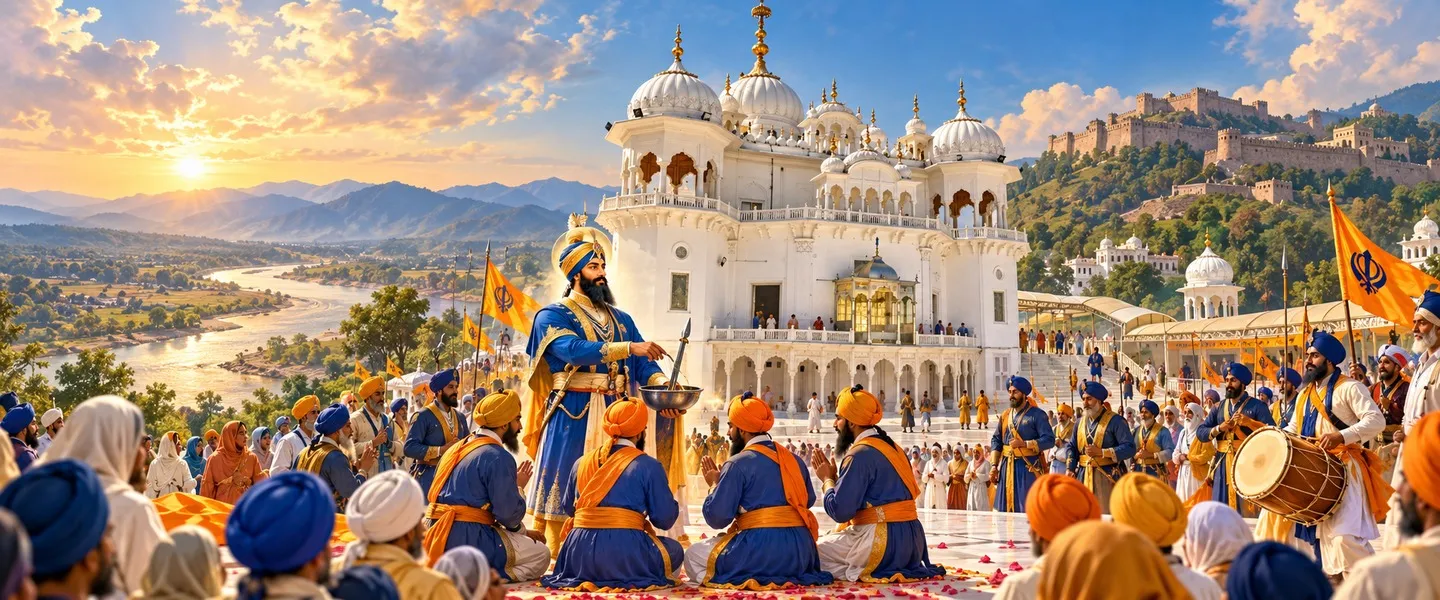
Anandpur Sahib, the 'City of Bliss', is a holy town in Rupnagar district, Punjab, where Guru Gobind Singh Ji founded the Khalsa on Vaisakhi in 1699. Founded in 1665 by Guru Tegh Bahadur Ji, it holds Takht Kesgarh Sahib — one of Sikhism's five takhts — and the cremation site of the ninth Guru at Sis Ganj Sahib. Every spring it hosts Hola Mohalla, the largest annual gathering in Sikhism.
- Type
- Town
- District
- Rupnagar
- Region
- Puadh
- State
- Punjab, India
- Founded
- 1665
- Population
- 16,282 (2011 census)
- Elevation
- 311 m
- Nearest town
- Kiratpur Sahib
Why is Anandpur Sahib called the City of Bliss?
Anandpur literally means the City of Bliss, and the name fits no other town quite so well. In 1675, after the execution of Guru Tegh Bahadur Ji, his Sikhs renamed his settlement of Chakk Nanaki to Anandpur — a town whose life centred on joy in the remembrance of God. For Sikhs everywhere it is the birthplace of the Khalsa, the place where their community received its distinct identity, and one of the most sacred sites in Sikhism.
How the town was founded
In June 1665 Guru Tegh Bahadur Ji, the ninth Sikh Guru, established a new settlement on the site of the village of Makhowal, beneath the Shivalik foothills near the Sutlej river.
He called it Chakk Nanaki, after his mother Mata Nanaki Ji. It began as a simple dharamshal: tent encampments and clay huts scattered among orchards beside a stream and waterfall, on ground now marked by Gurdwara Bhora Sahib. Sikhs gathered around the Guru, and the village grew into a town — the home that the last two human Gurus, Guru Tegh Bahadur Ji and Guru Gobind Singh Ji, would share.
The birth of the Khalsa on Vaisakhi 1699
On Vaisakhi day, 13 April 1699, Guru Gobind Singh Ji sent invitations far and wide, calling the Sikh congregations to gather at Kesgarh in Anandpur. Before the vast assembly he raised his sword and called for a head — and one by one, five men stepped forward. The Guru baptised them with amrit, stirred with a double-edged sword, and named them the Panj Pyare, the Five Beloved Ones.
He himself then took the amrit from their hands, dissolving the distinction between Guru and disciple, and so founded the Khalsa Panth: a community of saint-soldiers bound by a shared identity, a code of conduct, and the spirit of equality and courage. Anandpur was no longer just a town; it was the forge of the Khalsa.
The battles of Anandpur and the evacuation
The rise of the Khalsa alarmed the Mughal emperor Aurangzeb and the rajas of the hill states, and Anandpur became a battlefield. In 1700 the Guru faced a Mughal force of ten thousand under Painda Khan and Dina Beg, killing Painda Khan in personal combat and scattering the army. To protect the town, he ringed it with defensive forts — the qilas of Kesgarh, Anandgarh, Lohgarh, Holgarh, Fatehgarh and Taragarh — and kept a court of fifty-two poets, the Bavanja Kavi, alongside his warriors.
In May 1704 a great army under Wazir Khan and Zaberdast Khan besieged Anandpur, cutting off every supply for seven months. When the Sikhs finally accepted the emperor's promise of safe passage, they were attacked as they left. The Guru's party was separated crossing the flooded Sarsa river; at Chamkaur, he and forty Sikhs took refuge in a mud fortress, where his two elder sons, Ajit Singh and Jujhar Singh, fell fighting. The two younger sons, Zorawar Singh and Fateh Singh, were captured at Sirhind with their grandmother Mata Gujri and executed by being buried alive in a wall — the sacrifice remembered each year at Fatehgarh Sahib. From the ruin of Anandpur rose the legend of the Khalsa.
Takht Kesgarh Sahib and the fort shrines
At the heart of the town stands Takht Kesgarh Sahib, one of the five takhts, the seats of spiritual and temporal authority in Sikhism. The gurdwara marks the very ground where the Khalsa was born on that Vaisakhi morning, and its halls display arms and relics associated with Guru Gobind Singh Ji. Close by stands Gurdwara Sis Ganj Sahib, where the head of Guru Tegh Bahadur Ji was cremated after Bhai Jaita carried it here from Delhi in 1675. Gurdwara Bhora Sahib preserves the memory of the Guru's meditation beneath the ground, and around the town rise the qilas — Anandgarh, Lohgarh, Holgarh, Fatehgarh and Taragarh — the forts that once guarded the Khalsa's cradle.
Hola Mohalla, Virasat-e-Khalsa and the town today
Every spring Anandpur Sahib hosts Hola Mohalla, the largest annual gathering in Sikhism, when hundreds of thousands of devotees arrive for days of prayer, processions and displays of martial skill. In 2011 the town gained the Virasat-e-Khalsa, a vast museum complex designed by the architect Moshe Safdie on more than a hundred acres near Takht Kesgarh Sahib. With galleries on the Gurus, the Sikh empire and Punjabi culture, and a reference library of manuscripts and books, it is the most visited Sikh museum in the world — over ten million people have walked through it since it opened. A towering eighty-one-foot steel khanda rises in the town's Khalsa Park, a modern emblem of the spirit of 1699.
How to reach Anandpur Sahib
Anandpur Sahib lies in Rupnagar district in the Puadh region of Punjab, on the highway linking Kiratpur Sahib and Chandigarh — roughly eighty-five kilometres from Chandigarh — with the Sutlej river flowing to its south-west. Most pilgrims combine a visit with Kiratpur Sahib and the surrounding shrines; the town fills completely during Hola Mohalla and Vaisakhi, and the cooler months from October to March are the most comfortable time to visit.
ਅਨੰਦਪੁਰ ਸਾਹਿਬ ਨੂੰ “ਆਨੰਦ ਦਾ ਸ਼ਹਿਰ” ਕਿਉਂ ਕਿਹਾ ਜਾਂਦਾ ਹੈ?
ਅਨੰਦਪੁਰ ਦਾ ਮਤਲਬ ਹੈ “ਆਨੰਦ ਦਾ ਸ਼ਹਿਰ”, ਅਤੇ ਇਹ ਨਾਂ ਇਸ ਕਸਬੇ ਨੂੰ ਸਭ ਤੋਂ ਵੱਧ ਸੋਭਦਾ ਹੈ 1675 ਵਿੱਚ ਗੁਰੂ ਤੇਗ਼ ਬਹਾਦਰ ਜੀ ਦੀ ਸ਼ਹਾਦਤ ਤੋਂ ਬਾਅਦ, ਉਨ੍ਹਾਂ ਦੇ ਸਿੱਖਾਂ ਨੇ ਚੱਕ ਨਾਨਕੀ ਦਾ ਨਾਂ ਬਦਲ ਕੇ ਅਨੰਦਪੁਰ ਰੱਖਿਆ — ਇੱਕ ਅਜਿਹਾ ਸ਼ਹਿਰ ਜਿਸ ਦੀ ਜ਼ਿੰਦਗੀ ਰੱਬ ਦੀ ਯਾਦ ਵਿੱਚ ਆਨੰਦ ਨਾਲ ਜੁੜੀ ਹੋਵੇ ਦੁਨੀਆ ਭਰ ਦੇ ਸਿੱਖਾਂ ਲਈ ਇਹ ਖ਼ਾਲਸੇ ਦਾ ਜਨਮ-ਸਥਾਨ ਹੈ, ਉਹ ਥਾਂ ਜਿੱਥੇ ਉਨ੍ਹਾਂ ਦੀ ਸੰਗਤ ਨੂੰ ਵਿਲੱਖਣ ਪਛਾਣ ਮਿਲੀ, ਅਤੇ ਸਿੱਖੀ ਦੇ ਸਭ ਤੋਂ ਪਵਿੱਤਰ ਅਸਥਾਨਾਂ ਵਿੱਚੋਂ ਇੱਕ
ਸ਼ਹਿਰ ਦੀ ਨੀਂਹ (1665)
ਜੂਨ 1665 ਵਿੱਚ ਨੌਵੇਂ ਸਿੱਖ ਗੁਰੂ, ਗੁਰੂ ਤੇਗ਼ ਬਹਾਦਰ ਜੀ ਨੇ ਮਖੋਵਾਲ ਪਿੰਡ ਦੀ ਜ਼ਮੀਨ ਉੱਤੇ, ਸ਼ਿਵਾਲਿਕ ਪਹਾੜੀਆਂ ਹੇਠਾਂ ਸਤਲੁਜ ਦਰਿਆ ਦੇ ਨੇੜੇ, ਇੱਕ ਨਵੀਂ ਬਸਤੀ ਵਸਾਈ ਉਨ੍ਹਾਂ ਨੇ ਇਸ ਦਾ ਨਾਂ ਆਪਣੀ ਮਾਤਾ, ਮਾਤਾ ਨਾਨਕੀ ਜੀ ਦੇ ਨਾਂ ਉੱਤੇ ਚੱਕ ਨਾਨਕੀ ਰੱਖਿਆ ਇਹ ਪਹਿਲਾਂ ਇੱਕ ਸਧਾਰਨ ਧਰਮਸ਼ਾਲ ਸੀ: ਨਾਲੇ ਕੋਲ਼ ਬਾਗ਼ਾਂ ਵਿਚਕਾਰ ਤੰਬੂ ਅਤੇ ਮਿੱਟੀ ਦੇ ਛੱਪਰ, ਜਿਸ ਥਾਂ ਉੱਤੇ ਅੱਜ ਗੁਰਦੁਆਰਾ ਭੋਰਾ ਸਾਹਿਬ ਹੈ ਸਿੱਖ ਗੁਰੂ ਦੇ ਨੇੜੇ ਆ ਵਸੇ ਅਤੇ ਪਿੰਡ ਕਸਬਾ ਬਣ ਗਿਆ — ਉਹ ਘਰ ਜੋ ਆਖ਼ਰੀ ਦੋ ਮਨੁੱਖੀ ਗੁਰੂਆਂ, ਗੁਰੂ ਤੇਗ਼ ਬਹਾਦਰ ਜੀ ਅਤੇ ਗੁਰੂ ਗੋਬਿੰਦ ਸਿੰਘ ਜੀ, ਦਾ ਸਾਂਝਾ ਘਰ ਬਣਿਆ
ਵਿਸਾਖੀ 1699: ਖ਼ਾਲਸੇ ਦੀ ਸਾਜਨਾ
ਵਿਸਾਖੀ ਦੇ ਦਿਨ, 13 ਅਪ੍ਰੈਲ 1699 ਨੂੰ, ਗੁਰੂ ਗੋਬਿੰਦ ਸਿੰਘ ਜੀ ਨੇ ਦੂਰ-ਨੇੜੇ ਸੱਦੇ ਭੇਜੇ ਅਤੇ ਸਿੱਖ ਸੰਗਤਾਂ ਨੂੰ ਕੇਸਗੜ੍ਹ ਵਿਖੇ ਅਨੰਦਪੁਰ ਵਿੱਚ ਇਕੱਠੇ ਹੋਣ ਦਾ ਹੁਕਮ ਕੀਤਾ ਭਾਰੀ ਦੀਵਾਨ ਸਾਹਮਣੇ ਉਨ੍ਹਾਂ ਨੇ ਤਲਵਾਰ ਚੁੱਕੀ ਅਤੇ ਇੱਕ ਸੀਸ ਮੰਗਿਆ — ਅਤੇ ਇੱਕ-ਇੱਕ ਕਰਕੇ ਪੰਜ ਸਿੰਘ ਅੱਗੇ ਆਏ ਗੁਰੂ ਨੇ ਉਨ੍ਹਾਂ ਨੂੰ ਖੰਡੇ-ਬਾਟੇ ਦਾ ਅੰਮ੍ਰਿਤ ਛਕਾਇਆ ਅਤੇ ਪੰਜ ਪਿਆਰਿਆਂ ਦਾ ਨਾਂ ਦਿੱਤਾ
ਫਿਰ ਉਨ੍ਹਾਂ ਨੇ ਆਪ ਪੰਜਾਂ ਤੋਂ ਅੰਮ੍ਰਿਤ ਲਿਆ, ਗੁਰੂ ਅਤੇ ਚੇਲੇ ਦਾ ਭੇਦ ਮਿਟਾ ਦਿੱਤਾ, ਅਤੇ ਖ਼ਾਲਸਾ ਪੰਥ ਸਾਜਿਆ: ਸੰਤ-ਸਿਪਾਹੀਆਂ ਦੀ ਸੰਗਤ, ਜੋ ਸਾਂਝੀ ਪਛਾਣ, ਰਹਿਤ-ਮਰਿਆਦਾ ਅਤੇ ਬਰਾਬਰੀ ਤੇ ਬਹਾਦਰੀ ਦੀ ਭਾਵਨਾ ਨਾਲ ਜੁੜੀ ਹੋਵੇ ਅਨੰਦਪੁਰ ਹੁਣ ਸਿਰਫ਼ ਇੱਕ ਕਸਬਾ ਨਹੀਂ ਸੀ; ਇਹ ਖ਼ਾਲਸੇ ਦੀ ਭੱਠੀ ਸੀ
ਅਨੰਦਪੁਰ ਦੀਆਂ ਲੜਾਈਆਂ ਅਤੇ 1704 ਦਾ ਨਿਕਾਸ
ਖ਼ਾਲਸੇ ਦੇ ਉਭਾਰ ਨੇ ਮੁਗ਼ਲ ਬਾਦਸ਼ਾਹ ਔਰੰਗਜ਼ੇਬ ਅਤੇ ਪਹਾੜੀ ਰਿਆਸਤਾਂ ਦੇ ਰਾਜਿਆਂ ਨੂੰ ਚਿੰਤਾ ਵਿੱਚ ਪਾ ਦਿੱਤਾ, ਅਤੇ ਅਨੰਦਪੁਰ ਜੰਗ ਦਾ ਮੈਦਾਨ ਬਣ ਗਿਆ 1700 ਵਿੱਚ ਗੁਰੂ ਨੇ ਪੈਂਦਾ ਖ਼ਾਨ ਅਤੇ ਦੀਨਾ ਬੇਗ ਅਧੀਨ ਦਸ ਹਜ਼ਾਰ ਮੁਗ਼ਲ ਫ਼ੌਜ ਦਾ ਸਾਹਮਣਾ ਕੀਤਾ, ਪੈਂਦਾ ਖ਼ਾਨ ਨੂੰ ਆਹਮੋ-ਸਾਹਮਣੇ ਲੜਾਈ ਵਿੱਚ ਮਾਰਿਆ ਅਤੇ ਫ਼ੌਜ ਖਿੰਡ ਗਈ ਸ਼ਹਿਰ ਦੀ ਰਾਖੀ ਲਈ ਉਨ੍ਹਾਂ ਨੇ ਇਸ ਨੂੰ ਰੱਖਿਆਤਮਕ ਕਿਲ੍ਹਿਆਂ ਦੀ ਲੜੀ ਨਾਲ ਘੇਰਿਆ — ਕੇਸਗੜ੍ਹ, ਆਨੰਦਗੜ੍ਹ, ਲੋਹਗੜ੍ਹ, ਹੋਲਗੜ੍ਹ, ਫ਼ਤਿਹਗੜ੍ਹ ਅਤੇ ਤਾਰਾਗੜ੍ਹ ਦੇ ਕਿਲ੍ਹੇ — ਅਤੇ ਯੋਧਿਆਂ ਨਾਲ ਨਾਲ ਬਾਵੰਜਾ ਕਵੀ, ਬਾਵਨ ਕਵੀਆਂ ਦਾ ਦਰਬਾਰ ਵੀ ਸਜਾਇਆ
ਮਈ 1704 ਵਿੱਚ ਵਜ਼ੀਰ ਖ਼ਾਨ ਅਤੇ ਜ਼ਬਰਦਸਤ ਖ਼ਾਨ ਅਧੀਨ ਇੱਕ ਵੱਡੀ ਫ਼ੌਜ ਨੇ ਅਨੰਦਪੁਰ ਨੂੰ ਘੇਰ ਲਿਆ ਅਤੇ ਸੱਤ ਮਹੀਨਿਆਂ ਤੱਕ ਹਰ ਰਸਦ ਰੋਕ ਦਿੱਤੀ ਜਦੋਂ ਸਿੱਖਾਂ ਨੇ ਅਖ਼ੀਰ ਬਾਦਸ਼ਾਹ ਦੇ ਸੁਰੱਖਿਅਤ ਰਵਾਨਗੀ ਦੇ ਵਾਅਦੇ ਨੂੰ ਮੰਨ ਲਿਆ, ਤਾਂ ਨਿਕਲਦਿਆਂ ਹੀ ਉਨ੍ਹਾਂ ਉੱਤੇ ਹਮਲਾ ਹੋ ਗਿਆ ਹੜ੍ਹ ਆਏ ਸਰਸਾ ਦਰਿਆ ਪਾਰ ਕਰਦਿਆਂ ਗੁਰੂ ਦਾ ਕਾਫ਼ਲਾ ਵਿਛੜ ਗਿਆ; ਚਮਕੌਰ ਵਿੱਚ ਉਨ੍ਹਾਂ ਅਤੇ ਚਾਲੀ ਸਿੰਘਾਂ ਨੇ ਇੱਕ ਕੱਚੀ ਗੜ੍ਹੀ ਵਿੱਚ ਪਨਾਹ ਲਈ, ਜਿੱਥੇ ਉਨ੍ਹਾਂ ਦੇ ਦੋ ਵੱਡੇ ਸਾਹਿਬਜ਼ਾਦੇ, ਅਜੀਤ ਸਿੰਘ ਅਤੇ ਜੁਝਾਰ ਸਿੰਘ, ਲੜਦਿਆਂ ਸ਼ਹੀਦ ਹੋ ਗਏ ਦੋ ਛੋਟੇ ਸਾਹਿਬਜ਼ਾਦੇ, ਜ਼ੋਰਾਵਰ ਸਿੰਘ ਅਤੇ ਫ਼ਤਹਿ ਸਿੰਘ, ਆਪਣੀ ਦਾਦੀ ਮਾਤਾ ਗੁਜਰੀ ਨਾਲ ਸਰਹਿੰਦ ਵਿੱਚ ਫੜੇ ਗਏ ਅਤੇ ਕੰਧ ਵਿੱਚ ਚਿਣ ਕੇ ਸ਼ਹੀਦ ਕਰ ਦਿੱਤੇ ਗਏ — ਉਹ ਕੁਰਬਾਨੀ ਜੋ ਹਰ ਸਾਲ ਫ਼ਤਿਹਗੜ੍ਹ ਸਾਹਿਬ ਵਿਖੇ ਯਾਦ ਕੀਤੀ ਜਾਂਦੀ ਹੈ ਅਨੰਦਪੁਰ ਦੇ ਖੰਡਰਾਂ ਵਿੱਚੋਂ ਖ਼ਾਲਸੇ ਦੀ ਅਮਰ ਕਹਾਣੀ ਉੱਠੀ
ਤਖ਼ਤ ਕੇਸਗੜ੍ਹ ਸਾਹਿਬ ਅਤੇ ਕਿਲ੍ਹਿਆਂ ਦੇ ਗੁਰਦੁਆਰੇ
ਕਸਬੇ ਦੇ ਦਿਲ ਵਿੱਚ ਤਖ਼ਤ ਕੇਸਗੜ੍ਹ ਸਾਹਿਬ ਖੜ੍ਹਾ ਹੈ, ਸਿੱਖੀ ਦੇ ਪੰਜ ਤਖ਼ਤਾਂ ਵਿੱਚੋਂ ਇੱਕ — ਅਧਿਆਤਮਿਕ ਅਤੇ ਪੰਥਕ ਅਧਿਕਾਰ ਦੀਆਂ ਗੱਦੀਆਂ ਗੁਰਦੁਆਰਾ ਉਸੇ ਜ਼ਮੀਨ ਨੂੰ ਚਿੰਨ੍ਹਿਤ ਕਰਦਾ ਹੈ ਜਿੱਥੇ ਉਸ ਵਿਸਾਖੀ ਦੀ ਸਵੇਰ ਖ਼ਾਲਸੇ ਦਾ ਜਨਮ ਹੋਇਆ ਸੀ, ਅਤੇ ਇਸ ਦੇ ਹਾਲ ਗੁਰੂ ਗੋਬਿੰਦ ਸਿੰਘ ਜੀ ਨਾਲ ਜੁੜੇ ਸ਼ਸਤਰ ਅਤੇ ਨਿਸ਼ਾਨੀਆਂ ਪ੍ਰਦਰਸ਼ਿਤ ਕਰਦੇ ਹਨ ਨੇੜੇ ਹੀ ਗੁਰਦੁਆਰਾ ਸੀਸ ਗੰਜ ਸਾਹਿਬ ਹੈ, ਜਿੱਥੇ 1675 ਵਿੱਚ ਭਾਈ ਜੈਤਾ ਦੇ ਦਿੱਲੀ ਤੋਂ ਲਿਆਏ ਗੁਰੂ ਤੇਗ਼ ਬਹਾਦਰ ਜੀ ਦੇ ਸੀਸ ਦਾ ਸਸਕਾਰ ਹੋਇਆ ਗੁਰਦੁਆਰਾ ਭੋਰਾ ਸਾਹਿਬ ਗੁਰੂ ਦੇ ਧਿਆਨ ਦੀ ਯਾਦ ਰੱਖਦਾ ਹੈ, ਅਤੇ ਕਸਬੇ ਦੁਆਲੇ ਉੱਠਦੇ ਹਨ ਕਿਲ੍ਹੇ — ਆਨੰਦਗੜ੍ਹ, ਲੋਹਗੜ੍ਹ, ਹੋਲਗੜ੍ਹ, ਫ਼ਤਿਹਗੜ੍ਹ ਅਤੇ ਤਾਰਾਗੜ੍ਹ — ਜੋ ਕਦੇ ਖ਼ਾਲਸੇ ਦੇ ਪੰਘੂੜੇ ਦੀ ਰਾਖੀ ਕਰਦੇ ਸਨ
ਹੋਲਾ ਮੁਹੱਲਾ ਅਤੇ ਵਿਰਾਸਤ-ਏ-ਖ਼ਾਲਸਾ
ਹਰ ਬਸੰਤ ਅਨੰਦਪੁਰ ਸਾਹਿਬ ਹੋਲਾ ਮੁਹੱਲਾ ਮਨਾਉਂਦਾ ਹੈ, ਸਿੱਖੀ ਦਾ ਸਭ ਤੋਂ ਵੱਡਾ ਸਾਲਾਨਾ ਇਕੱਠ, ਜਦੋਂ ਲੱਖਾਂ ਸ਼ਰਧਾਲੂ ਅਰਦਾਸ, ਨਗਰ ਕੀਰਤਨਾਂ ਅਤੇ ਜੰਗੀ ਹੁਨਰ ਦੇ ਪ੍ਰਦਰਸ਼ਨਾਂ ਦੇ ਦਿਨਾਂ ਲਈ ਆਉਂਦੇ ਹਨ 2011 ਵਿੱਚ ਕਸਬੇ ਨੂੰ ਵਿਰਾਸਤ-ਏ-ਖ਼ਾਲਸਾ ਮਿਲਿਆ, ਮਸ਼ਹੂਰ ਆਰਕੀਟੈਕਟ ਮੋਸ਼ੇ ਸਫ਼ਦੀ ਦੇ ਡਿਜ਼ਾਈਨ ਉੱਤੇ ਤਖ਼ਤ ਕੇਸਗੜ੍ਹ ਸਾਹਿਬ ਨੇੜੇ ਸੌ ਏਕੜ ਤੋਂ ਵੱਧ ਜ਼ਮੀਨ ਉੱਤੇ ਬਣਿਆ ਇੱਕ ਵਿਸ਼ਾਲ ਅਜਾਇਬ-ਘਰ ਗੁਰੂਆਂ, ਸਿੱਖ ਰਾਜ ਅਤੇ ਪੰਜਾਬੀ ਸੱਭਿਆਚਾਰ ਦੀਆਂ ਗੈਲਰੀਆਂ ਅਤੇ ਹੱਥ-ਲਿਖਤਾਂ ਤੇ ਕਿਤਾਬਾਂ ਦੀ ਲਾਇਬ੍ਰੇਰੀ ਨਾਲ ਇਹ ਦੁਨੀਆ ਦਾ ਸਭ ਤੋਂ ਵੱਧ ਵੇਖਿਆ ਜਾਣ ਵਾਲਾ ਸਿੱਖ ਅਜਾਇਬ-ਘਰ ਹੈ — ਖੁੱਲ੍ਹਣ ਤੋਂ ਬਾਅਦ ਇੱਕ ਕਰੋੜ ਤੋਂ ਵੱਧ ਲੋਕ ਇਸ ਵਿੱਚ ਆ ਚੁੱਕੇ ਹਨ ਕਸਬੇ ਦੇ ਖ਼ਾਲਸਾ ਪਾਰਕ ਵਿੱਚ ਇਕਾਸੀ ਫੁੱਟ ਉੱਚਾ ਸਟੀਲ ਦਾ ਖੰਡਾ ਖੜ੍ਹਾ ਹੈ, 1699 ਦੀ ਭਾਵਨਾ ਦਾ ਆਧੁਨਿਕ ਪ੍ਰਤੀਕ
ਅਨੰਦਪੁਰ ਸਾਹਿਬ ਕਿਵੇਂ ਪਹੁੰਚੋ
ਅਨੰਦਪੁਰ ਸਾਹਿਬ ਪੰਜਾਬ ਦੇ ਪੁਆਧ ਇਲਾਕੇ ਵਿੱਚ ਰੂਪਨਗਰ ਜ਼ਿਲ੍ਹੇ ਵਿੱਚ ਹੈ, ਕੀਰਤਪੁਰ ਸਾਹਿਬ ਅਤੇ ਚੰਡੀਗੜ੍ਹ ਨੂੰ ਜੋੜਨ ਵਾਲੇ ਰਾਸ਼ਟਰੀ ਮਾਰਗ ਉੱਤੇ — ਚੰਡੀਗੜ੍ਹ ਤੋਂ ਲਗਭਗ ਪਚਾਸੀ ਕਿਲੋਮੀਟਰ — ਅਤੇ ਸਤਲੁਜ ਦਰਿਆ ਇਸ ਦੇ ਦੱਖਣ-ਪੱਛਮ ਵੱਲ ਵਗਦਾ ਹੈ ਜ਼ਿਆਦਾਤਰ ਯਾਤਰੀ ਇਸ ਨੂੰ ਕੀਰਤਪੁਰ ਸਾਹਿਬ ਅਤੇ ਨੇੜਲੇ ਅਸਥਾਨਾਂ ਨਾਲ ਜੋੜਦੇ ਹਨ; ਹੋਲਾ ਮੁਹੱਲੇ ਅਤੇ ਵਿਸਾਖੀ ਮੌਕੇ ਕਸਬਾ ਪੂਰੀ ਤਰ੍ਹਾਂ ਭਰ ਜਾਂਦਾ ਹੈ, ਅਤੇ ਅਕਤੂਬਰ ਤੋਂ ਮਾਰਚ ਤੱਕ ਦੇ ਠੰਢੇ ਮਹੀਨੇ ਆਉਣ ਲਈ ਸਭ ਤੋਂ ਸੁਖਾਵੇਂ ਹੁੰਦੇ ਹਨ