
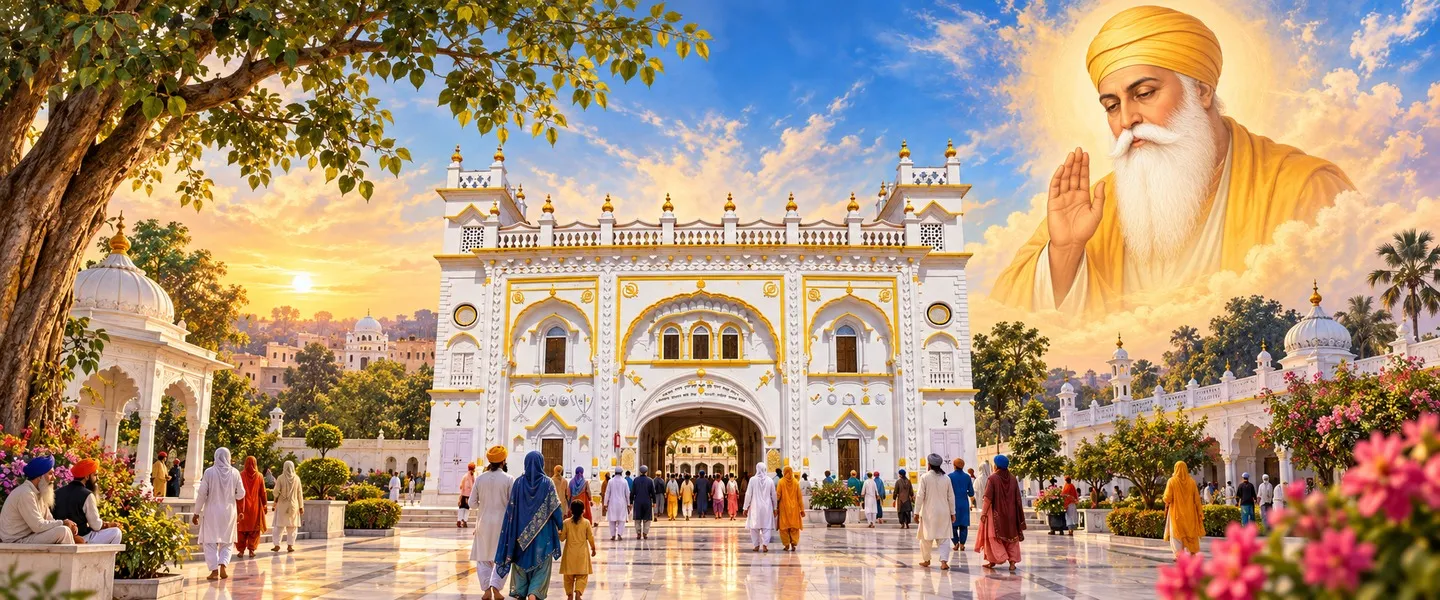
Nankana Sahib is a city in Punjab, Pakistan, where Guru Nanak Dev Ji was born in 1469 in the town then called Talwandi. Gurdwara Janam Asthan marks his birthplace, ringed by shrines to his childhood. It is also remembered for Saka Nankana Sahib — the 1921 massacre of peaceful Sikh pilgrims that ignited the Gurdwara Reform Movement.
- Type
- Town
- District
- Nankana Sahib
- Country
- Pakistan
- Province
- Punjab
- Earlier name
- Rai Bhoi di Talwandi
- Guru Nanak born
- 1469
- Key shrine
- Gurdwara Janam Asthan
- From Lahore
- ~75 km west
Why is this town called the birthplace of the Guru?
Nankana Sahib is where the Sikh story begins. In 1469, in a town then called Rai Bhoi di Talwandi, a child was born to Mehta Kalu and Mata Tripta who would become Guru Nanak Dev Ji, the founder of Sikhism. The town was later renamed in his honour, and it holds the most sacred of the Sikh shrines in Pakistan — Gurdwara Janam Asthan, the Birthplace Shrine.
The birth of Guru Nanak Dev Ji
The town was founded by Rai Bhoi, a wealthy landlord, and was known as his Talwandi — Rai Bhoi di Talwandi. His grandson Rai Bular Bhatti later renamed it Nankana Sahib in honour of the Guru. Guru Nanak was born here in 1469, and his childhood home is the ground on which Gurdwara Janam Asthan now stands. The present shrine was built by Maharaja Ranjit Singh, who visited Nankana Sahib in 1818–19 on his way back from the Battle of Multan.
Every year the Janam Asthan hosts the great Gurpurab festivities that commemorate the Guru's birth, when pilgrims gather at the town for the full moon of Katak in October–November.
The gurdwaras of his childhood
Nankana Sahib is not one shrine but a whole landscape of the Guru's early life. Gurdwara Bal Lila stands where the young Nanak played with his friends. Gurdwara Kiara Sahib marks the pasture where his cattle strayed into a farmer's crops while he sat in meditation. Gurdwara Mal Ji Sahib, one of the smallest of the town's shrines, stands on the ground of two more childhood episodes — the shade of the Jal tree and his encounter with a cobra — and its walls are decorated with ancient ceramic tiles, each painted with a cobra. Gurdwara Patti Sahib and Gurdwara Tambu Sahib remember further episodes of those early years, and the town also holds shrines linked to the fifth and sixth Gurus: Guru Hargobind Ji is believed to have paid homage here in 1621–22.
Saka Nankana Sahib: the massacre of 1921
On 20 February 1921 Nankana Sahib became the scene of one of the darkest episodes in Sikh history. The Janam Asthan was then in the hands of a hereditary custodian, Mahant Narayan Das, accused by the reformist Akalis of corruption and of defiling the shrine. In the early hours of the morning a peaceful shaheedi jatha of about two hundred Sikhs, led by Bhai Lachhman Singh Dharowali and Jathedar Tehal Singh, entered the gurdwara to pray and to press for reform. The Mahant's hired mercenaries opened fire without warning and slaughtered the unarmed pilgrims inside the very prayer hall; the dead and dying were then piled onto logs and set alight to destroy the evidence.
Between 140 and 260 Sikhs were killed — the official figure was 86 — including children. Bhai Lachhman Singh, wounded by a gunshot, was tied to a Jand tree and burnt alive. Bullets pierced Sri Guru Granth Sahib itself; the bloodstained saroop is still brought out for the sangat's darshan each 20 February.
The aftermath: the Gurdwara Reform Movement
The outrage that followed shook all of Punjab. The next day Bhai Kartar Singh Jhabbar marched on Nankana Sahib with 2,200 Sikhs, and the British commissioner at Lahore handed the keys of the Janam Asthan to the Shiromani Committee and arrested the Mahant. In political weight the massacre is ranked next only to Jallianwala Bagh; it became the core of the Gurdwara Reform Movement, which ended with the Sikh Gurdwaras Act of 1925 — the law that took the shrines out of the mahants' hands and placed them under elected Sikh management.
The martyrs of Nankana are remembered every day in the Sikh Ardas, and the Shaheedi Asthan at the Janam Asthan — with the martyrs' Jand tree — remains a place of pilgrimage.
Nankana Sahib today
Nankana Sahib is now the headquarters of its own district in Pakistani Punjab, a city of some eighty thousand people about seventy-five kilometres west of Lahore, and the best-known of the gurdwaras in Pakistan. Until Partition its people were Muslims, Sikhs and Hindus in roughly equal numbers; today the town is predominantly Muslim, and its Sikh heritage is tended by the small local community and by pilgrims who arrive in large numbers for Gurpurab.
Visiting Nankana Sahib
The shrines are looked after by Pakistan's Evacuee Trust Property Board, and Sikh pilgrims — including jathas from India — visit throughout the year, with the largest crowds at Guru Nanak Gurpurab. Most visitors combine Nankana Sahib with Kartarpur Sahib, where the Guru spent his final years, and with the other historic gurdwaras of Pakistani Punjab. The town is an easy day's journey from Lahore.
ਇਸ ਕਸਬੇ ਨੂੰ ਗੁਰੂ ਦਾ ਜਨਮ-ਸਥਾਨ ਕਿਉਂ ਕਿਹਾ ਜਾਂਦਾ ਹੈ?
ਨਨਕਾਣਾ ਸਾਹਿਬ ਉਹ ਥਾਂ ਹੈ ਜਿੱਥੋਂ ਸਿੱਖ ਕਹਾਣੀ ਸ਼ੁਰੂ ਹੁੰਦੀ ਹੈ 1469 ਵਿੱਚ ਰਾਏ ਭੋਇ ਦੀ ਤਲਵੰਡੀ ਨਾਂ ਦੇ ਕਸਬੇ ਵਿੱਚ ਮਹਿਤਾ ਕਾਲੂ ਅਤੇ ਮਾਤਾ ਤ੍ਰਿਪਤਾ ਦੇ ਘਰ ਇੱਕ ਬੱਚੇ ਦਾ ਜਨਮ ਹੋਇਆ, ਜੋ ਗੁਰੂ ਨਾਨਕ ਦੇਵ ਜੀ ਬਣੇ — ਸਿੱਖੀ ਦੇ ਬਾਨੀ ਕਸਬੇ ਦਾ ਨਾਂ ਬਾਅਦ ਵਿੱਚ ਉਨ੍ਹਾਂ ਦੇ ਸਨਮਾਨ ਵਿੱਚ ਰੱਖਿਆ ਗਿਆ, ਅਤੇ ਇੱਥੇ ਪਾਕਿਸਤਾਨ ਦਾ ਸਭ ਤੋਂ ਪਵਿੱਤਰ ਸਿੱਖ ਅਸਥਾਨ ਹੈ — ਗੁਰਦੁਆਰਾ ਜਨਮ ਅਸਥਾਨ
ਗੁਰੂ ਨਾਨਕ ਦੇਵ ਜੀ ਦਾ ਜਨਮ
ਕਸਬਾ ਰਾਏ ਭੋਇ ਨਾਂ ਦੇ ਇੱਕ ਧਨਾਢ ਜ਼ਿਮੀਂਦਾਰ ਨੇ ਵਸਾਇਆ ਸੀ, ਅਤੇ ਇਸੇ ਕਰਕੇ ਇਸ ਦਾ ਨਾਂ ਰਾਏ ਭੋਇ ਦੀ ਤਲਵੰਡੀ ਪਿਆ ਉਸ ਦੇ ਪੋਤੇ ਰਾਏ ਬੁਲਾਰ ਭੱਟੀ ਨੇ ਬਾਅਦ ਵਿੱਚ ਗੁਰੂ ਦੇ ਸਨਮਾਨ ਵਿੱਚ ਇਸ ਦਾ ਨਾਂ ਨਨਕਾਣਾ ਸਾਹਿਬ ਰੱਖਿਆ 1469 ਵਿੱਚ ਗੁਰੂ ਨਾਨਕ ਦਾ ਜਨਮ ਇੱਥੇ ਹੋਇਆ, ਅਤੇ ਉਨ੍ਹਾਂ ਦਾ ਬਚਪਨ ਦਾ ਘਰ ਉਹੀ ਜ਼ਮੀਨ ਹੈ ਜਿੱਥੇ ਅੱਜ ਗੁਰਦੁਆਰਾ ਜਨਮ ਅਸਥਾਨ ਖੜ੍ਹਾ ਹੈ ਮੌਜੂਦਾ ਅਸਥਾਨ ਮਹਾਰਾਜਾ ਰਣਜੀਤ ਸਿੰਘ ਨੇ ਬਣਵਾਇਆ, ਜੋ 1818–19 ਵਿੱਚ ਮੁਲਤਾਨ ਦੀ ਲੜਾਈ ਤੋਂ ਪਰਤਦਿਆਂ ਨਨਕਾਣਾ ਸਾਹਿਬ ਆਏ ਸਨ
ਹਰ ਸਾਲ ਜਨਮ ਅਸਥਾਨ ਵਿਖੇ ਗੁਰਪੁਰਬ ਦੇ ਵੱਡੇ ਦੀਵਾਨ ਸਜਦੇ ਹਨ, ਜਦੋਂ ਕੱਤਕ ਦੀ ਪੂਰਨਮਾਸ਼ੀ ਮੌਕੇ ਸੰਗਤਾਂ ਕਸਬੇ ਵਿੱਚ ਇਕੱਠੀਆਂ ਹੁੰਦੀਆਂ ਹਨ
ਉਨ੍ਹਾਂ ਦੇ ਬਚਪਨ ਦੇ ਗੁਰਦੁਆਰੇ
ਨਨਕਾਣਾ ਸਾਹਿਬ ਇੱਕ ਅਸਥਾਨ ਨਹੀਂ, ਸਗੋਂ ਗੁਰੂ ਦੇ ਬਚਪਨ ਦੀ ਪੂਰੀ ਧਰਤੀ ਹੈ ਗੁਰਦੁਆਰਾ ਬਾਲ ਲੀਲਾ ਉੱਥੇ ਹੈ ਜਿੱਥੇ ਨੰਨ੍ਹਾ ਨਾਨਕ ਆਪਣੇ ਸਾਥੀਆਂ ਨਾਲ ਖੇਡਦਾ ਸੀ ਗੁਰਦੁਆਰਾ ਕਿਆਰਾ ਸਾਹਿਬ ਉਸ ਚਰਾਂਦ ਨੂੰ ਚਿੰਨ੍ਹਿਤ ਕਰਦਾ ਹੈ ਜਿੱਥੇ ਉਨ੍ਹਾਂ ਦੇ ਡੰਗਰ ਧਿਆਨ ਵਿੱਚ ਬੈਠਿਆਂ ਕਿਸਾਨ ਦੀ ਫ਼ਸਲ ਵਿੱਚ ਵੜ ਗਏ ਸਨ ਗੁਰਦੁਆਰਾ ਮੱਲ ਜੀ ਸਾਹਿਬ, ਕਸਬੇ ਦੇ ਸਭ ਤੋਂ ਛੋਟੇ ਅਸਥਾਨਾਂ ਵਿੱਚੋਂ ਇੱਕ, ਦੋ ਹੋਰ ਬਚਪਨ ਦੀਆਂ ਘਟਨਾਵਾਂ — ਜਾਲ ਦੇ ਰੁੱਖ ਦੀ ਛਾਂ ਅਤੇ ਨਾਗ ਨਾਲ ਮੁਲਾਕਾਤ — ਦੀ ਜ਼ਮੀਨ ਉੱਤੇ ਖੜ੍ਹਾ ਹੈ, ਅਤੇ ਇਸ ਦੀਆਂ ਕੰਧਾਂ ਉੱਤੇ ਪ੍ਰਾਚੀਨ ਚੀਨੀ ਟਾਈਲਾਂ ਲੱਗੀਆਂ ਹਨ, ਹਰ ਇੱਕ ਉੱਤੇ ਨਾਗ ਦੀ ਤਸਵੀਰ ਬਣੀ ਹੋਈ ਹੈ ਗੁਰਦੁਆਰਾ ਪੱਟੀ ਸਾਹਿਬ ਅਤੇ ਗੁਰਦੁਆਰਾ ਤੰਬੂ ਸਾਹਿਬ ਉਨ੍ਹਾਂ ਮੁੱਢਲੇ ਸਾਲਾਂ ਦੀਆਂ ਹੋਰ ਘਟਨਾਵਾਂ ਦੀ ਯਾਦ ਦਿਵਾਉਂਦੇ ਹਨ, ਅਤੇ ਕਸਬੇ ਵਿੱਚ ਪੰਜਵੇਂ ਅਤੇ ਛੇਵੇਂ ਗੁਰੂਆਂ ਨਾਲ ਜੁੜੇ ਅਸਥਾਨ ਵੀ ਹਨ: ਮੰਨਿਆ ਜਾਂਦਾ ਹੈ ਕਿ ਗੁਰੂ ਹਰਗੋਬਿੰਦ ਜੀ ਨੇ 1621–22 ਵਿੱਚ ਇੱਥੇ ਹਾਜ਼ਰੀ ਭਰੀ ਸੀ
ਸਾਕਾ ਨਨਕਾਣਾ ਸਾਹਿਬ: 1921 ਦਾ ਕਤਲੇਆਮ
20 ਫਰਵਰੀ 1921 ਨੂੰ ਨਨਕਾਣਾ ਸਾਹਿਬ ਸਿੱਖ ਇਤਿਹਾਸ ਦੇ ਸਭ ਤੋਂ ਕਾਲੇ ਅਧਿਆਇਆਂ ਵਿੱਚੋਂ ਇੱਕ ਦਾ ਗਵਾਹ ਬਣਿਆ ਜਨਮ ਅਸਥਾਨ ਉਦੋਂ ਇੱਕ ਵਿਰਾਸਤੀ ਮਹੰਤ, ਨਰਾਇਣ ਦਾਸ ਦੇ ਹੱਥ ਸੀ, ਜਿਸ ਉੱਤੇ ਸੁਧਾਰਵਾਦੀ ਅਕਾਲੀਆਂ ਨੇ ਭ੍ਰਿਸ਼ਟਾਚਾਰ ਅਤੇ ਅਸਥਾਨ ਦੀ ਬੇਅਦਬੀ ਦੇ ਦੋਸ਼ ਲਾਏ ਸਨ ਸਵੇਰੇ ਅੰਮ੍ਰਿਤ ਵੇਲੇ ਲਗਭਗ ਦੋ ਸੌ ਸਿੱਖਾਂ ਦਾ ਇੱਕ ਸ਼ਾਂਤਮਈ ਸ਼ਹੀਦੀ ਜੱਥਾ, ਭਾਈ ਲਛਮਣ ਸਿੰਘ ਧਾਰੋਵਾਲੀ ਅਤੇ ਜਥੇਦਾਰ ਤਹਿਲ ਸਿੰਘ ਦੀ ਅਗਵਾਈ ਵਿੱਚ, ਅਰਦਾਸ ਕਰਨ ਅਤੇ ਸੁਧਾਰ ਦੀ ਮੰਗ ਲੈ ਕੇ ਗੁਰਦੁਆਰੇ ਵਿੱਚ ਦਾਖ਼ਲ ਹੋਇਆ ਮਹੰਤ ਦੇ ਕਿਰਾਏ ਦੇ ਬਦਮਾਸ਼ਾਂ ਨੇ ਬਿਨਾਂ ਚਿਤਾਵਨੀ ਗੋਲੀਆਂ ਚਲਾ ਦਿੱਤੀਆਂ ਅਤੇ ਨਿਹੱਥੇ ਯਾਤਰੀਆਂ ਨੂੰ ਦੀਵਾਨ ਹਾਲ ਦੇ ਅੰਦਰ ਹੀ ਕਤਲ ਕਰ ਦਿੱਤਾ; ਫਿਰ ਲਾਸ਼ਾਂ ਨੂੰ ਲੱਕੜਾਂ ਦੇ ਢੇਰ ਉੱਤੇ ਰੱਖ ਕੇ ਅੱਗ ਲਾ ਦਿੱਤੀ ਤਾਂ ਜੋ ਸਬੂਤ ਮਿਟ ਜਾਵੇ
140 ਤੋਂ 260 ਸਿੱਖ ਸ਼ਹੀਦ ਹੋਏ — ਸਰਕਾਰੀ ਅੰਕੜਾ 86 ਸੀ — ਜਿਨ੍ਹਾਂ ਵਿੱਚ ਬੱਚੇ ਵੀ ਸਨ ਗੋਲੀ ਲੱਗਣ ਨਾਲ ਜ਼ਖ਼ਮੀ ਭਾਈ ਲਛਮਣ ਸਿੰਘ ਨੂੰ ਜੰਡ ਦੇ ਰੁੱਖ ਨਾਲ ਬੰਨ੍ਹ ਕੇ ਜਿਉਂਦੇ ਨੂੰ ਸਾੜ ਦਿੱਤਾ ਗਿਆ ਗੋਲੀਆਂ ਸ੍ਰੀ ਗੁਰੂ ਗ੍ਰੰਥ ਸਾਹਿਬ ਵਿੱਚ ਵੀ ਲੱਗੀਆਂ; ਖ਼ੂਨ ਨਾਲ ਲਿਬੜਿਆ ਸਰੂਪ ਹਰ 20 ਫਰਵਰੀ ਨੂੰ ਸੰਗਤ ਦੇ ਦਰਸ਼ਨਾਂ ਲਈ ਲਿਆਂਦਾ ਜਾਂਦਾ ਹੈ
ਨਤੀਜਾ: ਗੁਰਦੁਆਰਾ ਸੁਧਾਰ ਲਹਿਰ
ਇਸ ਤੋਂ ਉੱਠੇ ਰੋਸ ਨੇ ਸਾਰੇ ਪੰਜਾਬ ਨੂੰ ਹਿਲਾ ਦਿੱਤਾ ਅਗਲੇ ਦਿਨ ਭਾਈ ਕਰਤਾਰ ਸਿੰਘ ਝੱਬਰ 2,200 ਸਿੰਘਾਂ ਨਾਲ ਨਨਕਾਣਾ ਸਾਹਿਬ ਵੱਲ ਕੂਚ ਕਰ ਗਏ, ਅਤੇ ਲਾਹੌਰ ਦੇ ਬਰਤਾਨਵੀ ਕਮਿਸ਼ਨਰ ਨੇ ਜਨਮ ਅਸਥਾਨ ਦੀਆਂ ਚਾਬੀਆਂ ਸ਼੍ਰੋਮਣੀ ਕਮੇਟੀ ਨੂੰ ਸੌਂਪ ਦਿੱਤੀਆਂ ਅਤੇ ਮਹੰਤ ਨੂੰ ਗ੍ਰਿਫ਼ਤਾਰ ਕਰ ਲਿਆ ਸਿਆਸੀ ਮਹੱਤਵ ਵਿੱਚ ਇਹ ਕਤਲੇਆਮ ਜਲ੍ਹਿਆਂਵਾਲਾ ਬਾਗ਼ ਤੋਂ ਬਾਅਦ ਦੂਜੇ ਨੰਬਰ ਉੱਤੇ ਗਿਣਿਆ ਜਾਂਦਾ ਹੈ; ਇਹ ਗੁਰਦੁਆਰਾ ਸੁਧਾਰ ਲਹਿਰ ਦਾ ਕੇਂਦਰ ਬਣਿਆ, ਜਿਸ ਦਾ ਅੰਤ 1925 ਦੇ ਸਿੱਖ ਗੁਰਦੁਆਰਾ ਐਕਟ ਨਾਲ ਹੋਇਆ — ਉਹ ਕਾਨੂੰਨ ਜਿਸ ਨੇ ਅਸਥਾਨ ਮਹੰਤਾਂ ਦੇ ਹੱਥੋਂ ਲੈ ਕੇ ਚੁਣੀ ਹੋਈ ਸਿੱਖ ਪ੍ਰਬੰਧਕੀ ਹੇਠ ਕਰ ਦਿੱਤੇ
ਨਨਕਾਣੇ ਦੇ ਸ਼ਹੀਦਾਂ ਨੂੰ ਹਰ ਰੋਜ਼ ਸਿੱਖ ਅਰਦਾਸ ਵਿੱਚ ਯਾਦ ਕੀਤਾ ਜਾਂਦਾ ਹੈ, ਅਤੇ ਜਨਮ ਅਸਥਾਨ ਵਿਖੇ ਸ਼ਹੀਦੀ ਅਸਥਾਨ — ਸ਼ਹੀਦਾਂ ਦੇ ਜੰਡ ਸਮੇਤ — ਅੱਜ ਵੀ ਯਾਤਰਾ ਦਾ ਥਾਂ ਹੈ
ਅੱਜ ਦਾ ਨਨਕਾਣਾ ਸਾਹਿਬ
ਨਨਕਾਣਾ ਸਾਹਿਬ ਅੱਜ ਪਾਕਿਸਤਾਨੀ ਪੰਜਾਬ ਵਿੱਚ ਆਪਣੇ ਜ਼ਿਲ੍ਹੇ ਦਾ ਮੁੱਖ ਦਫ਼ਤਰ ਹੈ, ਲਾਹੌਰ ਤੋਂ ਲਗਭਗ ਪਚੱਤਰ ਕਿਲੋਮੀਟਰ ਪੱਛਮ ਵੱਲ ਅੱਸੀ ਹਜ਼ਾਰ ਦੀ ਆਬਾਦੀ ਵਾਲਾ ਸ਼ਹਿਰ, ਅਤੇ ਪਾਕਿਸਤਾਨ ਦੇ ਗੁਰਦੁਆਰਿਆਂ ਵਿੱਚੋਂ ਸਭ ਤੋਂ ਜਾਣਿਆ-ਪਛਾਣਿਆ ਵੰਡ ਤੱਕ ਇੱਥੇ ਮੁਸਲਮਾਨ, ਸਿੱਖ ਅਤੇ ਹਿੰਦੂ ਲਗਭਗ ਬਰਾਬਰ ਸੰਖਿਆ ਵਿੱਚ ਰਹਿੰਦੇ ਸਨ; ਅੱਜ ਕਸਬਾ ਜ਼ਿਆਦਾਤਰ ਮੁਸਲਮਾਨ ਹੈ, ਅਤੇ ਇਸ ਦੀ ਸਿੱਖ ਵਿਰਾਸਤ ਨੂੰ ਛੋਟੀ ਸਥਾਨਕ ਸੰਗਤ ਅਤੇ ਗੁਰਪੁਰਬ ਮੌਕੇ ਆਉਣ ਵਾਲੇ ਯਾਤਰੀ ਸੰਭਾਲਦੇ ਹਨ
ਨਨਕਾਣਾ ਸਾਹਿਬ ਦੀ ਯਾਤਰਾ
ਅਸਥਾਨਾਂ ਦੀ ਸੰਭਾਲ ਪਾਕਿਸਤਾਨ ਦਾ ਇਵੈਕੂਈ ਟਰੱਸਟ ਪ੍ਰਾਪਰਟੀ ਬੋਰਡ ਕਰਦਾ ਹੈ, ਅਤੇ ਸਿੱਖ ਯਾਤਰੀ — ਭਾਰਤ ਤੋਂ ਆਉਣ ਵਾਲੇ ਜੱਥਿਆਂ ਸਮੇਤ — ਸਾਲ ਭਰ ਆਉਂਦੇ ਹਨ, ਸਭ ਤੋਂ ਵੱਡੀ ਭੀੜ ਗੁਰੂ ਨਾਨਕ ਗੁਰਪੁਰਬ ਮੌਕੇ ਹੁੰਦੀ ਹੈ ਜ਼ਿਆਦਾਤਰ ਯਾਤਰੀ ਨਨਕਾਣਾ ਸਾਹਿਬ ਨੂੰ ਕਰਤਾਰਪੁਰ ਸਾਹਿਬ ਨਾਲ ਜੋੜਦੇ ਹਨ, ਜਿੱਥੇ ਗੁਰੂ ਨੇ ਆਪਣੇ ਆਖ਼ਰੀ ਸਾਲ ਬਿਤਾਏ, ਅਤੇ ਪਾਕਿਸਤਾਨੀ ਪੰਜਾਬ ਦੇ ਹੋਰ ਇਤਿਹਾਸਕ ਗੁਰਦੁਆਰਿਆਂ ਨਾਲ ਲਾਹੌਰ ਤੋਂ ਇਹ ਇੱਕ ਦਿਨ ਦੀ ਸੌਖੀ ਯਾਤਰਾ ਹੈ