
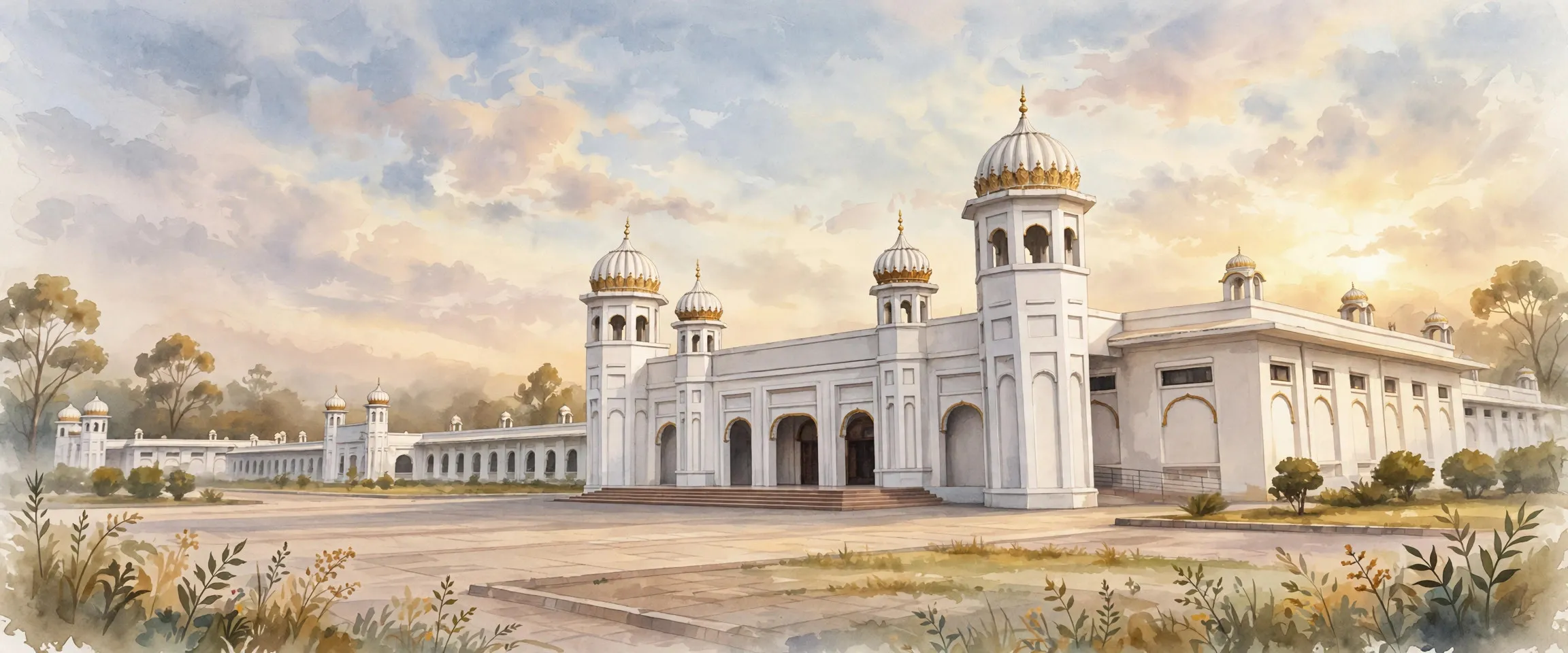
Pakistan is home to some of Sikhism's holiest shrines, including Nankana Sahib, the birthplace of Guru Nanak Dev Ji, and Kartarpur Sahib, where he spent his final years. More than 150 historic gurdwaras stand across the country, cared for by the Pakistan Sikh Gurdwara Prabandhak Committee, and the Kartarpur Corridor gives Indian pilgrims visa-free access.
- Facts
- Country
- Pakistan
- Historic gurdwaras
- 150+
- Holiest sites
- Nankana Sahib, Kartarpur Sahib, Panja Sahib
- Managed by
- Pakistan Sikh Gurdwara Prabandhak Committee (under the Evacuee Trust Property Board)
- Key pilgrimage
- Kartarpur Corridor — visa-free day visits since 2019
History of Sikhism in Pakistan
The story of Sikhism begins in what is today Pakistan. In 1469, Guru Nanak Dev Ji was born at Rai Bhoi di Talwandi, the town now known as Nankana Sahib, about 65 kilometres from Lahore. He spent his childhood there, and the town was later renamed in his honour. Nearly every chapter of his life — his birth, his travels, and his final years — unfolded on land that lies within Pakistan's present borders.
After Guru Nanak, the Sikh Gurus kept travelling through the region. Guru Arjan Dev Ji, the fifth Guru, was martyred in Lahore in 1606, and the spot is marked by Gurdwara Dera Sahib. Under Maharaja Ranjit Singh's Sikh Empire, whose capital was Lahore, many of these shrines were rebuilt in grand style with gilded domes and marble. The Partition of 1947 drew a border through Punjab and left the great historic gurdwaras on the Pakistani side, cared for today by the Pakistan Sikh Gurdwara Prabandhak Committee under the Evacuee Trust Property Board.
The major gurdwaras of Pakistan
More than 150 historic gurdwaras stand across Pakistan, from the birthplace of the faith to the site of its founder's final years. These are the most important.
Gurdwara Janam Asthan, Nankana Sahib — the most revered of them all: the birthplace of Guru Nanak Dev Ji. The main shrine stands where the Guru was born in 1469, and the town around it grew into one of Sikhism's great pilgrimage centres. Every November, thousands of pilgrims gather here for Guru Nanak Gurpurab.
Read our detailed guide: Nankana Sahib — birthplace of Guru Nanak Dev Ji.
Gurdwara Darbar Sahib, Kartarpur — one of the holiest sites in Sikhism. After his long missionary journeys, Guru Nanak settled at Kartarpur on the Ravi river around 1521, farmed the land, set up a langar, and preached here for 18 years until his death in 1539. The present shrine building dates to 1925, raised with a donation from the Maharaja of Patiala, and the complex was greatly expanded in 2018 across 42 acres. It is often described as the largest gurdwara in the world.
Gurdwara Panja Sahib, Hasan Abdal — in Hasan Abdal near Islamabad, famous for the boulder bearing what Sikhs believe is the handprint (panja) of Guru Nanak. The Guru reached here with Bhai Mardana in the summer of 1521; the spring of water he is said to have drawn from beneath the rock still flows. The first gurdwara on the site was built by Hari Singh Nalwa, the great general of the Sikh Empire.
Gurdwara Dera Sahib, Lahore — standing beside the Lahore Fort, the Badshahi Mosque and the Samadhi of Maharaja Ranjit Singh, this gurdwara marks the martyrdom of Guru Arjan Dev Ji in 1606. A memorial was first raised here in 1619 by his son Guru Hargobind; the gilded-domed building seen today was built during Ranjit Singh's reign. Note that visiting is restricted — entry is generally permitted to Sikhs, with others needing special permission from the Evacuee Trust Property Board.
Gurdwara Sacha Sauda, Chuharkana — near Sheikhupura, marking the spot where the young Nanak, sent by his father with twenty rupees to strike a business deal, instead fed a group of hungry holy men — the “sacha sauda”, the true bargain. The story captures the heart of the Sikh teaching of vand chhako, sharing with others.
Gurdwara Rohri Sahib, Eminabad — in Eminabad near Gujranwala, associated with Guru Nanak's stay during Babur's invasion of 1521 — the events that inspired his Babur Bani hymns on the suffering of the innocent in war.
Other notable gurdwaras
The list goes on: Gurdwara Chowa Sahib at Jhelum, Gurdwara Beri Sahib at Sialkot, Gurdwara Janam Asthan Guru Ram Das in Lahore (the birthplace of the fourth Guru), Gurdwara Shahid Ganj Bhai Taru Singh in Lahore. We are documenting each of these in detail — this guide will keep growing.
All Gurdwaras in Pakistan
- Gurdwara Janam Asthan, Nankana Sahib — Guru Nanak Dev Ji’s birthplace
- Gurdwara Darbar Sahib, Kartarpur — where Guru Nanak spent his final years
- Gurdwara Panja Sahib, Hasan Abdal — the sacred handprint rock
- Gurdwara Dera Sahib, Lahore — site of Guru Arjan Dev Ji’s martyrdom
- Gurdwara Sacha Sauda — the true bargain of Guru Nanak
- Gurdwara Rohri Sahib, Eminabad — the pebble shrine of Bhai Lalo’s village
- Gurdwara Beri Sahib, Sialkot — the historic Sialkot shrine
- Gurdwara Thara Sahib, Multan — Guru Nanak’s thara at Multan
The Kartarpur Corridor
For decades the shrine at Kartarpur stood just 3 kilometres from the Indian border — visible, but unreachable for most Indian pilgrims. That changed on 9 November 2019, days before Guru Nanak's 550th birth anniversary, when the Kartarpur Corridor was opened: a visa-free passage letting Indian pilgrims cross to Gurdwara Darbar Sahib Kartarpur and return the same day. Pakistan's Prime Minister Imran Khan and India's Prime Minister Narendra Modi inaugurated their respective sides, and the corridor has since carried hundreds of thousands of pilgrims.
Visiting as a pilgrim
The great Sikh festivals draw the largest yatras: Guru Nanak Gurpurab in November, Vaisakhi in April, and the Saka Nankana Sahib commemoration in February. The most comfortable months for travel are October through March. Pilgrim groups usually enter at the Wagah border, where the PSGPC and the Evacuee Trust Property Board receive them and arrange the shrine visits. The Kartarpur Corridor runs separately as a day-visit, visa-free route for Indian passport holders.
Which is the most important gurdwara in Pakistan?
Nankana Sahib, the birthplace of Guru Nanak Dev Ji, and Kartarpur Sahib, where he spent his final 18 years, are the two holiest — among the most sacred sites in all of Sikhism.
Can Indian citizens visit gurdwaras in Pakistan?
Yes. Indian pilgrims travel in organised jathas with visas arranged for festivals like Gurpurab and Vaisakhi, and the Kartarpur Corridor allows visa-free day visits to Kartarpur Sahib.
Do I need a visa for the Kartarpur Corridor?
No visa is needed for the corridor itself — Indian pilgrims register online, carry their passport, and cross to Gurdwara Darbar Sahib Kartarpur and back the same day.
Who looks after the gurdwaras in Pakistan?
The Pakistan Sikh Gurdwara Prabandhak Committee (PSGPC), working under the federal Evacuee Trust Property Board (ETPB), maintains the historic shrines.
How many gurdwaras are there in Pakistan?
More than 150 historic gurdwaras stand across Pakistan, concentrated in Punjab province, with others in Sindh, Khyber Pakhtunkhwa and beyond.
ਪਾਕਿਸਤਾਨ ਵਿੱਚ ਸਿੱਖ ਧਰਮ ਦਾ ਇਤਿਹਾਸ
ਸਿੱਖ ਧਰਮ ਦੀ ਕਹਾਣੀ ਉਸ ਧਰਤੀ ਤੋਂ ਸ਼ੁਰੂ ਹੁੰਦੀ ਹੈ ਜੋ ਅੱਜ ਪਾਕਿਸਤਾਨ ਹੈ 1469 ਵਿੱਚ ਗੁਰੂ ਨਾਨਕ ਦੇਵ ਜੀ ਦਾ ਪ੍ਰਕਾਸ਼ ਰਾਏ ਭੋਇ ਦੀ ਤਲਵੰਡੀ ਵਿਖੇ ਹੋਇਆ, ਜਿਸ ਨੂੰ ਹੁਣ ਨਨਕਾਣਾ ਸਾਹਿਬ ਕਿਹਾ ਜਾਂਦਾ ਹੈ — ਲਾਹੌਰ ਤੋਂ ਲਗਭਗ 65 ਕਿਲੋਮੀਟਰ ਦੂਰ ਉਨ੍ਹਾਂ ਨੇ ਆਪਣਾ ਬਚਪਨ ਇੱਥੇ ਬਿਤਾਇਆ, ਅਤੇ ਬਾਅਦ ਵਿੱਚ ਇਹ ਸ਼ਹਿਰ ਉਨ੍ਹਾਂ ਦੇ ਨਾਮ ’ਤੇ ਰੱਖਿਆ ਗਿਆ ਉਨ੍ਹਾਂ ਦੇ ਜੀਵਨ ਦਾ ਲਗਭਗ ਹਰ ਅਧਿਆਇ — ਜਨਮ, ਯਾਤਰਾਵਾਂ ਅਤੇ ਆਖ਼ਰੀ ਸਾਲ — ਉਸ ਧਰਤੀ ’ਤੇ ਬੀਤਿਆ ਜੋ ਅੱਜ ਪਾਕਿਸਤਾਨ ਵਿੱਚ ਹੈ
ਗੁਰੂ ਨਾਨਕ ਦੇਵ ਜੀ ਤੋਂ ਬਾਅਦ ਸਿੱਖ ਗੁਰੂ ਸਾਹਿਬਾਨ ਇਸ ਇਲਾਕੇ ਵਿੱਚ ਯਾਤਰਾ ਕਰਦੇ ਰਹੇ ਪੰਜਵੇਂ ਗੁਰੂ, ਗੁਰੂ ਅਰਜਨ ਦੇਵ ਜੀ, 1606 ਵਿੱਚ ਲਾਹੌਰ ਵਿਖੇ ਸ਼ਹੀਦ ਹੋਏ, ਅਤੇ ਉਸ ਅਸਥਾਨ ’ਤੇ ਗੁਰਦੁਆਰਾ ਡੇਹਰਾ ਸਾਹਿਬ ਸਥਿਤ ਹੈ ਮਹਾਰਾਜਾ ਰਣਜੀਤ ਸਿੰਘ ਦੇ ਸਿੱਖ ਰਾਜ ਦੌਰਾਨ, ਜਿਸ ਦੀ ਰਾਜਧਾਨੀ ਲਾਹੌਰ ਸੀ, ਇਹਨਾਂ ਅਸਥਾਨਾਂ ਨੂੰ ਸੁਨਹਿਰੀ ਗੁੰਬਦਾਂ ਅਤੇ ਸੰਗਮਰਮਰ ਨਾਲ ਸ਼ਾਨਦਾਰ ਢੰਗ ਨਾਲ ਦੁਬਾਰਾ ਬਣਾਇਆ ਗਿਆ 1947 ਦੀ ਵੰਡ ਨੇ ਪੰਜਾਬ ਵਿੱਚੋਂ ਲਕੀਰ ਖਿੱਚ ਦਿੱਤੀ ਅਤੇ ਮਹਾਨ ਇਤਿਹਾਸਕ ਗੁਰਦੁਆਰੇ ਪਾਕਿਸਤਾਨ ਵਾਲੇ ਪਾਸੇ ਰਹਿ ਗਏ; ਅੱਜ ਇਹਨਾਂ ਦੀ ਸੰਭਾਲ ਪਾਕਿਸਤਾਨ ਸਿੱਖ ਗੁਰਦੁਆਰਾ ਪ੍ਰਬੰਧਕ ਕਮੇਟੀ ਕਰਦੀ ਹੈ
ਪਾਕਿਸਤਾਨ ਦੇ ਪ੍ਰਮੁੱਖ ਗੁਰਦੁਆਰੇ
ਪਾਕਿਸਤਾਨ ਵਿੱਚ 150 ਤੋਂ ਵੱਧ ਇਤਿਹਾਸਕ ਗੁਰਦੁਆਰੇ ਹਨ — ਧਰਮ ਦੇ ਜਨਮ ਅਸਥਾਨ ਤੋਂ ਲੈ ਕੇ ਬਾਨੀ ਦੇ ਆਖ਼ਰੀ ਸਾਲਾਂ ਦੇ ਅਸਥਾਨ ਤੱਕ ਇਹ ਸਭ ਤੋਂ ਮਹੱਤਵਪੂਰਨ ਹਨ
ਗੁਰਦੁਆਰਾ ਜਨਮ ਅਸਥਾਨ, ਨਨਕਾਣਾ ਸਾਹਿਬ — ਸਭ ਤੋਂ ਪਵਿੱਤਰ ਅਸਥਾਨ: ਗੁਰੂ ਨਾਨਕ ਦੇਵ ਜੀ ਦਾ ਜਨਮ ਅਸਥਾਨ ਮੁੱਖ ਅਸਥਾਨ ਉੱਥੇ ਹੈ ਜਿੱਥੇ 1469 ਵਿੱਚ ਗੁਰੂ ਜੀ ਦਾ ਪ੍ਰਕਾਸ਼ ਹੋਇਆ ਸੀ, ਅਤੇ ਇਸ ਦੇ ਆਲੇ-ਦੁਆਲੇ ਦਾ ਸ਼ਹਿਰ ਸਿੱਖ ਧਰਮ ਦੇ ਮਹਾਨ ਤੀਰਥ ਕੇਂਦਰਾਂ ਵਿੱਚੋਂ ਇੱਕ ਬਣ ਗਿਆ ਹਰ ਸਾਲ ਨਵੰਬਰ ਵਿੱਚ ਗੁਰੂ ਨਾਨਕ ਗੁਰਪੁਰਬ ਮੌਕੇ ਹਜ਼ਾਰਾਂ ਸ਼ਰਧਾਲੂ ਇੱਥੇ ਇਕੱਠੇ ਹੁੰਦੇ ਹਨ
ਗੁਰਦੁਆਰਾ ਦਰਬਾਰ ਸਾਹਿਬ, ਕਰਤਾਰਪੁਰ — ਸਿੱਖ ਧਰਮ ਦੇ ਪਵਿੱਤਰਤਮ ਅਸਥਾਨਾਂ ਵਿੱਚੋਂ ਇੱਕ ਆਪਣੀਆਂ ਲੰਬੀਆਂ ਯਾਤਰਾਵਾਂ ਤੋਂ ਬਾਅਦ ਗੁਰੂ ਨਾਨਕ ਦੇਵ ਜੀ ਲਗਭਗ 1521 ਵਿੱਚ ਰਾਵੀ ਕੰਢੇ ਕਰਤਾਰਪੁਰ ਆ ਵਸੇ, ਖੇਤੀ ਕੀਤੀ, ਲੰਗਰ ਲਾਇਆ ਅਤੇ 1539 ਵਿੱਚ ਜੋਤੀ-ਜੋਤਿ ਸਮਾਉਣ ਤੱਕ 18 ਸਾਲ ਇੱਥੇ ਪ੍ਰਚਾਰ ਕੀਤਾ ਮੌਜੂਦਾ ਅਸਥਾਨ 1925 ਵਿੱਚ ਪਟਿਆਲਾ ਮਹਾਰਾਜੇ ਦੇ ਦਾਨ ਨਾਲ ਬਣਿਆ, ਅਤੇ 2018 ਵਿੱਚ 42 ਏਕੜ ਵਿੱਚ ਇਸ ਦਾ ਵੱਡਾ ਵਿਸਤਾਰ ਹੋਇਆ ਇਸ ਨੂੰ ਦੁਨੀਆ ਦਾ ਸਭ ਤੋਂ ਵੱਡਾ ਗੁਰਦੁਆਰਾ ਵੀ ਕਿਹਾ ਜਾਂਦਾ ਹੈ
ਗੁਰਦੁਆਰਾ ਪੰਜਾ ਸਾਹਿਬ, ਹਸਨ ਅਬਦਾਲ — ਇਸਲਾਮਾਬਾਦ ਨੇੜੇ ਹਸਨ ਅਬਦਾਲ ਵਿਖੇ ਇਹ ਗੁਰਦੁਆਰਾ ਉਸ ਚੱਟਾਨ ਲਈ ਪ੍ਰਸਿੱਧ ਹੈ ਜਿਸ ’ਤੇ ਸਿੱਖਾਂ ਦੀ ਮਾਨਤਾ ਅਨੁਸਾਰ ਗੁਰੂ ਨਾਨਕ ਦੇਵ ਜੀ ਦੇ ਹੱਥ (ਪੰਜੇ) ਦੀ ਛਾਪ ਹੈ ਗੁਰੂ ਜੀ ਭਾਈ ਮਰਦਾਨੇ ਨਾਲ 1521 ਦੀਆਂ ਗਰਮੀਆਂ ਵਿੱਚ ਇੱਥੇ ਪਹੁੰਚੇ ਸਨ; ਜਿਸ ਚਸ਼ਮੇ ਦਾ ਪਾਣੀ ਉਨ੍ਹਾਂ ਨੇ ਚੱਟਾਨ ਹੇਠੋਂ ਕੱਢਿਆ ਸੀ, ਉਹ ਅੱਜ ਵੀ ਵਗਦਾ ਹੈ ਇੱਥੇ ਪਹਿਲਾ ਗੁਰਦੁਆਰਾ ਸਿੱਖ ਰਾਜ ਦੇ ਮਹਾਨ ਜਰਨੈਲ ਹਰੀ ਸਿੰਘ ਨਲਵਾ ਨੇ ਬਣਵਾਇਆ ਸੀ
ਗੁਰਦੁਆਰਾ ਡੇਹਰਾ ਸਾਹਿਬ, ਲਾਹੌਰ — ਲਾਹੌਰ ਕਿਲ੍ਹੇ, ਬਾਦਸ਼ਾਹੀ ਮਸਜਿਦ ਅਤੇ ਮਹਾਰਾਜਾ ਰਣਜੀਤ ਸਿੰਘ ਦੀ ਸਮਾਧੀ ਦੇ ਨਾਲ ਖੜ੍ਹਾ ਇਹ ਗੁਰਦੁਆਰਾ 1606 ਵਿੱਚ ਗੁਰੂ ਅਰਜਨ ਦੇਵ ਜੀ ਦੀ ਸ਼ਹਾਦਤ ਦਾ ਅਸਥਾਨ ਹੈ ਪਹਿਲੀ ਯਾਦਗਾਰ 1619 ਵਿੱਚ ਉਨ੍ਹਾਂ ਦੇ ਸਪੁੱਤਰ ਗੁਰੂ ਹਰਗੋਬਿੰਦ ਜੀ ਨੇ ਬਣਵਾਈ ਸੀ; ਅੱਜ ਦਿਖਾਈ ਦੇਣ ਵਾਲੀ ਸੁਨਹਿਰੀ ਗੁੰਬਦ ਵਾਲੀ ਇਮਾਰਤ ਰਣਜੀਤ ਸਿੰਘ ਦੇ ਰਾਜ ਦੌਰਾਨ ਬਣੀ ਧਿਆਨ ਰਹੇ ਕਿ ਇੱਥੇ ਦਰਸ਼ਨ ’ਤੇ ਪਾਬੰਦੀ ਹੈ — ਆਮ ਤੌਰ ’ਤੇ ਸਿੱਖਾਂ ਨੂੰ ਇਜਾਜ਼ਤ ਹੈ, ਹੋਰਨਾਂ ਨੂੰ ਈਵੈਕੂਈ ਟਰੱਸਟ ਪ੍ਰਾਪਰਟੀ ਬੋਰਡ ਤੋਂ ਵਿਸ਼ੇਸ਼ ਇਜਾਜ਼ਤ ਲੈਣੀ ਪੈਂਦੀ ਹੈ
ਗੁਰਦੁਆਰਾ ਸੱਚਾ ਸੌਦਾ, ਚੂਹੜਕਾਣਾ — ਸ਼ੇਖੂਪੁਰਾ ਨੇੜੇ ਇਹ ਗੁਰਦੁਆਰਾ ਉਸ ਅਸਥਾਨ ਦੀ ਯਾਦ ਦਿਵਾਉਂਦਾ ਹੈ ਜਿੱਥੇ ਨੌਜਵਾਨ ਨਾਨਕ ਨੇ ਪਿਤਾ ਵੱਲੋਂ ਵਪਾਰ ਲਈ ਦਿੱਤੇ ਵੀਹ ਰੁਪਏ ਨਾਲ ਭੁੱਖੇ ਸਾਧਾਂ ਨੂੰ ਭੋਜਨ ਛਕਾਇਆ ਸੀ — ਇਹੀ ਸੀ “ਸੱਚਾ ਸੌਦਾ” ਇਹ ਕਹਾਣੀ ਵੰਡ ਛਕਣ ਦੇ ਸਿੱਖ ਸਿਧਾਂਤ ਦਾ ਦਿਲ ਹੈ
ਗੁਰਦੁਆਰਾ ਰੋੜੀ ਸਾਹਿਬ, ਏਮਨਾਬਾਦ — ਗੁਜਰਾਂਵਾਲਾ ਨੇੜੇ ਏਮਨਾਬਾਦ ਵਿਖੇ ਇਹ ਅਸਥਾਨ 1521 ਵਿੱਚ ਬਾਬਰ ਦੇ ਹਮਲੇ ਦੌਰਾਨ ਗੁਰੂ ਨਾਨਕ ਦੇਵ ਜੀ ਦੇ ਠਹਿਰਾਅ ਨਾਲ ਜੁੜਿਆ ਹੈ — ਉਹੀ ਘਟਨਾਵਾਂ ਜਿਨ੍ਹਾਂ ’ਤੇ ਗੁਰੂ ਜੀ ਨੇ ਬਾਬਰ ਬਾਣੀ ਦੀ ਰਚਨਾ ਕੀਤੀ
ਹੋਰ ਪ੍ਰਸਿੱਧ ਗੁਰਦੁਆਰੇ
ਸੂਚੀ ਹੋਰ ਵੀ ਲੰਬੀ ਹੈ: ਜੇਹਲਮ ਵਿਖੇ ਗੁਰਦੁਆਰਾ ਚੋਵਾ ਸਾਹਿਬ, ਸਿਆਲਕੋਟ ਵਿਖੇ ਗੁਰਦੁਆਰਾ ਬੇਰੀ ਸਾਹਿਬ, ਲਾਹੌਰ ਵਿਖੇ ਗੁਰਦੁਆਰਾ ਜਨਮ ਅਸਥਾਨ ਗੁਰੂ ਰਾਮਦਾਸ (ਚੌਥੇ ਗੁਰੂ ਦਾ ਜਨਮ ਅਸਥਾਨ), ਲਾਹੌਰ ਵਿਖੇ ਗੁਰਦੁਆਰਾ ਸ਼ਹੀਦ ਗੰਜ ਭਾਈ ਤਾਰੂ ਸਿੰਘ ਅਸੀਂ ਇਹਨਾਂ ਸਭ ਦਾ ਵਿਸਤਾਰ ਨਾਲ ਵਰਣਨ ਕਰ ਰਹੇ ਹਾਂ — ਇਹ ਗਾਈਡ ਵਧਦੀ ਰਹੇਗੀ
ਕਰਤਾਰਪੁਰ ਲਾਂਘਾ
ਦਹਾਕਿਆਂ ਤੱਕ ਕਰਤਾਰਪੁਰ ਦਾ ਅਸਥਾਨ ਭਾਰਤੀ ਸਰਹੱਦ ਤੋਂ ਸਿਰਫ਼ 3 ਕਿਲੋਮੀਟਰ ਦੂਰ ਸੀ — ਦਿਖਾਈ ਦਿੰਦਾ ਸੀ ਪਰ ਜ਼ਿਆਦਾਤਰ ਭਾਰਤੀ ਸ਼ਰਧਾਲੂਆਂ ਦੀ ਪਹੁੰਚ ਤੋਂ ਬਾਹਰ ਇਹ 9 ਨਵੰਬਰ 2019 ਨੂੰ ਬਦਲ ਗਿਆ, ਗੁਰੂ ਨਾਨਕ ਦੇਵ ਜੀ ਦੇ 550ਵੇਂ ਪ੍ਰਕਾਸ਼ ਪੁਰਬ ਤੋਂ ਕੁਝ ਦਿਨ ਪਹਿਲਾਂ, ਜਦੋਂ ਕਰਤਾਰਪੁਰ ਲਾਂਘਾ ਖੋਲ੍ਹਿਆ ਗਿਆ — ਬਿਨਾਂ ਵੀਜ਼ੇ ਭਾਰਤੀ ਸ਼ਰਧਾਲੂ ਗੁਰਦੁਆਰਾ ਦਰਬਾਰ ਸਾਹਿਬ ਕਰਤਾਰਪੁਰ ਦੇ ਦਰਸ਼ਨ ਕਰਕੇ ਉਸੇ ਦਿਨ ਵਾਪਸ ਆ ਸਕਦੇ ਹਨ ਪਾਕਿਸਤਾਨ ਦੇ ਪ੍ਰਧਾਨ ਮੰਤਰੀ ਇਮਰਾਨ ਖ਼ਾਨ ਅਤੇ ਭਾਰਤ ਦੇ ਪ੍ਰਧਾਨ ਮੰਤਰੀ ਨਰਿੰਦਰ ਮੋਦੀ ਨੇ ਆਪੋ-ਆਪਣੇ ਪਾਸੇ ਉਦਘਾਟਨ ਕੀਤਾ, ਅਤੇ ਉਦੋਂ ਤੋਂ ਲੱਖਾਂ ਸ਼ਰਧਾਲੂ ਲਾਂਘੇ ਰਾਹੀਂ ਜਾ ਚੁੱਕੇ ਹਨ
ਸ਼ਰਧਾਲੂ ਵਜੋਂ ਯਾਤਰਾ
ਸਭ ਤੋਂ ਵੱਡੇ ਜਥੇ ਸਿੱਖ ਤਿਉਹਾਰਾਂ ਮੌਕੇ ਆਉਂਦੇ ਹਨ: ਨਵੰਬਰ ਵਿੱਚ ਗੁਰੂ ਨਾਨਕ ਗੁਰਪੁਰਬ, ਅਪ੍ਰੈਲ ਵਿੱਚ ਵਿਸਾਖੀ, ਅਤੇ ਫਰਵਰੀ ਵਿੱਚ ਸਾਕਾ ਨਨਕਾਣਾ ਸਾਹਿਬ ਦੀ ਯਾਦ ਯਾਤਰਾ ਲਈ ਸਭ ਤੋਂ ਆਰਾਮਦਾਇਕ ਮਹੀਨੇ ਅਕਤੂਬਰ ਤੋਂ ਮਾਰਚ ਹਨ ਸ਼ਰਧਾਲੂ ਜਥੇ ਆਮ ਤੌਰ ’ਤੇ ਵਾਹਗਾ ਸਰਹੱਦ ਤੋਂ ਦਾਖ਼ਲ ਹੁੰਦੇ ਹਨ, ਜਿੱਥੇ ਪਾਕਿਸਤਾਨ ਸਿੱਖ ਗੁਰਦੁਆਰਾ ਪ੍ਰਬੰਧਕ ਕਮੇਟੀ ਅਤੇ ਈਵੈਕੂਈ ਟਰੱਸਟ ਪ੍ਰਾਪਰਟੀ ਬੋਰਡ ਉਨ੍ਹਾਂ ਦਾ ਸਵਾਗਤ ਕਰਦੇ ਹਨ ਅਤੇ ਪ੍ਰਬੰਧ ਕਰਦੇ ਹਨ ਕਰਤਾਰਪੁਰ ਲਾਂਘਾ ਭਾਰਤੀ ਪਾਸਪੋਰਟ ਧਾਰਕਾਂ ਲਈ ਵੱਖਰਾ, ਇੱਕ ਦਿਨ ਦਾ, ਬਿਨਾਂ ਵੀਜ਼ੇ ਰਸਤਾ ਹੈ
ਪਾਕਿਸਤਾਨ ਦਾ ਸਭ ਤੋਂ ਮਹੱਤਵਪੂਰਨ ਗੁਰਦੁਆਰਾ ਕਿਹੜਾ ਹੈ?
ਗੁਰੂ ਨਾਨਕ ਦੇਵ ਜੀ ਦਾ ਜਨਮ ਅਸਥਾਨ ਨਨਕਾਣਾ ਸਾਹਿਬ ਅਤੇ ਉਨ੍ਹਾਂ ਦੇ ਆਖ਼ਰੀ 18 ਸਾਲਾਂ ਦਾ ਅਸਥਾਨ ਕਰਤਾਰਪੁਰ ਸਾਹਿਬ ਸਭ ਤੋਂ ਪਵਿੱਤਰ ਹਨ — ਇਹ ਸਮੁੱਚੇ ਸਿੱਖ ਧਰਮ ਦੇ ਪਵਿੱਤਰਤਮ ਅਸਥਾਨਾਂ ਵਿੱਚੋਂ ਹਨ
ਕੀ ਭਾਰਤੀ ਨਾਗਰਿਕ ਪਾਕਿਸਤਾਨ ਦੇ ਗੁਰਦੁਆਰਿਆਂ ਦੇ ਦਰਸ਼ਨ ਕਰ ਸਕਦੇ ਹਨ?
ਹਾਂ ਭਾਰਤੀ ਸ਼ਰਧਾਲੂ ਗੁਰਪੁਰਬ ਅਤੇ ਵਿਸਾਖੀ ਵਰਗੇ ਤਿਉਹਾਰਾਂ ਮੌਕੇ ਵੀਜ਼ੇ ਨਾਲ ਸੰਗਠਿਤ ਜਥਿਆਂ ਵਿੱਚ ਜਾਂਦੇ ਹਨ, ਅਤੇ ਕਰਤਾਰਪੁਰ ਲਾਂਘਾ ਕਰਤਾਰਪੁਰ ਸਾਹਿਬ ਦੇ ਇੱਕ ਦਿਨਾ ਦਰਸ਼ਨ ਲਈ ਬਿਨਾਂ ਵੀਜ਼ੇ ਦੀ ਸਹੂਲਤ ਦਿੰਦਾ ਹੈ
ਕੀ ਕਰਤਾਰਪੁਰ ਲਾਂਘੇ ਲਈ ਵੀਜ਼ੇ ਦੀ ਲੋੜ ਹੈ?
ਲਾਂਘੇ ਲਈ ਵੀਜ਼ੇ ਦੀ ਲੋੜ ਨਹੀਂ — ਭਾਰਤੀ ਸ਼ਰਧਾਲੂ ਆਨਲਾਈਨ ਰਜਿਸਟਰ ਕਰਦੇ ਹਨ, ਪਾਸਪੋਰਟ ਨਾਲ ਜਾਂਦੇ ਹਨ ਅਤੇ ਉਸੇ ਦਿਨ ਵਾਪਸ ਆ ਜਾਂਦੇ ਹਨ
ਪਾਕਿਸਤਾਨ ਦੇ ਗੁਰਦੁਆਰਿਆਂ ਦੀ ਸੰਭਾਲ ਕੌਣ ਕਰਦਾ ਹੈ?
ਸੰਘੀ ਈਵੈਕੂਈ ਟਰੱਸਟ ਪ੍ਰਾਪਰਟੀ ਬੋਰਡ (ਈ.ਟੀ.ਪੀ.ਬੀ.) ਅਧੀਨ ਪਾਕਿਸਤਾਨ ਸਿੱਖ ਗੁਰਦੁਆਰਾ ਪ੍ਰਬੰਧਕ ਕਮੇਟੀ (ਪੀ.ਐਸ.ਜੀ.ਪੀ.ਸੀ.) ਇਤਿਹਾਸਕ ਅਸਥਾਨਾਂ ਦੀ ਸੰਭਾਲ ਕਰਦੀ ਹੈ
ਪਾਕਿਸਤਾਨ ਵਿੱਚ ਕਿੰਨੇ ਗੁਰਦੁਆਰੇ ਹਨ?
ਪਾਕਿਸਤਾਨ ਵਿੱਚ 150 ਤੋਂ ਵੱਧ ਇਤਿਹਾਸਕ ਗੁਰਦੁਆਰੇ ਹਨ, ਜ਼ਿਆਦਾਤਰ ਪੰਜਾਬ ਸੂਬੇ ਵਿੱਚ, ਅਤੇ ਕੁਝ ਸਿੰਧ, ਖ਼ੈਬਰ ਪਖ਼ਤੂਨਖ਼ਵਾ ਅਤੇ ਹੋਰ ਇਲਾਕਿਆਂ ਵਿੱਚ