
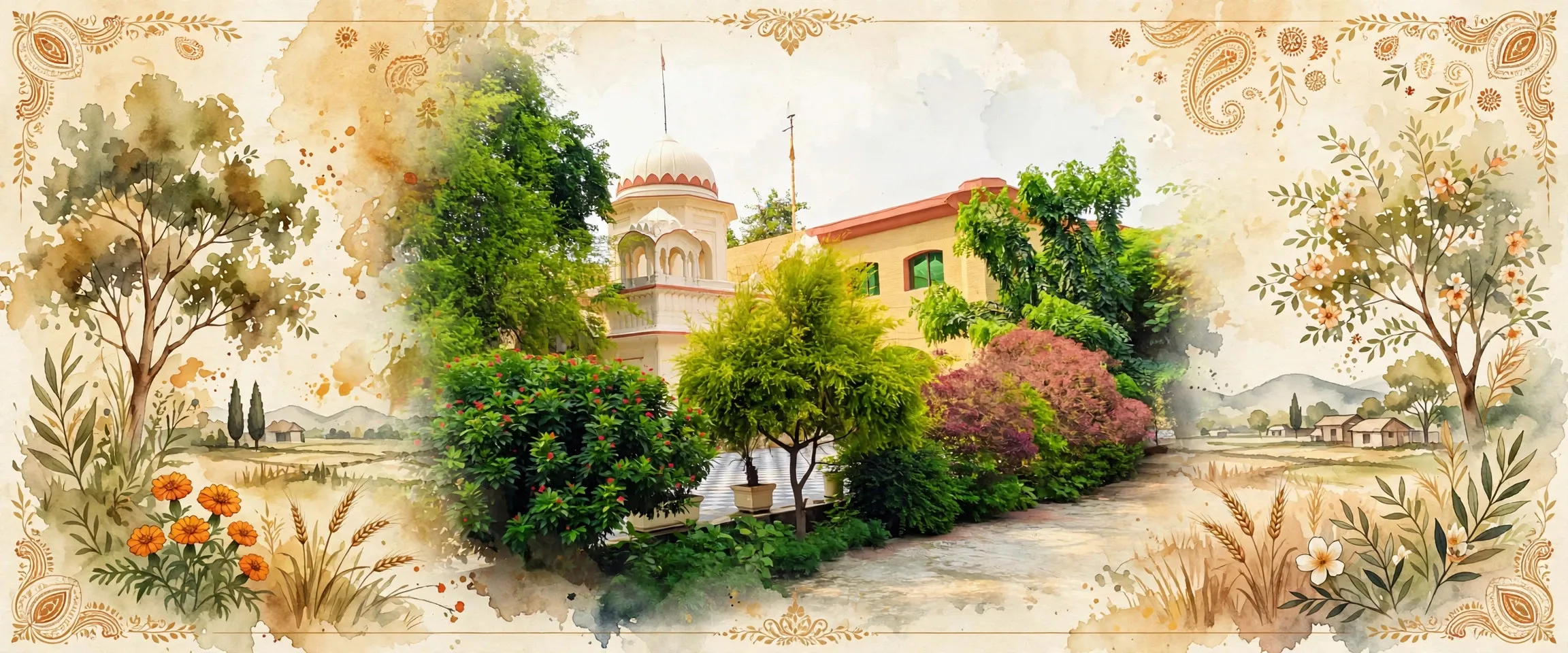
Gurdwara Beri Sahib, also called Babe Di Ber, stands in Sialkot, Pakistan, where Guru Nanak Dev Ji stayed under a beri tree during his travels and met the Sufi saint Hamza Ghaus. The centuries-old tree still stands in the complex, which was renovated in the 2010s and reopened to pilgrims.
- Facts
- Country
- Pakistan
- City
- Sialkot, Punjab
- District
- Sialkot District
- Also known as
- Babe Di Ber, Baba Beri, Baba Bair
- Associated Guru
- Guru Nanak Dev Ji
- Built by
- Sardar Natha Singh
- Pilgrim access restored
- November 2012
Gurdwara Beri Sahib — also called Babe Di Ber, Baba Beri or Baba Bair — stands in Sialkot, Punjab, Pakistan. It marks the spot where Guru Nanak Dev Ji stayed under a beri (jujube) tree during his udasis, his missionary journeys, and where he met Hazrat Hamza Ghaus, a revered Sufi saint of the city.
History
Guru Nanak Dev Ji reached Sialkot during his travels. Sikh tradition remembers the city at that time as gripped by fear — its people dreaded the curse of a holy man whose promise had been broken. The Guru sat beneath a beri tree near the spot where Hazrat Hamza Ghaus was meditating and sang Gurbani in a loud, clear voice. Disturbed, Hamza Ghaus came to question him, and the two spoke at length. Tradition holds that the Guru’s words moved the saint to pardon the city, and a bond of mutual respect grew between them.
The site of the Guru’s stay came to be known as Babe Di Ber — the Baba’s beri tree. Sardar Natha Singh later built a gurdwara there in memory of Guru Nanak Dev Ji’s visit. The shrine suffered damage in the aftermath of the Babri Masjid dispute, when an unruly mob razed its tall temple structure. The gurdwara was renovated during the 2010s and reopened for pilgrims, and access for Indian Sikh pilgrims was restored in November 2012.
Architecture & the complex
The complex grew around the sacred tree. It includes a garden, a pool and residential rooms for pilgrims, and a large well once worked by Persian wheels. The main building carries a white dome with red trim above an arched sanctum, and the diwan hall inside is kept decorated for daily prayers. Nineteenth-century frescoes once adorned its walls, including scenes of Guru Nanak meeting Hamza Ghaus. The ber tree itself — believed to be more than 500 years old — still stands within the premises and remains the spiritual heart of the shrine.
Religious significance
Beri Sahib is remembered above all for the meeting it commemorates: a Sikh Guru and a Muslim mystic in dialogue, ending in forgiveness rather than conflict. For pilgrims, sitting beneath the ancient ber tree is a direct, living link to Guru Nanak Dev Ji’s presence in Sialkot. The shrine has become an enduring symbol of interfaith respect, and Sikh yatris from India, the UK, Canada and beyond now include it in heritage tours of Pakistan. Guru Nanak Gurpurab and Vaisakhi are marked here with Akhand Path and Gurbani kirtan.
Visiting / pilgrim info
The gurdwara stands in the heart of Sialkot city, adjacent to the historic Sialkot Fort. It is about 125 km from Lahore and 190 km from Islamabad by road; the nearest airport is Sialkot International Airport, around 20 km away. The shrine is open daily from early morning until evening, with daily prayers, kirtan and sewa. Langar is served and small lodging spaces are available for yatris. Morning visits are best, as the surrounding old city grows busy later in the day.
See also: Gurdwaras in Pakistan — the complete guide to the country’s historic Sikh shrines.
Why is it called Beri Sahib?
The name comes from the beri (jujube) tree under which Guru Nanak Dev Ji stayed and preached during his visit to Sialkot. The tree, believed to be over 500 years old, still stands in the complex.
Who was Hamza Ghaus?
Hazrat Hamza Ghaus was a revered Sufi saint of Sialkot. Sikh tradition remembers his meeting with Guru Nanak Dev Ji at this site, after which he pardoned the city’s residents — an encounter celebrated as a moment of interfaith harmony.
Can Indian pilgrims visit Gurdwara Beri Sahib?
Yes. The gurdwara was renovated in the 2010s and reopened to pilgrims, and access for Indian Sikh pilgrims was restored in November 2012. It is now a regular stop on Sikh heritage tours of Pakistan.
Where exactly is the gurdwara?
It stands in the historic centre of Sialkot, Punjab, Pakistan, next to Sialkot Fort — about 125 km from Lahore and 190 km from Islamabad.
ਗੁਰਦੁਆਰਾ ਬੇਰੀ ਸਾਹਿਬ — ਜਿਸ ਨੂੰ ਬਾਬੇ ਦੀ ਬੇਰ, ਬਾਬਾ ਬੇਰੀ ਜਾਂ ਬਾਬਾ ਬੈਰ ਵੀ ਕਿਹਾ ਜਾਂਦਾ ਹੈ — ਪਾਕਿਸਤਾਨ ਦੇ ਪੰਜਾਬ ਸੂਬੇ ਦੇ ਸ਼ਹਿਰ ਸਿਆਲਕੋਟ ਵਿੱਚ ਸਥਿਤ ਹੈ ਇਹ ਉਹ ਥਾਂ ਹੈ ਜਿੱਥੇ ਗੁਰੂ ਨਾਨਕ ਦੇਵ ਜੀ ਆਪਣੀਆਂ ਉਦਾਸੀਆਂ ਦੌਰਾਨ ਇੱਕ ਬੇਰੀ ਦੇ ਦਰੱਖਤ ਹੇਠ ਠਹਿਰੇ ਸਨ ਅਤੇ ਜਿੱਥੇ ਉਨ੍ਹਾਂ ਦੀ ਮੁਲਾਕਾਤ ਸ਼ਹਿਰ ਦੇ ਮਸ਼ਹੂਰ ਸੂਫ਼ੀ ਸੰਤ ਹਜ਼ਰਤ ਹਮਜ਼ਾ ਗ਼ੌਸ ਨਾਲ ਹੋਈ ਸੀ
ਇਤਿਹਾਸ
ਸਿੱਖ ਪਰੰਪਰਾ ਅਨੁਸਾਰ ਗੁਰੂ ਨਾਨਕ ਦੇਵ ਜੀ ਆਪਣੀਆਂ ਯਾਤਰਾਵਾਂ ਦੌਰਾਨ ਸਿਆਲਕੋਟ ਪਹੁੰਚੇ ਕਿਹਾ ਜਾਂਦਾ ਹੈ ਕਿ ਉਸ ਸਮੇਂ ਸ਼ਹਿਰ ਦੇ ਲੋਕ ਇੱਕ ਸੰਤ ਦੇ ਸਰਾਪ ਦੇ ਡਰ ਵਿੱਚ ਜੀ ਰਹੇ ਸਨ, ਕਿਉਂਕਿ ਕਿਸੇ ਨੇ ਉਸ ਨਾਲ ਕੀਤਾ ਵਾਅਦਾ ਤੋੜ ਦਿੱਤਾ ਸੀ ਗੁਰੂ ਜੀ ਉਸ ਥਾਂ ਨੇੜੇ ਇੱਕ ਬੇਰੀ ਦੇ ਦਰੱਖਤ ਹੇਠ ਬੈਠ ਗਏ ਜਿੱਥੇ ਹਜ਼ਰਤ ਹਮਜ਼ਾ ਗ਼ੌਸ ਤਪੱਸਿਆ ਕਰ ਰਹੇ ਸਨ ਅਤੇ ਉੱਚੀ ਆਵਾਜ਼ ਵਿੱਚ ਗੁਰਬਾਣੀ ਦਾ ਕੀਰਤਨ ਕਰਨ ਲੱਗੇ ਇਸ ਨਾਲ ਸੰਤ ਦੀ ਤਪੱਸਿਆ ਵਿੱਚ ਵਿਘਨ ਪਿਆ ਅਤੇ ਉਹ ਗੁਰੂ ਜੀ ਕੋਲ ਆ ਕੇ ਸਵਾਲ ਕਰਨ ਲੱਗੇ ਦੋਹਾਂ ਵਿਚਕਾਰ ਲੰਮੀ ਗੱਲਬਾਤ ਹੋਈ ਅਤੇ ਪਰੰਪਰਾ ਮੁਤਾਬਕ ਗੁਰੂ ਜੀ ਦੇ ਬਚਨਾਂ ਨੇ ਸੰਤ ਨੂੰ ਸ਼ਹਿਰ ਵਾਸੀਆਂ ਨੂੰ ਮੁਆਫ਼ ਕਰਨ ਲਈ ਪ੍ਰੇਰਿਆ
ਗੁਰੂ ਜੀ ਦੇ ਠਹਿਰਨ ਵਾਲੀ ਥਾਂ 'ਬਾਬੇ ਦੀ ਬੇਰ' ਵਜੋਂ ਮਸ਼ਹੂਰ ਹੋਈ ਬਾਅਦ ਵਿੱਚ ਸਰਦਾਰ ਨੱਥਾ ਸਿੰਘ ਨੇ ਗੁਰੂ ਨਾਨਕ ਦੇਵ ਜੀ ਦੀ ਯਾਦ ਵਿੱਚ ਇੱਥੇ ਗੁਰਦੁਆਰਾ ਬਣਵਾਇਆ ਬਾਬਰੀ ਮਸਜਿਦ ਵਿਵਾਦ ਤੋਂ ਬਾਅਦ ਭੜਕੇ ਦੰਗਿਆਂ ਵਿੱਚ ਇਸ ਗੁਰਦੁਆਰੇ ਨੂੰ ਨੁਕਸਾਨ ਪਹੁੰਚਿਆ ਅਤੇ ਭੀੜ ਨੇ ਇਸ ਦੀ ਉੱਚੀ ਇਮਾਰਤ ਢਾਹ ਦਿੱਤੀ 2010 ਦੇ ਦਹਾਕੇ ਵਿੱਚ ਗੁਰਦੁਆਰੇ ਦਾ ਨਵੀਨੀਕਰਨ ਕੀਤਾ ਗਿਆ ਅਤੇ ਇਸ ਨੂੰ ਸੰਗਤਾਂ ਲਈ ਖੋਲ੍ਹ ਦਿੱਤਾ ਗਿਆ; ਨਵੰਬਰ 2012 ਵਿੱਚ ਭਾਰਤੀ ਸਿੱਖ ਸ਼ਰਧਾਲੂਆਂ ਦੀ ਆਮਦ ਦੁਬਾਰਾ ਸ਼ੁਰੂ ਹੋਈ
ਆਰਕੀਟੈਕਚਰ ਅਤੇ ਕੰਪਲੈਕਸ
ਕੰਪਲੈਕਸ ਪਵਿੱਤਰ ਦਰੱਖਤ ਦੇ ਆਲੇ-ਦੁਆਲੇ ਵਿਕਸਤ ਹੋਇਆ ਇਸ ਵਿੱਚ ਇੱਕ ਬਾਗ਼, ਇੱਕ ਤਲਾਬ ਅਤੇ ਸ਼ਰਧਾਲੂਆਂ ਲਈ ਰਿਹਾਇਸ਼ੀ ਕਮਰੇ ਹਨ, ਅਤੇ ਇੱਕ ਵੱਡਾ ਖੂਹ ਵੀ ਹੈ ਜਿਸ ਉੱਤੇ ਕਦੇ ਫ਼ਾਰਸੀ ਚੱਕੇ ਚੱਲਦੇ ਸਨ ਮੁੱਖ ਇਮਾਰਤ ਉੱਤੇ ਲਾਲ ਕਿਨਾਰੀ ਵਾਲਾ ਚਿੱਟਾ ਗੁੰਬਦ ਹੈ ਅਤੇ ਅੰਦਰਲਾ ਦੀਵਾਨ ਹਾਲ ਰੋਜ਼ਾਨਾ ਪਾਠ ਲਈ ਸਜਾਇਆ ਰਹਿੰਦਾ ਹੈ ਇੱਕ ਸਮੇਂ ਇਸ ਦੀਆਂ ਕੰਧਾਂ 19ਵੀਂ ਸਦੀ ਦੇ ਭਿੱਤੀ ਚਿੱਤਰਾਂ ਨਾਲ ਸ਼ਿੰਗਾਰੀਆਂ ਸਨ, ਜਿਨ੍ਹਾਂ ਵਿੱਚ ਗੁਰੂ ਨਾਨਕ ਅਤੇ ਹਮਜ਼ਾ ਗ਼ੌਸ ਦੀ ਮੁਲਾਕਾਤ ਦੇ ਦ੍ਰਿਸ਼ ਵੀ ਸਨ 500 ਸਾਲ ਤੋਂ ਵੱਧ ਪੁਰਾਣੀ ਮੰਨੀ ਜਾਂਦੀ ਬੇਰੀ ਅੱਜ ਵੀ ਕੰਪਲੈਕਸ ਵਿੱਚ ਖੜ੍ਹੀ ਹੈ ਅਤੇ ਇਸ ਅਸਥਾਨ ਦਾ ਅਧਿਆਤਮਿਕ ਕੇਂਦਰ ਹੈ
ਧਾਰਮਿਕ ਮਹੱਤਤਾ
ਬੇਰੀ ਸਾਹਿਬ ਸਭ ਤੋਂ ਵੱਧ ਉਸ ਮੁਲਾਕਾਤ ਲਈ ਯਾਦ ਕੀਤਾ ਜਾਂਦਾ ਹੈ ਜਿਸ ਦੀ ਇਹ ਯਾਦ ਦਿਵਾਉਂਦਾ ਹੈ — ਇੱਕ ਸਿੱਖ ਗੁਰੂ ਅਤੇ ਇੱਕ ਮੁਸਲਿਮ ਸੂਫ਼ੀ ਵਿਚਕਾਰ ਸੰਵਾਦ, ਜੋ ਟਕਰਾਅ ਦੀ ਥਾਂ ਮੁਆਫ਼ੀ ਉੱਤੇ ਖ਼ਤਮ ਹੋਇਆ ਸ਼ਰਧਾਲੂਆਂ ਲਈ ਪ੍ਰਾਚੀਨ ਬੇਰੀ ਹੇਠ ਬੈਠਣਾ ਸਿਆਲਕੋਟ ਵਿੱਚ ਗੁਰੂ ਨਾਨਕ ਦੇਵ ਜੀ ਦੀ ਹਾਜ਼ਰੀ ਨਾਲ ਸਿੱਧਾ, ਜੀਵੰਤ ਸੰਬੰਧ ਹੈ ਇਹ ਅਸਥਾਨ ਅੰਤਰ-ਧਾਰਮਿਕ ਸਤਿਕਾਰ ਦਾ ਪ੍ਰਤੀਕ ਬਣ ਗਿਆ ਹੈ ਅਤੇ ਭਾਰਤ, ਬਰਤਾਨੀਆ, ਕੈਨੇਡਾ ਅਤੇ ਹੋਰ ਦੇਸ਼ਾਂ ਦੇ ਸਿੱਖ ਯਾਤਰੀ ਇਸ ਨੂੰ ਪਾਕਿਸਤਾਨ ਦੇ ਸਿੱਖ ਵਿਰਾਸਤੀ ਦੌਰਿਆਂ ਵਿੱਚ ਸ਼ਾਮਲ ਕਰਦੇ ਹਨ ਇੱਥੇ ਗੁਰੂ ਨਾਨਕ ਗੁਰਪੁਰਬ ਅਤੇ ਵਿਸਾਖੀ ਅਖੰਡ ਪਾਠ ਅਤੇ ਗੁਰਬਾਣੀ ਕੀਰਤਨ ਨਾਲ ਮਨਾਈ ਜਾਂਦੀ ਹੈ
ਯਾਤਰਾ ਜਾਣਕਾਰੀ
ਗੁਰਦੁਆਰਾ ਸਿਆਲਕੋਟ ਸ਼ਹਿਰ ਦੇ ਕੇਂਦਰ ਵਿੱਚ, ਇਤਿਹਾਸਕ ਸਿਆਲਕੋਟ ਕਿਲ੍ਹੇ ਦੇ ਨਾਲ ਸਥਿਤ ਹੈ ਇਹ ਲਾਹੌਰ ਤੋਂ ਲਗਭਗ 125 ਕਿਲੋਮੀਟਰ ਅਤੇ ਇਸਲਾਮਾਬਾਦ ਤੋਂ 190 ਕਿਲੋਮੀਟਰ ਦੂਰ ਹੈ; ਨਜ਼ਦੀਕੀ ਹਵਾਈ ਅੱਡਾ ਸਿਆਲਕੋਟ ਅੰਤਰਰਾਸ਼ਟਰੀ ਹਵਾਈ ਅੱਡਾ ਹੈ, ਲਗਭਗ 20 ਕਿਲੋਮੀਟਰ ਦੂਰ ਅਸਥਾਨ ਰੋਜ਼ਾਨਾ ਸਵੇਰ ਤੋਂ ਸ਼ਾਮ ਤੱਕ ਖੁੱਲ੍ਹਾ ਰਹਿੰਦਾ ਹੈ, ਜਿੱਥੇ ਨਿੱਤ ਪਾਠ, ਕੀਰਤਨ ਅਤੇ ਸੇਵਾ ਹੁੰਦੀ ਹੈ ਲੰਗਰ ਛਕਾਇਆ ਜਾਂਦਾ ਹੈ ਅਤੇ ਯਾਤਰੀਆਂ ਲਈ ਰਹਿਣ ਦੀਆਂ ਛੋਟੀਆਂ ਥਾਵਾਂ ਵੀ ਹਨ ਸਵੇਰ ਵੇਲੇ ਜਾਣਾ ਸਭ ਤੋਂ ਵਧੀਆ ਹੈ, ਕਿਉਂਕਿ ਬਾਅਦ ਵਿੱਚ ਆਲੇ-ਦੁਆਲੇ ਦੇ ਪੁਰਾਣੇ ਸ਼ਹਿਰ ਵਿੱਚ ਭੀੜ ਵੱਧ ਜਾਂਦੀ ਹੈ
ਇਸ ਨੂੰ ਬੇਰੀ ਸਾਹਿਬ ਕਿਉਂ ਕਿਹਾ ਜਾਂਦਾ ਹੈ?
ਇਹ ਨਾਂ ਉਸ ਬੇਰੀ (ਜੰਡ ਦੇ ਦਰੱਖਤ) ਤੋਂ ਪਿਆ ਹੈ ਜਿਸ ਹੇਠ ਗੁਰੂ ਨਾਨਕ ਦੇਵ ਜੀ ਸਿਆਲਕੋਟ ਫੇਰੀ ਦੌਰਾਨ ਠਹਿਰੇ ਅਤੇ ਪ੍ਰਚਾਰ ਕੀਤਾ ਸੀ 500 ਸਾਲ ਤੋਂ ਵੱਧ ਪੁਰਾਣਾ ਮੰਨਿਆ ਜਾਂਦਾ ਇਹ ਦਰੱਖਤ ਅੱਜ ਵੀ ਕੰਪਲੈਕਸ ਵਿੱਚ ਖੜ੍ਹਾ ਹੈ
ਹਮਜ਼ਾ ਗ਼ੌਸ ਕੌਣ ਸਨ?
ਹਜ਼ਰਤ ਹਮਜ਼ਾ ਗ਼ੌਸ ਸਿਆਲਕੋਟ ਦੇ ਮਸ਼ਹੂਰ ਸੂਫ਼ੀ ਸੰਤ ਸਨ ਸਿੱਖ ਪਰੰਪਰਾ ਉਨ੍ਹਾਂ ਦੀ ਗੁਰੂ ਨਾਨਕ ਦੇਵ ਜੀ ਨਾਲ ਇਸ ਥਾਂ ਉੱਤੇ ਹੋਈ ਮੁਲਾਕਾਤ ਨੂੰ ਯਾਦ ਕਰਦੀ ਹੈ, ਜਿਸ ਤੋਂ ਬਾਅਦ ਉਨ੍ਹਾਂ ਨੇ ਸ਼ਹਿਰ ਵਾਸੀਆਂ ਨੂੰ ਮੁਆਫ਼ ਕਰ ਦਿੱਤਾ ਸੀ
ਕੀ ਭਾਰਤੀ ਸ਼ਰਧਾਲੂ ਗੁਰਦੁਆਰਾ ਬੇਰੀ ਸਾਹਿਬ ਜਾ ਸਕਦੇ ਹਨ?
ਹਾਂ 2010 ਦੇ ਦਹਾਕੇ ਵਿੱਚ ਗੁਰਦੁਆਰੇ ਦਾ ਨਵੀਨੀਕਰਨ ਕਰਕੇ ਇਸ ਨੂੰ ਸ਼ਰਧਾਲੂਆਂ ਲਈ ਖੋਲ੍ਹ ਦਿੱਤਾ ਗਿਆ ਅਤੇ ਨਵੰਬਰ 2012 ਵਿੱਚ ਭਾਰਤੀ ਸਿੱਖ ਸ਼ਰਧਾਲੂਆਂ ਦੀ ਆਮਦ ਦੁਬਾਰਾ ਸ਼ੁਰੂ ਹੋਈ ਇਹ ਹੁਣ ਪਾਕਿਸਤਾਨ ਦੇ ਸਿੱਖ ਵਿਰਾਸਤੀ ਦੌਰਿਆਂ ਦਾ ਨਿਯਮਤ ਹਿੱਸਾ ਹੈ
ਗੁਰਦੁਆਰਾ ਠੀਕ ਕਿੱਥੇ ਸਥਿਤ ਹੈ?
ਇਹ ਪਾਕਿਸਤਾਨ ਦੇ ਪੰਜਾਬ ਸੂਬੇ ਦੇ ਸਿਆਲਕੋਟ ਸ਼ਹਿਰ ਦੇ ਇਤਿਹਾਸਕ ਕੇਂਦਰ ਵਿੱਚ, ਸਿਆਲਕੋਟ ਕਿਲ੍ਹੇ ਦੇ ਨਾਲ ਸਥਿਤ ਹੈ — ਲਾਹੌਰ ਤੋਂ ਲਗਭਗ 125 ਕਿਲੋਮੀਟਰ ਅਤੇ ਇਸਲਾਮਾਬਾਦ ਤੋਂ 190 ਕਿਲੋਮੀਟਰ ਦੂਰ