
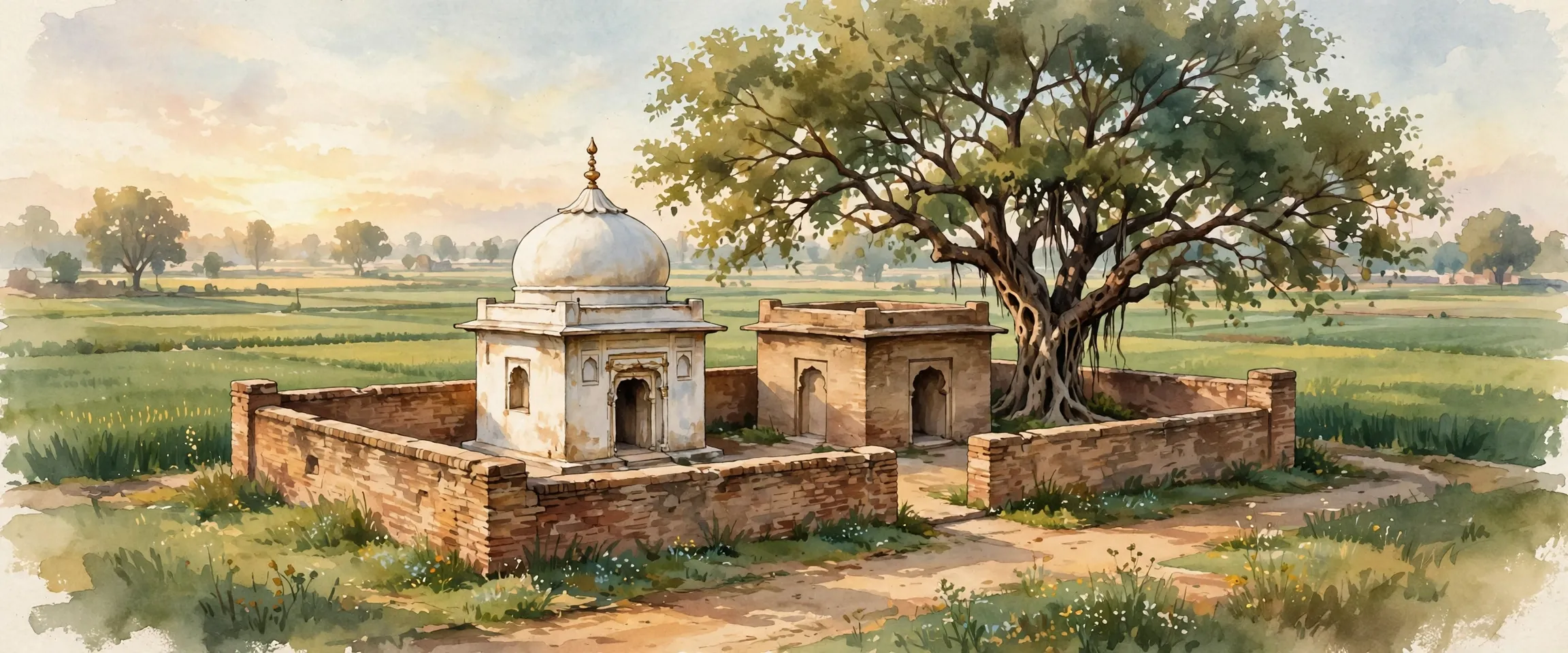
Gurdwara Chhevin Patshahi in Nankana Sahib, Punjab, Pakistan, marks where Guru Hargobind Ji rested for three days in 1613, returning from Kashmir, and joined the Namani Ekadashi fair. His domed shrine shares a boundary wall with the domeless Panjvin Patshahi shrine of Guru Arjan Dev Ji near Tambu Sahib, and keeps a piece of the tree he rested under in a glass case. No daily congregation is held.
- Punjabi name
- ਗੁਰਦੁਆਰਾ ਛੇਵੀਂ ਪਾਤਸ਼ਾਹੀ, ਨਨਕਾਣਾ ਸਾਹਿਬ
- Type
- Historic gurdwara
- Country
- Pakistan
- City
- Nankana Sahib
- District
- Nankana Sahib
- Province
- Punjab
All 14 facts
- Associated with
- Guru Hargobind Ji
- Marks
- The place where Guru Hargobind Ji rested for three days on his visit of 1613
- Also written
- Chevin Patshahi; Chhevin Patshahi Sahib
- Location
- Near Gurdwara Tambu Sahib, on the road towards Gurdwara Janam Asthan
- Twin shrine
- Shares a boundary wall with Gurdwara Panjvin Patshahi (Guru Arjan Dev Ji), which has no dome
- Endowment
- 13 ghumaon of land, per the shrine accounts
- Relic
- A piece of the tree the Guru rested under, preserved in a glass case inside the dome
- Care
- Pakistan Sikh Gurdwara Parbandhak Committee under the Evacuee Trust Property Board
Gurdwara Chhevin Patshahi stands near Gurdwara Tambu Sahib in Nankana Sahib, in the Punjab province of Pakistan, on the road back towards the Janam Asthan. Chhevin Patshahi means the shrine of the Sixth Sovereign, and it marks the ground where Guru Hargobind Ji, the sixth Guru, rested for three days on a visit to the birthplace of Guru Nanak Dev Ji, remembered in the detailed shrine accounts as the month of Har in Samvat 1670, the year 1613, on his way back from Kashmir. It does not stand alone. Adjoining it, inside the same boundary wall, is the smaller shrine of the Fifth Sovereign, marking a visit of Guru Arjan Dev Ji. The twin buildings are told apart at a glance: the Sixth Guru's shrine carries a dome, the Fifth Guru's does not.
What is Gurdwara Chhevin Patshahi?
Gurdwara Chhevin Patshahi is one of the historic gurdwaras of Nankana Sahib, but unlike the childhood cluster around the Janam Asthan it belongs to the town's second chapter: the return of the later Gurus to their founder's birthplace. Guru Nanak Dev Ji was born here, and the Gurus who followed him treated the town as ground to be honoured in person. The shrine accounts list the two buildings together as the gurdwara of Guru Arjan and Guru Hargobind, a pair of small sanctums sharing one wall on the Tambu Sahib road. Inside the dome of the Chhevin Patshahi shrine, visitors are shown a preserved piece of the tree under which Guru Hargobind Ji is said to have rested, kept in a glass case now that the tree itself has withered away. No daily congregation is held in either building; they stand as heritage shrines that yatris visit on the Nankana Sahib round.
History: the sixth Guru comes to Nankana Sahib
The detailed accounts, carried by World Gurudwaras, All About Sikhs and SikhiWiki, agree on the shape of the visit. Guru Hargobind Ji came to Nankana Sahib returning from Kashmir, and rested at this spot for three days. The visit fell in June, at the time of Namani Ekadashi, also called Nirjala Ekadashi, and the Guru joined the traditional fair held here then. SikhiWiki adds that a festival was kept on that day afterwards, and later was observed together with the birth anniversary of Guru Nanak Dev Ji. Before leaving, the Guru deputed Baba Almast, a disciple of Baba Sri Chand whom he had brought with him from Kashmir, to render care and service at the shrine. The Guru's Sikhs then raised the gurdwara at the place where he had stayed.
One point needs care, because the listings do not all give the same year. The shrine accounts date the visit precisely, to the month of Har in Samvat 1670, which is 1613, and Green Tourism Pakistan's field guide follows that dating. Some directory listings, summarising the same journey, give 1620 instead. Jugti follows the dated shrine accounts and uses 1613, while noting the other figure so that readers who meet it elsewhere are not confused. What no account disputes is the journey itself: Kashmir behind him, a three day halt at Nankana Sahib, and a caretaker left behind from the Guru's own travelling party, which is why this small shrine carries a Kashmir thread in its story as well as a Nankana one.
History: thirteen ghumaon and a tree in a glass case
The accounts record an endowment of 13 ghumaon of land for the shrine, a modest grant for a modest building, raised by the Guru's disciples at the site of his stay and kept alive at first by the fair his visit had blessed. The physical memory of the halt was a tree: the one under which the Guru rested. Trees outlive buildings in such stories only for a while, and this one in time withered. Rather than let the marker vanish altogether, those who kept the shrine preserved a piece of it, and that fragment is what a visitor sees today, set in a glass case inside the dome of the Sixth Guru's shrine. It is a small, deliberate act of keeping, and it explains the character of the place: Chhevin Patshahi preserves not a grand event but a rest, three days of halt on a long road, held in wood and wall.
Architecture: a dome and no dome
The pair of shrines is an architecture lesson in miniature. Both are small sanctums standing side by side within a common boundary wall near Tambu Sahib, on the road leading towards the Janam Asthan. The shrine of Guru Hargobind Ji, the Patshah of Miri Piri as the accounts style him, is built with a dome. The adjoining shrine of Guru Arjan Dev Ji is without one, a plain roofed sanctum. Nothing in the accounts suggests the contrast was a ranking: it is simply how the two buildings were raised at different moments by different hands, and the effect today is that the twins can be identified from the road before a visitor reaches the gate. The World Gurudwaras account records that the building is quite safe, and the Green Tourism field guide agrees that the structures stand sound while regular prakash is no longer held in them.
Significance: why do two small shrines stand together?
The pairing is the significance. The fifth Guru, who compiled the Adi Granth and accepted martyrdom at Lahore, and the sixth Guru, his son, who answered that martyrdom by wearing the two swords of Miri and Piri, lie side by side here in miniature, in the town of the first Guru. Their adjoining shrines say something the big Janam Asthan cannot say on its own: that Nankana Sahib remained a living destination for the Gurus themselves, a place each generation returned to. For pilgrims the stop is also a study in scale. After the marble courts of the Janam Asthan, Chhevin Patshahi offers two small rooms, one wall, one dome and a fragment of wood in glass, and asks to be read slowly. Heritage of this kind survives because visitors keep coming to look at it, and the shrine accounts are frank that looking, now, is most of what happens here.
How do I reach Gurdwara Chhevin Patshahi?
Chhevin Patshahi stands in Nankana Sahib, in the close vicinity of Gurdwara Tambu Sahib on the road towards the Janam Asthan, so it combines naturally with Tambu Sahib and Gurdwara Mal Ji Sahib on the eastern side of the town. Nankana Sahib lies about 65 kilometres from Lahore. As no daily congregation is held, a visit is a quiet heritage call rather than a service: the fullest times are Guru Nanak Gurpurab in November and the Saka Nankana commemoration in February, when pilgrim jathas are in town under the care of the Pakistan Sikh Gurdwara Parbandhak Committee and the Evacuee Trust Property Board. Cover your head and remove your shoes before entering, as at any gurdwara.
ਗੁਰਦੁਆਰਾ ਛੇਵੀਂ ਪਾਤਸ਼ਾਹੀ ਨਨਕਾਣਾ ਸਾਹਿਬ, ਪਾਕਿਸਤਾਨ ਦੇ ਪੰਜਾਬ ਸੂਬੇ ਵਿੱਚ, ਗੁਰਦੁਆਰਾ ਤੰਬੂ ਸਾਹਿਬ ਦੇ ਨੇੜੇ, ਜਨਮ ਅਸਥਾਨ ਵੱਲ ਪਰਤਦੀ ਸੜਕ ਉੱਤੇ ਹੈ ਛੇਵੀਂ ਪਾਤਸ਼ਾਹੀ ਦਾ ਅਰਥ ਹੈ ਛੇਵੇਂ ਸੋਵਰਨ ਦਾ ਅਸਥਾਨ, ਅਤੇ ਇਹ ਉਸ ਥਾਂ ਨੂੰ ਦਰਸਾਉਂਦਾ ਹੈ ਜਿੱਥੇ ਛੇਵੇਂ ਗੁਰੂ ਗੁਰੂ ਹਰਗੋਬਿੰਦ ਜੀ ਗੁਰੂ ਨਾਨਕ ਦੇਵ ਜੀ ਦੇ ਜਨਮ ਸਥਾਨ ਦੀ ਫੇਰੀ ਉੱਤੇ ਤਿੰਨ ਦਿਨ ਠਹਿਰੇ ਸਨ, ਜੋ ਵਿਸਤ੍ਰਿਤ ਅਸਥਾਨ ਬਿਰਤਾਂਤਾਂ ਵਿੱਚ ਹਾੜ੍ਹ ਮਹੀਨਾ ਸੰਮਤ 1670, ਸਾਲ 1613, ਕਸ਼ਮੀਰ ਤੋਂ ਪਰਤਦਿਆਂ ਯਾਦ ਕੀਤਾ ਜਾਂਦਾ ਹੈ ਇਹ ਇਕੱਲਾ ਨਹੀਂ ਖੜ੍ਹਾ ਇਸ ਦੇ ਨਾਲ, ਇੱਕੋ ਚਾਰਦੀਵਾਰੀ ਦੇ ਅੰਦਰ, ਪੰਜਵੇਂ ਸੋਵਰਨ ਦਾ ਛੋਟਾ ਅਸਥਾਨ ਹੈ, ਜੋ ਗੁਰੂ ਅਰਜਨ ਦੇਵ ਜੀ ਦੀ ਫੇਰੀ ਨੂੰ ਦਰਸਾਉਂਦਾ ਹੈ ਦੋਵੇਂ ਇਮਾਰਤਾਂ ਇੱਕ ਝਲਕ ਵਿੱਚ ਪਛਾਣੀਆਂ ਜਾਂਦੀਆਂ ਹਨ: ਛੇਵੇਂ ਗੁਰੂ ਦੇ ਅਸਥਾਨ ਉੱਤੇ ਗੁੰਬਦ ਹੈ, ਪੰਜਵੇਂ ਗੁਰੂ ਦੇ ਉੱਤੇ ਨਹੀਂ
ਗੁਰਦੁਆਰਾ ਛੇਵੀਂ ਪਾਤਸ਼ਾਹੀ ਕੀ ਹੈ?
ਗੁਰਦੁਆਰਾ ਛੇਵੀਂ ਪਾਤਸ਼ਾਹੀ ਨਨਕਾਣਾ ਸਾਹਿਬ ਦੇ ਇਤਿਹਾਸਕ ਗੁਰਦੁਆਰਿਆਂ ਵਿੱਚੋਂ ਇੱਕ ਹੈ, ਪਰ ਜਨਮ ਅਸਥਾਨ ਦੇ ਆਲੇ ਦੁਆਲੇ ਬਚਪਨ ਸਮੂਹ ਤੋਂ ਉਲਟ ਇਹ ਕਸਬੇ ਦੇ ਦੂਜੇ ਅਧਿਆਇ ਨਾਲ ਸੰਬੰਧਿਤ ਹੈ: ਬਾਅਦ ਵਾਲੇ ਗੁਰੂਆਂ ਦੀ ਆਪਣੇ ਬਾਨੀ ਦੇ ਜਨਮ ਸਥਾਨ ਵੱਲ ਵਾਪਸੀ ਗੁਰੂ ਨਾਨਕ ਦੇਵ ਜੀ ਇੱਥੇ ਪੈਦਾ ਹੋਏ ਸਨ, ਅਤੇ ਉਨ੍ਹਾਂ ਤੋਂ ਬਾਅਦ ਆਏ ਗੁਰੂਆਂ ਨੇ ਇਸ ਕਸਬੇ ਨੂੰ ਖ਼ੁਦ ਆ ਕੇ ਸਤਿਕਾਰਨ ਵਾਲੀ ਥਾਂ ਸਮਝਿਆ ਅਸਥਾਨ ਬਿਰਤਾਂਤ ਦੋਵਾਂ ਇਮਾਰਤਾਂ ਨੂੰ ਇਕੱਠਿਆਂ ਗੁਰੂ ਅਰਜਨ ਅਤੇ ਗੁਰੂ ਹਰਗੋਬਿੰਦ ਦੇ ਗੁਰਦੁਆਰੇ ਵਜੋਂ ਦਰਜ ਕਰਦੇ ਹਨ, ਤੰਬੂ ਸਾਹਿਬ ਵਾਲੀ ਸੜਕ ਉੱਤੇ ਇੱਕੋ ਕੰਧ ਸਾਂਝੀ ਕਰਦੇ ਦੋ ਛੋਟੇ ਪਵਿੱਤਰ ਸਥਾਨ ਛੇਵੀਂ ਪਾਤਸ਼ਾਹੀ ਅਸਥਾਨ ਦੇ ਗੁੰਬਦ ਦੇ ਅੰਦਰ, ਸ਼ਰਧਾਲੂਆਂ ਨੂੰ ਉਸ ਰੁੱਖ ਦਾ ਸਾਂਭਿਆ ਟੁਕੜਾ ਵਿਖਾਇਆ ਜਾਂਦਾ ਹੈ ਜਿਸ ਹੇਠਾਂ ਗੁਰੂ ਹਰਗੋਬਿੰਦ ਜੀ ਠਹਿਰੇ ਕਹੇ ਜਾਂਦੇ ਹਨ, ਹੁਣ ਇੱਕ ਸ਼ੀਸ਼ੇ ਦੇ ਡੱਬੇ ਵਿੱਚ ਰੱਖਿਆ, ਕਿਉਂਕਿ ਰੁੱਖ ਖ਼ੁਦ ਸੁੱਕ ਚੁੱਕਾ ਹੈ ਦੋਵਾਂ ਇਮਾਰਤਾਂ ਵਿੱਚ ਰੋਜ਼ਾਨਾ ਸੰਗਤ ਨਹੀਂ ਹੁੰਦੀ; ਇਹ ਵਿਰਾਸਤੀ ਅਸਥਾਨ ਹਨ ਜਿਨ੍ਹਾਂ ਨੂੰ ਯਾਤਰੀ ਨਨਕਾਣਾ ਸਾਹਿਬ ਦੀ ਫੇਰੀ ਵਿੱਚ ਵੇਖਦੇ ਹਨ
ਇਤਿਹਾਸ: ਛੇਵੇਂ ਗੁਰੂ ਨਨਕਾਣਾ ਸਾਹਿਬ ਆਉਂਦੇ ਹਨ
ਵਿਸਤ੍ਰਿਤ ਬਿਰਤਾਂਤ, ਜੋ ਵਰਲਡ ਗੁਰਦੁਆਰਾਜ਼, ਆਲ ਅਬਾਊਟ ਸਿੱਖਸ ਅਤੇ ਸਿੱਖੀਵਿਕੀ ਰਾਹੀਂ ਮਿਲਦੇ ਹਨ, ਫੇਰੀ ਦੇ ਆਕਾਰ ਉੱਤੇ ਸਹਿਮਤ ਹਨ ਗੁਰੂ ਹਰਗੋਬਿੰਦ ਜੀ ਕਸ਼ਮੀਰ ਤੋਂ ਪਰਤਦਿਆਂ ਨਨਕਾਣਾ ਸਾਹਿਬ ਆਏ, ਅਤੇ ਇਸ ਥਾਂ ਉੱਤੇ ਤਿੰਨ ਦਿਨ ਠਹਿਰੇ ਫੇਰੀ ਜੂਨ ਵਿੱਚ, ਨਮਾਨੀ ਇਕਾਦਸ਼ੀ ਦੇ ਸਮੇਂ ਪਈ, ਜਿਸ ਨੂੰ ਨਿਰਜਲਾ ਇਕਾਦਸ਼ੀ ਵੀ ਕਿਹਾ ਜਾਂਦਾ ਹੈ, ਅਤੇ ਗੁਰੂ ਜੀ ਇੱਥੇ ਉਸ ਸਮੇਂ ਲੱਗਣ ਵਾਲੇ ਰਵਾਇਤੀ ਮੇਲੇ ਵਿੱਚ ਸ਼ਾਮਲ ਹੋਏ ਸਿੱਖੀਵਿਕੀ ਜੋੜਦਾ ਹੈ ਕਿ ਉਸ ਤੋਂ ਬਾਅਦ ਉਸ ਦਿਨ ਇੱਕ ਤਿਉਹਾਰ ਮਨਾਇਆ ਜਾਣ ਲੱਗਾ, ਅਤੇ ਬਾਅਦ ਵਿੱਚ ਇਹ ਗੁਰੂ ਨਾਨਕ ਦੇਵ ਜੀ ਦੇ ਜਨਮ ਦਿਨ ਨਾਲ ਮਨਾਇਆ ਜਾਣ ਲੱਗਾ ਜਾਣ ਤੋਂ ਪਹਿਲਾਂ, ਗੁਰੂ ਜੀ ਨੇ ਬਾਬਾ ਅਲਮਸਤ ਨੂੰ, ਬਾਬਾ ਸ੍ਰੀ ਚੰਦ ਦਾ ਚੇਲਾ ਜਿਸ ਨੂੰ ਉਹ ਕਸ਼ਮੀਰ ਤੋਂ ਆਪਣੇ ਨਾਲ ਲਿਆਏ ਸਨ, ਅਸਥਾਨ ਦੀ ਦੇਖਭਾਲ ਅਤੇ ਸੇਵਾ ਦਾ ਕੰਮ ਸੌਂਪਿਆ ਫਿਰ ਗੁਰੂ ਜੀ ਦੇ ਸਿੱਖਾਂ ਨੇ ਉਸ ਥਾਂ ਉੱਤੇ ਗੁਰਦੁਆਰਾ ਬਣਾਇਆ ਜਿੱਥੇ ਉਹ ਠਹਿਰੇ ਸਨ
ਇੱਕ ਗੱਲ ਨੂੰ ਸਾਵਧਾਨੀ ਚਾਹੀਦੀ ਹੈ, ਕਿਉਂਕਿ ਸੂਚੀਆਂ ਸਾਰੀਆਂ ਇੱਕੋ ਸਾਲ ਨਹੀਂ ਦਿੰਦੀਆਂ ਅਸਥਾਨ ਬਿਰਤਾਂਤ ਫੇਰੀ ਦੀ ਤਾਰੀਖ਼ ਸਪੱਸ਼ਟ ਦਿੰਦੇ ਹਨ, ਹਾੜ੍ਹ ਮਹੀਨਾ ਸੰਮਤ 1670, ਜੋ 1613 ਬਣਦਾ ਹੈ, ਅਤੇ ਗ੍ਰੀਨ ਟੂਰਿਜ਼ਮ ਪਾਕਿਸਤਾਨ ਦੀ ਫੀਲਡ ਗਾਈਡ ਉਸੇ ਤਾਰੀਖ਼ ਨੂੰ ਮੰਨਦੀ ਹੈ ਕੁਝ ਡਾਇਰੈਕਟਰੀ ਸੂਚੀਆਂ, ਉਸੇ ਯਾਤਰਾ ਦਾ ਸਾਰ ਦਿੰਦਿਆਂ, ਇਸ ਦੀ ਥਾਂ 1620 ਦਿੰਦੀਆਂ ਹਨ ਜੁਗਤੀ ਤਾਰੀਖ਼ ਵਾਲੇ ਅਸਥਾਨ ਬਿਰਤਾਂਤਾਂ ਨੂੰ ਮੰਨਦੀ ਹੈ ਅਤੇ 1613 ਵਰਤਦੀ ਹੈ, ਦੂਜਾ ਅੰਕੜਾ ਵੀ ਦੱਸਦਿਆਂ ਤਾਂ ਜੋ ਪਾਠਕ ਜੇ ਇਸ ਨੂੰ ਕਿਤੇ ਹੋਰ ਮਿਲਣ ਤਾਂ ਉਲਝਣ ਨਾ ਜਿਸ ਗੱਲ ਉੱਤੇ ਕੋਈ ਬਿਰਤਾਂਤ ਵਿਵਾਦ ਨਹੀਂ ਕਰਦਾ ਉਹ ਯਾਤਰਾ ਖ਼ੁਦ ਹੈ: ਪਿੱਛੇ ਕਸ਼ਮੀਰ, ਨਨਕਾਣਾ ਸਾਹਿਬ ਵਿਖੇ ਤਿੰਨ ਦਿਨ ਦਾ ਠਹਿਰਾਅ, ਅਤੇ ਗੁਰੂ ਜੀ ਦੇ ਆਪਣੇ ਯਾਤਰੀ ਟੋਲੇ ਵਿੱਚੋਂ ਪਿੱਛੇ ਛੱਡਿਆ ਇੱਕ ਦੇਖਭਾਲ ਕਰਨ ਵਾਲਾ, ਇਸੇ ਲਈ ਇਸ ਛੋਟੇ ਅਸਥਾਨ ਦੀ ਕਹਾਣੀ ਵਿੱਚ ਨਨਕਾਣੇ ਦੇ ਨਾਲ ਇੱਕ ਕਸ਼ਮੀਰ ਵਾਲੀ ਲੜੀ ਵੀ ਹੈ
ਇਤਿਹਾਸ: ਤੇਰਾਂ ਘੁਮਾਂ ਅਤੇ ਸ਼ੀਸ਼ੇ ਦੇ ਡੱਬੇ ਵਿੱਚ ਰੁੱਖ
ਬਿਰਤਾਂਤ ਅਸਥਾਨ ਲਈ 13 ਘੁਮਾਂ ਜ਼ਮੀਨ ਦੀ ਜਾਗੀਰ ਦਰਜ ਕਰਦੇ ਹਨ, ਇੱਕ ਛੋਟੀ ਇਮਾਰਤ ਲਈ ਮਾਮੂਲੀ ਗ੍ਰਾਂਟ, ਜੋ ਗੁਰੂ ਜੀ ਦੇ ਸਿੱਖਾਂ ਵੱਲੋਂ ਉਨ੍ਹਾਂ ਦੇ ਠਹਿਰਣ ਵਾਲੀ ਥਾਂ ਉੱਤੇ ਬਣਾਈ ਗਈ ਅਤੇ ਪਹਿਲਾਂ ਉਸ ਮੇਲੇ ਨਾਲ ਜਿਉਂਦੀ ਰਹੀ ਜਿਸ ਨੂੰ ਉਨ੍ਹਾਂ ਦੀ ਫੇਰੀ ਨੇ ਬਰਕਤ ਦਿੱਤੀ ਸੀ ਠਹਿਰਾਅ ਦੀ ਭੌਤਿਕ ਯਾਦ ਇੱਕ ਰੁੱਖ ਸੀ: ਉਹ ਜਿਸ ਹੇਠਾਂ ਗੁਰੂ ਜੀ ਠਹਿਰੇ ਸਨ ਅਜਿਹੀਆਂ ਕਹਾਣੀਆਂ ਵਿੱਚ ਰੁੱਖ ਇਮਾਰਤਾਂ ਤੋਂ ਲੰਮਾ ਸਮਾਂ ਜਿਉਂਦੇ ਹਨ, ਪਰ ਸਿਰਫ਼ ਕੁਝ ਸਮੇਂ ਲਈ, ਅਤੇ ਇਹ ਸਮੇਂ ਨਾਲ ਸੁੱਕ ਗਿਆ ਨਿਸ਼ਾਨੀ ਨੂੰ ਬਿਲਕੁਲ ਮਿਟਣ ਦੇਣ ਦੀ ਬਜਾਏ, ਅਸਥਾਨ ਦੀ ਦੇਖਭਾਲ ਕਰਨ ਵਾਲਿਆਂ ਨੇ ਇਸ ਦਾ ਇੱਕ ਟੁਕੜਾ ਸਾਂਭ ਲਿਆ, ਅਤੇ ਉਹੀ ਹਿੱਸਾ ਅੱਜ ਸ਼ਰਧਾਲੂ ਵੇਖਦਾ ਹੈ, ਛੇਵੇਂ ਗੁਰੂ ਦੇ ਅਸਥਾਨ ਦੇ ਗੁੰਬਦ ਦੇ ਅੰਦਰ ਸ਼ੀਸ਼ੇ ਦੇ ਡੱਬੇ ਵਿੱਚ ਰੱਖਿਆ ਇਹ ਸਾਂਭਣ ਦਾ ਇੱਕ ਛੋਟਾ, ਸੋਚਿਆ ਸਮਝਿਆ ਕੰਮ ਹੈ, ਅਤੇ ਇਹ ਇਸ ਥਾਂ ਦਾ ਸੁਭਾਅ ਸਮਝਾਉਂਦਾ ਹੈ: ਛੇਵੀਂ ਪਾਤਸ਼ਾਹੀ ਕਿਸੇ ਵੱਡੀ ਘਟਨਾ ਨੂੰ ਨਹੀਂ, ਇੱਕ ਆਰਾਮ ਨੂੰ ਸਾਂਭਦੀ ਹੈ, ਇੱਕ ਲੰਮੀ ਸੜਕ ਉੱਤੇ ਤਿੰਨ ਦਿਨ ਦਾ ਠਹਿਰਾਅ, ਲੱਕੜ ਅਤੇ ਕੰਧ ਵਿੱਚ ਰੱਖਿਆ
ਇਮਾਰਤ: ਇੱਕ ਗੁੰਬਦ ਅਤੇ ਬਿਨਾਂ ਗੁੰਬਦ
ਅਸਥਾਨਾਂ ਦੀ ਜੋੜੀ ਛੋਟੇ ਆਕਾਰ ਵਿੱਚ ਇਮਾਰਤ ਕਲਾ ਦਾ ਪਾਠ ਹੈ ਦੋਵੇਂ ਛੋਟੇ ਪਵਿੱਤਰ ਸਥਾਨ ਹਨ ਜੋ ਤੰਬੂ ਸਾਹਿਬ ਦੇ ਨੇੜੇ, ਜਨਮ ਅਸਥਾਨ ਵੱਲ ਜਾਂਦੀ ਸੜਕ ਉੱਤੇ, ਇੱਕ ਸਾਂਝੀ ਚਾਰਦੀਵਾਰੀ ਦੇ ਅੰਦਰ ਨਾਲ ਨਾਲ ਖੜ੍ਹੇ ਹਨ ਗੁਰੂ ਹਰਗੋਬਿੰਦ ਜੀ ਦਾ ਅਸਥਾਨ, ਜਿਨ੍ਹਾਂ ਨੂੰ ਬਿਰਤਾਂਤ ਮੀਰੀ ਪੀਰੀ ਦੇ ਪਾਤਸ਼ਾਹ ਕਹਿੰਦੇ ਹਨ, ਗੁੰਬਦ ਨਾਲ ਬਣਿਆ ਹੈ ਨਾਲ ਲੱਗਦਾ ਗੁਰੂ ਅਰਜਨ ਦੇਵ ਜੀ ਦਾ ਅਸਥਾਨ ਬਿਨਾਂ ਗੁੰਬਦ ਦੇ ਹੈ, ਇੱਕ ਸਾਦੀ ਛੱਤ ਵਾਲਾ ਪਵਿੱਤਰ ਸਥਾਨ ਬਿਰਤਾਂਤਾਂ ਵਿੱਚ ਕੁਝ ਨਹੀਂ ਕਹਿੰਦਾ ਕਿ ਇਹ ਫ਼ਰਕ ਕੋਈ ਦਰਜਾਬੰਦੀ ਸੀ: ਇਹ ਸਿਰਫ਼ ਇੰਨਾ ਹੈ ਕਿ ਦੋਵੇਂ ਇਮਾਰਤਾਂ ਵੱਖ ਵੱਖ ਸਮਿਆਂ ਵਿੱਚ ਵੱਖ ਵੱਖ ਹੱਥਾਂ ਨਾਲ ਬਣੀਆਂ, ਅਤੇ ਅੱਜ ਇਸ ਦਾ ਅਸਰ ਇਹ ਹੈ ਕਿ ਜੋੜੇ ਨੂੰ ਸੜਕ ਤੋਂ ਹੀ ਪਛਾਣਿਆ ਜਾ ਸਕਦਾ ਹੈ, ਸ਼ਰਧਾਲੂ ਦੇ ਗੇਟ ਤਕ ਪਹੁੰਚਣ ਤੋਂ ਪਹਿਲਾਂ ਵਰਲਡ ਗੁਰਦੁਆਰਾਜ਼ ਬਿਰਤਾਂਤ ਦਰਜ ਕਰਦਾ ਹੈ ਕਿ ਇਮਾਰਤ ਬਿਲਕੁਲ ਸਹੀ ਸਲਾਮਤ ਹੈ, ਅਤੇ ਗ੍ਰੀਨ ਟੂਰਿਜ਼ਮ ਫੀਲਡ ਗਾਈਡ ਸਹਿਮਤ ਹੈ ਕਿ ਬਣਤਰਾਂ ਮਜ਼ਬੂਤ ਖੜ੍ਹੀਆਂ ਹਨ ਜਦੋਂ ਕਿ ਉਨ੍ਹਾਂ ਵਿੱਚ ਹੁਣ ਨਿਯਮਿਤ ਪ੍ਰਕਾਸ਼ ਨਹੀਂ ਹੁੰਦਾ
ਮਹੱਤਤਾ: ਦੋ ਛੋਟੇ ਅਸਥਾਨ ਇਕੱਠੇ ਕਿਉਂ ਖੜ੍ਹੇ ਹਨ?
ਜੋੜ ਹੀ ਮਹੱਤਤਾ ਹੈ ਪੰਜਵੇਂ ਗੁਰੂ, ਜਿਨ੍ਹਾਂ ਨੇ ਆਦਿ ਗ੍ਰੰਥ ਸੰਪਾਦਿਤ ਕੀਤਾ ਅਤੇ ਲਾਹੌਰ ਵਿਖੇ ਸ਼ਹੀਦੀ ਪ੍ਰਾਪਤ ਕੀਤੀ, ਅਤੇ ਛੇਵੇਂ ਗੁਰੂ, ਉਨ੍ਹਾਂ ਦੇ ਪੁੱਤਰ, ਜਿਨ੍ਹਾਂ ਨੇ ਉਸ ਸ਼ਹੀਦੀ ਦਾ ਜਵਾਬ ਮੀਰੀ ਅਤੇ ਪੀਰੀ ਦੀਆਂ ਦੋ ਤਲਵਾਰਾਂ ਪਹਿਨ ਕੇ ਦਿੱਤਾ, ਇੱਥੇ ਪਹਿਲੇ ਗੁਰੂ ਦੇ ਕਸਬੇ ਵਿੱਚ ਛੋਟੇ ਆਕਾਰ ਵਿੱਚ ਨਾਲ ਨਾਲ ਹਨ ਉਨ੍ਹਾਂ ਦੇ ਨਾਲ ਲੱਗਦੇ ਅਸਥਾਨ ਉਹ ਗੱਲ ਕਹਿੰਦੇ ਹਨ ਜੋ ਵੱਡਾ ਜਨਮ ਅਸਥਾਨ ਇਕੱਲਾ ਨਹੀਂ ਕਹਿ ਸਕਦਾ: ਕਿ ਨਨਕਾਣਾ ਸਾਹਿਬ ਖ਼ੁਦ ਗੁਰੂਆਂ ਲਈ ਇੱਕ ਜਿਉਂਦੀ ਮੰਜ਼ਿਲ ਬਣਿਆ ਰਿਹਾ, ਇੱਕ ਥਾਂ ਜਿੱਥੇ ਹਰ ਪੀੜ੍ਹੀ ਪਰਤ ਕੇ ਆਈ ਸ਼ਰਧਾਲੂਆਂ ਲਈ ਇਹ ਥਾਂ ਆਕਾਰ ਦਾ ਅਧਿਐਨ ਵੀ ਹੈ ਜਨਮ ਅਸਥਾਨ ਦੇ ਸੰਗਮਰਮਰ ਵਾਲੇ ਵਿਹੜਿਆਂ ਤੋਂ ਬਾਅਦ, ਛੇਵੀਂ ਪਾਤਸ਼ਾਹੀ ਦੋ ਛੋਟੇ ਕਮਰੇ, ਇੱਕ ਕੰਧ, ਇੱਕ ਗੁੰਬਦ ਅਤੇ ਸ਼ੀਸ਼ੇ ਵਿੱਚ ਲੱਕੜ ਦਾ ਇੱਕ ਟੁਕੜਾ ਪੇਸ਼ ਕਰਦੀ ਹੈ, ਅਤੇ ਹੌਲੀ ਪੜ੍ਹੇ ਜਾਣ ਨੂੰ ਕਹਿੰਦੀ ਹੈ ਇਸ ਤਰ੍ਹਾਂ ਦੀ ਵਿਰਾਸਤ ਇਸ ਲਈ ਬਚਦੀ ਹੈ ਕਿਉਂਕਿ ਸ਼ਰਧਾਲੂ ਇਸ ਨੂੰ ਵੇਖਣ ਆਉਂਦੇ ਰਹਿੰਦੇ ਹਨ, ਅਤੇ ਅਸਥਾਨ ਬਿਰਤਾਂਤ ਸਪੱਸ਼ਟ ਹਨ ਕਿ ਹੁਣ ਇੱਥੇ ਜ਼ਿਆਦਾਤਰ ਵੇਖਣਾ ਹੀ ਹੁੰਦਾ ਹੈ
ਗੁਰਦੁਆਰਾ ਛੇਵੀਂ ਪਾਤਸ਼ਾਹੀ ਕਿਵੇਂ ਪਹੁੰਚੀਏ?
ਛੇਵੀਂ ਪਾਤਸ਼ਾਹੀ ਨਨਕਾਣਾ ਸਾਹਿਬ ਵਿੱਚ, ਜਨਮ ਅਸਥਾਨ ਵੱਲ ਜਾਂਦੀ ਸੜਕ ਉੱਤੇ ਗੁਰਦੁਆਰਾ ਤੰਬੂ ਸਾਹਿਬ ਦੇ ਨੇੜੇ ਹੈ, ਇਸ ਲਈ ਇਹ ਕਸਬੇ ਦੇ ਪੂਰਬੀ ਪਾਸੇ ਤੰਬੂ ਸਾਹਿਬ ਅਤੇ ਗੁਰਦੁਆਰਾ ਮਾਲ ਜੀ ਸਾਹਿਬ ਨਾਲ ਕੁਦਰਤੀ ਤੌਰ ਉੱਤੇ ਜੁੜਦੀ ਹੈ ਨਨਕਾਣਾ ਸਾਹਿਬ ਲਾਹੌਰ ਤੋਂ ਲਗਭਗ 65 ਕਿਲੋਮੀਟਰ ਦੂਰ ਹੈ ਕਿਉਂਕਿ ਰੋਜ਼ਾਨਾ ਸੰਗਤ ਨਹੀਂ ਹੁੰਦੀ, ਫੇਰੀ ਸੇਵਾ ਦੀ ਬਜਾਏ ਇੱਕ ਸ਼ਾਂਤ ਵਿਰਾਸਤੀ ਫੇਰੀ ਹੁੰਦੀ ਹੈ: ਸਭ ਤੋਂ ਭਰਵੇਂ ਸਮੇਂ ਨਵੰਬਰ ਵਿੱਚ ਗੁਰੂ ਨਾਨਕ ਗੁਰਪੁਰਬ ਅਤੇ ਫ਼ਰਵਰੀ ਵਿੱਚ ਸਾਕਾ ਨਨਕਾਣਾ ਦੀ ਯਾਦ ਹਨ, ਜਦੋਂ ਸ਼ਰਧਾਲੂ ਜਥੇ ਪਾਕਿਸਤਾਨ ਸਿੱਖ ਗੁਰਦੁਆਰਾ ਪ੍ਰਬੰਧਕ ਕਮੇਟੀ ਅਤੇ ਇਵੈਕੂਈ ਟਰੱਸਟ ਪ੍ਰਾਪਰਟੀ ਬੋਰਡ ਦੀ ਦੇਖਭਾਲ ਹੇਠ ਕਸਬੇ ਵਿੱਚ ਹੁੰਦੇ ਹਨ ਕਿਸੇ ਵੀ ਗੁਰਦੁਆਰੇ ਵਾਂਗ, ਅੰਦਰ ਜਾਣ ਤੋਂ ਪਹਿਲਾਂ ਸਿਰ ਢੱਕੋ ਅਤੇ ਜੁੱਤੇ ਉਤਾਰੋ