
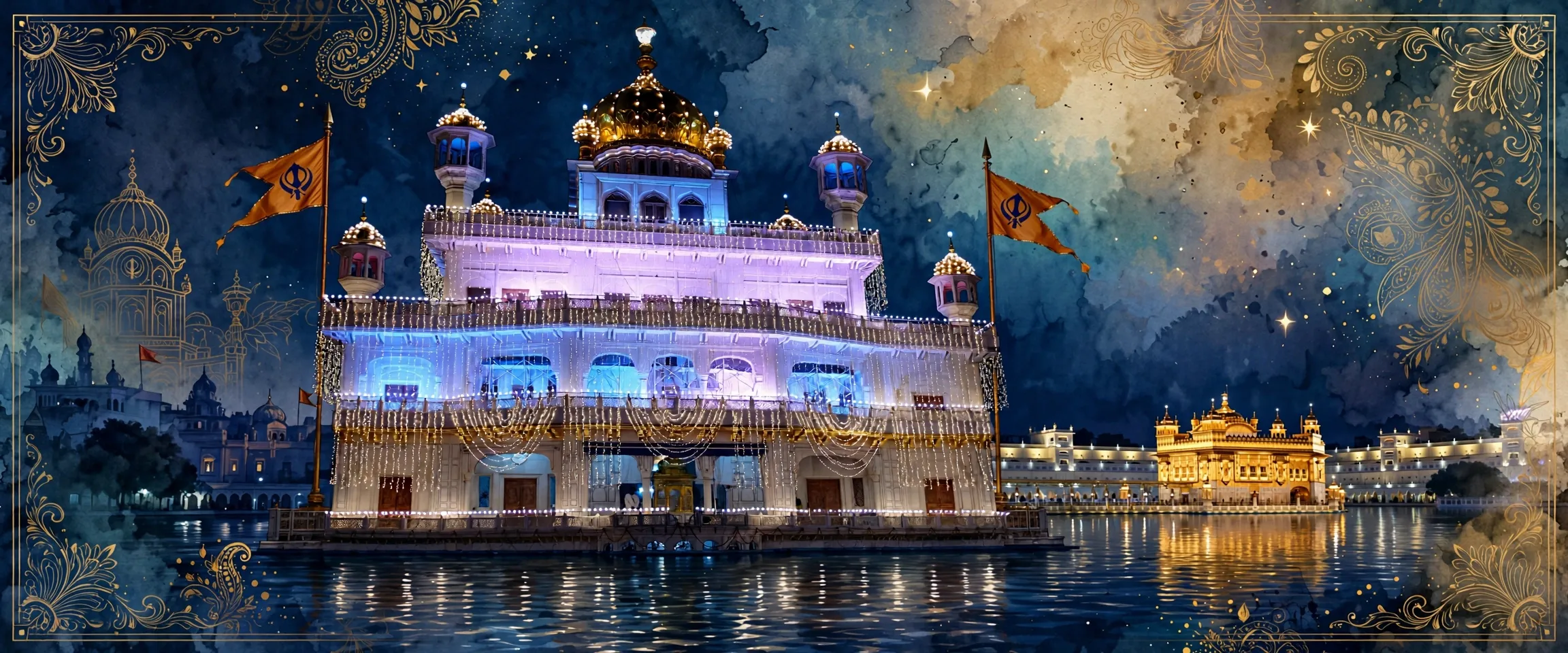
Sri Akal Takht Sahib, the Throne of the Timeless, is the highest seat of earthly authority in Sikhism, standing in Amritsar's Golden Temple complex facing the Harmandir Sahib. Guru Hargobind Sahib Ji founded it in 1606, joining spiritual devotion with worldly responsibility in the doctrine of miri-piri. From its court, the Jathedar issues hukamnamas that guide Sikhs around the world.
- Punjabi name
- ਸ੍ਰੀ ਅਕਾਲ ਤਖ਼ਤ ਸਾਹਿਬ
- Type
- Takht (seat of Sikh authority)
- Country
- India
- City
- Amritsar
- District
- Amritsar
- Region
- Majha
All 12 facts
- Complex
- Sri Harmandir Sahib (Golden Temple) complex
- Founded
- 15 June 1606
- Founder
- Guru Hargobind Sahib Ji
- Original name
- Akal Bunga
- Rank
- First and highest of the five Takhts
- Seat of
- The Jathedar of the Akal Takht
Sri Akal Takht Sahib, the Throne of the Timeless, is the highest seat of earthly authority in Sikhism. It stands in Amritsar, inside the Golden Temple complex, facing Sri Harmandir Sahib across the waters of the sarovar. Guru Hargobind Sahib Ji founded it in 1606 as the court from which the Sikh community would conduct its worldly affairs in the light of its spiritual faith.
What is the Akal Takht?
Akal means the Timeless One, God beyond the limits of time, and a takht is a throne, so the Akal Takht is the Throne of the Timeless. The shrine was first called the Akal Bunga, the house of the Timeless. It was raised directly across the parikrama from the Harmandir Sahib, and the pairing is deliberate: the Harmandir Sahib is the seat of devotion and prayer, the Akal Takht the seat of counsel, justice and temporal command, so that faith and worldly duty stand face to face. Visitors know it at a glance, because two Nishan Sahibs fly before it where most gurdwaras fly one. The twin flags stand for the same pairing of ideas, miri and piri, temporal and spiritual authority held in balance.
History: a throne raised in 1606
The Takht rose from tragedy. After the martyrdom of Guru Arjan Dev Ji at Lahore in 1606, his son and successor Guru Hargobind Sahib Ji, the sixth Guru, resolved that the community must learn to defend itself as well as to pray. On the mound facing the Harmandir Sahib, with the help of Baba Buddha Ji and Bhai Gurdas Ji, he raised a simple platform and revealed it on 15 June 1606. Seated there, the Guru held court with the insignia of a sovereign: a parasol above him, a fly whisk in attendance, and, most famously, two swords at his waist, one for miri, temporal power, and one for piri, spiritual authority. He directed the Sikhs to bring him the finest horses and weapons as offerings, a clear signal that the community's life would now join devotion with readiness.
From this platform the Guru heard petitions, settled disputes and issued orders to the sangats. The first hukamnama issued from the Akal Takht went out on 30 June 1606, asking Sikhs to offer arms and horses. Bhai Gurdas Ji, the scholar who had helped to raise the platform, became its first custodian, and the office in time grew into that of the Jathedar of the Akal Takht. In the hard centuries that followed, the Sikhs returned here whenever they could: Sarbat Khalsa gatherings of the whole community met at the Akal Takht, especially at Vaisakhi and Diwali, to take collective decisions. The building paid for its importance. During the Afghan invasions of the 1700s, when Ahmad Shah Abdali's forces targeted the complex, the shrine suffered repeated damage along with the rest of the site.
The Takht that visitors see has been rebuilt more than once. In 1774, under the Sikh chief Jassa Singh Ahluwalia, the shrine was raised again in brick above its ground floor platform. Under Maharaja Ranjit Singh it grew to five storeys, and his commander Hari Singh Nalwa, governor of Kashmir and a noted builder, enriched it with gold work and its gilded dome. Its inner walls carried murals painted around the middle of the nineteenth century, of which only traces survived the troubles of the twentieth.
The seat of Sikh authority: the Jathedar and the hukamnama
The Akal Takht is the first and highest of the five Takhts, the seats of authority before which the Sikh world brings its gravest questions. Its Jathedar is the supreme spokesperson of the Khalsa Panth, and the hukamnamas issued from this court, on matters of faith, discipline and the community's direction, are binding on Sikhs everywhere. Through them the Takht can summon any Sikh, however senior, to answer a charge. It can acquit, impose a religious penalty called tankhah, or, in the last resort, excommunicate. Under the Sikh Rehat Maryada, the Sikh code of conduct, an appeal against a religious penalty pronounced anywhere else lies to the Akal Takht alone.
For centuries the Jathedar was chosen by the Sarbat Khalsa, the assembly of the whole community. Since 1921, by custom, the appointment has been made by the Shiromani Gurdwara Parbandhak Committee, the elected body that manages Punjab's historic gurdwaras. The office is not beyond dispute: a Sarbat Khalsa convened by several Sikh organisations in 2015 named Jathedars of its own, whom the SGPC does not recognise, and rival claims to the seat continue alongside the SGPC's appointee.
Architecture: five storeys facing the Harmandir Sahib
The present building faces the Darshani Deori and the Harmandir Sahib across the parikrama and the sarovar, and rises to five storeys finished with marble inlay and crowned by a gold-leafed dome. Its spirit is deliberately plainer than its gilded neighbour: not a temple on an island of water, but a raised court on solid ground, built to be looked up at. Each night, in the sukhasan ceremony, Sri Guru Granth Sahib Ji is carried in procession from the Harmandir Sahib to rest at the Akal Takht, and at dawn the Granth returns in the palki procession, the daily rhythm that binds the two buildings into one act of worship. Historic weapons associated with the Gurus are also kept at the Takht and displayed to the congregation in the evening.
1984 and the rebuilding
In June 1984 the Akal Takht stood at the centre of one of the most painful episodes in modern Sikh history. Jarnail Singh Bhindranwale, the leader of the Damdami Taksal, whose armed followers had occupied the Golden Temple complex, had taken up position inside the Akal Takht itself. Between 3 and 8 June 1984, the Indian Army carried out Operation Blue Star to remove them. The Takht, caught in the fighting, was heavily damaged on 6 June, and Bhindranwale was killed. The operation, and the loss of life around it, left wounds in the Sikh community that are still felt today.
The Government of India had the building rebuilt quickly, a work carried out under Baba Santa Singh of the Budha Dal and finished within about two months. Many Sikhs refused to accept it, calling it sarkari seva, government service, rather than an act of the community itself. After resolutions of the Sarbat Khalsa of January 1986, the government-built structure was demolished, on 26 January 1986, and the present building was raised in its place through kar seva, voluntary community service, in the years that followed. The demolition carried a real cost: the previous building's frescoes, its ivory mosaic work and its inlaid stone, jaratkari, were destroyed with it. One thing was saved by protest: the original platform raised by Guru Hargobind Ji, which had been marked for replacement, was preserved and remains in place.
Visiting the Akal Takht
The Akal Takht stands inside the Golden Temple complex in Amritsar, and like every gurdwara it is open to people of all faiths: cover your head, leave your shoes at the entrance, and walk the parikrama around the sarovar to reach it. The finest moments to be here are the two processions, at dawn, when Sri Guru Granth Sahib Ji is carried from the Akal Takht to the Harmandir Sahib, and after dark, when the Granth is brought back to rest for the night. Amritsar is served by trains at Amritsar Junction and by flights at Sri Guru Ram Dass Jee International Airport, and the complex stands on Golden Temple Road in the old walled city, a short ride from either.
ਸ੍ਰੀ ਅਕਾਲ ਤਖ਼ਤ ਸਾਹਿਬ, ਜਿਸ ਦੇ ਨਾਂ ਦਾ ਅਰਥ ਹੈ ਅਕਾਲ ਪੁਰਖ ਦਾ ਤਖ਼ਤ, ਸਿੱਖ ਧਰਮ ਵਿੱਚ ਧਰਤੀ ਉੱਤੇ ਸਭ ਤੋਂ ਉੱਚਾ ਅਧਿਕਾਰ ਕੇਂਦਰ ਹੈ ਇਹ ਅੰਮ੍ਰਿਤਸਰ ਵਿੱਚ ਸੁਨਹਿਰੀ ਮੰਦਰ ਪਰਿਸਰ ਵਿੱਚ ਹੈ, ਸਰੋਵਰ ਦੇ ਪਾਣੀ ਦੇ ਉਸ ਪਾਰ ਸ੍ਰੀ ਹਰਿਮੰਦਰ ਸਾਹਿਬ ਦੇ ਸਾਹਮਣੇ ਗੁਰੂ ਹਰਗੋਬਿੰਦ ਸਾਹਿਬ ਜੀ ਨੇ ਇਸ ਦੀ ਨੀਂਹ 1606 ਵਿੱਚ ਇਸ ਦਰਬਾਰ ਵਜੋਂ ਰੱਖੀ, ਜਿੱਥੋਂ ਸਿੱਖ ਪੰਥ ਆਪਣੇ ਧਾਰਮਿਕ ਜੀਵਨ ਦੀ ਰੌਸ਼ਨੀ ਵਿੱਚ ਆਪਣੇ ਸੰਸਾਰਿਕ ਕੰਮ ਚਲਾਵੇ
ਅਕਾਲ ਤਖ਼ਤ ਕੀ ਹੈ?
ਅਕਾਲ ਦਾ ਅਰਥ ਹੈ ਉਹ ਪਰਮਾਤਮਾ ਜੋ ਕਾਲ ਤੋਂ ਪਰੇ ਹੈ, ਅਤੇ ਤਖ਼ਤ ਰਾਜ ਗੱਦੀ ਨੂੰ ਕਹਿੰਦੇ ਹਨ, ਇਸ ਲਈ ਅਕਾਲ ਤਖ਼ਤ ਦਾ ਅਰਥ ਹੈ ਅਕਾਲ ਪੁਰਖ ਦਾ ਤਖ਼ਤ ਇਸ ਅਸਥਾਨ ਨੂੰ ਪਹਿਲਾਂ ਅਕਾਲ ਬੁੰਗਾ ਕਿਹਾ ਜਾਂਦਾ ਸੀ, ਭਾਵ ਅਕਾਲ ਦਾ ਘਰ ਇਹ ਪ੍ਰਕਰਮਾ ਦੇ ਉਸ ਪਾਰ ਹਰਿਮੰਦਰ ਸਾਹਿਬ ਦੇ ਬਿਲਕੁਲ ਸਾਹਮਣੇ ਬਣਾਇਆ ਗਿਆ, ਅਤੇ ਇਹ ਜੋੜ ਸੋਚਿਆ ਸਮਝਿਆ ਹੈ: ਹਰਿਮੰਦਰ ਸਾਹਿਬ ਸਿਮਰਨ ਅਤੇ ਅਰਦਾਸ ਦਾ ਕੇਂਦਰ ਹੈ, ਅਕਾਲ ਤਖ਼ਤ ਸਲਾਹ, ਨਿਆਂ ਅਤੇ ਦੁਨਿਆਵੀ ਅਗਵਾਈ ਦਾ, ਤਾਂ ਜੋ ਧਰਮ ਅਤੇ ਦੁਨਿਆਵੀ ਫ਼ਰਜ਼ ਆਹਮੋ ਸਾਹਮਣੇ ਖੜ੍ਹੇ ਹੋਣ ਸ਼ਰਧਾਲੂ ਇਸ ਨੂੰ ਇੱਕ ਨਜ਼ਰ ਵਿੱਚ ਪਛਾਣ ਲੈਂਦੇ ਹਨ, ਕਿਉਂਕਿ ਇਸ ਦੇ ਅੱਗੇ ਦੋ ਨਿਸ਼ਾਨ ਸਾਹਿਬ ਝੂਲਦੇ ਹਨ, ਜਦ ਕਿ ਬਹੁਤੇ ਗੁਰਦੁਆਰਿਆਂ ਵਿੱਚ ਇੱਕ ਹੁੰਦਾ ਹੈ ਇਹ ਜੋੜੇ ਝੰਡੇ ਵੀ ਉਹੀ ਵਿਚਾਰ ਦੱਸਦੇ ਹਨ, ਮੀਰੀ ਅਤੇ ਪੀਰੀ, ਦੁਨਿਆਵੀ ਅਤੇ ਰੂਹਾਨੀ ਅਧਿਕਾਰ ਦਾ ਸੰਤੁਲਨ
ਇਤਿਹਾਸ: 1606 ਵਿੱਚ ਉੱਠਿਆ ਤਖ਼ਤ
ਇਹ ਤਖ਼ਤ ਇੱਕ ਦੁਖਦ ਘਟਨਾ ਤੋਂ ਉੱਭਰਿਆ 1606 ਵਿੱਚ ਲਾਹੌਰ ਵਿਖੇ ਗੁਰੂ ਅਰਜਨ ਦੇਵ ਜੀ ਦੀ ਸ਼ਹਾਦਤ ਤੋਂ ਬਾਅਦ, ਉਨ੍ਹਾਂ ਦੇ ਸਪੁੱਤਰ ਅਤੇ ਉੱਤਰਾਧਿਕਾਰੀ, ਛੇਵੇਂ ਪਾਤਸ਼ਾਹ ਗੁਰੂ ਹਰਗੋਬਿੰਦ ਸਾਹਿਬ ਜੀ, ਨੇ ਫ਼ੈਸਲਾ ਕੀਤਾ ਕਿ ਪੰਥ ਨੂੰ ਸਿਮਰਨ ਦੇ ਨਾਲ ਆਪਣੀ ਰਾਖੀ ਵੀ ਸਿੱਖਣੀ ਪਵੇਗੀ ਹਰਿਮੰਦਰ ਸਾਹਿਬ ਦੇ ਸਾਹਮਣੇ ਵਾਲੇ ਟਿੱਲੇ ਉੱਤੇ ਉਨ੍ਹਾਂ ਨੇ ਬਾਬਾ ਬੁੱਢਾ ਜੀ ਅਤੇ ਭਾਈ ਗੁਰਦਾਸ ਜੀ ਦੀ ਸਹਾਇਤਾ ਨਾਲ ਇੱਕ ਸਾਦਾ ਬੜ੍ਹਾ ਉਸਾਰਿਆ ਅਤੇ 15 ਜੂਨ 1606 ਨੂੰ ਇਸ ਨੂੰ ਪ੍ਰਗਟ ਕੀਤਾ ਉੱਥੇ ਬੈਠ ਕੇ ਗੁਰੂ ਜੀ ਦਰਬਾਰ ਲਗਾਉਂਦੇ: ਸਿਰ ਉੱਤੇ ਛਤਰ, ਸੇਵਾ ਵਿੱਚ ਚੌਰ, ਅਤੇ ਸਭ ਤੋਂ ਵੱਧ ਯਾਦ ਰੱਖਣ ਵਾਲੀ ਗੱਲ, ਕਮਰ ਨਾਲ ਦੋ ਤਲਵਾਰਾਂ, ਇੱਕ ਮੀਰੀ ਲਈ, ਦੁਨਿਆਵੀ ਸ਼ਕਤੀ, ਅਤੇ ਇੱਕ ਪੀਰੀ ਲਈ, ਰੂਹਾਨੀ ਅਧਿਕਾਰ ਉਨ੍ਹਾਂ ਨੇ ਸਿੱਖਾਂ ਨੂੰ ਕਿਹਾ ਕਿ ਭੇਟਾ ਵਜੋਂ ਸਭ ਤੋਂ ਵਧੀਆ ਘੋੜੇ ਅਤੇ ਸ਼ਸਤਰ ਲਿਆਉਣ, ਇਹ ਸਪਸ਼ਟ ਸੰਕੇਤ ਕਿ ਪੰਥ ਦਾ ਜੀਵਨ ਹੁਣ ਭਗਤੀ ਦੇ ਨਾਲ ਤਿਆਰੀ ਵੀ ਜੋੜੇਗਾ
ਇਸ ਬੜ੍ਹੇ ਤੋਂ ਗੁਰੂ ਜੀ ਅਰਜ਼ੀਆਂ ਸੁਣਦੇ, ਝਗੜੇ ਨਿਬੇੜਦੇ ਅਤੇ ਸੰਗਤਾਂ ਨੂੰ ਹੁਕਮ ਭੇਜਦੇ ਅਕਾਲ ਤਖ਼ਤ ਤੋਂ ਜਾਰੀ ਪਹਿਲਾ ਹੁਕਮਨਾਮਾ 30 ਜੂਨ 1606 ਨੂੰ ਗਿਆ, ਜਿਸ ਵਿੱਚ ਸਿੱਖਾਂ ਨੂੰ ਸ਼ਸਤਰ ਅਤੇ ਘੋੜੇ ਭੇਟ ਕਰਨ ਲਈ ਕਿਹਾ ਗਿਆ ਭਾਈ ਗੁਰਦਾਸ ਜੀ, ਉਹ ਵਿਦਵਾਨ ਜਿਨ੍ਹਾਂ ਨੇ ਬੜ੍ਹਾ ਉਸਾਰਨ ਵਿੱਚ ਸਹਾਇਤਾ ਕੀਤੀ ਸੀ, ਇਸ ਦੇ ਪਹਿਲੇ ਰਖਵਾਲੇ ਬਣੇ, ਅਤੇ ਇਹੀ ਸੇਵਾ ਸਮੇਂ ਨਾਲ ਅਕਾਲ ਤਖ਼ਤ ਦੇ ਜੱਥੇਦਾਰ ਦਾ ਅਹੁਦਾ ਬਣੀ ਅਗਲੀਆਂ ਔਖੀਆਂ ਸਦੀਆਂ ਵਿੱਚ ਸਿੱਖ ਜਦੋਂ ਵੀ ਹੋ ਸਕਿਆ ਇੱਥੇ ਮੁੜ ਆਏ: ਸਾਰੇ ਪੰਥ ਦੀਆਂ ਸਰਬੱਤ ਖ਼ਾਲਸਾ ਸਭਾਵਾਂ ਅਕਾਲ ਤਖ਼ਤ ਵਿਖੇ ਲੱਗਦੀਆਂ, ਖ਼ਾਸ ਕਰ ਕੇ ਵਿਸਾਖੀ ਅਤੇ ਦਿਵਾਲੀ ਉੱਤੇ, ਸਾਂਝੇ ਫ਼ੈਸਲੇ ਲੈਣ ਲਈ ਇਸ ਅਸਥਾਨ ਨੇ ਆਪਣੀ ਮਹੱਤਤਾ ਦੀ ਕੀਮਤ ਵੀ ਚੁਕਾਈ: 1700ਵਿਆਂ ਦੇ ਅਫ਼ਗਾਨ ਹਮਲਿਆਂ ਦੌਰਾਨ, ਜਦੋਂ ਅਹਿਮਦ ਸ਼ਾਹ ਅਬਦਾਲੀ ਦੀਆਂ ਫ਼ੌਜਾਂ ਨੇ ਇਸ ਪਰਿਸਰ ਨੂੰ ਨਿਸ਼ਾਨਾ ਬਣਾਇਆ, ਤਾਂ ਅਸਥਾਨ ਨੂੰ ਬਾਕੀ ਪਰਿਸਰ ਸਮੇਤ ਵਾਰ ਵਾਰ ਨੁਕਸਾਨ ਪਹੁੰਚਿਆ
ਅੱਜ ਦਿਸਦਾ ਤਖ਼ਤ ਕਈ ਵਾਰ ਮੁੜ ਬਣਿਆ ਹੈ 1774 ਵਿੱਚ ਸਿੱਖ ਸਰਦਾਰ ਜੱਸਾ ਸਿੰਘ ਆਹਲੂਵਾਲੀਆ ਦੇ ਅਧੀਨ ਇਹ ਅਸਥਾਨ ਜ਼ਮੀਨੀ ਬੜ੍ਹੇ ਤੋਂ ਉੱਪਰ ਇੱਟਾਂ ਨਾਲ ਮੁੜ ਉਸਾਰਿਆ ਗਿਆ ਮਹਾਰਾਜਾ ਰਣਜੀਤ ਸਿੰਘ ਦੇ ਰਾਜ ਵਿੱਚ ਇਹ ਪੰਜ ਮੰਜ਼ਿਲਾਂ ਤੱਕ ਉੱਚਾ ਹੋਇਆ, ਅਤੇ ਉਨ੍ਹਾਂ ਦੇ ਸੈਨਾਪਤੀ ਹਰੀ ਸਿੰਘ ਨਲਵਾ, ਜੋ ਕਸ਼ਮੀਰ ਦੇ ਸੂਬੇਦਾਰ ਅਤੇ ਨਾਮਵਰ ਉਸਾਰੀਕਾਰ ਸਨ, ਨੇ ਇਸ ਨੂੰ ਸੋਨੇ ਦੇ ਕੰਮ ਅਤੇ ਸੁਨਹਿਰੀ ਗੁੰਬਦ ਨਾਲ ਸਜਾਇਆ ਇਸ ਦੀਆਂ ਅੰਦਰਲੀਆਂ ਕੰਧਾਂ ਉੱਤੇ ਉੱਨੀਵੀਂ ਸਦੀ ਦੇ ਵਿਚਕਾਰਲੇ ਸਾਲਾਂ ਵਿੱਚ ਬਣੇ ਕੰਧ ਚਿੱਤਰ ਸਨ, ਜਿਨ੍ਹਾਂ ਦੇ ਕੁਝ ਨਿਸ਼ਾਨ ਹੀ ਵੀਹਵੀਂ ਸਦੀ ਦੀਆਂ ਮੁਸ਼ਕਿਲਾਂ ਤੋਂ ਬਚੇ
ਸਿੱਖ ਅਧਿਕਾਰ ਦਾ ਕੇਂਦਰ: ਜੱਥੇਦਾਰ ਅਤੇ ਹੁਕਮਨਾਮਾ
ਅਕਾਲ ਤਖ਼ਤ ਪੰਜ ਤਖ਼ਤਾਂ ਵਿੱਚੋਂ ਪਹਿਲਾ ਅਤੇ ਸਭ ਤੋਂ ਉੱਚਾ ਹੈ, ਉਹ ਅਧਿਕਾਰ ਕੇਂਦਰ ਜਿਨ੍ਹਾਂ ਅੱਗੇ ਸਿੱਖ ਜਗਤ ਆਪਣੇ ਸਭ ਤੋਂ ਗੰਭੀਰ ਸਵਾਲ ਲਿਆਉਂਦਾ ਹੈ ਇਸ ਦਾ ਜੱਥੇਦਾਰ ਖ਼ਾਲਸਾ ਪੰਥ ਦਾ ਸਰਵਉੱਚ ਬੁਲਾਰਾ ਹੁੰਦਾ ਹੈ, ਅਤੇ ਇਸ ਦਰਬਾਰ ਤੋਂ ਜਾਰੀ ਹੁਕਮਨਾਮੇ, ਧਰਮ, ਅਨੁਸ਼ਾਸਨ ਅਤੇ ਪੰਥ ਦੀ ਦਿਸ਼ਾ ਬਾਰੇ, ਹਰ ਥਾਂ ਦੇ ਸਿੱਖਾਂ ਲਈ ਪਾਬੰਦ ਹੁੰਦੇ ਹਨ ਇਨ੍ਹਾਂ ਰਾਹੀਂ ਤਖ਼ਤ ਕਿਸੇ ਵੀ ਸਿੱਖ ਨੂੰ, ਉਹ ਕਿੰਨਾ ਵੀ ਵੱਡਾ ਅਹੁਦੇਦਾਰ ਕਿਉਂ ਨਾ ਹੋਵੇ, ਕਿਸੇ ਦੋਸ਼ ਦਾ ਜਵਾਬ ਦੇਣ ਲਈ ਸੱਦ ਸਕਦਾ ਹੈ; ਇਹ ਬਰੀ ਵੀ ਕਰ ਸਕਦਾ ਹੈ, ਤਨਖ਼ਾਹ ਨਾਂ ਦੀ ਧਾਰਮਿਕ ਸਜ਼ਾ ਵੀ ਲਗਾ ਸਕਦਾ ਹੈ, ਅਤੇ ਆਖ਼ਰੀ ਹਾਲਤ ਵਿੱਚ ਪੰਥ ਵਿੱਚੋਂ ਛੇਕ ਵੀ ਸਕਦਾ ਹੈ ਸਿੱਖ ਰਹਿਤ ਮਰਿਆਦਾ ਅਨੁਸਾਰ, ਕਿਤੇ ਹੋਰ ਦਿੱਤੀ ਧਾਰਮਿਕ ਸਜ਼ਾ ਵਿਰੁੱਧ ਅਪੀਲ ਸਿਰਫ਼ ਅਕਾਲ ਤਖ਼ਤ ਕੋਲ ਹੀ ਹੁੰਦੀ ਹੈ
ਸਦੀਆਂ ਤੱਕ ਜੱਥੇਦਾਰ ਸਰਬੱਤ ਖ਼ਾਲਸਾ, ਸਾਰੇ ਪੰਥ ਦੀ ਸਭਾ, ਚੁਣਦਾ ਸੀ 1921 ਤੋਂ ਰਿਵਾਜ ਅਨੁਸਾਰ ਇਹ ਨਿਯੁਕਤੀ ਸ਼੍ਰੋਮਣੀ ਗੁਰਦੁਆਰਾ ਪ੍ਰਬੰਧਕ ਕਮੇਟੀ ਕਰਦੀ ਹੈ, ਉਹ ਚੁਣੀ ਹੋਈ ਸੰਸਥਾ ਜੋ ਪੰਜਾਬ ਦੇ ਇਤਿਹਾਸਕ ਗੁਰਦੁਆਰਿਆਂ ਦਾ ਪ੍ਰਬੰਧ ਕਰਦੀ ਹੈ ਇਹ ਅਹੁਦਾ ਵਿਵਾਦ ਤੋਂ ਪਰੇ ਨਹੀਂ: 2015 ਵਿੱਚ ਕਈ ਸਿੱਖ ਜਥੇਬੰਦੀਆਂ ਵੱਲੋਂ ਸੱਦੀ ਸਰਬੱਤ ਖ਼ਾਲਸਾ ਨੇ ਆਪਣੇ ਜੱਥੇਦਾਰ ਥਾਪੇ, ਜਿਨ੍ਹਾਂ ਨੂੰ SGPC ਨਹੀਂ ਮੰਨਦੀ, ਅਤੇ ਇਸ ਸੀਟ ਉੱਤੇ ਵਿਰੋਧੀ ਦਾਅਵੇ SGPC ਦੇ ਨਿਯੁਕਤ ਜੱਥੇਦਾਰ ਦੇ ਨਾਲ ਨਾਲ ਚੱਲ ਰਹੇ ਹਨ
ਇਮਾਰਤ: ਹਰਿਮੰਦਰ ਸਾਹਿਬ ਵੱਲ ਮੂੰਹ ਕੀਤੀਆਂ ਪੰਜ ਮੰਜ਼ਿਲਾਂ
ਮੌਜੂਦਾ ਇਮਾਰਤ ਪ੍ਰਕਰਮਾ ਅਤੇ ਸਰੋਵਰ ਦੇ ਉਸ ਪਾਰ ਦਰਸ਼ਨੀ ਡਿਉਢੀ ਅਤੇ ਹਰਿਮੰਦਰ ਸਾਹਿਬ ਵੱਲ ਮੂੰਹ ਕਰ ਕੇ ਖੜ੍ਹੀ ਹੈ, ਅਤੇ ਪੰਜ ਮੰਜ਼ਿਲਾਂ ਤੱਕ ਉੱਠਦੀ ਹੈ, ਸੰਗਮਰਮਰ ਦੀ ਜੜ੍ਹਤ ਕਾਰੀ ਨਾਲ ਮੁਕੰਮਲ ਅਤੇ ਸੋਨੇ ਦੇ ਪੱਤਰੇ ਵਾਲੇ ਗੁੰਬਦ ਨਾਲ ਸਜੀ ਹੋਈ ਇਸ ਦੀ ਭਾਵਨਾ ਜਾਣ ਬੁੱਝ ਕੇ ਆਪਣੇ ਸੁਨਹਿਰੀ ਗੁਆਂਢੀ ਨਾਲੋਂ ਸਾਦੀ ਹੈ: ਇਹ ਪਾਣੀ ਦੇ ਟਾਪੂ ਉੱਤੇ ਮੰਦਰ ਨਹੀਂ, ਸਗੋਂ ਠੋਸ ਜ਼ਮੀਨ ਉੱਤੇ ਉੱਚਾ ਦਰਬਾਰ ਹੈ, ਜਿਸ ਵੱਲ ਉੱਪਰ ਵੱਲ ਵੇਖਿਆ ਜਾਵੇ ਹਰ ਰਾਤ, ਸੁਖਆਸਨ ਦੀ ਰਸਮ ਵਿੱਚ, ਸ੍ਰੀ ਗੁਰੂ ਗ੍ਰੰਥ ਸਾਹਿਬ ਜੀ ਨੂੰ ਹਰਿਮੰਦਰ ਸਾਹਿਬ ਤੋਂ ਸੋਭਾ ਯਾਤਰਾ ਵਿੱਚ ਲਿਆ ਕੇ ਅਕਾਲ ਤਖ਼ਤ ਵਿਖੇ ਵਿਸ਼ਰਾਮ ਦਿੱਤਾ ਜਾਂਦਾ ਹੈ, ਅਤੇ ਸਵੇਰੇ ਪਾਲਕੀ ਦੀ ਸੋਭਾ ਯਾਤਰਾ ਵਿੱਚ ਗ੍ਰੰਥ ਸਾਹਿਬ ਮੁੜ ਪਰਤਦਾ ਹੈ, ਉਹ ਰੋਜ਼ਾਨਾ ਲੈਅ ਜੋ ਦੋਵਾਂ ਇਮਾਰਤਾਂ ਨੂੰ ਇੱਕੋ ਅਰਦਾਸ ਵਿੱਚ ਬੰਨ੍ਹਦੀ ਹੈ ਤਖ਼ਤ ਵਿੱਚ ਗੁਰੂ ਸਾਹਿਬਾਨ ਨਾਲ ਜੁੜੇ ਇਤਿਹਾਸਕ ਸ਼ਸਤਰ ਵੀ ਰੱਖੇ ਹਨ, ਜੋ ਸ਼ਾਮ ਵੇਲੇ ਸੰਗਤ ਨੂੰ ਦਿਖਾਏ ਜਾਂਦੇ ਹਨ
1984 ਅਤੇ ਮੁੜ ਉਸਾਰੀ
ਜੂਨ 1984 ਵਿੱਚ ਅਕਾਲ ਤਖ਼ਤ ਆਧੁਨਿਕ ਸਿੱਖ ਇਤਿਹਾਸ ਦੀ ਸਭ ਤੋਂ ਦੁਖਦ ਘਟਨਾਵਾਂ ਵਿੱਚੋਂ ਇੱਕ ਦੇ ਕੇਂਦਰ ਵਿੱਚ ਸੀ ਦਮਦਮੀ ਟਕਸਾਲ ਦੇ ਆਗੂ ਜਰਨੈਲ ਸਿੰਘ ਭਿੰਡਰਾਂਵਾਲੇ, ਜਿਨ੍ਹਾਂ ਦੇ ਹਥਿਆਰਬੰਦ ਸਾਥੀਆਂ ਨੇ ਸੁਨਹਿਰੀ ਮੰਦਰ ਪਰਿਸਰ ਉੱਤੇ ਕਬਜ਼ਾ ਕਰ ਲਿਆ ਸੀ, ਖ਼ੁਦ ਅਕਾਲ ਤਖ਼ਤ ਅੰਦਰ ਟਿਕੇ ਹੋਏ ਸਨ 3 ਤੋਂ 8 ਜੂਨ 1984 ਦਰਮਿਆਨ ਭਾਰਤੀ ਫ਼ੌਜ ਨੇ ਉਨ੍ਹਾਂ ਨੂੰ ਕੱਢਣ ਲਈ ਅਪਰੇਸ਼ਨ ਬਲੂ ਸਟਾਰ ਚਲਾਇਆ ਲੜਾਈ ਵਿੱਚ ਫਸਿਆ ਤਖ਼ਤ 6 ਜੂਨ ਨੂੰ ਬੁਰੀ ਤਰ੍ਹਾਂ ਨੁਕਸਾਨਿਆ ਗਿਆ, ਅਤੇ ਭਿੰਡਰਾਂਵਾਲੇ ਮਾਰੇ ਗਏ ਇਸ ਅਪਰੇਸ਼ਨ ਅਤੇ ਇਸ ਦੇ ਆਲੇ ਦੁਆਲੇ ਹੋਏ ਜਾਨੀ ਨੁਕਸਾਨ ਨੇ ਸਿੱਖ ਸਮਾਜ ਵਿੱਚ ਉਹ ਜ਼ਖ਼ਮ ਛੱਡੇ, ਜੋ ਅੱਜ ਵੀ ਮਹਿਸੂਸ ਹੁੰਦੇ ਹਨ
ਭਾਰਤ ਸਰਕਾਰ ਨੇ ਇਮਾਰਤ ਛੇਤੀ ਮੁੜ ਬਣਵਾਈ, ਇਹ ਕੰਮ ਬੁੱਢਾ ਦਲ ਦੇ ਬਾਬਾ ਸੰਤਾ ਸਿੰਘ ਦੇ ਅਧੀਨ ਹੋਇਆ ਅਤੇ ਲਗਭਗ ਦੋ ਮਹੀਨਿਆਂ ਵਿੱਚ ਪੂਰਾ ਹੋਇਆ ਬਹੁਤੇ ਸਿੱਖਾਂ ਨੇ ਇਸ ਨੂੰ ਮੰਨਣ ਤੋਂ ਇਨਕਾਰ ਕਰ ਦਿੱਤਾ ਅਤੇ ਇਸ ਨੂੰ ਸਰਕਾਰੀ ਸੇਵਾ ਕਿਹਾ, ਪੰਥ ਦੀ ਆਪਣੀ ਸੇਵਾ ਨਹੀਂ ਜਨਵਰੀ 1986 ਦੀ ਸਰਬੱਤ ਖ਼ਾਲਸਾ ਦੇ ਮਤਿਆਂ ਤੋਂ ਬਾਅਦ, ਕਿ ਤਖ਼ਤ ਪੰਥ ਦੇ ਆਪਣੇ ਹੱਥਾਂ ਨਾਲ ਮੁੜ ਬਣੇਗਾ, ਸਰਕਾਰ ਦੀ ਬਣਾਈ ਇਮਾਰਤ 26 ਜਨਵਰੀ 1986 ਨੂੰ ਢਾਹ ਦਿੱਤੀ ਗਈ, ਅਤੇ ਮੌਜੂਦਾ ਇਮਾਰਤ ਇਸ ਦੀ ਥਾਂ ਕਾਰ ਸੇਵਾ, ਪੰਥ ਦੀ ਸਵੈ ਇੱਛਾ ਸੇਵਾ, ਨਾਲ ਅਗਲੇ ਸਾਲਾਂ ਵਿੱਚ ਉੱਠੀ ਇਸ ਢਾਹ ਦਾ ਅਸਲ ਨੁਕਸਾਨ ਵੀ ਹੋਇਆ: ਪੁਰਾਣੀ ਇਮਾਰਤ ਦੀਆਂ ਕੰਧ ਚਿੱਤਰਕਾਰੀਆਂ, ਹਾਥੀ ਦੰਦ ਦੀ ਪੱਚੀਕਾਰੀ ਅਤੇ ਜੜ੍ਹਤ ਪੱਥਰ ਦਾ ਕੰਮ, ਜਰਤਕਾਰੀ, ਉਸ ਦੇ ਨਾਲ ਹੀ ਨਸ਼ਟ ਹੋ ਗਿਆ ਇੱਕ ਚੀਜ਼ ਵਿਰੋਧ ਨਾਲ ਬਚ ਗਈ: ਗੁਰੂ ਹਰਗੋਬਿੰਦ ਜੀ ਦਾ ਉਸਾਰਿਆ ਅਸਲ ਬੜ੍ਹਾ, ਜਿਸ ਨੂੰ ਬਦਲਣ ਦੀ ਨਿਸ਼ਾਨਦੇਹੀ ਹੋਈ ਸੀ, ਸੰਭਾਲਿਆ ਗਿਆ ਅਤੇ ਅੱਜ ਵੀ ਉਸੇ ਥਾਂ ਹੈ
ਅਕਾਲ ਤਖ਼ਤ ਦੇ ਦਰਸ਼ਨ
ਅਕਾਲ ਤਖ਼ਤ ਅੰਮ੍ਰਿਤਸਰ ਵਿੱਚ ਸੁਨਹਿਰੀ ਮੰਦਰ ਪਰਿਸਰ ਅੰਦਰ ਹੈ, ਅਤੇ ਹਰ ਗੁਰਦੁਆਰੇ ਵਾਂਗ ਇਹ ਹਰ ਧਰਮ ਦੇ ਲੋਕਾਂ ਲਈ ਖੁੱਲ੍ਹਾ ਹੈ: ਸਿਰ ਢੱਕੋ, ਜੁੱਤੇ ਦਰਵਾਜ਼ੇ ਉੱਤੇ ਲਾਹੋ, ਅਤੇ ਸਰੋਵਰ ਦੇ ਆਲੇ ਦੁਆਲੇ ਪ੍ਰਕਰਮਾ ਕਰ ਕੇ ਇਸ ਤੱਕ ਪਹੁੰਚੋ ਇੱਥੇ ਹੋਣ ਦਾ ਸਭ ਤੋਂ ਵਧੀਆ ਸਮਾਂ ਦੋ ਸੋਭਾ ਯਾਤਰਾਵਾਂ ਹਨ, ਸਵੇਰੇ, ਜਦੋਂ ਸ੍ਰੀ ਗੁਰੂ ਗ੍ਰੰਥ ਸਾਹਿਬ ਜੀ ਅਕਾਲ ਤਖ਼ਤ ਤੋਂ ਹਰਿਮੰਦਰ ਸਾਹਿਬ ਲੈ ਜਾਏ ਜਾਂਦੇ ਹਨ, ਅਤੇ ਹਨੇਰੇ ਤੋਂ ਬਾਅਦ, ਜਦੋਂ ਗ੍ਰੰਥ ਸਾਹਿਬ ਰਾਤ ਦੇ ਵਿਸ਼ਰਾਮ ਲਈ ਮੁੜ ਲਿਆਂਦੇ ਜਾਂਦੇ ਹਨ ਅੰਮ੍ਰਿਤਸਰ ਲਈ ਅੰਮ੍ਰਿਤਸਰ ਜੰਕਸ਼ਨ ਤੋਂ ਰੇਲਾਂ ਅਤੇ ਸ੍ਰੀ ਗੁਰੂ ਰਾਮਦਾਸ ਜੀ ਅੰਤਰਰਾਸ਼ਟਰੀ ਹਵਾਈ ਅੱਡੇ ਤੋਂ ਉਡਾਣਾਂ ਮਿਲਦੀਆਂ ਹਨ, ਅਤੇ ਇਹ ਪਰਿਸਰ ਪੁਰਾਣੇ ਕੋਟ ਵਾਲੇ ਸ਼ਹਿਰ ਵਿੱਚ ਸੁਨਹਿਰੀ ਮੰਦਰ ਸੜਕ ਉੱਤੇ ਹੈ, ਦੋਵਾਂ ਥਾਵਾਂ ਤੋਂ ਥੋੜ੍ਹੀ ਦੂਰੀ ਉੱਤੇ