
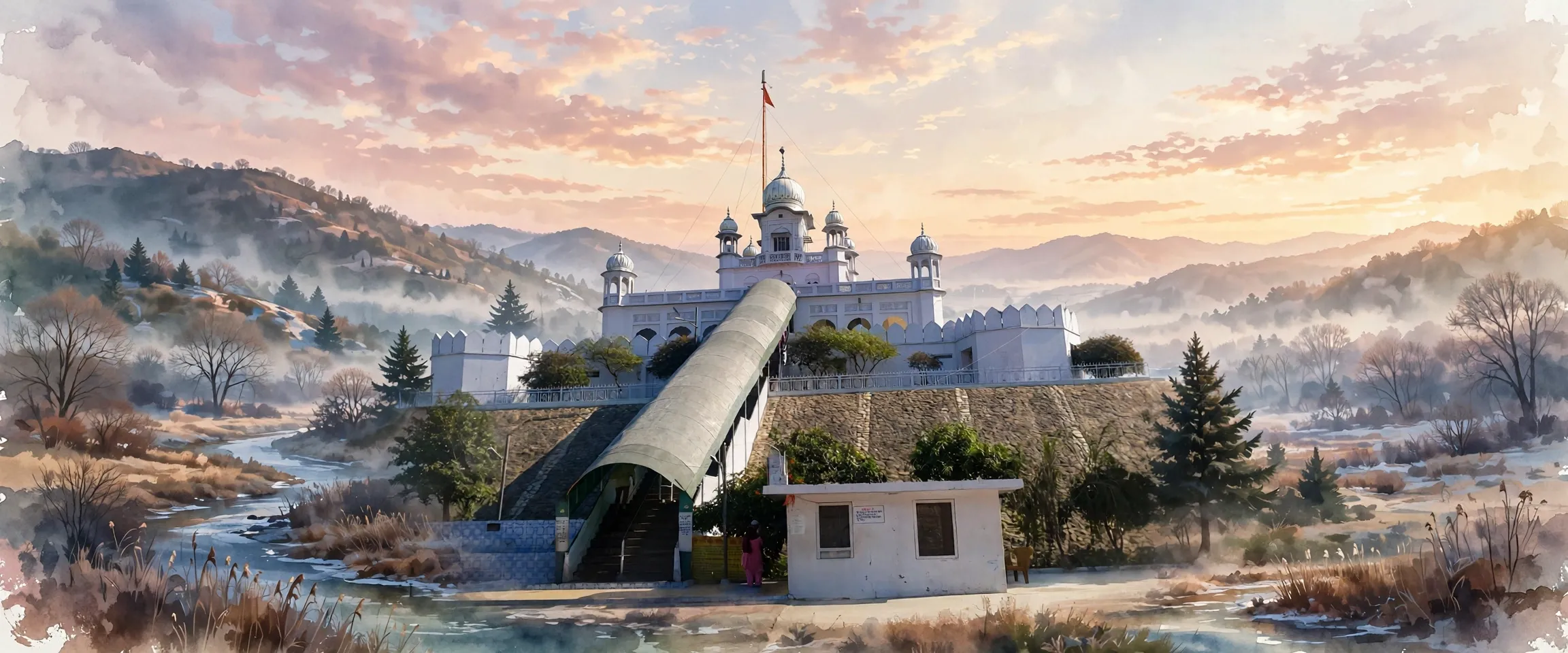
Gurdwara Parivar Vichora Sahib stands on a hill above the Sirsa river at Majri village in Rupnagar district, Punjab. It marks where Guru Gobind Singh Ji's family was separated during the winter flight from Anandpur Sahib, in December 1704 by Sikh tradition: the Guru crossed with his elder sons towards Chamkaur, while Mata Gujri Ji and the two younger Sahibzade were parted from him here and taken towards Morinda and Sirhind.
- Punjabi name
- ਗੁਰਦੁਆਰਾ ਪਰਿਵਾਰ ਵਿਛੋੜਾ ਸਾਹਿਬ
- Type
- Historic gurdwara
- Country
- India
- City
- Majri village
- District
- Rupnagar
- State
- Punjab
All 13 facts
- Location
- Majri, Rupnagar, Punjab 140114
- River
- Sirsa (Sarsa)
- Associated with
- Guru Gobind Singh Ji; Mata Gujri Ji; the four Sahibzade
- Marks
- Separation of Guru Gobind Singh Ji's family, December 1704 (Sikh tradition)
- Route
- Guru Gobind Singh Marg
- Shrine
- Site identified by Sant Baba Kartar Singh Ji Bhairomajre Wale, who began the kar seva
- Setting
- Hilltop above the bank of the Sirsa, reached by a covered stairway
Gurdwara Parivar Vichora Sahib stands on a hill above the Sirsa river at Majri village in Rupnagar district, Punjab. It marks the ground where Guru Gobind Singh Ji's family was separated during the winter flight from Anandpur Sahib, in December 1704 by Sikh tradition. Sikhs call that parting the Parivar Vichora, the separation of the family, and few places in Punjab carry its sorrow as directly as this hilltop shrine.
What is Parivar Vichora?
Parivar Vichora is the shrine of a parting. Parivar means family and vichora means separation, and the name says plainly what happened here: a family that had left its fort together under a promise of safe passage was scattered at a flooded river and never came together again. The gurdwara that keeps the memory is a white, domed building on a hilltop above the bank of the Sirsa, reached by a long covered stairway, looking out over the valley the Guru's party had to cross.
The shrine is one of the best known halts on the Guru Gobind Singh Marg, the pilgrimage route that follows the Guru's 1705 journey from Anandpur Sahib to Talwandi Sabo. Pilgrims travelling the Marg usually reach Parivar Vichora soon after leaving Anandpur, at the very start of the story the road tells.
History: the night Anandpur Sahib was left
After a long siege of Anandpur Sahib, an agreement was reached between the Sikhs and the Mughal and hill forces around the fort: the Guru would evacuate Anandpur, and his party would be allowed to leave unharmed. On the night of 5 and 6 December the column moved out into the winter dark, the Guru with his four sons, his mother Mata Gujri Ji, his wives, and the Sikhs who remained with him. Sikh tradition dates the evacuation to December 1704, though some modern summaries give 1705, and the Kosh follows the traditional dating here.
By morning the party had reached the bank of the Sirsa, a short march from Anandpur. The promise of safe passage was already breaking down, with enemy troops pressing close behind. The Guru halted briefly at the river for the morning congregation, the diwan that a Sikh camp held even on the move, before attempting the crossing.
The crossing of the flooded Sirsa
The Sirsa was in flood, swollen and fast, and the crossing turned into a battle. The Guru divided his small force in two: one part turned to hold off the attackers while the other was ordered across the river. The Guru himself rode into the swollen stream with a small party of Sikhs, swords in hand, and reached the far bank with his sons and a few dozen followers. Many Sikhs were lost in the water and in the fighting on its banks.
In the confusion of the crossing, the party came apart. The two younger Sahibzade, Sahibzada Zorawar Singh Ji and Sahibzada Fateh Singh Ji, were separated from their father along with their grandmother, Mata Gujri Ji. There was no time to search for them: the pursuing army was close, and every minute on the bank put the whole party at risk. The family that had left Anandpur together was now in pieces, and this riverbank is where the pieces parted.
Where did the separated family go?
The Guru, with his two elder sons and about forty Sikhs, rode on towards Chamkaur Sahib, where the famous battle of Chamkaur followed within days. Mata Sahib Kaur Ji, escorted by a few Sikhs, made her way to Delhi. Mata Gujri Ji and the two younger Sahibzade were taken in by Gangu, a servant of the Guru's household, and carried to his village near Morinda. From there their road led to Sirhind, where the young Sahibzade were martyred, a martyrdom remembered today at Fatehgarh Sahib. No member of the family who crossed the Sirsa that morning met the others again, which is why this quiet hill carries such weight in the Sikh memory of that December.
The shrine today
For a long time the exact ground was kept in local memory rather than marked by a building. In the modern period Sant Baba Kartar Singh Ji Bhairomajre Wale identified this place on the Sirsa bank and began the kar seva, the voluntary service, that raised the shrine, and grateful devotees built the gurdwara that stands here now. Its white building and tall Nishan Sahib rise above the river plain, and the covered stairway that climbs the hill is the first thing a visitor sees from the road below.
Like every gurdwara, it is open to all, with the Guru Granth Sahib Ji in darbar, kirtan through the day and langar served to visitors. From the top, the view takes in the Sirsa valley the Guru's party crossed, and on a clear day the Shivalik foothills towards Anandpur.
Why does Parivar Vichora matter to Sikhs?
Parivar Vichora is the first station of the Safar-e-Shahadat, the journey of martyrdom that Sikhs retrace every December, from the leaving of Anandpur through the battles and martyrdoms that followed at Chamkaur and Sirhind. It is also a landmark of the Guru Gobind Singh Marg, the 577 kilometre route, inaugurated as a marked highway on 10 April 1973, that links the shrines of the Guru's 47 day journey to Talwandi Sabo. Families bring children here to hear the story where it happened, and the telling usually begins with the river: ordinary water, on an ordinary winter morning, at the moment a family was parted for ever.
How to reach Parivar Vichora
The gurdwara stands at Majri village in Rupnagar district, Punjab 140114, a short drive from Rupnagar town and from Anandpur Sahib, on or near the Guru Gobind Singh Marg. Most pilgrims visit it together with Anandpur Sahib, Bhatha Sahib at nearby Kotla Nihang and Chamkaur Sahib, following the order of the Guru's own journey. Be ready for the climb: the shrine sits on its hill, and the covered stairway is climbed on foot, head covered, as at any gurdwara. For the full list of shrines on this route, see Gurdwaras in India.
ਗੁਰਦੁਆਰਾ ਪਰਿਵਾਰ ਵਿਛੋੜਾ ਸਾਹਿਬ ਪੰਜਾਬ ਦੇ ਰੂਪਨਗਰ ਜ਼ਿਲ੍ਹੇ ਵਿੱਚ ਮਾਜਰੀ ਪਿੰਡ ਕੋਲ ਸਰਸਾ ਨਦੀ ਦੇ ਉੱਪਰ ਇੱਕ ਪਹਾੜੀ ਉੱਤੇ ਸਥਿਤ ਹੈ ਇਹ ਉਸ ਥਾਂ ਨੂੰ ਯਾਦ ਕਰਦਾ ਹੈ ਜਿੱਥੇ ਸਰਦੀਆਂ ਵਿੱਚ ਆਨੰਦਪੁਰ ਸਾਹਿਬ ਤੋਂ ਨਿਕਲਣ ਵੇਲੇ ਗੁਰੂ ਗੋਬਿੰਦ ਸਿੰਘ ਜੀ ਦਾ ਪਰਿਵਾਰ ਵਿਛੜ ਗਿਆ ਸੀ ਸਿੱਖ ਪਰੰਪਰਾ ਅਨੁਸਾਰ ਇਹ ਘਟਨਾ ਦਸੰਬਰ 1704 ਦੀ ਹੈ ਸਿੱਖ ਇਸ ਵਿਛੋੜੇ ਨੂੰ ਪਰਿਵਾਰ ਵਿਛੋੜਾ ਕਹਿੰਦੇ ਹਨ, ਅਤੇ ਪੰਜਾਬ ਵਿੱਚ ਘੱਟ ਹੀ ਕੋਈ ਥਾਂ ਇਸ ਦੁੱਖ ਨੂੰ ਇੰਨੀ ਸਿੱਧੀ ਤਰ੍ਹਾਂ ਸਾਂਭਦੀ ਹੈ ਜਿੰਨੀ ਇਹ ਪਹਾੜੀ ਉੱਤਲੀ ਅਸਥਾਨ ਸਾਂਭਦੀ ਹੈ
ਪਰਿਵਾਰ ਵਿਛੋੜਾ ਕੀ ਹੈ?
ਪਰਿਵਾਰ ਵਿਛੋੜਾ ਇੱਕ ਵਿਛੋੜੇ ਦਾ ਅਸਥਾਨ ਹੈ ਪਰਿਵਾਰ ਦਾ ਅਰਥ ਹੈ ਟੱਬਰ ਅਤੇ ਵਿਛੋੜੇ ਦਾ ਅਰਥ ਹੈ ਵੱਖ ਹੋਣਾ, ਅਤੇ ਨਾਂ ਸਾਫ਼ ਦੱਸਦਾ ਹੈ ਕਿ ਇੱਥੇ ਕੀ ਵਾਪਰਿਆ: ਇੱਕ ਪਰਿਵਾਰ ਜੋ ਸੁਰੱਖਿਅਤ ਰਾਹ ਦੇ ਵਾਅਦੇ ਹੇਠ ਆਪਣਾ ਕਿਲ੍ਹਾ ਛੱਡ ਕੇ ਇਕੱਠਾ ਨਿਕਲਿਆ ਸੀ, ਇੱਕ ਹੜ੍ਹ ਆਈ ਨਦੀ ਕੋਲ ਖਿੰਡ ਗਿਆ ਅਤੇ ਫਿਰ ਕਦੇ ਇਕੱਠਾ ਨਾ ਹੋਇਆ ਇਸ ਯਾਦ ਨੂੰ ਸਾਂਭਣ ਵਾਲਾ ਗੁਰਦੁਆਰਾ ਸਰਸਾ ਦੇ ਕੰਢੇ ਉੱਪਰ ਪਹਾੜੀ ਉੱਤੇ ਇੱਕ ਚਿੱਟਾ ਗੁੰਬਦਾਂ ਵਾਲਾ ਭਵਨ ਹੈ, ਜਿੱਥੇ ਲੰਮੀ ਢਕੀ ਹੋਈ ਪੌੜੀ ਚੜ੍ਹ ਕੇ ਪਹੁੰਚਿਆ ਜਾਂਦਾ ਹੈ ਅਤੇ ਉੱਪਰੋਂ ਸਾਰੀ ਘਾਟੀ ਦਿਸਦੀ ਹੈ
ਇਹ ਅਸਥਾਨ ਗੁਰੂ ਗੋਬਿੰਦ ਸਿੰਘ ਮਾਰਗ ਉੱਤੇ ਸਭ ਤੋਂ ਜਾਣੇ ਪਛਾਣੇ ਪੜਾਵਾਂ ਵਿੱਚੋਂ ਇੱਕ ਹੈ ਇਹ ਮਾਰਗ 1705 ਵਿੱਚ ਗੁਰੂ ਜੀ ਦੀ ਆਨੰਦਪੁਰ ਸਾਹਿਬ ਤੋਂ ਤਲਵੰਡੀ ਸਾਬੋ ਤੱਕ ਦੀ ਯਾਤਰਾ ਦੇ ਨਿਸ਼ਾਨਾਂ ਨੂੰ ਜੋੜਦਾ ਹੈ ਮਾਰਗ ਉੱਤੇ ਚੱਲਣ ਵਾਲੇ ਸ਼ਰਧਾਲੂ ਆਮ ਤੌਰ ਉੱਤੇ ਆਨੰਦਪੁਰ ਤੋਂ ਨਿਕਲ ਕੇ ਸਭ ਤੋਂ ਪਹਿਲਾਂ ਇੱਥੇ ਹੀ ਪਹੁੰਚਦੇ ਹਨ, ਜਿੱਥੋਂ ਇਸ ਰਾਹ ਦੀ ਕਹਾਣੀ ਸ਼ੁਰੂ ਹੁੰਦੀ ਹੈ
ਇਤਿਹਾਸ: ਜਿਸ ਰਾਤ ਆਨੰਦਪੁਰ ਸਾਹਿਬ ਛੱਡਿਆ ਗਿਆ
ਆਨੰਦਪੁਰ ਸਾਹਿਬ ਦੇ ਲੰਮੇ ਘੇਰੇ ਤੋਂ ਬਾਅਦ ਸਿੱਖਾਂ ਅਤੇ ਕਿਲ੍ਹੇ ਦੇ ਆਲੇ ਦੁਆਲੇ ਮੁਗਲ ਅਤੇ ਪਹਾੜੀ ਫੌਜਾਂ ਵਿਚਕਾਰ ਇੱਕ ਸਮਝੌਤਾ ਹੋਇਆ: ਗੁਰੂ ਜੀ ਆਨੰਦਪੁਰ ਖਾਲੀ ਕਰ ਦੇਣਗੇ ਅਤੇ ਉਹਨਾਂ ਦੇ ਕਾਫ਼ਲੇ ਨੂੰ ਬਿਨਾਂ ਨੁਕਸਾਨ ਦੇ ਜਾਣ ਦਿੱਤਾ ਜਾਵੇਗਾ 5 ਅਤੇ 6 ਦਸੰਬਰ ਦੀ ਰਾਤ ਨੂੰ ਕਾਫ਼ਲਾ ਸਰਦ ਹਨੇਰੇ ਵਿੱਚ ਨਿਕਲਿਆ ਗੁਰੂ ਜੀ ਨਾਲ ਉਹਨਾਂ ਦੇ ਚਾਰੇ ਸਾਹਿਬਜ਼ਾਦੇ, ਮਾਤਾ ਗੁਜਰੀ ਜੀ, ਮਾਤਾਵਾਂ ਅਤੇ ਨਾਲ ਰਹਿ ਗਏ ਸਿੰਘ ਸਨ ਸਿੱਖ ਪਰੰਪਰਾ ਇਸ ਨਿਕਾਸ ਨੂੰ ਦਸੰਬਰ 1704 ਦਾ ਮੰਨਦੀ ਹੈ, ਹਾਲਾਂਕਿ ਕੁਝ ਆਧੁਨਿਕ ਸੰਖੇਪਾਂ ਵਿੱਚ 1705 ਆਉਂਦਾ ਹੈ, ਅਤੇ ਇੱਥੇ ਪਰੰਪਰਾਗਤ ਤਾਰੀਖ ਹੀ ਲਈ ਗਈ ਹੈ
ਸਵੇਰ ਤੱਕ ਕਾਫ਼ਲਾ ਆਨੰਦਪੁਰ ਤੋਂ ਥੋੜ੍ਹੀ ਦੂਰੀ ਉੱਤੇ ਸਰਸਾ ਦੇ ਕੰਢੇ ਪਹੁੰਚ ਗਿਆ ਸੁਰੱਖਿਅਤ ਰਾਹ ਦਾ ਵਾਅਦਾ ਪਹਿਲਾਂ ਹੀ ਟੁੱਟ ਰਿਹਾ ਸੀ ਅਤੇ ਦੁਸ਼ਮਣ ਫੌਜਾਂ ਪਿੱਛੇ ਨੇੜੇ ਆ ਰਹੀਆਂ ਸਨ ਨਦੀ ਪਾਰ ਕਰਨ ਤੋਂ ਪਹਿਲਾਂ ਗੁਰੂ ਜੀ ਇੱਥੇ ਥੋੜ੍ਹੀ ਦੇਰ ਸਵੇਰ ਦੇ ਦੀਵਾਨ ਲਈ ਰੁਕੇ, ਉਹ ਦੀਵਾਨ ਜੋ ਸਿੱਖ ਕਾਫ਼ਲਾ ਸਫ਼ਰ ਵਿੱਚ ਵੀ ਸਜਾਉਂਦਾ ਸੀ
ਹੜ੍ਹ ਆਈ ਸਰਸਾ ਨੂੰ ਪਾਰ ਕਰਨਾ
ਸਰਸਾ ਵਿੱਚ ਹੜ੍ਹ ਆਇਆ ਹੋਇਆ ਸੀ, ਪਾਣੀ ਤੇਜ਼ ਸੀ, ਅਤੇ ਨਦੀ ਪਾਰ ਕਰਨਾ ਇੱਕ ਲੜਾਈ ਵਿੱਚ ਬਦਲ ਗਿਆ ਗੁਰੂ ਜੀ ਨੇ ਆਪਣੀ ਛੋਟੀ ਜਿਹੀ ਫੌਜ ਨੂੰ ਦੋ ਹਿੱਸਿਆਂ ਵਿੱਚ ਵੰਡਿਆ: ਇੱਕ ਹਿੱਸਾ ਹਮਲਾਵਰਾਂ ਨੂੰ ਰੋਕਣ ਲਈ ਮੁੜਿਆ ਅਤੇ ਦੂਜੇ ਨੂੰ ਨਦੀ ਪਾਰ ਕਰਨ ਦਾ ਹੁਕਮ ਹੋਇਆ ਗੁਰੂ ਜੀ ਆਪ ਥੋੜ੍ਹੇ ਜਿਹੇ ਸਿੰਘਾਂ ਨਾਲ ਤਲਵਾਰਾਂ ਹੱਥਾਂ ਵਿੱਚ ਲੈ ਕੇ ਉਛਲਦੇ ਪਾਣੀ ਵਿੱਚ ਘੋੜੇ ਸਮੇਤ ਉੱਤਰੇ ਅਤੇ ਆਪਣੇ ਸਾਹਿਬਜ਼ਾਦਿਆਂ ਅਤੇ ਕੁਝ ਦਰਜਨ ਸਾਥੀਆਂ ਨਾਲ ਦੂਜੇ ਕੰਢੇ ਪਹੁੰਚ ਗਏ ਕਈ ਸਿੰਘ ਪਾਣੀ ਵਿੱਚ ਅਤੇ ਕੰਢਿਆਂ ਉੱਤੇ ਹੋਈ ਲੜਾਈ ਵਿੱਚ ਸ਼ਹੀਦ ਹੋ ਗਏ
ਨਦੀ ਪਾਰ ਕਰਨ ਦੀ ਅਫਰਾ ਤਫਰੀ ਵਿੱਚ ਕਾਫ਼ਲਾ ਖਿੰਡ ਗਿਆ ਦੋ ਛੋਟੇ ਸਾਹਿਬਜ਼ਾਦੇ, ਸਾਹਿਬਜ਼ਾਦਾ ਜ਼ੋਰਾਵਰ ਸਿੰਘ ਜੀ ਅਤੇ ਸਾਹਿਬਜ਼ਾਦਾ ਫ਼ਤਿਹ ਸਿੰਘ ਜੀ, ਆਪਣੇ ਪਿਤਾ ਤੋਂ ਵਿਛੜ ਗਏ ਅਤੇ ਉਹਨਾਂ ਨਾਲ ਉਹਨਾਂ ਦੀ ਦਾਦੀ ਮਾਤਾ ਗੁਜਰੀ ਜੀ ਸਨ ਉਹਨਾਂ ਨੂੰ ਲੱਭਣ ਦਾ ਸਮਾਂ ਨਹੀਂ ਸੀ: ਪਿੱਛਾ ਕਰਦੀ ਫੌਜ ਨੇੜੇ ਸੀ ਅਤੇ ਕੰਢੇ ਉੱਤੇ ਹਰ ਪਲ ਸਾਰੇ ਕਾਫ਼ਲੇ ਲਈ ਖ਼ਤਰਾ ਸੀ ਜੋ ਪਰਿਵਾਰ ਆਨੰਦਪੁਰ ਤੋਂ ਇਕੱਠਾ ਨਿਕਲਿਆ ਸੀ, ਉਹ ਹੁਣ ਟੁਕੜਿਆਂ ਵਿੱਚ ਸੀ, ਅਤੇ ਇਹੀ ਨਦੀ ਦਾ ਕੰਢਾ ਹੈ ਜਿੱਥੇ ਉਹ ਟੁਕੜੇ ਵੱਖ ਹੋਏ
ਵਿਛੜਿਆ ਪਰਿਵਾਰ ਕਿੱਥੇ ਗਿਆ?
ਗੁਰੂ ਜੀ ਆਪਣੇ ਦੋ ਵੱਡੇ ਸਾਹਿਬਜ਼ਾਦਿਆਂ ਅਤੇ ਲਗਭਗ ਚਾਲੀ ਸਿੰਘਾਂ ਨਾਲ ਚਮਕੌਰ ਸਾਹਿਬ ਵੱਲ ਵਧੇ, ਜਿੱਥੇ ਕੁਝ ਦਿਨਾਂ ਵਿੱਚ ਹੀ ਚਮਕੌਰ ਦੀ ਮਸ਼ਹੂਰ ਲੜਾਈ ਹੋਈ ਮਾਤਾ ਸਾਹਿਬ ਕੌਰ ਜੀ ਕੁਝ ਸਿੰਘਾਂ ਦੀ ਸੁਰੱਖਿਆ ਵਿੱਚ ਦਿੱਲੀ ਪਹੁੰਚ ਗਏ ਮਾਤਾ ਗੁਜਰੀ ਜੀ ਅਤੇ ਦੋਵੇਂ ਛੋਟੇ ਸਾਹਿਬਜ਼ਾਦਿਆਂ ਨੂੰ ਗੁਰੂ ਘਰ ਦੇ ਸੇਵਕ ਗੰਗੂ ਨੇ ਆਸਰਾ ਦਿੱਤਾ ਅਤੇ ਉਹਨਾਂ ਨੂੰ ਮੋਰਿੰਡਾ ਨੇੜੇ ਆਪਣੇ ਪਿੰਡ ਲੈ ਗਿਆ ਉੱਥੋਂ ਉਹਨਾਂ ਦਾ ਰਾਹ ਸਰਹਿੰਦ ਵੱਲ ਗਿਆ, ਜਿੱਥੇ ਛੋਟੇ ਸਾਹਿਬਜ਼ਾਦੇ ਸ਼ਹੀਦ ਹੋਏ, ਅਤੇ ਉਸ ਸ਼ਹਾਦਤ ਨੂੰ ਅੱਜ ਫ਼ਤਿਹਗੜ੍ਹ ਸਾਹਿਬ ਵਿੱਚ ਯਾਦ ਕੀਤਾ ਜਾਂਦਾ ਹੈ ਉਸ ਸਵੇਰ ਸਰਸਾ ਪਾਰ ਕਰਨ ਵਾਲੇ ਪਰਿਵਾਰ ਦਾ ਕੋਈ ਵੀ ਜੀਅ ਫਿਰ ਦੂਜਿਆਂ ਨੂੰ ਨਾ ਮਿਲਿਆ, ਇਸੇ ਲਈ ਇਹ ਸ਼ਾਂਤ ਪਹਾੜੀ ਉਸ ਦਸੰਬਰ ਦੀ ਸਿੱਖ ਯਾਦ ਵਿੱਚ ਇੰਨਾ ਭਾਰ ਰੱਖਦੀ ਹੈ
ਅੱਜ ਦਾ ਅਸਥਾਨ
ਬਹੁਤ ਸਮੇਂ ਤੱਕ ਇਹ ਥਾਂ ਇਮਾਰਤ ਦੀ ਥਾਂ ਸਥਾਨਕ ਯਾਦ ਵਿੱਚ ਸਾਂਭੀ ਰਹੀ ਆਧੁਨਿਕ ਸਮੇਂ ਵਿੱਚ ਸੰਤ ਬਾਬਾ ਕਰਤਾਰ ਸਿੰਘ ਜੀ ਭਾਈਰੋਂਮਾਜਰੇ ਵਾਲਿਆਂ ਨੇ ਸਰਸਾ ਕੰਢੇ ਇਹ ਥਾਂ ਨਿਸ਼ਾਨਦੇਹੀ ਕੀਤੀ ਅਤੇ ਕਾਰ ਸੇਵਾ ਸ਼ੁਰੂ ਕੀਤੀ, ਅਤੇ ਸ਼ਰਧਾਲੂਆਂ ਨੇ ਉਹ ਗੁਰਦੁਆਰਾ ਉਸਾਰਿਆ ਜੋ ਅੱਜ ਇੱਥੇ ਖੜ੍ਹਾ ਹੈ ਇਸ ਦਾ ਚਿੱਟਾ ਭਵਨ ਅਤੇ ਉੱਚਾ ਨਿਸ਼ਾਨ ਸਾਹਿਬ ਨਦੀ ਦੇ ਮੈਦਾਨ ਉੱਪਰ ਉੱਭਰਦਾ ਹੈ, ਅਤੇ ਪਹਾੜੀ ਚੜ੍ਹਦੀ ਢਕੀ ਹੋਈ ਪੌੜੀ ਹੇਠਾਂ ਸੜਕ ਤੋਂ ਆਉਣ ਵਾਲੇ ਨੂੰ ਸਭ ਤੋਂ ਪਹਿਲਾਂ ਦਿਸਦੀ ਹੈ
ਹਰ ਗੁਰਦੁਆਰੇ ਵਾਂਗ ਇਹ ਸਭ ਲਈ ਖੁੱਲ੍ਹਾ ਹੈ, ਦਰਬਾਰ ਵਿੱਚ ਗੁਰੂ ਗ੍ਰੰਥ ਸਾਹਿਬ ਜੀ ਦਾ ਪ੍ਰਕਾਸ਼ ਹੁੰਦਾ ਹੈ, ਦਿਨ ਭਰ ਕੀਰਤਨ ਹੁੰਦਾ ਹੈ ਅਤੇ ਆਉਣ ਵਾਲਿਆਂ ਨੂੰ ਲੰਗਰ ਛਕਾਇਆ ਜਾਂਦਾ ਹੈ ਉੱਪਰੋਂ ਸਰਸਾ ਦੀ ਉਹ ਘਾਟੀ ਦਿਸਦੀ ਹੈ ਜੋ ਗੁਰੂ ਜੀ ਦੇ ਕਾਫ਼ਲੇ ਨੇ ਪਾਰ ਕੀਤੀ ਸੀ, ਅਤੇ ਸਾਫ਼ ਦਿਨ ਵਿੱਚ ਆਨੰਦਪੁਰ ਵੱਲ ਸ਼ਿਵਾਲਿਕ ਦੀਆਂ ਪਹਾੜੀਆਂ ਵੀ ਦਿਸਦੀਆਂ ਹਨ
ਪਰਿਵਾਰ ਵਿਛੋੜਾ ਸਿੱਖਾਂ ਲਈ ਮਹੱਤਵਪੂਰਨ ਕਿਉਂ ਹੈ?
ਪਰਿਵਾਰ ਵਿਛੋੜਾ ਸਫ਼ਰ-ਏ-ਸ਼ਹਾਦਤ ਦਾ ਪਹਿਲਾ ਪੜਾਅ ਹੈ, ਉਹ ਯਾਤਰਾ ਜੋ ਸਿੱਖ ਹਰ ਦਸੰਬਰ ਆਨੰਦਪੁਰ ਛੱਡਣ ਤੋਂ ਲੈ ਕੇ ਚਮਕੌਰ ਅਤੇ ਸਰਹਿੰਦ ਦੀਆਂ ਲੜਾਈਆਂ ਅਤੇ ਸ਼ਹਾਦਤਾਂ ਤੱਕ ਫਿਰ ਜਿਉਂਦੇ ਕਰਦੇ ਹਨ ਇਹ ਗੁਰੂ ਗੋਬਿੰਦ ਸਿੰਘ ਮਾਰਗ ਦਾ ਵੀ ਇੱਕ ਨਿਸ਼ਾਨ ਹੈ ਇਹ 577 ਕਿਲੋਮੀਟਰ ਲੰਮਾ ਰਾਹ 10 ਅਪ੍ਰੈਲ 1973 ਨੂੰ ਇੱਕ ਨਿਸ਼ਾਨਬੱਧ ਸ਼ਾਹਰਾਹ ਵਜੋਂ ਖੋਲ੍ਹਿਆ ਗਿਆ ਸੀ ਅਤੇ ਗੁਰੂ ਜੀ ਦੀ ਤਲਵੰਡੀ ਸਾਬੋ ਤੱਕ 47 ਦਿਨਾਂ ਦੀ ਯਾਤਰਾ ਦੇ ਅਸਥਾਨਾਂ ਨੂੰ ਜੋੜਦਾ ਹੈ ਪਰਿਵਾਰ ਇੱਥੇ ਆਪਣੇ ਬੱਚਿਆਂ ਨੂੰ ਉਹ ਕਹਾਣੀ ਉਸੇ ਥਾਂ ਸੁਣਾਉਣ ਲਈ ਲਿਆਉਂਦੇ ਹਨ ਜਿੱਥੇ ਉਹ ਵਾਪਰੀ, ਅਤੇ ਗੱਲ ਆਮ ਤੌਰ ਉੱਤੇ ਨਦੀ ਤੋਂ ਸ਼ੁਰੂ ਹੁੰਦੀ ਹੈ: ਸਾਦਾ ਪਾਣੀ, ਸਰਦੀਆਂ ਦੀ ਇੱਕ ਸਾਦੀ ਸਵੇਰ, ਅਤੇ ਉਹ ਪਲ ਜਦੋਂ ਇੱਕ ਪਰਿਵਾਰ ਹਮੇਸ਼ਾ ਲਈ ਵਿਛੜ ਗਿਆ
ਪਰਿਵਾਰ ਵਿਛੋੜਾ ਕਿਵੇਂ ਪਹੁੰਚੀਏ?
ਇਹ ਗੁਰਦੁਆਰਾ ਪੰਜਾਬ 140114 ਵਿੱਚ ਰੂਪਨਗਰ ਜ਼ਿਲ੍ਹੇ ਦੇ ਮਾਜਰੀ ਪਿੰਡ ਵਿੱਚ ਹੈ, ਰੂਪਨਗਰ ਸ਼ਹਿਰ ਅਤੇ ਆਨੰਦਪੁਰ ਸਾਹਿਬ ਤੋਂ ਥੋੜ੍ਹੀ ਦੂਰੀ ਉੱਤੇ, ਗੁਰੂ ਗੋਬਿੰਦ ਸਿੰਘ ਮਾਰਗ ਉੱਤੇ ਜਾਂ ਉਸ ਦੇ ਨੇੜੇ ਜ਼ਿਆਦਾਤਰ ਸ਼ਰਧਾਲੂ ਇਸ ਨੂੰ ਆਨੰਦਪੁਰ ਸਾਹਿਬ, ਨੇੜਲੇ ਕੋਟਲਾ ਨਿਹੰਗ ਦੇ ਭੱਠਾ ਸਾਹਿਬ ਅਤੇ ਚਮਕੌਰ ਸਾਹਿਬ ਨਾਲ ਇਕੱਠਾ ਦੇਖਦੇ ਹਨ, ਗੁਰੂ ਜੀ ਦੀ ਆਪਣੀ ਯਾਤਰਾ ਦੇ ਕ੍ਰਮ ਵਿੱਚ ਚੜ੍ਹਾਈ ਲਈ ਤਿਆਰ ਰਹੋ: ਅਸਥਾਨ ਪਹਾੜੀ ਉੱਤੇ ਹੈ ਅਤੇ ਢਕੀ ਹੋਈ ਪੌੜੀ ਸਿਰ ਢਕ ਕੇ ਪੈਦਲ ਚੜ੍ਹੀ ਜਾਂਦੀ ਹੈ, ਜਿਵੇਂ ਹਰ ਗੁਰਦੁਆਰੇ ਵਿੱਚ ਹੁੰਦਾ ਹੈ ਇਸ ਰਾਹ ਦੇ ਸਾਰੇ ਅਸਥਾਨਾਂ ਦੀ ਸੂਚੀ ਲਈ ਭਾਰਤ ਦੇ ਗੁਰਦੁਆਰੇ ਵੇਖੋ