
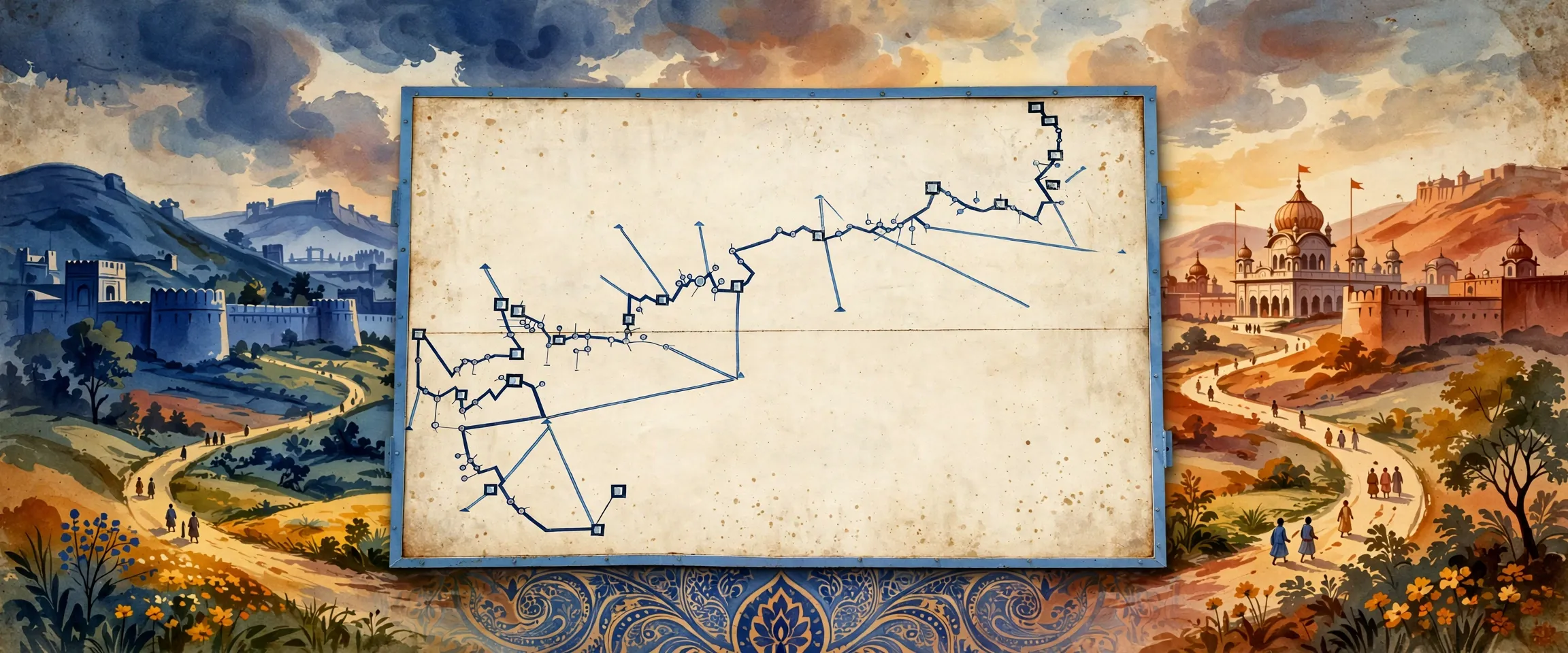
Guru Gobind Singh Marg is the route Guru Gobind Singh Ji travelled from Anandpur Sahib to Talwandi Sabo in the winter of 1705-06, a 47-day journey of about 577 kilometres passing through Chamkaur Sahib, Machhiwara, Muktsar and other shrines. Inaugurated as a marked highway on 10 April 1973, it is one of the great pilgrimage circuits of Sikhism.
- Punjabi name
- ਗੁਰੂ ਗੋਬਿੰਦ ਸਿੰਘ ਮਾਰਗ
- Route
- Anandpur Sahib to Talwandi Sabo
- Journey year
- 1705-06
- Duration
- 47 days
- Journey length
- About 577 km
- Highway inaugurated
- 10 April 1973
All 10 facts
- Inaugurated through the efforts of
- Giani Zail Singh (then Chief Minister of Punjab)
- Highway length
- About 640 km
- Dashmesh pillars
- 20, inscribed with verses of Guru Gobind Singh Ji
- Shrines associated
- 91
Guru Gobind Singh Marg is the holy route travelled by Guru Gobind Singh Ji from Anandpur Sahib to Talwandi Sabo in the winter of 1705-06, a journey of 47 days covering about 577 kilometres. Inaugurated as a marked highway on 10 April 1973, the Marg threads together dozens of gurdwaras associated with the Guru and remains one of the great pilgrimage circuits of Sikhism.
The journey of 1705
The Marg begins in the darkest days of Sikh history. In May 1705 a combined Mughal and hill-raja force laid siege to Anandpur Sahib. After months of blockade the besiegers swore on the Quran to grant safe passage, and on the night of 5-6 December 1705 the Guru evacuated the town. The oath was broken at once: at the flooded Sirsa crossing the Guru's family was separated, an event remembered at Gurdwara Parivar Vichora.
The Guru reached Chamkaur, about 40 kilometres south-west of Anandpur, with barely forty Sikhs and his two elder sons. On 7 December 1705 the imperial army caught up with them; Sahibzada Ajit Singh and Sahibzada Jujhar Singh fell along with nearly all the Sikhs. The five surviving Sikhs ordered the Guru to escape, and with three companions he slipped into the Malwa wilderness, sheltered at grave personal risk by two Muslim devotees, Ghani Khan and Nabi Khan.
The Guru's two younger sons, Zorawar Singh and Fateh Singh, with their grandmother Mata Gujari, were betrayed by the servant Gangu to the faujdar of Sirhind and executed on 13 December 1705. Befriended by Rai Kalha of Raikot, the Guru reached Dina in the heart of Malwa, where he composed the Zafarnama, the Epistle of Victory in Persian verse addressed to Emperor Aurangzeb, and sent it south with Bhai Daya Singh and Bhai Dharam Singh.
From Dina the Guru marched west until, near the pool of Khidrana, he made a last stand on 29 December 1705. The forty Sikhs who had deserted him at Anandpur, led by the warrior Mai Bhago, redeemed themselves in desperate fighting and fell; the Guru blessed them as the forty muktas, the liberated ones, and the place became Muktsar, the pool of liberation. On 20 January 1706 the Guru reached Talwandi Sabo, where he stayed over nine months, preparing a fresh recension of the Sikh scripture with Bhai Mani Singh as his scribe. The town came to be called the Guru's Kashi, a seat of learning.
Which shrines stand on the Marg?
In travel sequence, the prominent gurdwaras of the Marg are Anandpur Sahib, Parivar Vichora, Bhatha Sahib, Chamkaur Sahib, Machhiwara, Alamgir Sahib, Raikot, Dina Kangar, Kotkapura, Jaito, Muktsar and Talwandi Sabo. Each stop carries its own sakhi: Chamkaur of the great sacrifice, Machhiwara where the Guru composed "Mittar Pyare Nu" in the wilderness, Dina of the Zafarnama, Muktsar of the forty muktas, Talwandi Sabo of the Damdama recension.
Anandpur Sahib, the City of Bliss where the Khalsa was founded in 1699, anchors the start of the route, while Talwandi Sabo, the seat of Takht Sri Damdama Sahib and one of the five Takhts, anchors its end. The Marg is as much a journey through memory as through Punjab: every few kilometres the road passes a shrine that remembers one night of that winter.
The 1973 highway project
The Marg as a modern highway was inaugurated on 10 April 1973 through the efforts of Giani Zail Singh, then the Chief Minister of Punjab. It is an all-weather metalled road of about 640 kilometres connecting 91 shrines associated with the Guru, along which twenty Dashmesh pillars inscribed with the Guru's holy verses have been installed.
The inauguration was marked by an enormous pilgrimage: by official estimate about 25 lakh men and women joined the procession, some 21 kilometres long, in what was described as perhaps the largest assembly of its kind. The project helped popularise the Vaisakhi and Hola Mohalla celebrations at Anandpur Sahib and built up the town's infrastructure. In 2006 it was proposed that the road be extended to Nanded in Maharashtra.
How can pilgrims travel the Marg today?
Pilgrims usually drive the route from Anandpur Sahib in Rupnagar district to Talwandi Sabo in Bathinda district, stopping at the gurdwaras in travel order. The journey passes through the Malwa heartland of Punjab, and most travellers take two to three days, staying in gurdwara sarais along the way. The nearest airports are Chandigarh and Amritsar; Anandpur Sahib is well connected by road and rail.
The best season is October to March, avoiding the fierce summer heat of the Malwa plains. Langar is served at the major gurdwaras, and the route can be combined with visits to nearby shrines such as Fatehgarh Sahib. Many pilgrims time the journey around Hola Mohalla at Anandpur Sahib or Maghi at Muktsar.
How long is the Guru Gobind Singh Marg?
The historical journey of 1705-06 is measured at about 577 kilometres and described as lasting 47 days. The modern metalled highway is somewhat longer, about 640 kilometres. The difference comes from the road following today's alignment rather than the Guru's exact footpath, but both figures describe the same sacred geography: Anandpur Sahib to Talwandi Sabo across the Punjab plains.
Why does the Marg still matter?
The Marg turns the most testing winter in Sikh history into a road a pilgrim can actually travel. It begins with a siege survived and ends with a scripture completed: between those two points lie sacrifice at Chamkaur, compassion at Machhiwara, defiance at Dina and redemption at Muktsar. To drive the Marg is to read the life of Guru Gobind Singh Ji in the landscape itself, which is why Sikhs call it a highway of eternity.
ਗੁਰੂ ਗੋਬਿੰਦ ਸਿੰਘ ਮਾਰਗ ਉਹ ਪਵਿੱਤਰ ਰਸਤਾ ਹੈ ਜਿਸ ਉੱਤੇ ਗੁਰੂ ਗੋਬਿੰਦ ਸਿੰਘ ਜੀ 1705-06 ਦੀ ਸਰਦੀ ਵਿੱਚ ਅਨੰਦਪੁਰ ਸਾਹਿਬ ਤੋਂ ਤਲਵੰਡੀ ਸਾਬੋ ਤੱਕ ਗਏ ਸਨ ਲਗਭਗ 577 ਕਿਲੋਮੀਟਰ ਦਾ ਇਹ 47 ਦਿਨਾਂ ਦਾ ਸਫ਼ਰ ਸਿੱਖ ਧਰਮ ਦੇ ਮਹਾਨ ਤੀਰਥ ਮਾਰਗਾਂ ਵਿੱਚੋਂ ਇੱਕ ਹੈ 10 ਅਪ੍ਰੈਲ 1973 ਨੂੰ ਇਸਨੂੰ ਇੱਕ ਨਿਸ਼ਾਨਬੱਧ ਹਾਈਵੇ ਵਜੋਂ ਸ਼ੁਰੂ ਕੀਤਾ ਗਿਆ, ਜੋ ਗੁਰੂ ਜੀ ਨਾਲ ਜੁੜੇ ਦਰਜਨਾਂ ਗੁਰਦੁਆਰਿਆਂ ਨੂੰ ਆਪਸ ਵਿੱਚ ਜੋੜਦਾ ਹੈ
1705 ਦਾ ਸਫ਼ਰ
ਮਾਰਗ ਦੀ ਕਹਾਣੀ ਸਿੱਖ ਇਤਿਹਾਸ ਦੇ ਸਭ ਤੋਂ ਔਖੇ ਦਿਨਾਂ ਤੋਂ ਸ਼ੁਰੂ ਹੁੰਦੀ ਹੈ ਮਈ 1705 ਵਿੱਚ ਮੁਗ਼ਲ ਅਤੇ ਪਹਾੜੀ ਰਾਜਿਆਂ ਦੀ ਸਾਂਝੀ ਫ਼ੌਜ ਨੇ ਅਨੰਦਪੁਰ ਸਾਹਿਬ ਦਾ ਘੇਰਾ ਪਾ ਲਿਆ ਮਹੀਨਿਆਂ ਦੀ ਨਾਕਾਬੰਦੀ ਤੋਂ ਬਾਅਦ ਘੇਰਾ ਪਾਉਣ ਵਾਲਿਆਂ ਨੇ ਕੁਰਾਨ ਦੀ ਸਹੁੰ ਖਾ ਕੇ ਸੁਰੱਖਿਅਤ ਨਿਕਾਸ ਦਾ ਵਾਅਦਾ ਕੀਤਾ, ਅਤੇ 5-6 ਦਸੰਬਰ 1705 ਦੀ ਰਾਤ ਨੂੰ ਗੁਰੂ ਜੀ ਨੇ ਸ਼ਹਿਰ ਖ਼ਾਲੀ ਕਰ ਦਿੱਤਾ ਸਹੁੰ ਤੁਰੰਤ ਤੋੜ ਦਿੱਤੀ ਗਈ: ਹੜ੍ਹ ਆਏ ਸਰਸਾ ਦਰਿਆ ਦੇ ਪਾਰ ਗੁਰੂ ਜੀ ਦਾ ਪਰਿਵਾਰ ਵਿਛੜ ਗਿਆ, ਜਿਸ ਦੀ ਯਾਦ ਵਿੱਚ ਗੁਰਦੁਆਰਾ ਪਰਿਵਾਰ ਵਿਛੋੜਾ ਬਣਿਆ ਹੈ
ਗੁਰੂ ਜੀ ਚਮਕੌਰ ਪਹੁੰਚੇ, ਜੋ ਅਨੰਦਪੁਰ ਤੋਂ ਲਗਭਗ 40 ਕਿਲੋਮੀਟਰ ਦੱਖਣ-ਪੱਛਮ ਵਿੱਚ ਹੈ ਉਨ੍ਹਾਂ ਦੇ ਨਾਲ ਸਿਰਫ਼ ਚਾਲੀ ਸਿੰਘ ਅਤੇ ਦੋ ਵੱਡੇ ਸਾਹਿਬਜ਼ਾਦੇ ਸਨ 7 ਦਸੰਬਰ 1705 ਨੂੰ ਸ਼ਾਹੀ ਫ਼ੌਜ ਨੇ ਉਨ੍ਹਾਂ ਨੂੰ ਘੇਰ ਲਿਆ ਸਾਹਿਬਜ਼ਾਦਾ ਅਜੀਤ ਸਿੰਘ ਅਤੇ ਸਾਹਿਬਜ਼ਾਦਾ ਜੁਝਾਰ ਸਿੰਘ ਲਗਭਗ ਸਾਰੇ ਸਿੰਘਾਂ ਸਮੇਤ ਸ਼ਹੀਦ ਹੋ ਗਏ ਬਚੇ ਪੰਜ ਸਿੰਘਾਂ ਨੇ ਗੁਰੂ ਜੀ ਨੂੰ ਬਚ ਨਿਕਲਣ ਦਾ ਹੁਕਮ ਦਿੱਤਾ, ਅਤੇ ਤਿੰਨ ਸਾਥੀਆਂ ਨਾਲ ਉਹ ਮਾਲਵੇ ਦੇ ਜੰਗਲਾਂ ਵਿੱਚ ਨਿਕਲ ਗਏ ਦੋ ਮੁਸਲਮਾਨ ਸ਼ਰਧਾਲੂਆਂ, ਘਨੀ ਖ਼ਾਨ ਅਤੇ ਨਬੀ ਖ਼ਾਨ ਨੇ ਆਪਣੀ ਜਾਨ ਜੋਖ਼ਮ ਵਿੱਚ ਪਾ ਕੇ ਉਨ੍ਹਾਂ ਦੀ ਮਦਦ ਕੀਤੀ
ਗੁਰੂ ਜੀ ਦੇ ਦੋ ਛੋਟੇ ਸਾਹਿਬਜ਼ਾਦੇ, ਜ਼ੋਰਾਵਰ ਸਿੰਘ ਅਤੇ ਫ਼ਤਹਿ ਸਿੰਘ, ਆਪਣੀ ਦਾਦੀ ਮਾਤਾ ਗੁਜਰੀ ਜੀ ਸਮੇਤ ਨੌਕਰ ਗੰਗੂ ਦੀ ਗ਼ਦਾਰੀ ਕਾਰਨ ਸਰਹਿੰਦ ਦੇ ਫ਼ੌਜਦਾਰ ਹੱਥੋਂ ਫੜੇ ਗਏ ਅਤੇ 13 ਦਸੰਬਰ 1705 ਨੂੰ ਸ਼ਹੀਦ ਕਰ ਦਿੱਤੇ ਗਏ ਰਾਇਕੋਟ ਦੇ ਰਾਇ ਕਲ੍ਹੇ ਦੀ ਮਦਦ ਨਾਲ ਗੁਰੂ ਜੀ ਮਾਲਵੇ ਦੇ ਦਿਲ ਵਿੱਚ ਸਥਿਤ ਦੀਨਾ ਪਹੁੰਚੇ, ਜਿੱਥੇ ਉਨ੍ਹਾਂ ਨੇ ਬਾਦਸ਼ਾਹ ਔਰੰਗਜ਼ੇਬ ਦੇ ਨਾਂ ਫ਼ਾਰਸੀ ਵਿੱਚ ਜ਼ਫ਼ਰਨਾਮਾ, ਜਿੱਤ ਦਾ ਖ਼ਤ ਲਿਖਿਆ, ਅਤੇ ਭਾਈ ਦਇਆ ਸਿੰਘ ਤੇ ਭਾਈ ਧਰਮ ਸਿੰਘ ਹੱਥੀਂ ਦੱਖਣ ਵੱਲ ਭੇਜਿਆ
ਦੀਨਾ ਤੋਂ ਗੁਰੂ ਜੀ ਪੱਛਮ ਵੱਲ ਵਧੇ ਅਤੇ ਖਿਦਰਾਣੇ ਦੇ ਤਲਾਅ ਨੇੜੇ 29 ਦਸੰਬਰ 1705 ਨੂੰ ਆਖ਼ਰੀ ਮੋਰਚਾ ਲਾਇਆ ਅਨੰਦਪੁਰ ਵਿਖੇ ਗੁਰੂ ਜੀ ਨੂੰ ਛੱਡ ਗਏ ਚਾਲੀ ਸਿੰਘ, ਬਹਾਦਰ ਮਾਈ ਭਾਗੋ ਦੀ ਅਗਵਾਈ ਵਿੱਚ, ਆਪਣੇ ਆਪ ਨੂੰ ਸੁਧਾਰਨ ਲਈ ਭਿਆਨਕ ਲੜਾਈ ਵਿੱਚ ਸ਼ਹੀਦ ਹੋ ਗਏ ਗੁਰੂ ਜੀ ਨੇ ਉਨ੍ਹਾਂ ਨੂੰ ਚਾਲੀ ਮੁਕਤੇ ਦਾ ਵਰਦਾਨ ਦਿੱਤਾ, ਅਤੇ ਉਹ ਥਾਂ ਮੁਕਤਸਰ, ਮੁਕਤੀ ਦਾ ਤਲਾਅ ਅਖਵਾਈ 20 ਜਨਵਰੀ 1706 ਨੂੰ ਗੁਰੂ ਜੀ ਤਲਵੰਡੀ ਸਾਬੋ ਪਹੁੰਚੇ, ਜਿੱਥੇ ਨੌਂ ਮਹੀਨਿਆਂ ਤੋਂ ਵੱਧ ਰਹਿ ਕੇ ਭਾਈ ਮਨੀ ਸਿੰਘ ਦੀ ਸਹਾਇਤਾ ਨਾਲ ਸਿੱਖ ਧਰਮ ਗ੍ਰੰਥ ਦਾ ਨਵਾਂ ਸਰੂਪ ਤਿਆਰ ਕੀਤਾ ਇਹ ਨਗਰ ਗੁਰੂ ਦੀ ਕਾਸ਼ੀ ਅਖਵਾਇਆ, ਵਿੱਦਿਆ ਦਾ ਕੇਂਦਰ
ਮਾਰਗ ਉੱਤੇ ਕਿਹੜੇ ਗੁਰਦੁਆਰੇ ਹਨ?
ਸਫ਼ਰ ਦੇ ਕ੍ਰਮ ਵਿੱਚ ਮਾਰਗ ਦੇ ਪ੍ਰਮੁੱਖ ਗੁਰਦੁਆਰੇ ਹਨ: ਅਨੰਦਪੁਰ ਸਾਹਿਬ, ਪਰਿਵਾਰ ਵਿਛੋੜਾ, ਭੱਠਾ ਸਾਹਿਬ, ਚਮਕੌਰ ਸਾਹਿਬ, ਮਾਛੀਵਾੜਾ, ਆਲਮਗੀਰ ਸਾਹਿਬ, ਰਾਇਕੋਟ, ਦੀਨਾ ਕਾਂਗੜ, ਕੋਟਕਪੂਰਾ, ਜੈਤੋ, ਮੁਕਤਸਰ ਅਤੇ ਤਲਵੰਡੀ ਸਾਬੋ ਹਰ ਥਾਂ ਦੀ ਆਪਣੀ ਸਾਖੀ ਹੈ: ਚਮਕੌਰ ਮਹਾਨ ਕੁਰਬਾਨੀ ਦਾ, ਮਾਛੀਵਾੜਾ ਜਿੱਥੇ ਗੁਰੂ ਜੀ ਨੇ ਜੰਗਲ ਵਿੱਚ "ਮਿੱਤਰ ਪਿਆਰੇ ਨੂੰ" ਰਚਿਆ, ਦੀਨਾ ਜ਼ਫ਼ਰਨਾਮੇ ਦਾ, ਮੁਕਤਸਰ ਚਾਲੀ ਮੁਕਤਿਆਂ ਦਾ, ਤਲਵੰਡੀ ਸਾਬੋ ਦਮਦਮੀ ਸਰੂਪ ਦਾ
ਅਨੰਦਪੁਰ ਸਾਹਿਬ, ਆਨੰਦ ਦਾ ਸ਼ਹਿਰ ਜਿੱਥੇ 1699 ਵਿੱਚ ਖ਼ਾਲਸਾ ਸਾਜਿਆ ਗਿਆ, ਮਾਰਗ ਦਾ ਆਰੰਭਕ ਬਿੰਦੂ ਹੈ, ਅਤੇ ਤਲਵੰਡੀ ਸਾਬੋ, ਤਖ਼ਤ ਸ੍ਰੀ ਦਮਦਮਾ ਸਾਹਿਬ ਦਾ ਅਸਥਾਨ ਅਤੇ ਪੰਜ ਤਖ਼ਤਾਂ ਵਿੱਚੋਂ ਇੱਕ, ਇਸ ਦਾ ਅੰਤ ਮਾਰਗ ਪੰਜਾਬ ਵਿੱਚੋਂ ਦੀ ਯਾਦਾਂ ਦਾ ਸਫ਼ਰ ਵੀ ਹੈ: ਹਰ ਕੁਝ ਕਿਲੋਮੀਟਰ ਬਾਅਦ ਸੜਕ ਉਸ ਸਰਦੀ ਦੀ ਇੱਕ ਰਾਤ ਨੂੰ ਯਾਦ ਕਰਾਉਂਦੇ ਅਸਥਾਨ ਕੋਲੋਂ ਲੰਘਦੀ ਹੈ
1973 ਦਾ ਹਾਈਵੇ ਪ੍ਰਾਜੈਕਟ
ਆਧੁਨਿਕ ਹਾਈਵੇ ਵਜੋਂ ਮਾਰਗ ਦਾ ਉਦਘਾਟਨ 10 ਅਪ੍ਰੈਲ 1973 ਨੂੰ ਪੰਜਾਬ ਦੇ ਤਤਕਾਲੀ ਮੁੱਖ ਮੰਤਰੀ ਗਿਆਨੀ ਜ਼ੈਲ ਸਿੰਘ ਦੇ ਯਤਨਾਂ ਨਾਲ ਹੋਇਆ ਇਹ ਲਗਭਗ 640 ਕਿਲੋਮੀਟਰ ਦੀ ਹਰ ਮੌਸਮ ਵਿੱਚ ਚੱਲਣ ਯੋਗ ਪੱਕੀ ਸੜਕ ਹੈ, ਜੋ ਗੁਰੂ ਜੀ ਨਾਲ ਜੁੜੇ 91 ਅਸਥਾਨਾਂ ਨੂੰ ਜੋੜਦੀ ਹੈ ਇਸ ਉੱਤੇ ਗੁਰੂ ਜੀ ਦੀਆਂ ਪਵਿੱਤਰ ਬਾਣੀਆਂ ਨਾਲ ਲਿਖੇ ਵੀਹ ਦਸ਼ਮੇਸ਼ ਥੰਮ੍ਹ ਲਗਾਏ ਗਏ ਹਨ
ਉਦਘਾਟਨ ਮੌਕੇ ਇੱਕ ਵਿਸ਼ਾਲ ਯਾਤਰਾ ਕੱਢੀ ਗਈ: ਸਰਕਾਰੀ ਅੰਦਾਜ਼ੇ ਮੁਤਾਬਕ ਲਗਭਗ 25 ਲੱਖ ਇਸਤਰੀ-ਪੁਰਸ਼ ਇਸ ਵਿੱਚ ਸ਼ਾਮਲ ਹੋਏ, ਅਤੇ ਲਗਭਗ 21 ਕਿਲੋਮੀਟਰ ਲੰਬਾ ਕਾਫ਼ਲਾ ਨਿਕਲਿਆ, ਜਿਸ ਨੂੰ ਆਪਣੀ ਕਿਸਮ ਦਾ ਸ਼ਾਇਦ ਸਭ ਤੋਂ ਵੱਡਾ ਇਕੱਠ ਦੱਸਿਆ ਗਿਆ ਇਸ ਪ੍ਰਾਜੈਕਟ ਨਾਲ ਅਨੰਦਪੁਰ ਸਾਹਿਬ ਵਿੱਚ ਵਿਸਾਖੀ ਅਤੇ ਹੋਲਾ ਮੁਹੱਲਾ ਦੇ ਜਸ਼ਨ ਮਸ਼ਹੂਰ ਹੋਏ ਅਤੇ ਸ਼ਹਿਰ ਦਾ ਬੁਨਿਆਦੀ ਢਾਂਚਾ ਵਿਕਸਿਤ ਹੋਇਆ 2006 ਵਿੱਚ ਇਸ ਸੜਕ ਨੂੰ ਮਹਾਰਾਸ਼ਟਰ ਦੇ ਨਾਂਦੇੜ ਤੱਕ ਵਧਾਉਣ ਦਾ ਪ੍ਰਸਤਾਵ ਰੱਖਿਆ ਗਿਆ
ਯਾਤਰੀ ਅੱਜ ਮਾਰਗ ਦੀ ਯਾਤਰਾ ਕਿਵੇਂ ਕਰਨ?
ਯਾਤਰੀ ਆਮ ਤੌਰ ਉੱਤੇ ਰੂਪਨਗਰ ਜ਼ਿਲ੍ਹੇ ਦੇ ਅਨੰਦਪੁਰ ਸਾਹਿਬ ਤੋਂ ਬਠਿੰਡਾ ਜ਼ਿਲ੍ਹੇ ਦੇ ਤਲਵੰਡੀ ਸਾਬੋ ਤੱਕ ਸਫ਼ਰ ਦੇ ਕ੍ਰਮ ਵਿੱਚ ਗੁਰਦੁਆਰਿਆਂ ਵਿੱਚ ਰੁਕਦੇ ਹੋਏ ਗੱਡੀ ਰਾਹੀਂ ਯਾਤਰਾ ਕਰਦੇ ਹਨ ਇਹ ਸਫ਼ਰ ਪੰਜਾਬ ਦੇ ਮਾਲਵੇ ਖੇਤਰ ਵਿੱਚੋਂ ਲੰਘਦਾ ਹੈ, ਅਤੇ ਜ਼ਿਆਦਾਤਰ ਯਾਤਰੀ ਦੋ ਤੋਂ ਤਿੰਨ ਦਿਨ ਲੈਂਦੇ ਹਨ, ਰਸਤੇ ਵਿੱਚ ਗੁਰਦੁਆਰਿਆਂ ਦੀਆਂ ਸਰਾਂਵਾਂ ਵਿੱਚ ਠਹਿਰਦੇ ਹਨ ਨੇੜਲੇ ਹਵਾਈ ਅੱਡੇ ਚੰਡੀਗੜ੍ਹ ਅਤੇ ਅੰਮ੍ਰਿਤਸਰ ਹਨ ਅਨੰਦਪੁਰ ਸਾਹਿਬ ਸੜਕ ਅਤੇ ਰੇਲ ਦੋਹਾਂ ਨਾਲ ਚੰਗੀ ਤਰ੍ਹਾਂ ਜੁੜਿਆ ਹੈ
ਸਭ ਤੋਂ ਵਧੀਆ ਮੌਸਮ ਅਕਤੂਬਰ ਤੋਂ ਮਾਰਚ ਤੱਕ ਹੈ, ਤਾਂ ਜੋ ਮਾਲਵੇ ਦੇ ਮੈਦਾਨਾਂ ਦੀ ਭਿਆਨਕ ਗਰਮੀ ਤੋਂ ਬਚਿਆ ਜਾ ਸਕੇ ਵੱਡੇ ਗੁਰਦੁਆਰਿਆਂ ਵਿੱਚ ਲੰਗਰ ਚੱਲਦਾ ਹੈ, ਅਤੇ ਇਸ ਰਸਤੇ ਨੂੰ ਫ਼ਤਹਿਗੜ੍ਹ ਸਾਹਿਬ ਵਰਗੇ ਨੇੜਲੇ ਅਸਥਾਨਾਂ ਦੀ ਯਾਤਰਾ ਨਾਲ ਜੋੜਿਆ ਜਾ ਸਕਦਾ ਹੈ ਬਹੁਤ ਸਾਰੇ ਯਾਤਰੀ ਅਨੰਦਪੁਰ ਸਾਹਿਬ ਦੇ ਹੋਲਾ ਮੁਹੱਲਾ ਜਾਂ ਮੁਕਤਸਰ ਦੀ ਮਾਘੀ ਦੇ ਸਮੇਂ ਯਾਤਰਾ ਕਰਦੇ ਹਨ
ਗੁਰੂ ਗੋਬਿੰਦ ਸਿੰਘ ਮਾਰਗ ਕਿੰਨਾ ਲੰਬਾ ਹੈ?
1705-06 ਦੇ ਇਤਿਹਾਸਕ ਸਫ਼ਰ ਦੀ ਲੰਬਾਈ ਲਗਭਗ 577 ਕਿਲੋਮੀਟਰ ਦੱਸੀ ਜਾਂਦੀ ਹੈ ਅਤੇ ਇਸ ਨੂੰ 47 ਦਿਨਾਂ ਦਾ ਸਫ਼ਰ ਕਿਹਾ ਜਾਂਦਾ ਹੈ ਆਧੁਨਿਕ ਪੱਕੀ ਹਾਈਵੇ ਕੁਝ ਲੰਬੀ ਹੈ, ਲਗਭਗ 640 ਕਿਲੋਮੀਟਰ ਇਹ ਫ਼ਰਕ ਇਸ ਕਰਕੇ ਹੈ ਕਿ ਸੜਕ ਅੱਜ ਦੀ ਸਥਿਤੀ ਮੁਤਾਬਕ ਬਣੀ ਹੈ, ਗੁਰੂ ਜੀ ਦੇ ਠੀਕ ਪੈਂਡੇ ਉੱਤੇ ਨਹੀਂ, ਪਰ ਦੋਹੇਂ ਅੰਕੜੇ ਇੱਕੋ ਪਵਿੱਤਰ ਭੂਗੋਲ ਨੂੰ ਦਰਸਾਉਂਦੇ ਹਨ: ਪੰਜਾਬ ਦੇ ਮੈਦਾਨਾਂ ਵਿੱਚੋਂ ਅਨੰਦਪੁਰ ਸਾਹਿਬ ਤੋਂ ਤਲਵੰਡੀ ਸਾਬੋ ਤੱਕ
ਮਾਰਗ ਅੱਜ ਵੀ ਕਿਉਂ ਮਾਇਨੇ ਰੱਖਦਾ ਹੈ?
ਮਾਰਗ ਸਿੱਖ ਇਤਿਹਾਸ ਦੀ ਸਭ ਤੋਂ ਔਖੀ ਸਰਦੀ ਨੂੰ ਇੱਕ ਅਜਿਹੀ ਸੜਕ ਵਿੱਚ ਬਦਲ ਦਿੰਦਾ ਹੈ ਜਿਸ ਉੱਤੇ ਯਾਤਰੀ ਸੱਚਮੁੱਚ ਤੁਰ ਸਕਦਾ ਹੈ ਇਹ ਘੇਰੇ ਵਿੱਚੋਂ ਬਚ ਨਿਕਲਣ ਨਾਲ ਸ਼ੁਰੂ ਹੁੰਦਾ ਹੈ ਅਤੇ ਗ੍ਰੰਥ ਦੀ ਸੰਪੂਰਨਤਾ ਉੱਤੇ ਖ਼ਤਮ ਹੁੰਦਾ ਹੈ ਇਨ੍ਹਾਂ ਦੋਹਾਂ ਸਿਰਿਆਂ ਦੇ ਵਿਚਕਾਰ ਚਮਕੌਰ ਦੀ ਕੁਰਬਾਨੀ, ਮਾਛੀਵਾੜੇ ਦੀ ਹਮਦਰਦੀ, ਦੀਨਾ ਦੀ ਦਲੇਰੀ ਅਤੇ ਮੁਕਤਸਰ ਦੀ ਮੁਕਤੀ ਹੈ ਮਾਰਗ ਉੱਤੇ ਸਫ਼ਰ ਕਰਨਾ ਗੁਰੂ ਗੋਬਿੰਦ ਸਿੰਘ ਜੀ ਦੇ ਜੀਵਨ ਨੂੰ ਧਰਤੀ ਉੱਤੇ ਪੜ੍ਹਨ ਵਰਗਾ ਹੈ, ਇਸੇ ਕਰਕੇ ਸਿੱਖ ਇਸਨੂੰ ਸਦੀਵੀ ਰਾਹ ਆਖਦੇ ਹਨ