
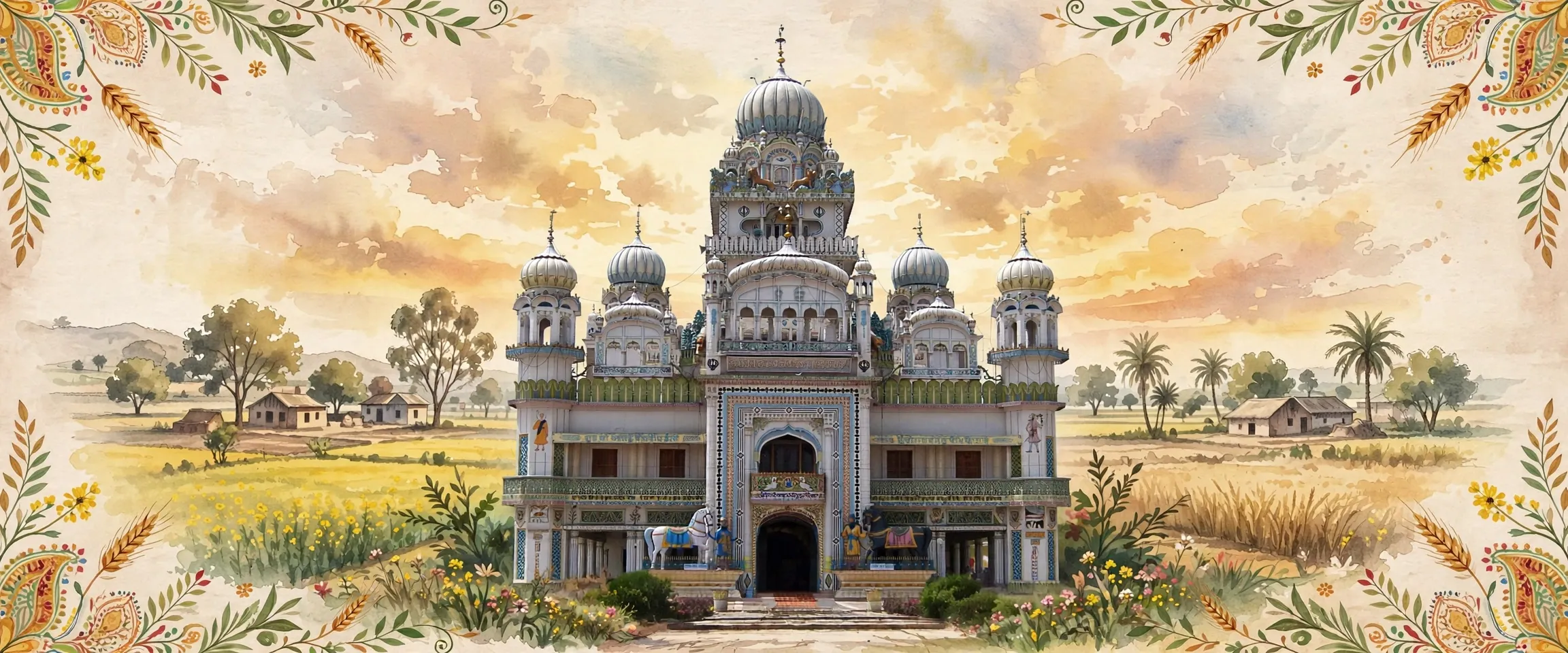
Gurdwara Mehdiana Sahib stands in Mehdiana village near Jagraon in Ludhiana district, Punjab, and is known as the School of Sikh History. Sikhs believe Guru Gobind Singh Ji rested at its pond, the Dhaab, on his Malwa journey after Chamkaur, and that here the sangat asked him to write the Zafarnama to Aurangzeb. Its 25 acre complex holds life size sculptures of the great Sikh martyrdoms.
- Punjabi name
- ਗੁਰਦੁਆਰਾ ਮਹਿਦੀਆਣਾ ਸਾਹਿਬ
- Also known as
- The School of Sikh History
- Village
- Mehdiana, near Mallha
- Town
- Jagraon
- District
- Ludhiana
- State
- Punjab
All 12 facts
- Country
- India
- Associated with
- Guru Gobind Singh Ji
- Commemorates
- The Guru's rest at the Dhaab and the sangat's request for the Zafarnama, 1705
- Developed by
- Jathedar Jora Singh Lakha, from 1972
- Complex
- About 25 acres; sculpture park, museum, Dasmesh Public School
- Art
- Life size sculptures credited to Tara Singh; 20 paintings by Kirpal Singh
Gurdwara Mehdiana Sahib, in the village of Mehdiana just outside Mallha near Jagraon in Ludhiana district, is known across Punjab as the School of Sikh History. Sikhs believe this quiet pond side ground is where Guru Gobind Singh Ji rested with his Sikhs on the Malwa journey after Chamkaur, and where the sangat asked him to write the Zafarnama, his letter to the emperor Aurangzeb. What makes the place unlike any other gurdwara is what grew up around that memory in the 1970s: a 25 acre complex of life size coloured sculptures that walk a visitor, scene by scene, through three centuries of Sikh martyrdom and courage.
Why is Mehdiana Sahib called the School of Sikh History?
The name is earned by the sculptures. Around the main building stand life size figures in painted plaster, arranged as episodes: Bhai Mati Das sawn in two, Bhai Dayala boiled in a cauldron, the younger Sahibzade bricked into a wall at Sirhind, Bhai Mani Singh cut apart joint by joint, Banda Singh Bahadur executed, Subeg Singh and Shahbaz Singh broken on the charkhari wheel, Sikh women and children suffering under Mir Mannu, and, in deliberate contrast, Bhai Kanhaiya serving water to wounded men of both armies. Twenty paintings by the artist Kirpal Singh hang at the site, and the statues themselves are credited to the sculptor Tara Singh. A child who cannot yet read a history book can walk this ground and understand what the faith cost. That was the stated aim of the man who built it: to teach that self respect is worth more than safety, and that the religion was preserved by sacrifice, not by comfort.
The Guru at the Dhaab: rest, and the Sangat is bigger than the Guru
The tradition of the place is precise about the setting. After Chamkaur, the Guru travelled on horseback through Raikot, Lamme Jattpure and Manuke, gathering support across Malwa, and halted at Mehdiana's dhaab, a natural pond, in open country where the nearest habitation stood two to three miles away. There the party cleaned their teeth with twigs, bathed, and rested. In meditation the Guru was pressed by Bhai Daya Singh, speaking for all the Sikhs, to say what should happen next, when families were scattered and the Khalsa seemed broken. The exchange remembered here turns on humility: the Guru answered that he had only repaid a debt, that a Singh should keep faith, and, in the line this shrine has made famous, that the sangat is bigger than the Guru. He listed how he had acted on the sangat's word at every turn, sending his father to Delhi at the Kashmiri Pandits' plea, leaving Anandpur and leaving Chamkaur garhi when the sangat asked. By evening, on the sangat's request, he had resolved to write the Zafarnama.
Was the Zafarnama written at Mehdiana?
Not quite, and the shrine's own accounts are careful about it. The decision and the resolve belong to Mehdiana: here the sangat asked, and here the Guru prepared his mind. But there was nowhere to stay at the pond, so that night he moved to the village of Chakkar, and the next day travelled by Takhtupura and Madhe to Dina, where he stayed with Lakhmir and Shamir. The letter itself was composed in those following days, in the tellings at Chakkar and at Dina, and was carried south to Aurangzeb at Aurangabad by Bhai Daya Singh and Bhai Dharam Singh. Mehdiana therefore claims the request, not the writing desk, and pilgrims hold that a place blessed by that resolve answers prayers. Jugti tells the Dina side of the story at Gurdwara Lohgarh Sahib, the Zafarnama shrine on the same route.
Jathedar Jora Singh Lakha and the building of the complex
For most of its history Mehdiana was only a marked pond in the fields. Into the late 1960s the complex still looked like forest, dense trees and scrub around a small place of worship, with no village within two or three miles. In 1972 Jathedar Jora Singh Lakha took the site in hand. Under his direction the grounds grew from a few acres to about 25 acres, the present multi storeyed main building rose with its coloured domes and meenakari enamel work, a sarovar and gardens were laid out, and the sculpture park that gives the shrine its fame was created. The complex also runs the Dasmesh Public School for children of the surrounding villages, put at about 500 pupils in the SikhiWiki account, and a museum of paintings tracing the Guru's journey. Honesty requires a closing note: recent accounts report parts of the complex looking dilapidated, blaming its isolated position and private ownership for a shortage of funds, a fragility visitors may notice alongside the colour.
What can a visitor see at Mehdiana Sahib?
The visit falls into three parts. First the shrine itself: an eight storeyed main building in the SikhiWiki description, its doorway carved with scenes including Bhai Gurdas dictating to Guru Arjan Dev Ji, its walls carrying images of the Guru's life, and a beautifully decorated Guru Granth Sahib in the sanctum. Then the sculpture grounds, best taken slowly and in order, since the episodes run from the Guru period to the eighteenth century misl rule. Then the quieter corners: the dhaab itself and the modern sarovar, the greenery and birdsong that every account of the place mentions, a small asthan of Baba Farid Ji near the main building, and, unexpectedly, a small fort shaped zoo kept for children. Langar is served around the clock in the tradition of the place, and there is no entry charge to the grounds.
How do I reach Gurdwara Mehdiana Sahib?
Mehdiana village stands just outside Mallha, in the Jagraon side of Ludhiana district, reached by local roads from Jagraon, the nearest town and railhead, and from Ludhiana city beyond it. Its isolation is part of its character: allow time for the last rural stretch, and for the sculpture grounds themselves, which repay an unhurried hour at least. Pilgrims walking the Guru Gobind Singh Marg route pair Mehdiana with Alamgir Sahib to the east, where the Guru's litter was set down, and both appear in Jugti's guide to Gurdwaras in India.
ਗੁਰਦੁਆਰਾ ਮਹਿਦੀਆਣਾ ਸਾਹਿਬ, ਲੁਧਿਆਣਾ ਜ਼ਿਲ੍ਹੇ ਵਿੱਚ ਜਗਰਾਉਂ ਦੇ ਨੇੜੇ ਮੱਲ੍ਹਾ ਦੇ ਬਾਹਰ ਮਹਿਦੀਆਣਾ ਪਿੰਡ ਵਿੱਚ, ਪੂਰੇ ਪੰਜਾਬ ਵਿੱਚ ਸਿੱਖ ਇਤਿਹਾਸ ਦੇ ਸਕੂਲ ਵਜੋਂ ਜਾਣਿਆ ਜਾਂਦਾ ਹੈ ਸਿੱਖਾਂ ਦਾ ਮੰਨਣਾ ਹੈ ਕਿ ਇਹ ਸ਼ਾਂਤ ਢਾਬ ਕੰਢੇ ਵਾਲੀ ਥਾਂ ਉਹ ਹੈ ਜਿੱਥੇ ਗੁਰੂ ਗੋਬਿੰਦ ਸਿੰਘ ਜੀ ਚਮਕੌਰ ਤੋਂ ਬਾਅਦ ਮਾਲਵੇ ਦੀ ਯਾਤਰਾ ਦੌਰਾਨ ਆਪਣੇ ਸਿੱਖਾਂ ਨਾਲ ਠਹਿਰੇ ਸਨ, ਅਤੇ ਜਿੱਥੇ ਸੰਗਤ ਨੇ ਉਨ੍ਹਾਂ ਨੂੰ ਬਾਦਸ਼ਾਹ ਔਰੰਗਜ਼ੇਬ ਨੂੰ ਲਿਖੀ ਚਿੱਠੀ, ਜ਼ਫ਼ਰਨਾਮਾ, ਲਿਖਣ ਲਈ ਕਿਹਾ ਸੀ ਇਸ ਥਾਂ ਨੂੰ ਹੋਰ ਸਾਰੇ ਗੁਰਦੁਆਰਿਆਂ ਤੋਂ ਵੱਖਰਾ ਉਹ ਬਣਾਉਂਦਾ ਹੈ ਜੋ 1970 ਦੇ ਦਹਾਕੇ ਵਿੱਚ ਉਸ ਯਾਦ ਦੇ ਆਲੇ-ਦੁਆਲੇ ਉੱਗਿਆ: ਰੰਗਦਾਰ, ਕੱਦ-ਬਰਾਬਰ ਮੂਰਤੀਆਂ ਦਾ 25 ਏਕੜ ਦਾ ਸਮੂਹ, ਜੋ ਸ਼ਰਧਾਲੂ ਨੂੰ ਦ੍ਰਿਸ਼-ਦਰ-ਦ੍ਰਿਸ਼ ਸਿੱਖ ਸ਼ਹਾਦਤ ਅਤੇ ਹੌਸਲੇ ਦੀਆਂ ਤਿੰਨ ਸਦੀਆਂ ਵਿੱਚੋਂ ਲੰਘਾਉਂਦਾ ਹੈ
ਮਹਿਦੀਆਣਾ ਸਾਹਿਬ ਨੂੰ ਸਿੱਖ ਇਤਿਹਾਸ ਦਾ ਸਕੂਲ ਕਿਉਂ ਕਿਹਾ ਜਾਂਦਾ ਹੈ?
ਇਹ ਨਾਂ ਮੂਰਤੀਆਂ ਕਰਕੇ ਪਿਆ ਹੈ ਮੁੱਖ ਇਮਾਰਤ ਦੇ ਆਲੇ-ਦੁਆਲੇ ਰੰਗੀਨ ਪਲਸਤਰ ਦੀਆਂ ਕੱਦ-ਬਰਾਬਰ ਮੂਰਤੀਆਂ ਘਟਨਾਵਾਂ ਵਜੋਂ ਖੜ੍ਹੀਆਂ ਹਨ: ਭਾਈ ਮਤੀ ਦਾਸ ਨੂੰ ਆਰੇ ਨਾਲ ਚੀਰਿਆ ਜਾਣਾ, ਭਾਈ ਦਿਆਲਾ ਨੂੰ ਦੇਗ ਵਿੱਚ ਉਬਾਲਿਆ ਜਾਣਾ, ਛੋਟੇ ਸਾਹਿਬਜ਼ਾਦਿਆਂ ਨੂੰ ਸਰਹਿੰਦ ਵਿਖੇ ਕੰਧ ਵਿੱਚ ਚਿਣਿਆ ਜਾਣਾ, ਭਾਈ ਮਨੀ ਸਿੰਘ ਨੂੰ ਬੰਦ-ਬੰਦ ਕੱਟਿਆ ਜਾਣਾ, ਬੰਦਾ ਸਿੰਘ ਬਹਾਦਰ ਦੀ ਸ਼ਹਾਦਤ, ਸੂਬੇਗ ਸਿੰਘ ਅਤੇ ਸ਼ਾਹਬਾਜ਼ ਸਿੰਘ ਨੂੰ ਚਰਖੜੀ ਉੱਤੇ ਤੋੜਿਆ ਜਾਣਾ, ਮੀਰ ਮੰਨੂ ਦੇ ਰਾਜ ਵਿੱਚ ਸਿੱਖ ਔਰਤਾਂ ਅਤੇ ਬੱਚਿਆਂ ਦੇ ਦੁੱਖ, ਅਤੇ, ਜਾਣ-ਬੁੱਝ ਕੇ ਉਲਟ ਮਿਸਾਲ ਵਜੋਂ, ਭਾਈ ਕਨ੍ਹਈਆ ਵੱਲੋਂ ਦੋਵਾਂ ਫ਼ੌਜਾਂ ਦੇ ਜ਼ਖ਼ਮੀਆਂ ਨੂੰ ਪਾਣੀ ਪਿਲਾਉਣਾ ਕਲਾਕਾਰ ਕਿਰਪਾਲ ਸਿੰਘ ਦੀਆਂ ਵੀਹ ਪੇਂਟਿੰਗਾਂ ਵੀ ਇੱਥੇ ਹਨ, ਅਤੇ ਮੂਰਤੀਆਂ ਦਾ ਸਿਹਰਾ ਮੂਰਤੀਕਾਰ ਤਾਰਾ ਸਿੰਘ ਨੂੰ ਜਾਂਦਾ ਹੈ ਜੋ ਬੱਚਾ ਅਜੇ ਇਤਿਹਾਸ ਦੀ ਕਿਤਾਬ ਨਹੀਂ ਪੜ੍ਹ ਸਕਦਾ, ਉਹ ਇਸ ਥਾਂ ਉੱਤੇ ਤੁਰ ਕੇ ਸਮਝ ਸਕਦਾ ਹੈ ਕਿ ਇਹ ਧਰਮ ਕਿਸ ਕੀਮਤ ਉੱਤੇ ਬਚਿਆ ਇਸ ਨੂੰ ਬਣਾਉਣ ਵਾਲੇ ਦਾ ਕਿਹਾ ਮਕਸਦ ਵੀ ਇਹੀ ਸੀ: ਸਿਖਾਉਣਾ ਕਿ ਸਵੈ-ਮਾਣ ਸੁਰੱਖਿਆ ਨਾਲੋਂ ਵੱਡਾ ਹੈ, ਅਤੇ ਧਰਮ ਕੁਰਬਾਨੀ ਨਾਲ ਬਚਿਆ, ਸੁੱਖ ਨਾਲ ਨਹੀਂ
ਢਾਬ ਕੋਲ ਗੁਰੂ ਜੀ: ਆਰਾਮ, ਅਤੇ ਸੰਗਤ ਗੁਰੂ ਨਾਲੋਂ ਵੱਡੀ ਹੈ
ਇਸ ਥਾਂ ਦੀ ਪਰੰਪਰਾ ਮਾਹੌਲ ਬਾਰੇ ਬੜੀ ਸਪੱਸ਼ਟ ਹੈ ਚਮਕੌਰ ਤੋਂ ਬਾਅਦ ਗੁਰੂ ਜੀ ਘੋੜੇ ਉੱਤੇ ਰਾਏਕੋਟ, ਲੰਮੇ ਜੱਟਪੁਰੇ ਅਤੇ ਮਾਣੂਕੇ ਵਿੱਚੋਂ ਲੰਘਦੇ, ਮਾਲਵੇ ਵਿੱਚ ਸਮਰਥਨ ਇਕੱਠਾ ਕਰਦੇ, ਮਹਿਦੀਆਣੇ ਦੇ ਢਾਬ, ਇੱਕ ਕੁਦਰਤੀ ਟੋਏ, ਕੋਲ ਠਹਿਰੇ, ਖੁੱਲ੍ਹੇ ਮੈਦਾਨ ਵਿੱਚ ਜਿੱਥੇ ਨੇੜਲੀ ਵਸੋਂ ਦੋ-ਤਿੰਨ ਮੀਲ ਦੂਰ ਸੀ ਉੱਥੇ ਸਭ ਨੇ ਦਾਤਣ ਕੀਤੀ, ਇਸ਼ਨਾਨ ਕੀਤਾ ਅਤੇ ਆਰਾਮ ਕੀਤਾ ਧਿਆਨ ਵਿੱਚ ਬੈਠੇ ਗੁਰੂ ਜੀ ਨੂੰ ਭਾਈ ਦਇਆ ਸਿੰਘ ਨੇ, ਸਾਰੇ ਸਿੱਖਾਂ ਵੱਲੋਂ ਬੋਲਦਿਆਂ, ਪੁੱਛਿਆ ਕਿ ਹੁਣ ਅੱਗੇ ਕੀ ਹੋਵੇਗਾ, ਜਦੋਂ ਪਰਿਵਾਰ ਖਿੰਡ ਗਏ ਹਨ ਅਤੇ ਖ਼ਾਲਸਾ ਟੁੱਟਿਆ ਜਾਪਦਾ ਹੈ ਇੱਥੇ ਯਾਦ ਕੀਤਾ ਜਵਾਬ ਨਿਮਰਤਾ ਉੱਤੇ ਟਿਕਿਆ ਹੈ: ਗੁਰੂ ਜੀ ਨੇ ਕਿਹਾ ਕਿ ਉਨ੍ਹਾਂ ਨੇ ਸਿਰਫ਼ ਇੱਕ ਕਰਜ਼ਾ ਮੋੜਿਆ ਹੈ, ਸਿੰਘ ਨੂੰ ਭਰੋਸਾ ਰੱਖਣਾ ਚਾਹੀਦਾ ਹੈ, ਅਤੇ, ਉਸ ਪੰਕਤੀ ਵਿੱਚ ਜਿਸ ਨੇ ਇਸ ਅਸਥਾਨ ਨੂੰ ਮਸ਼ਹੂਰ ਕੀਤਾ, ਕਿ ਸੰਗਤ ਗੁਰੂ ਨਾਲੋਂ ਵੱਡੀ ਹੈ ਉਨ੍ਹਾਂ ਨੇ ਗਿਣਾਇਆ ਕਿ ਉਨ੍ਹਾਂ ਨੇ ਹਰ ਮੋੜ ਉੱਤੇ ਸੰਗਤ ਦੇ ਕਹਿਣ ਉੱਤੇ ਕੰਮ ਕੀਤਾ, ਕਸ਼ਮੀਰੀ ਪੰਡਿਤਾਂ ਦੀ ਬੇਨਤੀ ਉੱਤੇ ਆਪਣੇ ਪਿਤਾ ਨੂੰ ਦਿੱਲੀ ਭੇਜਿਆ, ਸੰਗਤ ਦੇ ਕਹਿਣ ਉੱਤੇ ਅਨੰਦਪੁਰ ਛੱਡਿਆ ਅਤੇ ਚਮਕੌਰ ਦੀ ਗੜ੍ਹੀ ਛੱਡੀ ਸ਼ਾਮ ਤਕ, ਸੰਗਤ ਦੀ ਬੇਨਤੀ ਉੱਤੇ, ਉਨ੍ਹਾਂ ਨੇ ਜ਼ਫ਼ਰਨਾਮਾ ਲਿਖਣ ਦਾ ਮਨ ਬਣਾ ਲਿਆ ਸੀ
ਕੀ ਜ਼ਫ਼ਰਨਾਮਾ ਮਹਿਦੀਆਣੇ ਵਿਖੇ ਲਿਖਿਆ ਗਿਆ ਸੀ?
ਬਿਲਕੁਲ ਨਹੀਂ, ਅਤੇ ਅਸਥਾਨ ਦੇ ਆਪਣੇ ਬਿਰਤਾਂਤ ਇਸ ਬਾਰੇ ਸਾਵਧਾਨ ਹਨ ਫ਼ੈਸਲਾ ਅਤੇ ਮਨ ਬਣਾਉਣਾ ਮਹਿਦੀਆਣੇ ਦਾ ਹੈ: ਇੱਥੇ ਸੰਗਤ ਨੇ ਕਿਹਾ, ਅਤੇ ਇੱਥੇ ਗੁਰੂ ਜੀ ਨੇ ਮਨ ਤਿਆਰ ਕੀਤਾ ਪਰ ਢਾਬ ਕੋਲ ਠਹਿਰਨ ਦੀ ਥਾਂ ਨਹੀਂ ਸੀ, ਇਸ ਲਈ ਉਸ ਰਾਤ ਗੁਰੂ ਜੀ ਚੱਕੜ ਪਿੰਡ ਗਏ, ਅਤੇ ਅਗਲੇ ਦਿਨ ਤਖ਼ਤੂਪੁਰਾ ਅਤੇ ਮਧੇ ਵਿੱਚੋਂ ਲੰਘ ਕੇ ਦੀਨਾ ਪਹੁੰਚੇ, ਜਿੱਥੇ ਉਹ ਲਖਮੀਰ ਅਤੇ ਸ਼ਮੀਰ ਕੋਲ ਠਹਿਰੇ ਚਿੱਠੀ ਖ਼ੁਦ ਉਨ੍ਹਾਂ ਅਗਲੇ ਦਿਨਾਂ ਵਿੱਚ ਲਿਖੀ ਗਈ, ਬਿਰਤਾਂਤਾਂ ਅਨੁਸਾਰ ਚੱਕੜ ਅਤੇ ਦੀਨਾ ਵਿਖੇ, ਅਤੇ ਭਾਈ ਦਇਆ ਸਿੰਘ ਅਤੇ ਭਾਈ ਧਰਮ ਸਿੰਘ ਰਾਹੀਂ ਦੱਖਣ ਵਿੱਚ ਔਰੰਗਾਬਾਦ ਵਿਖੇ ਔਰੰਗਜ਼ੇਬ ਕੋਲ ਭੇਜੀ ਗਈ ਇਸ ਲਈ ਮਹਿਦੀਆਣਾ ਬੇਨਤੀ ਦਾ ਦਾਅਵਾ ਕਰਦਾ ਹੈ, ਲਿਖਣ ਵਾਲੀ ਮੇਜ਼ ਦਾ ਨਹੀਂ, ਅਤੇ ਸ਼ਰਧਾਲੂ ਮੰਨਦੇ ਹਨ ਕਿ ਉਸ ਫ਼ੈਸਲੇ ਨਾਲ ਮੁਬਾਰਕ ਥਾਂ ਅਰਦਾਸਾਂ ਸੁਣਦੀ ਹੈ
ਜਥੇਦਾਰ ਜੋਰਾ ਸਿੰਘ ਲੱਖਾ ਅਤੇ ਸਮੂਹ ਦਾ ਨਿਰਮਾਣ
ਆਪਣੇ ਜ਼ਿਆਦਾਤਰ ਇਤਿਹਾਸ ਵਿੱਚ ਮਹਿਦੀਆਣਾ ਖੇਤਾਂ ਵਿੱਚ ਇੱਕ ਨਿਸ਼ਾਨਬੱਧ ਢਾਬ ਹੀ ਸੀ 1960 ਦੇ ਦਹਾਕੇ ਦੇ ਅਖ਼ੀਰ ਤਕ ਵੀ ਇਹ ਸਮੂਹ ਜੰਗਲ ਵਰਗਾ ਲੱਗਦਾ ਸੀ, ਇੱਕ ਛੋਟੇ ਜਿਹੇ ਅਸਥਾਨ ਦੇ ਆਲੇ-ਦੁਆਲੇ ਸੰਘਣੇ ਰੁੱਖ ਅਤੇ ਝਾੜੀਆਂ, ਅਤੇ ਦੋ-ਤਿੰਨ ਮੀਲ ਤਕ ਕੋਈ ਪਿੰਡ ਨਹੀਂ ਸੀ 1972 ਵਿੱਚ ਜਥੇਦਾਰ ਜੋਰਾ ਸਿੰਘ ਲੱਖਾ ਨੇ ਇਸ ਥਾਂ ਨੂੰ ਸੰਭਾਲਿਆ ਉਨ੍ਹਾਂ ਦੀ ਅਗਵਾਈ ਵਿੱਚ ਜ਼ਮੀਨ ਕੁਝ ਏਕੜ ਤੋਂ ਵੱਧ ਕੇ ਲਗਭਗ 25 ਏਕੜ ਹੋ ਗਈ, ਰੰਗਦਾਰ ਗੁੰਬਦਾਂ ਅਤੇ ਮੀਨਾਕਾਰੀ ਵਾਲੀ ਮੌਜੂਦਾ ਕਈ ਮੰਜ਼ਿਲਾ ਮੁੱਖ ਇਮਾਰਤ ਬਣੀ, ਸਰੋਵਰ ਅਤੇ ਬਾਗ਼ ਲੱਗੇ, ਅਤੇ ਉਹ ਮੂਰਤੀ-ਪਾਰਕ ਬਣਿਆ ਜਿਸ ਕਰਕੇ ਇਹ ਅਸਥਾਨ ਮਸ਼ਹੂਰ ਹੈ ਇਸ ਸਮੂਹ ਵੱਲੋਂ ਆਲੇ-ਦੁਆਲੇ ਦੇ ਪਿੰਡਾਂ ਦੇ ਬੱਚਿਆਂ ਲਈ ਦਸਮੇਸ਼ ਪਬਲਿਕ ਸਕੂਲ ਵੀ ਚਲਾਇਆ ਜਾਂਦਾ ਹੈ, ਜਿਸ ਵਿੱਚ ਸਿੱਖੀਵਿਕੀ ਬਿਰਤਾਂਤ ਅਨੁਸਾਰ ਲਗਭਗ 500 ਵਿਦਿਆਰਥੀ ਹਨ, ਅਤੇ ਗੁਰੂ ਜੀ ਦੀ ਯਾਤਰਾ ਦਰਸਾਉਂਦੀਆਂ ਪੇਂਟਿੰਗਾਂ ਦਾ ਇੱਕ ਅਜਾਇਬ ਘਰ ਵੀ ਹੈ ਇਮਾਨਦਾਰੀ ਲਈ ਇੱਕ ਗੱਲ ਜ਼ਰੂਰੀ ਹੈ: ਤਾਜ਼ਾ ਬਿਰਤਾਂਤ ਦੱਸਦੇ ਹਨ ਕਿ ਸਮੂਹ ਦੇ ਕੁਝ ਹਿੱਸੇ ਜਰਜਰ ਹਾਲਤ ਵਿੱਚ ਦਿਸਦੇ ਹਨ, ਜਿਸ ਦਾ ਕਾਰਨ ਇਸ ਦੀ ਇਕਾਂਤ ਥਾਂ ਅਤੇ ਨਿੱਜੀ ਮਾਲਕੀ ਕਰਕੇ ਫੰਡਾਂ ਦੀ ਘਾਟ ਦੱਸਿਆ ਜਾਂਦਾ ਹੈ, ਇੱਕ ਕਮਜ਼ੋਰੀ ਜੋ ਸ਼ਰਧਾਲੂ ਰੰਗਾਂ ਦੇ ਨਾਲ-ਨਾਲ ਵੇਖ ਸਕਦੇ ਹਨ
ਮਹਿਦੀਆਣਾ ਸਾਹਿਬ ਵਿਖੇ ਸ਼ਰਧਾਲੂ ਕੀ ਵੇਖ ਸਕਦਾ ਹੈ?
ਫੇਰੀ ਤਿੰਨ ਹਿੱਸਿਆਂ ਵਿੱਚ ਵੰਡੀ ਜਾਂਦੀ ਹੈ ਪਹਿਲਾਂ ਖ਼ੁਦ ਅਸਥਾਨ: ਸਿੱਖੀਵਿਕੀ ਬਿਰਤਾਂਤ ਅਨੁਸਾਰ ਅੱਠ ਮੰਜ਼ਿਲਾ ਮੁੱਖ ਇਮਾਰਤ, ਜਿਸ ਦੇ ਦਰਵਾਜ਼ੇ ਉੱਤੇ ਭਾਈ ਗੁਰਦਾਸ ਵੱਲੋਂ ਗੁਰੂ ਅਰਜਨ ਦੇਵ ਜੀ ਨੂੰ ਲਿਖਵਾਉਣ ਸਮੇਤ ਦ੍ਰਿਸ਼ ਉੱਕਰੇ ਹਨ, ਜਿਸ ਦੀਆਂ ਕੰਧਾਂ ਉੱਤੇ ਗੁਰੂ ਜੀ ਦੇ ਜੀਵਨ ਦੀਆਂ ਤਸਵੀਰਾਂ ਹਨ, ਅਤੇ ਪਵਿੱਤਰ ਅਸਥਾਨ ਵਿੱਚ ਸੁੰਦਰ ਸਜਾਇਆ ਗੁਰੂ ਗ੍ਰੰਥ ਸਾਹਿਬ ਹੈ ਫਿਰ ਮੂਰਤੀਆਂ ਵਾਲਾ ਮੈਦਾਨ, ਜੋ ਹੌਲੀ-ਹੌਲੀ ਅਤੇ ਕ੍ਰਮ ਵਿੱਚ ਵੇਖਣਾ ਸਭ ਤੋਂ ਚੰਗਾ ਹੈ, ਕਿਉਂਕਿ ਘਟਨਾਵਾਂ ਗੁਰੂ ਕਾਲ ਤੋਂ ਅਠਾਰਵੀਂ ਸਦੀ ਦੇ ਮਿਸਲ ਕਾਲ ਤਕ ਚੱਲਦੀਆਂ ਹਨ ਫਿਰ ਸ਼ਾਂਤ ਕੋਨੇ: ਖ਼ੁਦ ਢਾਬ ਅਤੇ ਆਧੁਨਿਕ ਸਰੋਵਰ, ਹਰਿਆਲੀ ਅਤੇ ਪੰਛੀਆਂ ਦੀ ਆਵਾਜ਼ ਜਿਸ ਦਾ ਜ਼ਿਕਰ ਇਸ ਥਾਂ ਦੇ ਹਰ ਬਿਰਤਾਂਤ ਵਿੱਚ ਹੈ, ਮੁੱਖ ਇਮਾਰਤ ਦੇ ਨੇੜੇ ਬਾਬਾ ਫ਼ਰੀਦ ਜੀ ਦਾ ਛੋਟਾ ਅਸਥਾਨ, ਅਤੇ, ਅਚਾਨਕ, ਬੱਚਿਆਂ ਲਈ ਰੱਖਿਆ ਕਿਲ੍ਹੇ-ਆਕਾਰ ਦਾ ਛੋਟਾ ਚਿੜੀਆਘਰ ਇਸ ਥਾਂ ਦੀ ਪਰੰਪਰਾ ਅਨੁਸਾਰ ਲੰਗਰ ਚੌਵੀ ਘੰਟੇ ਚੱਲਦਾ ਹੈ, ਅਤੇ ਮੈਦਾਨ ਵਿੱਚ ਦਾਖ਼ਲੇ ਦੀ ਕੋਈ ਫ਼ੀਸ ਨਹੀਂ
ਗੁਰਦੁਆਰਾ ਮਹਿਦੀਆਣਾ ਸਾਹਿਬ ਕਿਵੇਂ ਪਹੁੰਚੀਏ?
ਮਹਿਦੀਆਣਾ ਪਿੰਡ ਮੱਲ੍ਹਾ ਦੇ ਬਾਹਰ, ਲੁਧਿਆਣਾ ਜ਼ਿਲ੍ਹੇ ਦੇ ਜਗਰਾਉਂ ਵਾਲੇ ਪਾਸੇ ਹੈ, ਜਿੱਥੇ ਜਗਰਾਉਂ, ਨੇੜਲੇ ਸ਼ਹਿਰ ਅਤੇ ਰੇਲ-ਅੱਡੇ, ਤੋਂ ਸਥਾਨਕ ਸੜਕਾਂ ਰਾਹੀਂ ਅਤੇ ਉਸ ਤੋਂ ਅੱਗੇ ਲੁਧਿਆਣਾ ਸ਼ਹਿਰ ਤੋਂ ਪਹੁੰਚਿਆ ਜਾ ਸਕਦਾ ਹੈ ਇਸ ਦੀ ਇਕਾਂਤ ਹੀ ਇਸ ਦਾ ਸੁਭਾਅ ਹੈ: ਆਖ਼ਰੀ ਪੇਂਡੂ ਹਿੱਸੇ ਲਈ, ਅਤੇ ਮੂਰਤੀਆਂ ਵਾਲੇ ਮੈਦਾਨ ਲਈ ਵੀ, ਸਮਾਂ ਰੱਖੋ, ਜੋ ਘੱਟੋ-ਘੱਟ ਇੱਕ ਆਰਾਮਦਾਇਕ ਘੰਟਾ ਮੰਗਦਾ ਹੈ ਗੁਰੂ ਗੋਬਿੰਦ ਸਿੰਘ ਮਾਰਗ ਉੱਤੇ ਚੱਲਣ ਵਾਲੇ ਸ਼ਰਧਾਲੂ ਮਹਿਦੀਆਣੇ ਨੂੰ ਪੂਰਬ ਵੱਲ ਆਲਮਗੀਰ ਸਾਹਿਬ ਨਾਲ ਜੋੜਦੇ ਹਨ, ਜਿੱਥੇ ਗੁਰੂ ਜੀ ਦੀ ਮੰਜੀ ਹੇਠਾਂ ਰੱਖੀ ਗਈ ਸੀ