
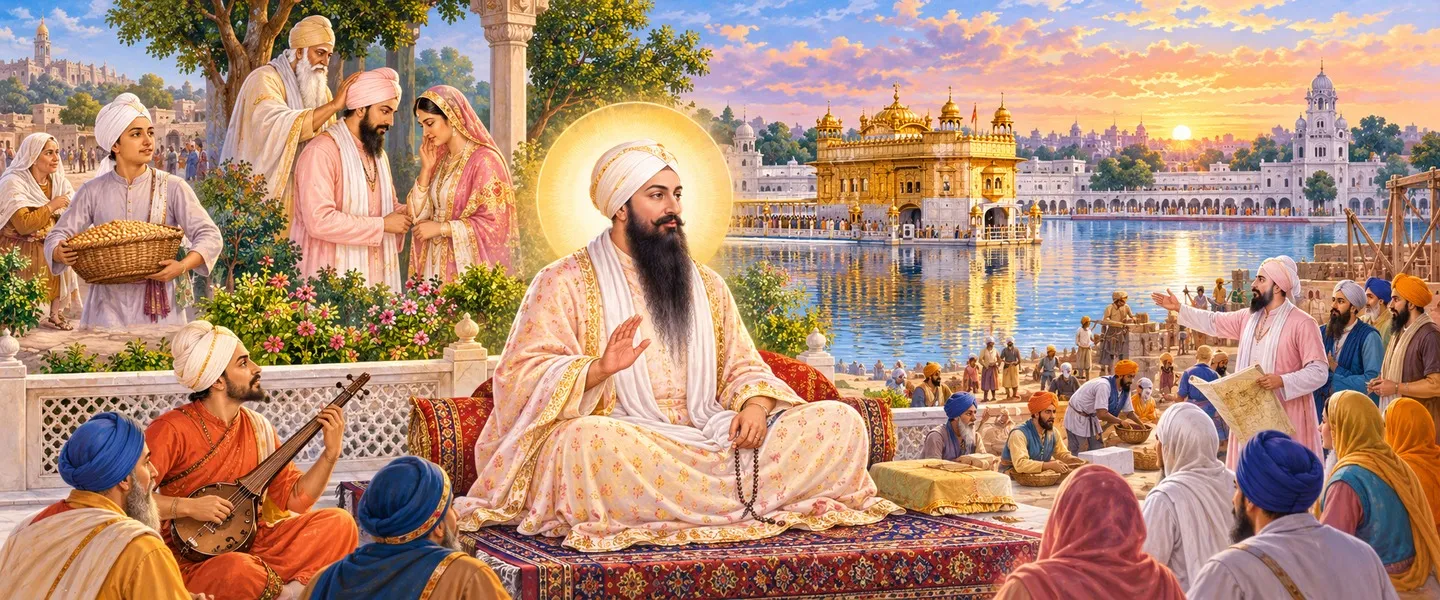
Guru Ram Das Ji (1534–1581) was the fourth Sikh Guru. Born Jetha in Lahore, he founded the city of Ramdaspur, now Amritsar, around its holy pool, composed the Lavan wedding hymns, and organised the Sikh sangat through the masand system.
- Punjabi name
- ਗੁਰੂ ਰਾਮਦਾਸ ਜੀ
- Years
- 1534–1581
- Known for
- Founded Amritsar
- Region
- West Punjab
- Born
- 1534
- Died
- 1581
- Guruship
- 1574 to 1581
Early life
Guru Ram Das Ji was born as Jetha on the morning of 24 September 1534 in Chuna Mandi, Lahore, into a Sodhi Khatri family. His father, Hari Das, kept a small shop, and his mother, Mata Anup Devi, is also remembered in some accounts as Anup Kaur or Daya Kaur. His parents had been married for about twelve years before his birth, and he was named Jetha because he was the eldest of their children.
As a boy, Jetha once took the boiled grams his mother had given him to sell and instead fed them to sanyasis gathered on the bank of the Ravi river, an episode Sikhs recall as an echo of Guru Nanak Dev Ji's sacha sauda. Both his parents died when he was about seven, and his maternal grandmother took him to her village of Basarke, which was also the ancestral village of Guru Amar Das. To support her, Jetha sold boiled grams, chickpeas and wheat in the village market, and he was known for quietly giving his food away to passing holy men even when his grandmother scolded him for it.
In 1546, while Guru Amar Das was visiting Basarke, young Jetha followed him to Khadur, where he attended the sangats of Guru Angad Dev Ji. When Amar Das settled at Goindwal in 1552, Jetha moved with him. He cleaned the utensils of the langar, served drinking water to the sangat, and helped dig the Baoli Sahib, the stepped well at Goindwal. Under Amar Das's care he was also trained in North Indian classical music. Before becoming Guru, Jetha even represented the Sikhs before the Mughal emperor Akbar, when local Brahmins complained about the langar and the Sikhs' rejection of caste. He told the court that in the eyes of the divine all humankind is equal, and Akbar dismissed the complaint.
The test that chose a Guru
Guru Amar Das chose his successor through a test. He asked his two sons-in-law, Ramo and Jetha, each to build a platform worthy of the Guru's seat. Ramo built four platforms and gave up when none pleased the Guru. Jetha built seven, and when none of them satisfied Amar Das either, he bowed humbly and said he would keep trying to please his master. That spirit of unquestioning devotion decided the matter. In 1553 Jetha had married Amar Das's younger daughter Bibi Bhani, a match arranged by the Guru's wife Mata Mansa Devi, and their three sons were Prithi Chand, Mahadev and Arjan.
On 30 August 1574, Amar Das installed Jetha as the fourth Sikh Guru, renaming him Ram Das, servant of God. It confirmed again the Sikh principle that spiritual authority passes to the most worthy, not to kin. But the sons of Amar Das resented the choice, and Guru Ram Das Ji shifted his base to lands his predecessor had identified for a new town, Guru-ka-Chak.
Founding of Ramdaspur
Guru Ram Das Ji is credited in Sikh tradition with founding the city of Amritsar. Two accounts survive of how the land was acquired. A Gazetteer record says it was purchased with Sikh donations for 700 rupees from the owners of the village of Tung, while Sikh tradition holds that Guru Amar Das chose the site and called it Guru Da Chakk, asking Ram Das to build a new town with a man-made pool at its centre.
After his coronation, Guru Ram Das Ji founded Ramdaspur, the city of Ram Das, beside the pool. As instructed by his predecessor, he had two holy sarovars dug: the Ramdas Sarovar and the Amritsar Sarovar, the Pool of Nectar. He invited merchants and artisans from across the region to settle in the new town, and it began to grow into a self-sustaining Sikh city. The town expanded further under his son Guru Arjan, financed by donations and built by voluntary labour, until it became Amritsar, the holiest city of Sikhism, with the pool at its heart growing into the Harmandir Sahib complex.
He was also the first of Nanak's successors to mend relations with Sri Chand, Guru Nanak's son and founder of the Udasis, after long strained ties. When Sri Chand visited and remarked on the Guru's long beard, Guru Ram Das Ji replied that the beard was useful for wiping the feet of saints like him, and bent to do exactly that. Sri Chand understood at once why he was worthy of his father's seat.
How did Guru Ram Das Ji organise the Sikh community?
While Guru Amar Das had introduced the manji system of missionary dioceses, Guru Ram Das Ji extended it by adding the masand institution: trusted Sikh leaders living far from the Guru who led distant congregations, kept them connected to the centre, and collected dasvandh, a tenth of income, to fund the community's work and the building of the holy pool.
Like his predecessor, he encouraged widow remarriage, a bold stand in sixteenth-century Punjab. He denounced superstition, the caste system and pilgrimages to holy places, teaching instead that God is found through honest work, remembrance of the Name and service. He also stressed keertan, the singing of hymns, which remains at the heart of Sikh worship. The scholar Bhai Gurdas, a relative of Guru Amar Das, joined him during these years and helped advance the Sikh cause through his writing.
Why are the Lavan so important?
Guru Ram Das Ji was a celebrated poet. He composed 638 hymns, about a tenth of the Guru Granth Sahib, writing in 30 ragas of Indian classical music. His most famous composition is the Lavan, the four wedding hymns in Suhi mode. In a Sikh wedding, the bride and groom walk four slow circumambulations around the Guru Granth Sahib as each stanza is sung, binding their union to the Guru's word. The Lavan, together with parts of the Anand composition, became the basis of the Anand Karaj ceremony, and its use was later recognised in law through the Anand Marriage Act of 1909.
His bani also lives in the daily prayers of the Sikhs. Verses of Guru Ram Das Ji are part of Rehras Sahib and Kirtan Sohila, and his compositions are sung every day in the Harmandir Sahib. His most quoted verse calls the Sikh to rise before dawn, meditate on the Name and bathe in the ambrosial pool.
Family and succession
Guru Ram Das Ji's marriage to Bibi Bhani is remembered as a model of Sikh family life, and he wrote as a poet for householders, not for ascetics withdrawn from the world. Of their three sons, the eldest, Prithi Chand, expected to inherit the Guruship. But Guru Ram Das Ji tested his sons as his own master had tested him, and found the youngest, Arjan, the most spiritually fit. In 1581 he installed Arjan as the fifth Guru. It was the first time the Guruship passed from father to son, though still on the principle of merit. From that point the fifth through the tenth Gurus were all direct descendants of Guru Ram Das Ji.
Later life and legacy
Guru Ram Das Ji died on 1 September 1581 at Goindwal, the town of his predecessor, after only seven years as Guru. Those years were transformative. He gave the Sikhs their holy city, their wedding hymns, the masand organisation and a clear voice against caste and superstition.
Every Sikh who marries to the recitation of the Lavan, every pilgrim who bathes in the Amrit Sarovar, and every resident of Amritsar lives in the legacy of Guru Ram Das Ji. The city he founded as Ramdaspur is now one of the great religious centres of the world, and the Golden Temple at its heart stands on the ground he chose.
ਮੁੱਢਲਾ ਜੀਵਨ
ਗੁਰੂ ਰਾਮਦਾਸ ਜੀ ਦਾ ਜਨਮ 24 ਸਤੰਬਰ 1534 ਦੀ ਸਵੇਰ ਨੂੰ ਲਾਹੌਰ ਦੇ ਚੂਨਾ ਮੰਡੀ ਇਲਾਕੇ ਵਿੱਚ ਹੋਇਆ ਉਸ ਸਮੇਂ ਉਨ੍ਹਾਂ ਦਾ ਨਾਮ ਜੇਠਾ ਰੱਖਿਆ ਗਿਆ ਉਹ ਸੋਢੀ ਖੱਤਰੀ ਪਰਿਵਾਰ ਵਿੱਚੋਂ ਸਨ ਉਨ੍ਹਾਂ ਦੇ ਪਿਤਾ ਹਰੀ ਦਾਸ ਦੀ ਛੋਟੀ ਜਿਹੀ ਦੁਕਾਨ ਸੀ ਅਤੇ ਮਾਤਾ ਅਨੂਪ ਦੇਵੀ ਸਨ, ਜਿਨ੍ਹਾਂ ਨੂੰ ਕੁਝ ਵਰਣਨਾਂ ਵਿੱਚ ਅਨੂਪ ਕੌਰ ਜਾਂ ਦਇਆ ਕੌਰ ਵੀ ਕਿਹਾ ਗਿਆ ਹੈ ਉਨ੍ਹਾਂ ਦੇ ਮਾਤਾ-ਪਿਤਾ ਦੇ ਵਿਆਹ ਨੂੰ ਲਗਭਗ ਬਾਰਾਂ ਸਾਲ ਹੋ ਗਏ ਸਨ ਜਦੋਂ ਉਨ੍ਹਾਂ ਦਾ ਜਨਮ ਹੋਇਆ, ਅਤੇ ਸਭ ਤੋਂ ਵੱਡਾ ਬੱਚਾ ਹੋਣ ਕਰਕੇ ਉਸਦਾ ਨਾਮ ਜੇਠਾ ਪਿਆ
ਬਚਪਨ ਵਿੱਚ ਇੱਕ ਵਾਰ ਜੇਠਾ ਨੇ ਉਹ ਉਬਲੇ ਛੋਲੇ, ਜੋ ਮਾਤਾ ਨੇ ਵੇਚਣ ਲਈ ਦਿੱਤੇ ਸਨ, ਰਾਵੀ ਨਦੀ ਦੇ ਕੰਢੇ ਬੈਠੇ ਸਾਧੂਆਂ ਨੂੰ ਖੁਆ ਦਿੱਤੇ ਸਿੱਖ ਇਸ ਘਟਨਾ ਨੂੰ ਗੁਰੂ ਨਾਨਕ ਦੇਵ ਜੀ ਦੇ ਸੱਚੇ ਸੌਦੇ ਦੀ ਯਾਦ ਦਿਵਾਉਣ ਵਾਲੀ ਮੰਨਦੇ ਹਨ ਲਗਭਗ ਸੱਤ ਸਾਲ ਦੀ ਉਮਰ ਵਿੱਚ ਉਨ੍ਹਾਂ ਦੇ ਮਾਤਾ-ਪਿਤਾ ਦੋਵੇਂ ਚਲਾਣਾ ਕਰ ਗਏ ਫਿਰ ਉਨ੍ਹਾਂ ਦੀ ਨਾਨੀ ਉਨ੍ਹਾਂ ਨੂੰ ਆਪਣੇ ਪਿੰਡ ਬਸਰਕੇ ਲੈ ਆਈ, ਜੋ ਗੁਰੂ ਅਮਰਦਾਸ ਜੀ ਦਾ ਜੱਦੀ ਪਿੰਡ ਵੀ ਸੀ ਨਾਨੀ ਦਾ ਸਹਾਰਾ ਬਣਨ ਲਈ ਜੇਠਾ ਬਾਜ਼ਾਰ ਵਿੱਚ ਉਬਲੇ ਛੋਲੇ, ਕਾਲੇ ਚਣੇ ਅਤੇ ਕਣਕ ਵੇਚਦਾ ਸੀ ਉਹ ਲੰਘਦੇ ਸਾਧੂਆਂ ਨੂੰ ਚੁੱਪ-ਚਾਪ ਮੁਫ਼ਤ ਖਾਣਾ ਦੇ ਦਿੰਦਾ ਸੀ, ਭਾਵੇਂ ਨਾਨੀ ਇਸ ਗੱਲ ਉੱਤੇ ਝਿੜਕਦੀ ਸੀ
1546 ਵਿੱਚ ਜਦੋਂ ਗੁਰੂ ਅਮਰਦਾਸ ਜੀ ਬਸਰਕੇ ਆਏ ਤਾਂ ਜੇਠਾ ਉਨ੍ਹਾਂ ਨਾਲ ਖਡੂਰ ਚਲਾ ਗਿਆ, ਜਿੱਥੇ ਉਸਨੇ ਗੁਰੂ ਅੰਗਦ ਦੇਵ ਜੀ ਦੀਆਂ ਸੰਗਤਾਂ ਵਿੱਚ ਹਿੱਸਾ ਲਿਆ 1552 ਵਿੱਚ ਜਦੋਂ ਗੁਰੂ ਅਮਰਦਾਸ ਗੋਇੰਦਵਾਲ ਵੱਸ ਗਏ ਤਾਂ ਜੇਠਾ ਵੀ ਉਨ੍ਹਾਂ ਨਾਲ ਚਲਾ ਗਿਆ ਉੱਥੇ ਉਹ ਲੰਗਰ ਦੇ ਭਾਂਡੇ ਮਾਂਜਦਾ, ਸੰਗਤ ਨੂੰ ਪਾਣੀ ਛਕਾਉਂਦਾ ਅਤੇ ਬਾਉਲੀ ਸਾਹਿਬ ਦੀ ਖੁਦਾਈ ਵਿੱਚ ਮਦਦ ਕਰਦਾ ਸੀ ਗੁਰੂ ਅਮਰਦਾਸ ਜੀ ਦੀ ਸਰਪ੍ਰਸਤੀ ਵਿੱਚ ਉਸਨੇ ਉੱਤਰੀ ਭਾਰਤੀ ਸ਼ਾਸਤਰੀ ਸੰਗੀਤ ਦੀ ਸਿੱਖਿਆ ਵੀ ਲਈ ਗੁਰੂ ਬਣਨ ਤੋਂ ਪਹਿਲਾਂ ਜੇਠਾ ਨੇ ਮੁਗ਼ਲ ਬਾਦਸ਼ਾਹ ਅਕਬਰ ਦੇ ਦਰਬਾਰ ਵਿੱਚ ਸਿੱਖਾਂ ਦੀ ਨੁਮਾਇੰਦਗੀ ਵੀ ਕੀਤੀ ਸਥਾਨਕ ਬ੍ਰਾਹਮਣਾਂ ਨੇ ਲੰਗਰ ਅਤੇ ਜਾਤ-ਪਾਤ ਦੇ ਖੰਡਨ ਦੀ ਸ਼ਿਕਾਇਤ ਕੀਤੀ ਸੀ ਜੇਠਾ ਨੇ ਦਰਬਾਰ ਵਿੱਚ ਕਿਹਾ ਕਿ ਰੱਬ ਦੀ ਨਜ਼ਰ ਵਿੱਚ ਸਾਰੀ ਮਨੁੱਖਤਾ ਬਰਾਬਰ ਹੈ, ਅਤੇ ਅਕਬਰ ਨੇ ਸ਼ਿਕਾਇਤ ਖਾਰਜ ਕਰ ਦਿੱਤੀ
ਉਹ ਇਮਤਿਹਾਨ ਜਿਸ ਨੇ ਗੁਰੂ ਚੁਣਿਆ
ਗੁਰੂ ਅਮਰਦਾਸ ਜੀ ਨੇ ਆਪਣਾ ਵਾਰਸ ਚੁਣਨ ਲਈ ਇੱਕ ਇਮਤਿਹਾਨ ਰੱਖਿਆ ਉਨ੍ਹਾਂ ਨੇ ਆਪਣੇ ਦੋਵੇਂ ਜਵਾਈਆਂ, ਰਾਮੂ ਅਤੇ ਜੇਠਾ ਨੂੰ ਗੁਰੂ ਦੇ ਬੈਠਣ ਯੋਗ ਇੱਕ ਚਬੂਤਰਾ ਬਣਾਉਣ ਲਈ ਕਿਹਾ ਰਾਮੂ ਨੇ ਚਾਰ ਚਬੂਤਰੇ ਬਣਾਏ, ਪਰ ਕੋਈ ਵੀ ਗੁਰੂ ਨੂੰ ਪਸੰਦ ਨਾ ਆਇਆ ਤਾਂ ਉਹ ਹਾਰ ਮੰਨ ਗਿਆ ਜੇਠਾ ਨੇ ਸੱਤ ਚਬੂਤਰੇ ਬਣਾਏ ਜਦੋਂ ਉਨ੍ਹਾਂ ਵਿੱਚੋਂ ਵੀ ਕੋਈ ਪਸੰਦ ਨਾ ਆਇਆ ਤਾਂ ਉਸਨੇ ਨਿਮਰਤਾ ਨਾਲ ਕਿਹਾ ਕਿ ਉਹ ਆਪਣੇ ਮਾਲਕ ਨੂੰ ਖੁਸ਼ ਕਰਨ ਲਈ ਕੋਸ਼ਿਸ਼ ਕਰਦਾ ਰਹੇਗਾ ਇਸੇ ਨਿਸ਼ਕਾਮ ਭਗਤੀ ਦੀ ਭਾਵਨਾ ਨੇ ਫ਼ੈਸਲਾ ਕਰ ਦਿੱਤਾ 1553 ਵਿੱਚ ਜੇਠਾ ਦਾ ਵਿਆਹ ਗੁਰੂ ਅਮਰਦਾਸ ਜੀ ਦੀ ਛੋਟੀ ਧੀ ਬੀਬੀ ਭਾਨੀ ਨਾਲ ਹੋਇਆ ਸੀ, ਜੋ ਗੁਰੂ ਜੀ ਦੀ ਪਤਨੀ ਮਾਤਾ ਮਨਸਾ ਦੇਵੀ ਨੇ ਉਸਦੇ ਭਗਤੀ ਭਰੇ ਸੁਭਾਅ ਕਾਰਨ ਚੁਣਿਆ ਸੀ ਉਨ੍ਹਾਂ ਦੇ ਤਿੰਨ ਪੁੱਤਰ ਹੋਏ: ਪ੍ਰਿਥੀ ਚੰਦ, ਮਹਾਦੇਵ ਅਤੇ ਅਰਜਨ
30 ਅਗਸਤ 1574 ਨੂੰ ਗੁਰੂ ਅਮਰਦਾਸ ਜੀ ਨੇ ਜੇਠਾ ਨੂੰ ਚੌਥੇ ਸਿੱਖ ਗੁਰੂ ਵਜੋਂ ਗੱਦੀ ਉੱਤੇ ਬਿਠਾਇਆ ਅਤੇ ਉਸਦਾ ਨਾਮ ਰਾਮਦਾਸ ਰੱਖਿਆ, ਜਿਸਦਾ ਅਰਥ ਹੈ ਰੱਬ ਦਾ ਸੇਵਕ ਇਸ ਨਾਲ ਸਿੱਖ ਸਿਧਾਂਤ ਫਿਰ ਪੱਕਾ ਹੋਇਆ ਕਿ ਗੁਰਗੱਦੀ ਸਭ ਤੋਂ ਯੋਗ ਨੂੰ ਮਿਲਦੀ ਹੈ, ਨਾ ਕਿ ਸਿਰਫ਼ ਰਿਸ਼ਤੇਦਾਰ ਨੂੰ ਪਰ ਗੁਰੂ ਅਮਰਦਾਸ ਜੀ ਦੇ ਪੁੱਤਰ ਇਸ ਫ਼ੈਸਲੇ ਤੋਂ ਨਾਰਾਜ਼ ਸਨ, ਇਸ ਲਈ ਗੁਰੂ ਰਾਮਦਾਸ ਜੀ ਆਪਣਾ ਟਿਕਾਣਾ ਉਸ ਧਰਤੀ ਉੱਤੇ ਲੈ ਗਏ ਜੋ ਉਨ੍ਹਾਂ ਦੇ ਪੂਰਵਜ ਨੇ ਨਵੇਂ ਸ਼ਹਿਰ ਲਈ ਚੁਣੀ ਸੀ, ਜਿਸਨੂੰ ਗੁਰੂ ਕਾ ਚੱਕ ਕਿਹਾ ਜਾਂਦਾ ਸੀ
ਰਾਮਦਾਸਪੁਰ ਦੀ ਸਥਾਪਨਾ
ਸਿੱਖ ਪਰੰਪਰਾ ਅਨੁਸਾਰ ਗੁਰੂ ਰਾਮਦਾਸ ਜੀ ਨੂੰ ਅੰਮ੍ਰਿਤਸਰ ਸ਼ਹਿਰ ਦੀ ਸਥਾਪਨਾ ਦਾ ਸਿਹਰਾ ਜਾਂਦਾ ਹੈ ਜ਼ਮੀਨ ਕਿਵੇਂ ਮਿਲੀ, ਇਸ ਬਾਰੇ ਦੋ ਵਰਣਨ ਮਿਲਦੇ ਹਨ ਇੱਕ ਗਜ਼ਟੀਅਰ ਰਿਕਾਰਡ ਅਨੁਸਾਰ ਇਹ ਜ਼ਮੀਨ ਸਿੱਖ ਸੰਗਤਾਂ ਦੇ ਚੰਦੇ ਨਾਲ ਟੁੰਗ ਪਿੰਡ ਦੇ ਮਾਲਕਾਂ ਤੋਂ 700 ਰੁਪਏ ਵਿੱਚ ਖਰੀਦੀ ਗਈ ਸੀ, ਜਦੋਂ ਕਿ ਸਿੱਖ ਪਰੰਪਰਾ ਅਨੁਸਾਰ ਗੁਰੂ ਅਮਰਦਾਸ ਜੀ ਨੇ ਇਹ ਥਾਂ ਚੁਣੀ ਸੀ ਅਤੇ ਇਸਨੂੰ ਗੁਰੂ ਦਾ ਚੱਕ ਕਿਹਾ ਸੀ, ਜਿੱਥੇ ਗੁਰੂ ਰਾਮਦਾਸ ਜੀ ਨੂੰ ਕੇਂਦਰ ਵਿੱਚ ਇੱਕ ਮਨੁੱਖੀ ਨਿਰਮਿਤ ਸਰੋਵਰ ਵਾਲਾ ਨਵਾਂ ਸ਼ਹਿਰ ਵਸਾਉਣ ਲਈ ਕਿਹਾ ਗਿਆ ਸੀ
ਗੱਦੀ ਉੱਤੇ ਬੈਠਣ ਤੋਂ ਬਾਅਦ ਗੁਰੂ ਰਾਮਦਾਸ ਜੀ ਨੇ ਆਪਣੇ ਨਾਮ ਉੱਤੇ ਰਾਮਦਾਸਪੁਰ ਸ਼ਹਿਰ ਵਸਾਇਆ ਪੂਰਵਜ ਦੇ ਹੁਕਮ ਅਨੁਸਾਰ ਉਨ੍ਹਾਂ ਨੇ ਗੁਰੂ ਦਾ ਚੱਕ ਵਿੱਚ ਪਵਿੱਤਰ ਪਾਣੀ ਦੇ ਦੋ ਸਰੋਵਰ ਖੁਦਵਾਏ: ਰਾਮਦਾਸ ਸਰੋਵਰ ਅਤੇ ਅੰਮ੍ਰਿਤਸਰ ਸਰੋਵਰ, ਭਾਵ ਅੰਮ੍ਰਿਤ ਦਾ ਸਰੋਵਰ ਉਨ੍ਹਾਂ ਨੇ ਆਸ-ਪਾਸ ਦੇ ਇਲਾਕਿਆਂ ਤੋਂ ਵਪਾਰੀਆਂ ਅਤੇ ਕਾਰੀਗਰਾਂ ਨੂੰ ਨਵੇਂ ਸ਼ਹਿਰ ਵਿੱਚ ਵੱਸਣ ਦਾ ਸੱਦਾ ਦਿੱਤਾ, ਅਤੇ ਇਹ ਇੱਕ ਸਵੈ-ਨਿਰਭਰ ਸਿੱਖ ਸ਼ਹਿਰ ਬਣਨ ਲੱਗਾ ਬਾਅਦ ਵਿੱਚ ਉਨ੍ਹਾਂ ਦੇ ਪੁੱਤਰ ਗੁਰੂ ਅਰਜਨ ਦੇਵ ਜੀ ਦੇ ਸਮੇਂ ਇਹ ਸ਼ਹਿਰ ਹੋਰ ਵਧਿਆ, ਜਿਸਦਾ ਖ਼ਰਚ ਸੰਗਤਾਂ ਦੇ ਚੰਦੇ ਅਤੇ ਕਿਰਤ ਨਾਲ ਪੂਰਾ ਹੋਇਆ ਅਖੀਰ ਇਹ ਅੰਮ੍ਰਿਤਸਰ ਬਣ ਗਿਆ, ਸਿੱਖ ਧਰਮ ਦਾ ਸਭ ਤੋਂ ਪਵਿੱਤਰ ਸ਼ਹਿਰ, ਅਤੇ ਇਸਦੇ ਦਿਲ ਵਿੱਚਲਾ ਸਰੋਵਰ ਹਰਿਮੰਦਰ ਸਾਹਿਬ ਕੰਪਲੈਕਸ ਬਣ ਗਿਆ
ਗੁਰੂ ਰਾਮਦਾਸ ਜੀ ਗੁਰੂ ਨਾਨਕ ਦੇਵ ਜੀ ਦੇ ਉਹ ਪਹਿਲੇ ਵਾਰਸ ਸਨ ਜਿਨ੍ਹਾਂ ਨੇ ਸ੍ਰੀ ਚੰਦ ਨਾਲ ਟੁੱਟੇ ਰਿਸ਼ਤੇ ਫਿਰ ਜੋੜੇ ਸ੍ਰੀ ਚੰਦ ਗੁਰੂ ਨਾਨਕ ਦੇਵ ਜੀ ਦੇ ਪੁੱਤਰ ਅਤੇ ਉਦਾਸੀ ਸੰਪਰਦਾ ਦੇ ਮੋਢੀ ਸਨ ਜਦੋਂ ਸ੍ਰੀ ਚੰਦ ਮਿਲਣ ਆਏ ਅਤੇ ਗੁਰੂ ਜੀ ਦੀ ਲੰਬੀ ਦਾੜ੍ਹੀ ਉੱਤੇ ਟਿੱਪਣੀ ਕੀਤੀ ਤਾਂ ਗੁਰੂ ਰਾਮਦਾਸ ਜੀ ਨੇ ਕਿਹਾ ਕਿ ਦਾੜ੍ਹੀ ਉਨ੍ਹਾਂ ਵਰਗੇ ਸੰਤਾਂ ਦੇ ਚਰਨ ਪੂੰਝਣ ਦੇ ਕੰਮ ਆਉਂਦੀ ਹੈ, ਅਤੇ ਉਹ ਸੱਚਮੁੱਚ ਝੁਕ ਕੇ ਸ੍ਰੀ ਚੰਦ ਦੇ ਚਰਨ ਦਾੜ੍ਹੀ ਨਾਲ ਪੂੰਝਣ ਲੱਗੇ ਸ੍ਰੀ ਚੰਦ ਨੂੰ ਤੁਰੰਤ ਸਮਝ ਆ ਗਈ ਕਿ ਉਹ ਆਪਣੇ ਪਿਤਾ ਦੀ ਗੱਦੀ ਦੇ ਯੋਗ ਕਿਉਂ ਸਨ
ਗੁਰੂ ਰਾਮਦਾਸ ਜੀ ਨੇ ਸਿੱਖ ਸੰਗਤ ਨੂੰ ਕਿਵੇਂ ਸੰਗਠਿਤ ਕੀਤਾ?
ਗੁਰੂ ਅਮਰਦਾਸ ਜੀ ਨੇ ਮੰਜੀ ਪ੍ਰਣਾਲੀ ਸ਼ੁਰੂ ਕੀਤੀ ਸੀ, ਪਰ ਗੁਰੂ ਰਾਮਦਾਸ ਜੀ ਨੇ ਇਸਨੂੰ ਵਧਾ ਕੇ ਮਸੰਦ ਸੰਸਥਾ ਸ਼ਾਮਲ ਕੀਤੀ ਮਸੰਦ ਉਹ ਭਰੋਸੇਮੰਦ ਸਿੱਖ ਆਗੂ ਸਨ ਜੋ ਗੁਰੂ ਤੋਂ ਦੂਰ ਰਹਿੰਦੇ ਸਨ, ਪਰ ਦੂਰ-ਦੁਰਾਡੇ ਦੀਆਂ ਸੰਗਤਾਂ ਦੀ ਅਗਵਾਈ ਕਰਦੇ ਸਨ, ਉਨ੍ਹਾਂ ਨੂੰ ਕੇਂਦਰ ਨਾਲ ਜੋੜੀ ਰੱਖਦੇ ਸਨ ਅਤੇ ਦਸਵੰਧ, ਭਾਵ ਆਮਦਨ ਦਾ ਦਸਵਾਂ ਹਿੱਸਾ, ਇਕੱਠਾ ਕਰਦੇ ਸਨ ਇਸ ਪੈਸੇ ਨਾਲ ਸੰਗਤ ਦੇ ਕੰਮ ਅਤੇ ਪਵਿੱਤਰ ਸਰੋਵਰ ਦੀ ਉਸਾਰੀ ਹੁੰਦੀ ਸੀ
ਆਪਣੇ ਪੂਰਵਜ ਵਾਂਗ ਉਨ੍ਹਾਂ ਨੇ ਵਿਧਵਾ ਪੁਨਰਵਿਆਹ ਨੂੰ ਉਤਸ਼ਾਹਿਤ ਕੀਤਾ, ਜੋ ਸੋਲ਼ਵੀਂ ਸਦੀ ਦੇ ਪੰਜਾਬ ਵਿੱਚ ਇੱਕ ਦਲੇਰਾਨਾ ਕਦਮ ਸੀ ਉਨ੍ਹਾਂ ਨੇ ਅੰਧਵਿਸ਼ਵਾਸ, ਜਾਤ-ਪਾਤ ਅਤੇ ਤੀਰਥ ਯਾਤਰਾਵਾਂ ਦਾ ਖੰਡਨ ਕੀਤਾ ਉਨ੍ਹਾਂ ਦੀ ਸਿੱਖਿਆ ਸੀ ਕਿ ਰੱਬ ਇਮਾਨਦਾਰੀ ਦੀ ਕਿਰਤ, ਨਾਮ ਦੇ ਸਿਮਰਨ ਅਤੇ ਸੇਵਾ ਰਾਹੀਂ ਮਿਲਦਾ ਹੈ ਉਨ੍ਹਾਂ ਨੇ ਕੀਰਤਨ, ਭਾਵ ਸ਼ਬਦਾਂ ਦੇ ਗਾਇਨ ਉੱਤੇ ਵੀ ਜ਼ੋਰ ਦਿੱਤਾ, ਜੋ ਅੱਜ ਵੀ ਸਿੱਖ ਉਪਾਸਨਾ ਦਾ ਦਿਲ ਹੈ ਵਿਦਵਾਨ ਭਾਈ ਗੁਰਦਾਸ, ਜੋ ਗੁਰੂ ਅਮਰਦਾਸ ਜੀ ਦੇ ਰਿਸ਼ਤੇਦਾਰ ਸਨ, ਇਨ੍ਹਾਂ ਸਾਲਾਂ ਵਿੱਚ ਉਨ੍ਹਾਂ ਨਾਲ ਜੁੜੇ ਅਤੇ ਆਪਣੀ ਲਿਖਤ ਰਾਹੀਂ ਸਿੱਖੀ ਦੇ ਪ੍ਰਚਾਰ ਵਿੱਚ ਮਦਦ ਕੀਤੀ
ਲਾਵਾਂ ਇੰਨੀਆਂ ਮਹੱਤਵਪੂਰਨ ਕਿਉਂ ਹਨ?
ਗੁਰੂ ਰਾਮਦਾਸ ਜੀ ਇੱਕ ਮਹਾਨ ਕਵੀ ਸਨ ਉਨ੍ਹਾਂ ਨੇ 638 ਸ਼ਬਦ ਰਚੇ, ਜੋ ਗੁਰੂ ਗ੍ਰੰਥ ਸਾਹਿਬ ਦਾ ਲਗਭਗ ਦਸਵਾਂ ਹਿੱਸਾ ਹਨ, ਅਤੇ ਭਾਰਤੀ ਸ਼ਾਸਤਰੀ ਸੰਗੀਤ ਦੇ 30 ਰਾਗਾਂ ਵਿੱਚ ਲਿਖੇ ਉਨ੍ਹਾਂ ਦੀ ਸਭ ਤੋਂ ਪ੍ਰਸਿੱਧ ਰਚਨਾ ਲਾਵਾਂ ਹੈ, ਸੂਹੀ ਰਾਗ ਵਿੱਚ ਵਿਆਹ ਦੀਆਂ ਚਾਰ ਪਉੜੀਆਂ ਸਿੱਖ ਵਿਆਹ ਵਿੱਚ ਲਾੜਾ-ਲਾੜੀ ਗੁਰੂ ਗ੍ਰੰਥ ਸਾਹਿਬ ਦੇ ਦੁਆਲੇ ਚਾਰ ਧੀਮੀਆਂ ਪਰਿਕਰਮਾਵਾਂ ਕਰਦੇ ਹਨ, ਜਦੋਂ ਕਿ ਹਰ ਪਉੜੀ ਦਾ ਗਾਇਨ ਹੁੰਦਾ ਹੈ ਇਸ ਤਰ੍ਹਾਂ ਉਨ੍ਹਾਂ ਦਾ ਮਿਲਾਪ ਗੁਰੂ ਦੇ ਸ਼ਬਦ ਨਾਲ ਜੁੜ ਜਾਂਦਾ ਹੈ ਲਾਵਾਂ, ਅਨੰਦ ਬਾਣੀ ਦੇ ਕੁਝ ਹਿੱਸਿਆਂ ਨਾਲ ਮਿਲ ਕੇ, ਅਨੰਦ ਕਾਰਜ ਦੀ ਰਸਮ ਦੀ ਨੀਂਹ ਬਣੀਆਂ, ਅਤੇ ਬਾਅਦ ਵਿੱਚ ਇਨ੍ਹਾਂ ਦੀ ਵਰਤੋਂ ਨੂੰ 1909 ਦੇ ਅਨੰਦ ਮੈਰਿਜ ਐਕਟ ਰਾਹੀਂ ਕਾਨੂੰਨੀ ਮਾਨਤਾ ਵੀ ਮਿਲੀ
ਉਨ੍ਹਾਂ ਦੀ ਬਾਣੀ ਸਿੱਖਾਂ ਦੀਆਂ ਰੋਜ਼ਾਨਾ ਅਰਦਾਸਾਂ ਵਿੱਚ ਵੀ ਹੈ: ਗੁਰੂ ਰਾਮਦਾਸ ਜੀ ਦੇ ਸ਼ਬਦ ਰਹਿਰਾਸ ਸਾਹਿਬ ਅਤੇ ਕੀਰਤਨ ਸੋਹਿਲਾ ਦਾ ਹਿੱਸਾ ਹਨ, ਅਤੇ ਉਨ੍ਹਾਂ ਦੀਆਂ ਰਚਨਾਵਾਂ ਹਰਿਮੰਦਰ ਸਾਹਿਬ ਵਿੱਚ ਹਰ ਰੋਜ਼ ਗਾਈਆਂ ਜਾਂਦੀਆਂ ਹਨ ਉਨ੍ਹਾਂ ਦਾ ਸਭ ਤੋਂ ਵੱਧ ਹਵਾਲਾ ਦਿੱਤਾ ਜਾਣ ਵਾਲਾ ਸ਼ਬਦ ਸਿੱਖ ਨੂੰ ਅੰਮ੍ਰਿਤ ਵੇਲੇ ਉੱਠਣ, ਨਾਮ ਦਾ ਸਿਮਰਨ ਕਰਨ ਅਤੇ ਅੰਮ੍ਰਿਤ ਸਰੋਵਰ ਵਿੱਚ ਇਸ਼ਨਾਨ ਕਰਨ ਦਾ ਸੱਦਾ ਦਿੰਦਾ ਹੈ
ਪਰਿਵਾਰ ਅਤੇ ਗੁਰਗੱਦੀ
ਬੀਬੀ ਭਾਨੀ ਨਾਲ ਗੁਰੂ ਰਾਮਦਾਸ ਜੀ ਦਾ ਵਿਆਹ ਸਿੱਖ ਪਰਿਵਾਰਕ ਜੀਵਨ ਦਾ ਆਦਰਸ਼ ਮੰਨਿਆ ਜਾਂਦਾ ਹੈ ਉਨ੍ਹਾਂ ਨੇ ਗ੍ਰਹਿਸਥੀਆਂ ਲਈ ਲਿਖਿਆ, ਸੰਸਾਰ ਤਿਆਗੀ ਤਪੱਸਵੀਆਂ ਲਈ ਨਹੀਂ ਉਨ੍ਹਾਂ ਦੇ ਤਿੰਨ ਪੁੱਤਰਾਂ ਵਿੱਚੋਂ ਵੱਡੇ ਪ੍ਰਿਥੀ ਚੰਦ ਨੂੰ ਗੁਰਗੱਦੀ ਮਿਲਣ ਦੀ ਉਮੀਦ ਸੀ ਪਰ ਗੁਰੂ ਰਾਮਦਾਸ ਜੀ ਨੇ ਆਪਣੇ ਪੁੱਤਰਾਂ ਦੀ ਪਰਖ ਉਸੇ ਤਰ੍ਹਾਂ ਕੀਤੀ ਜਿਵੇਂ ਉਨ੍ਹਾਂ ਦੇ ਆਪਣੇ ਗੁਰੂ ਨੇ ਉਨ੍ਹਾਂ ਦੀ ਕੀਤੀ ਸੀ, ਅਤੇ ਸਭ ਤੋਂ ਛੋਟੇ ਅਰਜਨ ਨੂੰ ਸਭ ਤੋਂ ਵੱਧ ਆਤਮਕ ਯੋਗ ਪਾਇਆ 1581 ਵਿੱਚ ਉਨ੍ਹਾਂ ਨੇ ਅਰਜਨ ਨੂੰ ਪੰਜਵੇਂ ਗੁਰੂ ਵਜੋਂ ਗੱਦੀ ਉੱਤੇ ਬਿਠਾਇਆ ਇਹ ਪਹਿਲੀ ਵਾਰ ਸੀ ਜਦੋਂ ਗੁਰਗੱਦੀ ਪਿਤਾ ਤੋਂ ਪੁੱਤਰ ਨੂੰ ਮਿਲੀ, ਪਰ ਫਿਰ ਵੀ ਯੋਗਤਾ ਦੇ ਸਿਧਾਂਤ ਉੱਤੇ ਇਸ ਤੋਂ ਬਾਅਦ ਪੰਜਵੇਂ ਤੋਂ ਦਸਵੇਂ ਗੁਰੂ ਸਾਰੇ ਗੁਰੂ ਰਾਮਦਾਸ ਜੀ ਦੇ ਸਿੱਧੇ ਵੰਸ਼ਜ ਸਨ
ਬਾਅਦ ਦਾ ਜੀਵਨ ਅਤੇ ਵਿਰਾਸਤ
ਗੁਰੂ ਰਾਮਦਾਸ ਜੀ 1 ਸਤੰਬਰ 1581 ਨੂੰ ਗੋਇੰਦਵਾਲ ਵਿੱਚ, ਆਪਣੇ ਪੂਰਵਜ ਦੇ ਸ਼ਹਿਰ ਵਿੱਚ, ਚਲਾਣਾ ਕਰ ਗਏ ਉਹ ਸਿਰਫ਼ ਸੱਤ ਸਾਲ ਗੁਰੂ ਰਹੇ, ਪਰ ਇਹ ਸਾਲ ਬਦਲਾਅ ਭਰੇ ਸਨ ਉਨ੍ਹਾਂ ਨੇ ਸਿੱਖਾਂ ਨੂੰ ਉਨ੍ਹਾਂ ਦਾ ਪਵਿੱਤਰ ਸ਼ਹਿਰ ਦਿੱਤਾ, ਉਨ੍ਹਾਂ ਦੇ ਵਿਆਹ ਦੇ ਸ਼ਬਦ ਦਿੱਤੇ, ਮਸੰਦ ਸੰਗਠਨ ਦਿੱਤਾ ਅਤੇ ਜਾਤ-ਪਾਤ ਤੇ ਅੰਧਵਿਸ਼ਵਾਸ ਵਿਰੁੱਧ ਸਪੱਸ਼ਟ ਆਵਾਜ਼ ਦਿੱਤੀ
ਹਰ ਉਹ ਸਿੱਖ ਜੋ ਲਾਵਾਂ ਦੇ ਪਾਠ ਨਾਲ ਵਿਆਹ ਕਰਦਾ ਹੈ, ਹਰ ਉਹ ਸ਼ਰਧਾਲੂ ਜੋ ਅੰਮ੍ਰਿਤ ਸਰੋਵਰ ਵਿੱਚ ਇਸ਼ਨਾਨ ਕਰਦਾ ਹੈ, ਅਤੇ ਅੰਮ੍ਰਿਤਸਰ ਦਾ ਹਰ ਵਸਨੀਕ ਗੁਰੂ ਰਾਮਦਾਸ ਜੀ ਦੀ ਵਿਰਾਸਤ ਵਿੱਚ ਜੀਉਂਦਾ ਹੈ ਉਨ੍ਹਾਂ ਨੇ ਜਿਸ ਸ਼ਹਿਰ ਦੀ ਨੀਂਹ ਰਾਮਦਾਸਪੁਰ ਵਜੋਂ ਰੱਖੀ ਸੀ, ਉਹ ਅੱਜ ਦੁਨੀਆ ਦੇ ਮਹਾਨ ਧਾਰਮਿਕ ਕੇਂਦਰਾਂ ਵਿੱਚੋਂ ਇੱਕ ਹੈ, ਅਤੇ ਇਸਦੇ ਦਿਲ ਵਿੱਚ ਸਥਿਤ ਹਰਿਮੰਦਰ ਸਾਹਿਬ ਉਸੇ ਧਰਤੀ ਉੱਤੇ ਖੜ੍ਹਾ ਹੈ ਜੋ ਉਨ੍ਹਾਂ ਨੇ ਚੁਣੀ ਸੀ