
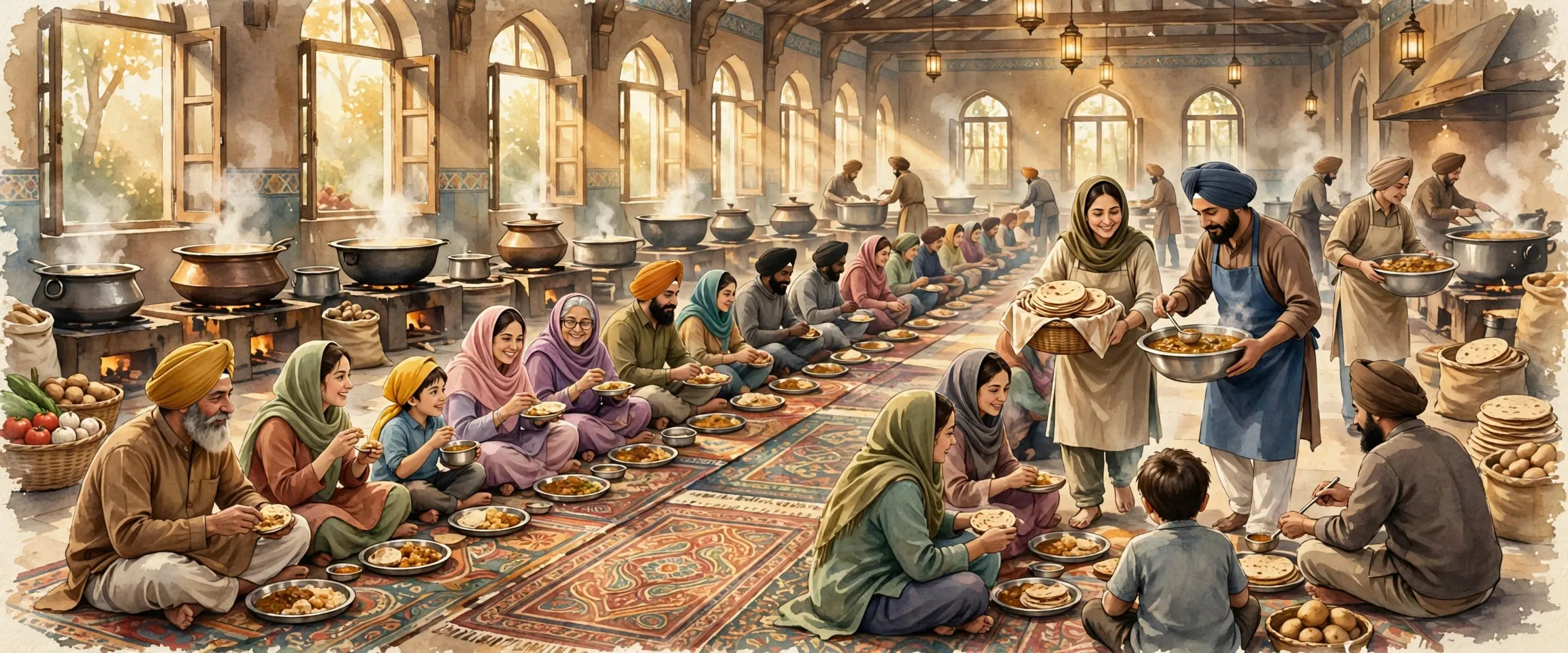
Langar is the Sikh community kitchen found in every gurdwara, where a free vegetarian meal is served to all visitors without distinction of religion, caste, gender, or status — a living expression of equality and selfless service (seva) institutionalized by the Sikh Gurus.
- Facts
- Gurmukhi
- ਲੰਗਰ
- Meaning
- Community kitchen
- Begun
- c. 1500, by Guru Nanak Dev Ji
- Meal
- Free, lacto-vegetarian
- Core values
- Equality and seva (selfless service)
- Largest langar
- Harmandir Sahib, Amritsar
Langar is the Sikh community kitchen found in every gurdwara, where a free vegetarian meal is served to everyone — regardless of religion, caste, gender, or status. Run entirely by volunteers performing seva, selfless service, it is Sikhism’s living expression of human equality, an institution established by the Sikh Gurus over five hundred years ago.
What is langar?
In Sikhism, a langar is the community kitchen attached to a gurdwara. It serves a simple, nourishing meal to all who come, completely free of charge and without any distinction of faith, caste, gender, age, or economic standing. Everyone sits together on the floor in long rows — the pangat — and eats the same food, prepared in the same pots.
The meal is always lacto-vegetarian, a deliberate choice so that the food is acceptable across religious and cultural lines. Before it is served, a small portion is placed before the Guru Granth Sahib Ji and the Ardas prayer is recited, seeking the Guru’s blessing on the food for all.
Origins: from Guru Nanak to the Gurus
The word langar is Persian in origin, and the idea of a charitable community kitchen has old roots in the Punjab — the Sufi saint Shaikh Farid organized such kitchens in the 13th century. But it was Guru Nanak Dev Ji, the founder of Sikhism, who institutionalized langar around 1500 CE as a direct challenge to the caste order: in a society where who one ate with marked one’s rank, sharing one kitchen and one meal was a radical act of equality.
Guru Angad Dev Ji systematized the institution, establishing langar in every gurdwara and training the sevadars — the volunteers — who run it, insisting the kitchen be a place of rest, refuge, and unfailing hospitality. Guru Amar Das Ji made it still more prominent: he required every visitor to eat in the langar before being granted an audience with him, so that prince and peasant arrived as equals.
How langar works
Everything in langar runs on seva. Volunteers chop vegetables, roll rotis, stir vast pots, serve the seated rows, and wash the dishes — men, women, and children all take part, and the service itself is considered an act of devotion. The kitchen is sustained by the sangat’s contributions, including dasvandh, the practice of setting aside a tenth of one’s earnings.
Sitting in the pangat is itself the teaching: shoulder to shoulder on the floor, the wealthy and the poor, the stranger and the regular, all equal before the same plate of dal, sabzi, and roti. No one is turned away, and no one is asked who they are.
Langar in the modern world
Today langars operate in gurdwaras across the globe. The langar at Harmandir Sahib in Amritsar is among the largest free kitchens in the world, serving tens of thousands of people every single day. In the diaspora, gurdwara langars feed students, the homeless, and neighbours of every background — in Canada, Britain, Australia, and the United States.
In times of crisis, the langar tradition becomes disaster relief. During the COVID-19 pandemic, scores of gurdwaras in the United States served their wider communities, some running drive-through langars, while gurdwaras in Delhi ran an ‘oxygen langar’ supplying free oxygen to the sick. Five centuries on, the simple meal remains one of Sikhism’s most powerful gifts to the world.
ਲੰਗਰ ਸਿੱਖ ਧਰਮ ਦੀ ਸਾਂਝੀ ਰਸੋਈ ਹੈ ਜੋ ਹਰ ਗੁਰਦੁਆਰੇ ਵਿੱਚ ਹੁੰਦੀ ਹੈ, ਜਿੱਥੇ ਧਰਮ, ਜਾਤ, ਲਿੰਗ ਜਾਂ ਰੁਤਬੇ ਦੇ ਭੇਦ-ਭਾਵ ਤੋਂ ਬਿਨਾਂ ਹਰ ਆਉਣ ਵਾਲੇ ਨੂੰ ਮੁਫ਼ਤ ਸ਼ਾਕਾਹਾਰੀ ਭੋਜਨ ਪਰੋਸਿਆ ਜਾਂਦਾ ਹੈ। ਸੇਵਾ ਕਰਨ ਵਾਲੇ ਸੇਵਾਦਾਰਾਂ ਦੁਆਰਾ ਚਲਾਇਆ ਜਾਂਦਾ ਇਹ ਲੰਗਰ ਮਨੁੱਖੀ ਬਰਾਬਰੀ ਦਾ ਜਿਉਂਦਾ-ਜਾਗਦਾ ਪ੍ਰਗਟਾਵਾ ਹੈ, ਜਿਸ ਦੀ ਨੀਂਹ ਸਿੱਖ ਗੁਰੂ ਸਾਹਿਬਾਨ ਨੇ ਪੰਜ ਸੌ ਸਾਲ ਪਹਿਲਾਂ ਰੱਖੀ ਸੀ।
ਲੰਗਰ ਕੀ ਹੈ?
ਸਿੱਖ ਧਰਮ ਵਿੱਚ ਲੰਗਰ ਗੁਰਦੁਆਰੇ ਨਾਲ ਜੁੜੀ ਸਾਂਝੀ ਰਸੋਈ ਹੈ। ਇੱਥੇ ਆਉਣ ਵਾਲੇ ਹਰ ਵਿਅਕਤੀ ਨੂੰ ਬਿਲਕੁਲ ਮੁਫ਼ਤ ਭੋਜਨ ਮਿਲਦਾ ਹੈ — ਧਰਮ, ਜਾਤ, ਲਿੰਗ, ਉਮਰ ਜਾਂ ਆਰਥਿਕ ਹਾਲਤ ਦਾ ਕੋਈ ਭੇਦ ਨਹੀਂ। ਸਾਰੇ ਸੰਗਤੀ ਫਰਸ਼ ਉੱਤੇ ਲੰਮੀਆਂ ਕਤਾਰਾਂ ਵਿੱਚ — ਪੰਗਤ ਵਿੱਚ — ਬੈਠ ਕੇ ਇੱਕੋ ਭੋਜਨ ਛਕਦੇ ਹਨ, ਜੋ ਇੱਕੋ ਹੰਡੀਆਂ ਵਿੱਚ ਤਿਆਰ ਹੁੰਦਾ ਹੈ।
ਲੰਗਰ ਦਾ ਭੋਜਨ ਹਮੇਸ਼ਾ ਸ਼ਾਕਾਹਾਰੀ ਹੁੰਦਾ ਹੈ, ਤਾਂ ਜੋ ਹਰ ਧਰਮ ਅਤੇ ਸੱਭਿਆਚਾਰ ਦੇ ਲੋਕ ਇਸਨੂੰ ਛਕ ਸਕਣ। ਪਰੋਸਣ ਤੋਂ ਪਹਿਲਾਂ ਥੋੜ੍ਹਾ ਜਿਹਾ ਭੋਜਨ ਸ੍ਰੀ ਗੁਰੂ ਗ੍ਰੰਥ ਸਾਹਿਬ ਜੀ ਅੱਗੇ ਰੱਖ ਕੇ ਅਰਦਾਸ ਕੀਤੀ ਜਾਂਦੀ ਹੈ, ਤਾਂ ਜੋ ਗੁਰੂ ਦੀ ਬਖ਼ਸ਼ਿਸ਼ ਸਾਰਿਆਂ ਤੱਕ ਪਹੁੰਚੇ।
ਇਤਿਹਾਸ: ਗੁਰੂ ਨਾਨਕ ਦੇਵ ਜੀ ਤੋਂ ਗੁਰੂ ਸਾਹਿਬਾਨ ਤੱਕ
ਲੰਗਰ ਸ਼ਬਦ ਫਾਰਸੀ ਭਾਸ਼ਾ ਤੋਂ ਆਇਆ ਹੈ, ਅਤੇ ਪੰਜਾਬ ਵਿੱਚ ਸਾਂਝੀ ਰਸੋਈ ਦਾ ਵਿਚਾਰ ਪੁਰਾਣਾ ਹੈ — 13ਵੀਂ ਸਦੀ ਵਿੱਚ ਸੂਫ਼ੀ ਸੰਤ ਸ਼ੇਖ ਫ਼ਰੀਦ ਜੀ ਨੇ ਅਜਿਹੀਆਂ ਰਸੋਈਆਂ ਚਲਾਈਆਂ ਸਨ। ਪਰ ਗੁਰੂ ਨਾਨਕ ਦੇਵ ਜੀ ਨੇ ਲਗਭਗ 1500 ਈਸਵੀ ਵਿੱਚ ਲੰਗਰ ਨੂੰ ਜਾਤ-ਪਾਤ ਦੇ ਵਿਰੁੱਧ ਇੱਕ ਸੰਸਥਾ ਬਣਾ ਦਿੱਤਾ: ਜਿਸ ਸਮਾਜ ਵਿੱਚ ਕਿਸ ਨਾਲ ਖਾਣਾ ਖਾਧਾ ਜਾਵੇ, ਇਹੀ ਰੁਤਬਾ ਤੈਅ ਕਰਦਾ ਸੀ, ਉੱਥੇ ਇੱਕ ਰਸੋਈ ਅਤੇ ਇੱਕ ਭੋਜਨ ਸਾਂਝਾ ਕਰਨਾ ਬਰਾਬਰੀ ਦਾ ਇਨਕਲਾਬੀ ਕਦਮ ਸੀ।
ਗੁਰੂ ਅੰਗਦ ਦੇਵ ਜੀ ਨੇ ਇਸ ਸੰਸਥਾ ਨੂੰ ਸੁਚੱਜਾ ਰੂਪ ਦਿੱਤਾ — ਹਰ ਗੁਰਦੁਆਰੇ ਵਿੱਚ ਲੰਗਰ ਸਥਾਪਤ ਕੀਤਾ ਅਤੇ ਸੇਵਾਦਾਰਾਂ ਨੂੰ ਸਿਖਲਾਈ ਦਿੱਤੀ, ਇਸ ਗੱਲ ਉੱਤੇ ਜ਼ੋਰ ਦਿੰਦੇ ਹੋਏ ਕਿ ਰਸੋਈ ਆਰਾਮ, ਆਸਰਾ ਅਤੇ ਨਿਰੰਤਰ ਮਹਿਮਾਨ-ਨਿਵਾਜ਼ੀ ਦੀ ਥਾਂ ਹੋਵੇ। ਗੁਰੂ ਅਮਰਦਾਸ ਜੀ ਨੇ ਇਸਨੂੰ ਹੋਰ ਪ੍ਰਮੁੱਖ ਬਣਾਇਆ: ਉਨ੍ਹਾਂ ਨੇ ਹਰ ਆਉਣ ਵਾਲੇ ਲਈ ਲੰਗਰ ਛਕਣਾ ਲਾਜ਼ਮੀ ਕਰ ਦਿੱਤਾ, ਤਾਂ ਜੋ ਰਾਜਾ ਅਤੇ ਗਰੀਬ ਬਰਾਬਰ ਹੋ ਕੇ ਉਨ੍ਹਾਂ ਦੇ ਦਰਸ਼ਨ ਕਰਨ।
ਲੰਗਰ ਕਿਵੇਂ ਚਲਦਾ ਹੈ
ਲੰਗਰ ਵਿੱਚ ਸਭ ਕੁਝ ਸੇਵਾ ਨਾਲ ਚਲਦਾ ਹੈ। ਸੇਵਾਦਾਰ ਸਬਜ਼ੀਆਂ ਕੱਟਦੇ ਹਨ, ਰੋਟੀਆਂ ਵੇਲਦੇ ਹਨ, ਵੱਡੀਆਂ ਦੇਗਾਂ ਹਿਲਾਉਂਦੇ ਹਨ, ਪੰਗਤ ਵਿੱਚ ਭੋਜਨ ਪਰੋਸਦੇ ਹਨ ਅਤੇ ਭਾਂਡੇ ਮਾਂਜਦੇ ਹਨ — ਮਰਦ, ਔਰਤਾਂ ਅਤੇ ਬੱਚੇ ਸਾਰੇ ਹਿੱਸਾ ਲੈਂਦੇ ਹਨ, ਅਤੇ ਇਹ ਸੇਵਾ ਆਪ ਭਗਤੀ ਮੰਨੀ ਜਾਂਦੀ ਹੈ। ਰਸੋਈ ਸੰਗਤ ਦੇ ਦਾਨ ਨਾਲ ਚਲਦੀ ਹੈ, ਜਿਸ ਵਿੱਚ ਦਸਵੰਧ — ਆਮਦਨ ਦਾ ਦਸਵਾਂ ਹਿੱਸਾ — ਵੀ ਸ਼ਾਮਲ ਹੈ।
ਪੰਗਤ ਵਿੱਚ ਬੈਠਣਾ ਆਪ ਹੀ ਸਿੱਖਿਆ ਹੈ: ਫਰਸ਼ ਉੱਤੇ ਮੋਢੇ ਨਾਲ ਮੋਢਾ ਜੋੜ ਕੇ ਅਮੀਰ ਅਤੇ ਗਰੀਬ, ਅਜਨਬੀ ਅਤੇ ਨਿਯਮਤ ਸੰਗਤੀ, ਸਾਰੇ ਦਾਲ, ਸਬਜ਼ੀ ਅਤੇ ਰੋਟੀ ਦੀ ਇੱਕੋ ਥਾਲੀ ਅੱਗੇ ਬਰਾਬਰ ਹਨ। ਕਿਸੇ ਨੂੰ ਮੋੜਿਆ ਨਹੀਂ ਜਾਂਦਾ, ਅਤੇ ਕਿਸੇ ਤੋਂ ਉਸ ਦੀ ਪਛਾਣ ਨਹੀਂ ਪੁੱਛੀ ਜਾਂਦੀ।
ਅੱਜ ਦੇ ਸੰਸਾਰ ਵਿੱਚ ਲੰਗਰ
ਅੱਜ ਦੁਨੀਆ ਭਰ ਦੇ ਗੁਰਦੁਆਰਿਆਂ ਵਿੱਚ ਲੰਗਰ ਚਲਦੇ ਹਨ। ਅੰਮ੍ਰਿਤਸਰ ਦੇ ਸ੍ਰੀ ਹਰਿਮੰਦਰ ਸਾਹਿਬ ਦਾ ਲੰਗਰ ਦੁਨੀਆ ਦੀਆਂ ਸਭ ਤੋਂ ਵੱਡੀਆਂ ਮੁਫ਼ਤ ਰਸੋਈਆਂ ਵਿੱਚੋਂ ਇੱਕ ਹੈ, ਜਿੱਥੇ ਰੋਜ਼ਾਨਾ ਦਸਾਂ ਹਜ਼ਾਰਾਂ ਲੋਕ ਭੋਜਨ ਛਕਦੇ ਹਨ। ਵਿਦੇਸ਼ਾਂ ਵਿੱਚ ਗੁਰਦੁਆਰਿਆਂ ਦੇ ਲੰਗਰ ਵਿਦਿਆਰਥੀਆਂ, ਬੇਘਰ ਲੋਕਾਂ ਅਤੇ ਹਰ ਪਿਛੋਕੜ ਦੇ ਗੁਆਂਢੀਆਂ ਨੂੰ ਭੋਜਨ ਦਿੰਦੇ ਹਨ — ਕੈਨੇਡਾ, ਬ੍ਰਿਟੇਨ, ਆਸਟ੍ਰੇਲੀਆ ਅਤੇ ਅਮਰੀਕਾ ਵਿੱਚ।
ਮੁਸੀਬਤ ਦੇ ਸਮੇਂ ਲੰਗਰ ਦੀ ਪਰੰਪਰਾ ਰਾਹਤ-ਕਾਰਜ ਬਣ ਜਾਂਦੀ ਹੈ। ਕੋਵਿਡ-19 ਮਹਾਮਾਰੀ ਦੌਰਾਨ ਅਮਰੀਕਾ ਦੇ ਦਰਜਨਾਂ ਗੁਰਦੁਆਰਿਆਂ ਨੇ ਆਪਣੇ ਇਲਾਕਿਆਂ ਦੀ ਸੇਵਾ ਕੀਤੀ, ਕਈ ਥਾਵਾਂ ਉੱਤੇ ਡਰਾਈਵ-ਥਰੂ ਲੰਗਰ ਚਲੇ, ਜਦੋਂ ਕਿ ਦਿੱਲੀ ਦੇ ਗੁਰਦੁਆਰਿਆਂ ਨੇ ਬਿਮਾਰਾਂ ਨੂੰ ਮੁਫ਼ਤ ਆਕਸੀਜਨ ਦੇਣ ਵਾਲਾ 'ਆਕਸੀਜਨ ਲੰਗਰ' ਚਲਾਇਆ। ਪੰਜ ਸਦੀਆਂ ਬਾਅਦ ਵੀ ਇਹ ਸਾਦਾ ਭੋਜਨ ਸਿੱਖ ਧਰਮ ਦੀ ਦੁਨੀਆ ਨੂੰ ਸਭ ਤੋਂ ਵੱਡੀਆਂ ਦੇਣਾਂ ਵਿੱਚੋਂ ਇੱਕ ਹੈ।