
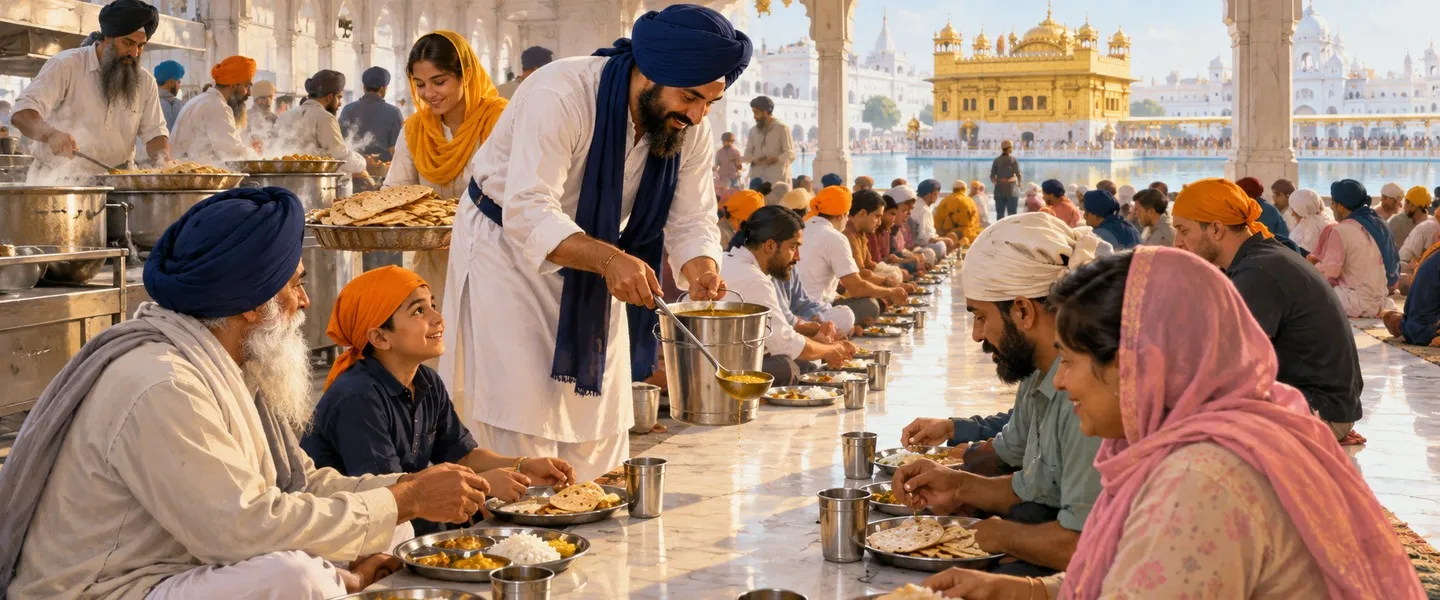
Langar is the Sikh community kitchen found in every gurdwara, where a free lacto-vegetarian meal is served to all visitors without distinction of religion, caste, gender, or status. Institutionalized by Guru Nanak Dev Ji around 1500 and developed by the later Gurus, it runs entirely on seva, selfless volunteer service, and remains one of Sikhism's most visible expressions of equality.
- ਪੰਜਾਬੀ ਨਾਂ
- ਲੰਗਰ
- Gurmukhi
- ਲੰਗਰ
- ਅਰਥ
- Community kitchen (from Persian)
- Begun
- c. 1500, by Guru Nanak Dev Ji
- Developed by
- Guru Angad Dev Ji and Guru Amar Das Ji
- Meal
- Free, lacto-vegetarian
All 9 facts
- The rule
- Pehle pangat, peeche sangat (first the row, then the congregation)
- Core values
- Equality and seva (selfless service)
- Largest langar
- Harmandir Sahib, Amritsar
Langar is the Sikh community kitchen found in every gurdwara, where a free lacto-vegetarian meal is served to everyone, regardless of religion, caste, gender, or status. Run entirely by volunteers performing seva, selfless service, it is Sikhism's living expression of human equality, institutionalized by the Gurus over five hundred years ago.
What is langar?
A langar is the community kitchen attached to a gurdwara. It serves a simple, nourishing meal to all who come, completely free of charge and without any distinction of faith, caste, gender, age, or economic standing. Everyone sits together on the floor in long rows, the pangat, and eats the same food, prepared in the same pots. The kitchen itself is sometimes called the langarkhana.
Before the meal is served, a small portion is placed before the Guru Granth Sahib Ji and the Ardas prayer is recited, seeking the Guru's blessing on the food for all. Then the sevadars, the volunteers, carry the pots down the rows. No one is asked who they are, where they come from, or what they believe.
Who started langar?
The word langar is Persian in origin, where it meant an almshouse or a place for distributing food to the poor. The idea of a charitable kitchen has old roots in Punjab: the Sufi saint Shaikh Farid, known as ਬਾਬਾ ਫ਼ਰੀਦ ਜੀ, organized such kitchens in the 12th and 13th centuries, and similar free kitchens ran in Sufi khanqahs across the region. But it was ਗੁਰੂ ਨਾਨਕ ਦੇਵ ਜੀ, the founder of Sikhism, who institutionalized langar around 1500 CE as a direct challenge to the caste order. In a society where who one ate with marked one's rank, sharing one kitchen and one meal was a radical act of equality.
The seed of it appears in the most famous episode of Guru Nanak's youth, the Sacha Sauda, the true bargain: given twenty rupees by his father to start a business, the young Nanak spent it all feeding hungry ascetics, and called that the real trade. ਗੁਰੂ ਅੰਗਦ ਦੇਵ ਜੀ, the second Guru, systematized the institution, establishing langar in every gurdwara and training the sevadars who run it, insisting the kitchen be a place of rest, refuge, and unfailing hospitality. His wife, Mata Khivi Ji, organized and expanded the langar at Khadoor Sahib and is remembered in the Guru Granth Sahib for her graciousness in the work.
Guru Amar Das Ji, the third Guru, made langar still more prominent. He required every visitor to eat in the langar before being granted an audience with him, so that prince and peasant arrived as equals: first the pangat, the row, then the sangat, the congregation. By the time of Guru Arjan Dev Ji, langar was a defining mark of the Sikh community, inseparable from the gurdwara itself.
How does a langar work?
Everything in langar runs on seva. Volunteers chop vegetables, roll rotis, stir vast pots, serve the seated rows, and wash the dishes. Men, women, and children all take part, and the service itself is considered an act of devotion, done without expectation of reward or recognition. The kitchen is sustained by the sangat's contributions, including dasvandh, the practice of setting aside a tenth of one's earnings.
Sitting in the pangat is itself the teaching: shoulder to shoulder on the floor, the wealthy and the poor, the stranger and the regular, all equal before the same plate of dal, sabzi, and roti. There is no hierarchy in langar, only harmony.
Why is langar always vegetarian?
The meal is always lacto-vegetarian, a deliberate choice so that the food is acceptable across religious and cultural lines. Hindus, Muslims, Sikhs, Christians, and Jews can all sit in the same row without hesitation. No meat and no alcohol are ever served.
The food is simple and nourishing: dal, sabzi, rice, rotis, and often kheer, a sweet rice pudding. The simplicity is the point. The meal is meant to feed the body without exciting the senses, and to remind everyone at the table that they are eating the same food as the person beside them.
The Golden Temple langar: the world's largest free kitchen
The langar at ਸ੍ਰੀ ਹਰਿਮੰਦਰ ਸਾਹਿਬ in Amritsar is among the largest free kitchens in the world, serving tens of thousands of people every single day, with the numbers rising far higher on festivals. Volunteers work around the clock in a vast kitchen, preparing enormous quantities of wheat, dal, and rice, brewing tea by the cauldron, and washing dishes by hand.
Pilgrims often call the langar the soul of the Golden Temple. For many visitors, Sikh or not, sitting in the great hall with thousands of others, eating the same simple food, is the most lasting memory of Amritsar.
Langar in times of crisis
In times of crisis, the langar tradition becomes disaster relief. During the COVID-19 pandemic, gurdwaras kept their kitchens open and found new ways to serve: at least 80 gurdwaras across the United States fed their wider communities, and the Sikh Center of New York in Queens Village served more than 145,000 free meals in two months. Some gurdwaras ran drive-through langars, handing out hot food, water, and sanitizer from outside their doors. In Delhi, gurdwaras ran an 'oxygen langar', supplying free oxygen to the sick.
The tradition crosses borders. Langars in gurdwaras across Canada, Britain, Australia, and the United States feed students, the homeless, and neighbours of every background. In Canadian gurdwaras, students short on funds at the end of term have long relied on langar to eat. A meal that began as a challenge to caste in 15th-century Punjab has become one of the world's great traditions of feeding strangers.
What does langar teach?
Langar teaches that equality is not a slogan but a practice: you sit on the floor, you eat the same food, you wash someone else's plate. It teaches vand chakko, the Sikh practice of sharing what one earns, and it makes seva, selfless service, something children learn by doing, not by being told.
It is not a soup kitchen in the usual sense, but a religiously driven act of worship through service, where feeding the hungry is a demonstration of equality before God. Five centuries on, the simple meal remains one of Sikhism's most powerful gifts to the world.
ਲੰਗਰ ਹਰ ਗੁਰਦੁਆਰੇ ਵਿੱਚ ਮਿਲਣ ਵਾਲਾ ਸਿੱਖਾਂ ਦਾ ਸਾਂਝਾ ਰਸੋਈ-ਘਰ ਹੈ, ਜਿੱਥੇ ਧਰਮ, ਜਾਤ, ਲਿੰਗ ਜਾਂ ਰੁਤਬੇ ਦਾ ਭੇਦ ਕੀਤੇ ਬਿਨਾਂ ਹਰ ਇੱਕ ਨੂੰ ਮੁਫ਼ਤ ਸ਼ਾਕਾਹਾਰੀ ਭੋਜਨ ਦਿੱਤਾ ਜਾਂਦਾ ਹੈ। ਇਹ ਪੂਰੀ ਤਰ੍ਹਾਂ ਸੇਵਾ ਕਰਨ ਵਾਲੇ ਸਵੈ-ਸੇਵਕਾਂ ਦੇ ਸਿਰ ਚੱਲਦਾ ਹੈ ਅਤੇ ਸਿੱਖੀ ਵਿੱਚ ਮਨੁੱਖੀ ਬਰਾਬਰੀ ਦਾ ਜਿਉਂਦਾ ਪ੍ਰਗਟਾਵਾ ਹੈ, ਜਿਸ ਨੂੰ ਗੁਰੂ ਸਾਹਿਬਾਨ ਨੇ ਪੰਜ ਸੌ ਸਾਲ ਪਹਿਲਾਂ ਸੰਸਥਾਗਤ ਰੂਪ ਦਿੱਤਾ ਸੀ।
ਲੰਗਰ ਕੀ ਹੈ?
ਲੰਗਰ ਗੁਰਦੁਆਰੇ ਨਾਲ ਜੁੜਿਆ ਸਾਂਝਾ ਰਸੋਈ-ਘਰ ਹੈ। ਇੱਥੇ ਆਉਣ ਵਾਲੇ ਹਰ ਇੱਕ ਨੂੰ ਬਿਲਕੁਲ ਮੁਫ਼ਤ ਅਤੇ ਧਰਮ, ਜਾਤ, ਲਿੰਗ, ਉਮਰ ਜਾਂ ਆਰਥਿਕ ਹਾਲਤ ਦਾ ਕੋਈ ਭੇਦ ਕੀਤੇ ਬਿਨਾਂ ਸਾਦਾ, ਪੌਸ਼ਟਿਕ ਭੋਜਨ ਦਿੱਤਾ ਜਾਂਦਾ ਹੈ। ਸਾਰੇ ਫ਼ਰਸ਼ ਉੱਤੇ ਲੰਮੀਆਂ ਕਤਾਰਾਂ ਵਿੱਚ, ਜਿਨ੍ਹਾਂ ਨੂੰ ਪੰਗਤ ਆਖਦੇ ਹਨ, ਇਕੱਠੇ ਬੈਠਦੇ ਹਨ ਅਤੇ ਉਹੀ ਭੋਜਨ ਖਾਂਦੇ ਹਨ ਜੋ ਉਹੀ ਦੇਗਾਂ ਵਿੱਚ ਬਣਿਆ ਹੁੰਦਾ ਹੈ। ਇਸ ਰਸੋਈ ਨੂੰ ਕਈ ਵਾਰ ਲੰਗਰਖ਼ਾਨਾ ਵੀ ਆਖਿਆ ਜਾਂਦਾ ਹੈ।
ਭੋਜਨ ਵਰਤਾਉਣ ਤੋਂ ਪਹਿਲਾਂ ਥੋੜ੍ਹਾ ਜਿਹਾ ਭੋਜਨ ਗੁਰੂ ਗ੍ਰੰਥ ਸਾਹਿਬ ਜੀ ਅੱਗੇ ਰੱਖਿਆ ਜਾਂਦਾ ਹੈ ਅਤੇ ਅਰਦਾਸ ਕੀਤੀ ਜਾਂਦੀ ਹੈ, ਸਭ ਲਈ ਗੁਰੂ ਦੀ ਬਖ਼ਸ਼ਿਸ਼ ਮੰਗੀ ਜਾਂਦੀ ਹੈ। ਫਿਰ ਸੇਵਾਦਾਰ ਕਤਾਰਾਂ ਵਿੱਚ ਦੇਗਾਂ ਲੈ ਕੇ ਜਾਂਦੇ ਹਨ। ਕਿਸੇ ਤੋਂ ਨਹੀਂ ਪੁੱਛਿਆ ਜਾਂਦਾ ਕਿ ਉਹ ਕੌਣ ਹੈ, ਕਿੱਥੋਂ ਆਇਆ ਹੈ ਜਾਂ ਕੀ ਮੰਨਦਾ ਹੈ।
ਲੰਗਰ ਕਿਸ ਨੇ ਸ਼ੁਰੂ ਕੀਤਾ?
ਲੰਗਰ ਸ਼ਬਦ ਫ਼ਾਰਸੀ ਮੂਲ ਦਾ ਹੈ, ਜਿੱਥੇ ਇਸ ਦਾ ਅਰਥ ਗ਼ਰੀਬਾਂ ਨੂੰ ਭੋਜਨ ਵੰਡਣ ਦੀ ਥਾਂ ਸੀ। ਮੁਫ਼ਤ ਰਸੋਈ ਦਾ ਵਿਚਾਰ ਪੰਜਾਬ ਵਿੱਚ ਪੁਰਾਣਾ ਹੈ: 12ਵੀਂ-13ਵੀਂ ਸਦੀ ਦੇ ਸੂਫ਼ੀ ਸੰਤ ਸ਼ੇਖ਼ ਫ਼ਰੀਦ, ਜਿਨ੍ਹਾਂ ਨੂੰ ਬਾਬਾ ਫ਼ਰੀਦ ਜੀ ਆਖਿਆ ਜਾਂਦਾ ਹੈ, ਨੇ ਅਜਿਹੀਆਂ ਰਸੋਈਆਂ ਚਲਾਈਆਂ, ਅਤੇ ਇਲਾਕੇ ਦੇ ਸੂਫ਼ੀ ਖ਼ਾਨਕਾਹਾਂ ਵਿੱਚ ਵੀ ਅਜਿਹੀਆਂ ਮੁਫ਼ਤ ਰਸੋਈਆਂ ਚੱਲਦੀਆਂ ਸਨ। ਪਰ ਸਿੱਖੀ ਦੇ ਬਾਨੀ ਗੁਰੂ ਨਾਨਕ ਦੇਵ ਜੀ ਨੇ ਲਗਭਗ 1500 ਈਸਵੀ ਵਿੱਚ ਲੰਗਰ ਨੂੰ ਸੰਸਥਾਗਤ ਰੂਪ ਦੇ ਕੇ ਇਸ ਨੂੰ ਜਾਤ-ਪਾਤ ਦੇ ਖ਼ਿਲਾਫ਼ ਸਿੱਧੀ ਚੁਣੌਤੀ ਬਣਾ ਦਿੱਤਾ। ਇੱਕ ਅਜਿਹੇ ਸਮਾਜ ਵਿੱਚ ਜਿੱਥੇ ਕਿਸ ਨਾਲ ਖਾਣਾ ਹੈ, ਇਹੀ ਰੁਤਬਾ ਤੈਅ ਕਰਦਾ ਸੀ, ਇੱਕੋ ਰਸੋਈ ਅਤੇ ਇੱਕੋ ਭੋਜਨ ਸਾਂਝਾ ਕਰਨਾ ਬਰਾਬਰੀ ਦਾ ਇਨਕਲਾਬੀ ਕਦਮ ਸੀ।
ਇਸ ਦਾ ਬੀਜ ਗੁਰੂ ਨਾਨਕ ਦੇ ਜੀਵਨ ਦੀ ਸਭ ਤੋਂ ਮਸ਼ਹੂਰ ਘਟਨਾ, ਸੱਚਾ ਸੌਦਾ, ਵਿੱਚ ਦਿਸਦਾ ਹੈ: ਪਿਤਾ ਨੇ ਵਪਾਰ ਸ਼ੁਰੂ ਕਰਨ ਲਈ ਵੀਹ ਰੁਪਏ ਦਿੱਤੇ ਤਾਂ ਨੌਜਵਾਨ ਨਾਨਕ ਨੇ ਉਹ ਸਾਰੇ ਭੁੱਖੇ ਸਾਧਾਂ ਨੂੰ ਖਵਾ ਦਿੱਤੇ ਅਤੇ ਇਸੇ ਨੂੰ ਅਸਲ ਸੌਦਾ ਆਖਿਆ। ਦੂਜੇ ਗੁਰੂ, ਗੁਰੂ ਅੰਗਦ ਦੇਵ ਜੀ ਨੇ ਇਸ ਸੰਸਥਾ ਨੂੰ ਵਿਵਸਥਿਤ ਕੀਤਾ, ਹਰ ਗੁਰਦੁਆਰੇ ਵਿੱਚ ਲੰਗਰ ਕਾਇਮ ਕੀਤਾ ਅਤੇ ਇਸ ਨੂੰ ਚਲਾਉਣ ਵਾਲੇ ਸੇਵਾਦਾਰਾਂ ਨੂੰ ਸਿਖਲਾਈ ਦਿੱਤੀ, ਅਤੇ ਜ਼ੋਰ ਦਿੱਤਾ ਕਿ ਰਸੋਈ ਆਰਾਮ, ਪਨਾਹ ਅਤੇ ਹਰ ਆਉਣ ਵਾਲੇ ਲਈ ਨਿਰੰਤਰ ਮਹਿਮਾਨ-ਨਵਾਜ਼ੀ ਦੀ ਥਾਂ ਹੋਵੇ। ਉਨ੍ਹਾਂ ਦੀ ਪਤਨੀ ਮਾਤਾ ਖੀਵੀ ਜੀ ਨੇ ਖਡੂਰ ਸਾਹਿਬ ਦੇ ਲੰਗਰ ਨੂੰ ਸੰਗਠਿਤ ਤੇ ਵਿਸਤਾਰ ਦਿੱਤਾ ਅਤੇ ਗੁਰੂ ਗ੍ਰੰਥ ਸਾਹਿਬ ਵਿੱਚ ਉਨ੍ਹਾਂ ਦੀ ਇਸ ਸੇਵਾ ਦੀ ਸਿਫ਼ਤ ਕੀਤੀ ਗਈ ਹੈ।
ਤੀਜੇ ਗੁਰੂ, ਗੁਰੂ ਅਮਰਦਾਸ ਜੀ ਨੇ ਲੰਗਰ ਨੂੰ ਹੋਰ ਵੀ ਪ੍ਰਮੁੱਖ ਸੰਸਥਾ ਬਣਾ ਦਿੱਤਾ। ਉਨ੍ਹਾਂ ਨੇ ਹਰ ਆਉਣ ਵਾਲੇ ਲਈ ਆਪਣੇ ਦਰਸ਼ਨਾਂ ਤੋਂ ਪਹਿਲਾਂ ਲੰਗਰ ਛਕਣਾ ਲਾਜ਼ਮੀ ਕਰ ਦਿੱਤਾ, ਤਾਂ ਜੋ ਰਾਜਾ ਅਤੇ ਕੰਗਾਲ ਬਰਾਬਰ ਹੋ ਕੇ ਪਹੁੰਚਣ: ਪਹਿਲਾਂ ਪੰਗਤ, ਫਿਰ ਸੰਗਤ। ਗੁਰੂ ਅਰਜਨ ਦੇਵ ਜੀ ਦੇ ਸਮੇਂ ਤੱਕ ਲੰਗਰ ਸਿੱਖ ਕੌਮ ਦੀ ਪਛਾਣ ਬਣ ਚੁੱਕਾ ਸੀ, ਗੁਰਦੁਆਰੇ ਤੋਂ ਅਲੱਗ ਨਹੀਂ ਸੀ।
ਲੰਗਰ ਕਿਵੇਂ ਚੱਲਦਾ ਹੈ?
ਲੰਗਰ ਵਿੱਚ ਹਰ ਕੰਮ ਸੇਵਾ ਨਾਲ ਚੱਲਦਾ ਹੈ। ਸਵੈ-ਸੇਵਕ ਸਬਜ਼ੀਆਂ ਕੱਟਦੇ ਹਨ, ਰੋਟੀਆਂ ਵੇਲਦੇ ਹਨ, ਵੱਡੀਆਂ ਦੇਗਾਂ ਹਿਲਾਉਂਦੇ ਹਨ, ਬੈਠੀਆਂ ਕਤਾਰਾਂ ਵਿੱਚ ਭੋਜਨ ਵਰਤਾਉਂਦੇ ਹਨ ਅਤੇ ਭਾਂਡੇ ਮਾਂਜਦੇ ਹਨ। ਮਰਦ, ਔਰਤਾਂ ਅਤੇ ਬੱਚੇ ਸਾਰੇ ਹਿੱਸਾ ਲੈਂਦੇ ਹਨ, ਅਤੇ ਇਹ ਸੇਵਾ ਆਪ ਹੀ ਭਗਤੀ ਮੰਨੀ ਜਾਂਦੀ ਹੈ, ਬਿਨਾਂ ਕਿਸੇ ਇਨਾਮ ਜਾਂ ਸ਼ਾਬਾਸ਼ ਦੀ ਆਸ ਦੇ। ਰਸੋਈ ਸੰਗਤ ਦੇ ਯੋਗਦਾਨ ਨਾਲ ਚੱਲਦੀ ਹੈ, ਜਿਸ ਵਿੱਚ ਦਸਵੰਧ ਵੀ ਸ਼ਾਮਲ ਹੈ, ਯਾਨੀ ਆਪਣੀ ਕਮਾਈ ਦਾ ਦਸਵਾਂ ਹਿੱਸਾ ਅਲੱਗ ਰੱਖਣਾ।
ਪੰਗਤ ਵਿੱਚ ਬੈਠਣਾ ਆਪ ਹੀ ਸਿੱਖਿਆ ਹੈ: ਫ਼ਰਸ਼ ਉੱਤੇ ਮੋਢੇ ਨਾਲ ਮੋਢਾ ਜੋੜ ਕੇ, ਅਮੀਰ ਅਤੇ ਗ਼ਰੀਬ, ਅਜਨਬੀ ਅਤੇ ਨਿੱਤ ਆਉਣ ਵਾਲਾ, ਸਾਰੇ ਦਾਲ, ਸਬਜ਼ੀ ਅਤੇ ਰੋਟੀ ਦੀ ਇੱਕੋ ਥਾਲੀ ਅੱਗੇ ਬਰਾਬਰ ਹਨ। ਲੰਗਰ ਵਿੱਚ ਕੋਈ ਊਚ-ਨੀਚ ਨਹੀਂ, ਸਿਰਫ਼ ਸਾਂਝ ਹੈ।
ਲੰਗਰ ਹਮੇਸ਼ਾ ਸ਼ਾਕਾਹਾਰੀ ਕਿਉਂ ਹੁੰਦਾ ਹੈ?
ਭੋਜਨ ਹਮੇਸ਼ਾ ਸ਼ਾਕਾਹਾਰੀ ਹੁੰਦਾ ਹੈ, ਇਹ ਸੋਚਿਆ-ਸਮਝਿਆ ਫ਼ੈਸਲਾ ਹੈ ਤਾਂ ਜੋ ਭੋਜਨ ਹਰ ਧਰਮ ਅਤੇ ਸੱਭਿਆਚਾਰ ਦੇ ਲੋਕਾਂ ਲਈ ਸਵੀਕਾਰਯੋਗ ਹੋਵੇ। ਹਿੰਦੂ, ਮੁਸਲਮਾਨ, ਸਿੱਖ, ਈਸਾਈ ਅਤੇ ਯਹੂਦੀ ਸਾਰੇ ਬਿਨਾਂ ਝਿਜਕ ਇੱਕੋ ਕਤਾਰ ਵਿੱਚ ਬੈਠ ਸਕਦੇ ਹਨ। ਮਾਸ ਅਤੇ ਸ਼ਰਾਬ ਕਦੇ ਨਹੀਂ ਵਰਤਾਈ ਜਾਂਦੀ।
ਭੋਜਨ ਸਾਦਾ ਅਤੇ ਪੌਸ਼ਟਿਕ ਹੁੰਦਾ ਹੈ: ਦਾਲ, ਸਬਜ਼ੀ, ਚੌਲ, ਰੋਟੀਆਂ ਅਤੇ ਅਕਸਰ ਖੀਰ। ਸਾਦਗੀ ਹੀ ਮਕਸਦ ਹੈ। ਭੋਜਨ ਸਰੀਰ ਨੂੰ ਤਾਕਤ ਦੇਣ ਲਈ ਹੈ, ਇੰਦਰੀਆਂ ਨੂੰ ਉਕਸਾਉਣ ਲਈ ਨਹੀਂ, ਅਤੇ ਇਹ ਯਾਦ ਦਿਵਾਉਂਦਾ ਹੈ ਕਿ ਮੇਜ਼ ਉੱਤੇ ਹਰ ਇੱਕ ਉਹੀ ਖਾ ਰਿਹਾ ਹੈ ਜੋ ਉਸ ਦੇ ਨਾਲ ਬੈਠਾ ਹੈ।
ਹਰਿਮੰਦਰ ਸਾਹਿਬ ਦਾ ਲੰਗਰ: ਦੁਨੀਆਂ ਦੀ ਸਭ ਤੋਂ ਵੱਡੀ ਮੁਫ਼ਤ ਰਸੋਈ
ਅੰਮ੍ਰਿਤਸਰ ਦੇ ਹਰਿਮੰਦਰ ਸਾਹਿਬ ਦਾ ਲੰਗਰ ਦੁਨੀਆਂ ਦੀਆਂ ਸਭ ਤੋਂ ਵੱਡੀਆਂ ਮੁਫ਼ਤ ਰਸੋਈਆਂ ਵਿੱਚੋਂ ਇੱਕ ਹੈ, ਜਿੱਥੇ ਹਰ ਰੋਜ਼ ਹਜ਼ਾਰਾਂ ਲੋਕ ਭੋਜਨ ਛਕਦੇ ਹਨ ਅਤੇ ਤਿਉਹਾਰਾਂ ਉੱਤੇ ਇਹ ਗਿਣਤੀ ਕਈ ਗੁਣਾ ਵੱਧ ਜਾਂਦੀ ਹੈ। ਸਵੈ-ਸੇਵਕ ਦਿਨ-ਰਾਤ ਇੱਕ ਵਿਸ਼ਾਲ ਰਸੋਈ ਵਿੱਚ ਕੰਮ ਕਰਦੇ ਹਨ, ਕਣਕ, ਦਾਲ ਅਤੇ ਚੌਲਾਂ ਦੀਆਂ ਵੱਡੀਆਂ ਮਾਤਰਾਵਾਂ ਤਿਆਰ ਕਰਦੇ ਹਨ, ਕੜਾਹਿਆਂ ਵਿੱਚ ਚਾਹ ਬਣਾਉਂਦੇ ਹਨ ਅਤੇ ਹੱਥੀਂ ਭਾਂਡੇ ਮਾਂਜਦੇ ਹਨ।
ਸ਼ਰਧਾਲੂ ਅਕਸਰ ਲੰਗਰ ਨੂੰ ਸ੍ਰੀ ਦਰਬਾਰ ਸਾਹਿਬ ਦੀ ਆਤਮਾ ਆਖਦੇ ਹਨ। ਕਈ ਯਾਤਰੀਆਂ ਲਈ, ਸਿੱਖ ਹੋਣ ਜਾਂ ਨਾ ਹੋਣ, ਹਜ਼ਾਰਾਂ ਲੋਕਾਂ ਨਾਲ ਵੱਡੇ ਹਾਲ ਵਿੱਚ ਬੈਠ ਕੇ ਉਹੀ ਸਾਦਾ ਭੋਜਨ ਛਕਣਾ ਅੰਮ੍ਰਿਤਸਰ ਦੀ ਸਭ ਤੋਂ ਯਾਦਗਾਰ ਯਾਦ ਹੁੰਦੀ ਹੈ।
ਮੁਸੀਬਤ ਦੇ ਸਮੇਂ ਵਿੱਚ ਲੰਗਰ
ਮੁਸੀਬਤ ਦੇ ਸਮੇਂ ਵਿੱਚ ਲੰਗਰ ਦੀ ਪਰੰਪਰਾ ਆਫ਼ਤ-ਰਾਹਤ ਬਣ ਜਾਂਦੀ ਹੈ। ਕੋਵਿਡ-19 ਦੀ ਮਹਾਮਾਰੀ ਦੌਰਾਨ ਗੁਰਦੁਆਰਿਆਂ ਨੇ ਆਪਣੀਆਂ ਰਸੋਈਆਂ ਖੁੱਲ੍ਹੀਆਂ ਰੱਖੀਆਂ ਅਤੇ ਸੇਵਾ ਦੇ ਨਵੇਂ ਤਰੀਕੇ ਲੱਭੇ: ਸੰਯੁਕਤ ਰਾਜ ਵਿੱਚ ਘੱਟੋ-ਘੱਟ 80 ਗੁਰਦੁਆਰਿਆਂ ਨੇ ਆਪਣੇ ਇਲਾਕਿਆਂ ਨੂੰ ਭੋਜਨ ਦਿੱਤਾ, ਅਤੇ ਨਿਊਯਾਰਕ ਦੇ ਕਵੀਨਜ਼ ਵਿਲੇਜ ਦੇ ਸਿੱਖ ਸੈਂਟਰ ਨੇ ਦੋ ਮਹੀਨਿਆਂ ਵਿੱਚ 1,45,000 ਤੋਂ ਵੱਧ ਮੁਫ਼ਤ ਭੋਜਨ ਵਰਤਾਏ। ਕੁਝ ਗੁਰਦੁਆਰਿਆਂ ਨੇ ਡਰਾਈਵ-ਥਰੂ ਲੰਗਰ ਚਲਾਏ, ਦਰਵਾਜ਼ਿਆਂ ਤੋਂ ਬਾਹਰ ਗਰਮ ਭੋਜਨ, ਪਾਣੀ ਅਤੇ ਸੈਨੀਟਾਈਜ਼ਰ ਵੰਡੇ। ਦਿੱਲੀ ਵਿੱਚ ਗੁਰਦੁਆਰਿਆਂ ਨੇ 'ਆਕਸੀਜਨ ਲੰਗਰ' ਚਲਾਇਆ, ਬਿਮਾਰਾਂ ਨੂੰ ਮੁਫ਼ਤ ਆਕਸੀਜਨ ਦਿੱਤੀ।
ਇਹ ਪਰੰਪਰਾ ਸਰਹੱਦਾਂ ਪਾਰ ਕਰਦੀ ਹੈ। ਕੈਨੇਡਾ, ਬਰਤਾਨੀਆ, ਆਸਟ੍ਰੇਲੀਆ ਅਤੇ ਸੰਯੁਕਤ ਰਾਜ ਦੇ ਗੁਰਦੁਆਰਿਆਂ ਦੇ ਲੰਗਰ ਵਿਦਿਆਰਥੀਆਂ, ਬੇਘਰਾਂ ਅਤੇ ਹਰ ਪਿਛੋਕੜ ਦੇ ਗੁਆਂਢੀਆਂ ਨੂੰ ਭੋਜਨ ਦਿੰਦੇ ਹਨ। ਕੈਨੇਡਾ ਦੇ ਗੁਰਦੁਆਰਿਆਂ ਵਿੱਚ ਸੈਮੈਸਟਰ ਦੇ ਅਖ਼ੀਰ ਵਿੱਚ ਪੈਸਿਆਂ ਤੋਂ ਤੰਗ ਵਿਦਿਆਰਥੀ ਲੰਬੇ ਸਮੇਂ ਤੋਂ ਲੰਗਰ ਉੱਤੇ ਨਿਰਭਰ ਰਹੇ ਹਨ। 15ਵੀਂ ਸਦੀ ਦੇ ਪੰਜਾਬ ਵਿੱਚ ਜਾਤ-ਪਾਤ ਨੂੰ ਚੁਣੌਤੀ ਦੇਣ ਵਾਲਾ ਭੋਜਨ ਅੱਜ ਅਜਨਬੀਆਂ ਨੂੰ ਖਵਾਉਣ ਦੀਆਂ ਦੁਨੀਆਂ ਦੀਆਂ ਮਹਾਨ ਪਰੰਪਰਾਵਾਂ ਵਿੱਚੋਂ ਇੱਕ ਬਣ ਗਿਆ ਹੈ।
ਲੰਗਰ ਸਾਨੂੰ ਕੀ ਸਿਖਾਉਂਦਾ ਹੈ?
ਲੰਗਰ ਸਿਖਾਉਂਦਾ ਹੈ ਕਿ ਬਰਾਬਰੀ ਨਾਅਰਾ ਨਹੀਂ, ਅਮਲ ਹੈ: ਫ਼ਰਸ਼ ਉੱਤੇ ਬੈਠੋ, ਉਹੀ ਭੋਜਨ ਖਾਓ, ਕਿਸੇ ਹੋਰ ਦੀ ਥਾਲੀ ਧੋਵੋ। ਇਹ ਵੰਡ ਛਕਣਾ ਸਿਖਾਉਂਦਾ ਹੈ, ਆਪਣੀ ਕਮਾਈ ਸਾਂਝੀ ਕਰਨ ਦਾ ਸਿੱਖ ਅਸੂਲ, ਅਤੇ ਸੇਵਾ ਨੂੰ, ਨਿਰਸਵਾਰਥ ਸੇਵਾ ਨੂੰ, ਬੱਚਿਆਂ ਲਈ ਕਹਿਣ ਦੀ ਨਹੀਂ ਸਗੋਂ ਕਰਨ ਦੀ ਚੀਜ਼ ਬਣਾਉਂਦਾ ਹੈ।
ਇਹ ਆਮ ਅਰਥਾਂ ਵਿੱਚ ਸੂਪ ਕਿਚਨ ਨਹੀਂ, ਸਗੋਂ ਸੇਵਾ ਰਾਹੀਂ ਇਬਾਦਤ ਦਾ ਧਾਰਮਿਕ ਕਾਰਜ ਹੈ, ਜਿੱਥੇ ਭੁੱਖਿਆਂ ਨੂੰ ਖਵਾਉਣਾ ਰੱਬ ਅੱਗੇ ਬਰਾਬਰੀ ਦਾ ਪ੍ਰਗਟਾਵਾ ਹੈ। ਪੰਜ ਸਦੀਆਂ ਬਾਅਦ ਵੀ ਇਹ ਸਾਦਾ ਭੋਜਨ ਸਿੱਖੀ ਦੀ ਦੁਨੀਆਂ ਨੂੰ ਸਭ ਤੋਂ ਵੱਡੀਆਂ ਦੇਣਾਂ ਵਿੱਚੋਂ ਇੱਕ ਹੈ।
Langar ਖ਼ਬਰਾਂ ਵਿੱਚ
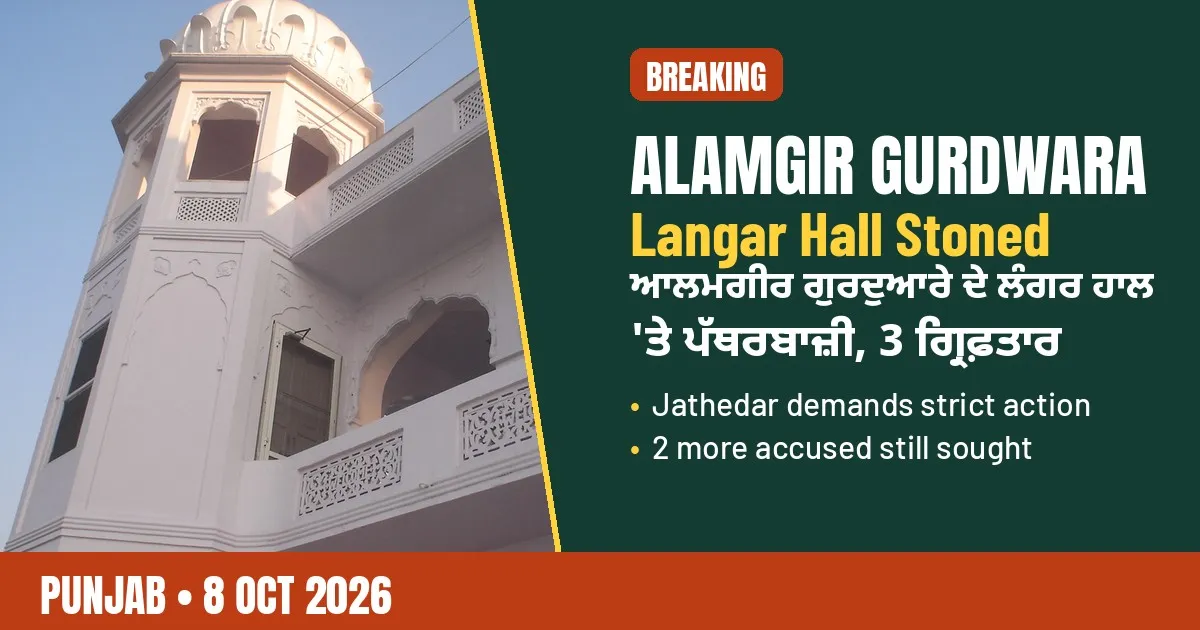 ਆਲਮਗੀਰ ਗੁਰਦੁਆਰੇ ਦੇ ਲੰਗਰ ਹਾਲ 'ਤੇ ਪੱਥਰਬਾਜ਼ੀਆਲਮਗੀਰ ਗੁਰਦੁਆਰੇ ਦੇ ਲੰਗਰ ਹਾਲ 'ਤੇ ਪੱਥਰਬਾਜ਼ੀ, 3 ਗ੍ਰਿਫ਼ਤਾਰ; ਜਥੇਦਾਰ ਵੱਲੋਂ ਸਖ਼ਤ ਕਾਰਵਾਈ ਦੀ ਮੰਗ
More religion entries to explore
ਸਰੋਤ (3)
ਜੁਗਤੀ ਮੁਫ਼ਤ ਅਤੇ ਸੁਤੰਤਰ ਹੈ। ਪਾਠਕਾਂ ਦਾ ਸਹਿਯੋਗ ਕੋਸ਼ ਨੂੰ ਵਧਾਉਂਦਾ ਹੈ।
ਸਹਿਯੋਗ