
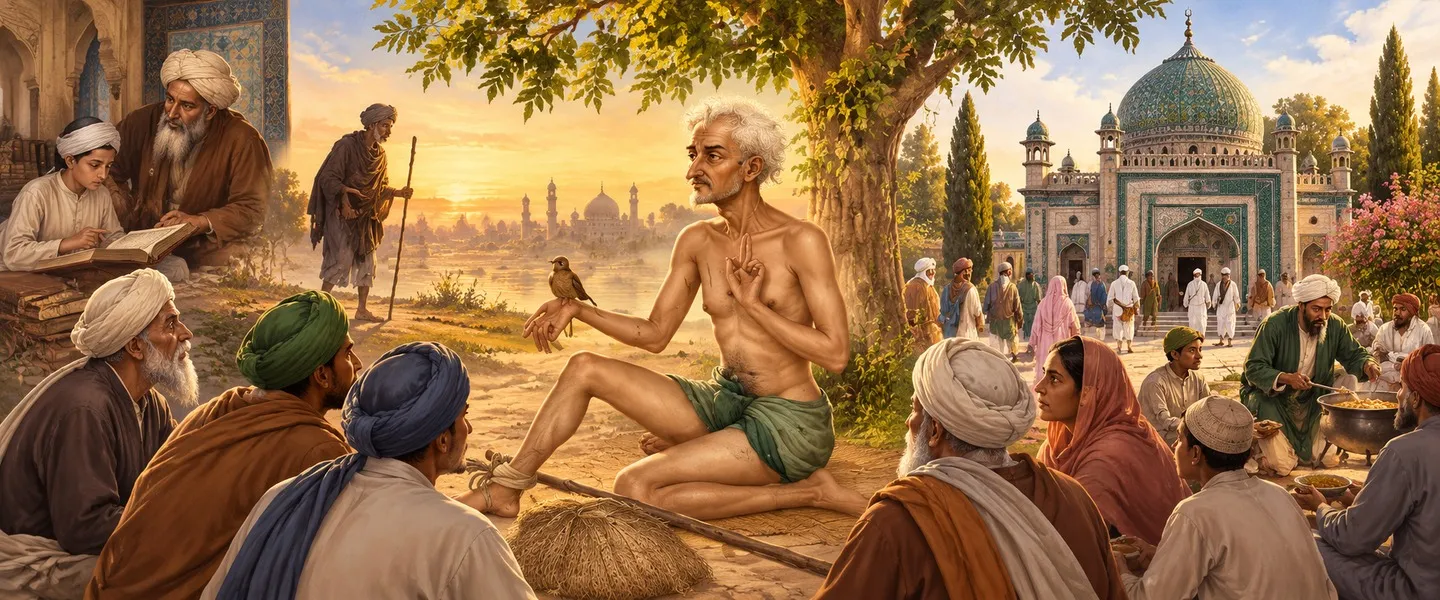
Baba Farid Ji (1173 to 1266) was a Chishti Sufi saint of Pakpattan in Punjab, revered by Muslims and Sikhs alike. His 112 saloks and 4 shabads in the Guru Granth Sahib make him the first great poet of the Punjabi language, and his dargah at Pakpattan draws hundreds of thousands of pilgrims to its annual urs.
- Punjabi name
- ਬਾਬਾ ਫ਼ਰੀਦ ਜੀ
- Years
- 1173 to 1266
- Known for
- Verses in Guru Granth Sahib
- Region
- West Punjab
- Born
- 1173
- Died
- 1266
- Order
- Chishti
Early life and the name Ganjshakar
Baba Farid Ji, born Fariduddin Masud in 1173 in the village of Kothewal near Multan, is one of the most beloved saints of Punjab, claimed with equal devotion by Muslims and Sikhs. His father, Jamal-ud-din Suleiman, was a religious scholar, and his mother, Maryam Bibi, is remembered in tradition as a deeply pious woman. The family had come to the Indus valley from Kabul in his grandfather's time, and traced its lineage to the second Caliph, Umar. Traditional accounts give his birth year as 1173, though some modern sources give 1188.
The title by which the world knows him, Ganjshakar, means Treasure of Sugar. Tradition says his mother encouraged the boy to pray by placing sugar under his prayer mat; once she forgot, yet he found sugar there all the same, and the experience deepened his spiritual fervour. As a young man he travelled to Multan for his education, studying the Quran and Islamic law.
Training under Qutbuddin Bakhtiar Kaki
Seeking a spiritual guide, Farid first met Qutbuddin Bakhtiar Kaki in Multan, where Kaki was passing through on his way from Baghdad to Delhi, and later became his disciple in Delhi. Kaki was the disciple and successor of Moinuddin Chishti, the founder of the Chishti order in India, and the Qutb Minar in Delhi is dedicated to him. The Chishtis emphasised love, humility, service to the poor, and remembrance of God through music and poetry.
Under Kaki's training, Farid practised severe asceticism: long fasts, night vigils, and deliberate poverty. He later moved to Hansi, and when Kaki died in Delhi in 1235, Farid became his spiritual successor. Rather than taking Kaki's place in Delhi, he chose the small town of Ajodhan in the Punjab.
Why is Pakpattan called Pakpattan?
Ajodhan, the town where Baba Farid Ji settled, is now known as Pakpattan, the Holy Ferry, named for the river crossing by which pilgrims reached the shrine on the Sutlej. There he established his hospice, which became a centre of spiritual life. He lived in extreme simplicity, owning almost nothing, and his doors were open to all: rich and poor, Muslim and Hindu.
The hospice's free kitchen fed travellers and the destitute. A 1623 Persian work, the Jawahir al-Faridi, describes Farid as the first to introduce the institution of the langar in the Punjab region; the Sikhs later adopted both the institution and the word. His teaching was direct and uncompromising. He warned against attachment to wealth and power, urging his followers to remember death and to cultivate love for God and compassion for people.
He wrote in the local Punjabi dialect rather than Persian or Arabic, making his message accessible to ordinary people, a choice that helped make him the first great poet of the Punjabi language.
What is in the Guru Granth Sahib?
Over a century after his death, Guru Arjan Dev Ji included 112 of Farid's saloks and four of his shabads in the Adi Granth of 1604, the Sikh scripture: an extraordinary honour for a Muslim saint, and a testament to how fully his spiritual vision aligned with the Sikh Gurus'. The verses stand in the ragas Asa, Suhi and Gauri. Some sources count the verses differently, but 112 saloks and 4 shabads is the standard scholarly count.
His verses return again and again to the themes of humility, the brevity of life, and the equality of all before the divine: the world as a thorny garden, death as the great leveller that buries princes and paupers alike, and the frailty of old age. His Punjabi is among the earliest literary Punjabi we possess, and for that reason alone he stands at the head of the Punjabi literary tradition.
Scholars continue to debate the authorship of the Farid verses in the Granth. Some, noting the absence of contemporary references to Farid composing so many verses and certain linguistic features of the text, argue they were composed by a later holder of the Farid title, Sheikh Ibrahim, a contemporary of Guru Nanak; others defend the traditional attribution. The question remains open among historians.
The Janam Sakhis, the traditional life-stories of Guru Nanak, tell of his visit to Pakpattan with Bhai Mardana, where he met Sheikh Ibrahim, the twelfth in spiritual descent from Farid, and gathered the saint's verses. Academic references to the shrine state the visit as fact; the long conversations the Janam Sakhis record belong to hagiographic tradition.
The dargah and the Bahishti Darwaza
Baba Farid Ji died at Pakpattan in 1266 at an advanced age. His white-marble tomb holds two graves: his own and his eldest son's. It has two doors: the Nuri Darwaza, the Gate of Light, and the Bahishti Darwaza, the Gate of Paradise. The Bahishti Darwaza stays padlocked all year and is opened only during the urs, for five days from sunset to sunrise; devotees believe that passing through it washes away sins. Women are not admitted to the tomb chamber, with rare exceptions.
The urs, his death anniversary, is observed in the first ten days of Muharram, so its Gregorian date moves each year. It is a six-day celebration of qawwali and devotional music with langar served all day and night. A World Health Organization study estimated about 500,000 attendees at the 2010 urs, with queues stretching five kilometres; some accounts put the figure far higher. The festival is at least 700 years old: in 1315 the poet Amir Khusrow recorded that the fiftieth anniversary of Farid's death was already celebrated as an urs.
The shrine has drawn rulers for centuries. Ibn Battuta visited in 1334; Tamerlane prayed there in 1398 and spared the town; Akbar visited in 1571; Shah Jahan devoted the region's revenues to its upkeep in 1629; and Maharaja Ranjit Singh, who took the shrine in 1810, pledged 9,000 rupees a year for it. Pakpattan lies about 180 kilometres from Lahore.
The Chishti lineage after Farid
Farid's chief disciple was Nizamuddin Auliya of Delhi. At twenty, Nizamuddin came to Ajodhan and became Farid's disciple; he visited three times, spending each Ramadan in his master's presence, and on the third visit Farid named him his successor. The chain runs from Moinuddin Chishti to Qutbuddin Bakhtiar Kaki to Farid to Nizamuddin to Nasiruddin Chiragh Dehlavi. Nizamuddin's own most loved disciple was the poet Amir Khusro, and his order, the Chishti Nizami, spread across India. A parallel Sabiri branch descends from another of Farid's disciples, Alauddin Sabir Kaliyari.
Farid's name lives on the map. Faridkot in Indian Punjab is named for him: legend says he spent forty days in seclusion near King Mokhal's fort at then-Mokhalpur, and the grateful king renamed the city. Its annual Agman Purb Mela is held from 21 to 23 September. Faridabad in Haryana and Faridpur district in Bangladesh are also named for him.
Legacy
Baba Farid Ji's legacy is twofold: as a saint and as a poet. In the Chishti Sufi tradition he is revered as one of its great masters; in Sikhism his verses are recited from the Guru Granth Sahib; and in Punjabi literature he is honoured as its founding voice.
Few figures in history are so completely shared between faiths: a measure of the universality of his message, that God is found not in ritual or wealth, but in love, humility and service.
ਮੁੱਢਲਾ ਜੀਵਨ ਅਤੇ ਗੰਜਸ਼ਕਰ ਨਾਮ
ਬਾਬਾ ਫ਼ਰੀਦ ਜੀ, ਜਿਨ੍ਹਾਂ ਦਾ ਨਾਮ ਫ਼ਰੀਦੁੱਦੀਨ ਮਸੂਦ ਸੀ, ਦਾ ਜਨਮ 1173 ਵਿੱਚ ਮੁਲਤਾਨ ਨੇੜੇ ਕੋਠੇਵਾਲ ਪਿੰਡ ਵਿੱਚ ਹੋਇਆ। ਉਹ ਪੰਜਾਬ ਦੇ ਸਭ ਤੋਂ ਪਿਆਰੇ ਸੰਤਾਂ ਵਿੱਚੋਂ ਇੱਕ ਹਨ, ਜਿਨ੍ਹਾਂ ਨੂੰ ਮੁਸਲਮਾਨ ਅਤੇ ਸਿੱਖ ਬਰਾਬਰ ਸ਼ਰਧਾ ਨਾਲ ਮੰਨਦੇ ਹਨ। ਉਨ੍ਹਾਂ ਦੇ ਪਿਤਾ ਜਮਾਲੁੱਦੀਨ ਸੁਲੇਮਾਨ ਧਾਰਮਿਕ ਵਿਦਵਾਨ ਸਨ ਅਤੇ ਮਾਤਾ ਮਰੀਅਮ ਬੀਬੀ ਪਰੰਪਰਾ ਅਨੁਸਾਰ ਬਹੁਤ ਨੇਕ ਔਰਤ ਸਨ। ਉਨ੍ਹਾਂ ਦੇ ਦਾਦੇ ਦੇ ਸਮੇਂ ਪਰਿਵਾਰ ਕਾਬੁਲ ਤੋਂ ਸਿੰਧ ਘਾਟੀ ਆਇਆ ਸੀ, ਅਤੇ ਆਪਣੀ ਵੰਸ਼ ਦੂਜੇ ਖ਼ਲੀਫ਼ਾ ਉਮਰ ਨਾਲ ਜੋੜਦਾ ਸੀ। ਪਰੰਪਰਕ ਵਰਣਨ ਜਨਮ ਸਾਲ 1173 ਦੱਸਦੇ ਹਨ, ਹਾਲਾਂਕਿ ਕੁਝ ਆਧੁਨਿਕ ਸਰੋਤ 1188 ਲਿਖਦੇ ਹਨ।
ਜਿਸ ਉਪਾਧੀ ਨਾਲ ਦੁਨੀਆ ਉਨ੍ਹਾਂ ਨੂੰ ਜਾਣਦੀ ਹੈ, ਗੰਜਸ਼ਕਰ ਦਾ ਅਰਥ ਹੈ ਸ਼ੱਕਰ ਦਾ ਖ਼ਜ਼ਾਨਾ। ਪਰੰਪਰਾ ਅਨੁਸਾਰ ਮਾਤਾ ਨੰਨ੍ਹੇ ਫ਼ਰੀਦ ਨੂੰ ਨਮਾਜ਼ ਲਈ ਉਤਸ਼ਾਹਿਤ ਕਰਨ ਲਈ ਉਸਦੇ ਜਾ-ਨਮਾਜ਼ ਹੇਠਾਂ ਸ਼ੱਕਰ ਰੱਖ ਦਿੰਦੀ ਸੀ; ਇੱਕ ਵਾਰ ਉਹ ਭੁੱਲ ਗਈ, ਪਰ ਲੜਕੇ ਨੂੰ ਸ਼ੱਕਰ ਫਿਰ ਵੀ ਮਿਲੀ, ਅਤੇ ਇਸ ਅਨੁਭਵ ਨੇ ਉਸਦੀ ਰੂਹਾਨੀ ਲਗਨ ਹੋਰ ਡੂੰਘੀ ਕਰ ਦਿੱਤੀ। ਜਵਾਨ ਹੋ ਕੇ ਉਹ ਪੜ੍ਹਾਈ ਲਈ ਮੁਲਤਾਨ ਗਿਆ, ਜਿੱਥੇ ਉਸਨੇ ਕੁਰਾਨ ਅਤੇ ਇਸਲਾਮੀ ਕਾਨੂੰਨ ਪੜ੍ਹੇ।
ਕੁਤਬੁੱਦੀਨ ਬਖ਼ਤਿਆਰ ਕਾਕੀ ਦੀ ਸ਼ਾਗਿਰਦੀ
ਰੂਹਾਨੀ ਮੁਰਸ਼ਦ ਦੀ ਭਾਲ ਵਿੱਚ ਫ਼ਰੀਦ ਪਹਿਲਾਂ ਮੁਲਤਾਨ ਵਿੱਚ ਕੁਤਬੁੱਦੀਨ ਬਖ਼ਤਿਆਰ ਕਾਕੀ ਨੂੰ ਮਿਲਿਆ, ਜੋ ਬਗ਼ਦਾਦ ਤੋਂ ਦਿੱਲੀ ਜਾਂਦੇ ਹੋਏ ਉੱਥੋਂ ਲੰਘ ਰਿਹਾ ਸੀ, ਅਤੇ ਬਾਅਦ ਵਿੱਚ ਦਿੱਲੀ ਵਿੱਚ ਉਸਦਾ ਮੁਰੀਦ ਬਣ ਗਿਆ। ਕਾਕੀ ਭਾਰਤ ਵਿੱਚ ਚਿਸ਼ਤੀ ਸਿਲਸਿਲੇ ਦੇ ਮੋਢੀ ਮੁਈਨੁੱਦੀਨ ਚਿਸ਼ਤੀ ਦਾ ਖ਼ਲੀਫ਼ਾ ਸੀ, ਅਤੇ ਦਿੱਲੀ ਦਾ ਕੁਤਬ ਮੀਨਾਰ ਉਸਦੇ ਨਾਮ ਉੱਤੇ ਹੈ। ਚਿਸ਼ਤੀ ਸੂਫ਼ੀ ਪਿਆਰ, ਨਿਮਰਤਾ, ਗ਼ਰੀਬਾਂ ਦੀ ਸੇਵਾ ਅਤੇ ਸੰਗੀਤ ਤੇ ਸ਼ਾਇਰੀ ਰਾਹੀਂ ਰੱਬ ਦੀ ਯਾਦ ਉੱਤੇ ਜ਼ੋਰ ਦਿੰਦੇ ਸਨ।
ਕਾਕੀ ਦੀ ਤਰਬੀਅਤ ਹੇਠ ਫ਼ਰੀਦ ਨੇ ਸਖ਼ਤ ਰਿਆਜ਼ਤ ਕੀਤੀ: ਲੰਬੇ ਰੋਜ਼ੇ, ਰਾਤਾਂ ਦੀ ਇਬਾਦਤ ਅਤੇ ਜਾਣ-ਬੁੱਝ ਕੇ ਗ਼ਰੀਬੀ। ਬਾਅਦ ਵਿੱਚ ਉਹ ਹਾਂਸੀ ਚਲਾ ਗਿਆ, ਅਤੇ ਜਦੋਂ 1235 ਵਿੱਚ ਕਾਕੀ ਦਾ ਦਿੱਲੀ ਵਿੱਚ ਇੰਤਕਾਲ ਹੋਇਆ ਤਾਂ ਫ਼ਰੀਦ ਉਸਦਾ ਰੂਹਾਨੀ ਵਾਰਸ ਬਣਿਆ। ਦਿੱਲੀ ਵਿੱਚ ਕਾਕੀ ਦੀ ਥਾਂ ਲੈਣ ਦੀ ਥਾਂ ਉਸਨੇ ਪੰਜਾਬ ਦੇ ਛੋਟੇ ਜਿਹੇ ਕਸਬੇ ਅਜੋਧਨ ਨੂੰ ਚੁਣਿਆ।
ਪਾਕਪਤਨ ਨੂੰ ਪਾਕਪਤਨ ਕਿਉਂ ਕਿਹਾ ਜਾਂਦਾ ਹੈ?
ਅਜੋਧਨ, ਜਿੱਥੇ ਬਾਬਾ ਫ਼ਰੀਦ ਜੀ ਵੱਸ ਗਏ, ਅੱਜ ਪਾਕਪਤਨ ਵਜੋਂ ਜਾਣਿਆ ਜਾਂਦਾ ਹੈ, ਜਿਸਦਾ ਅਰਥ ਹੈ ਪਵਿੱਤਰ ਬੇੜੀ, ਉਸ ਦਰਿਆਈ ਘਾਟ ਦੇ ਨਾਮ ਉੱਤੇ ਜਿੱਥੋਂ ਸ਼ਰਧਾਲੂ ਸਤਲੁਜ ਪਾਰ ਕਰਕੇ ਦਰਗਾਹ ਪਹੁੰਚਦੇ ਸਨ। ਉੱਥੇ ਉਨ੍ਹਾਂ ਨੇ ਆਪਣੀ ਖ਼ਾਨਕਾਹ ਕਾਇਮ ਕੀਤੀ, ਜੋ ਰੂਹਾਨੀ ਜੀਵਨ ਦਾ ਕੇਂਦਰ ਬਣ ਗਈ। ਉਹ ਬਹੁਤ ਸਾਦਗੀ ਵਿੱਚ ਰਹਿੰਦੇ ਸਨ, ਲਗਭਗ ਕੁਝ ਵੀ ਨਹੀਂ ਸੀ ਰੱਖਦੇ, ਅਤੇ ਉਨ੍ਹਾਂ ਦੇ ਦਰਵਾਜ਼ੇ ਸਭ ਲਈ ਖੁੱਲ੍ਹੇ ਸਨ: ਅਮੀਰ ਅਤੇ ਗ਼ਰੀਬ, ਮੁਸਲਮਾਨ ਅਤੇ ਹਿੰਦੂ।
ਖ਼ਾਨਕਾਹ ਦਾ ਮੁਫ਼ਤ ਲੰਗਰ ਮੁਸਾਫ਼ਰਾਂ ਅਤੇ ਗ਼ਰੀਬਾਂ ਨੂੰ ਖਾਣਾ ਖੁਆਉਂਦਾ ਸੀ। 1623 ਦੀ ਫ਼ਾਰਸੀ ਕਿਤਾਬ ਜਵਾਹਰ-ਅਲ-ਫ਼ਰੀਦੀ ਫ਼ਰੀਦ ਨੂੰ ਪੰਜਾਬ ਵਿੱਚ ਲੰਗਰ ਦੀ ਸੰਸਥਾ ਸ਼ੁਰੂ ਕਰਨ ਵਾਲਾ ਪਹਿਲਾ ਵਿਅਕਤੀ ਦੱਸਦੀ ਹੈ; ਬਾਅਦ ਵਿੱਚ ਸਿੱਖਾਂ ਨੇ ਇਹ ਸੰਸਥਾ ਅਤੇ ਇਹ ਸ਼ਬਦ ਦੋਵੇਂ ਅਪਣਾ ਲਏ। ਉਨ੍ਹਾਂ ਦੀ ਸਿੱਖਿਆ ਸਿੱਧੀ ਅਤੇ ਬੇਲਾਗ ਸੀ। ਉਹ ਧਨ-ਦੌਲਤ ਅਤੇ ਤਾਕਤ ਨਾਲ ਮੋਹ ਤੋਂ ਸੁਚੇਤ ਕਰਦੇ ਸਨ ਅਤੇ ਮੌਤ ਦੀ ਯਾਦ, ਰੱਬ ਨਾਲ ਪਿਆਰ ਅਤੇ ਲੋਕਾਂ ਨਾਲ ਹਮਦਰਦੀ ਦੀ ਤਾਕੀਦ ਕਰਦੇ ਸਨ।
ਉਨ੍ਹਾਂ ਨੇ ਫ਼ਾਰਸੀ ਜਾਂ ਅਰਬੀ ਦੀ ਥਾਂ ਸਥਾਨਕ ਪੰਜਾਬੀ ਬੋਲੀ ਵਿੱਚ ਲਿਖਿਆ, ਜਿਸ ਨਾਲ ਉਨ੍ਹਾਂ ਦਾ ਸੰਦੇਸ਼ ਆਮ ਲੋਕਾਂ ਤੱਕ ਪਹੁੰਚਿਆ, ਅਤੇ ਇਸੇ ਚੋਣ ਨੇ ਉਨ੍ਹਾਂ ਨੂੰ ਪੰਜਾਬੀ ਭਾਸ਼ਾ ਦਾ ਪਹਿਲਾ ਮਹਾਨ ਕਵੀ ਬਣਾ ਦਿੱਤਾ।
ਗੁਰੂ ਗ੍ਰੰਥ ਸਾਹਿਬ ਵਿੱਚ ਕੀ ਹੈ?
ਉਨ੍ਹਾਂ ਦੇ ਚਲਾਣੇ ਤੋਂ ਸੌ ਸਾਲ ਤੋਂ ਵੱਧ ਬਾਅਦ ਗੁਰੂ ਅਰਜਨ ਦੇਵ ਜੀ ਨੇ 1604 ਦੇ ਆਦਿ ਗ੍ਰੰਥ ਵਿੱਚ ਫ਼ਰੀਦ ਦੇ 112 ਸਲੋਕ ਅਤੇ ਚਾਰ ਸ਼ਬਦ ਸ਼ਾਮਲ ਕੀਤੇ, ਜੋ ਸਿੱਖ ਧਰਮ ਗ੍ਰੰਥ ਹੈ: ਇੱਕ ਮੁਸਲਮਾਨ ਸੰਤ ਲਈ ਇਹ ਅਸਾਧਾਰਨ ਸਨਮਾਨ ਸੀ, ਅਤੇ ਇਸ ਗੱਲ ਦਾ ਸਬੂਤ ਕਿ ਉਨ੍ਹਾਂ ਦੀ ਰੂਹਾਨੀ ਸੋਚ ਸਿੱਖ ਗੁਰੂਆਂ ਨਾਲ ਕਿੰਨੀ ਮਿਲਦੀ ਸੀ। ਇਹ ਬਾਣੀ ਆਸਾ, ਸੂਹੀ ਅਤੇ ਗਉੜੀ ਰਾਗਾਂ ਵਿੱਚ ਹੈ। ਕੁਝ ਸਰੋਤ ਗਿਣਤੀ ਵੱਖਰੀ ਦੱਸਦੇ ਹਨ, ਪਰ 112 ਸਲੋਕ ਅਤੇ 4 ਸ਼ਬਦ ਮਿਆਰੀ ਵਿਦਵਤਾਪੂਰਨ ਗਿਣਤੀ ਹੈ।
ਉਨ੍ਹਾਂ ਦੇ ਸਲੋਕ ਵਾਰ-ਵਾਰ ਨਿਮਰਤਾ, ਜੀਵਨ ਦੀ ਨਾਸ਼ਵਾਨਤਾ ਅਤੇ ਰੱਬ ਅੱਗੇ ਸਭ ਦੀ ਬਰਾਬਰੀ ਦੇ ਵਿਸ਼ਿਆਂ ਉੱਤੇ ਆਉਂਦੇ ਹਨ: ਸੰਸਾਰ ਇੱਕ ਕੰਡਿਆਂ ਵਾਲਾ ਬਾਗ਼ ਹੈ, ਮੌਤ ਉਹ ਮਹਾਨ ਬਰਾਬਰ ਕਰਨ ਵਾਲੀ ਹੈ ਜੋ ਬਾਦਸ਼ਾਹਾਂ ਅਤੇ ਕੰਗਾਲਾਂ ਨੂੰ ਇੱਕੋ ਮਿੱਟੀ ਵਿੱਚ ਦਫ਼ਨ ਕਰ ਦਿੰਦੀ ਹੈ, ਅਤੇ ਬੁਢਾਪਾ ਕਿੰਨਾ ਨਿਰਬਲ ਹੈ। ਉਨ੍ਹਾਂ ਦੀ ਪੰਜਾਬੀ ਸਾਡੇ ਕੋਲ ਮੌਜੂਦ ਸਭ ਤੋਂ ਪੁਰਾਣੀ ਸਾਹਿਤਕ ਪੰਜਾਬੀ ਵਿੱਚੋਂ ਹੈ, ਅਤੇ ਸਿਰਫ਼ ਇਸੇ ਕਾਰਨ ਉਹ ਪੰਜਾਬੀ ਸਾਹਿਤਕ ਪਰੰਪਰਾ ਦੇ ਮੋਢੀ ਹਨ।
ਵਿਦਵਾਨਾਂ ਵਿੱਚ ਗ੍ਰੰਥ ਵਿੱਚਲੀ ਫ਼ਰੀਦ ਬਾਣੀ ਦੇ ਲੇਖਕ ਉੱਤੇ ਅਜੇ ਵੀ ਬਹਿਸ ਹੈ। ਕੁਝ ਵਿਦਵਾਨ, ਇਸ ਗੱਲ ਵੱਲ ਇਸ਼ਾਰਾ ਕਰਦੇ ਹੋਏ ਕਿ ਸਮਕਾਲੀ ਸਰੋਤਾਂ ਵਿੱਚ ਫ਼ਰੀਦ ਦੇ ਇੰਨੇ ਸਲੋਕ ਲਿਖਣ ਦਾ ਕੋਈ ਜ਼ਿਕਰ ਨਹੀਂ ਮਿਲਦਾ ਅਤੇ ਪਾਠ ਦੀਆਂ ਕੁਝ ਭਾਸ਼ਾਈ ਵਿਸ਼ੇਸ਼ਤਾਵਾਂ, ਦਲੀਲ ਦਿੰਦੇ ਹਨ ਕਿ ਇਹ ਫ਼ਰੀਦ ਦੀ ਗੱਦੀ ਦੇ ਬਾਅਦ ਦੇ ਵਾਰਸ, ਗੁਰੂ ਨਾਨਕ ਦੇਵ ਜੀ ਦੇ ਸਮਕਾਲੀ ਸ਼ੇਖ਼ ਇਬਰਾਹੀਮ ਦੀ ਰਚਨਾ ਹੈ; ਦੂਜੇ ਪਰੰਪਰਕ ਮੰਨਤਾ ਦਾ ਬਚਾਅ ਕਰਦੇ ਹਨ। ਇਤਿਹਾਸਕਾਰਾਂ ਵਿੱਚ ਇਹ ਸਵਾਲ ਅਜੇ ਖੁੱਲ੍ਹਾ ਹੈ।
ਜਨਮਸਾਖੀਆਂ, ਭਾਵ ਗੁਰੂ ਨਾਨਕ ਦੇਵ ਜੀ ਦੇ ਜੀਵਨ ਦੀਆਂ ਪਰੰਪਰਕ ਕਥਾਵਾਂ, ਦੱਸਦੀਆਂ ਹਨ ਕਿ ਉਹ ਭਾਈ ਮਰਦਾਨਾ ਨਾਲ ਪਾਕਪਤਨ ਗਏ, ਜਿੱਥੇ ਉਹ ਫ਼ਰੀਦ ਤੋਂ ਬਾਰ੍ਹਵੀਂ ਪੀੜ੍ਹੀ ਦੇ ਰੂਹਾਨੀ ਵਾਰਸ ਸ਼ੇਖ਼ ਇਬਰਾਹੀਮ ਨੂੰ ਮਿਲੇ ਅਤੇ ਸੰਤ ਦੀ ਬਾਣੀ ਇਕੱਠੀ ਕੀਤੀ। ਦਰਗਾਹ ਬਾਰੇ ਵਿਦਵਤਾਪੂਰਨ ਹਵਾਲੇ ਇਸ ਯਾਤਰਾ ਨੂੰ ਤੱਥ ਵਜੋਂ ਦੱਸਦੇ ਹਨ; ਜਨਮਸਾਖੀਆਂ ਵਿੱਚ ਦਰਜ ਲੰਬੀਆਂ ਗੱਲਬਾਤਾਂ ਪਰੰਪਰਕ ਜੀਵਨ-ਕਥਾ ਦਾ ਹਿੱਸਾ ਹਨ।
ਦਰਗਾਹ ਅਤੇ ਬਹਿਸ਼ਤੀ ਦਰਵਾਜ਼ਾ
ਬਾਬਾ ਫ਼ਰੀਦ ਜੀ 1266 ਵਿੱਚ ਪਾਕਪਤਨ ਵਿੱਚ ਵੱਡੀ ਉਮਰ ਵਿੱਚ ਚਲਾਣਾ ਕਰ ਗਏ। ਉਨ੍ਹਾਂ ਦੇ ਚਿੱਟੇ ਸੰਗਮਰਮਰ ਦੇ ਮਕਬਰੇ ਵਿੱਚ ਦੋ ਕਬਰਾਂ ਹਨ: ਉਨ੍ਹਾਂ ਦੀ ਆਪਣੀ ਅਤੇ ਉਨ੍ਹਾਂ ਦੇ ਵੱਡੇ ਪੁੱਤਰ ਦੀ। ਇਸਦੇ ਦੋ ਦਰਵਾਜ਼ੇ ਹਨ: ਨੂਰੀ ਦਰਵਾਜ਼ਾ, ਭਾਵ ਰੌਸ਼ਨੀ ਦਾ ਦਰਵਾਜ਼ਾ, ਅਤੇ ਬਹਿਸ਼ਤੀ ਦਰਵਾਜ਼ਾ, ਭਾਵ ਜੰਨਤ ਦਾ ਦਰਵਾਜ਼ਾ। ਬਹਿਸ਼ਤੀ ਦਰਵਾਜ਼ਾ ਸਾਲ ਭਰ ਜਿੰਦਰਾ ਲੱਗਾ ਰਹਿੰਦਾ ਹੈ ਅਤੇ ਸਿਰਫ਼ ਉਰਸ ਦੌਰਾਨ ਪੰਜ ਦਿਨ, ਸ਼ਾਮ ਤੋਂ ਸਵੇਰ ਤੱਕ ਖੋਲ੍ਹਿਆ ਜਾਂਦਾ ਹੈ; ਸ਼ਰਧਾਲੂ ਮੰਨਦੇ ਹਨ ਕਿ ਇਸ ਵਿੱਚੋਂ ਲੰਘਣ ਨਾਲ ਪਾਪ ਧੁਲ ਜਾਂਦੇ ਹਨ। ਮਕਬਰੇ ਦੇ ਅੰਦਰਲੇ ਕਮਰੇ ਵਿੱਚ ਔਰਤਾਂ ਨੂੰ ਆਮ ਤੌਰ ਉੱਤੇ ਜਾਣ ਦੀ ਇਜਾਜ਼ਤ ਨਹੀਂ, ਹਾਲਾਂਕਿ ਕੁਝ ਅਪਵਾਦ ਹੋਏ ਹਨ।
ਉਰਸ, ਭਾਵ ਉਨ੍ਹਾਂ ਦੀ ਬਰਸੀ, ਮੁਹੱਰਮ ਦੇ ਪਹਿਲੇ ਦਸ ਦਿਨਾਂ ਵਿੱਚ ਮਨਾਇਆ ਜਾਂਦਾ ਹੈ, ਇਸ ਲਈ ਇਸਲਾਮੀ ਕੈਲੰਡਰ ਅਨੁਸਾਰ ਇਸਦੀ ਅੰਗਰੇਜ਼ੀ ਤਾਰੀਖ਼ ਹਰ ਸਾਲ ਬਦਲਦੀ ਹੈ। ਇਹ ਛੇ ਦਿਨਾਂ ਦਾ ਜਸ਼ਨ ਹੈ ਜਿਸ ਵਿੱਚ ਕੱਵਾਲੀ ਅਤੇ ਭਗਤੀ ਸੰਗੀਤ ਹੁੰਦਾ ਹੈ ਅਤੇ ਦਿਨ-ਰਾਤ ਲੰਗਰ ਚਲਦਾ ਹੈ। ਵਿਸ਼ਵ ਸਿਹਤ ਸੰਗਠਨ ਦੇ ਇੱਕ ਅਧਿਐਨ ਅਨੁਸਾਰ 2010 ਦੇ ਉਰਸ ਵਿੱਚ ਲਗਭਗ ਪੰਜ ਲੱਖ ਸ਼ਰਧਾਲੂ ਆਏ ਸਨ, ਅਤੇ ਕਤਾਰਾਂ ਪੰਜ ਕਿਲੋਮੀਟਰ ਤੱਕ ਲੰਬੀਆਂ ਸਨ; ਕੁਝ ਵਰਣਨ ਇਹ ਗਿਣਤੀ ਹੋਰ ਵੱਧ ਦੱਸਦੇ ਹਨ। ਇਹ ਮੇਲਾ ਘੱਟੋ-ਘੱਟ 700 ਸਾਲ ਪੁਰਾਣਾ ਹੈ: 1315 ਵਿੱਚ ਸ਼ਾਇਰ ਅਮੀਰ ਖੁਸਰੋ ਨੇ ਲਿਖਿਆ ਕਿ ਫ਼ਰੀਦ ਦੇ ਚਲਾਣੇ ਦੀ ਪੰਜਾਹਵੀਂ ਵਰ੍ਹੇਗੰਢ ਪਹਿਲਾਂ ਹੀ ਉਰਸ ਵਜੋਂ ਮਨਾਈ ਜਾ ਰਹੀ ਸੀ।
ਸਦੀਆਂ ਤੋਂ ਇਹ ਦਰਗਾਹ ਹਾਕਮਾਂ ਨੂੰ ਖਿੱਚਦੀ ਆਈ ਹੈ। ਇਬਨ ਬਤੂਤਾ 1334 ਵਿੱਚ ਆਇਆ; ਤੈਮੂਰ ਨੇ 1398 ਵਿੱਚ ਇੱਥੇ ਨਮਾਜ਼ ਪੜ੍ਹੀ ਅਤੇ ਸ਼ਹਿਰ ਨੂੰ ਬਖ਼ਸ਼ ਦਿੱਤਾ; ਅਕਬਰ 1571 ਵਿੱਚ ਆਇਆ; ਸ਼ਾਹਜਹਾਂ ਨੇ 1629 ਵਿੱਚ ਇਲਾਕੇ ਦਾ ਲਗਾਨ ਦਰਗਾਹ ਦੀ ਸੰਭਾਲ ਲਈ ਮੁਕਰਰ ਕਰ ਦਿੱਤਾ; ਅਤੇ ਮਹਾਰਾਜਾ ਰਣਜੀਤ ਸਿੰਘ, ਜਿਸਨੇ 1810 ਵਿੱਚ ਦਰਗਾਹ ਆਪਣੇ ਕਬਜ਼ੇ ਵਿੱਚ ਲਈ, ਨੇ ਇਸਦੀ ਸੰਭਾਲ ਲਈ ਸਾਲਾਨਾ 9,000 ਰੁਪਏ ਦੇਣ ਦਾ ਵਾਅਦਾ ਕੀਤਾ। ਪਾਕਪਤਨ ਲਾਹੌਰ ਤੋਂ ਲਗਭਗ 180 ਕਿਲੋਮੀਟਰ ਹੈ।
ਫ਼ਰੀਦ ਤੋਂ ਬਾਅਦ ਚਿਸ਼ਤੀ ਸਿਲਸਿਲਾ
ਫ਼ਰੀਦ ਦੇ ਸਭ ਤੋਂ ਵੱਡੇ ਮੁਰੀਦ ਦਿੱਲੀ ਦੇ ਨਿਜ਼ਾਮੁੱਦੀਨ ਔਲੀਆ ਸਨ। ਵੀਹ ਸਾਲ ਦੀ ਉਮਰ ਵਿੱਚ ਨਿਜ਼ਾਮੁੱਦੀਨ ਅਜੋਧਨ ਆਇਆ ਅਤੇ ਫ਼ਰੀਦ ਦਾ ਮੁਰੀਦ ਬਣ ਗਿਆ; ਉਹ ਤਿੰਨ ਵਾਰ ਆਇਆ, ਹਰ ਵਾਰ ਰਮਜ਼ਾਨ ਆਪਣੇ ਮੁਰਸ਼ਦ ਦੀ ਹਾਜ਼ਰੀ ਵਿੱਚ ਗੁਜ਼ਾਰਿਆ, ਅਤੇ ਤੀਜੀ ਵਾਰ ਫ਼ਰੀਦ ਨੇ ਉਸਨੂੰ ਆਪਣਾ ਵਾਰਸ ਥਾਪਿਆ। ਸਿਲਸਿਲਾ ਇਸ ਤਰ੍ਹਾਂ ਚਲਦਾ ਹੈ: ਮੁਈਨੁੱਦੀਨ ਚਿਸ਼ਤੀ ਤੋਂ ਕੁਤਬੁੱਦੀਨ ਬਖ਼ਤਿਆਰ ਕਾਕੀ, ਕਾਕੀ ਤੋਂ ਫ਼ਰੀਦ, ਫ਼ਰੀਦ ਤੋਂ ਨਿਜ਼ਾਮੁੱਦੀਨ, ਨਿਜ਼ਾਮੁੱਦੀਨ ਤੋਂ ਨਸੀਰੁੱਦੀਨ ਚਿਰਾਗ਼ ਦੇਹਲਵੀ। ਨਿਜ਼ਾਮੁੱਦੀਨ ਦਾ ਸਭ ਤੋਂ ਪਿਆਰਾ ਮੁਰੀਦ ਸ਼ਾਇਰ ਅਮੀਰ ਖੁਸਰੋ ਸੀ, ਅਤੇ ਉਸਦਾ ਸਿਲਸਿਲਾ, ਚਿਸ਼ਤੀ ਨਿਜ਼ਾਮੀ, ਸਾਰੇ ਭਾਰਤ ਵਿੱਚ ਫੈਲਿਆ। ਫ਼ਰੀਦ ਦੇ ਇੱਕ ਹੋਰ ਮੁਰੀਦ, ਅਲਾਉੱਦੀਨ ਸਾਬਿਰ ਕਲਿਅਰੀ ਤੋਂ ਇੱਕ ਸਮਾਂਤਰ ਸਾਬਿਰੀ ਸ਼ਾਖ਼ਾ ਨਿਕਲੀ।
ਫ਼ਰੀਦ ਦਾ ਨਾਮ ਨਕਸ਼ੇ ਉੱਤੇ ਵੀ ਹੈ। ਭਾਰਤੀ ਪੰਜਾਬ ਦਾ ਫ਼ਰੀਦਕੋਟ ਉਨ੍ਹਾਂ ਦੇ ਨਾਮ ਉੱਤੇ ਹੈ: ਪਰੰਪਰਾ ਅਨੁਸਾਰ ਉਹ ਮੋਖਲਪੁਰ ਦੇ ਰਾਜਾ ਮੋਖਲ ਦੇ ਕਿਲ੍ਹੇ ਨੇੜੇ ਚਾਲੀ ਦਿਨ ਚਿੱਲੇ ਵਿੱਚ ਬੈਠੇ, ਅਤੇ ਸ਼ੁਕਰਗੁਜ਼ਾਰ ਰਾਜੇ ਨੇ ਸ਼ਹਿਰ ਦਾ ਨਾਮ ਬਦਲ ਦਿੱਤਾ। ਉੱਥੇ ਹਰ ਸਾਲ 21 ਤੋਂ 23 ਸਤੰਬਰ ਤੱਕ ਬਾਬਾ ਸ਼ੇਖ਼ ਫ਼ਰੀਦ ਆਗਮਨ ਪੁਰਬ ਮੇਲਾ ਲੱਗਦਾ ਹੈ। ਹਰਿਆਣੇ ਦਾ ਫ਼ਰੀਦਾਬਾਦ ਅਤੇ ਬੰਗਲਾਦੇਸ਼ ਦਾ ਫ਼ਰੀਦਪੁਰ ਜ਼ਿਲ੍ਹਾ ਵੀ ਉਨ੍ਹਾਂ ਦੇ ਨਾਮ ਉੱਤੇ ਹਨ।
ਵਿਰਾਸਤ
ਬਾਬਾ ਫ਼ਰੀਦ ਜੀ ਦੀ ਵਿਰਾਸਤ ਦੋਹਰੀ ਹੈ: ਇੱਕ ਸੰਤ ਵਜੋਂ ਅਤੇ ਇੱਕ ਕਵੀ ਵਜੋਂ। ਚਿਸ਼ਤੀ ਸੂਫ਼ੀ ਪਰੰਪਰਾ ਵਿੱਚ ਉਹ ਇਸਦੇ ਮਹਾਨ ਮੁਰਸ਼ਦਾਂ ਵਿੱਚੋਂ ਇੱਕ ਮੰਨੇ ਜਾਂਦੇ ਹਨ; ਸਿੱਖ ਧਰਮ ਵਿੱਚ ਉਨ੍ਹਾਂ ਦੀ ਬਾਣੀ ਗੁਰੂ ਗ੍ਰੰਥ ਸਾਹਿਬ ਵਿੱਚੋਂ ਪੜ੍ਹੀ ਜਾਂਦੀ ਹੈ; ਅਤੇ ਪੰਜਾਬੀ ਸਾਹਿਤ ਵਿੱਚ ਉਹ ਇਸਦੀ ਮੋਢੀ ਆਵਾਜ਼ ਵਜੋਂ ਸਨਮਾਨਿਤ ਹਨ।
ਇਤਿਹਾਸ ਵਿੱਚ ਬਹੁਤ ਘੱਟ ਸ਼ਖ਼ਸੀਅਤਾਂ ਧਰਮਾਂ ਵਿਚਕਾਰ ਇੰਨੀਆਂ ਸਾਂਝੀਆਂ ਹਨ: ਇਹ ਉਨ੍ਹਾਂ ਦੇ ਸੰਦੇਸ਼ ਦੀ ਸਰਬਵਿਆਪਕਤਾ ਦਾ ਪ੍ਰਮਾਣ ਹੈ, ਕਿ ਰੱਬ ਰਸਮਾਂ ਜਾਂ ਧਨ ਵਿੱਚ ਨਹੀਂ, ਸਗੋਂ ਪਿਆਰ, ਨਿਮਰਤਾ ਅਤੇ ਸੇਵਾ ਵਿੱਚ ਮਿਲਦਾ ਹੈ।
More religion entries to explore
Sources (7)
Jugti is free and independent. Reader support keeps the Kosh growing.
Support