
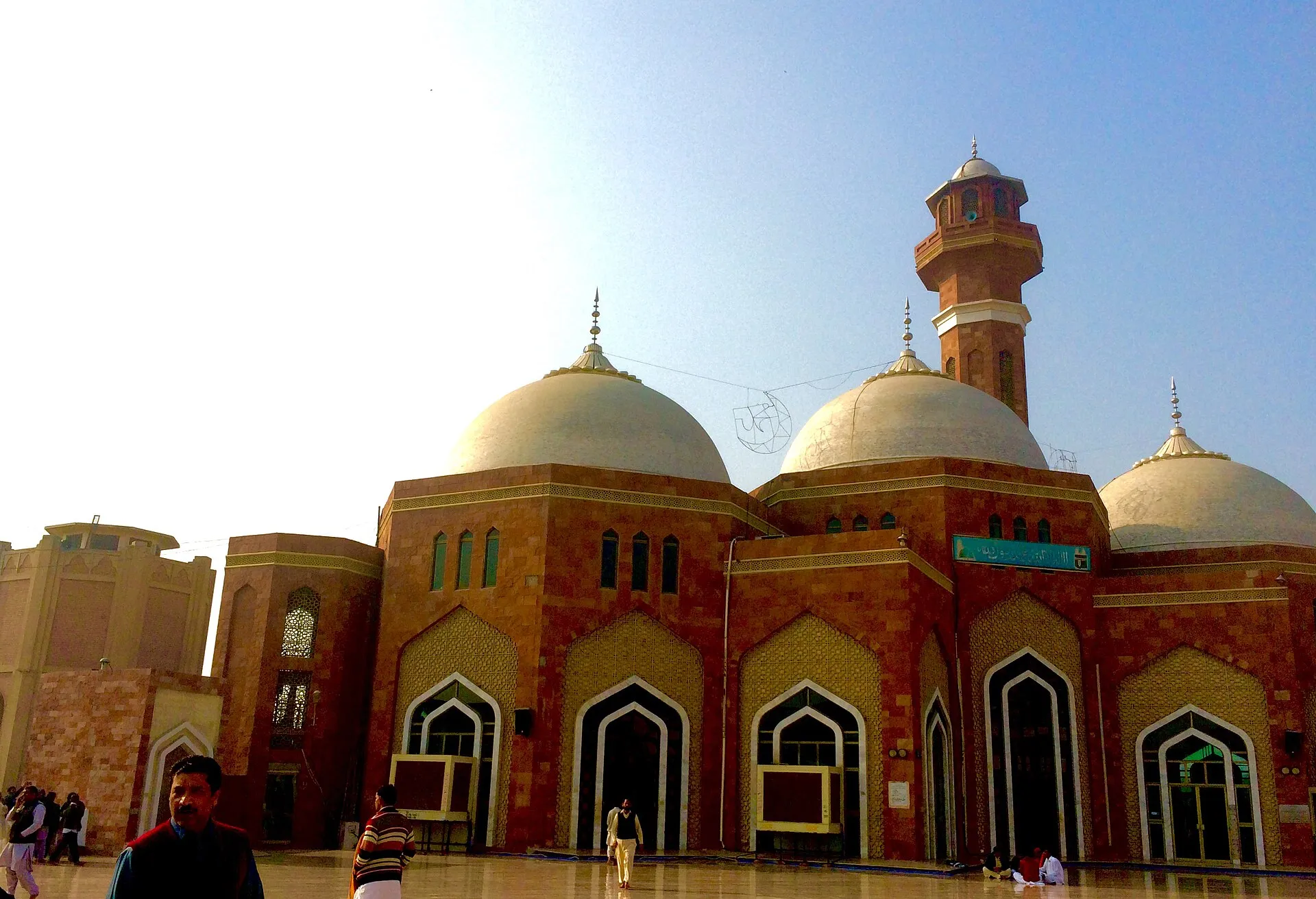
The shrine of Baba Fariduddin Ganjshakar at Pakpattan is a white marble dargah raised in the thirteenth century over the grave of the great Chishti saint. Its southern door, the Bahishti Darwaza or Gate of Paradise, is opened only during his urs, which begins on 5 Muharram and draws up to two million pilgrims. Guru Nanak came to this town to gather Farid's verses, and the shrine remains a place Sikhs, Hindus and Muslims all hold dear.
- Punjabi name
- ਬਾਬਾ ਫ਼ਰੀਦ ਦਾ ਦਰਬਾਰ, ਪਾਕਪੱਟਣ
- Location
- Pakpattan, Punjab, Pakistan; the town took its name, the pure ferry, from pilgrims crossing the Sutlej to reach the shrine
- The saint
- Baba Fariduddin Ganjshakar (1173 to 1266), of the Chishti order
- The tomb
- White marble, holding the graves of Baba Farid and his eldest son
- The famous door
- The Bahishti Darwaza, the Gate of Paradise, opened only during the urs
- The urs
- Begins 5 Muharram, lasts six days, and draws up to two million visitors
- Historic visitors
- Ibn Battuta (1334), Timur (1398), Guru Nanak (early 1500s), Akbar (1571)
Pakpattan exists because of a grave. When Baba Farid, the Chishti saint whose verses Punjabis of every faith still sing, settled in the town then called Ajodhan, pilgrims began crossing the Sutlej by ferry to reach his hospice, and the town took a new name from the journey: Pakpattan, the pure ferry. The white marble shrine raised over his grave after his death in 1266 is now among the most visited dargahs in Pakistan, and its story, of emperors, travellers and Guru Nanak himself, is a history of Punjab in miniature. It is one of the great stops in the Sufi heritage of Punjab.
The saint and his hospice
Baba Farid made his Jama Khana, his hospice, one of the great centres of learning in the thirteenth century subcontinent, and its doors stood open to everyone. He died on 5 Muharram in 1266 and was buried beside the hospice; his disciple Ala ad-Din Mauj Darya was named his successor, and the shrine raised over the grave in the years that followed became the head of a wilayat, a whole district of smaller shrines tied to events of Farid's life. The saint's own reputation crossed every boundary of his age: his verses were sung in the countryside, and his name, Ganjshakar, the treasure of sugar, came, tradition says, from a miracle of sweetness remembered by his followers.
The two doors: Nuri and Bahishti Darwaza
The tomb chamber is of carved white marble and holds two graves, Baba Farid's and that of his eldest son, Badruddin Sulaiman. It has two famous doors. The eastern door is the Nuri Darwaza, the Gate of Light. The southern door is the Bahishti Darwaza, the Gate of Paradise, and it is opened only during the urs, when the crowds are led through it; devotees believe that passing through this gate in those days brings absolution. The press of devotion has a cost: a stampede at the gate in 2001 killed thirty six people, and passage is now carefully queued and managed. The shrine serves langar to its visitors and stays open around the clock under the Punjab Auqaf Department.
The urs of Baba Farid
Because Farid died in Muharram, his urs is a Muharram festival: it begins on the fifth of the month and runs for six days, drawing up to two million visitors, among the largest religious gatherings in Pakistan. The Bahishti Darwaza is opened for the passing crowds, qawwali sounds through the nights, and the whole town becomes a fair of pilgrims. In a measure of how completely Farid belongs to both Punjabs, his urs is also commemorated across the border in Amritsar. With Data Darbar in Lahore, Pakpattan forms one of the two poles of Punjab's shrine calendar.
Travellers, emperors and Guru Nanak
The traveller Ibn Battuta visited in 1334 and prayed at the shrine. In 1398 Timur, the conqueror then devastating the region, prayed here too and spared the town. In the early 1500s Guru Nanak came to Pakpattan to collect Baba Farid's compositions from Sheikh Ibrahim, a descendant of the saint who held his seat, and those verses were later enshrined in the Guru Granth Sahib, which is why Farid is revered by Sikhs as well as Muslims. The Mughal emperor Akbar paid his respects in 1571, Shah Jahan issued a decree in 1629 funding the shrine's upkeep, and Maharaja Ranjit Singh, taking the town in 1810, pledged nine thousand rupees a year for its maintenance. After 1947 the shrine became the unrivalled centre of Chishti Sufism in Pakistan.
The shrine today
The complex that greets today's visitor, the white domed mosque in this page's photograph, the courtyards and the tomb chamber, has been rebuilt and extended many times, and the town of Pakpattan has grown around it, its bazaars living from the pilgrim traffic. The shrine stays open around the clock and entry is free; visitors pass through security checks that are now a fixed part of arrival, as at Data Darbar. What has not changed is the pattern of the place: prayer at the tomb, langar for the hungry, qawwali in the season of the urs, and a saint's name on the lips of a whole countryside, in two countries at once.
Can anyone pass through the Bahishti Darwaza?
Yes: during the six days of the urs the gate is opened and the crowds are led through it in managed queues, and people of every faith join the line, as they join every part of the urs. Outside the urs the gate stays closed, and visitors reach the tomb chamber through the courtyard and the Nuri Darwaza, the Gate of Light.
ਪਾਕਪੱਟਣ ਇੱਕ ਕਬਰ ਕਰਕੇ ਵਜੂਦ ਵਿੱਚ ਆਇਆ ਜਦੋਂ ਬਾਬਾ ਫ਼ਰੀਦ, ਚਿਸ਼ਤੀ ਸੰਤ ਜਿਨ੍ਹਾਂ ਦੇ ਸ਼ਲੋਕ ਹਰ ਧਰਮ ਦੇ ਪੰਜਾਬੀ ਅੱਜ ਵੀ ਗਾਉਂਦੇ ਹਨ, ਉਸ ਕਸਬੇ ਵਿੱਚ ਵਸੇ ਜਿਸ ਨੂੰ ਉਦੋਂ ਅਜੋਧਨ ਕਿਹਾ ਜਾਂਦਾ ਸੀ, ਤਾਂ ਸ਼ਰਧਾਲੂ ਉਨ੍ਹਾਂ ਦੀ ਖ਼ਾਨਕਾਹ ਤੱਕ ਪਹੁੰਚਣ ਲਈ ਸਤਲੁਜ ਨੂੰ ਕਿਸ਼ਤੀ ਨਾਲ ਪਾਰ ਕਰਨ ਲੱਗੇ, ਅਤੇ ਕਸਬੇ ਨੂੰ ਉਸੇ ਸਫ਼ਰ ਤੋਂ ਨਵਾਂ ਨਾਂ ਮਿਲਿਆ ਪਾਕਪੱਟਣ, ਪਾਕ ਪੱਤਣ ਸੰਨ 1266 ਵਿੱਚ ਉਨ੍ਹਾਂ ਦੇ ਚਲਾਣੇ ਤੋਂ ਬਾਅਦ ਉਨ੍ਹਾਂ ਦੀ ਕਬਰ ਉੱਤੇ ਬਣਿਆ ਚਿੱਟੇ ਸੰਗਮਰਮਰ ਦਾ ਦਰਬਾਰ ਅੱਜ ਪਾਕਿਸਤਾਨ ਦੀਆਂ ਸਭ ਤੋਂ ਵੱਧ ਵੇਖੀਆਂ ਜਾਂਦੀਆਂ ਦਰਗਾਹਾਂ ਵਿੱਚੋਂ ਇੱਕ ਹੈ, ਅਤੇ ਇਸ ਦੀ ਕਹਾਣੀ, ਬਾਦਸ਼ਾਹਾਂ, ਮੁਸਾਫ਼ਿਰਾਂ ਅਤੇ ਖੁਦ ਗੁਰੂ ਨਾਨਕ ਦੀ, ਛੋਟੇ ਰੂਪ ਵਿੱਚ ਪੰਜਾਬ ਦਾ ਇਤਿਹਾਸ ਹੈ ਇਹ ਪੰਜਾਬ ਦੀ ਸੂਫ਼ੀ ਵਿਰਾਸਤ ਦੇ ਮਹਾਨ ਪੜਾਵਾਂ ਵਿੱਚੋਂ ਇੱਕ ਹੈ
ਸੰਤ ਅਤੇ ਉਨ੍ਹਾਂ ਦੀ ਖ਼ਾਨਕਾਹ
ਬਾਬਾ ਫ਼ਰੀਦ ਨੇ ਆਪਣੀ ਜਾਮਾ ਖ਼ਾਨਾ, ਆਪਣੀ ਖ਼ਾਨਕਾਹ, ਨੂੰ ਤੇਰ੍ਹਵੀਂ ਸਦੀ ਦੇ ਉਪਮਹਾਦੀਪ ਦੇ ਗਿਆਨ ਦੇ ਮਹਾਨ ਕੇਂਦਰਾਂ ਵਿੱਚੋਂ ਇੱਕ ਬਣਾਇਆ, ਅਤੇ ਇਸ ਦੇ ਦਰਵਾਜ਼ੇ ਹਰ ਕਿਸੇ ਲਈ ਖੁੱਲ੍ਹੇ ਸਨ ਉਹ ਸੰਨ 1266 ਵਿੱਚ 5 ਮੁਹੱਰਮ ਨੂੰ ਗੁਜ਼ਰੇ ਅਤੇ ਖ਼ਾਨਕਾਹ ਦੇ ਨਾਲ ਦਫ਼ਨਾਏ ਗਏ ਉਨ੍ਹਾਂ ਦੇ ਚੇਲੇ ਅਲਾ ਅਲ-ਦੀਨ ਮੌਜ ਦਰਿਆ ਨੂੰ ਉਨ੍ਹਾਂ ਦਾ ਉੱਤਰਾਧਿਕਾਰੀ ਨਿਯੁਕਤ ਕੀਤਾ ਗਿਆ, ਅਤੇ ਅਗਲੇ ਸਾਲਾਂ ਵਿੱਚ ਕਬਰ ਉੱਤੇ ਬਣਿਆ ਦਰਬਾਰ ਇੱਕ ਪੂਰੀ ਵਲਾਇਤ ਦਾ ਕੇਂਦਰ ਬਣ ਗਿਆ, ਛੋਟੇ ਦਰਬਾਰਾਂ ਦਾ ਇੱਕ ਇਲਾਕਾ ਜੋ ਫ਼ਰੀਦ ਦੇ ਜੀਵਨ ਦੀਆਂ ਘਟਨਾਵਾਂ ਨਾਲ ਜੁੜਿਆ ਸੀ ਸੰਤ ਦੀ ਆਪਣੀ ਸਾਖ ਆਪਣੇ ਯੁੱਗ ਦੀ ਹਰ ਸਰਹੱਦ ਪਾਰ ਕਰ ਗਈ ਉਨ੍ਹਾਂ ਦੇ ਸ਼ਲੋਕ ਪਿੰਡਾਂ ਵਿੱਚ ਗਾਏ ਜਾਂਦੇ ਸਨ, ਅਤੇ ਉਨ੍ਹਾਂ ਦਾ ਨਾਂ ਗੰਜਸ਼ਕਰ, ਖੰਡ ਦਾ ਖ਼ਜ਼ਾਨਾ, ਪਰੰਪਰਾ ਕਹਿੰਦੀ ਹੈ ਕਿ ਉਨ੍ਹਾਂ ਦੇ ਪੈਰੋਕਾਰਾਂ ਵੱਲੋਂ ਯਾਦ ਕੀਤੀ ਮਿੱਠਾਸ ਦੀ ਇੱਕ ਕਰਾਮਾਤ ਤੋਂ ਪਿਆ
ਦੋ ਦਰਵਾਜ਼ੇ: ਨੂਰੀ ਅਤੇ ਬਹਿਸ਼ਤੀ ਦਰਵਾਜ਼ਾ
ਮੱਕਬਰੇ ਦਾ ਕਮਰਾ ਉੱਕਰੇ ਹੋਏ ਚਿੱਟੇ ਸੰਗਮਰਮਰ ਦਾ ਹੈ ਅਤੇ ਇਸ ਵਿੱਚ ਦੋ ਕਬਰਾਂ ਹਨ, ਬਾਬਾ ਫ਼ਰੀਦ ਦੀ ਅਤੇ ਉਨ੍ਹਾਂ ਦੇ ਵੱਡੇ ਪੁੱਤਰ ਬਦਰੁਦੀਨ ਸੁਲੇਮਾਨ ਦੀ ਇਸ ਦੇ ਦੋ ਮਸ਼ਹੂਰ ਦਰਵਾਜ਼ੇ ਹਨ ਪੂਰਬੀ ਦਰਵਾਜ਼ਾ ਨੂਰੀ ਦਰਵਾਜ਼ਾ ਹੈ, ਨੂਰ ਦਾ ਦਰਵਾਜ਼ਾ ਦੱਖਣੀ ਦਰਵਾਜ਼ਾ ਬਹਿਸ਼ਤੀ ਦਰਵਾਜ਼ਾ ਹੈ, ਜੰਨਤ ਦਾ ਦਰਵਾਜ਼ਾ, ਅਤੇ ਇਹ ਸਿਰਫ਼ ਉਰਸ ਦੌਰਾਨ ਖੁੱਲ੍ਹਦਾ ਹੈ, ਜਦੋਂ ਭੀੜ ਨੂੰ ਇਸ ਵਿੱਚੋਂ ਲੰਘਾਇਆ ਜਾਂਦਾ ਹੈ ਸ਼ਰਧਾਲੂ ਮੰਨਦੇ ਹਨ ਕਿ ਇਨ੍ਹਾਂ ਦਿਨਾਂ ਵਿੱਚ ਇਸ ਦਰਵਾਜ਼ੇ ਵਿੱਚੋਂ ਲੰਘਣ ਨਾਲ ਗੁਨਾਹ ਮੁਆਫ਼ ਹੁੰਦੇ ਹਨ ਭਗਤੀ ਦੀ ਇਸ ਭੀੜ ਦੀ ਕੀਮਤ ਵੀ ਹੈ ਸੰਨ 2001 ਵਿੱਚ ਦਰਵਾਜ਼ੇ ਉੱਤੇ ਹੋਈ ਭਗਦੜ ਵਿੱਚ ਛੱਤੀ ਲੋਕ ਮਾਰੇ ਗਏ ਸਨ, ਅਤੇ ਹੁਣ ਲੰਘਣਾ ਕਤਾਰਾਂ ਵਿੱਚ ਧਿਆਨ ਨਾਲ ਕਰਾਇਆ ਜਾਂਦਾ ਹੈ ਦਰਬਾਰ ਆਉਣ ਵਾਲਿਆਂ ਨੂੰ ਲੰਗਰ ਛਕਾਉਂਦਾ ਹੈ ਅਤੇ ਪੰਜਾਬ ਔਕਾਫ਼ ਵਿਭਾਗ ਹੇਠ ਦਿਨ ਰਾਤ ਖੁੱਲ੍ਹਾ ਰਹਿੰਦਾ ਹੈ
ਬਾਬਾ ਫ਼ਰੀਦ ਦਾ ਉਰਸ
ਕਿਉਂਕਿ ਫ਼ਰੀਦ ਮੁਹੱਰਮ ਵਿੱਚ ਗੁਜ਼ਰੇ ਸਨ, ਉਨ੍ਹਾਂ ਦਾ ਉਰਸ ਮੁਹੱਰਮ ਦਾ ਮੇਲਾ ਹੈ ਇਹ ਮਹੀਨੇ ਦੀ ਪੰਜਵੀਂ ਤਰੀਕ ਤੋਂ ਸ਼ੁਰੂ ਹੋ ਕੇ ਛੇ ਦਿਨ ਚਲਦਾ ਹੈ, ਅਤੇ ਵੀਹ ਲੱਖ ਤੱਕ ਲੋਕ ਖਿੱਚਦਾ ਹੈ, ਪਾਕਿਸਤਾਨ ਦੇ ਸਭ ਤੋਂ ਵੱਡੇ ਧਾਰਮਿਕ ਇਕੱਠਾਂ ਵਿੱਚੋਂ ਇੱਕ ਬਹਿਸ਼ਤੀ ਦਰਵਾਜ਼ਾ ਲੰਘਦੀਆਂ ਭੀੜਾਂ ਲਈ ਖੋਲ੍ਹਿਆ ਜਾਂਦਾ ਹੈ, ਰਾਤਾਂ ਭਰ ਕੱਵਾਲੀ ਗੂੰਜਦੀ ਹੈ, ਅਤੇ ਸਾਰਾ ਕਸਬਾ ਸ਼ਰਧਾਲੂਆਂ ਦਾ ਮੇਲਾ ਬਣ ਜਾਂਦਾ ਹੈ ਇਸ ਗੱਲ ਦੇ ਸਬੂਤ ਵਜੋਂ ਕਿ ਫ਼ਰੀਦ ਦੋਵਾਂ ਪੰਜਾਬਾਂ ਦੇ ਕਿੰਨੇ ਸਾਂਝੇ ਹਨ, ਉਨ੍ਹਾਂ ਦਾ ਉਰਸ ਸਰਹੱਦ ਪਾਰ ਅੰਮ੍ਰਿਤਸਰ ਵਿੱਚ ਵੀ ਮਨਾਇਆ ਜਾਂਦਾ ਹੈ ਲਾਹੌਰ ਦੇ ਦਾਤਾ ਦਰਬਾਰ ਨਾਲ ਮਿਲ ਕੇ ਪਾਕਪੱਟਣ ਪੰਜਾਬ ਦੇ ਦਰਬਾਰ ਕੈਲੰਡਰ ਦੇ ਦੋ ਧੁਰਾਂ ਵਿੱਚੋਂ ਇੱਕ ਬਣਦਾ ਹੈ
ਮੁਸਾਫ਼ਿਰ, ਬਾਦਸ਼ਾਹ ਅਤੇ ਗੁਰੂ ਨਾਨਕ
ਮੁਸਾਫ਼ਿਰ ਇਬਨ ਬਤੂਤਾ ਸੰਨ 1334 ਵਿੱਚ ਆਇਆ ਅਤੇ ਦਰਬਾਰ ਵਿੱਚ ਇਬਾਦਤ ਕੀਤੀ ਸੰਨ 1398 ਵਿੱਚ ਤੈਮੂਰ, ਜੋ ਉਸ ਵੇਲੇ ਇਲਾਕੇ ਨੂੰ ਉਜਾੜ ਰਿਹਾ ਜੇਤੂ ਸੀ, ਨੇ ਵੀ ਇੱਥੇ ਇਬਾਦਤ ਕੀਤੀ ਅਤੇ ਕਸਬੇ ਨੂੰ ਬਖ਼ਸ਼ ਦਿੱਤਾ 1500 ਦੇ ਦਹਾਕੇ ਦੇ ਸ਼ੁਰੂ ਵਿੱਚ ਗੁਰੂ ਨਾਨਕ ਪਾਕਪੱਟਣ ਆਏ ਤਾਂ ਜੋ ਬਾਬਾ ਫ਼ਰੀਦ ਦੀਆਂ ਰਚਨਾਵਾਂ ਸ਼ੇਖ਼ ਇਬਰਾਹੀਮ ਕੋਲੋਂ ਇਕੱਠੀਆਂ ਕਰ ਸਕਣ, ਜੋ ਸੰਤ ਦੇ ਵੰਸ਼ਜ ਅਤੇ ਉਨ੍ਹਾਂ ਦੀ ਗੱਦੀ ਦੇ ਧਾਰਕ ਸਨ, ਅਤੇ ਉਹ ਸ਼ਲੋਕ ਬਾਅਦ ਵਿੱਚ ਗੁਰੂ ਗ੍ਰੰਥ ਸਾਹਿਬ ਵਿੱਚ ਦਰਜ ਹੋਏ, ਇਸੇ ਲਈ ਫ਼ਰੀਦ ਨੂੰ ਮੁਸਲਮਾਨਾਂ ਦੇ ਨਾਲ ਨਾਲ ਸਿੱਖ ਵੀ ਸਤਕਾਰਦੇ ਹਨ ਮੁਗ਼ਲ ਬਾਦਸ਼ਾਹ ਅਕਬਰ ਨੇ ਸੰਨ 1571 ਵਿੱਚ ਹਾਜ਼ਰੀ ਭਰੀ, ਸ਼ਾਹ ਜਹਾਨ ਨੇ ਸੰਨ 1629 ਵਿੱਚ ਦਰਬਾਰ ਦੇ ਖਰਚੇ ਲਈ ਫ਼ਰਮਾਨ ਜਾਰੀ ਕੀਤਾ, ਅਤੇ ਮਹਾਰਾਜਾ ਰਣਜੀਤ ਸਿੰਘ ਨੇ ਸੰਨ 1810 ਵਿੱਚ ਕਸਬਾ ਲੈਣ ਉੱਤੇ ਇਸ ਦੀ ਸਾਂਭ ਸੰਭਾਲ ਲਈ ਸਾਲ ਦੇ ਨੌਂ ਹਜ਼ਾਰ ਰੁਪਏ ਦਾ ਵਾਅਦਾ ਕੀਤਾ ਸੰਨ 1947 ਤੋਂ ਬਾਅਦ ਇਹ ਦਰਬਾਰ ਪਾਕਿਸਤਾਨ ਵਿੱਚ ਚਿਸ਼ਤੀ ਸੂਫ਼ੀਵਾਦ ਦਾ ਬੇਜੋੜ ਕੇਂਦਰ ਬਣ ਗਿਆ
ਅੱਜ ਦਾ ਦਰਬਾਰ
ਜੋ ਕੰਪਲੈਕਸ ਅੱਜ ਦੇ ਆਉਣ ਵਾਲੇ ਨੂੰ ਮਿਲਦਾ ਹੈ, ਇਸ ਪੰਨੇ ਦੀ ਤਸਵੀਰ ਵਾਲੀ ਚਿੱਟੇ ਗੁੰਬਦਾਂ ਵਾਲੀ ਮਸਜਿਦ, ਵਿਹੜੇ ਅਤੇ ਮੱਕਬਰੇ ਦਾ ਕਮਰਾ, ਕਈ ਵਾਰ ਮੁੜ ਬਣਾਇਆ ਅਤੇ ਫੈਲਾਇਆ ਗਿਆ ਹੈ, ਅਤੇ ਪਾਕਪੱਟਣ ਦਾ ਕਸਬਾ ਇਸ ਦੇ ਆਲੇ ਦੁਆਲੇ ਵਧਿਆ ਹੈ, ਜਿਸ ਦੇ ਬਾਜ਼ਾਰ ਸ਼ਰਧਾਲੂਆਂ ਦੇ ਆਉਣ ਜਾਣ ਉੱਤੇ ਜਿਉਂਦੇ ਹਨ ਦਰਬਾਰ ਦਿਨ ਰਾਤ ਖੁੱਲ੍ਹਾ ਰਹਿੰਦਾ ਹੈ ਅਤੇ ਦਾਖ਼ਲਾ ਮੁਫ਼ਤ ਹੈ ਆਉਣ ਵਾਲੇ ਸੁਰੱਖਿਆ ਜਾਂਚ ਵਿੱਚੋਂ ਲੰਘਦੇ ਹਨ, ਜੋ ਹੁਣ ਪਹੁੰਚ ਦਾ ਪੱਕਾ ਹਿੱਸਾ ਹੈ, ਜਿਵੇਂ ਦਾਤਾ ਦਰਬਾਰ ਉੱਤੇ ਜੋ ਨਹੀਂ ਬਦਲਿਆ ਉਹ ਥਾਂ ਦਾ ਢੰਗ ਹੈ ਮੱਕਬਰੇ ਉੱਤੇ ਦੁਆ, ਭੁੱਖਿਆਂ ਲਈ ਲੰਗਰ, ਉਰਸ ਦੇ ਮੌਸਮ ਵਿੱਚ ਕੱਵਾਲੀ, ਅਤੇ ਇੱਕ ਸੰਤ ਦਾ ਨਾਂ ਇੱਕੋ ਵੇਲੇ ਦੋ ਦੇਸ਼ਾਂ ਵਿੱਚ, ਪੂਰੇ ਇਲਾਕੇ ਦੇ ਬੁੱਲ੍ਹਾਂ ਉੱਤੇ
ਕੀ ਕੋਈ ਵੀ ਬਹਿਸ਼ਤੀ ਦਰਵਾਜ਼ੇ ਵਿੱਚੋਂ ਲੰਘ ਸਕਦਾ ਹੈ?
ਹਾਂ ਉਰਸ ਦੇ ਛੇ ਦਿਨਾਂ ਵਿੱਚ ਦਰਵਾਜ਼ਾ ਖੋਲ੍ਹਿਆ ਜਾਂਦਾ ਹੈ ਅਤੇ ਭੀੜ ਨੂੰ ਕਤਾਰਾਂ ਵਿੱਚ ਇਸ ਵਿੱਚੋਂ ਲੰਘਾਇਆ ਜਾਂਦਾ ਹੈ, ਅਤੇ ਹਰ ਧਰਮ ਦੇ ਲੋਕ ਕਤਾਰ ਵਿੱਚ ਖੜ੍ਹਦੇ ਹਨ, ਜਿਵੇਂ ਉਹ ਉਰਸ ਦੇ ਹਰ ਹਿੱਸੇ ਵਿੱਚ ਸ਼ਾਮਲ ਹੁੰਦੇ ਹਨ ਉਰਸ ਤੋਂ ਬਾਹਰ ਦਰਵਾਜ਼ਾ ਬੰਦ ਰਹਿੰਦਾ ਹੈ, ਅਤੇ ਆਉਣ ਵਾਲੇ ਵਿਹੜੇ ਅਤੇ ਨੂਰੀ ਦਰਵਾਜ਼ੇ, ਨੂਰ ਦੇ ਦਰਵਾਜ਼ੇ, ਰਾਹੀਂ ਮੱਕਬਰੇ ਦੇ ਕਮਰੇ ਤੱਕ ਪਹੁੰਚਦੇ ਹਨ