
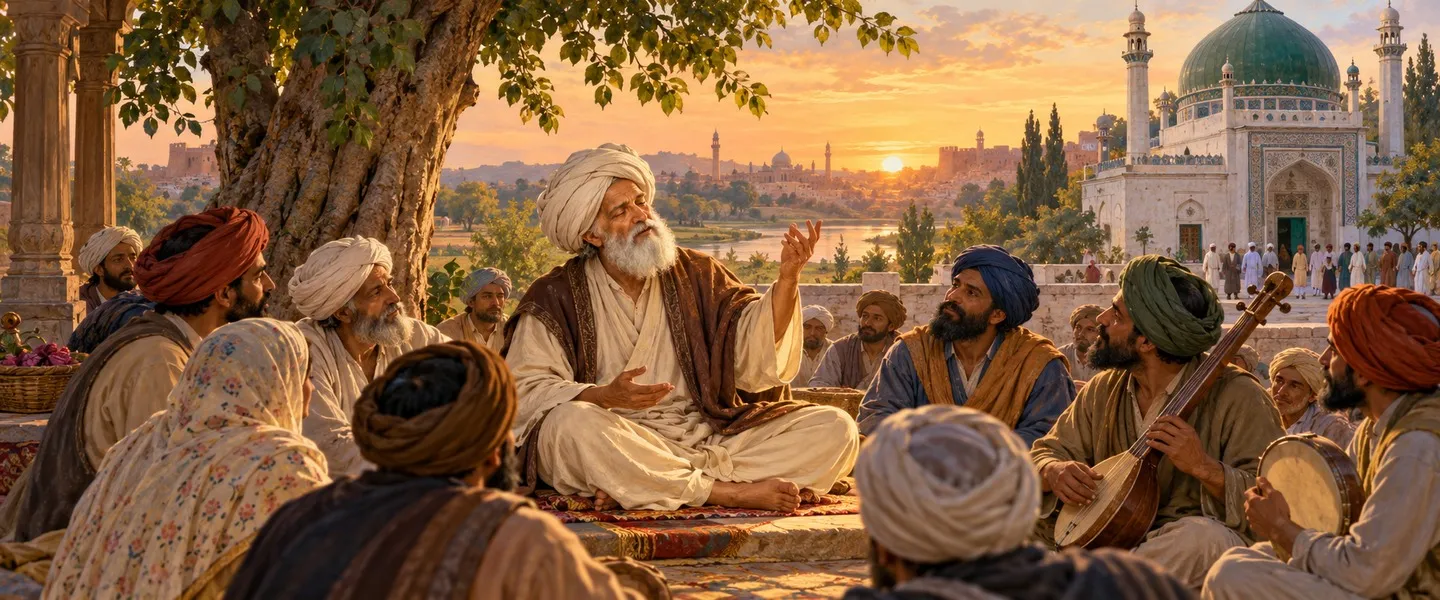
Baba Bulleh Shah (c. 1680-1757) was a Punjabi Sufi poet whose kafis, short sung lyrics in plain Punjabi, made him one of the most widely sung poets in Punjab's history. A Sayyid scholar who took the Lahore gardener Shah Inayat Qadiri as his spiritual master, he wrote against religious formalism and caste pride, holding love of God above ritual. His shrine at Kasur in Pakistan draws pilgrims from both sides of the India-Pakistan border.
- Punjabi name
- ਬਾਬਾ ਬੁੱਲ੍ਹੇ ਸ਼ਾਹ
- Years
- c. 1680-1757
- Known for
- Around 150 kafis in Punjabi
- Full name
- Syed Abdullah Shah Qadri
- Born
- c. 1680, Uch (now Punjab, Pakistan)
- Died
- 1757, Kasur (now Punjab, Pakistan)
All 9 facts
- Resting place
- Darbar Baba Bulleh Shah, Kasur
- Spiritual master
- Shah Inayat Qadiri
- Region
- West Punjab
Baba Bulleh Shah (c. 1680-1757) was a Punjabi Sufi poet whose kafis, short song-like lyrics in the people's language, made him one of the most sung poets in Punjab's history. A Sayyid scholar who chose a Lahore gardener as his spiritual master and was denounced as a heretic, he preached love, not law, as the road to God.
Who was Baba Bulleh Shah?
Baba Bulleh Shah was born Syed Abdullah Shah Qadri around 1680 in Uch, a town in the Multan region of Mughal Punjab that is now in Pakistan. He belonged to a Sayyid family, descendants of the Prophet Muhammad, and by birth and training he was marked for a respectable life as a religious scholar. Punjabis call him Bulleya, an affectionate form of his name, and three centuries after his death his verses are still sung at shrines, concert halls, and village gatherings.
His literary output ran to around 150 kafis and 94 other poetic compositions, all in Punjabi. His themes were divine love (ishq), the oneness of God, social equality, and a fierce impatience with religious formalism. Writers have called him the 'Father of Punjabi Enlightenment' and the poet of the people, because he wrote in the colloquial speech of ordinary Punjabis and aimed his sharpest verses at the powerful.
Early life: from Uch to Kasur
Bulleh Shah's father, Shah Muhammad Darwaish, was a village mosque preacher well versed in Arabic, Persian, and the Quran. When Bulleh Shah was a small boy, the family moved from Uch to Malakwal, a village near Sahiwal, and when he was six they settled at Pandoke, some 50 miles southeast of Kasur. Like other village children he worked as a herder through his childhood and teens, while his father schooled him alongside the other children of the village.
His higher religious education came at Kasur, in the madrassa of the scholar Hafiz Ghulam Murtaza, where he mastered Arabic, Persian, and the religious sciences, and where he later taught for a time. He emerged an eminent scholar of Arabic and Persian. But the formal religion of the mosques and madrasas left him restless, and he began searching for a living spiritual guide.
The gardener who became his master
He found his murshid, his spiritual master, in the most unlikely place. Shah Inayat Qadiri, a Sufi of the Qadri order in Lahore, was an Arain, a community associated with farming and gardening, and worked as a gardener. That a Sayyid scholar should bow at the feet of a gardener scandalized Bulleh Shah's family and the religious establishment. His relatives protested, but his sister stood by him.
Bulleh Shah answered the scandal with defiance, and some of his most famous verses were born from this rupture. In one kafi he turns the insult back on his critics: 'Let anyone who calls me Sayyid be punished with the tortures of hell; and let him revel in the pleasures of heaven, who labels me an Arain.' For him, spiritual worth had nothing to do with birth.
The break with orthodoxy
Bulleh Shah's poetry is a sustained rebellion against religious formalism. He attacked the mullahs and the pandits with equal vigour, mocking those who prayed five times a day yet cheated their neighbours, who made the pilgrimage to Mecca but had never examined their own hearts. Why travel to Mecca, he asked in effect, when the Beloved lives in your own heart? At the core of his teaching was ishq, passionate all-consuming love for the divine, as the only true road to God. Ritual, law, and theology were at best preparations and at worst obstacles.
This made him beloved by ordinary Punjabis and suspect to the orthodox of both faiths. Some Muslim clerics declared him a kafir, an unbeliever, and accounts say that when fundamentalists threatened his life he took refuge in a fort-like gurdwara at Daftuh built by the Sikh chieftainess Bibi Isher Kaur. Tradition also reports that he sympathized with the Sikhs in their struggle against Mughal power, naming Guru Tegh Bahadur Ji and Guru Gobind Singh Ji among those he defended.
The kafis: poetry that sings
Bulleh Shah wrote in the kafi form, short song-like Punjabi poems meant to be sung, and his kafis are among the greatest lyrics in the language. 'Bulla Ki Jana' ('Bulla, I know not who I am') is a profound meditation on identity dissolving into the divine. 'Tere Ishq Nachaya' ('Your love has made me dance') celebrates the madness of divine love. 'Mera Piya Ghar Aaya' ('My beloved has come home') expresses the joy of spiritual union.
His language was the Punjabi of the people: direct, musical, and piercing, full of the imagery of daily Punjabi life, the spinning wheel, the wedding, the river, the beloved's lane. He worked in the Sufi tradition of Punjabi poetry established by Shah Hussain, Sultan Bahu, and Baba Farid Ji, but his plain, modern-sounding vocabulary carried the kafi to listeners far beyond any shrine. This is why his poetry survived: it was never the property of scholars, but of singers and listeners.
Death and the shrine at Kasur
Bulleh Shah spent his later years at Kasur, teaching and composing, and died there in 1757 at about 77. The orthodox clerics of Kasur, who had declared him a non-Muslim, are reported to have refused to lead his funeral prayer; it was led instead by Qazi Syed Zahid Hamdani, a respected religious figure of the town. He was buried at Kasur, and a dargah grew over his grave.
Today the shrine of Baba Bulleh Shah at Kasur is a major pilgrimage site, its ceiling decorated with his verses in elegant calligraphy, drawing Muslims, Sikhs, and Hindus from both sides of the India-Pakistan border. It is a protected monument, and the crowds it draws are so large that in 2024 the local government had to restrict entry and cancel events to manage the influx.
Legacy: Punjab's poet of the people
Few poets in any language have been sung as widely as Bulleh Shah. His kafis have been performed by Nusrat Fateh Ali Khan, Abida Parveen, Pathanay Khan, the Waddali Brothers, and Sain Zahoor; the Pakistani rock band Junoon rendered 'Bullah Ki Jaana' and 'Aleph', and in 2004 Rabbi Shergill turned 'Bullah Ki Jaana' into a rock song that topped charts across India and Pakistan. Verses from 'Tere Ishq Nachaya' were adapted into the Bollywood hit 'Chaiyya Chaiyya' in the 1998 film Dil Se.
His influence runs beyond music. The poet Muhammad Iqbal is said to have drawn his last breath while listening to a kafi, and Bulleh Shah's defiance inspired figures from Bhagat Singh to Faiz Ahmad Faiz. In an age of religious division, his insistence that love matters more than labels has only grown more resonant. He remains Punjab's great voice of dissent against every orthodoxy, including, his admirers say, the orthodoxies of our own time.
ਬਾਬਾ ਬੁੱਲ੍ਹੇ ਸ਼ਾਹ (ਲਗਭਗ 1680-1757) ਪੰਜਾਬ ਦੇ ਸੂਫ਼ੀ ਸ਼ਾਇਰ ਸਨ, ਜਿਨ੍ਹਾਂ ਦੀਆਂ ਕਾਫ਼ੀਆਂ ਨੇ ਉਨ੍ਹਾਂ ਨੂੰ ਪੰਜਾਬ ਦੇ ਇਤਿਹਾਸ ਦੇ ਸਭ ਤੋਂ ਵੱਧ ਗਾਏ ਜਾਣ ਵਾਲੇ ਸ਼ਾਇਰਾਂ ਵਿੱਚੋਂ ਇੱਕ ਬਣਾ ਦਿੱਤਾ ਸੱਯਦ ਖ਼ਾਨਦਾਨ ਦੇ ਪੜ੍ਹੇ-ਲਿਖੇ ਆਲਿਮ ਹੋਣ ਦੇ ਬਾਵਜੂਦ ਉਨ੍ਹਾਂ ਨੇ ਲਾਹੌਰ ਦੇ ਇੱਕ ਮਾਲੀ ਨੂੰ ਆਪਣਾ ਮੁਰਸ਼ਦ ਬਣਾਇਆ, ਮੁੱਲਾਂ ਨੇ ਉਨ੍ਹਾਂ ਨੂੰ ਕਾਫ਼ਰ ਆਖਿਆ, ਪਰ ਉਨ੍ਹਾਂ ਨੇ ਸ਼ਰੀਅਤ ਨਹੀਂ ਸਗੋਂ ਇਸ਼ਕ ਨੂੰ ਰੱਬ ਤੱਕ ਪਹੁੰਚਣ ਦਾ ਰਾਹ ਦੱਸਿਆ
ਬਾਬਾ ਬੁੱਲ੍ਹੇ ਸ਼ਾਹ ਕੌਣ ਸਨ?
ਬਾਬਾ ਬੁੱਲ੍ਹੇ ਸ਼ਾਹ ਦਾ ਅਸਲ ਨਾਮ ਸੱਯਦ ਅਬਦੁੱਲਾਹ ਸ਼ਾਹ ਕ਼ਾਦਰੀ ਸੀ ਉਨ੍ਹਾਂ ਦਾ ਜਨਮ ਲਗਭਗ 1680 ਵਿੱਚ ਊਚ ਸ਼ਹਿਰ ਵਿੱਚ ਹੋਇਆ, ਜੋ ਉਸ ਵੇਲੇ ਮੁਗ਼ਲ ਪੰਜਾਬ ਦੇ ਮੁਲਤਾਨ ਇਲਾਕੇ ਵਿੱਚ ਸੀ ਅਤੇ ਅੱਜ ਪਾਕਿਸਤਾਨ ਵਿੱਚ ਹੈ ਉਹ ਸੱਯਦ ਖ਼ਾਨਦਾਨ ਨਾਲ ਸਬੰਧ ਰੱਖਦੇ ਸਨ, ਯਾਨੀ ਪੈਗ਼ੰਬਰ ਮੁਹੰਮਦ ਦੀ ਔਲਾਦ ਵਿੱਚੋਂ ਸਨ, ਅਤੇ ਜਨਮ ਤੇ ਤਾਲੀਮ ਦੋਹਾਂ ਪੱਖੋਂ ਉਨ੍ਹਾਂ ਲਈ ਧਾਰਮਿਕ ਆਲਿਮ ਬਣਨਾ ਤੈਅ ਸੀ ਪੰਜਾਬੀ ਉਨ੍ਹਾਂ ਨੂੰ ਪਿਆਰ ਨਾਲ 'ਬੁੱਲ੍ਹਿਆ' ਆਖਦੇ ਹਨ, ਅਤੇ ਉਨ੍ਹਾਂ ਦੀ ਮੌਤ ਤੋਂ ਤਿੰਨ ਸਦੀਆਂ ਬਾਅਦ ਵੀ ਉਨ੍ਹਾਂ ਦੇ ਬੋਲ ਦਰਬਾਰਾਂ, ਮਹਿਫ਼ਲਾਂ ਅਤੇ ਪਿੰਡਾਂ ਦੀਆਂ ਬੈਠਕਾਂ ਵਿੱਚ ਗਾਏ ਜਾਂਦੇ ਹਨ
ਉਨ੍ਹਾਂ ਦੀ ਸ਼ਾਇਰੀ ਵਿੱਚ ਲਗਭਗ 150 ਕਾਫ਼ੀਆਂ ਅਤੇ 94 ਹੋਰ ਨਜ਼ਮਾਂ ਸ਼ਾਮਲ ਹਨ, ਸਾਰੀਆਂ ਪੰਜਾਬੀ ਵਿੱਚ ਉਨ੍ਹਾਂ ਦੇ ਵਿਸ਼ੇ ਸਨ ਇਸ਼ਕ-ਏ-ਇਲਾਹੀ, ਰੱਬ ਦੀ ਇੱਕਤਾ, ਸਮਾਜਿਕ ਬਰਾਬਰੀ ਅਤੇ ਧਾਰਮਿਕ ਦਿਖਾਵੇ ਤੋਂ ਸਖ਼ਤ ਨਫ਼ਰਤ ਲੇਖਕਾਂ ਨੇ ਉਨ੍ਹਾਂ ਨੂੰ 'ਪੰਜਾਬੀ ਗਿਆਨ ਦਾ ਪਿਤਾ' ਅਤੇ ਲੋਕਾਂ ਦਾ ਸ਼ਾਇਰ ਆਖਿਆ ਹੈ, ਕਿਉਂਕਿ ਉਨ੍ਹਾਂ ਨੇ ਆਮ ਪੰਜਾਬੀਆਂ ਦੀ ਬੋਲੀ ਵਿੱਚ ਲਿਖਿਆ ਅਤੇ ਸਭ ਤੋਂ ਤਿੱਖੇ ਬੋਲ ਤਾਕਤਵਰਾਂ ਵਿਰੁੱਧ ਚਲਾਏ
ਮੁੱਢਲਾ ਜੀਵਨ: ਊਚ ਤੋਂ ਕਸੂਰ ਤੱਕ
ਬੁੱਲ੍ਹੇ ਸ਼ਾਹ ਦੇ ਪਿਤਾ ਸ਼ਾਹ ਮੁਹੰਮਦ ਦਰਵੇਸ਼ ਪਿੰਡ ਦੀ ਮਸਜਿਦ ਦੇ ਪੇਸ਼ ਇਮਾਮ ਸਨ ਅਤੇ ਅਰਬੀ, ਫ਼ਾਰਸੀ ਤੇ ਕੁਰਆਨ ਦੇ ਜਾਣਕਾਰ ਸਨ ਜਦੋਂ ਬੁੱਲ੍ਹੇ ਸ਼ਾਹ ਛੋਟੇ ਸਨ ਤਾਂ ਪਰਿਵਾਰ ਊਚ ਤੋਂ ਮਲਕਵਾਲ ਚਲਾ ਗਿਆ, ਜੋ ਸਾਹੀਵਾਲ ਨੇੜੇ ਇੱਕ ਪਿੰਡ ਸੀ, ਅਤੇ ਜਦੋਂ ਉਹ ਛੇ ਸਾਲ ਦੇ ਹੋਏ ਤਾਂ ਪੰਡੋਕੇ ਜਾ ਵੱਸੇ, ਜੋ ਕਸੂਰ ਤੋਂ ਲਗਭਗ 50 ਮੀਲ ਦੱਖਣ-ਪੂਰਬ ਵਿੱਚ ਹੈ ਪਿੰਡ ਦੇ ਹੋਰ ਬੱਚਿਆਂ ਵਾਂਗ ਉਨ੍ਹਾਂ ਨੇ ਬਚਪਨ ਤੇ ਜਵਾਨੀ ਵਿੱਚ ਪਸ਼ੂ ਚਾਰੇ, ਅਤੇ ਪਿਤਾ ਨੇ ਪਿੰਡ ਦੇ ਬਾਕੀ ਬੱਚਿਆਂ ਨਾਲ ਉਨ੍ਹਾਂ ਨੂੰ ਵੀ ਪੜ੍ਹਾਇਆ
ਉੱਚ ਧਾਰਮਿਕ ਤਾਲੀਮ ਉਨ੍ਹਾਂ ਨੇ ਕਸੂਰ ਵਿੱਚ ਹਾਸਲ ਕੀਤੀ, ਆਲਿਮ ਹਾਫ਼ਿਜ਼ ਗ਼ੁਲਾਮ ਮੁਰਤਜ਼ਾ ਦੇ ਮਦਰੱਸੇ ਵਿੱਚ, ਜਿੱਥੇ ਉਨ੍ਹਾਂ ਨੇ ਅਰਬੀ, ਫ਼ਾਰਸੀ ਅਤੇ ਧਾਰਮਿਕ ਇਲਮ ਵਿੱਚ ਮਹਾਰਤ ਹਾਸਲ ਕੀਤੀ ਅਤੇ ਕੁਝ ਸਮਾਂ ਉੱਥੇ ਪੜ੍ਹਾਇਆ ਵੀ ਉਹ ਅਰਬੀ-ਫ਼ਾਰਸੀ ਦੇ ਵੱਡੇ ਆਲਿਮ ਬਣ ਕੇ ਨਿਕਲੇ ਪਰ ਮਸਜਿਦਾਂ-ਮਦਰੱਸਿਆਂ ਦੇ ਰਸਮੀ ਧਰਮ ਨੇ ਉਨ੍ਹਾਂ ਦੇ ਮਨ ਨੂੰ ਸਕੂਨ ਨਾ ਦਿੱਤਾ, ਅਤੇ ਉਹ ਇੱਕ ਜਿਉਂਦੇ ਰੂਹਾਨੀ ਰਹਿਨੁਮਾ ਦੀ ਤਲਾਸ਼ ਵਿੱਚ ਨਿਕਲ ਪਏ
ਮਾਲੀ ਜੋ ਮੁਰਸ਼ਦ ਬਣਿਆ
ਉਨ੍ਹਾਂ ਨੂੰ ਆਪਣਾ ਮੁਰਸ਼ਦ ਸਭ ਤੋਂ ਅਣਹੋਣੀ ਥਾਂ ਮਿਲਿਆ: ਲਾਹੌਰ ਦੇ ਸ਼ਾਹ ਇਨਾਇਤ ਕ਼ਾਦਰੀ, ਕ਼ਾਦਰੀ ਸਿਲਸਿਲੇ ਦੇ ਸੂਫ਼ੀ, ਅਰਾਈਂ ਬਰਾਦਰੀ ਨਾਲ ਸਬੰਧ ਰੱਖਦੇ ਸਨ ਅਤੇ ਮਾਲੀ ਦਾ ਕੰਮ ਕਰਦੇ ਸਨ ਇਹ ਗੱਲ ਕਿ ਇੱਕ ਸੱਯਦ ਆਲਿਮ ਇੱਕ ਮਾਲੀ ਦੇ ਪੈਰੀਂ ਝੁਕੇ, ਨੇ ਬੁੱਲ੍ਹੇ ਸ਼ਾਹ ਦੇ ਪਰਿਵਾਰ ਅਤੇ ਧਾਰਮਿਕ ਤਬਕੇ ਨੂੰ ਹੈਰਾਨ ਕਰ ਦਿੱਤਾ ਰਿਸ਼ਤੇਦਾਰਾਂ ਨੇ ਵਿਰੋਧ ਕੀਤਾ, ਪਰ ਉਨ੍ਹਾਂ ਦੀ ਭੈਣ ਉਨ੍ਹਾਂ ਦੇ ਨਾਲ ਖੜ੍ਹੀ ਰਹੀ
ਬੁੱਲ੍ਹੇ ਸ਼ਾਹ ਨੇ ਇਸ ਰੁਸਵਾਈ ਦਾ ਜਵਾਬ ਬਗ਼ਾਵਤ ਨਾਲ ਦਿੱਤਾ, ਅਤੇ ਇਸੇ ਟੁੱਟਣ ਵਿੱਚੋਂ ਉਨ੍ਹਾਂ ਦੇ ਸਭ ਤੋਂ ਮਸ਼ਹੂਰ ਬੋਲ ਜੰਮੇ ਇੱਕ ਕਾਫ਼ੀ ਵਿੱਚ ਉਨ੍ਹਾਂ ਨੇ ਤਾਅਨੇ ਦਾ ਜਵਾਬ ਇਉਂ ਦਿੱਤਾ: ਜੋ ਮੈਨੂੰ ਸੱਯਦ ਆਖੇ, ਉਸ ਨੂੰ ਦੋਜ਼ਖ਼ ਦੀ ਸਜ਼ਾ ਮਿਲੇ, ਅਤੇ ਜੋ ਮੈਨੂੰ ਅਰਾਈਂ ਆਖੇ, ਉਹ ਬਹਿਸ਼ਤ ਦੇ ਸੁੱਖ ਮਾਣੇ ਉਨ੍ਹਾਂ ਲਈ ਰੂਹਾਨੀ ਕਦਰ ਦਾ ਜਨਮ ਨਾਲ ਕੋਈ ਸਬੰਧ ਨਹੀਂ ਸੀ
ਕੱਟੜਤਾ ਨਾਲ ਟੱਕਰ
ਬੁੱਲ੍ਹੇ ਸ਼ਾਹ ਦੀ ਸ਼ਾਇਰੀ ਧਾਰਮਿਕ ਦਿਖਾਵੇ ਵਿਰੁੱਧ ਲਗਾਤਾਰ ਬਗ਼ਾਵਤ ਹੈ ਉਨ੍ਹਾਂ ਨੇ ਮੁੱਲਾਂ ਅਤੇ ਪੰਡਤਾਂ ਦੋਹਾਂ ਨੂੰ ਬਰਾਬਰ ਦੀ ਸਖ਼ਤੀ ਨਾਲ ਵੰਗਾਰਿਆ, ਉਨ੍ਹਾਂ ਲੋਕਾਂ ਦਾ ਮਜ਼ਾਕ ਉਡਾਇਆ ਜੋ ਦਿਨ ਵਿੱਚ ਪੰਜ ਵਾਰ ਨਮਾਜ਼ ਪੜ੍ਹਦੇ ਸਨ ਪਰ ਗੁਆਂਢੀਆਂ ਨੂੰ ਧੋਖਾ ਦਿੰਦੇ ਸਨ, ਜੋ ਮੱਕੇ ਦਾ ਹੱਜ ਕਰ ਆਉਂਦੇ ਸਨ ਪਰ ਆਪਣੇ ਦਿਲ ਵਿੱਚ ਕਦੇ ਝਾਤੀ ਨਹੀਂ ਮਾਰਦੇ ਸਨ ਉਨ੍ਹਾਂ ਦਾ ਸਵਾਲ ਸੀ ਕਿ ਮੱਕੇ ਜਾਣ ਦੀ ਕੀ ਲੋੜ, ਜਦੋਂ ਮਹਿਬੂਬ ਤੁਹਾਡੇ ਆਪਣੇ ਦਿਲ ਵਿੱਚ ਵੱਸਦਾ ਹੈ? ਉਨ੍ਹਾਂ ਦੀ ਤਾਲੀਮ ਦੇ ਕੇਂਦਰ ਵਿੱਚ ਇਸ਼ਕ ਸੀ, ਰੱਬ ਨਾਲ ਬੇਪਨਾਹ ਮੁਹੱਬਤ, ਜੋ ਰੱਬ ਤੱਕ ਪਹੁੰਚਣ ਦਾ ਇੱਕੋ ਸੱਚਾ ਰਾਹ ਸੀ ਰਸਮ, ਸ਼ਰੀਅਤ ਅਤੇ ਇਲਮ ਵੱਧ ਤੋਂ ਵੱਧ ਤਿਆਰੀ ਸਨ ਅਤੇ ਘੱਟ ਤੋਂ ਘੱਟ ਰੁਕਾਵਟ
ਇਸੇ ਕਰਕੇ ਉਹ ਆਮ ਪੰਜਾਬੀਆਂ ਦੇ ਦਿਲਾਂ ਵਿੱਚ ਵੱਸ ਗਏ ਅਤੇ ਦੋਹਾਂ ਧਰਮਾਂ ਦੇ ਕੱਟੜਪੰਥੀਆਂ ਨੂੰ ਖਟਕਣ ਲੱਗੇ ਕੁਝ ਮੁਸਲਮਾਨ ਆਲਿਮਾਂ ਨੇ ਉਨ੍ਹਾਂ ਨੂੰ ਕਾਫ਼ਰ ਕਰਾਰ ਦਿੱਤਾ, ਅਤੇ ਕਿਹਾ ਜਾਂਦਾ ਹੈ ਕਿ ਜਦੋਂ ਕੱਟੜਪੰਥੀਆਂ ਨੇ ਉਨ੍ਹਾਂ ਦੀ ਜਾਨ ਨੂੰ ਖ਼ਤਰਾ ਬਣਾਇਆ ਤਾਂ ਉਨ੍ਹਾਂ ਨੇ ਦਫਤੂਹ ਦੇ ਇੱਕ ਕਿਲ੍ਹਾ-ਨੁਮਾ ਗੁਰਦੁਆਰੇ ਵਿੱਚ ਪਨਾਹ ਲਈ, ਜੋ ਸਿੱਖ ਸਰਦਾਰਨੀ ਬੀਬੀ ਈਸ਼ਰ ਕੌਰ ਨੇ ਬਣਵਾਇਆ ਸੀ ਇਹ ਵੀ ਕਿਹਾ ਜਾਂਦਾ ਹੈ ਕਿ ਉਨ੍ਹਾਂ ਨੇ ਮੁਗ਼ਲ ਤਾਕਤ ਵਿਰੁੱਧ ਸੰਘਰਸ਼ ਵਿੱਚ ਸਿੱਖਾਂ ਦਾ ਸਾਥ ਦਿੱਤਾ ਅਤੇ ਗੁਰੂ ਤੇਗ਼ ਬਹਾਦਰ ਜੀ ਤੇ ਗੁਰੂ ਗੋਬਿੰਦ ਸਿੰਘ ਜੀ ਦਾ ਜ਼ਿਕਰ ਸਤਿਕਾਰ ਨਾਲ ਕੀਤਾ
ਕਾਫ਼ੀਆਂ: ਗਾਉਣ ਵਾਲੀ ਸ਼ਾਇਰੀ
ਬੁੱਲ੍ਹੇ ਸ਼ਾਹ ਨੇ ਕਾਫ਼ੀ ਦੀ ਸਿਨਫ਼ ਵਿੱਚ ਲਿਖਿਆ, ਛੋਟੀਆਂ ਗਾਉਣਯੋਗ ਪੰਜਾਬੀ ਨਜ਼ਮਾਂ ਵਿੱਚ, ਅਤੇ ਉਨ੍ਹਾਂ ਦੀਆਂ ਕਾਫ਼ੀਆਂ ਭਾਸ਼ਾ ਦੀਆਂ ਸਭ ਤੋਂ ਵੱਡੀਆਂ ਨਜ਼ਮਾਂ ਵਿੱਚ ਗਿਣੀਆਂ ਜਾਂਦੀਆਂ ਹਨ 'ਬੁੱਲ੍ਹਾ ਕੀ ਜਾਣਾ' ਆਪੇ ਦੀ ਪਛਾਣ ਦੇ ਰੱਬ ਵਿੱਚ ਘੁਲ ਜਾਣ ਦਾ ਗਹਿਰਾ ਚਿੰਤਨ ਹੈ 'ਤੇਰੇ ਇਸ਼ਕ ਨਚਾਇਆ' ਰੱਬੀ ਮੁਹੱਬਤ ਦੀ ਦੀਵਾਨਗੀ ਦਾ ਜਸ਼ਨ ਹੈ 'ਮੇਰਾ ਪੀਆ ਘਰ ਆਇਆ' ਰੂਹਾਨੀ ਮਿਲਾਪ ਦੀ ਖ਼ੁਸ਼ੀ ਬਿਆਨ ਕਰਦੀ ਹੈ
ਉਨ੍ਹਾਂ ਦੀ ਭਾਸ਼ਾ ਲੋਕਾਂ ਦੀ ਪੰਜਾਬੀ ਸੀ: ਸਿੱਧੀ, ਸੁਰੀਲੀ ਅਤੇ ਤਿੱਖੀ, ਰੋਜ਼ਾਨਾ ਪੰਜਾਬੀ ਜ਼ਿੰਦਗੀ ਦੀਆਂ ਤਸਵੀਰਾਂ ਨਾਲ ਭਰੀ, ਚਰਖਾ, ਵਿਆਹ, ਦਰਿਆ, ਮਹਿਬੂਬ ਦੀ ਗਲੀ ਉਨ੍ਹਾਂ ਨੇ ਸ਼ਾਹ ਹੁਸੈਨ, ਸੁਲਤਾਨ ਬਾਹੂ ਅਤੇ ਬਾਬਾ ਫ਼ਰੀਦ ਜੀ ਵੱਲੋਂ ਕਾਇਮ ਕੀਤੀ ਪੰਜਾਬੀ ਸੂਫ਼ੀ ਸ਼ਾਇਰੀ ਦੀ ਪਰੰਪਰਾ ਵਿੱਚ ਕੰਮ ਕੀਤਾ, ਪਰ ਉਨ੍ਹਾਂ ਦੀ ਸਾਫ਼-ਸੁਥਰੀ ਬੋਲੀ ਨੇ ਕਾਫ਼ੀ ਨੂੰ ਹਰ ਦਰਬਾਰ ਤੋਂ ਪਾਰ ਪਹੁੰਚਾ ਦਿੱਤਾ ਇਸੇ ਕਰਕੇ ਉਨ੍ਹਾਂ ਦੀ ਸ਼ਾਇਰੀ ਬਚੀ ਰਹੀ: ਇਹ ਕਦੇ ਆਲਿਮਾਂ ਦੀ ਜਾਇਦਾਦ ਨਹੀਂ ਸੀ, ਗਾਇਕਾਂ ਅਤੇ ਸੁਣਨ ਵਾਲਿਆਂ ਦੀ ਸੀ
ਮੌਤ ਅਤੇ ਕਸੂਰ ਦਾ ਦਰਬਾਰ
ਬੁੱਲ੍ਹੇ ਸ਼ਾਹ ਨੇ ਆਪਣੇ ਆਖ਼ਰੀ ਸਾਲ ਕਸੂਰ ਵਿੱਚ ਗੁਜ਼ਾਰੇ, ਪੜ੍ਹਾਉਂਦੇ ਅਤੇ ਸ਼ਾਇਰੀ ਕਰਦੇ ਹੋਏ, ਅਤੇ 1757 ਵਿੱਚ ਲਗਭਗ 77 ਸਾਲ ਦੀ ਉਮਰ ਵਿੱਚ ਉੱਥੇ ਹੀ ਉਨ੍ਹਾਂ ਦਾ ਦਿਹਾਂਤ ਹੋ ਗਿਆ ਕਸੂਰ ਦੇ ਕੱਟੜ ਆਲਿਮਾਂ ਨੇ, ਜਿਨ੍ਹਾਂ ਨੇ ਉਨ੍ਹਾਂ ਨੂੰ ਗ਼ੈਰ-ਮੁਸਲਿਮ ਕਰਾਰ ਦਿੱਤਾ ਸੀ, ਉਨ੍ਹਾਂ ਦੀ ਨਮਾਜ਼-ਏ-ਜਨਾਜ਼ਾ ਪੜ੍ਹਾਉਣ ਤੋਂ ਇਨਕਾਰ ਕਰ ਦਿੱਤਾ; ਇਸ ਦੀ ਬਜਾਏ ਸ਼ਹਿਰ ਦੇ ਸਤਿਕਾਰਤ ਧਾਰਮਿਕ ਸ਼ਖ਼ਸੀਅਤ ਕ਼ਾਜ਼ੀ ਸੱਯਦ ਜ਼ਾਹਿਦ ਹਮਦਾਨੀ ਨੇ ਜਨਾਜ਼ਾ ਪੜ੍ਹਾਇਆ ਉਨ੍ਹਾਂ ਨੂੰ ਕਸੂਰ ਵਿੱਚ ਦਫ਼ਨ ਕੀਤਾ ਗਿਆ ਅਤੇ ਉਨ੍ਹਾਂ ਦੀ ਕਬਰ ਉੱਤੇ ਦਰਗਾਹ ਬਣ ਗਈ
ਅੱਜ ਕਸੂਰ ਵਿੱਚ ਬਾਬਾ ਬੁੱਲ੍ਹੇ ਸ਼ਾਹ ਦਾ ਦਰਬਾਰ ਇੱਕ ਵੱਡਾ ਜ਼ਿਆਰਤਗਾਹ ਹੈ, ਜਿਸ ਦੀ ਛੱਤ ਉਨ੍ਹਾਂ ਦੇ ਬੋਲਾਂ ਦੀ ਖ਼ੂਬਸੂਰਤ ਖ਼ੱਤਾਤੀ ਨਾਲ ਸਜੀ ਹੋਈ ਹੈ, ਅਤੇ ਭਾਰਤ-ਪਾਕਿਸਤਾਨ ਸਰਹੱਦ ਦੇ ਦੋਹਾਂ ਪਾਸਿਆਂ ਤੋਂ ਮੁਸਲਮਾਨ, ਸਿੱਖ ਅਤੇ ਹਿੰਦੂ ਇੱਥੇ ਆਉਂਦੇ ਹਨ ਇਹ ਇੱਕ ਸੁਰੱਖਿਅਤ ਸਮਾਰਕ ਹੈ, ਅਤੇ ਇੱਥੇ ਆਉਣ ਵਾਲੀ ਭੀੜ ਇੰਨੀ ਵੱਡੀ ਹੁੰਦੀ ਹੈ ਕਿ 2024 ਵਿੱਚ ਸਥਾਨਕ ਸਰਕਾਰ ਨੂੰ ਭੀੜ ਕਾਬੂ ਕਰਨ ਲਈ ਦਾਖ਼ਲਾ ਸੀਮਤ ਕਰਨਾ ਪਿਆ ਅਤੇ ਕਈ ਸਮਾਗਮ ਰੱਦ ਕਰਨੇ ਪਏ
ਵਿਰਾਸਤ: ਪੰਜਾਬ ਦੇ ਲੋਕ ਕਵੀ
ਕਿਸੇ ਵੀ ਭਾਸ਼ਾ ਦੇ ਗਿਣੇ-ਚੁਣੇ ਸ਼ਾਇਰ ਹੀ ਬੁੱਲ੍ਹੇ ਸ਼ਾਹ ਜਿੰਨੇ ਵੱਧ ਗਾਏ ਗਏ ਹਨ ਉਨ੍ਹਾਂ ਦੀਆਂ ਕਾਫ਼ੀਆਂ ਨੁਸਰਤ ਫ਼ਤਿਹ ਅਲੀ ਖ਼ਾਨ, ਆਬਿਦਾ ਪਰਵੀਨ, ਪਠਾਣੇ ਖ਼ਾਨ, ਵਡਾਲੀ ਭਰਾਵਾਂ ਅਤੇ ਸੈਂ ਜ਼ਹੂਰ ਨੇ ਗਾਈਆਂ ਹਨ; ਪਾਕਿਸਤਾਨੀ ਰਾਕ ਬੈਂਡ ਜੂਨੂਨ ਨੇ 'ਬੁੱਲ੍ਹਾ ਕੀ ਜਾਣਾ' ਅਤੇ 'ਅਲਿਫ਼' ਪੇਸ਼ ਕੀਤੇ, ਅਤੇ 2004 ਵਿੱਚ ਰੱਬੀ ਸ਼ੇਰਗਿੱਲ ਨੇ 'ਬੁੱਲ੍ਹਾ ਕੀ ਜਾਣਾ' ਨੂੰ ਰਾਕ ਗੀਤ ਬਣਾ ਕੇ ਭਾਰਤ-ਪਾਕਿਸਤਾਨ ਵਿੱਚ ਧੁੰਮ ਮਚਾ ਦਿੱਤੀ 'ਤੇਰੇ ਇਸ਼ਕ ਨਚਾਇਆ' ਦੇ ਬੋਲ 1998 ਦੀ ਫ਼ਿਲਮ 'ਦਿਲ ਸੇ' ਦੇ ਮਸ਼ਹੂਰ ਗੀਤ 'ਛਈਆਂ ਛਈਆਂ' ਵਿੱਚ ਵਰਤੇ ਗਏ
ਉਨ੍ਹਾਂ ਦਾ ਅਸਰ ਸੰਗੀਤ ਤੋਂ ਪਾਰ ਹੈ ਕਿਹਾ ਜਾਂਦਾ ਹੈ ਕਿ ਸ਼ਾਇਰ ਮੁਹੰਮਦ ਇਕਬਾਲ ਨੇ ਆਖ਼ਰੀ ਸਾਹ ਇੱਕ ਕਾਫ਼ੀ ਸੁਣਦੇ ਹੋਏ ਲਿਆ, ਅਤੇ ਬੁੱਲ੍ਹੇ ਸ਼ਾਹ ਦੀ ਬਗ਼ਾਵਤ ਨੇ ਭਗਤ ਸਿੰਘ ਤੋਂ ਲੈ ਕੇ ਫ਼ੈਜ਼ ਅਹਿਮਦ ਫ਼ੈਜ਼ ਤੱਕ ਕਈਆਂ ਨੂੰ ਪ੍ਰੇਰਿਆ ਧਾਰਮਿਕ ਵੰਡ ਦੇ ਇਸ ਦੌਰ ਵਿੱਚ ਉਨ੍ਹਾਂ ਦਾ ਇਹ ਸੰਦੇਸ਼ ਹੋਰ ਵੀ ਗੂੰਜਦਾ ਹੈ ਕਿ ਮੁਹੱਬਤ ਲੇਬਲਾਂ ਤੋਂ ਵੱਡੀ ਹੈ ਉਹ ਹਰ ਕੱਟੜਤਾ ਵਿਰੁੱਧ ਪੰਜਾਬ ਦੀ ਮਹਾਨ ਬਗ਼ਾਵਤੀ ਆਵਾਜ਼ ਬਣੇ ਹੋਏ ਹਨ, ਅਤੇ ਉਨ੍ਹਾਂ ਦੇ ਚਾਹੁਣ ਵਾਲੇ ਆਖਦੇ ਹਨ ਕਿ ਸਾਡੇ ਆਪਣੇ ਦੌਰ ਦੀਆਂ ਕੱਟੜਤਾਵਾਂ ਵਿਰੁੱਧ ਵੀ