
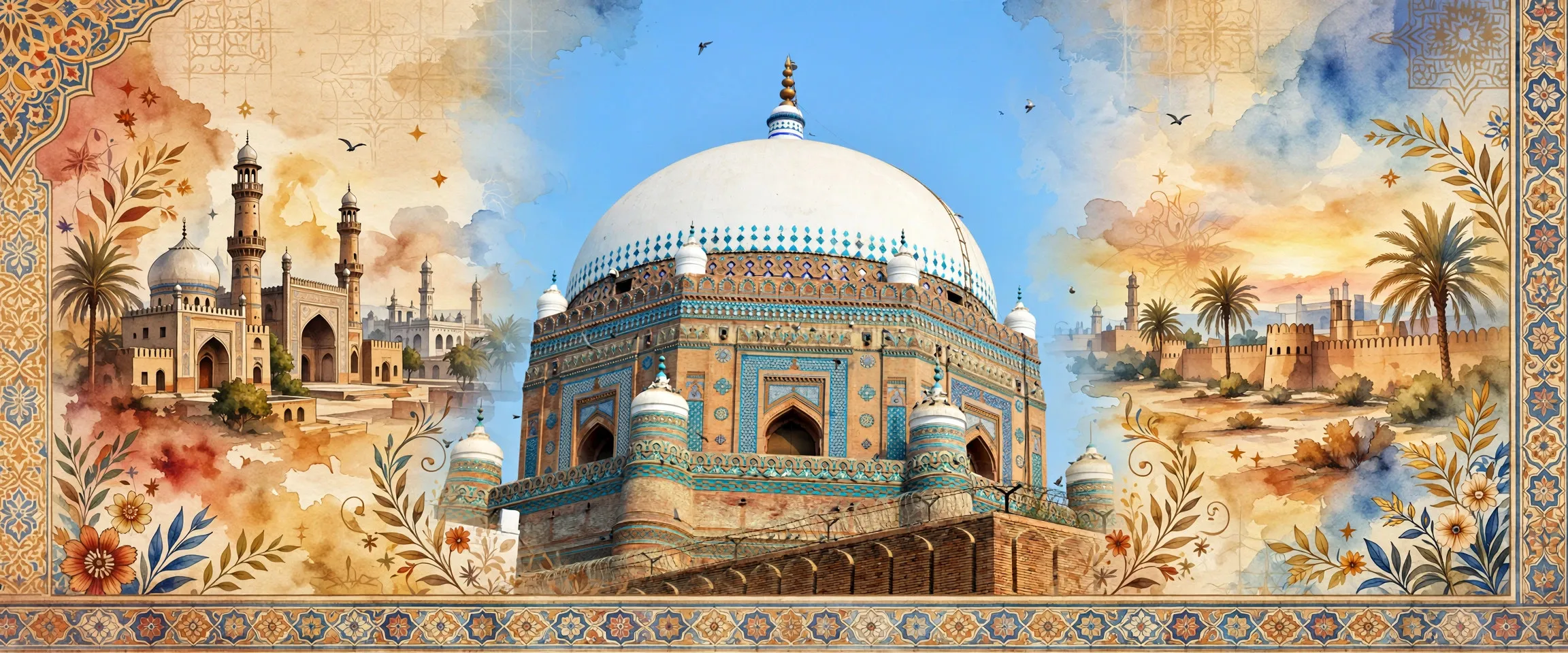
Multan is a city in Punjab, Pakistan, on the eastern bank of the Chenab River — Pakistan’s sixth-largest city (2,215,381 people, 2023 census) and one of the oldest continuously inhabited cities in Asia. Known as the ‘City of Saints’ for its great Sufi shrines, it was a famed medieval trading centre, a sultanate capital under the Langahs, and the city where the 1848 revolt that triggered the Second Anglo-Sikh War began.
- Facts
- Type
- City
- Country
- Pakistan
- Region
- West Punjab
- Coordinates
- 30°11′52″N 71°28′11″E
- Population
- 2,215,381 (2023 census)
- Rank
- 6th in Pakistan, 5th in Punjab
- Known as
- City of Saints
- Languages
- Saraiki 42.7%, Urdu 30.1%, Punjabi 25.0% (2023 census)
- Climate
- Hot desert; record 50.0°C (May 2010)
- Landmarks
- Tomb of Shah Rukn-e-Alam; shrine of Bahauddin Zakariya; Multan Fort ruins; Clock Tower
- Notable people
- Shah Rukn-e-Alam (1251–1335); Bahauddin Zakariya (1170–1267); Yousaf Raza Gillani; Inzamam-ul-Haq; Waqar Younis
Multan is a city in Punjab, Pakistan, on the eastern bank of the Chenab River — Pakistan’s sixth-largest city and one of the oldest continuously inhabited cities in Asia, with a history reaching deep into antiquity. To Punjabis it is the “City of Saints”: a city of blue-tiled Sufi shrines, mango orchards and blue-glazed pottery that was trading with Central Asia centuries before the Mughals arrived.
The City of Saints
Multan earned its famous name in the 11th and 12th centuries, when Sufi mystics gathered here in great numbers, and the city — with nearby Uch — is known for its large number of Sufi shrines from that era. The tomb of Shah Rukn-e-Alam (1251–1335) stands inside Multan Fort: considered the earliest monument of the Tughluq era, its great white dome and blue kashi tile-work make it the city’s defining landmark. Nearby lies the shrine of Bahauddin Zakariya (1170–1267); the rectangular tomb of Shah Gardez, from the 1150s, is covered in the blue enamelled tiles typical of Multan, and the shrines of Shah Shams Tabrizi and Shah Yousaf Gardezi (d. 1136) still draw pilgrims.
One of Asia’s oldest cities
The region around Multan has archaeological sites from the early Harappan period, around 3000–2800 BCE. The ancient town was besieged by Alexander the Great during the Mallian campaign in 326 BCE — Alexander was badly wounded by an arrow during the siege of its citadel. In 712 CE the city was captured by Muhammad bin Qasim after a two-month siege, and in the 9th century it became the capital of the Emirate of Multan. The origin of the city’s name is unclear: it may come from the Malli tribe, the ancient Multan Sun Temple, or the Old Persian word mulastāna, meaning ‘frontier land’.
A sultanate capital and a trading crossroads
Under the Langah rulers Multan became a sultanate capital in 1445, prospering under Shah Husayn, who ruled from 1469 to 1498. After Akbar’s reforms of 1580, Multan Subah became one of the largest provinces of the Mughal Empire, covering southern Punjab and northern Sindh — and under Mughal rule the city enjoyed two centuries of peace as Dar al-Aman, the ‘Abode of Peace’. Long before that, Multan was a trans-regional mercantile centre of the Islamic world: a 15th-century Multani caravanserai in Baku, Azerbaijan, housed its visiting merchants, and Multani merchants owned land in Bukhara in the 1550s.
The Sikh era and 1848
The founder of the Sikh religion, Guru Nanak, is said to have visited Multan during one of his journeys. In 1818 Ranjit Singh’s armies laid siege to the city; the Multan Fort fell on 2 March 1818 after Nawab Muzaffar Khan and seven of his sons were killed, and the Sikh Empire ruled Multan until 1849. The Sikh governor Diwan Sawan Mal governed the city for a quarter century. His son Diwan Mulraj’s revolt of 1848 — which began when two British emissaries were murdered in Multan — triggered the Second Anglo-Sikh War. The British bombarded the city, destroying the fort, and captured it in January 1849.
Mangoes, blue pottery and cotton
The flat alluvial plain around the city is ringed with orchards and mango farms. Multan gave its name to a celebrated style of blue-glazed pottery and kashi tile-work: tile-making flourished here under the Mughals, and the technique still covers the city’s shrines. Under Mughal rule Multan was also an important centre of cotton textile manufacturing and currency minting.
Multan today
The 2023 census counted 2,215,381 people, making Multan Pakistan’s sixth-largest city. Saraiki is the mother tongue of 42.7 percent of residents, Urdu of 30.1 percent, and Punjabi of 25 percent. Bahauddin Zakariya University is the province’s second-largest university; the Multan Metrobus opened in January 2017, and Multan International Airport flies to the Gulf states. The city is home to the Multan Sultans of the Pakistan Super League, and the Multan region has produced international cricketers Inzamam-ul-Haq and Waqar Younis. Multan has a hot desert climate and is known for some of Pakistan’s hottest weather — the record high is 50.0°C, set in May 2010.
Why is Multan called the City of Saints?
Multan attracted a multitude of Sufi mystics in the 11th and 12th centuries, and the city — along with nearby Uch — is known for its large number of Sufi shrines from that era, including the tombs of Shah Rukn-e-Alam, Bahauddin Zakariya and Shah Shams Tabrizi.
What is Multan famous for?
Its Sufi shrines with blue kashi tile-work, its mango orchards, its blue-glazed Multani pottery — and a history stretching from Alexander the Great’s siege in 326 BCE to the 1848 revolt that ended the Sikh Empire.
Did Guru Nanak visit Multan?
The founder of the Sikh religion, Guru Nanak, is said to have visited the city during one of his journeys.
ਮੁਲਤਾਨ ਪਾਕਿਸਤਾਨ ਦੇ ਪੰਜਾਬ ਸੂਬੇ ਦਾ ਇੱਕ ਸ਼ਹਿਰ ਹੈ, ਚਨਾਬ ਦਰਿਆ ਦੇ ਪੂਰਬੀ ਕੰਢੇ ਉੱਤੇ — ਪਾਕਿਸਤਾਨ ਦਾ ਛੇਵਾਂ ਸਭ ਤੋਂ ਵੱਡਾ ਸ਼ਹਿਰ ਅਤੇ ਏਸ਼ੀਆ ਦੇ ਸਭ ਤੋਂ ਪੁਰਾਣੇ ਲਗਾਤਾਰ ਆਬਾਦ ਸ਼ਹਿਰਾਂ ਵਿੱਚੋਂ ਇੱਕ, ਜਿਸਦਾ ਇਤਿਹਾਸ ਪ੍ਰਾਚੀਨ ਯੁਗ ਤੱਕ ਜਾਂਦਾ ਹੈ ਪੰਜਾਬੀਆਂ ਲਈ ਇਹ “ਸੰਤਾਂ ਦਾ ਸ਼ਹਿਰ” ਹੈ: ਨੀਲੀਆਂ ਟਾਈਲਾਂ ਵਾਲੇ ਸੂਫ਼ੀ ਮਜ਼ਾਰਾਂ, ਅੰਬਾਂ ਦੇ ਬਾਗ਼ਾਂ ਅਤੇ ਨੀਲੀ ਚਮਕ ਵਾਲੇ ਬਰਤਨਾਂ ਦਾ ਸ਼ਹਿਰ, ਜੋ ਮੁਗ਼ਲਾਂ ਦੇ ਆਉਣ ਤੋਂ ਸਦੀਆਂ ਪਹਿਲਾਂ ਮੱਧ ਏਸ਼ੀਆ ਨਾਲ ਵਪਾਰ ਕਰਦਾ ਸੀ
ਸੰਤਾਂ ਦਾ ਸ਼ਹਿਰ
ਮੁਲਤਾਨ ਨੇ ਆਪਣਾ ਮਸ਼ਹੂਰ ਨਾਂ 11ਵੀਂ ਅਤੇ 12ਵੀਂ ਸਦੀ ਵਿੱਚ ਪਾਇਆ, ਜਦੋਂ ਇੱਥੇ ਵੱਡੀ ਗਿਣਤੀ ਵਿੱਚ ਸੂਫ਼ੀ ਫ਼ਕੀਰ ਇਕੱਠੇ ਹੋਏ, ਅਤੇ ਇਹ ਸ਼ਹਿਰ — ਨੇੜਲੇ ਉੱਚ ਸਣੇ — ਉਸ ਦੌਰ ਦੇ ਵੱਡੀ ਗਿਣਤੀ ਸੂਫ਼ੀ ਮਜ਼ਾਰਾਂ ਲਈ ਜਾਣਿਆ ਜਾਂਦਾ ਹੈ ਸ਼ਾਹ ਰੁਕਨ-ਏ-ਆਲਮ (1251–1335) ਦਾ ਮਕਬਰਾ ਮੁਲਤਾਨ ਕਿਲ੍ਹੇ ਦੇ ਅੰਦਰ ਖੜ੍ਹਾ ਹੈ: ਤੁਗ਼ਲਕ ਯੁਗ ਦੀ ਸਭ ਤੋਂ ਪਹਿਲੀ ਇਮਾਰਤ ਮੰਨਿਆ ਜਾਂਦਾ, ਇਸਦਾ ਵੱਡਾ ਸਫ਼ੈਦ ਗੁੰਬਦ ਅਤੇ ਨੀਲੀ ਕਾਸ਼ੀ ਟਾਈਲ-ਕਾਰੀ ਇਸਨੂੰ ਸ਼ਹਿਰ ਦੀ ਪਹਿਚਾਣ-ਥਾਂ ਬਣਾਉਂਦੇ ਹਨ ਨੇੜੇ ਹੀ ਬਹਾਉੱਦੀਨ ਜ਼ਕਰੀਆ (1170–1267) ਦਾ ਮਜ਼ਾਰ ਹੈ; 1150ਵਿਆਂ ਦਾ ਸ਼ਾਹ ਗਰਦੇਜ਼ੀ ਦਾ ਚੌਕੋਰ ਮਕਬਰਾ ਮੁਲਤਾਨ ਦੀ ਖ਼ਾਸ ਨੀਲੀ ਐਨਾਮਲ ਟਾਈਲਾਂ ਨਾਲ ਢੱਕਿਆ ਹੈ, ਅਤੇ ਸ਼ਾਹ ਸ਼ਮਸ ਤਬਰੇਜ਼ੀ ਤੇ ਸ਼ਾਹ ਯੂਸਫ਼ ਗਰਦੇਜ਼ੀ (ਮੌਤ 1136) ਦੇ ਮਜ਼ਾਰਾਂ ਉੱਤੇ ਅੱਜ ਵੀ ਸ਼ਰਧਾਲੂ ਆਉਂਦੇ ਹਨ
ਏਸ਼ੀਆ ਦੇ ਸਭ ਤੋਂ ਪੁਰਾਣੇ ਸ਼ਹਿਰਾਂ ਵਿੱਚੋਂ ਇੱਕ
ਮੁਲਤਾਨ ਦੇ ਆਲੇ-ਦੁਆਲੇ ਦੇ ਇਲਾਕੇ ਵਿੱਚ ਸ਼ੁਰੂਆਤੀ ਹੜੱਪਾ ਯੁਗ (ਲਗਭਗ 3000–2800 ਈਸਾ ਪੂਰਵ) ਦੀਆਂ ਪੁਰਾਤੱਤਵ ਥਾਵਾਂ ਹਨ 326 ਈਸਾ ਪੂਰਵ ਵਿੱਚ ਸਿਕੰਦਰ ਮਹਾਨ ਨੇ ਮੱਲੀਆਨ ਮੁਹਿੰਮ ਦੌਰਾਨ ਇਸ ਪ੍ਰਾਚੀਨ ਸ਼ਹਿਰ ਦਾ ਘੇਰਾਓ ਕੀਤਾ — ਇਸਦੇ ਕਿਲ੍ਹੇ ਦੇ ਘੇਰੇ ਦੌਰਾਨ ਸਿਕੰਦਰ ਇੱਕ ਤੀਰ ਨਾਲ ਬੁਰੀ ਤਰ੍ਹਾਂ ਜ਼ਖ਼ਮੀ ਹੋਇਆ 712 ਈਸਵੀ ਵਿੱਚ ਦੋ ਮਹੀਨੇ ਦੇ ਘੇਰੇ ਤੋਂ ਬਾਅਦ ਮੁਹੰਮਦ ਬਿਨ ਕਾਸਿਮ ਨੇ ਸ਼ਹਿਰ ਉੱਤੇ ਕਬਜ਼ਾ ਕੀਤਾ, ਅਤੇ 9ਵੀਂ ਸਦੀ ਵਿੱਚ ਇਹ ਮੁਲਤਾਨ ਅਮੀਰਾਤ ਦੀ ਰਾਜਧਾਨੀ ਬਣਿਆ ਸ਼ਹਿਰ ਦੇ ਨਾਂ ਦੀ ਉਤਪਤੀ ਸਪੱਸ਼ਟ ਨਹੀਂ: ਇਹ ਮੱਲੀ ਕਬੀਲੇ, ਪ੍ਰਾਚੀਨ ਮੁਲਤਾਨ ਸੂਰਜ ਮੰਦਰ, ਜਾਂ ਪੁਰਾਣੀ ਫ਼ਾਰਸੀ ਸ਼ਬਦ ਮੁਲਸਤਾਨਾ (‘ਸਰਹੱਦੀ ਭੂਮੀ’) ਤੋਂ ਆ ਸਕਦਾ ਹੈ
ਸਲਤਨਤ ਦੀ ਰਾਜਧਾਨੀ ਅਤੇ ਵਪਾਰਕ ਚੌਰਾਹਾ
ਲੰਗਾਹ ਹੁਕਮਰਾਨਾਂ ਅਧੀਨ 1445 ਵਿੱਚ ਮੁਲਤਾਨ ਸਲਤਨਤ ਦੀ ਰਾਜਧਾਨੀ ਬਣਿਆ, ਅਤੇ ਸ਼ਾਹ ਹੁਸੈਨ (ਰਾਜ 1469–1498) ਦੇ ਦੌਰ ਵਿੱਚ ਖ਼ੁਸ਼ਹਾਲ ਹੋਇਆ ਅਕਬਰ ਦੇ 1580 ਦੇ ਸੁਧਾਰਾਂ ਤੋਂ ਬਾਅਦ ਮੁਲਤਾਨ ਸੂਬਾ ਮੁਗ਼ਲ ਸਾਮਰਾਜ ਦੇ ਸਭ ਤੋਂ ਵੱਡੇ ਸੂਬਿਆਂ ਵਿੱਚੋਂ ਇੱਕ ਬਣਿਆ, ਜਿਸ ਵਿੱਚ ਦੱਖਣੀ ਪੰਜਾਬ ਅਤੇ ਉੱਤਰੀ ਸਿੰਧ ਸ਼ਾਮਲ ਸਨ — ਅਤੇ ਮੁਗ਼ਲ ਰਾਜ ਅਧੀਨ ਸ਼ਹਿਰ ਨੇ ਦੋ ਸਦੀਆਂ ਦੀ ਸ਼ਾਂਤੀ ਦਾਰ-ਉਲ-ਅਮਾਨ (‘ਅਮਨ ਦਾ ਘਰ’) ਵਜੋਂ ਮਾਣੀ ਇਸ ਤੋਂ ਬਹੁਤ ਪਹਿਲਾਂ ਮੁਲਤਾਨ ਇਸਲਾਮੀ ਦੁਨੀਆ ਦਾ ਅੰਤਰ-ਖੇਤਰੀ ਵਪਾਰਕ ਕੇਂਦਰ ਸੀ: ਅਜ਼ਰਬਾਈਜਾਨ ਦੇ ਬਾਕੂ ਵਿੱਚ 15ਵੀਂ ਸਦੀ ਦੀ ਮੁਲਤਾਨੀ ਸਰਾਂ ਇਸਦੇ ਆਉਣ ਵਾਲੇ ਵਪਾਰੀਆਂ ਨੂੰ ਠਹਿਰਾਉਂਦੀ ਸੀ, ਅਤੇ 1550ਵਿਆਂ ਵਿੱਚ ਮੁਲਤਾਨੀ ਵਪਾਰੀਆਂ ਦੀ ਬੁਖ਼ਾਰਾ ਵਿੱਚ ਜ਼ਮੀਨ ਸੀ
ਸਿੱਖ ਯੁਗ ਅਤੇ 1848
ਸਿੱਖ ਧਰਮ ਦੇ ਬਾਨੀ ਗੁਰੂ ਨਾਨਕ ਦੇਵ ਜੀ ਆਪਣੀਆਂ ਯਾਤਰਾਵਾਂ ਦੌਰਾਨ ਮੁਲਤਾਨ ਆਏ ਦੱਸੇ ਜਾਂਦੇ ਹਨ 1818 ਵਿੱਚ ਰਣਜੀਤ ਸਿੰਘ ਦੀਆਂ ਫ਼ੌਜਾਂ ਨੇ ਸ਼ਹਿਰ ਦਾ ਘੇਰਾਓ ਕੀਤਾ; 2 ਮਾਰਚ 1818 ਨੂੰ ਨਵਾਬ ਮੁਜ਼ੱਫ਼ਰ ਖ਼ਾਨ ਅਤੇ ਉਨ੍ਹਾਂ ਦੇ ਸੱਤ ਪੁੱਤਰਾਂ ਦੇ ਮਾਰੇ ਜਾਣ ਤੋਂ ਬਾਅਦ ਮੁਲਤਾਨ ਕਿਲ੍ਹਾ ਡਿੱਗ ਪਿਆ, ਅਤੇ 1849 ਤੱਕ ਸਿੱਖ ਸਾਮਰਾਜ ਨੇ ਮੁਲਤਾਨ ਉੱਤੇ ਰਾਜ ਕੀਤਾ ਸਿੱਖ ਗਵਰਨਰ ਦੀਵਾਨ ਸਾਵਨ ਮੱਲ ਨੇ ਇੱਕ ਚੌਥਾਈ ਸਦੀ ਸ਼ਹਿਰ ਉੱਤੇ ਰਾਜ ਕੀਤਾ ਉਨ੍ਹਾਂ ਦੇ ਪੁੱਤਰ ਦੀਵਾਨ ਮੂਲਰਾਜ ਦੀ 1848 ਦੀ ਬਗ਼ਾਵਤ — ਜੋ ਮੁਲਤਾਨ ਵਿੱਚ ਦੋ ਬਰਤਾਨਵੀ ਦੂਤਾਂ ਦੇ ਕਤਲ ਨਾਲ ਸ਼ੁਰੂ ਹੋਈ — ਦੂਜੇ ਐਂਗਲੋ-ਸਿੱਖ ਯੁੱਧ ਦਾ ਕਾਰਨ ਬਣੀ ਅੰਗਰੇਜ਼ਾਂ ਨੇ ਸ਼ਹਿਰ ਉੱਤੇ ਗੋਲਾਬਾਰੀ ਕੀਤੀ, ਕਿਲ੍ਹਾ ਤਬਾਹ ਕੀਤਾ, ਅਤੇ ਜਨਵਰੀ 1849 ਵਿੱਚ ਇਸ ਉੱਤੇ ਕਬਜ਼ਾ ਕਰ ਲਿਆ
ਅੰਬ, ਨੀਲੇ ਬਰਤਨ ਅਤੇ ਸੂਤ
ਸ਼ਹਿਰ ਦੇ ਆਲੇ-ਦੁਆਲੇ ਦੀ ਸਮਤਲ ਜਲੋਢ਼ ਮੈਦਾਨ ਬਾਗ਼ਾਂ ਅਤੇ ਅੰਬਾਂ ਦੇ ਖੇਤਾਂ ਨਾਲ ਘਿਰੀ ਹੈ ਮੁਲਤਾਨ ਨੇ ਨੀਲੀ ਚਮਕ ਵਾਲੇ ਬਰਤਨਾਂ ਅਤੇ ਕਾਸ਼ੀ ਟਾਈਲ-ਕਾਰੀ ਦੀ ਮਸ਼ਹੂਰ ਸ਼ੈਲੀ ਨੂੰ ਆਪਣਾ ਨਾਂ ਦਿੱਤਾ: ਮੁਗ਼ਲਾਂ ਅਧੀਨ ਇੱਥੇ ਟਾਈਲ-ਸਾਜ਼ੀ ਫੁੱਲੀ, ਅਤੇ ਇਹ ਤਕਨੀਕ ਅੱਜ ਵੀ ਸ਼ਹਿਰ ਦੇ ਮਜ਼ਾਰਾਂ ਨੂੰ ਢੱਕਦੀ ਹੈ ਮੁਗ਼ਲ ਰਾਜ ਅਧੀਨ ਮੁਲਤਾਨ ਸੂਤੀ ਕੱਪੜਾ ਬੁਣਾਈ ਅਤੇ ਸਿੱਕਾ ਢਾਲਣ ਦਾ ਵੀ ਮਹੱਤਵਪੂਰਨ ਕੇਂਦਰ ਸੀ
ਅੱਜ ਦਾ ਮੁਲਤਾਨ
2023 ਦੀ ਜਨਗਣਨਾ ਵਿੱਚ 2,215,381 ਲੋਕ ਗਿਣੇ ਗਏ — ਮੁਲਤਾਨ ਪਾਕਿਸਤਾਨ ਦਾ ਛੇਵਾਂ ਸਭ ਤੋਂ ਵੱਡਾ ਸ਼ਹਿਰ ਹੈ 42.7 ਫ਼ੀਸਦੀ ਵਸਨੀਕਾਂ ਦੀ ਮਾਂ-ਬੋਲੀ ਸਰਾਇਕੀ, 30.1 ਫ਼ੀਸਦੀ ਦੀ ਉਰਦੂ ਅਤੇ 25 ਫ਼ੀਸਦੀ ਦੀ ਪੰਜਾਬੀ ਹੈ ਬਹਾਉੱਦੀਨ ਜ਼ਕਰੀਆ ਯੂਨੀਵਰਸਿਟੀ ਸੂਬੇ ਦੀ ਦੂਜੀ ਸਭ ਤੋਂ ਵੱਡੀ ਯੂਨੀਵਰਸਿਟੀ ਹੈ; ਮੁਲਤਾਨ ਮੈਟਰੋਬੱਸ ਜਨਵਰੀ 2017 ਵਿੱਚ ਖੁੱਲ੍ਹੀ, ਅਤੇ ਮੁਲਤਾਨ ਅੰਤਰਰਾਸ਼ਟਰੀ ਹਵਾਈ ਅੱਡੇ ਤੋਂ ਖਾੜੀ ਦੇਸ਼ਾਂ ਨੂੰ ਉਡਾਣਾਂ ਹਨ ਇਹ ਸ਼ਹਿਰ ਪਾਕਿਸਤਾਨ ਸੁਪਰ ਲੀਗ ਦੇ ਮੁਲਤਾਨ ਸੁਲਤਾਨਜ਼ ਦਾ ਘਰ ਹੈ, ਅਤੇ ਮੁਲਤਾਨ ਖੇਤਰ ਨੇ ਇੰਜ਼ਮਾਮ-ਉਲ-ਹੱਕ ਅਤੇ ਵਕਾਰ ਯੂਨਸ ਵਰਗੇ ਅੰਤਰਰਾਸ਼ਟਰੀ ਕ੍ਰਿਕਟਰ ਦਿੱਤੇ ਹਨ ਮੁਲਤਾਨ ਦਾ ਮੌਸਮ ਗਰਮ ਰੇਗਿਸਤਾਨੀ ਹੈ ਅਤੇ ਇਹ ਪਾਕਿਸਤਾਨ ਦੇ ਸਭ ਤੋਂ ਗਰਮ ਮੌਸਮ ਲਈ ਜਾਣਿਆ ਜਾਂਦਾ ਹੈ — ਰਿਕਾਰਡ ਤਾਪਮਾਨ 50.0°C, ਮਈ 2010 ਵਿੱਚ
ਮੁਲਤਾਨ ਨੂੰ ਸੰਤਾਂ ਦਾ ਸ਼ਹਿਰ ਕਿਉਂ ਕਿਹਾ ਜਾਂਦਾ ਹੈ?
11ਵੀਂ ਅਤੇ 12ਵੀਂ ਸਦੀ ਵਿੱਚ ਮੁਲਤਾਨ ਨੇ ਵੱਡੀ ਗਿਣਤੀ ਸੂਫ਼ੀ ਫ਼ਕੀਰਾਂ ਨੂੰ ਆਕਰਸ਼ਿਤ ਕੀਤਾ, ਅਤੇ ਇਹ ਸ਼ਹਿਰ — ਨੇੜਲੇ ਉੱਚ ਸਣੇ — ਉਸ ਦੌਰ ਦੇ ਵੱਡੀ ਗਿਣਤੀ ਸੂਫ਼ੀ ਮਜ਼ਾਰਾਂ ਲਈ ਜਾਣਿਆ ਜਾਂਦਾ ਹੈ, ਜਿਨ੍ਹਾਂ ਵਿੱਚ ਸ਼ਾਹ ਰੁਕਨ-ਏ-ਆਲਮ, ਬਹਾਉੱਦੀਨ ਜ਼ਕਰੀਆ ਅਤੇ ਸ਼ਾਹ ਸ਼ਮਸ ਤਬਰੇਜ਼ੀ ਦੇ ਮਕਬਰੇ ਸ਼ਾਮਲ ਹਨ
ਮੁਲਤਾਨ ਕਿਸ ਲਈ ਮਸ਼ਹੂਰ ਹੈ?
ਨੀਲੀ ਕਾਸ਼ੀ ਟਾਈਲ-ਕਾਰੀ ਵਾਲੇ ਇਸਦੇ ਸੂਫ਼ੀ ਮਜ਼ਾਰਾਂ, ਅੰਬਾਂ ਦੇ ਬਾਗ਼ਾਂ, ਨੀਲੀ ਚਮਕ ਵਾਲੇ ਮੁਲਤਾਨੀ ਬਰਤਨਾਂ — ਅਤੇ 326 ਈਸਾ ਪੂਰਵ ਵਿੱਚ ਸਿਕੰਦਰ ਦੇ ਘੇਰੇ ਤੋਂ ਲੈ ਕੇ ਸਿੱਖ ਸਾਮਰਾਜ ਦੇ ਅੰਤ ਵਾਲੀ 1848 ਦੀ ਬਗ਼ਾਵਤ ਤੱਕ ਦੇ ਇਤਿਹਾਸ ਲਈ
ਕੀ ਗੁਰੂ ਨਾਨਕ ਦੇਵ ਜੀ ਮੁਲਤਾਨ ਆਏ ਸਨ?
ਸਿੱਖ ਧਰਮ ਦੇ ਬਾਨੀ ਗੁਰੂ ਨਾਨਕ ਦੇਵ ਜੀ ਆਪਣੀਆਂ ਯਾਤਰਾਵਾਂ ਦੌਰਾਨ ਇਸ ਸ਼ਹਿਰ ਆਏ ਦੱਸੇ ਜਾਂਦੇ ਹਨ