

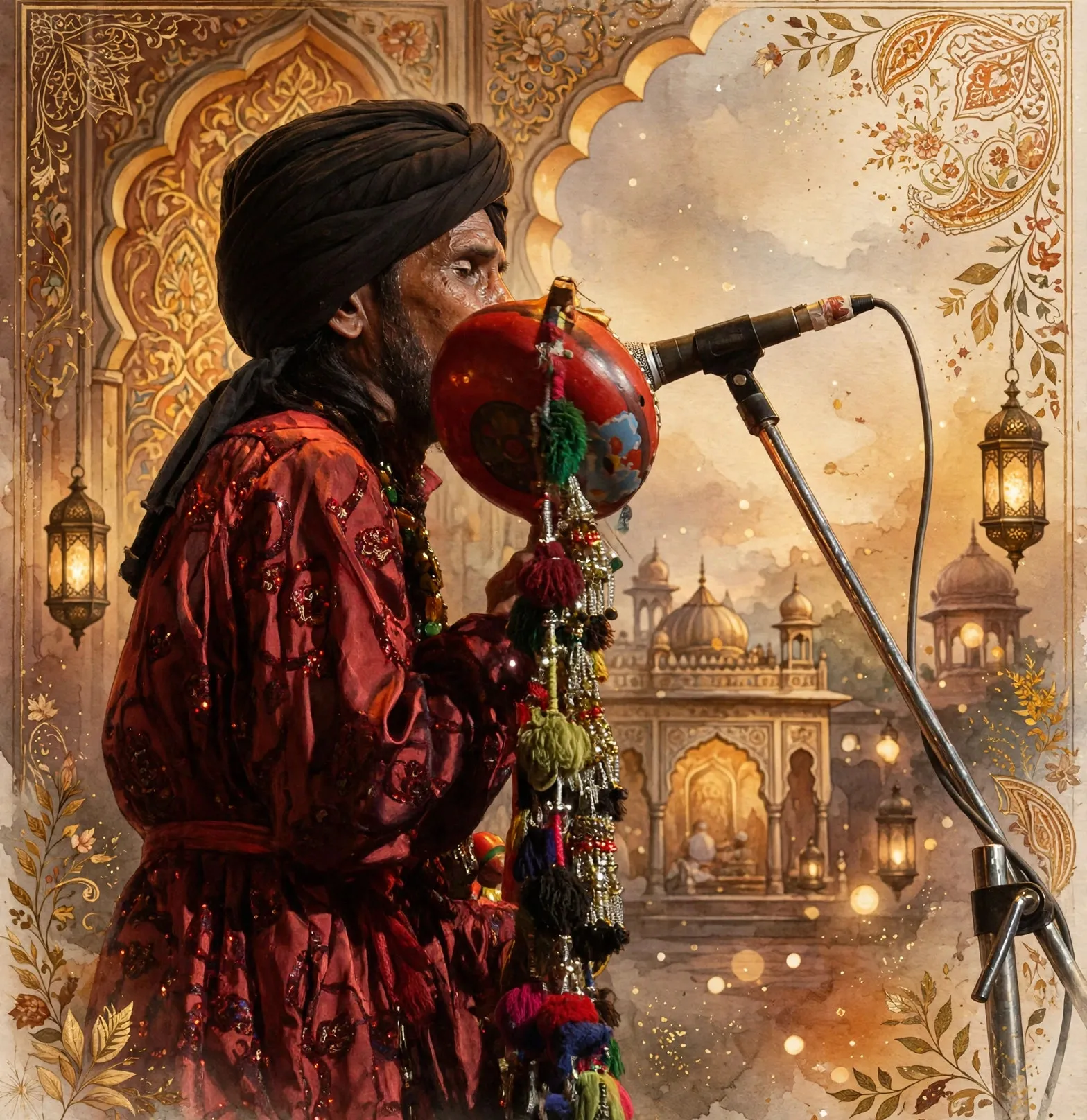
Pathaney Khan (1926 to 2000), born Ghulam Mohammad, was a folk singer from Kot Addu in southern Punjab, Pakistan, famed for his kafi singing. He gave the Sufi poetry of Khwaja Ghulam Farid, Bulleh Shah and Shah Hussain a voice that radio and television carried across Pakistan, and he received the Pride of Performance in 1979.
- Punjabi name
- ਪਠਾਣੇ ਖ਼ਾਂ
- Born
- 1926, Basti Tambu Wali, near Kot Addu, Punjab, British India
- Real name
- Ghulam Mohammad (also written Ghulam Muhammad)
- Died
- 9 March 2000, Kot Addu; buried in his native graveyard there
- Home town
- Kot Addu
- District
- Muzaffargarh (Kot Addu was then a tehsil of Muzaffargarh district)
All 13 facts
- Tehsil
- Kot Addu
- Region
- West Punjab
- Teacher
- Baba Mir Khan in most accounts; Dr Manzur Ejaz recalled a local musician, Amir Khan
- Known for
- Kafi singing of Khwaja Ghulam Farid, Bulleh Shah and Shah Hussain
- Signature kafis
- Meda Ishq Vee Toon; Peelu Pakian; Jindari Lutti; Kia Haal Sunawan Dil Da; Ghoom Charakhreya
- Honours
- Pride of Performance, 1979, by the President of Pakistan
- Broadcasting
- Radio Pakistan Multan from its early years; Pakistan Television
Pathaney Khan (1926 to 9 March 2000), born Ghulam Mohammad, was a folk singer from Kot Addu in southern Punjab, Pakistan, famed across the country for his singing of kafis, the Sufi verse form set to music. Drawing mainly on Khwaja Ghulam Farid, Bulleh Shah, Shah Hussain and Pir Meher Ali Shah, he gave the kafi a slow, searching voice that listeners in the Saraiki belt had known for years before radio and television carried it to the rest of Pakistan.
Early life in Basti Tambu Wali
He was born in 1926 in Basti Tambu Wali, a small village in the Thal desert a few miles from Kot Addu, then a tehsil of Muzaffargarh district in British Punjab. His father was Khameesa Khan. Accounts of his childhood agree that he was closest to his mother, who tried to keep him in school, and that his nature pulled him the other way: like his father, he wandered, thought and sang. He left his schooling after the seventh class.
The family lived modestly. His mother baked bread for the village, and the young singer collected firewood to help her earn a living. He began with the kafis of Khwaja Ghulam Farid, the Sufi poet of Mithankot, whose verse in Saraiki speaks of the desert, the Rohi, and longing for the beloved. Most short profiles name Baba Mir Khan as his first teacher in folk singing. Dr Manzur Ejaz, the writer and scholar who knew him well in Lahore, remembered instead a local musician named Amir Khan, linked to the family of the classical singer Ustad Ashiq Ali Khan. The accounts differ on the name, so both are recorded here rather than choosing one in silence.
He took up singing in earnest as a profession after his mother's death. By then the pattern of his life was set: a singer with no formal classical training, formed at village gatherings and melas, who could hold listeners for hours at a stretch.
How did Ghulam Mohammad become Pathaney Khan?
The name came in childhood, and the story is told the same way in most accounts. When the boy was small, his father married again, and his mother left her husband, taking her son to her father's home in Kot Addu. There the child fell seriously ill. His mother took him to the house of a Syed, a spiritual guide, whose wife looked after them and advised that the boy's name be changed, saying Ghulam Mohammad was spiritually too heavy for him. A daughter of the house remarked that the boy looked like a Pathana. In that region the word carries the sense of love and valour, and from that day he was known as Pathaney, later written Pathaney Khan and also Pathanay Khan. His mother believed the new name saved his life.
ਪਠਾਣੇ ਖ਼ਾਂ (1926 ਤੋਂ 9 ਮਾਰਚ 2000), ਜਿਨ੍ਹਾਂ ਦਾ ਅਸਲ ਨਾਂ ਗ਼ੁਲਾਮ ਮੁਹੰਮਦ ਸੀ, ਪਾਕਿਸਤਾਨ ਦੇ ਦੱਖਣੀ ਪੰਜਾਬ ਦੇ ਕੋਟ ਅੱਦੂ ਤੋਂ ਲੋਕ ਗਾਇਕ ਸਨ, ਜੋ ਆਪਣੀਆਂ ਕਾਫ਼ੀਆਂ ਲਈ ਸਾਰੇ ਮੁਲਕ ਵਿੱਚ ਮਸ਼ਹੂਰ ਹੋਏ। ਕਾਫ਼ੀ ਸੂਫ਼ੀ ਕਵਿਤਾ ਦੀ ਉਹ ਸ਼ਕਲ ਹੈ ਜੋ ਗਾਉਣ ਲਈ ਬਣੀ ਹੈ। ਖ਼ਵਾਜਾ ਗ਼ੁਲਾਮ ਫ਼ਰੀਦ, ਬੁੱਲ੍ਹੇ ਸ਼ਾਹ, ਸ਼ਾਹ ਹੁਸੈਨ ਅਤੇ ਪੀਰ ਮਹਿਰ ਅਲੀ ਸ਼ਾਹ ਦੀ ਕਵਿਤਾ ਨੂੰ ਉਨ੍ਹਾਂ ਨੇ ਇੱਕ ਹੌਲੀ ਅਤੇ ਖੋਜ ਭਰੀ ਆਵਾਜ਼ ਦਿੱਤੀ। ਸਰਾਇਕੀ ਇਲਾਕੇ ਦੇ ਸੁਣਨ ਵਾਲੇ ਉਨ੍ਹਾਂ ਨੂੰ ਸਾਲਾਂ ਤੋਂ ਜਾਣਦੇ ਸਨ, ਫਿਰ ਰੇਡੀਓ ਅਤੇ ਟੈਲੀਵਿਜ਼ਨ ਨੇ ਉਨ੍ਹਾਂ ਦੀ ਆਵਾਜ਼ ਸਾਰੇ ਪਾਕਿਸਤਾਨ ਤੱਕ ਪਹੁੰਚਾ ਦਿੱਤੀ।
ਬਸਤੀ ਟਾਂਬੂ ਵਾਲੀ ਵਿੱਚ ਮੁੱਢਲਾ ਜੀਵਨ
ਉਨ੍ਹਾਂ ਦਾ ਜਨਮ 1926 ਵਿੱਚ ਬਸਤੀ ਟਾਂਬੂ ਵਾਲੀ ਵਿੱਚ ਹੋਇਆ। ਇਹ ਥਲ ਮਾਰੂਥਲ ਦਾ ਛੋਟਾ ਜਿਹਾ ਪਿੰਡ ਕੋਟ ਅੱਦੂ ਤੋਂ ਕੁਝ ਮੀਲ ਦੂਰ ਹੈ। ਉਸ ਸਮੇਂ ਕੋਟ ਅੱਦੂ ਬਰਤਾਨਵੀ ਪੰਜਾਬ ਦੇ ਮੁਜ਼ੱਫ਼ਰਗੜ੍ਹ ਜ਼ਿਲ੍ਹੇ ਦੀ ਤਹਿਸੀਲ ਸੀ। ਉਨ੍ਹਾਂ ਦੇ ਪਿਤਾ ਦਾ ਨਾਂ ਖਮੀਸਾ ਖ਼ਾਂ ਸੀ। ਬਚਪਨ ਦੇ ਸਾਰੇ ਵੇਰਵੇ ਇਸ ਗੱਲ ਉੱਤੇ ਇੱਕ ਹਨ ਕਿ ਉਹ ਆਪਣੀ ਮਾਂ ਦੇ ਸਭ ਤੋਂ ਨੇੜੇ ਸਨ। ਮਾਂ ਉਨ੍ਹਾਂ ਨੂੰ ਸਕੂਲ ਵਿੱਚ ਰੱਖਣਾ ਚਾਹੁੰਦੀ ਸੀ, ਪਰ ਉਨ੍ਹਾਂ ਦਾ ਸੁਭਾਅ ਦੂਜੇ ਪਾਸੇ ਖਿੱਚਦਾ ਸੀ। ਆਪਣੇ ਪਿਤਾ ਵਾਂਗ ਉਹ ਘੁੰਮਦੇ, ਸੋਚਦੇ ਅਤੇ ਗਾਉਂਦੇ ਰਹਿੰਦੇ। ਸੱਤਵੀਂ ਜਮਾਤ ਤੋਂ ਬਾਅਦ ਉਨ੍ਹਾਂ ਨੇ ਸਕੂਲ ਛੱਡ ਦਿੱਤਾ।
ਪਰਿਵਾਰ ਸਾਦਾ ਜੀਵਨ ਜਿਉਂਦਾ ਸੀ। ਮਾਂ ਪਿੰਡ ਲਈ ਰੋਟੀਆਂ ਪਕਾਉਂਦੀ ਸੀ ਅਤੇ ਨੌਜਵਾਨ ਗਾਇਕ ਉਸ ਦੀ ਮਦਦ ਲਈ ਲੱਕੜਾਂ ਇਕੱਠੀਆਂ ਕਰਦਾ ਸੀ। ਉਨ੍ਹਾਂ ਨੇ ਸ਼ੁਰੂਆਤ ਮਿੱਠਣਕੋਟ ਦੇ ਸੂਫ਼ੀ ਕਵੀ ਖ਼ਵਾਜਾ ਗ਼ੁਲਾਮ ਫ਼ਰੀਦ ਦੀਆਂ ਕਾਫ਼ੀਆਂ ਨਾਲ ਕੀਤੀ। ਫ਼ਰੀਦ ਦੀ ਸਰਾਇਕੀ ਕਵਿਤਾ ਮਾਰੂਥਲ, ਰੋਹੀ ਅਤੇ ਯਾਰ ਦੀ ਤਾਂਘ ਦੀ ਗੱਲ ਕਰਦੀ ਹੈ। ਜ਼ਿਆਦਾਤਰ ਛੋਟੇ ਵੇਰਵੇ ਉਨ੍ਹਾਂ ਦੇ ਪਹਿਲੇ ਉਸਤਾਦ ਵਜੋਂ ਬਾਬਾ ਮੀਰ ਖ਼ਾਂ ਦਾ ਨਾਂ ਲੈਂਦੇ ਹਨ। ਡਾਕਟਰ ਮੰਜ਼ੂਰ ਏਜਾਜ਼, ਜੋ ਲਾਹੌਰ ਵਿੱਚ ਉਨ੍ਹਾਂ ਨੂੰ ਚੰਗੀ ਤਰ੍ਹਾਂ ਜਾਣਦੇ ਸਨ, ਨੇ ਇਸ ਦੀ ਥਾਂ ਆਮਿਰ ਖ਼ਾਂ ਨਾਂ ਦੇ ਇੱਕ ਸਥਾਨਕ ਸੰਗੀਤਕਾਰ ਨੂੰ ਯਾਦ ਕੀਤਾ, ਜੋ ਸ਼ਾਸਤਰੀ ਗਾਇਕ ਉਸਤਾਦ ਆਸ਼ਿਕ ਅਲੀ ਖ਼ਾਂ ਦੇ ਪਰਿਵਾਰ ਨਾਲ ਜੁੜਿਆ ਸੀ। ਵੇਰਵਿਆਂ ਵਿੱਚ ਨਾਂ ਦਾ ਫ਼ਰਕ ਹੈ, ਇਸ ਲਈ ਇੱਥੇ ਦੋਵੇਂ ਦਰਜ ਹਨ।
ਮਾਂ ਦੀ ਮੌਤ ਤੋਂ ਬਾਅਦ ਉਨ੍ਹਾਂ ਨੇ ਗਾਉਣ ਨੂੰ ਸੱਚਮੁੱਚ ਆਪਣਾ ਪੇਸ਼ਾ ਬਣਾ ਲਿਆ। ਉਦੋਂ ਤੱਕ ਉਨ੍ਹਾਂ ਦੇ ਜੀਵਨ ਦਾ ਢਾਂਚਾ ਤੈਅ ਹੋ ਚੁੱਕਾ ਸੀ। ਉਹ ਬਿਨਾਂ ਰਸਮੀ ਸ਼ਾਸਤਰੀ ਸਿਖਲਾਈ ਵਾਲੇ ਗਾਇਕ ਸਨ, ਪਿੰਡਾਂ ਦੇ ਇਕੱਠਾਂ ਅਤੇ ਮੇਲਿਆਂ ਵਿੱਚ ਘੜੇ ਗਏ, ਅਤੇ ਘੰਟਿਆਂ ਤੱਕ ਸੁਣਨ ਵਾਲਿਆਂ ਨੂੰ ਬੰਨ੍ਹ ਕੇ ਰੱਖ ਸਕਦੇ ਸਨ।
ਗ਼ੁਲਾਮ ਮੁਹੰਮਦ ਪਠਾਣੇ ਖ਼ਾਂ ਕਿਵੇਂ ਬਣੇ?
ਇਹ ਨਾਂ ਬਚਪਨ ਵਿੱਚ ਪਿਆ, ਅਤੇ ਕਹਾਣੀ ਜ਼ਿਆਦਾਤਰ ਵੇਰਵਿਆਂ ਵਿੱਚ ਇੱਕੋ ਜਿਹੀ ਮਿਲਦੀ ਹੈ। ਜਦੋਂ ਮੁੰਡਾ ਛੋਟਾ ਸੀ, ਉਸ ਦੇ ਪਿਤਾ ਨੇ ਦੂਜਾ ਵਿਆਹ ਕਰ ਲਿਆ। ਮਾਂ ਪਤੀ ਨੂੰ ਛੱਡ ਕੇ ਪੁੱਤਰ ਨੂੰ ਨਾਲ ਲੈ ਕੇ ਕੋਟ ਅੱਦੂ ਆਪਣੇ ਪਿਤਾ ਦੇ ਘਰ ਆ ਗਈ। ਉੱਥੇ ਬੱਚਾ ਸਖ਼ਤ ਬਿਮਾਰ ਪੈ ਗਿਆ। ਮਾਂ ਉਸ ਨੂੰ ਇੱਕ ਸੱਯਦ, ਇੱਕ ਰੂਹਾਨੀ ਰਹਿਬਰ, ਦੇ ਘਰ ਲੈ ਗਈ। ਸैयਦ ਦੀ ਪਤਨੀ ਨੇ ਉਨ੍ਹਾਂ ਦੀ ਦੇਖਭਾਲ ਕੀਤੀ ਅਤੇ ਸਲਾਹ ਦਿੱਤੀ ਕਿ ਮੁੰਡੇ ਦਾ ਨਾਂ ਬਦਲ ਦਿੱਤਾ ਜਾਵੇ, ਕਿਉਂਕਿ ਗ਼ੁਲਾਮ ਮੁਹੰਮਦ ਉਸ ਲਈ ਰੂਹਾਨੀ ਤੌਰ ਉੱਤੇ ਬਹੁਤ ਭਾਰਾ ਹੈ। ਘਰ ਦੀ ਇੱਕ ਧੀ ਨੇ ਕਿਹਾ ਕਿ ਮੁੰਡਾ ਪਠਾਣਾ ਜਿਹਾ ਲੱਗਦਾ ਹੈ। ਉਸ ਇਲਾਕੇ ਵਿੱਚ ਇਸ ਸ਼ਬਦ ਦਾ ਭਾਵ ਪਿਆਰ ਅਤੇ ਬਹਾਦਰੀ ਹੈ। ਉਸ ਦਿਨ ਤੋਂ ਉਹ ਪਠਾਣੇ ਅਖਵਾਏ, ਜੋ ਬਾਅਦ ਵਿੱਚ ਪਠਾਣੇ ਖ਼ਾਂ ਲਿਖਿਆ ਜਾਣ ਲੱਗਾ। ਮਾਂ ਦਾ ਮੰਨਣਾ ਸੀ ਕਿ ਨਵੇਂ ਨਾਂ ਨੇ ਉਸ ਦੇ ਪੁੱਤਰ ਦੀ ਜਾਨ ਬਚਾਈ।
Radio Pakistan Multan and the road to fame
For roughly two decades he sang mostly within the Saraiki belt, little known outside it. Local accounts of Kot Addu record that when Radio Pakistan Multan was inaugurated on 21 November 1970, its first station director, Shamsuddin Butt, brought him to the new studio and asked him to sing Khwaja Farid's kafi Meda Ishq Vee Toon. Radio Multan made him a household name across southern Punjab, and Dawn's obituary, published the day after his death, noted that he had rendered Khwaja Ghulam Farid's poetry on radio and television for the last 26 years of his life.
Lahore came next. Collectors and writers there, among them the farmer and rare music collector Mian Aslam Ranjha and the circle around the Punjabi journal Rut Lekha, heard in his voice something they had not heard before. Through Mushtaq Sufi's programmes on Pakistan Television his fame spread across the country. In 1976, Prime Minister Zulfikar Ali Bhutto invited him to Islamabad for a private performance. Profiles retell that Bhutto, moved by his singing, asked him three times to name a wish, and that each time the singer answered only that the prime minister should take care of the poor.
What is Pathaney Khan best known for?
He is best known for the kafi, and above all for the kafis of Khwaja Ghulam Farid. A kafi is a short Sufi poem built for singing, and his gift was interpretation: the same poem sung by others as a light folk song or a decorated classical piece became, in his voice, a meditation. Comparing versions of Farid's Peelu Pakian, writers note that his rendering gives the words a deeper, almost cosmic meaning. Shaukat Ali, himself a folk icon, said on Pathaney Khan's death anniversary in 2016 that he gave a new dimension to folk music in Pakistan through his own style of singing kafis and Sufi kalaam.
His best loved recordings include Meda Ishq Vee Toon, Peelu Pakian, Jindari Lutti, Kia Haal Sunawan Dil Da, Ghoom Charakhreya and Cheena Een Chhaneeda Yaar, drawn from Farid, Shah Hussain and Bulleh Shah. His interaction with Lahore's Shah Hussain circle also widened his repertoire toward the poets of central Punjab. Albums issued in his lifetime include Main Vee Jana Jhok Ranjhan and Mera Ishq Vi Toon, both in 1984, and a Kafis collection in 1999. Writers who heard him live add a detail the commercial recordings hide: many thought him at his finest unaccompanied except by a harmonium, singing the same kafi in different ragas without ever naming or boasting about the change.
Honours and later life
In 1979 the President of Pakistan awarded him the Pride of Performance, the country's leading civil honour for the arts, in recognition of his singing. Profiles also report many regional awards from the Saraiki belt, though the totals given for them vary from one account to another, so no single number is stated here.
He stayed rooted in Kot Addu throughout his fame, a singer of the Thal who returned to the desert town after every radio session, television appearance and concert. His reverence for Khwaja Ghulam Farid was complete: contemporaries describe Farid as his master and the source of his spiritual strength, and his clear, carefully punctuated delivery meant that even listeners who did not speak Saraiki could follow the words.
Death and legacy
Pathaney Khan died after a long illness at Kot Addu on 9 March 2000, aged 74. His funeral drew poets, writers, lawyers, teachers and district officials, and he was buried in his native graveyard at Kot Addu. Dawn's obituary recorded that his family had struggled during his illness, a reminder that national fame had not made him wealthy.
His legacy is the place he gave the kafi in Pakistan's recorded music. Singers and listeners in southern Punjab still call him the flower of the Rohi, the desert bloom of Khwaja Farid's own poetry. Every year on 9 March his death anniversary is marked in Pakistan with tributes on radio, television and social media, and his recordings of Farid, Bulleh Shah and Shah Hussain continue to introduce new listeners to Sufi poetry in Saraiki and Punjabi.
ਰੇਡੀਓ ਪਾਕਿਸਤਾਨ ਮੁਲਤਾਨ ਅਤੇ ਸ਼ੋਹਰਤ ਦਾ ਰਾਹ
ਲਗਭਗ ਦੋ ਦਹਾਕੇ ਉਹ ਜ਼ਿਆਦਾਤਰ ਸਰਾਇਕੀ ਇਲਾਕੇ ਵਿੱਚ ਹੀ ਗਾਉਂਦੇ ਰਹੇ ਅਤੇ ਉਸ ਤੋਂ ਬਾਹਰ ਘੱਟ ਜਾਣੇ ਜਾਂਦੇ ਸਨ। ਕੋਟ ਅੱਦੂ ਦੇ ਸਥਾਨਕ ਵੇਰਵਿਆਂ ਅਨੁਸਾਰ ਜਦੋਂ 21 ਨਵੰਬਰ 1970 ਨੂੰ ਰੇਡੀਓ ਪਾਕਿਸਤਾਨ ਮੁਲਤਾਨ ਦੀ ਸ਼ੁਰੂਆਤ ਹੋਈ, ਤਾਂ ਉਸ ਦੇ ਪਹਿਲੇ ਸਟੇਸ਼ਨ ਡਾਇਰੈਕਟਰ ਸ਼ਮਸੁੱਦੀਨ ਬੱਟ ਉਨ੍ਹਾਂ ਨੂੰ ਨਵੇਂ ਸਟੂਡੀਓ ਵਿੱਚ ਲੈ ਕੇ ਆਏ ਅਤੇ ਖ਼ਵਾਜਾ ਫ਼ਰੀਦ ਦੀ ਕਾਫ਼ੀ ਮੇਡਾ ਇਸ਼ਕ ਵੀ ਤੂੰ ਗਾਉਣ ਲਈ ਕਿਹਾ। ਰੇਡੀਓ ਮੁਲਤਾਨ ਨੇ ਉਨ੍ਹਾਂ ਨੂੰ ਸਾਰੇ ਦੱਖਣੀ ਪੰਜਾਬ ਵਿੱਚ ਘਰ ਘਰ ਦਾ ਨਾਂ ਬਣਾ ਦਿੱਤਾ। ਉਨ੍ਹਾਂ ਦੀ ਮੌਤ ਤੋਂ ਅਗਲੇ ਦਿਨ ਛਪੀ ਡਾਨ ਅਖ਼ਬਾਰ ਦੀ ਖ਼ਬਰ ਵਿੱਚ ਲਿਖਿਆ ਸੀ ਕਿ ਉਨ੍ਹਾਂ ਨੇ ਆਪਣੇ ਜੀਵਨ ਦੇ ਆਖਰੀ 26 ਸਾਲ ਰੇਡੀਓ ਅਤੇ ਟੈਲੀਵਿਜ਼ਨ ਉੱਤੇ ਖ਼ਵਾਜਾ ਗ਼ੁਲਾਮ ਫ਼ਰੀਦ ਦੀ ਕਵਿਤਾ ਗਾਈ।
ਫਿਰ ਲਾਹੌਰ ਦੀ ਵਾਰੀ ਆਈ। ਉੱਥੋਂ ਦੇ ਸੰਗੀਤ ਪ੍ਰੇਮੀਆਂ ਅਤੇ ਲੇਖਕਾਂ, ਜਿਨ੍ਹਾਂ ਵਿੱਚ ਦੁਰਲੱਭ ਸੰਗੀਤ ਦੇ ਸੰਗ੍ਰਹਿਕਰਤਾ ਮੀਆਂ ਅਸਲਮ ਰਾਂਝਾ ਅਤੇ ਪੰਜਾਬੀ ਪੱਤਰ ਰੁੱਤ ਲੇਖਾ ਨਾਲ ਜੁੜਿਆ ਘੇਰਾ ਵੀ ਸੀ, ਨੇ ਉਨ੍ਹਾਂ ਦੀ ਆਵਾਜ਼ ਵਿੱਚ ਕੁਝ ਨਵਾਂ ਸੁਣਿਆ। ਮੁਸ਼ਤਾਕ ਸੂਫ਼ੀ ਦੇ ਪਾਕਿਸਤਾਨ ਟੈਲੀਵਿਜ਼ਨ ਉੱਤੇ ਪ੍ਰੋਗਰਾਮਾਂ ਰਾਹੀਂ ਉਨ੍ਹਾਂ ਦੀ ਸ਼ੋਹਰਤ ਸਾਰੇ ਮੁਲਕ ਵਿੱਚ ਫੈਲ ਗਈ। 1976 ਵਿੱਚ ਪ੍ਰਧਾਨ ਮੰਤਰੀ ਜ਼ੁਲਫ਼ਿਕਾਰ ਅਲੀ ਭੁੱਟੋ ਨੇ ਉਨ੍ਹਾਂ ਨੂੰ ਇਸਲਾਮਾਬਾਦ ਵਿੱਚ ਇੱਕ ਨਿੱਜੀ ਮਹਿਫ਼ਿਲ ਲਈ ਬੁਲਾਇਆ। ਵੇਰਵਿਆਂ ਵਿੱਚ ਦੱਸਿਆ ਜਾਂਦਾ ਹੈ ਕਿ ਭੁੱਟੋ ਨੇ ਉਨ੍ਹਾਂ ਦੀ ਗਾਇਕੀ ਤੋਂ ਪ੍ਰਭਾਵਿਤ ਹੋ ਕੇ ਤਿੰਨ ਵਾਰ ਕੋਈ ਖ਼ਾਹਿਸ਼ ਪੁੱਛੀ, ਅਤੇ ਹਰ ਵਾਰ ਗਾਇਕ ਦਾ ਜਵਾਬ ਸਿਰਫ਼ ਇਹ ਸੀ ਕਿ ਪ੍ਰਧਾਨ ਮੰਤਰੀ ਗ਼ਰੀਬ ਲੋਕਾਂ ਦਾ ਖ਼ਿਆਲ ਰੱਖਣ।
ਪਠਾਣੇ ਖ਼ਾਂ ਸਭ ਤੋਂ ਵੱਧ ਕਿਸ ਲਈ ਜਾਣੇ ਜਾਂਦੇ ਹਨ?
ਉਹ ਸਭ ਤੋਂ ਵੱਧ ਕਾਫ਼ੀ ਲਈ ਜਾਣੇ ਜਾਂਦੇ ਹਨ, ਅਤੇ ਸਭ ਤੋਂ ਉੱਪਰ ਖ਼ਵਾਜਾ ਗ਼ੁਲਾਮ ਫ਼ਰੀਦ ਦੀਆਂ ਕਾਫ਼ੀਆਂ ਲਈ। ਕਾਫ਼ੀ ਗਾਉਣ ਲਈ ਬਣੀ ਛੋਟੀ ਸੂਫ਼ੀ ਕਵਿਤਾ ਹੈ, ਅਤੇ ਉਨ੍ਹਾਂ ਦੀ ਖ਼ੂਬੀ ਉਸ ਦੀ ਵਿਆਖਿਆ ਸੀ। ਜਿਹੜੀ ਕਵਿਤਾ ਦੂਜੇ ਗਾਇਕਾਂ ਕੋਲ ਹਲਕਾ ਲੋਕ ਗੀਤ ਜਾਂ ਸਜਾਵਟੀ ਸ਼ਾਸਤਰੀ ਟੁਕੜਾ ਬਣਦੀ ਸੀ, ਉਨ੍ਹਾਂ ਦੀ ਆਵਾਜ਼ ਵਿੱਚ ਉਹ ਧਿਆਨ ਬਣ ਜਾਂਦੀ ਸੀ। ਫ਼ਰੀਦ ਦੀ ਪੀਲੂ ਪੱਕੀਆਂ ਦੇ ਵੱਖ ਵੱਖ ਰੂਪਾਂ ਦੀ ਤੁਲਨਾ ਕਰਦਿਆਂ ਲੇਖਕ ਲਿਖਦੇ ਹਨ ਕਿ ਉਨ੍ਹਾਂ ਦੀ ਗਾਇਕੀ ਸ਼ਬਦਾਂ ਨੂੰ ਡੂੰਘਾ, ਲਗਭਗ ਬ੍ਰਹਿਮੰਡੀ ਅਰਥ ਦਿੰਦੀ ਹੈ। ਲੋਕ ਗਾਇਕ ਸ਼ੌਕਤ ਅਲੀ ਨੇ 2016 ਵਿੱਚ ਉਨ੍ਹਾਂ ਦੀ ਬਰਸੀ ਉੱਤੇ ਕਿਹਾ ਸੀ ਕਿ ਪਠਾਣੇ ਖ਼ਾਂ ਨੇ ਕਾਫ਼ੀਆਂ ਅਤੇ ਸੂਫ਼ੀਆਨਾ ਕਲਾਮ ਗਾਉਣ ਦੀ ਆਪਣੀ ਸ਼ੈਲੀ ਨਾਲ ਪਾਕਿਸਤਾਨ ਦੇ ਲੋਕ ਸੰਗੀਤ ਨੂੰ ਨਵਾਂ ਮੋੜ ਦਿੱਤਾ।
ਉਨ੍ਹਾਂ ਦੀਆਂ ਸਭ ਤੋਂ ਪਿਆਰੀਆਂ ਰਿਕਾਰਡਿੰਗਾਂ ਵਿੱਚ ਮੇਡਾ ਇਸ਼ਕ ਵੀ ਤੂੰ, ਪੀਲੂ ਪੱਕੀਆਂ, ਜਿੰਦੜੀ ਲੁੱਟੀ, ਕੀਆ ਹਾਲ ਸੁਣਾਵਾਂ ਦਿਲ ਦਾ, ਘੁੰਮ ਚਰਖੜਿਆ ਅਤੇ ਚੀਨਾ ਈਂ ਛਣੀਂਦਾ ਯਾਰ ਸ਼ਾਮਲ ਹਨ, ਜੋ ਫ਼ਰੀਦ, ਸ਼ਾਹ ਹੁਸੈਨ ਅਤੇ ਬੁੱਲ੍ਹੇ ਸ਼ਾਹ ਦੀ ਕਵਿਤਾ ਉੱਤੇ ਬਣੀਆਂ ਹਨ। ਲਾਹੌਰ ਦੇ ਸ਼ਾਹ ਹੁਸੈਨ ਘੇਰੇ ਨਾਲ ਮੇਲ ਨੇ ਉਨ੍ਹਾਂ ਦੇ ਭੰਡਾਰ ਨੂੰ ਮੱਧ ਪੰਜਾਬ ਦੇ ਕਵੀਆਂ ਵੱਲ ਵੀ ਵਧਾਇਆ। ਉਨ੍ਹਾਂ ਦੇ ਜੀਵਨ ਕਾਲ ਵਿੱਚ ਜਾਰੀ ਐਲਬਮਾਂ ਵਿੱਚ ਮੈਂ ਵੀ ਜਾਣਾ ਝੋਕ ਰਾਂਝਣ ਦੀ ਅਤੇ ਮੇਰਾ ਇਸ਼ਕ ਵੀ ਤੂੰ, ਦੋਵੇਂ 1984 ਵਿੱਚ, ਅਤੇ 1999 ਵਿੱਚ ਕਾਫ਼ੀਆਂ ਦਾ ਸੰਗ੍ਰਹਿ ਸ਼ਾਮਲ ਹੈ। ਉਨ੍ਹਾਂ ਨੂੰ ਸਿੱਧਾ ਸੁਣਨ ਵਾਲੇ ਲੇਖਕ ਇੱਕ ਗੱਲ ਹੋਰ ਦੱਸਦੇ ਹਨ, ਜੋ ਵਪਾਰਕ ਰਿਕਾਰਡਿੰਗਾਂ ਵਿੱਚ ਲੁਕੀ ਰਹਿੰਦੀ ਹੈ। ਕਈਆਂ ਦਾ ਮੰਨਣਾ ਸੀ ਕਿ ਉਹ ਸਿਰਫ਼ ਹਾਰਮੋਨੀਅਮ ਦੀ ਸੰਗਤ ਨਾਲ ਸਭ ਤੋਂ ਵਧੀਆ ਗਾਉਂਦੇ ਸਨ, ਅਤੇ ਇੱਕੋ ਕਾਫ਼ੀ ਨੂੰ ਵੱਖ ਵੱਖ ਰਾਗਾਂ ਵਿੱਚ ਗਾਉਂਦੇ ਹੋਏ ਕਦੇ ਉਸ ਬਦਲਾਅ ਦਾ ਨਾਂ ਜਾਂ ਦਾਅਵਾ ਨਹੀਂ ਸਨ ਕਰਦੇ।
ਸਨਮਾਨ ਅਤੇ ਬਾਅਦ ਦਾ ਜੀਵਨ
1979 ਵਿੱਚ ਪਾਕਿਸਤਾਨ ਦੇ ਰਾਸ਼ਟਰਪਤੀ ਨੇ ਉਨ੍ਹਾਂ ਨੂੰ ਪ੍ਰਾਈਡ ਆਫ਼ ਪਰਫ਼ਾਰਮੈਂਸ ਦਿੱਤਾ, ਜੋ ਕਲਾ ਲਈ ਮੁਲਕ ਦਾ ਸਭ ਤੋਂ ਵੱਡਾ ਸਿਵਲ ਸਨਮਾਨ ਹੈ। ਵੇਰਵਿਆਂ ਵਿੱਚ ਸਰਾਇਕੀ ਇਲਾਕੇ ਤੋਂ ਮਿਲੇ ਕਈ ਖੇਤਰੀ ਪੁਰਸਕਾਰਾਂ ਦਾ ਵੀ ਜ਼ਿਕਰ ਹੈ, ਪਰ ਉਨ੍ਹਾਂ ਦੀ ਕੁੱਲ ਗਿਣਤੀ ਵੱਖ ਵੱਖ ਵੇਰਵਿਆਂ ਵਿੱਚ ਵੱਖਰੀ ਮਿਲਦੀ ਹੈ, ਇਸ ਲਈ ਇੱਥੇ ਕੋਈ ਇੱਕ ਗਿਣਤੀ ਨਹੀਂ ਦਿੱਤੀ ਗਈ।
ਸ਼ੋਹਰਤ ਦੇ ਬਾਵਜੂਦ ਉਹ ਕੋਟ ਅੱਦੂ ਨਾਲ ਜੁੜੇ ਰਹੇ। ਹਰ ਰੇਡੀਓ ਬੈਠਕ, ਟੈਲੀਵਿਜ਼ਨ ਪੇਸ਼ਕਾਰੀ ਅਤੇ ਸਮਾਰੋਹ ਤੋਂ ਬਾਅਦ ਉਹ ਆਪਣੇ ਮਾਰੂਥਲੀ ਸ਼ਹਿਰ ਪਰਤ ਆਉਂਦੇ ਸਨ। ਖ਼ਵਾਜਾ ਗ਼ੁਲਾਮ ਫ਼ਰੀਦ ਲਈ ਉਨ੍ਹਾਂ ਦੀ ਸ਼ਰਧਾ ਪੂਰਨ ਸੀ। ਸਮਕਾਲੀ ਲੋਕ ਫ਼ਰੀਦ ਨੂੰ ਉਨ੍ਹਾਂ ਦਾ ਉਸਤਾਦ ਅਤੇ ਰੂਹਾਨੀ ਤਾਕਤ ਦਾ ਸੋਮਾ ਦੱਸਦੇ ਹਨ, ਅਤੇ ਉਨ੍ਹਾਂ ਦੀ ਸਾਫ਼ ਅਤੇ ਧਿਆਨ ਨਾਲ ਰੁਕ ਰੁਕ ਕੇ ਗਾਉਣ ਦੀ ਸ਼ੈਲੀ ਕਾਰਨ ਸਰਾਇਕੀ ਨਾ ਜਾਣਨ ਵਾਲੇ ਸੁਣਨ ਵਾਲੇ ਵੀ ਸ਼ਬਦਾਂ ਦਾ ਮਤਲਬ ਫੜ ਸਕਦੇ ਸਨ।
ਮੌਤ ਅਤੇ ਵਿਰਾਸਤ
ਪਠਾਣੇ ਖ਼ਾਂ ਦੀ ਮੌਤ ਲੰਬੀ ਬਿਮਾਰੀ ਤੋਂ ਬਾਅਦ 9 ਮਾਰਚ 2000 ਨੂੰ ਕੋਟ ਅੱਦੂ ਵਿੱਚ ਹੋਈ। ਉਸ ਸਮੇਂ ਉਨ੍ਹਾਂ ਦੀ ਉਮਰ 74 ਸਾਲ ਸੀ। ਉਨ੍ਹਾਂ ਦੇ ਜਨਾਜ਼ੇ ਵਿੱਚ ਕਵੀ, ਲੇਖਕ, ਵਕੀਲ, ਅਧਿਆਪਕ ਅਤੇ ਜ਼ਿਲ੍ਹਾ ਅਧਿਕਾਰੀ ਵੱਡੀ ਗਿਣਤੀ ਵਿੱਚ ਸ਼ਾਮਲ ਹੋਏ, ਅਤੇ ਉਨ੍ਹਾਂ ਨੂੰ ਕੋਟ ਅੱਦੂ ਦੇ ਆਪਣੇ ਪੁਰਖਿਆਂ ਦੇ ਕਬਰਿਸਤਾਨ ਵਿੱਚ ਦਫ਼ਨਾਇਆ ਗਿਆ। ਡਾਨ ਦੀ ਖ਼ਬਰ ਵਿੱਚ ਦਰਜ ਸੀ ਕਿ ਬਿਮਾਰੀ ਦੇ ਸਮੇਂ ਉਨ੍ਹਾਂ ਦਾ ਪਰਿਵਾਰ ਆਰਥਿਕ ਤੰਗੀ ਵਿੱਚ ਸੀ, ਜੋ ਯਾਦ ਦਿਵਾਉਂਦਾ ਹੈ ਕਿ ਕੌਮੀ ਸ਼ੋਹਰਤ ਨੇ ਉਨ੍ਹਾਂ ਨੂੰ ਅਮੀਰ ਨਹੀਂ ਸੀ ਬਣਾਇਆ।
ਉਨ੍ਹਾਂ ਦੀ ਵਿਰਾਸਤ ਪਾਕਿਸਤਾਨ ਦੇ ਰਿਕਾਰਡ ਕੀਤੇ ਸੰਗੀਤ ਵਿੱਚ ਕਾਫ਼ੀ ਨੂੰ ਮਿਲੀ ਥਾਂ ਹੈ। ਦੱਖਣੀ ਪੰਜਾਬ ਦੇ ਗਾਇਕ ਅਤੇ ਸੁਣਨ ਵਾਲੇ ਅੱਜ ਵੀ ਉਨ੍ਹਾਂ ਨੂੰ ਰੋਹੀ ਦਾ ਫੁੱਲ ਕਹਿੰਦੇ ਹਨ, ਖ਼ਵਾਜਾ ਫ਼ਰੀਦ ਦੀ ਆਪਣੀ ਕਵਿਤਾ ਦਾ ਮਾਰੂਥਲੀ ਫੁੱਲ। ਹਰ ਸਾਲ 9 ਮਾਰਚ ਨੂੰ ਪਾਕਿਸਤਾਨ ਵਿੱਚ ਰੇਡੀਓ, ਟੈਲੀਵਿਜ਼ਨ ਅਤੇ ਸੋਸ਼ਲ ਮੀਡੀਆ ਉੱਤੇ ਉਨ੍ਹਾਂ ਦੀ ਬਰਸੀ ਮਨਾਈ ਜਾਂਦੀ ਹੈ, ਅਤੇ ਫ਼ਰੀਦ, ਬੁੱਲ੍ਹੇ ਸ਼ਾਹ ਅਤੇ ਸ਼ਾਹ ਹੁਸੈਨ ਦੀਆਂ ਉਨ੍ਹਾਂ ਦੀਆਂ ਰਿਕਾਰਡਿੰਗਾਂ ਨਵੇਂ ਸੁਣਨ ਵਾਲਿਆਂ ਨੂੰ ਸਰਾਇਕੀ ਅਤੇ ਪੰਜਾਬੀ ਵਿੱਚ ਸੂਫ਼ੀ ਕਵਿਤਾ ਨਾਲ ਜਾਣੂ ਕਰਵਾਉਂਦੀਆਂ ਰਹਿੰਦੀਆਂ ਹਨ।
People




Places

More music
See all


Sources (3)
Jugti is free and independent. Reader support keeps the Kosh growing.
Support