
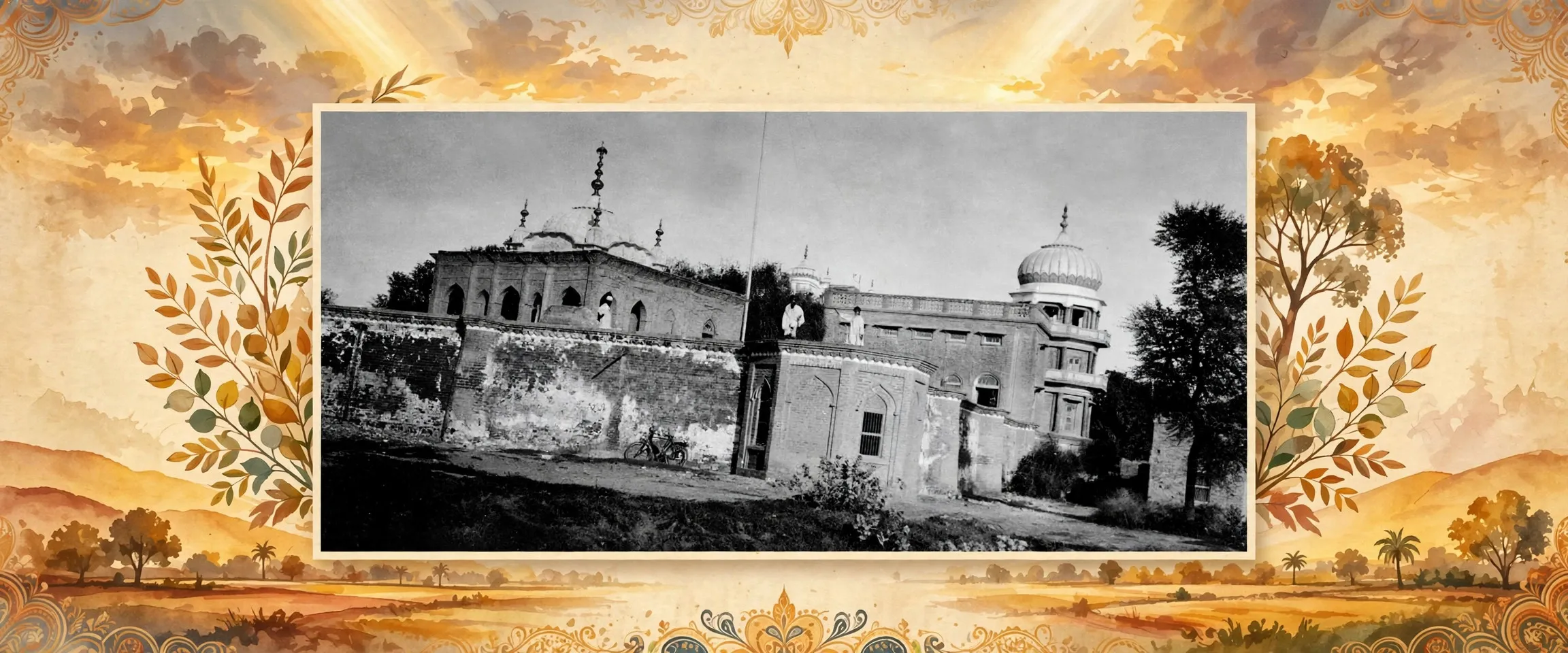
Gurdwara Sacha Sauda, in Farooqabad (Chuharkana), Sheikhupura district, Pakistan, marks the spot where the young Guru Nanak Dev Ji spent the 20 rupees his father gave him for trade on feeding hungry sadhus instead. Calling it his ‘sacha sauda’, true bargain, he laid the spiritual foundation of langar, Sikhism’s free community kitchen.
- Punjabi name
- ਗੁਰਦੁਆਰਾ ਸੱਚਾ ਸੌਦਾ
- Country
- Pakistan
- City
- Farooqabad (Chuharkana), Sheikhupura district
- Associated Guru
- Guru Nanak Dev Ji
- The sakhi
- Twenty rupees spent feeding hungry sadhus; accounts differ on the Guru's age (12 or 18)
- Built by
- Maharaja Ranjit Singh (fortress pattern; exact year unrecorded)
All 15 facts
- Land endowment
- 250 bighas (over 100 acres), by Maharaja Ranjit Singh
- SGPC takeover
- 30 December 1920, by Jathedar Kartar Singh Jhabbar
- Closed
- 1947 to April 1993; reopened on Baisakhi 1993
- Renovation
- 1993-94, with help of the Sangat of England
- Management
- Evacuee Trust Property Board / PSGPC
- Nearby
- Gurdwara Sach Khand Sahib, about 1 km across the railway line
- Traditional fairs
- First of Magh, Visakh, Kattak
- Distance from Lahore
- ~37 miles (about 55 km)
- Significance
- The 'true bargain'; traditionally the spiritual beginning of langar
Gurdwara Sacha Sauda in Farooqabad, Pakistan, marks the spot where a young Guru Nanak Dev Ji spent the twenty rupees his father gave him for trade on feeding hungry sadhus instead. Calling it his “sacha sauda”, a true bargain, he laid the spiritual foundation of the Sikh tradition of selfless feeding that grew into langar.
The sakhi of the true bargain
Mehta Kalu, the father of the young Nanak, handed his son twenty rupees and sent him to the market town of Chuharkana to buy goods he could sell at a profit and learn the ways of trade. Nanak set out with his companion Bhai Mardana.
On the way the two came upon sadhus who had gone hungry for days. Moved by their condition, Nanak spent the entire sum on food and water for them, a langar for the saints, and returned home empty-handed. When his father demanded to know what business he had done, Nanak replied that he had struck a “sacha sauda”, a true bargain: no profit could be greater than feeding the hungry. The scolding that followed did not shake him, and the episode became one of the most beloved sakhis of his youth.
The tellings differ on small points. Some give Nanak's age as twelve, others as eighteen, and the SGPC's own account fixes no number. Most accounts say twenty rupees, while one Janamsakhi-based telling gives twenty-two.
From feeding ground to fortress gurdwara
On the spot where the sadhus were fed now stands Gurdwara Sacha Sauda. Maharaja Ranjit Singh had the shrine built on the pattern of a fortress, with high walls and domed towers, its Darshani Deorhi, the entrance gateway, drawing congregations from afar. He also endowed the gurdwara with 250 bighas of land, more than a hundred acres, for its upkeep. No source gives the exact year of construction, so none is claimed here.
In its early years the shrine was served by Udasi priests. After the Gurdwara Reform Movement it came under Panthic administration: on 30 December 1920, Jathedar Kartar Singh Jhabbar occupied it for the Shiromani Gurdwara Parbandhak Committee.
Partition, closure, and reopening
Partition in 1947 closed the gurdwara, as the Sikhs and Hindus of the area crossed into India. At the evacuation it was a huge fortress-like, three-storey building with domed towers. Little is documented about its condition in the decades that followed.
Then the doors opened again. On Baisakhi in April 1993, Sikh sangats were once more allowed to pay homage here, and in 1993-94 the building was renovated with the help of the Sangat of England: a new dining hall and a water tank were built, the Prakash of Guru Granth Sahib Ji was established, and Akhand Path began to be held about four times a year. Today the gurdwara is open to organised Sikh jathas visiting with the Pakistan government's approval.
Architecture and the complex
The gurdwara keeps the fortress character of Maharaja Ranjit Singh's era: high walls, arched openings, domed pavilions, and the imposing Darshani Deorhi as its most striking feature.
The complex holds the main prayer hall, a sarovar, and a langar hall that keeps alive the memory of the first langar. There is no sarai for overnight stays, and no historic Sikh artifacts are kept here.
Religious significance
Sacha Sauda is traditionally regarded as the spiritual beginning of langar, the free community kitchen that is among Sikhism's most visible institutions. The sakhi teaches that selfless service (seva) outweighs the gathering of wealth, a lesson Sikh parents still pass to their children through this very story.
For pilgrims, the shrine stands alongside Nankana Sahib, Kartarpur Sahib and Panja Sahib as one of the essential Pakistani gurdwaras connected with Guru Nanak Dev Ji's own life.
Visiting today
The gurdwara stands at Sacha Sauda, Farooqabad, in Sheikhupura district of Punjab, Pakistan, about 37 miles (some 55 km) west of Lahore on the Lahore-Lyallpur railway line. It is maintained under the Evacuee Trust Property Board with the Pakistan Sikh Gurdwara Prabandhak Committee, and the two bodies jointly arrange security and accommodation for pilgrims during the jathas.
Sikh yatrees visit during Guru Nanak's birth-anniversary celebrations each November, and Sacha Sauda features on the official ten-day Gurpurab jatha itineraries alongside Nankana Sahib, Panja Sahib and Kartarpur. A langar runs at the gurdwara, and traditional fairs used to be held on the first of Magh, Visakh and Kattak. See also: Gurdwaras in Pakistan, the complete guide to Pakistan's historic Sikh shrines.
Across the railway line, about a kilometre away, stands a second historic shrine, Gurdwara Sach Khand Sahib, with its own sakhi: the tale of how sand turned to sugar for a hungry Bhai Mardana. Its domed gurdwara stands in the fields, and its condition is reported as poor.
What does “Sacha Sauda” mean?
“Sacha sauda” is Punjabi for “true bargain”. It recalls young Guru Nanak's answer to his father after spending his trade money on feeding hungry sadhus: that serving the hungry was the most profitable bargain of all.
Where is Gurdwara Sacha Sauda located?
In Farooqabad, Sheikhupura district, Punjab, Pakistan, about 37 miles (some 55 km) west of Lahore on the Lahore-Lyallpur railway line. The town was founded by a Sikh sardar, Chuhar Singh, as Chuhar Kana, and kept that name until 1983, when it was renamed Farooqabad.
ਪਾਕਿਸਤਾਨ ਦੇ ਫ਼ਾਰੂਕਾਬਾਦ ਵਿੱਚ ਗੁਰਦੁਆਰਾ ਸੱਚਾ ਸੌਦਾ ਉਸ ਅਸਥਾਨ ਦੀ ਨਿਸ਼ਾਨਦੇਹੀ ਕਰਦਾ ਹੈ ਜਿੱਥੇ ਨੌਜਵਾਨ ਸ੍ਰੀ ਗੁਰੂ ਨਾਨਕ ਦੇਵ ਜੀ ਨੇ ਆਪਣੇ ਪਿਤਾ ਵੱਲੋਂ ਵਪਾਰ ਲਈ ਦਿੱਤੇ ਵੀਹ ਰੁਪਏ ਭੁੱਖੇ ਸਾਧਾਂ ਨੂੰ ਖਵਾਉਣ 'ਤੇ ਖਰਚ ਕਰ ਦਿੱਤੇ। ਇਸ ਨੂੰ ਆਪਣਾ ‘ਸੱਚਾ ਸੌਦਾ’ ਕਹਿ ਕੇ ਉਨ੍ਹਾਂ ਨੇ ਨਿਸ਼ਕਾਮ ਸੇਵਾ ਦੀ ਉਸ ਪਰੰਪਰਾ ਦੀ ਨੀਂਹ ਰੱਖੀ ਜੋ ਲੰਗਰ ਵਿੱਚ ਵਧੀ।
ਸੱਚੇ ਸੌਦੇ ਦੀ ਸਾਖੀ
ਨੌਜਵਾਨ ਨਾਨਕ ਦੇ ਪਿਤਾ ਮਹਿਤਾ ਕਾਲੂ ਨੇ ਆਪਣੇ ਪੁੱਤਰ ਨੂੰ ਵੀਹ ਰੁਪਏ ਦਿੱਤੇ ਅਤੇ ਵਪਾਰ ਸਿੱਖਣ ਲਈ ਚੂਹੜਕਾਣਾ ਦੇ ਬਾਜ਼ਾਰੀ ਸ਼ਹਿਰ ਵਿੱਚ ਸੌਦਾ ਖਰੀਦਣ ਭੇਜਿਆ। ਨਾਨਕ ਆਪਣੇ ਸਾਥੀ ਭਾਈ ਮਰਦਾਨਾ ਨਾਲ ਤੁਰ ਪਏ।
ਰਸਤੇ ਵਿੱਚ ਉਨ੍ਹਾਂ ਨੂੰ ਕੁਝ ਸਾਧ ਮਿਲੇ ਜੋ ਦਿਨਾਂ ਤੋਂ ਭੁੱਖੇ ਸਨ। ਉਨ੍ਹਾਂ ਦੀ ਹਾਲਤ ਵੇਖ ਕੇ ਨਾਨਕ ਨੇ ਸਾਰੀ ਰਕਮ ਉਨ੍ਹਾਂ ਲਈ ਖਾਣ-ਪੀਣ 'ਤੇ ਖਰਚ ਕਰ ਦਿੱਤੀ, ਸੰਤਾਂ ਲਈ ਇੱਕ ਲੰਗਰ ਲਗਾ ਦਿੱਤਾ, ਅਤੇ ਖਾਲੀ ਹੱਥ ਘਰ ਪਰਤ ਆਏ। ਜਦੋਂ ਪਿਤਾ ਨੇ ਪੁੱਛਿਆ ਕਿ ਕਿਹੜਾ ਵਪਾਰ ਕੀਤਾ ਹੈ, ਤਾਂ ਨਾਨਕ ਨੇ ਜਵਾਬ ਦਿੱਤਾ ਕਿ ਉਨ੍ਹਾਂ ਨੇ ‘ਸੱਚਾ ਸੌਦਾ’ ਕੀਤਾ ਹੈ: ਭੁੱਖਿਆਂ ਨੂੰ ਖਵਾਉਣ ਤੋਂ ਵੱਡਾ ਕੋਈ ਲਾਭ ਨਹੀਂ। ਇਸ ਤੋਂ ਬਾਅਦ ਹੋਈ ਝਿੜਕ ਉਨ੍ਹਾਂ ਨੂੰ ਡੁਲਾ ਨਾ ਸਕੀ, ਅਤੇ ਇਹ ਘਟਨਾ ਉਨ੍ਹਾਂ ਦੀ ਜਵਾਨੀ ਦੀਆਂ ਸਭ ਤੋਂ ਪਿਆਰੀਆਂ ਸਾਖੀਆਂ ਵਿੱਚੋਂ ਇੱਕ ਬਣ ਗਈ।
ਛੋਟੀਆਂ ਗੱਲਾਂ 'ਤੇ ਬਿਰਤਾਂਤਾਂ ਵਿੱਚ ਫ਼ਰਕ ਹੈ। ਕੁਝ ਨਾਨਕ ਦੀ ਉਮਰ ਬਾਰ੍ਹਾਂ ਸਾਲ ਦੱਸਦੇ ਹਨ, ਕੁਝ ਅਠਾਰਾਂ, ਅਤੇ ਸ਼੍ਰੋਮਣੀ ਕਮੇਟੀ ਦਾ ਆਪਣਾ ਬਿਰਤਾਂਤ ਕੋਈ ਉਮਰ ਨਿਸ਼ਚਿਤ ਨਹੀਂ ਕਰਦਾ। ਵੱਧ ਗਿਣਤੀ ਬਿਰਤਾਂਤ ਵੀਹ ਰੁਪਏ ਕਹਿੰਦੇ ਹਨ, ਜਦੋਂਕਿ ਜਨਮਸਾਖੀ 'ਤੇ ਆਧਾਰਤ ਇੱਕ ਬਿਰਤਾਂਤ ਬਾਈ ਰੁਪਏ ਦੱਸਦਾ ਹੈ।
ਖਵਾਉਣ ਵਾਲੀ ਥਾਂ ਤੋਂ ਕਿਲਾ-ਨੁਮਾ ਗੁਰਦੁਆਰਾ
ਜਿੱਥੇ ਸਾਧਾਂ ਨੂੰ ਖਵਾਇਆ ਗਿਆ ਸੀ, ਉਸੇ ਥਾਂ 'ਤੇ ਅੱਜ ਗੁਰਦੁਆਰਾ ਸੱਚਾ ਸੌਦਾ ਖੜ੍ਹਾ ਹੈ। ਮਹਾਰਾਜਾ ਰਣਜੀਤ ਸਿੰਘ ਨੇ ਇਹ ਅਸਥਾਨ ਕਿਲੇ ਦੇ ਨਮੂਨੇ 'ਤੇ ਬਣਵਾਇਆ, ਉੱਚੀਆਂ ਕੰਧਾਂ ਅਤੇ ਗੁੰਬਦਦਾਰ ਬੁਰਜਾਂ ਨਾਲ, ਜਿਸ ਦਾ ਦਰਸ਼ਨੀ ਡਿਉੜ੍ਹੀ ਨਾਂ ਦਾ ਪ੍ਰਵੇਸ਼ ਦੁਆਰ ਦੂਰ-ਦੂਰ ਤੋਂ ਸੰਗਤਾਂ ਨੂੰ ਖਿੱਚਦਾ ਹੈ। ਉਨ੍ਹਾਂ ਨੇ ਗੁਰਦੁਆਰੇ ਦੇ ਖਰਚ ਲਈ 250 ਬਿੱਘੇ ਜ਼ਮੀਨ, ਸੌ ਏਕੜ ਤੋਂ ਵੱਧ, ਵੀ ਲਗਾਈ। ਉਸਾਰੀ ਦਾ ਠੀਕ ਸਾਲ ਕਿਸੇ ਸਰੋਤ ਵਿੱਚ ਨਹੀਂ ਮਿਲਦਾ, ਇਸ ਲਈ ਇੱਥੇ ਕੋਈ ਸਾਲ ਦਾਅਵਾ ਨਹੀਂ ਕੀਤਾ ਗਿਆ।
ਸ਼ੁਰੂਆਤੀ ਸਾਲਾਂ ਵਿੱਚ ਇਸ ਅਸਥਾਨ ਦੀ ਸੇਵਾ ਉਦਾਸੀ ਪੁਜਾਰੀ ਕਰਦੇ ਸਨ। ਗੁਰਦੁਆਰਾ ਸੁਧਾਰ ਲਹਿਰ ਤੋਂ ਬਾਅਦ ਇਹ ਪੰਥਕ ਪ੍ਰਬੰਧ ਹੇਠ ਆ ਗਿਆ: 30 ਦਸੰਬਰ 1920 ਨੂੰ ਜਥੇਦਾਰ ਕਰਤਾਰ ਸਿੰਘ ਝੱਬਰ ਨੇ ਸ਼੍ਰੋਮਣੀ ਗੁਰਦੁਆਰਾ ਪ੍ਰਬੰਧਕ ਕਮੇਟੀ ਵੱਲੋਂ ਇਸ 'ਤੇ ਕਬਜ਼ਾ ਕਰ ਲਿਆ।
ਵੰਡ, ਬੰਦੀ ਅਤੇ ਮੁੜ ਖੁੱਲ੍ਹਣਾ
1947 ਦੀ ਵੰਡ ਨੇ ਗੁਰਦੁਆਰਾ ਬੰਦ ਕਰ ਦਿੱਤਾ, ਕਿਉਂਕਿ ਇਲਾਕੇ ਦੇ ਸਿੱਖ ਅਤੇ ਹਿੰਦੂ ਭਾਰਤ ਚਲੇ ਗਏ। ਉਜਾੜੇ ਵੇਲੇ ਇਹ ਕਿਲੇ ਵਰਗੀ ਵਿਸ਼ਾਲ ਤਿੰਨ-ਮੰਜ਼ਲਾ ਇਮਾਰਤ ਸੀ ਜਿਸ ਵਿੱਚ ਗੁੰਬਦਦਾਰ ਬੁਰਜ ਸਨ। ਇਸ ਤੋਂ ਬਾਅਦ ਦੇ ਦਹਾਕਿਆਂ ਵਿੱਚ ਇਸ ਦੀ ਹਾਲਤ ਬਾਰੇ ਬਹੁਤ ਘੱਟ ਦਸਤਾਵੇਜ਼ ਮਿਲਦੇ ਹਨ।
ਫਿਰ ਦਰਵਾਜ਼ੇ ਮੁੜ ਖੁੱਲ੍ਹੇ। ਅਪ੍ਰੈਲ 1993 ਦੀ ਵਿਸਾਖੀ 'ਤੇ ਸਿੱਖ ਸੰਗਤਾਂ ਨੂੰ ਇੱਥੇ ਮੁੜ ਨਤਮਸਤਕ ਹੋਣ ਦੀ ਇਜਾਜ਼ਤ ਮਿਲੀ, ਅਤੇ 1993-94 ਵਿੱਚ ਇੰਗਲੈਂਡ ਦੀ ਸੰਗਤ ਦੀ ਮਦਦ ਨਾਲ ਇਮਾਰਤ ਦੀ ਮੁਰੰਮਤ ਹੋਈ: ਨਵਾਂ ਲੰਗਰ ਹਾਲ ਅਤੇ ਪਾਣੀ ਦੀ ਟੈਂਕੀ ਬਣੀ, ਸ੍ਰੀ ਗੁਰੂ ਗ੍ਰੰਥ ਸਾਹਿਬ ਜੀ ਦਾ ਪ੍ਰਕਾਸ਼ ਸਥਾਪਿਤ ਹੋਇਆ, ਅਤੇ ਸਾਲ ਵਿੱਚ ਲਗਭਗ ਚਾਰ ਵਾਰ ਅਖੰਡ ਪਾਠ ਹੋਣ ਲੱਗਾ। ਅੱਜ ਗੁਰਦੁਆਰਾ ਪਾਕਿਸਤਾਨ ਸਰਕਾਰ ਦੀ ਮਨਜ਼ੂਰੀ ਨਾਲ ਆਉਣ ਵਾਲੇ ਸੰਗਠਿਤ ਸਿੱਖ ਜਥਿਆਂ ਲਈ ਖੁੱਲ੍ਹਾ ਹੈ।
ਆਰਕੀਟੈਕਚਰ ਅਤੇ ਅਹਾਤਾ
ਗੁਰਦੁਆਰਾ ਮਹਾਰਾਜਾ ਰਣਜੀਤ ਸਿੰਘ ਦੇ ਯੁੱਗ ਦੀ ਕਿਲਾ-ਨੁਮਾ ਸ਼ਕਲ ਕਾਇਮ ਰੱਖਦਾ ਹੈ: ਉੱਚੀਆਂ ਕੰਧਾਂ, ਕਮਾਨਦਾਰ ਖਿੜਕੀਆਂ, ਗੁੰਬਦਦਾਰ ਛੱਤਰੀਆਂ, ਅਤੇ ਸਭ ਤੋਂ ਪ੍ਰਭਾਵਸ਼ਾਲੀ ਦਰਸ਼ਨੀ ਡਿਉੜ੍ਹੀ।
ਅਹਾਤੇ ਵਿੱਚ ਮੁੱਖ ਪ੍ਰਾਰਥਨਾ ਹਾਲ, ਇੱਕ ਸਰੋਵਰ ਅਤੇ ਇੱਕ ਲੰਗਰ ਹਾਲ ਹੈ ਜੋ ਪਹਿਲੇ ਲੰਗਰ ਦੀ ਯਾਦ ਕਾਇਮ ਰੱਖਦਾ ਹੈ। ਰਾਤ ਠਹਿਰਨ ਲਈ ਕੋਈ ਸਰਾਂ ਨਹੀਂ ਹੈ, ਅਤੇ ਇੱਥੇ ਕੋਈ ਇਤਿਹਾਸਕ ਸਿੱਖ ਨਿਸ਼ਾਨੀਆਂ ਸੰਭਾਲ ਕੇ ਨਹੀਂ ਰੱਖੀਆਂ ਗਈਆਂ।
ਧਾਰਮਿਕ ਮਹੱਤਤਾ
ਸੱਚਾ ਸੌਦਾ ਰਵਾਇਤੀ ਤੌਰ 'ਤੇ ਲੰਗਰ ਦੀ ਰੂਹਾਨੀ ਸ਼ੁਰੂਆਤ ਮੰਨਿਆ ਜਾਂਦਾ ਹੈ, ਜੋ ਸਿੱਖ ਧਰਮ ਦੀਆਂ ਸਭ ਤੋਂ ਵੱਧ ਦਿਸਣ ਵਾਲੀਆਂ ਸੰਸਥਾਵਾਂ ਵਿੱਚੋਂ ਇੱਕ ਹੈ। ਇਹ ਸਾਖੀ ਸਿਖਾਉਂਦੀ ਹੈ ਕਿ ਨਿਸ਼ਕਾਮ ਸੇਵਾ ਧਨ ਇਕੱਠਾ ਕਰਨ ਤੋਂ ਵੱਡੀ ਹੈ, ਇਹ ਸਬਕ ਸਿੱਖ ਮਾਪੇ ਇਸੇ ਕਹਾਣੀ ਰਾਹੀਂ ਅੱਜ ਵੀ ਆਪਣੇ ਬੱਚਿਆਂ ਨੂੰ ਦਿੰਦੇ ਹਨ।
ਸ਼ਰਧਾਲੂਆਂ ਲਈ ਇਹ ਅਸਥਾਨ ਨਨਕਾਣਾ ਸਾਹਿਬ, ਕਰਤਾਰਪੁਰ ਸਾਹਿਬ ਅਤੇ ਪੰਜਾ ਸਾਹਿਬ ਦੇ ਨਾਲ ਪਾਕਿਸਤਾਨ ਦੇ ਉਨ੍ਹਾਂ ਜ਼ਰੂਰੀ ਗੁਰਦੁਆਰਿਆਂ ਵਿੱਚੋਂ ਇੱਕ ਹੈ ਜੋ ਸ੍ਰੀ ਗੁਰੂ ਨਾਨਕ ਦੇਵ ਜੀ ਦੇ ਆਪਣੇ ਜੀਵਨ ਨਾਲ ਜੁੜੇ ਹਨ।
ਅੱਜ ਦਰਸ਼ਨ
ਗੁਰਦੁਆਰਾ ਪਾਕਿਸਤਾਨ ਦੇ ਪੰਜਾਬ ਦੇ ਸ਼ੇਖੂਪੁਰਾ ਜ਼ਿਲ੍ਹੇ ਵਿੱਚ ਫ਼ਾਰੂਕਾਬਾਦ ਵਿਖੇ ਹੈ, ਲਾਹੌਰ-ਲਾਇਲਪੁਰ ਰੇਲਵੇ ਲਾਈਨ 'ਤੇ ਲਾਹੌਰ ਤੋਂ ਲਗਭਗ 37 ਮੀਲ (ਕੋਈ 55 ਕਿਲੋਮੀਟਰ) ਪੱਛਮ ਵੱਲ। ਇਹ ਇਵੈਕੂਈ ਟਰੱਸਟ ਪ੍ਰਾਪਰਟੀ ਬੋਰਡ ਅਤੇ ਪਾਕਿਸਤਾਨ ਸਿੱਖ ਗੁਰਦੁਆਰਾ ਪ੍ਰਬੰਧਕ ਕਮੇਟੀ ਹੇਠ ਸੰਭਾਲਿਆ ਜਾਂਦਾ ਹੈ, ਅਤੇ ਦੋਵੇਂ ਸੰਸਥਾਵਾਂ ਜਥਿਆਂ ਦੌਰਾਨ ਸ਼ਰਧਾਲੂਆਂ ਲਈ ਸੁਰੱਖਿਆ ਅਤੇ ਰਿਹਾਇਸ਼ ਦਾ ਪ੍ਰਬੰਧ ਮਿਲ ਕੇ ਕਰਦੀਆਂ ਹਨ।
ਸਿੱਖ ਯਾਤਰੀ ਹਰ ਨਵੰਬਰ ਵਿੱਚ ਸ੍ਰੀ ਗੁਰੂ ਨਾਨਕ ਦੇਵ ਜੀ ਦੇ ਪ੍ਰਕਾਸ਼ ਪੁਰਬ ਦੇ ਜਸ਼ਨਾਂ ਦੌਰਾਨ ਦਰਸ਼ਨ ਕਰਦੇ ਹਨ, ਅਤੇ ਸੱਚਾ ਸੌਦਾ ਨਨਕਾਣਾ ਸਾਹਿਬ, ਪੰਜਾ ਸਾਹਿਬ ਅਤੇ ਕਰਤਾਰਪੁਰ ਦੇ ਨਾਲ ਸਰਕਾਰੀ ਦਸ-ਦਿਨਾ ਗੁਰਪੁਰਬ ਜਥਾ ਯੋਜਨਾਵਾਂ ਵਿੱਚ ਸ਼ਾਮਲ ਹੈ। ਗੁਰਦੁਆਰੇ ਵਿੱਚ ਲੰਗਰ ਚਲਦਾ ਹੈ, ਅਤੇ ਪਹਿਲਾਂ ਮਾਘ, ਵਿਸਾਖ ਅਤੇ ਕੱਤਕ ਦੀ ਪਹਿਲੀ ਤਾਰੀਖ਼ ਨੂੰ ਰਵਾਇਤੀ ਮੇਲੇ ਲੱਗਦੇ ਸਨ।
ਰੇਲਵੇ ਲਾਈਨ ਦੇ ਪਾਰ, ਲਗਭਗ ਇੱਕ ਕਿਲੋਮੀਟਰ ਦੂਰ, ਇੱਕ ਦੂਜਾ ਇਤਿਹਾਸਕ ਅਸਥਾਨ ਖੜ੍ਹਾ ਹੈ, ਗੁਰਦੁਆਰਾ ਸੱਚਖੰਡ ਸਾਹਿਬ, ਜਿਸ ਦੀ ਆਪਣੀ ਸਾਖੀ ਹੈ: ਭੁੱਖੇ ਭਾਈ ਮਰਦਾਨਾ ਲਈ ਰੇਤ ਕਿਵੇਂ ਖੰਡ ਬਣ ਗਈ। ਇਸ ਦਾ ਗੁੰਬਦਦਾਰ ਗੁਰਦੁਆਰਾ ਖੇਤਾਂ ਵਿੱਚ ਖੜ੍ਹਾ ਹੈ, ਅਤੇ ਇਸ ਦੀ ਹਾਲਤ ਖ਼ਰਾਬ ਦੱਸੀ ਜਾਂਦੀ ਹੈ।
‘ਸੱਚਾ ਸੌਦਾ’ ਦਾ ਕੀ ਅਰਥ ਹੈ?
‘ਸੱਚਾ ਸੌਦਾ’ ਪੰਜਾਬੀ ਵਿੱਚ ‘ਸੱਚਾ ਵਪਾਰ’ ਹੈ। ਇਹ ਨੌਜਵਾਨ ਗੁਰੂ ਨਾਨਕ ਦੇ ਆਪਣੇ ਪਿਤਾ ਨੂੰ ਦਿੱਤੇ ਜਵਾਬ ਦੀ ਯਾਦ ਦਿਵਾਉਂਦਾ ਹੈ, ਜਦੋਂ ਉਨ੍ਹਾਂ ਨੇ ਵਪਾਰ ਦੇ ਪੈਸੇ ਭੁੱਖੇ ਸਾਧਾਂ 'ਤੇ ਖਰਚ ਕਰ ਦਿੱਤੇ ਸਨ: ਕਿ ਭੁੱਖਿਆਂ ਦੀ ਸੇਵਾ ਤੋਂ ਵੱਡਾ ਕੋਈ ਲਾਭ ਨਹੀਂ।
ਗੁਰਦੁਆਰਾ ਸੱਚਾ ਸੌਦਾ ਕਿੱਥੇ ਹੈ?
ਪਾਕਿਸਤਾਨ ਦੇ ਪੰਜਾਬ ਦੇ ਸ਼ੇਖੂਪੁਰਾ ਜ਼ਿਲ੍ਹੇ ਵਿੱਚ ਫ਼ਾਰੂਕਾਬਾਦ ਵਿੱਚ, ਲਾਹੌਰ-ਲਾਇਲਪੁਰ ਰੇਲਵੇ ਲਾਈਨ 'ਤੇ ਲਾਹੌਰ ਤੋਂ ਲਗਭਗ 37 ਮੀਲ (ਕੋਈ 55 ਕਿਲੋਮੀਟਰ) ਪੱਛਮ ਵੱਲ। ਇਹ ਸ਼ਹਿਰ ਇੱਕ ਸਿੱਖ ਸਰਦਾਰ, ਚੂਹੜ ਸਿੰਘ ਨੇ ਚੂਹੜਕਾਣਾ ਵਜੋਂ ਵਸਾਇਆ ਸੀ, ਅਤੇ 1983 ਤੱਕ ਇਹੀ ਨਾਮ ਰਿਹਾ, ਜਦੋਂ ਇਸ ਦਾ ਨਾਮ ਫ਼ਾਰੂਕਾਬਾਦ ਰੱਖ ਦਿੱਤਾ ਗਿਆ।
More religion entries to explore
Sources (8)
- SGPC - Gurdwara Sachcha Sauda, Chuharkana (Pakistan)
- WorldGurudwaras.com - Gurudwara Sachcha Sauda, Chuharkana
- DiscoverSikhism - Gurdwara Sri Sacha Sauda Sahib
- GreenPak Tourism - Gurdwara Sacha Soda Sahib, Farooqabad
- Wikipedia - Farooqabad
- PTI via LatestLY - Sikh jathas and ETPB/PSGPC arrangements, Nov 2019
- Radio Pakistan via Karachi News - Sikh yatrees visit Gurdwara Sacha Sauda, Nov 2024
- Wikipedia - Guru Nanak (20 vs 22 rupees variant)
Jugti is free and independent. Reader support keeps the Kosh growing.
Support