
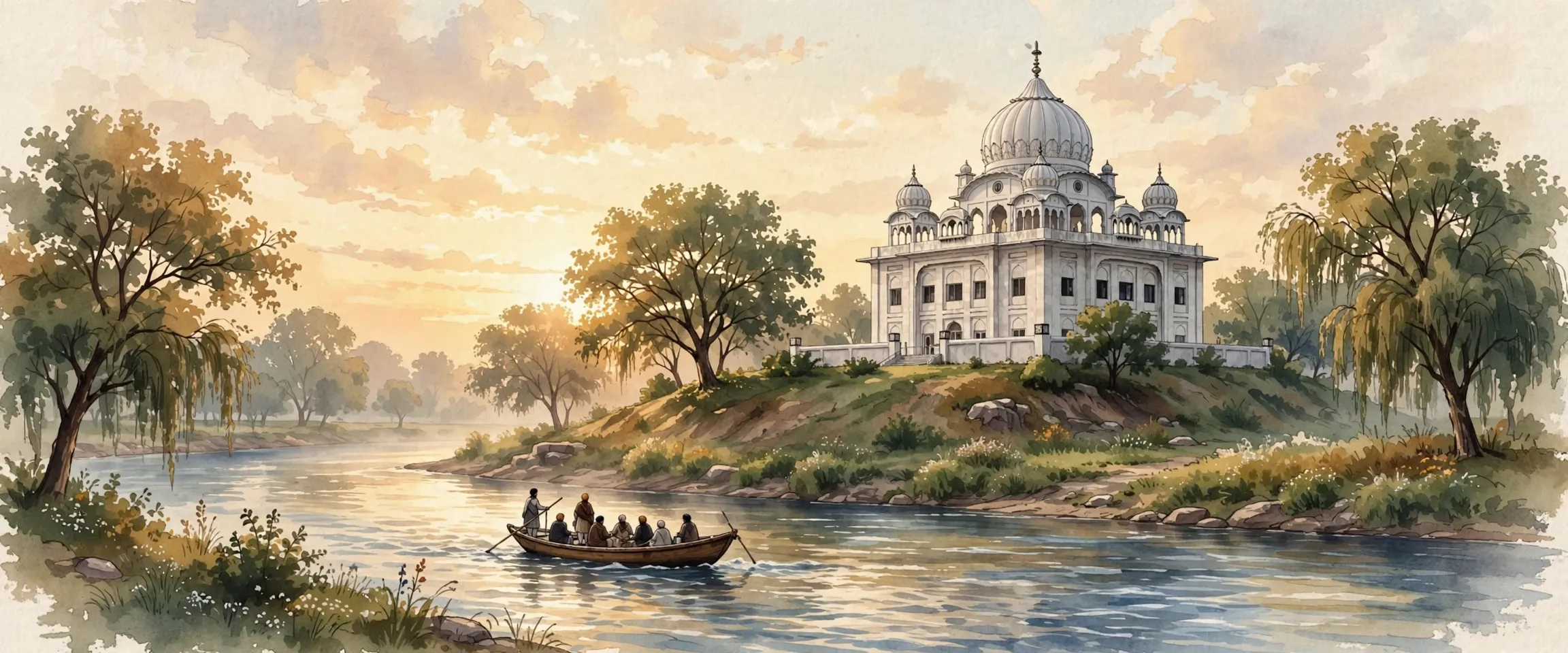
Gurdwara Majnu ka Tilla Sahib stands on a hillock on the right bank of the Yamuna in North Delhi, opposite Timarpur. It marks the meeting on 20 July 1505 of Guru Nanak Dev Ji with Abdulla, the Iranian Sufi ferryman nicknamed Majnu, whose free ferry service Guru Nanak blessed. Guru Hargobind Ji also stayed here, Baghel Singh built the first shrine in 1783, and Baisakhi is its great festival.
- Punjabi name
- ਗੁਰਦੁਆਰਾ ਮਜਨੂੰ ਕਾ ਟਿੱਲਾ ਸਾਹਿਬ
- Type
- Historic gurdwara
- Country
- India
- City
- Delhi
- District
- North Delhi
- State
- Delhi
All 14 facts
- Location
- Right bank of the Yamuna, opposite Timarpur; Magazine Road, Civil Lines; PIN 110054
- Associated with
- Guru Nanak Dev Ji; Guru Hargobind Ji
- Marks
- Meeting of Guru Nanak Dev Ji and Majnu, 20 July 1505
- First shrine
- 1783, by Sardar Baghel Singh
- Endowment
- Jagir and small marble gurdwara by Maharaja Ranjit Singh
- Present building
- 1950, by the Delhi sangat
- Main festival
- Baisakhi, with a large langar
- Nearest metro
- Vidhan Sabha (Yellow Line), about 1.5 km; Kashmere Gate
Gurdwara Majnu ka Tilla Sahib is one of the oldest Sikh shrines in Delhi, standing on a hillock on the right bank of the Yamuna river, opposite Timarpur and beyond the Khyber Pass stretch of North Delhi. Its name, the hillock of Majnu, remembers Abdulla, an Iranian Sufi mystic nicknamed Majnu, who ferried travellers across the Yamuna free of charge and who met Guru Nanak Dev Ji here on 20 July 1505. Guru Hargobind Ji, the sixth Guru, also stayed at this mound, and Sardar Baghel Singh raised the first shrine here in 1783. Delhi knows the wider neighbourhood by the same name, Majnu ka Tilla, today famous as the city's Tibetan quarter.
What is Gurdwara Majnu ka Tilla Sahib?
Gurdwara Majnu ka Tilla Sahib is a historic gurdwara in North Delhi that marks the meeting of Guru Nanak Dev Ji with the Sufi ferryman Abdulla, called Majnu, in July 1505. Guru Nanak stayed on the mound until the end of that July. The shrine built by Baghel Singh in 1783, endowed by Maharaja Ranjit Singh in the early 19th century and rebuilt in a larger form by the Delhi sangat in 1950, is counted among the oldest extant Sikh shrines in the capital. Its best known gathering is Baisakhi, when the birth of the Khalsa is celebrated here with a very large langar.
Majnu, the ferryman of the Yamuna
During the reign of Sikandar Lodhi (1489 to 1517), a Sufi hermit named Abdulla camped on a small hill at the edge of the Yamuna. He fasted and meditated day after day, lost in the yearning to see God, and grew so thin and so oblivious to the world that people began to call him Majnu: in Persian storytelling, Majnun is the lover driven half mad by love, and the name had become a symbol of intense, self forgetting love of God. When he was not in meditation, Majnu worked a small boat and carried people across the Yamuna without charging anything, treating the ferrying itself as service to God. Sikh tradition holds that when Guru Nanak came walking by the river and blessed him, Majnu found the enlightenment he had sought for so long and became the Guru's devoted disciple. Other Sufi saints of Delhi are said to have come to the mound to meet Guru Nanak during his stay, among them the custodian of the shrine of Hazrat Nizamuddin Aulia.
Guru Nanak's stay in July 1505
The meeting is dated to 20 July 1505, and Guru Nanak is remembered to have stayed at the mound until the end of July. Tradition adds that, pleased with Majnu's dedication, the Guru told him his name would live on: the place would be famous by the ferryman's name, not the Guru's. That is exactly what happened. Five centuries later, the whole locality, its market lanes and its Tibetan settlement, is still called Majnu ka Tilla, the hillock of Majnu. For Sikhs the story carries a clear teaching: devoted, selfless service, the seva Majnu practised at his ferry, is itself a way to God, whoever practises it.
Guru Hargobind Ji and the later Gurus
A century later the mound received the sixth Guru. Guru Hargobind Ji stayed at Majnu ka Tilla on his journeys to and from Delhi in the time of Emperor Jahangir, including the period around his release from Gwalior Fort with 52 princes, the release Sikhs celebrate as Bandi Chhor Divas. One Delhi retelling links the freeing of the princes' kingdoms to this very halting place. Ram Rai, the elder son of Guru Har Rai Ji, the seventh Guru, also stayed here when he was sent to Aurangzeb's court, and a well in the compound is associated in tradition with his stay. Between Guru Nanak's first visit and these later stays, the little mound accumulated a layered Sikh history out of proportion to its size.
1783, Maharaja Ranjit Singh and the building of 1950
Sardar Baghel Singh, who entered Delhi in 1783 and camped at Majnu ka Tilla, raised the first small structure here to keep the memory of the Gurus' stays. Maharaja Ranjit Singh later built the small marble gurdwara that can still be seen, and endowed the shrine with a jagir whose income paid for its upkeep. In 1950 the sangat of Delhi built the large gurdwara building that serves today, in white marble, on the same mound above the river. The shrine thus holds three layers in one place: the tiny old marble gurdwara of the Ranjit Singh years, the estate he donated around it, and the spacious modern hall raised by Delhi's own congregation.
Baisakhi at Majnu ka Tilla: what happens here?
The shrine's great day is Baisakhi, the birthday of the Khalsa. Delhi's Sikhs gather here in large numbers, pilgrims come in from the surrounding areas, and people of different faiths, castes and stations join the celebration. A special langar on an enormous scale is served, open to everyone, in the spirit of the ferryman who once carried all comers across the river for nothing. Through the year the gurdwara keeps the daily rhythm of kirtan and prayer, and its visitors often continue into the lanes of the Tibetan quarter that shares its name, making this one of the few places in Delhi where a Sikh shrine, a Buddhist monastery and a refugee market stand within a short walk of each other.
Visiting Majnu ka Tilla Sahib: how to reach
The gurdwara stands on the right bank of the Yamuna on the Grand Trunk Road (National Highway 1), by Magazine Road in Civil Lines, opposite Timarpur, with the postcode 110054. The closest metro stations are Vidhan Sabha on the Yellow Line, about 1.5 km away, and Kashmere Gate, a short walk from the ISBT bus terminal. Visitors cover their heads and remove their shoes, as at any gurdwara. The historic well in the compound is worth seeking out, and the small old marble shrine beside the main hall is the piece of the complex most visitors miss.
ਗੁਰਦੁਆਰਾ ਮਜਨੂੰ ਕਾ ਟਿੱਲਾ ਸਾਹਿਬ ਦਿੱਲੀ ਦੇ ਸਭ ਤੋਂ ਪੁਰਾਣੇ ਸਿੱਖ ਅਸਥਾਨਾਂ ਵਿੱਚੋਂ ਇੱਕ ਹੈ, ਜੋ ਯਮੁਨਾ ਦਰਿਆ ਦੇ ਸੱਜੇ ਕਿਨਾਰੇ ਇੱਕ ਟਿੱਲੇ ਉੱਤੇ ਖੜ੍ਹਾ ਹੈ, ਉੱਤਰੀ ਦਿੱਲੀ ਵਿੱਚ ਟਿਮਾਰਪੁਰ ਦੇ ਸਾਹਮਣੇ ਅਤੇ ਖੈਬਰ ਪਾਸ ਵਾਲੇ ਹਿੱਸੇ ਤੋਂ ਅੱਗੇ ਇਸ ਦਾ ਨਾਂ, ਮਜਨੂੰ ਦਾ ਟਿੱਲਾ, ਅਬਦੁੱਲਾ ਨਾਂ ਦੇ ਇੱਕ ਈਰਾਨੀ ਸੂਫੀ ਫਕੀਰ ਨੂੰ ਯਾਦ ਕਰਦਾ ਹੈ, ਜਿਸ ਨੂੰ ਮਜਨੂੰ ਕਿਹਾ ਜਾਂਦਾ ਸੀ, ਜੋ ਮੁਸਾਫਰਾਂ ਨੂੰ ਯਮੁਨਾ ਤੋਂ ਮੁਫਤ ਪਾਰ ਲੰਘਾਉਂਦਾ ਸੀ ਅਤੇ ਜੋ 20 ਜੁਲਾਈ 1505 ਨੂੰ ਇੱਥੇ ਗੁਰੂ ਨਾਨਕ ਦੇਵ ਜੀ ਨੂੰ ਮਿਲਿਆ ਸੀ ਛੇਵੇਂ ਗੁਰੂ, ਗੁਰੂ ਹਰਗੋਬਿੰਦ ਜੀ, ਵੀ ਇਸ ਟਿੱਲੇ ਉੱਤੇ ਠਹਿਰੇ ਸਨ, ਅਤੇ ਸਰਦਾਰ ਬਘੇਲ ਸਿੰਘ ਨੇ 1783 ਵਿੱਚ ਇੱਥੇ ਪਹਿਲਾ ਅਸਥਾਨ ਬਣਾਇਆ ਦਿੱਲੀ ਸਾਰੇ ਇਲਾਕੇ ਨੂੰ ਇਸੇ ਨਾਂ ਨਾਲ ਜਾਣਦੀ ਹੈ, ਮਜਨੂੰ ਕਾ ਟਿੱਲਾ, ਜੋ ਅੱਜ ਸ਼ਹਿਰ ਦੇ ਤਿੱਬਤੀ ਇਲਾਕੇ ਵਜੋਂ ਮਸ਼ਹੂਰ ਹੈ
ਗੁਰਦੁਆਰਾ ਮਜਨੂੰ ਕਾ ਟਿੱਲਾ ਸਾਹਿਬ ਕੀ ਹੈ?
ਗੁਰਦੁਆਰਾ ਮਜਨੂੰ ਕਾ ਟਿੱਲਾ ਸਾਹਿਬ ਉੱਤਰੀ ਦਿੱਲੀ ਦਾ ਇੱਕ ਇਤਿਹਾਸਕ ਗੁਰਦੁਆਰਾ ਹੈ ਜੋ ਜੁਲਾਈ 1505 ਵਿੱਚ ਗੁਰੂ ਨਾਨਕ ਦੇਵ ਜੀ ਦੀ ਸੂਫੀ ਮਲਾਹ ਅਬਦੁੱਲਾ, ਜਿਸ ਨੂੰ ਮਜਨੂੰ ਕਿਹਾ ਜਾਂਦਾ ਸੀ, ਨਾਲ ਹੋਈ ਮੁਲਾਕਾਤ ਨੂੰ ਦਰਸਾਉਂਦਾ ਹੈ ਗੁਰੂ ਨਾਨਕ ਉਸ ਜੁਲਾਈ ਦੇ ਅੰਤ ਤੱਕ ਟਿੱਲੇ ਉੱਤੇ ਠਹਿਰੇ ਬਘੇਲ ਸਿੰਘ ਵੱਲੋਂ 1783 ਵਿੱਚ ਬਣਾਇਆ, 19ਵੀਂ ਸਦੀ ਦੇ ਸ਼ੁਰੂ ਵਿੱਚ ਮਹਾਰਾਜਾ ਰਣਜੀਤ ਸਿੰਘ ਵੱਲੋਂ ਜਾਗੀਰ ਲਾਇਆ ਅਤੇ 1950 ਵਿੱਚ ਦਿੱਲੀ ਦੀ ਸੰਗਤ ਵੱਲੋਂ ਵੱਡੇ ਰੂਪ ਵਿੱਚ ਮੁੜ ਬਣਾਇਆ ਇਹ ਅਸਥਾਨ ਰਾਜਧਾਨੀ ਦੇ ਸਭ ਤੋਂ ਪੁਰਾਣੇ ਮੌਜੂਦਾ ਸਿੱਖ ਅਸਥਾਨਾਂ ਵਿੱਚ ਗਿਣਿਆ ਜਾਂਦਾ ਹੈ ਇਸ ਦਾ ਸਭ ਤੋਂ ਮਸ਼ਹੂਰ ਮੇਲਾ ਵਿਸਾਖੀ ਹੈ, ਜਦੋਂ ਖਾਲਸੇ ਦਾ ਜਨਮ ਦਿਹਾੜਾ ਇੱਥੇ ਬਹੁਤ ਵੱਡੇ ਲੰਗਰ ਨਾਲ ਮਨਾਇਆ ਜਾਂਦਾ ਹੈ
ਮਜਨੂੰ, ਯਮੁਨਾ ਦਾ ਮਲਾਹ
ਸਿਕੰਦਰ ਲੋਦੀ (1489 ਤੋਂ 1517) ਦੇ ਰਾਜ ਵਿੱਚ ਅਬਦੁੱਲਾ ਨਾਂ ਦਾ ਇੱਕ ਸੂਫੀ ਫਕੀਰ ਯਮੁਨਾ ਦੇ ਕਿਨਾਰੇ ਇੱਕ ਛੋਟੀ ਪਹਾੜੀ ਉੱਤੇ ਡੇਰਾ ਲਾ ਕੇ ਬੈਠਾ ਸੀ ਉਹ ਵਰਤ ਰੱਖਦਾ ਅਤੇ ਦਿਨ-ਰਾਤ ਸਿਮਰਨ ਵਿੱਚ ਲੀਨ ਰਹਿੰਦਾ, ਰੱਬ ਦੇ ਦੀਦਾਰ ਦੀ ਤਾਂਘ ਵਿੱਚ ਇੰਨਾ ਖੋ ਜਾਂਦਾ ਕਿ ਲੋਕ ਉਸ ਨੂੰ ਮਜਨੂੰ ਕਹਿਣ ਲੱਗੇ: ਫਾਰਸੀ ਕਥਾਵਾਂ ਵਿੱਚ ਮਜਨੂੰ ਉਹ ਆਸ਼ਕ ਹੈ ਜੋ ਮੁਹੱਬਤ ਵਿੱਚ ਅੱਧਾ ਪਾਗਲ ਹੋ ਗਿਆ, ਅਤੇ ਇਹ ਨਾਂ ਰੱਬ ਦੀ ਤੀਬਰ, ਸਵੈ-ਭੁੱਲੀ ਮੁਹੱਬਤ ਦਾ ਪ੍ਰਤੀਕ ਬਣ ਗਿਆ ਸੀ ਜਦੋਂ ਉਹ ਸਿਮਰਨ ਵਿੱਚ ਨਾ ਹੁੰਦਾ, ਤਾਂ ਮਜਨੂੰ ਛੋਟੀ ਕਿਸ਼ਤੀ ਚਲਾਉਂਦਾ ਅਤੇ ਲੋਕਾਂ ਨੂੰ ਬਿਨਾਂ ਕੁਝ ਲਏ ਯਮੁਨਾ ਤੋਂ ਪਾਰ ਲੰਘਾਉਂਦਾ, ਇਸ ਬੇੜੀ ਚਲਾਉਣ ਨੂੰ ਹੀ ਰੱਬ ਦੀ ਸੇਵਾ ਸਮਝ ਕੇ ਸਿੱਖ ਪਰੰਪਰਾ ਦੱਸਦੀ ਹੈ ਕਿ ਜਦੋਂ ਗੁਰੂ ਨਾਨਕ ਦਰਿਆ ਕਿਨਾਰੇ ਤੁਰਦੇ ਆਏ ਅਤੇ ਉਸ ਨੂੰ ਅਸੀਸ ਦਿੱਤੀ, ਤਾਂ ਮਜਨੂੰ ਨੂੰ ਉਹ ਗਿਆਨ ਮਿਲਿਆ ਜਿਸ ਦੀ ਉਹ ਲੰਮੇ ਸਮੇਂ ਤੋਂ ਭਾਲ ਕਰ ਰਿਹਾ ਸੀ, ਅਤੇ ਉਹ ਗੁਰੂ ਜੀ ਦਾ ਸ਼ਰਧਾਲੂ ਸਿੱਖ ਬਣ ਗਿਆ ਕਿਹਾ ਜਾਂਦਾ ਹੈ ਕਿ ਗੁਰੂ ਨਾਨਕ ਦੇ ਠਹਿਰਾਅ ਦੌਰਾਨ ਦਿੱਲੀ ਦੇ ਹੋਰ ਸੂਫੀ ਸੰਤ ਵੀ ਉਨ੍ਹਾਂ ਨੂੰ ਮਿਲਣ ਟਿੱਲੇ ਉੱਤੇ ਆਏ, ਜਿਨ੍ਹਾਂ ਵਿੱਚ ਹਜ਼ਰਤ ਨਿਜ਼ਾਮੂਦੀਨ ਔਲੀਆ ਦੇ ਅਸਥਾਨ ਦੇ ਸੱਜਾਦਾ ਨਸ਼ੀਨ ਵੀ ਸਨ
ਜੁਲਾਈ 1505 ਵਿੱਚ ਗੁਰੂ ਨਾਨਕ ਦਾ ਠਹਿਰਾਅ
ਇਹ ਮੁਲਾਕਾਤ 20 ਜੁਲਾਈ 1505 ਦੀ ਦੱਸੀ ਜਾਂਦੀ ਹੈ, ਅਤੇ ਗੁਰੂ ਨਾਨਕ ਜੁਲਾਈ ਦੇ ਅੰਤ ਤੱਕ ਟਿੱਲੇ ਉੱਤੇ ਠਹਿਰੇ ਯਾਦ ਕੀਤੇ ਜਾਂਦੇ ਹਨ ਪਰੰਪਰਾ ਇਹ ਵੀ ਦੱਸਦੀ ਹੈ ਕਿ ਮਜਨੂੰ ਦੀ ਸ਼ਰਧਾ ਤੋਂ ਖੁਸ਼ ਹੋ ਕੇ ਗੁਰੂ ਜੀ ਨੇ ਕਿਹਾ ਸੀ ਕਿ ਉਸ ਦਾ ਨਾਂ ਜਿਉਂਦਾ ਰਹੇਗਾ: ਇਹ ਥਾਂ ਮਲਾਹ ਦੇ ਨਾਂ ਨਾਲ ਮਸ਼ਹੂਰ ਹੋਵੇਗੀ, ਗੁਰੂ ਦੇ ਨਾਂ ਨਾਲ ਨਹੀਂ ਬਿਲਕੁਲ ਅਜਿਹਾ ਹੀ ਹੋਇਆ ਪੰਜ ਸਦੀਆਂ ਬਾਅਦ ਸਾਰਾ ਇਲਾਕਾ, ਇਸ ਦੀਆਂ ਬਾਜ਼ਾਰ ਗਲੀਆਂ ਅਤੇ ਤਿੱਬਤੀ ਬਸਤੀ, ਅੱਜ ਵੀ ਮਜਨੂੰ ਕਾ ਟਿੱਲਾ ਕਹਾਉਂਦਾ ਹੈ ਸਿੱਖਾਂ ਲਈ ਇਹ ਕਥਾ ਇੱਕ ਸਪਸ਼ਟ ਸਿੱਖਿਆ ਰੱਖਦੀ ਹੈ: ਨਿਰਸਵਾਰਥ ਸੇਵਾ, ਜੋ ਮਜਨੂੰ ਆਪਣੀ ਬੇੜੀ ਉੱਤੇ ਕਰਦਾ ਸੀ, ਆਪਣੇ ਆਪ ਵਿੱਚ ਰੱਬ ਤੱਕ ਦਾ ਰਾਹ ਹੈ, ਚਾਹੇ ਕੋਈ ਵੀ ਕਰੇ
ਗੁਰੂ ਹਰਗੋਬਿੰਦ ਜੀ ਅਤੇ ਬਾਅਦ ਦੇ ਗੁਰੂ
ਇੱਕ ਸਦੀ ਬਾਅਦ ਟਿੱਲੇ ਉੱਤੇ ਛੇਵੇਂ ਗੁਰੂ ਆਏ ਗੁਰੂ ਹਰਗੋਬਿੰਦ ਜੀ ਬਾਦਸ਼ਾਹ ਜਹਾਂਗੀਰ ਦੇ ਸਮੇਂ ਵਿੱਚ ਦਿੱਲੀ ਆਉਣ-ਜਾਣ ਦੌਰਾਨ ਮਜਨੂੰ ਕਾ ਟਿੱਲਾ ਠਹਿਰੇ, ਜਿਸ ਵਿੱਚ ਗਵਾਲੀਅਰ ਕਿਲ੍ਹੇ ਤੋਂ 52 ਰਾਜਿਆਂ ਸਮੇਤ ਰਿਹਾਈ ਦਾ ਸਮਾਂ ਵੀ ਸ਼ਾਮਲ ਹੈ, ਜਿਸ ਰਿਹਾਈ ਨੂੰ ਸਿੱਖ ਬੰਦੀ ਛੋੜ ਦਿਵਸ ਵਜੋਂ ਮਨਾਉਂਦੇ ਹਨ ਦਿੱਲੀ ਦੀ ਇੱਕ ਕਥਾ ਰਾਜਿਆਂ ਨੂੰ ਉਨ੍ਹਾਂ ਦੇ ਰਾਜ ਵਾਪਸ ਮਿਲਣ ਨੂੰ ਇਸੇ ਠਹਿਰਾਅ ਵਾਲੀ ਥਾਂ ਨਾਲ ਜੋੜਦੀ ਹੈ ਸੱਤਵੇਂ ਗੁਰੂ, ਗੁਰੂ ਹਰ ਰਾਏ ਜੀ ਦੇ ਵੱਡੇ ਪੁੱਤਰ ਰਾਮ ਰਾਏ ਵੀ ਇੱਥੇ ਠਹਿਰੇ ਜਦੋਂ ਉਨ੍ਹਾਂ ਨੂੰ ਔਰੰਗਜ਼ੇਬ ਦੇ ਦਰਬਾਰ ਵਿੱਚ ਭੇਜਿਆ ਗਿਆ, ਅਤੇ ਪਰਿਸਰ ਵਿੱਚ ਇੱਕ ਖੂਹ ਪਰੰਪਰਾ ਵਿੱਚ ਉਨ੍ਹਾਂ ਦੇ ਠਹਿਰਾਅ ਨਾਲ ਜੁੜਿਆ ਹੈ ਗੁਰੂ ਨਾਨਕ ਦੀ ਪਹਿਲੀ ਫੇਰੀ ਅਤੇ ਇਨ੍ਹਾਂ ਬਾਅਦ ਦੀਆਂ ਫੇਰੀਆਂ ਵਿਚਕਾਰ, ਛੋਟੇ ਜਿਹੇ ਟਿੱਲੇ ਨੇ ਆਪਣੇ ਆਕਾਰ ਨਾਲੋਂ ਕਿਤੇ ਵੱਡਾ ਸਿੱਖ ਇਤਿਹਾਸ ਸਾਂਭ ਲਿਆ
1783, ਮਹਾਰਾਜਾ ਰਣਜੀਤ ਸਿੰਘ ਅਤੇ 1950 ਦਾ ਭਵਨ
ਸਰਦਾਰ ਬਘੇਲ ਸਿੰਘ, ਜੋ 1783 ਵਿੱਚ ਦਿੱਲੀ ਦਾਖਲ ਹੋਏ ਅਤੇ ਮਜਨੂੰ ਕਾ ਟਿੱਲਾ ਡੇਰਾ ਲਾਇਆ, ਨੇ ਗੁਰੂਆਂ ਦੇ ਠਹਿਰਾਅ ਦੀ ਯਾਦ ਰੱਖਣ ਲਈ ਇੱਥੇ ਪਹਿਲੀ ਛੋਟੀ ਉਸਾਰੀ ਕਰਾਈ ਮਹਾਰਾਜਾ ਰਣਜੀਤ ਸਿੰਘ ਨੇ ਬਾਅਦ ਵਿੱਚ ਛੋਟਾ ਸੰਗਮਰਮਰ ਦਾ ਗੁਰਦੁਆਰਾ ਬਣਵਾਇਆ ਜੋ ਅੱਜ ਵੀ ਦਿਸਦਾ ਹੈ, ਅਤੇ ਅਸਥਾਨ ਨੂੰ ਜਾਗੀਰ ਲਾਈ ਜਿਸ ਦੀ ਆਮਦਨ ਇਸ ਦੇ ਖਰਚੇ ਲਈ ਵਰਤੀ ਜਾਂਦੀ ਸੀ 1950 ਵਿੱਚ ਦਿੱਲੀ ਦੀ ਸੰਗਤ ਨੇ ਅੱਜ ਸੇਵਾ ਕਰਦਾ ਵੱਡਾ ਗੁਰਦੁਆਰਾ ਭਵਨ ਚਿੱਟੇ ਸੰਗਮਰਮਰ ਵਿੱਚ ਉਸੇ ਟਿੱਲੇ ਉੱਤੇ ਦਰਿਆ ਦੇ ਉੱਪਰ ਬਣਾਇਆ ਇਸ ਤਰ੍ਹਾਂ ਇਹ ਅਸਥਾਨ ਇੱਕੋ ਥਾਂ ਤਿੰਨ ਪਰਤਾਂ ਰੱਖਦਾ ਹੈ: ਰਣਜੀਤ ਸਿੰਘ ਦੇ ਸਮੇਂ ਦਾ ਛੋਟਾ ਪੁਰਾਣਾ ਸੰਗਮਰਮਰ ਗੁਰਦੁਆਰਾ, ਉਸ ਵੱਲੋਂ ਦਿੱਤੀ ਜਾਗੀਰ ਵਾਲੀ ਜ਼ਮੀਨ, ਅਤੇ ਦਿੱਲੀ ਦੀ ਆਪਣੀ ਸੰਗਤ ਵੱਲੋਂ ਬਣਾਇਆ ਵਿਸ਼ਾਲ ਆਧੁਨਿਕ ਹਾਲ
ਮਜਨੂੰ ਕਾ ਟਿੱਲਾ ਵਿਖੇ ਵਿਸਾਖੀ: ਇੱਥੇ ਕੀ ਹੁੰਦਾ ਹੈ?
ਇਸ ਅਸਥਾਨ ਦਾ ਵੱਡਾ ਦਿਨ ਵਿਸਾਖੀ ਹੈ, ਖਾਲਸੇ ਦਾ ਜਨਮ ਦਿਹਾੜਾ ਦਿੱਲੀ ਦੇ ਸਿੱਖ ਇੱਥੇ ਵੱਡੀ ਗਿਣਤੀ ਵਿੱਚ ਇਕੱਠੇ ਹੁੰਦੇ ਹਨ, ਆਲੇ-ਦੁਆਲੇ ਤੋਂ ਸ਼ਰਧਾਲੂ ਆਉਂਦੇ ਹਨ, ਅਤੇ ਵੱਖ-ਵੱਖ ਧਰਮਾਂ, ਜਾਤਾਂ ਅਤੇ ਰੁਤਬਿਆਂ ਦੇ ਲੋਕ ਜਸ਼ਨ ਵਿੱਚ ਸ਼ਾਮਲ ਹੁੰਦੇ ਹਨ ਬਹੁਤ ਵੱਡੇ ਪੱਧਰ ਦਾ ਖਾਸ ਲੰਗਰ ਵਰਤਾਇਆ ਜਾਂਦਾ ਹੈ, ਸਭ ਲਈ ਖੁੱਲ੍ਹਾ, ਉਸੇ ਮਲਾਹ ਦੀ ਭਾਵਨਾ ਵਿੱਚ ਜੋ ਕਦੇ ਹਰ ਆਉਣ ਵਾਲੇ ਨੂੰ ਮੁਫਤ ਦਰਿਆ ਪਾਰ ਕਰਾਉਂਦਾ ਸੀ ਸਾਲ ਭਰ ਗੁਰਦੁਆਰਾ ਕੀਰਤਨ ਅਤੇ ਅਰਦਾਸ ਦੀ ਰੋਜ਼ਾਨਾ ਰੀਤ ਬਣਾਈ ਰੱਖਦਾ ਹੈ, ਅਤੇ ਇੱਥੇ ਆਉਣ ਵਾਲੇ ਅਕਸਰ ਇਸੇ ਨਾਂ ਵਾਲੇ ਤਿੱਬਤੀ ਇਲਾਕੇ ਦੀਆਂ ਗਲੀਆਂ ਵਿੱਚ ਵੀ ਜਾਂਦੇ ਹਨ, ਜਿਸ ਨਾਲ ਇਹ ਦਿੱਲੀ ਦੀਆਂ ਥੋੜ੍ਹੀਆਂ ਜਿਹੀਆਂ ਥਾਵਾਂ ਵਿੱਚੋਂ ਇੱਕ ਬਣ ਜਾਂਦਾ ਹੈ ਜਿੱਥੇ ਸਿੱਖ ਅਸਥਾਨ, ਬੋਧੀ ਮੱਠ ਅਤੇ ਸ਼ਰਨਾਰਥੀ ਬਾਜ਼ਾਰ ਥੋੜ੍ਹੀ ਪੈਦਲ ਦੂਰੀ ਵਿੱਚ ਖੜ੍ਹੇ ਹਨ
ਮਜਨੂੰ ਕਾ ਟਿੱਲਾ ਸਾਹਿਬ ਦੇ ਦਰਸ਼ਨ: ਕਿਵੇਂ ਪਹੁੰਚੀਏ
ਗੁਰਦੁਆਰਾ ਯਮੁਨਾ ਦੇ ਸੱਜੇ ਕਿਨਾਰੇ ਗ੍ਰੈਂਡ ਟਰੰਕ ਰੋਡ (ਕੌਮੀ ਰਾਜਮਾਰਗ 1) ਉੱਤੇ, ਸਿਵਲ ਲਾਈਨਜ਼ ਵਿੱਚ ਮੈਗਜ਼ੀਨ ਰੋਡ ਕੋਲ, ਟਿਮਾਰਪੁਰ ਦੇ ਸਾਹਮਣੇ ਹੈ, ਜਿਸ ਦਾ ਡਾਕ ਕੋਡ 110054 ਹੈ ਸਭ ਤੋਂ ਨੇੜਲੇ ਮੈਟਰੋ ਸਟੇਸ਼ਨ ਪੀਲੀ ਲਾਈਨ ਉੱਤੇ ਵਿਧਾਨ ਸਭਾ, ਲਗਭਗ 1.5 ਕਿਲੋਮੀਟਰ ਦੂਰ, ਅਤੇ ਕਸ਼ਮੀਰੀ ਗੇਟ ਹਨ, ਜੋ ਆਈ ਐਸ ਬੀ ਟੀ ਬੱਸ ਅੱਡੇ ਤੋਂ ਥੋੜ੍ਹੀ ਪੈਦਲ ਦੂਰੀ ਉੱਤੇ ਹੈ ਆਉਣ ਵਾਲੇ, ਹਰ ਗੁਰਦੁਆਰੇ ਵਾਂਗ, ਸਿਰ ਢੱਕਦੇ ਹਨ ਅਤੇ ਜੋੜੇ ਲਾਹੁੰਦੇ ਹਨ ਪਰਿਸਰ ਵਿੱਚ ਇਤਿਹਾਸਕ ਖੂਹ ਵੇਖਣ ਯੋਗ ਹੈ, ਅਤੇ ਮੁੱਖ ਹਾਲ ਦੇ ਨਾਲ ਲੱਗਦਾ ਛੋਟਾ ਪੁਰਾਣਾ ਸੰਗਮਰਮਰ ਅਸਥਾਨ ਪਰਿਸਰ ਦਾ ਉਹ ਹਿੱਸਾ ਹੈ ਜੋ ਬਹੁਤੇ ਆਉਣ ਵਾਲਿਆਂ ਤੋਂ ਛੁੱਟ ਜਾਂਦਾ ਹੈ