
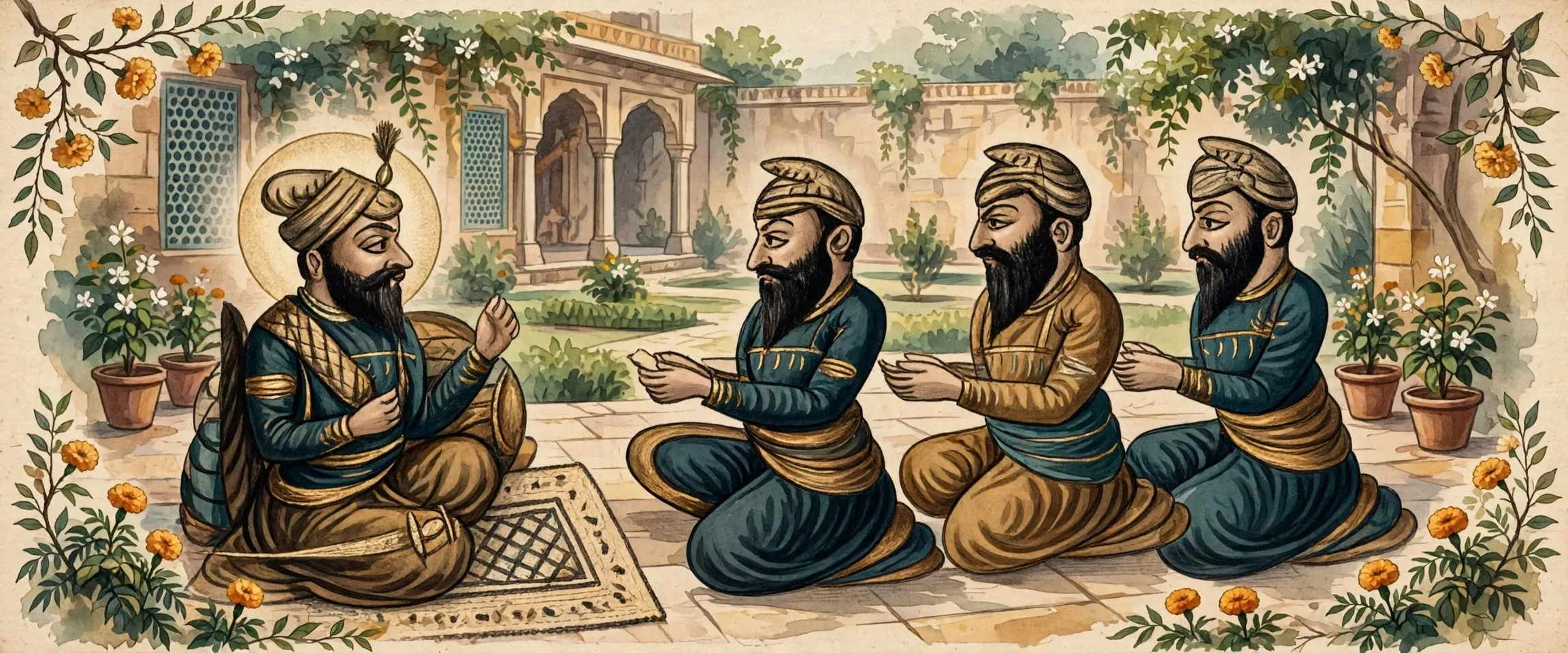
Bhai Dayala Ji, also written Bhai Dayal Das, was a close companion of Guru Tegh Bahadur Ji who was left at Patna in charge of the Guru's family and the congregations of the east during the eastern journey of 1665 to 1670. He accompanied the Guru from Anandpur Sahib in July 1675, was arrested with him and taken to Delhi, refused to give up his faith, and was executed in a heated cauldron at Chandni Chowk in November 1675, as the Encyclopaedia of Sikhism records.
- Punjabi name
- ਭਾਈ ਦਿਆਲਾ ਜੀ
- Name forms
- Bhai Dayala Ji, also written Bhai Dayal Das, Bhai Dyal Das and Bhai Dial Das across the sources
- Family
- Son of Mai Das and elder brother of Bhai Mani Ram, according to the Shahid Bilas of Bhai Mani Singh as the Encyclopaedia of Sikhism gives it. Wikipedia instead calls him born in a Brahmin family, and other accounts give other lineages, so the family details rest on tradition, not record
- Ancestral home
- Alipur near Multan, as the SikhiWiki narrative gives it. His grandfather Bhai Balu Ram, that account says, died fighting in Guru Hargobind Ji's first battle
- Entered service
- Fifteen years old, after his father came to Kiratpur in 1657 and left his three elder sons in the Guru's service, as the SikhiWiki narrative gives it. No source gives a birth year
- Role
- Minister for domestic affairs at Guru Tegh Bahadur Ji's court, on Diwan Durga Mall's recommendation, as SikhiWiki gives it. Wikipedia calls him chief of the sangat at Patna Sahib and in charge of all the masands in the east
All 13 facts
- Eastern service
- In Guru Tegh Bahadur Ji's train on the eastern journey of 1665 to 1670. Among the Sikhs detained by the Mughal authorities in 1665 and later released, as the Encyclopaedia of Sikhism records
- Patna charge
- Left at Patna to look after the Guru's family as the Guru went further east. The Guru's letters told the Varanasi and Patna congregations to abide by his directions. He sent word to the Guru at Dhaka of Gobind Rai's birth and helped care for the child, as Wikipedia records
- Arrest
- Accompanied the Guru from Anandpur Sahib on 11 July 1675 and was arrested with him under imperial orders, at Agra in the SikhiWiki and Wikipedia accounts, and taken to Delhi
- Died
- November 1675 at Chandni Chowk, Delhi. The Encyclopaedia of Sikhism and Wikipedia give 11 November 1675. A narrative account places the companions on consecutive days, Dayala Ji on 9 November, and SikhiWiki's main article gives 24 November. The variation is stated openly on this page
- Martyrdom
- Boiled to death in a heated cauldron after refusing to give up his faith, as the Encyclopaedia of Sikhism states. Most opened accounts say the cauldron held water. The SikhiWiki account of Bhai Mati Das Ji says boiling oil. This page presents both and chooses neither as certain
- Companions
- Bhai Mati Das Ji and Bhai Sati Das Ji, executed at Delhi in the same days of November 1675. Guru Tegh Bahadur Ji was executed after them
- Commemoration
- Remembered together with Bhai Mati Das Ji and Bhai Sati Das Ji. Gurdwara Sis Ganj Sahib in Chandni Chowk marks the place of Guru Tegh Bahadur Ji's execution, and Gurdwara Rakab Ganj Sahib the place of his cremation
Bhai Dayala Ji was a close companion of Guru Tegh Bahadur Ji, the Sikh entrusted with the Guru's family at Patna and with the congregations of the east, and one of the three companions executed with the Guru at Delhi in November 1675 for refusing to give up his faith.
Who was Bhai Dayala Ji?
Bhai Dayala Ji, also written Bhai Dayal Das, Bhai Dyal Das and Bhai Dial Das, was one of the closest companions of Guru Tegh Bahadur Ji, the ninth Sikh Guru. Sikh memory holds the three men who died with the Guru in Delhi in November 1675 together: Bhai Mati Das Ji, the Guru's diwan, Bhai Sati Das Ji, his brother, and Bhai Dayala Ji, whose charge had been the Guru's own household and family. Of the three, Dayala Ji is in some ways the hardest to write about honestly, because the surviving accounts agree on the shape of his life and death while differing on his family, his dates and even the liquid in which he was put to death. This page follows the Encyclopaedia of Sikhism account, reproduced on SikhiWiki, together with the longer SikhiWiki narrative, Wikipedia, and the martyrdom accounts at All About Sikhs, and it says openly where they differ rather than smoothing the differences away.
A family from Alipur, and a boy given to the Guru's service
The Encyclopaedia of Sikhism, following the Shahid Bilas of Bhai Mani Singh, records Bhai Dayala Ji as the son of Mai Das and an elder brother of Bhai Mani Ram. The longer narrative on SikhiWiki adds the family's background: his grandfather, Bhai Balu Ram, had died fighting in Guru Hargobind Ji's first battle, his ancestors belonged to Alipur near Multan, and his father came to Kiratpur in 1657 for an audience with Guru Har Rai Ji and, returning home, left his three elder sons in the service of the Guru's household. Bhai Dayala Ji, that account says, was fifteen when he entered the Guru's service. Wikipedia, by contrast, calls him born into a Brahmin family and places him among the twenty five or so Sikhs who accompanied Guru Har Krishan Ji from Kiratpur to Delhi in 1664, and other accounts give still other lineages and villages for him. No opened source gives a birth year, and the family details plainly rest on later tradition rather than on record, so this page reports the traditions side by side and treats none of them as settled fact.
In charge at Patna: the Guru's family in his care
What the accounts do agree on is the trust placed in him. The Encyclopaedia records that he was in the train of Guru Tegh Bahadur Ji during the journey across the eastern parts in 1665 to 1670, that he was among the Sikhs detained by the Mughal authorities in 1665 and later released, and that as the Guru proceeded further east from Patna, Bhai Dayala Ji was left behind to look after the Guru's family. Several letters of the Guru to the congregations in the Varanasi and Patna area, the Encyclopaedia adds, told them to abide by Bhai Dayala Ji's directions, which makes him, in effect, the Guru's representative in the east. Wikipedia gives the same charge its formal titles: chief of the sangat, the holy congregation, at Patna Sahib, and in charge of all the masands in the east. It was Bhai Dayala Ji, Wikipedia records, who sent word from Patna to the Guru at Dhaka that his son Gobind Rai had been born, and he helped care for the child, with Bhai Kirpal, and was with the family at Lakhnaur when they travelled from Patna towards Baba Bakala around 1672. The SikhiWiki narrative adds that the birth of Guru Gobind Singh Ji took place under his care and service at Patna, that he looked after the prince until he reached Anandpur Sahib, and that on the recommendation of Diwan Durga Mall, Guru Tegh Bahadur Ji had made him minister for domestic affairs, the officer of the Guru's household, in the council of administration that the narrative accounts list as Mati Das, Sati Das, Dyal Das and Gurditta.
The road to Delhi in 1675
In 1675 the Guru's journey to Delhi was, from the first, a journey towards death, undertaken after the appeal of the Kashmiri Pandits for protection of their freedom of worship. The Encyclopaedia and Wikipedia agree on the departure: Bhai Dayala Ji accompanied Guru Tegh Bahadur Ji when he left Anandpur Sahib on 11 July 1675 to court martyrdom, with Bhai Mati Das Ji and Bhai Sati Das Ji beside him. SikhiWiki and Wikipedia both record that the party was arrested under the orders of Emperor Aurangzeb, at Agra in their accounts, and brought to Delhi. There, SikhiWiki relates, the Guru and his companions were summoned into the council chamber of the Red Fort and questioned on religion, the Guru was pressed to embrace Islam and refused, and the Guru and his companions were ordered to be imprisoned until they agreed. After some days, the same account says, the Guru and three of his companions were produced before the Qazi of the city, a fourth companion, Gurditta, having escaped and hidden in the city. What followed for the companions was done, the accounts agree, in front of the Guru and in public, at the kotwali in Chandni Chowk, to break his resolve by breaking theirs first.
How did Bhai Dayala Ji die?
Bhai Dayala Ji died after Bhai Mati Das Ji, and this page states the manner plainly once, as the Encyclopaedia of Sikhism states it: on his refusal to abjure his faith, he was boiled to death in a heated cauldron at Chandni Chowk in Delhi. On the liquid, the accounts genuinely differ, and a reader deserves to know it. The Encyclopaedia says a heated cauldron of water, Wikipedia and both All About Sikhs accounts also say water, heated under him after he had been placed in it, while the SikhiWiki account of Bhai Mati Das Ji's martyrdom says Bhai Dayala Ji was thrown into a cauldron of boiling oil. This page therefore does not choose between oil and water as certain: most of the opened accounts say water, one says oil, and the fact of the cauldron is what they share. On the day, they differ in the same open way. The Encyclopaedia and Wikipedia give 11 November 1675, the day of Bhai Mati Das Ji's execution in their telling; the narrative retelling at All About Sikhs places the three companions on consecutive days, Mati Das Ji on 8 November, Dayala Ji on 9 November and Sati Das Ji on 10 November; and SikhiWiki's main article gives 24 November and calls Dayala Ji the third of the companions to be executed. November 1675 at Chandni Chowk is certain; the exact day and order beyond Mati Das Ji first are not, and this page leaves them open. The tradition adds that he asked leave of the Guru before his death, that he refused a final offer of life and comfort for conversion, and that he recited the Japji Sahib, and in SikhiWiki's telling the Sukhmani Sahib as well, to his last breath. The speeches the later narratives put in his mouth are retellings, not recorded words, and this page does not quote them as documented fact.
How is Bhai Dayala Ji remembered today?
Bhai Dayala Ji is remembered where he died. Gurdwara Sis Ganj Sahib, in Chandni Chowk, marks the place of Guru Tegh Bahadur Ji's execution, and Gurdwara Rakab Ganj Sahib marks the place where the Guru's body was cremated, so the ground of the companions' martyrdom is still walked daily by visitors to Old Delhi. His memory is kept together with the other two companions, as it has been since 1675: three household servants of a Guru who would not be moved, executed one after another in public before his eyes, each refusing the same bargain of life for faith. Later Sikh tradition also links his family to the next generation of martyrs: the Encyclopaedia names his brother as Bhai Mani Ram, while other accounts connect him directly with Bhai Mani Singh Ji, the scholar martyr who died at Lahore in the following century, and the exact relationship is one more point on which the accounts differ. What does not differ is the pattern his death set alongside Bhai Mati Das Ji: a Sikh offered comfort, office and life itself in exchange for his faith, and refusing, calmly and in public. That refusal, repeated by his Guru days later, is why the three companions are named together whenever the martyrdom of Guru Tegh Bahadur Ji is told.
ਭਾਈ ਦਿਆਲਾ ਜੀ ਗੁਰੂ ਤੇਗ਼ ਬਹਾਦਰ ਜੀ ਦੇ ਨੇੜਲੇ ਸਾਥੀ ਸਨ, ਉਹ ਸਿੱਖ ਜਿਨ੍ਹਾਂ ਨੂੰ ਪਟਨਾ ਵਿਖੇ ਗੁਰੂ ਜੀ ਦੇ ਪਰਿਵਾਰ ਅਤੇ ਪੂਰਬ ਦੀਆਂ ਸੰਗਤਾਂ ਦੀ ਜ਼ਿੰਮੇਵਾਰੀ ਸੌਂਪੀ ਗਈ ਸੀ, ਅਤੇ ਉਨ੍ਹਾਂ ਤਿੰਨ ਸਾਥੀਆਂ ਵਿੱਚੋਂ ਇੱਕ, ਜਿਨ੍ਹਾਂ ਨੂੰ ਨਵੰਬਰ 1675 ਵਿੱਚ ਦਿੱਲੀ ਵਿਖੇ ਗੁਰੂ ਜੀ ਦੇ ਨਾਲ ਇਸ ਲਈ ਸ਼ਹੀਦ ਕੀਤਾ ਗਿਆ, ਕਿਉਂਕਿ ਉਨ੍ਹਾਂ ਨੇ ਆਪਣਾ ਧਰਮ ਛੱਡਣ ਤੋਂ ਇਨਕਾਰ ਕਰ ਦਿੱਤਾ ਸੀ।
ਭਾਈ ਦਿਆਲਾ ਜੀ ਕੌਣ ਸਨ?
ਭਾਈ ਦਿਆਲਾ ਜੀ, ਜਿਨ੍ਹਾਂ ਨੂੰ ਭਾਈ ਦਿਆਲ ਦਾਸ ਵੀ ਕਿਹਾ ਜਾਂਦਾ ਹੈ, ਨੌਵੇਂ ਸਿੱਖ ਗੁਰੂ, ਗੁਰੂ ਤੇਗ਼ ਬਹਾਦਰ ਜੀ ਦੇ ਸਭ ਤੋਂ ਨੇੜਲੇ ਸਾਥੀਆਂ ਵਿੱਚੋਂ ਇੱਕ ਸਨ। ਸਿੱਖ ਯਾਦ ਉਨ੍ਹਾਂ ਤਿੰਨ ਮਨੁੱਖਾਂ ਨੂੰ ਇਕੱਠੇ ਰੱਖਦੀ ਹੈ, ਜੋ ਨਵੰਬਰ 1675 ਵਿੱਚ ਦਿੱਲੀ ਵਿਖੇ ਗੁਰੂ ਜੀ ਦੇ ਨਾਲ ਸ਼ਹੀਦ ਹੋਏ: ਭਾਈ ਮਤੀ ਦਾਸ ਜੀ, ਗੁਰੂ ਜੀ ਦੇ ਦੀਵਾਨ, ਉਨ੍ਹਾਂ ਦੇ ਭਰਾ ਭਾਈ ਸਤੀ ਦਾਸ ਜੀ, ਅਤੇ ਭਾਈ ਦਿਆਲਾ ਜੀ, ਜਿਨ੍ਹਾਂ ਦੇ ਜ਼ਿੰਮੇ ਗੁਰੂ ਜੀ ਦਾ ਆਪਣਾ ਘਰ ਅਤੇ ਪਰਿਵਾਰ ਸੀ। ਤਿੰਨਾਂ ਵਿੱਚੋਂ ਦਿਆਲਾ ਜੀ ਬਾਰੇ ਇਮਾਨਦਾਰੀ ਨਾਲ ਲਿਖਣਾ ਕੁਝ ਔਖਾ ਹੈ, ਕਿਉਂਕਿ ਬਚੇ ਹੋਏ ਬਿਆਨ ਉਨ੍ਹਾਂ ਦੇ ਜੀਵਨ ਅਤੇ ਮੌਤ ਦੀ ਸ਼ਕਲ ਉੱਤੇ ਸਹਿਮਤ ਹਨ, ਪਰ ਉਨ੍ਹਾਂ ਦੇ ਪਰਿਵਾਰ, ਮਿਤੀਆਂ ਅਤੇ ਇੱਥੋਂ ਤੱਕ ਕਿ ਉਸ ਤਰਲ ਪਦਾਰਥ ਉੱਤੇ ਵੀ ਵੱਖ ਵੱਖ ਹਨ, ਜਿਸ ਵਿੱਚ ਉਨ੍ਹਾਂ ਨੂੰ ਪਾ ਕੇ ਸ਼ਹੀਦ ਕੀਤਾ ਗਿਆ। ਇਹ ਪੰਨਾ ਸਿੱਖ ਧਰਮ ਦੇ ਵਿਸ਼ਵਕੋਸ਼ ਦੇ ਬਿਆਨ ਦੇ ਪਿੱਛੇ ਚੱਲਦਾ ਹੈ, ਜੋ ਸਿੱਖੀਵਿਕੀ ਉੱਤੇ ਦੁਹਰਾਇਆ ਗਿਆ ਹੈ, ਸਿੱਖੀਵਿਕੀ ਦੇ ਲੰਮੇ ਬਿਆਨ, ਵਿਕੀਪੀਡੀਆ ਅਤੇ ਆਲ ਅਬਾਊਟ ਸਿੱਖਸ ਦੇ ਸ਼ਹਾਦਤ ਬਿਆਨਾਂ ਦੇ ਨਾਲ, ਅਤੇ ਇਹ ਖੁੱਲ੍ਹ ਕੇ ਦੱਸਦਾ ਹੈ ਕਿ ਇਹ ਕਿੱਥੇ ਵੱਖ ਹਨ, ਫ਼ਰਕਾਂ ਨੂੰ ਮਿਟਾਉਣ ਦੀ ਥਾਂ।
ਅਲੀਪੁਰ ਦਾ ਪਰਿਵਾਰ, ਅਤੇ ਗੁਰੂ ਦੀ ਸੇਵਾ ਵਿੱਚ ਦਿੱਤਾ ਮੁੰਡਾ
ਸਿੱਖ ਧਰਮ ਦਾ ਵਿਸ਼ਵਕੋਸ਼, ਭਾਈ ਮਨੀ ਸਿੰਘ ਦੇ ਸ਼ਹੀਦ ਬਿਲਾਸ ਦੇ ਪਿੱਛੇ ਚੱਲਦਿਆਂ, ਭਾਈ ਦਿਆਲਾ ਜੀ ਨੂੰ ਮਾਈ ਦਾਸ ਦੇ ਪੁੱਤਰ ਅਤੇ ਭਾਈ ਮਨੀ ਰਾਮ ਦੇ ਵੱਡੇ ਭਰਾ ਦਰਜ ਕਰਦਾ ਹੈ। ਸਿੱਖੀਵਿਕੀ ਦਾ ਲੰਮਾ ਬਿਆਨ ਪਰਿਵਾਰ ਦਾ ਪਿਛੋਕੜ ਜੋੜਦਾ ਹੈ: ਉਨ੍ਹਾਂ ਦੇ ਦਾਦਾ, ਭਾਈ ਬਾਲੂ ਰਾਮ, ਗੁਰੂ ਹਰਗੋਬਿੰਦ ਜੀ ਦੀ ਪਹਿਲੀ ਲੜਾਈ ਵਿੱਚ ਲੜਦਿਆਂ ਸ਼ਹੀਦ ਹੋਏ ਸਨ, ਉਨ੍ਹਾਂ ਦੇ ਵਡੇਰੇ ਮੁਲਤਾਨ ਦੇ ਨੇੜੇ ਅਲੀਪੁਰ ਦੇ ਸਨ, ਅਤੇ ਉਨ੍ਹਾਂ ਦੇ ਪਿਤਾ 1657 ਵਿੱਚ ਗੁਰੂ ਹਰ ਰਾਇ ਜੀ ਦੇ ਦਰਸ਼ਨਾਂ ਲਈ ਕੀਰਤਪੁਰ ਆਏ ਅਤੇ ਘਰ ਪਰਤਦਿਆਂ ਆਪਣੇ ਤਿੰਨ ਵੱਡੇ ਪੁੱਤਰਾਂ ਨੂੰ ਗੁਰੂ ਦੇ ਘਰ ਦੀ ਸੇਵਾ ਵਿੱਚ ਛੱਡ ਗਏ। ਭਾਈ ਦਿਆਲਾ ਜੀ, ਉਹ ਬਿਆਨ ਕਹਿੰਦਾ ਹੈ, ਪੰਦਰਾਂ ਸਾਲ ਦੇ ਸਨ, ਜਦੋਂ ਉਹ ਗੁਰੂ ਦੀ ਸੇਵਾ ਵਿੱਚ ਆਏ। ਵਿਕੀਪੀਡੀਆ, ਇਸ ਦੇ ਉਲਟ, ਉਨ੍ਹਾਂ ਨੂੰ ਬ੍ਰਾਹਮਣ ਪਰਿਵਾਰ ਵਿੱਚ ਜਨਮੇ ਦੱਸਦਾ ਹੈ ਅਤੇ ਉਨ੍ਹਾਂ ਨੂੰ ਉਨ੍ਹਾਂ ਲਗਭਗ ਪੱਚੀ ਸਿੱਖਾਂ ਵਿੱਚ ਰੱਖਦਾ ਹੈ, ਜੋ 1664 ਵਿੱਚ ਗੁਰੂ ਹਰ ਕ੍ਰਿਸ਼ਨ ਜੀ ਦੇ ਨਾਲ ਕੀਰਤਪੁਰ ਤੋਂ ਦਿੱਲੀ ਗਏ, ਅਤੇ ਹੋਰ ਬਿਆਨ ਉਨ੍ਹਾਂ ਲਈ ਹੋਰ ਵੰਸ਼ ਅਤੇ ਪਿੰਡ ਦਿੰਦੇ ਹਨ। ਕੋਈ ਵੀ ਖੋਲ੍ਹਿਆ ਸਰੋਤ ਜਨਮ ਸਾਲ ਨਹੀਂ ਦਿੰਦਾ, ਅਤੇ ਪਰਿਵਾਰ ਦੇ ਵੇਰਵੇ ਸਪੱਸ਼ਟ ਤੌਰ ਉੱਤੇ ਰਿਕਾਰਡ ਦੀ ਥਾਂ ਬਾਅਦ ਦੀ ਪਰੰਪਰਾ ਉੱਤੇ ਟਿਕੇ ਹਨ, ਇਸ ਲਈ ਇਹ ਪੰਨਾ ਪਰੰਪਰਾਵਾਂ ਨੂੰ ਨਾਲ ਨਾਲ ਰੱਖਦਾ ਹੈ ਅਤੇ ਕਿਸੇ ਨੂੰ ਵੀ ਪੱਕੀ ਸੱਚਾਈ ਨਹੀਂ ਮੰਨਦਾ।
ਪਟਨਾ ਦੀ ਜ਼ਿੰਮੇਵਾਰੀ: ਗੁਰੂ ਦਾ ਪਰਿਵਾਰ ਉਨ੍ਹਾਂ ਦੀ ਦੇਖ ਰੇਖ ਵਿੱਚ
ਜਿਸ ਗੱਲ ਉੱਤੇ ਬਿਆਨ ਸਹਿਮਤ ਹਨ, ਉਹ ਉਨ੍ਹਾਂ ਉੱਤੇ ਕੀਤਾ ਭਰੋਸਾ ਹੈ। ਵਿਸ਼ਵਕੋਸ਼ ਦਰਜ ਕਰਦਾ ਹੈ ਕਿ ਉਹ 1665 ਤੋਂ 1670 ਵਿੱਚ ਪੂਰਬੀ ਇਲਾਕਿਆਂ ਦੀ ਯਾਤਰਾ ਵਿੱਚ ਗੁਰੂ ਤੇਗ਼ ਬਹਾਦਰ ਜੀ ਦੇ ਕਾਫ਼ਲੇ ਵਿੱਚ ਸਨ, ਕਿ ਉਹ ਉਨ੍ਹਾਂ ਸਿੱਖਾਂ ਵਿੱਚ ਸਨ, ਜਿਨ੍ਹਾਂ ਨੂੰ 1665 ਵਿੱਚ ਮੁਗਲ ਅਧਿਕਾਰੀਆਂ ਨੇ ਰੱਖਿਆ ਅਤੇ ਬਾਅਦ ਵਿੱਚ ਛੱਡ ਦਿੱਤਾ, ਅਤੇ ਜਦੋਂ ਗੁਰੂ ਜੀ ਪਟਨਾ ਤੋਂ ਹੋਰ ਪੂਰਬ ਵੱਲ ਗਏ, ਤਾਂ ਭਾਈ ਦਿਆਲਾ ਜੀ ਨੂੰ ਗੁਰੂ ਜੀ ਦੇ ਪਰਿਵਾਰ ਦੀ ਦੇਖ ਰੇਖ ਲਈ ਪਿੱਛੇ ਛੱਡਿਆ ਗਿਆ। ਵਾਰਾਣਸੀ ਅਤੇ ਪਟਨਾ ਇਲਾਕੇ ਦੀਆਂ ਸੰਗਤਾਂ ਨੂੰ ਗੁਰੂ ਜੀ ਦੇ ਕਈ ਪੱਤਰ, ਵਿਸ਼ਵਕੋਸ਼ ਜੋੜਦਾ ਹੈ, ਉਨ੍ਹਾਂ ਨੂੰ ਭਾਈ ਦਿਆਲਾ ਜੀ ਦੇ ਨਿਰਦੇਸ਼ਾਂ ਦੀ ਪਾਲਣਾ ਕਰਨ ਲਈ ਕਹਿੰਦੇ ਸਨ, ਜੋ ਉਨ੍ਹਾਂ ਨੂੰ, ਅਸਲ ਵਿੱਚ, ਪੂਰਬ ਵਿੱਚ ਗੁਰੂ ਜੀ ਦਾ ਪ੍ਰਤੀਨਿਧ ਬਣਾਉਂਦਾ ਹੈ। ਵਿਕੀਪੀਡੀਆ ਉਹੀ ਜ਼ਿੰਮੇਵਾਰੀ ਉਸ ਦੇ ਰਸਮੀ ਖਿਤਾਬਾਂ ਨਾਲ ਦਿੰਦਾ ਹੈ: ਪਟਨਾ ਸਾਹਿਬ ਵਿਖੇ ਸੰਗਤ ਦੇ ਮੁਖੀ, ਅਤੇ ਪੂਰਬ ਦੇ ਸਾਰੇ ਮਸੰਦਾਂ ਦੇ ਇੰਚਾਰਜ। ਇਹ ਭਾਈ ਦਿਆਲਾ ਜੀ ਹੀ ਸਨ, ਵਿਕੀਪੀਡੀਆ ਦਰਜ ਕਰਦਾ ਹੈ, ਜਿਨ੍ਹਾਂ ਨੇ ਪਟਨਾ ਤੋਂ ਢਾਕਾ ਵਿਖੇ ਗੁਰੂ ਜੀ ਨੂੰ ਪੱਤਰ ਭੇਜ ਕੇ ਉਨ੍ਹਾਂ ਦੇ ਪੁੱਤਰ ਗੋਬਿੰਦ ਰਾਇ ਦੇ ਜਨਮ ਦੀ ਖ਼ਬਰ ਦਿੱਤੀ, ਅਤੇ ਉਨ੍ਹਾਂ ਨੇ ਭਾਈ ਕ੍ਰਿਪਾਲ ਦੇ ਨਾਲ ਬੱਚੇ ਦੀ ਦੇਖ ਰੇਖ ਵਿੱਚ ਮਦਦ ਕੀਤੀ, ਅਤੇ ਜਦੋਂ ਪਰਿਵਾਰ ਲਗਭਗ 1672 ਵਿੱਚ ਪਟਨਾ ਤੋਂ ਬਾਬਾ ਬਕਾਲਾ ਵੱਲ ਚੱਲਿਆ, ਤਾਂ ਉਹ ਲਖਨੌਰ ਵਿਖੇ ਪਰਿਵਾਰ ਦੇ ਨਾਲ ਸਨ। ਸਿੱਖੀਵਿਕੀ ਦਾ ਬਿਆਨ ਜੋੜਦਾ ਹੈ ਕਿ ਗੁਰੂ ਗੋਬਿੰਦ ਸਿੰਘ ਜੀ ਦਾ ਜਨਮ ਪਟਨਾ ਵਿਖੇ ਉਨ੍ਹਾਂ ਦੀ ਦੇਖ ਰੇਖ ਅਤੇ ਸੇਵਾ ਹੇਠ ਹੋਇਆ, ਕਿ ਉਹ ਰਾਜਕੁਮਾਰ ਦੀ ਦੇਖ ਰੇਖ ਉਦੋਂ ਤੱਕ ਕਰਦੇ ਰਹੇ, ਜਦੋਂ ਤੱਕ ਉਹ ਅਨੰਦਪੁਰ ਸਾਹਿਬ ਨਾ ਪਹੁੰਚ ਗਏ, ਅਤੇ ਦੀਵਾਨ ਦੁਰਗਾ ਮੱਲ ਦੀ ਸਿਫ਼ਾਰਸ਼ ਉੱਤੇ ਗੁਰੂ ਤੇਗ਼ ਬਹਾਦਰ ਜੀ ਨੇ ਉਨ੍ਹਾਂ ਨੂੰ ਘਰੇਲੂ ਮਾਮਲਿਆਂ ਦਾ ਮੰਤਰੀ, ਗੁਰੂ ਦੇ ਘਰ ਦਾ ਅਧਿਕਾਰੀ, ਬਣਾਇਆ ਸੀ, ਉਸ ਪ੍ਰਬੰਧਕ ਸਭਾ ਵਿੱਚ, ਜਿਸ ਨੂੰ ਬਿਆਨ ਮਤੀ ਦਾਸ, ਸਤੀ ਦਾਸ, ਦਿਆਲ ਦਾਸ ਅਤੇ ਗੁਰਦਿੱਤਾ ਦੀ ਬਣੀ ਦੱਸਦੇ ਹਨ।
1675 ਵਿੱਚ ਦਿੱਲੀ ਦਾ ਸਫ਼ਰ
1675 ਵਿੱਚ ਗੁਰੂ ਜੀ ਦਾ ਦਿੱਲੀ ਦਾ ਸਫ਼ਰ, ਸ਼ੁਰੂ ਤੋਂ ਹੀ, ਮੌਤ ਵੱਲ ਸਫ਼ਰ ਸੀ, ਜੋ ਕਸ਼ਮੀਰੀ ਪੰਡਤਾਂ ਦੀ ਆਪਣੀ ਪੂਜਾ ਦੀ ਆਜ਼ਾਦੀ ਦੀ ਰੱਖਿਆ ਲਈ ਕੀਤੀ ਅਪੀਲ ਤੋਂ ਬਾਅਦ ਕੀਤਾ ਗਿਆ। ਵਿਸ਼ਵਕੋਸ਼ ਅਤੇ ਵਿਕੀਪੀਡੀਆ ਰਵਾਨਗੀ ਉੱਤੇ ਸਹਿਮਤ ਹਨ: ਭਾਈ ਦਿਆਲਾ ਜੀ ਗੁਰੂ ਤੇਗ਼ ਬਹਾਦਰ ਜੀ ਦੇ ਨਾਲ ਸਨ, ਜਦੋਂ ਉਹ 11 ਜੁਲਾਈ 1675 ਨੂੰ ਸ਼ਹਾਦਤ ਲਈ ਅਨੰਦਪੁਰ ਸਾਹਿਬ ਤੋਂ ਚੱਲੇ, ਭਾਈ ਮਤੀ ਦਾਸ ਜੀ ਅਤੇ ਭਾਈ ਸਤੀ ਦਾਸ ਜੀ ਉਨ੍ਹਾਂ ਦੇ ਨਾਲ ਸਨ। ਸਿੱਖੀਵਿਕੀ ਅਤੇ ਵਿਕੀਪੀਡੀਆ ਦੋਵੇਂ ਦਰਜ ਕਰਦੇ ਹਨ ਕਿ ਕਾਫ਼ਲੇ ਨੂੰ ਬਾਦਸ਼ਾਹ ਔਰੰਗਜ਼ੇਬ ਦੇ ਹੁਕਮਾਂ ਹੇਠ, ਉਨ੍ਹਾਂ ਦੇ ਬਿਆਨਾਂ ਵਿੱਚ ਆਗਰਾ ਵਿਖੇ, ਗ੍ਰਿਫ਼ਤਾਰ ਕੀਤਾ ਗਿਆ ਅਤੇ ਦਿੱਲੀ ਲਿਆਂਦਾ ਗਿਆ। ਉੱਥੇ, ਸਿੱਖੀਵਿਕੀ ਦੱਸਦਾ ਹੈ, ਗੁਰੂ ਜੀ ਅਤੇ ਉਨ੍ਹਾਂ ਦੇ ਸਾਥੀਆਂ ਨੂੰ ਲਾਲ ਕਿਲ੍ਹੇ ਦੀ ਸਭਾ ਵਿੱਚ ਬੁਲਾਇਆ ਗਿਆ ਅਤੇ ਧਰਮ ਬਾਰੇ ਸਵਾਲ ਕੀਤੇ ਗਏ, ਗੁਰੂ ਜੀ ਨੂੰ ਇਸਲਾਮ ਕਬੂਲ ਕਰਨ ਲਈ ਦਬਾਇਆ ਗਿਆ ਅਤੇ ਉਨ੍ਹਾਂ ਨੇ ਇਨਕਾਰ ਕਰ ਦਿੱਤਾ, ਅਤੇ ਗੁਰੂ ਜੀ ਅਤੇ ਉਨ੍ਹਾਂ ਦੇ ਸਾਥੀਆਂ ਨੂੰ ਉਦੋਂ ਤੱਕ ਕੈਦ ਰੱਖਣ ਦਾ ਹੁਕਮ ਦਿੱਤਾ ਗਿਆ, ਜਦੋਂ ਤੱਕ ਉਹ ਮੰਨ ਨਾ ਜਾਣ। ਕੁਝ ਦਿਨਾਂ ਬਾਅਦ, ਉਹੀ ਬਿਆਨ ਕਹਿੰਦਾ ਹੈ, ਗੁਰੂ ਜੀ ਅਤੇ ਉਨ੍ਹਾਂ ਦੇ ਤਿੰਨ ਸਾਥੀਆਂ ਨੂੰ ਸ਼ਹਿਰ ਦੇ ਕਾਜ਼ੀ ਦੇ ਸਾਹਮਣੇ ਪੇਸ਼ ਕੀਤਾ ਗਿਆ, ਚੌਥਾ ਸਾਥੀ, ਗੁਰਦਿੱਤਾ, ਭੱਜ ਕੇ ਸ਼ਹਿਰ ਵਿੱਚ ਲੁਕ ਗਿਆ ਸੀ। ਫਿਰ ਸਾਥੀਆਂ ਨਾਲ ਜੋ ਹੋਇਆ, ਬਿਆਨ ਸਹਿਮਤ ਹਨ, ਗੁਰੂ ਜੀ ਦੇ ਸਾਹਮਣੇ ਅਤੇ ਜਨਤਕ ਤੌਰ ਉੱਤੇ, ਚਾਂਦਨੀ ਚੌਕ ਦੀ ਕੋਤਵਾਲੀ ਵਿਖੇ ਕੀਤਾ ਗਿਆ, ਤਾਂ ਜੋ ਪਹਿਲਾਂ ਉਨ੍ਹਾਂ ਦਾ ਇਰਾਦਾ ਤੋੜ ਕੇ ਗੁਰੂ ਜੀ ਦਾ ਇਰਾਦਾ ਤੋੜਿਆ ਜਾ ਸਕੇ।
ਭਾਈ ਦਿਆਲਾ ਜੀ ਦੀ ਸ਼ਹਾਦਤ ਕਿਵੇਂ ਹੋਈ?
ਭਾਈ ਦਿਆਲਾ ਜੀ ਭਾਈ ਮਤੀ ਦਾਸ ਜੀ ਤੋਂ ਬਾਅਦ ਸ਼ਹੀਦ ਹੋਏ, ਅਤੇ ਇਹ ਪੰਨਾ ਢੰਗ ਨੂੰ ਇੱਕ ਵਾਰ ਸਾਦੇ ਸ਼ਬਦਾਂ ਵਿੱਚ ਦੱਸਦਾ ਹੈ, ਜਿਵੇਂ ਸਿੱਖ ਧਰਮ ਦਾ ਵਿਸ਼ਵਕੋਸ਼ ਦੱਸਦਾ ਹੈ: ਆਪਣਾ ਧਰਮ ਛੱਡਣ ਤੋਂ ਇਨਕਾਰ ਕਰਨ ਉੱਤੇ, ਦਿੱਲੀ ਦੇ ਚਾਂਦਨੀ ਚੌਕ ਵਿਖੇ, ਉਨ੍ਹਾਂ ਨੂੰ ਗਰਮ ਕੜਾਹੇ ਵਿੱਚ ਉਬਾਲ ਕੇ ਸ਼ਹੀਦ ਕਰ ਦਿੱਤਾ ਗਿਆ। ਤਰਲ ਪਦਾਰਥ ਉੱਤੇ ਬਿਆਨ ਸੱਚਮੁੱਚ ਵੱਖ ਵੱਖ ਹਨ, ਅਤੇ ਪਾਠਕ ਨੂੰ ਇਹ ਜਾਣਨ ਦਾ ਹੱਕ ਹੈ। ਵਿਸ਼ਵਕੋਸ਼ ਪਾਣੀ ਦਾ ਗਰਮ ਕੜਾਹਾ ਕਹਿੰਦਾ ਹੈ, ਵਿਕੀਪੀਡੀਆ ਅਤੇ ਆਲ ਅਬਾਊਟ ਸਿੱਖਸ ਦੇ ਦੋਵੇਂ ਬਿਆਨ ਵੀ ਪਾਣੀ ਕਹਿੰਦੇ ਹਨ, ਜੋ ਉਨ੍ਹਾਂ ਨੂੰ ਉਸ ਵਿੱਚ ਬਿਠਾਉਣ ਤੋਂ ਬਾਅਦ ਹੇਠੋਂ ਗਰਮ ਕੀਤਾ ਗਿਆ, ਜਦਕਿ ਭਾਈ ਮਤੀ ਦਾਸ ਜੀ ਦੀ ਸ਼ਹਾਦਤ ਦਾ ਸਿੱਖੀਵਿਕੀ ਬਿਆਨ ਕਹਿੰਦਾ ਹੈ ਕਿ ਭਾਈ ਦਿਆਲਾ ਜੀ ਨੂੰ ਉਬਲਦੇ ਤੇਲ ਦੇ ਕੜਾਹੇ ਵਿੱਚ ਸੁੱਟਿਆ ਗਿਆ ਸੀ। ਇਸ ਲਈ ਇਹ ਪੰਨਾ ਤੇਲ ਅਤੇ ਪਾਣੀ ਵਿਚਕਾਰ ਕਿਸੇ ਨੂੰ ਪੱਕਾ ਨਹੀਂ ਚੁਣਦਾ: ਖੋਲ੍ਹੇ ਗਏ ਬਿਆਨਾਂ ਵਿੱਚੋਂ ਬਹੁਤੇ ਪਾਣੀ ਕਹਿੰਦੇ ਹਨ, ਇੱਕ ਤੇਲ ਕਹਿੰਦਾ ਹੈ, ਅਤੇ ਕੜਾਹੇ ਦਾ ਤੱਥ ਉਹ ਹੈ, ਜੋ ਸਭ ਸਾਂਝਾ ਕਰਦੇ ਹਨ। ਦਿਨ ਉੱਤੇ ਵੀ ਇਹ ਉਸੇ ਖੁੱਲ੍ਹੇ ਢੰਗ ਨਾਲ ਵੱਖ ਹਨ। ਵਿਸ਼ਵਕੋਸ਼ ਅਤੇ ਵਿਕੀਪੀਡੀਆ 11 ਨਵੰਬਰ 1675 ਦਿੰਦੇ ਹਨ, ਉਨ੍ਹਾਂ ਦੇ ਬਿਆਨ ਵਿੱਚ ਭਾਈ ਮਤੀ ਦਾਸ ਜੀ ਦੀ ਸ਼ਹਾਦਤ ਵਾਲਾ ਦਿਨ। ਆਲ ਅਬਾਊਟ ਸਿੱਖਸ ਦਾ ਬਿਆਨ ਤਿੰਨਾਂ ਸਾਥੀਆਂ ਨੂੰ ਲਗਾਤਾਰ ਦਿਨਾਂ ਵਿੱਚ ਰੱਖਦਾ ਹੈ, ਮਤੀ ਦਾਸ ਜੀ 8 ਨਵੰਬਰ, ਦਿਆਲਾ ਜੀ 9 ਨਵੰਬਰ ਅਤੇ ਸਤੀ ਦਾਸ ਜੀ 10 ਨਵੰਬਰ। ਅਤੇ ਸਿੱਖੀਵਿਕੀ ਦਾ ਮੁੱਖ ਲੇਖ 24 ਨਵੰਬਰ ਦਿੰਦਾ ਹੈ ਅਤੇ ਦਿਆਲਾ ਜੀ ਨੂੰ ਸਾਥੀਆਂ ਵਿੱਚੋਂ ਤੀਜੇ ਸ਼ਹੀਦ ਹੋਏ ਕਹਿੰਦਾ ਹੈ। ਨਵੰਬਰ 1675, ਚਾਂਦਨੀ ਚੌਕ ਪੱਕਾ ਹੈ। ਮਤੀ ਦਾਸ ਜੀ ਦੇ ਪਹਿਲਾਂ ਹੋਣ ਤੋਂ ਅੱਗੇ, ਸਹੀ ਦਿਨ ਅਤੇ ਕ੍ਰਮ ਪੱਕੇ ਨਹੀਂ ਹਨ, ਅਤੇ ਇਹ ਪੰਨਾ ਉਨ੍ਹਾਂ ਨੂੰ ਖੁੱਲ੍ਹਾ ਛੱਡਦਾ ਹੈ। ਪਰੰਪਰਾ ਜੋੜਦੀ ਹੈ ਕਿ ਉਨ੍ਹਾਂ ਨੇ ਮੌਤ ਤੋਂ ਪਹਿਲਾਂ ਗੁਰੂ ਜੀ ਤੋਂ ਆਗਿਆ ਮੰਗੀ, ਕਿ ਉਨ੍ਹਾਂ ਨੇ ਧਰਮ ਬਦਲਣ ਬਦਲੇ ਜਾਨ ਅਤੇ ਸੁੱਖ ਦੀ ਆਖਰੀ ਪੇਸ਼ਕਸ਼ ਠੁਕਰਾ ਦਿੱਤੀ, ਅਤੇ ਕਿ ਉਹ ਆਖਰੀ ਸਾਹ ਤੱਕ ਜਪੁਜੀ ਸਾਹਿਬ ਦਾ, ਅਤੇ ਸਿੱਖੀਵਿਕੀ ਦੇ ਬਿਆਨ ਵਿੱਚ ਸੁਖਮਨੀ ਸਾਹਿਬ ਦਾ ਵੀ, ਪਾਠ ਕਰਦੇ ਰਹੇ। ਬਾਅਦ ਦੇ ਬਿਆਨ ਉਨ੍ਹਾਂ ਦੇ ਮੂੰਹ ਵਿੱਚ ਜੋ ਭਾਸ਼ਣ ਪਾਉਂਦੇ ਹਨ, ਉਹ ਮੁੜ ਕਥਾਵਾਂ ਹਨ, ਦਰਜ ਕੀਤੇ ਸ਼ਬਦ ਨਹੀਂ, ਅਤੇ ਇਹ ਪੰਨਾ ਉਨ੍ਹਾਂ ਨੂੰ ਦਸਤਾਵੇਜ਼ੀ ਤੱਥ ਵਜੋਂ ਪੇਸ਼ ਨਹੀਂ ਕਰਦਾ।
ਭਾਈ ਦਿਆਲਾ ਜੀ ਨੂੰ ਅੱਜ ਕਿਵੇਂ ਯਾਦ ਕੀਤਾ ਜਾਂਦਾ ਹੈ?
ਭਾਈ ਦਿਆਲਾ ਜੀ ਨੂੰ ਉੱਥੇ ਯਾਦ ਕੀਤਾ ਜਾਂਦਾ ਹੈ, ਜਿੱਥੇ ਉਹ ਸ਼ਹੀਦ ਹੋਏ। ਚਾਂਦਨੀ ਚੌਕ ਵਿੱਚ ਗੁਰਦੁਆਰਾ ਸੀਸ ਗੰਜ ਸਾਹਿਬ ਉਸ ਥਾਂ ਨੂੰ ਦਰਸਾਉਂਦਾ ਹੈ, ਜਿੱਥੇ ਗੁਰੂ ਤੇਗ਼ ਬਹਾਦਰ ਜੀ ਨੂੰ ਸ਼ਹੀਦ ਕੀਤਾ ਗਿਆ, ਅਤੇ ਗੁਰਦੁਆਰਾ ਰਕਾਬ ਗੰਜ ਸਾਹਿਬ ਉਸ ਥਾਂ ਨੂੰ, ਜਿੱਥੇ ਗੁਰੂ ਜੀ ਦੇ ਸਰੀਰ ਦਾ ਸਸਕਾਰ ਕੀਤਾ ਗਿਆ, ਇਸ ਲਈ ਸਾਥੀਆਂ ਦੀ ਸ਼ਹਾਦਤ ਵਾਲੀ ਧਰਤੀ ਉੱਤੇ ਪੁਰਾਣੀ ਦਿੱਲੀ ਆਉਣ ਵਾਲੇ ਸੈਲਾਨੀ ਅੱਜ ਵੀ ਰੋਜ਼ ਤੁਰਦੇ ਹਨ। ਉਨ੍ਹਾਂ ਦੀ ਯਾਦ ਦੂਜੇ ਦੋ ਸਾਥੀਆਂ ਦੇ ਨਾਲ ਰੱਖੀ ਜਾਂਦੀ ਹੈ, ਜਿਵੇਂ 1675 ਤੋਂ ਰੱਖੀ ਜਾਂਦੀ ਆਈ ਹੈ: ਇੱਕ ਗੁਰੂ ਦੇ ਤਿੰਨ ਘਰੇਲੂ ਸੇਵਕ, ਜੋ ਨਾ ਹਿੱਲੇ, ਇੱਕ ਤੋਂ ਬਾਅਦ ਇੱਕ ਉਨ੍ਹਾਂ ਦੀਆਂ ਅੱਖਾਂ ਦੇ ਸਾਹਮਣੇ ਜਨਤਕ ਤੌਰ ਉੱਤੇ ਸ਼ਹੀਦ ਕੀਤੇ ਗਏ, ਹਰ ਇੱਕ ਨੇ ਧਰਮ ਬਦਲੇ ਜਾਨ ਦਾ ਉਹੀ ਸੌਦਾ ਠੁਕਰਾਇਆ। ਬਾਅਦ ਦੀ ਸਿੱਖ ਪਰੰਪਰਾ ਉਨ੍ਹਾਂ ਦੇ ਪਰਿਵਾਰ ਨੂੰ ਸ਼ਹੀਦਾਂ ਦੀ ਅਗਲੀ ਪੀੜ੍ਹੀ ਨਾਲ ਵੀ ਜੋੜਦੀ ਹੈ: ਵਿਸ਼ਵਕੋਸ਼ ਉਨ੍ਹਾਂ ਦੇ ਭਰਾ ਦਾ ਨਾਂ ਭਾਈ ਮਨੀ ਰਾਮ ਦਿੰਦਾ ਹੈ, ਜਦਕਿ ਹੋਰ ਬਿਆਨ ਉਨ੍ਹਾਂ ਨੂੰ ਸਿੱਧਾ ਭਾਈ ਮਨੀ ਸਿੰਘ ਜੀ ਨਾਲ ਜੋੜਦੇ ਹਨ, ਉਹ ਵਿਦਵਾਨ ਸ਼ਹੀਦ, ਜੋ ਅਗਲੀ ਸਦੀ ਵਿੱਚ ਲਾਹੌਰ ਵਿਖੇ ਸ਼ਹੀਦ ਹੋਏ, ਅਤੇ ਸਹੀ ਰਿਸ਼ਤਾ ਇੱਕ ਹੋਰ ਨੁਕਤਾ ਹੈ, ਜਿਸ ਉੱਤੇ ਬਿਆਨ ਵੱਖ ਹਨ। ਜੋ ਵੱਖ ਨਹੀਂ ਹੈ, ਉਹ ਉਹ ਨਮੂਨਾ ਹੈ, ਜੋ ਉਨ੍ਹਾਂ ਦੀ ਮੌਤ ਨੇ ਭਾਈ ਮਤੀ ਦਾਸ ਜੀ ਦੇ ਨਾਲ ਕਾਇਮ ਕੀਤਾ: ਇੱਕ ਸਿੱਖ, ਜਿਸ ਨੂੰ ਆਪਣੇ ਧਰਮ ਬਦਲੇ ਸੁੱਖ, ਅਹੁਦਾ ਅਤੇ ਜਾਨ ਤੱਕ ਪੇਸ਼ ਕੀਤੀ ਗਈ, ਅਤੇ ਜਿਸ ਨੇ ਸ਼ਾਂਤੀ ਨਾਲ ਅਤੇ ਜਨਤਕ ਤੌਰ ਉੱਤੇ ਇਨਕਾਰ ਕਰ ਦਿੱਤਾ। ਉਹ ਇਨਕਾਰ, ਜੋ ਉਨ੍ਹਾਂ ਦੇ ਗੁਰੂ ਨੇ ਦਿਨਾਂ ਬਾਅਦ ਦੁਹਰਾਇਆ, ਇਹੀ ਕਾਰਨ ਹੈ ਕਿ ਜਦੋਂ ਵੀ ਗੁਰੂ ਤੇਗ਼ ਬਹਾਦਰ ਜੀ ਦੀ ਸ਼ਹਾਦਤ ਦੀ ਕਥਾ ਸੁਣਾਈ ਜਾਂਦੀ ਹੈ, ਤਿੰਨਾਂ ਸਾਥੀਆਂ ਦੇ ਨਾਂ ਇਕੱਠੇ ਲਏ ਜਾਂਦੇ ਹਨ।
More religion entries to explore
Sources (5)
Jugti is free and independent. Reader support keeps the Kosh growing.
Support