
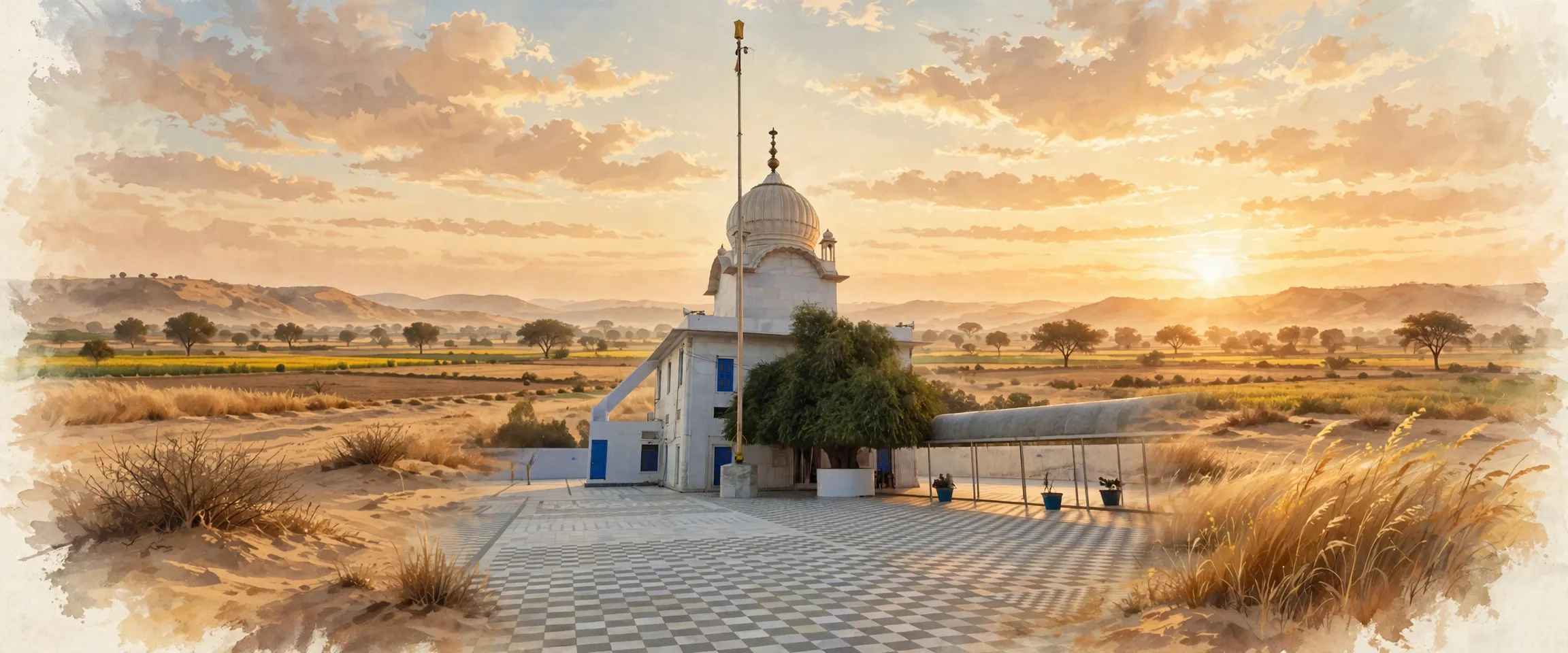
Gurdwara Tibbi Sahib marks the sandy mound, a tibbi, in the north-west of Sri Muktsar Sahib city from which Guru Gobind Singh Ji commanded the Battle of Muktsar on 29 December 1705. At Bhai Dan Singh's request the Guru pitched his tent on the mound, about a kilometre and a half from the pool of Khidrana, and supported the Forty Muktas with arrows as they fought below. The white marble shrine standing here today was built in the 1950s.
- Punjabi name
- ਗੁਰਦੁਆਰਾ ਟਿੱਬੀ ਸਾਹਿਬ
- Meaning of name
- Tibbi is Punjabi for a small sandy mound or hillock
- Location
- North-west of Sri Muktsar Sahib city, on the Guru Harsahai to Muktsar bypass road
- City
- Sri Muktsar Sahib
- District
- Sri Muktsar Sahib
- State
- Punjab
All 13 facts
- Country
- India
- Associated with
- Guru Gobind Singh Ji
- Commemorates
- The Guru's command post in the Battle of Muktsar, 29 December 1705
- First shrine
- A modest structure in the 18th century; rebuilt in 1843 by Sodhi Man Singh
- Present building
- White marble hall built in the 1950s under Baba Baghel Singh
- Nearby
- Gurdwara Rakabsar Sahib, about 200 metres east
- Managed by
- Shiromani Gurdwara Parbandhak Committee, since February 1923
Gurdwara Tibbi Sahib marks the sandy mound in the north-west of Sri Muktsar Sahib city from which Guru Gobind Singh Ji commanded the Battle of Muktsar on 29 December 1705. A tibbi is a small hillock, and this one, about a kilometre and a half from the pool of Khidrana, was the best vantage point in a flat, waterless tract. At the request of Bhai Dan Singh, the Guru pitched his tent on the mound and, while the Forty Muktas fought in the thicket below, supported them from here with a rain of arrows. The white marble shrine that crowns the mound today was built in the 1950s, and from its courtyard a pilgrim can still read the whole battlefield at a glance.
Why is it called Tibbi Sahib?
The name is simply the ground itself. In Punjabi a tibbi is a raised mound of sand, and the Malwa plain around Muktsar, once semi-desert, is dotted with them. This tibbi mattered because of what could be seen from it: the pool of Khidrana, the only water for miles, the thicket where the forty took position, and the road by which the Mughal pursuit under Wazir Khan of Sirhind would come. A commander who held the mound held the picture of the battle. Guru Gobind Singh Ji, who had reached Khidrana guided by a Brar chief's man after the disasters of December 1704, understood the ground at once, and the shrine's plain name has kept the tactical fact in everyday speech ever since.
The mound in the Battle of Muktsar
The full story belongs to Gurdwara Tuti Gandi Sahib across the city, but the mound's part in it is distinct. While the Guru and his Malwa Sikhs occupied the vantage point, the forty Majha Sikhs under Mai Bhago took position in the van trees and karir bushes by the pool itself and draped their sheets over the shrubs so the place looked like a tented camp. The Sikh Encyclopedia describes the result: the Mughal vanguard, seeing the supposed encampment, halted at a distance, and in that pause the forty fired a volley and charged into hand-to-hand fighting. From the tibbi, about 1.5 kilometres away, the Guru showered arrows in their support. The imperial troops never reached the water, and thirst in that dry country finished what Sikh resistance had begun: the column withdrew. The forty fell to the last man, Mai Bhago survived her wounds, and the Guru came down from this mound to the field, where he tore up the bedava for the dying Bhai Mahan Singh and named the fallen the Forty Muktas.
The building: from a modest shrine to white marble
The mound was marked early. A modest shrine stood here in the eighteenth century, among the battle sites first identified by the Nirmala saint Bhai Larigar Singh. It was reconstructed in 1843 by Sodhi Man Singh of Man Singhvala. The building a visitor sees today came up in the 1950s under the supervision of Baba Baghel Singh, a follower of Sant Gurmukh Singh, the same kar seva circle that renewed several Muktsar shrines. It is a square hall with the sanctum at its centre; above the sanctum rises a square pavilion topped by a lotus dome, with decorative marble kiosks at the corners. The entire wall surface, dome included, is lined with white marble, and the floors in and around the hall are marble topped, which gives the hilltop shrine a brightness visible across the flat country around it. Like the other Muktsar shrines, it has been administered by the Shiromani Gurdwara Parbandhak Committee since February 1923.
Rakabsar Sahib and the ground around the mound
Tibbi Sahib is not visited alone for long. About two hundred metres east stands Gurdwara Rakabsar Sahib, also built by Baba Baghel Singh in the 1950s. Local tradition holds that as Guru Gobind Singh Ji came down from the tibbi after the battle and went to mount his horse, the stirrup, rakab in Punjabi, snapped, and the shrine keeps both the name and the memory of that small, human moment at the end of a terrible day. From the mound the pilgrim's circuit continues naturally to the sarovar group: Tambu Sahib at the pool's south-eastern corner, Shahidganj Sahib where the martyrs were cremated, and the Darbar Sahib, Tuti Gandi Sahib, on the western bank. Read together, the five shrines walk a visitor through the battle in order: the mound, the thicket, the field, the pyre, and the pool that took the name Muktsar, the Pool of Liberation.
Festivals at Tibbi Sahib
The mound's great gathering is Mela Maghi, held on 12 and 13 January in memory of the Forty Muktas, when pilgrims who have bathed in the sarovar climb to the shrine from which the battle was commanded. Through the year the gurdwara also celebrates the birthdays of Guru Nanak Dev Ji and Guru Gobind Singh Ji and the martyrdom day of Guru Arjan Dev Ji with great fervour, and Diwali and Vaisakhi are kept with enthusiasm. A quiet weekday gives the clearest sense of the place: the white hall, the wide courtyard, and the flat Malwa horizon that explains, better than any map, why a small mound of sand was worth a shrine.
How to reach Gurdwara Tibbi Sahib
Tibbi Sahib stands on the outskirts of Sri Muktsar Sahib city, on the Guru Harsahai to Muktsar bypass road in the north-west of the city, about two kilometres from Tuti Gandi Sahib at the sarovar. The city is a district headquarters with a railway station and bus services, roughly 53 kilometres from Bathinda, 52 kilometres from Ferozepur and 50 kilometres from Faridkot, and the shrine is an easy rickshaw or taxi ride from anywhere in town. Pilgrims usually fold it into the full Muktsar circuit of sarovar shrines and stay at the main complex, where Sri Kalgidhar Niwas offers forty rooms. The shrine is listed, with the rest of the Muktsar group, in Jugti's guide to Gurdwaras in India.
ਗੁਰਦੁਆਰਾ ਟਿੱਬੀ ਸਾਹਿਬ ਸ੍ਰੀ ਮੁਕਤਸਰ ਸਾਹਿਬ ਸ਼ਹਿਰ ਦੇ ਉੱਤਰ-ਪੱਛਮ ਵਿੱਚ ਉਸ ਰੇਤਲੀ ਟਿੱਬੀ ਨੂੰ ਦਰਸਾਉਂਦਾ ਹੈ ਜਿੱਥੋਂ ਗੁਰੂ ਗੋਬਿੰਦ ਸਿੰਘ ਜੀ ਨੇ 29 ਦਸੰਬਰ 1705 ਨੂੰ ਮੁਕਤਸਰ ਦੀ ਲੜਾਈ ਦੀ ਅਗਵਾਈ ਕੀਤੀ ਸੀ ਟਿੱਬੀ ਇੱਕ ਛੋਟੀ ਜਿਹੀ ਪਹਾੜੀ ਜਾਂ ਟਿੱਬੇ ਨੂੰ ਕਿਹਾ ਜਾਂਦਾ ਹੈ, ਅਤੇ ਖਿਦਰਾਣੇ ਦੇ ਢਾਬ ਤੋਂ ਲਗਭਗ ਡੇਢ ਕਿਲੋਮੀਟਰ ਦੂਰ ਇਹ ਟਿੱਬੀ ਉਸ ਸਮਤਲ, ਪਾਣੀ-ਰਹਿਤ ਇਲਾਕੇ ਵਿੱਚ ਸਭ ਤੋਂ ਵਧੀਆ ਨਿਗਾਹ ਵਾਲੀ ਥਾਂ ਸੀ ਭਾਈ ਦਾਨ ਸਿੰਘ ਦੀ ਬੇਨਤੀ ਉੱਤੇ ਗੁਰੂ ਜੀ ਨੇ ਟਿੱਬੀ ਉੱਤੇ ਆਪਣਾ ਤੰਬੂ ਲਾਇਆ, ਅਤੇ ਜਦੋਂ ਚਾਲੀ ਮੁਕਤੇ ਹੇਠਾਂ ਝਾੜੀਆਂ ਵਿੱਚ ਲੜ ਰਹੇ ਸਨ, ਗੁਰੂ ਜੀ ਨੇ ਇੱਥੋਂ ਤੀਰਾਂ ਨਾਲ ਉਨ੍ਹਾਂ ਦੀ ਸਹਾਇਤਾ ਕੀਤੀ ਅੱਜ ਟਿੱਬੀ ਉੱਤੇ ਖੜ੍ਹਾ ਚਿੱਟੇ ਸੰਗਮਰਮਰ ਦਾ ਅਸਥਾਨ 1950 ਦੇ ਦਹਾਕੇ ਵਿੱਚ ਬਣਿਆ, ਅਤੇ ਇਸ ਦੇ ਵਿਹੜੇ ਤੋਂ ਸ਼ਰਧਾਲੂ ਅੱਜ ਵੀ ਪੂਰਾ ਲੜਾਈ ਦਾ ਮੈਦਾਨ ਇੱਕੋ ਨਜ਼ਰ ਵਿੱਚ ਵੇਖ ਸਕਦਾ ਹੈ
ਇਸ ਦਾ ਨਾਂ ਟਿੱਬੀ ਸਾਹਿਬ ਕਿਉਂ ਪਿਆ?
ਨਾਂ ਸਿੱਧਾ ਜ਼ਮੀਨ ਤੋਂ ਹੀ ਆਇਆ ਹੈ ਪੰਜਾਬੀ ਵਿੱਚ ਟਿੱਬੀ ਰੇਤ ਦੇ ਉੱਚੇ ਟਿੱਬੇ ਨੂੰ ਕਿਹਾ ਜਾਂਦਾ ਹੈ, ਅਤੇ ਮੁਕਤਸਰ ਦੇ ਆਲੇ-ਦੁਆਲੇ ਦਾ ਮਾਲਵਾ ਮੈਦਾਨ, ਜੋ ਕਦੇ ਅਰਧ-ਰੇਗਿਸਤਾਨ ਸੀ, ਅਜਿਹੇ ਟਿੱਬਿਆਂ ਨਾਲ ਭਰਿਆ ਹੈ ਇਹ ਟਿੱਬੀ ਇਸ ਲਈ ਅਹਿਮ ਸੀ ਕਿਉਂਕਿ ਇੱਥੋਂ ਸਭ ਕੁਝ ਦਿਸਦਾ ਸੀ: ਖਿਦਰਾਣੇ ਦਾ ਢਾਬ, ਜੋ ਮੀਲਾਂ ਤਕ ਪਾਣੀ ਦਾ ਇਕੋ ਸੋਮਾ ਸੀ, ਉਹ ਝਾੜੀਆਂ ਜਿੱਥੇ ਚਾਲੀ ਸਿੱਖਾਂ ਨੇ ਥਾਂ ਮੱਲੀ ਸੀ, ਅਤੇ ਉਹ ਰਸਤਾ ਜਿੱਥੋਂ ਸਰਹਿੰਦ ਦੇ ਵਜ਼ੀਰ ਖ਼ਾਨ ਦੀ ਮੁਗ਼ਲ ਫ਼ੌਜ ਆਉਣੀ ਸੀ ਜੋ ਸੈਨਾਪਤੀ ਟਿੱਬੀ ਨੂੰ ਰੱਖਦਾ, ਉਹ ਲੜਾਈ ਦੀ ਪੂਰੀ ਤਸਵੀਰ ਰੱਖਦਾ ਗੁਰੂ ਗੋਬਿੰਦ ਸਿੰਘ ਜੀ ਦਸੰਬਰ 1704 ਦੀਆਂ ਮੁਸੀਬਤਾਂ ਤੋਂ ਬਾਅਦ ਇੱਕ ਬਰਾੜ ਸਰਦਾਰ ਦੇ ਆਦਮੀ ਦੀ ਅਗਵਾਈ ਵਿੱਚ ਖਿਦਰਾਣੇ ਪਹੁੰਚੇ ਸਨ, ਅਤੇ ਉਨ੍ਹਾਂ ਨੇ ਇਸ ਜ਼ਮੀਨ ਨੂੰ ਤੁਰੰਤ ਸਮਝ ਲਿਆ ਇਸ ਸਾਦੇ ਨਾਂ ਨੇ ਉਹ ਫ਼ੌਜੀ ਸੱਚਾਈ ਰੋਜ਼ ਦੀ ਬੋਲੀ ਵਿੱਚ ਜਿਉਂਦੀ ਰੱਖੀ ਹੈ
ਮੁਕਤਸਰ ਦੀ ਲੜਾਈ ਵਿੱਚ ਟਿੱਬੀ
ਪੂਰੀ ਕਹਾਣੀ ਸ਼ਹਿਰ ਦੇ ਦੂਜੇ ਪਾਸੇ ਗੁਰਦੁਆਰਾ ਟੁੱਟੀ ਗੰਢੀ ਸਾਹਿਬ ਵਿਖੇ ਦੱਸੀ ਗਈ ਹੈ, ਪਰ ਇਸ ਵਿੱਚ ਟਿੱਬੀ ਦਾ ਹਿੱਸਾ ਵੱਖਰਾ ਹੈ ਜਦੋਂ ਗੁਰੂ ਜੀ ਅਤੇ ਉਨ੍ਹਾਂ ਦੇ ਮਾਲਵੇ ਦੇ ਸਿੱਖਾਂ ਨੇ ਉੱਚੀ ਥਾਂ ਮੱਲੀ, ਮਾਈ ਭਾਗੋ ਦੀ ਅਗਵਾਈ ਵਿੱਚ ਮਾਝੇ ਦੇ ਚਾਲੀ ਸਿੱਖਾਂ ਨੇ ਢਾਬ ਕੋਲ ਵਣ ਦੇ ਰੁੱਖਾਂ ਅਤੇ ਕਰੀਰ ਝਾੜੀਆਂ ਵਿੱਚ ਥਾਂ ਮੱਲੀ ਅਤੇ ਝਾੜੀਆਂ ਉੱਤੇ ਚਾਦਰਾਂ ਤਾਣ ਦਿੱਤੀਆਂ ਤਾਂ ਜੋ ਥਾਂ ਤੰਬੂਆਂ ਦਾ ਡੇਰਾ ਲੱਗੇ ਸਿੱਖ ਵਿਸ਼ਵਕੋਸ਼ ਅਨੁਸਾਰ ਮੁਗ਼ਲ ਫ਼ੌਜ ਦਾ ਅਗਲਾ ਦਸਤਾ ਉਹ ਮੰਨਿਆ ਜਾਂਦਾ ਡੇਰਾ ਵੇਖ ਕੇ ਦੂਰੋਂ ਹੀ ਰੁਕ ਗਿਆ, ਅਤੇ ਉਸੇ ਵਿਰਾਮ ਵਿੱਚ ਚਾਲੀ ਸਿੱਖਾਂ ਨੇ ਗੋਲੀ ਚਲਾਈ ਅਤੇ ਨੇੜੇ ਦੀ ਲੜਾਈ ਵਿੱਚ ਜੂਝ ਪਏ ਲਗਭਗ ਡੇਢ ਕਿਲੋਮੀਟਰ ਦੂਰ ਟਿੱਬੀ ਤੋਂ ਗੁਰੂ ਜੀ ਨੇ ਉਨ੍ਹਾਂ ਦੀ ਸਹਾਇਤਾ ਲਈ ਤੀਰ ਵਰ੍ਹਾਏ ਮੁਗ਼ਲ ਫ਼ੌਜ ਪਾਣੀ ਤਕ ਕਦੇ ਨਹੀਂ ਪਹੁੰਚੀ, ਅਤੇ ਉਸ ਸੁੱਕੇ ਇਲਾਕੇ ਵਿੱਚ ਪਿਆਸ ਨੇ ਉਹ ਕੰਮ ਪੂਰਾ ਕੀਤਾ ਜੋ ਸਿੱਖਾਂ ਦੇ ਵਿਰੋਧ ਨੇ ਸ਼ੁਰੂ ਕੀਤਾ ਸੀ: ਫ਼ੌਜ ਪਿੱਛੇ ਹਟ ਗਈ ਚਾਲੀ ਦੇ ਚਾਲੀ ਸ਼ਹੀਦ ਹੋ ਗਏ, ਮਾਈ ਭਾਗੋ ਜ਼ਖ਼ਮਾਂ ਤੋਂ ਬਚ ਗਈ, ਅਤੇ ਗੁਰੂ ਜੀ ਇਸ ਟਿੱਬੀ ਤੋਂ ਉੱਤਰ ਕੇ ਮੈਦਾਨ ਵਿੱਚ ਆਏ, ਜਿੱਥੇ ਉਨ੍ਹਾਂ ਨੇ ਮਰ ਰਹੇ ਭਾਈ ਮਹਾਨ ਸਿੰਘ ਲਈ ਬੇਦਾਵਾ ਪਾੜ ਦਿੱਤਾ ਅਤੇ ਸ਼ਹੀਦਾਂ ਨੂੰ ਚਾਲੀ ਮੁਕਤੇ ਕਿਹਾ
ਇਮਾਰਤ: ਸਾਦੇ ਅਸਥਾਨ ਤੋਂ ਚਿੱਟੇ ਸੰਗਮਰਮਰ ਤਕ
ਟਿੱਬੀ ਨੂੰ ਜਲਦੀ ਹੀ ਨਿਸ਼ਾਨਬੱਧ ਕਰ ਲਿਆ ਗਿਆ ਸੀ ਅਠਾਰਵੀਂ ਸਦੀ ਵਿੱਚ ਇੱਥੇ ਇੱਕ ਸਾਦਾ ਅਸਥਾਨ ਖੜ੍ਹਾ ਸੀ, ਲੜਾਈ ਦੀਆਂ ਉਨ੍ਹਾਂ ਥਾਵਾਂ ਵਿੱਚੋਂ ਇੱਕ ਜੋ ਨਿਰਮਲੇ ਸੰਤ ਭਾਈ ਲੜੀਗਰ ਸਿੰਘ ਨੇ ਸਭ ਤੋਂ ਪਹਿਲਾਂ ਪਛਾਣੀਆਂ ਸਨ 1843 ਵਿੱਚ ਮਾਨਸਿੰਘਵਾਲਾ ਦੇ ਸੋਢੀ ਮਾਨ ਸਿੰਘ ਨੇ ਇਸ ਨੂੰ ਮੁੜ ਬਣਵਾਇਆ ਅੱਜ ਦਿਸਦੀ ਇਮਾਰਤ 1950 ਦੇ ਦਹਾਕੇ ਵਿੱਚ ਬਾਬਾ ਬਘੇਲ ਸਿੰਘ ਦੀ ਨਿਗਰਾਨੀ ਹੇਠ ਬਣੀ, ਜੋ ਸੰਤ ਗੁਰਮੁਖ ਸਿੰਘ ਦੇ ਅਨੁਯਾਈ ਸਨ, ਉਸੇ ਕਾਰ ਸੇਵਾ ਘੇਰੇ ਦੇ ਜਿਸ ਨੇ ਮੁਕਤਸਰ ਦੇ ਕਈ ਅਸਥਾਨ ਨਵੇਂ ਕੀਤੇ ਇਹ ਇੱਕ ਵਰਗਾਕਾਰ ਹਾਲ ਹੈ, ਜਿਸ ਦੇ ਕੇਂਦਰ ਵਿੱਚ ਪਵਿੱਤਰ ਅਸਥਾਨ ਹੈ, ਅਤੇ ਪਵਿੱਤਰ ਅਸਥਾਨ ਦੇ ਉੱਤੇ ਇੱਕ ਵਰਗਾਕਾਰ ਮੰਡਪ ਹੈ ਜਿਸ ਉੱਤੇ ਕਮਲ-ਆਕਾਰ ਗੁੰਬਦ ਹੈ ਅਤੇ ਕੋਨਿਆਂ ਉੱਤੇ ਸੰਗਮਰਮਰ ਦੀਆਂ ਸਜਾਵਟੀ ਛੱਤਰੀਆਂ ਹਨ ਪੂਰੀ ਕੰਧ-ਸਤ੍ਹਾ, ਗੁੰਬਦ ਸਮੇਤ, ਚਿੱਟੇ ਸੰਗਮਰਮਰ ਨਾਲ ਢੱਕੀ ਹੈ, ਅਤੇ ਹਾਲ ਦੇ ਅੰਦਰ-ਬਾਹਰ ਫ਼ਰਸ਼ ਵੀ ਸੰਗਮਰਮਰ ਦੇ ਹਨ, ਜਿਸ ਕਰਕੇ ਇਹ ਪਹਾੜੀ-ਟਿੱਬੇ ਵਾਲਾ ਅਸਥਾਨ ਆਲੇ-ਦੁਆਲੇ ਦੇ ਸਮਤਲ ਇਲਾਕੇ ਵਿੱਚ ਦੂਰੋਂ ਚਮਕਦਾ ਦਿਸਦਾ ਹੈ ਮੁਕਤਸਰ ਦੇ ਬਾਕੀ ਅਸਥਾਨਾਂ ਵਾਂਗ ਇਸ ਦਾ ਪ੍ਰਬੰਧ ਵੀ ਫਰਵਰੀ 1923 ਤੋਂ ਸ਼੍ਰੋਮਣੀ ਗੁਰਦੁਆਰਾ ਪ੍ਰਬੰਧਕ ਕਮੇਟੀ ਕੋਲ ਹੈ
ਰਕਾਬਸਰ ਸਾਹਿਬ ਅਤੇ ਟਿੱਬੀ ਦੇ ਆਲੇ-ਦੁਆਲੇ ਦੀ ਜ਼ਮੀਨ
ਟਿੱਬੀ ਸਾਹਿਬ ਦੀ ਫੇਰੀ ਦੇਰ ਤਕ ਇਕੱਲੀ ਨਹੀਂ ਰਹਿੰਦੀ ਲਗਭਗ ਦੋ ਸੌ ਮੀਟਰ ਪੂਰਬ ਵੱਲ ਗੁਰਦੁਆਰਾ ਰਕਾਬਸਰ ਸਾਹਿਬ ਹੈ, ਜੋ 1950 ਦੇ ਦਹਾਕੇ ਵਿੱਚ ਬਾਬਾ ਬਘੇਲ ਸਿੰਘ ਨੇ ਹੀ ਬਣਵਾਇਆ ਸੀ ਸਥਾਨਕ ਪਰੰਪਰਾ ਅਨੁਸਾਰ, ਲੜਾਈ ਤੋਂ ਬਾਅਦ ਜਦੋਂ ਗੁਰੂ ਗੋਬਿੰਦ ਸਿੰਘ ਜੀ ਟਿੱਬੀ ਤੋਂ ਹੇਠਾਂ ਆਏ ਅਤੇ ਘੋੜੇ ਉੱਤੇ ਚੜ੍ਹਨ ਲੱਗੇ, ਤਾਂ ਰਕਾਬ ਟੁੱਟ ਗਈ, ਅਤੇ ਇਹ ਅਸਥਾਨ ਉਸ ਭਿਆਨਕ ਦਿਨ ਦੇ ਅੰਤ ਵਿੱਚ ਵਾਪਰੇ ਉਸ ਛੋਟੇ, ਮਨੁੱਖੀ ਪਲ ਦਾ ਨਾਂ ਅਤੇ ਯਾਦ ਦੋਵੇਂ ਰੱਖਦਾ ਹੈ ਟਿੱਬੀ ਤੋਂ ਸ਼ਰਧਾਲੂ ਦਾ ਘੇਰਾ ਕੁਦਰਤੀ ਤੌਰ ਉੱਤੇ ਸਰੋਵਰ ਸਮੂਹ ਵੱਲ ਜਾਂਦਾ ਹੈ: ਢਾਬ ਦੇ ਦੱਖਣ-ਪੂਰਬੀ ਕੋਨੇ ਉੱਤੇ ਤੰਬੂ ਸਾਹਿਬ, ਸ਼ਹੀਦਗੰਜ ਸਾਹਿਬ ਜਿੱਥੇ ਸ਼ਹੀਦਾਂ ਦੇ ਸਸਕਾਰ ਹੋਏ, ਅਤੇ ਪੱਛਮੀ ਕੰਢੇ ਉੱਤੇ ਦਰਬਾਰ ਸਾਹਿਬ, ਟੁੱਟੀ ਗੰਢੀ ਸਾਹਿਬ ਪੰਜੇ ਅਸਥਾਨ ਇਕੱਠੇ ਪੜ੍ਹੇ ਜਾਣ ਤਾਂ ਸ਼ਰਧਾਲੂ ਨੂੰ ਲੜਾਈ ਕ੍ਰਮ ਵਿੱਚ ਤੋਰਦੇ ਹਨ: ਟਿੱਬੀ, ਝਾੜੀਆਂ, ਮੈਦਾਨ, ਚਿਖਾ, ਅਤੇ ਉਹ ਢਾਬ ਜਿਸ ਦਾ ਨਾਂ ਮੁਕਤਸਰ, ਮੁਕਤੀ ਦਾ ਸਰੋਵਰ, ਪਿਆ
ਟਿੱਬੀ ਸਾਹਿਬ ਵਿਖੇ ਤਿਉਹਾਰ
ਟਿੱਬੀ ਦਾ ਵੱਡਾ ਇਕੱਠ ਮੇਲਾ ਮਾਘੀ ਹੈ, ਜੋ 12 ਅਤੇ 13 ਜਨਵਰੀ ਨੂੰ ਚਾਲੀ ਮੁਕਤਿਆਂ ਦੀ ਯਾਦ ਵਿੱਚ ਲੱਗਦਾ ਹੈ, ਜਦੋਂ ਸਰੋਵਰ ਵਿੱਚ ਇਸ਼ਨਾਨ ਕਰ ਚੁੱਕੇ ਸ਼ਰਧਾਲੂ ਉਸ ਅਸਥਾਨ ਉੱਤੇ ਚੜ੍ਹਦੇ ਹਨ ਜਿੱਥੋਂ ਲੜਾਈ ਦੀ ਅਗਵਾਈ ਹੋਈ ਸੀ ਸਾਲ ਭਰ ਇੱਥੇ ਗੁਰੂ ਨਾਨਕ ਦੇਵ ਜੀ ਅਤੇ ਗੁਰੂ ਗੋਬਿੰਦ ਸਿੰਘ ਜੀ ਦੇ ਪ੍ਰਕਾਸ਼ ਪੁਰਬ ਅਤੇ ਗੁਰੂ ਅਰਜਨ ਦੇਵ ਜੀ ਦਾ ਸ਼ਹੀਦੀ ਪੁਰਬ ਬੜੀ ਸ਼ਰਧਾ ਨਾਲ ਮਨਾਇਆ ਜਾਂਦਾ ਹੈ, ਅਤੇ ਦੀਵਾਲੀ ਅਤੇ ਵਿਸਾਖੀ ਵੀ ਉਤਸ਼ਾਹ ਨਾਲ ਮਨਾਈਆਂ ਜਾਂਦੀਆਂ ਹਨ ਕਿਸੇ ਸ਼ਾਂਤ ਦਿਨ ਇੱਥੋਂ ਦਾ ਅਹਿਸਾਸ ਸਭ ਤੋਂ ਸਾਫ਼ ਮਿਲਦਾ ਹੈ: ਚਿੱਟਾ ਹਾਲ, ਖੁੱਲ੍ਹਾ ਵਿਹੜਾ, ਅਤੇ ਮਾਲਵੇ ਦਾ ਸਮਤਲ ਦਿਸਹੱਦਾ, ਜੋ ਕਿਸੇ ਨਕਸ਼ੇ ਨਾਲੋਂ ਵੱਧ ਸਾਫ਼ ਦੱਸਦਾ ਹੈ ਕਿ ਰੇਤ ਦੀ ਇੱਕ ਛੋਟੀ ਜਿਹੀ ਟਿੱਬੀ ਅਸਥਾਨ ਦੇ ਯੋਗ ਕਿਉਂ ਸੀ
ਗੁਰਦੁਆਰਾ ਟਿੱਬੀ ਸਾਹਿਬ ਕਿਵੇਂ ਪਹੁੰਚੀਏ?
ਟਿੱਬੀ ਸਾਹਿਬ ਸ੍ਰੀ ਮੁਕਤਸਰ ਸਾਹਿਬ ਸ਼ਹਿਰ ਦੇ ਬਾਹਰਵਾਰ, ਸ਼ਹਿਰ ਦੇ ਉੱਤਰ-ਪੱਛਮ ਵਿੱਚ ਗੁਰੂ ਹਰਸਹਾਏ ਤੋਂ ਮੁਕਤਸਰ ਬਾਈਪਾਸ ਰੋਡ ਉੱਤੇ ਹੈ, ਸਰੋਵਰ ਕੋਲ ਟੁੱਟੀ ਗੰਢੀ ਸਾਹਿਬ ਤੋਂ ਲਗਭਗ ਦੋ ਕਿਲੋਮੀਟਰ ਦੂਰ ਸ਼ਹਿਰ ਇੱਕ ਜ਼ਿਲ੍ਹਾ ਮੁੱਖ ਦਫ਼ਤਰ ਹੈ, ਜਿੱਥੇ ਰੇਲਵੇ ਸਟੇਸ਼ਨ ਅਤੇ ਬੱਸ ਸੇਵਾਵਾਂ ਹਨ, ਬਠਿੰਡਾ ਤੋਂ ਲਗਭਗ 53 ਕਿਲੋਮੀਟਰ, ਫ਼ਿਰੋਜ਼ਪੁਰ ਤੋਂ 52 ਕਿਲੋਮੀਟਰ ਅਤੇ ਫ਼ਰੀਦਕੋਟ ਤੋਂ 50 ਕਿਲੋਮੀਟਰ ਦੂਰ, ਅਤੇ ਸ਼ਹਿਰ ਵਿੱਚ ਕਿਤੋਂ ਵੀ ਰਿਕਸ਼ਾ ਜਾਂ ਟੈਕਸੀ ਨਾਲ ਇੱਥੇ ਆਸਾਨੀ ਨਾਲ ਪਹੁੰਚਿਆ ਜਾ ਸਕਦਾ ਹੈ ਸ਼ਰਧਾਲੂ ਆਮ ਤੌਰ ਉੱਤੇ ਇਸ ਨੂੰ ਸਰੋਵਰ ਅਸਥਾਨਾਂ ਦੀ ਪੂਰੀ ਮੁਕਤਸਰ ਫੇਰੀ ਵਿੱਚ ਸ਼ਾਮਲ ਕਰਦੇ ਹਨ ਅਤੇ ਮੁੱਖ ਸਮੂਹ ਵਿਖੇ ਠਹਿਰਦੇ ਹਨ, ਜਿੱਥੇ ਸ੍ਰੀ ਕਲਗੀਧਰ ਨਿਵਾਸ ਵਿੱਚ ਚਾਲੀ ਕਮਰੇ ਹਨ