
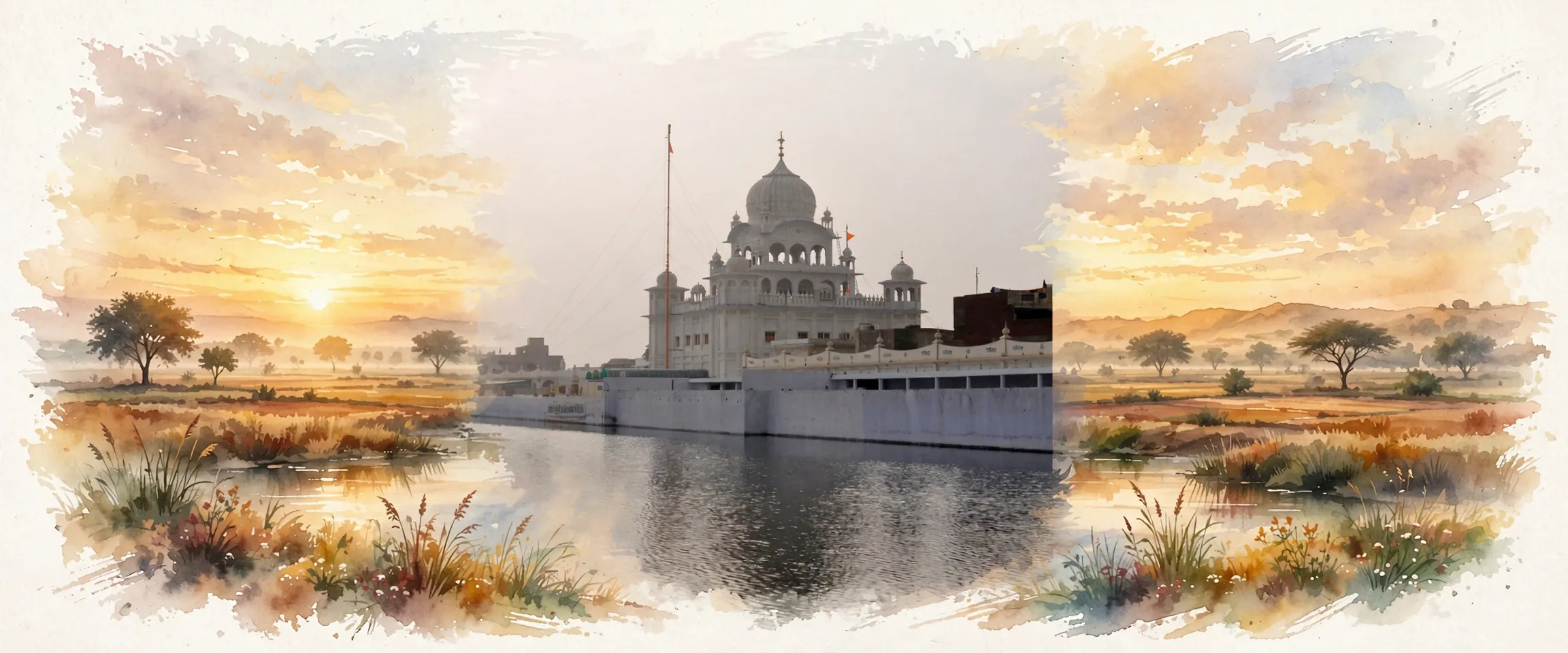
Gurdwara Tuti Gandi Sahib is the principal shrine of Sri Muktsar Sahib in Punjab, standing on the western bank of the city's great sarovar. It commemorates the Forty Muktas, the forty Sikhs who left Guru Gobind Singh Ji at Anandpur Sahib, returned under Mai Bhago, and died fighting at Khidrana on 29 December 1705. The Guru tore up their letter of renunciation and retied the broken bond, which is what Tuti Gandi means.
- Punjabi name
- ਗੁਰਦੁਆਰਾ ਟੁੱਟੀ ਗੰਢੀ ਸਾਹਿਬ
- Type
- Historic gurdwara, principal shrine of Sri Muktsar Sahib
- Country
- India
- City
- Sri Muktsar Sahib
- District
- Sri Muktsar Sahib
- State
- Punjab
All 16 facts
- Region
- Malwa
- Location
- Western bank of the sarovar
- Associated with
- Guru Gobind Singh Ji
- Commemorates
- The Forty Muktas (Chali Mukte)
- Battle
- Battle of Muktsar, 29 December 1705
- First established
- About 1743
- Management
- SGPC, since February 1923
- Sarovar
- Yes
- Main festival
- Mela Maghi, mid-January
- Stay
- Sri Kalgidhar Niwas, 40 rooms
Gurdwara Tuti Gandi Sahib is the principal shrine of Sri Muktsar Sahib, the Malwa city in Punjab whose very name means the Pool of Liberation. It stands on the western bank of the city's large sacred sarovar and honours the Forty Muktas, the forty Sikhs who had once left Guru Gobind Singh Ji at Anandpur Sahib, returned under the lead of Mai Bhago, and died fighting a pursuing Mughal army at the pool of Khidrana on 29 December 1705. The Guru forgave them, tore up their letter of renunciation, and retied the bond between Guru and Sikh. That act gives this gurdwara its name, and it is retold in the Sikh Ardas every day.
What does the name Tuti Gandi mean?
Tuti Gandi means, in plain words, the broken knot retied. When the forty signed a written renunciation, called a bedava, at Anandpur Sahib, the tie between them and their Guru was formally broken. At Khidrana they asked, with their last strength, for that tie to be restored. Guru Gobind Singh Ji tore the document, blessed the fallen as the Forty Muktas, the Forty Liberated Ones, and renamed the pool itself Muktsar. The gurdwara that rose by the pool keeps the older, more personal name: before it is a place of victory, it is a place of forgiveness asked for and given.
The bedava: how the forty broke with the Guru
In 1704 Anandpur Sahib was held under a long siege by Mughal forces and the hill chiefs, and food inside the fort ran out. A group of forty Sikhs from the Majha country, led by Bhai Mahan Singh, told the Guru they could go no further. He asked them to put it in writing: a bedava declaring that they were no longer his Sikhs and he was no longer their Guru. They signed, and went home. The Guru kept the document with him. What the forty found at home was not rest but shame. Their families, and above all their womenfolk, refused to honour men who had left their Guru in his hardest hour. The renunciation that had felt like survival began to feel like a stain that only one act could wash out.
Mai Bhago leads them back
The turning came from Jhabal, where Mai Bhago, also remembered as Mata Bhag Kaur, heard the men's story and shamed and inspired them into returning. She did not merely send them: she armed herself and rode with them. Meanwhile the Guru, having left Anandpur in December 1704 and lost his mother and sons in the weeks that followed, was moving through the Malwa with a Mughal force under Wazir Khan, the governor of Sirhind, in pursuit. Guided by a Brar chief's man, he reached Khidrane Di Dhab, a rain-fed pool that was the only water for miles in a semi-desert tract, and chose to make his stand around it. The forty, searching for him to beg forgiveness, arrived at the same ground at almost the same hour as the pursuit.
The battle at Khidrana, 29 December 1705
The forty and Mai Bhago took position in a thicket by the pool, while the Guru watched and shot arrows in support from a sandy mound, the tibbi, about a kilometre and a half away. The fighting was close and desperate. The Mughal column, far from its own water, could not reach the pool, and thirst in that dry country did what Sikh resistance had begun: the imperial force withdrew. Every one of the forty was killed or dying. When the Guru came down and moved among them, he found Bhai Mahan Singh still alive. Held in the Guru's lap, Mahan Singh asked for one thing only: that the bedava be destroyed. The Guru took it out and tore it up, and Mahan Singh died at peace. Mai Bhago, gravely wounded, recovered and remained in the Guru's service. Sources differ on the exact strengths and losses, and some local tradition gives a different day in 1705 for the battle, but the Bhatt Vahis date of 29 December 1705 is the one most accounts follow.
The shrine, the sarovar and the old van tree
The present complex grew slowly. The district's own history records Sri Darbar Sahib, as this shrine is also called, as the earliest Muktsar shrine, established by the first Sikh families who settled here around 1743. The chiefs of Kaithal, Bhai Desu Singh and Bhai Lal Singh, added to it, as did Sardar Hari Singh Nalva, a general of Maharaja Ranjit Singh. In the 1930s Sant Gurmukh Singh and Sant Sadhu Singh marble-panelled its walls and added domes, and in the 1980s the building was pulled down and rebuilt, as were several of the neighbouring shrines. Control of the shrines passed to the Shiromani Gurdwara Parbandhak Committee in February 1923. An old van tree, believed to predate the battle, still stands between the Divan Asthan and the Nishan Sahib, and the sarovar, roughly a hundred metres square, anchors the whole group of shrines: Tambu Sahib at its south-eastern corner and Shahidganj Sahib, where the martyrs were cremated, close by.
Mela Maghi and the daily Ardas
The Forty Muktas are not remembered once a year only. Their story is written into the Ardas, the prayer Sikhs recite daily, so the link between this pool and ordinary devotion is constant. The great gathering is Mela Maghi, held each mid-January, around 13 January, when vast numbers of pilgrims come to bathe in the sarovar and attend the divans in memory of the martyrs. The shrine also marks the birthdays of Guru Nanak Dev Ji and Guru Gobind Singh Ji and the martyrdom day of Guru Arjan Dev Ji, and it is lit up at Diwali. For a full list of shrines like this one across the country, see the guide to Gurdwaras in India.
How do I reach Gurdwara Tuti Gandi Sahib?
The gurdwara stands in the heart of Sri Muktsar Sahib city, on the western side of the sarovar, and pilgrims walk between it and the neighbouring Tambu Sahib and Shahidganj Sahib shrines in minutes. Tibbi Sahib, marking the mound from which the Guru covered the battle, lies about two kilometres away in the north-west of the city. Sri Muktsar Sahib is a district headquarters with its own railway station and bus services, roughly 53 kilometres north-west of Bathinda, 52 kilometres south of Ferozepur and 50 kilometres south-west of Faridkot. Devotees can stay at Sri Kalgidhar Niwas, which has forty rooms, a number that suits the shrine it serves. Sixteen kilometres east, at Sarai Naga on the Kotkapura road, is the birthplace of Guru Angad Dev Ji, an easy addition to the same visit. This shrine is one of the Muktsar group listed in Jugti's guide to Gurdwaras in India.
ਗੁਰਦੁਆਰਾ ਟੁੱਟੀ ਗੰਢੀ ਸਾਹਿਬ ਸ੍ਰੀ ਮੁਕਤਸਰ ਸਾਹਿਬ ਦਾ ਮੁੱਖ ਅਸਥਾਨ ਹੈ, ਮਾਲਵੇ ਦਾ ਉਹ ਸ਼ਹਿਰ ਜਿਸ ਦੇ ਨਾਂ ਦਾ ਅਰਥ ਹੀ ਮੁਕਤੀ ਦਾ ਸਰੋਵਰ ਹੈ ਇਹ ਸ਼ਹਿਰ ਦੇ ਵੱਡੇ ਪਵਿੱਤਰ ਸਰੋਵਰ ਦੇ ਪੱਛਮੀ ਕੰਢੇ ਉੱਤੇ ਖੜ੍ਹਾ ਹੈ ਅਤੇ ਚਾਲੀ ਮੁਕਤਿਆਂ ਦੀ ਯਾਦ ਨੂੰ ਸਮਰਪਿਤ ਹੈ, ਉਨ੍ਹਾਂ ਚਾਲੀ ਸਿੱਖਾਂ ਨੂੰ ਜੋ ਕਦੇ ਅਨੰਦਪੁਰ ਸਾਹਿਬ ਵਿਖੇ ਗੁਰੂ ਗੋਬਿੰਦ ਸਿੰਘ ਜੀ ਨੂੰ ਛੱਡ ਗਏ ਸਨ, ਮਾਈ ਭਾਗੋ ਦੀ ਅਗਵਾਈ ਵਿੱਚ ਵਾਪਸ ਆਏ, ਅਤੇ 29 ਦਸੰਬਰ 1705 ਨੂੰ ਖਿਦਰਾਣੇ ਦੇ ਢਾਬ ਕੋਲ ਪਿੱਛਾ ਕਰਦੀ ਮੁਗ਼ਲ ਫ਼ੌਜ ਨਾਲ ਲੜਦਿਆਂ ਸ਼ਹੀਦ ਹੋ ਗਏ ਗੁਰੂ ਜੀ ਨੇ ਉਨ੍ਹਾਂ ਨੂੰ ਮਾਫ਼ ਕਰ ਦਿੱਤਾ, ਉਨ੍ਹਾਂ ਦਾ ਬੇਦਾਵਾ ਪਾੜ ਦਿੱਤਾ ਅਤੇ ਗੁਰੂ ਤੇ ਸਿੱਖ ਵਿਚਲਾ ਰਿਸ਼ਤਾ ਮੁੜ ਜੋੜ ਦਿੱਤਾ ਇਸੇ ਕਰਕੇ ਇਸ ਗੁਰਦੁਆਰੇ ਦਾ ਇਹ ਨਾਂ ਪਿਆ, ਅਤੇ ਇਹ ਸਾਖੀ ਹਰ ਰੋਜ਼ ਅਰਦਾਸ ਵਿੱਚ ਯਾਦ ਕੀਤੀ ਜਾਂਦੀ ਹੈ
ਟੁੱਟੀ ਗੰਢੀ ਨਾਂ ਦਾ ਕੀ ਅਰਥ ਹੈ?
ਟੁੱਟੀ ਗੰਢੀ ਦਾ ਸਾਦਾ ਅਰਥ ਹੈ: ਟੁੱਟੀ ਹੋਈ ਗੰਢ ਮੁੜ ਬੰਨ੍ਹੀ ਗਈ ਜਦੋਂ ਚਾਲੀ ਸਿੱਖਾਂ ਨੇ ਅਨੰਦਪੁਰ ਸਾਹਿਬ ਵਿਖੇ ਬੇਦਾਵਾ ਲਿਖ ਕੇ ਦਿੱਤਾ, ਤਾਂ ਉਨ੍ਹਾਂ ਦਾ ਆਪਣੇ ਗੁਰੂ ਨਾਲ ਰਿਸ਼ਤਾ ਰਸਮੀ ਤੌਰ ਉੱਤੇ ਟੁੱਟ ਗਿਆ ਖਿਦਰਾਣੇ ਵਿਖੇ ਉਨ੍ਹਾਂ ਨੇ ਆਖ਼ਰੀ ਸਾਹਾਂ ਨਾਲ ਉਸੇ ਰਿਸ਼ਤੇ ਨੂੰ ਮੁੜ ਜੋੜਨ ਦੀ ਬੇਨਤੀ ਕੀਤੀ ਗੁਰੂ ਗੋਬਿੰਦ ਸਿੰਘ ਜੀ ਨੇ ਉਹ ਕਾਗ਼ਜ਼ ਪਾੜ ਦਿੱਤਾ, ਸ਼ਹੀਦਾਂ ਨੂੰ ਚਾਲੀ ਮੁਕਤੇ ਕਹਿ ਕੇ ਨਿਵਾਜਿਆ, ਅਤੇ ਢਾਬ ਦਾ ਨਾਂ ਮੁਕਤਸਰ ਰੱਖਿਆ ਇਸ ਲਈ ਇਹ ਅਸਥਾਨ ਜਿੱਤ ਤੋਂ ਪਹਿਲਾਂ ਮਾਫ਼ੀ ਮੰਗਣ ਅਤੇ ਮਾਫ਼ੀ ਮਿਲਣ ਦੀ ਥਾਂ ਹੈ
ਬੇਦਾਵਾ: ਚਾਲੀ ਸਿੱਖ ਗੁਰੂ ਜੀ ਤੋਂ ਕਿਵੇਂ ਵੱਖ ਹੋਏ
1704 ਵਿੱਚ ਅਨੰਦਪੁਰ ਸਾਹਿਬ ਮੁਗ਼ਲ ਫ਼ੌਜਾਂ ਅਤੇ ਪਹਾੜੀ ਰਾਜਿਆਂ ਦੇ ਲੰਮੇ ਘੇਰੇ ਵਿੱਚ ਸੀ ਅਤੇ ਕਿਲ੍ਹੇ ਅੰਦਰ ਰਸਦ ਖ਼ਤਮ ਹੋ ਰਹੀ ਸੀ ਮਾਝੇ ਦੇ ਚਾਲੀ ਸਿੱਖਾਂ ਨੇ, ਭਾਈ ਮਹਾਨ ਸਿੰਘ ਦੀ ਅਗਵਾਈ ਵਿੱਚ, ਗੁਰੂ ਜੀ ਨੂੰ ਕਿਹਾ ਕਿ ਉਹ ਹੋਰ ਨਹੀਂ ਰਹਿ ਸਕਦੇ ਗੁਰੂ ਜੀ ਨੇ ਉਨ੍ਹਾਂ ਨੂੰ ਇਹ ਗੱਲ ਲਿਖ ਕੇ ਦੇਣ ਲਈ ਕਿਹਾ: ਇੱਕ ਬੇਦਾਵਾ, ਕਿ ਉਹ ਹੁਣ ਗੁਰੂ ਜੀ ਦੇ ਸਿੱਖ ਨਹੀਂ ਅਤੇ ਗੁਰੂ ਜੀ ਉਨ੍ਹਾਂ ਦੇ ਗੁਰੂ ਨਹੀਂ ਉਨ੍ਹਾਂ ਨੇ ਦਸਤਖ਼ਤ ਕੀਤੇ ਅਤੇ ਘਰਾਂ ਨੂੰ ਤੁਰ ਗਏ ਗੁਰੂ ਜੀ ਨੇ ਉਹ ਕਾਗ਼ਜ਼ ਆਪਣੇ ਕੋਲ ਰੱਖ ਲਿਆ ਘਰ ਪਹੁੰਚ ਕੇ ਉਨ੍ਹਾਂ ਨੂੰ ਸਕੂਨ ਨਹੀਂ, ਸ਼ਰਮ ਮਿਲੀ ਉਨ੍ਹਾਂ ਦੇ ਪਰਿਵਾਰਾਂ ਨੇ, ਖ਼ਾਸ ਕਰਕੇ ਔਰਤਾਂ ਨੇ, ਔਖੇ ਵੇਲੇ ਗੁਰੂ ਨੂੰ ਛੱਡ ਆਉਣ ਵਾਲਿਆਂ ਦਾ ਸਤਕਾਰ ਕਰਨ ਤੋਂ ਇਨਕਾਰ ਕਰ ਦਿੱਤਾ
ਮਾਈ ਭਾਗੋ ਉਨ੍ਹਾਂ ਨੂੰ ਵਾਪਸ ਲੈ ਆਈ
ਮੋੜ ਝਬਾਲ ਤੋਂ ਆਇਆ, ਜਿੱਥੇ ਮਾਈ ਭਾਗੋ, ਜਿਨ੍ਹਾਂ ਨੂੰ ਮਾਤਾ ਭਾਗ ਕੌਰ ਵੀ ਕਿਹਾ ਜਾਂਦਾ ਹੈ, ਨੇ ਉਨ੍ਹਾਂ ਦੀ ਕਹਾਣੀ ਸੁਣੀ ਅਤੇ ਉਨ੍ਹਾਂ ਨੂੰ ਵਾਪਸ ਜਾਣ ਲਈ ਪ੍ਰੇਰਿਆ ਉਹ ਸਿਰਫ਼ ਭੇਜਣ ਵਾਲੀ ਨਹੀਂ ਸੀ: ਉਹ ਖ਼ੁਦ ਹਥਿਆਰਬੰਦ ਹੋ ਕੇ ਉਨ੍ਹਾਂ ਨਾਲ ਤੁਰੀ ਇਸੇ ਸਮੇਂ ਗੁਰੂ ਜੀ, ਦਸੰਬਰ 1704 ਵਿੱਚ ਅਨੰਦਪੁਰ ਛੱਡਣ ਤੋਂ ਬਾਅਦ, ਮਾਲਵੇ ਵਿੱਚੋਂ ਲੰਘ ਰਹੇ ਸਨ ਅਤੇ ਸਰਹਿੰਦ ਦੇ ਸੂਬੇਦਾਰ ਵਜ਼ੀਰ ਖ਼ਾਨ ਦੀ ਫ਼ੌਜ ਉਨ੍ਹਾਂ ਦੇ ਪਿੱਛੇ ਸੀ ਉਹ ਖਿਦਰਾਣੇ ਦੀ ਢਾਬ ਕੋਲ ਪਹੁੰਚੇ, ਬਰਸਾਤੀ ਪਾਣੀ ਦਾ ਉਹ ਢਾਬ ਜੋ ਉਸ ਅਰਧ-ਰੇਗਿਸਤਾਨੀ ਇਲਾਕੇ ਵਿੱਚ ਮੀਲਾਂ ਤਕ ਪਾਣੀ ਦਾ ਇਕੋ ਸੋਮਾ ਸੀ, ਅਤੇ ਉੱਥੇ ਹੀ ਟਿਕਣ ਦਾ ਫ਼ੈਸਲਾ ਕੀਤਾ ਮਾਫ਼ੀ ਮੰਗਣ ਨਿਕਲੇ ਚਾਲੀ ਸਿੱਖ ਵੀ ਲਗਭਗ ਉਸੇ ਵੇਲੇ ਉਸੇ ਥਾਂ ਪਹੁੰਚ ਗਏ
ਖਿਦਰਾਣੇ ਦੀ ਲੜਾਈ, 29 ਦਸੰਬਰ 1705
ਚਾਲੀ ਸਿੱਖਾਂ ਅਤੇ ਮਾਈ ਭਾਗੋ ਨੇ ਢਾਬ ਕੋਲ ਝਾੜੀਆਂ ਵਿੱਚ ਥਾਂ ਮੱਲੀ, ਅਤੇ ਗੁਰੂ ਜੀ ਨੇ ਲਗਭਗ ਡੇਢ ਕਿਲੋਮੀਟਰ ਦੂਰ ਇੱਕ ਰੇਤਲੀ ਟਿੱਬੀ ਤੋਂ ਤੀਰਾਂ ਨਾਲ ਸਹਾਇਤਾ ਕੀਤੀ ਲੜਾਈ ਨੇੜਿਓਂ ਅਤੇ ਬਹੁਤ ਸਖ਼ਤ ਹੋਈ ਮੁਗ਼ਲ ਫ਼ੌਜ ਆਪਣੇ ਪਾਣੀ ਤੋਂ ਦੂਰ ਸੀ, ਢਾਬ ਤਕ ਨਹੀਂ ਪਹੁੰਚ ਸਕੀ, ਅਤੇ ਪਿਆਸ ਨੇ ਉਹ ਕੰਮ ਪੂਰਾ ਕੀਤਾ ਜੋ ਸਿੱਖਾਂ ਦੇ ਵਿਰੋਧ ਨੇ ਸ਼ੁਰੂ ਕੀਤਾ ਸੀ: ਫ਼ੌਜ ਪਿੱਛੇ ਹਟ ਗਈ ਚਾਲੀ ਦੇ ਚਾਲੀ ਜਾਂ ਤਾਂ ਸ਼ਹੀਦ ਹੋ ਗਏ ਜਾਂ ਮਰਨ ਕੰਢੇ ਸਨ ਗੁਰੂ ਜੀ ਨੇ ਭਾਈ ਮਹਾਨ ਸਿੰਘ ਨੂੰ ਜਿਉਂਦਾ ਪਾਇਆ ਗੁਰੂ ਜੀ ਦੀ ਗੋਦ ਵਿੱਚ ਉਸ ਨੇ ਸਿਰਫ਼ ਇੱਕੋ ਮੰਗ ਕੀਤੀ: ਬੇਦਾਵਾ ਪਾੜ ਦਿੱਤਾ ਜਾਵੇ ਗੁਰੂ ਜੀ ਨੇ ਉਹ ਕਾਗ਼ਜ਼ ਕੱਢ ਕੇ ਪਾੜ ਦਿੱਤਾ, ਅਤੇ ਮਹਾਨ ਸਿੰਘ ਸਕੂਨ ਨਾਲ ਚਲਾਣਾ ਕਰ ਗਿਆ ਮਾਈ ਭਾਗੋ ਗੰਭੀਰ ਜ਼ਖ਼ਮੀ ਹੋਈ, ਪਰ ਠੀਕ ਹੋ ਕੇ ਗੁਰੂ ਜੀ ਦੀ ਸੇਵਾ ਵਿੱਚ ਰਹੀ ਫ਼ੌਜਾਂ ਦੀ ਗਿਣਤੀ ਬਾਰੇ ਸੋਮੇ ਵੱਖ-ਵੱਖ ਦੱਸਦੇ ਹਨ, ਪਰ ਭੱਟ ਵਹੀਆਂ ਦੀ ਤਾਰੀਖ਼ 29 ਦਸੰਬਰ 1705 ਹੀ ਬਹੁਤੇ ਬਿਰਤਾਂਤ ਮੰਨਦੇ ਹਨ
ਅਸਥਾਨ, ਸਰੋਵਰ ਅਤੇ ਪੁਰਾਣਾ ਵਣ ਦਾ ਰੁੱਖ
ਮੌਜੂਦਾ ਇਮਾਰਤ ਹੌਲੀ-ਹੌਲੀ ਬਣੀ ਜ਼ਿਲ੍ਹੇ ਦੇ ਆਪਣੇ ਇਤਿਹਾਸ ਅਨੁਸਾਰ ਸ੍ਰੀ ਦਰਬਾਰ ਸਾਹਿਬ, ਜਿਸ ਨਾਂ ਨਾਲ ਇਹ ਅਸਥਾਨ ਵੀ ਜਾਣਿਆ ਜਾਂਦਾ ਹੈ, ਮੁਕਤਸਰ ਦਾ ਸਭ ਤੋਂ ਪਹਿਲਾ ਅਸਥਾਨ ਸੀ, ਜੋ ਇੱਥੇ ਲਗਭਗ 1743 ਵਿੱਚ ਵੱਸੇ ਪਹਿਲੇ ਸਿੱਖ ਪਰਿਵਾਰਾਂ ਨੇ ਸਥਾਪਿਤ ਕੀਤਾ ਕੈਥਲ ਦੇ ਸਰਦਾਰਾਂ ਭਾਈ ਦੇਸੂ ਸਿੰਘ ਅਤੇ ਭਾਈ ਲਾਲ ਸਿੰਘ ਨੇ, ਅਤੇ ਮਹਾਰਾਜਾ ਰਣਜੀਤ ਸਿੰਘ ਦੇ ਜਰਨੈਲ ਸਰਦਾਰ ਹਰੀ ਸਿੰਘ ਨਲੂਆ ਨੇ ਇਸ ਵਿੱਚ ਵਾਧਾ ਕੀਤਾ 1930 ਦੇ ਦਹਾਕੇ ਵਿੱਚ ਸੰਤ ਗੁਰਮੁਖ ਸਿੰਘ ਅਤੇ ਸੰਤ ਸਾਧੂ ਸਿੰਘ ਨੇ ਇਸ ਦੀਆਂ ਕੰਧਾਂ ਉੱਤੇ ਸੰਗਮਰਮਰ ਲਗਵਾਇਆ, ਅਤੇ 1980 ਦੇ ਦਹਾਕੇ ਵਿੱਚ ਇਮਾਰਤ ਢਾਹ ਕੇ ਮੁੜ ਬਣਾਈ ਗਈ ਫਰਵਰੀ 1923 ਵਿੱਚ ਇਨ੍ਹਾਂ ਅਸਥਾਨਾਂ ਦਾ ਪ੍ਰਬੰਧ ਸ਼੍ਰੋਮਣੀ ਗੁਰਦੁਆਰਾ ਪ੍ਰਬੰਧਕ ਕਮੇਟੀ ਕੋਲ ਆ ਗਿਆ ਲੜਾਈ ਤੋਂ ਪਹਿਲਾਂ ਦਾ ਮੰਨਿਆ ਜਾਂਦਾ ਇੱਕ ਪੁਰਾਣਾ ਵਣ ਦਾ ਰੁੱਖ ਅੱਜ ਵੀ ਦੀਵਾਨ ਅਸਥਾਨ ਅਤੇ ਨਿਸ਼ਾਨ ਸਾਹਿਬ ਵਿਚਕਾਰ ਖੜ੍ਹਾ ਹੈ, ਅਤੇ ਲਗਭਗ ਸੌ ਮੀਟਰ ਵਰਗਾ ਸਰੋਵਰ ਇਨ੍ਹਾਂ ਸਾਰੇ ਅਸਥਾਨਾਂ ਦਾ ਕੇਂਦਰ ਹੈ
ਮੇਲਾ ਮਾਘੀ ਅਤੇ ਰੋਜ਼ਾਨਾ ਅਰਦਾਸ
ਚਾਲੀ ਮੁਕਤਿਆਂ ਦੀ ਯਾਦ ਸਾਲ ਵਿੱਚ ਇੱਕ ਵਾਰ ਹੀ ਨਹੀਂ ਮਨਾਈ ਜਾਂਦੀ ਉਨ੍ਹਾਂ ਦੀ ਸਾਖੀ ਅਰਦਾਸ ਵਿੱਚ ਲਿਖੀ ਹੋਈ ਹੈ, ਜੋ ਸਿੱਖ ਹਰ ਰੋਜ਼ ਕਰਦੇ ਹਨ ਵੱਡਾ ਇਕੱਠ ਮੇਲਾ ਮਾਘੀ ਹੈ, ਜੋ ਹਰ ਸਾਲ ਜਨਵਰੀ ਦੇ ਵਿਚਕਾਰ, ਲਗਭਗ 13 ਜਨਵਰੀ ਨੂੰ, ਸ਼ਹੀਦਾਂ ਦੀ ਯਾਦ ਵਿੱਚ ਸਰੋਵਰ ਵਿੱਚ ਇਸ਼ਨਾਨ ਅਤੇ ਦੀਵਾਨਾਂ ਲਈ ਲੱਗਦਾ ਹੈ ਇੱਥੇ ਗੁਰੂ ਨਾਨਕ ਦੇਵ ਜੀ ਅਤੇ ਗੁਰੂ ਗੋਬਿੰਦ ਸਿੰਘ ਜੀ ਦੇ ਪ੍ਰਕਾਸ਼ ਪੁਰਬ ਅਤੇ ਗੁਰੂ ਅਰਜਨ ਦੇਵ ਜੀ ਦਾ ਸ਼ਹੀਦੀ ਪੁਰਬ ਵੀ ਮਨਾਇਆ ਜਾਂਦਾ ਹੈ, ਅਤੇ ਦੀਵਾਲੀ ਉੱਤੇ ਅਸਥਾਨ ਰੋਸ਼ਨ ਹੁੰਦਾ ਹੈ
ਗੁਰਦੁਆਰਾ ਟੁੱਟੀ ਗੰਢੀ ਸਾਹਿਬ ਕਿਵੇਂ ਪਹੁੰਚੀਏ?
ਇਹ ਗੁਰਦੁਆਰਾ ਸ੍ਰੀ ਮੁਕਤਸਰ ਸਾਹਿਬ ਸ਼ਹਿਰ ਦੇ ਵਿੱਚ, ਸਰੋਵਰ ਦੇ ਪੱਛਮੀ ਪਾਸੇ ਹੈ, ਅਤੇ ਨੇੜਲੇ ਤੰਬੂ ਸਾਹਿਬ ਅਤੇ ਸ਼ਹੀਦਗੰਜ ਸਾਹਿਬ ਅਸਥਾਨਾਂ ਤਕ ਪੈਦਲ ਮਿੰਟਾਂ ਵਿੱਚ ਪਹੁੰਚਿਆ ਜਾ ਸਕਦਾ ਹੈ ਟਿੱਬੀ ਸਾਹਿਬ ਸ਼ਹਿਰ ਦੇ ਉੱਤਰ-ਪੱਛਮ ਵਿੱਚ ਲਗਭਗ ਦੋ ਕਿਲੋਮੀਟਰ ਦੂਰ ਹੈ ਸ੍ਰੀ ਮੁਕਤਸਰ ਸਾਹਿਬ ਇੱਕ ਜ਼ਿਲ੍ਹਾ ਮੁੱਖ ਦਫ਼ਤਰ ਹੈ, ਜਿੱਥੇ ਰੇਲਵੇ ਸਟੇਸ਼ਨ ਅਤੇ ਬੱਸ ਸੇਵਾਵਾਂ ਹਨ, ਬਠਿੰਡਾ ਤੋਂ ਲਗਭਗ 53 ਕਿਲੋਮੀਟਰ, ਫ਼ਿਰੋਜ਼ਪੁਰ ਤੋਂ 52 ਕਿਲੋਮੀਟਰ ਅਤੇ ਫ਼ਰੀਦਕੋਟ ਤੋਂ 50 ਕਿਲੋਮੀਟਰ ਦੂਰ ਸ਼ਰਧਾਲੂ ਸ੍ਰੀ ਕਲਗੀਧਰ ਨਿਵਾਸ ਵਿੱਚ ਠਹਿਰ ਸਕਦੇ ਹਨ, ਜਿਸ ਵਿੱਚ ਚਾਲੀ ਕਮਰੇ ਹਨ ਸੋਲਾਂ ਕਿਲੋਮੀਟਰ ਪੂਰਬ ਵੱਲ, ਕੋਟਕਪੂੜਾ ਰੋਡ ਉੱਤੇ ਸਰਾਏ ਨਾਗਾ ਵਿਖੇ, ਗੁਰੂ ਅੰਗਦ ਦੇਵ ਜੀ ਦਾ ਜਨਮ ਅਸਥਾਨ ਹੈ, ਜੋ ਇਸੇ ਫੇਰੀ ਵਿੱਚ ਸ਼ਾਮਲ ਕੀਤਾ ਜਾ ਸਕਦਾ ਹੈ