
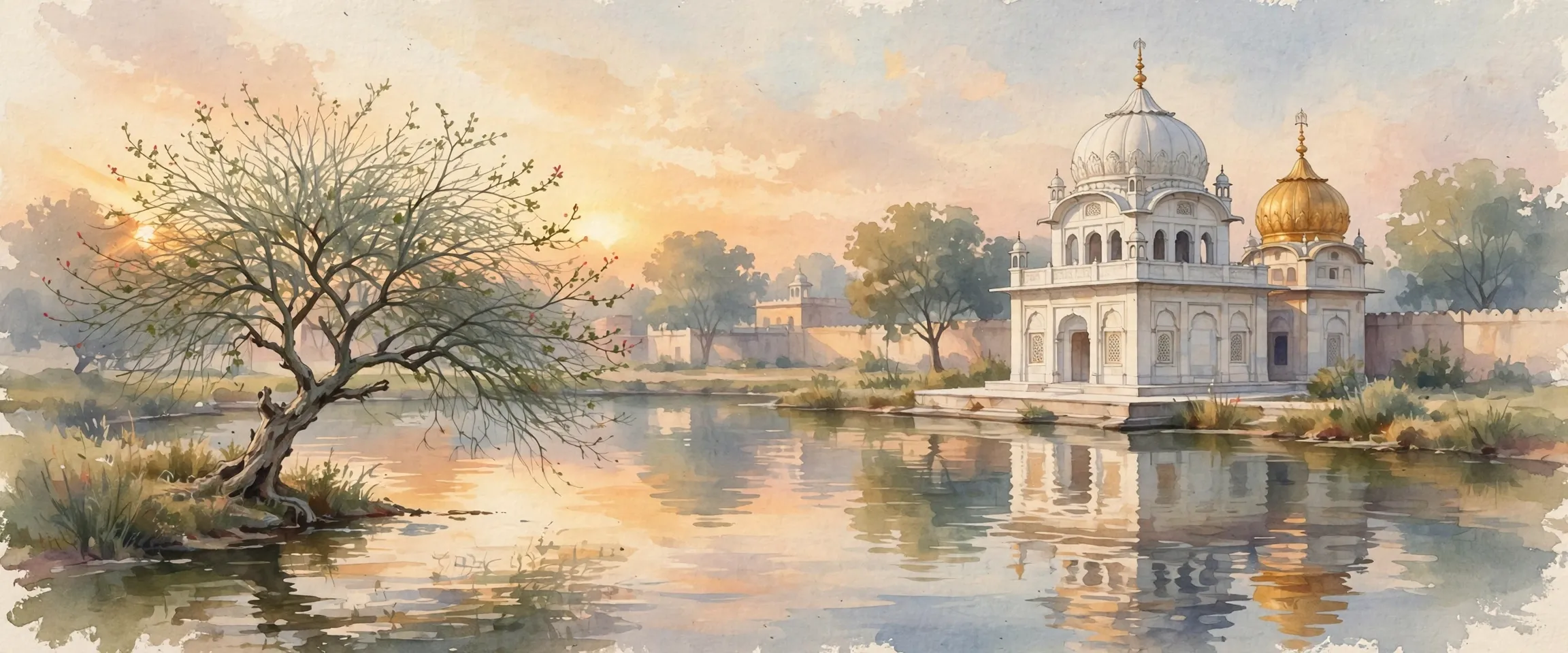
Gurdwara Bibeksar Sahib stands on the banks of Bibeksar Sarovar in Amritsar, the holy tank Guru Hargobind Ji, the sixth Sikh Guru, had excavated in 1628. The Guru rested here after hunting, held his evening discussions with learned Sikhs on these banks, and organized his followers here; the present shrine was built by Maharaja Ranjit Singh. Its sarovar is counted among the five sacred pools of Amritsar.
- Punjabi name
- ਗੁਰਦੁਆਰਾ ਬਿਬੇਕਸਰ ਸਾਹਿਬ
- Type
- Gurdwara and sarovar
- Country
- India
- City
- Amritsar
- District
- Amritsar
- Region
- Majha
All 10 facts
- Sarovar excavated
- 1628, by Guru Hargobind Ji (6th Sikh Guru)
- Gurdwara built by
- Maharaja Ranjit Singh
- Significance
- One of the five holy sarovars of Amritsar
- Location
- Near Chatiwind Gate, Katra Ahluwalia
Gurdwara Bibeksar Sahib is a historic Sikh shrine in Amritsar on the banks of the Bibeksar Sarovar, one of the city's five holy tanks. Guru Hargobind Ji, the sixth Sikh Guru, had the sarovar excavated in 1628 and made the spot his resting place, returning after hunting to rest, reflect and counsel his Sikhs.
What does Bibeksar mean?
The name joins two Punjabi words: bibek, meaning wisdom or discernment, and sar, a pool. Bibeksar is the pool of wisdom, and the name suits the place. Tradition holds that Guru Hargobind Ji spent his evenings on these banks in discussion with learned Sikhs, weighing matters of faith and the young community's future. The shrine's name remembers those conversations as much as the water.
History
Guru Hargobind Ji became the sixth Sikh Guru in 1606, succeeding his father Guru Arjan Dev Ji. His guruship is remembered for the doctrine of miri and piri, the pairing of temporal and spiritual authority, and he kept a martial retinue at a time of growing tension with the Mughal administration. In 1628 he had the Bibeksar tank excavated south-east of the Harmandir Sahib, between the ancient villages of Chatiwind and Sultanwind near the Chatiwind Gate. The Guru laid the foundation of the sarovar himself.
The spot became his retreat. Returning from hunting, the Guru rested on the tank's edge where the present gurdwara stands, and in the evenings he held meetings here: discussions of religious questions with wise Sikhs, and the organizing of his followers along military lines after skirmishes with Mughal forces. A garden nearby served his recreation, and the kareer tree to which he tied his horse is still pointed out within the complex.
The sarovar belongs to the Guru's later Amritsar years, when his miri-piri doctrine had taken visible form in the Akal Takht, raised in 1609 facing the Harmandir Sahib, and his armed retinue was a fact the Mughal administration could no longer ignore. The present shrine on the sarovar's banks was built by Maharaja Ranjit Singh.
Amritsar's five holy sarovars
Bibeksar is counted among the five holy sarovars of Amritsar, alongside the Amrit Sarovar at the Harmandir Sahib, Santokhsar, Ramsar and Kaulsar. Each of the five carries a Guru's story: the Amrit Sarovar belongs to the city's founding, Ramsar to Guru Arjan's compilation of the Adi Granth, Kaulsar to Bibi Kaulan's devotion, and Bibeksar to Guru Hargobind Ji's rest and counsel. Pilgrims count a bath in each of the five as especially meritorious, and many try to visit all five in a single trip.
The shrine today
The gurdwara complex opens onto a tranquil courtyard by the sarovar's edge and serves a daily langar. Pilgrims take devotional baths in the holy water, as they do in the other four sarovars. Set a little apart from the crowds around the Golden Temple, about two kilometres from the city centre, Bibeksar has kept the quiet, reflective character of the Guru's own resting place.
Why do pilgrims visit Bibeksar Sahib?
Pilgrims come for what the Guru himself sought here: rest and reflection. The sarovar's water is sacred like the other four holy tanks, and many visitors combine a bath here with the Amrit Sarovar at the Golden Temple. Gurdwara Ramsar Sahib, where Guru Arjan Dev Ji compiled the Adi Granth, stands nearby, so the two are often visited as a pair: the father's seat of scripture and the son's resting place.
Visiting Bibeksar Sahib
The gurdwara stands near the Chatiwind Gate in the Katra Ahluwalia area of Amritsar's old south-east. It is an easy addition to a Golden Temple visit: come early in the morning or on a weekday for the quietest experience, cover your head and remove your shoes before entering, and stay for the langar. Pair it with Ramsar Sahib and the other historic shrines of the old city to walk the full circuit of Amritsar's five sarovars.
ਗੁਰਦੁਆਰਾ ਬਿਬੇਕਸਰ ਸਾਹਿਬ ਅੰਮ੍ਰਿਤਸਰ ਦਾ ਇਤਿਹਾਸਕ ਗੁਰਦੁਆਰਾ ਹੈ, ਜੋ ਬਿਬੇਕਸਰ ਸਰੋਵਰ ਦੇ ਕੰਢੇ ਉੱਤੇ ਸਥਿਤ ਹੈ ਇਹ ਸ਼ਹਿਰ ਦੇ ਪੰਜ ਪਵਿੱਤਰ ਸਰੋਵਰਾਂ ਵਿੱਚੋਂ ਇੱਕ ਹੈ ਛੇਵੇਂ ਪਾਤਸ਼ਾਹ ਗੁਰੂ ਹਰਿਗੋਬਿੰਦ ਸਾਹਿਬ ਜੀ ਨੇ 1628 ਵਿੱਚ ਇਹ ਸਰੋਵਰ ਖੁਦਵਾਇਆ ਸੀ ਅਤੇ ਇਸ ਸ਼ਾਂਤ ਥਾਂ ਨੂੰ ਆਪਣਾ ਆਰਾਮ-ਸਥਾਨ ਬਣਾਇਆ ਸ਼ਿਕਾਰ ਤੋਂ ਮੁੜ ਕੇ ਗੁਰੂ ਸਾਹਿਬ ਇੱਥੇ ਆਰਾਮ ਕਰਦੇ, ਵਿਚਾਰ ਕਰਦੇ ਅਤੇ ਸਿੱਖਾਂ ਨੂੰ ਉਪਦੇਸ਼ ਦਿੰਦੇ ਸਨ
ਬਿਬੇਕਸਰ ਦਾ ਅਰਥ ਕੀ ਹੈ?
ਬਿਬੇਕਸਰ ਨਾਂ ਦੋ ਪੰਜਾਬੀ ਸ਼ਬਦਾਂ ਤੋਂ ਬਣਿਆ ਹੈ: ਬਿਬੇਕ, ਜਿਸ ਦੇ ਅਰਥ ਹਨ ਸਿਆਣਪ ਜਾਂ ਵਿਵੇਕ, ਅਤੇ ਸਰ, ਭਾਵ ਤਲਾਬ ਇਸ ਤਰ੍ਹਾਂ ਬਿਬੇਕਸਰ ਦਾ ਅਰਥ ਬਣਦਾ ਹੈ ਸਿਆਣਪ ਦਾ ਸਰੋਵਰ ਇਹ ਨਾਂ ਇਸ ਥਾਂ ਉੱਤੇ ਪੂਰਾ ਢੁੱਕਦਾ ਹੈ ਕਥਾ ਹੈ ਕਿ ਗੁਰੂ ਹਰਿਗੋਬਿੰਦ ਸਾਹਿਬ ਜੀ ਸ਼ਾਮਾਂ ਨੂੰ ਇਨ੍ਹਾਂ ਕੰਢਿਆਂ ਉੱਤੇ ਵਿਦਵਾਨ ਸਿੱਖਾਂ ਨਾਲ ਵਿਚਾਰ-ਵਟਾਂਦਰਾ ਕਰਦੇ ਸਨ ਗੁਰਦੁਆਰੇ ਦਾ ਨਾਂ ਉਨ੍ਹਾਂ ਗੱਲਾਂ ਦੀ ਯਾਦ ਦਿਵਾਉਂਦਾ ਹੈ ਜਿੰਨਾ ਪਾਣੀ ਦੀ
ਇਤਿਹਾਸ
ਗੁਰੂ ਹਰਿਗੋਬਿੰਦ ਸਾਹਿਬ ਜੀ 1606 ਵਿੱਚ ਛੇਵੇਂ ਗੁਰੂ ਬਣੇ ਉਨ੍ਹਾਂ ਦੇ ਗੁਰਗੱਦੀ ਕਾਲ ਨੂੰ ਮੀਰੀ-ਪੀਰੀ ਦੇ ਸਿਧਾਂਤ ਲਈ ਯਾਦ ਕੀਤਾ ਜਾਂਦਾ ਹੈ, ਭਾਵ ਰੂਹਾਨੀ ਅਤੇ ਦੁਨਿਆਵੀ ਦੋਹਾਂ ਤਾਕਤਾਂ ਦਾ ਸੁਮੇਲ 1628 ਵਿੱਚ ਗੁਰੂ ਸਾਹਿਬ ਨੇ ਹਰਿਮੰਦਰ ਸਾਹਿਬ ਦੇ ਦੱਖਣ-ਪੂਰਬ ਵਿੱਚ, ਛਾਟੀਵਿੰਡ ਅਤੇ ਸੁਲਤਾਨਵਿੰਡ ਦੇ ਪੁਰਾਣੇ ਪਿੰਡਾਂ ਵਿਚਕਾਰ, ਛਾਟੀਵਿੰਡ ਗੇਟ ਦੇ ਨੇੜੇ ਇਹ ਸਰੋਵਰ ਖੁਦਵਾਇਆ ਕਥਾ ਹੈ ਕਿ ਸਰੋਵਰ ਦੀ ਨੀਂਹ ਗੁਰੂ ਸਾਹਿਬ ਨੇ ਆਪ ਰੱਖੀ ਸੀ
ਇਹ ਥਾਂ ਗੁਰੂ ਸਾਹਿਬ ਦਾ ਆਰਾਮ-ਸਥਾਨ ਬਣ ਗਈ ਸ਼ਿਕਾਰ ਤੋਂ ਮੁੜ ਕੇ ਗੁਰੂ ਸਾਹਿਬ ਤਲਾਬ ਦੇ ਕੰਢੇ ਆਰਾਮ ਕਰਦੇ, ਜਿੱਥੇ ਅੱਜ ਗੁਰਦੁਆਰਾ ਬਿਬੇਕਸਰ ਸਾਹਿਬ ਹੈ ਸ਼ਾਮਾਂ ਨੂੰ ਇੱਥੇ ਦੀਵਾਨ ਲੱਗਦੇ, ਧਾਰਮਿਕ ਵਿਚਾਰਾਂ ਹੁੰਦੀਆਂ ਅਤੇ ਮੁਗਲ ਫੌਜਾਂ ਨਾਲ ਝੜਪਾਂ ਤੋਂ ਬਾਅਦ ਗੁਰੂ ਸਾਹਿਬ ਨੇ ਇੱਥੇ ਹੀ ਸਿੱਖਾਂ ਨੂੰ ਫੌਜੀ ਜਥੇਬੰਦੀ ਵਿੱਚ ਢਾਲਿਆ ਨੇੜੇ ਇੱਕ ਸੁੰਦਰ ਬਾਗ ਸੀ ਜਿੱਥੇ ਗੁਰੂ ਸਾਹਿਬ ਸੈਰ ਕਰਦੇ ਸਨ, ਅਤੇ ਉਹ ਕਰੀਰ ਦਾ ਰੁੱਖ ਅੱਜ ਵੀ ਗੁਰਦੁਆਰਾ ਕੰਪਲੈਕਸ ਵਿੱਚ ਖੜ੍ਹਾ ਹੈ ਜਿਸ ਨਾਲ ਗੁਰੂ ਸਾਹਿਬ ਆਪਣਾ ਘੋੜਾ ਬੰਨ੍ਹਦੇ ਸਨ
ਇਹ ਸਰੋਵਰ ਗੁਰੂ ਸਾਹਿਬ ਦੇ ਅੰਮ੍ਰਿਤਸਰ ਦੇ ਪਿਛਲੇ ਵਰ੍ਹਿਆਂ ਦਾ ਹੈ, ਜਦੋਂ ਮੀਰੀ-ਪੀਰੀ ਦਾ ਸਿਧਾਂਤ ਅਕਾਲ ਤਖ਼ਤ ਵਿੱਚ ਪ੍ਰਤੱਖ ਹੋ ਚੁੱਕਾ ਸੀ, ਜੋ 1609 ਵਿੱਚ ਹਰਿਮੰਦਰ ਸਾਹਿਬ ਦੇ ਸਾਹਮਣੇ ਸਥਾਪਤ ਕੀਤਾ ਗਿਆ ਸੀ ਸਰੋਵਰ ਦੇ ਕੰਢੇ ਉੱਤੇ ਅੱਜ ਜੋ ਸੁੰਦਰ ਗੁਰਦੁਆਰਾ ਹੈ, ਉਹ ਮਹਾਰਾਜਾ ਰਣਜੀਤ ਸਿੰਘ ਨੇ ਬਣਵਾਇਆ ਸੀ
ਅੰਮ੍ਰਿਤਸਰ ਦੇ ਪੰਜ ਪਵਿੱਤਰ ਸਰੋਵਰ
ਬਿਬੇਕਸਰ ਅੰਮ੍ਰਿਤਸਰ ਦੇ ਪੰਜ ਪਵਿੱਤਰ ਸਰੋਵਰਾਂ ਵਿੱਚ ਗਿਣਿਆ ਜਾਂਦਾ ਹੈ ਬਾਕੀ ਚਾਰ ਹਨ: ਹਰਿਮੰਦਰ ਸਾਹਿਬ ਦਾ ਅੰਮ੍ਰਿਤ ਸਰੋਵਰ, ਸੰਤੋਖਸਰ, ਰਾਮਸਰ ਅਤੇ ਕੌਲਸਰ ਪੰਜਾਂ ਵਿੱਚੋਂ ਹਰ ਇੱਕ ਕਿਸੇ ਨਾ ਕਿਸੇ ਗੁਰੂ ਨਾਲ ਜੁੜਿਆ ਹੈ ਸ਼ਰਧਾਲੂ ਪੰਜਾਂ ਸਰੋਵਰਾਂ ਦੇ ਇਸ਼ਨਾਨ ਨੂੰ ਪੁੰਨ ਮੰਨਦੇ ਹਨ, ਅਤੇ ਬਹੁਤ ਸਾਰੇ ਯਾਤਰੀ ਇੱਕੋ ਫੇਰੀ ਵਿੱਚ ਸਾਰੇ ਪੰਜਾਂ ਦੇ ਦਰਸ਼ਨ ਕਰਦੇ ਹਨ
ਅੱਜ ਦਾ ਗੁਰਦੁਆਰਾ
ਗੁਰਦੁਆਰਾ ਕੰਪਲੈਕਸ ਸਰੋਵਰ ਦੇ ਕੰਢੇ ਨਾਲ ਲੱਗਦੇ ਸ਼ਾਂਤ ਵਿਹੜੇ ਵਿੱਚ ਫੈਲਿਆ ਹੈ ਅਤੇ ਇੱਥੇ ਰੋਜ਼ ਲੰਗਰ ਵਰਤਦਾ ਹੈ ਸ਼ਰਧਾਲੂ ਪਵਿੱਤਰ ਜਲ ਵਿੱਚ ਇਸ਼ਨਾਨ ਕਰਦੇ ਹਨ, ਜਿਵੇਂ ਬਾਕੀ ਚਾਰ ਸਰੋਵਰਾਂ ਵਿੱਚ ਕਰਦੇ ਹਨ ਦਰਬਾਰ ਸਾਹਿਬ ਦੀ ਭੀੜ ਤੋਂ ਥੋੜ੍ਹਾ ਦੂਰ, ਸ਼ਹਿਰ ਦੇ ਕੇਂਦਰ ਤੋਂ ਲਗਭਗ ਦੋ ਕਿਲੋਮੀਟਰ ਉੱਤੇ, ਬਿਬੇਕਸਰ ਨੇ ਗੁਰੂ ਸਾਹਿਬ ਦੇ ਆਰਾਮ-ਸਥਾਨ ਵਾਲਾ ਸ਼ਾਂਤ ਸੁਭਾਅ ਸਾਂਭ ਰੱਖਿਆ ਹੈ
ਸ਼ਰਧਾਲੂ ਬਿਬੇਕਸਰ ਸਾਹਿਬ ਕਿਉਂ ਆਉਂਦੇ ਹਨ?
ਸ਼ਰਧਾਲੂ ਉਹੀ ਚੀਜ਼ ਲੈਣ ਆਉਂਦੇ ਹਨ ਜੋ ਗੁਰੂ ਸਾਹਿਬ ਇੱਥੇ ਲੱਭਦੇ ਸਨ: ਆਰਾਮ ਅਤੇ ਆਤਮਿਕ ਸ਼ਾਂਤੀ ਸਰੋਵਰ ਦਾ ਜਲ ਬਾਕੀ ਚਾਰ ਪਵਿੱਤਰ ਸਰੋਵਰਾਂ ਵਾਂਗ ਪਵਿੱਤਰ ਮੰਨਿਆ ਜਾਂਦਾ ਹੈ ਨੇੜੇ ਹੀ ਗੁਰਦੁਆਰਾ ਰਾਮਸਰ ਸਾਹਿਬ ਹੈ, ਜਿੱਥੇ ਗੁਰੂ ਅਰਜਨ ਦੇਵ ਜੀ ਨੇ ਆਦਿ ਗ੍ਰੰਥ ਦੀ ਸੰਪਾਦਨਾ ਕੀਤੀ ਸੀ ਦੋਵੇਂ ਗੁਰਦੁਆਰੇ ਅਕਸਰ ਇਕੱਠੇ ਦੇਖੇ ਜਾਂਦੇ ਹਨ: ਪਿਤਾ ਦਾ ਗ੍ਰੰਥ-ਅਸਥਾਨ ਅਤੇ ਪੁੱਤਰ ਦਾ ਆਰਾਮ-ਸਥਾਨ
ਬਿਬੇਕਸਰ ਸਾਹਿਬ ਦੇ ਦਰਸ਼ਨ
ਗੁਰਦੁਆਰਾ ਅੰਮ੍ਰਿਤਸਰ ਦੇ ਕਟੜਾ ਆਹਲੂਵਾਲੀਆ ਇਲਾਕੇ ਵਿੱਚ, ਛਾਟੀਵਿੰਡ ਗੇਟ ਦੇ ਨੇੜੇ ਸਥਿਤ ਹੈ ਹਰਿਮੰਦਰ ਸਾਹਿਬ ਦੇ ਦਰਸ਼ਨਾਂ ਨਾਲ ਇਸ ਨੂੰ ਜੋੜਨਾ ਸੌਖਾ ਹੈ ਸਵੇਰੇ ਜਲਦੀ ਜਾਂ ਹਫਤੇ ਦੇ ਦਿਨਾਂ ਵਿੱਚ ਆਉਣ ਉੱਤੇ ਸਭ ਤੋਂ ਵੱਧ ਸ਼ਾਂਤੀ ਮਿਲਦੀ ਹੈ ਸਿਰ ਢੱਕ ਕੇ ਅਤੇ ਜੁੱਤੇ ਉਤਾਰ ਕੇ ਅੰਦਰ ਜਾਓ, ਅਤੇ ਲੰਗਰ ਜ਼ਰੂਰ ਛਕੋ ਰਾਮਸਰ ਸਾਹਿਬ ਨਾਲ ਮਿਲਾ ਕੇ ਪੁਰਾਣੇ ਸ਼ਹਿਰ ਦੇ ਇਤਿਹਾਸਕ ਗੁਰਦੁਆਰਿਆਂ ਦਾ ਪੂਰਾ ਚੱਕਰ ਲਗਾਇਆ ਜਾ ਸਕਦਾ ਹੈ