
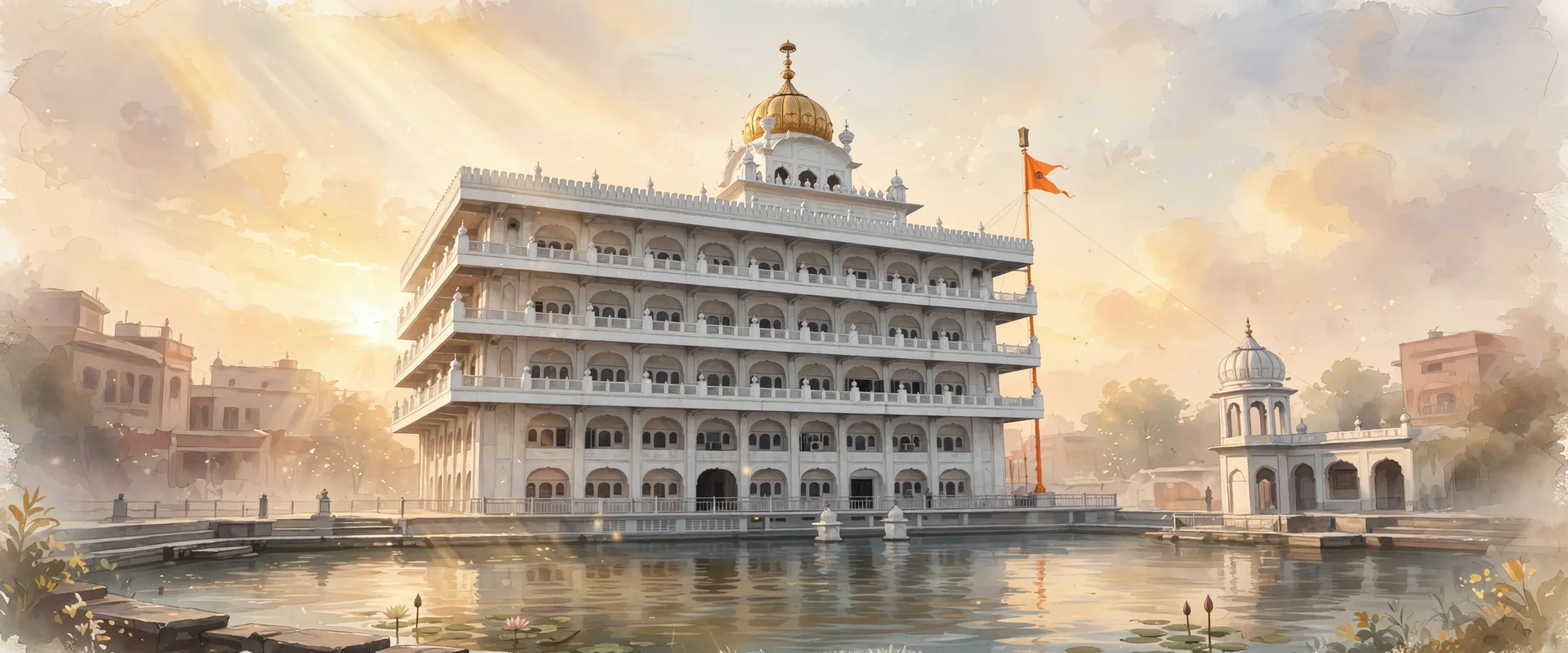
Gurdwara Ramsar Sahib in Amritsar marks the secluded spot where Guru Arjan Dev Ji, the fifth Sikh Guru, dictated the Adi Granth to his scribe Bhai Gurdas Ji during 1603-04. The completed scripture was installed in Harmandir Sahib in 1604 and is revered today as the Guru Granth Sahib. The Guru named the sarovar he had dug here Ramsar after Guru Ram Das Ji, and composed his celebrated Sukhmani Sahib on its banks.
- Punjabi name
- ਗੁਰਦੁਆਰਾ ਰਾਮਸਰ ਸਾਹਿਬ
- Type
- Gurdwara and sarovar
- Country
- India
- City
- Amritsar
- District
- Amritsar
- Region
- Majha
All 11 facts
- Adi Granth compiled
- 1603-1604
- Dictated by
- Guru Arjan Dev Ji (5th Sikh Guru); scribe Bhai Gurdas Ji
- Installed at Harmandir Sahib
- 1604
- Sarovar named after
- Guru Ram Das Ji
- Present building
- 1855 (marble hall, gilded lotus dome)
Gurdwara Ramsar Sahib in Amritsar marks one of the most consequential sites in Sikh history: the quiet spot where Guru Arjan Dev Ji dictated the Adi Granth, the first recension of the Sikh scripture, to Bhai Gurdas Ji during 1603-04. The completed volume was installed in Harmandir Sahib in 1604 and is revered today as the Guru Granth Sahib.
Why did Guru Arjan choose Ramsar?
By the early 1600s the Harmandir Sahib stood complete in the middle of the Amrit Sarovar, and Guru Arjan Dev Ji, the fifth Sikh Guru, turned to the great literary task of his guruship: gathering the authentic compositions of his predecessors into one authoritative volume. Sikh historical accounts record that the circulation of distorted versions of the Gurus' hymns made the task urgent. For work demanding months of unbroken concentration, the Guru chose a secluded site about a kilometre from the bustle of the town: a shady nook on the south-eastern edge of Amritsar, near the Chativind Gate. He pitched his tent on the south side of the spot and had a tank dug there, naming it Ramsar after his father, Guru Ram Das Ji.
The compilation of the Adi Granth
Through 1603 and 1604, Guru Arjan dictated the selected hymns to Bhai Gurdas Ji, the great Sikh scholar, who wrote them down at Ramsar. Into the volume went the authentic compositions of the first four Gurus: Guru Nanak, Guru Angad, Guru Amar Das and Guru Ram Das, the Guru's own extensive writings, and selections from Hindu bhagats and Muslim saints whose verse met the Guru's criterion, the unity of God and the brotherhood of mankind. The hymns were arranged according to the musical measures in which they were meant to be sung.
The choice of scribe mattered. Bhai Gurdas Ji was among the most learned Sikhs of his age, a theologian and poet whose Vars, or ballads, are still called the key to the Guru Granth Sahib. His clear hand gave the new scripture its first written form.
The completed Adi Granth was carried to the Harmandir Sahib in 1604 and installed there with ceremony, with Baba Budha Ji as the first granthi. A century later, Guru Gobind Singh Ji would invest this same scripture with the Guruship itself, ending the line of human Gurus.
Sukhmani Sahib, the Psalm of Peace
On these same banks the Guru composed Sukhmani Sahib, his celebrated Psalm of Peace, a long composition in the Gauri raga that remains among the most recited prayers in Sikh daily life. Ramsar's double association, with the scripture's compilation and with its most beloved composition, is why the site is held in such deep reverence: this is where the Sikh scripture took the shape in which the world knows it.
After Ramsar: the Damdami Bir
The Adi Granth prepared at Ramsar did not end its journey here. Decades later, Guru Gobind Singh Ji recollated the scripture at Talwandi Sabo (Damdama Sahib), producing the Damdami Bir recension. Every Guru Granth Sahib printed today descends from that recension, whose root is the dictation at Ramsar.
The shrine and sarovar today
The Ramsar sarovar, one of Amritsar's five holy tanks, still fills the quiet pool the Guru had dug. The present Gurdwara Ramsar is a small marble-lined hall topped by a gilded, fluted lotus dome, built in 1855 to mark the site of the Guru's labours. The wider complex houses the Guru Granth Sahib Bhawan, and the SGPC's printing press on Ramsar Road prints the Guru Granth Sahib here today: the scripture first dictated on this spot is still being produced on it.
Why does Ramsar Sahib matter?
Every copy of the Guru Granth Sahib traces its text to the dictation that took place on this spot. When Guru Gobind Singh Ji ended the line of human Gurus in 1708, he conferred the Guruship on the scripture compiled at Ramsar, making this quiet tank-side, in a real sense, the birthplace of the living Guru of the Sikhs. Pilgrims come to stand where Bhai Gurdas Ji's pen moved to the Guru's dictation, and where Sukhmani Sahib was first uttered.
Visiting Ramsar Sahib
Ramsar Sahib stands on the banks of the Ramsar sarovar in the Chativind Gate area, on the south-eastern side of the walled city. Gurdwara Bibeksar Sahib, Guru Hargobind Ji's resting place, is close by, and the two shrines make a natural pair for a single visit. Come as you would to any gurdwara: head covered, shoes removed, and keep a while by the sarovar where the Adi Granth was written.
ਗੁਰਦੁਆਰਾ ਰਾਮਸਰ ਸਾਹਿਬ ਅੰਮ੍ਰਿਤਸਰ ਵਿੱਚ ਸਿੱਖ ਇਤਿਹਾਸ ਦੀਆਂ ਸਭ ਤੋਂ ਮਹੱਤਵਪੂਰਨ ਥਾਵਾਂ ਵਿੱਚੋਂ ਇੱਕ ਦੀ ਨਿਸ਼ਾਨਦੇਹੀ ਕਰਦਾ ਹੈ ਇੱਥੇ ਪੰਜਵੇਂ ਪਾਤਸ਼ਾਹ ਗੁਰੂ ਅਰਜਨ ਦੇਵ ਜੀ ਨੇ 1603-04 ਦੌਰਾਨ ਭਾਈ ਗੁਰਦਾਸ ਜੀ ਪਾਸੋਂ ਆਦਿ ਗ੍ਰੰਥ ਦੀ ਬਾਣੀ ਲਿਖਵਾਈ ਸੀ ਸੰਪੂਰਨ ਗ੍ਰੰਥ 1604 ਵਿੱਚ ਹਰਿਮੰਦਰ ਸਾਹਿਬ ਵਿੱਚ ਪ੍ਰਕਾਸ਼ ਕੀਤਾ ਗਿਆ, ਜਿਸ ਨੂੰ ਅੱਜ ਗੁਰੂ ਗ੍ਰੰਥ ਸਾਹਿਬ ਜੀ ਵਜੋਂ ਸਤਿਕਾਰਿਆ ਜਾਂਦਾ ਹੈ
ਗੁਰੂ ਅਰਜਨ ਦੇਵ ਜੀ ਨੇ ਰਾਮਸਰ ਕਿਉਂ ਚੁਣਿਆ?
1600 ਦੇ ਦਹਾਕੇ ਦੇ ਸ਼ੁਰੂ ਵਿੱਚ ਹਰਿਮੰਦਰ ਸਾਹਿਬ ਅੰਮ੍ਰਿਤ ਸਰੋਵਰ ਦੇ ਵਿਚਕਾਰ ਸੰਪੂਰਨ ਹੋ ਚੁੱਕਾ ਸੀ, ਅਤੇ ਪੰਜਵੇਂ ਪਾਤਸ਼ਾਹ ਗੁਰੂ ਅਰਜਨ ਦੇਵ ਜੀ ਆਪਣੀ ਗੁਰਗੱਦੀ ਦੇ ਮਹਾਨ ਸਾਹਿਤਕ ਕਾਰਜ ਵੱਲ ਮੁੜੇ: ਪਿਛਲੇ ਗੁਰੂ ਸਾਹਿਬਾਨ ਦੀ ਪ੍ਰਮਾਣਿਕ ਬਾਣੀ ਨੂੰ ਇੱਕ ਅਧਿਕਾਰਤ ਗ੍ਰੰਥ ਵਿੱਚ ਇਕੱਠਾ ਕਰਨਾ ਸਿੱਖ ਇਤਿਹਾਸਕ ਕਥਾਵਾਂ ਦੱਸਦੀਆਂ ਹਨ ਕਿ ਗੁਰੂ ਸਾਹਿਬਾਨ ਦੀ ਬਾਣੀ ਦੇ ਵਿਗੜੇ ਹੋਏ ਰੂਪਾਂ ਦੇ ਪ੍ਰਚਾਰ ਨੇ ਇਸ ਕਾਰਜ ਨੂੰ ਜ਼ਰੂਰੀ ਬਣਾ ਦਿੱਤਾ ਸੀ ਮਹੀਨਿਆਂ ਦੀ ਅਟੁੱਟ ਇਕਾਗਰਤਾ ਮੰਗਦੇ ਇਸ ਕੰਮ ਲਈ ਗੁਰੂ ਸਾਹਿਬ ਨੇ ਸ਼ਹਿਰ ਦੀ ਭੀੜ ਤੋਂ ਲਗਭਗ ਇੱਕ ਕਿਲੋਮੀਟਰ ਦੂਰ ਇੱਕ ਇਕਾਂਤ ਥਾਂ ਚੁਣੀ: ਅੰਮ੍ਰਿਤਸਰ ਦੇ ਦੱਖਣ-ਪੂਰਬ ਵਿੱਚ, ਛਾਟੀਵਿੰਡ ਗੇਟ ਦੇ ਨੇੜੇ ਇੱਕ ਛਾਂਦਾਰ ਨੁੱਕਰ ਗੁਰੂ ਸਾਹਿਬ ਨੇ ਉਸ ਥਾਂ ਦੇ ਦੱਖਣ ਵੱਲ ਆਪਣਾ ਤੰਬੂ ਲਾਇਆ ਅਤੇ ਉੱਥੇ ਇੱਕ ਸਰੋਵਰ ਖੁਦਵਾਇਆ, ਜਿਸ ਦਾ ਨਾਂ ਆਪਣੇ ਪਿਤਾ ਗੁਰੂ ਰਾਮਦਾਸ ਜੀ ਦੇ ਨਾਂ ਉੱਤੇ ਰਾਮਸਰ ਰੱਖਿਆ
ਆਦਿ ਗ੍ਰੰਥ ਦੀ ਸੰਪਾਦਨਾ
1603 ਅਤੇ 1604 ਦੌਰਾਨ ਗੁਰੂ ਅਰਜਨ ਦੇਵ ਜੀ ਚੁਣੀ ਹੋਈ ਬਾਣੀ ਭਾਈ ਗੁਰਦਾਸ ਜੀ ਨੂੰ ਬੋਲਦੇ ਰਹੇ, ਅਤੇ ਮਹਾਨ ਵਿਦਵਾਨ ਭਾਈ ਸਾਹਿਬ ਉਸ ਨੂੰ ਰਾਮਸਰ ਵਿੱਚ ਲਿਖਦੇ ਰਹੇ ਗ੍ਰੰਥ ਵਿੱਚ ਪਹਿਲੇ ਚਾਰ ਗੁਰੂ ਸਾਹਿਬਾਨ, ਗੁਰੂ ਨਾਨਕ, ਗੁਰੂ ਅੰਗਦ, ਗੁਰੂ ਅਮਰਦਾਸ ਅਤੇ ਗੁਰੂ ਰਾਮਦਾਸ ਜੀ ਦੀ ਪ੍ਰਮਾਣਿਕ ਬਾਣੀ, ਗੁਰੂ ਸਾਹਿਬ ਦੀ ਆਪਣੀ ਵਿਸ਼ਾਲ ਬਾਣੀ ਅਤੇ ਹਿੰਦੂ ਭਗਤਾਂ ਤੇ ਮੁਸਲਮਾਨ ਸੂਫੀ ਸੰਤਾਂ ਦੀ ਚੁਣੀ ਹੋਈ ਬਾਣੀ ਸ਼ਾਮਲ ਕੀਤੀ ਗਈ ਸ਼ਾਮਲ ਕਰਨ ਦੀ ਕਸੌਟੀ ਸੀ: ਇੱਕ ਅਕਾਲ ਪੁਰਖ ਦੀ ਏਕਤਾ ਅਤੇ ਮਾਨਵਤਾ ਦਾ ਭਾਈਚਾਰਾ ਬਾਣੀ ਨੂੰ ਉਨ੍ਹਾਂ ਰਾਗਾਂ ਅਨੁਸਾਰ ਤਰਤੀਬ ਦਿੱਤਾ ਗਿਆ ਜਿਨ੍ਹਾਂ ਵਿੱਚ ਉਹ ਗਾਈ ਜਾਣੀ ਸੀ
ਲਿਖਾਰੀ ਦੀ ਚੋਣ ਅਹਿਮ ਸੀ ਭਾਈ ਗੁਰਦਾਸ ਜੀ ਆਪਣੇ ਸਮੇਂ ਦੇ ਮਹਾਨ ਵਿਦਵਾਨਾਂ ਵਿੱਚੋਂ ਸਨ, ਇੱਕ ਧਰਮ-ਸ਼ਾਸਤਰੀ ਅਤੇ ਕਵੀ, ਜਿਨ੍ਹਾਂ ਦੀਆਂ ਵਾਰਾਂ ਨੂੰ ਅੱਜ ਵੀ ਗੁਰੂ ਗ੍ਰੰਥ ਸਾਹਿਬ ਦੀ ਕੁੰਜੀ ਕਿਹਾ ਜਾਂਦਾ ਹੈ ਉਨ੍ਹਾਂ ਦੇ ਸਪਸ਼ਟ ਅੱਖਰਾਂ ਨੇ ਨਵੇਂ ਗ੍ਰੰਥ ਨੂੰ ਪਹਿਲਾ ਲਿਖਤੀ ਰੂਪ ਦਿੱਤਾ
ਸੰਪੂਰਨ ਆਦਿ ਗ੍ਰੰਥ 1604 ਵਿੱਚ ਹਰਿਮੰਦਰ ਸਾਹਿਬ ਲਿਜਾਇਆ ਗਿਆ ਅਤੇ ਉੱਥੇ ਮਰਯਾਦਾ ਨਾਲ ਪ੍ਰਕਾਸ਼ ਕੀਤਾ ਗਿਆ ਬਾਬਾ ਬੁੱਢਾ ਜੀ ਪਹਿਲੇ ਗ੍ਰੰਥੀ ਬਣੇ ਇੱਕ ਸਦੀ ਬਾਅਦ ਗੁਰੂ ਗੋਬਿੰਦ ਸਿੰਘ ਜੀ ਨੇ ਇਸੇ ਗ੍ਰੰਥ ਨੂੰ ਗੁਰਗੱਦੀ ਬਖਸ਼ੀ ਅਤੇ ਦੇਹਧਾਰੀ ਗੁਰੂਆਂ ਦੀ ਪਰੰਪਰਾ ਸਮਾਪਤ ਕੀਤੀ
ਸੁਖਮਨੀ ਸਾਹਿਬ: ਸ਼ਾਂਤੀ ਦੀ ਬਾਣੀ
ਇਨ੍ਹਾਂ ਹੀ ਕੰਢਿਆਂ ਉੱਤੇ ਗੁਰੂ ਸਾਹਿਬ ਨੇ ਸੁਖਮਨੀ ਸਾਹਿਬ ਦੀ ਰਚਨਾ ਕੀਤੀ, ਜਿਸ ਨੂੰ ਸ਼ਾਂਤੀ ਦੀ ਬਾਣੀ ਕਿਹਾ ਜਾਂਦਾ ਹੈ ਗਉੜੀ ਰਾਗ ਵਿੱਚ ਇਹ ਲੰਮੀ ਬਾਣੀ ਅੱਜ ਵੀ ਸਿੱਖਾਂ ਦੇ ਨਿੱਤਨੇਮ ਵਿੱਚ ਸਭ ਤੋਂ ਵੱਧ ਪੜ੍ਹੀ ਜਾਣ ਵਾਲੀ ਬਾਣੀ ਵਿੱਚੋਂ ਇੱਕ ਹੈ ਗ੍ਰੰਥ ਦੀ ਸੰਪਾਦਨਾ ਅਤੇ ਇਸ ਪਿਆਰੀ ਬਾਣੀ ਦੀ ਰਚਨਾ, ਦੋਵਾਂ ਨਾਲ ਜੁੜੇ ਹੋਣ ਕਰਕੇ ਰਾਮਸਰ ਨੂੰ ਡੂੰਘਾ ਸਤਿਕਾਰ ਮਿਲਦਾ ਹੈ ਇਹ ਉਹ ਥਾਂ ਹੈ ਜਿੱਥੇ ਸਿੱਖ ਧਰਮ ਗ੍ਰੰਥ ਨੇ ਉਹ ਰੂਪ ਧਾਰਿਆ ਜਿਸ ਵਿੱਚ ਦੁਨੀਆਂ ਉਸ ਨੂੰ ਜਾਣਦੀ ਹੈ
ਰਾਮਸਰ ਤੋਂ ਬਾਅਦ: ਦਮਦਮੀ ਬੀੜ
ਰਾਮਸਰ ਵਿੱਚ ਤਿਆਰ ਹੋਏ ਆਦਿ ਗ੍ਰੰਥ ਦਾ ਸਫ਼ਰ ਇੱਥੇ ਖਤਮ ਨਹੀਂ ਹੋਇਆ ਦਹਾਕਿਆਂ ਬਾਅਦ ਗੁਰੂ ਗੋਬਿੰਦ ਸਿੰਘ ਜੀ ਨੇ ਤਲਵੰਡੀ ਸਾਬੋ (ਦਮਦਮਾ ਸਾਹਿਬ) ਵਿਖੇ ਗ੍ਰੰਥ ਦੀ ਮੁੜ ਸੰਪਾਦਨਾ ਕੀਤੀ, ਜਿਸ ਨੂੰ ਦਮਦਮੀ ਬੀੜ ਕਿਹਾ ਜਾਂਦਾ ਹੈ ਅੱਜ ਛਪਦਾ ਹਰ ਗੁਰੂ ਗ੍ਰੰਥ ਸਾਹਿਬ ਇਸੇ ਪਾਠ-ਪਰੰਪਰਾ ਦਾ ਵਾਰਸ ਹੈ, ਜਿਸ ਦੀ ਨੀਂਹ ਰਾਮਸਰ ਵਿੱਚ ਰੱਖੀ ਗਈ ਸੀ
ਅੱਜ ਦਾ ਗੁਰਦੁਆਰਾ ਅਤੇ ਸਰੋਵਰ
ਰਾਮਸਰ ਸਰੋਵਰ, ਅੰਮ੍ਰਿਤਸਰ ਦੇ ਪੰਜ ਪਵਿੱਤਰ ਸਰੋਵਰਾਂ ਵਿੱਚੋਂ ਇੱਕ, ਅੱਜ ਵੀ ਉਹ ਸ਼ਾਂਤ ਤਲਾਬ ਹੈ ਜੋ ਗੁਰੂ ਸਾਹਿਬ ਨੇ ਖੁਦਵਾਇਆ ਸੀ ਅੱਜ ਦਾ ਗੁਰਦੁਆਰਾ ਰਾਮਸਰ ਸੰਗਮਰਮਰ ਨਾਲ ਜੜਿਆ ਇੱਕ ਛੋਟਾ ਹਾਲ ਹੈ ਜਿਸ ਉੱਤੇ ਸੁਨਹਿਰੀ ਕਲਸ਼ ਵਾਲਾ ਗੁੰਬਦ ਹੈ; ਇਹ 1855 ਵਿੱਚ ਗੁਰੂ ਸਾਹਿਬ ਦੀ ਘਾਲਣਾ ਦੀ ਯਾਦ ਵਿੱਚ ਬਣਾਇਆ ਗਿਆ ਸੀ ਵੱਡੇ ਕੰਪਲੈਕਸ ਵਿੱਚ ਗੁਰੂ ਗ੍ਰੰਥ ਸਾਹਿਬ ਭਵਨ ਹੈ, ਅਤੇ ਰਾਮਸਰ ਰੋਡ ਉੱਤੇ ਸ਼੍ਰੋਮਣੀ ਕਮੇਟੀ ਦਾ ਛਾਪਾਖਾਨਾ ਅੱਜ ਵੀ ਗੁਰੂ ਗ੍ਰੰਥ ਸਾਹਿਬ ਛਾਪਦਾ ਹੈ ਇਸ ਤਰ੍ਹਾਂ ਜੋ ਗ੍ਰੰਥ ਪਹਿਲੀ ਵਾਰ ਇਸ ਥਾਂ ਉੱਤੇ ਬੋਲ ਕੇ ਲਿਖਵਾਇਆ ਗਿਆ ਸੀ, ਉਹ ਅੱਜ ਵੀ ਇੱਥੇ ਹੀ ਛਪ ਰਿਹਾ ਹੈ
ਰਾਮਸਰ ਸਾਹਿਬ ਕਿਉਂ ਮਹੱਤਵਪੂਰਨ ਹੈ?
ਛਪਦਾ ਹਰ ਗੁਰੂ ਗ੍ਰੰਥ ਸਾਹਿਬ ਆਪਣਾ ਪਾਠ ਉਸ ਬੋਲ-ਲਿਖਤ ਤੋਂ ਲੈਂਦਾ ਹੈ ਜੋ ਇੱਥੇ ਹੋਈ ਸੀ ਜਦੋਂ 1708 ਵਿੱਚ ਗੁਰੂ ਗੋਬਿੰਦ ਸਿੰਘ ਜੀ ਨੇ ਦੇਹਧਾਰੀ ਗੁਰੂਆਂ ਦੀ ਪਰੰਪਰਾ ਸਮਾਪਤ ਕੀਤੀ, ਤਾਂ ਉਨ੍ਹਾਂ ਨੇ ਰਾਮਸਰ ਵਿੱਚ ਸੰਪਾਦਿਤ ਗ੍ਰੰਥ ਨੂੰ ਹੀ ਗੁਰਗੱਦੀ ਬਖਸ਼ੀ ਇਸ ਲਈ ਇਹ ਸ਼ਾਂਤ ਸਰੋਵਰ-ਕੰਢਾ ਸਿੱਖਾਂ ਦੇ ਜੀਉਂਦੇ ਗੁਰੂ ਦੇ ਜਨਮ-ਸਥਾਨ ਵਜੋਂ ਦੇਖਿਆ ਜਾਂਦਾ ਹੈ ਸ਼ਰਧਾਲੂ ਉਸ ਥਾਂ ਖੜ੍ਹਨ ਆਉਂਦੇ ਹਨ ਜਿੱਥੇ ਭਾਈ ਗੁਰਦਾਸ ਜੀ ਦੀ ਕਲਮ ਗੁਰੂ ਦੇ ਬੋਲਾਂ ਉੱਤੇ ਚੱਲੀ ਸੀ ਅਤੇ ਜਿੱਥੇ ਸੁਖਮਨੀ ਸਾਹਿਬ ਪਹਿਲੀ ਵਾਰ ਉਚਾਰਿਆ ਗਿਆ ਸੀ
ਰਾਮਸਰ ਸਾਹਿਬ ਦੇ ਦਰਸ਼ਨ
ਰਾਮਸਰ ਸਾਹਿਬ ਰਾਮਸਰ ਸਰੋਵਰ ਦੇ ਕੰਢੇ ਉੱਤੇ, ਛਾਟੀਵਿੰਡ ਗੇਟ ਇਲਾਕੇ ਵਿੱਚ, ਪੁਰਾਣੇ ਸ਼ਹਿਰ ਦੇ ਦੱਖਣ-ਪੂਰਬ ਵਿੱਚ ਸਥਿਤ ਹੈ ਗੁਰੂ ਹਰਿਗੋਬਿੰਦ ਸਾਹਿਬ ਜੀ ਦਾ ਆਰਾਮ-ਸਥਾਨ, ਗੁਰਦੁਆਰਾ ਬਿਬੇਕਸਰ ਸਾਹਿਬ, ਨੇੜੇ ਹੀ ਹੈ, ਅਤੇ ਦੋਵੇਂ ਗੁਰਦੁਆਰੇ ਇੱਕੋ ਫੇਰੀ ਵਿੱਚ ਦੇਖੇ ਜਾ ਸਕਦੇ ਹਨ ਕਿਸੇ ਵੀ ਗੁਰਦੁਆਰੇ ਵਾਂਗ ਆਓ: ਸਿਰ ਢੱਕ ਕੇ, ਜੁੱਤੇ ਉਤਾਰ ਕੇ, ਅਤੇ ਉਸ ਸਰੋਵਰ ਕੰਢੇ ਕੁਝ ਸਮਾਂ ਬੈਠੋ ਜਿੱਥੇ ਆਦਿ ਗ੍ਰੰਥ ਲਿਖਿਆ ਗਿਆ ਸੀ