
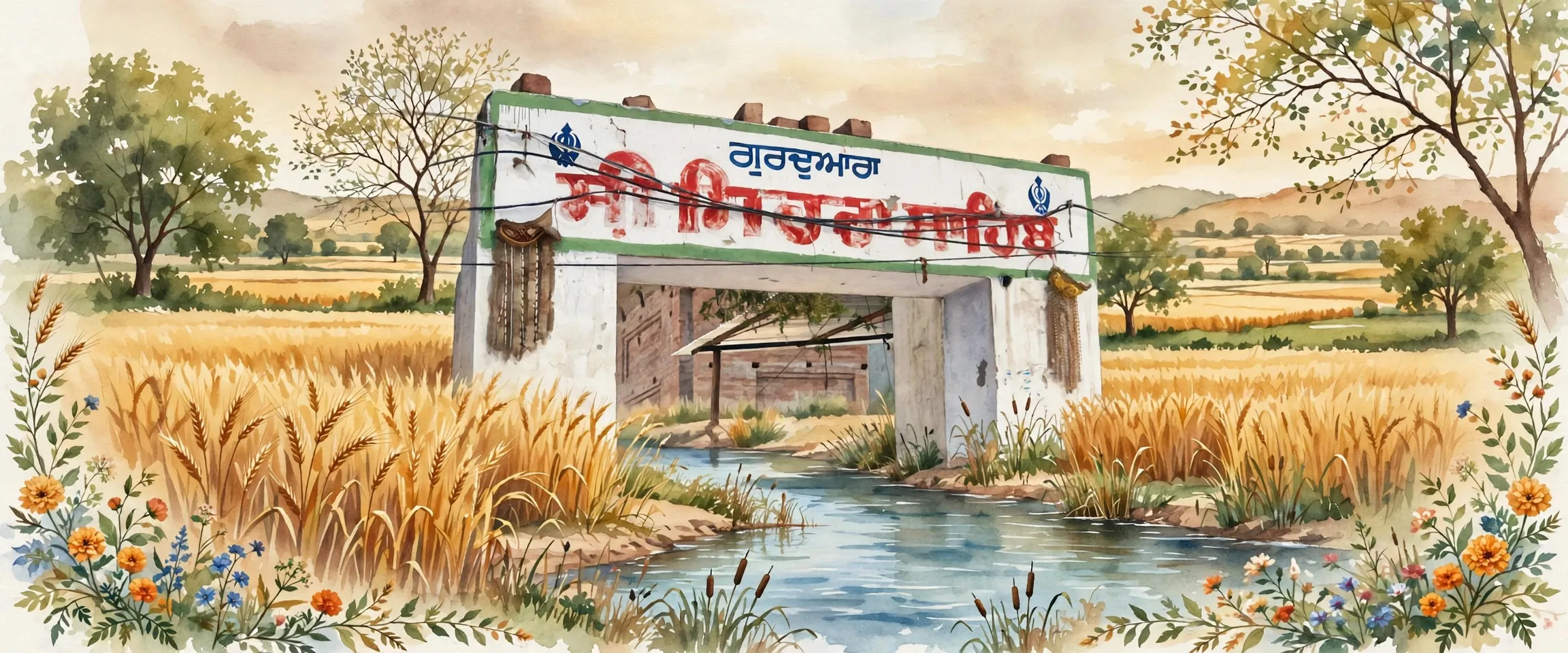
Gurdwara Sehra Sahib is a small historic gurdwara in Mohalla Dhiraan, Sultanpur Lodhi, Kapurthala district, Punjab, dedicated to Guru Arjan Dev Ji, who halted here in 1604 on his way to Dalla for the wedding of his son, the future Guru Hargobind Ji. Tradition holds that the marriage party stayed the night at this place and the bridegroom's sehra was fastened here, in an octagonal domed room that still stands within a brick paved walled compound.
- Punjabi name
- ਗੁਰਦੁਆਰਾ ਸਿਹਰਾ ਸਾਹਿਬ
- Type
- Historic gurdwara
- Country
- India
- City
- Sultanpur Lodhi
- District
- Kapurthala
- Region
- Doaba
All 11 facts
- Neighbourhood
- Mohalla Dhiraan
- Marks
- Overnight halt of Guru Arjan's party in 1604; Guru Hargobind's sehra tied here
- Architecture
- Octagonal domed room in a brick paved walled compound
- Administered by
- Shiromani Gurdwara Parbandhak Committee (local committee)
- Main festival
- Guru Nanak Gurpurab (November)
Gurdwara Sehra Sahib is a small historic gurdwara in Mohalla Dhiraan, Sultanpur Lodhi, Kapurthala district, Punjab, dedicated to Guru Arjan Dev Ji, who halted here in 1604 on his way to Dalla for the wedding of his son Hargobind, the future Guru Hargobind Ji. Tradition holds that the marriage party rested at this place for the night, and that here the sehra, the ceremonial wreath of a bridegroom, was fastened round the young bridegroom's head before the party rode on to the wedding.
What happened at Sehra Sahib in 1604?
At Sehra Sahib in 1604, the wedding party of Guru Hargobind Ji stopped for the night on its journey from the Guru's home to Dalla, where the marriage was to take place. The halt became the shrine because of one intimate ceremony: it was here, the tradition says, that the sehra was tied on the bridegroom. A sehra is the wreath or veil of flowers and tinsel worn by a Punjabi bridegroom, and the moment of its tying is the moment a son becomes, in everyone's eyes, a groom. Sultanpur Lodhi kept that moment, and built a gurdwara over the ground where it happened.
A wedding journey through Guru Nanak's town
The route itself is part of the story. Sultanpur Lodhi was Guru Nanak Dev Ji's town, the place of his working and married years a full century earlier, and its lanes were already sacred geography when the fifth Guru's party arrived in 1604. Guru Arjan was travelling as a father, not on a preaching tour: his son Hargobind, who would succeed him two years later and give the Panth its doctrine of miri and piri, the temporal and the spiritual held together, was on his way to be married. Accounts of the shrine add colour to the halt: the party included elders of the young Panth such as Baba Buddha Ji and Bhai Gurdas Ji, and Bebe Nanaki's family, the Guru's own kin in Sultanpur, joined the celebrations in the town where she had lived.
The next morning the party proceeded to Dalla, a village in the same region, where the wedding itself took place. Dalla keeps its own shrine for the marriage; Sehra Sahib keeps the eve of it. Sikh memory is fond of such thresholds: the night before, the tying of the wreath, the last hours in which the future sixth Guru was still simply a beloved son in his father's procession.
An octagonal room in Mohalla Dhiraan
The gurdwara that marks the halt is modest and distinctive: an octagonal domed room, standing inside a brick paved walled compound in Mohalla Dhiraan, one of the old town's neighbourhoods, in which the Guru Granth Sahib is seated. There is no sprawling complex here and no sarovar, and that smallness suits the memory it guards. Sehra Sahib is not the shrine of a battle, a martyrdom or a revelation, but of a family's happiest errand, and its single domed room holds that errand the way a small photograph holds a wedding.
Like the other historic shrines of Sultanpur Lodhi, it is administered by the Shiromani Gurdwara Parbandhak Committee through a local committee. Its congregation is the town itself: neighbours who have prayed in the room for generations, joined at Gurpurabs and on the wedding season's busy weekends by pilgrims walking the Sultanpur round.
Why does Sehra Sahib matter?
Sehra Sahib matters because it widens Sultanpur Lodhi's story by a century and a generation. Every other great shrine of the town belongs to Guru Nanak: his prayer at Ber Sahib, his work at Hatt Sahib, his home at Guru Ka Bagh, his trial at Kothri Sahib and his return at Sant Ghat. Sehra Sahib alone belongs to the Gurus who followed: it says that the town Nanak made holy stayed woven into the family's life, that his great successor's father brought a wedding party through its lanes, and that the boy whose sehra was tied here would carry the Panth into its next age. It is the tenderest of the town's shrines, and for many families the most relatable: every Punjabi parent who has tied a sehra understands it at once.
Festivals and visiting Sehra Sahib
The gurdwara holds daily services and shares in Sultanpur Lodhi's great November gathering for Guru Nanak Gurpurab, and it is naturally busiest when the town fills for weddings and Gurpurabs alike. Visitors usually fold it into the one day walking round of the old town's shrines: it stands in the interior of Sultanpur, minutes on foot from Guru Ka Bagh and Kothri Sahib, with Ber Sahib and the riverbank at Sant Ghat a short walk further. Sultanpur Lodhi has its own railway station, and Kapurthala lies about 27 kilometres away. The Gurdwaras in India guide places Sehra Sahib in the town's complete ring of historic shrines.
ਗੁਰਦੁਆਰਾ ਸਿਹਰਾ ਸਾਹਿਬ ਪੰਜਾਬ ਦੇ ਕਪੂਰਥਲਾ ਜ਼ਿਲ੍ਹੇ ਦੇ ਸੁਲਤਾਨਪੁਰ ਲੋਧੀ ਦੇ ਮੁਹੱਲਾ ਧੀਰਾਂ ਵਿੱਚ ਇੱਕ ਛੋਟਾ ਇਤਿਹਾਸਕ ਗੁਰਦੁਆਰਾ ਹੈ, ਜੋ ਗੁਰੂ ਅਰਜਨ ਦੇਵ ਜੀ ਨੂੰ ਸਮਰਪਿਤ ਹੈ, ਜੋ 1604 ਵਿੱਚ ਆਪਣੇ ਪੁੱਤਰ ਹਰਿਗੋਬਿੰਦ, ਆਉਣ ਵਾਲੇ ਗੁਰੂ ਹਰਿਗੋਬਿੰਦ ਜੀ, ਦੇ ਵਿਆਹ ਲਈ ਡੱਲਾ ਜਾਂਦਿਆਂ ਇੱਥੇ ਰੁਕੇ ਸਨ ਪਰੰਪਰਾ ਅਨੁਸਾਰ ਵਿਆਹ ਵਾਲੀ ਜੰਞ ਨੇ ਇਸ ਥਾਂ ਉੱਤੇ ਰਾਤ ਬਿਤਾਈ, ਅਤੇ ਇੱਥੇ ਹੀ ਲਾੜੇ ਦੇ ਸਿਰ ਉੱਤੇ ਸਿਹਰਾ, ਵਿਆਹ ਦਾ ਸਜਾਵਟੀ ਗੁੱਛਾ, ਬੰਨ੍ਹਿਆ ਗਿਆ, ਜਿਸ ਤੋਂ ਬਾਅਦ ਜੰਞ ਵਿਆਹ ਵੱਲ ਅੱਗੇ ਵਧੀ
1604 ਵਿੱਚ ਸਿਹਰਾ ਸਾਹਿਬ ਵਿਖੇ ਕੀ ਹੋਇਆ ਸੀ?
1604 ਵਿੱਚ ਸਿਹਰਾ ਸਾਹਿਬ ਵਿਖੇ ਗੁਰੂ ਹਰਿਗੋਬਿੰਦ ਜੀ ਦੀ ਜੰਞ ਗੁਰੂ ਜੀ ਦੇ ਘਰ ਤੋਂ ਡੱਲਾ ਜਾਂਦਿਆਂ ਰਾਤ ਲਈ ਰੁਕੀ, ਜਿੱਥੇ ਵਿਆਹ ਹੋਣਾ ਸੀ ਇਹ ਰੁਕਣਾ ਇੱਕ ਨਿੱਘੇ ਰਸਮ ਕਾਰਨ ਅਸਥਾਨ ਬਣਿਆ: ਪਰੰਪਰਾ ਕਹਿੰਦੀ ਹੈ ਕਿ ਇੱਥੇ ਹੀ ਲਾੜੇ ਨੂੰ ਸਿਹਰਾ ਬੰਨ੍ਹਿਆ ਗਿਆ ਸੀ ਸਿਹਰਾ ਫੁੱਲਾਂ ਅਤੇ ਸਜਾਵਟ ਦਾ ਉਹ ਗੁੱਛਾ ਜਾਂ ਪਰਦਾ ਹੈ ਜੋ ਪੰਜਾਬੀ ਲਾੜਾ ਪਾਉਂਦਾ ਹੈ, ਅਤੇ ਇਸ ਨੂੰ ਬੰਨ੍ਹਣ ਦਾ ਪਲ ਉਹ ਪਲ ਹੈ ਜਦੋਂ ਇੱਕ ਪੁੱਤਰ ਸਭ ਦੀਆਂ ਅੱਖਾਂ ਵਿੱਚ ਲਾੜਾ ਬਣ ਜਾਂਦਾ ਹੈ ਸੁਲਤਾਨਪੁਰ ਲੋਧੀ ਨੇ ਉਹ ਪਲ ਸੰਭਾਲਿਆ, ਅਤੇ ਉਸ ਥਾਂ ਉੱਤੇ ਗੁਰਦੁਆਰਾ ਬਣਾਇਆ ਜਿੱਥੇ ਇਹ ਹੋਇਆ ਸੀ
ਗੁਰੂ ਨਾਨਕ ਦੇ ਨਗਰ ਵਿੱਚੋਂ ਲੰਘਦੀ ਇੱਕ ਜੰਞ
ਰਸਤਾ ਆਪ ਇਸ ਕਹਾਣੀ ਦਾ ਹਿੱਸਾ ਹੈ ਸੁਲਤਾਨਪੁਰ ਲੋਧੀ ਗੁਰੂ ਨਾਨਕ ਦੇਵ ਜੀ ਦਾ ਨਗਰ ਸੀ, ਪੂਰੀ ਇੱਕ ਸਦੀ ਪਹਿਲਾਂ ਉਨ੍ਹਾਂ ਦੇ ਕੰਮਕਾਜ ਅਤੇ ਗ੍ਰਿਹਸਥ ਸਾਲਾਂ ਦੀ ਥਾਂ, ਅਤੇ ਜਦੋਂ 1604 ਵਿੱਚ ਪੰਜਵੇਂ ਗੁਰੂ ਜੀ ਦੀ ਜੰਞ ਆਈ ਤਾਂ ਇਸ ਦੀਆਂ ਗਲੀਆਂ ਪਹਿਲਾਂ ਹੀ ਪਵਿੱਤਰ ਭੂਗੋਲ ਸਨ ਗੁਰੂ ਅਰਜਨ ਦੇਵ ਜੀ ਇੱਕ ਪਿਤਾ ਵਜੋਂ ਯਾਤਰਾ ਕਰ ਰਹੇ ਸਨ, ਕਿਸੇ ਪ੍ਰਚਾਰ ਦੌਰੇ ਉੱਤੇ ਨਹੀਂ: ਉਨ੍ਹਾਂ ਦਾ ਪੁੱਤਰ ਹਰਿਗੋਬਿੰਦ, ਜੋ ਦੋ ਸਾਲ ਬਾਅਦ ਉਨ੍ਹਾਂ ਦਾ ਵਾਰਸ ਬਣਨਾ ਸੀ ਅਤੇ ਪੰਥ ਨੂੰ ਮੀਰੀ ਪੀਰੀ ਦਾ ਸਿਧਾਂਤ ਦੇਣਾ ਸੀ, ਵਿਆਹ ਕਰਵਾਉਣ ਜਾ ਰਿਹਾ ਸੀ ਇਸ ਅਸਥਾਨ ਦੇ ਬਿਆਨ ਇਸ ਰੁਕਣ ਨੂੰ ਹੋਰ ਰੰਗ ਦਿੰਦੇ ਹਨ: ਜੰਞ ਵਿੱਚ ਨੌਜਵਾਨ ਪੰਥ ਦੇ ਬਜ਼ੁਰਗ, ਬਾਬਾ ਬੁੱਢਾ ਜੀ ਅਤੇ ਭਾਈ ਗੁਰਦਾਸ ਜੀ, ਸ਼ਾਮਲ ਸਨ, ਅਤੇ ਬੇਬੇ ਨਾਨਕੀ ਦਾ ਪਰਿਵਾਰ, ਗੁਰੂ ਜੀ ਦੇ ਆਪਣੇ ਸੰਬੰਧੀ, ਉਸ ਨਗਰ ਵਿੱਚ ਜਸ਼ਨਾਂ ਵਿੱਚ ਸ਼ਾਮਲ ਹੋਇਆ ਜਿੱਥੇ ਉਹ ਰਹਿੰਦੀ ਸੀ
ਅਗਲੀ ਸਵੇਰ ਜੰਞ ਡੱਲਾ ਵੱਲ ਅੱਗੇ ਵਧੀ, ਉਸੇ ਖੇਤਰ ਦਾ ਇੱਕ ਪਿੰਡ, ਜਿੱਥੇ ਵਿਆਹ ਆਪ ਹੋਇਆ ਡੱਲਾ ਵਿਆਹ ਲਈ ਆਪਣਾ ਅਸਥਾਨ ਰੱਖਦਾ ਹੈ; ਸਿਹਰਾ ਸਾਹਿਬ ਉਸ ਦੀ ਪੂਰਵ ਸੰਧਿਆ ਰੱਖਦਾ ਹੈ ਸਿੱਖ ਯਾਦ ਅਜਿਹੇ ਸਰਹੱਦੀ ਪਲਾਂ ਨੂੰ ਪਿਆਰ ਕਰਦੀ ਹੈ: ਪਿਛਲੀ ਰਾਤ, ਸਿਹਰਾ ਬੰਨ੍ਹਣਾ, ਉਹ ਆਖ਼ਰੀ ਘੜੀਆਂ ਜਿਨ੍ਹਾਂ ਵਿੱਚ ਆਉਣ ਵਾਲਾ ਛੇਵਾਂ ਗੁਰੂ ਅਜੇ ਸਿਰਫ਼ ਆਪਣੇ ਪਿਤਾ ਦੀ ਜੰਞ ਵਿੱਚ ਇੱਕ ਪਿਆਰਾ ਪੁੱਤਰ ਸੀ
ਮੁਹੱਲਾ ਧੀਰਾਂ ਵਿੱਚ ਇੱਕ ਅੱਠਭੁਜੀ ਕਮਰਾ
ਜੋ ਗੁਰਦੁਆਰਾ ਇਸ ਰੁਕਣ ਨੂੰ ਦਰਸਾਉਂਦਾ ਹੈ, ਉਹ ਸਾਦਾ ਅਤੇ ਵੱਖਰਾ ਹੈ: ਇੱਕ ਅੱਠਭੁਜੀ ਗੁੰਬਦ ਵਾਲਾ ਕਮਰਾ, ਜੋ ਪੁਰਾਣੇ ਨਗਰ ਦੇ ਇੱਕ ਮੁਹੱਲੇ, ਮੁਹੱਲਾ ਧੀਰਾਂ, ਵਿੱਚ ਇੱਟਾਂ ਵਾਲੇ ਵਿਹੜੇ ਅਤੇ ਚਾਰਦੀਵਾਰੀ ਦੇ ਅੰਦਰ ਖੜ੍ਹਾ ਹੈ, ਜਿਸ ਵਿੱਚ ਗੁਰੂ ਗ੍ਰੰਥ ਸਾਹਿਬ ਬਿਰਾਜਮਾਨ ਹਨ ਇੱਥੇ ਨਾ ਵਿਸ਼ਾਲ ਕੰਪਲੈਕਸ ਹੈ ਨਾ ਸਰੋਵਰ, ਅਤੇ ਇਹ ਸਾਦਗੀ ਉਸ ਯਾਦ ਨੂੰ ਸੋਭਦੀ ਹੈ ਜਿਸ ਨੂੰ ਇਹ ਸੰਭਾਲਦਾ ਹੈ ਸਿਹਰਾ ਸਾਹਿਬ ਕਿਸੇ ਜੰਗ, ਸ਼ਹੀਦੀ ਜਾਂ ਪ੍ਰਕਾਸ਼ ਦਾ ਅਸਥਾਨ ਨਹੀਂ, ਸਗੋਂ ਇੱਕ ਪਰਿਵਾਰ ਦੇ ਸਭ ਤੋਂ ਖੁਸ਼ੀ ਭਰੇ ਕੰਮ ਦਾ ਹੈ, ਅਤੇ ਇਸ ਦਾ ਇੱਕੋ ਗੁੰਬਦ ਵਾਲਾ ਕਮਰਾ ਉਸ ਕੰਮ ਨੂੰ ਇਵੇਂ ਰੱਖਦਾ ਹੈ ਜਿਵੇਂ ਇੱਕ ਛੋਟੀ ਤਸਵੀਰ ਵਿਆਹ ਨੂੰ ਰੱਖਦੀ ਹੈ
ਸੁਲਤਾਨਪੁਰ ਲੋਧੀ ਦੇ ਹੋਰ ਇਤਿਹਾਸਕ ਅਸਥਾਨਾਂ ਵਾਂਗ ਇਸ ਦਾ ਪ੍ਰਬੰਧ ਸ਼੍ਰੋਮਣੀ ਗੁਰਦੁਆਰਾ ਪ੍ਰਬੰਧਕ ਕਮੇਟੀ ਵੱਲੋਂ ਸਥਾਨਕ ਕਮੇਟੀ ਰਾਹੀਂ ਕੀਤਾ ਜਾਂਦਾ ਹੈ ਇਸ ਦੀ ਸੰਗਤ ਨਗਰ ਆਪ ਹੈ: ਉਹ ਗੁਆਂਢੀ ਜੋ ਪੀੜ੍ਹੀਆਂ ਤੋਂ ਇਸ ਕਮਰੇ ਵਿੱਚ ਅਰਦਾਸ ਕਰਦੇ ਆਏ ਹਨ, ਅਤੇ ਗੁਰਪੁਰਬਾਂ ਅਤੇ ਵਿਆਹਾਂ ਦੇ ਮੌਸਮ ਵਿੱਚ ਉਹ ਯਾਤਰੀ ਜੋ ਸੁਲਤਾਨਪੁਰ ਦਾ ਫੇਰਾ ਕਰਦੇ ਹਨ
ਸਿਹਰਾ ਸਾਹਿਬ ਮਹੱਤਵਪੂਰਨ ਕਿਉਂ ਹੈ?
ਸਿਹਰਾ ਸਾਹਿਬ ਇਸ ਲਈ ਮਹੱਤਵਪੂਰਨ ਹੈ ਕਿਉਂਕਿ ਇਹ ਸੁਲਤਾਨਪੁਰ ਲੋਧੀ ਦੀ ਕਹਾਣੀ ਨੂੰ ਇੱਕ ਸਦੀ ਅਤੇ ਇੱਕ ਪੀੜ੍ਹੀ ਅੱਗੇ ਵਧਾਉਂਦਾ ਹੈ ਨਗਰ ਦਾ ਹਰ ਹੋਰ ਵੱਡਾ ਅਸਥਾਨ ਗੁਰੂ ਨਾਨਕ ਦੇਵ ਜੀ ਦਾ ਹੈ: ਬੇਰ ਸਾਹਿਬ ਉੱਤੇ ਉਨ੍ਹਾਂ ਦੀ ਭਗਤੀ, ਹੱਟ ਸਾਹਿਬ ਉੱਤੇ ਉਨ੍ਹਾਂ ਦਾ ਕੰਮ, ਗੁਰੂ ਕਾ ਬਾਗ਼ ਉੱਤੇ ਉਨ੍ਹਾਂ ਦਾ ਘਰ, ਕੋਠਰੀ ਸਾਹਿਬ ਉੱਤੇ ਉਨ੍ਹਾਂ ਦੀ ਪਰਖ ਅਤੇ ਸੰਤ ਘਾਟ ਉੱਤੇ ਉਨ੍ਹਾਂ ਦੀ ਵਾਪਸੀ ਸਿਹਰਾ ਸਾਹਿਬ ਇਕੱਲਾ ਉਨ੍ਹਾਂ ਤੋਂ ਬਾਅਦ ਆਏ ਗੁਰੂਆਂ ਦਾ ਹੈ: ਇਹ ਕਹਿੰਦਾ ਹੈ ਕਿ ਜਿਸ ਨਗਰ ਨੂੰ ਨਾਨਕ ਨੇ ਪਵਿੱਤਰ ਕੀਤਾ, ਉਹ ਪਰਿਵਾਰ ਦੇ ਜੀਵਨ ਵਿੱਚ ਬੁਣਿਆ ਰਿਹਾ, ਕਿ ਉਨ੍ਹਾਂ ਦੇ ਮਹਾਨ ਵਾਰਸ ਦੇ ਪਿਤਾ ਇੱਕ ਜੰਞ ਲੈ ਕੇ ਇਸ ਦੀਆਂ ਗਲੀਆਂ ਵਿੱਚੋਂ ਲੰਘੇ, ਅਤੇ ਕਿ ਜਿਸ ਮੁੰਡੇ ਨੂੰ ਇੱਥੇ ਸਿਹਰਾ ਬੰਨ੍ਹਿਆ ਗਿਆ, ਉਸੇ ਨੇ ਪੰਥ ਨੂੰ ਇਸ ਦੇ ਅਗਲੇ ਯੁੱਗ ਵਿੱਚ ਲੈ ਜਾਣਾ ਸੀ ਇਹ ਨਗਰ ਦਾ ਸਭ ਤੋਂ ਕੋਮਲ ਅਸਥਾਨ ਹੈ, ਅਤੇ ਬਹੁਤ ਸਾਰੇ ਪਰਿਵਾਰਾਂ ਲਈ ਸਭ ਤੋਂ ਆਪਣਾ ਲੱਗਣ ਵਾਲਾ: ਹਰ ਪੰਜਾਬੀ ਮਾਪਾ ਜਿਸ ਨੇ ਸਿਹਰਾ ਬੰਨ੍ਹਿਆ ਹੈ, ਇਸ ਨੂੰ ਇੱਕੋ ਵਾਰ ਸਮਝ ਲੈਂਦਾ ਹੈ
ਤਿਉਹਾਰ ਅਤੇ ਸਿਹਰਾ ਸਾਹਿਬ ਜਾਣਾ
ਇਸ ਗੁਰਦੁਆਰੇ ਵਿੱਚ ਰੋਜ਼ ਦੀਵਾਨ ਸਜਦੇ ਹਨ ਅਤੇ ਇਹ ਸੁਲਤਾਨਪੁਰ ਲੋਧੀ ਦੇ ਨਵੰਬਰ ਵਾਲੇ ਵੱਡੇ ਗੁਰੂ ਨਾਨਕ ਗੁਰਪੁਰਬ ਮੇਲੇ ਵਿੱਚ ਸ਼ਾਮਲ ਹੁੰਦਾ ਹੈ, ਅਤੇ ਇਹ ਉਸ ਵੇਲੇ ਸਭ ਤੋਂ ਵੱਧ ਭਰਦਾ ਹੈ ਜਦੋਂ ਨਗਰ ਵਿਆਹਾਂ ਅਤੇ ਗੁਰਪੁਰਬਾਂ ਲਈ ਭਰਦਾ ਹੈ ਯਾਤਰੀ ਆਮ ਤੌਰ ਉੱਤੇ ਇਸ ਨੂੰ ਪੁਰਾਣੇ ਨਗਰ ਦੇ ਅਸਥਾਨਾਂ ਦੇ ਇੱਕ ਦਿਨ ਦੇ ਪੈਦਲ ਫੇਰੇ ਵਿੱਚ ਸ਼ਾਮਲ ਕਰਦੇ ਹਨ: ਇਹ ਸੁਲਤਾਨਪੁਰ ਦੇ ਅੰਦਰ ਖੜ੍ਹਾ ਹੈ, ਗੁਰੂ ਕਾ ਬਾਗ਼ ਅਤੇ ਕੋਠਰੀ ਸਾਹਿਬ ਤੋਂ ਕੁਝ ਮਿੰਟਾਂ ਦੀ ਪੈਦਲ ਦੂਰੀ ਉੱਤੇ, ਅਤੇ ਬੇਰ ਸਾਹਿਬ ਅਤੇ ਸੰਤ ਘਾਟ ਦਾ ਦਰਿਆ ਕੰਢਾ ਥੋੜ੍ਹੀ ਹੋਰ ਪੈਦਲ ਦੂਰੀ ਉੱਤੇ ਸੁਲਤਾਨਪੁਰ ਲੋਧੀ ਦਾ ਆਪਣਾ ਰੇਲਵੇ ਸਟੇਸ਼ਨ ਹੈ, ਅਤੇ ਕਪੂਰਥਲਾ ਲਗਭਗ 27 ਕਿਲੋਮੀਟਰ ਦੂਰ ਹੈ ਭਾਰਤ ਦੇ ਗੁਰਦੁਆਰੇ ਗਾਈਡ ਸਿਹਰਾ ਸਾਹਿਬ ਨੂੰ ਨਗਰ ਦੇ ਇਤਿਹਾਸਕ ਅਸਥਾਨਾਂ ਦੇ ਪੂਰੇ ਘੇਰੇ ਵਿੱਚ ਰੱਖਦੀ ਹੈ