
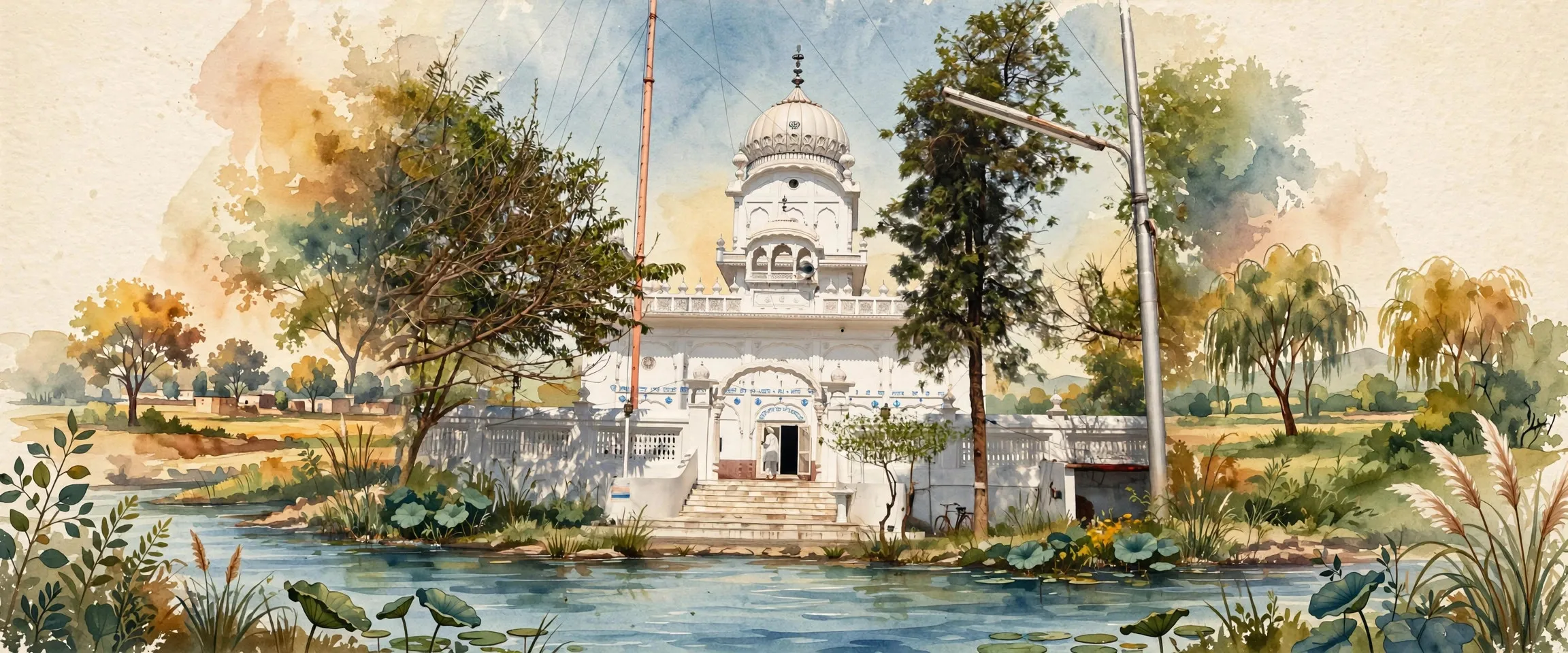
Gurdwara Sant Ghat Sahib is a historic gurdwara on the bank of the Kali Bein at Sultanpur Lodhi, Kapurthala district, Punjab, marking the spot where Guru Nanak Dev Ji re-emerged on the third day after disappearing into the river near Ber Sahib. The Janamsakhis place the spot about two kilometres upstream, and the words tradition gives him there, that there is no Hindu and no Muslim, announced the mission he then carried across the world.
- Punjabi name
- ਗੁਰਦੁਆਰਾ ਸੰਤ ਘਾਟ ਸਾਹਿਬ
- Type
- Historic gurdwara
- Country
- India
- City
- Sultanpur Lodhi
- District
- Kapurthala
- Region
- Doaba
All 10 facts
- Location
- Bank of the Kali Bein, upstream from Ber Sahib
- Marks
- Spot where Guru Nanak re-emerged after three days in the Bein
- Administered by
- Shiromani Gurdwara Parbandhak Committee (local committee)
- Main festival
- Guru Nanak Gurpurab (November)
Gurdwara Sant Ghat Sahib is a historic gurdwara on the bank of the Kali Bein at Sultanpur Lodhi, Kapurthala district, Punjab, marking the spot where Guru Nanak Dev Ji came out of the river on the third day after he had disappeared beneath its waters near Ber Sahib. In Sikh memory this riverbank is where a storekeeper of Sultanpur became a teacher for the world: the man who walked out of the Bein carried the message he then spent his life travelling to share.
Where did Guru Nanak Dev Ji re-emerge from the Bein?
Guru Nanak re-emerged at the spot now marked by Sant Ghat, on the bank of the Bein upstream from Ber Sahib, the shrine that marks where he had entered the water. The Janamsakhis, the traditional accounts of his life, place the reappearance about two kilometres upstream, on the third day after his disappearance. The gurdwara stands on that bank, and its name keeps the geography of the story: a ghat is a flight of steps to a river, and this one is remembered as the saint's ghat, the Sant Ghat.
Three days in the river
The story begins in the ordinary rhythm of the Guru's Sultanpur years. Each morning Nanak rose early, walked to the Bein for his bath, and then sat in meditation under the ber tree at the place honoured today by Ber Sahib. He was no wandering ascetic but a working householder: the modi of Nawab Daulat Khan Lodhi's provision stores, a husband and a father of two young sons, whose dawns at the river framed his days at the store remembered by Gurdwara Hatt Sahib.
One morning, as the Janamsakhis tell it, he went down to the water and did not come back. His clothes were found, the town feared the worst, and Sultanpur, which had come to love its storekeeper, searched and grieved. For three days there was no trace of him. On the third day he appeared again at the bank upstream, alive, and utterly changed in the eyes of those who heard him. What the tradition describes as his time in the river, it also describes as a direct communion with the Divine, after which his years of quiet preparation in Sultanpur were over.
The first words of a new teaching
The words the tradition puts first on his lips at Sant Ghat are the ones Sikh history has never let go of: there is no Hindu, there is no Muslim. In the fuller form carried by the accounts, he declared that God is neither Hindu nor Muslim, and that he would follow God's path. Read plainly, the sentence refuses to divide humanity by the label on its faith, and it announced, in one breath, the work of the rest of his life. From this riverbank the Guru went on to resign the comfortable logic of his post and set out on the long journeys, the udasis, that carried his teaching across India and beyond.
Sikh retellings add that in that communion he received the Mool Mantra, the root teaching that opens the Guru Granth Sahib and begins Japji Sahib, the morning prayer he gave his followers. Whether a visitor comes as a believer or as a student of history, the point the shrine makes is the same: something decisive is remembered as beginning here, at the water's edge, and Sant Ghat is its address.
Why is it called Sant Ghat?
The name is explained by the tradition itself: the ghat is the Sant's because Guru Nanak meditated here in communion with the Timeless One, and because from here he went out to serve the world. The Bein is therefore not scenery at this shrine but its central relic. The same rivulet runs through the whole Sultanpur story: he bathed in it daily, disappeared into it at Ber Sahib, and returned from it at Sant Ghat. Pilgrims who stand on this bank are standing at the hinge of the story, the moment between the Guru's hidden years and his public mission.
The shrine on the Bein today
Sant Ghat is one of the ring of historic gurdwaras that make Sultanpur Lodhi a single open air chapter of Guru Nanak's life. Within a short distance stand Ber Sahib, where he prayed, Hatt Sahib, where he worked, Guru Ka Bagh, where he lived with his family, and Kothri Sahib, where he waited out a false accusation. Sant Ghat completes the arc: the place of his return. Like the town's other historic shrines, it is administered by the Shiromani Gurdwara Parbandhak Committee through a local committee, holds daily services in the presence of the Guru Granth Sahib, and serves langar to all who come.
Visiting Sant Ghat
Most pilgrims visit Sant Ghat as part of the one day walking round of Sultanpur Lodhi's shrines, and the town is at its fullest each November for Guru Nanak Gurpurab, when sangat arrives from across Punjab and the diaspora. Sultanpur Lodhi has its own railway station, with Kapurthala about 27 kilometres away and Amritsar further north. Come early in the morning if you can: the Bein at dawn is the setting the story itself chooses, and the ghat is at its quietest and most beautiful then. The Gurdwaras in India guide lists Sant Ghat among the essential shrines of Guru Nanak's Sultanpur years.
ਗੁਰਦੁਆਰਾ ਸੰਤ ਘਾਟ ਸਾਹਿਬ ਪੰਜਾਬ ਦੇ ਕਪੂਰਥਲਾ ਜ਼ਿਲ੍ਹੇ ਦੇ ਸੁਲਤਾਨਪੁਰ ਲੋਧੀ ਵਿੱਚ ਕਾਲੀ ਬੇਈਂ ਦੇ ਕੰਢੇ ਉੱਤੇ ਇੱਕ ਇਤਿਹਾਸਕ ਗੁਰਦੁਆਰਾ ਹੈ, ਜੋ ਉਸ ਥਾਂ ਉੱਤੇ ਹੈ ਜਿੱਥੇ ਗੁਰੂ ਨਾਨਕ ਦੇਵ ਜੀ ਬੇਰ ਸਾਹਿਬ ਕੋਲ ਦਰਿਆ ਵਿੱਚ ਲੁਪਤ ਹੋਣ ਤੋਂ ਬਾਅਦ ਤੀਜੇ ਦਿਨ ਪਾਣੀ ਵਿੱਚੋਂ ਬਾਹਰ ਆਏ ਸਨ ਸਿੱਖ ਯਾਦ ਵਿੱਚ ਇਹ ਦਰਿਆ ਕੰਢਾ ਉਹ ਥਾਂ ਹੈ ਜਿੱਥੇ ਸੁਲਤਾਨਪੁਰ ਦਾ ਇੱਕ ਮੋਦੀ ਸੰਸਾਰ ਦਾ ਉਪਦੇਸ਼ਕ ਬਣਿਆ: ਜੋ ਮਨੁੱਖ ਬੇਈਂ ਵਿੱਚੋਂ ਬਾਹਰ ਆਇਆ, ਉਹ ਉਹ ਸੁਨੇਹਾ ਲੈ ਕੇ ਆਇਆ ਜਿਸ ਨੂੰ ਫੈਲਾਉਣ ਲਈ ਉਸ ਨੇ ਸਾਰੀ ਉਮਰ ਯਾਤਰਾਵਾਂ ਕੀਤੀਆਂ
ਗੁਰੂ ਨਾਨਕ ਦੇਵ ਜੀ ਬੇਈਂ ਵਿੱਚੋਂ ਕਿੱਥੇ ਬਾਹਰ ਆਏ ਸਨ?
ਗੁਰੂ ਨਾਨਕ ਦੇਵ ਜੀ ਉਸ ਥਾਂ ਉੱਤੇ ਬਾਹਰ ਆਏ ਜਿੱਥੇ ਅੱਜ ਸੰਤ ਘਾਟ ਹੈ, ਬੇਈਂ ਦੇ ਕੰਢੇ, ਬੇਰ ਸਾਹਿਬ ਤੋਂ ਉੱਪਰ ਵੱਲ, ਉਹ ਅਸਥਾਨ ਜੋ ਉਨ੍ਹਾਂ ਦੇ ਪਾਣੀ ਵਿੱਚ ਜਾਣ ਦੀ ਥਾਂ ਨੂੰ ਦਰਸਾਉਂਦਾ ਹੈ ਉਨ੍ਹਾਂ ਦੇ ਜੀਵਨ ਦੇ ਪਰੰਪਰਕ ਬਿਆਨ, ਜਨਮ ਸਾਖੀਆਂ, ਇਹ ਮੁੜ ਆਗਮਨ ਲਗਭਗ ਦੋ ਕਿਲੋਮੀਟਰ ਉੱਪਰ ਵੱਲ, ਉਨ੍ਹਾਂ ਦੇ ਲੁਪਤ ਹੋਣ ਤੋਂ ਤੀਜੇ ਦਿਨ ਦੱਸਦੀਆਂ ਹਨ ਗੁਰਦੁਆਰਾ ਉਸੇ ਕੰਢੇ ਉੱਤੇ ਖੜ੍ਹਾ ਹੈ, ਅਤੇ ਇਸ ਦਾ ਨਾਂ ਇਸ ਕਹਾਣੀ ਦੀ ਭੂਗੋਲਿਕ ਯਾਦ ਰੱਖਦਾ ਹੈ: ਘਾਟ ਦਰਿਆ ਵੱਲ ਜਾਂਦੀਆਂ ਪੌੜੀਆਂ ਨੂੰ ਕਹਿੰਦੇ ਹਨ, ਅਤੇ ਇਸ ਨੂੰ ਸੰਤ ਦਾ ਘਾਟ, ਸੰਤ ਘਾਟ, ਵਜੋਂ ਯਾਦ ਕੀਤਾ ਜਾਂਦਾ ਹੈ
ਦਰਿਆ ਵਿੱਚ ਤਿੰਨ ਦਿਨ
ਕਹਾਣੀ ਗੁਰੂ ਜੀ ਦੇ ਸੁਲਤਾਨਪੁਰ ਸਾਲਾਂ ਦੀ ਸਾਧਾਰਨ ਰੋਜ਼ਮਰ੍ਹਾ ਤੋਂ ਸ਼ੁਰੂ ਹੁੰਦੀ ਹੈ ਹਰ ਸਵੇਰ ਨਾਨਕ ਜਲਦੀ ਉੱਠਦੇ, ਇਸ਼ਨਾਨ ਲਈ ਬੇਈਂ ਵੱਲ ਜਾਂਦੇ, ਅਤੇ ਫਿਰ ਬੇਰੀ ਹੇਠ ਸਿਮਰਨ ਵਿੱਚ ਬੈਠਦੇ, ਉਸ ਥਾਂ ਉੱਤੇ ਜਿਸ ਨੂੰ ਅੱਜ ਬੇਰ ਸਾਹਿਬ ਸਤਕਾਰਦਾ ਹੈ ਉਹ ਕੋਈ ਭਟਕਦਾ ਸਾਧੂ ਨਹੀਂ ਸਨ, ਸਗੋਂ ਇੱਕ ਕੰਮਕਾਜੀ ਗ੍ਰਿਹਸਥੀ ਸਨ: ਨਵਾਬ ਦੌਲਤ ਖ਼ਾਨ ਲੋਧੀ ਦੇ ਭੰਡਾਰ ਦੇ ਮੋਦੀ, ਇੱਕ ਪਤੀ ਅਤੇ ਦੋ ਛੋਟੇ ਪੁੱਤਰਾਂ ਦੇ ਪਿਤਾ, ਜਿਨ੍ਹਾਂ ਦੀਆਂ ਤੜਕਾਂ ਦਰਿਆ ਕੰਢੇ ਅਤੇ ਦਿਨ ਉਸ ਭੰਡਾਰ ਵਿੱਚ ਬੀਤਦੇ ਸਨ ਜਿਸ ਨੂੰ ਗੁਰਦੁਆਰਾ ਹੱਟ ਸਾਹਿਬ ਯਾਦ ਕਰਦਾ ਹੈ
ਇੱਕ ਸਵੇਰ, ਜਿਵੇਂ ਜਨਮ ਸਾਖੀਆਂ ਦੱਸਦੀਆਂ ਹਨ, ਉਹ ਪਾਣੀ ਵੱਲ ਗਏ ਅਤੇ ਵਾਪਸ ਨਾ ਆਏ ਉਨ੍ਹਾਂ ਦੇ ਕੱਪੜੇ ਮਿਲੇ, ਨਗਰ ਨੇ ਮੰਦੇ ਦੀ ਆਸ ਕੀਤੀ, ਅਤੇ ਸੁਲਤਾਨਪੁਰ, ਜੋ ਆਪਣੇ ਮੋਦੀ ਨੂੰ ਪਿਆਰ ਕਰਨ ਲੱਗਾ ਸੀ, ਭਾਲਦਾ ਅਤੇ ਸੋਗ ਮਨਾਉਂਦਾ ਰਿਹਾ ਤਿੰਨ ਦਿਨ ਉਨ੍ਹਾਂ ਦਾ ਕੋਈ ਸੁਰਾਗ ਨਾ ਮਿਲਿਆ ਤੀਜੇ ਦਿਨ ਉਹ ਉੱਪਰ ਵੱਲ ਕੰਢੇ ਉੱਤੇ ਮੁੜ ਪ੍ਰਗਟ ਹੋਏ, ਜੀਵਤ, ਅਤੇ ਸੁਣਨ ਵਾਲਿਆਂ ਦੀਆਂ ਅੱਖਾਂ ਵਿੱਚ ਪੂਰੀ ਤਰ੍ਹਾਂ ਬਦਲੇ ਹੋਏ ਪਰੰਪਰਾ ਉਨ੍ਹਾਂ ਦੇ ਦਰਿਆ ਵਿੱਚ ਬਿਤਾਏ ਸਮੇਂ ਨੂੰ ਪਰਮਾਤਮਾ ਨਾਲ ਸਿੱਧੀ ਲਿਵ ਵੀ ਦੱਸਦੀ ਹੈ, ਜਿਸ ਤੋਂ ਬਾਅਦ ਸੁਲਤਾਨਪੁਰ ਵਿੱਚ ਉਨ੍ਹਾਂ ਦੀ ਸ਼ਾਂਤ ਤਿਆਰੀ ਦੇ ਸਾਲ ਖ਼ਤਮ ਹੋ ਗਏ
ਇੱਕ ਨਵੀਂ ਸਿੱਖਿਆ ਦੇ ਪਹਿਲੇ ਬੋਲ
ਜੋ ਬੋਲ ਪਰੰਪਰਾ ਸੰਤ ਘਾਟ ਉੱਤੇ ਉਨ੍ਹਾਂ ਦੇ ਮੂੰਹੋਂ ਪਹਿਲੇ ਕਹਾਉਂਦੀ ਹੈ, ਉਹ ਸਿੱਖ ਇਤਿਹਾਸ ਨੇ ਕਦੇ ਨਹੀਂ ਛੱਡੇ: ਨਾ ਕੋਈ ਹਿੰਦੂ, ਨਾ ਕੋਈ ਮੁਸਲਮਾਨ ਬਿਆਨਾਂ ਦੇ ਵਿਸਤ੍ਰਿਤ ਰੂਪ ਵਿੱਚ ਉਨ੍ਹਾਂ ਨੇ ਕਿਹਾ ਕਿ ਪਰਮਾਤਮਾ ਨਾ ਹਿੰਦੂ ਹੈ ਨਾ ਮੁਸਲਮਾਨ, ਅਤੇ ਉਹ ਪਰਮਾਤਮਾ ਦੇ ਰਾਹ ਉੱਤੇ ਚੱਲਣਗੇ ਸਾਦੇ ਸ਼ਬਦਾਂ ਵਿੱਚ ਇਹ ਵਾਕ ਮਨੁੱਖਤਾ ਨੂੰ ਉਸ ਦੇ ਧਰਮ ਦੇ ਨਾਂ ਨਾਲ ਵੰਡਣ ਤੋਂ ਇਨਕਾਰ ਕਰਦਾ ਹੈ, ਅਤੇ ਇੱਕੋ ਸਾਹ ਵਿੱਚ ਉਸ ਨੇ ਉਨ੍ਹਾਂ ਦੇ ਬਾਕੀ ਜੀਵਨ ਦੇ ਕੰਮ ਦਾ ਐਲਾਨ ਕਰ ਦਿੱਤਾ ਇਸ ਦਰਿਆ ਕੰਢੇ ਤੋਂ ਗੁਰੂ ਜੀ ਆਪਣੀ ਪਦਵੀ ਦੀ ਸੁਖਦ ਸੋਚ ਛੱਡ ਕੇ ਲੰਬੀਆਂ ਯਾਤਰਾਵਾਂ, ਉਦਾਸੀਆਂ, ਉੱਤੇ ਨਿਕਲੇ, ਜਿਨ੍ਹਾਂ ਨੇ ਉਨ੍ਹਾਂ ਦੀ ਸਿੱਖਿਆ ਨੂੰ ਭਾਰਤ ਭਰ ਅਤੇ ਉਸ ਤੋਂ ਪਰੇ ਪਹੁੰਚਾਇਆ
ਸਿੱਖ ਬਿਆਨ ਇਹ ਵੀ ਕਹਿੰਦੇ ਹਨ ਕਿ ਉਸ ਲਿਵ ਵਿੱਚ ਉਨ੍ਹਾਂ ਨੂੰ ਮੂਲ ਮੰਤਰ ਮਿਲਿਆ, ਉਹ ਮੂਲ ਸਿੱਖਿਆ ਜੋ ਗੁਰੂ ਗ੍ਰੰਥ ਸਾਹਿਬ ਦੀ ਸ਼ੁਰੂਆਤ ਹੈ ਅਤੇ ਜਪੁਜੀ ਸਾਹਿਬ, ਉਹ ਸਵੇਰ ਦੀ ਬਾਣੀ ਜੋ ਉਨ੍ਹਾਂ ਨੇ ਆਪਣੇ ਸਿੱਖਾਂ ਨੂੰ ਦਿੱਤੀ, ਉਸ ਦੀ ਪਹਿਲੀ ਪਉੜੀਆਂ ਤੋਂ ਪਹਿਲਾਂ ਆਉਂਦੀ ਹੈ ਕੋਈ ਯਾਤਰੀ ਸ਼ਰਧਾਲੂ ਬਣ ਕੇ ਆਵੇ ਜਾਂ ਇਤਿਹਾਸ ਦਾ ਵਿਦਿਆਰਥੀ, ਇਸ ਅਸਥਾਨ ਦੀ ਗੱਲ ਇੱਕੋ ਹੈ: ਕੁਝ ਫ਼ੈਸਲਾਕੁਨ ਇੱਥੇ, ਪਾਣੀ ਦੇ ਕੰਢੇ, ਸ਼ੁਰੂ ਹੋਇਆ ਮੰਨਿਆ ਜਾਂਦਾ ਹੈ, ਅਤੇ ਸੰਤ ਘਾਟ ਉਸ ਦਾ ਪਤਾ ਹੈ
ਇਸ ਨੂੰ ਸੰਤ ਘਾਟ ਕਿਉਂ ਕਹਿੰਦੇ ਹਨ?
ਨਾਂ ਦੀ ਵਿਆਖਿਆ ਪਰੰਪਰਾ ਆਪ ਕਰਦੀ ਹੈ: ਇਹ ਘਾਟ ਸੰਤ ਦਾ ਹੈ ਕਿਉਂਕਿ ਗੁਰੂ ਨਾਨਕ ਦੇਵ ਜੀ ਨੇ ਇੱਥੇ ਅਕਾਲ ਪੁਰਖ ਨਾਲ ਲਿਵ ਲਾਈ, ਅਤੇ ਕਿਉਂਕਿ ਇੱਥੋਂ ਉਹ ਸੰਸਾਰ ਦੀ ਸੇਵਾ ਲਈ ਨਿਕਲੇ ਇਸ ਲਈ ਇਸ ਅਸਥਾਨ ਉੱਤੇ ਬੇਈਂ ਸਿਰਫ਼ ਪਿਛੋਕੜ ਨਹੀਂ, ਇਸ ਦੀ ਕੇਂਦਰੀ ਨਿਸ਼ਾਨੀ ਹੈ ਇਹੀ ਵਹਿੰਦੀ ਨਦੀ ਸਾਰੀ ਸੁਲਤਾਨਪੁਰ ਕਹਾਣੀ ਵਿੱਚੋਂ ਲੰਘਦੀ ਹੈ: ਉਹ ਰੋਜ਼ ਇਸ ਵਿੱਚ ਇਸ਼ਨਾਨ ਕਰਦੇ, ਬੇਰ ਸਾਹਿਬ ਕੋਲ ਇਸ ਵਿੱਚ ਲੁਪਤ ਹੋਏ, ਅਤੇ ਸੰਤ ਘਾਟ ਉੱਤੇ ਇਸ ਵਿੱਚੋਂ ਵਾਪਸ ਆਏ ਜੋ ਯਾਤਰੀ ਇਸ ਕੰਢੇ ਉੱਤੇ ਖੜ੍ਹਾ ਹੁੰਦਾ ਹੈ, ਉਹ ਕਹਾਣੀ ਦੇ ਮੋੜ ਉੱਤੇ ਖੜ੍ਹਾ ਹੁੰਦਾ ਹੈ, ਗੁਰੂ ਜੀ ਦੇ ਛੁਪੇ ਸਾਲਾਂ ਅਤੇ ਉਨ੍ਹਾਂ ਦੇ ਪ੍ਰਗਟ ਮਿਸ਼ਨ ਵਿਚਕਾਰਲੇ ਪਲ ਉੱਤੇ
ਅੱਜ ਬੇਈਂ ਕੰਢੇ ਦਾ ਅਸਥਾਨ
ਸੰਤ ਘਾਟ ਉਨ੍ਹਾਂ ਇਤਿਹਾਸਕ ਗੁਰਦੁਆਰਿਆਂ ਦੇ ਘੇਰੇ ਵਿੱਚੋਂ ਇੱਕ ਹੈ ਜੋ ਸੁਲਤਾਨਪੁਰ ਲੋਧੀ ਨੂੰ ਗੁਰੂ ਨਾਨਕ ਦੇਵ ਜੀ ਦੇ ਜੀਵਨ ਦਾ ਇੱਕ ਖੁੱਲ੍ਹਾ ਅਧਿਆਇ ਬਣਾਉਂਦੇ ਹਨ ਥੋੜ੍ਹੀ ਦੂਰੀ ਉੱਤੇ ਬੇਰ ਸਾਹਿਬ ਹੈ, ਜਿੱਥੇ ਉਹ ਭਗਤੀ ਕਰਦੇ ਸਨ, ਹੱਟ ਸਾਹਿਬ ਹੈ, ਜਿੱਥੇ ਉਹ ਕੰਮ ਕਰਦੇ ਸਨ, ਗੁਰੂ ਕਾ ਬਾਗ਼ ਹੈ, ਜਿੱਥੇ ਉਹ ਆਪਣੇ ਪਰਿਵਾਰ ਨਾਲ ਰਹਿੰਦੇ ਸਨ, ਅਤੇ ਕੋਠਰੀ ਸਾਹਿਬ ਹੈ, ਜਿੱਥੇ ਉਨ੍ਹਾਂ ਨੇ ਇੱਕ ਝੂਠੇ ਦੋਸ਼ ਦੀ ਜਾਂਚ ਦੀ ਉਡੀਕ ਕੀਤੀ ਸੰਤ ਘਾਟ ਇਸ ਲੜੀ ਨੂੰ ਪੂਰਾ ਕਰਦਾ ਹੈ: ਉਨ੍ਹਾਂ ਦੀ ਵਾਪਸੀ ਦੀ ਥਾਂ ਨਗਰ ਦੇ ਹੋਰ ਇਤਿਹਾਸਕ ਅਸਥਾਨਾਂ ਵਾਂਗ ਇਸ ਦਾ ਪ੍ਰਬੰਧ ਸ਼੍ਰੋਮਣੀ ਗੁਰਦੁਆਰਾ ਪ੍ਰਬੰਧਕ ਕਮੇਟੀ ਵੱਲੋਂ ਸਥਾਨਕ ਕਮੇਟੀ ਰਾਹੀਂ ਕੀਤਾ ਜਾਂਦਾ ਹੈ, ਇੱਥੇ ਗੁਰੂ ਗ੍ਰੰਥ ਸਾਹਿਬ ਦੀ ਹਜ਼ੂਰੀ ਵਿੱਚ ਰੋਜ਼ ਦੀਵਾਨ ਸਜਦੇ ਹਨ, ਅਤੇ ਆਉਣ ਵਾਲੇ ਸਭ ਲਈ ਲੰਗਰ ਵਰਤਦਾ ਹੈ
ਸੰਤ ਘਾਟ ਜਾਣਾ
ਜ਼ਿਆਦਾਤਰ ਯਾਤਰੀ ਸੰਤ ਘਾਟ ਦੇ ਦਰਸ਼ਨ ਸੁਲਤਾਨਪੁਰ ਲੋਧੀ ਦੇ ਅਸਥਾਨਾਂ ਦੇ ਇੱਕ ਦਿਨ ਦੇ ਪੈਦਲ ਫੇਰੇ ਵਿੱਚ ਕਰਦੇ ਹਨ, ਅਤੇ ਨਗਰ ਹਰ ਨਵੰਬਰ ਗੁਰੂ ਨਾਨਕ ਗੁਰਪੁਰਬ ਉੱਤੇ ਸਭ ਤੋਂ ਵੱਧ ਭਰਦਾ ਹੈ, ਜਦੋਂ ਪੰਜਾਬ ਭਰ ਅਤੇ ਪਰਦੇਸਾਂ ਤੋਂ ਸੰਗਤ ਆਉਂਦੀ ਹੈ ਸੁਲਤਾਨਪੁਰ ਲੋਧੀ ਦਾ ਆਪਣਾ ਰੇਲਵੇ ਸਟੇਸ਼ਨ ਹੈ, ਕਪੂਰਥਲਾ ਲਗਭਗ 27 ਕਿਲੋਮੀਟਰ ਦੂਰ ਹੈ ਅਤੇ ਅੰਮ੍ਰਿਤਸਰ ਹੋਰ ਉੱਤਰ ਵੱਲ ਜੇ ਹੋ ਸਕੇ ਤਾਂ ਤੜਕੇ ਆਓ: ਬੇਈਂ ਤੜਕੇ ਉਹੀ ਮਾਹੌਲ ਹੈ ਜੋ ਕਹਾਣੀ ਆਪ ਚੁਣਦੀ ਹੈ, ਅਤੇ ਉਸ ਵੇਲੇ ਘਾਟ ਸਭ ਤੋਂ ਸ਼ਾਂਤ ਅਤੇ ਸੋਹਣਾ ਹੁੰਦਾ ਹੈ ਭਾਰਤ ਦੇ ਗੁਰਦੁਆਰੇ ਗਾਈਡ ਸੰਤ ਘਾਟ ਨੂੰ ਗੁਰੂ ਨਾਨਕ ਦੇਵ ਜੀ ਦੇ ਸੁਲਤਾਨਪੁਰ ਸਾਲਾਂ ਦੇ ਜ਼ਰੂਰੀ ਅਸਥਾਨਾਂ ਵਿੱਚ ਗਿਣਦੀ ਹੈ