
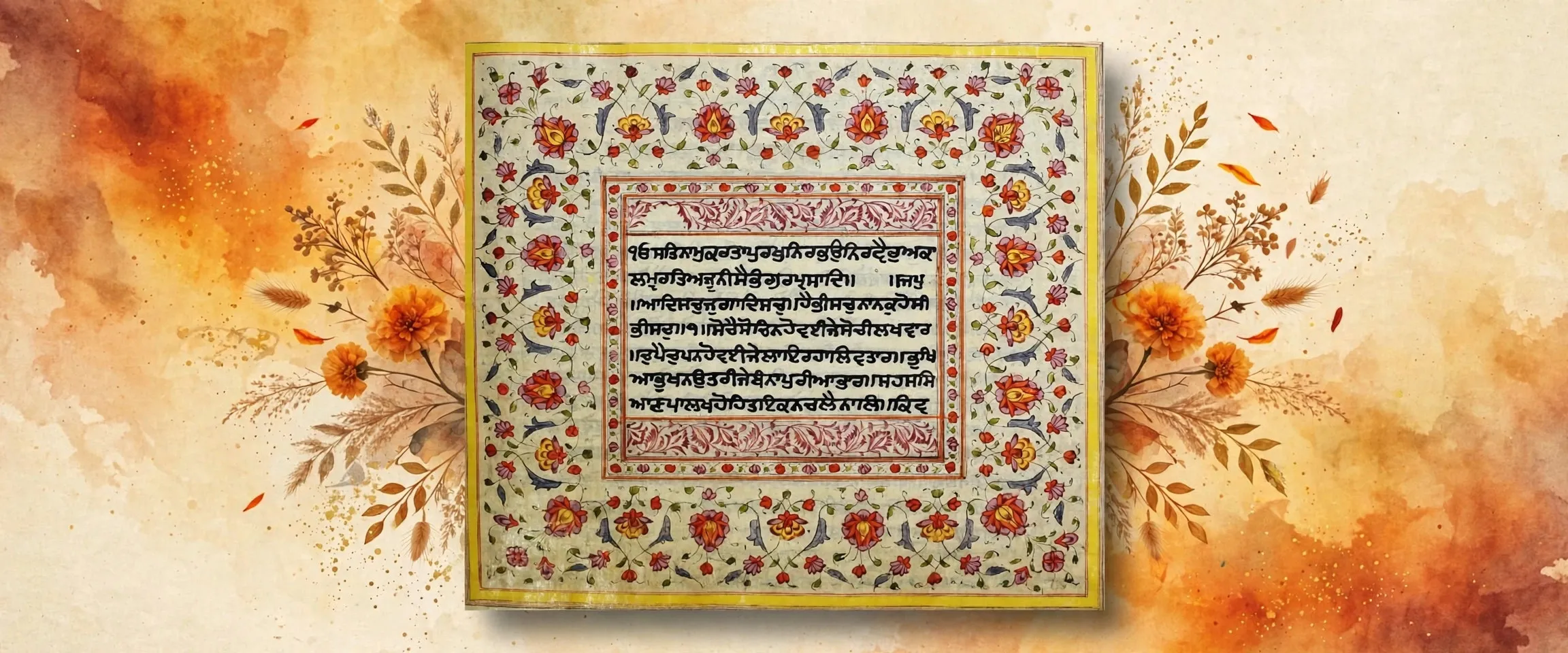
Japji Sahib is the opening composition of the Guru Granth Sahib Ji, written by Guru Nanak Dev Ji — 38 pauris beginning with the Mool Mantar, recited every morning as the first prayer of Nitnem.
- Facts
- Composed by
- Guru Nanak Dev Ji
- Language
- Punjabi, Gurmukhi script
- Structure
- Mool Mantar, 38 pauris, closing Salok
- Position
- Opening of the Guru Granth Sahib Ji
- Daily prayer
- First bani of Nitnem, recited at Amrit Vela
- First compiled
- Adi Granth, 1604
Japji Sahib is the opening prayer of the Guru Granth Sahib Ji, composed by Guru Nanak Dev Ji in the early 16th century. Beginning with the Mool Mantar — the root formula of Sikh belief — it unfolds across 38 pauris (stanzas) and a closing Salok. Sikhs recite it every morning as the first prayer of Nitnem.
The first bani of the scripture
Japji Sahib stands at the very beginning of the Guru Granth Sahib Ji, on its opening pages. When Guru Arjan Dev Ji compiled the Adi Granth in 1604 — with Bhai Gurdas as his scribe — he placed Guru Nanak Dev Ji’s composition first. It was a deliberate statement: these verses hold the essence of the entire Sikh message, and everything else in the scripture is, in a sense, their expansion.
It is the first composition of Guru Nanak, and the first bani of Nitnem, the Sikh daily prayer. In gurdwaras it is chanted in the morning and evening diwans, and it is recited at Khalsa initiation ceremonies and at cremations — the prayer that opens the day, and the prayer that accompanies the departed.
What the 38 pauris say
The composition opens with the Mool Mantar: Ik Onkar — there is One God — Satnam, Kartapurakh, Nirbhau, Nirvair, Akal Moorat, Ajooni, Saibhang, Gurparsad. God is truth itself, the creator, without fear or hatred, timeless, unborn, self-existent, realised through the Guru’s grace. Every Sikh prayer begins from this formula.
The first pauri teaches that ritual bathing cannot wash the mind, silence cannot still its restless thoughts, and food or riches cannot satisfy its hunger — purification comes only from abiding in the divine’s love. The pauris that follow meditate on hukam, the divine command by which life’s ups and downs unfold; on suniai, the transformative power of listening to the Guru’s word; and on the nature of a God whom ‘all the words in the world’ cannot fully describe. A closing Salok, composed by Guru Angad, seals the bani.
Nitnem — the morning prayer
Japji Sahib is the first of the five banis of Nitnem, the daily discipline of an initiated Sikh. It is recited at Amrit Vela, the ambrosial hours before dawn, when the mind is most still and receptive. For millions of Sikhs these verses are not merely read but breathed — memorised in childhood, recited daily for a lifetime.
The name itself carries the instruction: ‘Jap’ comes from the Sanskrit japa, the recitation of a mantra in a low voice, repeated internally — it also means to understand, to take wisdom to heart. ‘Ji’ and ‘Sahib’ are marks of love and honour. Japji Sahib is the prayer to be chanted.
Why is it called “Japji Sahib”?
‘Jap’ derives from the Sanskrit japa — uttering a mantra in a low voice, repeating it inwardly until it settles in the heart. Gurbani also uses Jap in the sense of ‘to understand wisdom’. The respectful ‘Ji’ and the honorific ‘Sahib’ mark it as sacred. The title is a command as much as a name: this is the bani to chant.
What does the Mool Mantar say?
The Mool Mantar is the opening passage of the Japji and the root formula of Sikhism: Ik Onkar — One God; Satnam — whose name is Truth; Kartapurakh — the creator being; Nirbhau — without fear; Nirvair — without hatred; Akal Moorat — timeless in form; Ajooni — unborn; Saibhang — self-existent; Gurparsad — realised by the Guru’s grace. It opens every Sikh Ardas and every new beginning.
Manuscripts and print history
The oldest surviving Japji texts sit inside historic manuscripts of the Adi Granth — including the Kartarpur Bir, written in the hand of Bhai Gurdas under Guru Arjan Dev Ji’s supervision around 1604. Lavish 19th-century illuminated folios, like the floral-bordered page shown above, survive in collections across Punjab and beyond.
Printed pothis of the Japji began appearing in Lahore, Amritsar and Sialkot in the second half of the 19th century, some with commentaries. Early English renderings — including Max Arthur Macauliffe’s 1900 translation — carried the bani to readers far beyond Punjab for the first time.
ਜਪੁਜੀ ਸਾਹਿਬ ਸ੍ਰੀ ਗੁਰੂ ਗ੍ਰੰਥ ਸਾਹਿਬ ਜੀ ਦੀ ਪਹਿਲੀ ਬਾਣੀ ਹੈ, ਜਿਸ ਦੀ ਰਚਨਾ ਗੁਰੂ ਨਾਨਕ ਦੇਵ ਜੀ ਨੇ ਸੋਲ੍ਹਵੀਂ ਸਦੀ ਵਿੱਚ ਕੀਤੀ। ਇਹ ਮੂਲ ਮੰਤਰ ਤੋਂ ਸ਼ੁਰੂ ਹੁੰਦੀ ਹੈ — ਸਿੱਖ ਧਰਮ ਦਾ ਮੂਲ ਸੂਤਰ — ਅਤੇ ਇਸ ਵਿੱਚ ੨ਨ ਪਉੜੀਆਂ ਤੇ ਅੰਤ ਵਿੱਚ ਸਲੋਕ ਸ਼ਾਮਲ ਹੈ। ਸਿੱਖ ਰੋਜ਼ ਸਵੇਰੇ ਨਿਤਨੇਮ ਦੀ ਪਹਿਲੀ ਬਾਣੀ ਵਜੋਂ ਇਸ ਦਾ ਪਾਠ ਕਰਦੇ ਹਨ।
ਪਹਿਲੀ ਬਾਣੀ
ਜਪੁਜੀ ਸਾਹਿਬ ਸ੍ਰੀ ਗੁਰੂ ਗ੍ਰੰਥ ਸਾਹਿਬ ਜੀ ਦੇ ਬਿਲਕੁਲ ਸ਼ੁਰੂ ਵਿੱਚ ਖੜ੍ਹੀ ਹੈ। ਜਦੋਂ ਗੁਰੂ ਅਰਜਨ ਦੇਵ ਜੀ ਨੇ 1604 ਵਿੱਚ ਆਦਿ ਗ੍ਰੰਥ ਦੀ ਸੰਪਾਦਨਾ ਕੀਤੀ — ਭਾਈ ਗੁਰਦਾਸ ਜੀ ਲਿਖਾਰੀ ਸਨ — ਤਾਂ ਉਨ੍ਹਾਂ ਨੇ ਗੁਰੂ ਨਾਨਕ ਦੇਵ ਜੀ ਦੀ ਇਸ ਰਚਨਾ ਨੂੰ ਸਭ ਤੋਂ ਪਹਿਲਾਂ ਰੱਖਿਆ। ਇਹ ਇੱਕ ਸੋਚੀ-ਸਮਝੀ ਗੱਲ ਸੀ — ਇਨ੍ਹਾਂ ਪਉੜੀਆਂ ਵਿੱਚ ਸਿੱਖ ਧਰਮ ਦਾ ਪੂਰਾ ਸਾਰ ਸਮਾਇਆ ਹੋਇਆ ਹੈ।
ਇਹ ਗੁਰੂ ਨਾਨਕ ਦੇਵ ਜੀ ਦੀ ਪਹਿਲੀ ਰਚਨਾ ਅਤੇ ਨਿਤਨੇਮ ਦੀ ਪਹਿਲੀ ਬਾਣੀ ਹੈ। ਗੁਰਦੁਆਰਿਆਂ ਵਿੱਚ ਸਵੇਰੇ ਤੇ ਸ਼ਾਮ ਦੇ ਦੀਵਾਨਾਂ ਵਿੱਚ ਇਸ ਦਾ ਕੀਰਤਨ ਹੁੰਦਾ ਹੈ, ਅਤੇ ਖ਼ਾਲਸਾ ਸਜਾਉਣ ਸਮਾਰੋਹ ਅਤੇ ਸੰਸਕਾਰ ਵੇਲੇ ਵੀ ਇਹੀ ਬਾਣੀ ਪੜ੍ਹੀ ਜਾਂਦੀ ਹੈ।
੨ਨ ਪਉੜੀਆਂ ਦਾ ਸਾਰ
ਰਚਨਾ ਮੂਲ ਮੰਤਰ ਤੋਂ ਸ਼ੁਰੂ ਹੁੰਦੀ ਹੈ — ਇੱਕ ਓਅੰਕਾਰ, ਸਤਿਨਾਮ, ਕਰਤਾਪੁਰਖ, ਨਿਰਭਉ, ਨਿਰਵੈਰ, ਅਕਾਲ ਮੂਰਤਿ, ਅਜੂਨੀ, ਸੈਭੰ, ਗੁਰਪ੍ਰਸਾਦਿ । ਪਰਮਾਤਮਾ ਇੱਕ ਹੈ, ਸੱਚ ਉਸ ਦਾ ਨਾਮ ਹੈ, ਉਹ ਕਰਤਾ ਹੈ, ਨਿਰਭਉ ਤੇ ਨਿਰਵੈਰ ਹੈ, ਅਕਾਲ ਹੈ, ਅਜਨਮਾ ਹੈ, ਆਪ ਸੈ ਸੈ ਹੈ, ਅਤੇ ਗੁਰੂ ਦੀ ਕਿਰਪਾ ਨਾਲ ਮਿਲਦਾ ਹੈ। ਹਰ ਸਿੱਖ ਪ੍ਰਾਰਥਨਾ ਇਸੀ ਸੂਤਰ ਤੋਂ ਸ਼ੁਰੂ ਹੁੰਦੀ ਹੈ।
ਪਹਿਲੀ ਪਉੜੀ ਸਿਖਾਉਂਦੀ ਹੈ ਕਿ ਤੀਰਥ ਇਸ਼ਨਾਨ ਮਨ ਨੂੰ ਸਾਫ ਨਹੀਂ ਕਰ ਸਕਦਾ, ਚੁੱਪ ਮਨ ਦੇ ਭਟਕਣੇ ਨੂੰ ਨਹੀਂ ਰੋਕ ਸਕਦੀ, ਅਤੇ ਖਾਣ-ਪੀਣ ਯਾ ਧਨ ਮਨ ਦੀ ਭੁੱਖ ਨਹੀਂ ਮਿਟਾ ਸਕਦੇ — ਪਵਿੱਤਰਤਾ ਸਿਰਫ ਪ੍ਰਭੂ ਦੇ ਪ੍ਰੇਮ ਵਿੱਚ ਜੁੜਨ ਨਾਲ ਮਿਲਦੀ ਹੈ। ਅਗਲੀਆਂ ਪਉੜੀਆਂ ਹੁਕਮ, ਸੁਣਿਐ ਦੀ ਸ਼ਕਤੀ ਅਤੇ ਉਸ ਅਕਥ ਪਰਮਾਤਮਾ ਦੇ ਸਰੂਪ ਉੱਤੇ ਵਿਚਾਰ ਕਰਦੀਆਂ ਹਨ। ਅੰਤ ਵਿੱਚ ਗੁਰੂ ਅੰਗਦ ਦੇਵ ਜੀ ਦਾ ਸਲੋਕ ਬਾਣੀ ਨੂੰ ਪੂਰਾ ਕਰਦਾ ਹੈ।
ਨਿਤਨੇਮ ਦੀ ਸਵੇਰਲੀ ਬਾਣੀ
ਜਪੁਜੀ ਸਾਹਿਬ ਨਿਤਨੇਮ ਦੀਆਂ ਪੰਜਾਂ ਬਾਣੀਆਂ ਵਿਚੋਂ ਪਹਿਲੀ ਹੈ। ਇਸ ਦਾ ਪਾਠ ਅੰਮ੍ਰਿਤ ਵੇਲਾ — ਸਵੇਰ ਤੋਂ ਪਹਿਲਾਂ ਦੇ ਸ਼ਾਂਤ ਵੇਲੇ — ਕੀਤਾ ਜਾਂਦਾ ਹੈ। ਲੱਖਾਂ ਸਿੱਖਾਂ ਲਈ ਇਹ ਪਉੜੀਆਂ ਸਿਰਫ ਪੜ੍ਹੀਆਂ ਨਹੀਂ ਜਾਂਦੀਆਂ, ਸਾਹਾਂ ਵਿੱਚ ਵਸ ਜਾਂਦੀਆਂ ਹਨ — ਬਚਪਨ ਵਿੱਚ ਯਾਦ ਕੀਤੀਆਂ, ਉਮਰ ਭਰ ਰੋਜ਼ ਪੜ੍ਹੀਆਂ।
ਨਾਮ ਵਿੱਚ ਹੀ ਹੁਕਮ ਹੈ — ‘ਜਪ’ ਸੰਸਕ੍ਰਿਤ ਦੇ ਜਪ ਤੋਂ ਆਇਆ ਹੈ, ਭਾਵ ਮੰਤਰ ਦਾ ਧੀਮੀ ਆਵਾਜ਼ ਵਿੱਚ ਉਚਾਰਨ, ਮਨ ਵਿੱਚ ਦੁਹਰਾਉਣਾ । ‘ਜੀ’ ਅਤੇ ‘ਸਾਹਿਬ’ ਪ੍ਰੇਮ ਤੇ ਸਤਿਕਾਰ ਦੇ ਚਿੰਨ੍ਹ ਹਨ। ਜਪੁਜੀ ਸਾਹਿਬ ਉਹ ਬਾਣੀ ਹੈ ਜੋ ਜਪੀ ਜਾਵੇ।
ਪੋਥੀਆਂ ਅਤੇ ਛਪਾਈ ਦਾ ਇਤਿਹਾਸ
ਜਪੁਜੀ ਦੇ ਸਭ ਤੋਂ ਪੁਰਾਣੇ ਪਾਠ ਆਦਿ ਗ੍ਰੰਥ ਦੀਆਂ ਪੁਰਾਣੀਆਂ ਪੋਥੀਆਂ ਵਿੱਚ ਮਿਲਦੇ ਹਨ — ਜਿਨ੍ਹਾਂ ਵਿੱਚ ਕਰਤਾਰਪੁਰ ਬੀੜ ਵੀ ਹੈ, ਜੋ ਗੁਰੂ ਅਰਜਨ ਦੇਵ ਜੀ ਦੀ ਨਿਗਰਾਨੀ ਵਿੱਚ ਭਾਈ ਗੁਰਦਾਸ ਜੀ ਦੇ ਹੱਥੀਂ ਲਿਖੀ ਗਈ ਸੀ। ਉਨ੍ਨੀਵੀਂ ਸਦੀ ਦੇ ਅੰਤ ਵਿੱਚ ਲਾਹੌਰ, ਅੰਮ੍ਰਿਤਸਰ ਤੇ ਸਿਆਲਕੋਟ ਵਿੱਚ ਛਪੀਆਂ ਪੋਥੀਆਂ ਆਉਣ ਲੱਗੀਆਂ।