
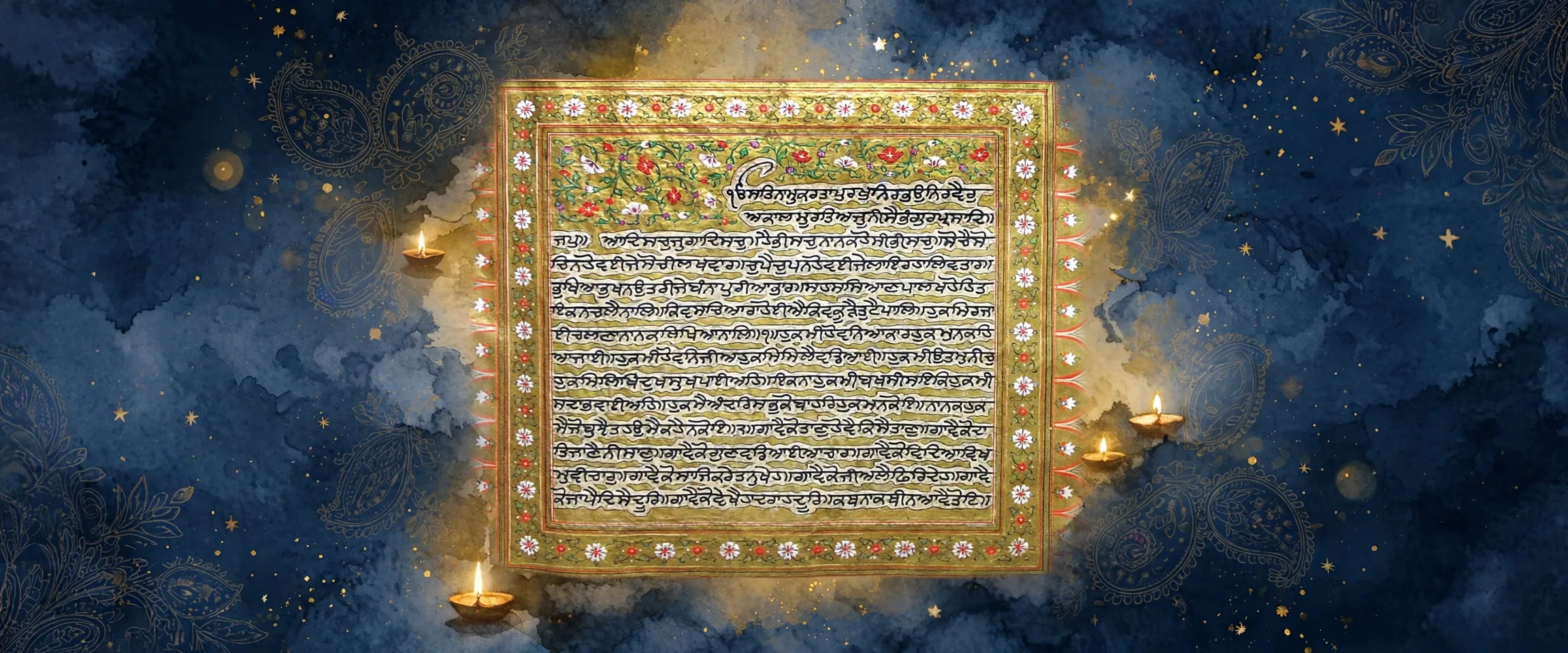
Kirtan Sohila is the night prayer of the Sikhs, recited before sleep and at funerals. Its five hymns, the first three by Guru Nanak Dev Ji, the fourth by Guru Ram Das Ji and the fifth by Guru Arjan Dev Ji, include the famous Aarti hymn and picture the soul's meeting with God as a bride's wedding day.
- Punjabi name
- ਕੀਰਤਨ ਸੋਹਿਲਾ
- Prayer of
- The night, recited before going to bed
- Part of
- Nitnem, the daily prayers
- Also called
- Sohila, Arti Sohila
- Meaning of name
- Song of Praise; Sohila from the word for the time of sleep
- Structure
- 5 hymns (shabads)
All 11 facts
- Hymns by
- Guru Nanak Dev Ji (3), Guru Ram Das Ji (1), Guru Arjan Dev Ji (1)
- Raags
- Gauri Deepaki, Asa, Dhanasari, Gauri Poorabi (two hymns)
- Found in
- Guru Granth Sahib, pages 12 to 13, after the Rehras hymns
- Compiled as one bani
- By Guru Arjan Dev Ji in 1604; prescribed as the bedtime prayer in 1699
- Also recited
- At the conclusion of evening ceremonies in the gurdwara, and at Sikh funerals before cremation
Kirtan Sohila is the night prayer of the Sikhs, five hymns sung last in the day, before sleep. Its name means Song of Praise, and its five shabads, three by Guru Nanak Dev Ji and one each by Guru Ram Das Ji and Guru Arjan Dev Ji, move from the pain of separation to the bliss of union with God. Sikhs recite it at the close of the evening in the gurdwara, at the bedside at home, and at funerals, where its wedding imagery teaches the sangat to meet death as a bride meets her Lord.
What is Kirtan Sohila?
Kirtan Sohila, captioned simply Sohila in the Guru Granth Sahib and also called Arti Sohila, is the bedtime prayer prescribed in the Sikh Rehat Maryada: the Sohila, to be recited at night before going to bed. It stands in the scripture on pages 12 to 13, immediately after the hymns of Rehras, as the fourth composition at the Guru Granth Sahib's opening. The word Sohila is derived from the Punjabi for the time of sleep, and tradition also hears it as a song of union: its first hymn pictures the soul as a bride whose wedding day, fixed in advance, is her meeting with God. Short enough to recite in a few minutes, it is the last word of the Sikh day.
What are the five hymns of Kirtan Sohila?
The first hymn, by Guru Nanak Dev Ji in Raag Gauri Deepaki, opens where praise is sung: in that house where the Creator is praised and contemplated, sing the Sohila and remember the Creator. It promises that the Giver watches over every being day after day, and then turns to the wedding: the day is written, friends are called to pour the oil on the threshold and to bless the bride, and the summons, it says, is sent to every house every day, so remember the One who sends it, for that day is coming. The second hymn, in Raag Asa, sets the six schools of philosophy with their six teachers against the one Teacher of teachers who appears in many forms, and compares the one God to the one sun from which all the measures of time and all the seasons come.
The third hymn, in Raag Dhanasari, is the famous Aarti: the sky itself is the prayer plate, the sun and moon its lamps, the stars its pearls, the sandal scented wind its incense and fan, and all the forests its flowers, while the unstruck sound is its drum. It rejects the small lamp lit ceremony in favour of the worship the whole universe is already performing. The fourth hymn, by Guru Ram Das Ji in Raag Gauri Poorabi, says the body is filled with lust and anger until the saint breaks them, and that through the Name all suffering and the pain of birth and death are ended. The fifth, by Guru Arjan Dev Ji, also in Gauri Poorabi, is an urgent invitation: listen, my friends, now is the time to serve the saints; earn the profit of the Name in this life, for life is diminishing day and night.
How was Kirtan Sohila put together?
The five hymns were gathered in stages. Bhai Gurdas records that in Guru Nanak Dev Ji's time, So Dar and Aarti were sung in the evening and Japji was recited in the early morning. At first, it seems, only the first two of the present hymns were called Sohila, while the third, the Aarti hymn, stood as a distinct bani under its own caption, as it still does in the Guru Granth Sahib. Guru Arjan Dev Ji added two more hymns, his own and Guru Ram Das Ji's, and entered all five in the Guru Granth Sahib in 1604 as one bani under the title Sohila. The bani was then prescribed, authoritatively, as the bedtime prayer in 1699, when Guru Gobind Singh Ji inaugurated the Khalsa and laid down its code of discipline.
Why is Kirtan Sohila recited at funerals?
Because the prayer itself is built on the meeting with death. Its first hymn does not hide the summons: the call is sent to every house daily, the wedding day is already written, and the friends' part is to bless the bride on her way. Recited at a Sikh funeral, and before the cremation, Sohila frames a death not as an ending to fear but as the soul's appointed union, and it reminds those who remain to accept that death is the ultimate truth while turning their own remaining days toward the Name. The same words therefore do two kinds of work in Sikh life: every night they rehearse, in miniature, the surrender that a funeral demands in full, and at a funeral they bring the comfort of a prayer the departed themselves said every night.
How is Kirtan Sohila recited today?
Kirtan Sohila is recited at night before sleep, at home and in gurdwaras at the conclusion of the evening ceremonies, after Rehras Sahib and Ardas have closed the diwan. Many families keep the practice of reading it together at the bedside, and recordings of its sung kirtan are among the most listened to of all Sikh prayer. Its themes are protection, gratitude and surrender: the hymns calm the mind at the day's end, give thanks for the Giver who watches over all beings, and hand the night, like the life it shadows, over to God. A Sikh day that began in the ambrosial hours with Japji Sahib thus ends in the dark with five short hymns and a single trust: the One who sends the summons is also the One who receives.
ਕੀਰਤਨ ਸੋਹਿਲਾ ਸਿੱਖਾਂ ਦੀ ਰਾਤ ਦੀ ਪ੍ਰਾਰਥਨਾ ਹੈ, ਪੰਜ ਸ਼ਬਦ ਜੋ ਦਿਨ ਵਿੱਚ ਸਭ ਤੋਂ ਅਖ਼ੀਰ, ਸੌਣ ਤੋਂ ਪਹਿਲਾਂ ਗਾਏ ਜਾਂਦੇ ਹਨ। ਇਸ ਦੇ ਨਾਂ ਦਾ ਅਰਥ ਹੈ ਉਸਤਤਿ ਦਾ ਗੀਤ, ਅਤੇ ਇਸ ਦੇ ਪੰਜ ਸ਼ਬਦ, ਤਿੰਨ ਗੁਰੂ ਨਾਨਕ ਦੇਵ ਜੀ ਦੇ ਅਤੇ ਇੱਕ ਇੱਕ ਗੁਰੂ ਰਾਮ ਦਾਸ ਜੀ ਅਤੇ ਗੁਰੂ ਅਰਜਨ ਦੇਵ ਜੀ ਦਾ, ਵਿਛੋੜੇ ਦੇ ਦੁੱਖ ਤੋਂ ਪਰਮਾਤਮਾ ਨਾਲ ਮੇਲ ਦੇ ਅਨੰਦ ਵੱਲ ਜਾਂਦੇ ਹਨ। ਸਿੱਖ ਇਸ ਦਾ ਪਾਠ ਗੁਰਦੁਆਰੇ ਵਿੱਚ ਸ਼ਾਮ ਦੇ ਸਮਾਗਮ ਦੇ ਅੰਤ ਵਿੱਚ, ਘਰ ਵਿੱਚ ਸੌਣ ਵੇਲੇ, ਅਤੇ ਅੰਤਿਮ ਸੰਸਕਾਰ ਵੇਲੇ ਕਰਦੇ ਹਨ, ਜਿੱਥੇ ਇਸ ਦੀ ਵਿਆਹ ਵਾਲੀ ਭਾਸ਼ਾ ਸੰਗਤ ਨੂੰ ਮੌਤ ਨੂੰ ਇਸ ਤਰ੍ਹਾਂ ਮਿਲਣਾ ਸਿਖਾਉਂਦੀ ਹੈ ਜਿਵੇਂ ਵਹੁਟੀ ਆਪਣੇ ਮਾਲਕ ਨੂੰ ਮਿਲਦੀ ਹੈ।
ਕੀਰਤਨ ਸੋਹਿਲਾ ਕੀ ਹੈ?
ਕੀਰਤਨ ਸੋਹਿਲਾ, ਜਿਸ ਦਾ ਸਿਰਲੇਖ ਗੁਰੂ ਗ੍ਰੰਥ ਸਾਹਿਬ ਵਿੱਚ ਕੇਵਲ ਸੋਹਿਲਾ ਹੈ ਅਤੇ ਜਿਸ ਨੂੰ ਆਰਤੀ ਸੋਹਿਲਾ ਵੀ ਕਿਹਾ ਜਾਂਦਾ ਹੈ, ਸਿੱਖ ਰਹਿਤ ਮਰਯਾਦਾ ਵਿੱਚ ਨਿਰਧਾਰਤ ਸੌਣ ਵੇਲੇ ਦੀ ਪ੍ਰਾਰਥਨਾ ਹੈ: ਸੋਹਿਲਾ, ਰਾਤ ਨੂੰ ਸੌਣ ਤੋਂ ਪਹਿਲਾਂ ਪੜ੍ਹਨਾ ਹੈ। ਇਹ ਗ੍ਰੰਥ ਵਿੱਚ ਪੰਨੇ 12 ਤੋਂ 13 ਤੇ ਹੈ, ਰਹਿਰਾਸ ਦੇ ਸ਼ਬਦਾਂ ਦੇ ਠੀਕ ਪਿੱਛੋਂ, ਗੁਰੂ ਗ੍ਰੰਥ ਸਾਹਿਬ ਦੇ ਸ਼ੁਰੂ ਵਿੱਚ ਚੌਥੀ ਰਚਨਾ ਵਜੋਂ। ਸੋਹਿਲਾ ਸ਼ਬਦ ਸੌਣ ਦੇ ਵੇਲੇ ਲਈ ਵਰਤੇ ਜਾਂਦੇ ਪੰਜਾਬੀ ਸ਼ਬਦ ਤੋਂ ਬਣਿਆ ਦੱਸਿਆ ਜਾਂਦਾ ਹੈ, ਅਤੇ ਪਰੰਪਰਾ ਇਸ ਨੂੰ ਮੇਲ ਦਾ ਗੀਤ ਵੀ ਸੁਣਦੀ ਹੈ: ਇਸ ਦਾ ਪਹਿਲਾ ਸ਼ਬਦ ਆਤਮਾ ਨੂੰ ਵਹੁਟੀ ਵਜੋਂ ਵਿਖਾਉਂਦਾ ਹੈ ਜਿਸ ਦੇ ਵਿਆਹ ਦਾ ਦਿਨ, ਪਹਿਲਾਂ ਤੋਂ ਲਿਖਿਆ, ਪਰਮਾਤਮਾ ਨਾਲ ਉਸ ਦਾ ਮੇਲ ਹੈ। ਕੁਝ ਮਿੰਟਾਂ ਵਿੱਚ ਪੜ੍ਹੀ ਜਾਣ ਵਾਲੀ ਇਹ ਬਾਣੀ ਸਿੱਖ ਦੇ ਦਿਨ ਦਾ ਆਖ਼ਰੀ ਸ਼ਬਦ ਹੈ।
ਕੀਰਤਨ ਸੋਹਿਲੇ ਦੇ ਪੰਜ ਸ਼ਬਦ ਕਿਹੜੇ ਹਨ?
ਪਹਿਲਾ ਸ਼ਬਦ, ਗੁਰੂ ਨਾਨਕ ਦੇਵ ਜੀ ਦਾ ਰਾਗ ਗਉੜੀ ਦੀਪਕੀ ਵਿੱਚ, ਉੱਥੋਂ ਸ਼ੁਰੂ ਹੁੰਦਾ ਹੈ ਜਿੱਥੇ ਉਸਤਤਿ ਗਾਈ ਜਾਂਦੀ ਹੈ: ਜਿਸ ਘਰ ਵਿੱਚ ਕਰਤੇ ਦੀ ਕੀਰਤਿ ਹੁੰਦੀ ਹੈ ਅਤੇ ਉਸ ਦਾ ਵਿਚਾਰ ਹੁੰਦਾ ਹੈ, ਉਸ ਘਰ ਵਿੱਚ ਸੋਹਿਲਾ ਗਾਓ ਅਤੇ ਸਿਰਜਣਹਾਰ ਨੂੰ ਯਾਦ ਕਰੋ। ਇਹ ਵਾਅਦਾ ਕਰਦਾ ਹੈ ਕਿ ਦਾਤਾ ਹਰ ਜੀਵ ਦੀ ਰੋਜ਼ ਸੰਭਾਲ ਕਰਦਾ ਹੈ, ਅਤੇ ਫਿਰ ਵਿਆਹ ਵੱਲ ਮੁੜਦਾ ਹੈ: ਦਿਨ ਲਿਖਿਆ ਹੋਇਆ ਹੈ, ਸੱਜਣ ਬੂਹੇ ਤੇ ਤੇਲ ਪਾਉਣ ਅਤੇ ਵਹੁਟੀ ਨੂੰ ਅਸੀਸ ਦੇਣ ਲਈ ਸੱਦੇ ਜਾਂਦੇ ਹਨ, ਅਤੇ ਸੱਦਾ, ਇਹ ਕਹਿੰਦਾ ਹੈ, ਹਰ ਘਰ ਨੂੰ ਹਰ ਰੋਜ਼ ਭੇਜਿਆ ਜਾਂਦਾ ਹੈ, ਇਸ ਲਈ ਉਸ ਨੂੰ ਯਾਦ ਕਰੋ ਜੋ ਸੱਦਾ ਭੇਜਦਾ ਹੈ, ਕਿਉਂਕਿ ਉਹ ਦਿਨ ਆ ਰਿਹਾ ਹੈ। ਦੂਜਾ ਸ਼ਬਦ, ਰਾਗ ਆਸਾ ਵਿੱਚ, ਛੇ ਮੱਤਾਂ ਅਤੇ ਉਹਨਾਂ ਦੇ ਛੇ ਗੁਰੂਆਂ ਨੂੰ ਉਸ ਇੱਕ ਗੁਰੂਆਂ ਦੇ ਗੁਰੂ ਦੇ ਸਾਹਮਣੇ ਰੱਖਦਾ ਹੈ ਜੋ ਕਈ ਰੂਪਾਂ ਵਿੱਚ ਪ੍ਰਗਟ ਹੁੰਦਾ ਹੈ, ਅਤੇ ਇੱਕ ਪਰਮਾਤਮਾ ਦੀ ਤੁਲਨਾ ਉਸ ਇੱਕ ਸੂਰਜ ਨਾਲ ਕਰਦਾ ਹੈ ਜਿਸ ਤੋਂ ਵੇਲੇ ਦੀਆਂ ਸਾਰੀਆਂ ਮਿਣਤੀਆਂ ਅਤੇ ਸਾਰੀਆਂ ਰੁੱਤਾਂ ਬਣਦੀਆਂ ਹਨ।
ਤੀਜਾ ਸ਼ਬਦ, ਰਾਗ ਧਨਾਸਰੀ ਵਿੱਚ, ਪ੍ਰਸਿੱਧ ਆਰਤੀ ਹੈ: ਅਕਾਸ਼ ਆਪ ਥਾਲੀ ਹੈ, ਸੂਰਜ ਅਤੇ ਚੰਦ ਇਸ ਦੇ ਦੀਵੇ, ਤਾਰੇ ਇਸ ਦੇ ਮੋਤੀ, ਚੰਦਨ ਦੀ ਖੁਸ਼ਬੋ ਵਾਲੀ ਪੌਣ ਇਸ ਦੀ ਧੂਪ ਅਤੇ ਚੌਰ, ਅਤੇ ਸਾਰੇ ਜੰਗਲ ਇਸ ਦੇ ਫੁੱਲ, ਜਦਕਿ ਅਨਹਦ ਸ਼ਬਦ ਇਸ ਦਾ ਨਗਾਰਾ ਹੈ। ਇਹ ਛੋਟੇ ਦੀਵਿਆਂ ਵਾਲੀ ਰਸਮ ਨੂੰ ਉਸ ਪੂਜਾ ਦੇ ਹੱਕ ਵਿੱਚ ਛੱਡਦੀ ਹੈ ਜੋ ਸਾਰਾ ਬ੍ਰਹਿਮੰਡ ਪਹਿਲਾਂ ਹੀ ਕਰ ਰਿਹਾ ਹੈ। ਚੌਥਾ ਸ਼ਬਦ, ਗੁਰੂ ਰਾਮ ਦਾਸ ਜੀ ਦਾ ਰਾਗ ਗਉੜੀ ਪੂਰਬੀ ਵਿੱਚ, ਕਹਿੰਦਾ ਹੈ ਕਿ ਸਰੀਰ ਕਾਮ ਅਤੇ ਕ੍ਰੋਧ ਨਾਲ ਭਰਿਆ ਹੈ ਜਦ ਤੱਕ ਸੰਤ ਉਹਨਾਂ ਨੂੰ ਤੋੜ ਨਾ ਦੇਵੇ, ਅਤੇ ਨਾਮ ਰਾਹੀਂ ਸਾਰਾ ਦੁੱਖ ਅਤੇ ਜਨਮ ਮਰਨ ਦਾ ਦਰਦ ਮੁੱਕ ਜਾਂਦਾ ਹੈ। ਪੰਜਵਾਂ, ਗੁਰੂ ਅਰਜਨ ਦੇਵ ਜੀ ਦਾ, ਵੀ ਗਉੜੀ ਪੂਰਬੀ ਵਿੱਚ, ਇੱਕ ਜ਼ਰੂਰੀ ਸੱਦਾ ਹੈ: ਸੁਣੋ ਮੇਰੇ ਮੀਤੋ, ਹੁਣ ਸੰਤਾਂ ਦੀ ਸੇਵਾ ਦਾ ਵੇਲਾ ਹੈ; ਇਸ ਜੀਵਨ ਵਿੱਚ ਨਾਮ ਦਾ ਲਾਹਾ ਖੱਟੋ, ਕਿਉਂਕਿ ਉਮਰ ਦਿਨ ਰਾਤ ਘਟ ਰਹੀ ਹੈ।
ਕੀਰਤਨ ਸੋਹਿਲਾ ਕਿਵੇਂ ਬਣਿਆ?
ਪੰਜ ਸ਼ਬਦ ਪੜਾਵਾਂ ਵਿੱਚ ਇਕੱਠੇ ਹੋਏ। ਭਾਈ ਗੁਰਦਾਸ ਦੱਸਦੇ ਹਨ ਕਿ ਗੁਰੂ ਨਾਨਕ ਦੇਵ ਜੀ ਦੇ ਸਮੇਂ ਸ਼ਾਮ ਨੂੰ ਸੋ ਦਰੁ ਅਤੇ ਆਰਤੀ ਗਾਏ ਜਾਂਦੇ ਸਨ ਅਤੇ ਤੜਕੇ ਜਪੁਜੀ ਪੜ੍ਹਿਆ ਜਾਂਦਾ ਸੀ। ਪਹਿਲਾਂ, ਲੱਗਦਾ ਹੈ, ਮੌਜੂਦਾ ਸ਼ਬਦਾਂ ਵਿੱਚੋਂ ਕੇਵਲ ਪਹਿਲੇ ਦੋ ਨੂੰ ਸੋਹਿਲਾ ਕਿਹਾ ਜਾਂਦਾ ਸੀ, ਜਦਕਿ ਤੀਜਾ, ਆਰਤੀ ਵਾਲਾ ਸ਼ਬਦ, ਆਪਣੇ ਸਿਰਲੇਖ ਹੇਠ ਵੱਖਰੀ ਬਾਣੀ ਵਜੋਂ ਖੜ੍ਹਾ ਸੀ, ਜਿਵੇਂ ਉਹ ਗੁਰੂ ਗ੍ਰੰਥ ਸਾਹਿਬ ਵਿੱਚ ਅਜੇ ਵੀ ਹੈ। ਗੁਰੂ ਅਰਜਨ ਦੇਵ ਜੀ ਨੇ ਦੋ ਹੋਰ ਸ਼ਬਦ ਜੋੜੇ, ਆਪਣਾ ਅਤੇ ਗੁਰੂ ਰਾਮ ਦਾਸ ਜੀ ਦਾ, ਅਤੇ 1604 ਵਿੱਚ ਪੰਜਾਂ ਨੂੰ ਸੋਹਿਲਾ ਸਿਰਲੇਖ ਹੇਠ ਇੱਕੋ ਬਾਣੀ ਵਜੋਂ ਗੁਰੂ ਗ੍ਰੰਥ ਸਾਹਿਬ ਵਿੱਚ ਦਰਜ ਕੀਤਾ। ਫਿਰ ਇਹ ਬਾਣੀ 1699 ਵਿੱਚ ਅਧਿਕਾਰਤ ਤੌਰ ਤੇ ਸੌਣ ਵੇਲੇ ਦੀ ਪ੍ਰਾਰਥਨਾ ਨਿਰਧਾਰਤ ਹੋਈ, ਜਦੋਂ ਗੁਰੂ ਗੋਬਿੰਦ ਸਿੰਘ ਜੀ ਨੇ ਖ਼ਾਲਸੇ ਦੀ ਸਾਜਨਾ ਕੀਤੀ ਅਤੇ ਇਸ ਲਈ ਰਹਿਤ ਦਾ ਨੇਮ ਬੰਨ੍ਹਿਆ।
ਅੰਤਿਮ ਸੰਸਕਾਰ ਵੇਲੇ ਕੀਰਤਨ ਸੋਹਿਲਾ ਕਿਉਂ ਪੜ੍ਹਿਆ ਜਾਂਦਾ ਹੈ?
ਕਿਉਂਕਿ ਇਹ ਪ੍ਰਾਰਥਨਾ ਆਪ ਮੌਤ ਨਾਲ ਮੇਲ ਤੇ ਬਣੀ ਹੈ। ਇਸ ਦਾ ਪਹਿਲਾ ਸ਼ਬਦ ਸੱਦੇ ਨੂੰ ਨਹੀਂ ਲੁਕਾਉਂਦਾ: ਸੱਦਾ ਹਰ ਘਰ ਨੂੰ ਰੋਜ਼ ਭੇਜਿਆ ਜਾਂਦਾ ਹੈ, ਵਿਆਹ ਦਾ ਦਿਨ ਪਹਿਲਾਂ ਹੀ ਲਿਖਿਆ ਹੈ, ਅਤੇ ਸੱਜਣਾਂ ਦਾ ਕੰਮ ਵਹੁਟੀ ਨੂੰ ਰਾਹ ਵਿੱਚ ਅਸੀਸ ਦੇਣਾ ਹੈ। ਸਿੱਖ ਅੰਤਿਮ ਸੰਸਕਾਰ ਵੇਲੇ, ਅਤੇ ਸਸਕਾਰ ਤੋਂ ਪਹਿਲਾਂ, ਪੜ੍ਹਿਆ ਸੋਹਿਲਾ ਮੌਤ ਨੂੰ ਡਰਨ ਵਾਲੇ ਅੰਤ ਵਜੋਂ ਨਹੀਂ, ਆਤਮਾ ਦੇ ਨੀਯਤ ਮੇਲ ਵਜੋਂ ਰੱਖਦਾ ਹੈ, ਅਤੇ ਰਹਿ ਗਿਆਂ ਨੂੰ ਯਾਦ ਕਰਾਉਂਦਾ ਹੈ ਕਿ ਮੌਤ ਅੰਤਿਮ ਸੱਚ ਹੈ, ਅਤੇ ਉਹ ਆਪਣੇ ਬਚੇ ਦਿਨ ਨਾਮ ਵੱਲ ਮੋੜਨ। ਇਸ ਲਈ ਇਹੀ ਸ਼ਬਦ ਸਿੱਖ ਜੀਵਨ ਵਿੱਚ ਦੋ ਕੰਮ ਕਰਦੇ ਹਨ: ਹਰ ਰਾਤ ਇਹ ਛੋਟੇ ਰੂਪ ਵਿੱਚ ਉਹ ਸਮਰਪਣ ਦੁਹਰਾਉਂਦੇ ਹਨ ਜੋ ਅੰਤਿਮ ਸੰਸਕਾਰ ਪੂਰੇ ਰੂਪ ਵਿੱਚ ਮੰਗਦਾ ਹੈ, ਅਤੇ ਅੰਤਿਮ ਸੰਸਕਾਰ ਵੇਲੇ ਇਹ ਉਸ ਪ੍ਰਾਰਥਨਾ ਦਾ ਸਹਾਰਾ ਲਿਆਉਂਦੇ ਹਨ ਜੋ ਗੁਜ਼ਰਿਆ ਆਪ ਹਰ ਰਾਤ ਕਰਦਾ ਸੀ।
ਅੱਜ ਕੀਰਤਨ ਸੋਹਿਲੇ ਦਾ ਪਾਠ ਕਿਵੇਂ ਹੁੰਦਾ ਹੈ?
ਕੀਰਤਨ ਸੋਹਿਲੇ ਦਾ ਪਾਠ ਰਾਤ ਨੂੰ ਸੌਣ ਤੋਂ ਪਹਿਲਾਂ ਹੁੰਦਾ ਹੈ, ਘਰਾਂ ਵਿੱਚ ਅਤੇ ਗੁਰਦੁਆਰਿਆਂ ਵਿੱਚ ਸ਼ਾਮ ਦੇ ਸਮਾਗਮ ਦੇ ਅੰਤ ਵਿੱਚ, ਰਹਿਰਾਸ ਸਾਹਿਬ ਅਤੇ ਅਰਦਾਸ ਨਾਲ ਦੀਵਾਨ ਮੁੱਕਣ ਤੋਂ ਬਾਅਦ। ਬਹੁਤ ਸਾਰੇ ਪਰਿਵਾਰ ਇਸ ਨੂੰ ਸੌਣ ਵੇਲੇ ਇਕੱਠੇ ਪੜ੍ਹਨ ਦਾ ਨੇਮ ਰੱਖਦੇ ਹਨ, ਅਤੇ ਇਸ ਦੇ ਗਾਏ ਕੀਰਤਨ ਦੀਆਂ ਰਿਕਾਰਡਿੰਗਾਂ ਸਾਰੀਆਂ ਸਿੱਖ ਪ੍ਰਾਰਥਨਾਵਾਂ ਵਿੱਚੋਂ ਸਭ ਤੋਂ ਵੱਧ ਸੁਣੀਆਂ ਜਾਣ ਵਾਲੀਆਂ ਵਿੱਚੋਂ ਹਨ। ਇਸ ਦੇ ਵਿਸ਼ੇ ਰੱਖਿਆ, ਸ਼ੁਕਰਾਨਾ ਅਤੇ ਸਮਰਪਣ ਹਨ: ਇਹ ਸ਼ਬਦ ਦਿਨ ਦੇ ਅੰਤ ਵਿੱਚ ਮਨ ਨੂੰ ਸ਼ਾਂਤ ਕਰਦੇ ਹਨ, ਉਸ ਦਾਤੇ ਦਾ ਸ਼ੁਕਰਾਨਾ ਕਰਦੇ ਹਨ ਜੋ ਸਾਰੇ ਜੀਵਾਂ ਦੀ ਸੰਭਾਲ ਕਰਦਾ ਹੈ, ਅਤੇ ਰਾਤ ਨੂੰ, ਜੀਵਨ ਵਾਂਗ ਜਿਸ ਦਾ ਉਹ ਪਰਛਾਵਾਂ ਹੈ, ਪਰਮਾਤਮਾ ਨੂੰ ਸੌਂਪਦੇ ਹਨ। ਇਸ ਤਰ੍ਹਾਂ ਜੋ ਸਿੱਖ ਦਿਨ ਅੰਮ੍ਰਿਤ ਵੇਲੇ ਜਪੁਜੀ ਸਾਹਿਬ ਨਾਲ ਸ਼ੁਰੂ ਹੁੰਦਾ ਹੈ, ਉਹ ਹਨੇਰੇ ਵਿੱਚ ਪੰਜ ਛੋਟੇ ਸ਼ਬਦਾਂ ਅਤੇ ਇੱਕੋ ਭਰੋਸੇ ਨਾਲ ਮੁੱਕਦਾ ਹੈ: ਜੋ ਸੱਦਾ ਭੇਜਦਾ ਹੈ, ਉਹੀ ਮਿਲਣ ਵਾਲਾ ਵੀ ਹੈ।
More religion entries to explore
Sources (5)
Jugti is free and independent. Reader support keeps the Kosh growing.
Support