
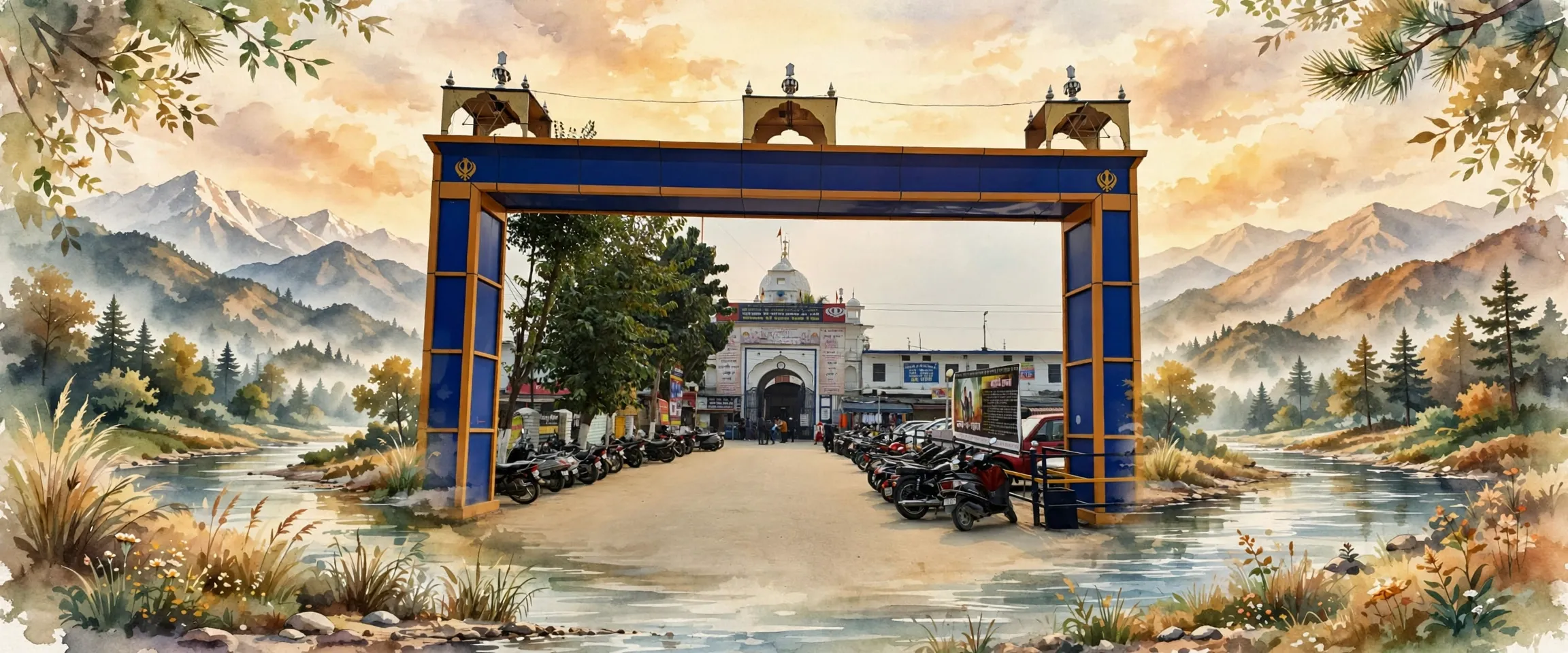
Gurdwara Paonta Sahib stands on the Yamuna at Paonta Sahib in Sirmaur district, Himachal Pradesh. Guru Gobind Singh Ji founded the town in 1685 at the invitation of Raja Medni Prakash and lived here four and a half years, his longest stay anywhere. He composed Dasam Granth works here, held a court of poets, and fought his first battle nearby at Bhangani in 1688.
- Punjabi name
- ਗੁਰਦੁਆਰਾ ਪਾਉਂਟਾ ਸਾਹਿਬ
- Type
- Historic gurdwara
- Country
- India
- City
- Paonta Sahib
- District
- Sirmaur
- State
- Himachal Pradesh
All 14 facts
- Location
- On the bank of the River Yamuna, Paonta Sahib; PIN 173025; elevation about 389 m
- Associated with
- Guru Gobind Singh Ji; Sahibzada Ajit Singh Ji, born here
- Marks
- Residence of Guru Gobind Singh Ji, 1685 to 1689
- Founded
- Town founded by Guru Gobind Singh Ji, 1685
- Invitation
- Raja Medni Prakash of Nahan (Sirmaur)
- Compositions
- Jaap Sahib, Akal Ustat, Bachittar Natak, Sawayyas, Chandi di Var
- Inside the complex
- Sri Talab Asthan; Sri Dastar Asthan; Kavi Darbar; Sahibzada Baba Ajit Singh Library and Museum; gold Palki
- Nearby battle
- Battle of Bhangani, 1688
Gurdwara Paonta Sahib is a major Sikh shrine on the bank of the Yamuna at Paonta Sahib in Sirmaur district, Himachal Pradesh. It marks the town Guru Gobind Singh Ji founded in 1685 and the four and a half years he lived here, the longest stay of his life in one place, writing, gathering poets, training soldiers and fighting his first battle nearby. Few shrines hold so much of a single Guru's working life in one riverside complex.
What is Gurdwara Paonta Sahib?
Gurdwara Paonta Sahib is the shrine raised where Guru Gobind Singh Ji settled in 1685 at the invitation of Raja Medni Prakash of Nahan and stayed until 1689. Its name, from Paontika, is explained as the place where the Guru's foot became firmly planted: his horse stopped here, he liked the quiet Yamuna bank, and he stayed. Here he composed works now gathered in the Dasam Granth, held a court of poets, saw his eldest son Sahibzada Ajit Singh Ji born, and prepared the following that would become the Khalsa at Anandpur Sahib a decade later.
How did Guru Gobind Singh Ji come to Paonta?
The Guru was still in his teens when Raja Medni Prakash of the hill state of Nahan, also called Sirmaur, invited him to choose a place in his kingdom and settle. Riding from Anandpur Sahib, the Guru dismounted at a green spot on the Yamuna, in a valley below forested Himalayan foothills, and found it to his liking. He built a fort like residence on the bank and a town grew around the settlement that took the name Paonta Sahib. He later recalled these years, in his own writing, as among the happiest of his life, and the length of the stay proves the point: four and a half years, longer than he lived anywhere else.
The writing years: Dasam Granth and the court of poets
Paonta was a working court, not a retreat. Seated by the Yamuna the Guru composed at a pace few places in Sikh history can match: tradition and his shrine's accounts credit these years with Jaap Sahib, Akal Ustat, Bachittar Natak, the Sawayyas and Chandi di Var, core compositions of the Dasam Granth. Around him gathered poets in several languages, remembered as the court of 52 poets, and a Kavi Darbar, a poets' assembly, met by the river, with a full moon Kavi Sammelan, a poetry gathering and competition, held every month. The gurdwara still keeps the tradition: a Kavi Sammelan is organised on full moon nights at the Kavi Darbar site near the shrine. Local tradition also holds that the Guru stilled the Yamuna here: the poets complained that the river's roar disturbed their recitation, and the river is said to flow quietly past the Kavi Darbar to this day before noising again downstream. The pens the Guru used at Paonta are preserved and displayed in the museum by the gurdwara.
Warrior training and the Battle of Bhangani
The same years built an army. At Paonta the Guru practised archery, trained his Sikhs in riding and arms, and organised the force that the hill rajas increasingly feared. In 1688 that tension broke into open war at Bhangani, a few kilometres away: the Battle of Bhangani, the first battle Guru Gobind Singh Ji fought, ended in his victory over the combined hill chiefs. A separate gurdwara at Bhangani, near the Tir Garhi shrine from which the Guru is said to have shot arrows at his enemies, keeps that memory on the ground itself. In 1689 the Guru left Paonta and returned to Anandpur Sahib, where ten years later he would found the Khalsa.
What can you see inside the complex today?
The modern complex stands on the Yamuna bank with the river, the boundary between Himachal Pradesh and Uttarakhand, flowing past it. Two named places inside preserve the memory of the Guru's court at work: Sri Talab Asthan, where salaries were disbursed, and Sri Dastar Asthan, where turban tying competitions are held. The shrine's treasures include a palanquin, a Palki, made of pure gold and donated by devotees, and the Sahibzada Baba Ajit Singh Library and Museum, which displays the Guru's weapons and pens alongside antiques of the period. A temple dedicated to Goddess Yamuna stands in the vicinity of the compound, rebuilt in recent times, a reminder that the riverbank is sacred ground shared across traditions. Langar is served to all, every day, and the complex draws pilgrims and tourists from across India, with the biggest gatherings at the gurpurabs of Guru Gobind Singh Ji and at Hola Mohalla.
How do I reach Gurdwara Paonta Sahib?
Paonta Sahib town sits in the Kyarda Doon valley in southern Sirmaur district, at about 389 metres, on the highway between Dehradun, about 44 kilometres away, and Nahan, the district headquarters. The gurdwara stands in the town on the Yamuna bank, PIN 173025, and road transport is the practical route in: buses and taxis connect Paonta Sahib with Dehradun, Yamunanagar and Chandigarh, and the nearest railheads and airports are at Dehradun and Chandigarh. Visitors cover their heads and remove their shoes before entering, as at any gurdwara. Allow time for the Kavi Darbar by the quiet stretch of the river and for the museum, and see the wider list in Gurdwaras in India.
ਗੁਰਦੁਆਰਾ ਪਾਉਂਟਾ ਸਾਹਿਬ ਹਿਮਾਚਲ ਪ੍ਰਦੇਸ਼ ਦੇ ਸਿਰਮੌਰ ਜ਼ਿਲ੍ਹੇ ਵਿੱਚ ਪਾਉਂਟਾ ਸਾਹਿਬ ਵਿਖੇ ਯਮੁਨਾ ਦੇ ਕਿਨਾਰੇ ਇੱਕ ਪ੍ਰਮੁੱਖ ਸਿੱਖ ਅਸਥਾਨ ਹੈ ਇਹ ਉਸ ਕਸਬੇ ਨੂੰ ਦਰਸਾਉਂਦਾ ਹੈ ਜੋ ਗੁਰੂ ਗੋਬਿੰਦ ਸਿੰਘ ਜੀ ਨੇ 1685 ਵਿੱਚ ਵਸਾਇਆ ਅਤੇ ਜਿੱਥੇ ਉਹ ਸਾਢੇ ਚਾਰ ਸਾਲ ਰਹੇ, ਇੱਕ ਥਾਂ ਉੱਤੇ ਉਨ੍ਹਾਂ ਦਾ ਸਭ ਤੋਂ ਲੰਬਾ ਠਹਿਰਾਅ, ਲਿਖਦੇ ਹੋਏ, ਕਵੀਆਂ ਨੂੰ ਇਕੱਠਾ ਕਰਦੇ ਹੋਏ, ਫੌਜੀਆਂ ਨੂੰ ਸਿਖਲਾਈ ਦਿੰਦੇ ਹੋਏ ਅਤੇ ਨੇੜੇ ਹੀ ਆਪਣੀ ਪਹਿਲੀ ਲੜਾਈ ਲੜਦੇ ਹੋਏ ਕੁਝ ਹੀ ਅਸਥਾਨਾਂ ਵਿੱਚ ਇੱਕੋ ਗੁਰੂ ਦੇ ਕੰਮਕਾਜੀ ਜੀਵਨ ਦਾ ਇੰਨਾ ਹਿੱਸਾ ਇੱਕੋ ਨਦੀ ਕਿਨਾਰੇ ਕੰਪਲੈਕਸ ਵਿੱਚ ਸਾਂਭਿਆ ਹੋਇਆ ਹੈ
ਗੁਰਦੁਆਰਾ ਪਾਉਂਟਾ ਸਾਹਿਬ ਕੀ ਹੈ?
ਗੁਰਦੁਆਰਾ ਪਾਉਂਟਾ ਸਾਹਿਬ ਉਹ ਅਸਥਾਨ ਹੈ ਜੋ ਉੱਥੇ ਬਣਿਆ ਹੈ ਜਿੱਥੇ ਗੁਰੂ ਗੋਬਿੰਦ ਸਿੰਘ ਜੀ 1685 ਵਿੱਚ ਨਾਹਨ ਦੇ ਰਾਜਾ ਮੇਦਨੀ ਪ੍ਰਕਾਸ਼ ਦੇ ਸੱਦੇ ਉੱਤੇ ਆ ਕੇ ਵੱਸੇ ਅਤੇ 1689 ਤੱਕ ਰਹੇ ਇਸ ਦਾ ਨਾਮ, ਪਾਉਂਟਿਕਾ ਤੋਂ, ਇਸ ਤਰ੍ਹਾਂ ਸਮਝਾਇਆ ਜਾਂਦਾ ਹੈ ਕਿ ਇਹ ਉਹ ਥਾਂ ਹੈ ਜਿੱਥੇ ਗੁਰੂ ਜੀ ਦਾ ਪੈਰ ਪੱਕਾ ਟਿਕ ਗਿਆ: ਉਨ੍ਹਾਂ ਦਾ ਘੋੜਾ ਇੱਥੇ ਰੁਕਿਆ, ਉਨ੍ਹਾਂ ਨੂੰ ਯਮੁਨਾ ਦਾ ਸ਼ਾਂਤ ਕਿਨਾਰਾ ਪਸੰਦ ਆਇਆ, ਅਤੇ ਉਹ ਇੱਥੇ ਹੀ ਰਹਿ ਗਏ ਇੱਥੇ ਉਨ੍ਹਾਂ ਨੇ ਉਹ ਰਚਨਾਵਾਂ ਲਿਖੀਆਂ ਜੋ ਹੁਣ ਦਸਮ ਗ੍ਰੰਥ ਵਿੱਚ ਸੰਗ੍ਰਹਿਤ ਹਨ, ਕਵੀਆਂ ਦਾ ਦਰਬਾਰ ਲਾਇਆ, ਇੱਥੇ ਉਨ੍ਹਾਂ ਦੇ ਸਭ ਤੋਂ ਵੱਡੇ ਪੁੱਤਰ ਸਾਹਿਬਜ਼ਾਦਾ ਅਜੀਤ ਸਿੰਘ ਜੀ ਦਾ ਜਨਮ ਹੋਇਆ, ਅਤੇ ਉਹ ਸੰਗਤ ਤਿਆਰ ਹੋਈ ਜੋ ਇੱਕ ਦਹਾਕੇ ਬਾਅਦ ਆਨੰਦਪੁਰ ਸਾਹਿਬ ਵਿਖੇ ਖਾਲਸਾ ਬਣੀ
ਗੁਰੂ ਗੋਬਿੰਦ ਸਿੰਘ ਜੀ ਪਾਉਂਟਾ ਕਿਵੇਂ ਆਏ?
ਗੁਰੂ ਜੀ ਅਜੇ ਕਿਸ਼ੋਰ ਉਮਰ ਵਿੱਚ ਹੀ ਸਨ ਜਦੋਂ ਪਹਾੜੀ ਰਿਆਸਤ ਨਾਹਨ, ਜਿਸ ਨੂੰ ਸਿਰਮੌਰ ਵੀ ਕਿਹਾ ਜਾਂਦਾ ਹੈ, ਦੇ ਰਾਜਾ ਮੇਦਨੀ ਪ੍ਰਕਾਸ਼ ਨੇ ਉਨ੍ਹਾਂ ਨੂੰ ਆਪਣੇ ਰਾਜ ਵਿੱਚ ਕੋਈ ਥਾਂ ਚੁਣ ਕੇ ਵੱਸਣ ਦਾ ਸੱਦਾ ਦਿੱਤਾ ਆਨੰਦਪੁਰ ਸਾਹਿਬ ਤੋਂ ਘੋੜੇ ਉੱਤੇ ਆਉਂਦੇ ਹੋਏ ਗੁਰੂ ਜੀ ਯਮੁਨਾ ਉੱਤੇ ਇੱਕ ਹਰੀ ਥਾਂ ਉੱਤੇ ਉਤਰੇ, ਜੰਗਲੀ ਹਿਮਾਲੀਆ ਤਲਹੱਟੀਆਂ ਹੇਠ ਇੱਕ ਵਾਦੀ ਵਿੱਚ, ਅਤੇ ਉਹ ਥਾਂ ਉਨ੍ਹਾਂ ਨੂੰ ਪਸੰਦ ਆ ਗਈ ਉਨ੍ਹਾਂ ਨੇ ਕਿਨਾਰੇ ਉੱਤੇ ਕਿਲ੍ਹੇ ਵਰਗਾ ਨਿਵਾਸ ਬਣਾਇਆ ਅਤੇ ਉਸ ਵਸੋਂ ਦੇ ਆਲੇ ਦੁਆਲੇ ਇੱਕ ਕਸਬਾ ਵਧਿਆ ਜਿਸ ਨੇ ਪਾਉਂਟਾ ਸਾਹਿਬ ਨਾਮ ਲਿਆ ਬਾਅਦ ਵਿੱਚ ਉਨ੍ਹਾਂ ਨੇ ਆਪਣੀ ਲਿਖਤ ਵਿੱਚ ਇਨ੍ਹਾਂ ਸਾਲਾਂ ਨੂੰ ਆਪਣੇ ਜੀਵਨ ਦੇ ਸਭ ਤੋਂ ਖੁਸ਼ ਸਮਿਆਂ ਵਿੱਚੋਂ ਇੱਕ ਵਜੋਂ ਯਾਦ ਕੀਤਾ, ਅਤੇ ਠਹਿਰਾਅ ਦੀ ਲੰਬਾਈ ਇਸ ਗੱਲ ਨੂੰ ਸਾਬਤ ਕਰਦੀ ਹੈ: ਸਾਢੇ ਚਾਰ ਸਾਲ, ਕਿਤੇ ਹੋਰ ਰਹਿਣ ਨਾਲੋਂ ਲੰਬਾ ਸਮਾਂ
ਲਿਖਣ ਦੇ ਸਾਲ: ਦਸਮ ਗ੍ਰੰਥ ਅਤੇ ਕਵੀਆਂ ਦਾ ਦਰਬਾਰ
ਪਾਉਂਟਾ ਇੱਕ ਕੰਮ ਕਰਦਾ ਦਰਬਾਰ ਸੀ, ਕੋਈ ਇਕਾਂਤਵਾਸ ਨਹੀਂ ਯਮੁਨਾ ਕਿਨਾਰੇ ਬੈਠ ਕੇ ਗੁਰੂ ਜੀ ਨੇ ਉਸ ਰਫ਼ਤਾਰ ਨਾਲ ਰਚਨਾ ਕੀਤੀ ਜਿਸ ਦੀ ਮਿਸਾਲ ਸਿੱਖ ਇਤਿਹਾਸ ਵਿੱਚ ਘੱਟ ਥਾਵਾਂ ਉੱਤੇ ਮਿਲਦੀ ਹੈ: ਪਰੰਪਰਾ ਅਤੇ ਅਸਥਾਨ ਦੇ ਵੇਰਵੇ ਇਨ੍ਹਾਂ ਸਾਲਾਂ ਨੂੰ ਜਾਪੁ ਸਾਹਿਬ, ਅਕਾਲ ਉਸਤਤਿ, ਬਚਿੱਤਰ ਨਾਟਕ, ਸਵੱਯੇ ਅਤੇ ਚੰਡੀ ਦੀ ਵਾਰ ਦਾ ਸਿਹਰਾ ਦਿੰਦੇ ਹਨ, ਦਸਮ ਗ੍ਰੰਥ ਦੀਆਂ ਮੁੱਖ ਰਚਨਾਵਾਂ ਉਨ੍ਹਾਂ ਦੇ ਆਲੇ ਦੁਆਲੇ ਕਈ ਭਾਸ਼ਾਵਾਂ ਦੇ ਕਵੀ ਇਕੱਠੇ ਹੋਏ, ਜਿਨ੍ਹਾਂ ਨੂੰ 52 ਕਵੀਆਂ ਦਾ ਦਰਬਾਰ ਵਜੋਂ ਯਾਦ ਕੀਤਾ ਜਾਂਦਾ ਹੈ, ਅਤੇ ਨਦੀ ਕੋਲ ਇੱਕ ਕਵੀ ਦਰਬਾਰ ਲੱਗਦਾ ਸੀ, ਹਰ ਮਹੀਨੇ ਪੂਰਨਮਾਸ਼ੀ ਉੱਤੇ ਕਵੀ ਸੰਮੇਲਨ, ਕਵਿਤਾ ਇਕੱਠ ਅਤੇ ਮੁਕਾਬਲਾ, ਹੁੰਦਾ ਸੀ ਗੁਰਦੁਆਰਾ ਅੱਜ ਵੀ ਇਹ ਪਰੰਪਰਾ ਕਾਇਮ ਰੱਖਦਾ ਹੈ: ਅਸਥਾਨ ਦੇ ਨੇੜੇ ਕਵੀ ਦਰਬਾਰ ਵਾਲੀ ਥਾਂ ਉੱਤੇ ਪੂਰਨਮਾਸ਼ੀ ਦੀਆਂ ਰਾਤਾਂ ਨੂੰ ਕਵੀ ਸੰਮੇਲਨ ਕਰਵਾਇਆ ਜਾਂਦਾ ਹੈ ਸਥਾਨਕ ਪਰੰਪਰਾ ਇਹ ਵੀ ਮੰਨਦੀ ਹੈ ਕਿ ਗੁਰੂ ਜੀ ਨੇ ਇੱਥੇ ਯਮੁਨਾ ਨੂੰ ਸ਼ਾਂਤ ਕੀਤਾ: ਕਵੀਆਂ ਨੇ ਸ਼ਿਕਾਇਤ ਕੀਤੀ ਕਿ ਨਦੀ ਦਾ ਸ਼ੋਰ ਉਨ੍ਹਾਂ ਦੇ ਪਾਠ ਵਿੱਚ ਵਿਘਨ ਪਾਉਂਦਾ ਹੈ, ਅਤੇ ਕਿਹਾ ਜਾਂਦਾ ਹੈ ਕਿ ਨਦੀ ਅੱਜ ਵੀ ਕਵੀ ਦਰਬਾਰ ਕੋਲੋਂ ਸ਼ਾਂਤੀ ਨਾਲ ਲੰਘਦੀ ਹੈ ਅਤੇ ਅੱਗੇ ਜਾ ਕੇ ਫਿਰ ਸ਼ੋਰ ਕਰਦੀ ਹੈ ਗੁਰੂ ਜੀ ਵੱਲੋਂ ਪਾਉਂਟਾ ਵਿਖੇ ਵਰਤੀਆਂ ਕਲਮਾਂ ਅਸਥਾਨ ਕੋਲ ਅਜਾਇਬ ਘਰ ਵਿੱਚ ਸਾਂਭੀਆਂ ਅਤੇ ਪ੍ਰਦਰਸ਼ਿਤ ਹਨ
ਯੋਧਾ ਸਿਖਲਾਈ ਅਤੇ ਭੰਗਾਣੀ ਦੀ ਲੜਾਈ
ਉਨ੍ਹਾਂ ਹੀ ਸਾਲਾਂ ਵਿੱਚ ਇੱਕ ਫੌਜ ਤਿਆਰ ਹੋਈ ਪਾਉਂਟਾ ਵਿਖੇ ਗੁਰੂ ਜੀ ਨੇ ਤੀਰਅੰਦਾਜ਼ੀ ਦਾ ਅਭਿਆਸ ਕੀਤਾ, ਆਪਣੇ ਸਿੱਖਾਂ ਨੂੰ ਸਵਾਰੀ ਅਤੇ ਹਥਿਆਰਾਂ ਦੀ ਸਿਖਲਾਈ ਦਿੱਤੀ, ਅਤੇ ਉਹ ਫੌਜ ਸੰਗਠਿਤ ਕੀਤੀ ਜਿਸ ਤੋਂ ਪਹਾੜੀ ਰਾਜੇ ਵੱਧ ਤੋਂ ਵੱਧ ਡਰਨ ਲੱਗੇ 1688 ਵਿੱਚ ਇਹ ਤਣਾਅ ਭੰਗਾਣੀ ਵਿਖੇ ਖੁੱਲ੍ਹੀ ਲੜਾਈ ਵਿੱਚ ਬਦਲ ਗਿਆ, ਕੁਝ ਕਿਲੋਮੀਟਰ ਦੂਰ: ਭੰਗਾਣੀ ਦੀ ਲੜਾਈ, ਗੁਰੂ ਗੋਬਿੰਦ ਸਿੰਘ ਜੀ ਦੀ ਪਹਿਲੀ ਲੜਾਈ, ਪਹਾੜੀ ਸਰਦਾਰਾਂ ਦੇ ਸਾਂਝੇ ਮੋਰਚੇ ਉੱਤੇ ਉਨ੍ਹਾਂ ਦੀ ਜਿੱਤ ਨਾਲ ਮੁੱਕੀ ਭੰਗਾਣੀ ਵਿਖੇ ਇੱਕ ਵੱਖਰਾ ਗੁਰਦੁਆਰਾ, ਤੀਰ ਗੜ੍ਹੀ ਅਸਥਾਨ ਦੇ ਨੇੜੇ ਜਿੱਥੋਂ ਕਿਹਾ ਜਾਂਦਾ ਹੈ ਕਿ ਗੁਰੂ ਜੀ ਨੇ ਆਪਣੇ ਦੁਸ਼ਮਣਾਂ ਉੱਤੇ ਤੀਰ ਚਲਾਏ, ਉਸ ਯਾਦ ਨੂੰ ਉਸੇ ਥਾਂ ਉੱਤੇ ਕਾਇਮ ਰੱਖਦਾ ਹੈ 1689 ਵਿੱਚ ਗੁਰੂ ਜੀ ਪਾਉਂਟਾ ਛੱਡ ਕੇ ਆਨੰਦਪੁਰ ਸਾਹਿਬ ਪਰਤ ਗਏ, ਜਿੱਥੇ ਦਸ ਸਾਲ ਬਾਅਦ ਉਨ੍ਹਾਂ ਨੇ ਖਾਲਸੇ ਦੀ ਸਾਜਨਾ ਕੀਤੀ
ਅੱਜ ਕੰਪਲੈਕਸ ਵਿੱਚ ਕੀ ਦੇਖਿਆ ਜਾ ਸਕਦਾ ਹੈ?
ਆਧੁਨਿਕ ਕੰਪਲੈਕਸ ਯਮੁਨਾ ਕਿਨਾਰੇ ਖੜ੍ਹਾ ਹੈ ਅਤੇ ਨਦੀ, ਜੋ ਹਿਮਾਚਲ ਪ੍ਰਦੇਸ਼ ਅਤੇ ਉੱਤਰਾਖੰਡ ਵਿਚਕਾਰ ਸਰਹੱਦ ਹੈ, ਇਸ ਦੇ ਕੋਲੋਂ ਲੰਘਦੀ ਹੈ ਅੰਦਰ ਦੋ ਨਾਮਵਰ ਥਾਵਾਂ ਗੁਰੂ ਜੀ ਦੇ ਕੰਮ ਕਰਦੇ ਦਰਬਾਰ ਦੀ ਯਾਦ ਸਾਂਭਦੀਆਂ ਹਨ: ਸ੍ਰੀ ਤਲਬ ਅਸਥਾਨ, ਜਿੱਥੇ ਤਨਖਾਹਾਂ ਵੰਡੀਆਂ ਜਾਂਦੀਆਂ ਸਨ, ਅਤੇ ਸ੍ਰੀ ਦਸਤਾਰ ਅਸਥਾਨ, ਜਿੱਥੇ ਦਸਤਾਰ ਸਜਾਉਣ ਦੇ ਮੁਕਾਬਲੇ ਹੁੰਦੇ ਹਨ ਅਸਥਾਨ ਦੇ ਖਜ਼ਾਨਿਆਂ ਵਿੱਚ ਇੱਕ ਪਾਲਕੀ ਸ਼ਾਮਲ ਹੈ ਜੋ ਸ਼ੁੱਧ ਸੋਨੇ ਦੀ ਬਣੀ ਹੈ ਅਤੇ ਸ਼ਰਧਾਲੂਆਂ ਵੱਲੋਂ ਭੇਟ ਕੀਤੀ ਗਈ ਹੈ, ਅਤੇ ਸਾਹਿਬਜ਼ਾਦਾ ਬਾਬਾ ਅਜੀਤ ਸਿੰਘ ਲਾਇਬ੍ਰੇਰੀ ਅਤੇ ਅਜਾਇਬ ਘਰ, ਜੋ ਉਸ ਸਮੇਂ ਦੀਆਂ ਪੁਰਾਤਨ ਵਸਤਾਂ ਦੇ ਨਾਲ ਗੁਰੂ ਜੀ ਦੇ ਹਥਿਆਰ ਅਤੇ ਕਲਮਾਂ ਪ੍ਰਦਰਸ਼ਿਤ ਕਰਦਾ ਹੈ ਕੰਪਲੈਕਸ ਦੇ ਆਸ ਪਾਸ ਦੇਵੀ ਯਮੁਨਾ ਨੂੰ ਸਮਰਪਿਤ ਇੱਕ ਮੰਦਰ ਖੜ੍ਹਾ ਹੈ, ਜੋ ਹਾਲ ਹੀ ਵਿੱਚ ਮੁੜ ਬਣਾਇਆ ਗਿਆ ਹੈ, ਇਹ ਯਾਦ ਦਿਵਾਉਂਦਾ ਹੈ ਕਿ ਨਦੀ ਦਾ ਕਿਨਾਰਾ ਪਰੰਪਰਾਵਾਂ ਵਿੱਚ ਸਾਂਝੀ ਪਵਿੱਤਰ ਥਾਂ ਹੈ ਹਰ ਰੋਜ਼ ਸਭ ਲਈ ਲੰਗਰ ਵਰਤਾਇਆ ਜਾਂਦਾ ਹੈ, ਅਤੇ ਕੰਪਲੈਕਸ ਪੂਰੇ ਭਾਰਤ ਤੋਂ ਸ਼ਰਧਾਲੂਆਂ ਅਤੇ ਸੈਲਾਨੀਆਂ ਨੂੰ ਖਿੱਚਦਾ ਹੈ, ਸਭ ਤੋਂ ਵੱਡੇ ਇਕੱਠ ਗੁਰੂ ਗੋਬਿੰਦ ਸਿੰਘ ਜੀ ਦੇ ਗੁਰਪੁਰਬਾਂ ਅਤੇ ਹੋਲਾ ਮਹੱਲਾ ਉੱਤੇ ਹੁੰਦੇ ਹਨ
ਗੁਰਦੁਆਰਾ ਪਾਉਂਟਾ ਸਾਹਿਬ ਕਿਵੇਂ ਪਹੁੰਚੀਏ?
ਪਾਉਂਟਾ ਸਾਹਿਬ ਕਸਬਾ ਦੱਖਣੀ ਸਿਰਮੌਰ ਜ਼ਿਲ੍ਹੇ ਵਿੱਚ ਕਿਆਰਦਾ ਦੂਨ ਵਾਦੀ ਵਿੱਚ, ਲਗਭਗ 389 ਮੀਟਰ ਉੱਚਾਈ ਉੱਤੇ, ਦੇਹਰਾਦੂਨ, ਲਗਭਗ 44 ਕਿਲੋਮੀਟਰ ਦੂਰ, ਅਤੇ ਜ਼ਿਲ੍ਹਾ ਹੈੱਡਕੁਆਰਟਰ ਨਾਹਨ ਵਿਚਕਾਰ ਸੜਕ ਉੱਤੇ ਸਥਿਤ ਹੈ ਗੁਰਦੁਆਰਾ ਕਸਬੇ ਵਿੱਚ ਯਮੁਨਾ ਕਿਨਾਰੇ ਖੜ੍ਹਾ ਹੈ, ਪਿੰਨ 173025, ਅਤੇ ਸੜਕ ਆਵਾਜਾਈ ਹੀ ਇੱਥੇ ਪਹੁੰਚਣ ਦਾ ਵਿਹਾਰਕ ਰਾਹ ਹੈ: ਬੱਸਾਂ ਅਤੇ ਟੈਕਸੀਆਂ ਪਾਉਂਟਾ ਸਾਹਿਬ ਨੂੰ ਦੇਹਰਾਦੂਨ, ਯਮੁਨਾਨਗਰ ਅਤੇ ਚੰਡੀਗੜ੍ਹ ਨਾਲ ਜੋੜਦੀਆਂ ਹਨ, ਅਤੇ ਸਭ ਤੋਂ ਨੇੜਲੇ ਰੇਲ ਹੈੱਡ ਅਤੇ ਹਵਾਈ ਅੱਡੇ ਦੇਹਰਾਦੂਨ ਅਤੇ ਚੰਡੀਗੜ੍ਹ ਵਿਖੇ ਹਨ ਆਉਣ ਵਾਲੇ ਸਿਰ ਢਕਦੇ ਹਨ ਅਤੇ ਅੰਦਰ ਜਾਣ ਤੋਂ ਪਹਿਲਾਂ ਜੁੱਤੇ ਉਤਾਰਦੇ ਹਨ, ਜਿਵੇਂ ਹਰ ਗੁਰਦੁਆਰੇ ਵਿੱਚ ਹੁੰਦਾ ਹੈ ਨਦੀ ਦੇ ਸ਼ਾਂਤ ਹਿੱਸੇ ਕੋਲ ਕਵੀ ਦਰਬਾਰ ਅਤੇ ਅਜਾਇਬ ਘਰ ਲਈ ਸਮਾਂ ਰੱਖੋ, ਅਤੇ ਵੱਡੀ ਸੂਚੀ ਭਾਰਤ ਦੇ ਗੁਰਦੁਆਰਿਆਂ ਵਿੱਚ ਦੇਖੋ