
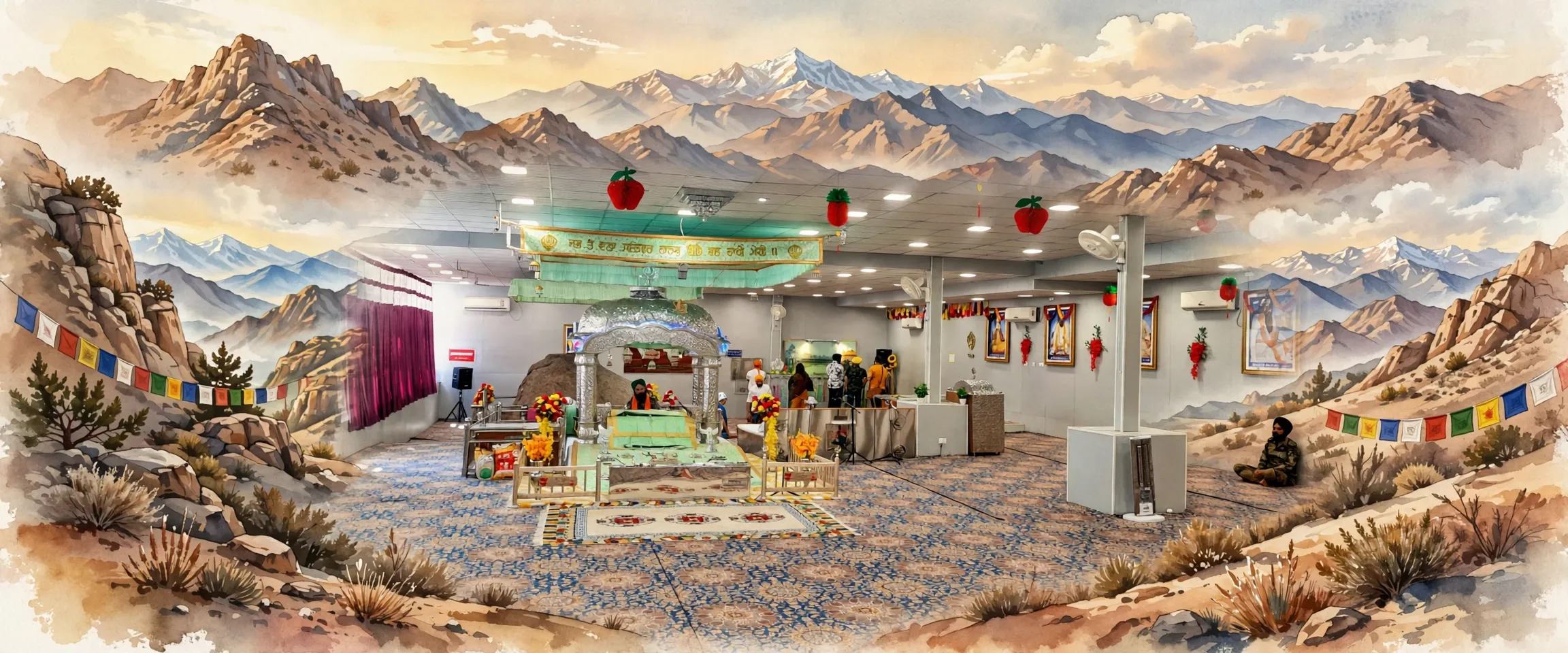
Gurdwara Pathar Sahib stands on the Srinagar to Leh highway about 25 kilometres from Leh in Ladakh, at roughly 12,000 feet. It is built around a great boulder that tradition links to Guru Nanak Dev Ji's visit in 1517: the stone said to have softened against the meditating Guru, bearing his body's imprint and a demon's footprint. Buddhist lamas preserved the rock for centuries, and the present gurdwara, built and maintained by the Indian Army, serves langar daily.
- Punjabi name
- ਗੁਰਦੁਆਰਾ ਪੱਥਰ ਸਾਹਿਬ, ਲੇਹ
- Type
- Historic gurdwara
- Country
- India
- City
- Leh
- District
- Leh
- Union Territory
- Ladakh
All 13 facts
- Location
- On National Highway 1 (Srinagar to Leh highway, Leh to Kargil road), about 25 km northwest of Leh
- Altitude
- About 12,000 feet (about 3,650 metres)
- Associated with
- Guru Nanak Dev Ji
- Marks
- Guru Nanak Dev Ji's visit to Ladakh in 1517, on his journey from Sikkim, Nepal and Tibet toward Punjab via Srinagar
- Also called
- Gurdwara Patthar Sahib; the Guru is remembered locally as Lama Nanak and Guru Gompka Maharaj
- The boulder
- Sacred rock bearing, by tradition, the imprint of Guru Nanak Dev Ji's body and the footprint of the demon; preserved by Buddhist lamas for centuries; resurfaced during Leh to Nimmu road construction in the 1970s
- Management
- Built and maintained by the Indian Army, following the Sikh Rehat Maryada; langar served daily
Gurdwara Pathar Sahib stands about 25 kilometres northwest of Leh, on the highway toward Srinagar and Kargil, at roughly 12,000 feet in the cold desert of Ladakh. The shrine is built around a single great boulder, the pathar, which Sikh and Ladakhi tradition links to a visit by Guru Nanak Dev Ji in 1517. Inside the hall the rock sits behind the throne of the Guru Granth Sahib, still carrying, devotees say, the imprint of the Guru's body and the footprint of the demon who tried to crush him with it. Few shrines anywhere join two faiths so closely: Buddhist lamas guarded this stone for centuries, and the Indian Army looks after the gurdwara today.
What is Gurdwara Pathar Sahib?
Gurdwara Pathar Sahib is a Sikh shrine in Leh district, Ladakh, built around the boulder at the heart of its story. The word pathar simply means stone or boulder. Tradition dates Guru Nanak Dev Ji's halt here to 1517, during the long return journey that brought him from Sikkim, Nepal and Tibet toward Punjab by way of Srinagar. The present buildings are modern, raised by the Indian Army after the boulder came to light again during road building in the 1970s, and the shrine is maintained by the army following the Sikh Rehat Maryada, with langar served every day. It is listed among the gurdwaras in India on Jugti, alongside other Guru Nanak shrines such as Jhira Sahib at Bidar and Lakhpat in Kutch.
The sakhi of the boulder: what does tradition say?
Local tradition tells the story this way. When Guru Nanak Dev Ji reached this valley, people came to him with a complaint: a cruel demon, a rakshas, lived on the hill above and terrorised them. The Guru settled at the foot of that hill and began preaching, and people gathered to listen. Angered by the Guru's growing following, the demon waited until the Guru sat in meditation, then rolled a huge boulder down the slope to kill him. As the stone touched the Guru, tradition says, it turned soft like warm wax and stopped against his back, taking the impression of his body, while he sat on unhurt and undisturbed. The demon came down expecting to find his victim dead. Finding the Guru still deep in meditation, he kicked the boulder in rage, and his foot sank into the still soft stone, leaving its print as well. Realising he was powerless before the Guru's calm, the demon fell at his feet and begged forgiveness. Guru Nanak Dev Ji pardoned him and told him to spend the rest of his life serving people instead of harming them. The boulder on display in the hall is shown with both marks: the hollow of the Guru's back and shoulders, and the demon's footprint beside it.
History: the lamas who kept the stone
What makes Pathar Sahib unusual is what happened after the Guru moved on. The sacred rock did not pass into Sikh keeping, because there was no Sikh community in this high valley. Instead, Ladakh's Buddhist lamas preserved and venerated it for centuries. In local memory Guru Nanak Dev Ji is honoured as Lama Nanak, or Guru Gompka Maharaj, and the lamas worshipped the stone with its imprint down the generations, some accounts say until the mid 1960s. The boulder resurfaced publicly in the 1970s, when the Leh to Nimmu road was being built. A large rock wrapped in Buddhist prayer flags stood in the road line, and a bulldozer driver found he could not shift it. Local accounts, retold by visitors and by the army men who were there, speak of warning dreams, of dynamite failing to settle the matter, and of lamas and Ladakhi villagers arriving to explain whose stone it was. The army then decided to preserve the boulder where it lay and build a fitting gurdwara around it. That partnership continues: the shrine was constructed by the Indian Army with the help of local Ladakhi people and Buddhist lamas, and the army still manages it.
Architecture and the present campus
The campus is deliberately low and spread out along the highway, a sensible answer to Ladakh's wind, cold and thin air, where summer days reach about 20 degrees Celsius and winter nights can fall to minus 25. A decorated, low gateway leads to a wide corridor and descending steps into the main hall, which sits at a sunken level with the sacred boulder behind the Guru's throne. Around it are a langar hall and kitchen, a jora ghar for shoes, a parking area and a large plaza, with a second, additional langar hall to handle the rush of pilgrims in season. A second gurdwara building stands on the hilltop to the northwest, reached by a broad flight of steps from the plaza. Breaking the low skyline is the tall Nishan Sahib, the Sikh flagpole that travellers on the highway see long before they reach the gate. An architect who documented the campus in 2023 noted how the whole complex stays close to the ground except for that single vertical marker, and how soldiers, pilgrims and local families of different faiths share the langar together.
Significance: a shrine two faiths share
Pathar Sahib matters for three reasons. First, it carries the memory of Guru Nanak Dev Ji to one of the farthest edges of his travels, high in the Himalaya, far from Punjab. Second, it is a living example of shared reverence: the Guru remembered here is also Lama Nanak to his Buddhist neighbours, and the stone was kept by lamas long before any gurdwara stood around it. Writers on the shrine often quote Guru Gobind Singh Ji's line about recognising all humankind as one, and Pathar Sahib is one of the few places where that teaching is visible in bricks, flags and a shared kitchen. Third, the shrine is part of the working life of the Leh to Kargil road: soldiers posted in Ladakh, truck drivers, tourists and pilgrims all stop here, and the langar feeds whoever arrives, in the same spirit as the langar tradition everywhere.
How do I reach Gurdwara Pathar Sahib?
The gurdwara stands on National Highway 1, the Srinagar to Leh highway, about 25 kilometres from Leh town on the Leh to Kargil stretch, close to the Magnetic Hill area that Ladakh tours also visit. Most visitors come by taxi or shared vehicle from Leh, often combining Pathar Sahib with Magnetic Hill and the meeting of the Indus and Zanskar rivers at Nimmu in a single half day circuit. The Leh to Kargil road is seasonal in its higher stretches, and Ladakh's winter is severe, so most pilgrim visits happen between late spring and autumn. At 12,000 feet, take altitude seriously: rest on your first day in Leh, drink water, and do not rush the steps up to the hilltop building. There is no entry fee, heads are covered inside, and every visitor is welcome at the langar.
ਗੁਰਦੁਆਰਾ ਪੱਥਰ ਸਾਹਿਬ ਲੇਹ ਤੋਂ ਲਗਭਗ 25 ਕਿਲੋਮੀਟਰ ਉੱਤਰ ਪੱਛਮ ਵੱਲ, ਸ੍ਰੀਨਗਰ ਅਤੇ ਕਾਰਗਿਲ ਵੱਲ ਜਾਂਦੀ ਸੜਕ ਉੱਤੇ, ਲੱਦਾਖ ਦੇ ਠੰਡੇ ਮਾਰੂਥਲ ਵਿੱਚ ਲਗਭਗ 12,000 ਫੁੱਟ ਉਚਾਈ ਉੱਤੇ ਹੈ ਇਹ ਅਸਥਾਨ ਇੱਕ ਵੱਡੇ ਪੱਥਰ ਦੇ ਆਲੇ ਦੁਆਲੇ ਬਣਿਆ ਹੈ, ਜਿਸ ਨੂੰ ਸਿੱਖ ਅਤੇ ਲੱਦਾਖੀ ਪਰੰਪਰਾ 1517 ਵਿੱਚ ਗੁਰੂ ਨਾਨਕ ਦੇਵ ਜੀ ਦੀ ਫੇਰੀ ਨਾਲ ਜੋੜਦੀ ਹੈ ਦਰਬਾਰ ਹਾਲ ਵਿੱਚ ਇਹ ਪੱਥਰ ਗੁਰੂ ਗ੍ਰੰਥ ਸਾਹਿਬ ਜੀ ਦੇ ਤਖ਼ਤ ਦੇ ਪਿੱਛੇ ਹੈ ਅਤੇ ਸ਼ਰਧਾਲੂ ਮੰਨਦੇ ਹਨ ਕਿ ਇਸ ਉੱਤੇ ਗੁਰੂ ਜੀ ਦੇ ਸਰੀਰ ਦੀ ਛਾਪ ਅਤੇ ਉਸ ਰਾਖਸ਼ ਦੇ ਪੈਰ ਦਾ ਨਿਸ਼ਾਨ ਅੱਜ ਵੀ ਹੈ ਜਿਸ ਨੇ ਇਹ ਪੱਥਰ ਉਨ੍ਹਾਂ ਉੱਤੇ ਸੁੱਟਿਆ ਸੀ ਬਹੁਤ ਘੱਟ ਅਸਥਾਨ ਦੋ ਧਰਮਾਂ ਨੂੰ ਇੰਨੀ ਨੇੜਿਓਂ ਜੋੜਦੇ ਹਨ: ਸਦੀਆਂ ਤੱਕ ਬੋਧੀ ਲਾਮਿਆਂ ਨੇ ਇਸ ਪੱਥਰ ਦੀ ਸੰਭਾਲ ਕੀਤੀ, ਅਤੇ ਅੱਜ ਗੁਰਦੁਆਰੇ ਦੀ ਦੇਖਭਾਲ ਭਾਰਤੀ ਫੌਜ ਕਰਦੀ ਹੈ
ਗੁਰਦੁਆਰਾ ਪੱਥਰ ਸਾਹਿਬ ਕੀ ਹੈ?
ਗੁਰਦੁਆਰਾ ਪੱਥਰ ਸਾਹਿਬ ਲੱਦਾਖ ਦੇ ਲੇਹ ਜ਼ਿਲ੍ਹੇ ਵਿੱਚ ਇੱਕ ਸਿੱਖ ਅਸਥਾਨ ਹੈ, ਜੋ ਆਪਣੀ ਕਹਾਣੀ ਦੇ ਕੇਂਦਰ ਵਾਲੇ ਪੱਥਰ ਦੇ ਆਲੇ ਦੁਆਲੇ ਬਣਿਆ ਹੈ ਪੱਥਰ ਸ਼ਬਦ ਦਾ ਅਰਥ ਹੀ ਪੱਥਰ ਜਾਂ ਚੱਟਾਨ ਹੈ ਪਰੰਪਰਾ ਅਨੁਸਾਰ ਗੁਰੂ ਨਾਨਕ ਦੇਵ ਜੀ 1517 ਵਿੱਚ ਇੱਥੇ ਠਹਿਰੇ ਸਨ, ਜਦੋਂ ਉਹ ਸਿੱਕਮ, ਨੇਪਾਲ ਅਤੇ ਤਿੱਬਤ ਵੱਲੋਂ ਸ੍ਰੀਨਗਰ ਰਾਹੀਂ ਪੰਜਾਬ ਵੱਲ ਪਰਤ ਰਹੇ ਸਨ ਮੌਜੂਦਾ ਇਮਾਰਤਾਂ ਨਵੀਆਂ ਹਨ 1970ਵਿਆਂ ਵਿੱਚ ਸੜਕ ਬਣਨ ਸਮੇਂ ਪੱਥਰ ਮੁੜ ਸਾਹਮਣੇ ਆਇਆ, ਜਿਸ ਤੋਂ ਬਾਅਦ ਭਾਰਤੀ ਫੌਜ ਨੇ ਗੁਰਦੁਆਰਾ ਉਸਾਰਿਆ ਫੌਜ ਹੀ ਸਿੱਖ ਰਹਿਤ ਮਰਯਾਦਾ ਅਨੁਸਾਰ ਇਸ ਦੀ ਸੇਵਾ ਸੰਭਾਲ ਕਰਦੀ ਹੈ ਅਤੇ ਇੱਥੇ ਹਰ ਰੋਜ਼ ਲੰਗਰ ਵਰਤਦਾ ਹੈ ਇਹ ਜੁਗਤੀ ਉੱਤੇ ਭਾਰਤ ਦੇ ਗੁਰਦੁਆਰਿਆਂ ਵਿੱਚ ਸੂਚੀਬੱਧ ਹੈ, ਗੁਰੂ ਨਾਨਕ ਦੇਵ ਜੀ ਦੇ ਹੋਰ ਅਸਥਾਨਾਂ ਜਿਵੇਂ ਬਿਦਰ ਦੇ ਝੀਰਾ ਸਾਹਿਬ ਅਤੇ ਕੱਛ ਦੇ ਲੱਖਪਤ ਦੇ ਨਾਲ
ਪੱਥਰ ਦੀ ਸਾਖੀ: ਪਰੰਪਰਾ ਕੀ ਕਹਿੰਦੀ ਹੈ?
ਸਥਾਨਕ ਪਰੰਪਰਾ ਕਹਾਣੀ ਇਸ ਤਰ੍ਹਾਂ ਸੁਣਾਉਂਦੀ ਹੈ ਜਦੋਂ ਗੁਰੂ ਨਾਨਕ ਦੇਵ ਜੀ ਇਸ ਵਾਦੀ ਵਿੱਚ ਪਹੁੰਚੇ, ਲੋਕਾਂ ਨੇ ਆ ਕੇ ਫ਼ਰਿਆਦ ਕੀਤੀ ਕਿ ਪਹਾੜੀ ਉੱਤੇ ਰਹਿਣ ਵਾਲਾ ਇੱਕ ਜ਼ਾਲਮ ਰਾਖਸ਼ ਉਨ੍ਹਾਂ ਨੂੰ ਤੰਗ ਕਰਦਾ ਹੈ ਗੁਰੂ ਜੀ ਉਸੇ ਪਹਾੜੀ ਦੇ ਪੈਰਾਂ ਵਿੱਚ ਠਹਿਰੇ ਅਤੇ ਉਪਦੇਸ਼ ਦੇਣ ਲੱਗੇ ਲੋਕ ਇਕੱਠੇ ਹੋਣ ਲੱਗੇ ਗੁਰੂ ਜੀ ਦੀ ਵਧਦੀ ਸੰਗਤ ਵੇਖ ਕੇ ਰਾਖਸ਼ ਨੇ ਇੱਕ ਦਿਨ, ਜਦੋਂ ਗੁਰੂ ਜੀ ਸਮਾਧੀ ਵਿੱਚ ਬੈਠੇ ਸਨ, ਪਹਾੜੀ ਤੋਂ ਵੱਡਾ ਪੱਥਰ ਰੋੜ੍ਹ ਦਿੱਤਾ ਪਰੰਪਰਾ ਕਹਿੰਦੀ ਹੈ ਕਿ ਪੱਥਰ ਗੁਰੂ ਜੀ ਨੂੰ ਛੂਹਦਿਆਂ ਹੀ ਗਰਮ ਮੋਮ ਵਾਂਗ ਨਰਮ ਹੋ ਗਿਆ, ਉਨ੍ਹਾਂ ਦੀ ਪਿੱਠ ਨਾਲ ਰੁਕ ਗਿਆ ਅਤੇ ਉਨ੍ਹਾਂ ਦੇ ਸਰੀਰ ਦੀ ਛਾਪ ਉਸ ਉੱਤੇ ਪੈ ਗਈ ਗੁਰੂ ਜੀ ਬਿਨਾਂ ਕਿਸੇ ਸੱਟ ਦੇ ਸਮਾਧੀ ਵਿੱਚ ਹੀ ਰਹੇ ਰਾਖਸ਼ ਹੇਠਾਂ ਆਇਆ ਤਾਂ ਉਸ ਨੂੰ ਗੁਰੂ ਜੀ ਜਿਊਂਦੇ ਅਤੇ ਸ਼ਾਂਤ ਬੈਠੇ ਵੇਖ ਕੇ ਗੁੱਸਾ ਆਇਆ ਉਸ ਨੇ ਪੱਥਰ ਨੂੰ ਪੈਰ ਮਾਰਿਆ, ਪਰ ਪੱਥਰ ਅਜੇ ਨਰਮ ਸੀ, ਇਸ ਲਈ ਉਸ ਦੇ ਪੈਰ ਦਾ ਨਿਸ਼ਾਨ ਵੀ ਉਸ ਉੱਤੇ ਪੈ ਗਿਆ ਆਪਣੀ ਹਾਰ ਮੰਨ ਕੇ ਰਾਖਸ਼ ਗੁਰੂ ਜੀ ਦੇ ਚਰਨਾਂ ਵਿੱਚ ਡਿੱਗਾ ਅਤੇ ਮਾਫ਼ੀ ਮੰਗੀ ਗੁਰੂ ਨਾਨਕ ਦੇਵ ਜੀ ਨੇ ਉਸ ਨੂੰ ਮਾਫ਼ ਕੀਤਾ ਅਤੇ ਕਿਹਾ ਕਿ ਬਾਕੀ ਜੀਵਨ ਲੋਕਾਂ ਨੂੰ ਤੰਗ ਕਰਨ ਦੀ ਥਾਂ ਉਨ੍ਹਾਂ ਦੀ ਸੇਵਾ ਵਿੱਚ ਲਾਵੇ ਹਾਲ ਵਿੱਚ ਰੱਖੇ ਪੱਥਰ ਉੱਤੇ ਦੋਵੇਂ ਨਿਸ਼ਾਨ ਵਿਖਾਏ ਜਾਂਦੇ ਹਨ: ਗੁਰੂ ਜੀ ਦੀ ਪਿੱਠ ਅਤੇ ਮੋਢਿਆਂ ਦੀ ਛਾਪ, ਅਤੇ ਨਾਲ ਰਾਖਸ਼ ਦੇ ਪੈਰ ਦਾ ਨਿਸ਼ਾਨ
ਇਤਿਹਾਸ: ਪੱਥਰ ਦੀ ਸੰਭਾਲ ਕਰਨ ਵਾਲੇ ਲਾਮੇ
ਪੱਥਰ ਸਾਹਿਬ ਦੀ ਖਾਸ ਗੱਲ ਇਸ ਤੋਂ ਬਾਅਦ ਦੀ ਹੈ ਗੁਰੂ ਜੀ ਦੇ ਅੱਗੇ ਜਾਣ ਤੋਂ ਬਾਅਦ ਪੱਥਰ ਕਿਸੇ ਸਿੱਖ ਭਾਈਚਾਰੇ ਕੋਲ ਨਹੀਂ ਗਿਆ, ਕਿਉਂਕਿ ਇਸ ਉੱਚੀ ਵਾਦੀ ਵਿੱਚ ਉਸ ਸਮੇਂ ਕੋਈ ਸਿੱਖ ਵਸੋਂ ਨਹੀਂ ਸੀ ਇਸ ਦੀ ਥਾਂ ਲੱਦਾਖ ਦੇ ਬੋਧੀ ਲਾਮਿਆਂ ਨੇ ਸਦੀਆਂ ਤੱਕ ਇਸ ਦੀ ਸੰਭਾਲ ਅਤੇ ਪੂਜਾ ਕੀਤੀ ਸਥਾਨਕ ਯਾਦ ਵਿੱਚ ਗੁਰੂ ਨਾਨਕ ਦੇਵ ਜੀ ਨੂੰ ਲਾਮਾ ਨਾਨਕ, ਜਾਂ ਗੁਰੂ ਗੋਮਪਕਾ ਮਹਾਰਾਜ ਕਿਹਾ ਜਾਂਦਾ ਹੈ, ਅਤੇ ਕੁਝ ਬਿਰਤਾਂਤਾਂ ਅਨੁਸਾਰ ਲਾਮੇ 1960ਵਿਆਂ ਦੇ ਮੱਧ ਤੱਕ ਇਸ ਪੱਥਰ ਦੀ ਪੂਜਾ ਕਰਦੇ ਰਹੇ ਪੱਥਰ 1970ਵਿਆਂ ਵਿੱਚ ਮੁੜ ਚਰਚਾ ਵਿੱਚ ਆਇਆ, ਜਦੋਂ ਲੇਹ ਤੋਂ ਨਿੰਮੂ ਵੱਲ ਸੜਕ ਬਣ ਰਹੀ ਸੀ ਬੋਧੀ ਪ੍ਰਾਰਥਨਾ ਝੰਡਿਆਂ ਨਾਲ ਲਪੇਟਿਆ ਵੱਡਾ ਪੱਥਰ ਸੜਕ ਦੀ ਲਾਈਨ ਵਿੱਚ ਸੀ, ਅਤੇ ਬੁਲਡੋਜ਼ਰ ਚਾਲਕ ਉਸ ਨੂੰ ਹਿਲਾ ਨਾ ਸਕਿਆ ਸਥਾਨਕ ਬਿਰਤਾਂਤਾਂ ਵਿੱਚ ਸੁਪਨਿਆਂ ਦੀਆਂ ਚੇਤਾਵਨੀਆਂ, ਡਾਇਨਾਮਾਈਟ ਦੇ ਅਸਫ਼ਲ ਯਤਨਾਂ ਅਤੇ ਫਿਰ ਲਾਮਿਆਂ ਤੇ ਲੱਦਾਖੀ ਲੋਕਾਂ ਦੇ ਆ ਕੇ ਪੱਥਰ ਦੀ ਕਹਾਣੀ ਦੱਸਣ ਦਾ ਜ਼ਿਕਰ ਮਿਲਦਾ ਹੈ ਇਸ ਤੋਂ ਬਾਅਦ ਫੌਜ ਨੇ ਪੱਥਰ ਨੂੰ ਉੱਥੇ ਹੀ ਸੰਭਾਲਣ ਅਤੇ ਉਸ ਦੇ ਆਲੇ ਦੁਆਲੇ ਗੁਰਦੁਆਰਾ ਉਸਾਰਨ ਦਾ ਫ਼ੈਸਲਾ ਕੀਤਾ ਇਹ ਸਾਂਝ ਅੱਜ ਵੀ ਕਾਇਮ ਹੈ: ਗੁਰਦੁਆਰਾ ਭਾਰਤੀ ਫੌਜ ਨੇ ਸਥਾਨਕ ਲੱਦਾਖੀ ਲੋਕਾਂ ਅਤੇ ਬੋਧੀ ਲਾਮਿਆਂ ਦੀ ਮਦਦ ਨਾਲ ਉਸਾਰਿਆ, ਅਤੇ ਸੇਵਾ ਸੰਭਾਲ ਅੱਜ ਵੀ ਫੌਜ ਹੀ ਕਰਦੀ ਹੈ
ਇਮਾਰਤ ਅਤੇ ਮੌਜੂਦਾ ਕੈਂਪਸ
ਕੈਂਪਸ ਜਾਣ ਬੁੱਝ ਕੇ ਨੀਵਾਂ ਅਤੇ ਸੜਕ ਦੇ ਨਾਲ ਨਾਲ ਫੈਲਿਆ ਰੱਖਿਆ ਗਿਆ ਹੈ, ਜੋ ਲੱਦਾਖ ਦੀ ਹਵਾ, ਠੰਡ ਅਤੇ ਪਤਲੀ ਹਵਾ ਦਾ ਸਮਝਦਾਰ ਜਵਾਬ ਹੈ ਇੱਥੇ ਗਰਮੀਆਂ ਵਿੱਚ ਦਿਨ ਲਗਭਗ 20 ਡਿਗਰੀ ਸੈਲਸੀਅਸ ਤੱਕ ਅਤੇ ਸਰਦੀਆਂ ਵਿੱਚ ਰਾਤਾਂ ਮਨਫ਼ੀ 25 ਡਿਗਰੀ ਤੱਕ ਜਾ ਸਕਦੀਆਂ ਹਨ ਸਜਿਆ ਹੋਇਆ ਨੀਵਾਂ ਦਰਵਾਜ਼ਾ ਇੱਕ ਚੌੜੇ ਰਾਹ ਅਤੇ ਉਤਰਦੀਆਂ ਪੌੜੀਆਂ ਰਾਹੀਂ ਮੁੱਖ ਹਾਲ ਤੱਕ ਲੈ ਜਾਂਦਾ ਹੈ, ਜੋ ਕੁਝ ਨੀਵੀਂ ਸਤਹ ਉੱਤੇ ਹੈ ਅਤੇ ਉਸ ਵਿੱਚ ਪਵਿੱਤਰ ਪੱਥਰ ਗੁਰੂ ਜੀ ਦੇ ਤਖ਼ਤ ਦੇ ਪਿੱਛੇ ਹੈ ਆਲੇ ਦੁਆਲੇ ਲੰਗਰ ਹਾਲ ਅਤੇ ਰਸੋਈ, ਜੋੜਾ ਘਰ, ਪਾਰਕਿੰਗ ਅਤੇ ਇੱਕ ਵੱਡਾ ਚੌਂਕ ਹੈ, ਅਤੇ ਸੀਜ਼ਨ ਦੀ ਭੀੜ ਲਈ ਇੱਕ ਹੋਰ ਵੱਡਾ ਲੰਗਰ ਹਾਲ ਵੀ ਹੈ ਉੱਤਰ ਪੱਛਮ ਵੱਲ ਪਹਾੜੀ ਉੱਤੇ ਇੱਕ ਦੂਜੀ ਗੁਰਦੁਆਰਾ ਇਮਾਰਤ ਹੈ, ਜਿੱਥੇ ਚੌਂਕ ਤੋਂ ਚੌੜੀਆਂ ਪੌੜੀਆਂ ਚੜ੍ਹਦੀਆਂ ਹਨ ਨੀਵੀਂ ਇਮਾਰਤਾਂ ਵਿਚਕਾਰ ਉੱਚਾ ਨਿਸ਼ਾਨ ਸਾਹਿਬ ਸੜਕ ਉੱਤੇ ਦੂਰੋਂ ਹੀ ਨਜ਼ਰ ਆਉਂਦਾ ਹੈ 2023 ਵਿੱਚ ਕੈਂਪਸ ਦਾ ਅਧਿਐਨ ਕਰਨ ਵਾਲੇ ਇੱਕ ਆਰਕੀਟੈਕਟ ਨੇ ਲਿਖਿਆ ਕਿ ਸਾਰਾ ਕੈਂਪਸ ਜ਼ਮੀਨ ਦੇ ਨੇੜੇ ਰਹਿੰਦਾ ਹੈ, ਸਿਵਾਏ ਇਸ ਇੱਕ ਉੱਚੇ ਨਿਸ਼ਾਨ ਦੇ, ਅਤੇ ਵੱਖ ਵੱਖ ਧਰਮਾਂ ਦੇ ਫੌਜੀ, ਸ਼ਰਧਾਲੂ ਅਤੇ ਸਥਾਨਕ ਪਰਿਵਾਰ ਇੱਥੇ ਇਕੱਠੇ ਲੰਗਰ ਛਕਦੇ ਹਨ
ਮਹੱਤਵ: ਦੋ ਧਰਮਾਂ ਦਾ ਸਾਂਝਾ ਅਸਥਾਨ
ਪੱਥਰ ਸਾਹਿਬ ਤਿੰਨ ਕਾਰਨਾਂ ਕਰਕੇ ਮਹੱਤਵਪੂਰਨ ਹੈ ਪਹਿਲਾ, ਇਹ ਗੁਰੂ ਨਾਨਕ ਦੇਵ ਜੀ ਦੀ ਯਾਦ ਨੂੰ ਉਨ੍ਹਾਂ ਦੀਆਂ ਯਾਤਰਾਵਾਂ ਦੇ ਸਭ ਤੋਂ ਦੂਰ ਦੇ ਕਿਨਾਰਿਆਂ ਵਿੱਚੋਂ ਇੱਕ, ਹਿਮਾਲਿਆ ਦੀਆਂ ਉਚਾਈਆਂ ਤੱਕ, ਪੰਜਾਬ ਤੋਂ ਬਹੁਤ ਦੂਰ ਲੈ ਜਾਂਦਾ ਹੈ ਦੂਜਾ, ਇਹ ਸਾਂਝੀ ਸ਼ਰਧਾ ਦੀ ਜਿਊਂਦੀ ਮਿਸਾਲ ਹੈ: ਇੱਥੇ ਯਾਦ ਕੀਤਾ ਜਾਣ ਵਾਲਾ ਗੁਰੂ ਬੋਧੀ ਗੁਆਂਢੀਆਂ ਲਈ ਲਾਮਾ ਨਾਨਕ ਵੀ ਹੈ, ਅਤੇ ਗੁਰਦੁਆਰਾ ਬਣਨ ਤੋਂ ਬਹੁਤ ਪਹਿਲਾਂ ਲਾਮਿਆਂ ਨੇ ਇਸ ਪੱਥਰ ਦੀ ਸੰਭਾਲ ਕੀਤੀ ਇਸ ਅਸਥਾਨ ਬਾਰੇ ਲਿਖਣ ਵਾਲੇ ਅਕਸਰ ਗੁਰੂ ਗੋਬਿੰਦ ਸਿੰਘ ਜੀ ਦੀ ਉਸ ਪੰਗਤੀ ਦਾ ਜ਼ਿਕਰ ਕਰਦੇ ਹਨ ਜੋ ਸਾਰੀ ਮਨੁੱਖਤਾ ਨੂੰ ਇੱਕ ਮੰਨਣ ਲਈ ਕਹਿੰਦੀ ਹੈ, ਅਤੇ ਪੱਥਰ ਸਾਹਿਬ ਉਨ੍ਹਾਂ ਥੋੜੀਆਂ ਥਾਵਾਂ ਵਿੱਚੋਂ ਹੈ ਜਿੱਥੇ ਇਹ ਸਿੱਖਿਆ ਇੱਟਾਂ, ਝੰਡਿਆਂ ਅਤੇ ਸਾਂਝੀ ਰਸੋਈ ਵਿੱਚ ਵਿਖਾਈ ਦਿੰਦੀ ਹੈ ਤੀਜਾ, ਇਹ ਅਸਥਾਨ ਲੇਹ ਤੋਂ ਕਾਰਗਿਲ ਸੜਕ ਦੀ ਰੋਜ਼ਾਨਾ ਜ਼ਿੰਦਗੀ ਦਾ ਹਿੱਸਾ ਹੈ: ਲੱਦਾਖ ਵਿੱਚ ਤਾਇਨਾਤ ਫੌਜੀ, ਟਰੱਕ ਚਾਲਕ, ਸੈਲਾਨੀ ਅਤੇ ਸ਼ਰਧਾਲੂ ਸਭ ਇੱਥੇ ਰੁਕਦੇ ਹਨ, ਅਤੇ ਲੰਗਰ ਆਉਣ ਵਾਲੇ ਹਰ ਕਿਸੇ ਨੂੰ ਛਕਾਇਆ ਜਾਂਦਾ ਹੈ, ਉਸੇ ਭਾਵਨਾ ਨਾਲ ਜੋ ਹਰ ਥਾਂ ਲੰਗਰ ਦੀ ਪਰੰਪਰਾ ਵਿੱਚ ਹੈ
ਗੁਰਦੁਆਰਾ ਪੱਥਰ ਸਾਹਿਬ ਕਿਵੇਂ ਪਹੁੰਚੀਏ?
ਗੁਰਦੁਆਰਾ ਕੌਮੀ ਮਾਰਗ 1, ਸ੍ਰੀਨਗਰ ਤੋਂ ਲੇਹ ਸੜਕ ਉੱਤੇ, ਲੇਹ ਸ਼ਹਿਰ ਤੋਂ ਲਗਭਗ 25 ਕਿਲੋਮੀਟਰ ਦੂਰ, ਲੇਹ ਤੋਂ ਕਾਰਗਿਲ ਵਾਲੇ ਹਿੱਸੇ ਉੱਤੇ ਹੈ, ਮੈਗਨੈਟਿਕ ਹਿੱਲ ਵਾਲੇ ਇਲਾਕੇ ਦੇ ਨੇੜੇ ਜਿੱਥੇ ਲੱਦਾਖ ਦੇ ਟੂਰ ਵੀ ਜਾਂਦੇ ਹਨ ਜ਼ਿਆਦਾਤਰ ਯਾਤਰੀ ਲੇਹ ਤੋਂ ਟੈਕਸੀ ਜਾਂ ਸਾਂਝੀ ਗੱਡੀ ਰਾਹੀਂ ਆਉਂਦੇ ਹਨ, ਅਤੇ ਅਕਸਰ ਪੱਥਰ ਸਾਹਿਬ ਨੂੰ ਮੈਗਨੈਟਿਕ ਹਿੱਲ ਅਤੇ ਨਿੰਮੂ ਵਿਖੇ ਸਿੰਧ ਤੇ ਜ਼ੰਸਕਰ ਦਰਿਆਵਾਂ ਦੇ ਸੰਗਮ ਨਾਲ ਇੱਕੋ ਅੱਧੇ ਦਿਨ ਦੇ ਚੱਕਰ ਵਿੱਚ ਜੋੜਦੇ ਹਨ ਲੇਹ ਤੋਂ ਕਾਰਗਿਲ ਸੜਕ ਦੇ ਉੱਚੇ ਹਿੱਸੇ ਮੌਸਮੀ ਹਨ ਅਤੇ ਲੱਦਾਖ ਦੀ ਸਰਦੀ ਬਹੁਤ ਸਖ਼ਤ ਹੈ, ਇਸ ਲਈ ਜ਼ਿਆਦਾਤਰ ਯਾਤਰਾਵਾਂ ਬਸੰਤ ਦੇ ਅੰਤ ਤੋਂ ਪਤਝੜ ਤੱਕ ਹੁੰਦੀਆਂ ਹਨ 12,000 ਫੁੱਟ ਉਚਾਈ ਉੱਤੇ ਸਿਹਤ ਦਾ ਧਿਆਨ ਰੱਖੋ: ਲੇਹ ਪਹੁੰਚ ਕੇ ਪਹਿਲਾ ਦਿਨ ਆਰਾਮ ਕਰੋ, ਪਾਣੀ ਪੀਓ, ਅਤੇ ਪਹਾੜੀ ਵਾਲੀ ਇਮਾਰਤ ਦੀਆਂ ਪੌੜੀਆਂ ਕਾਹਲੀ ਨਾਲ ਨਾ ਚੜ੍ਹੋ ਇੱਥੇ ਕੋਈ ਦਾਖਲਾ ਫੀਸ ਨਹੀਂ, ਅੰਦਰ ਸਿਰ ਢਕਣਾ ਹੁੰਦਾ ਹੈ, ਅਤੇ ਲੰਗਰ ਵਿੱਚ ਹਰ ਯਾਤਰੀ ਦਾ ਸਵਾਗਤ ਹੈ