
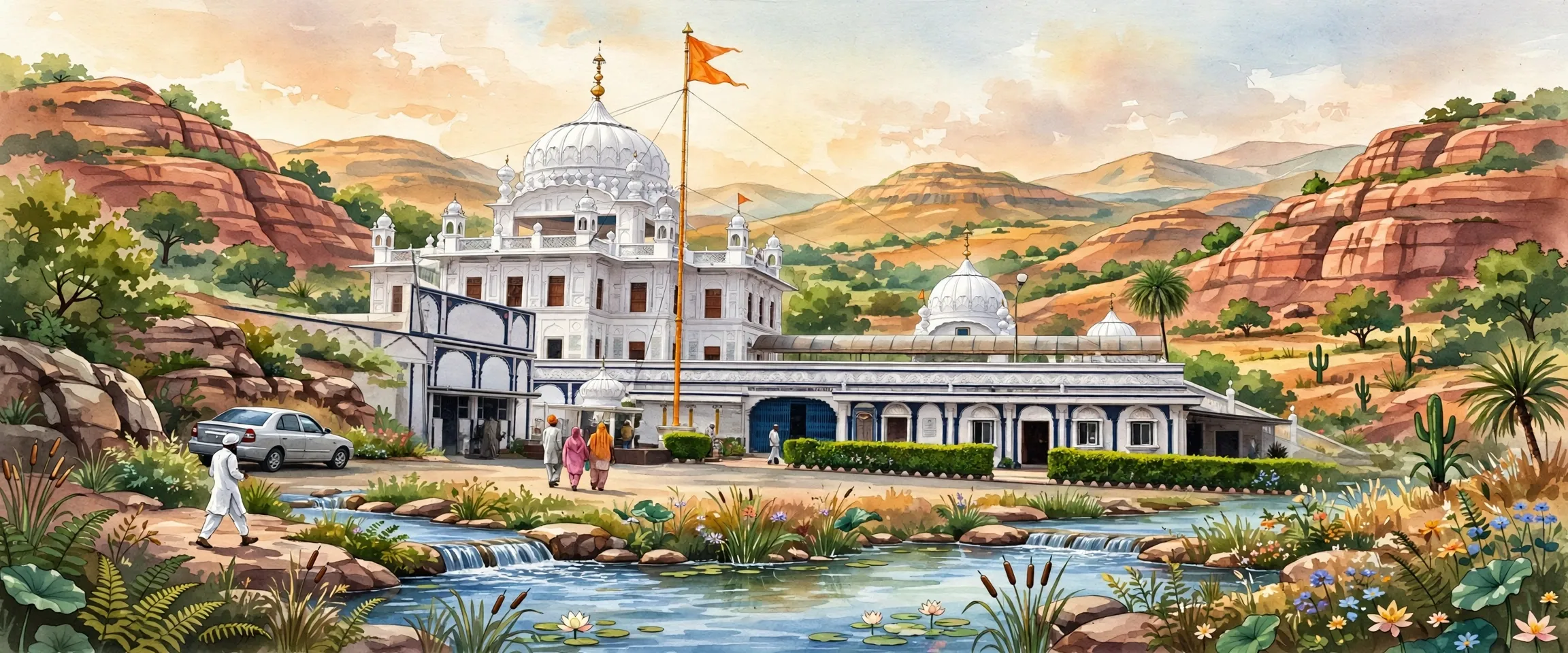
Guru Nanak Jhira Sahib stands at Shiva Nagar, Bidar, in Karnataka, in a valley ringed by laterite hills. It honours Guru Nanak Dev Ji's halt here on his second udasi, between about 1510 and 1514, when tradition says a clear freshwater spring came from the rock for a town short of drinking water. The spring, kept in the Amrit Kund pool, still flows, and the shrine draws about four to five lakh visitors a year.
- Punjabi name
- ਗੁਰੂ ਨਾਨਕ ਝੀਰਾ ਸਾਹਿਬ
- Type
- Historic gurdwara
- Country
- India
- City
- Bidar
- District
- Bidar
- State
- Karnataka
All 16 facts
- Location
- Shiva Nagar, Bidar, Karnataka
- Coordinates
- 17.9279 N, 77.5079 E (per Wikipedia)
- Elevation
- About 618.7 m (per Wikipedia)
- Associated with
- Guru Nanak Dev Ji; Bhai Mardana Ji; Pir Jalaluddin
- Marks
- Second udasi visit, about 1510 to 1514; the spring called Amrit Kund
- Present shrine
- Control passed to the Sikhs in 1948, confirmed by court verdict in 1950; main building Sri Harimandir Sahib completed in 1966
- In the complex
- Darbar Sahib, Diwan Hall, Langar Hall, Amrit Kund, bathing tank, 101 room Guru Nanak Bishram Ghar, hospital, museum
- Festivals
- Guru Nanak Gurpurab; Hola Mohalla
- Visitors
- About four to five lakh pilgrims a year, per the shrine accounts cited on Wikipedia
- Distance
- About 4 km from Bidar airport and Bidar railway station, per Karnataka Tourism
Guru Nanak Jhira Sahib is a Sikh shrine in a valley at Bidar, in north Karnataka, built beside a freshwater spring that tradition links to Guru Nanak Dev Ji's visit during his second udasi. In a town where well water was often unfit to drink, the spring, gathered in a pool called the Amrit Kund, made this one of the most visited Sikh pilgrimage centres in South India.
What is Guru Nanak Jhira Sahib?
Guru Nanak Jhira Sahib is the gurdwara at Shiva Nagar, Bidar, Karnataka, honouring Guru Nanak Dev Ji's halt here in the early sixteenth century. Jhira means a stream, and the name records what the place is known for: a clear spring that still flows from the rock beside the shrine. The complex includes the Darbar Sahib, a Diwan Hall and a Langar Hall, rooms for pilgrims, a hospital and a museum, set in a valley ringed by laterite hills on three sides.
Guru Nanak Dev Ji in Bidar
Guru Nanak Dev Ji reached Bidar during his second udasi, his missionary journey through southern India between about 1510 and 1514. The accounts trace his route through Nagpur and Khandwa, past the Omkareshwar temple on the Narmada, to Nanded, and then towards Hyderabad and Golconda before Bidar. At that time Bidar was the capital of the Bahmani kingdom, and since Mahmud Gawan founded his great madrasa here in 1471 to 1472 it had also been a noted centre of Arabic learning in the Deccan.
The Guru stayed on the outskirts of the town, next to a monastery of Muslim ascetics, with his companion Bhai Mardana Ji. The faqirs, led by Pir Jalaluddin, came to hear the hymns sung to Mardana's rebeck, and word of the visitor from the north spread quickly through the town. People began arriving in numbers to hear him and seek his blessing, and it was their most practical problem, water, that they laid before him.
How did the spring at Nanak Jhira appear?
Bidar stands high on a plateau, and drinking water was its old difficulty. Wells were dug, but they often failed, or produced water unfit to drink, and the monastery by the rock had no water near it at all. Tradition says that, at Pir Jalaluddin's request, Guru Nanak Dev Ji lifted a stone, in some tellings shifting rubble with his wooden sandal while uttering Sat Kartar, and clear, sweet water came out from beneath it. The spring has been known ever since as the Amrit Kund, the pool of nectar.
There is also a plainer layer beneath the tradition. Bidar's plateau is red laterite rock over an impervious trap base, and springs form naturally where the two layers meet: similar springs feed other old sites in the town. That geology does not settle what happened five centuries ago, but it does explain why a spring here, once found, could keep flowing. Devotees record that it has never dried up, and visitors still carry its water home in bottles and cans.
The shrine today
For centuries the site was looked after by Muslim custodians, a fact the Sikh accounts themselves preserve. Mai Bhago Ji, who had followed Guru Gobind Singh Ji to the Deccan, is remembered visiting it often from nearby Jinvara. The place became a major pilgrimage centre only after control passed to the Sikhs in 1948, a transfer confirmed by a court verdict in 1950. Building began under a committee headed by Sardar Bishan Singh of Hyderabad.
The main building, called Sri Harimandir Sahib, was completed in 1966, and the Guru Granth Sahib was installed in it at Hola Mohalla. It is a three storeyed structure mixing modern and older styles: a ground floor of rooms forms the base for the main diwan hall above, arranged around a sanctum of about 10 metres square, with a large refectory alongside for big gatherings. The Amrit Kund is now a canopied, square pool, and it supplies the bathing tank about 50 metres away. Later additions include a 101 room pilgrim residence, the Guru Nanak Bishram Ghar, a charity hospital, a primary school and a museum of Sikh history, which Karnataka Tourism describes as dedicated to the memory of Guru Tegh Bahadur Ji. The langar is served day and night.
Why do so many pilgrims come to Bidar?
Estimates kept by the shrine put annual visitors at about four to five lakh, a remarkable figure for a Sikh shrine this far south, and the crowds peak at Guru Nanak Gurpurab and Hola Mohalla. Bidar also has a second, later link with Sikh history: it was the home town of Bhai Sahib Singh Ji, one of the Panj Pyare who offered their heads to Guru Gobind Singh Ji in 1699. Some devotees call Nanak Jhira a second Panja Sahib, after the shrine in present day Pakistan where another spring is linked to Guru Nanak Dev Ji: the comparison is a measure of how central the flowing water is to both places.
That dependence is also the shrine's worry. Reporting cited on the site notes that the hill slopes which recharge the spring are being built over, and that roads, paving and soak pits can both starve and foul the water below. Protecting a five century old spring, in a growing town, is now part of the gurdwara's work, alongside the prayers and the langar.
How to reach Guru Nanak Jhira Sahib?
The gurdwara stands at Shiva Nagar in Bidar, at about 17.93 degrees north, 77.51 degrees east. Karnataka Tourism puts both Bidar airport and Bidar railway station about 4 kilometres away, with Hyderabad, about 150 kilometres by that source's reckoning, as the larger airport option, and Bengaluru roughly 700 kilometres by road. Bidar is also connected by road with Nanded, about 65 kilometres or so by road in most accounts, which lets pilgrims pair Jhira Sahib with Hazur Sahib on one journey. Cover your head, remove footwear, and expect the langar hall to be feeding people whatever hour you arrive.
ਗੁਰੂ ਨਾਨਕ ਝੀਰਾ ਸਾਹਿਬ ਕਰਨਾਟਕ ਦੇ ਉੱਤਰ ਵਿੱਚ ਬੀਦਰ ਵਿਖੇ ਇੱਕ ਘਾਟੀ ਵਿੱਚ ਬਣਿਆ ਸਿੱਖ ਅਸਥਾਨ ਹੈ, ਉਸ ਮਿੱਠੇ ਪਾਣੀ ਦੇ ਝਰਨੇ ਦੇ ਕੋਲ ਜਿਸ ਨੂੰ ਕਥਾ ਗੁਰੂ ਨਾਨਕ ਦੇਵ ਜੀ ਦੀ ਦੂਜੀ ਉਦਾਸੀ ਦੌਰਾਨ ਹੋਈ ਫੇਰੀ ਨਾਲ ਜੋੜਦੀ ਹੈ ਜਿਸ ਸ਼ਹਿਰ ਵਿੱਚ ਖੂਹਾਂ ਦਾ ਪਾਣੀ ਅਕਸਰ ਪੀਣ ਜੋਗਾ ਨਹੀਂ ਸੀ, ਉੱਥੇ ਅੰਮ੍ਰਿਤ ਕੁੰਡ ਨਾਂ ਦੇ ਤਲਾਬ ਵਿੱਚ ਇਕੱਠਾ ਹੁੰਦਾ ਇਹ ਝਰਨਾ ਇਸ ਨੂੰ ਦੱਖਣੀ ਭਾਰਤ ਦੇ ਸਭ ਤੋਂ ਵੱਧ ਵੇਖੇ ਜਾਣ ਵਾਲੇ ਸਿੱਖ ਤੀਰਥ ਅਸਥਾਨਾਂ ਵਿੱਚੋਂ ਇੱਕ ਬਣਾ ਗਿਆ
ਗੁਰੂ ਨਾਨਕ ਝੀਰਾ ਸਾਹਿਬ ਕੀ ਹੈ?
ਗੁਰੂ ਨਾਨਕ ਝੀਰਾ ਸਾਹਿਬ ਬੀਦਰ, ਕਰਨਾਟਕ ਦੇ ਸ਼ਿਵਾ ਨਗਰ ਵਿੱਚ ਸਥਿਤ ਉਹ ਗੁਰਦੁਆਰਾ ਹੈ ਜੋ ਸੋਲ੍ਹਵੀਂ ਸਦੀ ਦੇ ਸ਼ੁਰੂ ਵਿੱਚ ਗੁਰੂ ਨਾਨਕ ਦੇਵ ਜੀ ਦੀ ਇੱਥੇ ਠਹਿਰ ਦਾ ਸਨਮਾਨ ਕਰਦਾ ਹੈ ਝੀਰਾ ਦਾ ਅਰਥ ਹੈ ਨਦੀਨੁਮਾ ਧਾਰਾ, ਅਤੇ ਨਾਂ ਉਸੇ ਗੱਲ ਨੂੰ ਦਰਜ ਕਰਦਾ ਹੈ ਜਿਸ ਲਈ ਇਹ ਥਾਂ ਜਾਣੀ ਜਾਂਦੀ ਹੈ: ਅਸਥਾਨ ਦੇ ਕੋਲ ਚੱਟਾਨ ਵਿੱਚੋਂ ਅੱਜ ਵੀ ਵਗਦਾ ਸਾਫ਼ ਝਰਨਾ ਪਰਿਸਰ ਵਿੱਚ ਦਰਬਾਰ ਸਾਹਿਬ, ਦੀਵਾਨ ਹਾਲ ਅਤੇ ਲੰਗਰ ਹਾਲ, ਯਾਤਰੀਆਂ ਲਈ ਕਮਰੇ, ਇੱਕ ਹਸਪਤਾਲ ਅਤੇ ਇੱਕ ਅਜਾਇਬ ਘਰ ਹੈ, ਤਿੰਨ ਪਾਸਿਆਂ ਤੋਂ ਲੈਟਰਾਈਟ ਪਹਾੜੀਆਂ ਨਾਲ ਘਿਰੀ ਘਾਟੀ ਵਿੱਚ
ਗੁਰੂ ਨਾਨਕ ਦੇਵ ਜੀ ਬੀਦਰ ਵਿੱਚ
ਗੁਰੂ ਨਾਨਕ ਦੇਵ ਜੀ ਆਪਣੀ ਦੂਜੀ ਉਦਾਸੀ, ਲਗਭਗ 1510 ਤੋਂ 1514 ਵਿਚਕਾਰ ਦੱਖਣੀ ਭਾਰਤ ਦੀ ਯਾਤਰਾ, ਦੌਰਾਨ ਬੀਦਰ ਪਹੁੰਚੇ ਵੇਰਵੇ ਉਨ੍ਹਾਂ ਦਾ ਰਾਹ ਨਾਗਪੁਰ ਅਤੇ ਖੰਡਵਾ ਵਿੱਚੋਂ, ਨਰਮਦਾ ਕੰਢੇ ਓਂਕਾਰੇਸ਼ਵਰ ਮੰਦਰ ਕੋਲੋਂ, ਨਾਂਦੇੜ ਤੱਕ, ਅਤੇ ਫਿਰ ਹੈਦਰਾਬਾਦ ਅਤੇ ਗੋਲਕੁੰਡਾ ਵੱਲ ਜਾਂਦਾ ਵਿਖਾਉਂਦੇ ਹੋਏ ਬੀਦਰ ਲਿਆਉਂਦੇ ਹਨ ਉਸ ਸਮੇਂ ਬੀਦਰ ਬਹਿਮਨੀ ਸਲਤਨਤ ਦੀ ਰਾਜਧਾਨੀ ਸੀ, ਅਤੇ 1471 ਤੋਂ 1472 ਵਿੱਚ ਮਹਿਮੂਦ ਗਵਾਂ ਵੱਲੋਂ ਇੱਥੇ ਵੱਡਾ ਮਦਰੱਸਾ ਬਣਨ ਮਗਰੋਂ ਇਹ ਦੱਖਣ ਵਿੱਚ ਅਰਬੀ ਸਿੱਖਿਆ ਦਾ ਨਾਮੀ ਕੇਂਦਰ ਵੀ ਬਣ ਚੁੱਕਾ ਸੀ
ਗੁਰੂ ਜੀ ਆਪਣੇ ਸਾਥੀ ਭਾਈ ਮਰਦਾਨਾ ਜੀ ਨਾਲ ਸ਼ਹਿਰ ਦੇ ਬਾਹਰ, ਮੁਸਲਮਾਨ ਫ਼ਕੀਰਾਂ ਦੇ ਇੱਕ ਟਿਕਾਣੇ ਦੇ ਕੋਲ ਠਹਿਰੇ ਪੀਰ ਜਲਾਲੂਦੀਨ ਦੀ ਅਗਵਾਈ ਵਿੱਚ ਫ਼ਕੀਰ ਮਰਦਾਨਾ ਜੀ ਦੀ ਰਬਾਬ ਨਾਲ ਗਾਏ ਜਾਂਦੇ ਸ਼ਬਦ ਸੁਣਨ ਆਏ, ਅਤੇ ਉੱਤਰ ਤੋਂ ਆਏ ਮਹਿਮਾਨ ਦੀ ਖ਼ਬਰ ਸਾਰੇ ਸ਼ਹਿਰ ਵਿੱਚ ਛੇਤੀ ਫੈਲ ਗਈ ਲੋਕ ਉਨ੍ਹਾਂ ਨੂੰ ਸੁਣਨ ਅਤੇ ਅਸੀਸ ਲੈਣ ਵੱਡੀ ਗਿਣਤੀ ਵਿੱਚ ਆਉਣ ਲੱਗੇ, ਅਤੇ ਉਨ੍ਹਾਂ ਨੇ ਆਪਣੀ ਸਭ ਤੋਂ ਅਸਲੀ ਮੁਸ਼ਕਲ, ਪਾਣੀ, ਉਨ੍ਹਾਂ ਅੱਗੇ ਰੱਖੀ
ਨਾਨਕ ਝੀਰੇ ਦਾ ਝਰਨਾ ਕਿਵੇਂ ਨਿਕਲਿਆ?
ਬੀਦਰ ਇੱਕ ਉੱਚੇ ਪਠਾਰ ਉੱਤੇ ਵੱਸਿਆ ਹੈ, ਅਤੇ ਪੀਣ ਦਾ ਪਾਣੀ ਇਸ ਦੀ ਪੁਰਾਣੀ ਔਖ ਸੀ ਖੂਹ ਪੁੱਟੇ ਗਏ, ਪਰ ਅਕਸਰ ਉਹ ਖਾਲੀ ਨਿਕਲੇ ਜਾਂ ਉਨ੍ਹਾਂ ਦਾ ਪਾਣੀ ਪੀਣ ਜੋਗਾ ਨਾ ਨਿਕਲਿਆ, ਅਤੇ ਚੱਟਾਨ ਕੋਲ ਵਾਲੇ ਫ਼ਕੀਰਾਂ ਦੇ ਟਿਕਾਣੇ ਦੇ ਨੇੜੇ ਤਾਂ ਪਾਣੀ ਸੀ ਹੀ ਨਹੀਂ ਕਥਾ ਹੈ ਕਿ ਪੀਰ ਜਲਾਲੂਦੀਨ ਦੀ ਬੇਨਤੀ ਉੱਤੇ ਗੁਰੂ ਨਾਨਕ ਦੇਵ ਜੀ ਨੇ ਇੱਕ ਪੱਥਰ ਹਟਾਇਆ, ਕੁਝ ਕਥਾਵਾਂ ਵਿੱਚ ਸਤਿ ਕਰਤਾਰ ਕਹਿੰਦੇ ਹੋਏ ਆਪਣੀ ਲੱਕੜ ਦੀ ਖੜਾਵਾਂ ਨਾਲ ਰੋੜੇ ਹਟਾਏ, ਅਤੇ ਉਸ ਦੇ ਹੇਠੋਂ ਸਾਫ਼ ਮਿੱਠਾ ਪਾਣੀ ਨਿਕਲ ਆਇਆ ਉਸੇ ਦਿਨ ਤੋਂ ਇਹ ਝਰਨਾ ਅੰਮ੍ਰਿਤ ਕੁੰਡ, ਭਾਵ ਅੰਮ੍ਰਿਤ ਦਾ ਤਲਾਬ, ਕਹਾਉਂਦਾ ਹੈ
ਕਥਾ ਦੇ ਹੇਠਾਂ ਇੱਕ ਸਾਦੀ ਪਰਤ ਵੀ ਹੈ ਬੀਦਰ ਦਾ ਪਠਾਰ ਅਭੇਦ ਟਰੈਪ ਅਧਾਰ ਉੱਤੇ ਲਾਲ ਲੈਟਰਾਈਟ ਚੱਟਾਨ ਦਾ ਹੈ, ਅਤੇ ਜਿੱਥੇ ਦੋਵੇਂ ਪਰਤਾਂ ਮਿਲਦੀਆਂ ਹਨ ਉੱਥੇ ਕੁਦਰਤੀ ਝਰਨੇ ਬਣਦੇ ਹਨ: ਅਜਿਹੇ ਝਰਨੇ ਸ਼ਹਿਰ ਦੇ ਹੋਰ ਪੁਰਾਣੇ ਅਸਥਾਨਾਂ ਨੂੰ ਵੀ ਪਾਣੀ ਦਿੰਦੇ ਹਨ ਇਹ ਭੂ ਵਿਗਿਆਨ ਪੰਜ ਸਦੀ ਪਹਿਲਾਂ ਕੀ ਹੋਇਆ, ਇਹ ਤਾਂ ਨਹੀਂ ਦੱਸਦਾ, ਪਰ ਇਹ ਜ਼ਰੂਰ ਸਮਝਾਉਂਦਾ ਹੈ ਕਿ ਇੱਥੇ ਲੱਭਿਆ ਝਰਨਾ ਕਿਉਂ ਵਗਦਾ ਰਹਿ ਸਕਿਆ ਸ਼ਰਧਾਲੂ ਦਰਜ ਕਰਦੇ ਹਨ ਕਿ ਇਹ ਕਦੇ ਨਹੀਂ ਸੁੱਕਿਆ, ਅਤੇ ਯਾਤਰੀ ਅੱਜ ਵੀ ਇਸ ਦਾ ਪਾਣੀ ਬੋਤਲਾਂ ਅਤੇ ਕੈਨਾਂ ਵਿੱਚ ਘਰ ਲੈ ਜਾਂਦੇ ਹਨ
ਅੱਜ ਦਾ ਅਸਥਾਨ
ਸਦੀਆਂ ਤੱਕ ਇਸ ਥਾਂ ਦੀ ਸੰਭਾਲ ਮੁਸਲਮਾਨ ਮੁਤਵੱਲੀਆਂ ਕੋਲ ਰਹੀ, ਇਹ ਗੱਲ ਸਿੱਖ ਵੇਰਵੇ ਆਪ ਦਰਜ ਕਰਦੇ ਹਨ ਮਾਈ ਭਾਗੋ ਜੀ, ਜੋ ਗੁਰੂ ਗੋਬਿੰਦ ਸਿੰਘ ਜੀ ਦੇ ਪਿੱਛੇ ਦੱਖਣ ਆਈਆਂ ਸਨ, ਨੇੜਲੇ ਜਿਨਵਾੜਾ ਤੋਂ ਇੱਥੇ ਅਕਸਰ ਆਉਂਦੀਆਂ ਯਾਦ ਕੀਤੀਆਂ ਜਾਂਦੀਆਂ ਹਨ ਇਹ ਥਾਂ ਵੱਡਾ ਤੀਰਥ ਕੇਂਦਰ 1948 ਵਿੱਚ ਸਿੱਖਾਂ ਦੇ ਪ੍ਰਬੰਧ ਹੇਠ ਆਉਣ ਮਗਰੋਂ ਹੀ ਬਣਿਆ, ਜਿਸ ਦੀ ਪੁਸ਼ਟੀ 1950 ਵਿੱਚ ਅਦਾਲਤੀ ਫ਼ੈਸਲੇ ਨਾਲ ਹੋਈ ਉਸਾਰੀ ਹੈਦਰਾਬਾਦ ਦੇ ਸਰਦਾਰ ਬਿਸ਼ਨ ਸਿੰਘ ਦੀ ਅਗਵਾਈ ਵਾਲੀ ਕਮੇਟੀ ਹੇਠ ਸ਼ੁਰੂ ਹੋਈ
ਮੁੱਖ ਇਮਾਰਤ, ਜਿਸ ਨੂੰ ਸ੍ਰੀ ਹਰਿਮੰਦਰ ਸਾਹਿਬ ਕਿਹਾ ਜਾਂਦਾ ਹੈ, 1966 ਵਿੱਚ ਮੁਕੰਮਲ ਹੋਈ, ਅਤੇ ਹੋਲਾ ਮਹੱਲਾ ਉੱਤੇ ਇਸ ਵਿੱਚ ਗੁਰੂ ਗ੍ਰੰਥ ਸਾਹਿਬ ਜੀ ਦਾ ਪ੍ਰਕਾਸ਼ ਹੋਇਆ ਇਹ ਤਿੰਨ ਮੰਜ਼ਲੀ ਇਮਾਰਤ ਨਵੇਂ ਅਤੇ ਪੁਰਾਣੇ ਅੰਦਾਜ਼ ਦਾ ਮੇਲ ਹੈ: ਕਮਰਿਆਂ ਵਾਲੀ ਹੇਠਲੀ ਮੰਜ਼ਲ ਉੱਤੇ ਮੁੱਖ ਦੀਵਾਨ ਹਾਲ ਹੈ, ਲਗਭਗ 10 ਮੀਟਰ ਵਰਗ ਦੇ ਅੰਦਰਲੇ ਅਸਥਾਨ ਦੁਆਲੇ, ਅਤੇ ਵੱਡੇ ਇਕੱਠਾਂ ਲਈ ਨਾਲ ਇੱਕ ਵੱਡਾ ਖਾਣਾ ਹਾਲ ਹੈ ਅੰਮ੍ਰਿਤ ਕੁੰਡ ਹੁਣ ਛੱਤ ਵਾਲਾ ਚੌਰਸ ਤਲਾਬ ਹੈ ਅਤੇ ਲਗਭਗ 50 ਮੀਟਰ ਦੂਰ ਇਸ਼ਨਾਨ ਤਲਾਬ ਨੂੰ ਪਾਣੀ ਦਿੰਦਾ ਹੈ ਮਗਰੋਂ ਬਣੀਆਂ ਚੀਜ਼ਾਂ ਵਿੱਚ 101 ਕਮਰਿਆਂ ਵਾਲਾ ਯਾਤਰੀ ਨਿਵਾਸ, ਗੁਰੂ ਨਾਨਕ ਬਿਸ਼ਰਾਮ ਘਰ, ਇੱਕ ਦਾਨ ਹਸਪਤਾਲ, ਇੱਕ ਪ੍ਰਾਇਮਰੀ ਸਕੂਲ ਅਤੇ ਸਿੱਖ ਇਤਿਹਾਸ ਦਾ ਅਜਾਇਬ ਘਰ ਹੈ, ਜਿਸ ਨੂੰ ਕਰਨਾਟਕ ਟੂਰਿਜ਼ਮ ਗੁਰੂ ਤੇਗ ਬਹਾਦਰ ਜੀ ਦੀ ਯਾਦ ਨਾਲ ਜੋੜਦਾ ਹੈ ਲੰਗਰ ਦਿਨ ਰਾਤ ਚੱਲਦਾ ਹੈ
ਇੰਨੇ ਸ਼ਰਧਾਲੂ ਬੀਦਰ ਕਿਉਂ ਆਉਂਦੇ ਹਨ?
ਅਸਥਾਨ ਵੱਲੋਂ ਰੱਖੇ ਅੰਦਾਜ਼ੇ ਸਾਲਾਨਾ ਯਾਤਰੀਆਂ ਦੀ ਗਿਣਤੀ ਲਗਭਗ ਚਾਰ ਤੋਂ ਪੰਜ ਲੱਖ ਦੱਸਦੇ ਹਨ, ਇੰਨੇ ਦੱਖਣ ਵਿੱਚ ਕਿਸੇ ਸਿੱਖ ਅਸਥਾਨ ਲਈ ਹੈਰਾਨ ਕਰਨ ਵਾਲੀ ਗਿਣਤੀ, ਅਤੇ ਭੀੜ ਗੁਰੂ ਨਾਨਕ ਗੁਰਪੁਰਬ ਅਤੇ ਹੋਲਾ ਮਹੱਲਾ ਉੱਤੇ ਸਭ ਤੋਂ ਵੱਧ ਹੁੰਦੀ ਹੈ ਬੀਦਰ ਦਾ ਸਿੱਖ ਇਤਿਹਾਸ ਨਾਲ ਦੂਜਾ, ਮਗਰਲਾ ਨਾਤਾ ਵੀ ਹੈ: ਇਹ ਭਾਈ ਸਾਹਿਬ ਸਿੰਘ ਜੀ ਦਾ ਜੱਦੀ ਸ਼ਹਿਰ ਸੀ, ਉਨ੍ਹਾਂ ਪੰਜ ਪਿਆਰਿਆਂ ਵਿੱਚੋਂ ਇੱਕ ਜਿਨ੍ਹਾਂ ਨੇ 1699 ਵਿੱਚ ਗੁਰੂ ਗੋਬਿੰਦ ਸਿੰਘ ਜੀ ਅੱਗੇ ਸੀਸ ਭੇਟ ਕੀਤੇ ਕੁਝ ਸ਼ਰਧਾਲੂ ਨਾਨਕ ਝੀਰੇ ਨੂੰ ਦੂਜਾ ਪੰਜਾ ਸਾਹਿਬ ਕਹਿੰਦੇ ਹਨ, ਅੱਜ ਦੇ ਪਾਕਿਸਤਾਨ ਵਾਲੇ ਉਸ ਅਸਥਾਨ ਦੇ ਨਾਂ ਉੱਤੇ ਜਿੱਥੇ ਇੱਕ ਹੋਰ ਝਰਨਾ ਗੁਰੂ ਨਾਨਕ ਦੇਵ ਜੀ ਨਾਲ ਜੁੜਦਾ ਹੈ: ਇਹ ਤੁਲਨਾ ਦੱਸਦੀ ਹੈ ਕਿ ਦੋਵਾਂ ਥਾਵਾਂ ਲਈ ਵਗਦਾ ਪਾਣੀ ਕਿੰਨਾ ਕੇਂਦਰੀ ਹੈ
ਉਹੀ ਨਿਰਭਰਤਾ ਇਸ ਅਸਥਾਨ ਦੀ ਚਿੰਤਾ ਵੀ ਹੈ ਅਸਥਾਨ ਬਾਰੇ ਦਰਜ ਰਿਪੋਰਟਾਂ ਕਹਿੰਦੀਆਂ ਹਨ ਕਿ ਝਰਨੇ ਨੂੰ ਪਾਣੀ ਦੇਣ ਵਾਲੀਆਂ ਪਹਾੜੀ ਢਲਾਣਾਂ ਉੱਤੇ ਉਸਾਰੀ ਹੋ ਰਹੀ ਹੈ, ਅਤੇ ਸੜਕਾਂ, ਪੱਕੇ ਫਰਸ਼ ਅਤੇ ਸੋਕ ਪਿੱਟ ਹੇਠਲੇ ਪਾਣੀ ਨੂੰ ਭੁੱਖਾ ਵੀ ਰੱਖ ਸਕਦੇ ਹਨ ਅਤੇ ਗੰਦਾ ਵੀ ਕਰ ਸਕਦੇ ਹਨ ਵਧਦੇ ਸ਼ਹਿਰ ਵਿੱਚ ਪੰਜ ਸਦੀ ਪੁਰਾਣੇ ਝਰਨੇ ਦੀ ਰਾਖੀ ਹੁਣ ਗੁਰਦੁਆਰੇ ਦੇ ਕੰਮ ਦਾ ਹਿੱਸਾ ਹੈ, ਪਾਠ ਅਤੇ ਲੰਗਰ ਦੇ ਨਾਲ ਨਾਲ
ਗੁਰੂ ਨਾਨਕ ਝੀਰਾ ਸਾਹਿਬ ਕਿਵੇਂ ਪਹੁੰਚੀਏ?
ਗੁਰਦੁਆਰਾ ਬੀਦਰ ਦੇ ਸ਼ਿਵਾ ਨਗਰ ਵਿੱਚ ਹੈ, ਲਗਭਗ 1793 ਡਿਗਰੀ ਉੱਤਰ, 7751 ਡਿਗਰੀ ਪੂਰਬ ਉੱਤੇ ਕਰਨਾਟਕ ਟੂਰਿਜ਼ਮ ਬੀਦਰ ਹਵਾਈ ਅੱਡਾ ਅਤੇ ਬੀਦਰ ਰੇਲਵੇ ਸਟੇਸ਼ਨ ਦੋਵੇਂ ਲਗਭਗ 4 ਕਿਲੋਮੀਟਰ ਦੱਸਦਾ ਹੈ, ਵੱਡੇ ਹਵਾਈ ਅੱਡੇ ਵਜੋਂ ਹੈਦਰਾਬਾਦ, ਉਸ ਸਰੋਤ ਦੇ ਹਿਸਾਬ ਨਾਲ ਲਗਭਗ 150 ਕਿਲੋਮੀਟਰ, ਅਤੇ ਸੜਕ ਰਾਹੀਂ ਬੈਂਗਲੁਰੂ ਲਗਭਗ 700 ਕਿਲੋਮੀਟਰ ਬੀਦਰ ਸੜਕ ਰਾਹੀਂ ਨਾਂਦੇੜ ਨਾਲ ਵੀ ਜੁੜਿਆ ਹੈ, ਬਹੁਤੇ ਵੇਰਵਿਆਂ ਵਿੱਚ ਲਗਭਗ 65 ਕਿਲੋਮੀਟਰ, ਜਿਸ ਨਾਲ ਯਾਤਰੀ ਇੱਕੋ ਯਾਤਰਾ ਵਿੱਚ ਝੀਰਾ ਸਾਹਿਬ ਅਤੇ ਹਜ਼ੂਰ ਸਾਹਿਬ ਦੋਵੇਂ ਕਰ ਆਉਂਦੇ ਹਨ ਸਿਰ ਢੱਕੋ, ਜੁੱਤੇ ਲਾਹੋ, ਅਤੇ ਜਿਸ ਵੇਲੇ ਵੀ ਪਹੁੰਚੋ, ਲੰਗਰ ਹਾਲ ਲੋਕਾਂ ਨੂੰ ਛਕਾ ਰਿਹਾ ਹੋਵੇਗਾ