
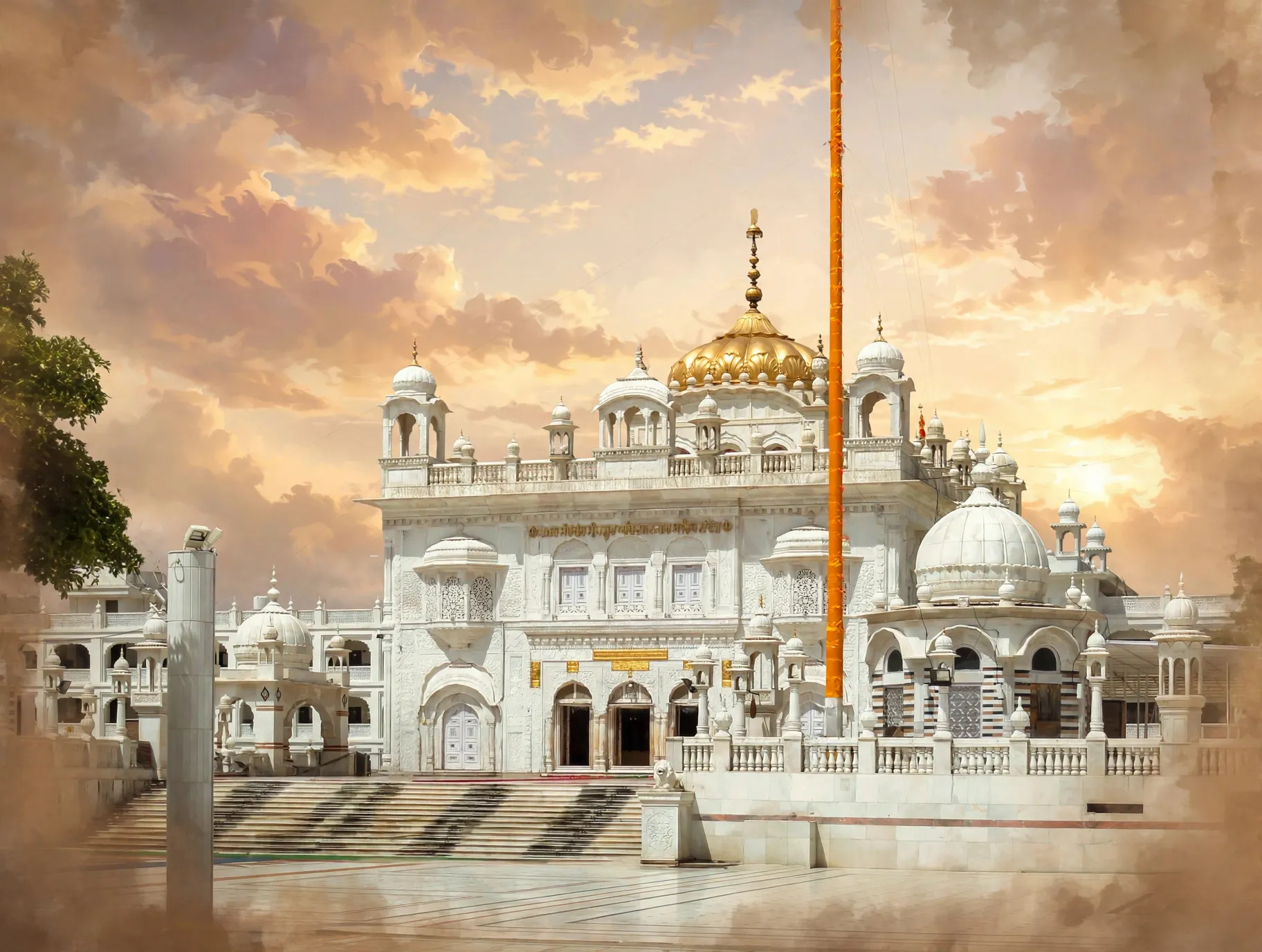
Takht Sachkhand Sri Hazur Abchalnagar Sahib at Nanded, Maharashtra, is one of five Takhts of the Sikhs. On the banks of the Godavari, it marks Guru Gobind Singh Ji’s last camp in 1708, where he declared Guru Granth Sahib Ji the eternal Guru and became Joti Jot on 7 October 1708. Maharaja Ranjit Singh built it between 1832 and 1837.
- Punjabi name
- ਗੁਰਦੁਆਰਾ ਤਖ਼ਤ ਸ੍ਰੀ ਹਜ਼ੂਰ ਸਾਹਿਬ, ਨਾਂਦੇੜ
- Country
- India
- State
- Maharashtra
- City
- Nanded
- River
- Godavari
- Status
- One of the five Takhts (thrones of Sikh authority)
All 11 facts
- Full name
- Takht Sachkhand Sri Hazur Abchalnagar Sahib
- Built
- 1832–1837
- Builder
- Maharaja Ranjit Singh
- Also known as
- Hazoor Sahib; Sach-Khand (Realm of Truth)
- Inner shrine
- Angitha Sahib — over Guru Gobind Singh Ji’s cremation site, 1708
Takht Sachkhand Sri Hazur Abchalnagar Sahib at Nanded, Maharashtra, is one of five Takhts of the Sikhs. On the banks of the Godavari, it marks Guru Gobind Singh Ji’s last camp in 1708, where he declared Guru Granth Sahib Ji the eternal Guru and became Joti Jot on 7 October 1708. Maharaja Ranjit Singh built it between 1832 and 1837.
History
After the death of Emperor Aurangzeb in 1707, Guru Gobind Singh Ji travelled south and reached Nanded on the banks of the Godavari. When Emperor Bahadur Shah moved on, the Guru pitched his own camp here in 1708, holding court and congregation. It was at Nanded that two would-be assassins attacked him: one stabbed the Guru, who killed him with a single stroke of his talwar, while the other was killed by the Guru’s followers. The deep wound was stitched by an English surgeon sent by Bahadur Shah and seemed to heal — until it reopened as the Guru was stringing a bow for one of his Sikhs.
Knowing his end was near, the Guru conferred the Guruship on the holy Granth — “Sabh Sikhan ko hukam hai, Guru manyo Granth” — and on 7 October 1708 became Joti Jot at Nanded. Before the attack he had dispatched Banda Singh with five Sikhs to Punjab, sent Mata Sahib Devan to Delhi, and bade Bhai Santokh Singh stay on to keep Guru ka Langar going. The Sikhs who remained built a room over the platform where the Guru had held his court, installed the Guru Granth Sahib Ji there, and called it Takhat Sahib. The Guru himself is said to have named Nanded “Abchalnagar” — the Steadfast City — after the first word of a hymn read at random on the occasion.
Architecture
The white-marble shrine seen today was raised between 1832 and 1837 by Maharaja Ranjit Singh, who sent money, artisans and labour from the Punjab under Sardar Chanda Singh. It stands on the banks of the Godavari, over the site of the Guru’s cremation. The gurdwara within the complex is known as Sach-Khand — the Realm of Truth. Its inner room is the Angitha Sahib, built directly over the spot where Guru Gobind Singh Ji was cremated in 1708: a vault that keeps the Guru’s weapons and personal belongings, which only the head priest may enter, while all the daily functions are carried out in the outer room.
Significance
Hazur Sahib — “the presence of the Master” — is one of the five Takhts, the thrones of Sikh authority, and along with Takht Sri Patna Sahib, one of the two Takhts outside Punjab. It guards the memory of the moment the line of human Gurus ended and the Shabad-Guru began: the tercentenary of the Guruship of Guru Granth Sahib Ji was celebrated here in October 2008, drawing millions of pilgrims. The shrine also stands at the heart of the Deccan Sikhs, whose forebears settled in the Nizam of Hyderabad’s army and kept the flame of Sikhi alive in the south. It anchors this Kosh’s guide to India’s gurdwaras.
Festivals and the yatra
Gurpurabs are marked with special divans and kirtan at the Takht, and katha and ardas fill the Sach-Khand hall through the year. The greatest gathering in living memory was the 300th anniversary of the Guruship of Guru Granth Sahib Ji in October 2008, when an estimated two and a half to three million pilgrims passed through Nanded. Pilgrims often combine the visit with the historic gurdwaras around the city — Nagina Ghat, Banda Ghat, Sangat Sahib, Maltekri Sahib, Hira Ghat Sahib, Mata Sahib and Shikar Ghat Sahib — all within the Nanded area.
How to reach
Nanded has its own airport, Guru Gobind Singh Airport, with domestic connections, and a busy railway station. The Sachkhand Express runs directly between Nanded and Punjab, linking the Deccan Takht with the homeland. Within the city the shrine sits on the Godavari’s banks, easily reached by taxi or auto-rickshaw, with yatri niwas rooms for pilgrims around the complex.
Why is Hazur Sahib one of the five Takhts?
Because it marks the place where Guru Gobind Singh Ji became Joti Jot in 1708 after declaring Guru Granth Sahib Ji the eternal Guru — the moment the line of human Gurus ended. The other Takhts are the Akal Takht at Amritsar, Takht Keshgarh Sahib at Anandpur Sahib, Takht Damdama Sahib at Talwandi Sabo, and Takht Sri Patna Sahib.
What is the Angitha Sahib?
The Angitha Sahib is the inner room of the gurdwara, built directly over the spot where Guru Gobind Singh Ji was cremated in 1708. It is a vault holding the Guru’s weapons and personal belongings; only the head priest may enter.
Which other historic gurdwaras stand around Nanded?
Seven historic gurdwaras mark the Nanded area alongside the Takht: Nagina Ghat, Banda Ghat, Sangat Sahib, Maltekri Sahib, Hira Ghat Sahib, Mata Sahib and Shikar Ghat Sahib — each with its own story from the Guru’s time in the Deccan.
ਤਖ਼ਤ ਸਚਖੰਡ ਸ੍ਰੀ ਹਜ਼ੂਰ ਅਬਚਲਨਗਰ ਸਾਹਿਬ, ਮਹਾਰਾਸ਼ਟਰ ਦੇ ਨਾਂਦੇੜ ਵਿਖੇ, ਸਿੱਖਾਂ ਦੇ ਪੰਜ ਤਖ਼ਤਾਂ ਵਿੱਚੋਂ ਇੱਕ ਹੈ ਗੋਦਾਵਰੀ ਦੇ ਕੰਢੇ ਇਹ ਉਹ ਥਾਂ ਹੈ ਜਿੱਥੇ ਗੁਰੂ ਗੋਬਿੰਦ ਸਿੰਘ ਜੀ ਨੇ 1708 ਵਿੱਚ ਆਪਣਾ ਆਖ਼ਰੀ ਡੇਰਾ ਲਾਇਆ, ਜਿੱਥੇ ਉਨ੍ਹਾਂ ਨੇ ਗੁਰੂ ਗ੍ਰੰਥ ਸਾਹਿਬ ਜੀ ਨੂੰ ਸਦਾ ਲਈ ਗੁਰੂ ਐਲਾਨਿਆ ਅਤੇ 7 ਅਕਤੂਬਰ 1708 ਨੂੰ ਜੋਤੀ ਜੋਤ ਸਮਾ ਗਏ ਮਹਾਰਾਜਾ ਰਣਜੀਤ ਸਿੰਘ ਨੇ ਇਸਨੂੰ 1832 ਤੋਂ 1837 ਵਿਚਕਾਰ ਬਣਵਾਇਆ
ਇਤਿਹਾਸ
1707 ਵਿੱਚ ਬਾਦਸ਼ਾਹ ਔਰੰਗਜ਼ੇਬ ਦੀ ਮੌਤ ਮਗਰੋਂ ਗੁਰੂ ਗੋਬਿੰਦ ਸਿੰਘ ਜੀ ਦੱਖਣ ਵੱਲ ਤੁਰੇ ਅਤੇ ਗੋਦਾਵਰੀ ਦੇ ਕੰਢੇ ਨਾਂਦੇੜ ਪਹੁੰਚੇ ਜਦੋਂ ਬਾਦਸ਼ਾਹ ਬਹਾਦਰ ਸ਼ਾਹ ਅੱਗੇ ਚਲਾ ਗਿਆ, ਤਾਂ ਗੁਰੂ ਜੀ ਨੇ 1708 ਵਿੱਚ ਇੱਥੇ ਆਪਣਾ ਡੇਰਾ ਲਾਇਆ, ਦਰਬਾਰ ਅਤੇ ਸੰਗਤ ਸਜਾਈ ਨਾਂਦੇੜ ਵਿਖੇ ਹੀ ਦੋ ਕਾਤਲਾਂ ਨੇ ਉਨ੍ਹਾਂ ਉੱਤੇ ਹਮਲਾ ਕੀਤਾ: ਇੱਕ ਨੇ ਗੁਰੂ ਜੀ ਨੂੰ ਛੁਰਾ ਮਾਰਿਆ, ਜਿਸਨੂੰ ਗੁਰੂ ਜੀ ਨੇ ਤਲਵਾਰ ਦੇ ਇੱਕੋ ਵਾਰ ਨਾਲ ਮਾਰ ਮੁਕਾਇਆ, ਅਤੇ ਦੂਜੇ ਨੂੰ ਗੁਰੂ ਜੀ ਦੇ ਸਿੱਖਾਂ ਨੇ ਮਾਰ ਦਿੱਤਾ ਬਹਾਦਰ ਸ਼ਾਹ ਵੱਲੋਂ ਭੇਜੇ ਇੱਕ ਅੰਗਰੇਜ਼ ਹਕੀਮ ਨੇ ਡੂੰਘਾ ਜ਼ਖ਼ਮ ਸੀਤਾ, ਅਤੇ ਜ਼ਖ਼ਮ ਭਰਦਾ ਲੱਗਾ — ਪਰ ਜਦੋਂ ਗੁਰੂ ਜੀ ਆਪਣੇ ਇੱਕ ਸਿੱਖ ਲਈ ਕਮਾਨ ਖਿੱਚ ਰਹੇ ਸਨ ਤਾਂ ਜ਼ਖ਼ਮ ਫਿਰ ਖੁੱਲ੍ਹ ਗਿਆ
ਆਪਣਾ ਅੰਤ ਨੇੜੇ ਜਾਣ ਕੇ ਗੁਰੂ ਜੀ ਨੇ ਗੁਰਗੱਦੀ ਪਵਿੱਤਰ ਗ੍ਰੰਥ ਨੂੰ ਸੌਂਪੀ — “ਸਭ ਸਿਖਨ ਕੋ ਹੁਕਮ ਹੈ, ਗੁਰੂ ਮਾਨਿਓ ਗ੍ਰੰਥ” — ਅਤੇ 7 ਅਕਤੂਬਰ 1708 ਨੂੰ ਨਾਂਦੇੜ ਵਿਖੇ ਜੋਤੀ ਜੋਤ ਸਮਾ ਗਏ ਹਮਲੇ ਤੋਂ ਪਹਿਲਾਂ ਉਨ੍ਹਾਂ ਨੇ ਬੰਦਾ ਸਿੰਘ ਨੂੰ ਪੰਜ ਸਿੱਖਾਂ ਨਾਲ ਪੰਜਾਬ ਭੇਜਿਆ, ਮਾਤਾ ਸਾਹਿਬ ਦੇਵਾਂ ਨੂੰ ਦਿੱਲੀ ਭੇਜਿਆ, ਅਤੇ ਭਾਈ ਸੰਤੋਖ ਸਿੰਘ ਨੂੰ ਗੁਰੂ ਕਾ ਲੰਗਰ ਚਲਾਉਣ ਲਈ ਇੱਥੇ ਰਹਿਣ ਲਈ ਕਿਹਾ ਜੋ ਸਿੱਖ ਰਹਿ ਗਏ, ਉਨ੍ਹਾਂ ਨੇ ਉਸ ਚਬੂਤਰੇ ਉੱਤੇ ਕਮਰਾ ਬਣਾਇਆ ਜਿੱਥੇ ਗੁਰੂ ਜੀ ਦਰਬਾਰ ਲਾਉਂਦੇ ਸਨ, ਉੱਥੇ ਗੁਰੂ ਗ੍ਰੰਥ ਸਾਹਿਬ ਜੀ ਪ੍ਰਕਾਸ਼ ਕੀਤੇ ਅਤੇ ਇਸਨੂੰ ਤਖ਼ਤ ਸਾਹਿਬ ਕਿਹਾ ਕਿਹਾ ਜਾਂਦਾ ਹੈ ਕਿ ਗੁਰੂ ਜੀ ਨੇ ਨਾਂਦੇੜ ਦਾ ਨਾਂ “ਅਬਚਲਨਗਰ” — ਅਟੱਲ ਨਗਰ — ਉਸ ਮੌਕੇ ਪੜ੍ਹੇ ਇੱਕ ਸ਼ਬਦ ਦੇ ਪਹਿਲੇ ਬੋਲ ਤੋਂ ਰੱਖਿਆ
ਭਵਨ ਨਿਰਮਾਣ ਕਲਾ
ਅੱਜ ਜੋ ਚਿੱਟੇ ਸੰਗਮਰਮਰ ਦਾ ਗੁਰਦੁਆਰਾ ਦੇਖੀਦਾ ਹੈ, ਉਹ 1832 ਤੋਂ 1837 ਵਿਚਕਾਰ ਮਹਾਰਾਜਾ ਰਣਜੀਤ ਸਿੰਘ ਨੇ ਬਣਵਾਇਆ, ਜਿਨ੍ਹਾਂ ਨੇ ਸਰਦਾਰ ਚੰਦਾ ਸਿੰਘ ਦੀ ਅਗਵਾਈ ਹੇਠ ਪੰਜਾਬ ਤੋਂ ਧਨ, ਕਾਰੀਗਰ ਅਤੇ ਮਜ਼ਦੂਰ ਭੇਜੇ ਇਹ ਗੋਦਾਵਰੀ ਦੇ ਕੰਢੇ, ਗੁਰੂ ਜੀ ਦੇ ਸਸਕਾਰ ਵਾਲੀ ਥਾਂ ਉੱਤੇ ਖੜ੍ਹਾ ਹੈ ਅਹਾਤੇ ਅੰਦਰਲੇ ਗੁਰਦੁਆਰੇ ਨੂੰ ਸਚਖੰਡ — ਸੱਚ ਦਾ ਖੰਡ — ਕਿਹਾ ਜਾਂਦਾ ਹੈ ਇਸਦਾ ਅੰਦਰਲਾ ਕਮਰਾ ਅੰਗੀਠਾ ਸਾਹਿਬ ਹੈ, ਜੋ ਉਸ ਥਾਂ ਉੱਤੇ ਬਣਿਆ ਹੈ ਜਿੱਥੇ 1708 ਵਿੱਚ ਗੁਰੂ ਗੋਬਿੰਦ ਸਿੰਘ ਜੀ ਦਾ ਸਸਕਾਰ ਹੋਇਆ ਸੀ: ਇਹ ਇੱਕ ਤੋਸ਼ਖ਼ਾਨਾ ਹੈ ਜਿਸ ਵਿੱਚ ਗੁਰੂ ਜੀ ਦੇ ਸ਼ਸਤਰ ਅਤੇ ਨਿੱਜੀ ਚੀਜ਼ਾਂ ਰੱਖੀਆਂ ਹਨ, ਜਿਸ ਵਿੱਚ ਸਿਰਫ਼ ਮੁੱਖ ਗ੍ਰੰਥੀ ਹੀ ਜਾ ਸਕਦਾ ਹੈ, ਜਦਕਿ ਸਾਰੇ ਰੋਜ਼ਾਨਾ ਕਾਰਜ ਬਾਹਰਲੇ ਕਮਰੇ ਵਿੱਚ ਹੁੰਦੇ ਹਨ
ਮਹੱਤਵ
ਹਜ਼ੂਰ ਸਾਹਿਬ — “ਮਾਲਕ ਦੀ ਹਜ਼ੂਰੀ” — ਪੰਜ ਤਖ਼ਤਾਂ, ਸਿੱਖ ਸੱਤਾ ਦੇ ਤਖ਼ਤਾਂ, ਵਿੱਚੋਂ ਇੱਕ ਹੈ, ਅਤੇ ਤਖ਼ਤ ਸ੍ਰੀ ਪਟਨਾ ਸਾਹਿਬ ਨਾਲ ਪੰਜਾਬ ਤੋਂ ਬਾਹਰਲੇ ਦੋ ਤਖ਼ਤਾਂ ਵਿੱਚੋਂ ਇੱਕ ਇਹ ਉਸ ਘੜੀ ਦੀ ਯਾਦ ਸਾਂਭਦਾ ਹੈ ਜਦੋਂ ਮਨੁੱਖੀ ਗੁਰੂਆਂ ਦੀ ਲੜੀ ਸਮਾਪਤ ਹੋਈ ਅਤੇ ਸ਼ਬਦ-ਗੁਰੂ ਸ਼ੁਰੂ ਹੋਇਆ: ਅਕਤੂਬਰ 2008 ਵਿੱਚ ਇੱਥੇ ਗੁਰੂ ਗ੍ਰੰਥ ਸਾਹਿਬ ਜੀ ਦੀ ਗੁਰਗੱਦੀ ਦੀ ਤੀਜੀ ਸਦਾਬਦੀ ਮਨਾਈ ਗਈ, ਜਿਸ ਵਿੱਚ ਲੱਖਾਂ ਸ਼ਰਧਾਲੂ ਆਏ ਇਹ ਗੁਰਦੁਆਰਾ ਦੱਖਣ ਦੇ ਸਿੱਖਾਂ ਦਾ ਕੇਂਦਰ ਵੀ ਹੈ, ਜਿਨ੍ਹਾਂ ਦੇ ਵੱਡੇ ਹੈਦਰਾਬਾਦ ਦੇ ਨਿਜ਼ਾਮ ਦੀ ਫ਼ੌਜ ਵਿੱਚ ਭਰਤੀ ਹੋਏ ਸਨ ਅਤੇ ਦੱਖਣ ਵਿੱਚ ਸਿੱਖੀ ਦੀ ਜੋਤ ਜਗਾਈ ਰੱਖੀ ਇਹ ਇਸ ਕੋਸ਼ ਦੀ ਭਾਰਤ ਦੇ ਗੁਰਦੁਆਰਿਆਂ ਵਾਲੀ ਗਾਈਡ ਦਾ ਆਧਾਰ ਹੈ
ਤਿਉਹਾਰ ਅਤੇ ਯਾਤਰਾ
ਤਖ਼ਤ ਉੱਤੇ ਗੁਰਪੁਰਬ ਵਿਸ਼ੇਸ਼ ਦੀਵਾਨਾਂ ਅਤੇ ਕੀਰਤਨ ਨਾਲ ਮਨਾਏ ਜਾਂਦੇ ਹਨ, ਅਤੇ ਸਾਰਾ ਸਾਲ ਸਚਖੰਡ ਹਾਲ ਵਿੱਚ ਕਥਾ ਅਤੇ ਅਰਦਾਸ ਹੁੰਦੀ ਹੈ ਜੀਵਤ ਯਾਦ ਵਿੱਚ ਸਭ ਤੋਂ ਵੱਡਾ ਇਕੱਠ ਅਕਤੂਬਰ 2008 ਵਿੱਚ ਗੁਰੂ ਗ੍ਰੰਥ ਸਾਹਿਬ ਜੀ ਦੀ ਗੁਰਗੱਦੀ ਦੀ ਤੀਜੀ ਸਦਾਬਦੀ ਸੀ, ਜਦੋਂ ਲਗਭਗ ਢਾਈ ਤੋਂ ਤਿੰਨ ਲੱਖ ਸ਼ਰਧਾਲੂ ਨਾਂਦੇੜ ਆਏ ਸ਼ਰਧਾਲੂ ਅਕਸਰ ਦਰਸ਼ਨ ਨੂੰ ਸ਼ਹਿਰ ਦੇ ਆਲੇ-ਦੁਆਲੇ ਦੇ ਇਤਿਹਾਸਕ ਗੁਰਦੁਆਰਿਆਂ — ਨਗੀਨਾ ਘਾਟ, ਬੰਦਾ ਘਾਟ, ਸੰਗਤ ਸਾਹਿਬ, ਮਾਲਟੇਕੜੀ ਸਾਹਿਬ, ਹੀਰਾ ਘਾਟ ਸਾਹਿਬ, ਮਾਤਾ ਸਾਹਿਬ ਅਤੇ ਸ਼ਿਕਾਰ ਘਾਟ ਸਾਹਿਬ — ਨਾਲ ਜੋੜਦੇ ਹਨ, ਜੋ ਸਾਰੇ ਨਾਂਦੇੜ ਦੇ ਆਸ-ਪਾਸ ਹਨ
ਕਿਵੇਂ ਪਹੁੰਚੀਏ
ਨਾਂਦੇੜ ਦਾ ਆਪਣਾ ਹਵਾਈ ਅੱਡਾ ਹੈ, ਗੁਰੂ ਗੋਬਿੰਦ ਸਿੰਘ ਹਵਾਈ ਅੱਡਾ, ਜਿਸਦੇ ਘਰੇਲੂ ਸੰਪਰਕ ਹਨ, ਅਤੇ ਇੱਕ ਵੱਡਾ ਰੇਲਵੇ ਸਟੇਸ਼ਨ ਸਚਖੰਡ ਐਕਸਪ੍ਰੈਸ ਨਾਂਦੇੜ ਅਤੇ ਪੰਜਾਬ ਵਿਚਕਾਰ ਸਿੱਧੀ ਚਲਦੀ ਹੈ, ਜੋ ਦੱਖਣ ਦੇ ਤਖ਼ਤ ਨੂੰ ਵਤਨ ਨਾਲ ਜੋੜਦੀ ਹੈ ਸ਼ਹਿਰ ਅੰਦਰ ਗੁਰਦੁਆਰਾ ਗੋਦਾਵਰੀ ਦੇ ਕੰਢੇ ਹੈ, ਜਿੱਥੇ ਟੈਕਸੀ ਜਾਂ ਆਟੋ-ਰਿਕਸ਼ਾ ਨਾਲ ਆਸਾਨੀ ਨਾਲ ਪਹੁੰਚਿਆ ਜਾ ਸਕਦਾ ਹੈ, ਅਤੇ ਅਹਾਤੇ ਦੇ ਆਲੇ-ਦੁਆਲੇ ਸ਼ਰਧਾਲੂਆਂ ਲਈ ਯਾਤਰੀ ਨਿਵਾਸ ਦੇ ਕਮਰੇ ਹਨ
ਹਜ਼ੂਰ ਸਾਹਿਬ ਪੰਜ ਤਖ਼ਤਾਂ ਵਿੱਚੋਂ ਇੱਕ ਕਿਉਂ ਹੈ?
ਕਿਉਂਕਿ ਇਹ ਉਹ ਥਾਂ ਹੈ ਜਿੱਥੇ ਗੁਰੂ ਗੋਬਿੰਦ ਸਿੰਘ ਜੀ 1708 ਵਿੱਚ ਗੁਰੂ ਗ੍ਰੰਥ ਸਾਹਿਬ ਜੀ ਨੂੰ ਸਦਾ ਲਈ ਗੁਰੂ ਐਲਾਨ ਕਰਨ ਮਗਰੋਂ ਜੋਤੀ ਜੋਤ ਸਮਾ ਗਏ — ਉਹ ਘੜੀ ਜਦੋਂ ਮਨੁੱਖੀ ਗੁਰੂਆਂ ਦੀ ਲੜੀ ਸਮਾਪਤ ਹੋਈ ਹੋਰ ਤਖ਼ਤ ਹਨ: ਅੰਮ੍ਰਿਤਸਰ ਵਿਖੇ ਅਕਾਲ ਤਖ਼ਤ, ਆਨੰਦਪੁਰ ਸਾਹਿਬ ਵਿਖੇ ਤਖ਼ਤ ਕੇਸਗੜ੍ਹ ਸਾਹਿਬ, ਤਲਵੰਡੀ ਸਾਬੋ ਵਿਖੇ ਤਖ਼ਤ ਦਮਦਮਾ ਸਾਹਿਬ, ਅਤੇ ਤਖ਼ਤ ਸ੍ਰੀ ਪਟਨਾ ਸਾਹਿਬ
ਅੰਗੀਠਾ ਸਾਹਿਬ ਕੀ ਹੈ?
ਅੰਗੀਠਾ ਸਾਹਿਬ ਗੁਰਦੁਆਰੇ ਦਾ ਅੰਦਰਲਾ ਕਮਰਾ ਹੈ, ਜੋ ਉਸ ਥਾਂ ਉੱਤੇ ਬਣਿਆ ਹੈ ਜਿੱਥੇ 1708 ਵਿੱਚ ਗੁਰੂ ਗੋਬਿੰਦ ਸਿੰਘ ਜੀ ਦਾ ਸਸਕਾਰ ਹੋਇਆ ਸੀ ਇਹ ਇੱਕ ਤੋਸ਼ਖ਼ਾਨਾ ਹੈ ਜਿਸ ਵਿੱਚ ਗੁਰੂ ਜੀ ਦੇ ਸ਼ਸਤਰ ਅਤੇ ਨਿੱਜੀ ਚੀਜ਼ਾਂ ਰੱਖੀਆਂ ਹਨ; ਇਸ ਵਿੱਚ ਸਿਰਫ਼ ਮੁੱਖ ਗ੍ਰੰਥੀ ਹੀ ਜਾ ਸਕਦਾ ਹੈ
ਨਾਂਦੇੜ ਦੇ ਆਲੇ-ਦੁਆਲੇ ਹੋਰ ਕਿਹੜੇ ਇਤਿਹਾਸਕ ਗੁਰਦੁਆਰੇ ਹਨ?
ਤਖ਼ਤ ਦੇ ਨਾਲ-ਨਾਲ ਨਾਂਦੇੜ ਦੇ ਆਸ-ਪਾਸ ਸੱਤ ਇਤਿਹਾਸਕ ਗੁਰਦੁਆਰੇ ਹਨ: ਨਗੀਨਾ ਘਾਟ, ਬੰਦਾ ਘਾਟ, ਸੰਗਤ ਸਾਹਿਬ, ਮਾਲਟੇਕੜੀ ਸਾਹਿਬ, ਹੀਰਾ ਘਾਟ ਸਾਹਿਬ, ਮਾਤਾ ਸਾਹਿਬ ਅਤੇ ਸ਼ਿਕਾਰ ਘਾਟ ਸਾਹਿਬ — ਹਰ ਇੱਕ ਦੀ ਦੱਖਣ ਵਿੱਚ ਗੁਰੂ ਜੀ ਦੇ ਸਮੇਂ ਦੀ ਆਪਣੀ ਕਹਾਣੀ ਹੈ