
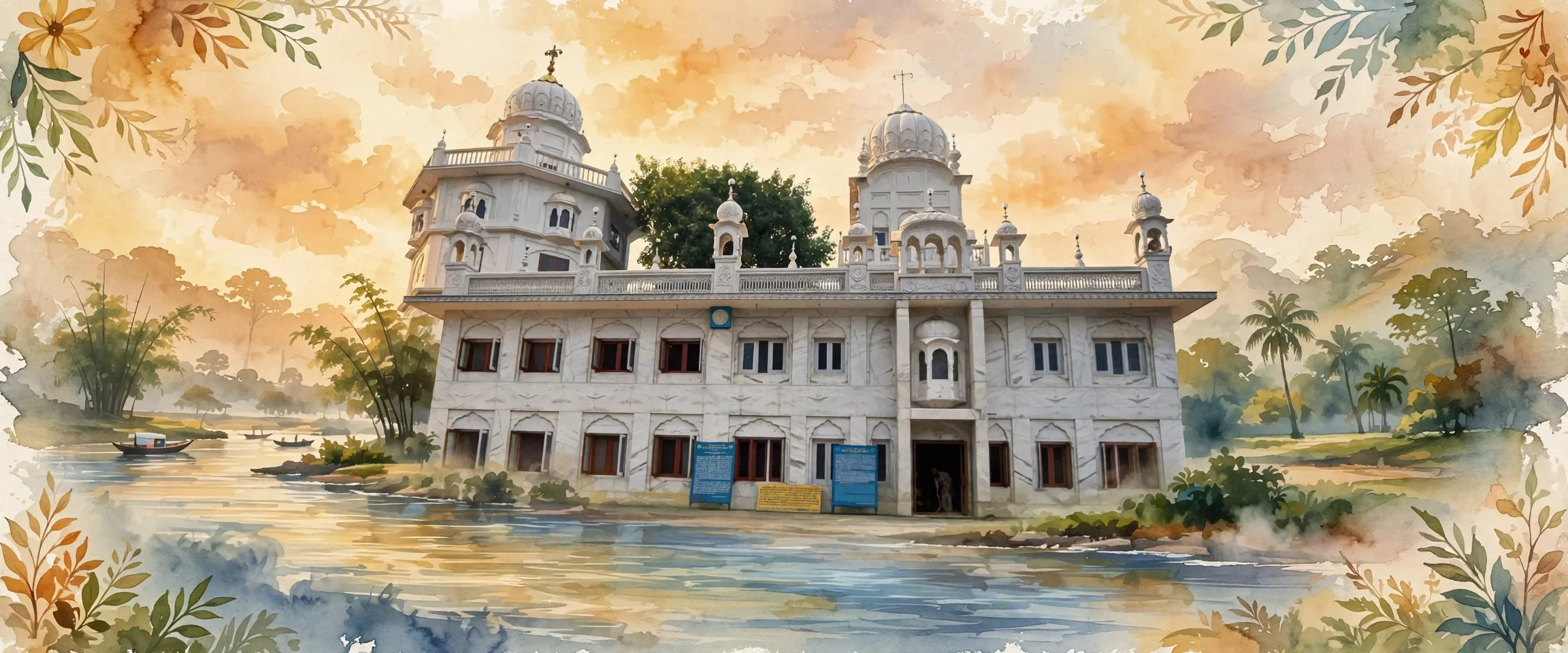
Gurdwara Sri Guru Tegh Bahadur Sahib stands at Boro Bazar in Dhubri town, Assam, on the bank of the Brahmaputra River. It marks where Guru Tegh Bahadur Ji camped in 1669 to 1670 and mediated peace between Raja Ram Singh's Mughal force and the Ahom kingdom, an agreement soldiers of both armies marked by raising the Mound of Peace. Tradition also links the ground to Guru Nanak Dev Ji's earlier Assam journey, and a second shrine, Thara Sahib, stands on the mound.
- Punjabi name
- ਗੁਰਦੁਆਰਾ ਸ੍ਰੀ ਗੁਰੂ ਤੇਗ਼ ਬਹਾਦਰ ਸਾਹਿਬ, ਧੁਬਰੀ
- Type
- Historic gurdwara
- Country
- India
- City
- Dhubri
- District
- Dhubri
- State
- Assam
All 13 facts
- Location
- Ward No. 1, Boro Bazar, beside Circuit House, Dhubri, Assam 783301
- River
- Brahmaputra, right bank
- Associated with
- Guru Nanak Dev Ji; Guru Tegh Bahadur Ji; Raja Ram Singh of Amber; Ahom King Chakradhwaj Singh
- Marks
- Guru Tegh Bahadur Ji's camp and peace mediation, 1669 to 1670; the Mound of Peace
- Also called
- Dhubri Sahib
- Second shrine
- Gurdwara Thara Sahib, also called Damdama Sahib, on the Mound of Peace; present octagonal form set up in 1966
- Main festival
- Martyrdom observance of Guru Tegh Bahadur Ji in December, called Sahidee Guru Parav locally
Gurdwara Sri Guru Tegh Bahadur Sahib, known to pilgrims simply as Dhubri Sahib, stands in the heart of Dhubri town in western Assam, on the bank of the Brahmaputra River. It is the most important Sikh shrine of India's north east: tradition links this ground first to Guru Nanak Dev Ji in the early 1500s and then, more than a century and a half later, to Guru Tegh Bahadur Ji, whose peacemaking between Mughal and Ahom armies is remembered here in a mound of earth that soldiers of both sides raised together. The shrine belongs on any list of gurdwaras in India that carry a story far bigger than their size.
What is Gurdwara Dhubri Sahib?
Dhubri Sahib is a historic gurdwara complex at Boro Bazar in Dhubri, Assam, beside the town's Circuit House. It holds two shrines. The main shrine honours Guru Tegh Bahadur Ji, the ninth Guru, who camped here in 1669 and 1670. On top of the historic mound next to it stands a second, smaller shrine, Gurdwara Thara Sahib, also called Damdama Sahib, set up in its present small octagonal form in 1966. Together the two shrines, the mound and the wide river frontage make Dhubri the gateway through which most visitors discover that Sikh history reaches deep into Assam.
Two Gurus in Assam: Nanak Dev Ji and Tegh Bahadur Ji
Sikh tradition, recorded in the Janamsakhis, places Guru Nanak Dev Ji in Kamrup, the old name for this part of Assam, in the early sixteenth century. Accounts of the visit say he met Srimanta Sankardeva, the saint who shaped Assam's devotional culture, as he travelled through the region. No shrine from that visit survives, but the memory of it mattered: when Guru Tegh Bahadur Ji travelled east in the 1660s, one of his aims was to revive the place associated with the first Guru's journey.
The ninth Guru's visit had a second, urgent purpose. Emperor Aurangzeb had sent Raja Ram Singh of Amber to subdue the Ahom kingdom under King Chakradhwaj Singh, a posting widely read as a punishment, since Shivaji had escaped from Ram Singh's custody a few years earlier. Ram Singh asked the Guru to accompany the expedition, and they reached the Brahmaputra country early in February 1669. The Guru camped at Dhubri, on ground linked to Guru Nanak Dev Ji's earlier stay, while Ram Singh camped at Rangamati. During the stay, tradition records, word reached the Guru at Dhubri that a son, Gobind Rai, later Guru Gobind Singh Ji, had been born to him at Patna.
How did the Mound of Peace come to be?
The mound exists because the Guru chose negotiation over battle. Sikh accounts tell how performers of tantric rites on the Ahom side first tried to frighten the Guru's camp, and how a great stone, remembered as about 26 feet long, was hurled across the river and drove itself deep into the ground near the camp, where a stone is still shown today. A tree flung after it also fell harmlessly. In the telling, the magicians then crossed the river, asked forgiveness, and explained that they were resisting an army they saw as foreign invaders. The Guru assured them he would work for peace, and pressed Ram Singh to win his emperor's aims by talks rather than fighting unless attacked.
The talks succeeded, for a time: a settlement kept the pre war boundaries intact and spared the region a pitched battle, and the grateful Ahom king honoured the Guru at the Kamakhya shrine. To mark the peace, soldiers of both armies together raised a high mound at Dhubri, each man carrying red earth in his shield, five shieldfuls apiece in the traditional account, on the very spot linked to Guru Nanak Dev Ji's rest. That Mound of Peace still stands beside the gurdwara, a monument built not by one side but by two armies that had come to fight.
The shrine today: Thara Sahib, the stone and the tree
For centuries the site was cared for by Udasi priests. The early gurdwara was destroyed in the great earthquake of about 1896 to 1897, and in 1901 Bhai Ram Singh, an officiant of the shrine, rebuilt a room on the site. The shrine once held a Mughal farman granting it land; in 1902 to 1903 Mahant Jai Singh carried that document to Punjab to raise funds for rebuilding, died on the journey near Amritsar, and the farman was lost. Development of the complex has continued in modern times under the Sikh Pratinidhi Board Eastern Zone together with the local managing committee. Visitors today see the main shrine, the octagonal Thara Sahib on the mound, the remembered stone and peepal tree of the old accounts, and the river running wide behind the complex.
Festivals and the sangat of Assam
Each December, Sikhs from across India gather at Dhubri to mark the martyrdom of Guru Tegh Bahadur Ji with solemn ceremony, an observance the local sangat calls Sahidee Guru Parav. The shrine also serves a small, distinctive community: Assam has its own long settled Sikh families, many of them in Nagaon district, whose forefathers arrived centuries ago and who keep the Sikh faith within Assamese language and culture. For them, and for pilgrims who travel far to reach it, Dhubri Sahib is proof that the Guru's road ran east as well as west. Daily worship and langar, the shared kitchen open to all, keep the same welcome the shrine has offered travellers on this river for generations.
How do I reach Dhubri Sahib?
Dhubri is the last large town in western Assam, near the Bangladesh border. By rail, the classic approach is via Siliguri and Katihar, changing at Fakiragram Junction for the roughly 70 kilometres to Dhubri; Dhubri has its own railway station. By road, Guwahati is about 260 to 290 kilometres away, with buses and taxis on the route. The nearest airport is Rupsi, about 18 kilometres from town, while Guwahati's international airport is the main gateway for visitors from distant cities. In town, the gurdwara stands at Ward No. 1, Boro Bazar, beside the Circuit House, and local rickshaws and taxis cover the short distance from the station. October to March is the most comfortable season for the journey.
ਗੁਰਦੁਆਰਾ ਸ੍ਰੀ ਗੁਰੂ ਤੇਗ਼ ਬਹਾਦਰ ਸਾਹਿਬ, ਜਿਸ ਨੂੰ ਸ਼ਰਧਾਲੂ ਧੁਬਰੀ ਸਾਹਿਬ ਕਹਿੰਦੇ ਹਨ, ਅਸਾਮ ਦੇ ਪੱਛਮੀ ਕਸਬੇ ਧੁਬਰੀ ਦੇ ਵਿਚਕਾਰ ਬ੍ਰਹਮਪੁੱਤਰ ਦਰਿਆ ਦੇ ਕੰਢੇ ਸਥਿਤ ਹੈ ਇਹ ਉੱਤਰ ਪੂਰਬੀ ਭਾਰਤ ਦਾ ਸਭ ਤੋਂ ਮਹੱਤਵਪੂਰਨ ਸਿੱਖ ਅਸਥਾਨ ਹੈ ਪਰੰਪਰਾ ਇਸ ਥਾਂ ਨੂੰ ਪਹਿਲਾਂ 1500ਵਿਆਂ ਦੇ ਸ਼ੁਰੂ ਵਿੱਚ ਗੁਰੂ ਨਾਨਕ ਦੇਵ ਜੀ ਨਾਲ ਅਤੇ ਫਿਰ ਡੇਢ ਸਦੀ ਤੋਂ ਵੱਧ ਸਮੇਂ ਬਾਅਦ ਗੁਰੂ ਤੇਗ਼ ਬਹਾਦਰ ਜੀ ਨਾਲ ਜੋੜਦੀ ਹੈ, ਜਿਨ੍ਹਾਂ ਨੇ ਮੁਗ਼ਲ ਅਤੇ ਅਹੋਮ ਫ਼ੌਜਾਂ ਵਿਚਕਾਰ ਸ਼ਾਂਤੀ ਕਰਵਾਈ ਸੀ ਉਸ ਸ਼ਾਂਤੀ ਦੀ ਯਾਦ ਵਿੱਚ ਦੋਵਾਂ ਫ਼ੌਜਾਂ ਦੇ ਸਿਪਾਹੀਆਂ ਨੇ ਮਿਲ ਕੇ ਮਿੱਟੀ ਦਾ ਇੱਕ ਟਿੱਲਾ ਬਣਾਇਆ ਸੀ ਇਹ ਅਸਥਾਨ ਭਾਰਤ ਦੇ ਗੁਰਦੁਆਰਿਆਂ ਦੀ ਹਰ ਸੂਚੀ ਵਿੱਚ ਆਪਣੀ ਖ਼ਾਸ ਥਾਂ ਰੱਖਦਾ ਹੈ
ਗੁਰਦੁਆਰਾ ਧੁਬਰੀ ਸਾਹਿਬ ਕੀ ਹੈ?
ਧੁਬਰੀ ਸਾਹਿਬ ਅਸਾਮ ਦੇ ਧੁਬਰੀ ਕਸਬੇ ਵਿੱਚ ਬੜੋ ਬਾਜ਼ਾਰ ਵਿਖੇ ਸਰਕਟ ਹਾਊਸ ਦੇ ਨਾਲ ਸਥਿਤ ਇੱਕ ਇਤਿਹਾਸਕ ਗੁਰਦੁਆਰਾ ਕੰਪਲੈਕਸ ਹੈ ਇੱਥੇ ਦੋ ਅਸਥਾਨ ਹਨ ਮੁੱਖ ਅਸਥਾਨ ਨੌਵੇਂ ਗੁਰੂ ਸ੍ਰੀ ਗੁਰੂ ਤੇਗ਼ ਬਹਾਦਰ ਜੀ ਦੀ ਯਾਦ ਵਿੱਚ ਹੈ, ਜੋ 1669 ਅਤੇ 1670 ਵਿੱਚ ਇੱਥੇ ਠਹਿਰੇ ਸਨ ਨਾਲ ਲੱਗਦੇ ਇਤਿਹਾਸਕ ਟਿੱਲੇ ਉੱਤੇ ਦੂਜਾ ਛੋਟਾ ਅਸਥਾਨ, ਗੁਰਦੁਆਰਾ ਥੜਾ ਸਾਹਿਬ, ਜਿਸ ਨੂੰ ਦਮਦਮਾ ਸਾਹਿਬ ਵੀ ਕਹਿੰਦੇ ਹਨ, 1966 ਵਿੱਚ ਆਪਣੇ ਮੌਜੂਦਾ ਛੋਟੇ ਅੱਠਭੁਜੀ ਰੂਪ ਵਿੱਚ ਬਣਾਇਆ ਗਿਆ ਸੀ ਦੋਵੇਂ ਅਸਥਾਨ, ਟਿੱਲਾ ਅਤੇ ਦਰਿਆ ਦਾ ਖੁੱਲ੍ਹਾ ਕੰਢਾ ਮਿਲ ਕੇ ਧੁਬਰੀ ਨੂੰ ਉਹ ਦਰਵਾਜ਼ਾ ਬਣਾਉਂਦੇ ਹਨ ਜਿੱਥੋਂ ਬਹੁਤੇ ਸੈਲਾਨੀ ਜਾਣਦੇ ਹਨ ਕਿ ਸਿੱਖ ਇਤਿਹਾਸ ਅਸਾਮ ਤੱਕ ਡੂੰਘਾ ਪਹੁੰਚਿਆ ਹੋਇਆ ਹੈ
ਅਸਾਮ ਵਿੱਚ ਦੋ ਗੁਰੂ: ਨਾਨਕ ਦੇਵ ਜੀ ਅਤੇ ਤੇਗ਼ ਬਹਾਦਰ ਜੀ
ਜਨਮਸਾਖੀਆਂ ਵਿੱਚ ਦਰਜ ਸਿੱਖ ਪਰੰਪਰਾ ਮੁਤਾਬਕ ਗੁਰੂ ਨਾਨਕ ਦੇਵ ਜੀ ਸੋਲ੍ਹਵੀਂ ਸਦੀ ਦੇ ਸ਼ੁਰੂ ਵਿੱਚ ਕਾਮਰੂਪ, ਜੋ ਇਸ ਇਲਾਕੇ ਦਾ ਪੁਰਾਣਾ ਨਾਂ ਹੈ, ਆਏ ਸਨ ਕਥਾਵਾਂ ਕਹਿੰਦੀਆਂ ਹਨ ਕਿ ਉਨ੍ਹਾਂ ਦੀ ਮੁਲਾਕਾਤ ਸ੍ਰੀਮੰਤ ਸ਼ੰਕਰਦੇਵ ਨਾਲ ਹੋਈ, ਉਹ ਸੰਤ ਜਿਨ੍ਹਾਂ ਨੇ ਅਸਾਮ ਦੀ ਭਗਤੀ ਸੱਭਿਆਚਾਰ ਨੂੰ ਘੜਿਆ ਉਸ ਫੇਰੀ ਦਾ ਕੋਈ ਅਸਥਾਨ ਨਹੀਂ ਬਚਿਆ, ਪਰ ਉਸ ਦੀ ਯਾਦ ਮਹੱਤਵ ਰੱਖਦੀ ਸੀ ਜਦੋਂ ਗੁਰੂ ਤੇਗ਼ ਬਹਾਦਰ ਜੀ 1660ਵਿਆਂ ਵਿੱਚ ਪੂਰਬ ਵੱਲ ਗਏ, ਤਾਂ ਉਨ੍ਹਾਂ ਦਾ ਇੱਕ ਮਕਸਦ ਪਹਿਲੇ ਗੁਰੂ ਦੀ ਯਾਤਰਾ ਨਾਲ ਜੁੜੀ ਥਾਂ ਨੂੰ ਮੁੜ ਜਿਊਂਦਾ ਕਰਨਾ ਵੀ ਸੀ
ਨੌਵੇਂ ਗੁਰੂ ਦੀ ਫੇਰੀ ਦਾ ਦੂਜਾ ਅਤੇ ਜ਼ਰੂਰੀ ਕਾਰਨ ਵੀ ਸੀ ਬਾਦਸ਼ਾਹ ਔਰੰਗਜ਼ੇਬ ਨੇ ਅੰਬਰ ਦੇ ਰਾਜਾ ਰਾਮ ਸਿੰਘ ਨੂੰ ਅਹੋਮ ਰਾਜਾ ਚਕ੍ਰਧਵਜ ਸਿੰਘ ਦੇ ਰਾਜ ਨੂੰ ਦਬਾਉਣ ਲਈ ਭੇਜਿਆ ਸੀ ਇਸ ਜ਼ਿੰਮੇਵਾਰੀ ਨੂੰ ਸਜ਼ਾ ਵਜੋਂ ਵੇਖਿਆ ਜਾਂਦਾ ਸੀ, ਕਿਉਂਕਿ ਕੁਝ ਸਾਲ ਪਹਿਲਾਂ ਸ਼ਿਵਾਜੀ ਰਾਮ ਸਿੰਘ ਦੀ ਹਿਰਾਸਤ ਵਿੱਚੋਂ ਨਿਕਲ ਗਏ ਸਨ ਰਾਮ ਸਿੰਘ ਨੇ ਗੁਰੂ ਜੀ ਨੂੰ ਮੁਹਿੰਮ ਨਾਲ ਚੱਲਣ ਦੀ ਬੇਨਤੀ ਕੀਤੀ ਅਤੇ ਉਹ ਫਰਵਰੀ 1669 ਦੇ ਸ਼ੁਰੂ ਵਿੱਚ ਬ੍ਰਹਮਪੁੱਤਰ ਦੇ ਇਲਾਕੇ ਵਿੱਚ ਪਹੁੰਚੇ ਗੁਰੂ ਜੀ ਧੁਬਰੀ ਠਹਿਰੇ, ਉਸ ਥਾਂ ਜੋ ਗੁਰੂ ਨਾਨਕ ਦੇਵ ਜੀ ਦੇ ਪੁਰਾਣੇ ਠਹਿਰਾਅ ਨਾਲ ਜੁੜੀ ਸੀ, ਜਦਕਿ ਰਾਮ ਸਿੰਘ ਰੰਗਾਮਾਟੀ ਠਹਿਰਿਆ ਪਰੰਪਰਾ ਕਹਿੰਦੀ ਹੈ ਕਿ ਇਸੇ ਠਹਿਰਾਅ ਦੌਰਾਨ ਗੁਰੂ ਜੀ ਨੂੰ ਪਟਨਾ ਤੋਂ ਖ਼ਬਰ ਮਿਲੀ ਕਿ ਉਨ੍ਹਾਂ ਦੇ ਘਰ ਪੁੱਤਰ ਗੋਬਿੰਦ ਰਾਏ, ਜੋ ਬਾਅਦ ਵਿੱਚ ਗੁਰੂ ਗੋਬਿੰਦ ਸਿੰਘ ਜੀ ਬਣੇ, ਦਾ ਜਨਮ ਹੋਇਆ ਹੈ
ਸ਼ਾਂਤੀ ਵਾਲਾ ਟਿੱਲਾ ਕਿਵੇਂ ਬਣਿਆ?
ਇਹ ਟਿੱਲਾ ਇਸ ਲਈ ਹੋਂਦ ਵਿੱਚ ਆਇਆ ਕਿਉਂਕਿ ਗੁਰੂ ਜੀ ਨੇ ਲੜਾਈ ਦੀ ਬਜਾਏ ਗੱਲਬਾਤ ਚੁਣੀ ਸਿੱਖ ਕਥਾਵਾਂ ਦੱਸਦੀਆਂ ਹਨ ਕਿ ਅਹੋਮ ਪੱਖ ਦੇ ਤਾਂਤਰਿਕਾਂ ਨੇ ਪਹਿਲਾਂ ਗੁਰੂ ਜੀ ਦੇ ਡੇਰੇ ਨੂੰ ਡਰਾਉਣ ਦੀ ਕੋਸ਼ਿਸ਼ ਕੀਤੀ ਅਤੇ ਲਗਭਗ 26 ਫੁੱਟ ਲੰਬਾ ਇੱਕ ਵੱਡਾ ਪੱਥਰ ਦਰਿਆ ਪਾਰ ਸੁੱਟਿਆ ਗਿਆ, ਜੋ ਡੇਰੇ ਨੇੜੇ ਜ਼ਮੀਨ ਵਿੱਚ ਡੂੰਘਾ ਧਸ ਗਿਆ, ਜਿੱਥੇ ਅੱਜ ਵੀ ਇੱਕ ਪੱਥਰ ਵਿਖਾਇਆ ਜਾਂਦਾ ਹੈ ਇਸ ਤੋਂ ਬਾਅਦ ਸੁੱਟਿਆ ਰੁੱਖ ਵੀ ਨੁਕਸਾਨ ਕੀਤੇ ਬਿਨਾਂ ਡਿੱਗ ਪਿਆ ਕਥਾ ਮੁਤਾਬਕ ਤਾਂਤਰਿਕ ਫਿਰ ਦਰਿਆ ਪਾਰ ਕਰਕੇ ਆਏ, ਮੁਆਫ਼ੀ ਮੰਗੀ ਅਤੇ ਦੱਸਿਆ ਕਿ ਉਹ ਉਸ ਫ਼ੌਜ ਦਾ ਵਿਰੋਧ ਕਰ ਰਹੇ ਸਨ ਜਿਸ ਨੂੰ ਉਹ ਬਾਹਰੀ ਹਮਲਾਵਰ ਸਮਝਦੇ ਸਨ ਗੁਰੂ ਜੀ ਨੇ ਉਨ੍ਹਾਂ ਨੂੰ ਭਰੋਸਾ ਦਿੱਤਾ ਕਿ ਉਹ ਸ਼ਾਂਤੀ ਲਈ ਕੰਮ ਕਰਨਗੇ ਅਤੇ ਰਾਮ ਸਿੰਘ ਨੂੰ ਵੀ ਕਿਹਾ ਕਿ ਬਾਦਸ਼ਾਹ ਦੇ ਮਕਸਦ ਹਮਲਾ ਨਾ ਹੋਣ ਤੱਕ ਗੱਲਬਾਤ ਨਾਲ ਹੀ ਪੂਰੇ ਕੀਤੇ ਜਾਣ
ਗੱਲਬਾਤ ਕੁਝ ਸਮੇਂ ਲਈ ਸਫਲ ਰਹੀ ਇੱਕ ਸਮਝੌਤੇ ਨਾਲ ਜੰਗ ਤੋਂ ਪਹਿਲਾਂ ਵਾਲੀਆਂ ਸਰਹੱਦਾਂ ਬਰਕਰਾਰ ਰਹੀਆਂ ਅਤੇ ਇਲਾਕਾ ਇੱਕ ਵੱਡੀ ਲੜਾਈ ਤੋਂ ਬਚ ਗਿਆ ਧੰਨਵਾਦੀ ਅਹੋਮ ਰਾਜੇ ਨੇ ਕਾਮਾਖਿਆ ਅਸਥਾਨ ਵਿਖੇ ਗੁਰੂ ਜੀ ਦਾ ਸਨਮਾਨ ਕੀਤਾ ਸ਼ਾਂਤੀ ਦੀ ਯਾਦ ਵਿੱਚ ਦੋਵਾਂ ਫ਼ੌਜਾਂ ਦੇ ਸਿਪਾਹੀਆਂ ਨੇ ਮਿਲ ਕੇ ਧੁਬਰੀ ਵਿਖੇ ਇੱਕ ਉੱਚਾ ਟਿੱਲਾ ਬਣਾਇਆ ਪਰੰਪਰਾ ਮੁਤਾਬਕ ਹਰ ਸਿਪਾਹੀ ਨੇ ਆਪਣੀ ਢਾਲ ਵਿੱਚ ਲਾਲ ਮਿੱਟੀ ਭਰ ਕੇ ਪੰਜ ਢਾਲਾਂ ਮਿੱਟੀ ਪਾਈ, ਉਸੇ ਥਾਂ ਜਿੱਥੇ ਗੁਰੂ ਨਾਨਕ ਦੇਵ ਜੀ ਦੇ ਆਰਾਮ ਦੀ ਯਾਦ ਸੀ ਉਹ ਸ਼ਾਂਤੀ ਵਾਲਾ ਟਿੱਲਾ ਅੱਜ ਵੀ ਗੁਰਦੁਆਰੇ ਨਾਲ ਖੜ੍ਹਾ ਹੈ, ਇੱਕ ਅਜਿਹੀ ਯਾਦਗਾਰ ਜੋ ਇੱਕ ਪੱਖ ਨੇ ਨਹੀਂ, ਲੜਨ ਆਈਆਂ ਦੋ ਫ਼ੌਜਾਂ ਨੇ ਮਿਲ ਕੇ ਬਣਾਈ
ਅੱਜ ਦਾ ਅਸਥਾਨ: ਥੜਾ ਸਾਹਿਬ, ਪੱਥਰ ਅਤੇ ਰੁੱਖ
ਸਦੀਆਂ ਤੱਕ ਇਸ ਥਾਂ ਦੀ ਸੇਵਾ ਉਦਾਸੀ ਸਾਧੂ ਕਰਦੇ ਰਹੇ ਪੁਰਾਣਾ ਗੁਰਦੁਆਰਾ ਲਗਭਗ 1896 ਤੋਂ 1897 ਦੇ ਵੱਡੇ ਭੂਚਾਲ ਵਿੱਚ ਢਹਿ ਗਿਆ ਅਤੇ 1901 ਵਿੱਚ ਅਸਥਾਨ ਦੇ ਸੇਵਾਦਾਰ ਭਾਈ ਰਾਮ ਸਿੰਘ ਨੇ ਉੱਥੇ ਇੱਕ ਕਮਰਾ ਮੁੜ ਬਣਾਇਆ ਅਸਥਾਨ ਕੋਲ ਕਦੇ ਇੱਕ ਮੁਗ਼ਲ ਫ਼ਰਮਾਨ ਸੀ ਜੋ ਇਸ ਨੂੰ ਜ਼ਮੀਨ ਦਿੰਦਾ ਸੀ 1902 ਤੋਂ 1903 ਵਿੱਚ ਮਹੰਤ ਜੈ ਸਿੰਘ ਉਹ ਦਸਤਾਵੇਜ਼ ਮੁੜ ਉਸਾਰੀ ਲਈ ਧਨ ਇਕੱਠਾ ਕਰਨ ਪੰਜਾਬ ਲੈ ਗਏ, ਅੰਮ੍ਰਿਤਸਰ ਨੇੜੇ ਯਾਤਰਾ ਦੌਰਾਨ ਉਨ੍ਹਾਂ ਦਾ ਦੇਹਾਂਤ ਹੋ ਗਿਆ ਅਤੇ ਫ਼ਰਮਾਨ ਗੁਆਚ ਗਿਆ ਅੱਜ ਕੰਪਲੈਕਸ ਦਾ ਵਿਕਾਸ ਸਿੱਖ ਪ੍ਰਤੀਨਿਧੀ ਬੋਰਡ ਈਸਟਰਨ ਜ਼ੋਨ ਅਤੇ ਸਥਾਨਕ ਪ੍ਰਬੰਧਕ ਕਮੇਟੀ ਮਿਲ ਕੇ ਕਰ ਰਹੇ ਹਨ ਸੈਲਾਨੀ ਅੱਜ ਮੁੱਖ ਅਸਥਾਨ, ਟਿੱਲੇ ਉੱਤੇ ਅੱਠਭੁਜੀ ਥੜਾ ਸਾਹਿਬ, ਪੁਰਾਣੀਆਂ ਕਥਾਵਾਂ ਵਾਲਾ ਪੱਥਰ ਅਤੇ ਪਿੱਪਲ ਦਾ ਰੁੱਖ ਅਤੇ ਕੰਪਲੈਕਸ ਪਿੱਛੇ ਵਗਦਾ ਚੌੜਾ ਦਰਿਆ ਵੇਖਦੇ ਹਨ
ਮੇਲੇ ਅਤੇ ਅਸਾਮ ਦੀ ਸੰਗਤ
ਹਰ ਦਸੰਬਰ ਸਿੱਖ ਸ਼ਰਧਾਲੂ ਪੂਰੇ ਭਾਰਤ ਤੋਂ ਧੁਬਰੀ ਪਹੁੰਚ ਕੇ ਗੁਰੂ ਤੇਗ਼ ਬਹਾਦਰ ਜੀ ਦੀ ਸ਼ਹਾਦਤ ਨੂੰ ਸ਼ਰਧਾ ਨਾਲ ਯਾਦ ਕਰਦੇ ਹਨ, ਜਿਸ ਨੂੰ ਸਥਾਨਕ ਸੰਗਤ ਸ਼ਹੀਦੀ ਗੁਰੂ ਪਰਵ ਕਹਿੰਦੀ ਹੈ ਇਹ ਅਸਥਾਨ ਇੱਕ ਛੋਟੀ ਪਰ ਖ਼ਾਸ ਸੰਗਤ ਦੀ ਵੀ ਸੇਵਾ ਕਰਦਾ ਹੈ ਅਸਾਮ ਦੇ ਆਪਣੇ ਪੁਰਾਣੇ ਵਸੇ ਸਿੱਖ ਪਰਿਵਾਰ ਹਨ, ਜਿਨ੍ਹਾਂ ਵਿੱਚੋਂ ਬਹੁਤੇ ਨਗਾਂਓਂ ਜ਼ਿਲ੍ਹੇ ਵਿੱਚ ਰਹਿੰਦੇ ਹਨ, ਜਿਨ੍ਹਾਂ ਦੇ ਵੱਡੇ ਵਡੇਰੇ ਸਦੀਆਂ ਪਹਿਲਾਂ ਆਏ ਸਨ ਅਤੇ ਜੋ ਅਸਾਮੀ ਭਾਸ਼ਾ ਅਤੇ ਸੱਭਿਆਚਾਰ ਵਿੱਚ ਰਹਿ ਕੇ ਸਿੱਖ ਧਰਮ ਨਿਭਾਉਂਦੇ ਹਨ ਉਨ੍ਹਾਂ ਲਈ ਅਤੇ ਦੂਰੋਂ ਆਉਣ ਵਾਲੇ ਸ਼ਰਧਾਲੂਆਂ ਲਈ ਧੁਬਰੀ ਸਾਹਿਬ ਇਸ ਗੱਲ ਦਾ ਸਬੂਤ ਹੈ ਕਿ ਗੁਰੂ ਜੀ ਦਾ ਰਾਹ ਪੱਛਮ ਵਾਂਗ ਪੂਰਬ ਵੱਲ ਵੀ ਗਿਆ ਸੀ ਰੋਜ਼ਾਨਾ ਕੀਰਤਨ ਅਤੇ ਸਭ ਲਈ ਖੁੱਲ੍ਹਾ ਲੰਗਰ ਉਹੀ ਸਵਾਗਤ ਜਾਰੀ ਰੱਖਦਾ ਹੈ ਜੋ ਇਹ ਅਸਥਾਨ ਪੀੜ੍ਹੀਆਂ ਤੋਂ ਇਸ ਦਰਿਆ ਦੇ ਮੁਸਾਫ਼ਿਰਾਂ ਨੂੰ ਦਿੰਦਾ ਆਇਆ ਹੈ
ਧੁਬਰੀ ਸਾਹਿਬ ਕਿਵੇਂ ਪਹੁੰਚੀਏ?
ਧੁਬਰੀ ਪੱਛਮੀ ਅਸਾਮ ਦਾ ਆਖ਼ਰੀ ਵੱਡਾ ਕਸਬਾ ਹੈ, ਬੰਗਲਾਦੇਸ਼ ਸਰਹੱਦ ਨੇੜੇ ਰੇਲ ਰਾਹੀਂ ਪੁਰਾਣਾ ਰਾਹ ਸਿਲੀਗੁੜੀ ਅਤੇ ਕਟਿਹਾਰ ਹੋ ਕੇ ਜਾਂਦਾ ਹੈ, ਜਿੱਥੋਂ ਫ਼ਕੀਰਾਗ੍ਰਾਮ ਜੰਕਸ਼ਨ ਤੋਂ ਬਦਲ ਕੇ ਲਗਭਗ 70 ਕਿਲੋਮੀਟਰ ਦਾ ਸਫ਼ਰ ਧੁਬਰੀ ਤੱਕ ਜਾਂਦਾ ਹੈ ਧੁਬਰੀ ਦਾ ਆਪਣਾ ਰੇਲਵੇ ਸਟੇਸ਼ਨ ਹੈ ਸੜਕ ਰਾਹੀਂ ਗੁਵਾਹਾਟੀ ਲਗਭਗ 260 ਤੋਂ 290 ਕਿਲੋਮੀਟਰ ਦੂਰ ਹੈ ਅਤੇ ਇਸ ਰਾਹ ਉੱਤੇ ਬੱਸਾਂ ਅਤੇ ਟੈਕਸੀਆਂ ਚਲਦੀਆਂ ਹਨ ਸਭ ਤੋਂ ਨੇੜਲਾ ਹਵਾਈ ਅੱਡਾ ਰੂਪਸੀ ਹੈ, ਕਸਬੇ ਤੋਂ ਲਗਭਗ 18 ਕਿਲੋਮੀਟਰ ਦੂਰ, ਜਦਕਿ ਦੂਰ ਦੇ ਸ਼ਹਿਰਾਂ ਤੋਂ ਆਉਣ ਵਾਲਿਆਂ ਲਈ ਗੁਵਾਹਾਟੀ ਦਾ ਅੰਤਰਰਾਸ਼ਟਰੀ ਹਵਾਈ ਅੱਡਾ ਮੁੱਖ ਦਰਵਾਜ਼ਾ ਹੈ ਕਸਬੇ ਵਿੱਚ ਗੁਰਦੁਆਰਾ ਵਾਰਡ ਨੰਬਰ 1, ਬੜੋ ਬਾਜ਼ਾਰ, ਸਰਕਟ ਹਾਊਸ ਦੇ ਨਾਲ ਹੈ ਅਤੇ ਸਟੇਸ਼ਨ ਤੋਂ ਥੋੜ੍ਹੀ ਦੂਰੀ ਰਿਕਸ਼ਿਆਂ ਅਤੇ ਟੈਕਸੀਆਂ ਰਾਹੀਂ ਤੈਅ ਹੋ ਜਾਂਦੀ ਹੈ ਅਕਤੂਬਰ ਤੋਂ ਮਾਰਚ ਯਾਤਰਾ ਲਈ ਸਭ ਤੋਂ ਸੁਖਾਵਾਂ ਸਮਾਂ ਹੈ